At fourteen I decided I would be as hard as a stone and burn as bright as the sun.
At fourteen. Australian writer Erin Vincent remembers being fourteen with a sucker punch to the gut intensity that has haunted her since that day in 1983 when her parents were hit by a truck. Her mother was killed instantly, her father, badly injured, died one month and one day later. As a age that falls into that uncertain space between childhood and adulthood, fourteen can be difficult, awkward, and confusing for anyone, but for Vincent, the age, her memories associated with it, and, ultimately, the number itself became something larger. An obsession. Fourteen Ways of Looking, her dazzling, fragmented inventory of being, is an attempt to finally exorcise the power that that number, and all it contains, has held over her for decades.
 This book is not, in any explicit sense, a memoir. Her earlier work, Grief Girl: My True Story, published in 2007, was an attempt to address the reality of her personal loss for young readers, sharing her story through her own fourteen year-old voice. In Fourteen Ways, that same voice is present, but it emerges in fragmented memories of a life shattered by tragedy. She recalls the strangeness of the experience of the death of her parents and the impact it had on her relationships with her siblings, extended family, teachers, and her adolescent sense of self. But here these pieces exist in relation to her adult reflections and observations, and against a tapestry woven of facts and occurrences that each involve, in some way, the number fourteen.
This all started innocently enough. One day I noticed the word fourteen in a novel I was reading. The next day it happened again, in a newspaper article, then a TV show, a film, then another book. Fourteen. 14. I did not go looking for it. It came to me. Now I can’t look away.
But it’s one thing to notice a number and even to start to gather references to it, quite another to see in this harvesting the possibility of a book. Drawing inspiration from her reading of fragmentary literature together with an introduction to the constraint-driven writings of the Oulipo movement, things began to slowly take shape. In an interview with Cristina Politano for Minor Literature[s], Vincent describes her thinking:
And so, I ended up with these notebooks filled with fourteen facts, and instances of fourteen throughout history. I then started writing memoir fragments about the year my parents died and after a while, I thought, “I should start putting these together. I think there’s something here.” So, I set myself a constraint—every fragment had to have the number fourteen in it. Now, how could I do that without driving the reader crazy? It became like a game. Eventually, I loosened up a bit and decided that the meta-reflections that run through the book did not have to contain the number fourteen, but every other fragment does.
The result is a moving and fascinating kaleidoscope of memory, emotions, information, and quotations. Unobtrusive section breaks separate fragments that are somehow connected thematically. Or to let a single fact or reflection stand alone. This allows for a natural internal coherence to develop in unexpected, often exhilarating ways as an “at fourteen” memory or a “14-related historical or biographical detail triggers a series of associated fragments:
Canto XIV in Dante’s Inferno focuses on those who have sinned against God. Their punishment is to have flakes of fire slowly rained down on them.
At fourteen I still believed in God. I knew He existed because He had punished me. He had heard that voice and decided to make me pay. Later I would drop the capital H.
When she was fourteen Leonora Carrington lifted up her dress and flashed a priest saying, ‘Well, what do you think of that?!’
Fourteen or 14 appears in a wide range of contexts throughout this book—as dates, page numbers, chapters or titles of films or literary works, but it is also linked in some direct or indirect way to a significant number of well-known figures who either lost their own parent or parents young, or experienced a notable life change at age fourteen. And although it would be easy to fall into artificial or seemingly contrived arrangements of facts and reflections, Vincent balances the flow beautifully. As well, the fragmented approach allows her to suspend her memories associated with being fourteen and all the years that have passed since, in the sort of unfinished and uncertain dimension that recollections tend to occupy over time. To let her “truths” hang in the air in a manner that feels entirely unforced and authentic—our own truths belong to us, after all, but their tones and colours change as we change. Add in the occasional meta observations about the project itself and the emotional energy it is exacting, and Fourteen Ways of Looking becomes a living, breathing meditation on loss, grief and rebuilding a life.
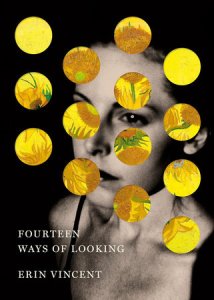
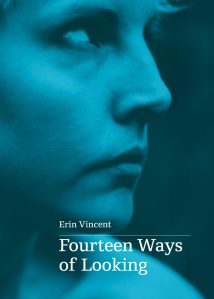
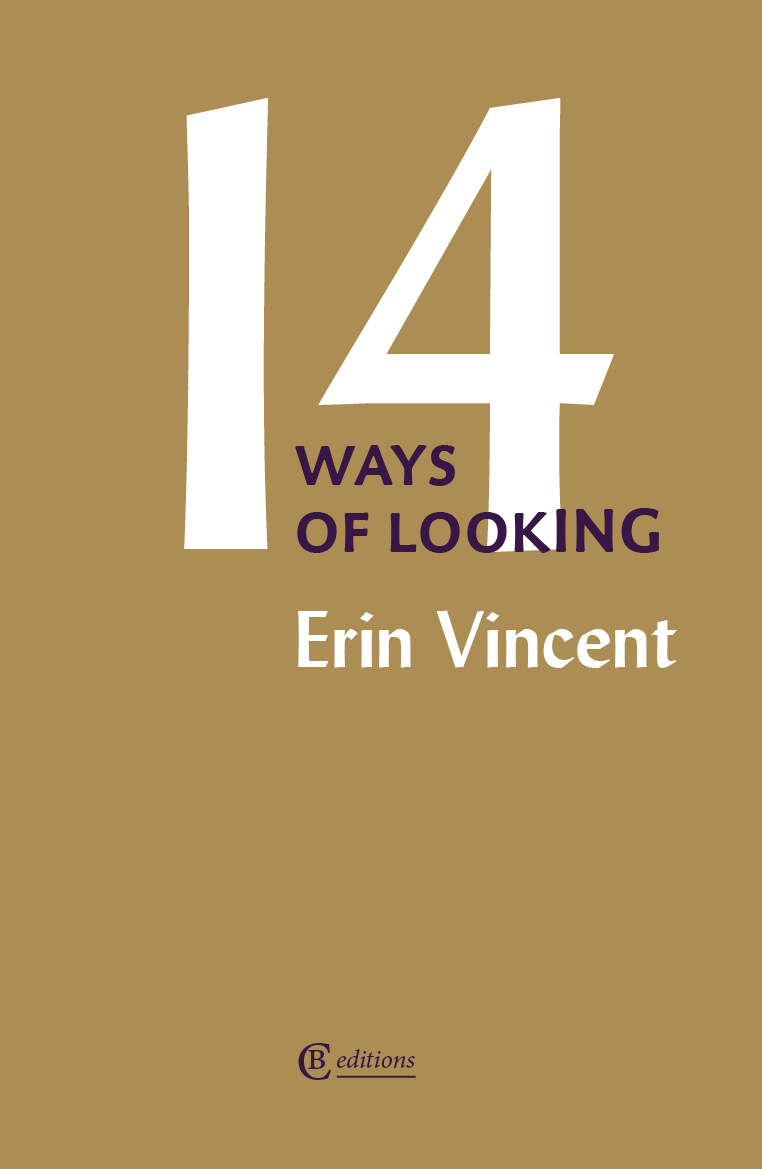
Fourteen Ways of Looking by Erin Vincent is published by CB Editions in the UK, Deep Vellum in the US, Strange Light in Canada, and Upswell in Australia.
 roughghosts