
On the street in front of a sleazy bar in a low-rent part of an unnamed city there has been a catastrophic incident. A man who was, just moments before, inside the bar, suddenly walked out and stepped in front of a moving bus, intentionally or otherwise. Now he lies disfigured on the pavement. The eponymous hero—no, hero is not quite the right word—of Tobias Ryan’s discomfiting novel, Glantz, appears at first to be unresponsive to the drama unfolding outside the window, but when he finally emerges to confront the unfortunate scene, the body on the road, and the shocked, white-knuckled bus driver, his reaction is cooly observant, yet oddly unsettled. He carries the images home, like a heavy cloud that weighs him down and stifles his attempts to release what he has witnessed to prayer.
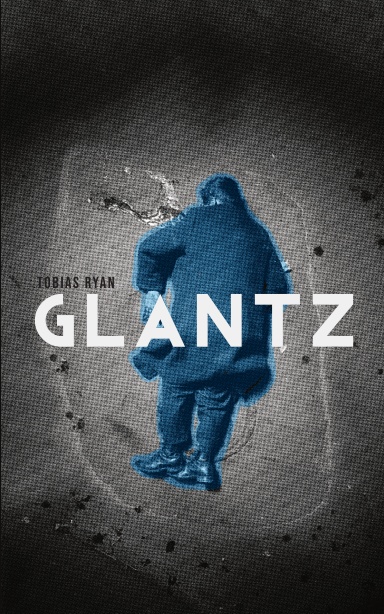 This is a book that exists in the shadows, leaden, moist, claustrophobic shadows that obscure the inner motivations of its large, lumbering protagonist. Glantz is a man of routine who moves to his own rhythms. He frequents a bar owned by a wary landlord, drinks heavily, attends mass on a regular basis, and seeks an absolution that no one can grant him. He lives with his sister, a recent and less than harmonious arrangement, and he harbours uncomfortable obsessions. But what is most disturbing is that he seems to prey on the concerns and paranoias of others, drawing them into his impenetrable orbit like some kind of massive black hole.
One such satellite is Marten, the young man who was the last to speak to the suicide victim just before his fatal act. He stubbornly seeks Glantz out looking for answers, aware of some kind of association between the two men. Their first direct contact on the street so unnerves the older man that he ignores the youth completely and slips off as stealthily as his slow, shuffling, obese figure allows, disappearing into the night:
And as he did, if you had seen him pass, there on the quayside away from the lights, you might have thought he grew in stature, that his shoulders dropped and broadened, that his stride extended, that, despite how he was moving, stillness had settled on him, grace, as though, you might have thought, enveloped by the darkness, the smell of the river, its mud and effluent, he was weightless, gliding through the murk along the banks, head lolling, listing slowly to the right and to the left, lights in the far distance catching his lenses, reflecting off his glasses, to give his eyes, pale, lucent and unblinking, a morbid allure as they emerged from the shadows; how, borne on the rhythm of his movement, his gait, his gently swinging arms, waves went through him, a silken furl, and you may have noticed, also, how silently he moved, how the world beyond the two of you, you and Glantz, would seem to have fallen quiet too, that you wouldn’t hear his breath or the sound of his steps, that the lapping black water that he trailed had hushed.
Ryan’s prose, thick and murky, sustains the atmosphere through which Glantz slinks. This is a novel, not unlike Hedayat’s The Blind Owl, to be experienced rather than dissected. The narrative tense is slippery, sliding between present, simple past, and conditional perfect. Each scene, observed from an indeterminate distance, at times uncomfortably intimate, at others simply imagined, reveals a troubled and troubling protagonist, but very little of what is actually going on behind those pale eyes and thick glasses beyond an indication of an unredeemable guilt driving attempts at furtive confession and rituals of distorted private expiation. Other characters—the landlord of the bar, his sister, an aging priest—all hint at a history best left behind, yet there’s young Marten, already having fallen under Glantz’s menacing spell, intent on, or unable to avoid, picking away at the scabs, metaphorical and actual, that clearly have not healed.
The irresistible power of this slim volume lies in all of the dim hallways and dark corners that Ryan leaves unexplored, the questions inferred but unanswered. Glantz is a fascinatingly repulsive protagonist, but he remains, perhaps thankfully, lurking in the shadows. Still, enough is exposed to ensure that the last page is turned with quiet unease and a desire to keep the lights on.
Glantz by Tobias Ryan is published by Equus Press.

