Asking for angels: John Prine

It pains me have to update this, but John Prine left us today, April 7, 2020. This illness is taking its share of musicians it seems.

Originally posted March 29, 2020:

It is not in my common practice to share a song on this site, but as I write this, American singer-songwriter John Prine is in critical condition with symptoms of COVID-19. Like many, I will be listening to his music tonight, especially this, his signature composition made famous by Bonnie Raitt.

I think this song is especially relevant to our shared circumstances these days. This virus does not discriminate between race, ethnic group, religion, nationality, gender or income level. However, we can’t fool ourselves, those who have the least among us, the marginalized and disadvantaged in our respective communities stand to lose the most, to pay the highest price.

This song honours an aging woman with a rough life behind her and the simplest of dreams. I’m thinking of people like her, and the man who put her story to music at this moment.

Make me an angel that flies from Montgomery
Make me a poster of an old rodeo
Just give me one thing that I can hold on to
To believe in this living is just a hard way to go…

Reading (or not) through a pandemic

Remember that desert island  you used to playfully assemble a mental reading list for? That essential library that would fuel you through an extended period of isolation? How is that notion working out for you now in these days of lock downs and distancing and otherwise upended routines?

I was never much of an imaginary library builder, but at the moment, in a flat lined with a total of ten bookshelves—seven tall, three short—bursting with books, I am finding it almost impossible to commit to any one of them.

Some of this is probably reflects my readerly nature. I invariably pack too many books when I travel and as soon as I’m away from home, none of the titles look appetizing. I wonder why I brought some, wish I’d brought others. At worst, I pass through episodes marked by a literary nausea every time I think about reading. It’s odd, unsettling and counter intuitive to what I always imagine a vacation offers—time. All that waiting, flying, transiting, eating alone in restaurants…

These days, with varying distancing measures in place across the globe, many of us are faced with a surfeit of time. A reader’s paradise. Some seem to be coping well, if social media is any measure. Book related blog posts still appear, photographs of bookshelves and stacks of self prescribed reading material populate my feeds. I’m finding it almost as disturbing as the death counts and criminally inadequate political responses that also seem to be multiplying at an alarming rate. I find books offer no distraction or comfort these days.

And I’m in a good space. The federal government here in Canada is responding rather sensibly to the medical and financial threats on the horizon and my provincial leader, much to my surprise, is responding with measured compassion and generosity even though our already weakened economy stands to take a beating. Certainly there are those who will always find fault, but the willingness to work across party lines is admirable. And although politicians have their share of time at the podium, our public health officials hold centre stage, earning respect and even a little celebrity in their own right. A sharp contrast to the crisis presently exploding beyond our southern border.

Yet, somehow I sit here, shuffling piles of books, reading a few pages here, a few pages there until once again anxiety pulls my attention away.

Some days are worse than others. The sun helps. Limiting time online is essential. But nothing works for long. Editing for 3:AM Magazine has helped a little—the imperative of a self imposed obligation I suppose—but I am engaged in precious little reading and writing for myself. Books that I’ve accepted or requested for review taunt me from the shelves even though there are no deadlines or absolute commitments attached. They fill me with guilt all the same. As do the partly read volumes I’m struggling to return to. Somehow I feel I should at least clear the deck a little before venturing on to something new. I’m already juggling a handful of titles as it is.

So I fritter around, surrounded by books, unable to finish anything, start anything, write anything. Overwhelmed by words.

These are, of course, exceptional times. Time perhaps, to throw out the “rules”, including all the idiosyncratic expectations we set for ourselves. Follow the flow. Resist the urge to measure ourselves against others. We are all in this together, but our circumstances vary. Friends in India, the UK, Italy, and South Africa are under lock down—variations on the theme are in place or on the horizon elsewhere. Here in Canada, physical distancing is advised if one is well, isolation if ill, and enforced quarantine if returning from outside the country. But each day, the parameters shift, the restrictions increase and for many the immediate future is unnervingly uncertain.

So I suppose my best pandemic reading strategy is to play it by ear.

Or is that eye?

Each day I try to get out for a walk, even if the energy sometimes eludes me. I’ve decided to set aside a few books in progress for the time being, and try to be open to any muse that might pass my way. At the moment, then, I’m reading Nan Shepherd’s The Living Mountain for Robert Macfarlane’s Twitter read along, R. K Narayan’s shortened modern prose version of The Ramayana and plenty of poetry. But is all subject to change without notice.

Stay safe, friends.

Letters to a distant shore: A Kinder Sea by Felicity Plunkett

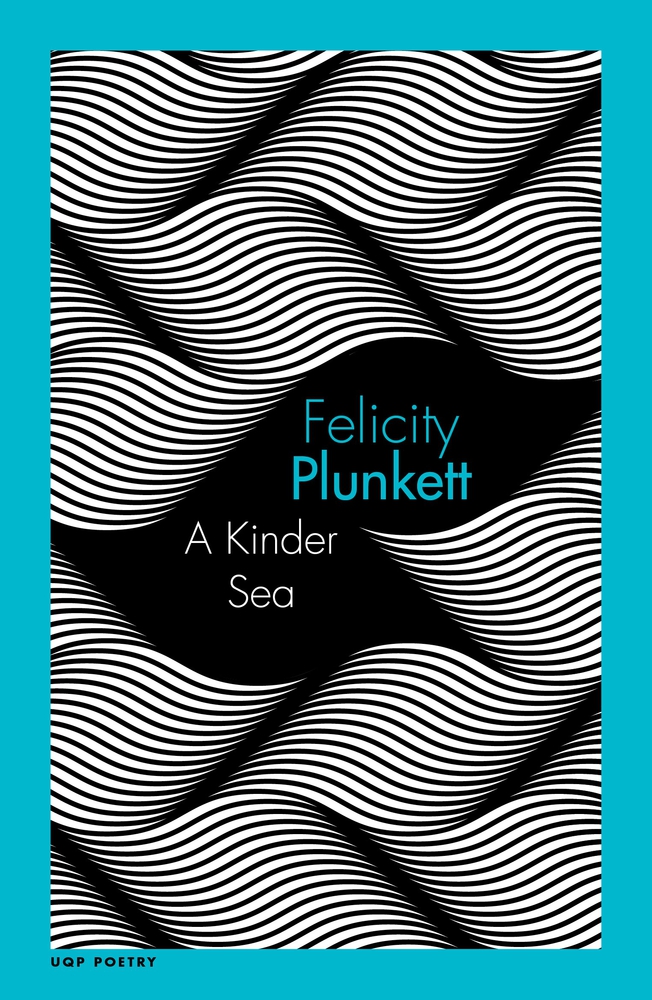
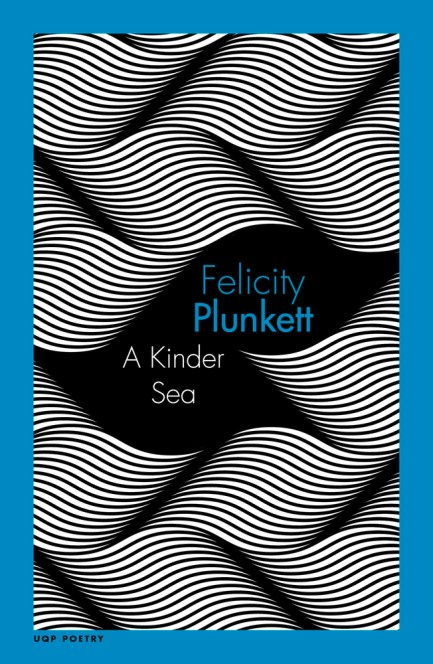
I have spent most of my life landbound, far from open water. As a result, oceans and seas have always held a special fascination for me—those distant horizons, blue fading into blue, and endless watery expanses. Similarly, poetry inspired by ocean imagery has invariably captured my imagination and that’s what I suspected Australian poet Felicity Plunkett’s new collection, A Kinder Sea, with its stylized black and white wave-decorated cover might offer. And it does, but of course it is so much more. It is a rich and generous exploration of an ocean of skeletal fragments, human longings, and loved and forgotten souls.
Written over a period of seven years, the poems in this book seem to come together around their uniting element in an organic, interactive manner, forging connections and participating in debate with one another along the way. There is a clear sense, then, of a creative ebb and flow that runs through the collection. Referring to Paul Celan’s depiction of poems as “making their ways to readers like letters in bottles,” Plunkett describes her new work as “a book of unspoken hopes, un-mourned losses, of mute and unprayable prayers and letters never sent.”

If the poems that comprise A Kinder Sea arose, as their author indicates, over time, in conversation with one another, as missives in search of readers, they also exist in dialogue with artists and poets from whom Plunkett draws inspiration. Early on, Celan’s quote referring to poems as bottled messages, serves as the epigraph for the multi-part piece, “Glass Letters”. Twelve aching, embodied and intimate poetic communiqués follow:

This morning want-of-you has left me.
I test for its absence, press bruises, look clear

in the sea’s flat glass. No sign of storm’s spines:
sharp possibilities. Disturbance has bled

itself out. Shaken wordless, I wash syllables
in salt, trace remembered promises to

the place where they rolled in foam. You
erase waves from our correspondence:

excise agitation.

The palette she paints from is one of varied, often melancholy colours. Poets, most notably Emily Dickinson and Celan, but also Rilke, William Carl Williams, Sylvia Plath and others offer epigraphs, allusions and inspiration, alongside the likes of Bob Dylan, Leonard Cohen, Nick Cave and Neil Young.

Felicity Plunkett writes with a formal sensibility and delicate precision, her language seems to register, not simply in the ear or the imagination of the reader, but on the very surface of the skin. One senses that each word, each line has been carefully honed to cast a reflection at once sharp and shifting—much like the surface of the sea. As in her award winning debut, Vanishing Point where flakes appear as a recurring image, in A Kinder Sea, there is, apart from the obvious connecting feature, a bone-level awareness and an existential grammar awash in the waves—the abstracted self as body and language. Consider the hospitalized speaker’s lament in “Songs in a Red Key”:

Conduct a river in plastic over
my shoulder through an elbow’s fold
My shroud stretches to fray
translucent at its seams, rolled
soft by the smooth stones
of a queue of injured
bones: white-gowned, awkward

-ly sheeted  nativity
angel, nameless, I shepherd
drip chamber and tremble-wheel
trolley across night’s locked ward
jitter this tangle through
silence: my hubris muted
below drug’s sea levels

Or the epistle to a secret, perhaps doomed, addressee in “Strand”:

Nothing to say when words lose their letters
in winter. Letter’s spines dismantle
in my silent hand.

I hear your name in a dream of sea. Dream
my secrets fall from my mouth, braced
neat as pearls

Broken mirror, split salt, opened
umbrella. Salt rain broke and I thought no
harm could come to you.

But, of course, the sea is the primary note sounding through this collection, sometimes as a passing metaphor, sometimes as a broader backdrop, and in one set of poems, as a vast, inviting, yet often unforgiving space that has drawn daring souls to adventure, even death. The sequence “In Search of the Miraculous” contains some of my favourite pieces: “Equal Footing Mermaids” honouring Donald Crowhurst, the British businessman who died competing in a single-handed round-the-world yacht race in 1969, and “Disappearing Act” in memory of Dutch-born film maker and performance artist, Bas Jan Ader, who was lost at sea in what would be his final performance, an intended solo voyage across the Atlantic. These poems speak to the romance of the sea that has always held a particular allure, in art and literature, for a landbound soul like myself.

A Kinder Sea has rightly been referred to as a masterpiece. It is certainly a testament to Plunkett’s ability to evoke recurring themes in a constellation of image and form that remains fresh, never predictable. And, like the ocean itself, there is an unmeasurable depth to this collection, one that invites slow, thoughtful engagement.

A Kinder Sea by Felicity Plunkett is published by University of Queensland Press.

Feeling it in my bones: A reflection

When I published a series of poems in the journal Poetry at Sangam last October, I could not anticipate how prescient the following passage would be:

a shiver of unease
runs its course across
my shoulders, shudders
down a rocky spine
to dissipate
through fissures
in this sleeping
mountain
mine

The vertebrae of my imagined backbone have come to haunt my movements this past month; I am suddenly aware of every step as it reverberates through my skeleton. A bone scan in January, ordered by my psychiatrist, revealed I have osteoporosis. I knew it was a real risk—my birth gender and family history have always figured in my calculations—but I assumed that the possibility lay somewhere in the future, when I was older, or, that is, older than I already am. I was, however, unaware of the impact on bone density of a medication I’ve been taking as a mood stabilizer for over twenty years. My family doctor, scrolling through his cell phone during our appointment to discuss the test results, insisted he could find no sign of a connection. It is there, I have since checked, but it’s now too late.

Coming as it has with a dreaded milestone birthday on the horizon, I met this diagnosis with sadness and a new kind of fragility.

I’ve resisted sharing any details publicly for a while. As upset as I was, I feared it might be discounted—I mean, it is something you can live with and my condition is essentially borderline at the moment; my upper lumbar region scores just within the osteoporosis range, while my lower lumbar and hips are in the risk range. But anyone who has observed the physical disintegration this disease can cause, who has been close to someone who has fractured bones and lost mobility, cannot help but fear a future in which they too are hunched over and hobbling along. My mother was increasingly crippled by osteoporosis and, although she lived to the age of 82, by the end she was a weary, frail little bird, ever at risk of falling, with a spine ultimately so twisted that she basically suffocated slowly during her final weeks.

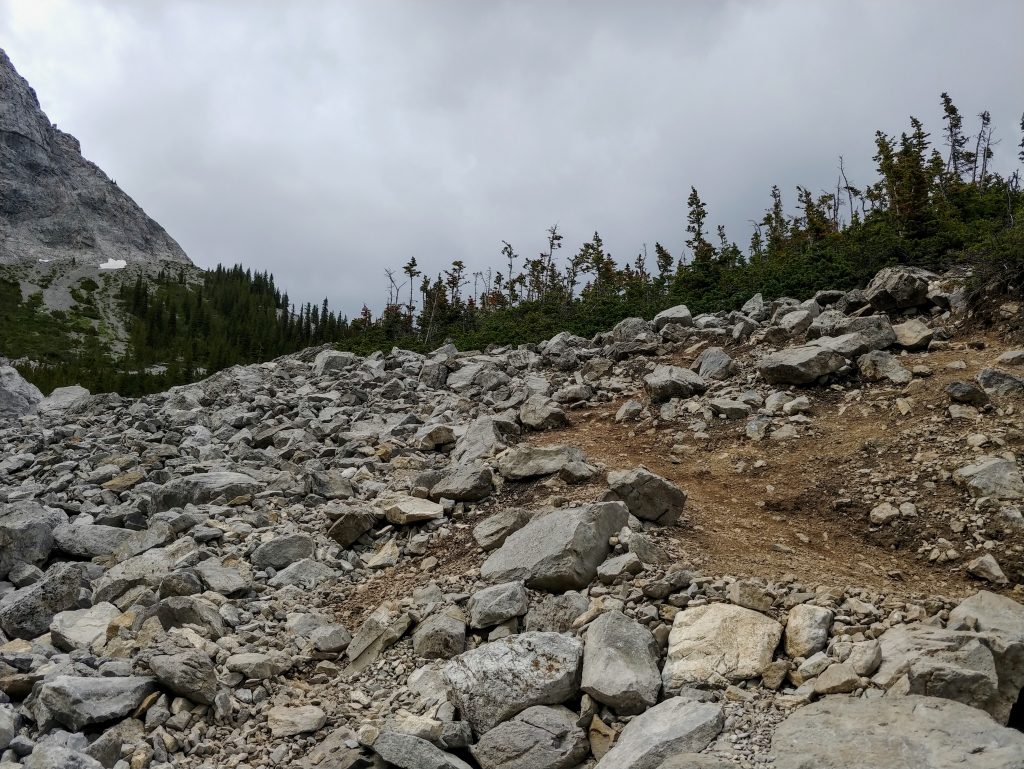
All my life I have struggled with a deep discord between my body and my existential sense of being—my self—a disconnect that transition from female to male shifted but did not resolve. Of late I had taken to mediating it through movement. When a stride flows smoothly I feel good. There have been plenty of times in my life when walking was difficult for a variety of reasons, but since I moved to a location with a network of challenging paths and trails snaking across the embankment just minutes from my building, walking, hiking, and short bursts of running have become vital to my sense of well-being. My first thought when I learned I had osteoporosis was that this might change. Weight bearing aerobic exercise is essential to building bone, or fighting off further loss, but many of the online sites I visited warned against hiking and jogging, suggesting instead walking and ballroom dance.

Excuse me?

If I wasn’t feeling instantly aged with the bone scan report, I suddenly felt antique.

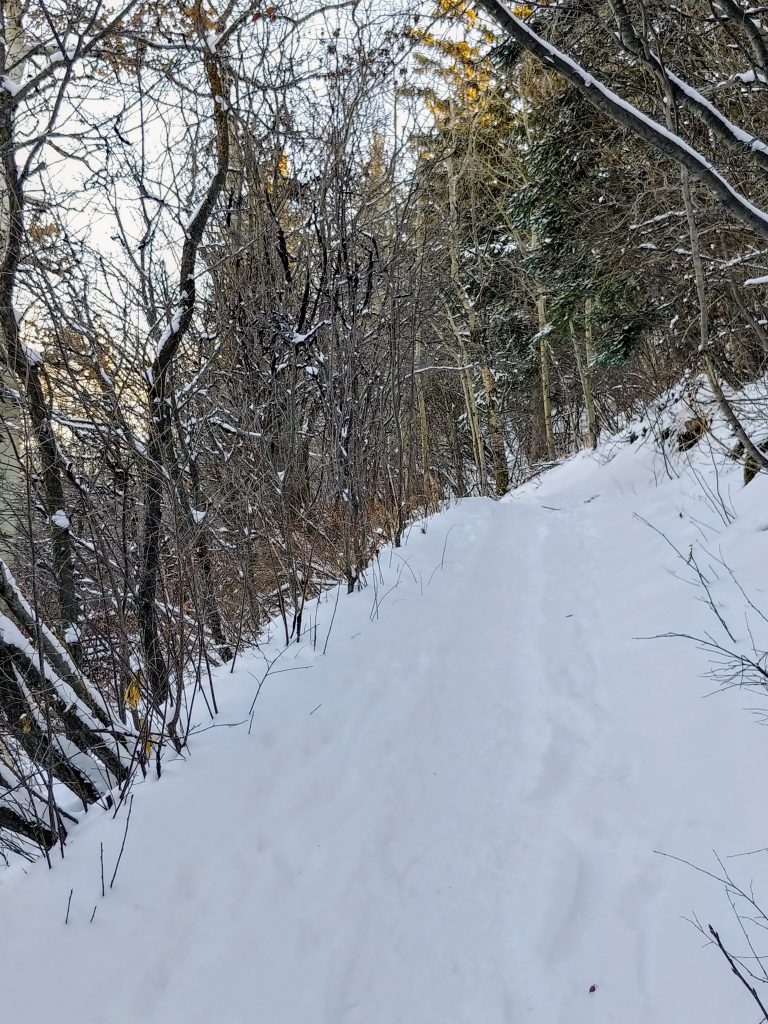
So, in addition to adding calcium and vitamin D supplements (and taking a few risky forays into the woods on dangerously icy trails because I refused to give up gracefully) I made an appointment to see a physiotherapist at a sports medicine clinic. It’s been great. We’re working on appropriate exercises to increase joint flexibility, core body strength and balance, with the goal of allowing me to develop a set of regular stretches and a weight training routine to complement my aerobic activities.

And the best thing? She doesn’t see why graded jogging or running cannot be part of my overall effort to slow, even reverse the bone loss.

It’s a strange thing, this recent shift in my relationship with this body, this space I was born into that has always been such an uneasy fit. I’ve struggled with a mood disorder, come to terms with my gender identity and survived a cardiac arrest but somehow this feels different. It feels like coming into a new awareness of the fragility and the strength of my skeletal frame has offered me an opportunity to grow into an new organic connection with my body. To truly take ownership of it as I head into this new phase of life.

To finally wake this sleeping / mountain / mine.