
Nine days before October 7, 2023, British-Palestinian writer Isabella Hammad delivered the Edward W. Said Memorial Lecture at Columbia University. Eighteen days after October 7, on October 25, 2023, Egyptian-born Canadian-American novelist and journalist Omar Al Akkad sent a tweet out on Twitter (X) that read: “One day, when it’s safe, when there’s no personal downside to calling a thing what it is, when it’s too late to hold anyone accountable, everyone will have always been against this.” Hammad’s lecture along with an Afterword penned in the early weeks of 2024 and Al Akkad’s “heartsick breakup letter with the West,” inspired, not by his social media post per se, but by his growing frustration and anger at the daily barrage of images of a people under siege, are two recent releases that present powerful, critical responses to the ongoing violence in Gaza and the West Bank. To genocide. Both address the failure of the West to respond to the humanity of the Palestinian people and the all too common tendency to look away, to plug one’s ears, or worse, to celebrate the destruction we’ve seen live streamed to the world.
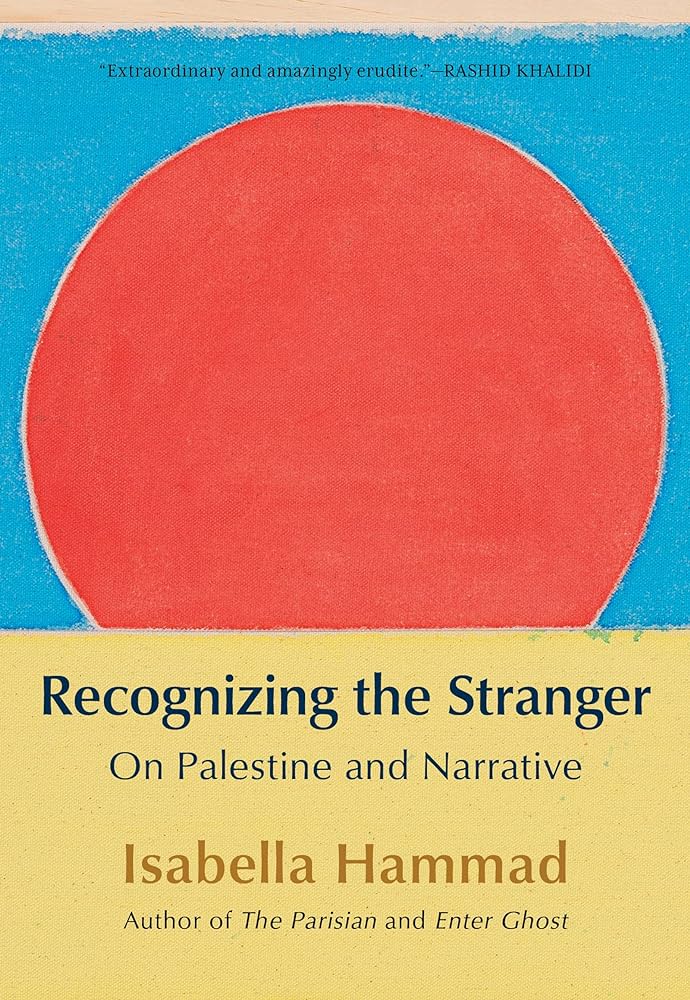 Hammad’s Recognizing the Stranger: On Palestine and Narrative is a smaller, more focused work, given the context of its origin. Her primary interest is in the telling of stories. She speaks of literary devices, especially the moment of recognition, in the character and/or the reader, in which a certain understanding arises. Drawing on literary sources, she explores this technique, then suggests that the same kind of recognition can shake firmly held beliefs about real life political realities too. Humanize the perceived enemy. Ideally, Palestinians writing about their history and circumstances should spark a chord in their audience, but, although they have been telling their stories through poetry, fiction and nonfiction for decades now, too many still refuse to acknowledge the conditions of the occupation or their right to their land and culture.
We are at a moment when elementary democratic values the world over have eroded and in some places almost completely disappeared. I feel it as a kind of fracturing of intention. The big emancipatory dreams of progressive and anti-colonial movements of the previous century seem to be in pieces, and some are trying to make something with these pieces, taking language from here and from there to keep our movements going.
There is a measure of optimism in Hammad’s lecture, a sense that “(o)pen declarations of racism and fascism by the Israeli government, while no means new, are becoming audible to Western ears.” Of course, as we read this, we know her hope that the plight of the Palestinians is reaching a wider receptive audience is about to be dramatically undone. She addresses the terrifying fallout in Gaza in her Afterword. This small volume, then, bridges the time before and after the Hamas attack, reminding those who need it, that the circumstances the Palestinians have suffered are long standing and long ignored. History did not begin on October 7.
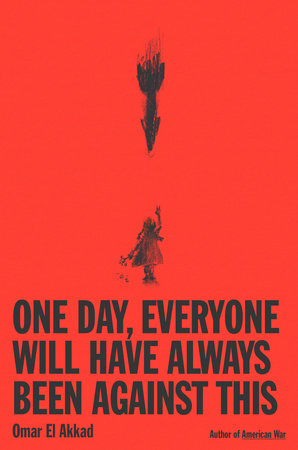 Recognizing the Stranger is very much of the moment, especially in the sense that it records a lecture given at a pivotal time, but it is framed within the framework of literary critique with a political and historical background. Omar Al Akkad’s work is likewise immediate and direct, urged on by the atrocities that he sees every morning when he turns on his computer. But he is addressing not only the genocide in Gaza as it is happening, but viewing it within a broader personal, professional and global framework. He is writing as an Arab man, born in Egypt and raised in Qatar; as an immigrant, first to Canada and then to the US; as a journalist with a decade’s worth of reporting on acts of terrorism, war, and unlawful confinement; and, perhaps most powerfully, as the father of young children. He repeatedly returns to the endless stream of images of children torn to pieces which weighs on him as a heavy anchor of pain and disbelief.
But this is not an account of that carnage, though it must in its own way address it, if only to uphold the most pathetic, necessary function of this work: witness. This is an account of something else, something that, for an entire generation of not just Arabs or Muslims or Brown people but rather all manner of human beings from all parts of the world, fundamentally changed during this season of completely preventable horror. This is an account of a fracture, a breaking away from the notion that the polite, Western liberal ever stood for anything at all.
The tone which rings clear in this quote from early in Al Akkad’s text, carries through to the end. He is blunt, he is angry, but he is not surprised. As he talks about his childhood in Qatar under a regime that censored and controlled everything coming in from the West and his family’s move to Canada when he was sixteen, there is the promise and the disillusion, perhaps in equal measure, that accompanies such a journey. As he brings in the sobering experience of reporting from front lines, prisons and other points of confrontation, he calls attention to the dehumanization of those that West see as disposable, even when, as in the case of Afghan soldiers, for example, they are supposed to be fighting beside the American forces. Of course, governments and news media never address any of this directly, rather they employ passive language and unmake meanings and outright restrict the use of certain words and phrases in the determination of who are the real victims, who are the aggressors (the “terrorists”), and who are acceptable collateral damage. In such a linguistic landscape, calling a thing what it really is becomes something that is not only undesirable or inconvenient, but as we have seen very clearly over the last eighteen months, it can cost individuals opportunities, jobs, degrees, and even their right to live or study in a country where they have legal status.
Al Akkad is well aware of the consequences of speaking out. He knows that his own career is at risk if not already irrevocably damaged. But he is unable to remain silent and his book is, as he says above, primarily directed at the myth of Western liberal values. He claims that in a world invested in the unmaking of meaning, the writer cannot be expected to turn away from the political, to only focus on the sublime. That is a luxury he cannot afford and, although he acknowledges that for some the cost of speaking out may be too great, there are many established writers and artists and intellectuals who have remained silent. Or have claimed that it is all too complicated.
One Day, Everyone Will Have Always Been Against This is an intensely personal essay, an exceptionally well-written plea for human compassion in a polarized and uncertain world. Al Akkad, although he is now an American citizen living and raising a family in Oregon, has a unique perspective to bring to this assessment of the current political dynamics, their development in a post-9/11 world, and what we, if anything, as individuals can do. It’s an empowering if sadly realistic work that will speak loudly to those of us who have likewise been devastated by the brutal destruction of Gaza and the death and injury of so many children and their families. We need to hear articulate and passionate voices like his to know we are not alone, and trust that others who may have relied solely on Western mainstream media, if that, may also be inclined to listen.
At this moment in time, Hammad’s and Al Akkad’s books both stand in an unusual, disconcerting light. They address something that is still happening, that is not yet safely in that distant rear-view mirror if, in fact, it ever will be. And since they have been published, the tectonic plates that underlie the Western world have shifted in new and frightening ways that have not only exacerbated the ongoing violence in the Middle East, but are rapidly revealing new fracture lines within former global alliances. New military concerns are emerging and censorship is more even more insidious, especially in the US. How it will play out is far from clear, but we cannot afford to let the new threats to peace and trade overshadow continuing genocide in Palestine, or, for that matter, in other ongoing conflicts in Ukraine and in the Global South. More than anything, we cannot afford to be silent.
Recognizing the Stranger: On Palestine and Narrative by Isabella Hammad is published by Alfred A. Knopf in Canada, Grove/Black Cat in the US and Fern Press in the UK. One Day Everyone Will Have Always Been Against This by Omar Al Akkad is published by McClelland & Stewart in Canada and Alfred A. Knopf.

 roughghosts