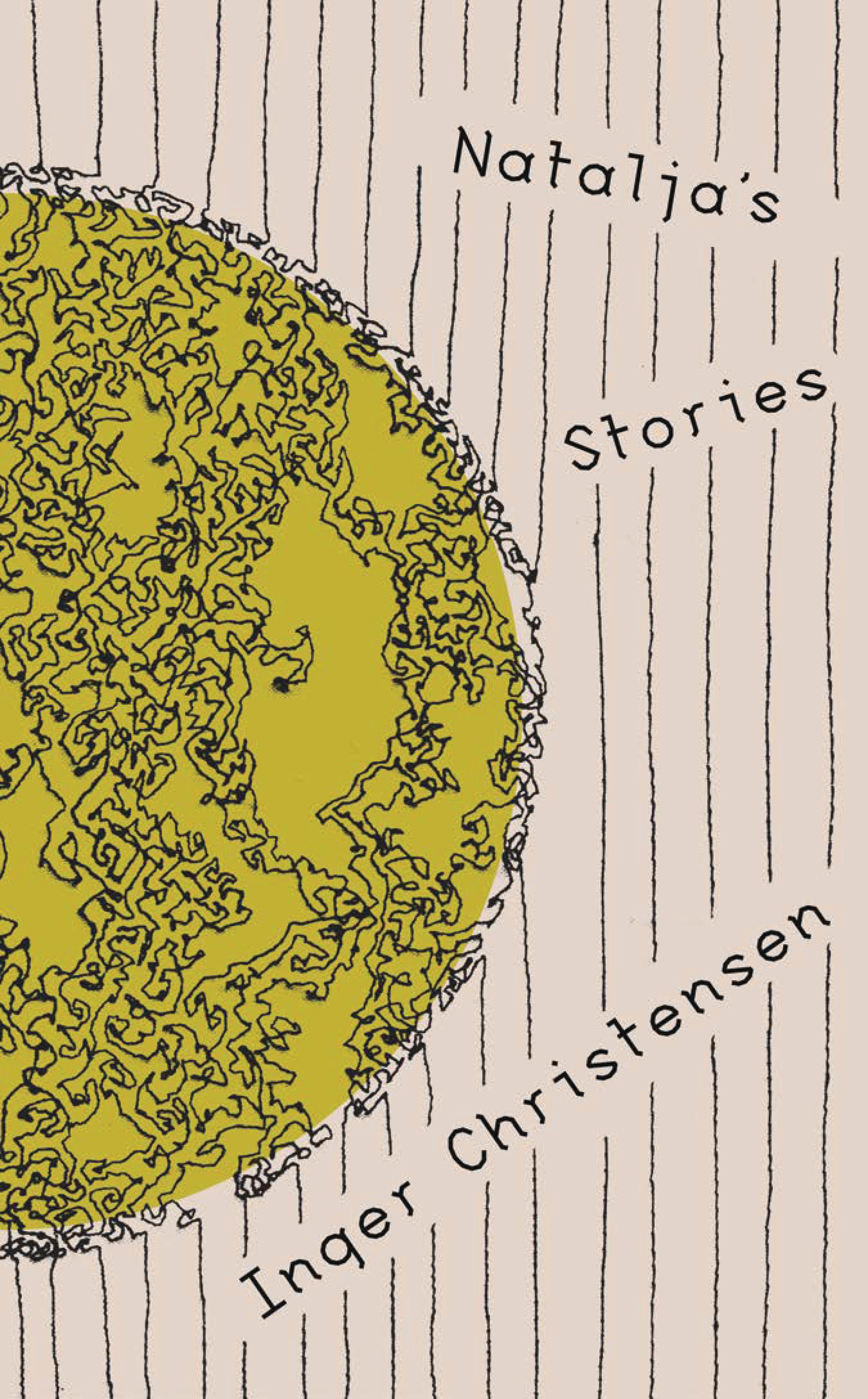
“There is something about only being able to get lost when you’re not thinking about it”: Natalja’s Stories by Inger Christensen

—There was once a woman who travelled all the way from Crimea to Denmark so that she could bury her mother.

This woman, Natalja, was born in Russia to a Danish woman who had been abducted by a Russian silk trader, and when the Revolution broke out she and her mother were forced to flee the country. Along the way, her mother became sick and died of dysentery, so Natalja gathered some ashes from the mass funeral pyre, placing them into the Chinese crock they’d been carrying, and made her way to Copenhagen. This story, told and retold, each time with a new angle or embellishment, is passed onto the woman’s granddaughter, also named Natalja, who then tells and retells variations on the themes in her grandmother’s stories letting them veer off in wild, often outlandish ways. Gathered together these stories comprise Inger Christensen’s strange, little shape-shifting novella, Natalja’s Stories, originally published in Danish in 1988, and now available from New Directions in Denise Newman’s English translation.
Reading like interlinked or echoing stories, each of the seven chapters of this book is narrated by a woman named Natalja—presumably the granddaughter of the Russian-born Natalja described above—but who is she really? A Danish woman living in Paris, a French woman who assumes Natalja’s identity, or a writer writing her own or someone else’s stories? Or all of the above. As with Christensen’s intricately layered novella Azorno, meanings are fluid, shifting even as the same images, events, and characters (or to put it simply, the same phrases, sentences, passages) reappear in ever changing forms and contexts.

The book opens with “Natalja’s story about destiny” which details her grandmother’s account of how she came to be born in Russia and the circumstances that brought her to Copenhagen. Each one of the stories that follow can be understood as variations on this theme of destiny—being caught in it, escaping it, or reshaping it.  Even the very act of telling a story seems to have its own force of will as our narrator muses in the opening of “Natalja’s story about liquor”:

There was once a cat named Mirage. That’s more or less how I thought I would begin my story. Now of course you can say it’s already begun as I thought it would—there once was a cat named Mirage and so on—whatever I come up with now doesn’t matter because it would be just one of countless but similar false beginnings. And if it had been a true beginning I would not have noticed it, would not have mistrusted it. I would not have ceased its development and so on.

But why hide the fact that only Mirage the cat holds the picture of this story and thereby knows its correct imperceptible beginning, while I am obliged to pick and choose between random sentences that say nothing to me because I’m unable to see where in the story they belong?

As reality and identities shift, revolving around repeating characters, scenes, and motifs, the stories that emerge are by turns amusing, absurd, intriguing. There are murders, mysteries, and even a man so dangerously irresistible that he may have been not only the younger Natalja’s love, but also the lover of her mother and her grandmother.  Our narrator, in her varying incarnations, seems to be inclined to allow herself to fall into unlikely situations, only realizing later that the power to reinvent herself, to become someone else, belongs to her. But it doesn’t exactly resolve how she fits into the overall narrative—if there even is one.

Composed as part of a seven-writer project modeled after Boccaccio’s Decameron, Natalja’s Stories explores a theme common throughout Christensen’s poetry and prose: the way language creates and shapes meaning. As such, the experience of reading her fiction can be akin to wandering through a maze or a hall or mirrors (or both). The inclination may be to try to dissect it logically, but in this case there may be multiple logical intersections at play.  It’s perhaps best to let go and enjoy getting lost in a world where realities continually change and simply marvel at the  connections that arise when you least expect them.

Natalja’s Stories: A Novel by Inger Christensen is translated from the Danish by Denise Newman and published by New Directions.
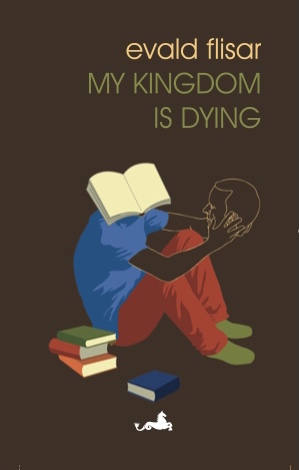
A life lost in stories: My Kingdom is Dying by Evald Flisar

Evald Flisar (b. 1945) is one of Slovenia’s best known and most prolific writers. He has travelled extensively, his work has been translated into at least forty languages,  and his plays have been performed around the world. But, as is not uncommon for writers from his corner of Europe, it is one thing to be widely read, quite another to be a household name—at least beyond one’s native borders. This is, in fact, something that is a fate long understood by  the aging narrator of My Kingdom is Dying, subtitled Storytelling at the End of the World, a characteristically unusual tribute to the life of a writer, originally published in Slovene in 2020, and now available in David Limon’s English translation, just in time to honour the author’s eightieth birthday earlier this year.

This charming and slyly subversive novel is a celebration of the power of storytelling, formally and informally. The unnamed protagonist is a highly respected novelist and short story writer who, like Flisar himself, has travelled widely and lived and worked in both Slovenia and London. He is quite a quirky, at times even arrogant, character whose life story, as he tells it, has all the qualities of a sophisticated tall tale, one that is gleefully anachronistic, blending profound insights with absurd happenings, and blurring the line between possible fact and pure fantasy. The basic narrative unfolds as the narrator is recovering from a freak accident with the daily assistance of a live-in Carer with whom he shares accounts of his past, including his early development as a writer with the encouragement of his grandfather, the pleasures and pitfalls of his career, his life-long obsession to write a completely original story, and the mysterious figure of Scheherazade who, as if emerging from his youthful reimagining of the Arabian Nights, has followed him around the world, appearing when he least expects it.

His adventures are extraordinary and feature an diverse range of real life authors and literary figures—at times holding close to actual details, like the arc of a Borges story or the make-up of a real Booker Prize jury—but because it also leans toward the bizarre, Flisar is able to get away some pretty pointed observations about the literary world with all its pretensions. His narrator takes swipes at critics, fellow writers, editors, publishers, and prize juries. But one must assume that much of this is levelled with tongue firmly planted in cheek. After all, one of our hero’s regular targets is genre writers—in contrast to serious writers of literature such as himself—all in what is a clear genre hybrid blending memoir (fictitious and factual) with fairytale, horror, mystery, and fragments of travelogue. (Of note, several accounts take place in India, and, for the absurdity of events that unfold there, Flisar’s familiarity with the country and its cities, especially Kolkata, is evident.)

By the narrator’s own account, everything was proceeding smoothly, book deal followed book deal, until the sudden onset of writer’s block upended his world. One day, stories presented themselves to him as usual, rising out of a daily act so pedestrian as opening the newspaper over his morning coffee and the next day, the well had inexplicably run dry. No stories came. If storytelling gave him his meaning, not to mention a career,  what might be the fate of  a storyteller who could no longer tell stories?

It had never seemed possible that it would be storytelling that would bring me to the edge of a nervous breakdown and change me into the kind of person who I liked to write about. This time it happened, not within the framework of an imagined story, but in the reality in which I was forced to live, even if only because of loyalty to the activity that I saw as my “mission”, for I knew that withdrawal from the world, when we lack a way forward and begin to psychologically drown, is always possible and, with the abundance of chemical means available, can also be painless, even instant. But each such thought, that I might withdraw from the world before my natural end (thus showing that I was not a victim, but rather the master of my fate), automatically became transformed into a story that I simply had to write and share with others. With that, the wish for a leap into the next life lost its power and validity.

Now without this critical lifeline, would he be able to hold off his darkest thoughts? When he confessed his predicament to his editor, it was suggested that he seek treatment, all expenses paid, at an exclusive clinic in Switzerland where his writer’s block might be cured. The clinic, ominously named Berghof, turns out to be a dark, dank castle in the middle of a lake where, so far as he can tell, all of his fellow patients seem to be seriously mentally ill. The treatment is absurdly brutal, the doctors appear to be madmen, and it is not until he emerges from his solitary routine that he finds himself among the likes of Saul Bellow, Martin Amis,  J.M. Coetzee, Graham Greene, and others. And it just gets stranger from there.

Flisar has a fondness for exploring serious themes within environments that are by turns whimsical and grotesque (see my review of My Father’s Dreams). He is especially interested in the behaviour his characters exhibit under psychological pressures—and his protagonist here is subject to more than a few impulsive reactions when he feels threatened. But, at the same time, in narrating his story to his Carer, a woman he grows increasingly close to, he is able to maintain the storyteller’s objective distance, at least until boundaries between myth and reality finally dissolve. In the end, despite—or perhaps because of—its many spirited and unlikely detours, My Kingdom is Dying is a tribute to storytelling  so rich with literary illusions and intertextual elements  that it holds a depth its seemingly light, eccentric tone belies.

My Kingdom is Dying by Evald Flisar is translated from the Slovene by David Limon and published by Istros Books.

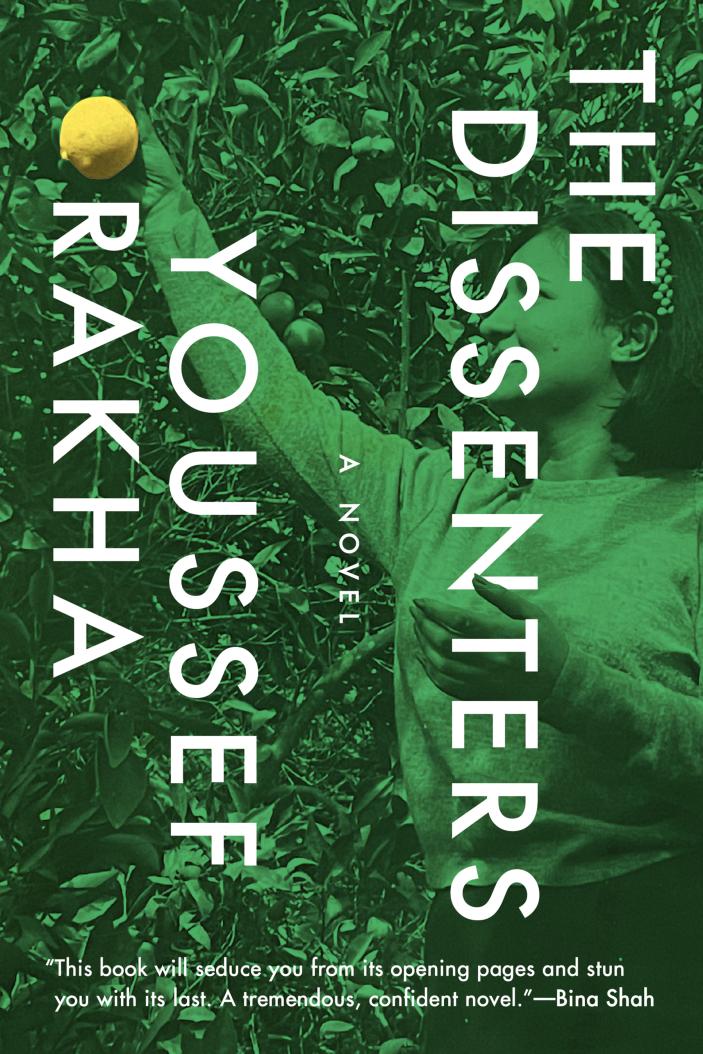
Memories, visions, and grief: The Dissenters by Youssef Rakha

I think I hear the dawn azan much earlier than it is supposed to sound. The world, spaced out, is speeding down some derelict highway in time. And long before my attic visions start, Shimo, I am thinking it is time that happens to people. We talk about having and saving and wasting it as if it is ours to work with, but really it is we who are time’s property. It molds and meddles with us, changes us without our knowing, so that one day we wake up with no idea who we are. And suddenly the life we’ve lived is no longer ours.

Youssef Rakha’s latest novel, his first composed in English, explores the remarkable, multi-dimensional life  of a strong-willed, enigmatic woman, set against the tumultuous years of recent Egyptian history, from the mid-fifties through the January Revolution of 2011 and its aftermath. But to put it like that sounds too simple, too conventional, for the tale that The Dissenters unleashes. Not content to embark on a straightforward narrative (which would not be his style anyhow), Rakha has chosen to tell the story of Amna Hanim Abu Zahra—Nimo to her friends, Mouna to her husband and children—through the memories and hallucinatory visions of her eldest son Nour. In the wake of his mother’s death, his grief-tinged, ecstatic narrative unfolds in a series of letters to his estranged younger sister Shimo in California. He wishes to share with her the understanding of Mouna, their mother, that he has gained through the strange rift in the fabric of time that has allowed him, within the confines of the cramped attic of the their family home, to slip into her earlier existence, living, reliving or closely observing her experiences, even those from long before he was born.

The Dissenters is, then, essentially a one-sided epistolatory novel consisting of three long letters with an interlude stolen from Mouna’s own notebook. Nour engages his sister directly and imagines her responses, but the apparent silence on her end provides no indication whether his dream-inspired insights will manage to heal, as he hopes, the unresolved rupture between mother and daughter that precipitated  Shimo’s unannounced departure from Cairo years earlier. However, it would seem that this is not the only loose end Nour is attempting to tie up. He is a forty-five year-old journalist who returned home to live with his mother after his divorce in 2010, and there is much that he must resolve with respect to his own life and his relationship to his country.

Moving between more recent, post-revolution events to which Nour—and in one section Mouna herself—can speak directly, and the attic revelations that reach back further into the past, Rakha unwinds a tale that works with, and against, temporal framings to create a narrative that slowly builds to reveal a full, multi-dimensional portrait of a singular woman and the shifting political, social, and civic world around her. Nour’s earliest visions take him back to 1956 when his mother, a teenager still known as Amna, is deprived of a chance to take her baccalaureate  exams and forced to marry a forty year-old man her family has selected. The awkward marriage will remain unconsummated and ultimately be dissolved, which allows young Amna the opportunity to finally pursue her dream of going to college.

There she will meet Amin, the young Communist lawyer who steals her heart and gives her the name “Mouna,” but their newfound joy is short-lived, as he is arrested and imprisoned a few short months after they move in together. The years of their separation, Nour tells his sister, see their mother exercising a new confidence and independence as she finishes school and enters the workforce. As a modern, stylish Egyptian woman, her friends and colleagues call her “Nimo.” When Amin is released from jail, a diminished and disillusioned man, she continues to work, even finding herself, for a time, acting as a secret agent. And then, at last, in 1969 Nour is born. By the time her second child, another boy, arrives, Mouna is again transformed. She has remade herself as a pious, middle-class Muslim mother.

The alternate thread of Nour’s correspondence with his sister, who is thirteen years younger than he is, explores more recent family matters including their parent’s comfortable estrangement, their brother Abid’s sadistic tendencies, and the circumstances that seem to have caused Shimo’s relationship with her mother to become strained and then permanently broken. But the primary focus is the dramatic impact that the 2011 revolution had on their mother. It seemed to awaken a long dormant political spirit in Mouna, giving her a new purpose and a new life.  On February 11, the night Mubarak stepped down from power, Nour walks home from Tahrir Square and is distraught to find that she is not there. Immediately his mind goes to all manner of horrors, imagining her lying in a puddle on the sidewalk.  And then, she appears, holding a flag, smartly dressed, her headscarf gone:

—You’re home early Mouna trills, the premillennial warmth of her voice restored.

Now my mother is smiling for real: an expression utterly unlike the baraka she used to project going about her devotional duties. I haven’t seen such peacefulness in her face since before Baba died. She stands waving her flag, then steps over the puddle that no longer shows her dead.

—I couldn’t stay home on a day like this, now, could I, she says. Besides, I just took the Metro to Kast El Ainy and walked to Tahrir. C’était incroyable, ya Nour. Hold your head high, you’re Egyptian, we chanted. But it wasn’t just a chant, you understand. It was real.

Soon, however, Mouna becomes aware of a strange and disturbing phenomenon. Something that others do not seem to register. Suddenly women are jumping off roofs and out of windows. She begins to investigate, finding a few others who also seem to be aware of this unusual trend. She even tries to recruit Nour, encouraging him to report on the situation. He doesn’t know what to make of the Jumpers,  but she sees a truth in their tragedies. These ill-fated women become a mystery, and then an obsession, even a madness, that fuels Mouna’s final years as the promise of the revolution turns again to upheaval and violence.

This ambitious, hypnotic novel tells a story that is very intimate, turning at times erotic or violent, but it is about much more than the life of one woman. For one thing, the conscious incongruity of having a complex woman’s life recounted and, at times experienced, through the vessel of a man sets up an interesting dynamic, speaking as it does to the shifting roles and restrictions that impact women in Egyptian society from an unlikely angle. Of course, The Dissenters also addresses the price paid by anyone who defies political and social conventions, and highlights the challenges of navigating  the forces of power for one’s own safety or (as in the case of Abid who joins the Secret Police) one’s advantage. Thus, Mouna’s story is much much larger than she is. As Nour confides to his sister:

But I’m no longer talking of my mother, am I. I’m talking of the Mother of the World. Surely you know that’s what Egypt is called, dear sister. At moments like this it seems as if Amna Abu Zahra is a fractal of our country, her biography a variation on its history, a version of the same story.

Finally, although Rakha is writing this novel in English—a language Nour and his sister share—his prose carries a strong Egyptian flavour. Many Arabic terms and expressions are woven into the text without comment or glossary (one can always look them up, mind you), and because Mouna was educated in French schools growing up and continued to use the language in her working years, French phrases regularly appear in her speech. This distinctive voice, in conjunction with the rhythmic flow of a narrative structure that blends the fantastical possibility of Nour’s visions with the reality of his own need for understanding and reconciliation, makes for a compelling and exceptionally rewarding read.

The Dissenters by Youssef Rakha is published by Graywolf Press.

Marking eleven years of roughghosts with a few thoughts about writing book reviews

It always catches me by surprise, that annual notification from WordPress informing that yet another year has passed. As of yesterday, May 31, 2025, roughghosts is eleven years old.

Each anniversary leaves me a little bemused. After all, this modest corner of the internet was birthed at the height of a major manic episode—one that would end my career and fundamentally change my life. And although I created this blog with the vague notion that it might offer a space for my own writing, I could not have imagined where it would be eleven years on. It has not only become a place in which I write, primarily about books, but an avenue to writing and editing for online journals.

I have found that I find writing about books very rewarding, but am bemused by the ongoing complaints about a lack of book reviews, especially of titles published by smaller independent publishers. For some reason, book blogs don’t count. (Personally I prefer to describe roughghosts as a “literary site” because of this stigma even though I do not have a problem with the other designation.). My intention with the majority of the reviews I publish is to maintain the same practice I was first exposed to when I was invited to contribute to Douglas Glover’s late great journal Numéro Cinq. They are the same principles that I have preached when invited to speak about reviewing to others, and relied upon as Criticism Editor for 3:AM Magazine.

Basically, my goal is to fashion a piece that is well-written and entertaining,  that attempts to open up a way into a text for a potential reader (especially with books that may be more complex or unconventional) and that aims to call attention to what is interesting about it. In a longer (2500+ word) piece for publication elsewhere, I will take this aspect to a greater depth, but for my blog I am generally aiming for a simpler, shorter (less than 1500 word) review. Most critically, I try to stay out of  my reviews as much as possible unless I have a very good reason to share a little of my own experience or a particularly personal perspective. As Doug Glover would say—I try to limit the “I” statements. You are still reading my reaction, of course, and at times my enthusiasm is palpable, but I always want to leave a text, especially one that raises more questions than answers, open for a reader to explore on their own. I may have very strong feelings about what is really happening, or what something really means, but my specific opinions to that end have no place in a review. That kind of response is for a book club or a conversation with a bookish friend over coffee. However, I do occasionally allow myself to be more present when I am writing what I describe as a “response” to a book—typically one where I know the author fairly well, in person or virtually—or where my own lived experience strongly colours my reading of particular work.

I also tend to spend a ridiculous amount of time writing most of the reviews on my site, regardless of how long they might be. It can take me days to complete a piece, much of that time spent spinning my wheels trying to find the best way to frame my approach. Then, when I finally find my footing it rarely takes less than six to eight hours of focused writing, often a lot more to complete a post. So, I’m a slow reader and an even slower writer. My productivity is not high (I like to imagine it’s quality over quantity) and when life gets complicated, as it does from time to time, it’s even lower. But between reading, writing about books, and editing essays for Minor Literature[s], I am quite content with this blogging life. It has introduced me to so many interesting, intelligent people, opened unexpected opportunities to travel, and, of course, led me to so many wonderful writers, translators, and publishers—not to mention more books that I will ever have time to read.

And now, on to year twelve!