
At the end of the small hours delicately sprouting handles for the market: the West Indies, hungry, hail-marked with smallpox, blown to bits by alcohol, the West Indies shipwrecked in the mud of this bay, wickedly shipwrecked in the dust of this town.
At the end of the small hours: the last, deceiving sorry scab on the wound of the waters; the martyrs who refuse to bear witness, the fading flowers of blood scattered on the futile wind like the screeches of chattering parrots; an old life’s ingratiating smile, lips apart in deserted anguish, an old wretchedness decomposing in silence beneath the sun; an old silence broken by tepid pustules, the dreadful zero of our reason for living.
The image of his hometown that opens Martinician poet, playwright and politician Aimé Césaire’s Return to My Native Land, is brutal and unforgiving, a bleak portrait of destruction, despair, and disease. With its uncompromising vocabulary, relentless energy, and pointed repetition, a pulsating beat soon settles into the language. It will carry the reader—or listener, for these words beg to be heard—through to the end of this powerful and inspiring epic. Explored through the lens of surrealist poetry, this intensely personal journey to self-affirmation and biting deconstruction of the colonial condition became a rallying cry for the African diaspora. It is also one of the best known French poems of the twentieth century.
 Césaire was born in 1913 in the town of Basse-Pointe, Martinique, the second eldest of six children. Although his family were of modest means, they moved to the capital, Fort-de-France, so he might be able to have a good education. It was a wise investment, as Aimé received a scholarship to the Lycée Louis le Grand in Paris. But the move to Europe was a sobering one as the young man came face to face with the fact that although he was a French citizen, the colour of his skin openly set him apart. It would serve as the beginning of an understanding of himself in relation to an African heritage and a legacy of slavery and colonial domination. With fellow students, Léopold Senghor from Senegal and Léon Damas from Guyana, he contributed to the development of the concept of “Negritude” or black consciousness, a revolt against colonial values that not only formed the foundation of an intellectual movement but shapes his celebrated poem.
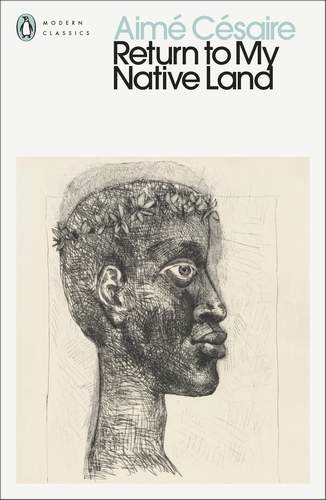
Return to My Native Land (Cahier d’un retour au pays natal) first appeared in print in 1939, the year Césaire left France and moved back to Martinique with his wife and first child. Over the years it would undergo several revisions before the definitive French language version was published in 1956. The English edition reviewed here is a recent (2024) rerelease of the 1969 translation by John Berger and Anna Bostock, edited and introduced Jamaican writer and scholar Jason Allen-Paisant. In his introduction, Allen-Paisant writes of his personal history and connection to this work, noting that his appreciation grew slowly, ultimately bridging the seventy-seven years age difference between himself and Césaire:
In time, I became aware that this poem inspired movements of liberation and cultural assertion across Africa and its diaspora. But above all, Césaire’s poem was about my body. It was a sound in which my body was at home. This enchanting sonic power (its rhythms suggestive of the drum, of chanting, of ceremony) is hard to strip away. Still today, even now that I understand the meaning of nearly all its words, I connect with this poem through its sound.
Although Césaire found his poetic expression through surrealism, there is a broad narrative arc to Return to My Native Land. The early section speaks of the poverty and decay of his hometown, recalls childhood memories, and acknowledges the pull of Europe as means of escape. Leaving home is seen as the only way one can find oneself. It is to become part of a long history of dislocation:
To leave.
As there are hyena-men and panther-men,
so I shall be a Jew man
a Kaffir man
a Hindu-from-Calcutta-man
a man from Harlem-who-hasn’t-got-the-voteFamine man, curse man, torture man, you may seize him any moment, beat him, kill him – yes, perfectly fine to kill him – accounting no one, having to offer an excuse to no one
The wandering man, homeless, trying to find a place and meaning , grows increasingly angry and bitter in a world in which his people are either hated, seen as wretched beasts, or loved as novelty and entertainment. At times the anger takes on a wider, universal tone:
Words? We are handling
quarters of the world, we are marrying
delirious continents, we are breaking down
steaming doors,
words, ah yes, words! but
words of fresh blood, words which are
tidal waves and erysipelas
malarias and lavas and bush-fires,
and burning flesh
and burning cities . . .Know this well:
I never play except at the millennium
I never play except at the Great FearAccommodate yourself to me. I won’t
accommodate myself to you!
As much as this is a work that seems to sing off the page, it can be harsh and demanding. The language can be quite brutal and disarming, the images, often dark and visceral, as the poet confronts his own feelings of disgust, guilt, shame, and anger in his response to the world around him and the history that shaped it. But gradually he begins to find a strength and direction in himself and a vision of future he wants to see for his people. Self-acceptance does not lead to weakness but to defiance:
Make me rebellious against all vanity but docile
. to its genius
like the fist of our extended arm!
Make me the steward of its blood
make me the trustee of its rancour
make me a man of ending
make me a man of beginning
make me a man of harvesting
but also make me a man of sowing
The man who rises as the poem nears its close is one who accepts his biology but refuses to be defined by it. He is called and calls his people to rediscover and reclaim their humanity after centuries of dehumanization and trauma through a reimagined return to their African roots. That is the native land to which he has, in spirit, returned. In body, however, he will remain in the land of his birth and continue to explore these themes through his writing and plays, and put his passions into practice in political life. Aimé Césaire died in 2008 at the age of ninety-two, but Return to My Native Land, remains a critical call to action and profound anti-colonial statement that is now, eighty-five years after its first appearance and almost seventy years after the release of the definitive French edition, more important than ever.
Return to My Native Land by Aimé Césaire is translated from the French by John Berger and Anna Bostock, with an introduction by Jason Allen-Paisant, and published by Penguin Books.
 roughghosts