
May is Mental Health Awareness Month, at least in Canada and the US, and this morning I awoke to find an essay in my inbox titled “The Last Great Stigma” by Pernille Yilmam. This Aeon article addresses the workplace discrimination that workers with mental illness experience claiming that it “would be unthinkable for other health issues,” and asking if it can change. As the piece demonstrates, this issue is widespread and can take many forms. The author explores ways in which misconceptions and concerns might be addressed. For me it is far too late. Next year I will have been out of the workplace for ten years—more than ten years earlier than I ever anticipated—because even if you are open about your diagnosis, a serious breakdown on the job (no matter if dysfunction at the job itself was a significant factor) is something your career might never recover from.
I’ve been thinking about this a lot lately. And about how mental illness has shaped my life—as someone with bipolar, as the parent of an adult child living with serious anxiety and addiction, and as a former professional in the disability and mental health field. Yet, like so much in my many decades on this planet, I still don’t know how to make sense of it all. When I was first diagnosed back in my thirties I read all kinds of books about my condition (against the advice of the psychiatrist I saw just once after discharge who told me not to read anything or go to any support groups), but after a while I moved beyond books. Life was busy. I had two children and, before long, I was a single parent facing major personal changes. By the time I finally sought out peer support, I attended one group and by the next month I was co-facilitating! I ended up finding most of my real support through volunteering and in my professional positions.
Then it was suddenly over. With no closure. The subsequent years have been marked by great trauma, loss, and unexpected adventures. Also, lots of reading and, here and there, a little writing. But, truth be told, mental illness can be very isolating. It skews one’s ability to gauge social interaction—Did I say too much? Too little? Why am I so nervous?—and often makes it seem easier to avoid meeting up with others or trying to cultivate friendships. Alone is safer. And the longer one’s life becomes, the more entangled the varied threads that make us who we are become, and the more difficult it is to trace back through years and attempt to untie knots that have formed and reconnect fibres that have fallen loose along the way.
My first major episode of mania occurred in my mid-thirties. It was not disconnected from other things happening in my life at the time, so it crept up on me, gradually intensifying existing tensions and distorting my sense of reality. I was, by the time I was admitted to hospital, in full-blown psychosis. Oddly, I sensed that what I was experiencing was psychological in nature, but in true manic-depressive style I figured I could ride it out. And, of course, those around you also sense something is wrong but don’t know what to do. From the inside, your thought processes are so accelerated and obsessive that perspective is lost; it becomes a matter of survival and it can get ugly. When it’s over, some say that a kind of amnesia clears your memory, but that’s not exactly true. You are left with fragments, some very vivid, a great deal of shame, and no way of knowing how others saw you when you were at your very worst.
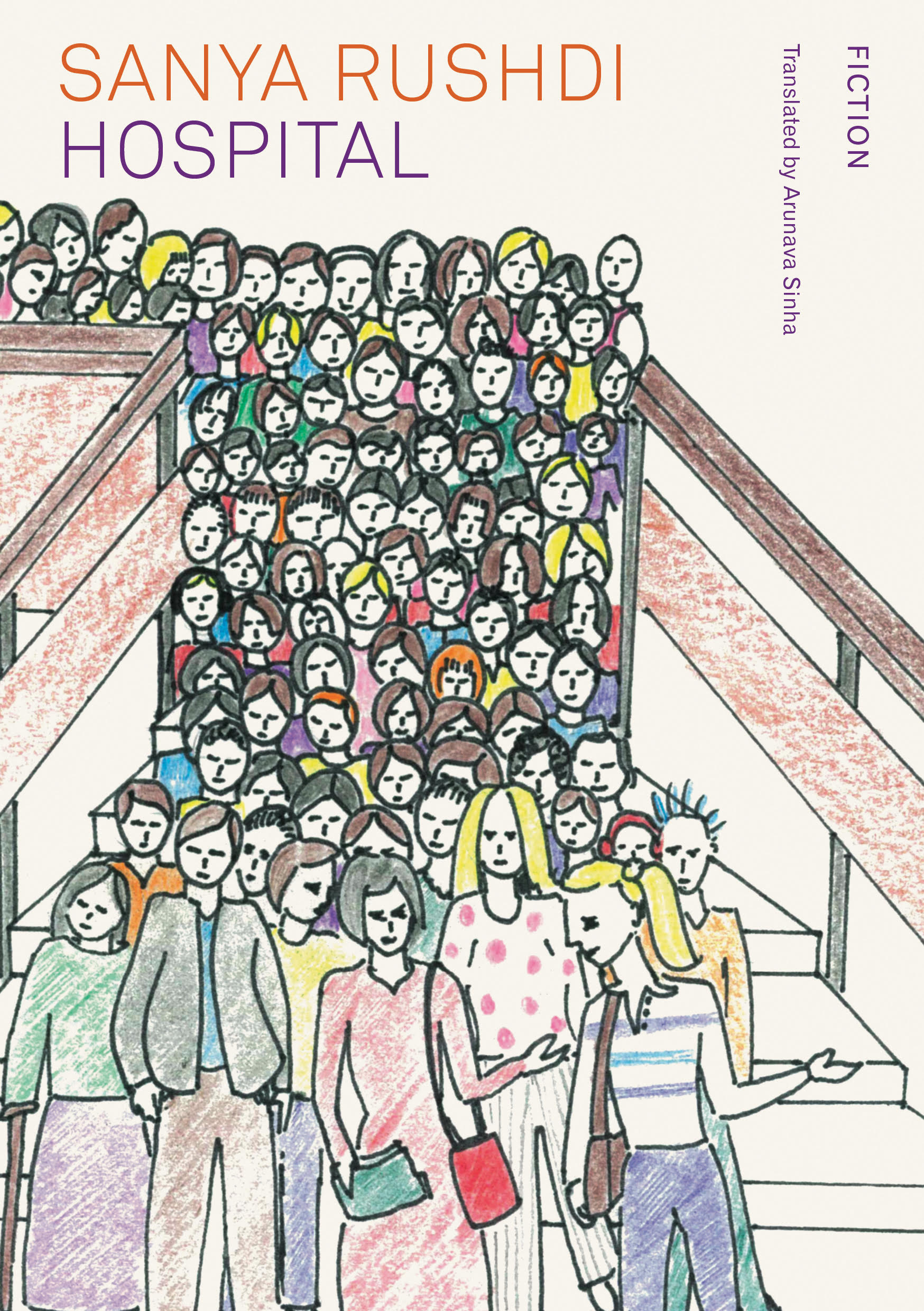
 It’s a difficult thing to articulate, but this where we come to books. More than any fictionalized account of madness and psychosis, Hospital by Bengali-Australian writer Sanya Rushdi (translated by Arunava Sinha) manages to recount the experience of psychosis from the inside with a remarkable sense of self-awareness, arising, I can only imagine, from the author’s own multiple experiences with the condition. This critically acclaimed novel captures the strange internal boundaries that the protagonist (also named Sanya) tries to negotiate in a manner that resonated with me. As I noted in my review:
Sanya’s narrative is restrained and oddly lacking in affect, even when she describes her tears and outbursts. She is continually trying to observe herself and logically reason her way through whatever arises. However, her reasoning is often disjointed and confused. She is constantly seeking symbols of significance, spends a lot of time trying to figure out the secrets behind the thoughts and actions of others, questions why certain song lyrics keep coming to mind, and fitfully attempts to draw strength from her faith.
I recognize this well. The thing is, whether one is manic or depressed, psychotic or not, the tendency is to assume that whatever is happening to you is you, not a physical illness that is directly affecting your mood and your perceptions of the world.
When it comes to poetry, it is well-known that many famous poets have, over the years, struggled with mental illness, often writing from within the depths of madness and, sadly, frequently ending their own lives. I am drawn to such poetry but admit to finding much of it painfully difficult to read. Too close, too unfiltered at times, it must be read slowly. And then there is the genius of madness question that comforts some of us and angers others, but in the interest of understanding mental illness I wanted to call attention to a poetry collection I read several years ago that I think of often.
 Shahr-E-Jaanaan: The City of the Beloved by Pakistani-American poet, translator and ghazal singer Adeeba Shahid Talukder was a book that came to my attention in the early months of the pandemic, a background that coloured my reading. I was intrigued by this young woman who draws inspiration from the greats of Persian and Urdu poetry and the late Kashmiri-American poet Agha Shahid Ali to explore traditional and contemporary themes alike, from the conflicts between an American raised daughter and her immigrant family to the poignant drama of Laila and Manjoon. Yet, in spite of a clear reference to a hospital in an earlier poem, it was not until I hit the title sequence, that I began to sense something more might be at play. In my review I report that the sequence begins:
At December’s end Benazir died
in a suicide attack.. Men burned
tires, cars, banks,
petrol pumps and factoriesPerhaps in grief.
The nights in New York
were clear, coldand I read Faiz
in a way I never wouldagain. In Washington Square,
the benches were empty.What follows is a harrowing account of the speaker’s descent into madness, accompanied in her mania, by God and her poetic saints, culminating eventually in hospitalization and echoing back to the poem I quoted above. It’s devastating, horrifying and strangely familiar, but on my first encounter I did not recognize it for what it really is.
Although I was unaware of Talukder’s own bipolar history when I first read her collection, I did have the feeling that she knew an experience I had also had. An interview with the poet confirmed it, along with her desire to address some of the misunderstanding and stigma she has faced. My response to learning this and a link to said interview can be found in my review of this excellent collection.
 Finally, when it comes to mental health memoirs I am perhaps even more cautious than I am about fictional or poetic works. However, within Stephen Johnson’s How Shostakovich Changed My Mind, I found moments that spoke to me so clearly in relation to my own experience of mental illness before and in the long years following diagnosis. That is possibly because it is not your standard mental illness memoir. A blend of musical biography, memoir, psychology and philosophy, this fascinating book-length essay draws its greatest strength from the author’s passionate affection for and deep connection to the music of Dimitri Shostakovich. As I note in my review:
As one might imagine, given the unusual title, How Shostakovich Changed My Mind is an intimate account of the intersection of music with the personal drama, and trauma, of life lived. Johnson draws on literary, philosophical, neurological and psychological resources as he explores the connection between music and the brain, an area of growing interest and investigation, but he anchors his inquiry in the story of Shostakovich’s life and work during some of the most tumultuous events of the twentieth century—a thoroughly fascinating account in its own right—while tracing out his own particular relationship to this music and the role it played, not only in adolescence, but in his own adult challenges with bipolar disorder.
As such, Johnson’s work is not only a powerful exploration of the ability of music to provide expression and meaning in times of joy and sorrow, but a moving personal memoir of how music can serve as a means to navigate madness, especially in those times when, from inside, all one knows is that something is not right, even if one does not know why.
So, three books for Mental Health Awareness Month, or any time, because it is important to continue to work towards increasing understanding and reducing stigma around mental illness year round—and around the world.
Hospital by Sanya Rushdi is translated from the Bengali by Arunava Sinha and published by Giramondo in Australia and Seagull Books everywhere else.
Shahr-E-Jaanaan: The City of the Beloved by Adeeba Shahid Talukder is published by Tupelo Press.
How Shostakovich Changed My Mind by Stephen Johnson is published by Nottinghill Editions in the UK and distributed by NYRB in North America.
 roughghosts