This is not a novel that eases you in slowly, gradually revealing its excesses. Rather, the truth of the situation at hand is immediately on display. Grotesque and disturbing, the first few chapters can make for uncomfortable reading. It is not simply the event taking place, but the attitudes that surround it, the relationships and circumstances that are swiftly and bluntly made clear. In a hut above an expanse of rice paddies in Tamil Nadu, a woman is giving birth. She looks like a “strange life form,” a large misshapen creature with one good strong arm and leg on one side, shrivelled limbs on the other. Only one eye, holes for a nose, and a large mouth grace her bald, flattened head. This is Muthammai and the child, equally disfigured, will be her eighteenth, yet to Pothivelu Pandaram, her owner, she is nothing but an “item”—albeit an especially valuable one, a cash cow bred to produce offspring to add to the pool of beggars that are the staple of his trade. However, no matter how grim it may seem at the outset (and at some level always is), The Abyss by Tamil writer Jeyamohan is a profoundly human story filled with selfish motives , moral ambiguity, and affectionate, if dark, humour.
 Pandaram, the central protagonist projects the image of the successful middle class man. He has a devoted wife, three beautiful daughters, and is a faithful devotee of Murugan, the handsome Hindu God of war, patron of Tamil culture. But the unseemly source of his income is an open secret—it rests in his stock of disfigured and disabled men, women, and children. It’s a business that places him in the company of some pretty disreputable characters, but his family, in so far as they are exposed to it, seem to be surprisingly at ease with it all. And when two of his friends joke with him at the local bathing pond he is quick to defend his trade on spiritual terms:
“Stop it, Kochu Pillai. It is no laughing matter. There are all kinds of souls, great and little. Now, we say Mahatma Gandhi, yes? What’s that? Maha-atma. A great soul. That’s because his atma was great. Ours, on the other hand, is a smaller soul, a smaller atma. We must respect other souls like ours. Love them. But there are souls even smaller than ours. Those we must protect. Look after. Now, take these creatures. These items. But for us, who do they have? The whole lot would be out on the streets, hungry and begging. They’d starve to death. But now they are under us, so they don’t need to worry about a thing. They get enough to eat, a roof over their heads, medicines if they are sick.” Pandaram took a dip in the pond and rose.
It sounds like a reasonable, if twisted, compassion at play, but it’s not. It’s a form of slavery. As he is shuffling his beggars off to a temple or festival, or deciding which one to sell or trade, Pandaram will remind himself—and others—that he is dealing with beings who have “no souls, no brains.” The question then becomes: Who are the “freaks” in this system? Whose humanity is deserving of consideration and value? As we witness the corruption, hypocrisy, and social demands of the world Pandaram frequents, while at the same time getting to know the beggars and the reality they create for themselves, it’s is not such a difficult matter to answer.
Although they vary in the extent of their infirmities and the degree to which they can engage and communicate, the beggars are no fools. And they are under no illusion about the precariousness of their existences, but they know how to “perform,” how to squirrel away coins to purchase snacks and beedis (thin, hand-rolled cigarettes), and even how to manipulate their minders when needed. Along with Muthammai and her infant son, there’s Mangandi Samy with his legless, one-armed body and small head who doesn’t speak but sings his own made-up songs of love and loss. And there’s Ramappan, a Kannadiga leper, and Ahmedkutty, a literate Muslim with testicles grossly enlarged by elephantiasis, and an assorted cast of other fantastically distorted and disadvantaged folk. They spar with one another, joke, fret, and when one of them longs for a fancy feast, they conspire to arrange it for him. More than simply marginalized, the lives they live may be limited but their dreams are not, and they make the best of what they do have, commenting on their state—not to mention that of greater society—with wit and biting, black humour.
Away from the temple steps, cops seek bribes, priests and pilgrims play lip service to faith, and other dealers in the beggar breeding and bartering trade engage in unspeakable cruelty that far exceeds anything our protagonist will entertain. Yet, Pandaram is the complicated knot in this story. He is self-centred, caste conscious, proud, and dishonest, but there are anxieties that keep him on edge. His eldest daughter is overdue to be married, and the expenses and negotiations required to assure a suitable match (regardless of what the prospective bride and groom might want) are excessive. Meanwhile, his middle daughter is seeing a rebel on the sly. And his youngest, his favourite, demands favours he cannot refuse. His mood swings wildly from cocky confidence to tears of despair as he regularly runs to the temple to thank Murugan for his graces or beseech Him for relief. And as things start to really unravel, one can almost feel sorry for him. But not too much.
Translator Sucharita Ramachandran’s Note which closes out the novel—but probably would be best read first—sheds light on aspects of Jeymohan’s storytelling in this rich, multi-faceted tale that do not easily make the transition into English. The original, she tells us:
is a novel with a remarkable degree of polyphony. While the novel itself was written in a register that straddled Tamil and Malayalam, it uses other languages, registers and dialects to differentiate between various characters. For example, Ahmedkutty speaks a Tamil–Malayalam peculiar to Muslims. A minor character speaks only Kannada. Many of the characters lapse into English when they become class conscious. The characters liberally use puns, proverbs and film songs to communicate their thoughts and feelings, and sometimes switch between languages to make a point.
She tries to preserve as much of the linguistic nuances as possible through a variety of means that read unobtrusively in translation and I was pleased to note that, apart from some very specific terms included in a brief glossary, South Indian place names, food items, and other customary features were not unnecessarily explained. This enhances the very distinctive atmosphere of this exceptional novel (and, of course, there’s always Google if you’re curious).
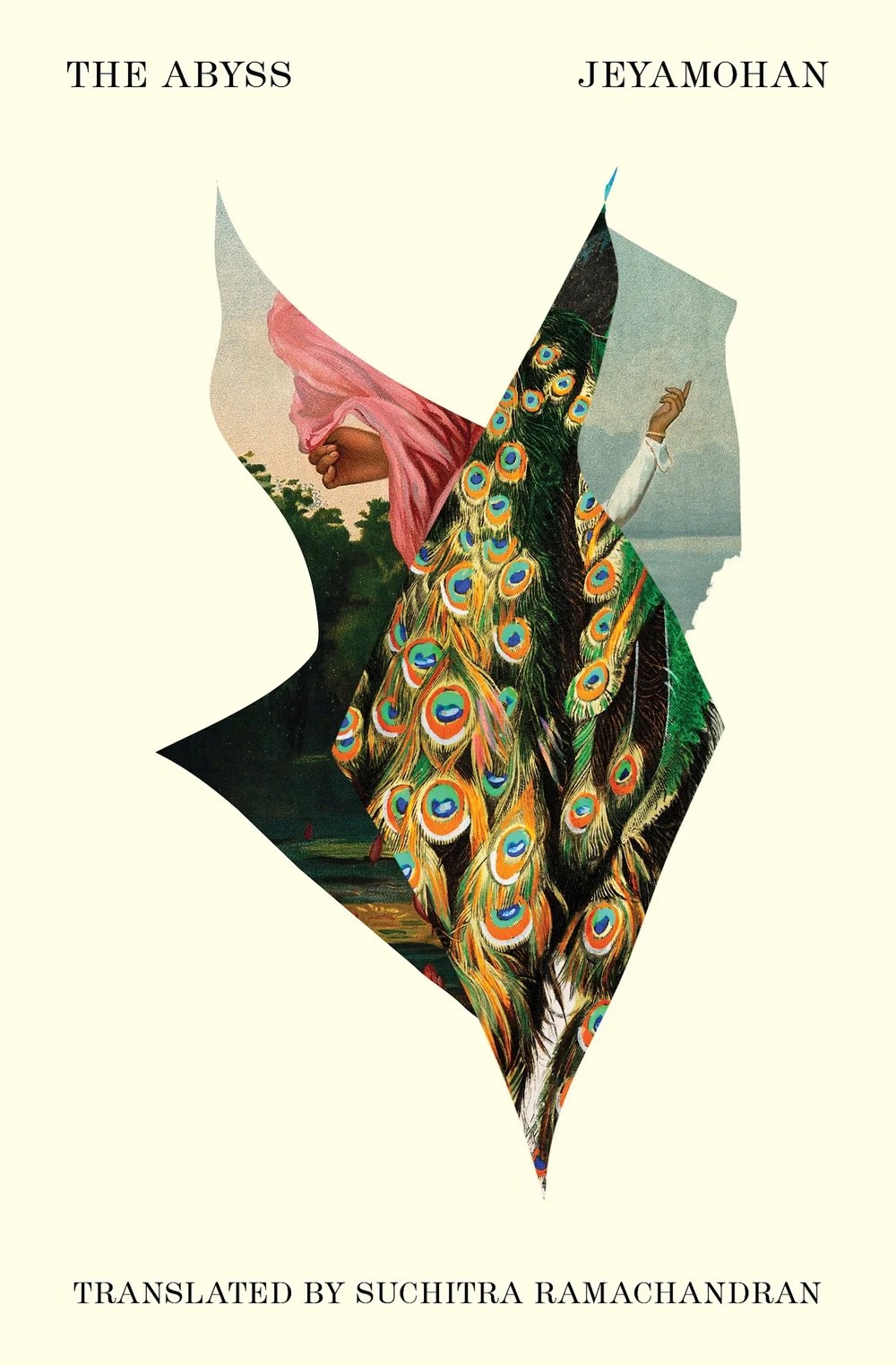
The Abyss by Jeyamohan is translated from the Tamil by Sucharita Ramachandran and published by Transit Books.

