Colette’s The Pure and the Impure opens in an opium den in Paris sometime during what would come to be known, looking back through the veils of nostalgia, as the Belle Époque. Our narrator, also named Colette, arrives, not as a participant but as a writer intent on conducting a little research. Perhaps, it is implied, for novel.
Fully prepared to be bored, I settled down on my own little mattress, lamenting the fact that the squandered opium smoke rose thickly to the skylights. There it reluctantly came to rest, and its dark, appetizing fragrance of fresh truffles and burnt cocoa gave me patience, a vague hunger, optimism. The muted red color of the veiled lights pleased me, as did the white, almond-shaped flames of the opium lamps, one close by, the other two disappearing like will-o’-the-wisps, far off, in a sort of alcove tucked under the balustraded gallery.
She describes the night as it passes, with a careful attention to the sights, sounds and scents, but all the while she holds herself apart from those indulging directly in the smoke. Her words carry the promise that all manner of decadent secrets may be revealed in the pages to come and, as the narrative progresses, she does go on to discuss sexuality, gender, and the dynamics at play between men and women, speaking through her alter ego with a frankness that is fresh and at times startling. But, as in the opium den, an element of her own experience is always held apart, even contradicted by the attitudes she later expresses. And that complicated dance that both reveals and conceals is one of the reasons that this novel-that-is-not-quite-a-novel is so very engaging, as Rachel Careau’s carefully referenced and sensitively rendered retranslation demonstrates so clearly.
 Originally published in French as Ces plaisirs in 1932, and then, after considerable revision, in 1941 under the author’s preferred title, Le pur et I’impur, Colette’s unconventional text was met with mixed responses. Its subject matter was salacious, no doubt upsetting some, but its structure—a series of portraits of people she has known, or known of, sometimes identified directly and sometimes referred to by pseudonyms or initials—lacked the typical narrative flow of a novel. Was it a memoir? Or a collection of gossipy accounts of past friends and lovers? Opinions diverge. However, for Colette herself, and for many of her readers, it may be her finest literary achievement. By turns oblique and unguarded in its revelations, it perhaps comes closer to an autobiography than the memoirs she would write, but it reads as something slightly different. Autofiction disguised as commentary? Whatever you call it, The Pure and the Impure pulls back the curtains on an unspoken world of sexual adventure as it existed more than a century ago. Colette introduces us to several self-styled, yet bitter, Don Juans, speaks of the companionship she found among a group of gay men, examines the nature of lesbian desire, and explores transmasculine cross gender expression in a manner that feels strikingly contemporary today.
Bisexual herself, Colette had many lovers, both male and female, during and between the first two of her three marriages, and was surrounded by a number of extravagant lesbian and gay personalities. She also appears in photographs wearing men’s clothing and confesses to having, at least in her younger years, an internal masculinity, a “mental hermaphroditism” that she wished she could escape. She speaks about how tipping the balance between a woman’s public sex and her concealed sex makes her so masculine that she unnerves a man. Such a woman’s domain, then, is that of other women:
How timorous I was, how womanly beneath my shorn hair, when I was pretending to be boy! . . . “Who will consider us women? Well, women.” They were the only ones who weren’t taken in. Under the cover of such insignia as a pleated shirtfront, a stiff collar, sometimes a vest, always a silk pocket square, I frequented a vanishing world, on the margins of all worlds. If mores, bad and good, haven’t changed in twenty-five or thirty years, class consciousness, by its suppression, has gradually undermined the demoralized sect I am speaking of, which tried, trembling with fear, to exist beyond the reach of hypocrisy, its breathable air.
In this short passage, Colette moves from describing her ability to pass within this community of women who enjoy masculine attire and activities, to what turns into a rather sad portrait of an individual she calls “La Chevalière.” She describes her as a woman with “the strange appearance of a handsome man” who so deftly and stubbornly straddles the gender line that she is unable to form lasting relationships with women and ultimately fits in nowhere. Colette based this character on a well-known real woman, Mathilde de Morny, a former lover of hers, but it is apparent here and later in the novel, that she questions if two women can ever truly be very happy in a loving intimate relationship if “one of the women shifts toward being what I call a pretend man.” Thus, if “La Chevalière” can be seen as an early depiction of what we now refer to as a transgender man (and as a trans man myself, I would accept that perspective), it is not an entirely positive one. Clearly Colette is still nursing some baggage from her five year relationship with the inspiration for her character who, to no surprise, did not receive the depiction well. Such is the contradictory tendency that runs through this book.
For a writer who tackles sexuality in an open and seemingly unapologetic manner, the attitudes Colette expresses towards lesbians, and feminist ideas, is not as progressive as one might expect. In The Pure and the Impure, she looks back to the turn of the nineteenth century to find her ideal image of love between two women. Her portrait of the “Ladies of Llangollen,” Lady Eleanor Butler and Sarah Ponsonby, who escaped the expectations of their aristocratic upbringings and retreated to the Welsh countryside where they lived together as a couple for fifty-one years is detailed. Colette carefully pores through the journals of Miss Butler, the older of the two women (unaware that Sarah also left writings), delighting in the bucolic pleasures of their days, and zeroing in on indications of their physical intimacy, such as the mention of “our bedside”:
English readers, more severe and more depraved than I, may consider this proof, but proof of what? Envious of so unshakable an affection, they assume that these two loyal maiden failed to remain pure—but what do they mean by pure? I have a bone to pick with those who believe that people aren’t being indecent when they stroke a young cheek, as warm and fresh as a velvet-skinned peach; but I their palm cups, squeezes, and weighs the pink breast as it would the peach, like it umbilicate, we must blush, cry out in alarm, sully the assailant . . . How hard virtuous people find it to believe in innocence!
Of course, as one reads this chapter, with its extensive quotes from Miss Butler’s diary, and Colette’s admitted obsession with certain passages filled with tender expressions of love and affection, it is easy to question whether her nostalgia for a time of a simpler, less flamboyant expression of love—lasting love—between two women says more about her own conflicted notion of purity than anything.
That is, perhaps, the real question at the heart of The Pure and the Impure. As a novel, it unfolds as a series of reflections that Colette is directing at her audience—that is, her reader. There is a conversational tone to her prose, the frequent use of ellipses creating a sense that she is almost feeling her way through her narrative, as, in manner, she is. There is a sensuous physicality to her writing. As Careau says in her Translator’s Note:
[. . .] Colette’s work, rarely cerebral, constantly foregrounds the body, whose intelligence she recognizes through her own experience: “It is my body that thinks,” she writes in La retraite sentimentale. “It’s more intelligent than my brain. It feels more subtly, more completely than my brain. When my body thinks . . . everything else falls silent.”
Yet her language is, in fact, controlled and precise, even—perhaps especially—when she is being pointed in her observations and recollections. She tends toward a certain economy of words, but her images can be very intense and she delights in rare and scientific words. And, of course, because most of her work has autobiographical underpinnings, it is always tempting to seek the true Colette out in her novels and stories.
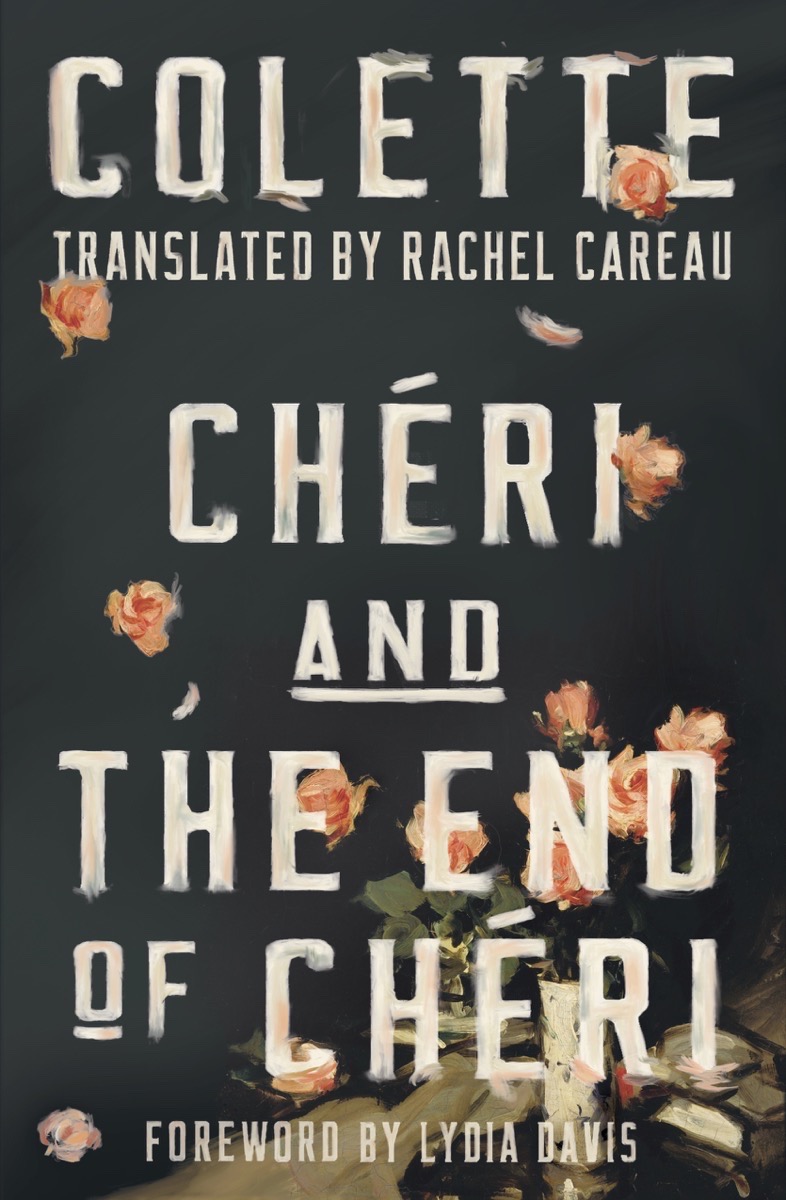
With this new edition of The Pure and The Impure we have a welcome opportunity to experience (or re-experience) Colette’s fascinating meditation on the nature of men and women, sex and sexuality, through Careau’s attentive and sensitive translation, supplemented by extensive and detailed, yet unobtrusive, endnotes. Drawing on her own experience as a dancer, Careau describes how the musicality and discipline of ballet helped prepare her for a writer like Colette, even if she might not have realized it when she first encountered her work (her translation of Cheri and The End of Cheri was published in 2022). In her Note, she makes a very powerful statement about the role of discipline in translation:
Translation demands the dual discipline of close reading and careful writing: an attentiveness to the nuances of meaning of individual words (and to the nuances of their meaning for a particular author), to the repetition of words across a text, and to the order of words and phrases and how it causes meaning to unfold in a sentence; an alertness to tone, and its slightest shifts; a sensitivity to the sound, the music of the language. Translating Colette also requires the discipline of a researcher, in order to track down the rare words that she delights in: classical and literary usages, technical and scientific terms, contemporary slang and argot, obscure regionalisms, neologisms.
Her discipline is well rewarded in bringing all the unique qualities of Colette’s prose into focus. This is an endlessly intriguing work containing complex layers of fact, fiction, and even a little fancy. But, to read The Pure and the Impure today, from the perspective of present (and increasingly politically volatile) attitudes toward the LGBTQ community, we can appreciate how groundbreaking the book was—and how the kinds of contradictions Colette ultimately expresses about sexuality, her own and that of others, still complicate our attitudes today. Plus ça change. . .
The Pure and the Impure by Colette is translated from the French by Rachel Careau and published by W.W. Norton.