Ever a son and a father: To Grieve by Will Daddario

“What is loss,” asks Matthew Goulish in his introduction to Will Daddario’s chapbook To Grieve, “but an instance of the extreme ephemeral, for which one finds oneself unprepared, for which could never prepare? Is it accurate to say that loss makes its day extraordinary? It’s the ordinary we lose, as it transforms it into a treasure.” Writing grief is one way of tracing out a pathway back to some semblance of, if not the old “ordinary,” a new normal. For oneself, firstly and, in the sharing of the experience, for others who may, in time, require a trail of signs and symbols as they chart their own paths.

In this short, emotionally measured essay, part of the Dossier Series from Ugly Duckling Presse, Daddario unspools the knotted threads of grief that followed the fifteen-month period that began with the sudden death of his father, counted a number of significant losses—his grandmother, a close friend and a beloved pet—and ended with the stillbirth of his son, Finlay, his first child. As he navigated a course through the flood of emotions, he turned, as a writer and a scholar, not just to the writing of others, but to the very structure of language itself. If grief, as he tells us, “does not reside within you but, rather, exists outside” and works its way into your system no matter how you might endeavour to hold it at a distance, the cliché expressions that are offered to describe the process often fall hollow, yet the feelings seem to be bound these same cliches, so the articulation of the experience of grieving, invites the search for a new vocabulary. Turning to a range of literary, spiritual, and poetic resources, Daddario seeks guidance to “re-write the script of depression” that settled in on him in the months after his series of losses. The resulting journey is one that is both idiosyncratic and universal.

In their individual and shared efforts (“together alone” and “alone together”) to make sense of their son’s death, Daddario and his wife Joanne take a cue from Barthes’ Mourning Diary and record reflections on scraps of paper and gather them in a jar. On Finlay’s first birthday, they read through them. A selection of these collected thoughts, lends a loose frame to this broader exploration of grief. The weight of the emptiness that has descended into their lives is resonant in these fragments of immediate, unmediated grief, forming a counterpoint to Daddario’s more carefully and logically paced analysis of this early period of mourning observed and recounted from a place of some greater distance along. The true beauty of this short book lies not so much in any radical revisioning of grief, but in the poetic voice the grieving son and father gives to a process that can linger, seemingly suspended, at the edges of our lives in the aftermath of loss, leaving us to wonder: How long does this take?

Grief neither takes nor gives. It rushes in from the outside and inaugurates a new temporal existence that will be unique to each person or group who grieves. Another lesson of grief arises here: grief makes time, in the sense that you must now make a calendar for yourself that honours the nature of your existence. Rather than asking “how long will it take,” you can try this: what time will grief make, and what will you make within grief’s duration?

To Grieve is a thoughtful and intelligent meditation. It is also a heartrending tribute, as both a son and a father, to a father, an infant son and, before the final draft was complete, a stepfather as well. As love expands, so does grief. As I’ve mentioned before, in 2016 I lost both of my parents within eleven days of one another, followed a little over a month later by the suicide of one of my dearest friends. These deaths sit within the context of other ungrieved losses I’ve carried. Thus, it is impossible to read about grief as someone still in the midst of grieving a complex network of cicumstances, without taking one’s own pulse along the way. I did, and many of my responses are personal, sketched into my notebook. Proof, if any is needed, that this gentle chapbook is a worthy addition to the literature of, in Daddario’s own terms, grieving and “re-membering.”

To Grieve by Will Daddario is available from Ugly Duckling Presse.
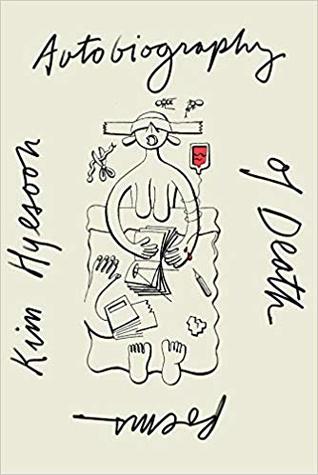
Forty-nine days of the spirit: Autobiography of Death by Kim Hyesoon

The attempt to voice to the experience of reading Korean poet Kim Hyesoon’s Autobiography of Death echoes the challenge she found as the project began to take form for her. Death, as much as we may wish to avoid thinking about it, is a fundamental and natural part of life. But sometimes death arrives in unnecessary, violent, and horrifyingly tragic forms. Or simply when it is unexpected, or worse, unwarranted. The forty-nine poems that comprise the core of this work—one for each day during which the spirit wanders before re-entering the cycle of reincarnation—were written in response to those moments when Hyesoon felt the presence of death in some way. Although her intense reaction to the catastrophic collapse of a ferry carrying high school students bound for an island field trip—an event in which the crew escaped in lifeboats while the youth, ordered to their cabins, drowned—was a trigger, Korea’s recent history is rife with unjust deaths. How to reconcile all this? As an assembly of poems began to take form, she came to understand that her existence begins with death, not birth, and that we live our lives within the structure of death:

I thought to myself that I needed to sing to death, perform a rite for death, write death, then bid farewell to it. The way to send death away was to sing with my own death all the death in the sky and on the ground.

In essence, to sing to death, she had to allow her own death to take the poetic voice. To let it tell its story. How then are we to hear the songs gathered here? Quite simply, to read this book, is to listen.

As one might imagine, the language and imagery is not always easy to encounter.  Heartbreaking, often disturbing, death does not necessarily come gently, and the spirit does not effortlessly shed its fleshy anchor. Verses infused with sad and tender tones mix with horror-filled prose poems and gruesome nursery rhymes, while songs of mournful remembrance turn strange and surreal. To move through this post-death journey is an odd and deeply compelling experience. At moments it is even exquisite:

Like the failing frail twilight and
the rising frail dawn
certain light caves in, certain light soars and embraces

Something like the silvery alligator in your throat
Something like the silvery mosquito on your face

Something like the abrupt opening of the windows of the sea after waking
.                 up from a lifetime of sleep

You’ll see the mornings of the world all at once

– from “Naked Body” (Day Sixteen)

Death is a bodied, intensely physical presence in this sequence of poems. Visceral and graphic at times. Certain images reappear throughout including water, dolls, winged beings—birds, insects and angels—mothers and children, coffins and burial. The space between death and rebirth is an icy, wintery one. Hyesoon shifts and builds on this imagery as the body is slowly and, seemingly reluctantly shed, transforming and decaying as the spirit is increasingly cut off from the world. The poetic perspective invites an intimate engagement with death:

The shape of a woman appears in the mirror. Now you’ve become toeless feet. Now you’ve become fingerless hands. You’ve become a noseless, mouthless face. Your insides that are so far away yet close, the forest in your hair, light enters the rocky moon, and the sea wavers in your shoes. Birds fly up your sleeves and a horse weeps in your pants.

– from “A Face” (Day Forty-Three)

As the forty-nine day passage draws toward a close, faces lose their distinction. Death erases names and identities. “You” lose the ability to recognize yourself or your place in the world. But who exactly is this “you”? In the conversation with her long time translator, Korean-American poet Don Mee Choi, that closes out the book, Hyesoon explains that she could not call her own death “I”, thus her death became “you”, but not as in a simple second person narrative. It is an intrinsically poetic space, such that “you” was “not I or you or he/she.” She goes on to describe how she began to wonder if the narrator might be a sixth or seventh-person narrator, and the “you” who is being addressed is “my death”—“I” has been killed. This she insists, is in keeping with what she sees as the only way to ethically practice poetry, by practicing the death of “I”. Of course, in reading, “you” also feels like “my” or “our” death. At times, especially with the poems that have a sing-song or nursery rhyme feel, it is not unlikely that one might be inclined to want to sing along.

The collection ends with an extended poem “Face of Rhythm,” a piece born out of meditation during a period of pain and illness. Filled with an aching intensity, it is a fitting follow-up to the forty-nine day sequence of Death, a laborious rebirth, release from facelessness and  namelessness. But renewal is hard won, a slow hallucinatory passage through sickness:

That feeling of my soul getting yanked
I wonder where my soul hides when I’m sick
My heart feels as if it’s getting beat up
Is it because the restless ocean is clumping up?
My heart beats regardless of the pain
It beats spewing out red thread like a red spider
A sinkful of red thread gets submerged in water
My heart beats like a girl marathon runner who only had ramen to eat

Autobiography of Death is a collection that leaves one alternately drained and exhilarated. I find it hard to imagine anyone would emerge indifferent. Translator Don Mee Choi’s strong affection and sensitivity for  Kim Hyesoon’s poetry is invaluable, while the playfully strange illustrations by the her daughter Fi Jae Lee contribute to the power and magic of this new work from one of Korea’s most important poets.

Autobiography of Death is published by New Directions.

Tainted by wanderlust: A Stranger’s Pose by Emmanuel Iduma

Those days on the road, I wrote with a pencil. The faint inscriptions of provisional memories made my notebooks seem like fallow territory. I would spend hours before bed recording variations of my experience, keeping no version of myself from the page. Yet, even if that were possible, it saddened me to write each day without a clear vision of whom I addressed. How long would it take for letters of my alphabet to form an impression, moving from reading eye to sensuous heart?

Of late I am drawn to curious projects that bring together memory, image, and environment— projects that blur the parameters of literary classification, where memoir, photo essay, travelogue and storytelling blend. To books like Nigerian writer and art critic Emmanuel Iduma’s enigmatic The Stranger’s Pose. Described in his Acknowledgements as an “imaginative gesture” extended to “the many lives that entered mine,” this collection of seventy-seven segments (or chapters?) has its basis in actual trips through several African countries that the author made, either on his own, or with a varying group of photographers, writers and visual artists as part of the Invisible  Borders Trans-African Photographers’ Organization. However, by allowing his reflections to form in the “twilight worlds between experience and memory, fiction and criticism” and presenting them with a curated selection of black and white images, in many of which he is the staged and central figure, Iduma invites the reader to join him on a lyrical journey, one that is at once elusive and absorbing.

There is, about halfway through the book, a map tracing out a pathway from Addis Ababa, westward through Nigeria, onward to pass up through Senegal, Mauritania and into Morocco. A simple scattering of place names, white text on a black background, connected by curving dotted lines. A geography of dreams. The recollections and remembrances that link these far flung cities tumble forth without chronological or spatial connection, but they do not exist in an emotional or political vacuum. Border crossings can be fraught, stories of the fates of migrants fleeing north toward Europe are shared, religious and ethnic tensions simmer, and language barriers hinder communication and require dependence on translators.

Our restless wanderer is a contemporary African flaneur. An openness to experience infuses his reflections. He is acutely sensitive to the human tableaux he observes, to the eccentricities of the photographers and artists he seeks out, and to the resonances of the stories he is told. He is attentive to the body language and facial expressions he encounters, both in images and in person. At the state library in Enugu, which resembles a dusty study hall more than anything, he finds an extensive archive of newspapers dating back to the 1960s. Inspired to seek out accounts of the events immediately preceding the death of Ken Saro-Wiwa in November 1995, he traces the daily photographic record  in The Guardian, examining the subtle indications of shifting emotion in the grainy images. Watching a stranger on a bus in Addis Ababa practice smiling at his reflection in the  window, he turns to notice that, in the glass, his own countenance could be taken for unhappy. Turning back his eyes meet the other man’s and now, in his face, feels he recognizes himself:

But faces aren’t mirrors. Suppose we look long enough at others to discover their secret impulses, could we understand our own in the process?

His intention throughout is to capture his thoughts and experiences. We are never simply travelling in the present tense. Every journey we take stirs memories from the past, and extends into an unknown future. Travel reframes the idea of home in many different ways. And Iduma, of course, is a writer. As such, this is not a voyage without literary guideposts. Amos Tutuola, Ben Okri, Breyten Breytenbach, Italo Calvino, Isabelle Eberhardt, John Berger and more are called on to contribute tales to this extended meditation.

The segments that comprise this book range from a few sentences to several pages. Some describe encounters and experiences, some revisit childhood memories, some imagine stories. He describes dreams and writes notes to some of his travelling companions, looking back at their shared moments. And sometimes he simply describes a photograph which, incidentally, may or may not be included in the book. The camera is a mediator, in individual interactions and as a transformational exercise. Relatively few of the photographs are actually taken by the author himself (thus none are reproduced in this review) and the ones in which he appears form an especially interesting counternarrative.

One hand holds my shoes; the other is raised, a few inches from my face. I approach a fenced mosque, with my shadow falling across its entrance. One part of the gate is shut, leaving space for a single entrant. The walls and the fence are brownish, just like the sandy ground, but with a darker hue. On the highest deck, three-horn speakers point in different directions: frontwards, leftwards and rightwards. A man glances towards the exit. I doubt he sees me. But he is looking in the direction of the photographer.

The image we are shown, exactly as described, is black and white, the surfaces of mosque stark in the harsh light. How, one must ask, does Iduma fit into these photographs, tall and striking, often dressed in white, walking or standing against storefronts, alleys, and walls? He is the stranger posed —itinerant, restive, trailed by a sense of displacement, heartbreak, and loss. When asked in an interview what he hoped a reader might take away from this book, he replied:

Below each encounter something trembles under the surface, inarticulate. I wrote the book thinking of anonymity as a method, in order to speak to an audience besides those whose stories I was retelling, and whose lives I was conjuring. I hope the reader might be able to meet me at the intersection of my life and those I write about.

It is this ineffable quality that comes through and makes A Stranger’s Pose such an affecting experience. In a line with the work of Teju Cole who writes the Foreword, and yet with its own distinct style and voice, this is a book for anyone who welcomes the idea of navigating the invisible borders that lie between travel, memoir, fiction and photo essay.

A Stranger’s Pose by Emmanuel Iduma is published by Cassava Republic Press.

The poetry of grief: Loss Sings by James E. Montgomery

Grief and loss has its own language, one that cannot be forced, one that is found waiting when the mourner ready. That is the experience recounted in the 32nd addition to The Cahier Series, a collection of short meditations published by the Center for Writers & Translators at the American University of Paris in association with Sylph Editions. Each volume pairs an author and an illustrator or artist, and examines some aspect of the intersection of writing and translation, allowing a broad scope within which such ideas can be understood and explored. As such, each cahier opens a door to a different way of engaging the world.

James E. Montgomery’s Loss Sings is a deeply personal essay that owes its genesis to tragedy. On 24 August 2014, the distinguished Professor of Arabic’s seventeen-year-old son was struck by a car when walking with some friends in the city of Cambridge. He suffered what were described as “life-altering injuries.” The driver was uninsured. Suddenly his family’s world was forever altered as an entirely new set of realities, concerns, and anxieties came into play. The young man with a promising future now faced a life of serious physical disability, marked by increasing pain, decreased mobility, and the need for ongoing care. As surgery, rehabilitation, and the detailed record keeping required for legal purposes began to shape Montgomery’s life, he discovered an unexpected appreciation for a cycle of Arabic laments that had long left him unmoved and indifferent. In the early months after his son’s accident, a personal translation project involving these poems emerged. Three years later he recorded his reflections on his son’s injury and his thoughts on memory and the articulation of loss in a series of dated diary entries. Presented together with a selection of his newly translated verses, the present cahier was born.

The poems at the centre of this fascinating account, are the threnodies of the seventh-century Arabic poet Tumāḍir bint ‘Amr, known to posterity as al-Khansā, a woman who composed and sang hymns to the loss of her two brothers in battle—more than a hundred wailing odes that were memorized and passed on for two centuries before they were committed to writing. Although Montgomery had taught these well-known elegies for three decades, through significant losses and traumas of his own including a close proximity to the surreal horror of the attack on the World Trade Towers, he had found them repetitive and cliched. It took his son’s injury to unlock their power. As a parent with a seriously injured child, the rules of order were suddenly rewritten. He realized that his son’s need for assistance would increase as his own physical abilities declined, and when an unexpected potential health problem of his own arose, his concerns for the future intensified.

Memory is a strange place. It is unreliable, pliant, liable – mercifully so. It makes so many mistakes, gets so much wrong. An event like the one I am describing rips to shreds the veil of the commonplace and the mundane, and memory is charged with the task of remembering the future, of recalling the unusual; for such events reveal to us that the future is little more than a memory.

What unfolds over the course of less than forty pages is a multi-stranded meditation on grief, loss, and the relationship between trauma and memory. As Montgomery notes, the confusion that commonly strikes in the aftermath of trauma is a response to the confrontation of previously trusted memory with a “new reality, an unalterable experience.” He recognizes a close analogy in literary translation. In order for a translator to recreate a literary work in another language, decisions must be made about what can be left out as much as what one wishes to retain. With poetry in particular, he says, it may be the only means of transmitting what is irreducibly poetic, and as such, literary translation is “more akin to trauma than it is to memory.” As trauma leaves one at odds to make sense of the world, often bound to a silence that swallows up attempts to give voice to grief, the mourner is forced to navigate a “no-man’s land” between one remembered reality and a new one. Literary translation echoes this process, and through the act of translating al-Khansā’s poetry in particular, Montgomery is able to articulate his own experience of grief and loss through an understanding and appreciation of the very elements that once irked him in these classical Arabic laments.

We are all likely well aware of the kind of cliché, stock phrases, and time-worm comforts that are offered as a solace in times of loss. When faced with profound grief ourselves, there is often a sense that common statements fall short of the magnitude of our emotions. Yet we reach for them—in condolences, eulogies, obituaries. Or worse, for fear of sounding banal we say nothing. It takes the near loss of his son for Montgomery to finally feel the power of these clichés, in the personal and the poetic:

Experience, memory, artifice and art are confronted by the absence of comfort, and earlier versions of a poet’s selves are rehearsed and re-inscribed in memory – but the brute truth of the mundanity of death is the age-old cliché about clichés, namely that, like death, they are too true.

The seventh-century warrior society to which al-Khansā belonged was bound by intense devotion to the cult of the ancestor. Death in battle demanded both vengeance and epic memorial. The latter was the responsibility of women, and her sequence of Arabic keenings—songs of loss— are the most extensive, powerful and poetically inventive to have survived to the present. Her poems are defiant. She will allow no accommodation of her loss over time, her grief stands still, “(h)er doleful, disembodied voice, entombed forever in the inanimate sarcophagus of metre, rhyme, and language.”

Night is long, denies sleep.
.    I am crippled
by the news—
.    Ibn ‘Amr is dead.

I will cry my shock.
.    Why shouldn’t I?
Time is fickle,
.    Disaster shock.

Eyes, weep
.     for my dear brother!
Today, the world
.     feels my pain.

Montgomery’s reflections on his own experiences with loss and the parallels he sees in translation speak clearly to lived grief and trauma. The yearning, aching threnodies of al-Khansā woven throughout, call from the distant past with a pain and longing that is recognizable, real, especially for anyone who is, as I am, still caught in the lingering aftermath of a series of significant losses. But throughout my engagement with this book there was one thought that I could not shake, a possible understanding that the author himself is perhaps not fully aware of. He admits that he is not entirely certain why these ancient Arabic laments finally reached into him when they did.

I worked for years with the survivors of acquired brain injury and their families. I recall one family in particular whose son was injured in a single vehicle rollover in his late teens. His parents admitted at the intake, to a double sense of grief—for their son’s ever-altered future, and for their loss of an image of their own anticipated freedom on the cusp of their youngest child’s pending adult independence. Two futures and their attendant memories altered in an instant. Yet this kind of grief—the grief of survival—is not easily mediated. When the parents attempted to attend a grief support group in their community they were pushed away. “What do you have to grieve?” they were asked, “You still have your son.” There is no accepted ritual or memorial for this kind of loss. With each step through rehabilitation, fighting for funding, worrying about an undefined but infinitely more precarious future, a song of loss sung anew every day. It does not surprise me in the least that a sequence of laments that hold so fast to grief, repeating, reinforcing and seeking voice in the comfort of cliché would break through at this time in Montgomery’s life.

How fortunate that he was able to hear them and feel inclined to guide these verses across the distances of language and time to share with us. Paired with abstract illustrations in black and shades of grey by artist Alison Watt, this small volume speaks to the universality of loss and the longing to find expression through the stories, myths and poems we turn to in times of trauma.