The stars used to be on our side: Lucky Breaks by Yevgenia Belorusets

There is a very eerie atmosphere that envelopes the stories in Yevgenia Belorusets’ collection, Lucky Breaks. This is a collection that examines the impact years of covert military action on civilians, in this case the conflict in the impoverished Donbas region of eastern Ukraine that has been ongoing since 2014. But, by terrible coincidence, the release of this work in English came on the heels of Russia’s full scale invasion of Ukraine and these tales of loss, displacement and trauma have suddenly been cast into sharper relief. This slender volume has become more vital than it already was. As I write this I am following the author’s daily diary updates from Kyiv and her words have become an essential aspect of my emotional connection to a situation that seems to so difficult to understand. That is in no small part because she is deeply interested in ordinary people whose stories are so often unheard, caught up in events they did not choose and cannot control, detailing her character’s situations with a measure of ironic humour and serious respect for the remarkable resilience that keeps them going against the odds.

Fate delivered her to Kyiv. She didn’t know what to do about it. She came from Donetsk, where she had lived her whole life in her parents’ small one-family house. She had enough money in her purse. That’s what they say, “in her purse,” although her actual purse was empty, full of wind. The wind part, really, is a hyperbole. She simply possessed something in her name, that’s it. That’s how they say it around here, “to her name,” although her name had nothing to do with it; she was not a name brand. In short, she had some inviolable reserves that she had to unseal and start systematically spending.  (from “The Lonely Woman”)

Belorusets is a photojournalist and writer whose work is informed by political activism. Her intention is to call attention to communities that have been traditionally underrepresented in the media. Her writing is an extension of this practice. In her collection Modern Animal (reviewed here) she worked with people she had interviewed during her years in the Donbas to reimagine their painful experiences in stories and allegories involving animals. In her “Note Before the Preface”, she indicates that in this volume, her activity with the tales she tells is still a form of documentation, not of the conflict itself, but “the surmounting of the conflict through a dialectical process—by means of phantasmagoria, narrative, conversation, and the disclosure of certain situations to the viewer.” Alongside the stories there are two photographic sequences: But I Insist: It’s Not Even Yesterday Yet and War in the Park. The grainy black and white images are not labeled and are not related to any of the stories, rather the three threads are presented as a means of showing how different contexts collide and unsettle narrative certainty. I will also mention, and I don’t know if it is intentional, but the font used is unusually small, effectively slowing the reading process and forcing the reader to remain longer in each of these relatively short stories.
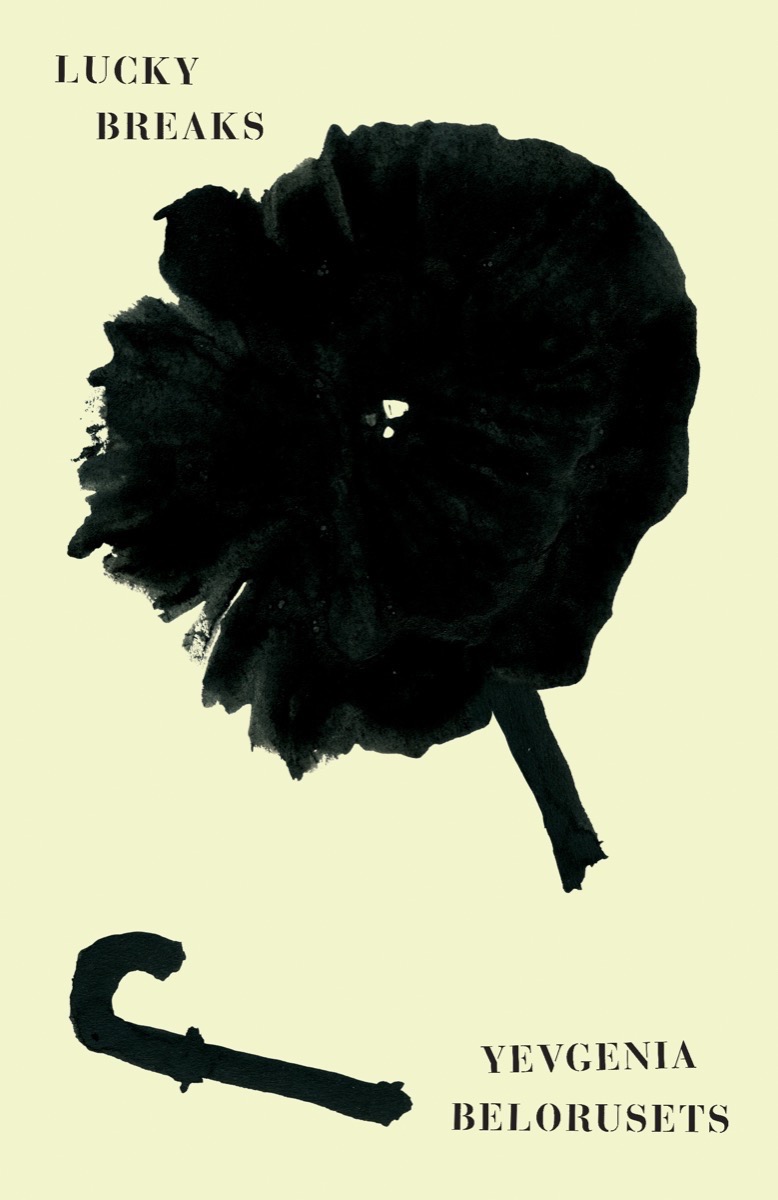
The protagonists of Belorusets’ stories are almost exclusively women, told either directly through the character’s voice, presented as conversations or interrogations, or recounted as the experiences of someone the narrator knows or knows of. As such, the author’s own voice may be reflected in some of the accounts. Refugees and others displaced by war are common. Many find themselves lost and disoriented in Kyiv, longing for a past life or trying to build some kind of existence in the city. They look for work where they can find it. Others belong to an uncertain fate. Like the story of a florist so attuned to her art that she hardly exists outside her shop in Donetsk, but what happens to her when her home and shop are destroyed? Some characters arrive in Kyiv bearing the scars of the traumas they’ve endured, like the woman who keeps trying to rid herself of a broken black umbrella she carries only to rush to retrieve it, scolding it, pouring her pain into this tattered object. There are dreamers and horoscope readers and a woman who visits a cosmetologist as one might a therapist, in the belief that her hands can somehow massage, however temporarily, the griefs she carries right off her skin. Through their troubled, often eccentric circumstances, the characters who inhabit these thirty-two stories contribute to a narrative of life under hostilities in a state of persistent, slow burn. The heat has since been turned on full and these tales become at once more affectionately folkish and more disturbingly real. The stakes are even higher. One recurring character advises the narrator that she wants her identity hidden, and challenges her motives for recording her story at all:

“At least this is why it’s better for you and me if no one knows about me. I could be called to account, couldn’t I? But is there anything I can change? Not only can I not change anything, I don’t dare to. You’re taking my words down, you must be counting on something. Maybe a tearjerker about how we’re all full of hope for a new future, or how the country that we loved became our prison. We’re left to eke out a life in small towns, to die in plundered hospitals, in dirty public wards, or in empty little apartments where there’s no hot water for months and the lights go out at night. Someone will want to hear about us, and then you will be the one invited to a grand festive table, you will be the one they’ll raise a toast to.” (from “Lilacs”)

In allowing such passionate, disaffected voices to come through, Belorusets has, in Lucky Breaks documented a mood existing in Ukraine before  the barrage of headlines that have come to dominate our understanding of her country. That is what a documentarian does. And she is still doing it as bombs fall.

In his informative Afterword, translator Eugene Ostashevsky describes Belorusets’ writing as being most indebted to the early stories of Nikolai Gogol and early Soviet era avant-gardist Daniil Kharms. Elements of the supernatural and the absurd normalized within the realm of the everyday and a concern with narrative fiction appear in her work. Ostashevsky also discusses her controversial choice to write in Russian which raises political and logistical challenges for a Ukrainian writer in a country where most people can speak both languages, but Ukrainian is increasingly favoured and protected. He does admit, however, that her Russian is subtly different from that spoken in the Russian Federation: “it is based on the rhythms and intonations of the Russian of Kyiv and Kharkiv, and continues the Russian-language line of Ukrainian literature.”

Despite the grim subject matter that underlies (and sometimes surfaces) in this collection, Lucky Breaks is filled with warmth and humour. Belorusets’ characters exhibit much the same mix of anxiety and resolve that can be seen in the people she meets today as she wanders the streets of Kyiv and compiles her journal that is, at this time, being translated and shared with followers around the world on a daily basis. However, I can only hope that a wartime diary is not required too much longer.

Lucky Breaks by Yevgenia Belorusets is translated by Eugene Ostashevsky and published by New Directions in North America. It will be released in the UK by Pushkin Press in May.
Some thoughts about two months of reading Norwegian literature

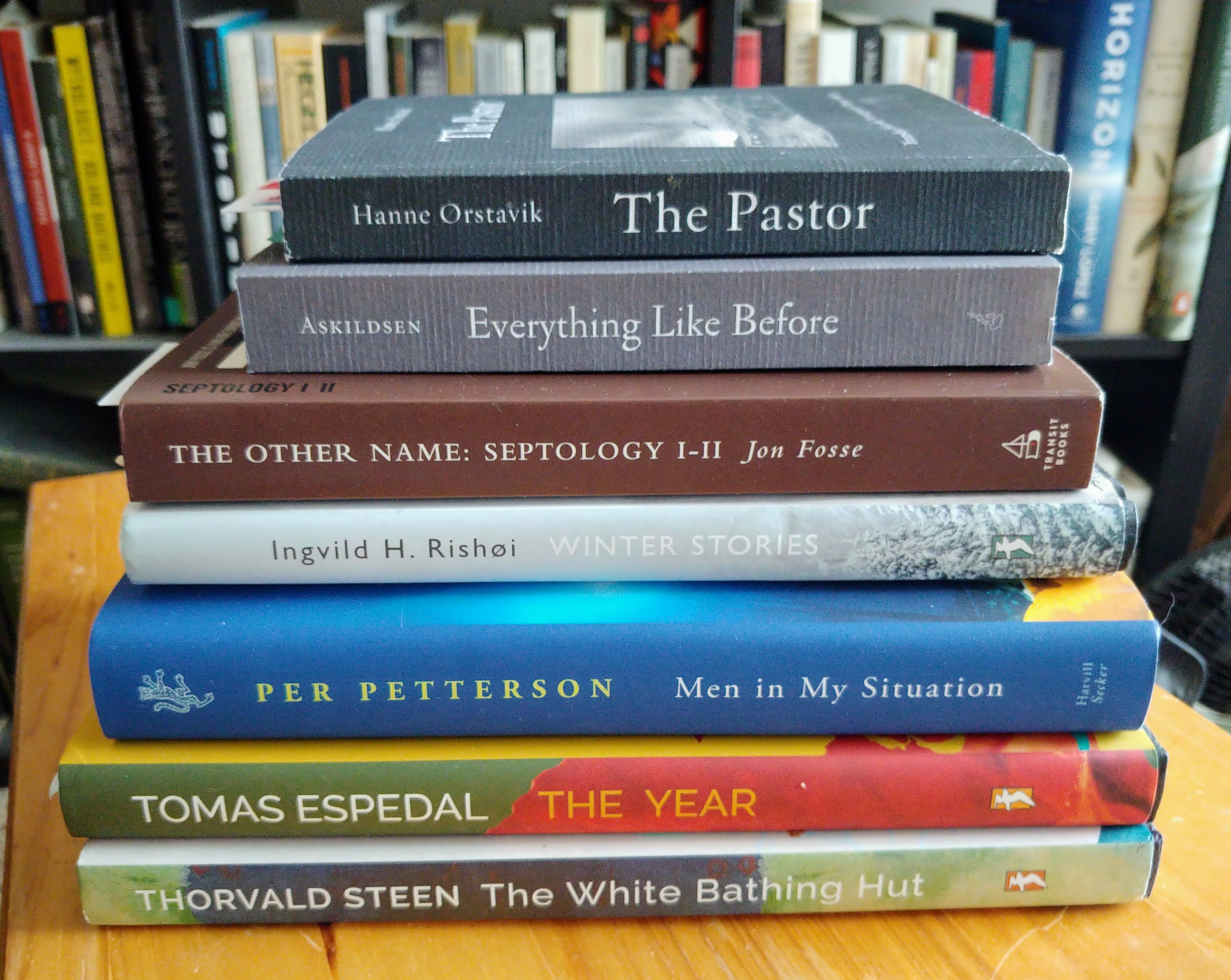
I started 2022 with a personal decision to focus on Norwegian fiction for at least January and February. There was no particular reason apart from a couple authors I wanted to visit or revisit and a general sense of Norwegian literature fitting nicely into a Canadian winter. Canada is a similarly northern country, albeit much larger, and I have often felt “at home” in the climate and landscape that emerges in much of what I’ve read from Norway. Of course, although I had a number of Norwegian books already on my shelves, this little project inspired the purchase of more, a trend that continued during the reading.

So, I have some thoughts about this experience. I read a total of seven novels or short story collections by five male and two female writers. This was the first issue. I had difficulty finding female authors of interest, although I have since become aware of a number I’d like to explore. My initial searches brought up a predominance of writers of noir and historical fiction—neither genres of particular interest. And then I inadvertently purchased a few titles that turned out to be Danish, not Norwegian, enough that I could probably do a month of reading female Danish authors. I will confess, though, that I was curious to read recent work by male authors my age or a little older, and in that respect, four of the novels I chose fit the bill.

I really enjoyed five of my selections, had a few minor issues with a sixth and was decidedly underwhelmed by a seventh. I decided not to review that title, as I felt there was little to gain by dissecting a novel I found so disappointing—I’m ready to accept that the problem is probably with me—but my response does deserve a few words here. The book is The Other Name: Septology I–II by Jon Fosse (translated by Damion Searls–Transit Books/Fitzcarraldo). I have yet to read anything but praise for this work which extends for seven parts over three volumes and I honestly expected it to be a book I would have liked. But, not so.

It’s the story of an aging artist, a widower, who is a misanthropic loner with a rather religious temperament. In the nearby city lives another artist with the same name, matching the same description, whose life has followed a very different course. He is drinking himself to death. Other characters in this small cast also echo one another in name and biographical details but live different lives. Or so it seems, because our narrator, Asle #1 as I thought of him, and no one around him, appears to notice the duplication beyond the name. The story unfolds in a ponderous leaden prose—a glacial stream of consciousness—ostensibly a single sentence, but one that reads more like “sentences” with an absence of full stops. Other punctuation occurs and any dialogue is off-set in the text. However, I could not help but feel that the author has given himself too much runway for the story he is trying to tell. It not only drags on, but his imagined memory episodes, like two sections where Asle watches (and listens to) a young couple (obviously himself and his late wife) in a park, made me irritated rather than impressed. The general narrative style and the potential metaphysical questions at play appeal to me, but the execution did not. I did finish it, if only to see if I caught the spark others have felt, but although the second part was an improvement, I can’t imagine going any further.

I could not help but wonder if The Other Name suffered in part from the fact that I picked it up, halfway through this project, after beginning with two books that I loved, my favourites overall as it turned out. Tomas Espedal’s The Year is a stream of consciousness novel in verse about aging and loss that is intelligent, humorous and sad, whereas The Pastor by Hanne Ørstavik is likewise a deeply internalized narrative, dark and meditative that also deals with grief and matters of faith. These first two reads were so strong—that is, perfect for me at this moment—that I filled in the rest of my Espedal collection and bought Ørstavik’s earlier novella Love. It’s worth noting that I was not put off Fosse altogether either, but rather than looking ahead to complete his Septology, I bought one of his very short novellas. I think I might appreciate his work more in a very tight space.

The balance of my Norwegian project featured three new-two-me authors, Thorvald Steen (The White Bathing Hut), Ingvild H Rishøi (Winter Stories), Kjell Askildsen (Everything Like Before)  and one long-time favourite, Per Petterson (Men in My Situation). When I think about it, the one theme that binds every one of the  books I read is isolation. That is, perhaps, a significant aspect of the appeal for me.

All in all, this little Norwegian project has been a rewarding experience—I read a lot of great books and bought even more. This is the first time I have set a solid goal early in the year and met it. I have also read and reviewed several nonfiction and poetry collections and one other short story collection since the beginning of January. It feels good have been so productive, slow reader that I am, but it will also feel good now to think about reading without any strict self-imposed objectives for a change. However, I do hope it bodes well for 2022, reading wise. I mean, we’re still dealing with the pandemic despite the willingness of many governments to believe it’s over and the worsening situation in Ukraine and ongoing conflicts elsewhere are terrifying. Then, of course, there’s climate change and so much more. I would suggest we need literature and art more than ever at this time.

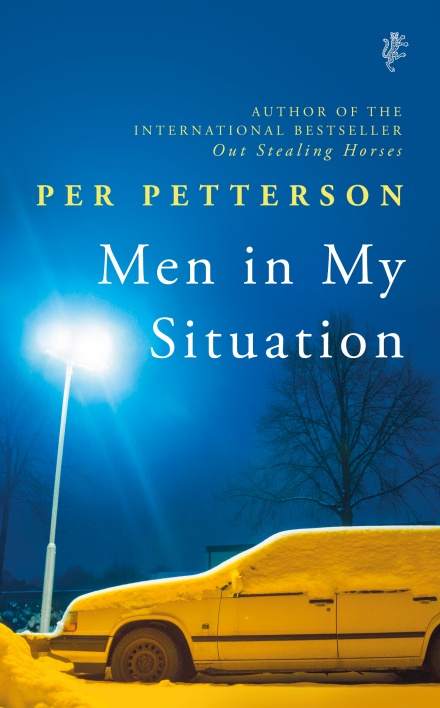
“I was thirty-eight years old, everything was blown, I had nothing left.” Men in My Situation by Per Petterson

There we sat in silence beneath the big wide tall trees behind the station building, breathing, each in our uneven rhythm, as if we’d all been running, but none of us the same distance. Then I said, Vigdis, I guess it’s up to you whether we should say anything about this to Mummy, about what just happened. It was quiet in the back seat, all three of them sat there looking out the windows. Vigdis sat in the middle, but it was Tine who said, no, and then Tine said, no, too, and Vigdis didn’t say anything.

Early 1990s, Oslo, Norway and Arvid Jansen is thirty-eight years old. From a later vantage point, a decade or more down the road, thirty-eight is young, but when you stand there it feels ominous, as if one is hurtling helplessly into middle age. And, at this moment, Arvid has found himself alone in the world. His wife has left him, taking their three daughters with her, and it is less than two years since his parents and two younger brothers perished in a tragic ferry accident. In Per Petterson’s most recent release in English translation, Men in My Situation, the Norwegian author places his frequent “stunt double” into a set of circumstances that will test his emotional awareness and resolve, and, as the title perhaps implies, as a man of his background, era and disposition, his resources may well be limited.

Petterson is a writer who has claimed that he is unable to detail a plot in advance; he begins with an image or a sentence and, as a result, a measure of uncertainty lingers in the finished product, a sense that the protagonist or narrator is not sure where he or she will end up. One has to give the story the time it needs. Grief and longing are also common themes in his work, as are life transitions and family dynamics (the boat accident is drawn from Petterson’s own personal history and appears elsewhere in his ouevre). All of these ideas come together in Men in My Situation, an accomplished novel from a mature, confident author. This version of Arvid is bemused and hurt to find himself abandoned. His self-awareness is of the moment; he retells his tale as if in an effort to make sense of it all—his confusion, his numbness and his blind spots all make him familiar, complicated and real.

Arvid is a writer of some renown, sometimes even recognized on the street, but he is ever conscious of his working class background. His exposure to literature was self-directed and it is only in recent years that he has been able to give up his factory job to write full-time.  But it makes him a bit of an outsider in literary circles. He and his ex-wife, Turid, met in their teens and, although she shares his background, she seems to have been able to find her place among an artistic crowd Arvid describes as the “colourful people”—a space he cannot penetrate. He senses that, seduced by her new friends, she simply grew away from him. But it hurts.

It was a cold autumn, the first after Turid. I felt cold all the time. I wrote almost nothing. I could wake up at night and not remember that her side of the bed was empty, a certain number of kilos permanently lifted from the mattress and her smell fainter with the passing days, and with the nights, weeks, and in the end completely dissolved and gone.

When, after about six months of weekend visits, his daughters announce that they no longer want to come to see him on a regular basis, he struggles to embrace the ambiguity of estranged fatherhood and a haphazard and unwelcome bachelorhood.

Alone now, Arvid does tend to spend a fair amount of time wandering aimlessly, often idly hoping to meet a woman to go home with, although he appears to be such a passive, lost soul that the women who are interested seem to drag him home as one might a stray puppy. And frequently he is a disappointing date. He attracts pity, but the rare instances suggesting real potential desire on his part generally frighten him off. He never calls back. Anchorless, he drifts without making an effort to either move on or make claims on the children he has been denied access to. As frustrating as this may be, the spiral of depression and grief he is caught in is real. Despondent, he falls short of anger which, properly directed, could be the motivating force he needs. Only his eldest daughter, Vigdis, appears to understand, but she herself has some uncertain medical or mental health concerns. And Arvid worries that she perhaps sees him all too clearly.

This is a slow moving novel, but it is beautifully realized through a narrator who has an appealing honesty and dry sense of humour. Long, winding paragraphs often extending for several pages, incorporate observations, memories, asides and dialogue without line breaks or quotation marks, echoing Arvid’s characteristic internalized processing. At the same time, great attention is paid to the urban and rural environments he travels through by bus, train or car, creating a vivid expansive sense of place and further highlighting his isolation within it:

On the way to the station along the wire fence and the railway line it began to blow and to snow again. I didn’t have a cap with me, but pulled one round of the scarf over my hair as a muffle against the snow, and the snow whirled around me in the wind and whirled over the closed-down factories by the Sagelva river, over the shopping centre up the road, over the hills beyond and over Øyeren lake and the river Glomma, over the forests toward Sweden. And I imagined I could see all this snow whirling over the treetops and then slowly falling and new snow coming, covering the timber roads, covering tracks of elk and roe deer, of hare and why not the wolf now moving in from  the forests of Sweden after a hundred years of absence, all this seen as if from a soundless helicopter, and I caught myself longing back to the Sundays when my father and I went skiing deep into the woods on the red-marked tracks in Lillomarka, his back broad and muscular ahead of me in the blue sweater my mother had knitted, just him and me breathing sharply in the sharp winter air and the dry snow and the dry cracking of trees leaning against each other in the brittle cold, and at the same time the longing for all this made me so weary. It wasn’t going anywhere. My father was dead. There wasn’t any before. There was only now.

As the novel progresses, Arvid begins to fill in some of the relevant or unfinished pieces of his past and make an increasingly resigned alliance with his new circumstances. But there is something missing. Toward the end of the novel, the depth of his compounded grief begins to become apparent, both to Arvid and his audience. The loss of four family members twice over in the span of little more than a year, first his parents and brothers then his wife and daughters, one loss quite likely setting the groundwork for the other, is a significant trauma. He never labels it as such, nor is he likely to allow himself that full recognition, at least not yet. That would be entirely in keeping with men in his situation.

Men in My Situation by Per Petterson is translated from the Norwegian by Ingvild Burkey and published by Harvill Secker in the UK and Canada, Graywolf in the US.

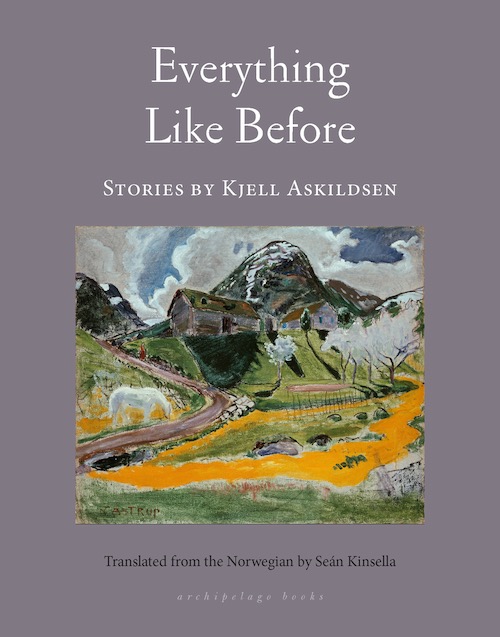
Sympathy for the misanthrope: Everything Like Before by Kjell Askildsen

The world isn’t what it used to be. For example, it takes more time to live now. I’m well into my eighties but it isn’t enough. I’m far too healthy, though I have nothing to be healthy for. But life won’t let go of me. He who has nothing to live for has nothing to die for. Maybe that’s why. (from “Chess”)

Norwegian writer Kjell Askildsen (1929–2021) is considered one of the greatest shorty-story writers of all time, a master of a spare, ascetic style in which quiet tension builds around what is unspoken. His themes tend to be sombre, with a dark, dry wit most reminiscent of Beckett, while his protagonists—all male—tend to be irritated, misanthropic and lacking empathy. Typically they find themselves isolated, often through their own behaviors or choices. There is little resolution in Askildsen’s world. Everything Like Before, gathers a selection of thirty-six of his stories spanning 1953–2015—including the entirety of his award-winning collection Thomas F’s Final Notes to the Public—that offers a generous taste of his idiosyncratic, if  bleak, worldview.

In such an extensive collection, within which many of the stories are very short, only two or three pages, the strongest pieces are often the longer ones—those which give the author more room to develop a scene or scenario. Some that really stand out for me include “The Encounter,” “A Sudden Liberating Thought,” “Mardon’s Night,” “Midsummer,” “The Wake,” “An Uplifting Funeral” and “Carl Lange.” Askildsen has a wonderful way with cranky, eccentric octagenarians in particular, but I did find that his fondness for stories involving husbands caught in marriages plagued by either tedium or restlessness—at least from their own dispassionate perspectives—frustrating for the persistent lack of communication, despite the fact that some of these pieces actually rely extensively on dialogue. Couples talking a lot, saying nothing.

However, his treatment of strained or difficult dynamics between fathers and sons is more effective. In “Mardon’s Night,” an older man named Mardon makes his way through an unfamiliar town to visit a his son, also named Mardon, whom he has not seen in many years. The exact nature of their estrangement is not clear, but the son is certainly odd and difficult. Their encounter is awkward, mediated by Vera, the son’s neighbour and at least occasional lover, one of the most fully realized female characters in the entire collection. But the visit fails to ease the distance of accumulated years, as neither man can or will make an effort.

Mardon lit a cigarette and said: We can’t actually do anything about who we are, can we? We’re completely at the mercy of our pasts, aren’t we, and we didn’t have a hand in creating our pasts. We’re arrows flying from the womb and landing in a graveyard. And what does it matter how high we flew at the moment we land? Or how far we flew, or how many we hurt along the way? That, Vera said, can’t be the whole truth.

As self-centred and insensitive as the younger Mardon may be, he echoes the view so many of Askildsen’s protagonists seem to have. A motivation for improvement, of one’s self or relationships, is lacking. The women, although we rarely see their emotional perspectives, often appear to demonstrate more will, much to the dismay of the men in their lives. Genderwise Askildsen tends to view the world through an odd one-way mirror—though that may in fact be the point he is making about his male characters. We as readers do not come to know the women because the men do not care to know what they really think.

Another highlight, “Carl Lange,” a story from the Thomas F collection, is a comedy of errors driven by paranoia. When two policemen arrive on Carl Lange’s doorstep and suggest that a man matching his description has been accused of the rape of an underage girl he is shocked. But, even though there is no reason to believe he is guilty, the suggestion triggers a series of increasingly neurotic and thus incriminating behaviours. Askildsen captures the gears turning inside our hapless protagonist so vividly that, as his reckless actions and antagonism directed at the investigating officer escalates, the tale is not only funny, but increasingly distressing as we watch a man careening into his own self-created disaster.

At best, these stories—whether long or short—open up haunting, unsettled spaces inhabited by characters who fail to connect, or do so only by awkward chance. There is a variation of form, not surprising given the wide span of Askildsen’s career covered here, but, taken too many at a time, the stories can, at times, flatten out and run into one another, as a certain sameness blunts the sharpness of his wit. In that respect, this collection, like other longer volumes, may be best enjoyed a handful of stories at a time.

Everything Like Before by Kjell Askildsen is translated by Sean Kinsella and published by Archipelago Books.

“I am, overall, quite glad to be human” Modern Animal by Yevgenia Belorusets

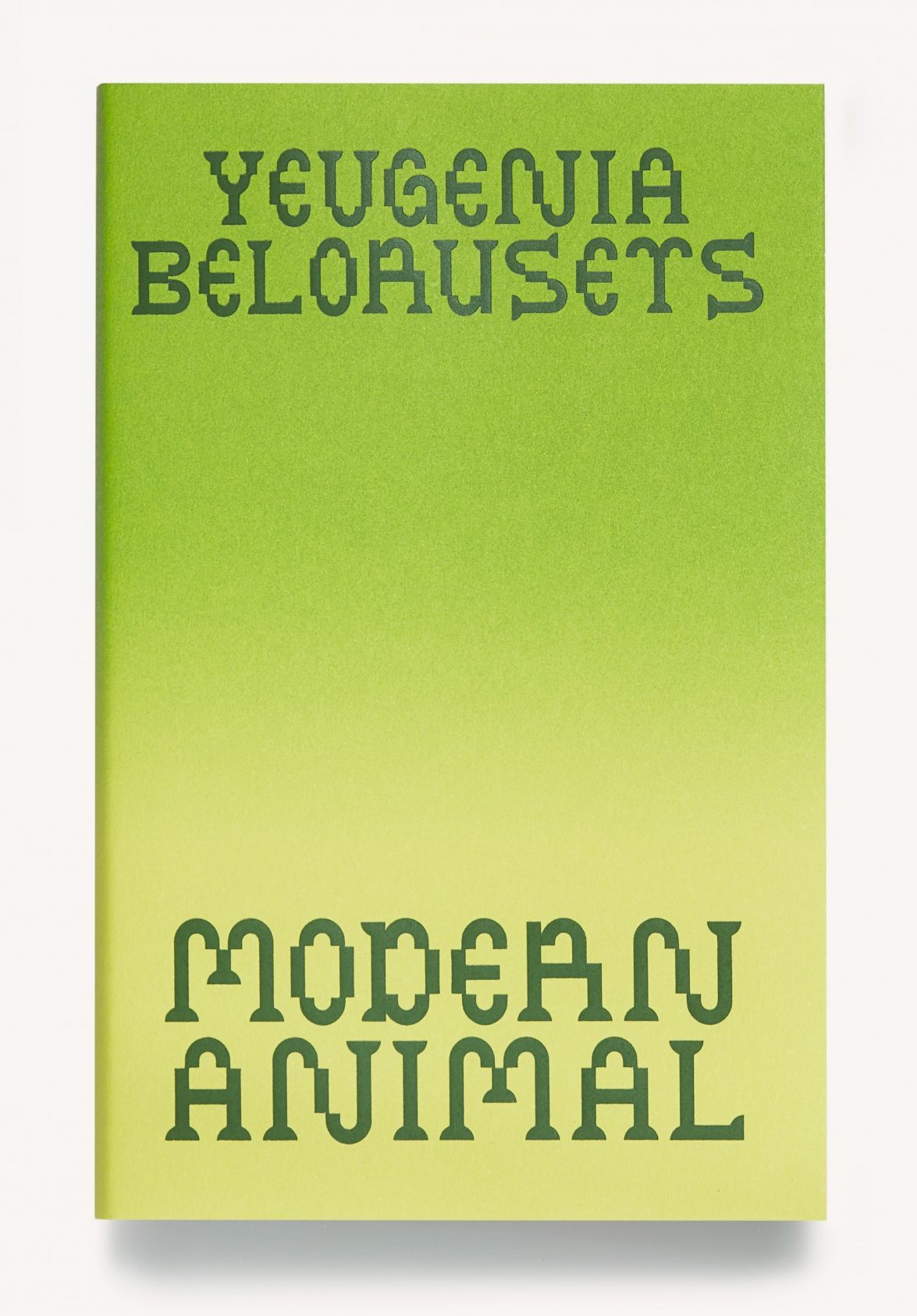
The small volume fits in the palm of your hand. It opens with a series of lectures. The speakers are human or animal, the audiences composed of individuals who may be one or the other, neither or both. The line between what it means to be a human or nonhuman animal is necessarily blurred. What strange hybrid world is this? Fantasy? Allegory? Yes, no. It is, in reality, fiction extracted from raw facts and experiences too terrible to be accessed directly. This collection of stories, musings, questioning and philosophizing is drawn from real life as understood through animal metaphors. The speakers in each piece are victims of the Russian-Ukrainian war in the Donbas who find voice in a form that illustrates the confusion, despair, resistance and resilience of the Ukrainian people in a way that conventional reportage can only hint at. Yevgenia Belorusets wrote this book, Modern Animal, just last year in 2021 after six years interviewing those living in the contested region. Now, with a full-scale invasion underway, the strangeness and horror of life during wartime is being played out across the entire country.

Belorusets is a Ukrainian journalist, photographer and writer, writing between Russian and Ukrainian, who has dedicated herself to documenting the lives of the disenfranchised—even the non-human—who exist on the shifting borders of social, economic and political realities. As I write this she is in Kyiv, reporting daily from the street level, photographing when possible, recording her encounters, and describing her contacts with friends caught elsewhere in worse situations. Each day at 4:00 pm ET, the publisher of this volume, isolarii, posts her latest update to their site and I wait for it, just to know she is okay. This missive with its growing mix of melancholy and resolve gains new followers every day. Having read Modern Animal it feels like life imitating art imitating life, but now filtered through a lens of stark realism.

When I first received a copy of this book months ago, I confess that I was not quite sure what to make of it. Each chapter was so different that I wondered if it was building to a larger fictional construct that I needed to track, to make sense of. Mentions of war and allusions to notions of ethnic cleansing emerge early on, but foolishly I was not putting two and two together. Perhaps I was not well informed about events in Ukraine and, of course, at that point Russia had not yet started amassing forces on its wider borders. And even then, few expected full scale invasion. But as soon as the wind changed I reached for Modern Animal and started from the beginning again.

It may seem a small act, but literature can bring foreign truths home in a way straight nonfiction, news media and internet interaction cannot. That is the brilliance of Belorusets’ approach, though I’m sure she would not have wished for it to be doubly necessary in this way. The entries in this book are presented as lectures, documents, accounts and fables. There is a dreamlike quality that often reminded me of the writing of experimental Chinese author Can Xue. Off-side, if you like. In one chapter, for example, called “Migetti (fourth lecture-document: interview with a viewer)” the speaker talks about being very sensitive to the emotions of animals and describes a German language animal video that she found especially moving. The film chronicled the adventures of a she-wolf named Migetti, whose entire pack was killed during an outbreak of canine distemper. As the lone survivor, she sets out in search of another pack to accept her. Her journey is difficult, the viewer is terribly worried about her fate and overjoyed when she is finally successful in finding a new community. But the final paragraph is telling:

Oftentimes, we don’t feel anything, even when major tragedies strike. We see earthquakes, explosions, wars, but we can avoid thinking about these narratives as though we’re walking down a separate road. But here, it all happened differently. She still haunts me.

Questions of fate and the nature of humanity recur. Narrators describe their connections to cats, dogs, birds, and horses. Some stories are melancholic, others cruel, but many carry a stubborn magic—like the wonderful tale of a hen who carries the soul of a woman who died in a city hospital far from her mountain village back home, but then continues to share her body with the dead woman’s soul for the rest of  her life. With the recent exodus of refugees from Ukraine, this fable bears its message of hope in a new context.

Sadly Modern Animal has become a sharply prescient text of late. One of the most striking entries, simply titled “A Small Aside” begins with mention of American interference and even reference to Afghanistan, followed by a tirade about war (and dogs) but ends with the speaker’s expression of his refusal to take up arms in the present conflict in Donbas:

I won’t go fight this time, not for this side, not for that one.

What kind of war is it when no one even calls it a war.

Only if tanks roll into Kiev, then I’ll pick up my gun and go defend my house and family! I’ll stand on the roads to Kiev! I’ll stand like a boulder, I won’t let anyone get past me.

I am aware that the attention Russia’s invasion has garnered has drawn questions about the many ongoing conflicts around the world that seem to be forever under the radar. And that is a very important issue. But as this small book demonstrates, war was simmering in this corner of Ukraine for years. We human animals are, if anything, very good at looking away.

Modern Animal is a haunting read, an often entertaining and disturbing treatise on life during war—a collaborative, animal-sensitive effort between Belorusets as author, documentarian and photographer, and the people who have already been living with conflict for half a dozen years. Important when published, it is now essential reading.

Modern Animal by Yevgenia Belorusets is translated from the Russian by Bela Shayevich and published as part of isolarii’s series of “island books.” It has been reissued and can be purchased here. One hundred percent of the proceeds will be donated to support Ukrainian charities.

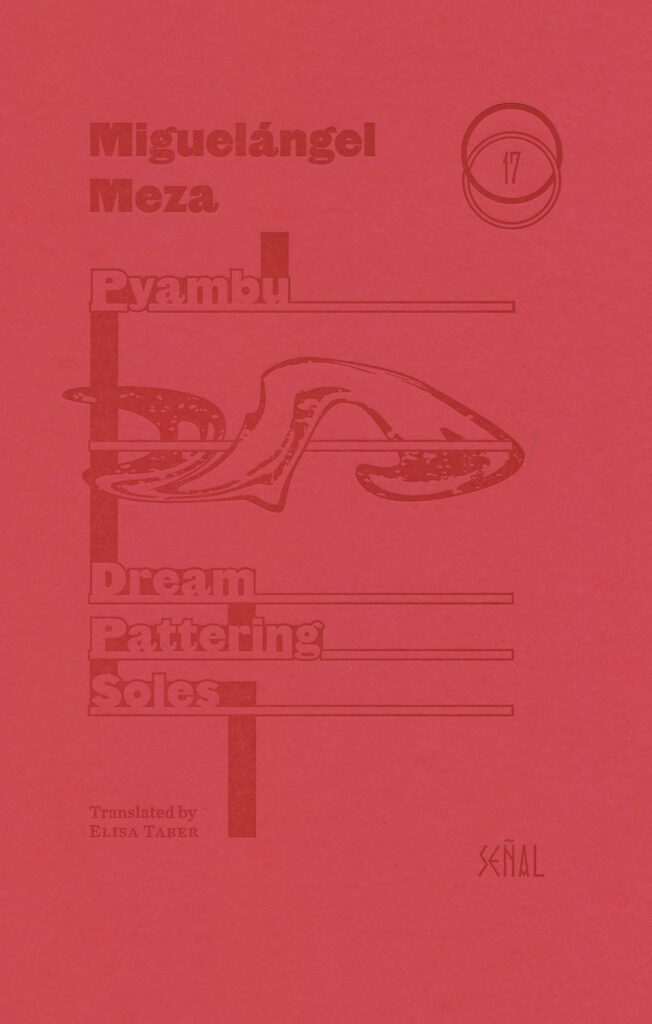
Night / falls / slowly: Dream Pattering Soles by Miguelángel Meza

I was long asleep within me.
Emerge to keep vigil,
move.
Yes I was asleep within me.
I am truly alone.

(from “Appear”)

It may be small, but this trilingual chapbook contains an entire world in the span of ten poems. Here Guaraní poet Miguelángel Meza calls on the traditional mythology and cosmology of his Indigenous Paraguayan culture to speak to contemporary issues. This project, named in full Ita ha’eñoso / Ya no está sola la piedra Formerly and Again Known as Pyambu / Dream Pattering Soles has its origin in a dual language Spanish translation by Meza along with Carlos Villagra and Jacobo Rauskin first published in 1985. The original Guaraní was revisited and edited by the poet for this double bilingual edition which includes both the Spanish version and an English translation by Elisa Taber (each running alongside the original from the opposite end of the book). As a writer, translator and anthropologist born in Paraguay, Taber is especially well suited to take on this project. She was able to access the original poems directly and via the Spanish, check with the poet as needed, and edit the final version, allowing a uniquely interwoven translation to emerge.

The English title Dream Pattering Soles is a literal translation of the original title Pyambu, that, as the translator indicates in her Note, evokes an auditory image of “menacing presences, deities turned human.” The Spanish title that translates as The Stone is No Longer Alone calls to mind comforting presences, the “humanity of the nonhuman.” Together, the titles selected for the two translations embrace two essential elements of the grounding mythic narratives and the poet’s approach to rendering them. As Taber says:

Meza’s central figures of speech are metaphors and metonymies used in conjunction. Something substitutes another which is part of a whole. The attribute of a particular god is identifiable in a human and that of any human is identifiable in an animal or a thing.

As such, the journey of the poet, and by extension his community and the reader, is one of moving from being with to becoming in the other.

In the opening poem, Meza, takes on, as “I”, the voice of the fundamental essence—the first  ñe’ë, or world-soul, that arises with the beginning of the world. Nature is, as one would expect, an abiding presence in this sequence, and even without a detailed knowledge of Guaraní mythology, the mournful beauty speaks across a wide geographical and cultural expanse.

I suffer, moon.
Wrung firefly falls.
Earth will turn to dust, they say.
End. Then,
who will you, daughter, orbit?
I suffer:
The sky wrecks the rivers.
Sadness’ dust falls.
Ashes cover the fields and
the vast forest.
And you seem to spin back
into the sky’s depths.

(from “Moon”)

In this conception of the world, we see ancient wisdom meet modern concerns. The delicate, haunting images seem speak to our changing planet in the uncanny way traditional mythology so often does. In these uncertain times—the slogan of the 2020s it seems—this unique volume is a timely invitation to listen.

Dream Pattering Soles by Miguelángel Meza is translated by Elis Taber and published by Ugly Duckling Presse.