Things that will come to pass and cannot be stopped: January by Sara Gallardo

What is a day? What is the world when everything inside you shudders? The sky darkens, houses swell, merge, topple, voices rise in unison to become a single sound. Enough! Who is that shouting? Her soul is black, a soul like the fields in a storm, without a single ray of light, silent as a corpse in the ground.

Sixteen year-old Nefer has a secret. A secret growing inside her body that is pushing her away from her family and deeper into herself. Desperate to resist the abrupt transition to womanhood that has been thrust upon her, her predicament is the central focus of Argentinian writer Sara Gallardo’s January. Originally published in 1958, when Gallardo was only twenty-seven, this unsparing novella about rape, pregnancy and abortion in a world where a woman’s body and being was strictly defined by church and convention, has come to be regarded as required reading in her native country. It has now been released in Frances Riddle and Maureen Shaughnessy’s English translation.

This brief novella simmers with stark intensity as it follows Nefer’s conflicted and tumultuous emotions as she struggles to cope with her unfortunate circumstances alone in a deeply religious rural community in mid-twentieth century Argentina. The youngest of three daughters, her life on her family’s farm is one filled with hard work and constant expectations. She admires her disabled father’s quiet dignity, resents her sister’s fulsome beauty and fears her mother’s large, threatening presence. And, in spite of her condition, she nurses a hopelessly passionate crush on her handsome neighbour, Negro. In her mind, in fact, it is he who is responsible for her pregnancy although the child is not his. She had invested so much time and desire into the design and creation of a dress for her eldest sister’s wedding imagining it might magically catch his eye and, had she not been so intent on making an impression, she believes she would not have inadvertently attracted the attention of the older man who forced himself that day.

Playing out against a landscape defined by blistering heat, vast open spaces, sparse shade and clouds of dust, Nefer’s experience of her surroundings is highly charged and fragmented. She swings from rage to fear to jealousy to waves of crushing guilt. Unable to escape the stain of her strict Catholic upbringing, the sorry state of her soul is a constant concern. Anxiety eats away at her. She cannot help but think back to a time when she was carefree, when the world still held promise. But she remains determined to face her fate on her own terms, no matter where it takes her. Gallardo brings us right into the heart of her effort to assert control over her mind, her body and her life, as in this scene where she slips out during siesta to sneak into town in search of a possible medicinal intervention:

She kicks and takes off at a gallop, steering toward the thick grass that will absorb the footfalls. She doesn’t want to think about the end of her journey, about the old lady she’s never seen but with whom all her hope now lies. Her eyes pick out objects one at a time, attributing an exaggerated importance to each. Thistle, she thinks, thistle partridge, dung, anthill, heat; and then she hears – one, two, three, four, one, two, three, four – as the hooves hit the ground. Slowly, sweat begins to appear behind the horse’s ears and runs in dark strands down his neck where the reins chafe against his coat, churning up dirty foam. Little voices, little voices speak to Nefer, but she continues her journey indifferent to them. Cow, she thinks, a Holstein, and another and another. That one’s overheated. Lapwings. Two lapwings and their chick. Those piercing shrieks!

In less than 120 pages, January offers a vivid, internalized account of a young woman facing impossible odds. Gallardo was born in 1931 to a wealthy Buenos Aires family with broad agricultural interests and this, her first book, shows a clear sensitivity to the social dynamics impacting disadvantaged rural communities and the suffocating influence of the Catholic mission churches. But beyond the constraints of her time, it is Nefer’s private horror, as reflected in her relationship to other people and to the natural environment, that makes this such a compelling—and timeless—read.

January by Sara Gallardo is translated from the Spanish by Frances Riddle and Maureen Shaughnessy and published by Archipelago Books.

Unwrapping the unwrappable: The Box – A Novel by Mandy-Suzanne Wong

She didn’t laugh. Something about the box precluded laughing. The way it coiled around itself, perhaps. The paradox of the self-contained container self-sufficient as a brick and fragile as a poem. The “air of pandemonium” about it as like a poisonous plant its mere existence “filtered an intrusive, disruptive element into the atmosphere.”

The Box, the latest novel by Bermudian writer Mandy-Suzanne Wong, is an enigma that defies simple classification or clear resolution. Experimental in form, dystopian in setting, it follows, indirectly, the movement of an unusual box constructed of white woven paper through a city trapped in an endless snowfall that has blurred all normal social interactions. A novel of ideas it is entirely composed of interdependent but distinct narratives that vary widely in style and form. Yet, the voices that take turns carrying each chapter are strange and estranged, each projecting a strong character or tone, but in most cases revealing only fragments of their own pasts and hinting at a larger story that stubbornly remains at the edges of the unfolding journey of the unusual little box.

In the first chapter, “Secondhand,” a recently retired, self-described anthrophobe, sees a small item fall from the pocket of a man’s jacket onto the snow covered laneway and, for some reason, is inclined to pick the object up and hurry after him. The narrator, perplexed by their own behaviour, cannot resist temptation and we have our first and clearest description of the box:

that thing, a paper thing, white paper in the snow, exerted forces which I cannot define but which proved stronger than history and all my instincts: the little white box fit in the palm of my hand with perhaps a whisper of a rattle when it moved, was of a size that could’ve accommodated cigarettes or playing cards, a wallet or a slim wad of cash, yet was absolutely self-contained lacking the door or flap of the cigarette or playing-card carton, but then again it was the opposite of self-contained being all-over seams, by which I mean it was constructed of paper strips entangled as if haphazardly, shooting out as if dynamically between one another and diving under one another in all directions, but so tight a weave it was that no strip seemed to have an end, delicate as they were the strips held fast to one another with a tension that resulted in an impenetrable rectangle

In long, winding sentences, the misanthrope recounts the story that the apparent box-owner shares about how he came into possession of this strange thing through the unlikely adventure of his cousin’s first wife’s stepbrother’s eldest daughter and her friend in a bizarre short-term rental apartment decorated with and filled with boxes. The roundabout account introduces images that will reappear, such as the idea that the mysterious object could easily be lost in the persistent blanket of snow that is covering the city, and offers the first appearance of a woman with artificially blackened hair and a chipped tooth who, in her obsessive pursuit of the box, will resurface in the events described in each of the following chapters.

As we move from narrator to narrator, we see the small white box make its way through an art exhibit, a warren of decrepit second hand shops, the peculiar story shared by a hotel guest before becoming an object of near-religious veneration and ultimately passing into the hands of a security guard. Most of its journey is reported through layers of doubt, supposition and even cynical dismissal. Meanwhile, the snow continues to fall at a steady pace just exceeding the rate of evaporation, effectively cutting the city off from the rest of the world. Isolated it becomes an increasingly hostile and unforgiving place, and the narrators become increasingly bitter, intolerant or emotionally injured. The box, by contrast, indestructible and preternaturally white, exudes a kind of innocence that is either attractive or diabolical, depending on the perspective of those who fall under its spell.

Although the mood, energy and prose style shifts with each chapter, the overall tone of The Box is both absurdist and intentionally self-referential. As such, it is not an easy read. Given what looks like a puzzle, a reader naturally looks to find clues and links uniting the stories that are told, but here the mystery is a kind of moebius strip that turns in on itself. Wong includes a list of writers and thinkers whose ideas and images she misquotes and misinterprets along the way, but I I’m not certain how essential a familiarity with these authors is to appreciate this work. The one fundamental, perhaps, is Jane Bennett’s notion of the vitality of matter that ascribes life and agency to all beings—human, nonhuman and seemingly inanimate alike. Various things—works of art, antiquarian books, buildings and other objects—have a particular importance for most of the characters that populate this decaying society, but the little white box that invites both obsession and scorn appears to be of another order altogether.

One is left, then, to ask: What existence and power does the box contain in itself and how is that related to the people who come into contact with it? Is it possible to conceive of an object with independent agency without imagining it in an environment within which the human actors have found themselves with restricted agency due to some impersonal yet impenetrable force of nature? Or is the matter that matters all in the experience of the beholder? Ambitious and original, it will take time for me to put this strange text behind me.

The Box: A Novel by Mandy-Suzanne Wong is published by Graywolf Press in the US and House of Anansi in Canada.

India update: Catching up with old friends, finally meeting others

Four years is a long time. Much has happened since I last visited this country. Since I last travelled anywhere as fate and pandemic would have it. Two-thirds into my stay and it feels like it has been a hectic time—not that I haven’t had free time, but I seem to find it hard to stay put on an empty day when a busy vibrant world awaits outside the door. And one doesn’t want to miss the chance to catch up with friends who are normally but a virtual prescience in one’s life. So, less reading and writing has been accomplished than I had anticipated to date.

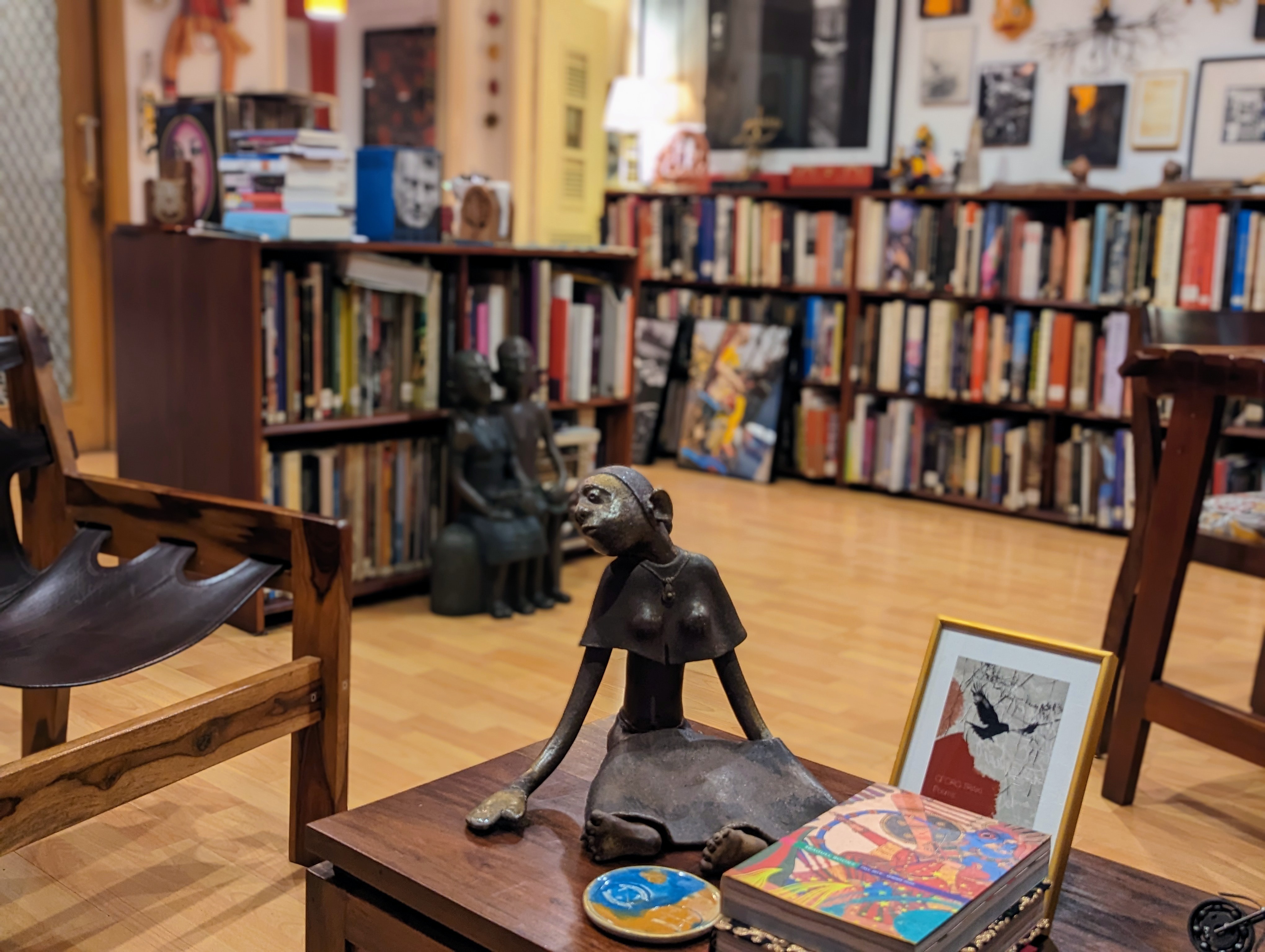
I started my trip in Bangalore, a city I will return to before flying home to stock up on books. Weight restrictions on internal flights have meant that if I buy books, I risk not being able to get to my next destination. It surprises me how just a few slim volumes will tip the scales! And it’s always a pleasure to spend time with my very dear friends here at either end of my India sojourn.

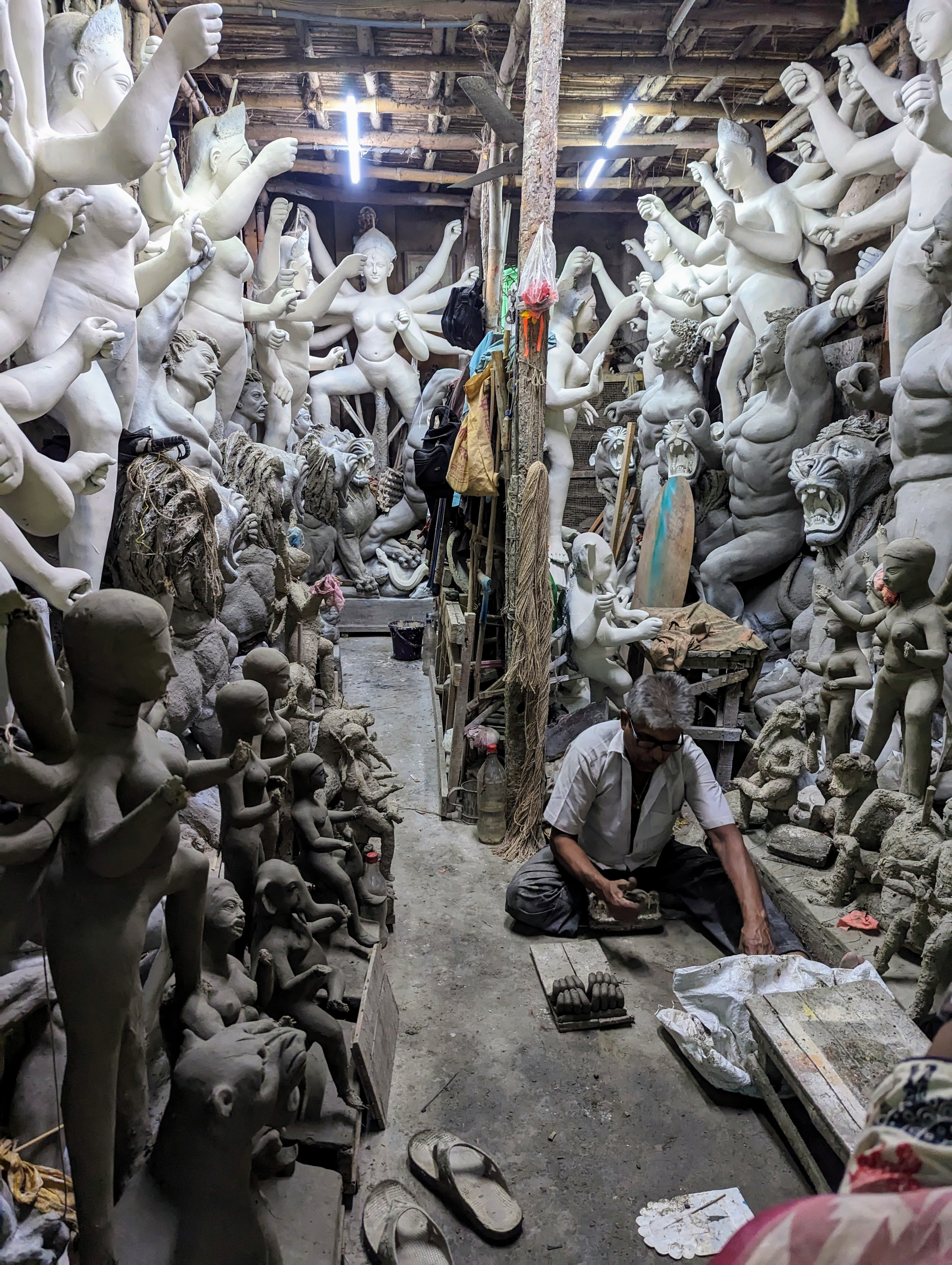
From Bangalore, I was off to the City of Joy, Calcutta or Kolkata, to the place (and the publisher) that first drew me to the subcontinent. Wet and humid beyond measure, it was my first visit outside the drier winter/spring months. But it was wonderful to see my dear friends at Seagull Books where I was able to play a small role in the creation of what will be another spectacular catalogue—this one tackling a vital theme for the times. I also had coffee with the couple who were my first tour guides in the city, this time meeting up with them in an area further south than I had been to date. I also made a pilgrimage to Kumartuli, the potters’ colony where craftsmen are busy making idols for the upcoming Durga Puja, Kolkata’s most important festival.

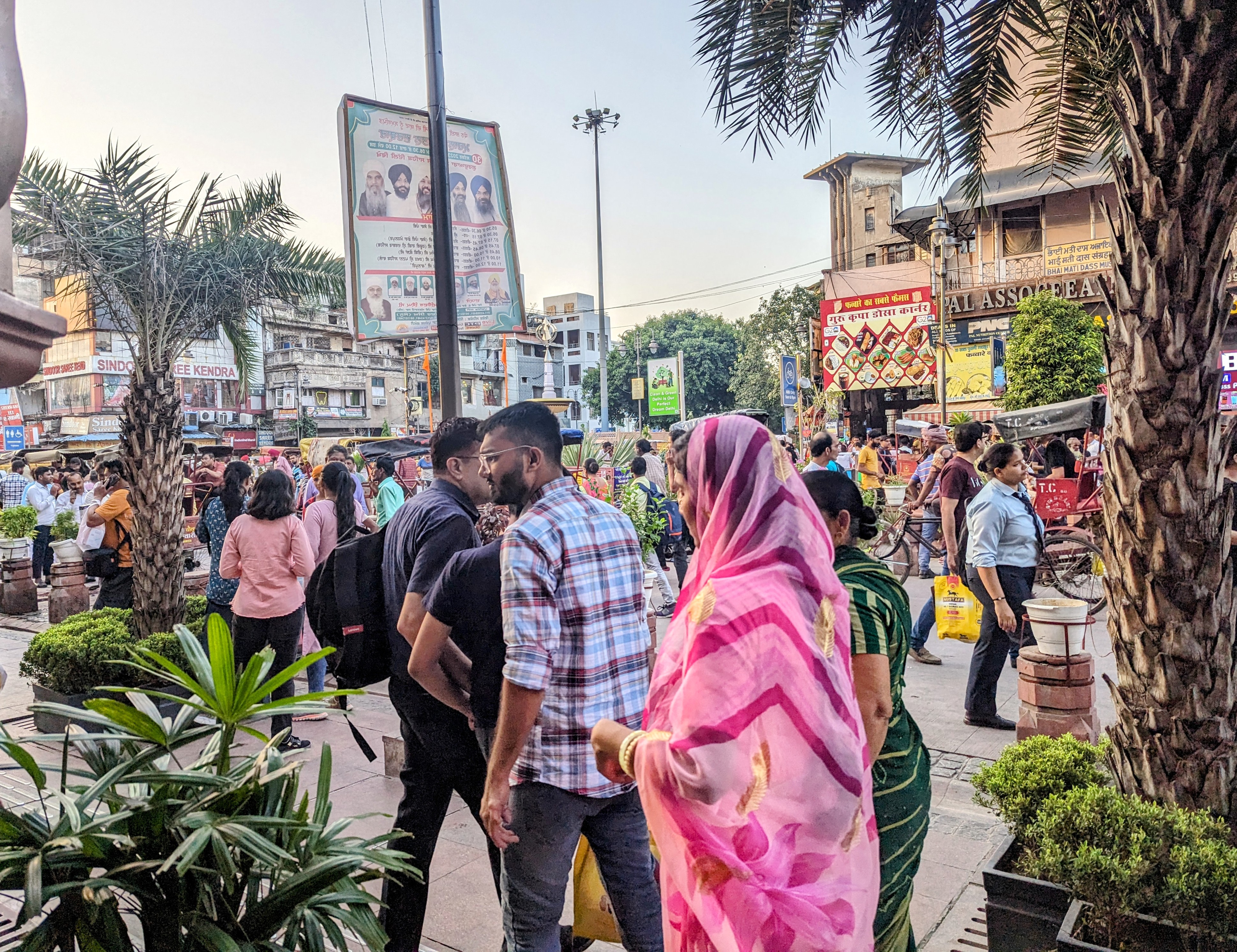
The next stop was Delhi, a short stay, but my first in the nation’s capital. I was met at the airport by a friend which was fortuitous because it proved difficult to get a cab willing to go into the congested area where I was staying. Subsequent forays in and out were facilitated by the Metro. On my first day in the city, the same friend escorted me to the university where he teaches and I gave a talk about writing book reviews. It was a very rewarding experience. The second day another friend took me into central Delhi where we had lunch, walked around, visited temples and enjoyed a most awesome lassi!

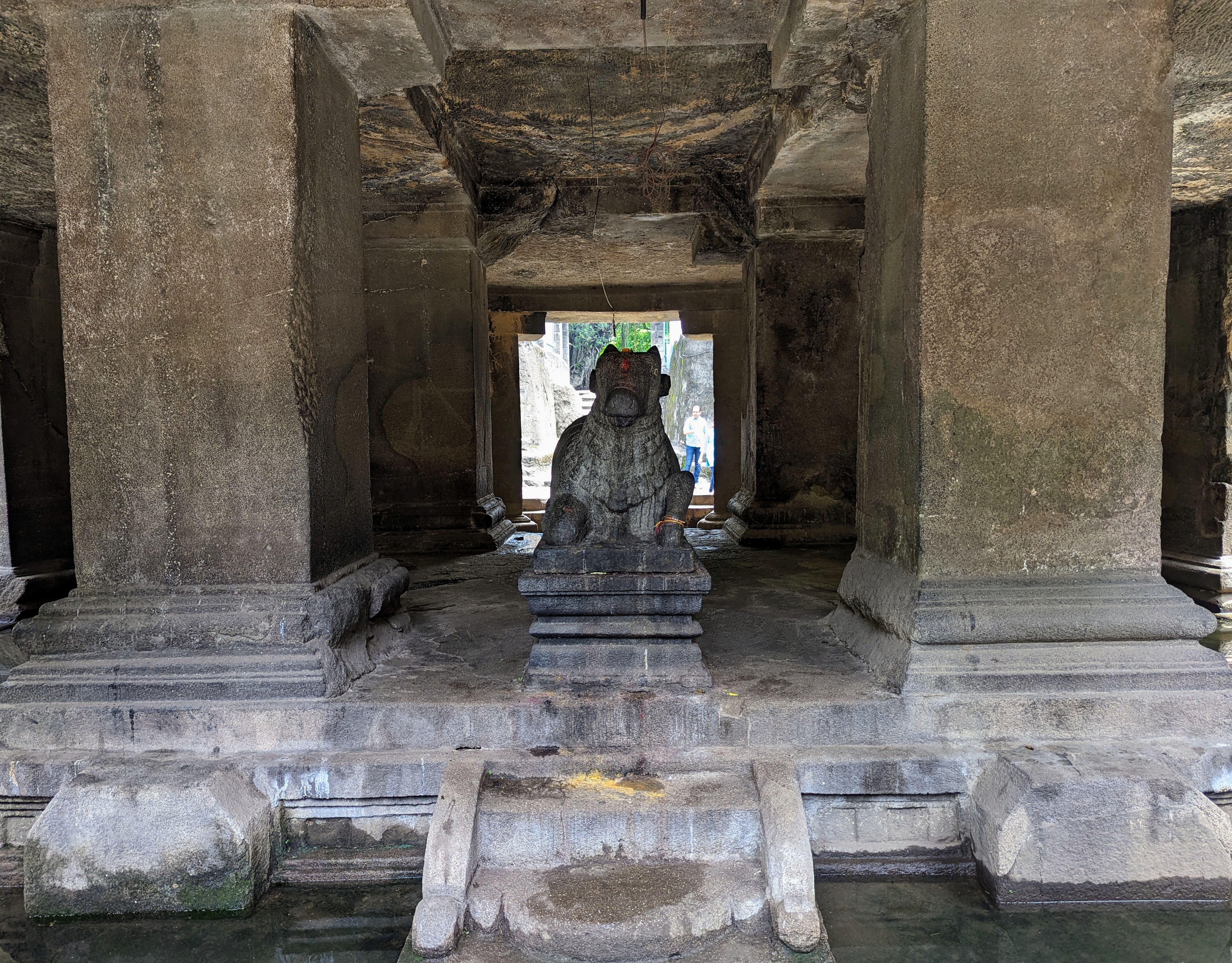
Then on to Pune, where I’m writing this on the final hour of my birthday. Here I caught up with dear literary friends and had a chance to finally meet someone whose friendship has offered solace during these long years of pandemic isolation. I also walked down to see the Pataleshwar Caves, the site of an eighth century Hindu temple carved out of the rock—a sanctuary within a busy city.

Tomorrow I fly to Mumbai for a brief stay then on to Jaipur where I hope to dry out a little after all the humidity of this extended wet season before returning to Bangalore. Whew!

It is good to be back in this hectic, vibrant country, even if I have arrived at a time of some diplomatic discord between my own country and India. I have never felt anything but welcome here.