Now and at the Hour of Our Death by Susan Moreira Marques, a reflection and review

We obsess over lasts as we do over firsts. Last days, last images, last words. We want signs.

Last month, my brothers and I made a most difficult decision about our father who was, at the time facing a cluster of serious complications resulting from a stroke and car accident. Four days earlier we had gathered around our mother’s bedside as the respirator that was barely keeping her breathing was removed. Within four hours she was gone. After agreeing to discontinue treatment of our father, he would continue to live, slowly dying, for another week. As I kept vigil day after day I tried to remind myself that there was a time when death was allowed to take its course, in the home, even as so-called “normal” life would begin to spin, a troubled satellite, around the dying person. Death was part of life, not something that happened elsewhere, surrounded by tubes and machinery. Although my dad remained in the hospital until the end, he was moved to a quiet, private room where he was kept comfortable, free of pain, and cared for by the nursing staff. As a family we were supported and respected. It wasn’t easy, and we’re all still numbed and distorted in our grieving, but if there is such a thing as a good death, I think that both of my parents had good deaths, if good means having a chance to say I love you, over and over and over until the end.

nowdeathWhen I first started to read Susana Moreira Marques’ Now and at the Hour of Our Death, I wondered if I was too raw, too plagued with second thoughts about the decisions we had made, to be able to surrender to a lyrical and experimental essay about death and dying. This book had been sitting on my shelves since it arrived last year with my And Other Stories subscription, several times I had opened it but somehow the time was not right. I suppose the book was waiting for me.

Over the course of five months in 2011, Marques made several visits to a palliative care project in rural north-east Portugal. She accompanied a team of health care professionals as they traveled from village to village to assist those on their final journeys, allowing them to be able die, as comfortably as possible, in their own homes; and along the way she recorded her own observations, collected anecdotes, and listened to the stories of the people she met. The result is powerful meditation dying, as a lived experience shared by a family, a community.

The first half of the book is fragmentary in style and form, blending facts and definitions, character sketches, brief stream-of-conscious like passages, pieces of wisdom—all presented with a quiet dignity in lucid, affecting prose:

The swallows have already built their nests above the back door; this is how they do it every year. They are useful birds, and beautiful, and have always been a favourite of his. But now he watches them as he never has before, because he might not see another spring.

*

AGONY: 1. The last struggle against death. 2. [Figurative] Anguish, affliction. 3. An imminent conclusion (preceded by a great disturbance).

‘Agony,’ the dictionary does not note, is a technical term.

*

Immortal in the morning. At night, the fear of never waking.

*

Lands, roads, people, time, time, people, roads, land. What matters here is different, very different.

The second half of the book, entitled “Portraits”, offers a closer look at three individual stories. Here Marques becomes a gentle presence as she describes each situation, then she steps back and lets those involved have their say. There is Paula, a woman with a young family, who is dying of cancer. She speaks with a brave spirit about how she and her husband had taken their time, waiting to have their second child, assuming they had “all the time in the world.” She will only have another year to live at the time that her thoughts are recorded. Then we meet João and Maria, a couple in their 80s who reminisce about their years in Angola. Both are ill, yet neither feels that they are ready to die, they live for visits from their children and grandchildren, and each one fears being the one left behind.

Finally, in the third portrait, the dying person is silent by the time Marques meets the family. While their father Rui lies on his death bed, his adult daughters, Elisa and Sara, each respond in their own way in his final months, the latter driving home from France every fortnight to spend time with him and her mother. Their own accounts follow his death, capturing the early weeks of grief, anger and regret. Very different in temperament, the sisters respond in their own ways to the loss, but for each of them it is the first time they have come up against the close experience with death and it is a leveling experience. Sara realizes she had never appreciated the magnitude of what others she had known would have been going through when they lost a parent, regretting that she had failed to say anything. I can’t help but feel that that is a common occurrence. Nothing but the death of a close friend or family member prepares you for the experience. Elisa, on the other hand, is surprised to find that she is unable to shriek and scream in anguish the way her sister and mother do when her father finally passes:

. . . I couldn’t react. It must have been two months before I cried. It’s really hard for me to cry. And now I’ve finally started crying, but only because I’ll get all worked up over something minor, and then I might cry a little out of frustration. But when it happened – and the atmosphere at our house was just so strange . . . It took me a long time to realize what was going on.

The final section, a single page long, is a guide for “When you come back from the journey no healthy person wants to take,” a list of the ways “you”, that is anyone who survives the death of a loved one, can be expected to act. . . paying attention to time, the things and people that are precious, the bridges that need to be mended and, simply, endeavouring to live well. I hope I can follow this wisdom even if, at the moment, I am inclined to relate to Elisa’s reaction, with grief coming in angry outbursts more than tears.

witm-logo

Now and at the Hour of Our Death is translated from the Portuguese by Julia Sanches and published by And Other Stories.


 

The pursuit of happiness: Sergio Y. by Alexandre Vidal Porto

“If happiness is not where we are, we must chase her. She sometimes lives very far away. You must have the courage to be happy.”

When it comes to the depiction of transgender individuals in literary fiction, I will confess that I am a rather cynical customer. Lets just say I know the reality too well. So much of what I have read does not even come close to scratching the surface of what it means to be at odds with one’s own birth-assigned gender. Intentions are good and, of course, the transgender or intersex character always allows for an interesting twist but the results can be misleading, even distressingly off base. That’s why Sergio Y. by Brazilian author Alexandre Vidal Porto is such a refreshing and original read. Here is a novel that treats the subject with intelligence and compassion—quite the feat for a book in which the transgender character meets an untimely and unfortunate end before the story even gets started.

SergioThe title character, Sergio Y. is the son of a wealthy businessman in São Paolo, Brazil, and the great grandson of an Armenian immigrant who escaped the tragic fate of so many of his countrymen, including the rest of his family, when he crossed the ocean in 1915, seeking his happiness in the Americas. The narrator is Armando, a well-respected seventy year-old psychiatrist. Sergio had been referred to him for therapy at the age of seventeen, described simply as “articulate, intelligent and confused.” They meet regularly for several years. This mature young man—so handsome, wealthy and talented—intrigues Armando and yet, in spite of all of these advantages, he professes to be possessed by a deep and abiding unhappiness.

Following a visit to New York City one Christmas, Sergio informs Armando that he wishes to discontinue therapy. He has had a revelation, he says, and he believes he has found a way to be happy. Our narrator is a little disgruntled to be dismissed as such but, as the years pass, Sergio Y. fades from his mind until a chance encounter with his former patient’s mother. She reports that her son has moved to New York where he attended culinary school and is now about to open his own restaurant. Armando is surprised, but pleased by this news and the praise he is afforded for his role in helping Sergio find happiness at last. However, this boost to his ego is short lived. Armando’s world begins to crumble when he learns, quite by chance, that Sergio Y. has been murdered at his home in the West Village.

Obsessive by nature, Armando becomes haunted by the need to know more. What he discovers with the help of a private investigator is completely unexpected and sends him reeling. The murder victim is identified as Sandra Yacoubian, female. Sandra and Sergio he soon learns are, in fact, one and the same person. His young patient had found his happiness as a woman and now she was dead at the age of 23! How could he have failed to recognize that Sergio was transsexual? And, even more serious, was his failure in some way responsible for this tragic outcome?

The main source of my frustration was not having detected any hint of Sergio Y.’s transsexuality. I felt I had been duped solely and exclusively by my own incompetence. I had always though that the secret to transsexuality was not all that deep, that it revealed itself in all of the individual’s attitudes, at all times, in all the decisions he or she took, since early childhood. As far as I was concerned, the pain in the patient’s soul and their inner confusion would be so visible that one did not need to be a Freudian or Jungian psychoanalyst to make the diagnosis.

Armando’s search for answers and his personal quest for understanding lie at the heart of this book. He begins with a handful of stereotyped assumptions. He labels them, admits to them, and lays them out. In the end, as he comes to a clearer,more nuanced appreciation of the decision his patient chose to take to find happiness and the determination with which she pursued it.

The narrative tone is highly idiosyncratic, dictated by the analytical, mildly obsessive-compulsive, immodest character of Armando. Even when he begins to doubt and second-guess himself as the account progresses, he maintains the matter of fact, dry, clinical delivery of a psychiatric report. The attention to detail—his clothing choices, his tendency to note the approximate height and weight of people he encounters, even his reports of his own emotional ups and downs—all create the illusion of a sterile account. But when the careful veneer cracks from time to time, we see a moody, somewhat petulant character, prone to bursts of pride, mixed with episodes of guilt and shame. He is continually measuring himself against his own successes and failures. His internal machinations are fascinating.

Ultimately, Sergio Y. is novel that approaches the transgender experience from the inside and the outside, allowing for the comfort with names and pronouns to vary, over time and from person to person, reflecting the complexities of relationships that others, even loving family members, can have when an accepted and assumed identity is challenged. In his own journey to understand and set his mind at ease, the questions Armando raises and the answers he finds serve to create a moving and compassionate portrait of the transgender person’s conflicted internal experience and the search to find a way to be happy in the world.

Happiness may be an ideal; comfort or contentment might work as well. From my point on this same journey I would hasten to add that it can be a difficult and lonely path, but that does not mean it is not worth following. In fact, if it is the right path, there is no other. Semantics aside, this novel is an important, engaging read. It deserves to be written about and it needs to be discussed.

Sergio Y. is translated from the Portuguese by Alex Ladd and published by Europa Editions.

Quiet Creature on the Corner by João Gilberto Noll–my Numéro Cinq review

There is a most invigorating buzz around this book, Quiet Creature on the Corner, the latest release from Two Lines Press. This slender novel by Brazilian writer João Gilberto Noll is, to put it simply, a surreal, enigmatic tale that defies straightforward interpretation. Every reader and reviewer I have engaged with since my review went live yesterday at Numéro Cinq has had a somewhat different interpretation. And that’s part of the appeal–this book invites conversation.

On my first reading I was underwhelmed and uncertain how I could pull a 1500-2000 word critical review out of such a vague, odd offering. So I put it aside for a week and it started to percolate in my thoughts. Each time I returned and reread the text it grew in power and mystery. Since I finished and submitted this review I have continued to think about the book and aspects I wish I had explored. Here’s a taste, please click through the link at the end for the rest of the review.

Forever an Unknown Country: Review of Quiet Creature on the Corner by João Gilberto Noll—Joseph Schreiber

Quiet-Creature-web-294We humans tend to fancy ourselves rational beings. We hold to the convention of cause and effect. We imagine that if faced with strange and unusual situations, we would respond with curiosity, anxiety, or alarm and make an effort to act appropriately. We are inclined to believe that we need to understand what is happening to us and around us at all times. But, is that truly the way we actually exist in the world?

João Gilberto Noll is an author who dares to challenge that assumption. His novel, Quiet Creature on the Corner is, on the surface, a spare and modestly surreal tale of a young man who surrenders himself to a life that is inexplicably handed to him without seriously questioning his circumstances until he is deeply absorbed in a situation that is rapidly growing stranger and more uncertain. Newly released from Two Lines Press, in a measured, wonderfully restrained translation by Adam Morris, this novel offers an English language audience an absorbing introduction to this esteemed Brazilian author.

Continue reading here.

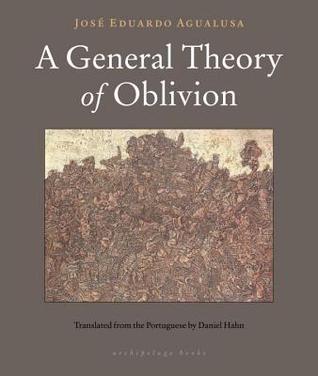
Never forgetting, not forgotten: A General Theory of Oblivion by José Eduardo Agualusa

“Our capital is full of mysteries. I’ve seen things in this city that would be too much even in a dream.”

The pages of A General Theory of Oblivion, by Angolan writer José Eduardo Agualusa, are populated by a colourful array of characters who, for the most, seem to be intent on forgetting, or being forgotten. None succeed. Their seemingly disparate life stories will turn, twist and eventually intersect as threads are dropped, picked up, retraced and woven into a tale that teems with magic against the backdrop of decades of brutal conflict and corruption that marked Angola’s painful emergence from colonialism.

oblivionAt the heart of this story is Ludo, a painfully agoraphobic Portuguese woman who, following the death of her parents, is cared for by her sister, Odette. When Odette marries a mining engineer, Ludo moves, along with the newlyweds to Luanda, the capital city of Angola. On the streets, the struggle for Independence is already underway, but Ludo does not venture out, she even shirks away from the windows and views the sky with terror. The cause of her nearly life-long fear of open spaces is finally explained in the final chapters of the book, but until that time her retreat from human contact and her obsessive, paranoid exile provides an anchor to the violent political drama that swirls, directly and indirectly, around her.

When Ludo’s sister and brother-in-law suddenly disappear, the anxious woman is left alone in their luxury apartment with the sole company of an albino dog named Phantom. Before long, a threatening incident leads to a man’s death on her doorstep, filling Ludo with both horror and guilt. She responds by constructing a wall across the hallway outside her apartment door, effectively barricading herself off from the outside world where Independence is about to be declared. She embarks on a bizarre hermetic existence that will last for 30 years. Over the course of that time, she will eat everything she can grow or get her hands on. She will burn the furniture, floorboards and the better part of the extensive library for fuel and heat, and start scribbling her thoughts on the walls when she runs out of journals and paper. Her eyesight will fade and, eventually, her beloved dog will die. But remarkably, stubbornly, she survives, passing a seemingly endless flow of days and nights:

“The city asleep, and her struggling to remember names. A patch of sun still burning. And the night, bit by bit, and time stretching out aimlessly. Body weary, and the night turning from blue to blue … But there was no one, not anywhere in the world, waiting for her. The city falling asleep and the birds like waves, and the waves like birds, and the women like women, and her not at all sure that women are the future of Man.”

Beyond the walls of Ludo’s dwelling, Agualusa traces the criss-crossing adventures of a number of people caught up in the ongoing conflicts that mark the unstable years following Independence. We have, among others, a Portuguese missionary who miraculously escapes fatal injury in an intended execution, an intelligence officer turned detective, a journalist who specializes in investigating disappearances, and a former prisoner who becomes a successful business man. Toss in a second life among a tribe of wandering shepherds, street kids, merciful nurses and a dancing hippo and you have a rich, magical tapestry that ultimately merges back at Ludo’s door where the elderly woman, is, by this time, living with a young orphaned boy who had arrived as a thief and ended up staying, providing a human companionship and support she had rarely known in her life.

A General Theory of Oblivion reads with an element of allegory or fairytale – the fateful intersections may seem too neat, too coincidental. The number of competing characters required to facilitate the convergence of the story lines can seem complicated; there may be a tendency – especially if one is interrupted in the reading as I was by an inopportune winter head cold – to lose track of who’s who for a moment. But the energy is so infectious, the woman at the core is so endearing, despite or perhaps because of her extreme neurotic behaviour, that the book succeeds in creating awe where, in the hands of another author, it might simply feel false and contrived.

Of course, it is essential to remember that magic is not a device as much as a way of being in the world for many authors from Africa. Last year I listened to the recording of a delightful interview from the Blue Metropolis Festival in Montreal with the young Angolan writer Ondjaki, who spoke about his cultural worldview, arguing that his own magic realism isn’t imaginary, rather it is intrinsic to how people think and how they tell stories in his country: “Fiction doesn’t happen to me. Fiction happens to Angola… no one will say ‘what a powerful imagination!’ You’ll get, ‘what neighbourhood did it happen in?’ ”

That kind of approach to storytelling drives this novel. The horror of the era it covers is not downplayed or ignored but it is met with tremendous spirit and resilience, and in a world obsessed with threats and fear, that cannot help but feel magical, even unreal.

Translated by Daniel Hahn, A General Theory of Oblivion is published in North America by Archipelago Books.

Uncovering a treasure in translation – Ondjaki

“Is that what tales from before were like a long time ago?”
“Yes, son.”
“So before is a time Granma?”
“Before is place.”
“A place really far away?”
“A place really deep inside.”
-Ondjaki

Last week I had the pleasure of reading Granma Nineteen and the Soviet’s Secret by the young Angolan author Ondjaki. This exuberant, magical tale re-imagines a dramatic event set in the community of Bishop’s Beach in the city of Luanda in the early years of Angolan Independence. The country’s first President, Agostinho Neto, has died and a curious, threatening project is rising on the beach. The Soviets are constructing a Mausoleum to the deceased President and, it is rumoured, the surrounding neighbourhood is scheduled to be demolished.

indexOur unnamed narrator is a young boy who lives with his grandmother in a community where a cluster of eccentric granmas are important and valued elders. Together with his friends Pi (known as 3.14) and Charlita, he embarks on a mission to save the day drawing on a worldview informed by spy movies, Spaghetti Westerns and Portuguese language soap operas. A colourful cast of supporting adults round out their adventure including Comrade Gas Jockey who mans a station with no fuel, crazy Sea Foam who is rumoured to have a pet alligator, the Cuban doctor Rafael KnockKnock and a Soviet official christened Gudafterov by the children as a result of his awkward use of the local language.

I learned of this book through the CBC radio program Ideas. In this extended interview, recorded live at the Blue Metropolis Festival in Montreal this spring, Ondjaki spoke of his childhood from which so much of this fantastic tale is derived. He insisted that in his early years, the socialist presence was simply a fact of life – they had a lack of electricity and running water – but it was normal and his childhood was happy. He talked with infectious enthusiasm about his family, his very early introduction to literature and fondness for Marquez, and the deeply ingrained understanding of the magical in the reality of everyday life in cultural mindset of his homeland. Within the week I had obtained and read the book. The tale was every bit as engaging and entertaining as I had expected.

But the greatest find for me personally is the small Canadian publishing house Biblioasis behind Granma Nineteen and the Soviet’s Secret. This book belongs to their small and select series of books in translation. Although he is recognized as one of the rising stars of African literature, Ondjaki’s work is not widely available in English to date. Biblioasis has published two of his novels, both translated by Stephen Henighan. I am very impressed by the results. A work like this depends so heavily on playing with language. Puns and intentional misrepresentations that work in Portuguese have to be re-imagined to work well in English and fortunately the translator was able to work closely with the author to bring the work to life with all its magical energy intact. As a Canadian I am embarrassed that I am only just discovering Biblioasis. I definitely intend to explore more of their offerings, both in their international series and in their English language Canadian titles.