
The lights on the bridges
have no end
My nights are full of them
I will remember
the lights
even in the face of death– from “Theatre” (1996)
In recent years, Seagull Books has been bringing the work of under appreciated Hindi cult writers to English audiences, via the translations of Saudamini Deo. The latest writer to receive this attention is Alok Dhanwa whose defiant and socially engaged poetry combines the personal and the political with deep emotional and intellectual intensity. Born in Bihar in 1948, just one year after India’s independence, Dhanwa grew up alongside his country, witness to its many growing pains. Against the backdrop of the rising Maoist, Naxalite and other Communist movements in the late 1960s and the tumultuous 1970s under Indria Ghandi’s leadership, including the twenty-one month Emergency (1975–77) during which constitutional and civil rights were suspended, there was much for a young working-class poet to speak to—and against. Often drawing on rural themes and imagery, his poems addressed, directly and indirectly, the struggles of ordinary people, earning him a popular cult like status in Bihar and neighbouring states of northern India.
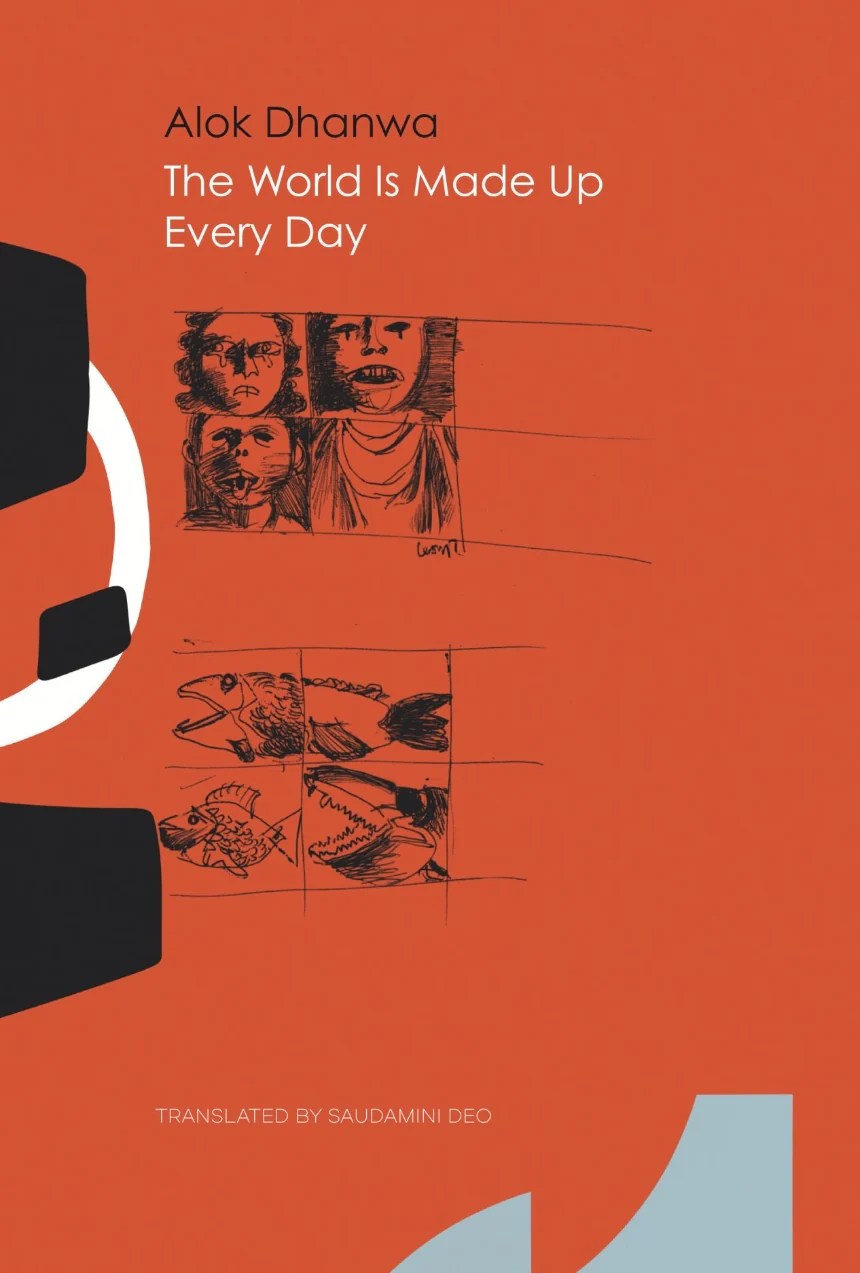 Unsurprisingly, relatively little of his poetry was published during these earlier years. His first collection, The World is Made Up Every Day, did not appear in Hindi until 1998 and was, until recently, his only published volume of work. Now his voice can finally be heard in English, through the resounding notes of Deo’s translation. (Brief YouTube videos of Dhanwa reading in Hindi can be found online and offer a taste of his tone and character that can be carried into reading his poems.) And although the particular political context of his poetry—even when the settings are decidedly bucolic—is essential, in her Translator’s Forward, Deo cautions that to read Dhanwa simply as a poet of the past would be a mistake:
Contemporary Indian milieu is far more complex, with its growing shift towards majoritarian politics and authoritarianism. His lines ‘that India no longer exists / the one in which I was born’ hauntingly resonates with the contemporary reader. Or when he writes: ‘Homicide and suicide are made to look alike / in these half-dark times. Do spot the difference, my friend,’ it feels as though he is speaking about present day India. And, perhaps, there is no end to these half-dark times.
One might venture that such a sentiment has a resonance far beyond India these days. As such, in Dhanwa’s poetry, there are many notes that may ring familiar.
There are direct, often angry, even despairing, references to political violence and oppression in some of the poems collected here, and a certain melancholy when the poet considers his country and the men and women he sees, be they gathering in city centres or working on farms. Dhanwa demonstrates a wonderful facility for employing striking imagery from nature and from everyday objects to address the concerns that trouble him, as a man and as a poet. The poet, in his vision has a critical role, he or she is tasked to speak to both the immediate and the future. Thus, his is not merely an artistic role, it is at once ancient and urgent, yet he takes it on with a measured humility. In “Water” (1997), he begins with his imagined mission:
People, but not just people,
I believed I would teach
even water to inhabit India.I believed
Water would be simple—
like the East,
like a straw hat,
like candlelight.In the golden hour,
the other side is barely visible,
leading us to wander
in a country
yet to appear on the map.
But he ends up wondering if all the words we write are wasted, leading to ruin as water follows its own course in spite of us. He asks:
Do the voices of water
remain in the voices of women?
And what of other voices?In a sad and broken heart
there is only the night of water.
There lies hope, and there lies
the only path back into the world.
Many writers have, over the years, been described as giving voice to the marginalized, but for Dhanwa this is not simply a matter of speaking on the behalf of those who cannot. In his world, those who might be imagined to be on the disadvantaged side of the endless class struggle are not content to stand by quietly. And he is standing with them. He also holds a perspective that extends beyond the joys and the demands of the everyday—it is civilizational in scope. His world view is not static; it is in motion. In one of the longer pieces in this book, “Canvas Shoes” (1979), he begins with a pair of old canvas shoes left by the railway tracks and imagines a life for this worn and humble footwear that entails a long journey that echoes the history of the world:
These canvas shoes
soft and filled with air
as cigarettes and handkerchiefs.
Woven like nests—
against solid things in this world like murder and rape,
these liquid shoes stand
bending with grass and language,
edging closer to salt—
And for the rats, these canvas shoes are like the alphabet—
it’s where they begin to nibble.
Here, simple shoes carry the density of human existence—in the day to day and over vast swathes of time. By the final verse the journey is complete yet eternal:
Those canvas shoes are now so old
that one might say,
wherever they move, Time doesn’t exist—
even Death would no longer want to wear them.
But poets do wear those shoes
and tread across centuries.
In the end it is the poet who is tasked with continuing the journey and translating it into words. To speak to the indefatigable human will to resist, to survive. Something that Alok Dhanwa is well versed to do.
The World is Made Up Every Day: Selected Poems by Alok Dhanwa is translated from the Hindi by Saudamini Deo and published by Seagull Books.
 roughghosts