
Five dead. That is the fact the opens and haunts The Lockmaster: A Short Story of Killing by Austrian author Christoph Ransmayr. Five people are killed when a longboat carrying twelve capsized above the Great Falls of the White River when the sluice gates suddenly opened releasing a torrent of water that caused the vessel to lose control and shoot downstream, all while a crowd of festival goers watched from the sidelines. The lockmaster, who had for thirty years, proudly guided boats safely around the falls through a series of locks, made a valiant effort to manually close the gate, and was locally regarded as a hero. But when his son, a hydraulic engineer working on a project in Brazil, receives word of the event, he is not so sure it is an accident.
 Set in some indeterminate future time, when sea levels are rising and inland regions are drying out, this novella depicts a world in which water is a precious resource to be defended by force. In many places the tensions over resources have ignited tribal wars or enabled the rise of brutal dictatorships while in Europe the political landscape has been shattered into a vast number of warring microstates each with their own flags, languages, cultures and long list of enemies. The narrator and his sister Mira, as the children of the lockmaster and his foreign wife, grow up in a socially isolated home situated above the falls. The waterways are their playground, but all of their education is conducted over screens, so they rarely engage with other young people. As a result, they develop an intimate relationship, something that is no longer taboo but nonetheless unsettling to imagine, especially because the narrator is still so thoroughly obsessed with Mira who has a rare condition that makes her bones exceptionally fragile.
One year after the incident at the festival, the lockmaster himself disappears. When an angler reports having seen a man in a boat dragged over the crest of the Great Falls, although no remains are found, he assumed to have drowned. At this point, the narrator is still in Brazil, the very tight, globally controlled restrictions surrounding major water projects forbid his departure even for a family emergency. His sister is left to tidy up their father’s affairs (their foreign mother had long since been deported from the small central European microstate in which they lived) and by the time he finally gets home, even his beloved Mira is gone, having married a dyke reeve and moved with him to the rapidly eroding shoreline of the Elbe estuary. Already questioning his father’s innocence in the collapse of the festival longboat, when the narrator reaches his next assignment on the Mekong River, he is certain that his father is both a heartless killer and still alive.
Five or seven or twelve cannot have made any difference to him—after all, the precise number of their victims did not bother the bomb planters and well poisoners who were, in those times, bent on drawing attention to themselves and their grand ideas in countries, tribal areas and microstates. Deaths meant fear; and fear meant open ears and open eyes. No one could fail to hear; no one could fail to see what a murderer did, even if he denied his deed.
With this crime, my father clearly wanted to defy the course of time and take himself back to overweening dreams where a lockmaster had been more, much more and more influential than the curator of an open-air museum on the White River could ever be.
The world of conflict, armies, mercenaries, and rebels within which the narrator moves in his work which has taken him to so many of the earth’s great rivers, colours his understanding of the tragic event at the Great Falls and his father’s presumed role in it. He vows to hunt him down and kill him.
This is a more focused effort than Ransmayr’s more sweeping work like Atlas of an Anxious Man, but it does highlight his broad global perspective and ability to evoke a vivid natural—or unnatural—atmosphere as his protagonist navigates the world of his present and remembered past. But the narrator is not a readily sympathetic character. He continually refers to his father as a “man of the past,” but his own refusal to accept that his fragile sister has had the audacity to marry someone else and not sit at the Great Falls waiting for him while he travelled the world, demonstrates that he too is caught in his own self-centred and, to be honest, somewhat disturbing incestuous longings. This is, of course, a fable. A dark speculative folktale. Neither the characters nor the political and environmental dimensions are fully fleshed out—but in such a fractured and volatile world, the protagonist’s insularity would be an expected coping mechanism. As such, the oddly discomfiting narrator is not only plausible, but he adds a suitably unnerving tone to the gloomy undercurrents already driving his story. And Ransmayr’s trademark spare, poetic prose adds a further chilled quality to the work.
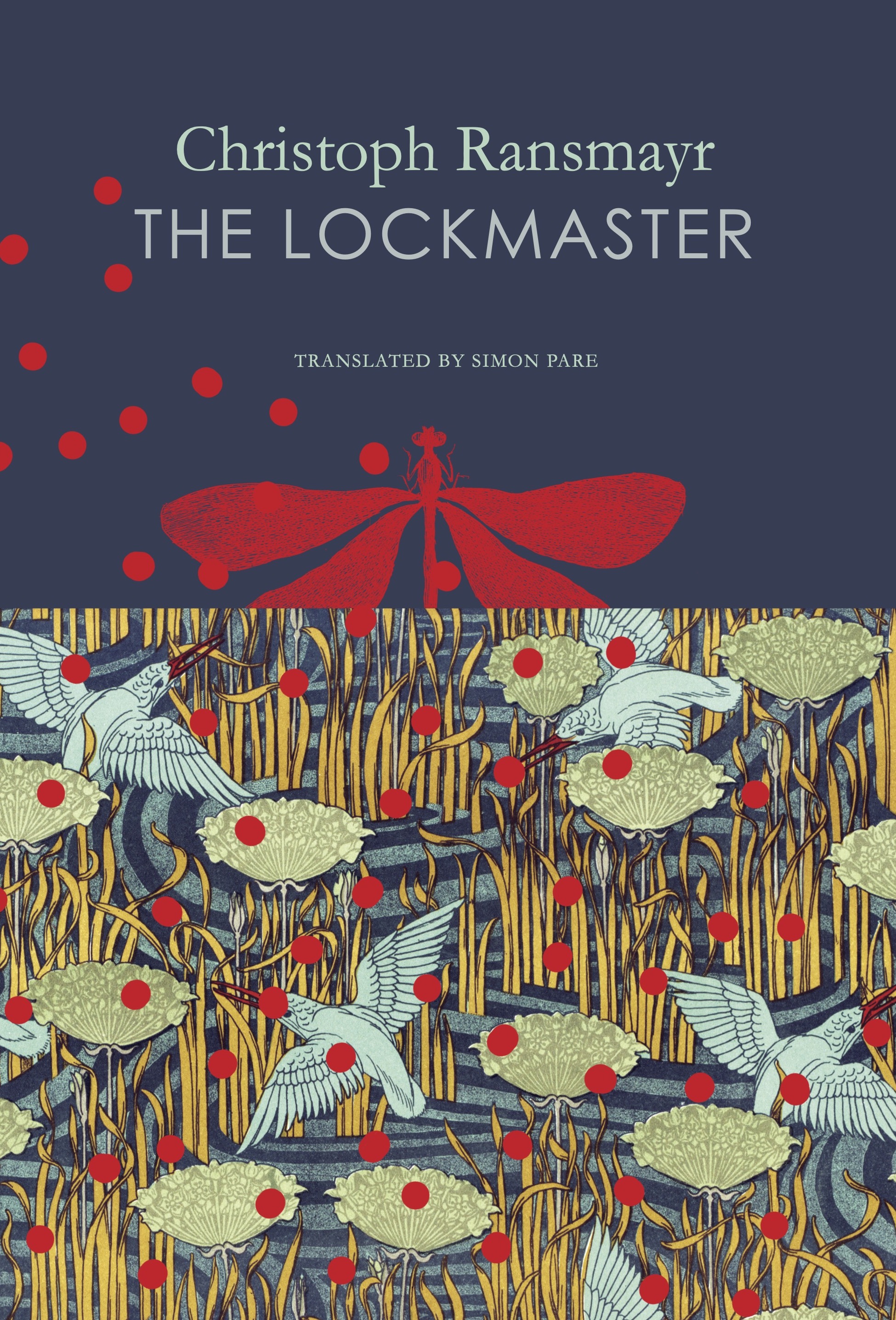
The Lockmaster: A Short Story of Killing by Christoph Ransmayr is translated from the German by Simon Pare and published by Seagull Books.
 roughghosts