An eclectic collection of my favourite reads of 2014

I am not a conventional book blogger and, as such, I only touched on a limited selection of the 45 or so books that I read this year. Sometimes I can’t help devoting a post to a book that has grabbed me or fits into the particular flow of my life which, since June, has been waylaid by mental health concerns. I do hope that in the new year I will have more of a bookish focus but I am still likely to concentrate on musing about books that resonate with life for me at that moment. I am a firm believer that we have a kind of karmic relationship with books, that when we encounter a book that encounter is coloured by where we are at that moment in time. It might be the perfect moment. But that perfect moment might be passed or not yet come.

At this time I am particularly concerned with innovative approaches to story telling, especially stories that seek to give life to real or difficult experiences. To that end I have veered into some contemporary experimental novels, not always with entirely satisfying results. However, three novels are clear standouts, one new, one translated for the first time this year and one from a few years back. I have touched on all three to a greater or lesser extent in past posts.

My Top Three:
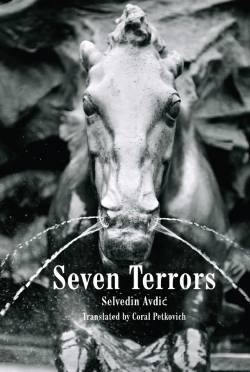
seventerrorsfrontcover_50acc7efa1d7c_250x800r Seven Terrors, is the first novel by Bosnian writer Selvedin Avdic (Istros Books). Briefly, this is the story of a man who takes to his bed for nine months after his wife leaves him, emerging only when the daughter of a former colleague approaches him to help her find out what happened to her father who disappeared during the war. What ensues is on one level a detective story into which come elements of Bosnian folklore, politics, criminal interests and an increasing sense of madness. The Balkan war is only approached obliquely, primarily in the accompanying end notes. The overriding theme is one of the damage, collective and individual, that the horror has left in its wake. The book concludes with musings about, terror, philosophy and Bosnian mythology, followed by seven blank pages for the reader to use to record his or her own fears. I read this book back in February and it has continued to haunt me all year.

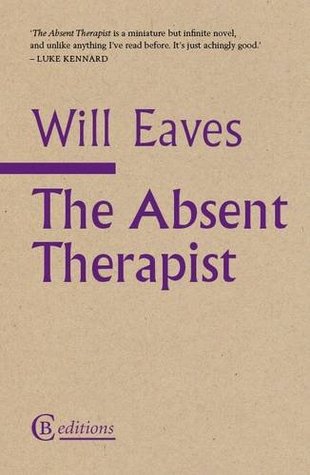
20797992The Absent Therapist by Will Eaves (CB Editions), a recently encountered treasure, is an inventive juxtaposition of the mundane everyday snippets of conversation, remembrances and idle thoughts, against the extraordinary musings and reflections about the nature of human existence. There is no singular voice, no story arc, no solid ground. But in this collection of fragments there lies the essence of a rich and deeply human experience, at once stripped down and laid bare as they are collected and made whole.


7199962


In a Strange Room by Damon Galgut (McClelland & Stewart), has been out for four years but I came to it this year, most specifically because I wanted to see how a personal experience could be pared down to its essentials and explored through the lens of time and memory. The result is some of the most evocative and precise writing about what it means to be grounded in ones self and in relation to others (or not); the allure of the road and the ambiguity of home; and, most vividly, the way that all truth lived is a fiction – one that is necessarily subjective. Galgut is quickly becoming one of my favourite authors and the opportunity to meet him and engage in an encouraging conversation about writing was the highlight of our local writer’s festival for me this fall.

Other books that had a particular impact on me this year included:

23626238I Refuse by Per Petterson. Recently translated, this latest book by another of my favourite writers is darker, richer and more complex than his masterful Out Stealing Horses. This book explores the memories of youth, the mystery and pain of mental illness, and the re-evaluations that mark mid-life. Like life, there are no neat, easy resolutions. I discussed this book in a recent post.


Pakistan


Train to Pakistan by Khushwant Singh. This was a recommendation from a regular poster on the brilliant Tips, Links and Suggestions (TLS) blog of the Guardian Books website, a must stop for any avid reader who likes to talk about books, reading and that endless TBR list. I had never heard about this classic tale of the brutal fallout following partition in India in 1947 as communities were dismantled and muslims relocated north to Pakistan, hindus south to Gujarat. Countless men women and children failed to make it across the border alive. I am ashamed that it took the death of the author just shy of his 100th birthday to bring this brilliant book to my attention and all I can say is, if you have not done so, read it. It is important, deeply moving and the last few pages are the most agonizingly intense you will ever read. Enough said.

BarracudaBarracuda by Christos Tsiolkas. Honestly this is a book totally outside my comfort zone, I just am not inclined to huge sprawling dramas that take on all of the big issues of class, race, family, love, sex, death, success, failure etc, etc and clock in over 500 pages. Give me spare novels with lots of space for unresolved tension and moral ambiguity, thank you. So I was blindsided by how much I loved this book. It was, in part, a book I needed to read at the time, as I was coping with shame, desire for redemption and loss of identity following my breakdown earlier this year and uncertainty around my ability to return to a career I loved. It is also a skillfully crafted, fast moving and intensely powerful novel on every count. And it contains the best descriptions of brain injury in adults that I have ever seen in literature – the main character has a brain injured cousin and goes on to find in himself (though he fails to fully appreciate it) a gift for working with the disabled. Tsiolkas was another author I was fortunate to see interviewed live and speak to at length. I found him to be absolutely passionate about reading and writing and extremely kind and generous with his time and enthusiasm.

There were many other novels I enjoyed and more than a few that were mediocre at best.

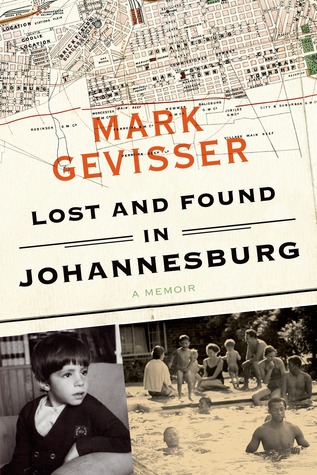
GevisserIn non-fiction, I only read a handful of titles, but my favourite was Lost and Found in Johannesburg by Mark Gevisser. The author came to my attention as the result of his recent article in Granta previewing his current involvement in a global survey of sexuality and gender diversity and, although these interests are also reflected in this memoir, the book is a fascinating family history tracing his Jewish ancestors back to Lithuania, recounting his upbringing in a segregated South Africa and his discovery through a childhood obsession with maps that there were places in his own city seemingly inaccessible. Communities, he would discover, that black people emerged from and returned to each day, often very close but in another reality altogether. He takes the reader on a journey back in time to the activists who challenged the colour barrier early on (a nice dovetail with my reading of Nadine Gordimer’s Burger’s Daughter this year), on a tour of the black communities as they exist today, and through the vivid horror of being held at gunpoint for three hours as he and two female friends were the victims of a home invasion in early 2012. It paints a stark and yet loving portrait of a difficult city.

SpaceFinally, my guilty pleasure is science fiction, generally veering to the weird. I regularly read J G Ballard and I did read Jeff VanderMeer’s acclaimed Southern Reach Trilogy this year and although I loved the first two books, the third seemed to try to resolve things in a most awkward and unsatisfying way for me. So my pick of the year was also my first read of 2014, the last installment of M John Harrison’s Kefahuchi Tract trilogy, Empty Space. It was just as haunting and grotesque as one could want, assuming one wants such an experience. But for me Harrison is in a league of his own and I am even enough of a geek fan to have purchased single story chapbook signed by the man himself this year. So there.

I may finish a few more books before the year is out but this is the longest post I have written to date, so I will stop here.

Happy reading in 2015.

The detective and the end of the world: The Coming by Andrej Nikolaidis

If you are a bit of a news junkie like I am, there is a lot of bad news on our TV screens and computers each day. Violent political upheaval, deadly viruses, floods and fires. But it is scattered and for so many of us our complaints are relatively minor, isolated. What if the signs suddenly started to rapidly multiply and spread across continents and communities. Would it herald the end of the world? Would we know or even agree on the meaning of the signs? Assign them to God, reduce them to science?

Translated by Will Firth Istros Books, available through Dzanc Books in North America
Translated by Will Firth
Istros Books, available through Dzanc Books in North America

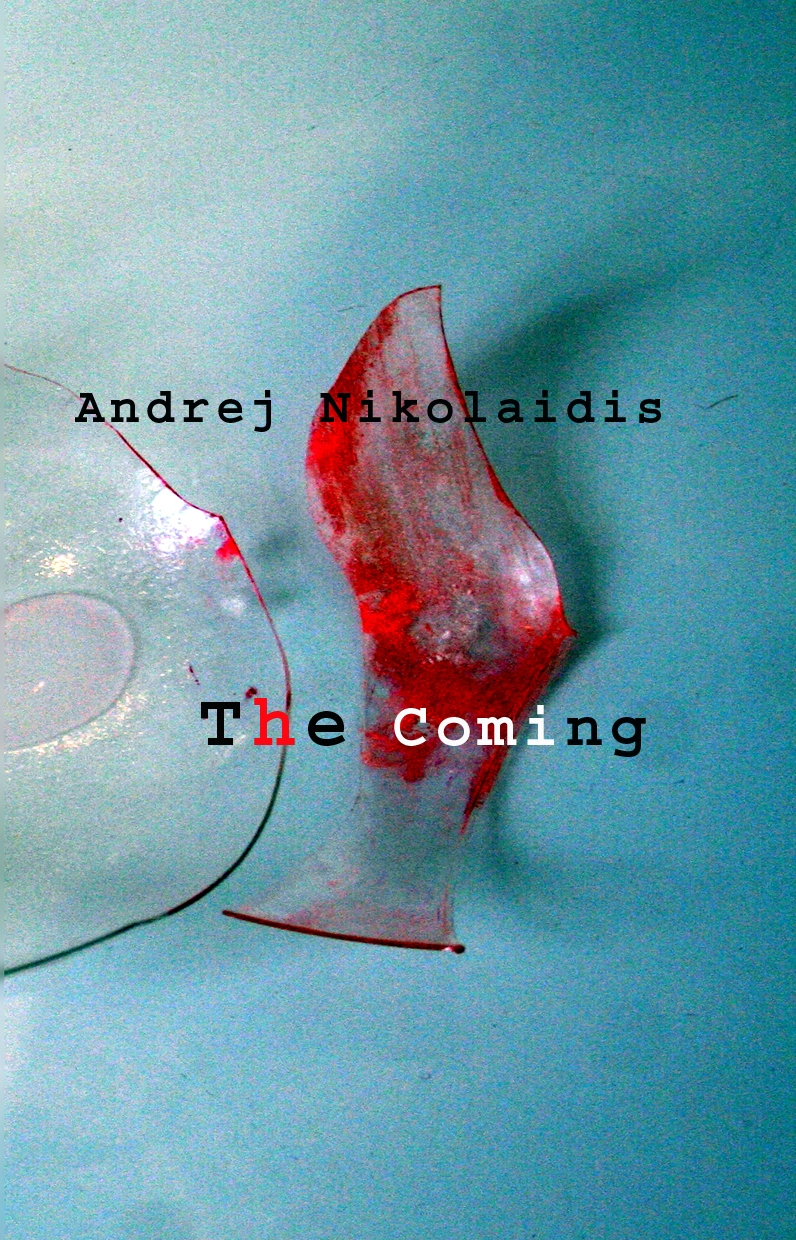
The Coming, a wonderful novella by Montenegrin novelist Andrej Nikolaidis explores such questions from a rather unconventional perspective. Our hero is a private detective, a small town Philip Marlowe based in the ancient city of Ulcinj. He finds himself most comfortable providing his clients with the answers they want, regardless of whether or not he even manages to find the truth behind a crime or infidelity. This approach makes him popular with the locals who prefer to approach him  rather than the authorities. Consequently the quiet life he seems to desire tends to allude him. As the book opens he has become obsessed with the particularly brutal murder of an entire family which appears to have coincided with the burning of the local library.

Yet even stranger phenomena begin to threaten his routine. Snow starts to fall in June and does not let up. Around the world catastrophes – earthquakes, floods, raining amphibians – are reported with alarming intensity. Is this the Apocalypse, is the Second Coming finally at hand?

For our poor detective who faces this most peculiar string of circumstances with cynical humour and frustration, there is an added factor. Emmanuel, a child he fathered during a brief affair with an irresistible client, is now grown and has tracked him down from an asylum in the Alps where he has been confined after some serious mental breakdown. Through a series of emails Emmanuel shares details of his childhood with the father he has never met and offers his curious knowledge of messianic mystics, millennial cults and numerous attempts to calculate the date of the end of the world throughout western history. Perhaps because he himself has a mental illness, Emmanuel interprets the reported behaviours of many cult members or their charismatic, wildly erratic leaders in reference to what would be probable modern psychiatric diagnoses.

For myself, personally, in the months that followed my diagnosis with bipolar, I struggled to make sense of the role of my illness in the intensely spiritual experiences that I had periodically encountered growing up. During full blown psychosis, I could imagine that the frantic notions that I had the answer to the meaning of life were indeed in keeping with mania. I had the cramped and panicked nonsensical documents to prove it. But what about the earlier visions and spiritual experiences? Far less dramatic, frequently beautiful, these moments had filled me with such an assurance of the existence of God that I completed an honours degree in philosophy without once being troubled by any ontological questions. I could argue for or against the existence or nature of God while my own personal spirituality remained intact.

However, as I started to read about psychotic symptoms, I began to recognize similar features in the visions of Biblical prophets, the martyrdom of saints, the trance states of mystics and other ostensibly spiritual experiences. I could not divorce my own experiences from an underlying framework of biochemistry. My sense of personal faith crumbled.

Over the years as I have watched good people of faith rejected by their churches following mental breakdowns, I have been increasingly concerned by the double standard. After all who draws the line between mystical vision and clinical madness?

The Coming sees no need to draw those distinctions. I loved the way the pragmatic emails from the detective’s estranged son reach out to a world that may well be facing its final hours with the observation that the human desire for an Apocalypse can be compared to our urge to fast forward through a detective movie because we can’t wait to see how it ends.

We want answers – but we those answers to come from God or from science, not from the visions of those who are determined to be not in their right minds.