What no love can heal: Dry Season by Gabriela Babnik

Harmattan: A cold-dry trade wind that blows across the West African subcontinent from the Sahara to the Gulf of Guinea during the winter months bringing dust storms, low humidity and an increased risk of fire outbreaks. This is the trademark wind of the dry season.

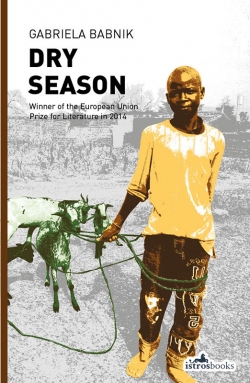
dry-season-cover_54aff6fb99d92_250x800rAs Gabriela Babnik’s novel Dry Season opens, we find a 62 year-old Slovenian woman, Ana, lying in bed with a 27 year-old Bukinabé man, and it is immediately clear that her path to reclaim herself will defy conventions. But then, as we come to know her, we realize that she has long been resistant to the constraints of convention. Ana and the young man, Ismael, are not yet lovers, despite the fact that they awake in the same bed. Their first encounter is uncertain, tentative. Across the boundaries of age, race, class, and culture, they have been drawn to each other with their own dark histories lying twisted inside. As these two disparate individuals take turns addressing the reader – that is the most accurate way of describing the manner in which their stories are uncoiled – we gradually begin to learn more about their pasts and their feelings toward one another.

Ismael and his friend are targeting tourists to rob when he first spots Ana. He is drawn to her but does not see her as a potential mark; he does not sense that she is carrying much of monetary value. It is something else, though he is not entirely certain what that is. For Ana, her attraction to black men is rooted in an earlier time in her life: a chance encounter and subsequent affair with a Sudanese man that has left an unfilled and aching space in her memory. It is not clear that she knows, or is ready to confront, what she truly hopes this young man can heal in her:

“But this sleeping man in front of me was from another time. He had a god drawn on his face. I wanted to say that earlier but it slipped my mind. As I was walking toward him from the other side of the avenue, I felt a strong desire for him to touch the secret territory inside me. Ever since I gave birth thirty years ago, I knew I had to put it aside for a while. I mean touching the silky surface of blades of grass with my palm or licking honey slowly from a metal spoon and then looking at my face in it.”

Ana admits that she has literally walked out on her life in Ljubljana, a life she sees as reduced to the design of illustrated throw pillows, trapped an inherited house with a view of the garden. She is haunted by the suicide of her distant mother, the decline and end of her marriage, the return of her long absent father, and the descent into madness of her only child. Behind all of this is a persistent pain, a bitter groundlessness borne of the fact that she was adopted from an orphanage. It colours, perhaps even distorts, a sense of abandonment that no person, place or career can fill. Her escape to Africa is a deliberate attempt to fill this void.

As Ismael takes up his side of the narrative in turn, it becomes evident that these two unlikely lovers share some common demons. His father is unknown to him and this status defines him and his mother in the village in which they live. They are subject to open shaming and abuse until the day when they are finally rescued and removed to a longed for but equally uncertain life in the big city. They take up residence for a while with a man he calls Baba, and who becomes, over time, a sort of surrogate father whose albino son, Malik, will grow to be both a friend and a recklessly dangerous influence. But in the meantime, Ismael’s increasingly unstable mother will flee to the streets. Together they beg on the roadside and sleep under a bridge until his mother is suddenly killed when he is seven years old.

“Not long before they told me that a lorry had run her over – that it was really her, and not one of the night women or morning women – we had grown apart. Or maybe she had grown apart from me, I am not sure. It is possible that I was a burden to her. In our village seven-year-old boys are already responsible for themselves. They bite into green fruit, never meet their mama except in dreams, and eventually get used to her not being around and start paying attention to the things that are around.”

Suspended between an aborted childhood and a tenuous adulthood, Ismael seeks to fill the mother-shaped hole in his life through several women who look after him for a time. He is eager, hungry to learn to read and write, but his opportunities are limited by his circumstances. He drifts back to the street scene, takes on odd jobs, works for a while fixing up old cars, and eventually falls into the pattern of robbing tourists with his friend Malik. Ana is, for him, a respite, possibly even a path out of a life marked by poverty, loneliness, neglect, and extreme brutality.

Dry Season is, in no small way, a sharp break from what one might expect from the literature of a small central European country. Eschewing a linear narrative and conventional storytelling, we are confronted with an unusual blend of metafictional devices – the fact that the action is occurring within the context of a novel is evoked repeatedly, as is a magical realism common in so much African literature, as a way of seeing and accepting ghosts and magic in the world. It is not the Balkan Wars but the tumultuous recent history of Burkina Faso that forms the critical political backdrop. Sex and sexuality are presented with an overt frankness, from the innocent masturbatory explorations of a young boy to the full fleshed desires and needs of a mature woman. Loneliness drives both Ana and Ismael to seek refuge in one another’s bodies, where they find, for a time at least, an intensely passionate release.

The open relationship between a white woman and a black man less than half her age does not go unnoticed on the streets of Ouagadougou. Ana, as the outsider, is forced to confront the reality of the African society against the mythology that has drawn her to the continent and into Ismael’s arms. Once the veil begins to drop in the aftermath of an attack on a cab in which they were riding, she says:

“I was wrong about you, Ismael. I thought you were a quiet, withdrawn fellow, who still walks in a world of timelessness, of gods, of moral certainties and natural laws, and even such constraints as religion and gender, but now I see you are one of them, one of the bandits.”

He counters:

“I am not what you think. I am a man who walks on a reddish road, the man you saw from the cab. I saw you seeing him. You thought, how backward they are, poor things, they learn on the ground, make love on the ground, eat off the ground, but that ground, that earth, which you take in your hand and let crumble through your fingers, it is all we have.”

She finds herself relying on the assistance of street children, who in turn taunt and mock her. She depends so closely on Ismael to be her guide and protector that she easily loses her way in his absence. The risks that they both ultimately face are significant and potentially devastating. There is no escape to a magical wonderland. Especially when the true trauma, the denied reality, lies inside rather than outside of the person longing to escape.

This novel is a demanding and startlingly rewarding read. Both Ana and Ismael have stories that they urgently need to share, that are weighing them down. Both stories contain hidden corners that must be turned, secrets that are difficult to bear. The narrative threads move back and forth in time, building on past experiences repeatedly to flesh out more detail. The novel that is being created in the present moment, if you will, becomes a space of self-examination and revelation for the two narrators. The separate strands become entwined, creating the effect of a tightly braided cord that then begins to fray as the relationship falls apart. The magic fades but the telling grows increasingly surreal, leading up to an exhilarating and shocking revelation in the final pages.

Another stunning release from UK-based Istros Books, Dry Season will be released on November 16, 2015.

This review has been posted on the blog of the Free Word Centre in London.

In partnership with Istros Books, the Free Word Centre is hosting an evening with Gabriela Babnik and translator Rawley Grau on Monday, November 9, 2015. See details here.

Caught in a vicious circle: Yugoslavia, My Fatherland by Goran Vojnović

As Yugoslavia, My Fatherland, the intensely powerful new release from Istros Books opens, it is the summer of 1991 and 11 year-old Vladan Borojević has, to date, enjoyed an almost idyllic existence in the seaside town of Pula. He and his young friends view the realm of adults as something separate, of interest only if someone is missing an arm or leg, or sports a long beard, excessive tattoos or some other particular curiosity. None of them are aware of the deep seated tensions within their native Yugoslavia that are about to start to fracture and begin a long, bloody period of unrest that will ultimately tear the uneasy Socialist state apart. On the day that he and his friends find the local men gathered around the TV set shouting at the politicians on the screen with an intensity normally reserved only for critical sports matches, Vladan senses something is amiss. His anxiety increases when his father arrives home looking empty and distracted:

“My father never drank at work, and I heard him say, countless times, that only in Yugoslavia would people drink more while at work than after work, and that this would send the country to an early grave. But that day he held me so powerfully in his muscled arms that I thought, in all seriousness, that he must be drunk.”

Vladan’s father Nedelko, of Serbian background, is a proud member of the Yugoslav People’s Army. His mother is a strong willed Slovenian woman, who, against her parents’ wishes, left her homeland and married her young soldier. The stirrings of political insurgency put an immediate end to their happy domestic life in Pula as Nedelko is seconded and the family is moved to a hotel in Belgrade. When it becomes clear that this little trouble is not about to just blow over, Vladan’s father disappears from his life. He and his mother will eventually end up in Slovenia, and within a few years news will come that his father, now a General, has died. Or so he is led to believe.

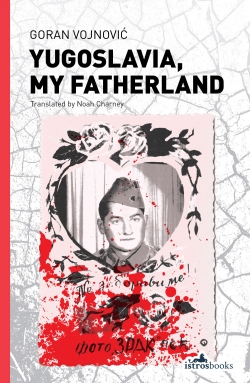
yugoslavia-my-fatherland_5595627fccf62_250x800rSeventeen years on, Vladan is still living in Ljubljana, Slovenia, but restless and unable to find his footing. He tosses his father’s name into Google. What he discovers turns his fragile world upside down. General Borojević is not dead, but rather he is a fugitive, wanted for war crimes. Rattled by this news Vladan sets out to find his father tracing a trail that links figures from his father’s past, a relative, an assumed identity, and clues to where he lived or may yet be. When his search leads him back close to home, the bits and pieces he gathers raise even more questions, and force him to look deeply inside himself to determine if he even wants the answers he had craved.

This is one of the most impassioned novels I have read in a long time. The author, Goran Vojnović, is a Slovenian poet, screen writer, and film director. He draws on this background to roll out a complex story that deftly weaves back and forth in time, negotiating the highly charged ethnic and geographic divisions that have long defined and divided the Balkan region. With Vladan he has created a recognizable, contemporary narrator who welcomes the reader into his journey with a mixture of vulnerability and wry humour. Traveling on the cheap in a car that just barely manages to cough from point A to point B, his descriptions are often priceless, like this stop at a roadside café:

“I sat at a table covered in a white cloth, as well as aged coffee stains, which lay over an even dirtier red tablecloth. A plastic ashtray sat in the middle, alongside a vase containing plastic flowers from the Yugoslav Mesozoic period. I had to wait, of course, to earn the right to pay for a sour coffee, hand-mixed with a disposable thin plastic spoon, amidst this particular ambience. It was my first time in such a setting.”

Whether he is looking back to his troubled childhood and adolescent years and his increased alienation from his mother, or looking forward to what truths may or may not lie ahead; his emotions are painfully open and honest. Even if he sometimes leans toward the melodramatic, it is hard to resist being pulled into his account of a life torn apart twice over and the pain of the very difficult dilemma he will ultimately face.

Yugoslavia, My Fatherland tells a multi-layered tale. The tragic dissolution of the Borojević family is traced out against the trauma and conflict that would rend the states of the Balkan region apart and still threatens further division in certain areas. He encounters many who bear wounds too deep to heal. But it is much more than that. Questions of personal and national identity are central. Vladan is not only seeking an understanding of himself and his relationship to his ethnic heritage, but he is striving to reconcile his memory of a loving father with a fugitive war criminal. A very human longing for closure and healing drives him to seek out and confront the man who used to be his father, whoever he is. However, somewhere along the way he will have to stop to measure the costs and decide what he is willing to risk.

Translated from the Slovene by Noah Charney, Yugoslavia, My Fatherland is original, ambitious in scope, and another welcome addition to the catalogue of independent UK publisher Istros Books.

Time, space, and truth: Till Kingdom Come by Andrej Nikolaidis

“Windows, even those with heavy shutters, were no help against the rain. It came with a wild westerly one moment and with a sirocco the next, constantly changed the angle at which it fell, attacking now frontally, now from the side, until it had crept through every invisible opening in the walls and woodwork. In their rooms, people made barriers of towels and babies’ nappies beneath the windows. When they were sodden they would be wrung out in the bathroom and quickly returned to the improvised dykes.

Roofs let through water like a poorly controlled national border. Like in a bizarre game of chess, families pulled out pots and pans across the floor: Casserole to f3, frying pan to d2.”

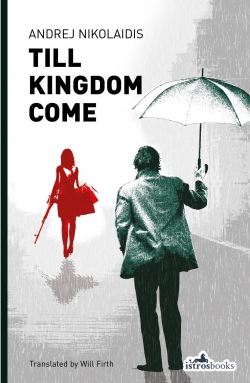
till-kingdom-come_5595626c38d7b_250x800rAs befits its title, Till Kingdom Come – the latest novel by Montenegrin author Andrej Nikolaidis’, his third to be released in English by London based indie publisher Istros Books – opens with a deluge of Biblical proportions. The heavens above the historically rich tourist town of Ulcinj have unleashed an extended season of torrential and relentless rain. As water rushes down the streets and seeps through walls and floorboards, the reader is quickly introduced to the narrator, a freelance journalist, a man who faces the world with reserved and stoic humour. Or so it seems. But then nothing is what it seems, and for our poor narrator most of all.

It soon becomes apparent that our hero has long suffered from periodic lapses in temporal/spatial reality. He has been known to just drift off, seeming to have lost consciousness to those around him, while he finds himself in some distant country or city previously strange to him that he suddenly knows intimately, until he wakes up back where he started. This dissociative tendency which has haunted him for years has left him with a rather slippery sense of self that, more than anything, seems to engender an abiding sense of ambivalence. That is, until the arrival of a man claiming to be his uncle causes him to have reason to doubt the veracity of his entire existence. He had believed that his mother was dead and he was raised by his grandmother, a belief supported with stories, photographs, a history and an unusual Jewish name. Discovering that his past was faked, sets him off on a passionate journey of speculation and self discovery, assistsed by a police inspector, directed by an anonymous email source and fueled by an obsessive fascination with serial killers and conspiracy theories.

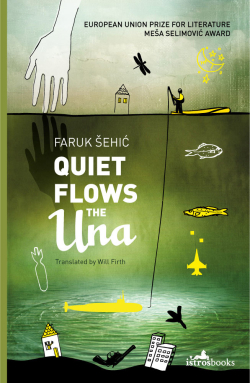
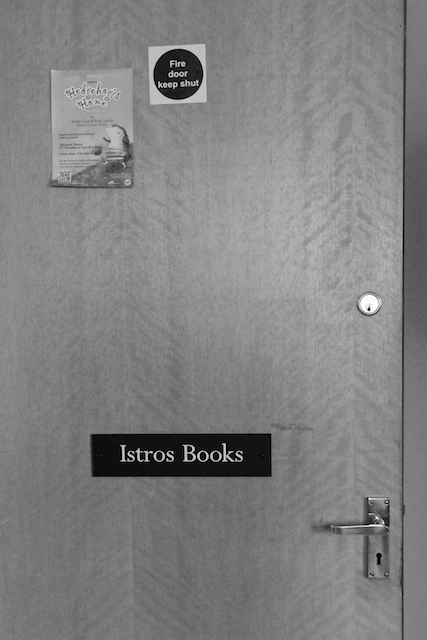
Biting in intensity, taking broad political and historical swipes at medieval and modern history – poking the bones of Oliver Cromwell and stirring up the horrors of the Balkan War – Nikolaidis is in fine form, building upon and expanding the canvases he painted in his previously translated works, The Coming and The Son. Ah yes, Thomas Bernhard would be proud. Yet, for its sarcastic humour, metafictional wanderings through Red Lion Square in London and up the stairs of Conway Hall to the tiny second story office of Istros Books, and the endless speculations about the role of the black arts in the exceptional acts of cruelty and violence perpetrated by mankind that have littered history; Till Kingdom Come is a starkly serious book. The narrator exists on a plane of his own, while his friends succumb to pressure of feeling too much, of being unable to cope with a world that is fundamentally uncaring. As he muses at one point:

“Alas, there is only one happy ending – the Apocalypse – even if it is only a promise. Everything else is just an open ending, a continuous series of open endings, whose resolution not only resolves nothing but further complicates already unbearably complicated things.”

For my money, Till Kingdom Come is a more mature and demanding work than The Coming and The Son, both of which I thoroughly enjoyed. Nikolaidis is a highly political journalist and here he is clearly intent to skewer politics and economics with more direct, at times shocking, barbs. The Bernhard inspired intensity of The Son is dialed back a little while the historical diversions that provided an intriguing counter commentary to The Coming have been worked back into the narrative. As in these first two Istros releases, translator Will Firth captures the mood and intensity seamlessly. And, on an entirely personal note, it was a delight to see Red Lion Square and the Istros Books office worked into the text. However when I visited this summer I did not magically find myself strolling down Oxford Street. I got hopelessly lost and had to be rescued from the Tube Station by the editor herself, but then London on a map and London on the ground for someone who has never been there is, well, a metaphysical rather than metafictional experience to say the least!

Red Lion Square, London UK Copyright JM Schreiber 2015
Red Lion Square, London UK
Copyright JM Schreiber 2015

Variations on a tragedy: Death in the Museum of Modern Art by Alma Lazarevska

The longest siege of a capital city in the history of modern warfare began on April 5, 1992 when Bosnian Serb nationalists surrounded Sarajevo. The assault would last for 1,425 days, almost four years. Inside the blockaded city, citizens tried to pull together as their city was bombarded with mortars and artillery fire, cut off from access to food, power and communication. Families were driven from their homes, faced the real possibility of detention, rape, torture and slaughter. And yet, in small corners of daily life, small embers of humanity were kindled and nurtured. Death in the Museum of Modern Art is a testament to the fragility and the resilience of the ordinary people trapped in the city, an evocation of beauty in the face of unspeakable horror.

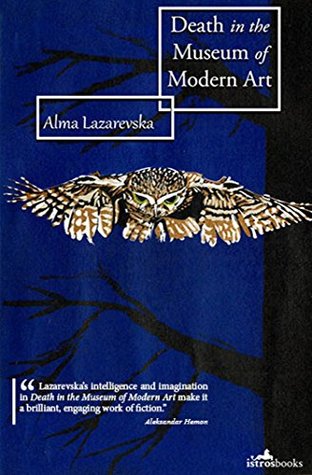
museumThis slim collection of six short stories by Bosnian writer Alma Lazarevska reads like a quiet musical meditation, a set of variations on a theme. Most of the stories are narrated by an unnamed woman, married, usually with a single child, a boy. The stories are imbued with a quiet humanness that is as comforting as the death and destruction that surrounds the characters is terrifying. To those of us who can only faintly imagine what it must be like to endure such conditions the effect is startling.

There is not a weak entry in this collection and despite the themes that do recur (in fact at times I wondered if the same family was at the core of some of the stories) each tale shines a light on a different angle of the experience of the residents of Sarajevo during the Bosnian war.

As a parent myself I was especially moved by the story “Greetings from the Besieged City”. Framed through a series of imagined picture postcard scenes this is a meditation on the desperate desire for a happy ending despite the awareness that in literature as in life, happy endings are elusive. While the knowledge of this truth drives a former classmate of the narrator mad, she herself tries to protect her own son from fictional unhappiness by changing the ending of the book she reads to him, The Seville Fan, a love story in which the hero dies:

“And so Pablo succeeded in not dying, which he was, after all, not accustomed to. Because, when I exhaled and put the closed book down, in its printed pages he was still dead. As I was pronouncing the sentences that were not in the book, it seemed to me that, for the first time in our reading sessions, our boy turned his eyes away from their fixed point. He glanced suspiciously at the book then at my face. A pedagogue would say that he was beginning to get used to the fact that parents tell lies. Or that they become accustomed to sentiment!”

The mother is conflicted by her need to prepare her child for the reality of death – of unhappy endings – and the desire to protect. But when “red-hot balls” start to fall on the besieged city, instantly transforming “human bodies into bloody heaps of flesh” the effort to create some variation of a picture postcard greeting against a landscape of horror is increasingly distorted. The impact is deeply unsettling, yet poignantly human.

The siege is a persistent presence in these tales. It drives the tenants of an apartment block from the odd niceties of shared accommodation to huddle in the basement in fear, or to flee the city if possible, in “Thirst in Number Nine”. The superstitious belief that each used match is a saved soul, leads a couple to use and collect precious matches to light cigarettes, rather than the candle that is equally vital in “How We Killed the Sailor”. This represents a perverse and symbolic luxury as civilian casualties mount around them. The wife wonders about these souls they pretend to protect as each day new faces grace the obituary pages of the paper: “Do they know that there is a besieged city somewhere in the world with the saviours of their souls in it?”

The title story “Death in the Museum of Modern Art”, features a narrator who muses on her involvement in a curious project. Bound for publication in a glossy magazine and an exhibit at the Museum of Modern Art in New York, photographs of 100 inhabitants of Sarajevo are to be paired with their answers to a survey which includes the haunting question: How would you like to die? In a besieged city how does one begin to answer a question like that?

Upon its publication, this collection received the “Best Book” award from the Society of Writers of Bosnia and Herzogovnia. In this lovely edition from Istros Books, the translator, Celia Hawkesworth, brings the gentle and shocking power of Lazarevska’s unique voice to life. I am extraordinarily grateful to Susan Curtis-Kojakovic, the editor of the wonderful Istros Books for selecting and passing this moving, haunting collection on to me. I can recommend it without reservation, these are stories that need to be read. After all, the Bosnian War only came to an end twenty years ago later this year and today, in so many parts of the world, ordinary families are still struggling to survive under the conditions of unimaginable conflicts.

Sadly the happy ending continues to be elusive.

Might as well face it, I’m addicted to books…

Three weeks in South Africa and I have not blogged much, in large part due to the painfully useless little laptop I bought for the journey (sorry Windows I am in serious Mac withdrawal right now) combined with frequently slow or inconsistent wifi connections. Quite frankly I have not even read much save for a slim collection of Bosnian short stories I have been dragging around. But I have been observing, writing, journaling and taking photographs. There will be plenty of time for reading after I get back and a strict embargo on book buying for some time.

After all I have spent more than R3000 on books. Shame. Well it’s not as bad as it sounds, I spend a fair amount on books at home but not all in one shot and not with the need to transport them across the globe. I fell asleep last night mentally rearranging my bookshelves to welcome my new acquisitions home.

A selection of new titles (there are more,  confess). Trencherman, the Michiel Heyns, Tales of Metric System, Rusty Bell and The Violent Gestures of Life were all on top of my list when I arrived.
A selection of new titles (there are more, confess). Trencherman, the Michiel Heyns, Tales of Metric System, Rusty Bell and The Violent Gestures of Life were all on top of my list when I arrived.

As long as I can remember, bookshops have been a highlight of any vacation for me. Sometimes it was the chance to visit a larger centre or to access books not available at home. I mean honestly who goes to San Francisco without stopping in to City Lights? I suppose those people exist but I don’t want to know them.

This is the first vacation I have had in years, the farthest I have traveled and what I hope will be the first of many visits to South Africa. I have stubbornly had a predominately anti-tourist experience and it has suited me just fine.

But books, they were always high on my agenda. From a second hand shop in East London to The Book Lounge and Clarke’s here in Cape Town I have built piles, triaged, sorted and made my selections – sometimes price, sometime size and weight were factors. Books readily obtainable in paper format outside of South Africa were eliminated, aside from some impulse purchases. Suggestions from the friend I was staying with in the Eastern Cape, books featured on the site of a South African book blogger I follow, and advice arising from conversations with booksellers were all tossed into the mix.

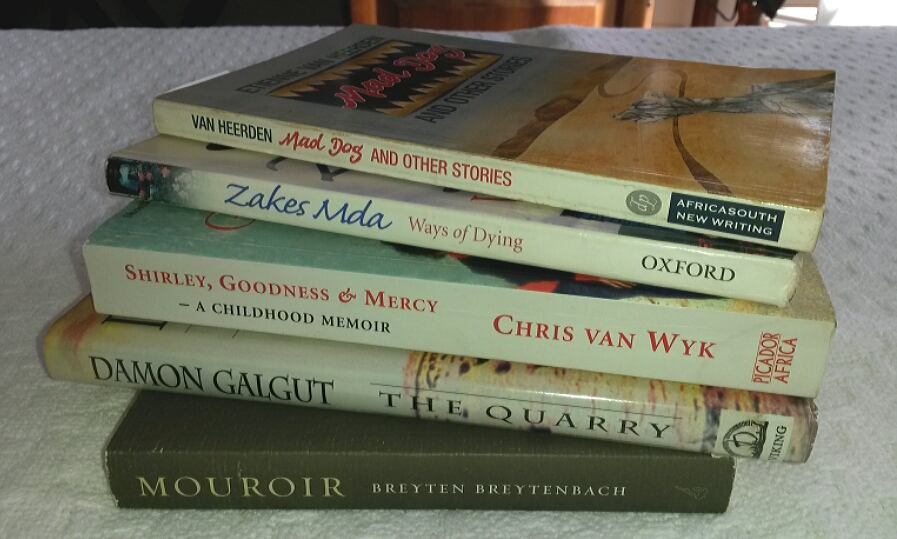
A few of my second hand finds: I am looking forward to the memoir by the late Chris van Wyk and the Ettiene van Heerden on top is signed (but sadly the only one of his books I was able to locate in translation).

There are still, inevitably, titles I wanted but could not find. And some I had to leave behind.

Not one given to ostentatious displays of book porn, I am showing off some of my new friends. Wish me luck packing and dragging them all to the airport on city transit!

A little radiance: Farewell, Cowboy by Olja Savičević

“Everything’s the opposite of what it seems: hell is a comfort to the living, while heaven is ordinary blackmail.”

A deeply personal piece of unfinished business draws Dada, the spirited heroine of Farewell, Cowboy, from the towers of Zagreb, back to the grimy streets of her hometown on the shores of the Adriatic in this debut novel from Croatian poet and writer Olja Savičević. Once she arrives her first task is to relieve her older sister of the responsibility of keeping track of their mother who seems to be surviving on a routine of pharmaceuticals, soap operas and bi-weekly treks to the cemetery to visit the graves of her son and husband. But at the heart of Dada’s return to the Old Settlement is a need to lay to rest her questions surrounding the suicide of her beloved younger brother Daniel several years earlier.

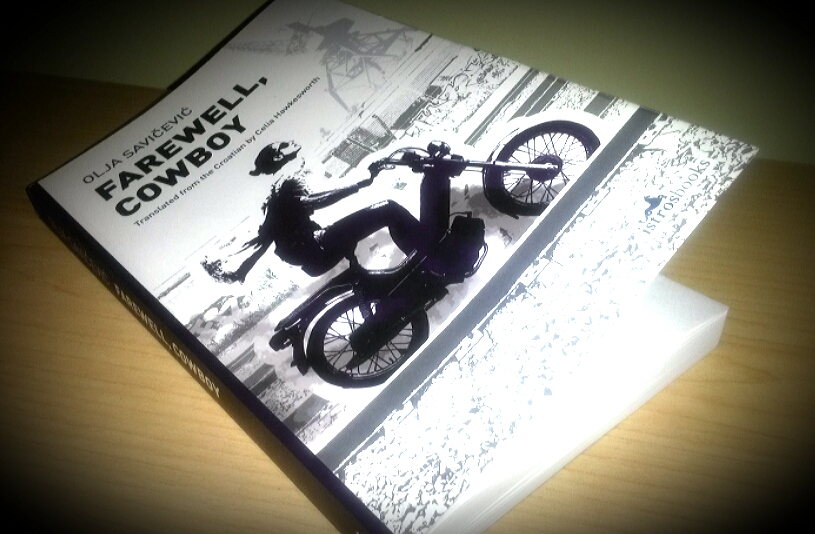
2015-04-27 23.09.41Dada is feisty, in keeping with her fiery hair, an attribute she shared with Daniel and their late father who succumbed to at an early age to asbestos poisoning. An aficionado of the western film, spaghetti and American classics alike, her father spent his final years working at the local movie theatre and then, after the war, in a video store. He bequeathed to his son his love of western heroes and a jammed Colt pistol.

Upon her return to the Old Settlement, Dada settles in to her room under her brother’s fading movie posters, gets an old scooter running and cruises through town on her mission to piece together the past. She recalls the eccentric playmates with whom she roamed the streets and encounters a most beautiful young man who appears and reappears, usually playing a harmonica. Meanwhile it seems that a movie crew has moved in to shoot a film on a drab grassed expanse that will double as a prairie for a project spearheaded by no less than a legend of the bygone era of the spaghetti western.

The primary focus of Dada’s pursuit however, lies closer to home. The family’s neighbour, known to most as Herr Professor, a veterinarian who had befriended Daniel, has resurfaced. After a violent attack triggered by rumours about his sexual proclivities, he had disappeared. Months later, seemingly without warning, 18 year-old Daniel threw himself beneath a speeding express train. Now the old vet has returned. And Dada is certain he holds the key to her brother’s death; in fact she is bitterly obsessed with a desire to confront him, to confirm that he is the author of a cryptic typewritten letter that arrived a few weeks after the funeral, a letter that seemed to indicate that Daniel had been trying to contact the sender. Face to face over cake and barndy she cannot quite say what she wants. She grinds her teeth over his melancholy insistence that “I don’t ask anything of life other than a little radiance.” What on earth is that radiance he asks for, she wonders.

This postwar Balkan world is one of decaying architecture, graffiti scarred walls and woodworm rotted buildings. Tourists are moving in or passing through. Modern technology and old customs exist side by side. Dada is a most engaging heroine, her voice rings through the grime and dust of her environs with a cool crystalline clarity and youthful spirit. For example, after tracking down her former room-mate she recalls that her friend had considered herself the last emo-girl:

     “ ‘You’re certainly the oldest emo-girl, and probably the last’, I said.
I imagined her as a little old Gothic lady, but little old ladies, at least the ones here in the Settlement, are generally Gothic in any case, it’s in their dress code.
My room-mate and my Ma would get on well, I reflected. They could go to the graveyard together and shave their heads in keeping with the Weltschmerz.
I’m thinking as though she had settled in my head, I reflected, immediately after, anxiously. I really am my sister’s sister.
Sar-cas-ti-cal-ly, I reflected, in syllables.”

Savačević continually surprises with the originality and energy of her prose, translated skillfully by Celia Hawkesworth. Images are revisited, lines repeated, like refrains, throughout the novel, creating a very dynamic and original flow. Tragedy lurks in these pages, but what could be a dismal heartbreaking tale is lifted with humour and thoughtful asides. And that is the sense that lingers.

Farewell, Cowboy is another terrific offering from Istros Books, one of the wonderful independent publishers that can be harder, but not impossible, to source on this side of the Atlantic. And well worth the effort.

In praise of small publishers

In honour of World Book Day, I thought I would take a few moments to reflect on my growing obsession for small publishers. Once you start to turn your attention to non-mainstream literature, follow literary journals and publications online, or seek out works in translation; the world of independent publishers invariably opens up. As readers we live in a global world, and we engage in discussions with fellow readers spread far and wide, so it seems natural that you will hear about intriguing works that are not available wherever you happen to live. Sometimes, it’s simply a matter of time but years can separate releases in North America from those in the UK and Australia. Here in Canada we sometimes end up in between the two. Some small publishers do not yet have distribution on one side of the planet or the other, some may never manage it, but I would argue it is still worth trying to support independent publishers no matter where they are, whenever possible.

Why? Small publishers uncover challenging, interesting works, take chances, bring long ignored literature back into circulation, or into translation. Or both.

2015-04-23 13.08.58My two favourite books last year introduced me to two small publishers: CB Editions with Will Eaves’ The Absent Therapist and Istros Books with Selvedin Avdić’s Seven Terrors. Sadly both are publishers without North American distribution. That does not mean, of course that their books can’t be sourced, but the magic of a browsing reader happening to stumble across one of their titles on a bookstore shelf is lost. The joy of random discovery is denied.

After paying extra attention to the IFFP and BTBA longlists this year, I will now be watching out for titles from Pushkin, Open Letter, Deep Vellum, Archipelago among many others. Becoming more engaged as a book blogger and negotiating twitter has caused me to be distracted by some irresistible “shiny objects” – treasures like the stunning A Gothic Soul which arrived earlier this week, in a package covered in Czechoslovakian stamps, direct from Twisted Spoon Press. Oh yes, I could have downloaded it from Amazon for almost a third of what I paid but that would have been a pale substitute for what is truly a work of art and devotion from a small not-for-profit press.

2015-04-23 13.10.55And then there is And Other Stories. I don’t know how I was so late to the party but it was the release of The Alphabet of Birds by SJ Naudé in January that put them on my radar. Dovetailing nicely with my interest in South African literature, their publication of this brilliant debut of stories translated from Afrikaans as well as their ongoing release of works by Ivan Vladislavić was an obvious draw. But as soon as I learned about their grassroots funding of initial releases with subscription support and their engagement of readers in the process of exploring potential writers from around the world… well, I was sold. I subscribed right away. My only regret is that temporary financial uncertainty led me to opt for a 4-book rather than a 6-book subscription. A number of other publishers utilize subscriber support models so I hope in the future to extend my support further and wider.

Today my biggest thrill comes from walking into one of our local indie bookstores and finding a gem on the shelves. Of course I still end up placing special orders, through the same stores or from overseas. And, when there seems to be no option I order e-books but my preference for paper copies has grown after an initial blush of affection for the digital. I am even the sort of person who, having truly fallen in love with a book read electronically or borrowed from the library, just has to own a hard copy.

There must be diagnosis for this illness. But I don’t want to be cured.

Finding allegory in an ancient disease: Hansen’s Children by Ognjen Spahic

“Eternal hope: it kills us as much as Hansen’s does.”

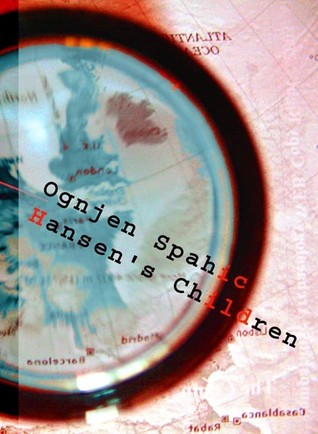
Hansen'sIn his introduction to the second English edition of Hansen’s Children, BBC Correspondent Nick Thorpe visits a real life leper colony, the last in Europe, in the small hamlet of Tichieletsi in south-eastern Romania where a dwindling number of disfigured patients live out their final years, tended by medical professionals while enjoying the companionship and domestic tranquility of their close knit community. He then goes on to examine the way that Montenegrin novelist Ognjen Spahic re-envisions this leprosarium against the dying months of the brutal dictatorship of Nicolae Ceausescu in 1989; creating a perfect, if horrifying, template against which to explore questions of power, corruption and violence throughout the history of Europe – looking to the past, the present and the future.

The “children” of the title refers to the unfortunate souls infected by the bacillus first identified by Gerhard Armaeur Hansen. It is a term by which our unnamed narrator, our leprous Homer, refers to himself and his fellow inmates as he recounts the tale of life within the fenced grounds and the cold damp confines of the aging three-story building that serves to house the remaining inmates of the leprosarium. At the time he arrives they number eleven men and one ancient woman. Outside the gates, a fertilizer factory, ubiquitous on the Romanian landscape, belches out smoke and receives a rotating contingent of increasingly disgruntled workers. From his window he gazes longingly at the Transylvanian Alps, dreaming of freedom from exile and confinement. In fact we learn at the outset of his account that his dear friend and roommate, an American man named Robert, has secured false passports and made arrangements for their escape. This hope will not only feed our hero’s ego, but give him a will to live no matter what the cost, as conditions inside and outside the leper colony decline. In desperate circumstances, brutality knows no boundaries.

Perversely the leprosarium becomes a microcosm of the very divisions that divide human beings in the broader world. For example, when the inmates become aware of a new scourge on the rise outside their gates, HIV/AIDS, two men who have fallen in love will suffer the consequences because “this new disease was misunderstood and homosexual acts per se were seen as spawning the new evil. Mstislaw and Cion were shunned… like lepers. It was kind of understandable.” Mirroring the deteriorating conditions unfolding across Romania, and presaging the fate that awaits Spahic’s own Balkan homeland; power struggles, violence and death escalate within the bounds of the small community. As the conflict to free Romania approaches its final days, helicopters and gunfire splitting the air, our narrator lies in bed and imagines what such a new world could bring. He realizes the sad truth: “I knew that even in a world like that I would be where I was now. I would dream the same dreams and speak the same words. I would remain a leper.”

The picture this novel paints is not a pretty one. It is however strangely engaging and, in the end, deeply moving. The graphic, disturbing details of the progressive ravages of the cursed disease on the bodies, organs and functions of Hansen’s children is painted with a healthy serving of satire. Black humour and tragedy are deeply entwined.

Apart from this novel, only a few of Ognjen Spahic’s short stories have been translated into English although he has published three story collections. Hansen’s Children, which was originally released in 2004 when he was still under 30, has received several important European awards.His most recent story collection won the 2014 European Union Prize for Literature for Montenegro and in an interview on the site he describes himself as more of a short story writer than a novelist and speculates that prizes can increase international attention and encourage translations. I, for one, would be keen to see more.

Note: In addition to his story “Raymond is No Longer With Us – Carver is Dead” which was included in the anthology Best European Fiction 2011 (Dalkey Archive Press), the story “All of That” can be found on the online journal B O D Y and the title story from his latest collection Head Full of Joy can be found at the European Union Prize link above (following the original Montenegrin version).

Hansen’s Children (2nd edition), 2012
translated by Will Firth, Istros Books

Channeling Bernhard in the Balkans: The Son by Andrej Nikolaidis meets Bernhard’s Gargoyles

SonThere comes a moment in Andrej Nikolaidis’ novel The Son where the unnamed misanthropic narrator, confronted with a hideously deformed family of lepers who have taken up residence in an abandoned car park in the Montenegrin city of Ulcinj, imagines that he is “a piper with a funny Tyrollean cap, which Thomas Bernhard would find laughable, and (…) dressed in green knickerbockers with suspenders like Heidegger used to wear” who proceeds to march through the streets of his home town gathering a following of the wretched, desperate, and diseased denizens of the streets, dark corners and hovels and leading them right down to the seashore, where he proceeds, walking out across the water, while the “grisly army” he has amassed disappears beneath the waves.

The Son is a dark, unrelenting journey into all the misery and disappointment that life and, those who claim to be your friends, family and lovers can bring. Our anti-hero is not a warm, generous soul. Admitting to his own perverse, gruesome obsessions in the early pages, he reports that his wife has just left him and he is bitterly alienated from his father. He perseverates about the cruelty of the forgiveness his father repeatedly bestowed upon him regardless of the destructive nature of his actions. He manages to vent anger at everyone he encounters, remarking at one point that he was “reminded once again that the nicest things we can say about a person is that one day they will die and cease to bother us.” As readers we are swept along on a scotch fueled odyssey into the heart of the city where a series of old acquaintances and disreputable characters seem to fall into his path where they are treated with a curious mixture of revulsion, pity and disdain. He is, in essence, the most vitriolic Bernhard monologuist transported from Austria to Montenegro and boiled down to the meanest bare essentials. By contrast, my current Bernhard read, his early break through novel Gargoyles, seems airy and light.

LosersPublished in 1967, Gargolyes was given its title in the English translation (the original German translates closer to something like distress or disturbance) presumably drawing attention to the grotesque series of characters encountered by the narrator, a son home from school, as he accompanies his father, a rural doctor, on his rounds to a series of isolated, ill and mentally unstable patients. The themes of madness, isolation and suicide recur as they make their way to Hochgobernitz where the aging Prince Saurau takes centre stage for the second half of the book, embarking on an increasingly intense monologue, mourning his own estranged relationship with his son who is away studying in London, and philosophizing about the hopeless and inevitable destruction and collapse of human society.

For my money, the characters that inhabit the pages of The Son are every bit as grotesque as those in Gargoyles, if not more. In both cases they serve as extreme, cartoon-like voices for exploring themes that are in turn horrific, humourous and deeply human, pivoting coincidentally around the relationships between fathers and sons. Amidst the rants against man’s inhumanity to man and musings about the madness and disease of modern society; a desperate compassion comes through. That is the compulsive beauty of reading Bernhard and, for those curious but afraid of the endless single paragraph style typical of most of his work, Gargoyles is a perfect introduction. For his part, Nikolaidis seamlessly transports the energy of Bernhard to the post Balkan War reality of a country he clearly loves passionately. As with his earlier book The Coming, it is also a dark meditation on Montenegro’s rich, complex past and uncertain future.

In a guest blogpost for Winstonsdad’s Blog (a great resource for works in translation), Andrej Nikolaidis reflected on his love for Bernhard and the influence he has had on his own work. Upon his first encounter with The Loser, (also my first introduction), the Balkan war was raging and he could see timely parallels in Bernhard’s existential analysis of Austrian society in a state of decay and collapse. He also finds in Bernhard the prose response to poet Paul Celan’s famous poem ‘Fugue of Death’ or ‘Todesfuge’. He hears the rhythms of Bach ring through the works of both men – and Bernhard was a musician first – envisioning Celan as a character who could have walked out of a Bernhard novel. With The Son, and a sound track updated to incorporate the noisy sound styling of Sonic Youth, Nikolaidis’ work carries the banner forward.

The Son by Andrej Nikolaidis (trans Will Firth) – Istros Books                                     Gargoyles by Thomas Bernhard (trans Richard and Clara Winston) – Vintage Books

As the year draws to a close…

At the beginning of 2014 my world was rapidly spinning out of control. There were clear indications that the extreme stress and toxic work environment I was living under was taking its toll. I was clearly struggling to hold myself together but like any good manic depressive I could not step aside and recognize the crisis that was unfolding. No one else in my life had the understanding to step in either and, in all fairness, I am not sure how I would have responded.

Now, at the end of the year, I have been out of the office for six months. My future is unclear. I had loved my work with brain injured adults and their families. It was challenging, rewarding and I was well respected. At least until I went crazy.

As soon as I walked away from my job I realized the price I had paid to build a career from community field worker to manager in less than a dozen years. I had intentionally alienated myself from people. I have always been a person inclined to isolation, shy in a curiously outgoing way. Public speaking does not phase me at all. I could speak to a crowd of 300, riffing on a theme if necessary, but face to face small talk is uncomfortable. The thought of baring my soul to another person in real time, over a coffee perhaps, is almost unbearable. In my life I have made few friends and had only two significant love affairs. And somehow I had managed to convince myself over the past decade or so that in addition to the challenges of raising children on my own, the social interaction provided by my work with hundreds of clients and professional colleagues would suffice. Close friendships and romantic relationships were not required.

I was wrong. But what now? I am in my 50s. I have repressed the very uniqueness of my history, that which had always set me apart. The very queerness of my being in the world. The ostensible and hard won success of fighting to be true to myself in the world was turned to dust in an instant. The road ahead suddenly looked lonely and long…

Slowly I am recovering. Much slower than I expected perhaps, but this unplanned respite has forced me to explore, re-evaluate and reach out. My therapist (thanks Jane) has been an important sounding board. Blogging and making contact with both bipolar and bookish fellow travelers has been vital. It has allowed a space for cathartic dumping. A medium for strengthening my ability to clearly articulate my thoughts and reflections. It has given me confidence to move out into the world closer to home.

Thanks to the fact that I have not been working I was able to volunteer at our writer’s festival and meet writers I admired from around the world, all of whom are in my age range. Financial constraints encouraged me to cancel my TV since I was generally using it as a mindless distraction. Consequently, reading and music have regained the attention they deserve. And when it is not -20C, like it is at the moment, I make a point to get out every day, frequently just to read and write at a local coffee shop.

So here is a song and a haunting video to carry you into the new year. It goes out especially to my brilliant friend of Blahpolar Diaries fame (infamy?) whose typically colourful ode to the therapeutic value music inspired this post.