
“Now I’ve taken a closer look at my desk and realized that nothing good can be produced on it. There’s so much lying around here, it creates disorder without regularity, and with none of that agreeableness of disorderly things that otherwise makes every disorder bearable.” (Find #29 Kafka’s Desk)
I have never understood those who feel inclined to disparage Franz Kafka. It should be sufficient to admit that a writer, especially one whose work has entertained and inspired so many and has clearly withstood the test of time, is simply not one who speaks to you. Admit, if you like, that you just don’t “get it”. But why, like Joseph Epstein in a 2013 Atlantic Monthly column, declare that Kaka’s apparent joyless, dark vision of the world reflects a personal defect that undermines his worth and proclaim: “Great writers are impressed by the mysteries of life; poor Franz Kafka was crushed by them.”
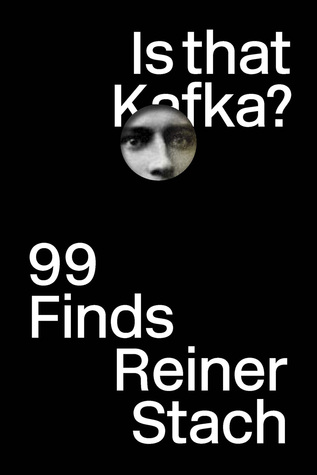 Of course, there is no law that says that great literature and a delusory, ominous imagination are mutually exclusive, nor does a writer’s work necessarily represent their personal inclinations or moral character. Readers can, and have been, misled. And although Kafka, a German Jew living in Prague in the early part of the 20th century plagued by a persistent, crippling and ultimately fatal illness, would have more than ample reason to be every bit as morose as the tone of some of his most famous works suggest, Is That Kafka?, a collection of 99 fragments, letters, reminisces and insights offers an image of a man who was warm, friendly and well liked by those who knew him. He comes alive here as anything but a soul tortured and crushed by life.
Newly released from New Directions, this entertaining, illustrated compendium of facts and photographs, texts and testimonies represents a selection of fascinating finds uncovered by Reiner Stach in the course of researching his acclaimed three volume biography of Kafka. These are exactly the sort of glimpses into Kafka, the man, that rightfully inform a sensitive biographical study but can easily get lost in the retelling. An affectionately curated collection such as this volume offers a chance to slip back in time and glimpse the human, humorous man behind a body of work that has acquired mythic dimensions that would likely have embarrassed, if not horrified, its creator. Translated by Kurt Beals, this richly illustrated volume is ideal for anyone who has found themselves drawn to Kafka’s work, a book best enjoyed at leisure, a few entries at a time.
Divided into themes such as Idiosyncrasies, Reading and Writing, Illusions, Reflections and more; the entries are labelled and presented as exhibits, each offering an image, an excerpt, or an anecdote. We learn that Kafka was frightened of mice, fond of children, delighted in slapstick, and was skeptical towards doctors, medicines and vaccines – perhaps to the detriment of his own health. The floor plan of the apartment where he lived with his parents and sisters while writing The Metamorphosis is reproduced with the rooms marked as reassigned in the setting of his famous tale, while photographs of events at which Kafka is thought to have been present are scoured to pinpoint a tall, slim individual who might be the very man himself – the finds that give rise to the book’s title “Is that Kafka?” Some pieces will be known to even he most casual fan, such as the excerpts from two drafts of Kafka’s Will famously advising his friend Max Brod to collect and destroy all of his writings. Others may well surprise even the most dedicated enthusiast.
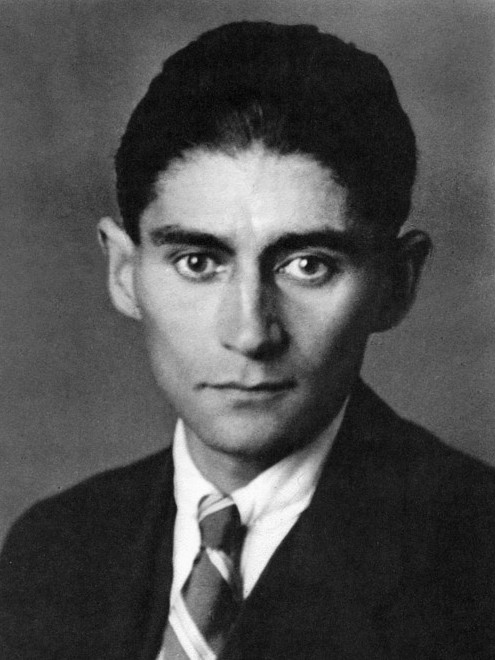 Personally I was fascinated by Kafka’s reluctance to suffer doctors gladly (“Medicine knows only how to treat pain with pain, and then they say they have treated the disease,” he complained in a letter) and his attraction to what might be understood as alternative or holistic remedies. He was, like many with prolonged, serious illnesses, constantly on the alert for new treatment options, relocating as his symptoms demanded. He did seem to enjoy travel insofar as he was able to do so, fascinated by the experience of riding the Metro in Paris and even entertaining the creation of a series of guides for travelers on a budget. Women were drawn to him as evidenced by his numerous love affairs, his sisters adored him, and he was especially close to his youngest sister Ottla. Although he never did marry or have children of his own, he was deeply invested in his sisters’ children and appears to have taken great care selecting gifts and books for the youngsters he had a an opportunity to know.
However, one of my favourite finds is an extended account from a letter to Felice Bauer to whom he was twice engaged. Perhaps she had accused him of being too dour but he takes great pains to convince her that he is quite capable of falling into uncontrollable laughter by describing an incident during a ceremony at which he and a colleague are being honored with promotions at the Workers Accident Insurance Institute where he was employed. He starts to laugh during his colleague’s speech, a situation that is worsened when the president takes the stage:
“But as he began his speech–the sort of customary speech that you know long before you hear it, following the imperial formula and accompanied by heavy chest tones, altogether meaningless and unjustified–as my colleague cast sidelong glances my way, trying to warn me even as I fought for self-control, but in the process vividly reminding me of the pleasures of my earlier laughter–I couldn’t hold myself back. At first I only laughed at the harmless little jokes that the president scattered here and there; but whereas the law tells us to respond to these jokes only with a respectful smile, I was already letting out a full-throated laugh, I could see my colleagues give a start for fear of contagion, and I felt more sympathy for them than for myself, yet I didn’t try to turn away or cover my mouth with my hand, rather in my helplessness I kept staring into the president’s face, unable to turn away, probably feeling that it could only get worse, not better, and so it would be best to avoid any change at all.” (Find #51)
The portrait of Franz Kafka that takes shape over the course of these carefully edited and selected discoveries is one of an engaging, intelligent man – someone who could be shy and nervous at times, but hardly a man totally consumed and destroyed by hopelessness and despair. This makes the singular visions that haunt his work, that continue to speak to readers and are recognized all too frequently in a real world that turns, at times, on an axis that is rightly called Kafkaesque, even more profound because they did not define his life or relationships with others. He channeled them into his writing. Maybe that release even kept him sane.
Stach argues: look at his letters, his diaries, his sketches and unfinished drafts, and it becomes clear that Kafka’s whole life was literature. Thus to understand it fully, his stories and novels tell only part of the truth. He wrote, like all great writers, because he had to. As he says in the conclusion to the piece quoted at the outset of this review:
“Wretched, wretched, and yet well intended. It’s midnight after all, but considering that I’m very well rested, that can only serve as an excuse insofar as I wouldn’t have written anything at all during the day. The burning lightbulb, the quiet apartment, the darkness outside, the last waking moments entitle me to write, even if it’s the most wretched stuff. And I hastily make use of this right. That’s just who I am.”
 roughghosts