
The latest work from Rwandan writer Scholastique Mukasonga, to be released in English translation, is a novella that takes us back to 1930s Rwanda when the small, landlocked east African country was under the administrative control of Belgian authorities and the religious influence of the Catholic church. With the arrival of a group of black American evangelists, life in a small community faces unprecedented challenges to both the externally enforced regulations and the traditional norms of social conduct. When the local chief grants them permission to establish their mission on a hillside long associated with pagan rituals of the past, rumours spread and curiosity is aroused by their seemingly strange services and the enigmatic prophetess who dances, babbles in strange tongues, and appears to have miraculous healing powers. Women, in particular, are drawn to her, while the village men tend to regard her and her odd companions with distrust.
 Meanwhile, the narrator of this tale, Ikirezi, is a sickly young girl mysteriously prone to endless maladies. Suspicious of the white man’s medicine, her mother applies all of the home remedies she can think—all to no avail. Ikirezi’s illnesses only grow worse. There is, she decides, but one solution:
“Tomorrow we’ll go to see Sister Deborah, she’ll be able to cure you. Tomorrow we’ll go to Niyabikenke, to the mission of the black padri.” If my father noticed our travel preparations, he exploded in fury. “You are not going to that devil’s mission. I forbid it! Didn’t you hear what our real padri said about it? They’re sorcerers from a land called America, a country that might not even exist because it’s the land of the dead, the land of the damned. They have not been baptized with good holy water. And they are black—all the real padri are white. I forbid you to drag my daughter there and offer her to the demon hiding in the head and belly of that witch you call Deborah. You can go to the devil if you like but spare my daughter.”
Ikirezi, we will later learn, is not only strengthened physically and intellectually as result of her encounters with the foreign faith healer, but she goes on to study abroad and become an anthropologist. This accounts, perhaps, for the tone of the of the extended first section of Sister Deborah which often relies on varying details, reports, and speculation about what might or might not have happened, resembling at times a sort of gathering and integration of field data. The narrative extends beyond that of a child’s experience, describing the conditions surrounding the settlement of the American missionaries, the black pastor’s talk of the impending return of the Savior to this very location in the heart of Africa, and Sister Deborah’s particular appeal to the womenfolk, some of whom come to understand her to be implying that the Savior will likely be a black woman who will descend from the clouds bearing a special seed that will grow and flourish to feed their families without back breaking labour, thus releasing them from the constraints imposed on them by their husbands and economic traditions. Needless to say, the men of the community, the church, and the administrative powers are unsettled by the disruptions and feminine empowerment that arises in the wake of Sister Deborah’s influence. A series of events that lead to the expulsion of the Americans and the disappearance, or possible death of the prophetess are shrouded in confusion and conflicting accounts.
A brief second part considers the possible fate of Sister Deborah and allows Ikirezi to explain how she came to be a professor based in Washington, DC, dedicated to the study of her people but oddly aware of the hands of Sister Deborah somehow guiding her. She senses she has to follow a path laid out for her. Research leads her to a shantytown in Nairobi where she finds the faith healer, now known as Mama Nganga, and turns the narrative over to her. Now, the woman at the heart of this tale, has an opportunity to tell, on her own terms, the story of her life, reaching back into her own childhood in America and forward, through the formation of the missionary project, the long journey to Rwanda, her mystical awakening, and beyond the turmoil in Niyabikenke, to the life and identity she has created for herself in Kenya.
Her own spiritual evolution, as she describes it, was filled with mystery, even as she reflects on it years later. Early on, for example, when the mission pastor suggests that the otherworldly sounds she makes when she falls into a trance may come from an African dialect, to be understood as a sign that all the black peoples will be liberated and saved from the coming biblical Apocalypse, she has her private interpretation:
As for me, I was prey to a strange thought that I didn’t dare confess to Reverend Marcus. It seemed to me that the spirit speaking through my mouth was not the Holy Spirit of the pastors, who was always trailing behind the Father and Son. For one thing, it spoke neither Hebrew nor Greek nor Latin, but perhaps indeed, as Marcus believed, an African tongue. The spirit that had chosen me as medium could only be an African spirit, perhaps the spirit of the black woman who had visited me during my trance. I made prayers to her; I diverted toward her the worship that the pastor celebrated for the Savior. I preciously guarded that secret in the deepest recesses of my heart.
Sister Deborah Nganga’s account is ultimately one without clear resolution. Forces run through it that neither she nor the narrator, who also feels their presence, can fully articulate. Ikirezi’s later return to Nairobi to follow up on the fate of the former faith healer is again, like the opening section, guided by rumour, informants, and speculation. This is a book that continually asks questions about truth and memory, in the context of oral history, recorded biography, and academic research. There are no firm answers: Mukasonga allows uncertainty to linger in this story that explores the challenges and varying fates experienced by African women in times of shifting social and political conditions, yet keeps the spirit—or spirits—alive.
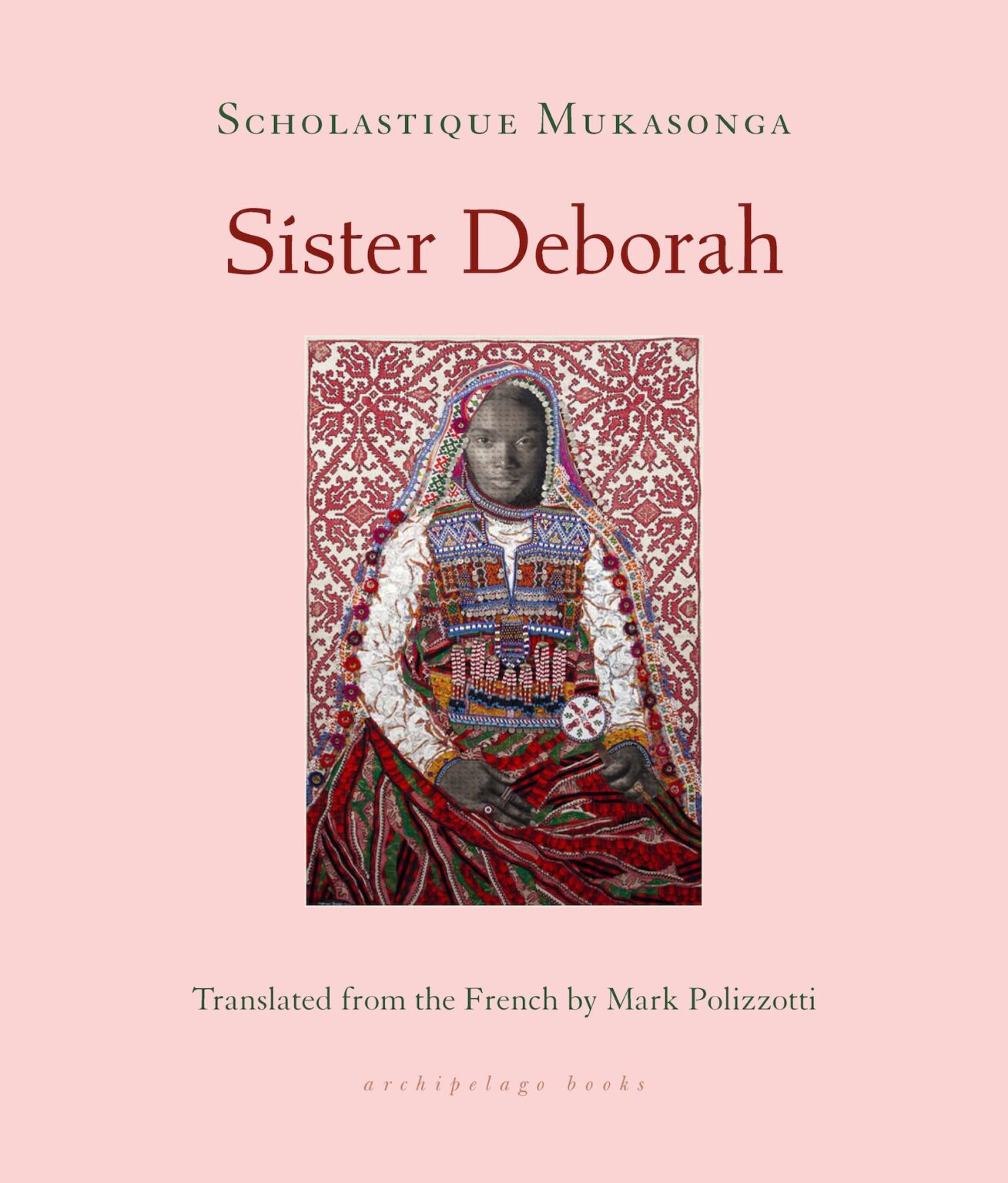
Sister Deborah by Scholastique Mukasonga is translated from the French by Mark Polizzotti and published by Archipelago Books.
 roughghosts