To go with the flow, or not: We Live Here Now by C. D. Rose

In Berlin, a sound artist—or, rather, as she would have it, a silence artist—sits in an Ikea-furnished rental apartment in Berlin. She is waiting to interview for a residency she has never heard of and didn’t apply for, but when an invitation, an advance and address arrived, she decided to follow up on their offer. But what are they really offering? And who are “they”? There are more questions than answers, but even more curious to  Rachel, there was something missing in this space in which she has found herself. An echo.

The sound of her greetings had no echo, as though it had been sucked up into the airlessness of this place, into the rug and the curtains. It should have been bouncing off this floor, these bare walls and the plate glass windows. This place should be all echo but there was none, none at all.

Elsewhere, the MV Atlantic Echo is making its way from the UK to Sri Lanka bearing twelve thousand containers, existing at the intersection of eight different companies and carrying, for the first time since the pandemic, a paying passenger who generally sticks to themself. One night, as the ship is crossing the Mediterranean, the Deputy Positioning Officer, the second in command, experiences an unexplained event during his watch—strange clouds gather, his equipment briefly goes dead, and momentarily the constant  grinding, throbbing, humming and droning of the massive ship falls silent.  It marks the beginning of a series of strange phenomena that will strike the ship and its crew members.

Meanwhile, an artist is commissioned to paint a portrait of an industry leader—though the exact nature of the industry his family has made their name in is shrouded in a complex maze of techno-gibberish—but he is having trouble capturing the essence, in fact any essence of the man. In China, another man sits in a “mid-range hotel of a Tier 3 city” trying to work on his master project, well aware that his identity and his ideas have been stolen and have been replicated into multiple versions of himself, but he is pretty sure he is the original. And, endlessly riding trains on a vast, interconnected web of mostly subterranean rails, a dishevelled man sleeps, dreams, and watches passengers come and go, wondering if he himself actually exists at all.
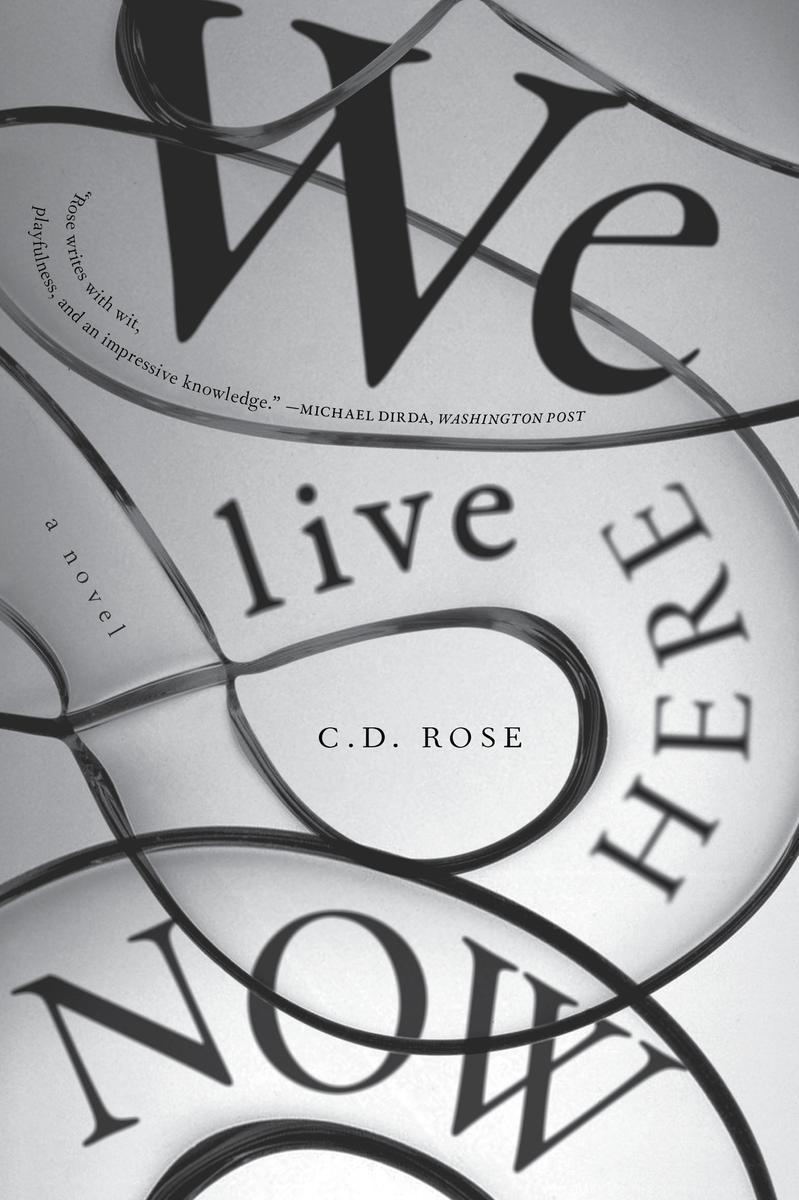
These are just some of the characters and strange circumstances that you will encounter in C. D. Rose’s surreal take on twenty-first century reality (such as it is), We Live Here Now. This inventive novel opens with an article by a fictional art critic looking back on the work of an elusive conceptual artist named Sigismunda (or Sigi) Conrad, with particular focus on her 2015 installation, We Live Here Now, a radical exploration of space and temporality that sparked controversy when people, a cleaner and several visitors, begin to vanish. The chapters that follow are set post-pandemic, and feature characters somehow connected with her or what is known of her whereabouts since 2015, either directly or indirectly. They read like a series of loosely linked short stories, sometimes intersecting directly, or bouncing off similar themes and motifs. One can find oneself listening for echoes, and tracing the flow, so to speak.

Each chapter adapts its tone, language, and energy to its protagonist(s) and subject matter. Rose’s milieu is the art world, with forays into experimental music and film. He is not only interested in the artist and the precarious nature of their work, but in the network of shippers, dealers, fixers, and those who inhabit the broader realm of intellectual manipulators, systems thinkers, and the beautiful people who want to be wherever something is happening.  There is a sense that, at least until we near the end, each story (again, that is the best way to describe the chapters) is playing out more or less simultaneously, even if a character is recalling events from an indeterminate past. The pandemic is, at least officially, in the rearview mirror and many artists, or those in adjacent businesses, are finding their footing again following a period of disruption that has been productive for some, less so for others. The settings are at once immediate and futuristic. It’s a world, or worlds, of WhatsApp, chat bots, iPads, and AI. It’s also a world where words, especially within certain commercial and intellectual enterprises, say a lot but mean little. When Ryan, the artist commissioned to portray the wealthy business man asks him to explain what it is that he does, the response has a familiar unintelligibility:

‘I direct strategic development and practice management. I work towards high-quality design which brings added value,’ he said. ‘We harness passion, knowledge and expertise to evolve powerful and pragmatic solutions and I inform and direct the ambition and quality of our work.’ He went on, scarcely pausing. ‘I develop strategy, over-seeing legacy, ensuring quality and continuation, while always searching for new possibilities. We are building, developing and ensuring sustainable resilience.’

And yet again it’s a world where objects and recordings go missing, sounds are suddenly either completely absent, or constant and unidentifiable, where light takes on strange distorting qualities, and space defies expectations. Some chapters/stories are more firmly grounded in what we might agree is the “actual” world, while others expand into other dimensions, but most navigate the shifting liminal space between illusion and reality. In other words, they take place where we live now, or will soon.

As a collection of loosely linked short stories that sometimes directly reference one another in unexpected and delightful ways, this book is brilliant fun. Rose is playing with all kinds of ideas about art, commerce, reality, and the banality of modern society. But whether it works as a whole is less certain. The framing of the project, beginning and ending with articles about two major exhibits by the elusive artist who connects all of the intervening stories, though necessary to a point, risks undermining the overall impact which may sound strange to say. What sets itself up as a mystery, offering clues, coincidences, and unlikely connections, is at its best, more a novel ideas, a dynamic map to the myriad interrelationships that connect us in a multi-dimensional universe that exists in theory but eludes us in practice. Or is it? Rose invites us and his extensive cast of characters to traverse a Klein bottle or enter an Escher artwork, but he’s leaving us to find our own way out.

We Live Here Now by C. D. Rose is published by Melville House.
As we live by metaphors so we die: The Limit by Rosalind Belben

Ilario watched Anna waiting to die.

For months on end he is forced to sit beside a person whom he loves—very much—whose poor head must be filled with thoughts, and images of death.

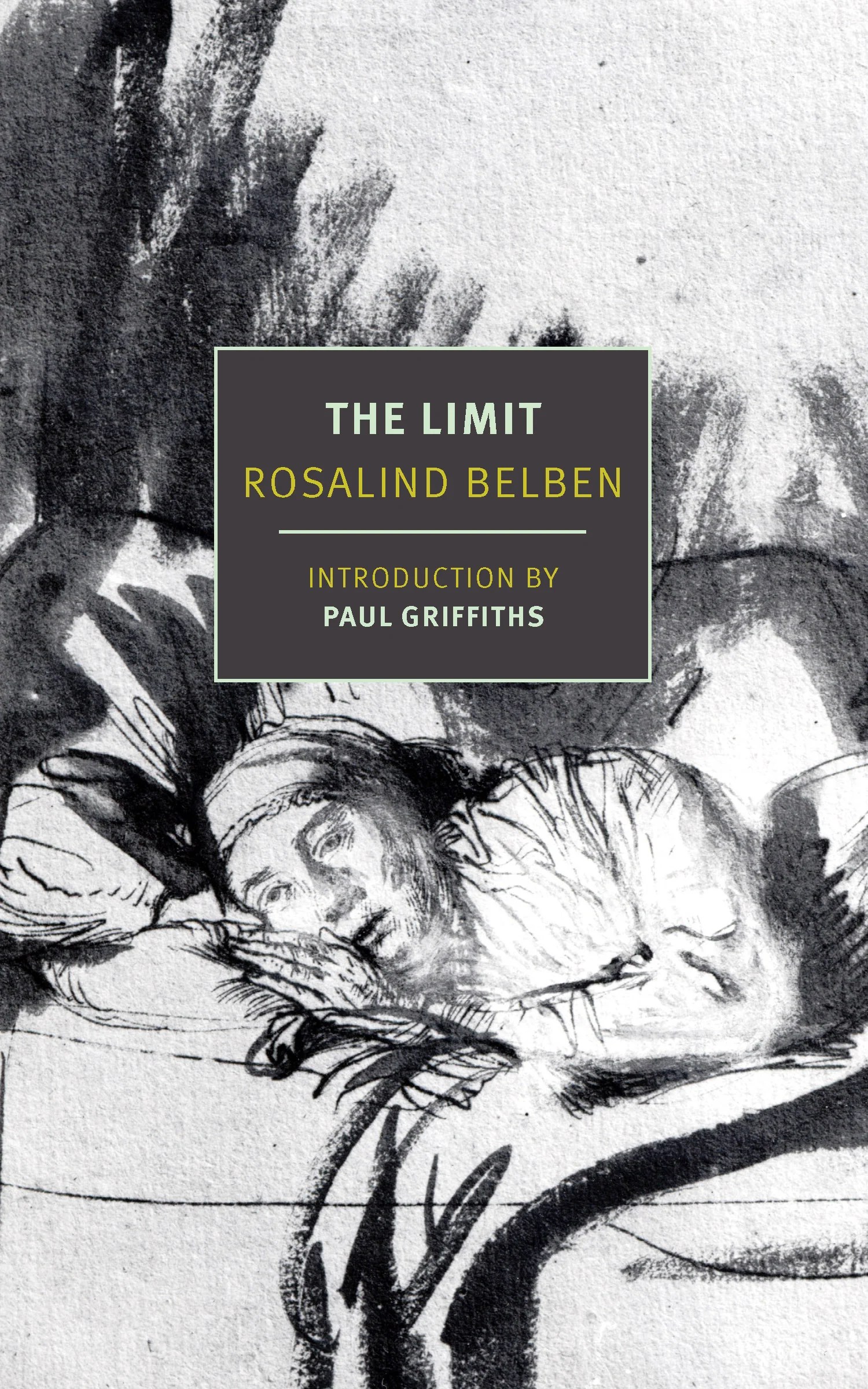
Spare and unflinching in its depiction of an unconventional love and a most conventional death, Rosalind Belben’s The Limit presents the story of a middle-aged English woman, prematurely aged and ravaged by cancer, and her much younger Italian seaman husband, as the one gradually loses her ability to function and the other copes with his feelings of growing distaste and deepening love for his ailing wife. It is one of the strangest books I have ever read, but one that, beyond its often coarse, blunt descriptions of both lovemaking and illness—sex and death—lies a portrait of an unlikely love affair grounded in a shared sensibility that defied the many sharp contrasts between them and that will endure beyond the grave.

As Paul Griffiths notes in his helpful introduction, The Limit, Belben’s third book, first published in 1974, was a marked departure from her first two. Although other writers were, in the 1970s, determined to “shake” up the English novel, Belben’s writing “was like no other and remains startling half a century later.” Her narrative style is idiosyncratic. Temporality can be compressed or expanded in unexpected ways, syntax continually surprises, and sentences are often abruptly shortened or laced with a series of colons. Perspective shifts abruptly from third to first person, slipping in and out of Ilario’s or Anna’s thoughts, depending on the chapter. And the chapters themselves are thematic, with each theme repeated three (and in one case, four) times, but they do not follow a regular sequence, nor are they chronological but together they build in intensity and intimacy, in spite of, or perhaps because of, the often harsh bluntness of the narrative with its moments of ugliness and beauty.

Belben’s themes—Transmigration, Rapture, Grief, Sea-Change, Childhood, Future—all take their titles from definitions found in the Hamlyn Encyclopedia World Dictionary.  The Rapture chapters, for instance, are titled “The Carrying of a Person to Another Place or Sphere of Existence,” Grief is “A Cause or Occasion of Keen Distress or Sorrow,” Transmigration becomes “The Passage of a Soul at Death into Another Body.” Yet as lofty sounding as these chapters may sound, Anna and Ilario are not believers:

God had been disposed of long ago.

Neither she nor I acknowledged the divinity. Our faith lay in mankind, not in its mythical maker. She showed little sign of abdicating conviction for a god she spent her life denying. We agreed upon the possibility of a different reality: but that did not leave Anna any hope.

Thus she embarks into a dark journey, one which her husband must now help her navigate, but on dry land his seaman’s skills leave him feeling ill equipped. In their relationship, Ilario confesses, she had always directed and guided his way. “Without a wife, without her, I am nothing, I am useless. Was always useless.”

Anna’s side of the narrative is internalized. She is past conversation; she thinks of dying. Her memories carry her back to childhood and to earlier times in her marriage. But the man attending to her at home or sitting at her bedside in the hospital barely registers in the present. He is alone—save for the passing companionship of other husbands visiting their own sick wives and awkward interactions with Anna’s siblings. Yet as time passes, he feels closer than ever to the “elderly” woman slowly fading away. His wife.

The Limit is not an easy read: Ilario’s descriptions of Anna’s body, in their intimate moments and his later ministrations in her final days, are frank, at time uncomfortable, but oddly not without a certain tenderness. Meanwhile, Anna’s childhood memories hint at the pain and dark secrets in her respectable English family:

Protect me from my mother. Make my father beloved come alive.  Rise: my dog from the dead. But prayers are seldom if ever answered. Anna is born in 1922 (twenty years will pass before his birth): childhood proves unsatisfactory, an unsalutary experience: and to it the Anna grown up is irreversibly linked, to it pieces of her now are related: they are part of her score yet do not, repeat not, determine her whole works. Simply, her machinery lacked oil in the past. I hate my mother.

She revisits disturbing events from her youth, their lasting impact. When she meets Ilario, it is unsurprising that she is forty and still a virgin. Yet, it is the unlikely love that binds this odd couple together that makes this novella so intriguing.

One can imagine that in choosing a partner so different in age, culture, and class, Anna is freeing herself from the constraints of her family background. We don’t know enough about Ilario’s past to know what might have first attracted him to this plain, older woman. “An iron maiden. Forged in a landscape of snow.” But, scenes  drawn from their decade of marriage indicate strong mutual interests. They both harbour a love of travel and a love of the sea. Anna, before illness overtakes her, is a sturdy, adventurous woman,  unbothered when she and Ilario find themselves facing a man dying of leprosy in North Africa, nor does the threat of a tempest at sea frighten her. Quite opposite, in fact. The Sea-Change chapters each offer snapshots of their time together away from England, of their shared companionship in calm and in adversity, but the third such chapter is especially exhilarating. Ilario as a young captain, awakes to find his ship facing a life threatening storm at sea—all while his wife is onboard:

Ilario wished she could be spirited to landfall. He noticed a glittery expression: she adored the crisis, the whole situation. Not a clue did she have, la poverina, unreal in an unreal world. Addicted to unreal drama.

He assesses the heavy and unstable loads down in the hold. Orders them secured and secured again. Comforts his experienced bosun whom he knows well:

Fear not: soon we shall plough on through our appalling conditions, trusting a stability we in reality don’t possess. He smiles, loving his ship and his wife, his wife and his ship: Ilario takes heart. The tops of the waves already sprinkled the bridge: it could hardly be mere spray. But he relaxed, eating a marmalade sandwich.

Ilario’s love is steadfast.  Sometimes its strength even seems to surprise him. And as the Future chapters show, even as other adventures and women cross his path, no one can dislodge the place Anna continues to hold in his heart. Illness and death, dying seen from the inside and from the bedside, may be the central focus of this novella, but at heart it is a story that demonstrates just how inexplicable and enduring love can be, a work not soon forgotten.

The Limit by Rosalind Belben with an Introduction by Paul Griffiths is published by New York Review Books Classics.

What passes and what remains: Walter Benjamin Stares at the Sea by C.D. Rose

The fictional world of British writer C. D. Rose is one that slips in and out of time, balancing the fantastic and the realistic, peopled with the lonely, the lost, and the brilliant misfits, some drawn from history, others from his expansive imagination. His universe is at once familiar and strange, and as is the case with the best literary fables, it offers a welcome refuge in a troubled world. At least, that was what I found after floundering with attempts to lose myself in prose during a busy, stressful stretch. Rose’s short story collection Walter Benjamin Stares at the Sea turned out to be the perfect antidote to a reading slump.

Central to this collection of nineteen tales is the idea and experience of time—tracking its passage, defying its constraints, longing to hold it fast. Rose’s characters often have a most awkward relationship with time. The protagonist of “Everything is Subject to Motion, and Everything is Motion’s Subject,” for example, nineteenth century French physiologist and chronophotographer Étienne-Jules Marey, in a narrative that flows with the imagery of his two obsessions, circulation and the pursuit of the fine details of movement, feels himself divorced from any perception of time beyond the immediate:

In life, this tangle. His constant passage from Paris to Naples, Naples to Paris. The demands of work, love, money pushing him one way and pulling him the other. A life always in transition, never stopping, always moving. Always in the present tense. Were he to stop and think of the past or the future, what would happen? When and where, he sometimes thinks, will I finally rest? His life like his pictures: tracing a motion back and forth across Europe.

Elsewhere, philosopher Henri Bergson, defender of primacy of immediate experience, finds himself caught a warped time loop of maids and spilled tea in “Henri Bergson Writes About Time.” Or in “Violins and Pianos are Horses,” an unnamed composer fitfully tries to reclaim his past on a visit with his daughter to the town he grew up in. Memories beset him during their stay, but the childhood home he remembers remains elusive, while all his fame and achievements are cold comfort.

Sometimes time takes on a surreal, even ghostly, quality in Rose’s fables. At other times, he leans hard into the absurd. “The Neva Star,” for example features three Russian sailors, all named Sergei, who have stubbornly (or perhaps foolishly) stayed aboard their ship, abandoned by its owners to rust in a port in Naples. In the charming “Arkady Who Couldn’t See and Artem Who Couldn’t Hear,” the narrator passes a long train trip across the snow-covered Russian landscape in the company of an odd pair of twins, one blind, one deaf, who are engaged in the careful construction of a matchstick model of their childhood home—a collaborative effort to remember their birthplace:

They were thin men, curiously built, with long square bodies and short legs, but both moved with a careful grace, their slow, deliberate gestures reminding me of mime artists or expert craftsmen. When I asked how long they had been building their model, they looked at each other and smiled. All our lives, said Arkady, all our lives.

The stories the brothers share about their lives conflict depending on which twin is doing the telling and whether the other is asleep, but it is clear that neither intends to allow their life project to come to completion. As if one can preserve time so it never truly passes. But, of course, time has its own designs.

Rose crafts many of his tales over the biographies of real people—photographers, scientists, writers, philosophers—stretching, reshaping, and imagining them from the inside looking out at a world that moves too quickly, too slow, or too strangely. Other narratives tend to similarly feature protagonists, narrators or characters that connect with temporal reality in idiosyncratic ways. And some seem to defy time and conventional narration altogether, like the experimental “What Remains of Claire Blanck” in which the narrative has all but evaporated leaving only footnotes, their numbers hanging against empty space above a detailed literary analysis of a story that can no longer be read. The nature of storytelling, how or if one can or even should write about a particular subject, also preoccupies certain narrators or protagonists, but again, that is a theme not inseparable from time.

Writing this review on the day that the new pope, an American of the Augustinian order, has been elected and the curious have been scrolling through his twitter account to gather a sense of the man, it’s some strange coincidence that the funniest, most affectionately absurd title in this collection is “St Augustine Checks His Twitter Feed.” In this brief tale the saint struggles with the temptation of social media, fretting about likes and the lack of a blue check mark, as he tries to focus on beginning to write his confessions. This clever little piece works, as do the others in this collection of intelligent, wide ranging fables, because Rose has a keen sense of just how long a story should be based on its level of absurdity and relative complexity. Frequently that is no more than a few pages. His mastery of the form is impressive, bringing to mind writers like Italo Calvino, Magdelena Tulli, and, of course, Borges, and yet his voice is distinct and contemporary and this collection a delight.

Walter Benjamin Stares at the Sea by C. D. Rose is published by Melville House.

One day you will meet yourself returning: Embark by Sean O’Brien

In these days of howling sunshine
when in the grove the aspens fret and pull
like maddened horses now silver now grey
in the curdling light, when the leaves of the cherry
are first all hands and then all birds
that point the way they cannot travel with you,
what then is to be done?

– from “Poem in German”

Every time I sit down to write about a book of poems, I am confronted with a wave of insecurity. Is it possible to write about poetry without the requisite vocabulary and knowledge to adequately assess the collection at hand? I have long argued that “ordinary” readers should be encouraged to read and engage with poetry, free from concerns about doing it “right.” After all, what does it mean to be “right” in one’s reading of any piece of literature? Even in the course of a single lifetime we never come to the same work in the same way, or as the same person. And yet, I am increasingly inclined to read poetry without any thought to whether I will or will not write about it because sometimes, no matter how much I enjoy a collection, I can find myself hopelessly at a loss when it comes to imagining how I might express my feelings.

Embark is the eleventh collection from well-known—albeit previously unknown to me—British poet Sean O’Brien. I ordered this book inspired by a couple of selections shared by someone on Twitter which is, I confess, one of my primary resources for finding poetry. Something about the pensive, gloomy tone of O’Brien’s poems caught my attention. Now, having read and reread this slender volume, I wanted to reflect on what strikes me in his work.

O’Brien’s publisher describes him as “‘Auden’s true inheritor,’ and one of our wisest poetic chronographers” and this, for a start, signals a return, for me, to a manner of poetry that has commanded less of my attention in recent years as I’ve read more inventive contemporary poetry and more in translation. I almost feel embarrassed to confess that his attention to metrical form, occasionally rhyming, and his use of popular or colloquial language, with a strong sense of place, feel familiar and welcome. His use of historical, literary and cultural references fall within a comfortable realm, at least in my reading. I was not left wondering what obscure references I might be missing.

Though poems should not mean but be,
all information tends to entropy:
What was the Word is emptied of itself

and speechless water rises through the stacks,
engulfing like a continental shelf,
implacable as death or income tax.

– from “Waterworks”

Of course, one of my key points of reference is simply one of age. O’Brien just turned seventy and, even if I’m eight years younger, the perspective that comes with living, looking back over the decades, colours the concerns, moods and tones that I recognize in his poetry. The ghosts of old towns, the crumbling decay and industrial detritus traced in the soil, water and stones, and the shadows of memory surface that again and again. His landscapes are charged with life, but his verses reflect an awareness of mortality and the absences that increasingly haunt us over time. This is the work of a mature poet, in age and in his confidence with language. But it is also very much of the present—climate change, disturbing political trends and the reality of the pandemic are all apparent here.

Rain is falling on the metal tables
piled with chairs, and gleaming
as it floods the blue brick gutters,

perfect and anonymous and beautiful.
Be careful what you wish for now
the very air has somewhere else to be.

The city has a headache
but it dare not speak its name –
the bitter patience that till yesterday

we learned from middle age –
and now the plague is blown
as lightly as a kiss across the street.

– from “A Last Turn”

There is a pensive, even bleak quality to many of these poems, but his imagery, his turn of phrase catches me in the moment, causes me to pause. But then there is this hint of guilt I feel when reading poems in English. As much as I love and believe in the importance of reading poetry in translation, aware of the challenges and decisions involved in translating verse (and O’Brien himself is a translator, having translated the poems of Kazakh national poet Abai Kunanbayuli), there is a special joy that comes from reading poetry in my native language that, oddly, I might never have considered before I became so passionate about reading in translation. Of course, O’Brien’s poems have also been widely translated into other languages, but all I can say for now is that I am glad I took a chance on this fine collection.

Embark by Sean O’Brien is published by Picador Poetry.

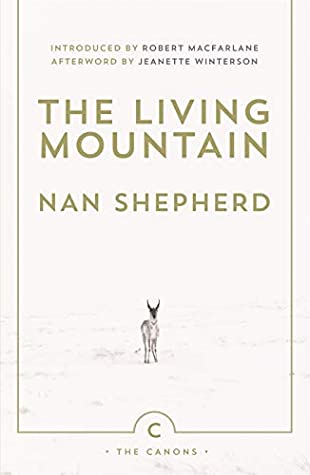
Off the beaten path: The Old Ways by Robert Macfarlane and The Living Mountain by Nan Shepherd

About a month ago, as the response to the COVID-19 pandemic began to have a greater impact on daily life in my community, I became more determined than ever to take full advantage of the pathways behind my home aware that, for a variety of reasons, my freedom of movement could be curtailed at some point. It seemed a good time to invite a companion on these walks, one who would not violate any rules of social distancing. I chose Robert Macfarlane, or rather his text The Old Ways as narrated by Roy McMillan which proved to be an ideal introduction to audiobooks for me and the perfect narrative to walk with. Coincidentally, my engagement with this wonderful evocation of the lure of long travelled trails and passageways overlapped a group reading of Nan Shepherd’s classic The Living Mountain, guided, on Twitter, by Macfarlane himself. But more about that book later.

One of the finest nature writers of our time, Macfarlane is able to bring the world, to use a cliché, alive on the page or, as in this recent circumstance, in the listening. He is able to pull one into the landscape, its history and its place in the human imagination. His books are the product of a deep engagement with the subject at hand, a commitment that often takes years before the final text is complete. The Old Ways, subtitled A Journey on Foot is perfect walking companion because it is, more than anything, about walking—tracing paths and passageways—a book that is not about the destination but act of following the trail. A trail peopled with a collection of intriguing characters, living and long gone, for a path exists as evidence of the creatures who have passed on it before, even if lies hidden for many years or longer, waiting to be uncovered and tracked once again.

As ever, his eye is keen, his writing lyrical, and his affection for those he meets or travels with undeniable. The book opens with the detailed account of a December walk close to home, and as I made my way along the well-loved, oft-travelled trails behind my own home, still snow covered and wintery in denial of the season, I was secretly glad that I had an e-book copy buried unread in my electronic library. As much as I was certain I would cherish the audio experience, I knew I’d want to revisit the words. The setting he described was different, but the sentiment familiar:

This is the path I’ve probably walked more often than any other in my life. It’s a young way; maybe fifty years old, no more. Its easterly hedge is mostly hawthorn and around eight feet high; its westerly hedge a younger mix of blackthorn, hazel and dogwood. It is not normally a beautiful place, but there’s a feeling of secrecy to it that I appreciate, hedged in as it is on both sides, and running discreetly as it does between field and road.

Divided into four sections, The Old Ways, begins in England, traversing different types of landscapes—paths, chalk, and silt— and then moves to Scotland where he travels traditional waterways, explores the Hebridean moors and then revisits his first mountains, the Cairngorms. This is where his grandfather had settled after a life of adventure, and where young Robert fell in love with “high country and wild places.” It is also where his path crosses the ghost of Nan Shepherd whose intimate relationship with the same terrain is recorded in her masterpiece, The Living Mountain, a manuscript completed near the end of the Second World War, but unpublished until 1977. Macfarlane would not encounter her work until much later, long after the author’s death. But her poetic, deeply sensitive nature writing has no doubt informed his own. From Scotland, his journey moves abroad, to Palestine, Spain and Tibet, before coming home again to travel ancient paths and pay homage to poet and writer Edward Thomas whose footsteps guide him throughout this tribute to the powerful pull of the path.

Nan Shepherd, who was born in 1893, was well educated and travelled widely across Europe and to South Africa, but she spent most of her life in her childhood home near Aberdeen where she taught English. Known during her lifetime for a number of novels it is The Living Mountain, published only four years before she died, that places her in the company of the great nature and travel writers of the twentieth century. It is a quiet masterpiece. She writes about her beloved Cairngorm mountains with a mix of poetic passion and clear-eyed respect, chronicling her own maturing relationship with a landscape as alluring as it can be hostile and deadly. The early chapters explore, in turn, the features of the geological and meteorological environment, exhibiting a finely tuned attention to detail. She knows these mountains intimately, experiences a full-bodied engagement with the landscape. However, it is in the later chapters of this slender volume, those that deal with the living elements—flora, fauna, and human—and the more existential aspects—sleep, senses, and being—that this work really sings:

To bend the ear to silence is to discover how seldom it is there. Always something moves. When the air is quite still, there is always running water; and up here that is a sound one can hardly lose, though on many stony parts of the plateau one is above the watercourses. But now and then comes an hour when the silence is all but absolute, and listening to it one slips out of time. Such a silence is not a mere negation of sound. It is like a new element, and if water is still sounding with a low far-off murmur, it is no more than the last edge of an element we are leaving, as the last edge of land hangs on the mariner’s horizon. Such moments come in mist, or snow, or a summer’s night (when it is too cool for the clouds of insects to be abroad), or a September dawn. In September dawns I hardly breathe—I am an image in a ball of glass. The world is suspended there, and I in it.

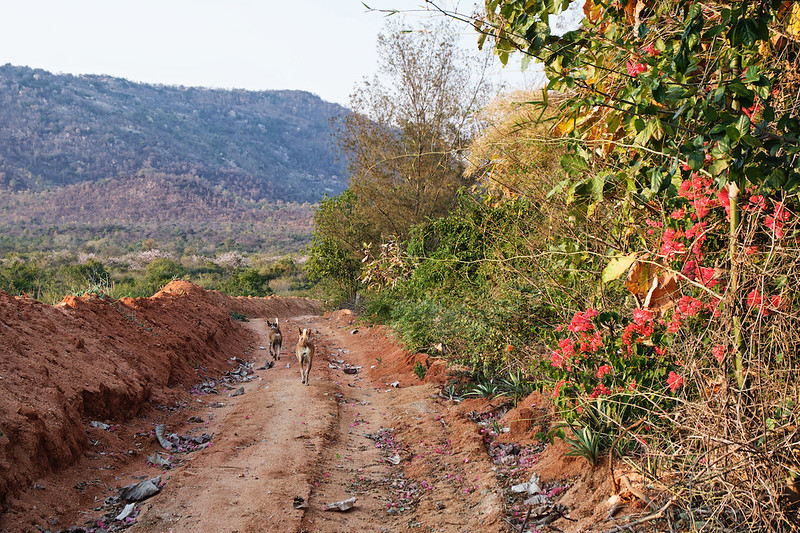
Over the past month as I travelled with Robert Macfarlane and Nan Shepherd, I could not help but reflect on the pathways I’ve travelled in my life. As child I spent each summer weekend camping and hiking with my family in the Rocky Mountains, my head filled with adventures out of King Arthur and Lord of the Rings. As a teenager I found refuge on the horse trails winding through the aspen woods near my childhood home. In my twenties I moved across country, exploring the bird sanctuaries and natural areas of the Ontario cities we lived in. And returning to western Canada, I have cherished the large natural parklands in this city where I’ve lived for last three decades, especially the Douglas Fir Trail that extends behind my home. But my mind also wandered along trails that my travels over recent years have opened—the rugged shoreline of the Eastern Cape of South Africa, sections of the even more rugged Larapinta running along the MacDonnell Ranges west of Alice Springs, Australia, or the rutted red roads and granite sheets of rural Andhra Pradesh, India.These are two books that allow you to experience the world through the words of dedicated guides, but like all journeys, the path ultimately leads you back home. Inspired by my engagement with these two gifted nature writers I recently wrote a piece for our “3:AM in Lockdown” series in which I attempted to follow the trail I know best and reflect on the uncertain state of our world at this moment. That short essay can be found here.

The Old Ways by Robert Macfarlane is published by Penguin Books and The Living Mountain by Nan Shepherd is published by Canongate.

Disembodied desire: Murmur by Will Eaves

The price of consciousness, of power, is choice.

 Mathematician Alan Turing is remembered as much for his critical role in the development of computer science , his contributions to code-breaking during the Second World War and his work on artificial intelligence as for being a man whose homosexuality led to a charge of gross indecency and a period of enforced chemical castration. His life has been examined in print and film, his character analyzed and debated, and his death mythologized, but to truly venture deep into the recesses of the mind of such a complex and extraordinary character is to invite challenge, scrutiny and dissension. After all, what can we ever truly know of another person’s internal processes? Or, for that matter, our own?

In his latest novel, Murmur, British writer Will Eaves takes the key elements of Turing’s career and ultimate predicament, and creates a shadow character, Alec Pryor, slips inside his skin and inhabits his dreams and anxieties while the state takes control of his body. This audacious approach stays close to the outlines of Turing’s life, even borrowing first names and specific details like his fiancé or his fondness for Snow White, but avoids the constraints of conventional biographical fiction. Presented through journal entries, letters and a feverish dream chronicle, Murmur offers a poetically charged reading experience that is at once scientifically astute, philosophically engaging, and emotionally disturbing. It imagines a rational minded man pushed beyond the edges of rational existence who still manages, we assume, to hold the surface still, controlled and humane.

So much of real life is invisible.

The novel begins with Pryor’s recorded reflections on the circumstances that led to his charge and conviction, his dalliance with a young man and subsequent reported robbery echoing Turing’s misadventure. Choosing one year’s probation with hormonal treatment over jail, he begins therapy with a psychoanalyst, Dr. Stallbrook, and weekly injections to turn him “into a sexless person.” Analytical by nature, he cannot resist the temptation to filter his situation through scientific, historical, and philosophical musings. As if he wants to quantify a situation that clearly has left him concerned and uncertain about what lies ahead.

The central section, which comprises the bulk of the narrative consists of extended dream sequences and an ongoing epistolary correspondence between Alec and June, a former colleague and friend to whom he was once engaged. It begins with a disassociation, a stepping away into third person, which leads to a recognition of a division, necessary perhaps to observe the self, but also speaking to the effect that the treatments are beginning to have on Alec’s relationship to his own physical being:

I am a thinking reflection. He is the animal-organic part, the body unthinking. I am a searching mechanism with a soul. I’m him, but only when he’s near the glass, metal, water, the surface where I’m found. I search for some way to express this separation which feels all the wrong way round.

A bird is puzzled by its reflection; not, surely, the reflection by the bird. And yet I’m one with him. I’m one and separate. I search for ways to describe this. I live and think within all glass. He only has a body and can’t hear this murmuring; sees himself in a mirror—doesn’t know that it is me.

From his detached vantage point, the dreaming Alec revisits his younger self at school, observes a schoolmate whom he once loved, and watches as the two boys swim naked across a lake where they will spend a night together. This other boy, Christopher, has a counterpoint in name and fact in Turing’s biography, a close friend and object of an affection most likely unreturned in the same nature. In both realities, Christopher dies young. But in Alec’s dreamscape, his psychiatrist is conflated with his former schoolmaster, and his friend’s post corporeal essence becomes an abiding presence. His intellectual preoccupations, such as the limits of machine intelligence are personified in bizarre interactions with a real life associate who visits him as a computational illusion. His mother and brother appear as cartoon effigies straight out of Snow White. By opening this vast and increasingly distorted space where, as is common in dreams, people known and events experienced become the scenarios that are continually replayed in response to current waking affairs, Eaves is able to twist Alec’s past and present together to create a complex, introspective character who is both troubled by and curious about the impact of  the unnatural situation in which he has found himself.

With his sex drive disabled, Alec admits to June that he is plagued by dreams and desires, a “coded overcompensation” for a reality supressed. Ever the scientist, he understands these dreams as a means of functional storage and processing:

My dreams are candid with me: they say I am chemically altered. They are full of magical symbolism! At the same time, they are enormously clear—where there is high reason and much thought, there will be much desire and many imaginings. Urges. I can be given drugs and hormones but they will only work as drugs and hormones work. They cannot get at excess desire. Take out libido and another drive replaces it. Materialism and determinism define me through and through, and yet there is more than they allow. And if that illusion of more—call it free will—is itself a mere effect, then an ‘effect’ suggests, does it not, a real cause, as a film ‘suggests’ a projector?

Balanced against this projected, or perhaps, “reflected” reality, Alec’s correspondence with June provides a safe place for him to explore his physical and existential uncertainties. She serves as confessor, sounding board, and unconditional support. Early on, especially as the hormones begin to soften and alter his body, as the estrogen causes his breasts to grow, he expresses fear of becoming a hybrid—less the fear of change than of loss. He grieves his past, his one true, yet quite likely impossible, love for Chris, and worries that he will somehow lose himself.

The estrangement between physical and essential being continues to grow. The dreamer longs to grasp a sense of if, and how, the body exists beyond death—dispersed, yet tangible, and at the same time, its elemental links to a geological, and for Alec, icebound past. The “self” seems suspended between:

The lake freezes. Ice calls to ice and Pryor’s raised and summoning hand is frosted black.

No trees, no distant school, a greenstick whine as cities pop, scatter. Another order of significance arrives. Air thickens with the charge of glaciers. The former gas solidifies, the mirror plane of my glass eye is crushed and I am fractioned, like a mote among asteroids. Only the world’s ship-like trembling, its great pistons concealed, attests the passage of aeons, time brakeless and unpeopled. Then, as fast as they arrived, faster, the glaciers recede, the waters rise, anoxic bile that boils away at Pryor’s still, unvoiced command—and I am either glass again, or obsidian, axe flint, my face upturned and refashioned.

The veil of night drawn back. The sun comes close, colossal in the sky. A pale hand hangs me on a wall that rises from the desert’s fiery sands.

There has been much controversy around the matter of Alan Turing’s death by cyanide poisoning a little more than a year after his hormonal sentence ended. Suicide was the official verdict; accident and murder have also been argued. The fortitude he is reported to have displayed throughout his ordeal, is offered as an indication that his mind was not as troubled as imagined. But, for Eaves’ shadow protagonist, there is both profound growth and insight as a result of his enforced period of introspection, and a fundamental internal loss of self that others cannot see. His perception of and relationship to his body is ever altered.

Murmur is a bold, imaginative accomplishment—one that manages to convey the strangeness of conscious experience while asking what it truly means to be conscious, pushing at the edges of its limits and constraints. It is, in many respects, a natural evolution of Will Eaves’ experimental novel, The Absent Therapist, a fragmented blend of scientific fact, philosophical reflection and fictional vignettes that read, not like snatches of overheard conversation, but as fleeting encounters with the thoughts of a wide range of characters. Murmur pulls you deep into the mental reality of one man whose rational and logical grounding is upended, but this time the therapist is present and inseparable from the subject.

However, as much as this is a novel embedded in conscious experience, it is a memoir of the body and its essentialness to being. It asks: Can a machine be encoded with emotional intelligence? What happens to the substance of the body after death? What of the self is lost or altered when the body is rendered sexless? No matter how cerebral one may be, the body matters. In my own, long-standing, welcomed and self-administered treatment with contrasexual hormones, I have experienced an evolving disassociation from the altered body I now inhabit. Yet, at face value, I look right. I am afforded the ability to live in the world in a manner that conforms with the internal gendered self I’ve always known. In a way that feels right. But I am changed. My body is othered and alien, de-sexualized. Over time that disassociation feeds existential discontent. Threatens the self in weird and curious ways I hear echoed in this book—a book which echoes my own murmurings.

Murmurs by Will Eaves is published by CB Editions and shortlisted for the 2018 Goldsmith Prize. A North American release is forthcoming from Bellevue Literary Press in April, 2019.

To find balance in a changing world: Insomnia by Aamer Hussein

My introduction to Pakistani-British writer Aamer Hussein was oddly serendipitous. It came through an unsolicited essay submitted to me for possible publication at 3:AM Magazine. I had no sooner read the piece through before I ordered a copy of one of the short story collections mentioned. Then I wrote a letter of acceptance.

Born in Karachi, Hussein moved to London in 1970 when he was just fifteen years old. An accomplished writer, critic, and translator, influential in both his native country and his adopted home, his work is curiously underappreciated in North America. Yet his stories which so deftly capture the amorphous, shifting atmosphere of living a life that crosses borders and cultures in a way that feels both timeless and timely, draw on a wide and diverse range of influences:

I love classical Persian and Urdu poetry from Attar to Iqbal, from Jami to Ghalib and Mir, from Rumi to Faiz. In the Western canon, I started off being influenced by the plays of Ibsen and Chekhov; and the fiction of Pushkin, Kleist, Flaubert, Karen Blixen, Tennessee Williams, Cesare Pavese, Marguerite Duras – oh, so many. (2011 interview)

Although Hussein has more recently explored the longer novella form and has even begun to write in his mother tongue, Urdu, his short fiction is especially impressive and seemed like a good placed to begin my acquaintance.

Published in 2007, his fourth collection, Insomnia, is comprised of seven stories that feature a variety of Pakistani-born narrators or protagonists negotiating new or changing environments—travelling in Europe as Islamophobia is on the rise, adapting to life in London as a teenager, balancing political idealism fed abroad with a longing to return home, or slowly building a writing career against the backdrop of the Second World War, Indian Independence and Partition. A sense of displacement is common, as is a quiet, aching nostalgia for something that is missed but cannot quite be clearly defined.

The longest story in the book, “The Crane Girl,” is set in London of the 1970s. Murad has, like the author, arrived from Karachi at the age of fifteen to complete his schooling. He becomes infatuated with Tsuru, a mercurial Japanese girl several years his senior. With her he learns to smoke and listens to the music of the day—James Taylor, Carole King, Cat Stevens. But then, without warning, she disappears. Murad is at a loss, awkwardly trying to socialize with Tsuru’s former flatmates, a Canadian boy and an Australian girl, until he meets another Japanese youth, Shigeo. Seemingly self-assured, his new friend turns out to be a moody, manipulative boy with a penchant for Spanish guitar and an uncertain attraction to Murad.

This is a story in which, like adolescence itself, meanings and desires are murky, motives and truths are unclear. A newcomer among other newcomers, Murad allows himself to drift for some time before he begins to be able to set limits and pull away when his friend’s behaviour bothers him:

Murad didn’t like asserting his views and tastes the way Shigeo did. (Recently, when the trouble had begun between the east and west wings of Pakistan, Shigeo had asked him about the situation as if he wanted to pick a fight, and Murad had uncharacteristically retaliated by bringing up Japan’s treatment of Korea. But that was a long time ago, Shigeo said, Japan had learned its lesson.) What, after all, did they really have in common, apart from their loneliness? Being foreign boys in London? Their dark hair and eyes? It wasn’t as if Murad was planning to drop Shigeo: he’d just avoid him for a while. Their friendship had become too much like a habit.

And then, of course, Tsuru returns, as suddenly as she had disappeared, and the situation becomes more complicated. Again, just like adolescence.

The political and the personal overlap in the haunting “Hibiscus Days” in which the narrator,  dedicated to translating the final poems and fables of his friend, Armaan, finds himself lost to memories, mysteries and regrets. The story retraces the relationship between four friends, two couples, all from Pakistan, who meet when they are studying in England. When Armaan and Aliza decide to return to Karachi and get married, they appear to be opting for more conventional middle class lives while the narrator and his girlfriend who stay in London become more committed to a political idealism. The complexities of exercising one’s politics at home and abroad are ultimately thrown into harsh relief, in this sad and beautiful tale.

Finally, another outstanding story, perhaps my favourite, is “The Angelic Disposition.” Set primarily in Delhi, this is a female writer and artist’s account of  her life and career, directed to her friend and mentor, Rafi Durrani, an established writer with whom she had a writerly relationship primarily conducted through letters.

Rafi was of medium height and medium colouring, and he seemed surprisingly weightless. In his world darkness seemed not to exist. And yet I could recognise compassion in him, too: his wasn’t the wit of callousness or disdain. He wasn’t a Marxist; neither was I.

But to sing so blithely about love in a time before siege? Those were strange days. We—the scholarly, the teachers and doctors and lawyers—were trying to find a place in a world that we were increasingly aware was no longer our own; and we felt obliged to write about change, to write to change it all.

Rafi encourages her to write for children, sometimes adding illustrations to her work. Theirs becomes a friendship born of mutual respect. It’s not romantic, they each are married to others, but his willingness to listen to her and share stories about his own life is critical to the support of her career, which is, at the time, quite unconventional for a woman.

In any exchange of letters there’s a writer and a reader: this is invariable. It’s hard to explain. I have something to say, to impart, to confess. You listen. And sometimes you, too, start singing, your triumphs, your failures and your little tribulations. But you could be saying all this to anyone. You’re writing to make me write, that’s all.

After his early death, fighting for Britain in the Second World War, she continues to address Rafi, as an angelic presence and inspiration. He may be her hero, but her gift and passion for art and literature are her own and will see her through the difficult years of the twentieth century. The true strength of this beautifully crafted tale, lies in the quietly dignified and powerful narrator whose presence lingers long after the story comes to a close.

This is an extremely satisfying collection and I am certain that my first experience of the work of Aamer Hussein will not be my last. And, in case you’re interested, the essay that sparked my interest, “Silence as Resistance in Aamer Hussein’s Stories” by Ali Raz, can be found here.

Insomnia by Aamer Hussein is published by Telegram.

Some measure of an innovative response to Liberating the Canon: An Anthology of Innovative Literature

So I’m sitting here at looking at my copy of Liberating the Canon: An Anthology of Innovative Literature and feeling sick when I think about whether or not I can, or should, write about it. Which makes it sound like I did not enjoy the book. Or that it is not worth reading. I did. And it is.

But, can I talk about the way it also twists me up inside? That a book that I should connect with on a level beyond the written word leaves me wondering if there is a space for me? On the back cover (which on my copy is terribly warped after a fall on snow-covered ice landed me with a concussion) editor Isabel Waidner is quoted:

If there were a literary avant-garde that were relevant now, it would be what the queers and their allies are doing, at the intersections, across disciplines. This avant-garde would be inclusive, racially and culturally diverse, migrants galore, predominately but not exclusively working-class, transdisciplinary, (gender)queer and politically clued up (left).

I like the sound of this. But is this what the queers and their allies are doing? Possibly. I am the ineptest (gosh I didn’t even know “ineptest” was a word, but Word suggested it and I kind of like it) queer writer ever because, off the page, queer is the loneliest reality I’ve ever known, and the many queer writers included here seem to have lives in which their queerness is essential, not accidental. And that makes me feel as alienated as my real life adventures in queer spaces do. I’m awfully pasty white and ordinary, and although my mother’s family were, at one time, potato famine refugees from Ireland, and I was not born in the country where I live, I am a migrant on an axis other than the here-to-there displacement in space. The only true migration I have ever made—the one that I am always making—is the one from female to male.

And I am not even certain how to think about “working class.” If it’s about wage-labour, a blue- and pink- collar, and sometimes white collar existence, then for the exception of about one decade of my life, I’m your man. But I’ve always preferred to think of myself as under-employed, as if the status was temporary, collarless. Over-educated. Just barely keeping my head above poverty level. You know: What are you going to do with an arts degree? Or two? When things are good where I live, blue collar workers can haul in six-figure incomes. Classless, misfit, my work-life fits into no definable category.

At 57, I’m not even under-employed any more. I’m not employed at all. And too old to start over. (Which leads me to wonder, while we’re being all diverse and intersectional, where disability lies in this re-invigorated literary avant-garde.)

But, enough wound-nursing and equivocating. Back to the task at hand.

I do love the idea of literature that is innovative, experimental, and breaks boundaries especially in my arena, that of the essay/memoir. And, did I mention that nowhere in Isabel’s detailed and entertaining introduction (check it out, if you want, at 3:AM) does that over-used term “genre-bending” appear? The writing she invites the reader to envision, “itself must transgress the various structures through which the avant-garde literary canon has perpetuated itself and its exclusiveness.” Okay, now we’re talking. She goes on to say:

To reiterate, the writing needs to work across various systems of oppression (intersectionality), across formal distinction (prose and poetry, critical and creative, and the various genres), and across disciplines. Same goes for publishing, editing, reading, referencing and designing curricula. Change literature (or what is defined as such) and the discipline will diversify. Diversify the discipline and the literature itself will change. Liberating the canon depends on inclusion and formal innovation in equal measures. The two are interrelated.

And the question then becomes: Just how liberated is this canon? How much of a meaningful advancement have we made toward this ambitious goal by the selections gathered in this anthology?

Honestly, I am not so sure. (Maybe I am.)

I already tend to read a fair amount of innovative literature, and have admitted to a hunger for work that pushes the confines of literary style and form, so the more experimental pieces really, uh, turn me on. The contributions from Mojilsola Abedayo, Joanna Walsh, Isabel Waidner, Timothy Thornton, Mira Mattar, Nisha Ramayyar, Richard Brammer (cheating I skipped this having already the entire book from whence it came) and Nat Raha were, for me, standouts. The most explicitly trans pieces were my least favourite, pushing subject more than form, but as an idiosyncratic, fickle reader—a body dysmorphic, ex-gender dysphoric soul—I am looking for a transvant-garde that speaks to trans in a way that would make me say “HELL, YES.”

This canon still needs to be loosened a little further, I suppose. Or rather, the liberation is just starting.

This book could be considered a primer. An Anglophone primer. An anthology of primarily UK based writers with a few US contributors tossed in for good measure. How about round two? With a glance to Canada (where I am), Australia and New Zealand, South Africa, and desi (South Asian and diaspora) writers.

Ah, one can dream. But if this book can exist, anything is possible.

So, there you have it. I have written about Liberating the Canon without really writing about any of the varied pieces contained within. You’ll have to read it, if you dare. Or desire. Or are simply curious.

It’s worth the risk.

Liberating the Canon: An Anthology of Innovative Literature, edited by Isabel Waidner is available from your friends at Dostoyevsky Wannabe.  To be printed at your pleasure, and obtained through a distributor like that place that starts with A.

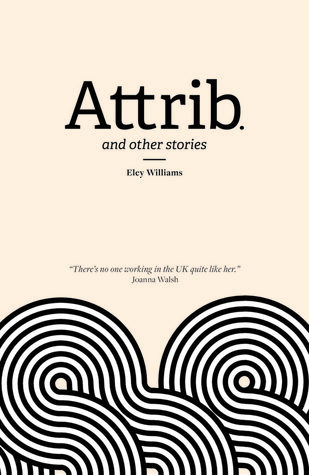
Crazy in love with words: Attrib. by Eley Williams

Many year-end lists, especially those with an eye to the world of indie publishing, have been abuzz with praise for the linguistic gymnastics of Eley Williams and her debut collection Attrib. and Other Stories. And rightly so. Even those readers who might be strangers to experimental fiction have found themselves captivated by the slippery, dazzling wordplay on display. This book—which I read with this month’s Guardian Reading Group, a forum I’ve scarce had time for in recent years but where I probably first learned to analyze, articulate and defend my response to literary works—is certainly a highly entertaining, intelligent, tightly crafted foray into a slightly surreal space where words have a weight and reality that seems to hang in the air, creating the ground for an unusual assortment of narratives.

However, as one might expect, some stories are more effective than others, and though each reader is likely to measure impact differently, I couldn’t help feeling that the whole was somewhat more than the sum of its parts. This is a book well worth experiencing, but one might wonder where Williams could take this type of wordplay from here. Could it be expanded to novel length or does she have her sights on other literary visions? Fortunately, as Reading Group participants, we were able to pose our questions to her yesterday, and rather than rehash that discussion here, I would suggest anyone interested in getting a sense of the exuberance and energy that virtually bounces off the pages of Attrib., to have a glance at the webchat —the same spirit and charm comes through in her responses.

The stories that comprise Attrib. find their origins in the simplest ideas. In the most basic pieces, dictionary definitions and wordplay spark clever scenarios; in the more substantial offerings, her protagonists have odd occupations, want to express how they feel but lose themselves in microscopic self-inspection, or are beset by strange psychological afflictions. Somehow Williams manages to have fun and touch at real anxieties and emotions at the same time, even in the most curious tales.

Her gift for juggling words is evident from the opening entry, “The Alphabet,” artfully subtitled: “(or Love Letters or Writing Love Letters, Before I Forget How To Use Them or These Miserable Loops Look So Much Better On Paper Than In Practice)”. Here the narrator is dealing with a progressive form of aphasia, trying to hang on to her ability to use language as it erodes and, along with it, her relationship:

The plot, yes—the condition of its being lost. I have a great deal of nostalgia for having the plot and a full vocabulary. Both have been lost gradually along with the—what is it—marbles. My marbles, specifically. We have come to specific marbles. I have lost it, I have lost my marbles and I have lost the plot—the Holy Trinity of losing I have lost my faith in—wham bam thank you m’—ma—mate. Maybe the plot was connected with my marbles in some way. Maybe one plays marbles on a plot, plot being synonymous with pitch or field or court. I lost them all long ago is what’s important. Two weeks ago. You took my marbles and it with you and I appear to have mislaid the plot.

In my years working in brain injury, I encountered many people dealing with varying degrees of aphasia, and this bittersweet story captures beautifully, the spirit of losing one’s facility with language.

The title story, “Attrib.”, which, according to her Guardian Q&A was completed just before the manuscript of this collection was submitted, is a stand out—the magic of inspiration under pressure, perhaps? The narrator who has a hypersensitivity for sound, is Foley artist working to create incidental sounds for a soundtrack to accompany a gallery exhibition on Michelangelo which will feature reproductions of his major works. How exactly do you capture just the right sound to signify the Creation of Eve anyway? The theological and practical considerations that arise make for a most amusing dilemma.

While Williams shows herself capable of spinning the simplest idea into delightful yarn, one of my favourite pieces, “Bulk,” demonstrates her ability to orchestrate an eccentric cast to create a story with surprising depth of character. The narrator is a natural history museum employee who joins a collection of onlookers gathered around the carcass of a dead whale washed up on the shore. The protagonist, ostensibly the professional in the situation betrays a lack of confidence and unwillingness to take control that seems, more than anything, to reflect the smallness of humanity against the mass of the proud creature who has met such an unfortunate, undignified end:

‘I will touch it!’ declared the young woman suddenly with a renewed vigour and she slipped from her partner’s arm and ran in an arc out towards the head of the whale, picking out a route over the rocks with shoeless feet. There was an ungainliness about her small size next to the great bulk of the whale. There was an unbalance to the scene on the shoreline generally, as if a note was being sung off-key, or somewhere a pair of parentheses had been left unclosed.

Finally, the majority of the stories are first person narratives and in most cases, the gender of the narrator and, if relevant, the love interest is left unspecified. As a differently gendered reader I tend to be both gender sensitive and gender ambivalent. I like the openness that this approach allows in the reading, and I often prefer it to the awkwardness that sometimes comes through in cross-gendered narratives (authors writing from the opposite gender perspective), but whereas one can develop the personality of the narrator in a short space, the “you” addressed in the more romantically themed pieces can reduce the potential emotional depth of the situations. It is even more challenging when this kind of approach is extended over a longer format. This was the nature of the question I posed to Eley Williams in the chat (you can see it under my uncreative user name “jmschrei”). She responded that she left gender unspecified when she did not think it was crucial to the story but admitted:

I didn’t find writing ‘genderlessness’ a constraint, not wittingly anyway: I think for a reader confused acts of heroism don’t require specific or non-specific awareness of genitals.

Nice answer. I wish real life was more like that.

Attrib. and Other Storiesby Eley Williams is published by Influx Press.

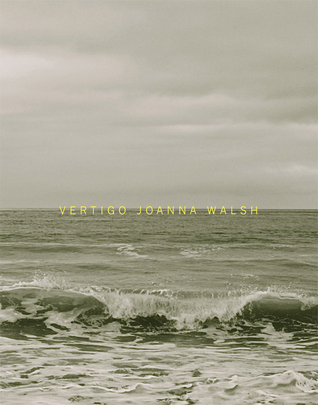
A delicate exposition of the everyday: Vertigo by Joanna Walsh

“New Year’s Day on the sofa. I folded my life in on itself, seven times. The last few folds only bent. I was surprised it was so bulky.”

The cover of the book is simple. Pale yellow lettering across the horizon that separates a gray sky from the gray waters below. Vertigo. Joanna Walsh. Inside fourteen stories, elemental evocations of a woman’s existence, from the gently dissected vantage point of early mid-life, rolling out, reflecting back on one another, like waves lapping up against the shore. Emerging from the waters as the book draws to close, it is difficult to find words to encapsulate the experience of encountering this work.

vertigoThroughout this spare collection, Walsh demonstrates a stunning ability to pinpoint the imperceptible, bring it to the surface and spin a story around it. Her narrators, who may or may not all be the same woman, perseverate, observe, double check and doubt themselves. They are acutely aware of their bodies: bodies that are aging. They are aware of their clothes, of how their clothes fit, how they arrange their legs, if the man at the next table has noticed their legs. They turn their focus inward to the very act of breathing – in, out, or barely breathing at all. They are mothers, they are wives, they are ex-wives, they are daughters. Perspectives shift, sometimes even within the frame of the same story.

“I say ‘you’. Of course I mean ‘me’.”

The title story, “Vertigo”, is the account of a family vacation. The narrator, her husband and children have travelled to an unnamed country to spend as little money as possible, time is the currency of the holiday. Vertigo, she tells us, is “the sense that if I fall I will fall not toward the earth but into space.” The drive up the mountain to their guesthouse with a drop off to one side of the road is the worst. During the day the family visits a tourist site, ruins where the temptation arises to remove a stone or even a piece of the rubble from the original structure. This stirs anxieties the woman recognizes as echoes of her mother rising through her and creating conflict with her own role now as mother to her children. Meditative, her thoughts roam with the sun drenched unanchored processing that we often fall into when removed from the routine of ordinary life. It feels as if Walsh has simply opened her hands to capture her character’s reflections and spilled them gently across the page. It is almost impossible to pinpoint how it works, but it does.

The minute attention to the inner moment, pared down to its most essential, is the quality that sets these stories apart. The conscious detachment of the self from the body of the mother waiting in the hospital while her son undergoes surgery in “The Children’s Ward” is especially poignant and will ring true for any parent who has placed their emotions on hold, not daring to think too much about possibilities, waiting, just waiting, distracting oneself with mind games when the brain will often not even distract itself with a book or magazine. Waiting for Charlotte (whoever Charlotte is, she does not know) to update her, the mother wonders:

“If Charlotte comes with her words comes to tell me it all went wrong how would my body know it? How long before the parts of my body realized, independently, that something was wrong and arrived, severally, at panic? Panic is still a thing. I have felt it before: each limb nerve organ coming into extreme alert unrelated to any other, ready for action, but who knows what action, as there is no action that could help here.”

Many pieces are very short, prose pieces rather than stories perhaps, each finely honed. The voices are wryly observant, tuned in to an inner monologue that mediates between the self and the self in the world. One becomes ensnared in the mesh of words, even in the simplest of stories. In “Relativity” a woman is traveling by bus to see her mother. She compares herself to her teenage daughter beside her and to the other women on the bus:

“Among other middle-aged women I don’t look too neat, and this pleases me.

I am dressed for, what? For anything that might happen to me: keep it coming! I’ve learned that it does. I am dressed for things that are not. I am not too sexy, not too casual, not too unassumingly unassuming. I do not look like I have made an effort, but I do look like I might have made an effort to look like I have not made an effort, which is only polite. And I will not fall over if required to run in my shoes.”

I don’t want to say too much about the individual stories here. They are best encountered on their own terms. This is a book that invites a slow reading. It is not long, or difficult. But you want to savour each piece. This is fiction infused with fine imagery, charged with an electric current, shockingly alive to new possibilities of rendering the mundane exquisite. If you are not watchful it could leave you with a sense of vertigo.

Or maybe that is the goal.

Vertigo is published by the Dorothy Project in North America. The UK edition will be released by And Other Stories in 2016.