For all the possible and impossible futures: Earthrise Stories Pasts Potentials Prophesies by Priya Sarukkai Chabria

Of late, concern for the environment has fallen out of fashion in much of the world. Where I live, and in any other regions, oil companies, and forestry and mining interests exercise an outsize influence on governments, especially in a world of global economic uncertainty, fueling resistance to monitoring greenhouse gas emissions, investing in clean energy projects or promoting electric vehicles. It’s suddenly become too expensive, too inefficient to worry about the future. Besides, many insist that climate change is a hoax. So by the time we really feel the heat, so to speak, it will be too late to act. What stories will we, or rather our ancestors, tell to make sense of the damage done?  Will it even matter?

For Indian poet and writer Priya Sarukkai Chabria, the fate of our planet is an ongoing and vital theme. She sees it as a question that arises in the myths and traditions of a distant past, swirls around the influence of technology and artificial intelligence shaping our present existence, and reaches far into the future where an unknown realm of possibilities can only be imagined. Yet, she is prepared to explore new ways of thinking about and envisioning what we have come from and where we may be going. Now a wide-ranging selection of her poignant and thought-provoking fictional imaginings have been gathered in her new book, Earthrise Stories: Pasts Potentials Prophesies.
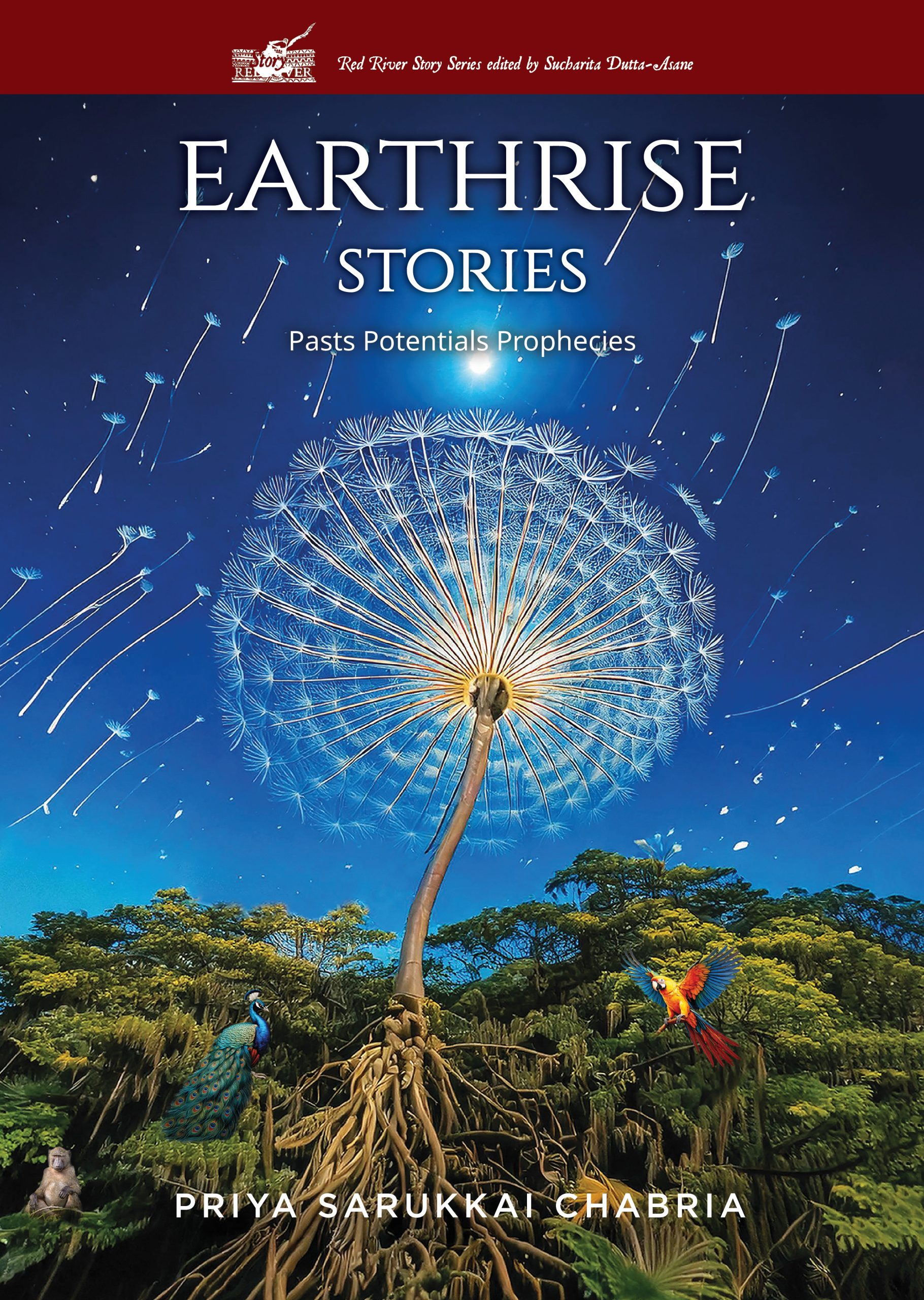
As a novelist and short story writer, Chabria has long sought expression through speculative fiction, typically with a strong Indian sensibility, and this collection highlights her strength in this genre, along with her distinct ability to flesh out the sensual intensity of her female protagonists, be they drawn from epic literature, or existing on a far distant timeline. But more than anything, these stories form a coherent project  in which the reality of climate degradation and what it means for the fate of the planet is a driving force. As she says in her Introduction:

I write stories of Earth, and some of the ways we could love her as she spins through our present dark time; the small gem of her seemingly weightless sphere spiraling through space, circling the sun like a prayer, sapphire and emerald as the eye of a dream, summoning tenderness.

Earthrise is divided into six sections, each one featuring a striking illustration by artist Gargi Sharma, and expanding in different spatial directions. “Past Re-Presented” is rooted in mythic times; “Now” searches for grounding in our ever-evolving present; “Ten Years from Now” turns to nonhuman life, natural and artificial; “In the Near Future” reaches deeper into the consequences for nature and a memory of humankind; “In the Far Future” contemplates the possible regeneration of a nearly dead planet; and, finally, “Prophesies that Come True” reintroduces a recognizably human narrator in in one story and offers a comet-focused cautionary tale in the other. Together, the eighteen stories that comprise this volume take the reader on a journey through time and space, marked by a  wide variety of shifting voices, styles, and tones.

The opening section re-animates tales drawn from Indian myth, legend, and literary tradition.  Characters like the celestial nymphs (aspara) Menaka and Urvaśī are realized as full-bodied sensual creatures rising above their passionate and tragic circumstances to set commonly accepted records straight. Episodes from the Mahabharata and the Ramayana are re-imagined with multi-dimensional, even cosmic, elements to at once reinforce their timelessness and set a foundation for many of the stories to follow.

The mood changes abruptly, however, as we enter the realm of the present day. The stories in “Now” are playful and inventive in style, but darkness and warnings lurk in their narrative themes. War, migration, economic turmoil, ecological devastation, and the increasing presence of robotic and artificial intelligence all feature here. There is even a lecture—or the draft of one—about the promises of a technologically driven future in one of my favourite pieces, “Cockaigne A Reappraisal (Draft) by Dr Indumati Jones (To be presented at UTIIMDS),” a text complete with the professor’s own personal notes to self:

With augmented AI inputs that analyse large amounts of financial data this sector is being steered towards making more predictive decisions in the stock market, and can tailor options to meet the investment patterns of specific financial firms. (Add examples. Quote sources?) On a lighter note, (smile here) Photoshop will be relegated to the past as in-camera devices will automatically correct flaws. Power outages like the one I’m currently experiencing will be out-dated — pun intended! — (smile here) as various AI driven units will be linked to a central intelligence system – as is already occurring in certain Smart Cities worldwide.

Dr Jones’s cynical optimism aside, the atmosphere that dominates the four stories in this section is ominous.

Ten years on, things are no better, flora and fauna are in serious decline (the author setting a fictional report in her hometown of Pune, even) and hopes that damages might be undone are outsourced to the services of a LoveBot  who can customize a dream, but has no power to make it come true. Moving on, further into the future, the Eco-Lit exam that makes up the content of one of the stories of the next section, leaves no question about ecological outcomes, but the prose in other tales becomes more poetic, dream-driven and, in one story, “The Princess: A Parable,”  folkloric. But the hard reality of the potential fate (or fates) of the Earth and the life she once sustained cannot be denied.

Yet, this is where Chabria’s stories of Earth take a detour from the classic dystopian formula. Although she leaves no question about the destructive tendencies of man and the fragility of life on our planet, when we reach the far distant future, there is the hint of a utopian possibility, however unlikely (and unlike anything we have ever known) that might be. In the two penultimate stories, she envisions variations on a world where life at its most fundamental cellular level has been preserved, integrated with novel notions of consciousness, historical awareness, and the means to reproduce or self-evolve. In this sort of speculative realm, the poetic, passionate energy that fills Chabria’s female protagonists charges her post-human narrators. “Paused,” for instance, imagines a planet where proto or potential lifeforms that can decide how they wish to evolve. But it is a lonely existence, and evolving is a process fraught with challenges. After an aborted attempt, her narrator retreats in a panic:

I trigger TEMP TORPOR in myself. It causes shuddering standstill of all activities. Cessation shocks my systems. Quieten down, please, down. Alarm still volcanoes. Shuush, shuuhh. Quieten to hill size. Rolling boulders. Be still, shuush. Become pebble size. Still, be still. Be spore. Be a drop of silence, a bead of spreading stillness. My systems slow, calm. I’m sliding into deep sleep; almost a hibernating pod again. Scan the damage. I must create low energy compounds to coat the membrane till it can sustain survival. I’m barely born but must manage so much!

Clearly, earthly recovery will be a slow and painful, but re-birth, in this scenario, could be intentional, not accidental. What then?

Earthrise presents many questions, and offers no clear solutions (except, of course, the ones we’re already boldly ignoring). Yet, in drawing on such a vast array of inspirations, from mythology, history, science—natural, physical, ecological— and, of course, poetry, Chabria has crafted a collection that values life, all life, not just the hair-covered, supposedly “Wise Ones.” It is sad and hopeful—a warning, a promise, and a prayer.

Earthrise Stories: Pasts Potentials Prophesies by Priya Sarukkai Chabria is published by Red River Story. (Available worldwide through Amazon.)
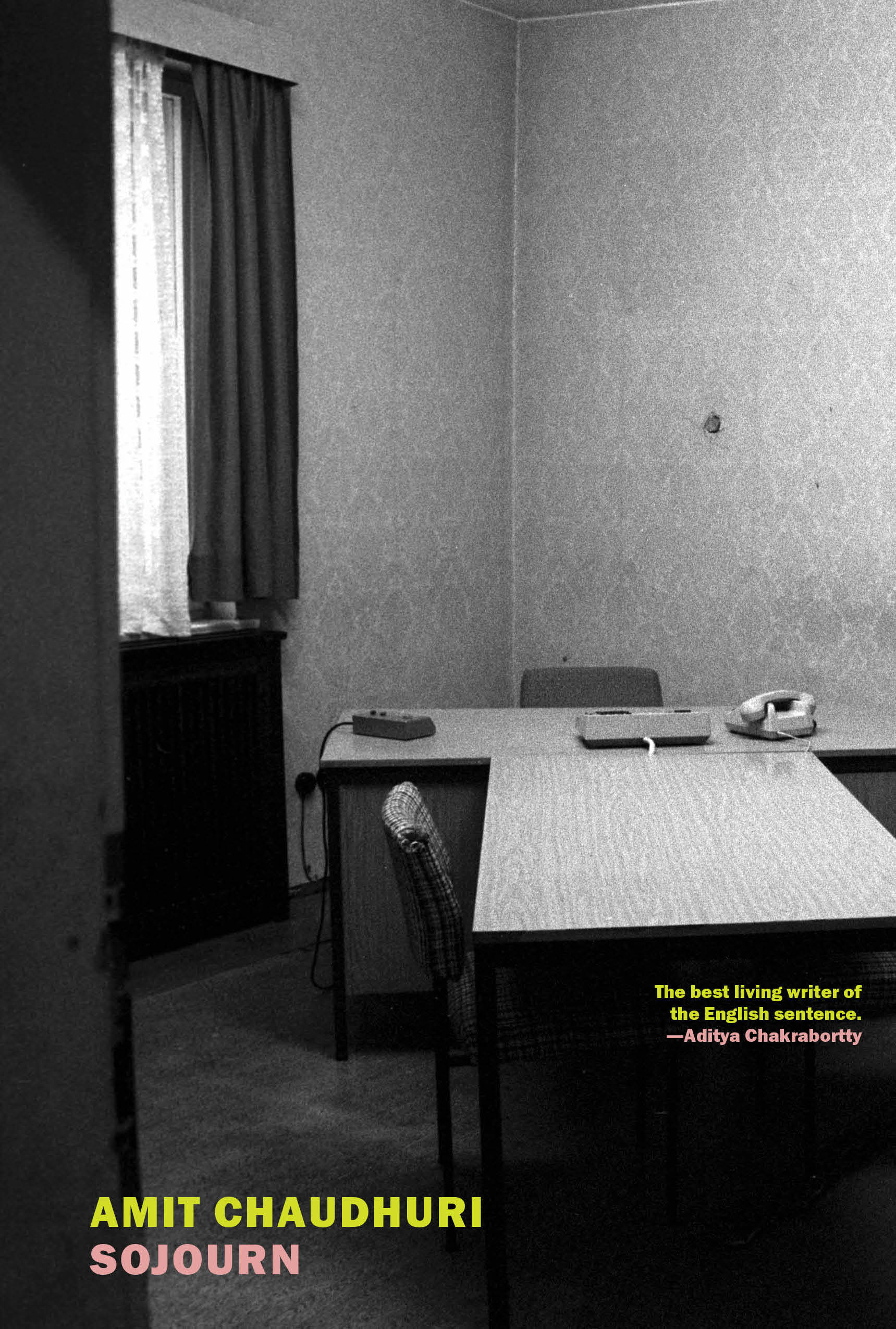
“Most of the things you ‘recognise’ you’ve never seen before” Sojourn by Amit Chaudhuri

From the opening passages of Amit Chaudhuri’s quiet, lugubrious novella Sojourn, one can already sense that his unnamed narrator, an Indian writer on a four month visiting professorship in Berlin, is slightly out of sync with the world around him, but it’s not clear if it’s simply the strangeness of his environment or some unease he carries with him. It’s not even his first visit to the city, but little seems familiar. He constantly requires directions and gets lost easily. There is, however, a subtle tension running through this lowkey narrative that gradually builds into something more disorienting in this portrait of a man’s shifting relationship to time and place as he enters mid-life.

The year is 2004, fifteen years after the fall of the Wall, but its shadow persists; former demarcation lines and vast areas not yet cleansed of their link to a dark past remain. Residents are inclined to point them out to visitors as if sharing the city’s history with a certain wistfulness, while the narrator tends to react to these spaces as if they hold a connection to an interruption of time in a city that now, after reunification, is still finding its footing.

At his first official function, just days after arriving, our protagonist meets Farqul, the self-styled Bangladeshi poet who appoints himself as his guide and guardian during the early weeks of his stay. Their conversations are peppered with snatches of Bangla. A journalist with Deutsche Welle, Farqul is an elusive yet ubiquitous figure—or perhaps, furtive, as the narrator speculates on their first encounter—who is a well-known exile and appears to be well-liked among members of Berlin’s immigrant community. He had emigrated to Germany in 1977, two years after being kicked out of Bangladesh for writing a blasphemous poem. Prior to leaving India he had spent a rather fractious interlude among the literati in Calcutta where he met and was apparently aided in his move to Berlin by none other than Gunther Grass. (The narrator simply conveys this information without question.) He is a generous, if eccentric, host. He not only shows the narrator around, but helps him get outfitted for the coming cold weather.

Farqul – in the excitement of being in your company – was a man who liked to share. He gave you food; he stood next to you in solidarity when you tried on jackets; he would have shared cigarettes and his flat if I’d been a smoker or needed a room; he might offer his woman. He didn’t create a boundary round himself, saying, ‘This is mine; not yours.’ As long as he was with you he was in a state of transport.

Yet when Farqul suddenly disappears without notice, the narrator flounders a little. Most of the acquaintances he makes through the university remain casual, but he does have the hint of an affair with a German woman who unexpectedly reaches out to him after having attended his inaugural lecture. She tells him she loves India (“I’m wary of Europeans who ‘love’ India – an old neurosis”) and their liaison, for what it’s worth, develops rather uncertainly. The narrator is often uneasy; he seems to be unwilling to exercise any agency. Rather, he tends to drift without commitment. As a result, those who come into his life with whom he may have grounds for connection—social, academic, romantic—have to be persistent if any kind of relationship is going to develop.

He also, for some reason, maintains a distance from the German language. His housekeeper speaks no English and the simple German phrases she uses with him he claims to understand only through her accompanying gestures. He seems content to exist in the city without being able to interpret the conversations around him—to revel in the meaning conveyed by the music of the language rather than its vocabulary or grammar:

They go on about the rebarbative sound German makes, but individual words and names have greater beauty – more history – than English can carry. I entered Hackescher Markt in my mind’s eye five or ten minutes before reaching there. ‘Friedrichstrasse’ had come up in a dream recently, as a port of arrival. Kristallnacht was transparent, broken. I woke up to words and didn’t bother with the language.

Certainly his sojourn in the city is necessarily brief, but his passivity is notable, as is his unwillingness to acknowledge how unmoored he is. That is, until he begins to become disoriented and experience blackouts. The narrative becomes more fragmented as he  loses himself navigating an unfolding layout of streets and network of train stations:

The trains emanate sorrow. Not like humans. The humans, in fact, are distracted and impatient. The trains aren’t alive in the way we understand the word. But they feel.

Domination of steel: steel smoke, steel sky.

This book has an intentionally unfinished feel owing to the fact that the narrator’s own mental state seems to be unravelling as his time in the city nears an end. We learn little about his earlier life because he admittedly feels disconnected from it himself, making for a mysterious, yet beautifully written tale of one man’s estranged sojourn in Berlin.

Sojourn by Amit Chaudhuri is published by New York Review Books.

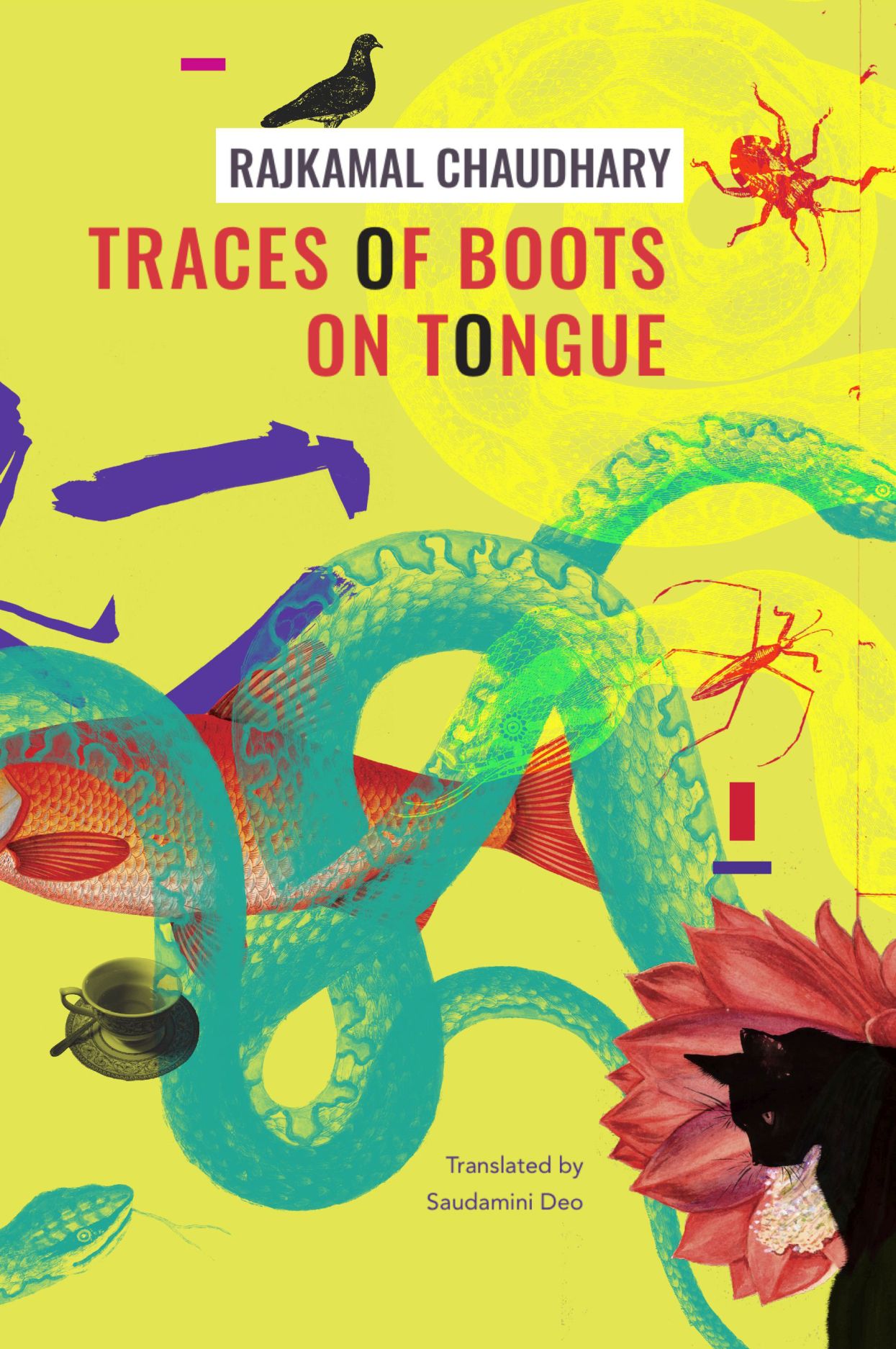
Snakes and ladders: Traces of Boots on Tongue and Other Stories by Rajkamal Chaudhary

There is a deep darkness in all directions, and we are sitting on the naked floor, awaiting light. When will the light come? Dipu unwraps the sheet from her body and lays it on the ground. She feels along the wall and keeps the bottle and the glass in a corner. Then asks—Who else is here? Chandravati, are you here? Nothing is visible in the dark. Not even one’s limbs. And in this darkness, Dipu’s voice shimmers like a white silver sword—Why don’t you say something? The sounds from here can’t be heard upstairs. And by now the owner must have paid off the police. Now why are you scared? Why not say something? Who else is here?

(from “Some People in a Burning House”)

A police raid has sent an assortment of women and their customers—a salesman, a student, an engineer, an old man—to the cold, bare basement of a brothel. By matchlight they try to sort out their situation. And then they realize, it’s not a raid but a fire. The building is aflame and no one knows what might be happening upstairs.

Welcome to the world of Rajkamal Chaudhary. This world is one that is in transition. The mid-twentieth century is a time of upheaval. The aftermath of World War Two sees the Cold War, and various conflicts and revolutions on the rise. In India, the newly independent nation is trying to define itself after the end of British colonial rule. Following a long struggle for freedom and the disruption of Partition, there is displacement, dissolution, and wide-spread poverty. The future looks less certain and less rosy than that which might have been imagined. Chaudhary, as perhaps the first avant-garde Hindi-language writer, drew inspiration directly from this unstable period, and, eschewing the moralistic literary traditions, painted a vivid, often vulgar, portrait of his time.

Born in northern Bihar in 1929, Chaudhary had strict religious upbringing, but his childhood was marked by the death of his mother when he was young, and his father’s subsequent remarriage to woman close to his own age. After high school he moved to Patna to attend college where he eventually graduated with a degree in Commerce, but by then he was already drawn to literary pursuits. His earliest works, poetry and prose, were published in Maithili, but Hindi soon proved a more productive and lucrative language. Much of his Hindi work was produced during the six years he lived in Calcutta in the late fifties and early sixties where he also came into contact with the young avant-garde poets of the Hungryalist movement. When he died in 1967, at the age of thirty-seven, he had written eleven novels, seven short story collections and hundreds of poems in Hindi and Maithili. Twelve of his Hindi stories are gathered in the collection Traces of Boots on Tongue, published last year by Seagull Books. In her Introduction, translator Saudamini Deo writes of his idiosyncratic style:

The stories in this collection are montages, flashes, almost documentary-like glimpses of the past that no longer feels like the past. Much like the novelle vague cinema that broke down boundaries between realty and fiction, Chaudhary’s stories seem to reject the characteristic formality of earlier Hindi literature and embrace a newer, more modern cadence of a world where there is no longer either god or morality, not even the desire for it. He is a writer writing not in a closed room but on the streets, in plein-air.

These stories are populated with unsettled individuals from all social classes, disillusioned artists and writers, unhappy husbands and wives, angry widows and widowers, lost madmen and madwomen. And a curious abundance of snakes, real and allegorical. As a man whose adult life was characterized by complicated relationships with women—two marriages and multiple affairs—Chaudhary tackled sex and sexuality with an openness that was unconventional for his times, to say the least. Some of that is reflected in the selections here, such as “Sisters-in-law” in which one of two women, widowed young, who support themselves servicing their local community’s healthy supply of “rascals,” has an disturbing experience. In another story, a boy befriends an effeminate classmate and finds himself in the terrifying clutches of his sexually aggressive mother.

Anger, bitterness, and anxiety fuel many of his characters and their interactions. Others are lost and confused, often struggling with reality, be it due to illness or intoxication. In “Veni Sanhar,” a young second wife and new mother, recently recovered from typhoid, suffers from periodic hallucinations. While her older husband attends to his business indoors, the servant and her stepson try to look after her and the baby. “Warriors Don’t Worry About the Right Time,” revolves around a man who insists he sees his dead wife coming to the well. His is a refusal to accept the truth, a refusal to move on:

Uncle spends his time on the veranda, and in the evening, after drinking bhang, reflects on what has and has not happened. There is no worry about the present. There is no hope or wish to turn or shape the present to one’s will. Stories and tales about what has passed please the mind. What has passed was better, appropriate, preferable. And, by thinking about what has not passed, the present remains forgotten and lost.

Some of Chaudhary’s stories are gritty, others melancholy. The shorter tales are more likely to have more internal coherence, but the longer, more intricate ones tend to unfold slowly through film-like scenes and vignettes. What is happening is not always immediately clear, and the endings hang in the air. One of the most intricate stories, “Like a Wall of Glass,” features a commercial artist, Kapoor, who wishes to transcend the constraints of money and produce a true work of art. He has his heart set on painting the wife of a well-known folk-art specialist—a man intent on preserving the past glories of Indian culture—but his inspiration personal is the abstract modernist Henry Moore. Yet, he realizes the absurdity of his ambitions:

Art! Culture! Creation! Expression! Beauty! How pointless and futile these words have become! But then, what possesses meaning after all? Money? An evening with a woman? Falling ill? Going mad? Committing suicide after writing a letter to friends? What is truth? What is sin? What is man himself? Morality? The point of life? The point of creation? What is man himself? Why doesn’t he die? Then, again, Kapoor starts smiling at the emptiness of his questions.

The anxious artist swings from confidence to disappointment and back as he pursues his goal. But even producing a brilliant painting, an ideal work of art, cannot achieve whatever he thinks he might be aiming for.

Chaudhary’s particular vivid, if often uncomfortable, portrayal of mid-twentieth century India in flux had trouble finding an audience outside of the literary journals of his day as it was deemed too indecent and immoral for the literary mainstream. Now that a selection of his stories is finally available in English, his work may well surprise and appeal to contemporary readers comfortable with more unconventional or less structured narratives. His characters and the situations in which they find themselves are troubled with unanswered questions that are still valid in our own volatile world. But understand that his stories, like life itself, offer no easy solutions.

Traces of Boots on Tongue and Other Stories by Rajkamal Chaudhary is translated from the Hindi by Saudamini Deo and published by Seagull Books.

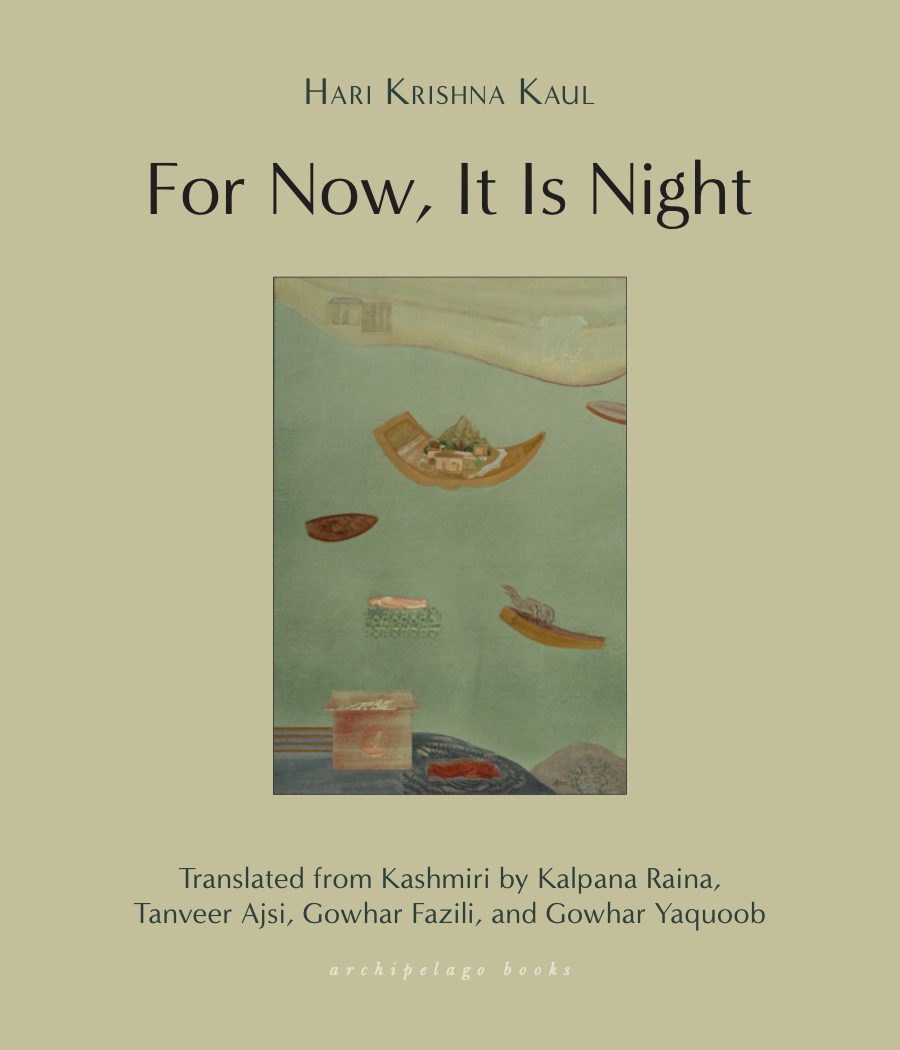
Casting light on a fading world: For Now, It Is Night by Hari Krishna Kaul

It was so cold! I felt as if I were sleeping on ice. It was a large room and there were three of us in it. The windows were shut but they were without panes. Outside, it was raining heavily and the strong winds from the Pir Panjal came in gusts. The wind, this biting cold of Banihal, blew strongly through the room of the tourist hostel. Despite being indoors, it was as if we were sleeping outside.

Thus opens the title story of For Now, It Is Night, a collection of short stories drawn from across the career of Kashmiri writer Hari Krishna Kaul. In less than six pages, this tale of three travellers, strangers before they find themselves sharing a room on a stormy night after their bus driver decided it was too late and, perhaps, too dangerous to attempt to cross the Banipal Pass of the Pir Panjal range of the lower Himalya. One man is decidedly unhappy with the delay, the other almost mystically inured to the biting cold, while the restless protagonist finds himself questioning reality as the night drags on. It is a simple story that deftly conveys the cold, the discomfort, and the loneliness of three stranded souls unable to find even the slightest comfort in one another’s company. It is the perfect distillation of Kaul’s ability to capture the complicated dynamics that bind and divide individuals, on both an intimate and a wider community level.

Born in Kashmir in 1934, Kaul spent most of his life in his homeland where he taught Hindi literature until 1990, when he was forced to join the exodus of Hindu Kashmiris from the region. He settled in Delhi where he lived, in exile, until his death in 2009. His work captures the details of Hindu Kashmiri life in old-town Srinagar during the last decades of the twentieth century, as well as the shifting socio-political tensions of the time. Over his lifetime, he published short stories, a novel and many plays for radio and television. For Now, It Is Night draws from all of his story collections, the first two published in 1972 and 1985, respectively and the latter published in 1996 and 2001, following his relocation to Delhi. However, what makes this selection of his work especially valuable and unique, lies in the combined effort of a team of translators.

As his niece, Kalpana Raina, describes in her Introduction, she had long heard of her uncle’s importance in modern Kashmiri literature, but until she had her father read some his stories to her—she could speak the language but not read it—she did not appreciate his eye for detail or empathy for his characters, their settings and their predicaments:

This was the world he had grown up in and his ambivalent relationship with it is quite clear in the forewords he wrote to his four collections of short stories. The are no grand themes in Kaul’s work, but an exploration and ultimately an acceptance of human limitations. He used his personal experiences to explore universal themes of isolation, individual and collective alienation, and the shifting circumstances of a community that went on to experience a significant loss of homeland, culture, and ultimately language.

Raina hoped that fresh new translations of her uncle’s stories might bring renewed attention to his work, and to that end, she recruited three young scholars and writers who could read Kashmiri and the Nastaliq script to collaborate with her on this project. They encountered unexpected challenges, first tracking down original manuscripts which were often not in the best condition, and then later with the more recent political upheavals in Kashmir and the pandemic. Despite the roadblocks, the final product is the result of a close engagement between four translators, “all native Kashmiri speakers, but representing a diversity of gender, age, experiences, and religious identity,” each bringing an important perspective and background.

The stories gathered in For Now, It Is Night, vary from domestic dramas, to surreal fables, to explorations of the uneasy relationships between Hindus and Muslims and between those of differing social standing. The narrators and protagonists often reveal much through their bluster and denial than what they openly admit to. In the opening story, “Sunshine,” for instance, the only one with a strong female character at its centre, Poshkuj arrives in Delhi to stay with younger son and his wife, certain that she has finally entered warmth and civilization. She has nothing good to say about her other son and “that fishwife,” but her bitter asides also reveal that she is put out and disturbed by her young daughter-in-law’s open-mindedness and rejection of Kashmiri social niceties. She is unable to comprehend the size of the city, its strangely quiet neighbourhoods, or the shocking mention of “Pakistan.” In fact the only thing she fully embraces is the sunshine, the glorious sunshine:

One could die for this sunshine. This is truly the only worthwhile thing in Delhi. She raised her sari slightly and scratched her right leg. She looked at her chapped skin and cursed the cold of Kashmir that was so hard on one’s hands and feet. Reflecting on the weather, she remembered her grandson, Bittĕ. Poor boy! How miserable he is, with his chilblains. How many times I told that monster mother of his that her son’s feet needed attention. Make sure he wears socks and fur-lined shoes, I said. But would that woman listen to me? Of course, fur-lined shoes are expensive and Gasha barely manages to get by. He doesn’t even have an overcoat for himself and shivers in the cold. She sighed. It’s all a matter of one’s fate.

The eighteen stories that comprise this collection demonstrate Kaul’s ability to craft a moving tale with vivid characters, caught up in events or circumstances that continually surprise and engage his reader. Some fall on the side of the fantastic like “Tomorrow—A Never-Ending Story” about two school boys who shirk their commitment to learning their times tables with such determination that they end up trapped in time, endlessly repeating Class IV while the rest of their classmates and peers grow up and move on with their lives, or “The Tongue and the Egg,” a bizarre fable in which two officers are charged with facilitating the collection of six million eggs, searching and even torturing or killing those thought to be hiding eggs, all for a bizarre purpose. Others begin on an eccentric note before taking a sharp emotional turn, such as “The Mourners” wherein two whimsically named young men, Tarzan and Doctor are called to assist with the funeral rites of their friend Pedro whose mother has just died. The subtle dynamics that bind fathers and sons, husbands and wives, and grandmothers and grandsons are teased out in stories that, more often than not, speak to the loneliness and isolation within families, heightened when distance pulls generations apart.

Kalpana Raina tells us that the selection of the stories in this collection was made with input from a small group of Kaul’s contemporaries and some younger students. The stories were then recorded in an effort to engage members of her family and the extended diaspora who could not read the script. That, together with the involvement of four translators, two of whom have contributed additional Notes, gives this volume a range and depth that truly honours Kaul’s contribution to Kashmiri literature and makes it accessible to a new generation of English language readers.

For Now, It Is Night by Hari Krishna Kaul is translated from the Kashmiri by Kalpana Raina, Tanveer Ajsi, Gowhar Fazili, and Gowhar Yaqoob, and published by Archipelago Books.

And something went terribly wrong: Truth/Untruth by Mahasweta Devi

Arjun Chakravarty has everything under control. As a successful contractor, skilled in the necessary art of greasing the right palms, business is booming, and finally, after ten years of marriage he and his wife are expecting their first child. Kolkata in the 1980s is booming. A determined project of gentrification is underway; everywhere high-rise buildings are sprouting up, even in neighbourhoods long considered derelict and undesirable. Like Khidirpur, a well-known den of crime and smuggling. Denying the odds, towering housing societies boasting spacious flats equipped with all the latest appliances stand proud, like Barnamala where our unfortunate hero resides and the setting of Bengali writer Mahasweta Devi’s Truth/Untruth.

A self-named man, Arjun came into the world as Sanatan Pushilal. But Sanatan was a moniker unworthy of the man he wanted to be. Orphaned young and impoverished, his uncle found him student lodgings with a noted karibaj, an Ayurvedic practitioner, and this fortunate placement was his first step toward a new identity. That is:

How Sanatan became Arjun. And how, erasing the past, Arjun slowly rode the lift of high aspirations all the way to the twelfth floor of society . . . all that is but ancient history now.

With his old landlord long gone, only his son Keshtokali, likewise a karibaj, knows the truth about Arjun’s past. Fortunately, even his wife Kumkum, the daughter of a retired Supreme Court judge, has no interest in either Ayurveda or her prosperous husband’s history. Yes, Arjun-babu has it made. Until something goes terribly wrong.

You see, his wife, now eight months pregnant, has been staying with her parents where she can be pampered and protected while she awaits the arrival of their precious bundle—at thirty-five no one wants to see anything go awry. Thus, left to his own devices, Arjun-babu has been able to indulge his passion for Jamuna, the pretty young maid who comes by daily to clean the flat. Imagine his dismay, then, when she arrives to inform him that she is pregnant with his child. Something must be done, he must make the problem go away. Jamuna’s own husband left when he lost his job, but she still believes he will return. Arjun will arrange for a proper doctor to take care of the unwanted pregnancy, pay her off and hope she leaves, but before he can see his plans through, he comes home to find her dead on the bed in his guestroom.

He knows he didn’t kill her, but he can’t exactly go to the police. If he had killed her, well, that would be a different matter. For the right amount of money the police could take care of anything. But, if word gets out that she was found in his flat, his reputation, his business, his wonderful life—all would be ruined. Even a rumour of murder would do him in; after all she would hardly be the first “murdered” maid to be found in his building . . . Ah, but Jamuna also worked in two other adjacent flats, one belonging to an old man named Desai and his crazy wife, the other owned by a tobacco company and cared for by Mohsin, a local Muslim man. Maybe Arjun could shift the blame, simply by moving the body.

This farcical and fast-paced thriller unfolds over little more than forty-eight hours, and features a cast of vibrant characters from the silly Kumkum and her over-protective family, to a host of servants and building staff, to petty thugs and mysterious “bosses.” The complicated power dynamics between the established rich, the nouveau riche and the slum dwellers who provide necessary labour and services, legal and otherwise, for the residents of the new buildings is clearly exposed. However, we observe most of these people indirectly, as the narrative is driven almost exclusively by dialogue and by the internal monologues of the central male figures—the three men in the building who directly or indirectly employed Jamuna. By this approach, Devi is able to reveal the very different natures of each of these individuals, but her primary attention falls on Arjun who is the most incredibly hollow and self-centred creature, continually twisting his line of reasoning into pretzels to absolve himself of the slightest responsibility for anything that has happened. Jamuna might be dead, but he is the real victim as far as he is concerned—everyone else is to blame.

Arjun divides the blame up in his mind. The astrologer is to blame, he’d never once warned him that bad times lay ahead. Keshtokali is to blame, he gave him such a stimulant that his mind was always full of . . . and Jamuna, isn’t she to blame too? Why did she have such a body, such a way of walking and talking?

He is, by turns, irritating, hilarious and tragic.

Mahasweta Devi (1926–2016) was one of India’s most prominent writers and  social activists. If somewhat different in tone from much of her more openly political, feminist work, her dry humour and ability to highlight insincerity and hypocrisy is in full play in this dark satire. Her prose is rich with insider street slang and allusions to popular movies and songs of the day (necessary references are explained in the endnotes). She is assuming a certain familiarity with the time and place she’s writing from, but is not concerned about making her more genteel readers work to sort through the common language many of her characters employ. In her afterword, translator Anjum Katyal acknowledges the challenges involved in trying to capture the different registers of spoken language—critical in a narrative so dependent on dialogue—without falling into unacceptably “twee” English variants. She does give Jamuna and her close friends a coarser and cruder vocabulary which contrasts nicely with the sometimes overly-affected language that Kumkum and her family use in private settings. Arjun, being the most eccentric and erratic of the cast, is granted a range of emotional expression from the obsessive to the absurd.

A rollicking urban tale, terrifically fun to read, Truth/Untruth blurs the line between murder, mystery and crime novel but from beginning to end, amid the tension and comic mishaps, it remains a sharp piece of social commentary.

Truth/Untruth by Mahasweta Devi is translated from the Bengali by Anjum Katyal and published by Seagull Books.

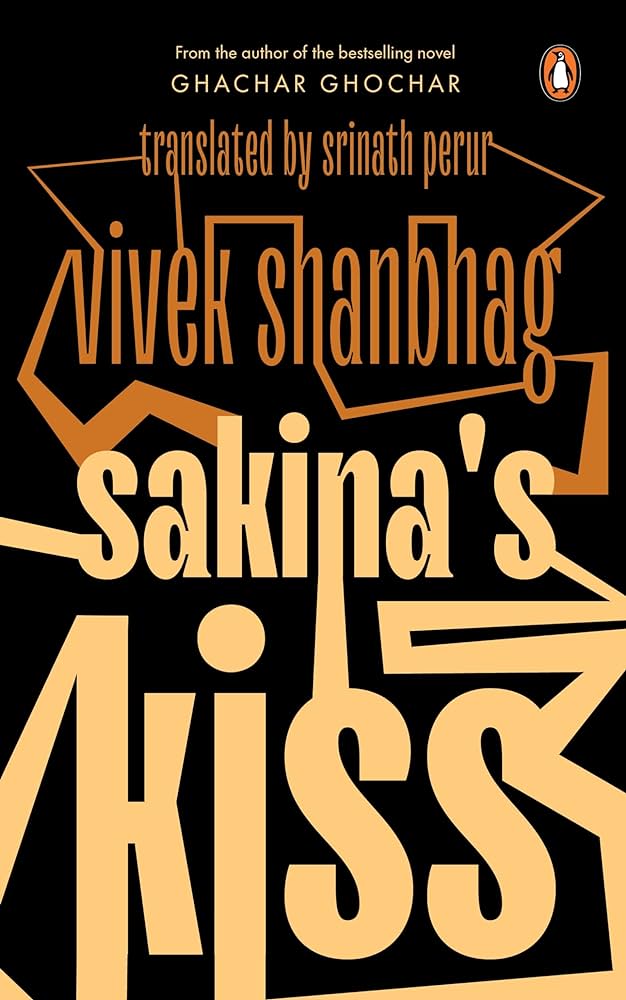
A knock at the door: Sakina’s Kiss by Vivek Shanbhag

Kannada author Vivek Shanbhag’s eagerly anticipated new novel opens with the statement: “There are no coincidences, only unseen chains of consequences.” It is a random quote that his middle-aged protagonist once scribbled down for future reference, accidently recovered during a search for something else altogether. Inspired by his finding, he rushes out to the kitchen to share it with his wife who is much too busy with dinner preparation to entertain his interruption. He is fully aware of this but intends to impose on her attention regardless when he is, in turn, interrupted by a knock at the door. That unexpected intrusion will mark the advent of a series of events that threaten to overturn Venkat’s comfortable complacency and not once over the following days will he heed the wisdom he was about to share with his wife on that fateful night.

As with Ghachar Ghochar, the widely acclaimed novella that, in English translation, introduced Shanbhag to a wide audience within and beyond India, Sakina’s Kiss also explores the impact of shifting dynamics within families, and is narrated by a man who is unable, perhaps unwilling, to understand the women in his life. But this time the cracks that threaten familial peace and security run along political, gendered, and generational fault lines and, although uncertain outside forces come into play, Shanbhag again resists any neat resolutions to the mysteries that arise.

Our hero is Venkat. Born and raised in a small rural community he comes to the big city somewhat conscious of his origins, and through his engineering studies and on into his career he works to cultivate the confident, sophisticated manner he wishes to project. He enters the workforce at a time when the necessity of dealing with foreign clients meant that offices tended to be places where Western styles and tastes were favoured and traditional Indian social factors such as caste advantages were publicly downplayed. When the insecure young manager happens to encounter a man whom he begins to see as a kind of secular guru, he is inspired to adopt a steady diet of self-help books as a roadmap to the life he hopes to craft for himself.

And, Venkat does achieve a respectable degree of professional and financial success but, as his narrative reveals, there is an underlying insecurity despite his expressed self-confidence. His wife, Viji, by contrast, appears to be the more rational, empathetic partner in their relationship even though we only see or hear her perspectives through Venkat’s report and, by the time this story opens, the couple has long since drifted into a rather distanced coexistence. When, early on, he launches into a rather detailed account of their arranged meeting, courtship and honeymoon, his descriptions are so oddly matter-of-fact and one-sided that it’s little wonder their marriage is strained decades later. She is also a successful professional and their combined incomes allowed them to purchase a decent two-bedroom apartment in Bengaluru where they still live with their adult child, a daughter who is now twenty-two and working toward an arts degree at university, much to her father’s dismay. He had, of course, favoured the sciences, but Rekha is a free-thinking, rather rebellious young woman. It is primarily around her that the troubling events at the heart of this novel revolve.

When two young men claiming to be friends of Rekha’s appear at the door desperate to reach her, Venkat explains that she is out in his home village, staying with her great uncle in a location where there is no landline or cell signal available and that they will have to wait until she calls to check in before their message can be passed on. The following day, a Sunday, the same young men return and when they receive the same response from Venkat, they leave and send in a couple of thugs to impress upon him the urgency of their need to contact his daughter. A strange story about two rival gangs, one led by the publisher of a sensational tabloid, the other led by the former owner of a poultry shop unfolds and somehow, in the middle of it, it appears that their sons are both smitten with Rekha who, curiously, is never mentioned by name. None of it makes any sense, but the messengers definitely look unsavoury. Neither Venkat nor Viji know what to make of it all, but when, on Monday, they learn that Rekha apparently left the village on the bus to Bengaluru on Saturday night, panic sets in.

Venkat’s narrative alternates between an ongoing account of current events and chapters that attempt to fill in the background, as he tries to explain and make sense of his marriage’s evolution, his daughter’s increasing radicalization, and the strange history of his politically active uncle Ramana. Buried family secrets and complicated levels of willful blindness and stubborn pride cloud his observations and limit his insight. He seems especially frightened of anyone who expresses individualistic or idealistic goals. For example, when Rekha becomes enamoured with the ideas her college English teacher espouses—“patriarchy, the myth of sexual purity, the shackles of marriage and so on”—Venkat responds defensively. Upon learning that this admired teacher secretly smokes on campus:

I began to criticize all smokers so I could ridicule him indirectly. I suppose I was trying to show that my contempt for Surendran was not without reason. This was a strange kind of envy. Or fear. Or something. Along with the feeling Rekha was escaping my orbit was the restlessness brought about by her infatuation with the words and ideas of this fool.

He makes a vain effort to expand his own world view to little avail. His fears only fuel his continued efforts to assert his role as the “man of the house.” This naturally causes his daughter to become even more defiant towards him while pushing her closer to her mother. That gulf only continues to grow.

There are many loose threads and potentially explosive elements in this novel, but with a narrator who is unable to step back and attempt to see the big picture, a number of “what ifs” remain just out of sight. Venkat comes close at times to wondering if he could or should have done something more with respect to the various dilemmas he has faced, yet, for all his self-help book consumption, a personal awakening eludes him. Even more critically, his fragile masculinity will not allow it. Unable to navigate a changing social and political terrain, he now finds himself excluded from his wife and daughter’s confidence and haplessly sliding into a potentially dangerous situation.

Sakina’s Kiss is, again like Ghachar Ghochar, a deceptively easy read with an unsettling undercurrent that leaves more questions than answers. Shanbhag excels at creating ordinary male characters who are unable or unwilling to fully appreciate shifting social dynamics or their role in them. As such, his narrators end up granting the women in their lives an insight that they are at a loss to understand. They find themselves in situations that are at once funny and tragic—how they will manage in the end is uncertain. In a way, his first two translated titles remind me of the work of South African writer Ivan Vladislavić who has perfected the myopic middle class male character who finds himself in over his head in a world that is changing around him.

Sakina’s Kiss by Vivek Shanbhag is translated from the Kannada by Srinath Perur and published by Penguin Random House India.

India update: Catching up with old friends, finally meeting others

Four years is a long time. Much has happened since I last visited this country. Since I last travelled anywhere as fate and pandemic would have it. Two-thirds into my stay and it feels like it has been a hectic time—not that I haven’t had free time, but I seem to find it hard to stay put on an empty day when a busy vibrant world awaits outside the door. And one doesn’t want to miss the chance to catch up with friends who are normally but a virtual prescience in one’s life. So, less reading and writing has been accomplished than I had anticipated to date.

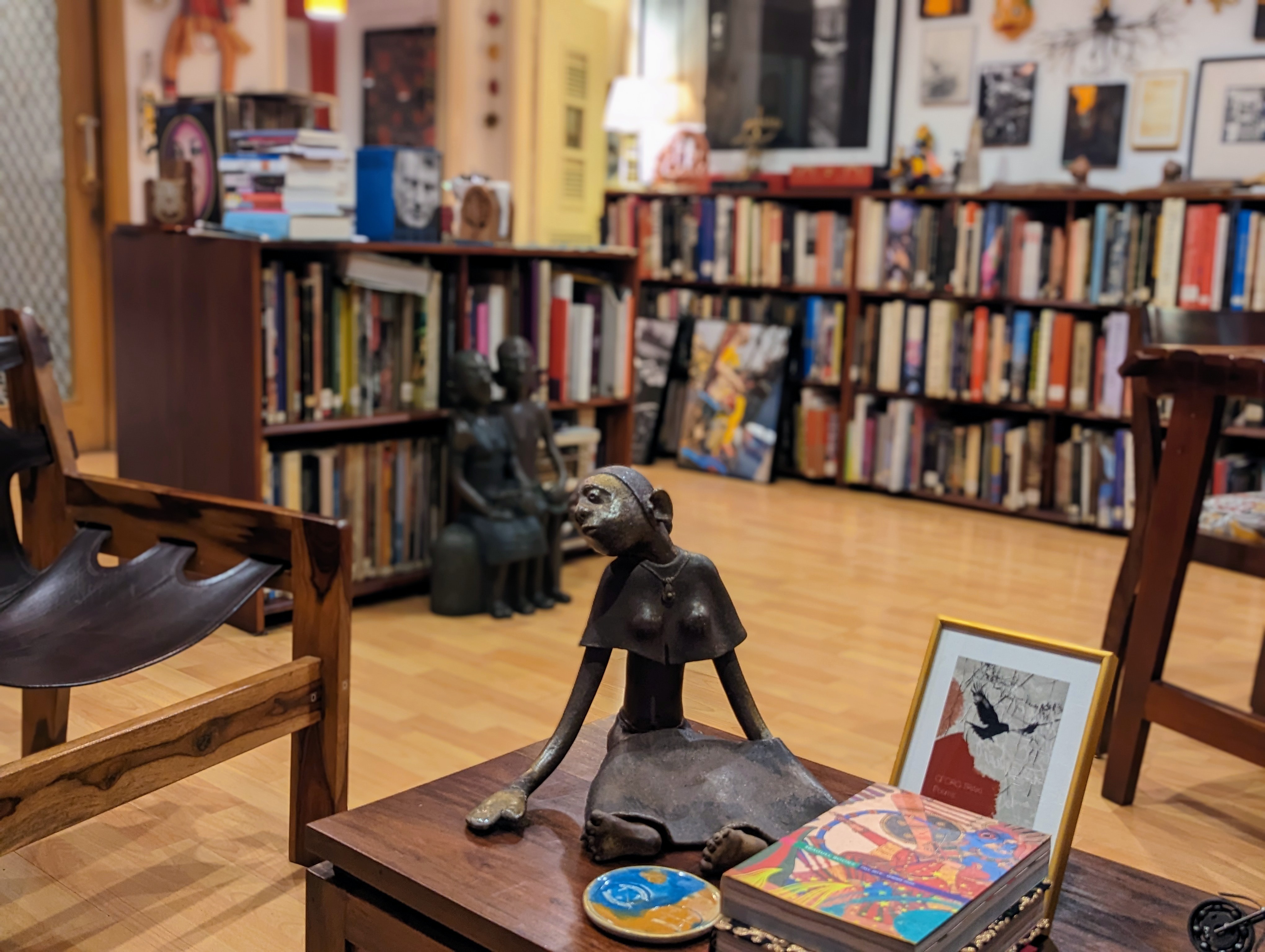
I started my trip in Bangalore, a city I will return to before flying home to stock up on books. Weight restrictions on internal flights have meant that if I buy books, I risk not being able to get to my next destination. It surprises me how just a few slim volumes will tip the scales! And it’s always a pleasure to spend time with my very dear friends here at either end of my India sojourn.

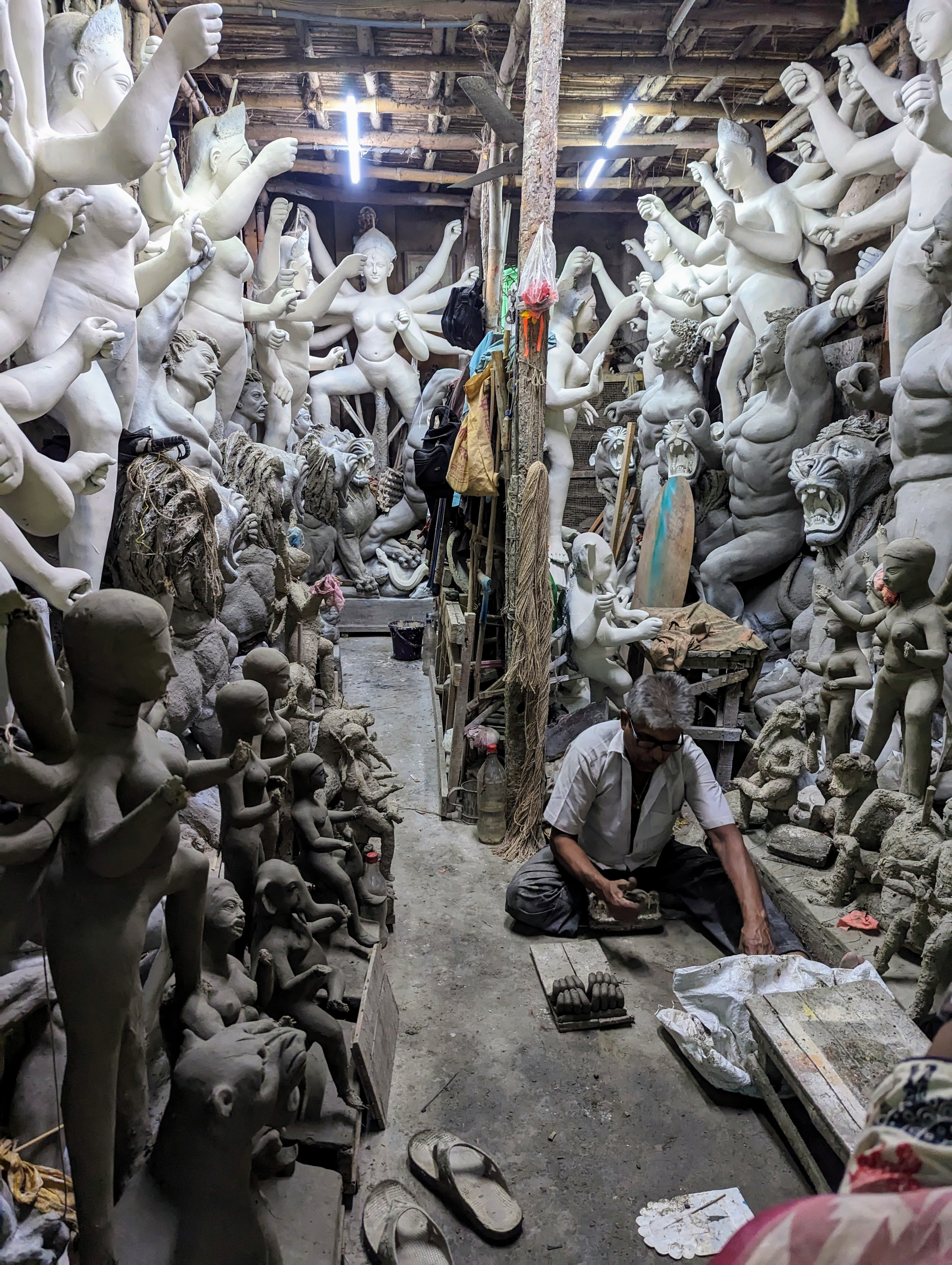
From Bangalore, I was off to the City of Joy, Calcutta or Kolkata, to the place (and the publisher) that first drew me to the subcontinent. Wet and humid beyond measure, it was my first visit outside the drier winter/spring months. But it was wonderful to see my dear friends at Seagull Books where I was able to play a small role in the creation of what will be another spectacular catalogue—this one tackling a vital theme for the times. I also had coffee with the couple who were my first tour guides in the city, this time meeting up with them in an area further south than I had been to date. I also made a pilgrimage to Kumartuli, the potters’ colony where craftsmen are busy making idols for the upcoming Durga Puja, Kolkata’s most important festival.

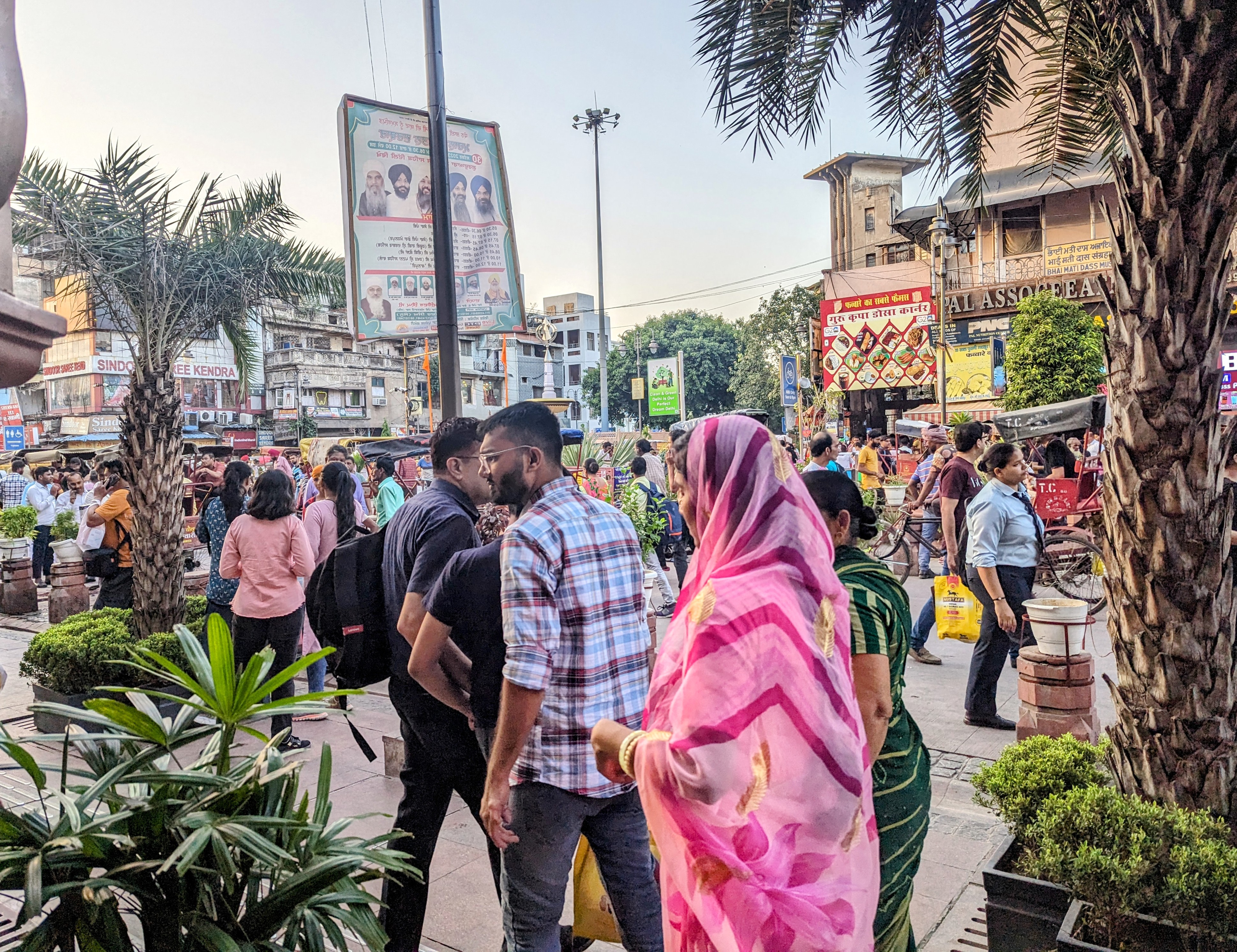
The next stop was Delhi, a short stay, but my first in the nation’s capital. I was met at the airport by a friend which was fortuitous because it proved difficult to get a cab willing to go into the congested area where I was staying. Subsequent forays in and out were facilitated by the Metro. On my first day in the city, the same friend escorted me to the university where he teaches and I gave a talk about writing book reviews. It was a very rewarding experience. The second day another friend took me into central Delhi where we had lunch, walked around, visited temples and enjoyed a most awesome lassi!

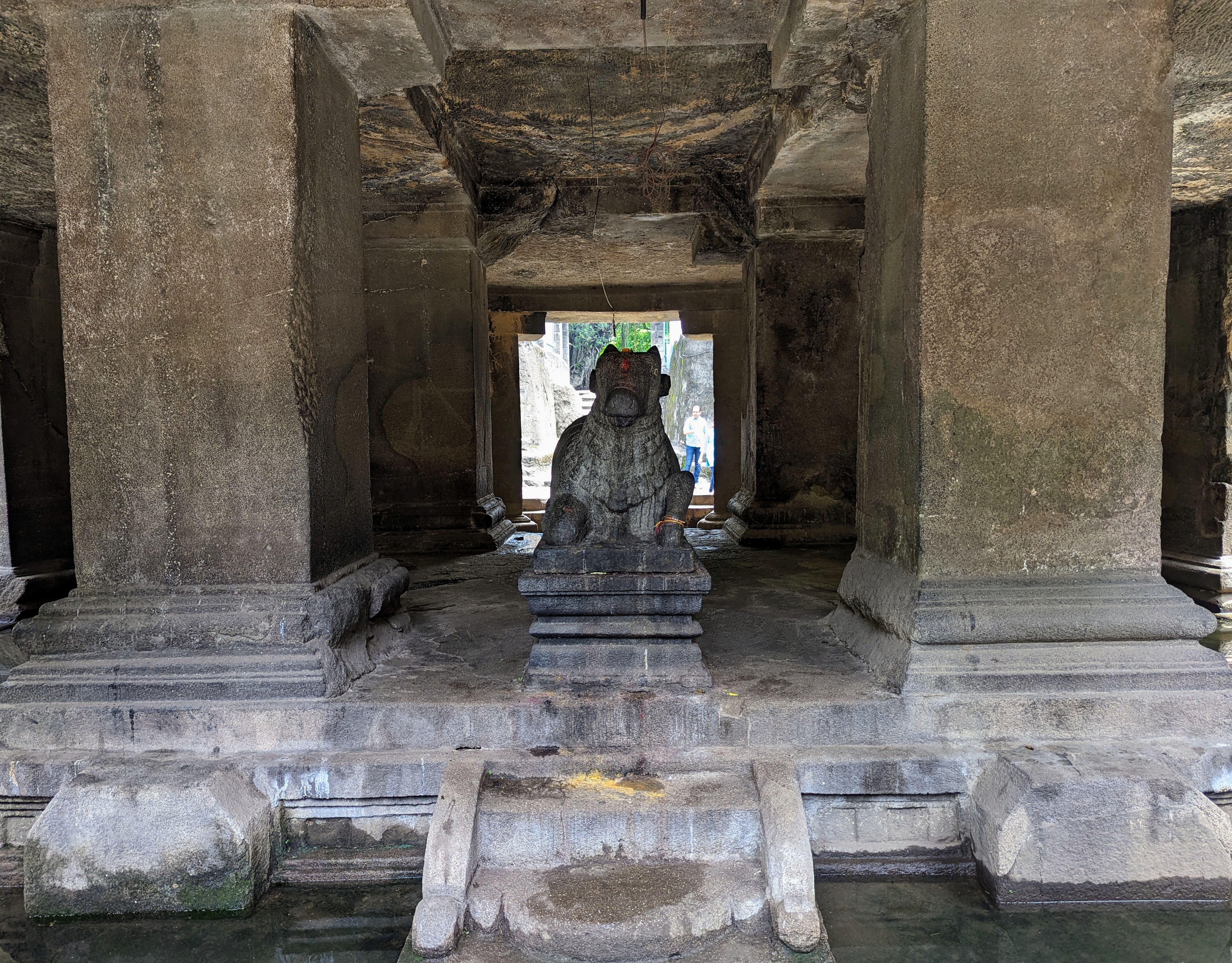
Then on to Pune, where I’m writing this on the final hour of my birthday. Here I caught up with dear literary friends and had a chance to finally meet someone whose friendship has offered solace during these long years of pandemic isolation. I also walked down to see the Pataleshwar Caves, the site of an eighth century Hindu temple carved out of the rock—a sanctuary within a busy city.

Tomorrow I fly to Mumbai for a brief stay then on to Jaipur where I hope to dry out a little after all the humidity of this extended wet season before returning to Bangalore. Whew!

It is good to be back in this hectic, vibrant country, even if I have arrived at a time of some diplomatic discord between my own country and India. I have never felt anything but welcome here.

Rain like this doesn’t wash away the filth: Hawa Hawa and Other Stories by Nabarun Bhattacharya

The gleaming wet road, the rusty tin roof of a motorcar repair garage, behind it an old paint-peeling stunned-still old house and a chimney precariously propped up with haphazard wires—the sky can see all this. And, not as clearly, the burnt-black tin-backed shops and buses and the in-between blocks of darkness that were Matador sheds and not the half-rotten bellies of fish but the shells of banged-up taxis. There were crumbling and dead accident cars too, their mouths full of dirt. The sky view mists over every now and then, for it has been raining continuously.

This is the setting of “Last Night,” one of the pieces in Hawa Hawa and Other Stories, the recently released collection of inventive short stories by Bengali writer Nabarun Bhattacharya. As the angry rain beats down on the trash-filled water logged street, two young men are fighting. They are unevenly matched, a condition mediated by sheer intoxication, but they are each intent on doing damage to the other. And in a very unexpected way they are also best friends.

Bhattacharya (1948-2014), the son of writer and activist Mahasweta Devi and actor and playwright Bijon Bhattacharya, worked as a journalist from 1971 to 1993, before turning his attention to writing fulltime. His magic realist tales tend to feature eccentric characters drawn from the shadows—dirty cops, nostalgic former revolutionaries, unsavoury figures and an assortment of anxious souls. His Calcutta is gritty, pungent, dark and unforgiving. The scenes that unfold, on these streets and beyond, range from sharp political and social satire to strange meditations on violence, madness and love. Set primarily in the 1970s and 80s, but reaching back as far as the 1940s, there are stories that play out against the early Communist-led peasant movements in West Bengal, the Naxalite uprising and the 1975 Emergency, as well as more intimate dramas set in family homes, trains and, of course, on the street.

Bhattacharya excels at creating memorable characters, and rapid, witty sequences of dialogue peppered with English words (indicated in the translation with the use of italics) and references to popular Indian films and songs. A number of his stories rely heavily on a steady back and forth between two people who happen to meet up and share some kind of common past or current circumstance. Others unfurl under surreal conditions, influenced by alcohol, madness or some impending fear. There is an immersive quality to these dark tales.

Take, for example, “Mole,” the story of a seemingly unrepentant cop with a patch of skin on his neck that begins to itch and become inflamed just before he murders someone—“murder” being an accepted language for the state-sanctioned killing his investigative role entails. The itch causes his restless right hand to fumble in his pants pocket where his pistol awaits. The sweat, the smells and the agitation grow. We follow him on a mission to a nightclub. Once the job is done he kicks at the corpse bouncing on the floor of the police van and emotionally decompresses as he returns to the station. A bleak and grim premise perhaps but for the banter in the office (with its water tank filled with bombs to be deactivated), the pointed parenthetical commentary on authorized violence, and the insatiable demons that haunt the protagonist:

Back home, he usually takes a bath, uses soap—puts some ointment on the itch—the sweat from his body and the dirty soap-lather swirl into the drain and disappear. He rubs scented oil on his hair. He is very sleepy, but sleep never comes without dreams. Dreams have eyes, they ask questions, they laugh, they beat on drums. Their limbs are ripped and shredded, bits and pieces bloody. His family has told him he sometimes talks in his sleep, groans, slurs out orders. Sometimes he scratches his back so furiously that he wakes up in the morning to find it bleeding.

There is a deeply embedded hallucinatory fear that follows him down the darkened Calcutta streets and adds a spark of troubled humanity to his situation.

Fear and superstition mark several of the tales, most tragically perhaps in “A Piece of Nylon Rope” in which two men meet outside a hospital on a rainy night. The narrator is there to look in on a colleague who had a stroke at the office, while the other is waiting for news of his son who suffered a serious football injury. The latter, Jagadish-babu, has a uncertain confidence despite the poor prognosis. He feels his fate has turned. He explains that he was already inclined to seeking fortune tellers and good luck charms when he learned that what he really needed was to get a piece of a hanging rope:

‘Hanging rope?’

‘Yes. Suppose someone hangs themselves to death. If you can get a piece of that rope and keep it with you, then boom!—whatever you want is yours. All the evil eyes on you, the vexing, the hexing—the whole fucking lot will vanish. Khoka’s injured so badly. But do you see any fear in me?’

Jagadish shows the narrator the length of nylon rope he has acquired and carries with him everywhere, but admits that the good fortune it promises comes with a steep price. He cannot be alone, for fear the suicide victim will return and demand the rope back. For a man with a trusted talisman, he is a nervous wreck.

Several of the stories in Hawa Hawa, including the title tale and “Mole,” highlight the brutality of the West Bengal police, while another demonstrates the inability of a newly elected politician to protect an old friend and revolutionary comrade. Elsewhere we meet a child with a cruel streak, the brother of an accused murderer who holds to his belief in his innocence, a businessman offering the perfect suicide—for a price—and a gangster who prophetically spends the evening with a headless prostitute. Inequality, injustice and the abuse of power are common themes driving the world that Battacharya wanted to bring to the surface through his darkly humorous, weirdly engaging fiction. And if his comfortable contemporary Bengali audience was disturbed by what they found in his work, he was hitting his mark.

Notably, this translation is the work of a young translator, Subha Prasad Sanyal, and his ability to bring Battacharya’s subversive and playful writing to life is impressive. He pays careful attention to rhythm and tone. As mentioned, the English words transliterated in the original Bengali text are italicized, yet many Bangla terms are left intact where context is sufficient to imply meaning, a choice that helps maintain a distinctive narrative feel. Meanwhile, any cultural, political and place references that enhance understanding are explained in the Translator’s Note.

Hawa Hawa by Nabarun Bhattacharya is translated by Subha Prasad Sanyal and published by Seagull Books.

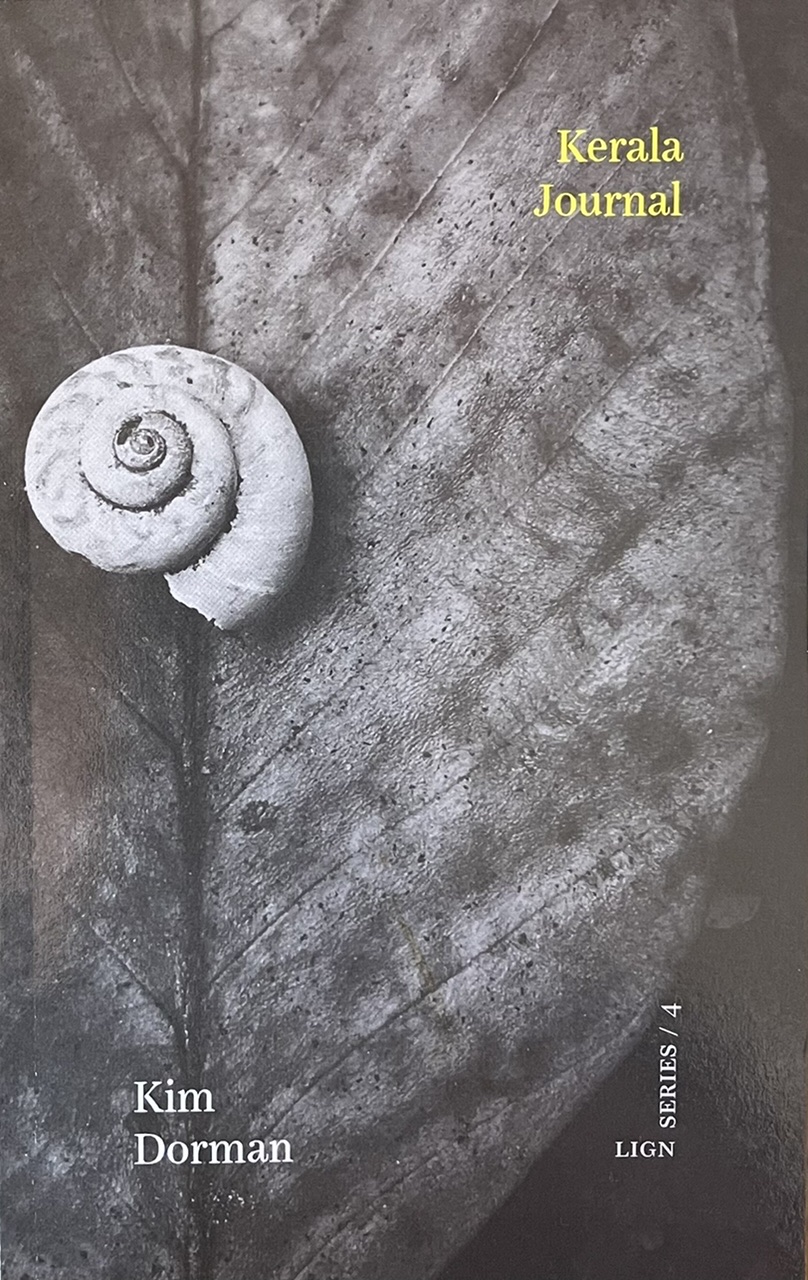
Some nights silver others pale gold: Kerala Journal by Kim Dorman

Rain drips on the
tin roof, frogs
& crickets chant.

The passing days
turn to years.

Lying awake in the
dark, I know the
taste of ash.

The images are simple, rendered with honesty and clarity. Darkness and light. Sound and silence.  Rituals of nature and moments in time.

American poet Kim Dorman was drawn to India as a child, and made his first visit to the country in 1976. He made several more journeys over the years until, after a long absence, he and his wife returned in 2019 to live in the southern state  of Kerala. Drawing inspiration from classical Japanese literature, especially Matsuo Bashō’s travel diaries, he focuses his attention on the small details and everyday routines and rhythms of life—his own and his neighbours—in this tropical environment. Kerala Journal is a collections of his poetic observations, recorded between March 2019 and January 2021.

A farmer clears his field with a sickle.
Fodder for cows.

On the road, a young family goes past
on a scooter.

Man, woman, child.

Certain images—night skies, dust on the road, rats in the attic, cawing crows—appear and reappear regularly, highlighting the rhythms that run through the days but as the poet, who admits to having three versions of Heraclitus among his books, knows well, one never steps in the same river twice. Time flows on.

Solitary path, dust.
Cockcrow sounds far:
All is lost, gained.
Sunrise on the river.

Yet, as Covid strikes, the world beyond the local community enters the immediate environment as newspapers bring news of migrant workers and their families slowly making their way to distant homes, while elsewhere a rhino ambles down an empty road meeting no one. Time during lockdown takes on a different shape for different people based on circumstance just as the reality of a pandemic heightens an awareness of mortality. I do notice that the poet seems ever more conscious of his age as this collection nears its close.

I was already in my late fifties when I first travelled to India and I had the great opportunity to visit a friend in Kerala twice in 2019. I am impressed with the Dormans’ decision to return there later in life. But I understand the perspective only age can bring. To fully appreciate a place takes patience and time and a quiet introspection. These poems observe without judgment. They inspire us to isolate and pay attention to the smallest details in our lives. And, sometimes, even the unexpected humour:

The chemist
hands me a bottle
wrapped in
newsprint—
the obituaries.

Kerala Journal by Kim Dorman is published by Xylem Books, an imprint of Corbel Stone Press.

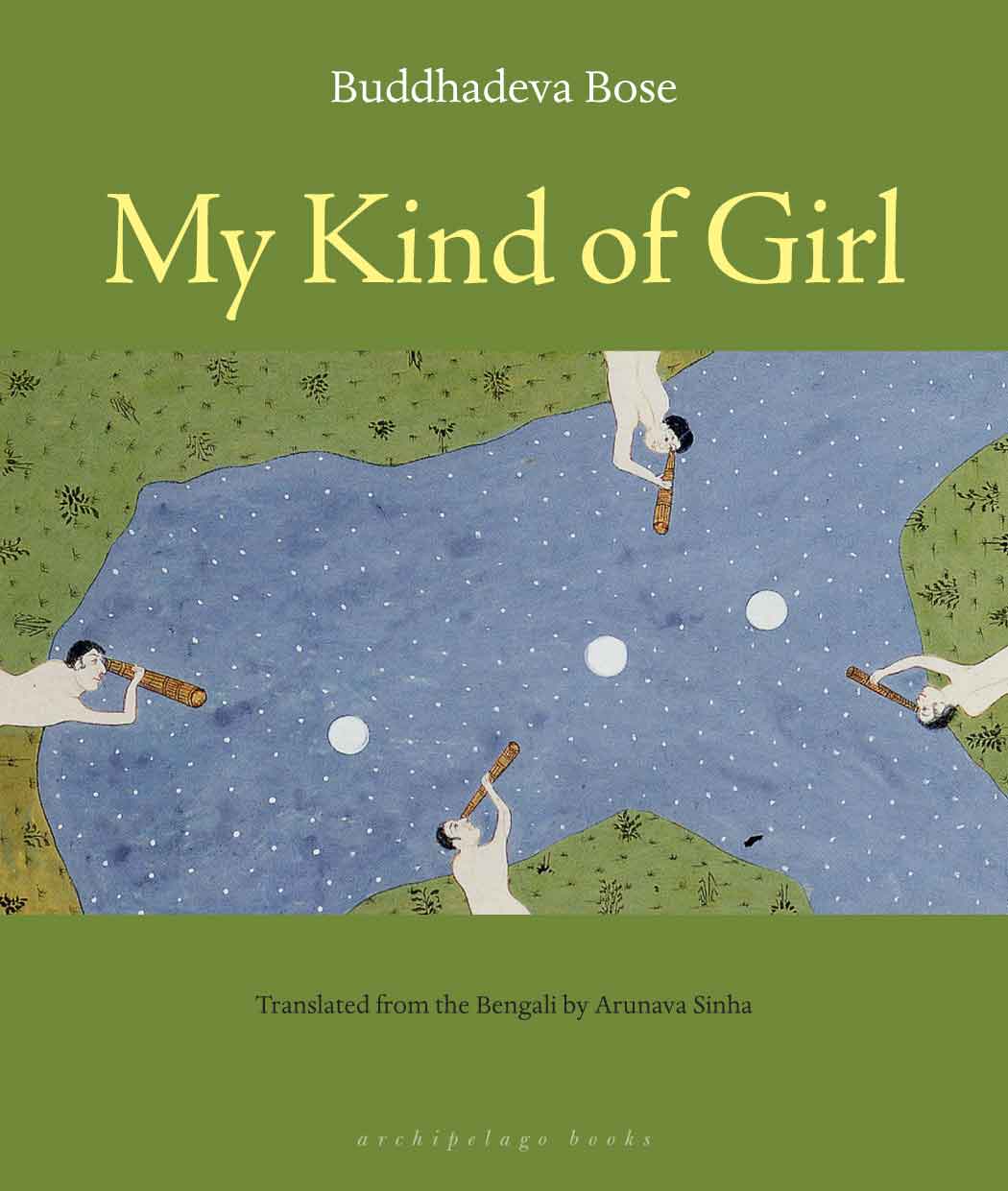
The memory remains: My Kind of Girl by Buddhadeva Bose

Sometimes, the simplest premise is all you need. Like this one. The setting is Tundla Station near Agra in north India on a frigid December night. In the first-class waiting room four middle-aged men sit, bundled up in their winter coats, as long, bitterly cold hours stretch before them. A derailment on the rail line ahead has forced this unanticipated stopover and now all they can do is wait. This is the unfortunate predicament that sets the stage for a warm-hearted take on the Decameron in Bengali writer Buddhadeva Bose’s 1951 novel My Kind of Girl.

 The four delayed travellers include an exceptionally large-framed contractor leisurely making his way back from a business trip, an established bureaucrat from Delhi with an urgent and important schedule to hold to, a well-known doctor from Calcutta on his way home from a conference and a man on holiday who described himself as writer, if, the others might have wondered, writing could even be considered a profession. As they prepare themselves for an unwelcome and uncomfortable sojourn, the doors to the room slide open, briefly revealing a young man and woman, clearly newlyweds, looking for a private place to settle. This moment changes everything:

That couple, who had only given them a glimpse of themselves at the door before disappearing, had left something behind; it was as though the bird of youth had shed a few feathers as it flew by: some sign, some warmth, some pleasure, some sorrow or tremor that refused to dissipate, something with which these four individuals – even if they did not speak, if they only thought about it silently – would be able to survive this terrible night.

First love—that joy, so fleeting, but never forgotten. As if they have been awakened to memories long assigned to the past, the men decide to pass the time by sharing, in turn, stories of their own first loves. As each man slips into his own youthful reminisces, the story he offers emerges with a distinct setting, character and voice. The contractor goes first, refusing to own the account he shares, saying it is only one that he heard of, but the young man he describes as burly and powerful, but admittedly a little thick-witted, seems to be only a faint effort to camouflage himself. Perhaps the sadness is hard to acknowledge; it is the tale of a family that builds a successful manufacturing empire right through the worst of the Japanese attacks on Calcutta during the war and the enterprising son whose mother is endlessly obsessed with securing for him the hand of the daughter of the neighbouring professor, all for envy of their library no less. But money, it turns out, cannot buy everything.

The Delhi bureaucrat’s story carries him back to his adolescence in rural Bengal and his first intimations of love, barely spoken, with Pakhi, a girl he secretly adored. Over the years, as life leads them both in different directions, to different cities, they chance to meet from time to time, and her actions lead him to wonder if she might have once cared for him in return. His tale asks if the embers of love can still burn even if busy lives, marriages and families separate the two people who may have shared that early spark. He thinks back to a night long ago when they had walked home from town together, ahead of their families. Pakhi says:

“I was thinking – I was thinking, this walk is lovely, but it’s because we’re walking on it that the road will end.”

Back then, I found this funny. But now it seems that fourteen-year-old girl had, without knowing it, spoken wisely. Our existence is like that: living eats into our life, all the roads we walk end because we take them.

The doctor, when his turn comes, takes the subject in yet another direction. He promises a happy story, one in which his first love becomes his wife, but the route by which that end is reached is a strange and convoluted one. Suffice to say, when he meets the woman he will eventually marry, her focus is on someone else altogether. Finally, the writer, almost reluctantly, takes over. His poetic, tragic tale is one in which he and his two best friends are all completely besotted with the same girl, collaborating with and competing against one another to win her favour in sickness and health.

This gentle, affecting novel is a thoroughly entertaining read, always feeling fresh as it moves from speaker to speaker. Each man reaches deep into his own memories to share youthful passions and vulnerabilities that, by the light of day and in any other circumstances, would have remained half-buried in the mists of time. Everyone marvels at how their emotions have been stirred in this unexpected interlude—until daybreak returns each traveller to the road he was on the day before.

Buddhadeva Bose (1908–1974) was one of the most accomplished and versatile Bengali writers of the twentieth century. He was also celebrated for translating Baudelaire, Hölderlin and Rilke into Bengali. My Kind of Girl by Buddhadeva Bose is translated from the Bengali by Arunava Sinha and published by Archipelago Books.