Poets, artists and other lost souls: Last Evenings on Earth by Roberto Bolaño

A poet can endure anything. Which amounts to saying that a human being can endure anything. But that’s not true: there are obviously limits to what a human being can endure. Really endure. A poet, on the other hand, can endure anything. We grew up with this conviction. The opening assertion is true, but that way lie ruin, madness, and death.

The individuals that populate the stories collected in Roberto Bolaño’s Last Evenings on Earth tend to be poets, writers, artists, and dreamers. Typically they are oddly groundless, restless beings who seem to drift through not only their own lives but through the lives of those they encounter. Most are either exiles or products of the Chilean diaspora, loosely set down or wandering between Mexico or Europe. As a result, their existences carry a ghostly aura, they are haunted by an otherness that is indefinable to themselves and obscures their relationships with others. The narrators or protagonists are unsure of their own memories, sometimes anxious and paranoid, sometimes bored and aloof–unwilling to trust, to fully engage with those around them.

eveningsIn this, my first encounter with Bolaño’s work, I found myself captivated by the misty melancholic mood, the affecting prose, and the characters, who are commonly struggling with the vagaries of what it means to be creative and to find value in life. Yet there is an underlying ambivalence, anxiety, and insecurity that lends the collection an atmosphere that can be unnerving and faintly depressing. And it can also tend to contribute to blurring of the edges of many of the stories so that a reader may, at the end, be left with a sense of appreciating the journey but losing track of the details that set many of the tales apart.

That is not to imply though that there are not stories that stand out. In my reading, my favourites were the ones that happened to strike me as especially sad, but then I read this book at the bedside of a dying parent. Sadness was the order of the day.

The title story follows a young man and his father on an ill fated holiday to Acapulco. Their days pass in relative calm, though a strain can be felt in the relationship between the two. The father wants to go out, have fun, while the son prefers more solitary outings and spends much of his time reading a book about surrealist poets and contemplating the fate of one particular poet, a minor writer who disappeared and was essentially forgotten by his peers. Father and son engage in aimless conversations that highlight their differing temperaments while the latter is haunted by a feeling of impending doom. For a time the imagined threat is held at bay:

Then the lull comes to an end, the forty-eight hours of grace in the course of which B and his father have visited various bars in Acapulco, lain on the beach and slept, eaten, even laughed, and an icy phase begins, a phase that appears to be normal but is ruled by the deities of ice (who do not, however, offer any relief from the heat that reigns in Acapulco), hours of what, in former days, when he was an adolescent perhaps, B would have called boredom, although he certainly would not use that word now, disaster he would say, a private disaster whose main effect is to drive a wedge between B and his father: part of the price they must pay for existing.

As the threat becomes real, the son’s passive reaction to all of the warnings that come his way add to a tension built on the very human ability to fail to act on one’s better instincts. Bolaño is a master at exploiting the ambivalence that erodes relationships. Again and again his characters prefer to observe rather than engage, things are left thought but unsaid until, very often, it is too late.

Another especially poignant story is ‘Mauricio (“The Eye”) Silva’. Here the narrator recounts the experiences of a fellow Chilean exile he meets in Mexico City. The Eye is described as a sensitive man, one who always tried to avoid violence, “even at the risk of being considered a coward.” He eventually finds work as a photographer and as his modest fortunes improve he develops a style of dress that sets him apart from other Chilean exiles and likely leads to the intimation that he is a homosexual–a designation received with considerable derision, even fear, by his fellow countrymen at that time.

One night the narrator encounters The Eye in a cafe. The description of his friend is striking. Bolaño’s characters seem to pay particular attention to the appearances of their friends and acquaintances, almost as if they are looking to read something lurking beneath the surface, an understanding, a message or an ulterior motive:

I sat down next to him and we talked for a while. He seemed translucent. That was the impression I had. The Eye seemed to be made of some vitreous material. His face and the glass of white coffee in front of him seemed to be exchanging signals: two incomprehensible phenomena whose paths had just crossed at that point in the vast universe, making valiant but probably vain attempts to find a common language.

On this evening, The Eye not only confirms his sexuality, but announces that he will be moving to Paris where he can live more openly and pursue the kind of photographic work he has always dreamed of. It will be years before they meet again. The narrator, now married with a child and published books to his credit, crosses paths with The Eye in Berlin and learns of the life altering, disturbing experiences his friend had in India. It seems that the man who had always tried to avoid violence has discovered, like other Latin Americans of his generation born in the 1950’s, that violence would ultimately find him, even on a distant continent.

The fourteen stories that comprise Last Evenings on Earth are imbued with a wistfulness that captures the spirit of dislocation of the exiled. But with his evocative, evenly paced prose Bolaño speaks to a borderlessness that many of us feel when we don’t fit in wherever we happen to be. It is, perhaps, the writer’s soul that responds, I don’t know. I feel at a loss to define it, in this, my first experience with his work, but I do know I will return for more.

Last Evenings on Earth is translated from the Spanish by Chris Andrews and published by New Directions.
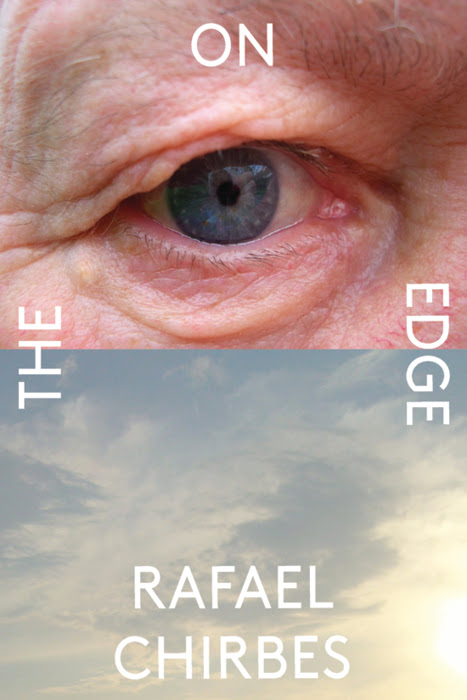
All the world’s a stage: On the Edge by Rafael Chirbes – My review for Numéro Cinq

My latest review for Numéro Cinq is now live. On the Edge by the late Rafael Chirbes has just been released in North America (New Directions) with a UK release forthcoming from Harvill Secker in July. This is an unforgiving portrait of Spain in the aftermath of the 2008 economic crisis, through the eyes of one man who has lost everything:

On-the-edge

For the Spanish writer, Rafael Chirbes, there was no room in the creative process for an aesthetic devoid of ethics. As a documentarian of his native country, from the post-war years through the transition to democracy in the 1970’s, and on into the opening decade of the 21st century, the late author offered a defiant chronicle of the point where social, economic, and political dynamics intersect with the harsh realities of the human condition. He argued that if the artistic endeavour aims to stand at that intersection, no perspective could remain neutral:

A point of view situates you somewhere, in a location where potentialities—ways of being—battle one another. When you write, or paint, as when you read or look at something, you have to be conscious of the fact that the author wants to invite you to look where he’s looking. Your mission is to protect yourself. Know that they want to seduce you.

This advice, from a brief interview segment in A Thousand Forests in One Acorn: An Anthology of Spanish-Language Fiction (Valerie Miles, Open Letter Books, 2014), should serve as fair warning before one enters into the emotional labyrinth that is Chirbes’ lauded ninth novel, On the Edge. Recently released by New Directions, in a measured yet lyrical translation by Margaret Jull Costa, this book will serve as highly anticipated introduction for English language readers, to a writer at the height of his powers: a writer who has chosen, in this instance, to stand on the rapidly shifting ground of a country in the throes of economic collapse.

Find the rest of the review here

Reality is a miracle… Things Look Different in the Light by Medardo Fraile

In a story titled “The Sea”, a couple vacationing on the Mediterranean make their way to the seashore each day where the husband joins the line of humans on the beach who sit staring at the water, mesmerized. The experience fills him with a sense of unease.

“The waves were never the same, although they may have repeated themselves in similar cycles. The meaning of the wave never went beyond being a rather comforting mystical murmur. But the sea seemed to express itself in ways superior to the wave, in whole unintelligible paragraphs and speeches, as rich in modes and forms as it was in depths and fishes. On the other hand, I understood nothing of what it said.”

thingsLike the vast sea with its hypnotic surface and hidden secrets, reality is a shimmering quantity in the hands of Spanish author Medardo Fraile. A master of the short story, he is able to distill an experience or sketch out an entire life span within a handful of pages. In this collection, Things Look Different in the Light, he breathes life into a wide variety of unforgettable characters – young or old, ordinary or eccentric. We meet weary professors, crafty spinsters, uncommunicative middle-aged couples, meek bachelors and curious children who don’t quite understand the world of adults. We even encounter inanimate objects that take on lives of their own rich with meaning and emotion, bound to and yet separate from the human with which they are associated.

Consider “A Shirt”, the simple fable of sailor who, after a single love affair, returns alone to his hometown to take up the life of a fisherman. Each day he dons the same tartan shirt until one fateful day when shirt is left behind on the line:

“At around four o’clock in the morning, with no wind to speak of, the shirt began to move. It flapped wildly about, anxious and empty, as if wanting to break free of the pegs gripping its shoulders. The flailing sleeves rose and fell, filled by the invisible lament of some terrible tragedy. They occasionally joined wrists or else stretched wide, arms spread.”

Or share the frustration of the lingerie salesman in “The Lemon Drop” who had imagined a literary career for himself and can’t quite come to terms with the place where life has left him. He wonders what happened to the scabby-kneed boy who used to go bird’s nesting and smoke on the sly:

“Now I never smoke. I used to own a pellet gun. I have big hands, like cowboys in the Wild West. And by ‘I’, I mean this person who is me. This weary fellow who walks home bent beneath the weight of his briefcase, which, one day, grabbed hold of his hand like a dog and feels equally weary.”

From the opening story about a tongue-tied man at a baby’s birthday party, set on edge by a woman he cannot bear to face, to the chillingly beautiful “Last Shout” in which a child recalls a beloved grandmother’s final months; you know you are in the presence of a gifted storyteller. He manages to adjust the focus to bring to light the details that are essential to the tale he wishes to tell. No more, no less. Simply perfect.

Born in Madrid in 1925, Fraile started his career in experimental theatre, a background that may well account for the spare, magical quality of many of his short stories. He left Spain in the 1950‘s, and although he would ultimately settle in Scotland, his work was not made available to English speaking readers until the release of this wonderful collection from Pushkin Press, translated by the renowned Margret Jull Costa, with a warm and enthusiastic introduction by Ali Smith. A fellow blogger, Jacqui at JacquiWine’s Journal first drew my attention to this book so I knew it was one that I wanted to read (sooner rather than alter, that is)  when it was longlisted for this year’s Best Translated Book Award. Things Look Different In the Light has progressed to the shortlist.

Medardo Fraile died in 2013.

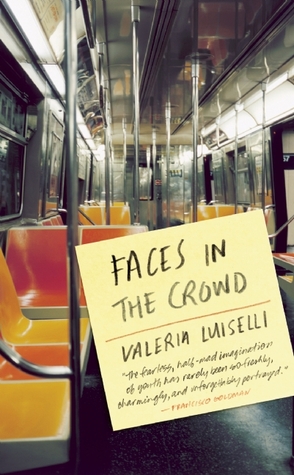
In the window of a passing train: Faces In the Crowd by Valeria Luiselli

“All novels lack something or someone. In this novel there’s no one. No one except a ghost that I used to see sometimes in the subway.”

Faces in the Crowd, the debut novel from the young Mexican novelist Valeria Luiselli, is indeed a book of ghosts. The narrator is a young wife and mother living in Mexico City. As she tries to carve out time and space to write a novel, she draws the reader into a reflective exploration of ghosts – the ghosts that haunt her present house, the ghost of a life she fell into living and working in New York City, and the ghost of Gilberto Owen, an obscure Latin American poet who lived in Harlem in the late 1920s.

And for a book of ghosts it is brilliantly, shockingly alive.

crowdThe novel opens with a deceptively simple narrative feel. Contemporary domestic life is played out against her reflections on her past life in New York City when she was younger, unencumbered and working as a translator for a small independent publisher. She catalogues the friends and lovers that drifted through her spare apartment. One day she happens to encounter the work of Gilberto Owen on a search for potential material for translation, but before long her professional interest turns into an obsession. She tries to pass off her translations of his work as translations by a better known poet, an attempt that comes dangerously close to succeeding. She rescues a dead plant from the roof of the building he once lived in. She imagines that she sees him in the subway – more than once. Finally it is clear to her that she must leave:

“In the subway, on my way home, I saw Owen for the last time. I believe he waved to me. But by then it did not matter, I’d lost my enthusiasm. Something had broken. the ghost, it was obvious, was me.”

For all the empty space in her earlier life, married life is clearly suffocating our narrator. She continually finds herself unable to breathe, struggling to focus on her writing in a large house, cluttered with toys, distracted by the demands of her children – simply referred to as “the boy” and “the baby” – and the jealous curiosity of her architect husband. As the fictionalized first person account of Owen’s life begins to assume a greater prominence within the story, her marriage starts to unravel (or perhaps she simply writes her husband into the background) while the overall narrative structure seems to disintegrate, boundaries blur. The novel within the novel becomes enmeshed with her day-to-day life, folding back on and re-envisioning the experiences recounted from her earlier life in New York. Or was that Owen’s life?

Echoing the continually reshaped game of hide and seek between mother and son running throughout this novel, Faces in the Crowd lays out a metafictional game of hide and seek. Can a horizontal novel be told vertically? How is such a story to be read? Where in translation does truth lie? And when can you play with truth? It winds up to a delightfully oblique ending. Or lack of ending – rather, an invitation to imagine, to reread.

I opened this book completely unprepared for the heart-stopping luminosity of the prose or the way that the narrative is fragmented and rebuilt to create a rich meditation on the nature of story telling. Valeria Luiselli demonstrates a maturity and confidence that belies her age without ever falling into a heavily somber tone. The translation by Christina MacSweeney maintains the lively, poetic flow of this impressive debut. I was pleasantly surprised by this intelligent and enjoyable read.

Faces in the Crowd has been longlisted for the 2015 Best Translated Book Award (BTBA).

Faces in the Crowd by Valeria Luiselli, translated by Christina MacSweeney                Coffee House Press, 2014

Imagining a life lost: In the Beginning was the Sea by Tomás González

For aspiring novelists, the greatest inspiration sometimes lies very close to home – at the heart of their own families. And most often, it is not a happy circumstance they are seeking to reconcile when setting pen to paper.

seaIn the late 1970s Colombian author Tomás González was struggling to build a career for himself as a writer. The murder of his brother Juan, on a farm where he had retreated to find a refuge, would provide the central focus of his debut novel In the Beginning was the Sea, first published in 1983, but not released in English until 2014.

There is a distinctly sober, calculated tone to this tale of J. and his girlfriend Elena, two faded hippies who seek to escape a life of drugs, alcohol, and partying in Medellín by purchasing and moving to a remote tropical farm. J. dreams of a simpler life, a new beginning. It soon becomes clear that he has absolutely no business sense at all. He repeatedly allows himself to be swindled and makes a series of reckless investments. As his debts mount, he demonstrates an uncanny ability to dig himself in deeper, disregarding the warnings of those around him. To add insult to injury, Elena and J. have a volatile relationship at best – one that the isolation of their new home does nothing to mediate. She tends to be caustic and unpleasant, especially to the native blacks who work for her or live in the area. The dislike is instantly reciprocated. J. is much more affable with the locals, a nature lubricated by increasingly copious quantities of cheap alcohol. But as time goes on, his world continues to spiral downward. In the end, as we are repeatedly warned, it will cost him his life.

As the story unfolds, González maintains an emotional distance from his subjects, but he excels at bringing the tropical farm to life. His language is highly evocative.

“Smells. The murky smell of the mangrove swamps carried sometimes on the breeze. The musky, resinous smell of crabs, dead and still raw. The smell of paddocks pounded by the immovable hammer of the noonday sun. The smell of mingled smoke and coffee from the kitchen. The lunchtime smell of fried fish, fried plantains, the heavy scent of
coconut rice. The smell of the suntan lotions and the moisturizers that made Elena’s skin more perfect.”

If there is a weakness here, it is the lack of a solid reference for the hostile and unpleasant behaviour Elena demonstrates throughout this novel. From the opening scenes where her precious sewing machine is damaged, we see a woman who refuses to tolerate any perceived incompetence in others. One is left to wonder what is behind this and what she ever saw in J. A history of divorce and depression is hinted at. His weaknesses are examined a little more closely and we know that he is torn between attraction and frustration with Elena, and that he harbours a deep personal sense of despair and failure. But again, the why’s are never fully explored.

Though some factors or circumstances may, in truth, defy full explanation; In the Beginning was the Sea does draw to a close with an imaginative and heartbreaking elegy, perhaps the one of the finest moments in the entire book.

Independent Foreign Fiction Prize 2015: Pushkin Press deserves to be praised for bringing long ignored works and authors to an English speaking audience. Frank Wynne’s translation is clear and vivid. I hope we will see some of González’s more mature work available in the future.

Border crossing ahead: Signs Preceding the End of the World by Yuri Herrera

“You don’t lift other people’s petticoats.
You don’t stop to wonder about other people’s business.
You don’t decide which messages to deliver and which to let rot.
You are the door, not the one who walks through it.”

signsA sinkhole opens up in the road in the opening passage of Yuri Herrera’s brilliantly inventive Signs Preceding the End of the World. Makina, a streetwise young Mexican woman charged by her mother with a mission to deliver a message to her brother who has disappeared across the border in the US, just narrowly misses being swept into its depth. Or does she? She is a wary customer, old beyond her years, capable of communicating in native, latin and anglo tongue – a skill that has secured the task of manning the central switchboard in her hometown and has equipped her, as well anyone might be, for the daunting task her mother has set out.

The rules outlined above are those that Makina holds close. Securing her safe passage will require making deals with a series of shady characters and her hardened discretion will be vital if she is to reach her destination. The language matches her pace. The short chapters, clipped sentences, and unique vocabulary hurry along, sweeping the reader with it as if time is of the essence and dare not be wasted. There is no time for for frivolities, Makina – and with her the reader – must be on the alert. This is a dangerous journey. It is one that many desperate people make every day. On the far side, the world to be navigated is both familiar and strange.

“The city was an edgy arrangement of cement particles and yellow paint. Signs prohibiting things thronged the streets, leading citizens to see themselves as ever protected, safe, friendly, innocent, proud, and intermittently bewildered, blithe, and buoyant; salt of the only earth worth knowing.”

But for the illegal migrant, temporary or permanent, the risks are real. The rewards often elusive, the costs high.

This slim novel is filled with passages of vivid intensity. Dark, epic in scope if not in scale, a few hours with Herrera is akin to a journey with Dante or Lewis Carroll. Right through to the final breath taking passages, I would challenge a reader to not emerge gasping for air.

Another wonderful offering from And Other Stories, Signs Preceding the End of the World is a deeply rewarding way to spend a few hours. In the Translator’s Note at the end of the novel, Lisa Hillman describes the joys and challenges she faced in capturing the right tone and shaping the language to preserve the magic and power of the original text. The result is an absolutely compulsive read. Highly, highly recommended.

Now, after this brief respite, back to reading the International Foreign Fiction Prize long list with my fellow bloggers on this year’s shadow jury.

A childhood of magic and darkness: By Night The Mountain Burns by Juan Tomás Ávila Laurel

“Every man on our Atlantic Ocean island has his own canoe, and if he doesn’t have one, a new canoe is brought into the world so that he does, so that nobody on the island has to borrow one from anyone else.”

A detailed account of the traditional construction of a canoe on the tiny island of Annobón, an activity that gathers the resources of the entire community, opens By Night the Mountain Burns by Equatorial Guinean writer and political activist Juan Tomás Ávila Laurel. Immediately we are drawn into an engaging, personal, conversational tale. The narrator is a deeply sensitive, if not well educated, man. His voice is fresh, at times naive, frequently looping back to revisit details, questioning the reader or foreshadowing events but deciding to hold off so that he can best share his childhood experiences, as he remembers them, on this remote island where natural resources are limited, life is difficult.

2015-03-14 02.11.35As a young boy, our narrator, lives in a large home with his grandparents and a number of mothers and siblings. Any fathers have long since disappeared to a land across the ocean, so no necessary distinction is made between birth connections, he sees all of the mothers as belonging to all of the children. His grandmother rules the roost while his grandfather is a curiosity to his many grandchildren. For some reason he has built his house facing the away from the sea and he sits watching the mountain that rises above the town day after day. He does not fish or go down to the beach to visit with the other men. In fact he does not come downstairs at all and the children never see him eat.

For our storyteller, the secrets of his his grandfather and a sense of the danger and misery adults must learn to live with begins to become clearer as a series of devastating events sweep his island community, beginning with a fire that starts on the mountainside destroying plot after plot of precious crops and threatening the town itself. Officially a Catholic community, the roots of superstition, folklore and mythology run deep and are intertwined with Christian saints and celebrations. In the wake of the fire, an especially violent act of retribution is carried out against a local woman assumed to be a she-devil, and then, before the community can heal, a plague of cholera sweeps through exacting a devastating toll on the population. Curiously, in this tale in which most characters remain nameless, every adult who dies is named in in full, and a cluster of crosses are inserted into the text to represent the numbers of dead who now crowd the sole cemetery on the island.

Even without the tragedies that run through the core of this account, daily life on the island is filled with challenges. Shortages of kerosene, among many other provisions – salt, soap, matches, tobacco, spirits, fish hooks, nylon rope, clothing – necessitate a careful rationing of light and flame. As a result, this novel is infused with a haunting darkness that is literal, metaphorical and even lyrical. Night brings both security and vulnerability. But moonlit nights are seen as even more threatening:

“… on moonlight nights we felt exposed, for the moon lit up the whole village and advertised our helplessness. I always felt that moonlight nights revealed our skeletons, our defects.”

Magical and evocative in the telling, mixing childhood wonder with reflective adult wisdom, Ávila Laurel introduces a place few will likely have heard of – the island where he grew up. He has been compared to Achebe and Marquez among others, but his account has a much more contemporary edge. When his character speaks of evil on the island, it is difficult not to think of the very brutal reality of the extreme poverty and social inequity that exist in his country as a whole, despite great resource wealth. Rooted in traditional story telling, this is a story for our modern times. It is exactly the type of important story that literature in translation should be bringing to a wider audience and a clear example of the vital role that independent publishers like And Other Stories play in this regard.

Finally, Jethro Soutar’s translation from the original Spanish is fluid, maintaining difficulties that the narrator, who is sharing his tale in Spanish, has finding words to express what Spanish cannot capture of his native island language. The quirks and qualities of his oral account are intact, the humour and insight shine through. Quite an accomplishment given that Ávila Laurel’s involvement in a hunger strike against the government of Equatorial Guinea that led to his ultimate exile to Spain added challenges to the communication between translator and author during the translation process.

International Foreign Fiction Prize 2015: By Night The Mountain Burns is the first long listed title for And Other Stories, and I confess my bias in that I have developed a great affection for this publisher so I am thrilled. I had in fact just purchased this title along with several others and it was sitting at the very top of my TBR list so it was a happy coincidence that it was selected.