And something went terribly wrong: Truth/Untruth by Mahasweta Devi

Arjun Chakravarty has everything under control. As a successful contractor, skilled in the necessary art of greasing the right palms, business is booming, and finally, after ten years of marriage he and his wife are expecting their first child. Kolkata in the 1980s is booming. A determined project of gentrification is underway; everywhere high-rise buildings are sprouting up, even in neighbourhoods long considered derelict and undesirable. Like Khidirpur, a well-known den of crime and smuggling. Denying the odds, towering housing societies boasting spacious flats equipped with all the latest appliances stand proud, like Barnamala where our unfortunate hero resides and the setting of Bengali writer Mahasweta Devi’s Truth/Untruth.

A self-named man, Arjun came into the world as Sanatan Pushilal. But Sanatan was a moniker unworthy of the man he wanted to be. Orphaned young and impoverished, his uncle found him student lodgings with a noted karibaj, an Ayurvedic practitioner, and this fortunate placement was his first step toward a new identity. That is:

How Sanatan became Arjun. And how, erasing the past, Arjun slowly rode the lift of high aspirations all the way to the twelfth floor of society . . . all that is but ancient history now.

With his old landlord long gone, only his son Keshtokali, likewise a karibaj, knows the truth about Arjun’s past. Fortunately, even his wife Kumkum, the daughter of a retired Supreme Court judge, has no interest in either Ayurveda or her prosperous husband’s history. Yes, Arjun-babu has it made. Until something goes terribly wrong.

You see, his wife, now eight months pregnant, has been staying with her parents where she can be pampered and protected while she awaits the arrival of their precious bundle—at thirty-five no one wants to see anything go awry. Thus, left to his own devices, Arjun-babu has been able to indulge his passion for Jamuna, the pretty young maid who comes by daily to clean the flat. Imagine his dismay, then, when she arrives to inform him that she is pregnant with his child. Something must be done, he must make the problem go away. Jamuna’s own husband left when he lost his job, but she still believes he will return. Arjun will arrange for a proper doctor to take care of the unwanted pregnancy, pay her off and hope she leaves, but before he can see his plans through, he comes home to find her dead on the bed in his guestroom.

He knows he didn’t kill her, but he can’t exactly go to the police. If he had killed her, well, that would be a different matter. For the right amount of money the police could take care of anything. But, if word gets out that she was found in his flat, his reputation, his business, his wonderful life—all would be ruined. Even a rumour of murder would do him in; after all she would hardly be the first “murdered” maid to be found in his building . . . Ah, but Jamuna also worked in two other adjacent flats, one belonging to an old man named Desai and his crazy wife, the other owned by a tobacco company and cared for by Mohsin, a local Muslim man. Maybe Arjun could shift the blame, simply by moving the body.

This farcical and fast-paced thriller unfolds over little more than forty-eight hours, and features a cast of vibrant characters from the silly Kumkum and her over-protective family, to a host of servants and building staff, to petty thugs and mysterious “bosses.” The complicated power dynamics between the established rich, the nouveau riche and the slum dwellers who provide necessary labour and services, legal and otherwise, for the residents of the new buildings is clearly exposed. However, we observe most of these people indirectly, as the narrative is driven almost exclusively by dialogue and by the internal monologues of the central male figures—the three men in the building who directly or indirectly employed Jamuna. By this approach, Devi is able to reveal the very different natures of each of these individuals, but her primary attention falls on Arjun who is the most incredibly hollow and self-centred creature, continually twisting his line of reasoning into pretzels to absolve himself of the slightest responsibility for anything that has happened. Jamuna might be dead, but he is the real victim as far as he is concerned—everyone else is to blame.

Arjun divides the blame up in his mind. The astrologer is to blame, he’d never once warned him that bad times lay ahead. Keshtokali is to blame, he gave him such a stimulant that his mind was always full of . . . and Jamuna, isn’t she to blame too? Why did she have such a body, such a way of walking and talking?

He is, by turns, irritating, hilarious and tragic.

Mahasweta Devi (1926–2016) was one of India’s most prominent writers and  social activists. If somewhat different in tone from much of her more openly political, feminist work, her dry humour and ability to highlight insincerity and hypocrisy is in full play in this dark satire. Her prose is rich with insider street slang and allusions to popular movies and songs of the day (necessary references are explained in the endnotes). She is assuming a certain familiarity with the time and place she’s writing from, but is not concerned about making her more genteel readers work to sort through the common language many of her characters employ. In her afterword, translator Anjum Katyal acknowledges the challenges involved in trying to capture the different registers of spoken language—critical in a narrative so dependent on dialogue—without falling into unacceptably “twee” English variants. She does give Jamuna and her close friends a coarser and cruder vocabulary which contrasts nicely with the sometimes overly-affected language that Kumkum and her family use in private settings. Arjun, being the most eccentric and erratic of the cast, is granted a range of emotional expression from the obsessive to the absurd.

A rollicking urban tale, terrifically fun to read, Truth/Untruth blurs the line between murder, mystery and crime novel but from beginning to end, amid the tension and comic mishaps, it remains a sharp piece of social commentary.

Truth/Untruth by Mahasweta Devi is translated from the Bengali by Anjum Katyal and published by Seagull Books.
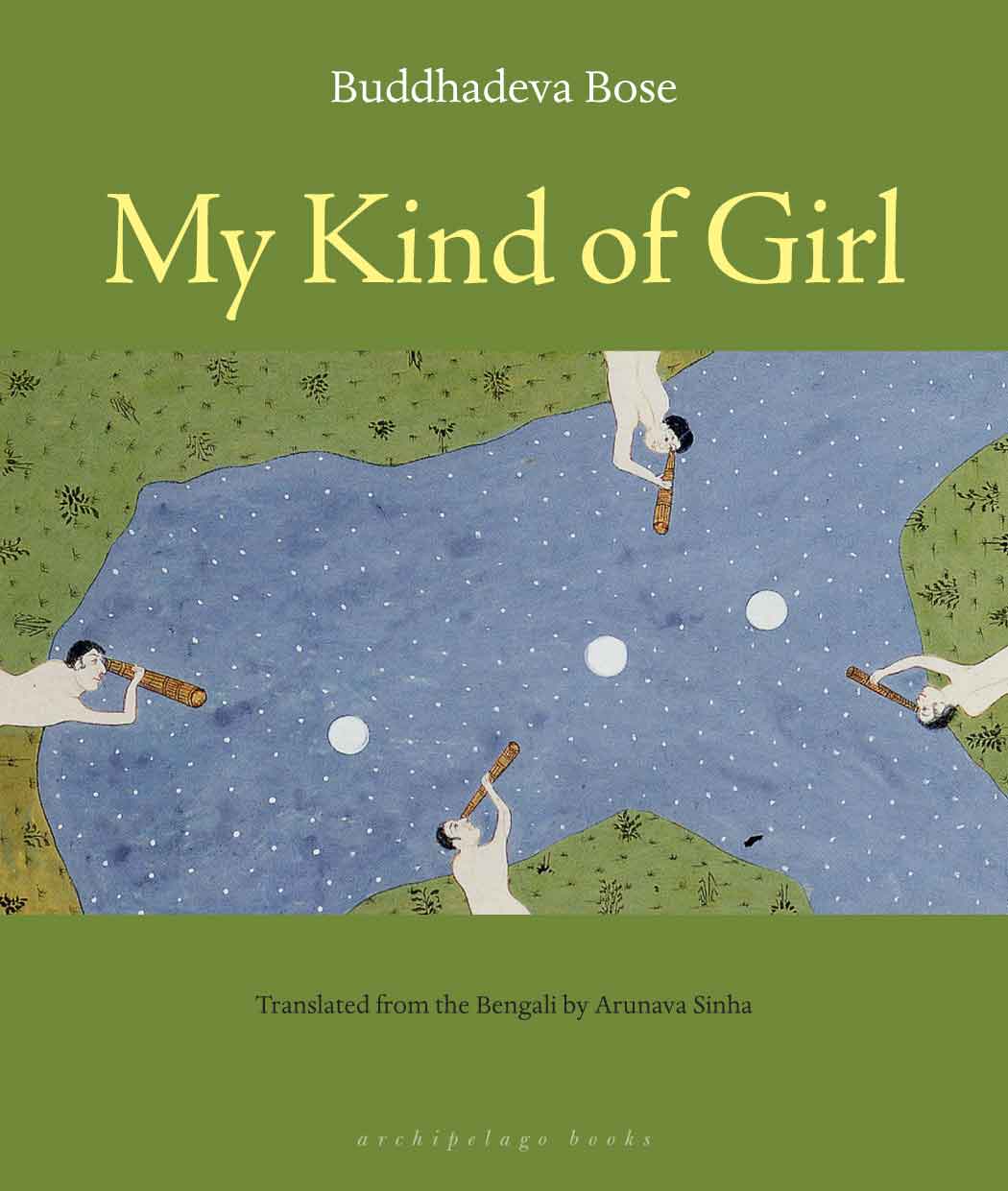
The memory remains: My Kind of Girl by Buddhadeva Bose

Sometimes, the simplest premise is all you need. Like this one. The setting is Tundla Station near Agra in north India on a frigid December night. In the first-class waiting room four middle-aged men sit, bundled up in their winter coats, as long, bitterly cold hours stretch before them. A derailment on the rail line ahead has forced this unanticipated stopover and now all they can do is wait. This is the unfortunate predicament that sets the stage for a warm-hearted take on the Decameron in Bengali writer Buddhadeva Bose’s 1951 novel My Kind of Girl.

 The four delayed travellers include an exceptionally large-framed contractor leisurely making his way back from a business trip, an established bureaucrat from Delhi with an urgent and important schedule to hold to, a well-known doctor from Calcutta on his way home from a conference and a man on holiday who described himself as writer, if, the others might have wondered, writing could even be considered a profession. As they prepare themselves for an unwelcome and uncomfortable sojourn, the doors to the room slide open, briefly revealing a young man and woman, clearly newlyweds, looking for a private place to settle. This moment changes everything:

That couple, who had only given them a glimpse of themselves at the door before disappearing, had left something behind; it was as though the bird of youth had shed a few feathers as it flew by: some sign, some warmth, some pleasure, some sorrow or tremor that refused to dissipate, something with which these four individuals – even if they did not speak, if they only thought about it silently – would be able to survive this terrible night.

First love—that joy, so fleeting, but never forgotten. As if they have been awakened to memories long assigned to the past, the men decide to pass the time by sharing, in turn, stories of their own first loves. As each man slips into his own youthful reminisces, the story he offers emerges with a distinct setting, character and voice. The contractor goes first, refusing to own the account he shares, saying it is only one that he heard of, but the young man he describes as burly and powerful, but admittedly a little thick-witted, seems to be only a faint effort to camouflage himself. Perhaps the sadness is hard to acknowledge; it is the tale of a family that builds a successful manufacturing empire right through the worst of the Japanese attacks on Calcutta during the war and the enterprising son whose mother is endlessly obsessed with securing for him the hand of the daughter of the neighbouring professor, all for envy of their library no less. But money, it turns out, cannot buy everything.

The Delhi bureaucrat’s story carries him back to his adolescence in rural Bengal and his first intimations of love, barely spoken, with Pakhi, a girl he secretly adored. Over the years, as life leads them both in different directions, to different cities, they chance to meet from time to time, and her actions lead him to wonder if she might have once cared for him in return. His tale asks if the embers of love can still burn even if busy lives, marriages and families separate the two people who may have shared that early spark. He thinks back to a night long ago when they had walked home from town together, ahead of their families. Pakhi says:

“I was thinking – I was thinking, this walk is lovely, but it’s because we’re walking on it that the road will end.”

Back then, I found this funny. But now it seems that fourteen-year-old girl had, without knowing it, spoken wisely. Our existence is like that: living eats into our life, all the roads we walk end because we take them.

The doctor, when his turn comes, takes the subject in yet another direction. He promises a happy story, one in which his first love becomes his wife, but the route by which that end is reached is a strange and convoluted one. Suffice to say, when he meets the woman he will eventually marry, her focus is on someone else altogether. Finally, the writer, almost reluctantly, takes over. His poetic, tragic tale is one in which he and his two best friends are all completely besotted with the same girl, collaborating with and competing against one another to win her favour in sickness and health.

This gentle, affecting novel is a thoroughly entertaining read, always feeling fresh as it moves from speaker to speaker. Each man reaches deep into his own memories to share youthful passions and vulnerabilities that, by the light of day and in any other circumstances, would have remained half-buried in the mists of time. Everyone marvels at how their emotions have been stirred in this unexpected interlude—until daybreak returns each traveller to the road he was on the day before.

Buddhadeva Bose (1908–1974) was one of the most accomplished and versatile Bengali writers of the twentieth century. He was also celebrated for translating Baudelaire, Hölderlin and Rilke into Bengali. My Kind of Girl by Buddhadeva Bose is translated from the Bengali by Arunava Sinha and published by Archipelago Books.

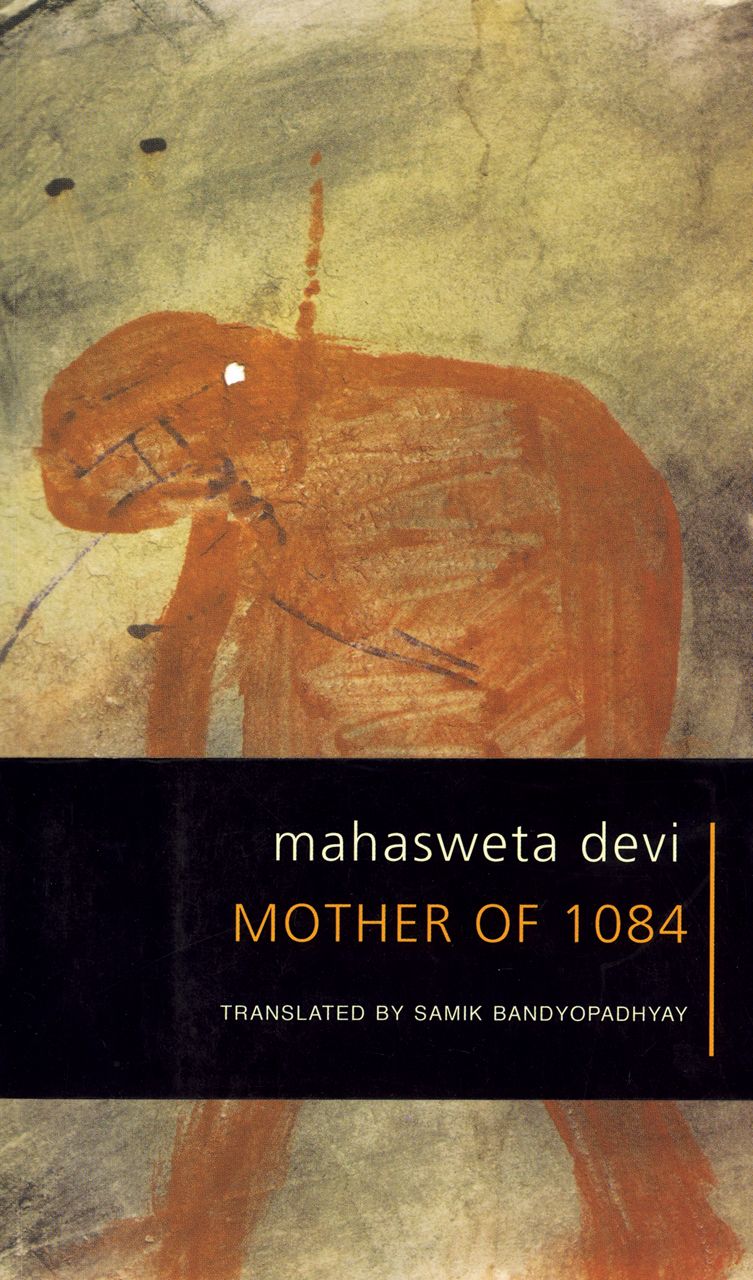
A chronicle of pain: Mother of 1084 by Mahasweta Devi

The pain had come at eight in the evening. Hem with all her experience had said, It won’t take time, Ma. The womb has started pushing it out. Hem held her hands and said, Let all be well. Let God bring you back, the two of you separate.

Sujata’s story is framed and defined by pain. As it opens she is asleep, her dreams have transported her back twenty-two years, to the morning following an agonizing night of labour and emergency surgery when she gave birth to her fourth child and second son, Brati. Now she is awoken by searing pain once more, on the same date, January seventeenth, but this time an inflamed appendix is to blame. Once her abdominal distress begins to settle, a glance at the calendar takes her back to the early hours of yet another January seventeenth, just two years earlier, when the telephone suddenly rang. At the other end of the line, a voice summoned her to the morgue. There she would find her beloved son reduced to a numbered corpse, 1084.

Set over the late sixties and early seventies, during the first phase of the Maoist-inspired Naxalite insurgency in West Bengal, Mother of 1084 by Indian writer and activist, Mahasweta Devi (1926–2016), is a focused examination of the impact of targeted violence on those left behind through the story of one woman stranded in her loss and grief. Sujata comes from a background of privilege, raised in a wealthy Calcutta family and afforded an education, but in marriage her life is constrained by the roles her social class expects of her. At the time of the critical events in this novel, she is in her early fifties. Her oldest son and daughter, Jyoti and Neepa, are both married and each have one child. Jyoti and his family, as custom would have it, lives in the family home. The younger daughter, Tuli, has a serious boyfriend. Her husband, Dibyananth—or as he is often described, “Jyoti’s father”—is a successful businessman with, once his wife decided she wanted no more children, a string of mistresses on the side. Sujata also has a job at a banking office, taken on her own initiative when her mother-in-law was still alive and commanding the daily affairs of the household. It is something she has refused to give up.

Brati, the youngest son, had always been unlike his other siblings. Imaginative and sensitive, he was easily frightened and deeply attached to his mother. From his earliest years on through adolescence, their bond was close while there was little love lost between Dibyananth and his second son. Naturally Sujata was blamed for spoiling him and making him weak. When Brati is killed with a group of young Naxalite revolutionaries, his father’s immediate concern is to assure that no one knows of his involvement. He pulls a few strings and Brati’s name is omitted from the news reports while at home all evidence of his existence is cleared away and locked in his bedroom on the uppermost floor. Sujata finds herself on the wrong side of her own family, on the side of the dead man who had failed to consider the shame and embarrassment he would cause. She is left alone to try to make sense of why her son had been drawn to such a radical movement and to understand the events of the night on the eve of his twentieth birthday that had cost him his life. It was a death that could not be classified in any of the usual ways—illness, accident, crime:

All that Brati could be charged with was that he had lost faith in the social system itself. Brati had decided for himself that freedom could not come from the path society and the state offered. Brati had not remained content with writing slogans on the wall, he had come to commit himself to the slogans. There lay his offence.

Extending from morning to evening over the course of a single day, exactly two years after his death, Mother of 1084 chronicles Sujata’s attempt to honour her son’s memory and perhaps find some sense of closure. At home, Tuli is preparing to hold her engagement party. Although it is her brother’s birth anniversary, the date has been determined by her future mother-in-law’s American guru—her own mother’s feelings be damned. Between attending to the necessary arrangements in the house, Sujata will make two excursions that will help fill in some of the missing information she craves, but not necessarily bring any peace.

In the afternoon she travels out from central Calcutta to the colony where the mother of Somu, one of Brati’s friends, lives. The young men killed had spent their last hours in her house. Sujata had first met Somu’s mother when she went to identify her son’s body and she had found in this poor woman a kind of a kindred spirit, another mother who understood the loss. But face to face with the graphic details of that fateful night and the absolutely devastating effect it has had on this impoverished family, she is reminded that her social status will forever be a barrier that cannot be wished away. The two women, brought together in shock and pain at the morgue and the crematorium, share an affinity that can never be more than temporary:

Time was stronger than grief. Grief is the bank. Time the flowing river, heaping earth upon earth upon grief.

Later that afternoon, Sujata makes another outing, this one closer in location and class, but again one with a divide that cannot be breached. For the first and last time, she visits Brati’s girlfriend Nandini who has recently been released from prison, bearing the injuries of torture and incarceration. In this encounter there is a bitter demonstration of the activist’s unshakable resolve, something the grieving mother will never fully appreciate. Upon returning home to where guests are gathered, Sujata is clearly affected by her experiences, and all of the memories and details that have come back to her over the course of that day. But even as pain rips through her abdomen, she must once more attempt to play her role as wife and mother. At least for the moment.

One of Devi’s most widely-read books, Mother of 1084 is not explicitly concerned with the broader political context of the Naxalite insurgency, rather it turns its attention to the intimate human experience—the appeal of the movement to individuals from different backgrounds, the reality of betrayal, the brutality of the violence, and the wide range of responses from the families and communities affected. That is not to suggest that this is not an intensely political work, but by centring an apolitical protagonist who finds herself navigating the space between the shocking indifference of her family and social class, the devastation of the bereaved who exist in the midst of conflict and destitution, and the anger of the activist committed to the cause at all costs, Devi crafts a powerful, unforgiving narrative. Sujata is the troubled conscience of this tightly woven novella but one is ever aware how very small she is against society’s pretense of normality in a time of upheaval.

Mother of 1084 by Mahasweta Devi is translated from the Bengali by Samik Bandyopadhyay and published by Seagull Books.

As long as I live in poetry: Acrobat by Nabaneeta Dev Sen

Just one more page left
one more paragraph, one more sentence—
give me one more word, dear nurse,
just one more day.
.        – from “The Lamp”

Nabaneeta Dev Sen (1938-2019) the much loved and highly respected Bengali author, scholar and feminist was a versatile and prolific writer whose extensive bibliography includes fiction, essays, children’s literature, travelogues, political columns and more. However, throughout her life she identified herself as a poet, first and foremost. As the daughter of two acclaimed poets, she began writing poems when she was a young child. In her comprehensive Introduction to the present collection, her daughter Nandana Dev Sen—not a poet herself, but a writer, actor and activist—reflects on the way poetry served as a vital and constant companion, one that was not always easy to satisfy. As Nandana records, in her mother’s own words:

“Poetry is like war,” she wrote. “A war with oneself. Finally, only when there is victory and peace, poetry follows. Poetry has to be earned.”

This sentiment can be felt in the clarity and precision that marks her work.

Acrobat presents a selection of poems that span Dev Sen’s career from the late 1950s through to 2019. It is very much a labour of love between a mother, the poet, and a daughter, the translator. Although she would not live to see the final publication, Nabaneeta Dev Sen was very excited about this book which would be her very first major release from a western publisher. She was gravely ill but undaunted when the project began and while translations of some of her poems already existed, she desired newer versions. A modest list of poems was compiled, but that was as far as mother and daughter could go together. Nandana translated those pieces and many more over the following months, gathering them together with a number of poems her mother had translated herself, a few that she had written in English, and one translated by her sister, Antara Dev Sen. Her Introduction includes a biography, personal in tone, and a discussion of the challenges of translating poetry and the considerations she followed when bringing her mother’s Bengali into English.

When presenting work drawn across a period of six decades, there is a common tendency to allow the date of publication to dictate the order. In Acrobat, however, the poetry of Nabaneeta Dev Sen is sorted along thematic lines. The book is divided into five sections, each named for a phrase pulled from one of the poems within it. A chronology is included at the back so one can, as I did, check to see the decade a particular poem belongs to. Such an organic approach makes for a wonderful reading experience, allowing one to appreciate the way the poet’s work visits and revisits similar subjects over the span of her life, with styles and perspectives shifting over time and place. Dev Sen married young and spent her twenties and early thirties living in the US and UK where her academic work eventually drew her away from poetry for a while. In 1974, when her marriage to economist Amartya Sen began to falter, she returned home to Kolkata. As a newly single mother with two daughters amid the scandal of divorce, poetry took on a new importance as a personal space in which to explore her pain, her identity, and her place in the world. In contrast to her scholarly writing which was primarily in English, for almost all of her creative work, she made the “political” decision to write in Bangla—not only a reflection of her feminist values and her language activism but as a voice for deeper emotional exploration and observation.

Nabaneeta Dev Sen’s poetry, to my reading, is distinguished by an alertness to the moment in all its strangeness and wonder. She is attuned to the anxieties and the triumphs of life, distilling key elements into vivid images. This is beautifully illustrated in an early poem, “The Great Fair” that appears in the first section which revolves around the notion of time. The speaker is waiting with a cup of saved coins for an adult who has promised to return to take her to the Great Fair. She lists wonderous toys and treasures she expects to be able to buy, but:

As I waited on my steps
My limbs grew long
My list blew away in the wind
My cup of change became a trunk of gold.

There is nothing left for me to buy
From your Great Fair anymore.

I am going to get up from my steps now

There is a remarkable sadness and defiance in the voice of the speaker; that complicated mix of emotion that comes with growing up, letting go of, or seeing through, the illusions of childhood.

As a passionate advocate for the preservation of Indian tongues, a translator and a promoter of the voices of women, it is not surprising that poetry, words and language, frequently appear as subjects in Dev Sen’s poems. She approaches the theme with humour, with elegance and with pain. “The Year’s First Poem,” for example, begins:

Pretending
as if nothing at all has happened,
picking up the heart
from the sand, dusting it clean
pushing it back inside my blouse
secretly, the first year’s poem gets written.

Other themes that resurface include identity, relationships with others, and a search for deeper truths in life. These are, of course, not unique as poetic topics. It is the distinctive voice, the vulnerability and the openness that combine to make the poems in this collection so strong. But, more than that,  Nandana Dev Sen’s translations and her loving curation of this volume—which opens with an Introduction that is both biography and translator’s note and closes with an open letter to her mother—makes Acrobat at once a beautiful memorial that honours Nabaneeta Dev Sen’s life and spirit and a vital introduction to her poetry for English-speaking readers.

Acrobat by Nabaneeta Dev Sen is translated by Nandana Dev Sen and published by Archipelago Books.