Slippery features, mocking voices: The Faces by Tove Ditlevsen

She put on her bathrobe and sat down at the dressing table, making as little noise as possible. In the mirror her face seemed to her tired and used, like an old glove. Her mouth was set in brackets by two faint, sketchy lines that stopped a little before the slope of her chin, as if the unknown artist had been called away in the middle of his work. Her eyes had that same open, sincere expression as in children who are telling a lie. Three delicate wrinkles lay like a pearl necklace around her neck, and they would dig deeper day by day. Would this face last out her time, this face that bore traces of so many things the world must know nothing about? Did it turn toward her with hostility whenever she wasn’t looking? And what would be underneath, when it fell apart one fine day?

Lise Mundus has an acute awareness of faces, her own and those of others—what they hold, what they hide, what they give away. And it seems to becoming more of an obsession. Not only has the sudden fame that accompanied her publication of a popular adult novel after years of writing children’s books pushed her face out into public view, but of late she has begun to question the motives of those around her. She already knows her husband is wildly unfaithful, she fears that she is losing touch with her children, and she resents the presence in her household of Gitte, the young housekeeper who looks after everything. And everyone. Haunted by crippling writer’s block, increasingly feeling isolated and alone, she begins to overhear hushed conversations rising through the plumbing and from behind closed doors. Her husband Gert has just suffered the loss of his mistress to suicide, and now, Lise is certain, he and Gitte are conspiring to push her to that same end.
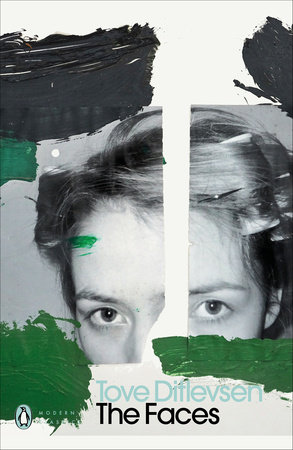
The Faces, first published in 1968 by celebrated Danish writer Tove Ditlevsen, is a sharp, tight portrait of a woman’s spiralling descent into an episode of paranoid psychosis , her hospitalization, and subsequent recovery. Ditlevsen’s personal life was marked by domestic upheaval, addiction, and multiple psychiatric admissions, and she is clearly drawing on lived experience here, but she is doing so with poetic clarity and remarkable insight to impart a sense of what it is like to be unable to distinguish reality from hallucination and yet feel like one has full control of one’s sense, no matter how strange the experiences.  However, this is neither memoir nor autofiction. Rather, it is, even through its protagonist’s darkest moments of anxiety and confusion, a story told with great warmth, compassion, and even humour.

At first, there is nothing funny about the fragile state Lise is in as we first meet her. She is haunted by memories, appearances, and even the very rooms she occupies. No matter how she tries to hide her concerns, she believes that others are out to exploit her weaknesses—even her best friend Nadia, a psychologist who drops by to visit and strongly suggests that she stay away from the sleeping pills Gitte provides and call her psychiatrist instead. Lise wants to trust her friend, but what she detects in the faces around her and hears whispered behind her back is getting the better of her. She ends up doing the opposite. Convinced that Gert really does want her out of the way, she downs the entire bottle of pills (and immediately calls her psychiatrist to tell him she doesn’t want to die). She wakes up days later, in the toxic trauma centre.

Once she is medically stabilized, Lise is taken to the psychiatric hospital. By this time she is in a state of full-blown psychosis. Voices speak to her from speakers embedded in her pillow and from behind grates in the room to which she has been confined, strapped to the bed, after she failed to settle on the open ward. This room, which is actually a bathroom, becomes her safe space. She can hide here, protected by the voices that alternately attack her and warn her against the nurses and psychiatrist who are all part of their scheme to destroy her. It’s easy for her to believe the danger, she can read in their false faces. Convinced she is being poisoned, she refuses to eat and resists medication.

As the anti-psychotics begin to take effect, Lise starts to accept and embrace her insanity, no longer terrified, but now increasingly alert and wise to the subterfuge that surrounds her. At least, that’s what she thinks. Convinced, for instance, that a nurse has painted her face to look like someone from her past, Lise reasons that she “did it to confuse her and break down her resistance, but [she] saw right through such childish tricks with her healthy, clear sense of judgement.” And certain illusions are especially resistant, no matter how often (and patiently) she is corrected. She continually sees the male nurse named Petersen as her husband, even when the solidity of own perception starts to slip:

‘That’s right,’ said Gert, satisfied. ‘You’re starting to behave quite sensibly.’ His face was suddenly blurred, the way it looks when you’ve forgotten to wind the film and you’ve taken two pictures on top of each other.

‘You have two faces,’ she said, astonished. ‘That’s not allowed. You can only wear one face at a time.’

If the voices and hallucinations that have fueled her paranoia prompted a most desperate, potentially life-threatening action, their gradual retreat into the hard, tactile environment of the hospital ward leaves her fearing that she will be abandoned. Understanding that the manifestations of psychosis is rooted in one’s own disordered thoughts is unsettling, and for a time Lise actively resists the idea that she is moving toward returning home.

As a reader who has experienced an episode of manic psychosis and hospitalization (albeit under very different circumstances), I am always impressed when an author can capture the salient aspects of  mental illness—the internal reorientation of reality, the distortion of time— so clearly without sacrificing the literary and poetic qualities that contribute to a good story. Drawing on lived experience is not, in itself sufficient, Ditlevsen achieves this balance through point of view and by keeping her narrative short and focused.

When The Faces opens, Lise is already beset by suspicions and hallucinations, so we come to know her, and those around her, entirely through her increasing warped perceptions. With a tight third person perspective—ideal for conveying madness—there is no ground zero. At first, it’s difficult to tell whether there is a justification for her fears; it does look like there may be some gaslighting going on. Even when she swallows the handful of pills it’s not clear if she has been pushed to the limit by outside forces. Yet, once she’s committed to the psychiatric hospital where she wages her daily struggle against the voices that taunt her and her belief that she is the victim of a grand conspiracy, the extent of her illness becomes apparent. We can “hear” the outside voices of the nurses, doctors and other patients, in concert with what she thinks she hears. Now we have to listen and hope that she will slowly emerge from her psychotic state. The actual state of affairs at home, the “real” nature of her reality so to speak, won’t be revealed until she is finally ready to be released.

The Faces by Tove Ditlevsen is translated from the Danish by Tiina Nunnally and published by Penguin Books. (Also published by Picador)
I accept. I accept it all: Return to My Native Land by Aimé Césaire

At the end of the small hours delicately sprouting handles for the market: the West Indies, hungry, hail-marked with smallpox, blown to bits by alcohol, the West Indies shipwrecked in the mud of this bay, wickedly shipwrecked in the dust of this town.

At the end of the small hours: the last, deceiving sorry scab on the wound of the waters; the martyrs who refuse to bear witness, the fading flowers of blood scattered on the futile wind like the screeches of chattering parrots; an old life’s ingratiating smile, lips apart in deserted anguish, an old wretchedness decomposing in silence beneath the sun; an old silence broken by tepid pustules, the dreadful zero of our reason for living.

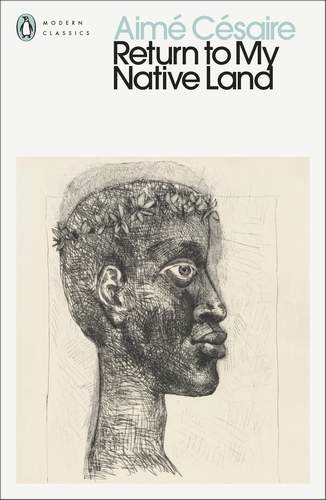
The image of his hometown that opens Martinician poet, playwright and politician Aimé Césaire’s Return to My Native Land, is brutal and unforgiving, a bleak portrait of destruction, despair, and disease. With its uncompromising vocabulary, relentless energy, and pointed repetition, a pulsating beat soon settles into the language. It will carry the reader—or listener, for these words beg to be heard—through to the end of this powerful and inspiring epic. Explored through the lens of surrealist poetry, this intensely personal journey to self-affirmation and biting deconstruction of the colonial condition became a rallying cry for the African diaspora. It is also one of the best known French poems of the twentieth century.

Césaire was born in 1913 in the town of Basse-Pointe, Martinique, the second eldest of six children. Although his family were of modest means, they moved to the capital, Fort-de-France, so he might be able to have a good education. It was a wise investment, as Aimé received a scholarship to the Lycée Louis le Grand in Paris. But the move to Europe was a sobering one as the young man came face to face with the fact that although he was a French citizen, the colour of his skin openly set him apart. It would serve as the beginning of an understanding of himself in relation to an African heritage and a legacy of slavery and colonial domination. With fellow students, Léopold Senghor from Senegal and Léon Damas from Guyana, he contributed to the development of the concept of “Negritude” or black consciousness, a revolt against colonial values that not only formed the foundation of an intellectual movement but shapes his celebrated poem.

Return to My Native Land (Cahier d’un retour au pays natal) first appeared in print in 1939, the year Césaire left France and moved back to Martinique with his wife and first child. Over the years it would undergo several revisions before the definitive French language version was published in 1956. The English edition reviewed here is a recent (2024) rerelease of the 1969 translation by John Berger and Anna Bostock, edited and introduced Jamaican writer and scholar Jason Allen-Paisant. In his introduction, Allen-Paisant writes of his personal history and connection to this work, noting that his appreciation grew slowly, ultimately bridging the seventy-seven years age difference between himself and Césaire:

In time, I became aware that this poem inspired movements of liberation and cultural assertion across Africa and its diaspora. But above all, Césaire’s poem was about my body. It was a sound in which my body was at home. This enchanting sonic power (its rhythms suggestive of the drum, of chanting, of ceremony) is hard to strip away. Still today, even now that I understand the meaning of nearly all its words, I connect with this poem through its sound.

Although Césaire found his poetic expression through surrealism, there is a broad narrative arc to Return to My Native Land. The early section speaks of the poverty and decay of his hometown, recalls childhood memories, and acknowledges the pull of Europe as means of escape. Leaving home is seen as the only way one can find oneself. It is to become part of a long history of dislocation:

To leave.
As there are hyena-men and panther-men,
so I shall be a Jew man
a Kaffir man
a Hindu-from-Calcutta-man
a man from Harlem-who-hasn’t-got-the-vote

Famine man, curse man, torture man, you may seize him any moment, beat him, kill him – yes, perfectly fine to kill him – accounting no one, having to offer an excuse to no one

The wandering man, homeless, trying to find a place and meaning , grows increasingly angry and bitter in a world in which his people are either hated, seen as wretched beasts, or loved as novelty and entertainment. At times the anger takes on a wider, universal tone:

Words? We are handling
quarters of the world, we are marrying
delirious continents, we are breaking down
steaming doors,
words, ah yes, words! but
words of fresh blood, words which are
tidal waves and erysipelas
malarias and lavas and bush-fires,
and burning flesh
and burning cities . . .

Know this well:
I never play except at the millennium
I never play except at the Great Fear

Accommodate yourself to me. I won’t
accommodate myself to you!

As much as this is a work that seems to sing off the page, it can be harsh and demanding. The language can be quite brutal and disarming, the images, often dark and visceral, as the poet confronts his own feelings of disgust, guilt, shame, and anger in his response to the world around him and the history that shaped it. But gradually he begins to find a strength and direction in himself and a vision of future he wants to see for his people. Self-acceptance does not lead to weakness but to defiance:

Make me rebellious against all vanity but docile
          to its genius
like the fist of our extended arm!
Make me the steward of its blood
make me the trustee of its rancour
make me a man of ending
make me a man of beginning
make me a man of harvesting
but also make me a man of sowing

The man who rises as the poem nears its close is one who accepts his biology but refuses to be defined by it. He is called and calls his people to rediscover and reclaim their humanity after centuries of dehumanization and trauma through a reimagined return to their African roots. That is the native land to which he has, in spirit, returned. In body, however, he will remain in the land of his birth and continue to explore these themes through his writing and plays, and put his passions into practice in political life. Aimé Césaire died in 2008 at the age of ninety-two, but Return to My Native Land, remains a critical call to action and profound anti-colonial statement that is now, eighty-five years after its first appearance and almost seventy years after the release of the definitive French edition, more important than ever.

Return to My Native Land by Aimé Césaire is translated from the French by John Berger and Anna Bostock, with an introduction by Jason Allen-Paisant, and published by Penguin Books.

A little poetic musing: Three recent or current reads and a poem of my own

I haven’t posted much lately, in part because I have been focused on some writing and reviewing for other publications, and also, because I’ve decided to list my house, concentrated reading has been somewhat disrupted. In the midst of all this, however, there is always time for poetry. I find lately that poetry has become an increasingly important part of my reading routine. So, I thought I would take a little time to look at a recent read and a couple of the collections currently vying for my attention.

Unbearable Splendor by Sun Yung Shin (Coffee House Press, 2016)

The intersection of essay and poetry is of particular interest to me. This collection takes a wide-ranging approach to the confluence of the two forms and stands as an impressive example of what can be achieved by filtering essayistic meditations through a poetic lens.

Sun Yung Shin was born in Korea and adopted by an American family at the age of two. The weight of her dual identity pulls the explorations that comprise Unbearable Splendor together into a loosely spinning orbit. Along the way, she weaves in elements from cosmology, linguistics, Korean culture, Greek mythology, literature and futuristic visions of being. The result is dazzling and devastatingly beautiful. For my money, the most interesting pieces offer strange and unusual angles on the cellular, spiritual, and genetic implications of being an orphan, often referring to herself in the first person plural:

As we task our memory-organ to remember our life in Korea, we breed dream after dream. False dreams? Truthful dreams? Hanging? Phantom shaped? They drop like ripe fruit, then disappear before hitting the ground, preventing bruising, rotting. Dreams are ephemera and have no body to violate, no flesh, to decay. They can remain fresh as the wind, recycled like hot rising vapor from the ocean, into the frozen clouds, and eventually back into the crashing black water, the source of all dreams, the living body of our planet.

Kafka and Borges offer inspiration, a series of essay/poems feature Antigone, and toward the end, she draws on cyborg and cloning technology. The language is devastating. However, if I have any reservations, it would be that some of the pieces fall awkwardly in between the two forms—too much an essay to be a satisfying poem, but not developed enough as a nonfiction piece to really flesh out an idea.

*

Currently reading:

The Promised Land: Poems from an Itinerant Life by André Naffis-Sahely (Penguin Books, 2017)

This slender volume represents poet and translator André Naffis-Sahely’s first collection. Born in Venice to an Iranian father and Italian mother, he was raised in Abu Dhabi. The earlier poems in this collection deal with his childhood in the harshly surreal environment of a manufactured city, and his return visits in early adulthood. His shifting relationship with his parents, how he sees and understands them as their marriage crumbles and life in Abu Dhabi loses any lustre it may have had, provides the material for an strong series of poems. The second section, which is where I am currently biding my time, includes a number of poems that cross the globe and speak to a certain restlessness. Here, is a sample from the prose poem, “This Most Serene Republic” which opens with a description of Venice as his father experienced it when he first arrived in the 1960s and spent a cold damp winter huddling atop the wardrobes as water rose through holes in the floor of his flat. The son in his footsteps describes:

… Those old, porous palaces, whose upper floors housed the few penniless nobles whose hallowed ancestors once terrorized the Mare Nostrum. Those palaces, much like the one I’m sleeping in, smelt like Latin jungles: mahogany everywhere. I love this tiny room and its Franciscan sparseness. All my life, I’ve felt like a Jew, or a Gipsy, or some hapless scion of a lost wandering tribe, but they, at least, have Bar Mitzvahs, music… all I’ve left is this room. This was an empire ruled from rooms: chambers decorated for a single, specific purpose: to impress its numerous enemies. I can’t sleep. There’s a ghostly halo above my bed where a clock used to hang. One way, I suppose, to stake a claim on timelessness, if not serenity.

This is the type of collection I like to linger in, not to hurry through. A clear, authenticity shines through in Naffis-Sahely’s poetics, with a quiet reflective wisdom I am really enjoying.

*

Jonahwhale by Ranjit Hoskote (Hamish Hamilton/Penguin India, 2018)

This book seemed destined to prove more elusive than Ahab’s famous whale. I looked for it in Calcutta, a copy was sent to me in late February, and finally assuming that that one drowned somewhere along the way, I placed an order with an Indian distributor that ships by courier and the book made its way across the globe in four days. Sometimes you do get what you pay for.

Ranjit Hoskote is a poet, translator, curator and cultural critic based in Bombay. I’ve just started into this volume and I’m very excited to see where its currents will carry me. I’m expecting a lyrical adventure along fabled waterways, through literary and historical channels. Hoskote’s broad cultural perspective promises a timely exploration of the political and ecological realities that shape and threaten our world. This, again, is a text, that invites careful reading. No need to rush on this journey. Here is a taste  from a piece called “Ahab”:

Captain of castaways, the pilot calls out and his curse carries
                                         across docks, derricks, opium factories:
                                          a typhoon in the horse latitudes.
He’s hurled his ship after the whale
that swallowed him and spat him out.
.                                     The monster is the only system he’s known.
At the bridge, he’s drenched in the dark:
locked on target, silent, furrowed,
Saturned to stone.

I have, as ever, several other books close at hand. I’m finding that short, single author collections from contemporary poets  hold the most interest for me at the moment.

*

And, finally, this past week saw the publication at Burning House Press, of my own modest piece of poetry, a short prose poem called “Are We There Yet?” This is my first successful poem as far as I’m concerned, that is, something that came out as I intended. It was written in response to the theme “Liminal Spaces”, a perfect fit for a way of thinking about my own dual-gendered life experience. I did, coincidentally, advise the editor that he could consider it a poem or an essay, since I look at everything I write, no matter the form, to be nonfiction.

You can find my poem here.

Wrestling with Rhys: Reflections on reading Voyage in the Dark

I debated leaving this book undiscussed, unfinished even. It is not in my nature to write negative reviews but I am not certain my reaction to Voyage in the Dark, my selection for the Jean Rhys Reading Week, counts as negative as much as it stands as disappointed. I felt it was worthwhile looking into why this book and its author did not work for me as I had hoped it would, especially when, at one time, I did read and enjoy several of her books. If anything has changed, of course, it is me. I am not the same reader I was thirty years ago and, if there could have been a worse time for me to entertain the company of Voyage’s protagonist Anna Morgan, this past week would be hard to beat.

voyageWhen we meet Anna, the young narrator of Jean Rhys’ 1934 novel, she is eighteen, going on nineteen, and working as a chorus girl. Transplanted to England from her childhood home in the Caribbean, she paints a picture of a country that is bleak, cold, rainy and unwelcoming. She meets Walter Jeffries while she is on tour and once she is back in London they connect and initiate an affair. Anna takes this development in stride, as if it is both her due and her fate. She tolerates the sex and relies on the money he provides her to pay her board in a series of rooming houses and buy herself clothing. If her feelings are conflicted, it is difficult to tell. If anything she comes across as inordinately indifferent:

Of course, you get used to things, you get used to anything. It was as if I had always lived like that. Only sometimes, when I had got back home and was undressing to go to bed, I would think, ‘My God, this is a funny way to live. My God, how did this happen?’

Happiness is at best a vague notion, elusive when she vaguely tries to grasp at it. Only when Walter leaves for an extended business trip, severing their relationship upon his return, does Anna feel “smashed.” She makes attempts to reach out to him, to win him back, but what does she really miss? His arms or his money? It is hard to be certain.

Anna is always cold. She blames it on her origins in a hot climate, but the chill runs much deeper. In contrast to her persistent obsession with the monotony of her English surroundings, memories of her life in Dominica are presented in richer, more vivid terms. They are shot through with a melancholia that does not speak to childhood nostalgia alone–there is a sense that her emotions are complicated–but these passages allow for some of my favourite moments in the book:

All the way back in the taxi I was still thinking about home and when I got into bed I lay awake, thinking about it. About how sad the sun can be, especially in the afternoon, but in a different way from the sadness of cold places, quite different. And the way the bats fly out at sunset, two by two, very stately. And the smell of the store down on the Bay. (‘I’ll take four yards of the pink, please, Miss Jessie.’) And the smell of Francine – acrid sweet. And the hibiscus once – it was so red, so proud, and its long gold tongue hung out. It was so red that even the sky was just a background for it. And I can’t believe it’s dead….And the sound of rain on the galvanized-iron roof. How it would go on and on, thundering on the roof…

Rhys’ prose is strikingly spare and unaffected. It works well when she is looking back, or when the narrative occasionally falls into brief periods of stream of consciousness. The personality of secondary characters, if not necessarily sympathetic, are rendered with stronger brush strokes than that of the young woman at the centre of the narrative. And this is where the Voyage in the Dark becomes an effort for me as a reader.

Anna’s extraordinary passivity is a hallmark of the novel, as are the abrupt flashes of impatience and pride that periodically flare around others. She can be fickle, petulant and self indulgent. None of these factors are a problem, together or apart; what seems lacking is a context in which to understand her attitude and behaviour. For many readers I suspect this elusive quality of Anna’s character is where the interest and appeal lies. I found that despite moments when I was ready to re-evaluate my response to the text, Anna’s hollowness, apathy and vanity would test my patience again.

When she muses “I was thinking, ‘I’m nineteen and I’ve got to go on living and living and living,” her reflections echo a person struggling with depression, and that may be a fair interpretation, but it doesn’t hold weight for me in spite of passages like:

It’s funny when you feel as if you don’t want to do anything more in your life except to sleep, or else to lie without moving. That’s when you hear time sliding past you like water running.

Anna holds no responsibility for anything that has happened to her in her short life. She is miserable and expects everything to be handed to her. That’s fine, there are people like that and I do not expect characters to behave in manner that I approve of or to be likeable. But in modernist fiction I anticipate a measure of believability that, for some reason, is lacking for me here.

This is, I caution, my own idiosyncratic response to a book that I realize is beloved by many. I can understand how, in my early twenties, living with an as yet undiagnosed mood disorder, as an ostensibly female person keen to find female characters and writers that resonated with my own alien understanding of my gender identity; Jean Rhys’ novels and female characters could have held a strong appeal. From this vantage point in my 50s, I suspect it is more my experience with mental illness, personally and professionally, than my cross gendered path that account for my difficulty pulling myself through this short novel. And then, I am also mourning the suicide of a dear friend who battled a soul crushing depression for more than a year before finally taking matters into her own hands earlier this month. Against that backdrop, Anna’s persistent gloominess was, shall we say, cold comfort.