Pride Month reading 2023—None of the Above: Reflections on Life Beyond the Binary by Travis Alabanza

I have long been ambivalent about Pride, but the rising waves of anti-LGBTQ, and especially anti-trans, sentiment seen over the past few years has made me very concerned. As a transgender individual who is white and fits visibly into the accepted gender binary, I have been able to stand in the shadows for a long time. For more than two decades. In fact, when I was a single parent supporting two children in a world without any legal protections on the grounds of gender identity, keeping my gendered history hidden was essential. On the occasions that I dared to out myself to a co-worker, job loss invariably followed. But, for the most part, especially outside of the LGBTQ world, I have encountered very few problems because I am older and exceptionally ordinary in my presentation. I pass so well that often I am not heard or believed when I try to tell someone that I am transgender.

For British writer and performer Travis Alabanza, on the other hand, none of the above applies. So when I heard about their Jhalak Prize-winning book None of the Above: Reflections on a Life Beyond the Binary, I knew I’d found my perfect read for this year’s Pride Month. And, even though our ages, lives and experiences differ greatly, I related more closely to many of the ideas they explore in this thoughtful and articulate examination of what it means to exist as an openly gender non-conforming person of colour in a world that is bound to the binary, than in most of the more “conventional” trans-themed books I’ve read. This is a bold and honest work that rides on a shifting current of hurt, uncertainty and self-affirmation against an unspoken pressure for trans identified people to be determined, self-assured, and often stubbornly binary in a world that increasingly strives to deny our validity. There is little room for doubt, less for admitting how exhausting it can be.

In our journey to ‘own our gender’, is it ever really our own? Or does it rely on us conditioning those around us to act and be a certain way too?

None of the Above is neither a typical memoir, nor an explicit defense/explanation of non-binary identity. It is, rather, something in between—a personal account structured around seven statements that have had a particular impact on Alabanza, as a youth and as a public figure, exploring their identity, sexuality and gendered expression. As they dissect these statements, there is a persistent question of how long an obviously gender-defiant presentation can be maintained before it simply becomes easier to move toward a more “acceptable” or “proper” presentation of transness. Of course, given the ongoing escalation of hostility directed at trans women, it’s not clear that such a progression toward hormones and surgery would be easier.

With chapter titles such as “So, When Did You Know?”, “But I Mean, Proper Trans”  and “This Ain’t A Thing We Do Around Here, Son,” Alabanza talks about growing up poor in a council project, their first joyful expressions of femininity, and their development of a successful career as a performer and theatre maker. The questions and comments they encounter come from curious, well-meaning friends, neighbours, fellow performers and critical journalists. Yet, in exploring their reactions and possible responses to these statements that weigh so heavily, there is a willingness to open up their experiences to concerns that intersect with those of others who may be white and/or cisgender. After all, the rigid strictures associated with the gender binary impact people who are not trans in many ways even if they also drive transphobic attitudes. The same gender binary can force trans people to consider medicalization as the measure of “true” transness and look at the openly queer and non-binary as troublesome distractions. For trans people of colour all of these contradictory forces are heightened.

Often what is projected onto those who are visibly gender non-conforming and non-binary, is that our existing, and claiming transness, will ruin it for those wanting (and deserving) a quieter life. Gender non-conformity and being outside of the gender binary cannot be seen as quiet: it is seen as purposefully choosing to cause trouble. To those so wanting a life of peace, others’ disruption can feel like a threat to that fought-for sanctuary.

This is a book that strives to come to terms with the feeling of being at odds with the gender one is assigned at birth, but not feeling comfortable identifying as a man or woman. It’s not a new phenomenon—I have friends who have identified as “gender neutral” for decades. What has changed, for better and for worse, is a wider public forum for people to see and be seen defying or transcending gender. I am grateful I transitioned before the advent of social media, but without the internet I would have had no community. Likewise, without the fabulous gender-bending musicians of the 1970s, I would not have survived my teens. As it was, I was thirty-eight before I finally had an understanding of the differentness I’d always known. But, even though my ultimate path was quieter and more conventional (to a point), my strongest connections have always been with those who stand at the intersection of masculine and feminine. So, for me, there was much food for thought in None of the Above that is beyond the scope of this brief reflection/review. Perhaps it will emerge elsewhere. Meanwhile, I will say that, for readers inside and outside the trans community, this is a very valuable and entertaining read (though one that might anger some on both sides).

None of the Above: Reflections on Life Beyond the Binary by Travis Alabanza is published by Canongate in the UK and will be published by The Feminist Press in the US in October.

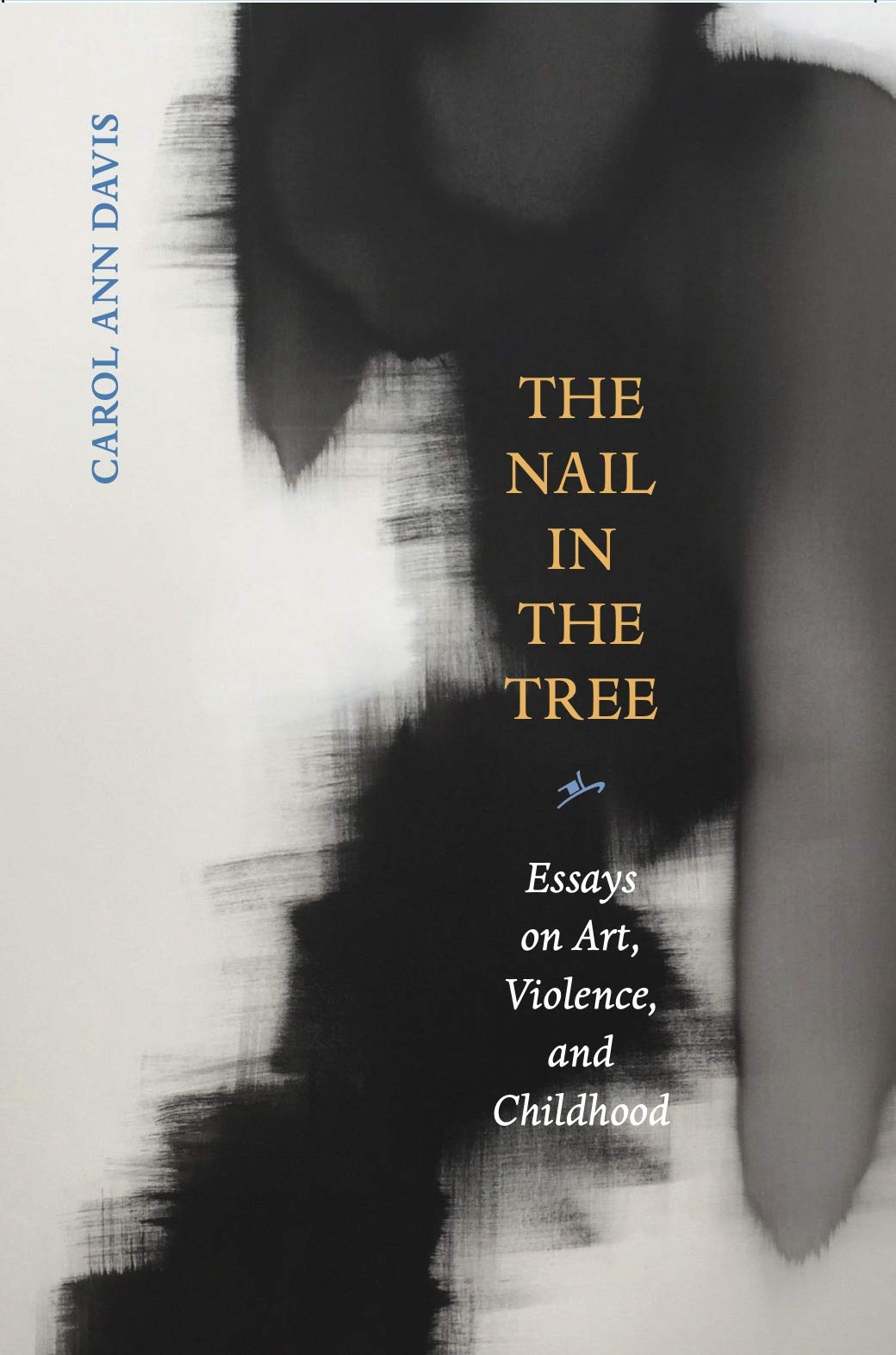
Taken, not taken: The Nail in the Tree – Essays on Art, Violence, and Childhood by Carol Ann Davis

I accepted this book as a review copy when it first came out, just over three years ago now. I put on the shelf with all the best intentions, and then forgot it. When I rediscovered it there, lost among assorted volumes of nonfiction, I felt ashamed by my negligence. Surely I could have read it earlier, if not when I first received it, at the very least during the trial of Alex Jones for the outrageous conspiracy theories that hurt so many people and ushered in a whole new form of denial, or a few months later when the tenth anniversary of the Sandy Hook school shooting was marked last December. But The US seems an endless supplier of senseless and tragic school shootings so it’s no surprise that, when I finally did take the time to read The Nail in the Tree: Essays on Art, Violence, and Childhood, I happened to finish it on the one year anniversary of Uvalde.

Poet and essayist Carol Ann Davis was newly relocated to Newtown, Connecticut, with her husband and two young sons when the Sandy Hook shooting occurred. They lived close to the site but, due to zoning, the boys attended another school. Willem was in fourth grade at the time, Luke in kindergarten. They were safe, but not untouched. “And this is what it is not to suffer that day,” she tells herself when recalling the shooting, “This is the not-suffering, happy ending story.” But, of course, it’s not that simple. The trauma sends lasting ripples throughout the community in way that leaves no one unaffected:

Sacerdos, from the French and earlier from Latin, literally meaning “offerer of sacrifices.” The children who live here, perhaps it’s strange to say, now glow. They do, they glow. No one can approach unmoved, and the children, understanding their role, shoulder, take on, burden themselves with us. Their skin nearly translucent, they walk around like that, glowing. They offer themselves like bits of mirror, and we accept.

The adults, by virtue of wider perspective, suddenly become acutely aware of the fragility of childhood. For those who still have to send their children back to school, trust them to the school bus each morning, there is the conflicted desire to both protect and prepare. Older siblings want to look out for their younger brothers and sisters. No one wants to trigger memories that may or may not even exist.

It is within the altered dynamic of the six years that follow the tragedy, that Davis endeavours to articulate and make sense of what it means to raise children in the aftermath of violence. In a series of essays that make their way slowly but not strictly chronologically away from the pivotal event, she turns to poetry and art to understand how artistic practice might be a productive way of integrating trauma into life moving forward—for herself and for her sons.

This is not a typical grief memoir, nor does it delve into the specifics of the shooting or the political fallout. The event itself rests as a horror too large to think about directly—it sits, unspoken, in all aspects of community life, especially at the bus stop, in the schools and on the playing field. Yet Davis seeks answers at her desk, beneath the hummingbird feeder, at art galleries and museums and, ultimately swimming in the open ocean, the one desperately longed-for release her newly adopted, landlocked hometown denies her. Along the way, among others, she turns to the work of Hélène Cixous and poet Miklós Radnóti and, for an extended period, she follows the lead of (and argues with) Rumi. She engages with the art of Eva Hesse to better understand the poetic process, and when, four years after the fact she has to fully explain to Luke, now that he is old enough to know, the extent of what happened at Sandy Hook, she draws on Paul Celan and Armenian born artist Arshile Gorky to help her untangle the enormity of her own grief.

Davis’s writing is poetic, pulling images, quotes and refrains through her essays, like threads to link or unravel her thoughts as needed. And she is an astute observer of art who is able to find in a number of artists, their techniques and philosophies about their practice, clues to appreciating how she is growing and, more importantly, how the boys are not only coping, but finding their own ways to thrive. More than once the boys are dragged through exhibitions, like one of Picasso’s sculptures in New York, or shown a show catalogue, like that of American abstract painter Agnes Martin. Davis hopes that Luke, who is a budding draftsman will find some connection in Martin’s geometrically precise but somewhat dissonant canvases (he does not). The message in the artist’s work and her method, however, is less for the child than his mother:

I’m suddenly afraid: I am not ready to admit to myself, as Martin has, that the purpose of art may be to unlock an inner happiness in the viewer. I am doubtful such a happiness is inherent, and unsure whether it is larger than forces with which I’ve engaged in my own work (such as grief and difficulty). I am uncertain I can place the function of art, art-making, its practice, in the category of making-happy, given all I’ve seen and felt in the last five years, all my children have endured in the service of gaining a working understanding of the world into which they’ve been thrown. Of course, any difficulty can be a subset of happiness, Martin’s work virtually shouts at me. Don’t be so narrow-minded.

Throughout these original, thoughtful essays, it becomes clear that the search for meaningful expression—even happiness—after trauma is Davis’s personal journey, one within which her children are her motivation and measure of progress, but not her exactly creative companions. One cannot grieve for anyone else as much a parent might wish shield their child from their own inevitable process. With luck and their parents’ support, Willem and Luke will hopefully have the resources to come, in time, to their own mature understandings of the event that they escaped only by chance. Sadly, with school shootings such a regular occurrence in the US, shadows of the horror that erupted at Sandy Hook on December 14, 2012 may be hard for any of the Newtown residents to fully move beyond.

The Nail in the Tree: Essays on Art, Violence, and Childhood by Carol Ann Davis is published by Tupelo Press.

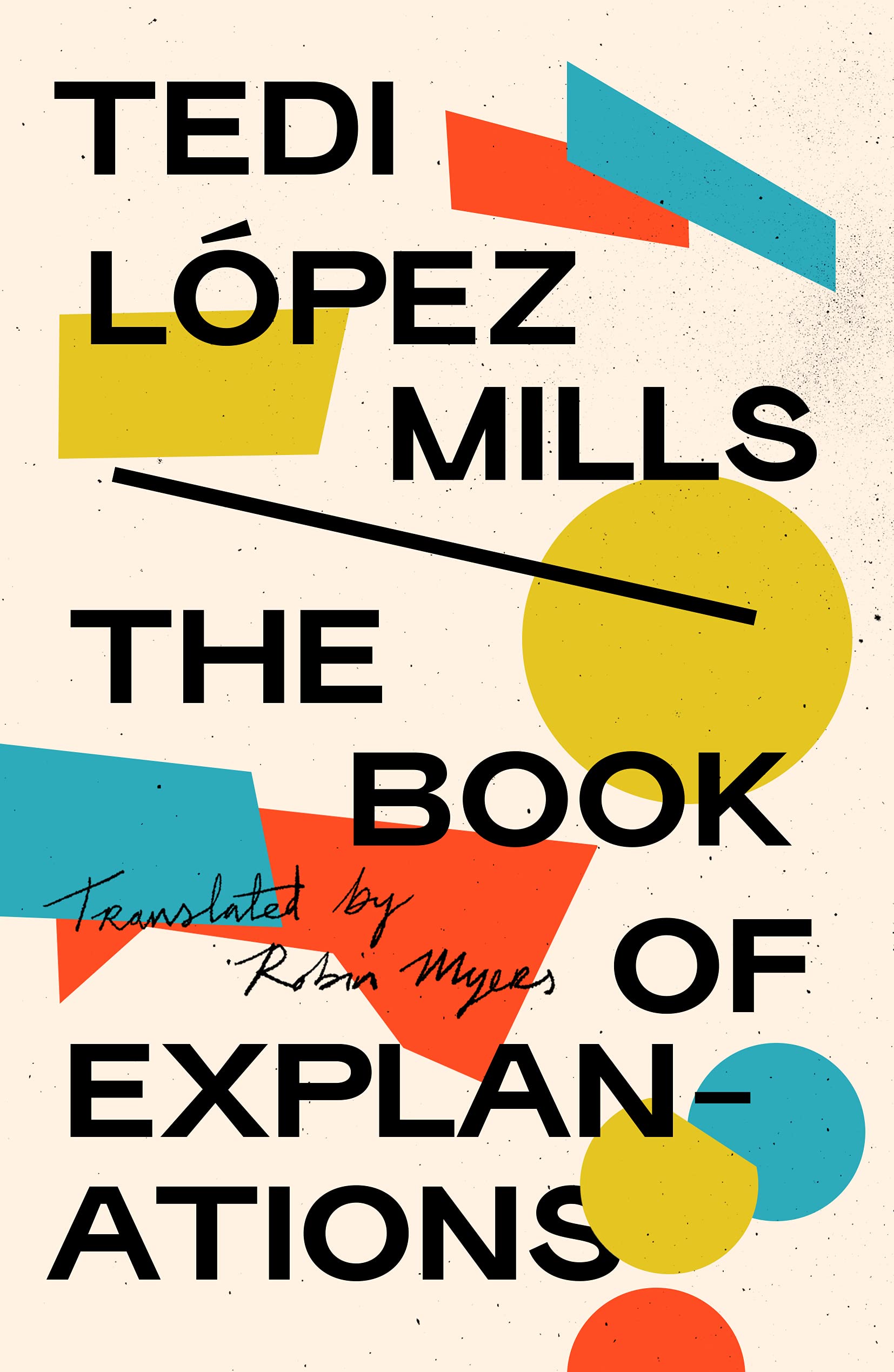
Searching for the ever elusive “I”: The Book of Explanations by Tedi López Mills

Lately, when I imagine, I remember. Then I shift into a peaceful kind of forgetfulness. And I start to imagine again, remembering. Like a circle that’s no longer vicious because it erases its own trail, little by little, always resketching its outline for the first time.

How much of identity is memory? It would seem that the experience of being in the world is dependent on memory because each moment, as it passes, becomes part of an ever accumulating past—a past that gives coherency to the existential “I.” Yet, can what we think we know about ourselves help us live with our choices, idiosyncrasies, strengths and faults? In her inventive and intelligent collection of personal essays, The Book of Explanations, Mexican poet and writer Tedi López Mills begins with a look at a most basic question of identity, her “improper” (read: “unconventional”) name, followed by playfully distinctive explorations and dissections of the nature of memory. These opening pieces set the groundwork for a journey that will carry us through many of the experiences, influences, values and ideals that make her who she is and, by extension, any one of us who we are—or might be—because, after all, what can anyone ever really know for certain?

I don’t know the history of the fourteen essays—cleverly numbered from 0 through 13— that comprise The Book of Explanations. That is, I cannot tell if the original 2012 collection was assembled from previously published pieces or intended as a cohesive work from the outset, but it definitely succeeds as a whole. López Mills’ style is eclectic and fresh; her essays open up in unexpected directions, adopting different forms and approaches from piece to piece. She is always very much present, drawing on memories and personal experience, but even her more memoirish essays swing toward broader social, psychological and philosophical questions.

After her early forays into the nature of remembering, López Mills turns her attention to that strange period of often dark introspection otherwise known as adolescence and to reflections on the peculiarities of family dynamics. As a teenager, the author, or  her possible alter ego/alternate “I,” falls into to some classically heavy reading—Hesse, Nietzsche—in search of formulative role models. On her family’s frequently uprooted home front, her father, an eccentric, frustrated architect of dreams and schemes, is an unpredictable but memorable character while her mother is the stabilizing presence. She explores the lasting impact of her childhood in the essay “Father, Mother, Children,” where she posits: “Maybe there are no happy families, just happy days. I remember them because they’re always flanked by unhappy ones.” Her father, she says, was “erratic, original every day,” her mother “homogenous, predictable.” She is tempted to imagine who her mother might have been without children, although that necessarily imagines the imaginer out of existence. This leads into a fascinating observation about childlessness—her own situation which she insists is neither right or wrong—and its implications:

You belong to yourself, and in the end you may realize that your persona dims if you don’t put it at risk; you start melting away into a nervous, perfectionist mind. The influence of childlessness may even be more shocking, a deprivation so intense that it triggers hallucinations of a crowd as you rummage around, hearing no one’s noise. A fictitious identity, if forced and constant. While there’s no room for regret—you can’t undo what was never done—there’s an extravagant kind of nostalgia. You miss the future, not the past.

Either option, parenting or childlessness, simply puts you on one side of anguish or the other. And as a parent, I would add that you can experience an extravagant kind of nostalgia as well. In fact, I suspect that we all have some aspects of our lives in which it is the future we miss, not the past.

From one essay to the next, López Mills, examines those notions that intrigue or trouble her, or both. Her affection for cats, the pervasive and evasive nature of guilt (a regular evening visitor), what makes some people prone to jealousy (something she does not experience) and what makes others “good” (something she would like to be). She defends pessimism in what is essentially an essay about Cioran, makes some astute observations of the way we show or fail to show compassion for those in need and, finally, engages in a spirited Wittgensteinian-like investigation of wisdom by way of by Marcus Aurelius, Epictetus and the Bhagavad Gita with plenty of introspective musing unfolding over 54 short reflections.

Not only is López Mills an engaging companion with a philosopher’s tendency to question and a poet’s sensitive attention to language, she puts herself—as the typically uncertain “I”—into all of the subjects she explores in a way that is always thoughtful and recognizable. This is a book filled with so many intriguing thoughts and ideas, but it is never intimidating or alienating. At a time when “genre-bending” essays have become quite popular, I sensed something here that I have not found in other similarly described collections. I suspect it may have to do with age. Although I grew up in a different environment and my soul searching may have had some differing triggers along the way, I had a sense from early in this collection that the author had to be close to my own age. There were no particular pop culture references to cling to but rather a shared atmosphere of being a teenager in the seventies, and a certain accumulated, well, wisdom. I finally looked her bio up online and discovered that she was born in 1959 and is just one year older than I am. Even though this book, first published in Spanish in 2012, was probably compiled when she was in her early fifties, I felt I was reading a contemporary.

It’s so easy to believe we know it all when young, but the older you get the more you realize how naïve your younger self was and the more you appreciate how little you ever really understand about who you are. At fifty or sixty, you may care less what others think in explicit terms, but that doesn’t mean you stop trying to figure out what it all means at the end of the day. As with one of my heroes, Michel Leris, who differs greatly from López Mills in style but not in intent, there is this unending desire to catch oneself in the act of being and examine a subject—the elusive “I”—which can really only be observed in passing. Both writers know we can look back at what we remember, but in the moment we are fluid beings and what we remember is always being reimagined. There will always be more questions than answers.

And that’s okay.

The Book of Explanations by Tedi López Mills is translated from the Spanish by Robin Myers and published by Deep Vellum.