Beautiful scavenger: We the Parasites by A. V. Marraccini

“I’m boringly good,” A. V. Marraccini confesses. “Except when I write critique, I guess.” I am also boringly good, even when I write critique—or so I thought before I read We the Parasites. Now, I’m not so sure.

What I will admit, off the top, is that I have been staring at this hot pink volume waiting patiently on one of my overcrowded bookshelves for the better part of this year. As someone who has written and edited critical essays without any of the prerequisite training many of my literary friends seem to have, I was afraid that a book about criticism would be thick with the names of all those critical theorists I have not read and likely never will, and page after page I would be smiling and nodding politely, off in the corner, with no idea what was going on. I needn’t have worried though; for the most part, none of those folk were invited to this party. However, I was still concerned that, given what I’d heard about this book, I might yet be stranded outside my comfort zone.
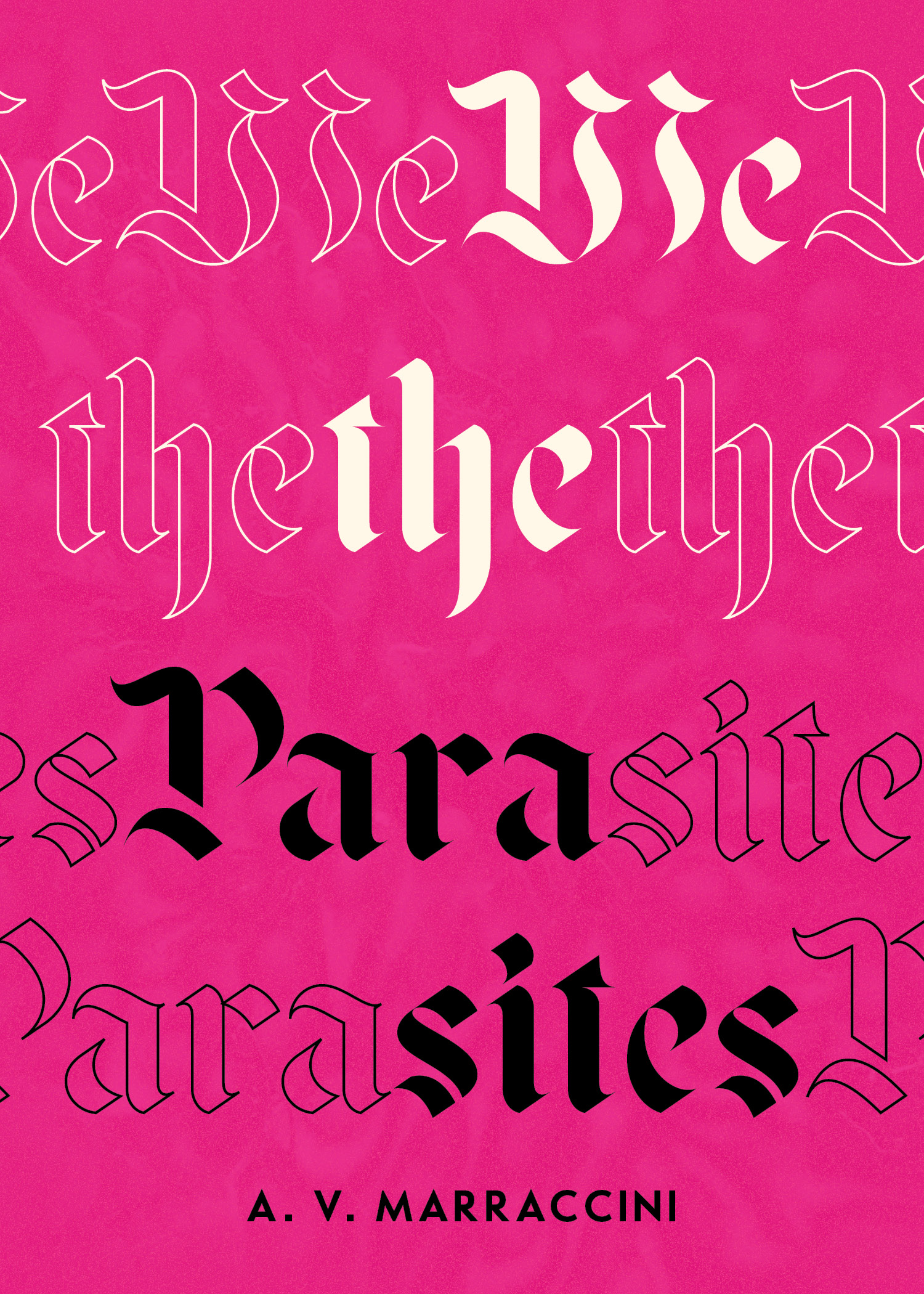
You see, Marraccini puts her cards on the table right at the beginning. After describing the mechanics of the relationship between the fig and the fig wasp that burrows deep into the fruit flesh in a somewhat haphazard partnership that enables the reproduction of both fruit and insect, she finds a distinct affinity, as a critic, with the latter:

The critical gaze is tearing apart, clawing into the soft, central flesh of the tree bud.

The critical gaze is also erotic; we want things, we are by a degree of separation pollinating figs with other figs by means of our wasp bodies, rubbing two novels together like children who make two dolls “have sex”, except that we’ll die inside the fruit and someone else will read it and eat it, rich with the juice of my corpse.

And although the wasp/fig process involves, to unequal ends, male and female wasps and figs, there is an element that is, for our parasitic critic, inherently queer and, thus:

Criticism, too, is queer in this way, generative outside the two-gendered model, outside the matrimonial light of day way of reproducing people, wasps, figs, or knowledge.

Okay, I think. I will need to be convinced. The idea of digging into a work appeals quite naturally. That is what I do when I write about a book, whether in a literary journal or, at least most of the time, here on this site. I inhabit the words of others in order to write, but try to stay out of my own way in my writing so that my reading experience seasons but does not obviously alter the flavour of someone else’s. And erotic? Well, that is not something that comes naturally to me, nor does queer even though I’m hard-pressed to know what I am if not queer. I have a fraught relationship with matters of sexuality and identity. It’s complicated. Yet, I am intrigued. And, as We the Parasites demonstrates, reading—or viewing, since Marraccini is an art historian—with the body can be a messy endeavour. But I’m getting ahead of myself.

Deciding to give this much-praised work the benefit of the doubt, I held my anxieties to the side, burrowed into the flesh of this curious text (I know, I know) and, my god, what an excellent read! (Please excuse the abandonment of all the niceties of proper critical reviewing and even accept an errant exclamation mark, because this book is one that invites you into the critic’s heart, mind and bed in a way that is completely, even joyously unexpected.) It is wise and funny and, best of all, it draws its references from the most unlikely places. My limited acquaintance with the stalwarts of the Western canon was no barrier to my enjoyment and, much to surprise, the two years of Classics that preceded my eventual academic journey through Biological Anthropology and Philosophy, was finally of some use. I not only have The Illiad (who doesn’t?), but I also could pull long untouched copies of Xenophon’s The Persian Expedition and Arrian’s Anabasis off my shelf and feel so clever. Not to worry, though, there’s always Google which you will need to see Twombly’s The Age of Alexander for this particular discussion, unless you have a photographic memory. But my point is, really, that you don’t need any special background to enjoy the musings that arise in this book; Marraccini writes with such enthusiasm, even about work that she views with some skepticism, that anything that is not offered within the text itself will have you happily popping online for a quick refresher.

The parasite analogy, if at first odd, sparks the author’s playful love of the dark and yet speaks with striking accuracy to the nature of the critic’s task—burrowing into and feeding off of the work of (mostly dead) writers and artists, to produce a reading or a response that brings light to the spaces darkened by time. However, if the wasp burrows into the fig, the tape worm finds it way into its animal or human host, consider the fish-louse that swims into the gills of its victim, severs the roots at the base of the tongue and eats away at the flesh until it becomes the tongue itself. This offers Marraccini an image, graphically detailed, that corresponds to the way that she has, when appropriate, stolen the tongue of Homer, or John Updike, or whomever. Strange? Maybe, but it aligns with the experience I’m often referring to when I say that I write about books to “open up” a potential reading (or readings). It’s even more relevant when one has the runway (that is, the venue and necessary word count) for an in-depth critical essay. If not stealing, we are perhaps echoing a voice, while our “I” self remains in the shadows.

In this extended essay in which the subject is criticism itself, Marracinni draws on a wide range of sources and images from classical history and mythology, to poetry, prose and, of course, art. Cy Twombly is her main man on that last front. One can move from Updike, to Centaurs, to Genet and Rilke, but it seems there’s a Twombly painting or series for almost every season and, in her explorations, she manages to carry us right down into the layers of crayon and paint. This affinity between artist and critic is so vividly rendered I wish I could have read this before my only direct encounter with his work at MOMA in San Francisco, but that would require bending time.

Our parasite, in inhabiting the works of the artists she consumes, also develops a strange relationship with the notions that arise out of that connection—a who-did-that-idea-come-fromness—that emerges in unlikely settings. Like dreams. Like when a nocturnal lecturer pontificating about the attributes of a strange painting-carpet he insists is a Twombly says No one wants queer art to be queer any more, Marraccini acknowledges, “to be clear, (that) is my brain saying that, and yet me in the dream is somehow intimidated by his prognostic authority” and she wakes up in a puddle of sweat. This is, for me, the kind of uncanny thing that only occurs when one is so deeply engaged with an idea or a book or an artwork or an artist, that the boundary between the ruminations of the sleeping self and the waking self is breeched. Blurred.

The question then is one of embodiment. Is the reader/viewer/critic inhabiting the work, or is it the other way round? Is this a risk of reading/viewing with the body? Marraccini writes about longing and desire, how they can be awoken or perhaps interfere with the engagement. Yet desire is not necessarily realized (at least not without breaking a law). And she does write about the body, her body, but typically in the most clinically frank way about the myriad way the body and its discontents can betray one. To be a parasite it one thing, to host one is something one would rather not entertain, thank you. Yet there are illnesses, physical and mental, that many of us live with and to pretend that they never mediate the way we read a poem of look at a piece of art would be an act of denial.

Finally, Marraccini is writing all of this against the backdrop of the early months of the pandemic, when London was eerily quiet and she could wander at will under the cover of darkness. (We are both naturally nocturnal creatures, it seems.) She captures the eerie otherness or suspended unknown of that period of time so well:

The whole world is so new now, there will surely be a spate of essays like this one, about The Before and After, or there will be no After and there will still be essays anyway.

I love this sentence. There surely was a spate of essays—as nonfiction editor for 3:AM Magazine, my inbox saw four or five new pandemic inspired essays arrive nearly every day. Meanwhile, a temporary medication change made it increasingly difficult for me to make my way through them as 2020 wore on, and by the end of the year I was no longer editing or entertaining the idea of pitching or writing any more essays myself. Whether there actually has been an After, as year four of Covid dawns, there are still essays, but I’m not writing them. However, reluctant queer, recalcitrant parasite that I am, perhaps I should be, duly inspired by this idiosyncratic, astute and undeniably queer essay. This is an original and very entertaining book.

We the Parasites by A. V. Marraccini is published by Sublunary Editions.
A reflection for Winter Solstice 2023

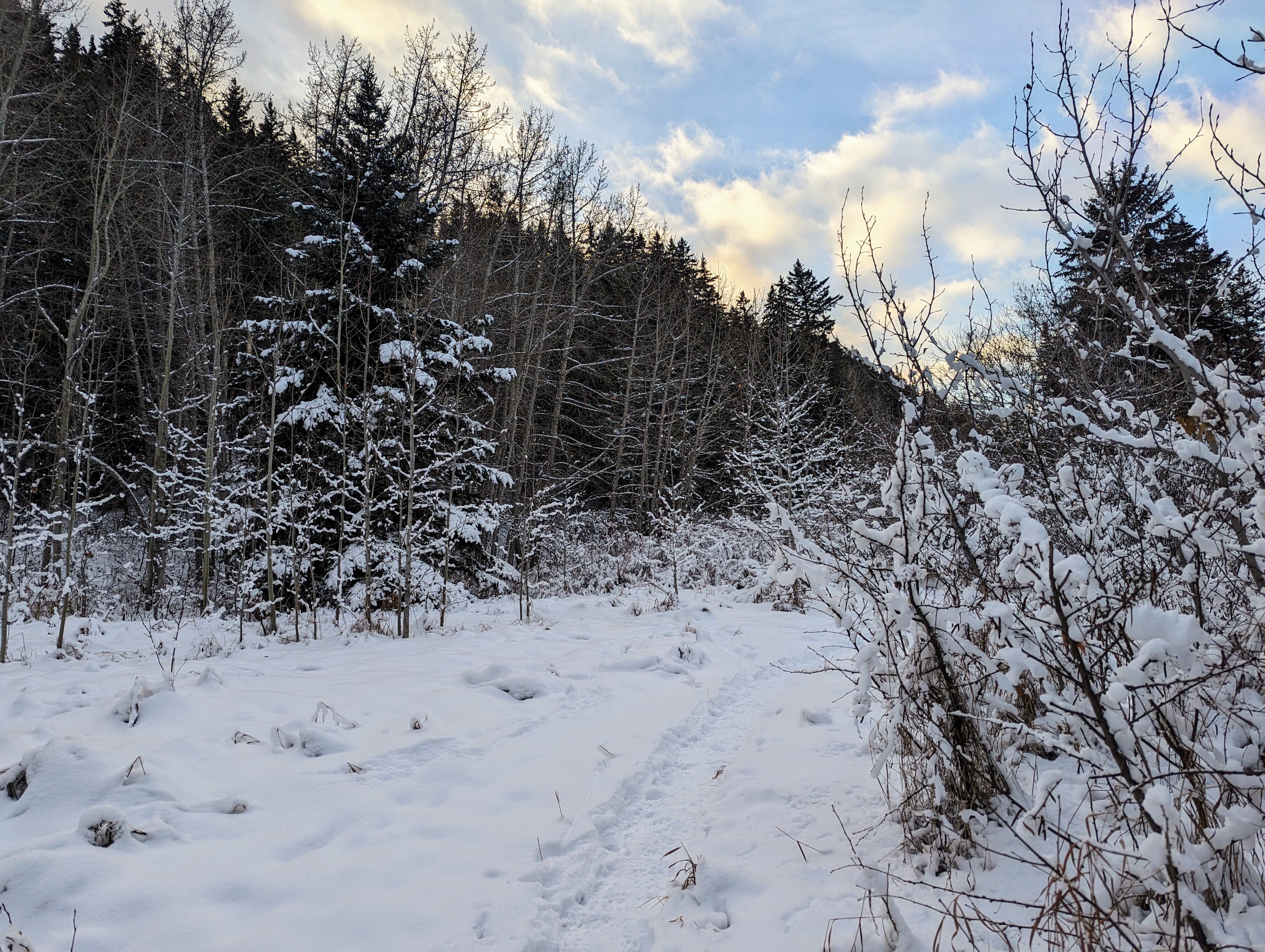
As soon as we pass the longest night of the year, there is a noticeable change in the quality of light. The afternoons immediately seem brighter as the days begin to lengthen, minute by minute, week by week. I can remember more than a few winter solstices that found me mired in a darkness that was soul-black and heavy. But this year, as the world, at home and afar, is facing so many serious threats, it feels essential to remain focused on what needs to be addressed—war, climate change, increasing polarization, a pandemic that is still causing illness and disability, and so much more. Heaven knows there is much to worry about, many reasons to be angry, ample cause for despair, but, at the moment, as someone who has known deep depression borne of chemistry rather than circumstance, what I tend to feel is a positive anger, that is, an emotion that fuels a desire to be more active in my speech and action as the new solar season dawns. There is an opening up to the other that, after years of relative isolation, has been reignited in me in recent months and I hope I can keep that energy in motion.

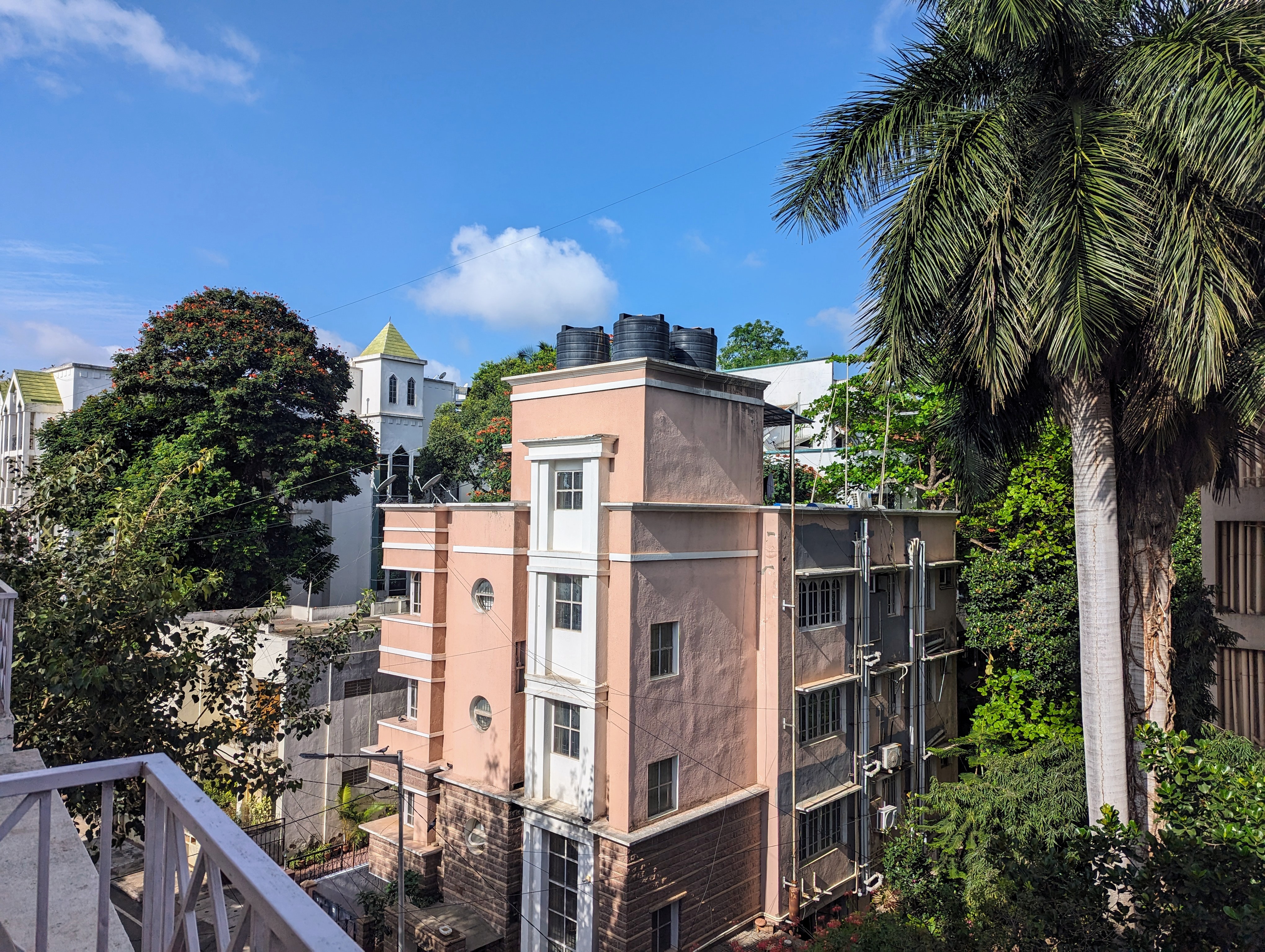
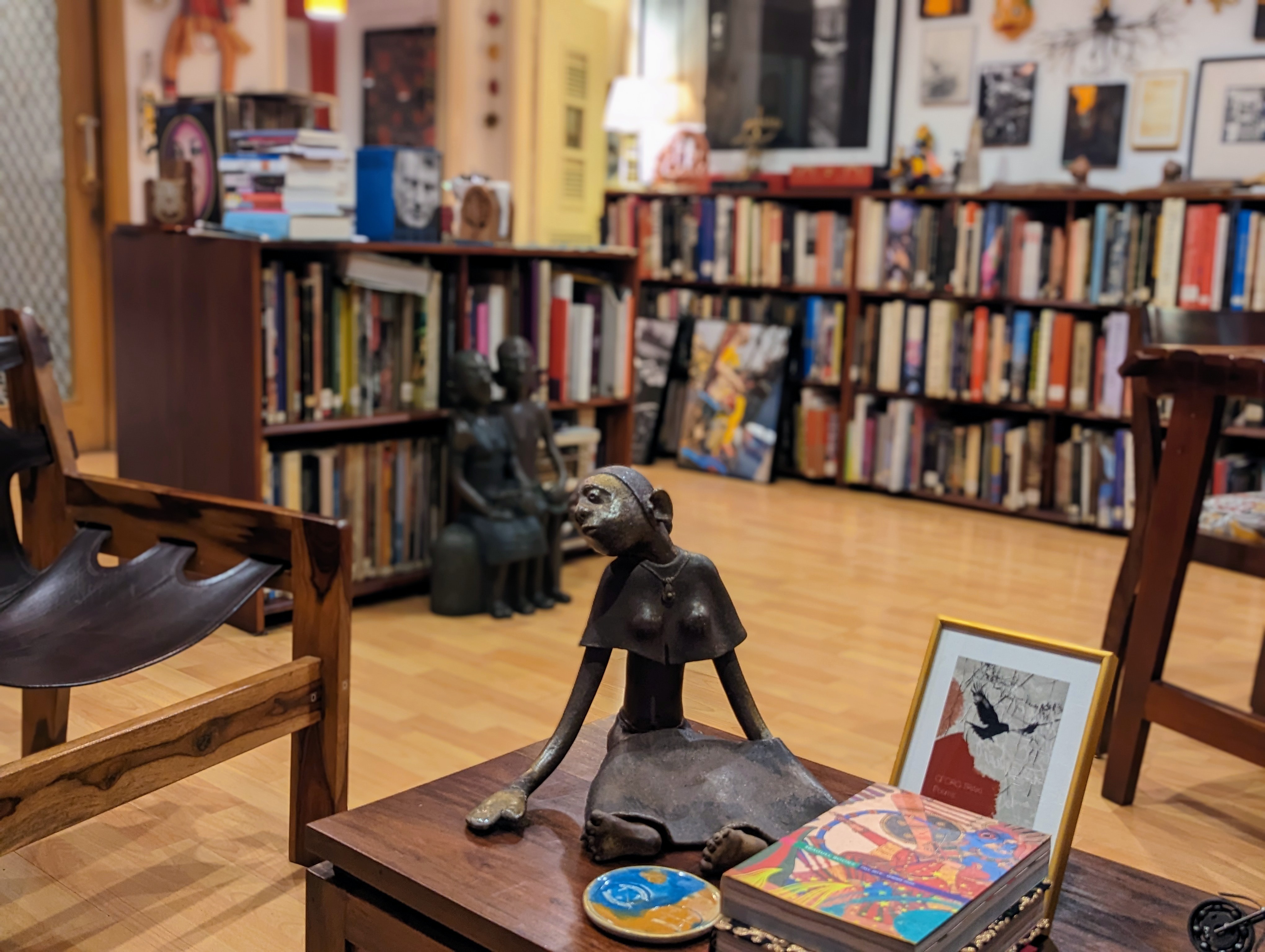
This past year was one of connection and reconnection. In mid-September I returned to India for the first time in four years—my first trip anywhere since 2019. As I made my way from Bangalore to Calcutta, Delhi, Pune, Mumbai, Jaipur and back to Bangalore, I enjoyed so many long and meaningful conversations over coffee and meals, and in cars, autos and trains, with friends old and new. I was looking for the inspiration and confidence to write again after a prolonged period of silence, and by the time I was getting ready to fly home I was beginning to feel a renewed creative drive. And then, the outbreak of conflict in the Middle East diverted my attention, shifted my reading, left me distressed and found me treading words with caution, shocked by the ability of apparently reasonable people to rationalize the massive destruction of infrastructure and indiscriminate killing of innocent children, women and men that we have witnessed these past two and a half months. Even now I know that whatever I say or don’t say, someone will take offense. This is the deeply fractured world we now inhabit.

Here in the northern hemisphere, the days grow longer as a new calendar year approaches; in the south, summer solstice marks the longest day of the year. What will we do with this light, that we either presently have or are eagerly anticipating? There is no condition—conflict, climate or clinical—that we cannot resolve, but, as human beings, we have to be able to do the one thing that seems to drive us apart over and over again: we have to recognize that every person is of equal value and deserving of dignity and life and commit to working together toward that end.

I will let you decide for yourself if that is a dream worth holding on to or justification for accepting that our problems are impossible to solve.

Photo by Joseph Schreiber

India update: Catching up with old friends, finally meeting others

Four years is a long time. Much has happened since I last visited this country. Since I last travelled anywhere as fate and pandemic would have it. Two-thirds into my stay and it feels like it has been a hectic time—not that I haven’t had free time, but I seem to find it hard to stay put on an empty day when a busy vibrant world awaits outside the door. And one doesn’t want to miss the chance to catch up with friends who are normally but a virtual prescience in one’s life. So, less reading and writing has been accomplished than I had anticipated to date.

I started my trip in Bangalore, a city I will return to before flying home to stock up on books. Weight restrictions on internal flights have meant that if I buy books, I risk not being able to get to my next destination. It surprises me how just a few slim volumes will tip the scales! And it’s always a pleasure to spend time with my very dear friends here at either end of my India sojourn.

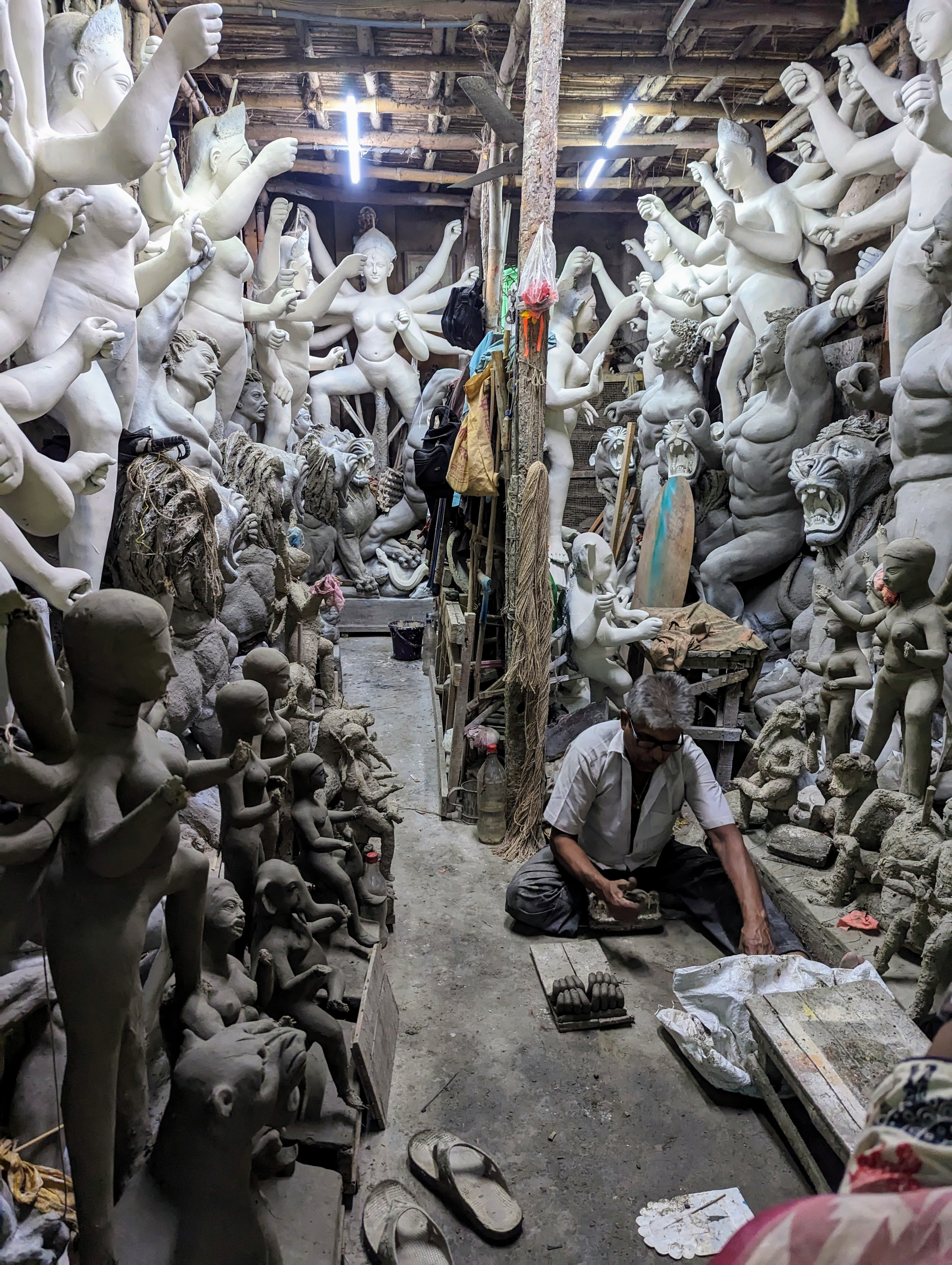
From Bangalore, I was off to the City of Joy, Calcutta or Kolkata, to the place (and the publisher) that first drew me to the subcontinent. Wet and humid beyond measure, it was my first visit outside the drier winter/spring months. But it was wonderful to see my dear friends at Seagull Books where I was able to play a small role in the creation of what will be another spectacular catalogue—this one tackling a vital theme for the times. I also had coffee with the couple who were my first tour guides in the city, this time meeting up with them in an area further south than I had been to date. I also made a pilgrimage to Kumartuli, the potters’ colony where craftsmen are busy making idols for the upcoming Durga Puja, Kolkata’s most important festival.

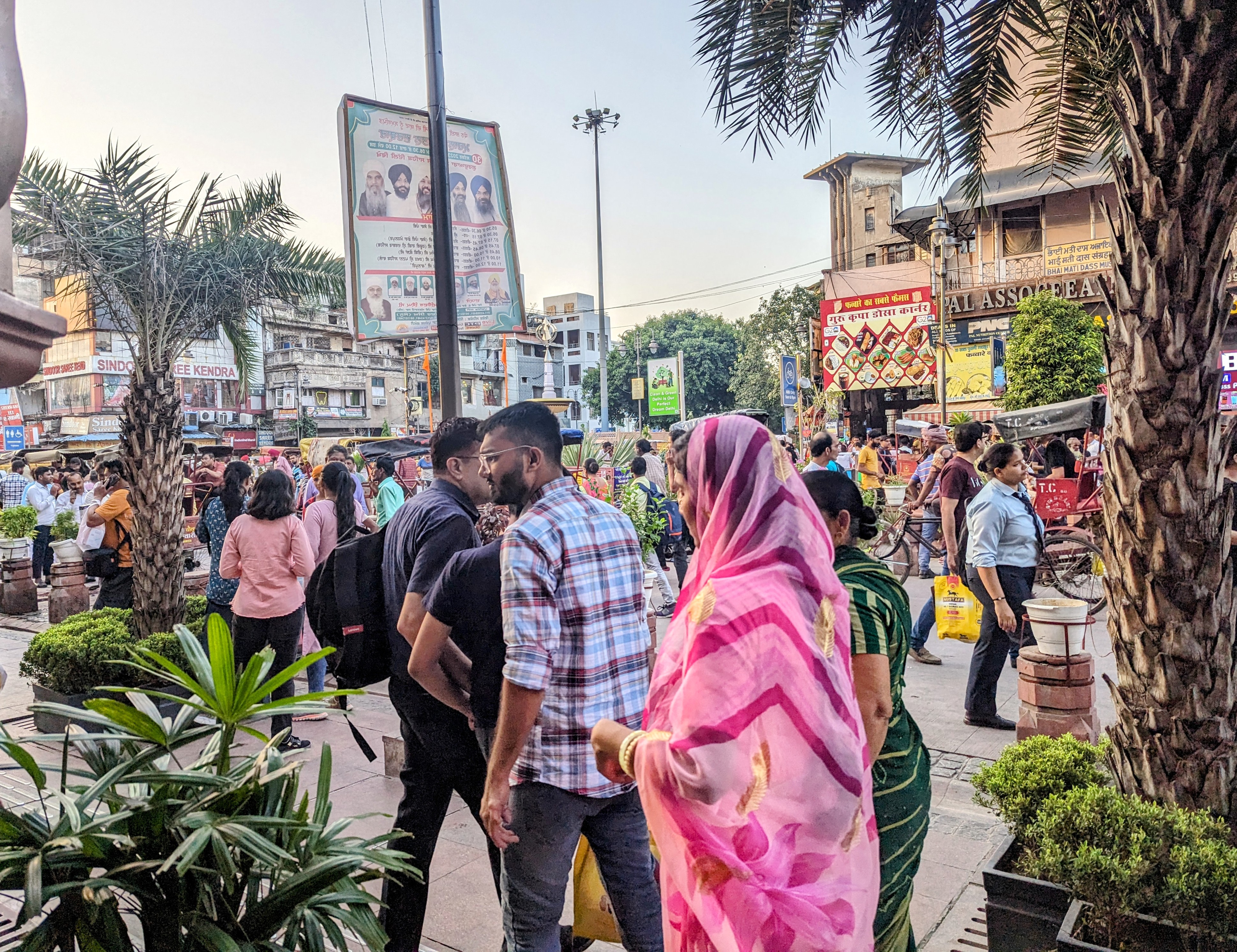
The next stop was Delhi, a short stay, but my first in the nation’s capital. I was met at the airport by a friend which was fortuitous because it proved difficult to get a cab willing to go into the congested area where I was staying. Subsequent forays in and out were facilitated by the Metro. On my first day in the city, the same friend escorted me to the university where he teaches and I gave a talk about writing book reviews. It was a very rewarding experience. The second day another friend took me into central Delhi where we had lunch, walked around, visited temples and enjoyed a most awesome lassi!

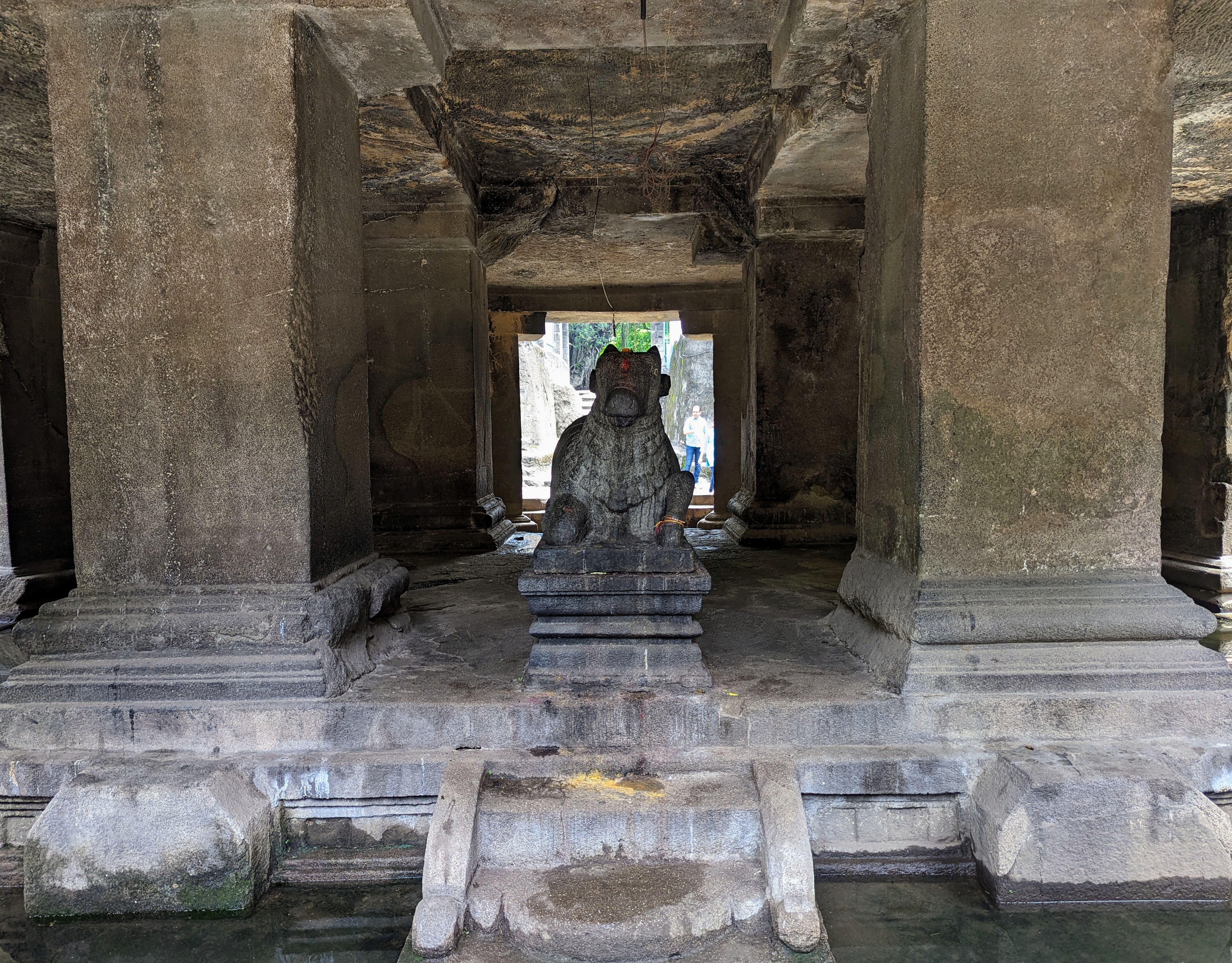
Then on to Pune, where I’m writing this on the final hour of my birthday. Here I caught up with dear literary friends and had a chance to finally meet someone whose friendship has offered solace during these long years of pandemic isolation. I also walked down to see the Pataleshwar Caves, the site of an eighth century Hindu temple carved out of the rock—a sanctuary within a busy city.

Tomorrow I fly to Mumbai for a brief stay then on to Jaipur where I hope to dry out a little after all the humidity of this extended wet season before returning to Bangalore. Whew!

It is good to be back in this hectic, vibrant country, even if I have arrived at a time of some diplomatic discord between my own country and India. I have never felt anything but welcome here.

The excellent books I’ve not been reading

As September began, with the prospect of a long-awaited trip looming, I had imagined I would have read and reviewed several new and recent releases before taking flight. Now it looks like these same books will be joining me on my way to India. I’d pictured myself only packing a few slender volumes so as to leave room to acquire more and still remain within the tighter weight restrictions of my internal flights. I should still be fine, of course, and I will still be able to fill up with even more books, so far as I can afford, before I head home from Bangalore. And, without even having to buy a second bag to get home as I have in the past.

It has been just shy of four full years since my last visit to India—in fact, since my last trip anywhere. I have spent hours sorting out flights, reserving hotels, making sure all my expenses at home are covered and making endless lists (which my toothless cat has mutilated on more than one occasion as he is inclined to do with my notebooks and sticky note reminders when I’ve recklessly left them unattended). I’ve also been invited to give a talk while I’m in India, so preparations for that have required my attention, as have an endless number of last minute errands. Considering how very busy I was prior to my last trip in 2019, it’s a wonder I got out of the door at all. Perhaps the enterprise of travel after the upheaval of the still-lingering pandemic is more precious and more precarious, and I don’t want to leave as much to chance as I did before.

Anyhow, the books I have been reading, each excellent in their own way, deserve a mention now should I not manage a proper review until I get back. I am not only a slow reader, but I’m an equally slow writer and I do hope to manage even a little personal writing while I’m away.

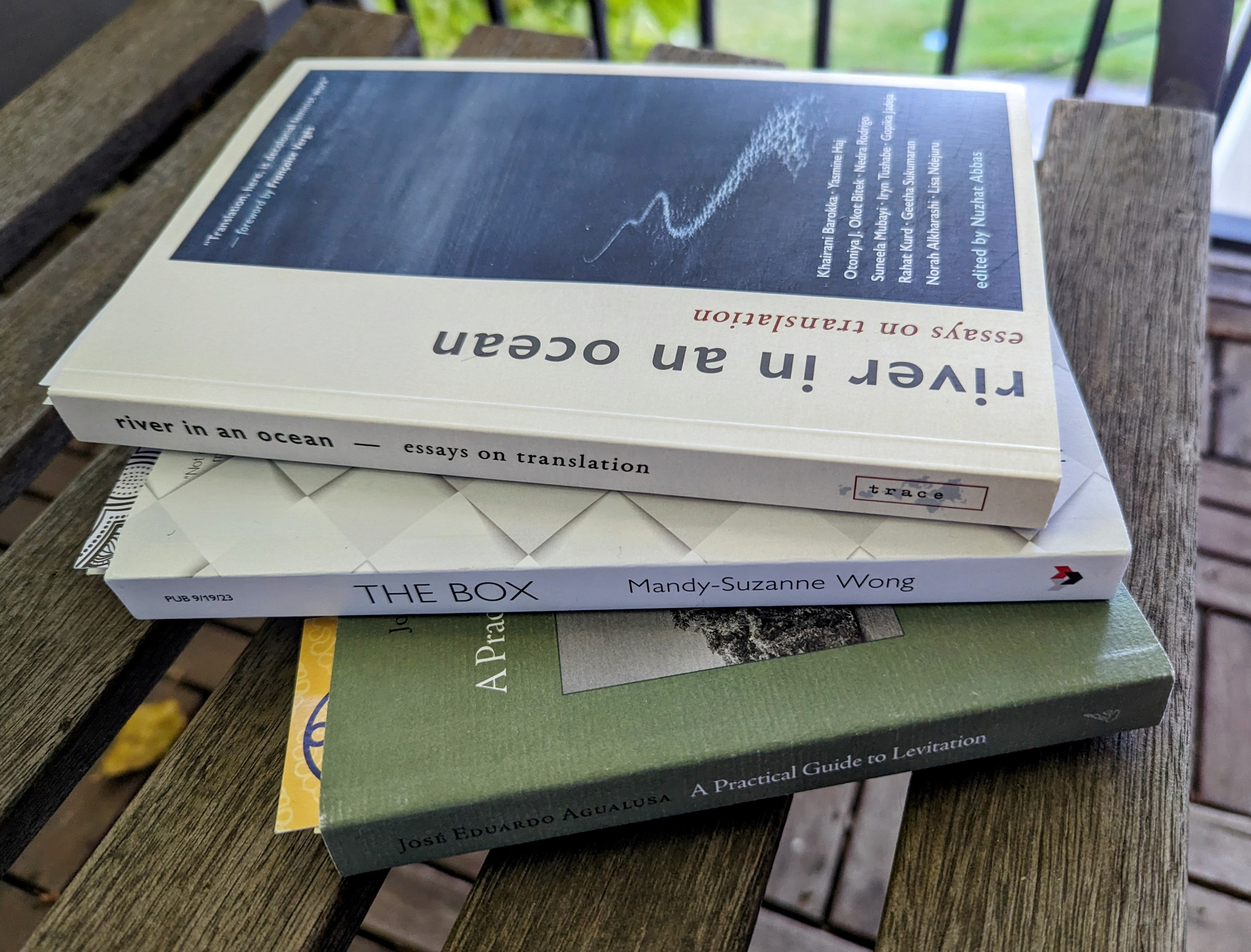
A Practical Guide to Levitation by José Eduardo Agualusa, translated from the Portuguese by Daniel Hahn (Archipelago) is a brilliantly fun collection of short stories set in Portugal, Brazil and Angola. For me, Agualusa’s eccentric characters and fondness for magical realism work so well in the short form.

The Box: A Novel by Bermudian writer Mandy-Suzanne Wong (Graywolf/House of Anansi Press) is a high-concept novel revolving around an enigmatic, unopenable box and the effect it has on those who come into contact with it. I’m only a couple of chapters in, but so far it makes me think of Czech writer Michal Ajvaz’s playful, intelligent postmodern fiction and I’m eager to see where it goes.

Finally, River in an Ocean: Essays on Translation, from the new Canadian publisher, trace press, is a collection of essays by poets, writers and translators from across the globe, edited by Nuzhat Abbas. These formally inventive pieces invite us, as the description advises, “to consider translation as a form of ethical and political love—one that requires attentive regard of the other—and a making an unmaking of self.” This project of decolonial feminism is a very important exploration of the intersection of language with questions of  identity, belonging, gender and sexuality, giving space to voices and perspectives that many of us might not hear or even consider otherwise. It is leading me to ask myself difficult questions about what my own interest in reading and promoting work in translation really means. And with many South Asian contributors I suspect this book would have landed in my travel bag anyhow—it seems only right.

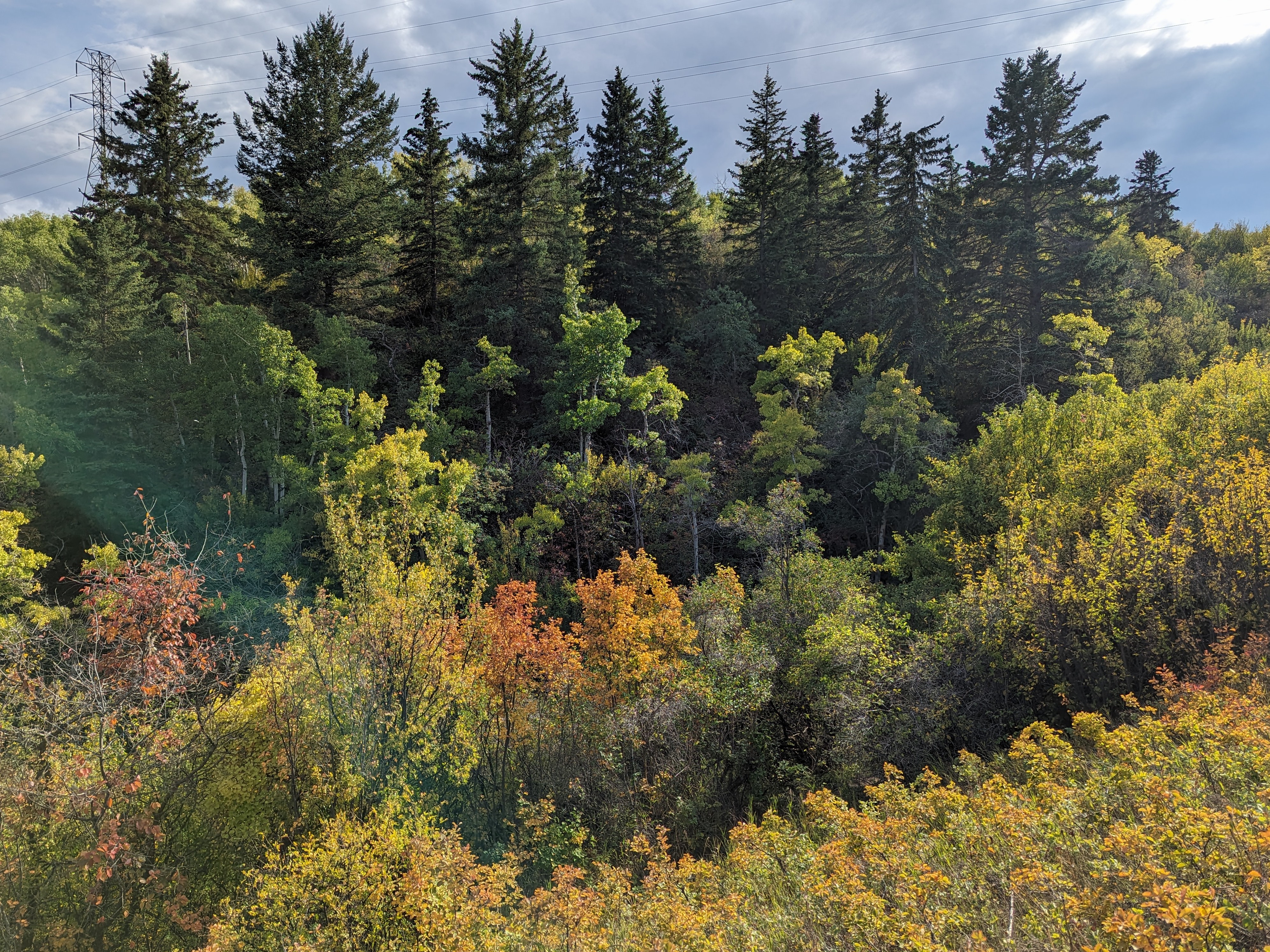
Now, with only one day until I leave, I plan to continue to fuss over my packing, take a very long walk to celebrate the colours that will be gone by the time I get back and, with luck, get a little more reading done!

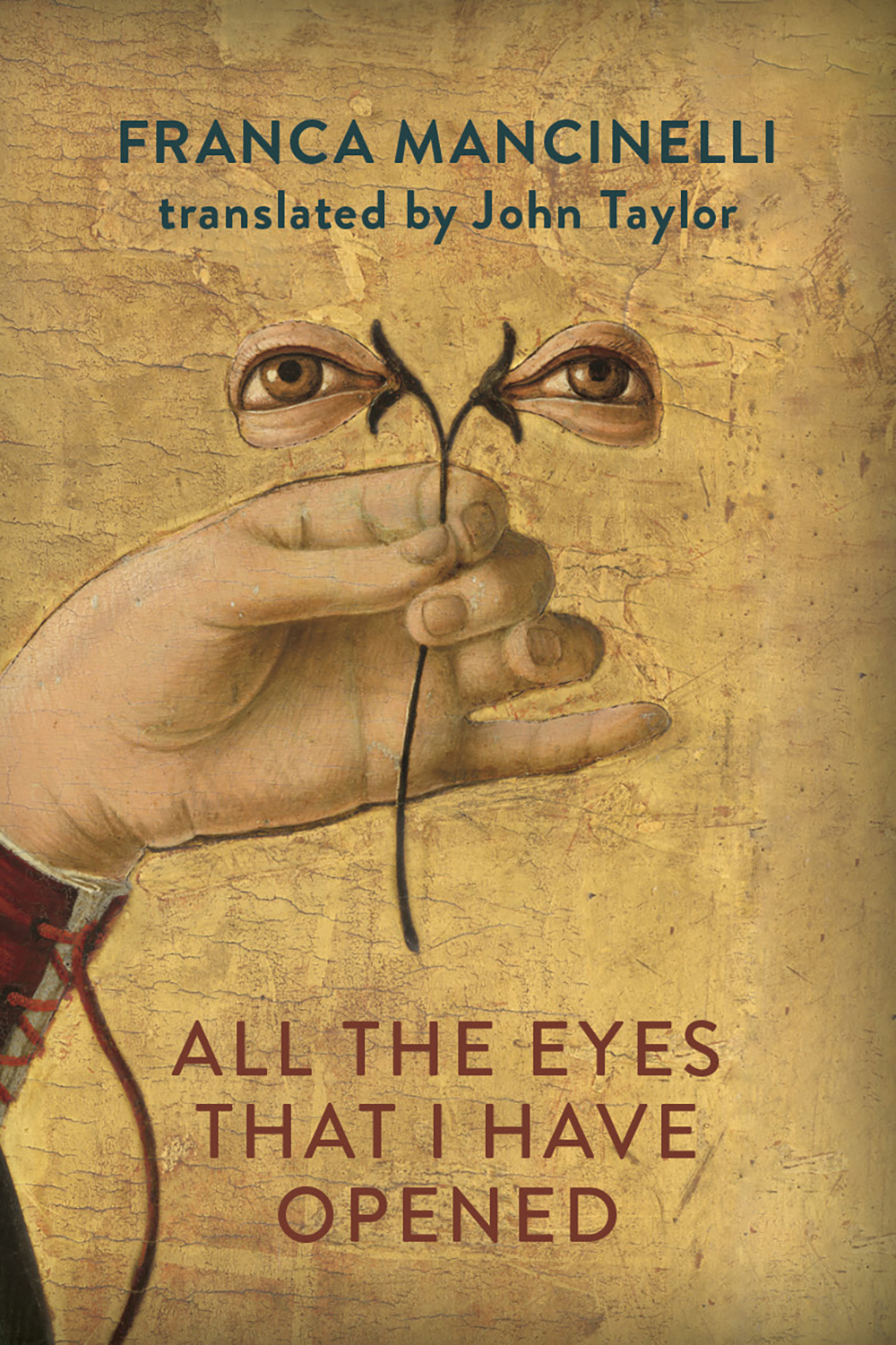
“I remain / in the baptism of this window.” All the Eyes that I Have Opened by Franca Mancinelli

from here ways parted
breathing was growing

in the collapse, something sweet
a hollow of time

all the eyes that I have opened
are the branches I have lost.

Ever since I started reading Italian poet Franca Mancinelli’s latest collection, recently released in a beautiful dual language edition, I have been haunted by the couplet from which the title was born—all the eyes that I have opened / are the branches I have lost. I have been more aware than ever of the eyes of the aspen meeting me on my daily walk, watching over me as in some sense I have always known them to, but now I was seeing my own journey reflected in their stare… the branches I have lost, and the growth that I have gained over the years.

I’ve always loved aspen, widespread as they are throughout North America. I found an adolescent refuge in the hidden depths of an expanse of aspen that spread across a wide, open field near my childhood home and, now, every day I look out at the clusters of aspen that mark the edges of the forest of Douglas firs I live above. Ever since I learned that they are typically colonial, that a growth of aspen are a single organism, I love them even more. An extended family in nature to balance my fragmented human one.

All the Eyes that I have Opened is a mature collection from a poet whose work I have read since her first English translation, The Little Book of Passage, arrived at my door courtesy of our mutual friend, her long-time translator John Taylor. A few months later, our paths would fortuitously crossed in Calcutta, so I can’t help but hear her voice when I read her words, even as her poetic voice continues to expand beyond the strictly personal to encompass an ever wider range of experiences and circumstances. The enigmatic title of this latest collection came to Mancinelli, as she explains in “An Act of Inner Self-Surgery,” a piece in her essay collection The Butterfly Cemetery, during a time of “inner devastation” when, walking through the woods she came upon a tree with a heavily scarred trunk. Despite many cuts and amputations the tree had healed and transformed itself, reaching ever upwards to the light:

I continued to walk with this voice that had been articulated in me, and one clear image: there are losses that you can weep over with all your tears, fight with every effort, yet they are necessary. We would give our life so that they won’t happen, yet they are guiding our sap toward the shape and the place that belongs to it.

This understanding is expressed most explicitly in an early sequence, “Master Trees,” which like many of the others in this book blends verse and prose poetry. The poet speaks of branches and pruning and seeing “the eyes of the trees,” of opening herself up “according to the light.” But growth is uneven:

the air was inert, traversed by trembling and quivering. It needed to withdraw, to set life aside, to push it towards areas where pockets of quietness opened. I thus grew in this maimed form. You can see in me how the nearby street burns.

Her ensuing engagement in the woods with the very bark of the trees is existential in nature. She emerges with her gaze freed. The following sequence, “All the Eyes that I Have Opened,” turns to experiences that have caused pain, abstracted in natural imagery that is often brutal yet from which new strength and determination seems to arise in the speaker. As ever, Mancinelli distills emotion, memory and experience into crystalline elements, moving from the intimate to the universal in rarely more than a handful of finely wrought lines. Drawing her metaphors from nature and the land, with eyes, sight, branches, darkness and light as recurring images throughout this book, she focuses her attention on a world—internal, external, and interpersonal—in which the dynamic tensions are always shifting, always in flux, and aims to capture its essence.

This collection, as Taylor points out in his introduction, sees an expansion of Mancinelli’s poetic universe, as she brings ancient and traditional sources into her work for the first time, including Saint Lucy (Lucia), the patron saint of the blind, often depicted with her eyes on a plate, whose own sight was restored by God. All the Eyes that I Have Opened also begins and ends with sequences in which the poet endeavours to give voice to the plight of migrants seeking a better life in Europe, meeting danger, cold, and closed borders along the way.

My body has an open texture from which hangs a thread. Someone at the other end, without even noticing, pulls it, and slowly I grow thin. The absence beckons me. I approach the spirits of the cold, that white wordless nucleus which governs this earth. I close my eyes as if pervaded by a flat colorless sea.  (from “Diary of Passage”)

These works stem from an interdisciplinary project she took part in which she and other artists traced a route through Croatia often used by refugees.

This is but a brief and rather personal response to this rich new collection. Every time I open it I find something else that catches my attention. I will be turning to it again and again, and thinking of these poems as I encounter the eyes of the aspen each day.

All the Eyes that I Have Opened by Franca Mancinelli is translated from the Italian by John Taylor and published by Black Square Editions.

Grief-tinted memories: Reflections on Mother Muse Quintet by Naveen Kishore

The loss of a beloved parent inspires a tumult of emotion and weaves complex webs of images that fragment and coalesce over time. It is, I have learned, a living grief, something that ties us to our own past in ways that shift and change in a manner that cannot be mapped or predicted.

Today, as I gather my thoughts about the latest poetry collection by my friend Naveen Kishore, my own mother has been gone for exactly seven years. On July 9th, 2016, my daughter and I sat at her bedside waiting for my brothers to make it to the city. When they arrived, we knew her respirator would be removed and we would say good-bye. She had been plagued by an increasing frailty for many years, but had remained mentally sharp until her final month which was marked by a rapid decline. Meanwhile, in another local hospital, my father lay unconscious following a stroke and head-on collision and, within a few days, a similar, if more prolonged vigil would commence at his bedside. But on this day, what I remember most vividly is my daughter gently tickling her grandmother’s arms as she had once done for her when she was a little girl. Her presence was a comfort to myself and my mother that day.

Over the five sections of Mother Muse Quintet, Naveen Kishore, the highly respected publisher of Seagull Books, honours his own mother, moving through the varying shapes and forms that memories take, and the way they continue to embrace and comfort us as we ourselves age. It is both a tender, personal tribute and a gentle lesson about opening ourselves up to capture our own memories on the page.

The first part evokes a son’s tribute to a mother who offered security and continuity to a young child, filling him with the stories and songs of her own childhood and family history and now, as the fog closes in around her, looks to him for guidance and assurance.

Build me a self. She pleaded. A whole one? I asked. One
I can call my own. Self. Again. She said. I looked at her.
Swiftly. Almost surreptitiously. My gaze. First taking in the
dignity. The earnestness. Hers. And of the request. The
controlled undertone. Not quite panic. Yet. And trust. The
faith. That I could. And would. Help rebuild. Not just her
self. But also her sense of being. Hers. No room for doubt.

In verse and in measured prose, this sequence introduces us to Prem (her son always called her by her first name) as a young girl in Lahore, as a confident woman, and as someone drifting away from the familiarity of her own reflection. And to giving up her ashes “to the care of the river.” But that is only the beginning. As the progression through the following parts of this quintet demonstrate, grief, which may begin long before death, unfolds as an ebb and flow of memories that are sometimes fragmentary or fleeting, other times taking shape in the imagining of one’s earliest years. Time loses its chronological dominion over our hearts as the beloved parent’s presence takes on a new form. They are deeply missed, but somehow always close by.

This is what I draw from Mother Muse Quintet. There are poems that often call to mind very detailed circumstances, as in the piece that records the poet’s grandmother’s prolonged illness and death and the strain it placed on his mother as she cared for her mother-in-law. Those are the moments we experience, even assist with as children, that take on a new poignancy after we have become the caregiver in turn. There are other open poems, words scattered across the page that reflect the way that the memories that stay with us down the years often become moods, qualities of light, seasons and colours. What arises can be an emotion without specific image or form, but you know who it is.

endings
endings unending
night      how you grow pale

breathe into         this parting
punctuated
by urgency

I would if I could night              sing you awake
among the          birdcall
the         barking of dogs

Not all of this volume is completely new to me. I have been privileged to receive a passage or two, shared, in earlier form, when it seemed appropriate. I treasure these in my “grief folder,” created after my parents’ deaths. There is so much of the mother connection/memory in this collection that I recognize, that triggers my own equally personal response. The final poems imply that Naveen also wishes to inspire others to write—to record their own memories, so we too may hold our loved ones as ever present as daylight and pale moons, as that essence we are forever aware of, lingering.

Mother Muse Quintet by Naveen Kishore is published by Speaking Tiger.

Pride Month reading 2023—None of the Above: Reflections on Life Beyond the Binary by Travis Alabanza

I have long been ambivalent about Pride, but the rising waves of anti-LGBTQ, and especially anti-trans, sentiment seen over the past few years has made me very concerned. As a transgender individual who is white and fits visibly into the accepted gender binary, I have been able to stand in the shadows for a long time. For more than two decades. In fact, when I was a single parent supporting two children in a world without any legal protections on the grounds of gender identity, keeping my gendered history hidden was essential. On the occasions that I dared to out myself to a co-worker, job loss invariably followed. But, for the most part, especially outside of the LGBTQ world, I have encountered very few problems because I am older and exceptionally ordinary in my presentation. I pass so well that often I am not heard or believed when I try to tell someone that I am transgender.

For British writer and performer Travis Alabanza, on the other hand, none of the above applies. So when I heard about their Jhalak Prize-winning book None of the Above: Reflections on a Life Beyond the Binary, I knew I’d found my perfect read for this year’s Pride Month. And, even though our ages, lives and experiences differ greatly, I related more closely to many of the ideas they explore in this thoughtful and articulate examination of what it means to exist as an openly gender non-conforming person of colour in a world that is bound to the binary, than in most of the more “conventional” trans-themed books I’ve read. This is a bold and honest work that rides on a shifting current of hurt, uncertainty and self-affirmation against an unspoken pressure for trans identified people to be determined, self-assured, and often stubbornly binary in a world that increasingly strives to deny our validity. There is little room for doubt, less for admitting how exhausting it can be.

In our journey to ‘own our gender’, is it ever really our own? Or does it rely on us conditioning those around us to act and be a certain way too?

None of the Above is neither a typical memoir, nor an explicit defense/explanation of non-binary identity. It is, rather, something in between—a personal account structured around seven statements that have had a particular impact on Alabanza, as a youth and as a public figure, exploring their identity, sexuality and gendered expression. As they dissect these statements, there is a persistent question of how long an obviously gender-defiant presentation can be maintained before it simply becomes easier to move toward a more “acceptable” or “proper” presentation of transness. Of course, given the ongoing escalation of hostility directed at trans women, it’s not clear that such a progression toward hormones and surgery would be easier.

With chapter titles such as “So, When Did You Know?”, “But I Mean, Proper Trans”  and “This Ain’t A Thing We Do Around Here, Son,” Alabanza talks about growing up poor in a council project, their first joyful expressions of femininity, and their development of a successful career as a performer and theatre maker. The questions and comments they encounter come from curious, well-meaning friends, neighbours, fellow performers and critical journalists. Yet, in exploring their reactions and possible responses to these statements that weigh so heavily, there is a willingness to open up their experiences to concerns that intersect with those of others who may be white and/or cisgender. After all, the rigid strictures associated with the gender binary impact people who are not trans in many ways even if they also drive transphobic attitudes. The same gender binary can force trans people to consider medicalization as the measure of “true” transness and look at the openly queer and non-binary as troublesome distractions. For trans people of colour all of these contradictory forces are heightened.

Often what is projected onto those who are visibly gender non-conforming and non-binary, is that our existing, and claiming transness, will ruin it for those wanting (and deserving) a quieter life. Gender non-conformity and being outside of the gender binary cannot be seen as quiet: it is seen as purposefully choosing to cause trouble. To those so wanting a life of peace, others’ disruption can feel like a threat to that fought-for sanctuary.

This is a book that strives to come to terms with the feeling of being at odds with the gender one is assigned at birth, but not feeling comfortable identifying as a man or woman. It’s not a new phenomenon—I have friends who have identified as “gender neutral” for decades. What has changed, for better and for worse, is a wider public forum for people to see and be seen defying or transcending gender. I am grateful I transitioned before the advent of social media, but without the internet I would have had no community. Likewise, without the fabulous gender-bending musicians of the 1970s, I would not have survived my teens. As it was, I was thirty-eight before I finally had an understanding of the differentness I’d always known. But, even though my ultimate path was quieter and more conventional (to a point), my strongest connections have always been with those who stand at the intersection of masculine and feminine. So, for me, there was much food for thought in None of the Above that is beyond the scope of this brief reflection/review. Perhaps it will emerge elsewhere. Meanwhile, I will say that, for readers inside and outside the trans community, this is a very valuable and entertaining read (though one that might anger some on both sides).

None of the Above: Reflections on Life Beyond the Binary by Travis Alabanza is published by Canongate in the UK and will be published by The Feminist Press in the US in October.

Roughghosts is nine years old today

It seems I skipped the annual anniversary post last year, but since I’m not writing the review I should be working on, I thought I’d stop and acknowledge this small achievement and thank everyone who has stopped by this literary space since I first recklessly launched it while I was unknowingly spiraling into a manic crisis that would ultimately end my career back in 2014. If nothing else, it has provided me a place to talk about books and writing, and make the acquaintance of many wonderful readers, writers, translators and publishers around the world. Roughghosts would be nothing without the company of others who also cherish literature.

In its early days, my blog was filled with much of my frustration about chronic mental illness and the stigma that has never been overcome. The subject still arises here on occasion but many of angriest posts have been made private. I try to stick to books, sometimes the subject of writing, and only when I am really down, do I open up a little more. (Of course, those are the posts that tend to get the strongest immediate response—always supportive—but I try not to complain about the world too often.)

The past year has been pretty smooth, if quiet. I have stayed close to home, tracing the same beloved trails and trying, with some difficulty, to regain the level of fitness I had prior to breaking my leg last year. I am, I suppose, at the age when it takes longer to get back to where I used to be. The weather—prolonged cold through the winter and unexpected heat early in May—has been one factor, but a new respect for caution has slowed me down a little. I rarely go out without my trekking poles and (wisely) take fewer risks than I once did. I’m also looking forward to travelling for the first time since 2019, hoping to return to India in September.

As I look back over the last twelve months, I’m pleased with the number and quality of the reviews I’ve published. I’m a slow reader and a slow writer and, aside from a post like this, I rarely ever compose online—every piece is typically written over several days on a Word document and uploaded to WordPress. For now this is still a satisfying activity for me; I have yet to feel a strong desire to pitch essays or reviews for publication elsewhere. To be honest, I do like being able to track the amount of attention my reviews get, at publication and over time. It’s a window into the varying interest certain books generate. And because this is my blog, I am not tied to reading only new releases. That is, I believe, the true beauty of the book blog, or when I’m being fancy, “literary site.” Over the past year, for example, my most popular post—over 4500 views since last September—is a review of Mahsweta Devi’s classic Mother of 1084. I can only assume it has been on the school curriculum in India (and wonder how many suspiciously similar reports teachers have received).

I have no special objectives for the next year of roughghosts. I read and write about books for myself first and foremost—that is, as an exercise in both reading and writing—and I am ever grateful for everyone who has stopped by (even those who, judging by their bizarre search terms, must have been sorely disappointed by what they found). Here’s to another year of great books and excellent company!

Reading highlights of 2022: A baker’s dozen and then some…

It seems to me that last year I resisted the annual “best of” round-up right through December and then opened the new year with a post about some of my favourite reads of 2021 anyhow. This year I will give in, look back at some of my favourite reading experiences out of a year in which I had a wealth to choose from and aim to get some kind of list posted before friends start hanging up their 2023 calendars around the globe. In a year with war, floods, famine, storms and still no end in sight to Covid infections, books seemed more important than ever, as a respite, a record and a reminder that we, as human beings, have been here before and must learn from the past to face the increasing challenges of the future.

As ever, it is difficult to narrow down twelve months of reading to a few favourites. One’s choices are always personal and subjective, and many excellent books invariably get left out. This year especially—2022 was a productive and satisfying year for me as a reader and as a blogger. Not much for other writing, I’m afraid, but that’s okay.

This year I’m taking a thematic approach to my wrap-up, so here we go.

The most entertaining reading experiences I had this year:

Tomas Espedal’s The Year (translated from the Norwegian by James Anderson) was one of the first books I read in 2022. A novel in verse, it is wise, funny and, nearing the end, surprisingly tense as Espedal’s potentially auto-fictional protagonist careens toward what could be a very reckless act.

International Booker Prize-winning Tomb of Sand  by Geetanjali Shree (translated from the Hindi by Daisy Rockwell) looks like a weighty tome, but blessed with humour, magic and drama—plus a healthy amount of white space—it flies by. An absolute delight and worthy award winner!

Postcard from London, a collection of short stories by Hungarian writer Iván Mándy (translated by John Batki) was a complete surprise for me. In what turned out to be a year in which I read a number of terrific collections of short fiction, I was a little uncertain about this large hardcover volume some 330 pages long, but by the end of the first page I was hooked by the author’s distinct narrative voice and I would have happily read many more pages.

The most absorbing book I read this year (and its companions):

City of Torment – Daniela Hodrová’s monumental trilogy (translated from the Czech by Elena Sokol and others) is a complex, multi-faceted, experimental work that explores a Prague formed and deformed by literary, historical and political forces, haunted by ghosts and the author’s own personal past. After finishing the book, I sensed that I was missing much of the foundational structure—not that it effects the reading in itself—but I wanted to understand more. I read Hodrová’s own companion piece, Prague, I See a City… (translated by David Short) and more recently Karel Hanek Mácha’s epic poem May (translated by Marcela Malek Sulak), but I would love to have access to more of the related literary material, much of which is not yet available in English. I suspect that City of Torment is a text that will keep fueling my own reading for some time.

This year’s poetic treasures:

This is the most challenging category to narrow down. I read many wonderful collections, each so different, but three are particularly special.

Translator John Taylor has introduced me to a number of excellent poets over the years and in 2022, it was his translation of French-language Swiss poet José-Flore Tappy’s Trás-os-Montes. I read this gorgeous book in August and it is still on my bedside table. It’s not likely to leave that space for a long time yet, and that’s all I need to say.  

I first came to know of Alexander Booth as a translator (and read a number of his translations this year) but his collection, Triptych, stands out not only for the delicate beauty of his poetry, but for the care and attention he put into this self-published volume. A joy to look at, to hold and to read.

Finally, My Jewel Box by Danish poet Ursual Andkjær Olsen is the conclusion of an organically evolving trilogy that began with one of my all-time favourite poetry books, Third-Millennium Heart. Not only is this a powerful work on its own, but I had the great pleasure to speak over Zoom with Olsen and her translator, Katrine Øgaard Jensen, for Brazos Bookstore in May. The perfect way to celebrate a reading experience that has meant so much to me.

Books that defied my expectations this year:

Prague-based writer Róbert Gál has produced books of philosophy, experimental fiction and aphorisms—each one taking a fresh and fluid approach to the realm of ideas and experience. His latest, Tractatus (translated from the Slovak by David Short) takes its inspiration from Wittgenstein’s famous tract to explore a series of epistemological and existential questions in a manner that is engaging, entertaining and provocative.

A Certain Logic of Expectations (you see the back cover here) by Mexican photographer and writer Arturo Soto is a look at the Oxford (yes, that Oxford) that exists a world apart from the grounds of the hallowed educational institution. Soto’s outsider’s perspective and appreciation of the ordinary offers a sharp contrast to the famed structures one associates with the city (and where he was a student himself) and what one typically expects from a photobook.

The third unexpected treat this year was The Tomb Guardians by Paul Griffiths. This short novel about the soldiers sent to guard the tomb where Jesus was buried is an inventive work that explores questions of faith, religion, and art history. Truly one of those boundary-defying works to use a term that seems to get used a little too often these days.

The best books I read in 2022:

Again, an entirely personal assessment.

I loved Esther Kinsky’s River, but Grove (translated from the German by Caroline Schmidt), confirmed for me that she is capable of doing something that other writers whose work skirts the territory occupied by memoir and autofiction rarely achieve, and that is to write from the depth of personal experience while maintaining a degree of opaqueness, if that’s the right word. One is not inundated with detail about the life or relationships of her narrators. Rather, she zeros in on select moments and memories, allowing landscape to carry the larger themes she is exploring. So inspiring to the writer in me.

Monsters Like Us, the debut novel by Ulrike Almut Sandig (translated from the German by Karen Leeder) deals with an extraordinarily difficult topic—childhood sexual abuse. It does not shy away from the very real damage inflicted by predatory family members, nor does it offer a magical happy ending, but it does hint at the possibility of rising above a traumatic past. As in her poetry where Sandig often draws on the darkness of traditional European fairy tales, she infuses this novel with elements and characters that embody the innocence, evil and heroic qualities of folktales within an entirely and vividly contemporary story. So much to think about here.

Hanne Ørstavik’s The Pastor (translated from the Norwegian by Martin Aitken) was my introduction to the work of a Norwegian writer I had a lot about over the years. This slow, melancholy novel set in the far north regions of Norway, beyond the Arctic Circle in the dead of winter, was a perfect fit for me as a reader, in style and subject matter. The story of a female pastor who takes a position in a remote village following a personal loss that she does not fully understand, explores emotional, historical and spiritual questions through a character who is literally stumbling in the dark.

So, what might lie ahead? This past year I embarked on two self-directed reading projects—one to focus on Norwegian literature for two months, the other to read and write about twenty Seagull Books to honour their fortieth anniversary. I found this very rewarding experience. Both projects were flexible enough to allow me freedom, varietyand plenthy of room for off-theme reading, but in each case I encountered authors and read books I might not have prioritized otherwise. For 2023 I would like to turn my attention to another publisher I really admire whose books are steadily piling up in my TBR stack—Archipelago. As with Seagull, they publish a wide range of translated and international literature that meshes well with my own tastes and interests. I don’t have a specific goal in mind, but already have a growing list of Archipelago titles I’d like to read. Other personal projects—public or private—may arise, perhaps more focused toward the personal writing I always promise to get back to, but time will tell. If the last few years have taught us anything, it’s that it’s a long uncertain road from January 1st to December 31st and it’s best not to try to outguess what the road might hold. Hope for the best and prepare for the worst once more.

Best wishes for the New Year and thank you for reading!

Twenty Seagull books to mark forty years of publishing magic: A 2022 reading project wrap up

Long-time followers of roughghosts will know that I have a particular fondness for Seagull Books. They continually publish a wide range of interesting international and Indian authors, bring many to English language audiences for the first time and, oh, those covers! Senior Editor and Designer Sunandini Banerjee’s work is instantly recognizable, yet always original. And not only have I amassed a healthy collection of their publications, but I have also visited Calcutta twice, taught classes at their School of Publishing and treasured their friendship and encouragement over the years. I admire the work they produce, their dedication to supporting fellow independent publishers in India and abroad, and their work to further understanding and education through the Seagull Foundation for the Arts. So to mark their fortieth anniversary this year I decided, somewhat late in the game, to embark on a personal reading project. I promised myself that I would read and write about twenty Seagull books by year’s end. Twenty for forty.

And here we are.

To date, I have reviewed all but one of these books—the remaining review of Vénus Khoury-Ghata’s Marina Tsvetaeva will follow in the next few days—but I wanted to stop and celebrate twenty excellent reading experiences before the holiday busyness begins. My reading naturally overlapped with my other 2022 self-directed projected, a focus on Norwegian literature, and the annual months devoted to Women in Translation and German Literature that I try to contribute to each year. Within and beyond that there was still plenty of room for variety. Two of the books I read were English originals—both from India—and the rest were translated: six German, four Norwegian, three French (two of which were by African writers, the third Lebanese-French), two Arabic, one Hungarian, one Dutch and one Bengali. I read five works of poetry/prose poetry, nine novels, three collections of short fiction, one long form essay, one play, and one graphic novel. Had I planned this project a little earlier I might have read more nonfiction, but as the year was rushing to a close book length became a deciding factor—December’s four books were necessarily shorter and that influenced choice!

Among this stack of handsome books are some authors I had already come to know and love through Seagull—Tomas Espedal, Vénus Khoury-Ghata, Franz Fühmann, Ulrike Almut Sandig and Friedrike Mayröcker, plus one writer I have long wanted to read: Mahasweta Devi. But, as usual, there were some unexpected surprises among the authors I encountered for the first time, most notably German Jürgen Becker and Hungarian Iván Mándy.

Happy fortieth anniversary, Seagull! Here’s to an ever brighter future.

Books read:
in field latin by Lutz Seiler, (German) translated by Alexander Booth
Requiem for Ernst Jandl by Friedrike Mayröcker (German) translated by Roslyn Theobald
Shadow of Things to Come by Kossi Efoui (Togo/French) translated by Chris Turner
Mother of 1084 by Mahasweta Devi (India/Bengali) translated by Samik Bandyopadhyay
The Beloved of the Dawn by Franz Fühmann (German) translated by Isabelle Fargo Cole
Winter Stories by Ingvild Rishøi (Norwegian) translated by Diane Oakley
Love and Reparation by Danish Sheikh (India)
Ever Since I Did Not Die by Ramy Al-Asheq (Arabic) translated by Isis Nusair
The Second Wave by Rustom Bharucha (India)
Marina Tsvetaeva by Vénus Khoury-Ghata (Lebanese-French) translated by Teresa Lavender Fagan
Leaving by Cees Nooteboom, w/ drawings by Max Neumann (Dutch) translated by David Colmer
Love by Tomas Espedal (Norwegian) translated by James Anderson
Cargo Hold of Stars: Coolitude by Khal Torabully (Mauritis/French) translated by Nancy Naomi Carlson
The Sea in the Radio by Jürgen Becker (German) translated by Alexander Booth
The Dance of the Deep Blue Scorpion by Akram Musallam (Arabic) translated by Sawad Hussain
Monsters Like Us by Ulrike Almut Sandig (German) translated by Karen Leeder
Postcard from London by Iván Mándy (Hungarian) translated by John Batki
The White Bathing Hut by Thorvald Steen (Norwegian) translated by James Anderson
The Year by Tomas Espedal (Norwegian) translated by James Anderson
Ulysses by Nicolas Mahler, after James Joyce (German) translated by Alexander Booth