For all the possible and impossible futures: Earthrise Stories Pasts Potentials Prophesies by Priya Sarukkai Chabria

Of late, concern for the environment has fallen out of fashion in much of the world. Where I live, and in any other regions, oil companies, and forestry and mining interests exercise an outsize influence on governments, especially in a world of global economic uncertainty, fueling resistance to monitoring greenhouse gas emissions, investing in clean energy projects or promoting electric vehicles. It’s suddenly become too expensive, too inefficient to worry about the future. Besides, many insist that climate change is a hoax. So by the time we really feel the heat, so to speak, it will be too late to act. What stories will we, or rather our ancestors, tell to make sense of the damage done?  Will it even matter?

For Indian poet and writer Priya Sarukkai Chabria, the fate of our planet is an ongoing and vital theme. She sees it as a question that arises in the myths and traditions of a distant past, swirls around the influence of technology and artificial intelligence shaping our present existence, and reaches far into the future where an unknown realm of possibilities can only be imagined. Yet, she is prepared to explore new ways of thinking about and envisioning what we have come from and where we may be going. Now a wide-ranging selection of her poignant and thought-provoking fictional imaginings have been gathered in her new book, Earthrise Stories: Pasts Potentials Prophesies.

As a novelist and short story writer, Chabria has long sought expression through speculative fiction, typically with a strong Indian sensibility, and this collection highlights her strength in this genre, along with her distinct ability to flesh out the sensual intensity of her female protagonists, be they drawn from epic literature, or existing on a far distant timeline. But more than anything, these stories form a coherent project  in which the reality of climate degradation and what it means for the fate of the planet is a driving force. As she says in her Introduction:

I write stories of Earth, and some of the ways we could love her as she spins through our present dark time; the small gem of her seemingly weightless sphere spiraling through space, circling the sun like a prayer, sapphire and emerald as the eye of a dream, summoning tenderness.

Earthrise is divided into six sections, each one featuring a striking illustration by artist Gargi Sharma, and expanding in different spatial directions. “Past Re-Presented” is rooted in mythic times; “Now” searches for grounding in our ever-evolving present; “Ten Years from Now” turns to nonhuman life, natural and artificial; “In the Near Future” reaches deeper into the consequences for nature and a memory of humankind; “In the Far Future” contemplates the possible regeneration of a nearly dead planet; and, finally, “Prophesies that Come True” reintroduces a recognizably human narrator in in one story and offers a comet-focused cautionary tale in the other. Together, the eighteen stories that comprise this volume take the reader on a journey through time and space, marked by a  wide variety of shifting voices, styles, and tones.

The opening section re-animates tales drawn from Indian myth, legend, and literary tradition.  Characters like the celestial nymphs (aspara) Menaka and Urvaśī are realized as full-bodied sensual creatures rising above their passionate and tragic circumstances to set commonly accepted records straight. Episodes from the Mahabharata and the Ramayana are re-imagined with multi-dimensional, even cosmic, elements to at once reinforce their timelessness and set a foundation for many of the stories to follow.

The mood changes abruptly, however, as we enter the realm of the present day. The stories in “Now” are playful and inventive in style, but darkness and warnings lurk in their narrative themes. War, migration, economic turmoil, ecological devastation, and the increasing presence of robotic and artificial intelligence all feature here. There is even a lecture—or the draft of one—about the promises of a technologically driven future in one of my favourite pieces, “Cockaigne A Reappraisal (Draft) by Dr Indumati Jones (To be presented at UTIIMDS),” a text complete with the professor’s own personal notes to self:

With augmented AI inputs that analyse large amounts of financial data this sector is being steered towards making more predictive decisions in the stock market, and can tailor options to meet the investment patterns of specific financial firms. (Add examples. Quote sources?) On a lighter note, (smile here) Photoshop will be relegated to the past as in-camera devices will automatically correct flaws. Power outages like the one I’m currently experiencing will be out-dated — pun intended! — (smile here) as various AI driven units will be linked to a central intelligence system – as is already occurring in certain Smart Cities worldwide.

Dr Jones’s cynical optimism aside, the atmosphere that dominates the four stories in this section is ominous.

Ten years on, things are no better, flora and fauna are in serious decline (the author setting a fictional report in her hometown of Pune, even) and hopes that damages might be undone are outsourced to the services of a LoveBot  who can customize a dream, but has no power to make it come true. Moving on, further into the future, the Eco-Lit exam that makes up the content of one of the stories of the next section, leaves no question about ecological outcomes, but the prose in other tales becomes more poetic, dream-driven and, in one story, “The Princess: A Parable,”  folkloric. But the hard reality of the potential fate (or fates) of the Earth and the life she once sustained cannot be denied.

Yet, this is where Chabria’s stories of Earth take a detour from the classic dystopian formula. Although she leaves no question about the destructive tendencies of man and the fragility of life on our planet, when we reach the far distant future, there is the hint of a utopian possibility, however unlikely (and unlike anything we have ever known) that might be. In the two penultimate stories, she envisions variations on a world where life at its most fundamental cellular level has been preserved, integrated with novel notions of consciousness, historical awareness, and the means to reproduce or self-evolve. In this sort of speculative realm, the poetic, passionate energy that fills Chabria’s female protagonists charges her post-human narrators. “Paused,” for instance, imagines a planet where proto or potential lifeforms that can decide how they wish to evolve. But it is a lonely existence, and evolving is a process fraught with challenges. After an aborted attempt, her narrator retreats in a panic:

I trigger TEMP TORPOR in myself. It causes shuddering standstill of all activities. Cessation shocks my systems. Quieten down, please, down. Alarm still volcanoes. Shuush, shuuhh. Quieten to hill size. Rolling boulders. Be still, shuush. Become pebble size. Still, be still. Be spore. Be a drop of silence, a bead of spreading stillness. My systems slow, calm. I’m sliding into deep sleep; almost a hibernating pod again. Scan the damage. I must create low energy compounds to coat the membrane till it can sustain survival. I’m barely born but must manage so much!

Clearly, earthly recovery will be a slow and painful, but re-birth, in this scenario, could be intentional, not accidental. What then?

Earthrise presents many questions, and offers no clear solutions (except, of course, the ones we’re already boldly ignoring). Yet, in drawing on such a vast array of inspirations, from mythology, history, science—natural, physical, ecological— and, of course, poetry, Chabria has crafted a collection that values life, all life, not just the hair-covered, supposedly “Wise Ones.” It is sad and hopeful—a warning, a promise, and a prayer.

Earthrise Stories: Pasts Potentials Prophesies by Priya Sarukkai Chabria is published by Red River Story. (Available worldwide through Amazon.)

Dream follows dream: Ceilings by Zuzana Brabcová

Drink them up, swallow those clouds, gulp them down with all your might, because all you’ve got to look forward to now are ceilings.

As Ema, the fifty year-old protagonist of Zuzana Brabcová’s Ceilings, takes in her last view of the overcast skies over Prague before the ambulance attendant leads her into the Addiction Treatment Centre of the hospital, she knows that it will be months before she  sees them again—except, of course, in the strange, troubled, and fantastic dreams and psychotic episodes that will accompany her through the trials of detox. She’s been here before and is well aware of what lies ahead.

The daughter of two literary historians, Brabcová (1959–2015) was born in Prague. Under the Communist regime, she was denied the right to attend university so she worked as a librarian, a hospital attendant and a cleaner. Following the Velvet Revolution, she worked as an editor. Her first novel Far from the Tree, initially published abroad in 1987, won the inaugural Jiří Orten Prize. Ceilings (2012), recently released in Tereza Veverka Novická’s powerful English translation, was her fourth novel, a vivid, hypnotic account of one woman’s transit through drug rehab that clearly illustrates why she has been rightfully compared to Leonora Carrington and Unica Zurn (whose artwork graces the cover).

As soon as Ema enters the hospital, The Garden as it is known, she finds herself in a world that operates on its own set of rules and regulations. The clock is now set to institutional time, where order attempts to define but can never fully contain either the camaraderie or conflicts between an eccentric collection of women—druggie or alkie?—caught in an ever-swirling cascade of medications and madness. For Ema, navigating the neuroses and idiosyncrasies of her fellow inmates is as challenging as navigating her own, as delusions, paranoias, and troubled memories blur the fragile boundaries between reality and dream, external and internal existence.

This fluidity is reflected in a polyphonic narrative which moves smoothly between third and first person, often pulling in and out of Ema’s head in a single paragraph. Add to this, asides in second person, where Ema either addresses herself or directs her thoughts to her daughter Rybka, her lesbian partner Dita, or other family members. Finally, there is a second first person narrator, Ema’s brother—a “twin” although they were born one year apart—not an alter ego, but a distinct male gendered self. Ash. He emerges at an early age, perhaps to serve as a shield against the uncertain and frightening world both inside and outside the home, and inside and outside Ema’s own unstable emotional space. Ash comes into his own when they are very young, realizing he is different:

I said to myself this secret of mine must be something like chickenpox; okay, in that case an autovaccine was needed to reduce the most visible traces to a minimum. So I decided to become a normal little boy, if that’s what they wanted: I’d fight over toys in the sandbox and might even pee my pants in a temper tantrum, and I’d clap and giggle over my birthday cake; all this could be learned by observing other children. I methodically began to appropriate the behaviour of others, their expressions, emotions, and gestures, and chose from this panoply the ones I considered useful, purposefully aping them. It was glorious: one by one, every sensation sunk into the hollowed-out nutshell of nothingness.

My rebirth every morning soon became routine, and I put on my face like a prothesis.

Ema and Ash are not exactly like two manifestations of  a dissociative condition, nor do they represent a typical binary gender identity. Ema takes comfort in Ash’s existence, while he is both protective of and frustrated with his “sister,” yet cognizant of his own unreality, of the fact that he was not born and cannot die.

Confined to the hospital, Ema is forced to contend with various difficult personalities, while finding her place and forging alliances among the other patients and the nursing staff. Reality can be an anxious state. Meanwhile, dreams and episodes of delirium carry her back into her (or Ash’s) past, but the scenes are strange, distorted, and disturbing.  And she is haunted not only in her restless sleep; the ceilings that hang that above her are a constant reminder that she is trapped:

It’s come back after my body expelled, at least to some extent, the poisons that were competing with it. I’m in a room, I need to get out, I rise to the ceiling. I tear though it, really easily, because the walls and ceiling are made of cardboard, and I find myself in another room.  I escape through a chink into another room and so on and so forth, again and again, one room replaces another, always the ceiling, never the sky. But what if it’s not the dream that’s come back to me, but it’s me who’s come back to it? Maybe the waking life of Ema Černá is merely a sequence of pauses, brief interruptions of flight with no beginning and no end.

Ema’s dilemma, her inability to successfully integrate her internal and external reality, reflecting a lifetime of emotional and mental health challenges mediated by substance abuse, is the driving force of this intense, vulnerable, and moving novel, one that draws on Brabacová’s own experiences, including time in psychiatric rehab (and, one might imagine, the perspective afforded through her work as a hospital orderly). Its raw, unapologetic narrative slips seamlessly between voice and perspective, continually cross-referencing itself, to create a world—one woman’s world, past and present—that for all its surreal elements is cohesive, sympathetic and real.

Ceilings by Zuzana Brabcová is translated from the Czech by Tereza Veverka Novická and published by Twisted Spoon Press.

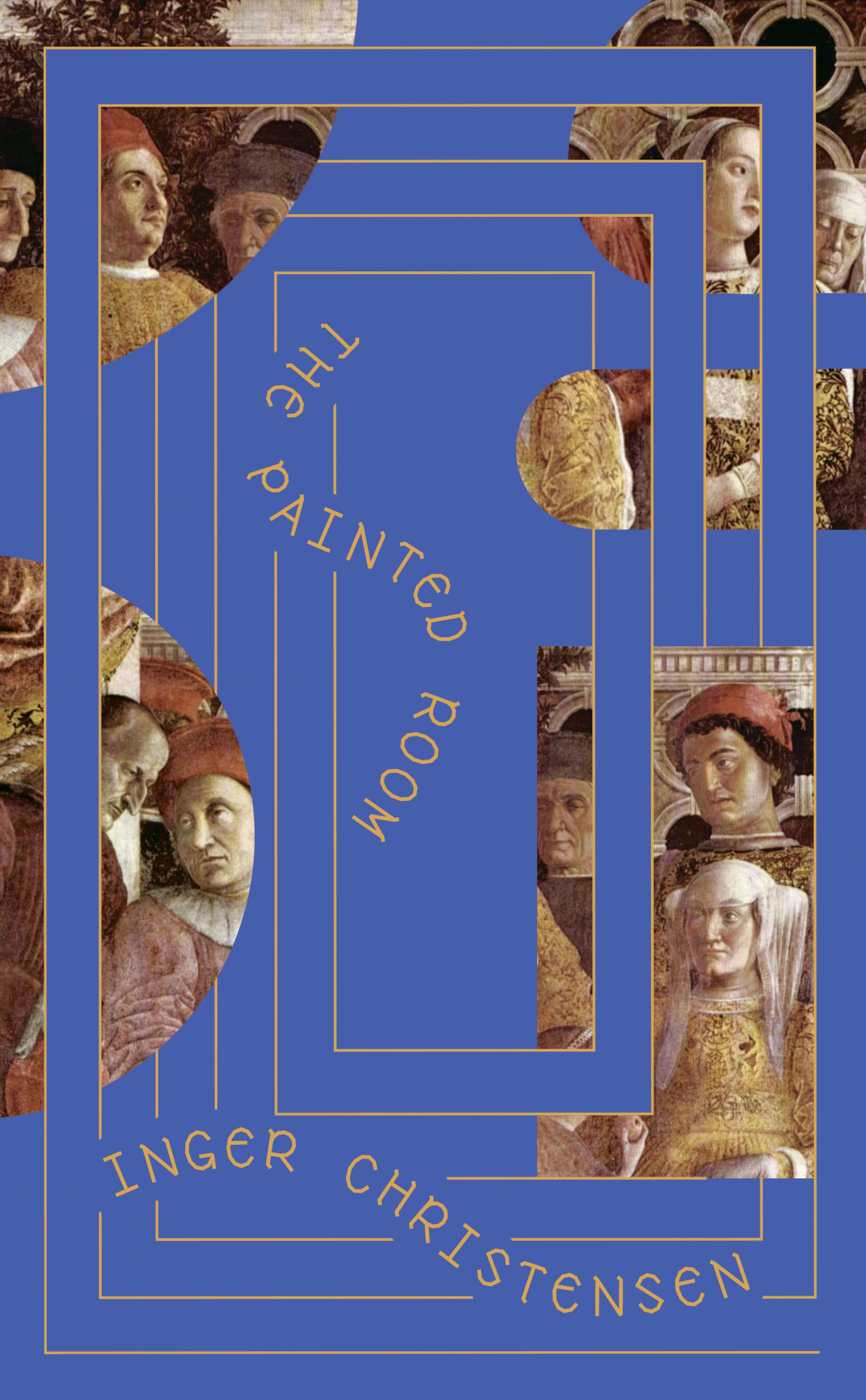
“There is something about only being able to get lost when you’re not thinking about it”: Natalja’s Stories by Inger Christensen

—There was once a woman who travelled all the way from Crimea to Denmark so that she could bury her mother.

This woman, Natalja, was born in Russia to a Danish woman who had been abducted by a Russian silk trader, and when the Revolution broke out she and her mother were forced to flee the country. Along the way, her mother became sick and died of dysentery, so Natalja gathered some ashes from the mass funeral pyre, placing them into the Chinese crock they’d been carrying, and made her way to Copenhagen. This story, told and retold, each time with a new angle or embellishment, is passed onto the woman’s granddaughter, also named Natalja, who then tells and retells variations on the themes in her grandmother’s stories letting them veer off in wild, often outlandish ways. Gathered together these stories comprise Inger Christensen’s strange, little shape-shifting novella, Natalja’s Stories, originally published in Danish in 1988, and now available from New Directions in Denise Newman’s English translation.

Reading like interlinked or echoing stories, each of the seven chapters of this book is narrated by a woman named Natalja—presumably the granddaughter of the Russian-born Natalja described above—but who is she really? A Danish woman living in Paris, a French woman who assumes Natalja’s identity, or a writer writing her own or someone else’s stories? Or all of the above. As with Christensen’s intricately layered novella Azorno, meanings are fluid, shifting even as the same images, events, and characters (or to put it simply, the same phrases, sentences, passages) reappear in ever changing forms and contexts.

The book opens with “Natalja’s story about destiny” which details her grandmother’s account of how she came to be born in Russia and the circumstances that brought her to Copenhagen. Each one of the stories that follow can be understood as variations on this theme of destiny—being caught in it, escaping it, or reshaping it.  Even the very act of telling a story seems to have its own force of will as our narrator muses in the opening of “Natalja’s story about liquor”:

There was once a cat named Mirage. That’s more or less how I thought I would begin my story. Now of course you can say it’s already begun as I thought it would—there once was a cat named Mirage and so on—whatever I come up with now doesn’t matter because it would be just one of countless but similar false beginnings. And if it had been a true beginning I would not have noticed it, would not have mistrusted it. I would not have ceased its development and so on.

But why hide the fact that only Mirage the cat holds the picture of this story and thereby knows its correct imperceptible beginning, while I am obliged to pick and choose between random sentences that say nothing to me because I’m unable to see where in the story they belong?

As reality and identities shift, revolving around repeating characters, scenes, and motifs, the stories that emerge are by turns amusing, absurd, intriguing. There are murders, mysteries, and even a man so dangerously irresistible that he may have been not only the younger Natalja’s love, but also the lover of her mother and her grandmother.  Our narrator, in her varying incarnations, seems to be inclined to allow herself to fall into unlikely situations, only realizing later that the power to reinvent herself, to become someone else, belongs to her. But it doesn’t exactly resolve how she fits into the overall narrative—if there even is one.

Composed as part of a seven-writer project modeled after Boccaccio’s Decameron, Natalja’s Stories explores a theme common throughout Christensen’s poetry and prose: the way language creates and shapes meaning. As such, the experience of reading her fiction can be akin to wandering through a maze or a hall or mirrors (or both). The inclination may be to try to dissect it logically, but in this case there may be multiple logical intersections at play.  It’s perhaps best to let go and enjoy getting lost in a world where realities continually change and simply marvel at the  connections that arise when you least expect them.

Natalja’s Stories: A Novel by Inger Christensen is translated from the Danish by Denise Newman and published by New Directions.

A life lost in stories: My Kingdom is Dying by Evald Flisar

Evald Flisar (b. 1945) is one of Slovenia’s best known and most prolific writers. He has travelled extensively, his work has been translated into at least forty languages,  and his plays have been performed around the world. But, as is not uncommon for writers from his corner of Europe, it is one thing to be widely read, quite another to be a household name—at least beyond one’s native borders. This is, in fact, something that is a fate long understood by  the aging narrator of My Kingdom is Dying, subtitled Storytelling at the End of the World, a characteristically unusual tribute to the life of a writer, originally published in Slovene in 2020, and now available in David Limon’s English translation, just in time to honour the author’s eightieth birthday earlier this year.

This charming and slyly subversive novel is a celebration of the power of storytelling, formally and informally. The unnamed protagonist is a highly respected novelist and short story writer who, like Flisar himself, has travelled widely and lived and worked in both Slovenia and London. He is quite a quirky, at times even arrogant, character whose life story, as he tells it, has all the qualities of a sophisticated tall tale, one that is gleefully anachronistic, blending profound insights with absurd happenings, and blurring the line between possible fact and pure fantasy. The basic narrative unfolds as the narrator is recovering from a freak accident with the daily assistance of a live-in Carer with whom he shares accounts of his past, including his early development as a writer with the encouragement of his grandfather, the pleasures and pitfalls of his career, his life-long obsession to write a completely original story, and the mysterious figure of Scheherazade who, as if emerging from his youthful reimagining of the Arabian Nights, has followed him around the world, appearing when he least expects it.

His adventures are extraordinary and feature an diverse range of real life authors and literary figures—at times holding close to actual details, like the arc of a Borges story or the make-up of a real Booker Prize jury—but because it also leans toward the bizarre, Flisar is able to get away some pretty pointed observations about the literary world with all its pretensions. His narrator takes swipes at critics, fellow writers, editors, publishers, and prize juries. But one must assume that much of this is levelled with tongue firmly planted in cheek. After all, one of our hero’s regular targets is genre writers—in contrast to serious writers of literature such as himself—all in what is a clear genre hybrid blending memoir (fictitious and factual) with fairytale, horror, mystery, and fragments of travelogue. (Of note, several accounts take place in India, and, for the absurdity of events that unfold there, Flisar’s familiarity with the country and its cities, especially Kolkata, is evident.)

By the narrator’s own account, everything was proceeding smoothly, book deal followed book deal, until the sudden onset of writer’s block upended his world. One day, stories presented themselves to him as usual, rising out of a daily act so pedestrian as opening the newspaper over his morning coffee and the next day, the well had inexplicably run dry. No stories came. If storytelling gave him his meaning, not to mention a career,  what might be the fate of  a storyteller who could no longer tell stories?

It had never seemed possible that it would be storytelling that would bring me to the edge of a nervous breakdown and change me into the kind of person who I liked to write about. This time it happened, not within the framework of an imagined story, but in the reality in which I was forced to live, even if only because of loyalty to the activity that I saw as my “mission”, for I knew that withdrawal from the world, when we lack a way forward and begin to psychologically drown, is always possible and, with the abundance of chemical means available, can also be painless, even instant. But each such thought, that I might withdraw from the world before my natural end (thus showing that I was not a victim, but rather the master of my fate), automatically became transformed into a story that I simply had to write and share with others. With that, the wish for a leap into the next life lost its power and validity.

Now without this critical lifeline, would he be able to hold off his darkest thoughts? When he confessed his predicament to his editor, it was suggested that he seek treatment, all expenses paid, at an exclusive clinic in Switzerland where his writer’s block might be cured. The clinic, ominously named Berghof, turns out to be a dark, dank castle in the middle of a lake where, so far as he can tell, all of his fellow patients seem to be seriously mentally ill. The treatment is absurdly brutal, the doctors appear to be madmen, and it is not until he emerges from his solitary routine that he finds himself among the likes of Saul Bellow, Martin Amis,  J.M. Coetzee, Graham Greene, and others. And it just gets stranger from there.

Flisar has a fondness for exploring serious themes within environments that are by turns whimsical and grotesque (see my review of My Father’s Dreams). He is especially interested in the behaviour his characters exhibit under psychological pressures—and his protagonist here is subject to more than a few impulsive reactions when he feels threatened. But, at the same time, in narrating his story to his Carer, a woman he grows increasingly close to, he is able to maintain the storyteller’s objective distance, at least until boundaries between myth and reality finally dissolve. In the end, despite—or perhaps because of—its many spirited and unlikely detours, My Kingdom is Dying is a tribute to storytelling  so rich with literary illusions and intertextual elements  that it holds a depth its seemingly light, eccentric tone belies.

My Kingdom is Dying by Evald Flisar is translated from the Slovene by David Limon and published by Istros Books.

Memories, visions, and grief: The Dissenters by Youssef Rakha

I think I hear the dawn azan much earlier than it is supposed to sound. The world, spaced out, is speeding down some derelict highway in time. And long before my attic visions start, Shimo, I am thinking it is time that happens to people. We talk about having and saving and wasting it as if it is ours to work with, but really it is we who are time’s property. It molds and meddles with us, changes us without our knowing, so that one day we wake up with no idea who we are. And suddenly the life we’ve lived is no longer ours.

Youssef Rakha’s latest novel, his first composed in English, explores the remarkable, multi-dimensional life  of a strong-willed, enigmatic woman, set against the tumultuous years of recent Egyptian history, from the mid-fifties through the January Revolution of 2011 and its aftermath. But to put it like that sounds too simple, too conventional, for the tale that The Dissenters unleashes. Not content to embark on a straightforward narrative (which would not be his style anyhow), Rakha has chosen to tell the story of Amna Hanim Abu Zahra—Nimo to her friends, Mouna to her husband and children—through the memories and hallucinatory visions of her eldest son Nour. In the wake of his mother’s death, his grief-tinged, ecstatic narrative unfolds in a series of letters to his estranged younger sister Shimo in California. He wishes to share with her the understanding of Mouna, their mother, that he has gained through the strange rift in the fabric of time that has allowed him, within the confines of the cramped attic of the their family home, to slip into her earlier existence, living, reliving or closely observing her experiences, even those from long before he was born.

The Dissenters is, then, essentially a one-sided epistolatory novel consisting of three long letters with an interlude stolen from Mouna’s own notebook. Nour engages his sister directly and imagines her responses, but the apparent silence on her end provides no indication whether his dream-inspired insights will manage to heal, as he hopes, the unresolved rupture between mother and daughter that precipitated  Shimo’s unannounced departure from Cairo years earlier. However, it would seem that this is not the only loose end Nour is attempting to tie up. He is a forty-five year-old journalist who returned home to live with his mother after his divorce in 2010, and there is much that he must resolve with respect to his own life and his relationship to his country.

Moving between more recent, post-revolution events to which Nour—and in one section Mouna herself—can speak directly, and the attic revelations that reach back further into the past, Rakha unwinds a tale that works with, and against, temporal framings to create a narrative that slowly builds to reveal a full, multi-dimensional portrait of a singular woman and the shifting political, social, and civic world around her. Nour’s earliest visions take him back to 1956 when his mother, a teenager still known as Amna, is deprived of a chance to take her baccalaureate  exams and forced to marry a forty year-old man her family has selected. The awkward marriage will remain unconsummated and ultimately be dissolved, which allows young Amna the opportunity to finally pursue her dream of going to college.

There she will meet Amin, the young Communist lawyer who steals her heart and gives her the name “Mouna,” but their newfound joy is short-lived, as he is arrested and imprisoned a few short months after they move in together. The years of their separation, Nour tells his sister, see their mother exercising a new confidence and independence as she finishes school and enters the workforce. As a modern, stylish Egyptian woman, her friends and colleagues call her “Nimo.” When Amin is released from jail, a diminished and disillusioned man, she continues to work, even finding herself, for a time, acting as a secret agent. And then, at last, in 1969 Nour is born. By the time her second child, another boy, arrives, Mouna is again transformed. She has remade herself as a pious, middle-class Muslim mother.

The alternate thread of Nour’s correspondence with his sister, who is thirteen years younger than he is, explores more recent family matters including their parent’s comfortable estrangement, their brother Abid’s sadistic tendencies, and the circumstances that seem to have caused Shimo’s relationship with her mother to become strained and then permanently broken. But the primary focus is the dramatic impact that the 2011 revolution had on their mother. It seemed to awaken a long dormant political spirit in Mouna, giving her a new purpose and a new life.  On February 11, the night Mubarak stepped down from power, Nour walks home from Tahrir Square and is distraught to find that she is not there. Immediately his mind goes to all manner of horrors, imagining her lying in a puddle on the sidewalk.  And then, she appears, holding a flag, smartly dressed, her headscarf gone:

—You’re home early Mouna trills, the premillennial warmth of her voice restored.

Now my mother is smiling for real: an expression utterly unlike the baraka she used to project going about her devotional duties. I haven’t seen such peacefulness in her face since before Baba died. She stands waving her flag, then steps over the puddle that no longer shows her dead.

—I couldn’t stay home on a day like this, now, could I, she says. Besides, I just took the Metro to Kast El Ainy and walked to Tahrir. C’était incroyable, ya Nour. Hold your head high, you’re Egyptian, we chanted. But it wasn’t just a chant, you understand. It was real.

Soon, however, Mouna becomes aware of a strange and disturbing phenomenon. Something that others do not seem to register. Suddenly women are jumping off roofs and out of windows. She begins to investigate, finding a few others who also seem to be aware of this unusual trend. She even tries to recruit Nour, encouraging him to report on the situation. He doesn’t know what to make of the Jumpers,  but she sees a truth in their tragedies. These ill-fated women become a mystery, and then an obsession, even a madness, that fuels Mouna’s final years as the promise of the revolution turns again to upheaval and violence.

This ambitious, hypnotic novel tells a story that is very intimate, turning at times erotic or violent, but it is about much more than the life of one woman. For one thing, the conscious incongruity of having a complex woman’s life recounted and, at times experienced, through the vessel of a man sets up an interesting dynamic, speaking as it does to the shifting roles and restrictions that impact women in Egyptian society from an unlikely angle. Of course, The Dissenters also addresses the price paid by anyone who defies political and social conventions, and highlights the challenges of navigating  the forces of power for one’s own safety or (as in the case of Abid who joins the Secret Police) one’s advantage. Thus, Mouna’s story is much much larger than she is. As Nour confides to his sister:

But I’m no longer talking of my mother, am I. I’m talking of the Mother of the World. Surely you know that’s what Egypt is called, dear sister. At moments like this it seems as if Amna Abu Zahra is a fractal of our country, her biography a variation on its history, a version of the same story.

Finally, although Rakha is writing this novel in English—a language Nour and his sister share—his prose carries a strong Egyptian flavour. Many Arabic terms and expressions are woven into the text without comment or glossary (one can always look them up, mind you), and because Mouna was educated in French schools growing up and continued to use the language in her working years, French phrases regularly appear in her speech. This distinctive voice, in conjunction with the rhythmic flow of a narrative structure that blends the fantastical possibility of Nour’s visions with the reality of his own need for understanding and reconciliation, makes for a compelling and exceptionally rewarding read.

The Dissenters by Youssef Rakha is published by Graywolf Press.

A mirror to a life: Self-Portrait in the Studio by Giorgio Agamben

A form of life that keeps itself in relation to a poetic practice, however that may be, is always in the studio, always in the studio.

Granted that what Giorgio Agamben calls a “studio” might be better understood by English language readers as a “study,” the ideal space is the same: some kind of a desk , plenty of shelving for books, and some room on the walls for  a few well-chosen prints or framed memorabilia. Over the years the Italian philosopher has occupied a number of studios, most rented or borrowed from friends, and each one, revisited through photographs often grainy or discoloured, contains the memories of friends and colleagues and others who have, through their writing, influenced and inspired him. With this slender, generously illustrated volume, Self-Portrait in the Studio, Agamben reflects on his own intellectual journey, which is, in his case, nothing less than a life journey, from the sixties through to the present day, via photographs, paintings, poems, beloved books, and precious friendships.

In this day of the ubiquitous selfie—that practice of intentionally placing oneself front and centre at any site of interest—one might expect a book with “self-portrait” (autoritratto) in the title to be a self-focused venture. Yet, although Agamben does appear with friends, mentors and fellow students in a number of  the included photographs, his motivation is to centre those whose words and ideas have touched him and the lessons they have passed on. In a parenthetical aside he addresses this objective:

(What am I doing in this book? Am I not running the risk, as Ginevra [his spouse] says, of turning my studio into a museum through which I lead readers by the hand? Do I not remain too present, while I would have liked to disappear in the faces of friends and our meetings? To be sure, for me inhabiting meant to experience these friendships and meetings with the greatest possible intensity. But instead of inhabiting, is it not having that has got the upper hand? I believe I must run this risk. There is one thing, though, that I would like to make perfectly clear: that I am an epigone in the literal sense of the word, a being that is generated only out of others, and that never renounces this dependency, living in a continuous, happy epigenesis.)

This desire to stay out of his own way goes a long way to explaining the surprisingly engaging nature of this book. It is not a  detailed or rigorous intellectual autobiography, but rather a chance to spend a little time with a philosopher who truly seems to delight in the exchange of ideas, someone who wishes to honour some of the friendships, writers and artists who have helped shape his own development over the years.  Of course, given that he is writing from the vantage point of his early eighties, there is also a clear appreciation of the fact that the themes and dreams of a life are ever necessarily unfinished. In his preamble he muses: “While all our faculties seem to dimmish and fail us, the imagination grows to excess and takes up all possible space.” There are regrets—for example, sorrow that he did not come to appreciate Ingeborg Bachmann’s poetry while she was still alive—but the text ends with a positive, and still forward looking, affirmation of life and love.

Progress through this book of memories is essentially chronological, Agamben employs objects in or associations with his various  studio settings as touchstones that trigger memories of a particular person or persons who came into his life, and, frequently, the poets or writers that any one connection might have him led to explore. The tapestry of a life of ideas ever expanding, moving from friendships with important contemporary literary and intellectual figures, to meditations on the ideas of those he came to know only through their work, and back again. He never devotes more than a few pages to any one individual, social group, or writer as he honours those who have influenced and inspired his own thought over time.

For myself, many of the individuals he talks about, including those he counts among his important friendships, were previously unknown to me (but easy to look up, of course), but others, especially the writers he feels a strong connection to—like Simone Weil, Walter Benjamin, Hölderlin, and Robert Walser—were not. Of particular interest is the way he considers our relationships to those we read carefully or enjoy close intellectual companionship—what is it to engage intensely with the ideas of others?

As he makes his way along this retrospective pathway, Agamben draws some striking connections that he measures himself against in assessing his own life. Notably, he comments on a piece written just three years before Walser’s commitment to the hospital where he would spend the rest of his life, in which he questions the idea that Hölderlin’s last decades were ones of misery, suggesting instead that his loss of his senses wisely  afforded him the time and space to dream :

The tower in the carpenter’s house in Tübingen and the little hospital room in Herisau: these are two places on which we should never tire of meditating. What was accomplished within those walls—the refusal of reason on the part of two peerless poets—is the strongest objection that has ever been raised against our civilization. And once again, in the words of Simone Weil: only those who have accepted the most extreme state of social degradation can speak the truth.

I also believe that in the world that befell me, everything that seems desirable to me and seems worth living for can find a place only in a museum or a prison or a mental hospital. I know this with absolute certainty, but unlike Walser I have not had the courage to follow out all its consequences. In this sense, my relation to the facts of my existence that could not happen is just as—if not more—important than my relation to those that did. In our society, everything that is allowed to happen is of little interest, and an authentic autobiography should rather occupy itself with facts that did not.

So where does that put his little exercise in self-reflection? In a class of its own. With Self-Portrait in the Studio,  Agamben, traces a rich network of interconnection, through personal contacts, study and research, and even, in some locations, a coincidental proximity to history, to produce a work that is entertaining, intelligent and humane.

Self-Portrait in the Studio by Giorgio Agamben is translated from the Italian by Kevin Attell and published by Seagull Books.

What the streets cannot retain: Border Documents by Arturo Soto

Considering the escalating tensions on the Mexico – US border, heightened even more under the present American administration, Mexican photographer and writer Arturo Soto’s new photo book, Border Documents, is an especially opportune release. The images belong to today; the texts to another time. The late fifties through the late seventies, to be exact. They reflect the environment in which his father grew up in the deeply entwined sister cities of Juárez, Mexico and El Paso, Texas. That world has been irrevocably altered by social and political forces over the past three or four decades, but this uniquely personal project sets out to attempt to “see” echoes of a remembered past in the urban landscape of today. The challenges arise not simply from the passage of time, but from the reputation, both earned and exaggerated, that this area now bears. As Soto points out in his Afterword:

People acquainted with Juárez, particularly those outside of Mexico, tend to know it for its infamies. The femicides of the late nineties cemented an infernal image of the city amply propagated in pop culture. A few years later, the ‘war on drugs’ further precipitated the erosion of civic life, which encouraged the media to focus its attention solely on the gruesome side of things. Such a narrow understanding renders everyday life invisible, putting it at risk of being lost. The past cannot be restored, but it can be conjured for insight to understand past and present lives.

The presentation of Border Documents is clean and spare. (See selections here.) Two-tone school photos of the senior Soto from the sixties and seventies line the inside of the front and back covers. Stark black and white photographs, taken in Ciudad Juárez and El Paso in 2016, appear as almost ghostly images of the streets and neighbourhoods of his childhood and youth. They are characterized by harsh light, sharp angles, lonely vistas. Parked cars are common, but few people are in sight (notably there is one where the photographer’s shadow stretches out from the lower right corner). By contrast, the accompanying vignettes are populated with a vivid cast of friends, classmates, grandmothers, siblings, parents and other relatives. The juxtaposition of the chronological collection of memories, anecdotes, and musings filled with life in all its shades of joy and discontent against contemporary images of the settings where they once took place demonstrates the complex reality of the environments in which we grow up and the degree to which they are both preserved and lost over time.

A case in point, border crossing. Apart from being a source of employment opportunities for Juárez residents, legal or not, El Paso was also a destination for amusements, such as a trip to the zoo, or, more commonly, a place to acquire goods and access services otherwise unavailable at home. An early memory from 1958 captures a child’s early impressions of the experience:

We took the transnational trolley to shop at JC Penney, everyone’s favorite store. The journey felt tediously long despite the short distance because of the long immigration line. They even forced some passengers to get vaccinated before letting them in. Overheard conversations had led me to believe things were much nicer on the other side, but everything looked more or less the same once we reached El Chuco. Over time, I found reference points that sparked my imagination along the route. Some of my favorites were the old customs building, the Spirit of St. Louis replica above a cantina and the clay figures of sleeping Mexicans flanking Don Marcos Flores’ house. A former municipal president, he had a gift shop close to the Santa Fe bridge. My grandma Esther cashed the money my aunt wired her from Los Angeles there. Don Marcos, always at the entrance, greeted her by name, which made me feel distinguished.

However, the photograph that faces the above memory depicts, from across the cracked pavement of West 4th Avenue, a plain, all-purpose structure with its available services painted right onto its front wall in English and Spanish—Copies, Fax, Foto, Income Tax, Public Notary, Medicare, Medicaid. Hard to picture such a destination sparking a child’s imagination today.

Some of the photographs captured appear to closely align with the accounts of the relative freedom afforded by a makeshift cement and brick playground in a barrio defined by specific streets and bridges. Perhaps these scenes are little changed with time. Of course, not every photo has a story, though each one has a location indicated. Likewise, not every story is matched to a photo. Soto’s father’s anecdotes carry enough humour, wisdom, and empathy to form vivid portraits on their own. He recalls, for example, a near spiritual crisis on the occasion of his First Communion with his sister Elsa in 1963. His mother was able to find him a second hand outfit and, with luck and a generous repayment plan, a most elegant new dress for Elsa. Simply clothing the outside, however, was not enough:

My peace of mind and the purity of my soul proved harder to secure. Some distant relatives were in town, and my cousin kissed me while playing a game. I felt very conflicted. This happened after my confession, and we had just been instructed on the consequences of receiving communion in a state of sin. I went back to the church and explained myself to the priest. He laughed and made me promise not to do it again but assigned me no penance. Liberated, I bought an orange from the market, feeling closer and closer to heaven with every slice I ate.

Life was not easy—along with the typical boyhood and adolescent adventures, and misadventures with friends and siblings, there was an alcoholic uncle, a father inclined to infidelity and other challenges—but the reflections Soto’s father shares show a distinct compassion or understanding, even if it is filtered through an adult’s appreciation of his younger self. One can see why his son who grew up listening to his stories would be inspired to encourage him to engage in this project even if some memories would be destined to transcend the physical spaces in which they were formed:

I keep a sad memory of the Cine Reforma. I watched there El Señor Doctor when Cantinflas was at the height of fame. Since overselling tickets was standard, I had to watch it on my feet. At some point, I thought I recognized someone a few rows ahead, but it wasn’t until the credits rolled that I made out my uncle Carmelo, a subject of constant gossip in our family. My dad used to say that his sister, the fearful Aunt Berta, would seize Carmelo’s salary. On Sundays, she would give him just enough for a newspaper, a shoeshine, and a movie ticket. I always thought my dad exaggerated the situation, but I confirmed my uncle’s capitulation was true that day.

As in Arturo Soto’s earlier work, a strong thread of social commentary is woven into the relationship between images and commentary. He is drawn to challenging the existing assumptions about a place by focusing on the ordinary to expose the everyday reality overshadowed by the outsized image an urban centre may otherwise project. His last work, A Certain Logic of Expectations (see my review) was the outcome of his time spent studying for his PhD in Fine Art at Oxford University during the BREXIT years. But rather than focusing on the famed campus environment, he turned his camera on the other Oxford, the working class community that belongs to a geographically larger but psychologically and socially distinct space from the hallowed University environs. Of course, he views this world from the perspective of a Mexican outsider who can’t help but marvel at how relatively safe and clean even the “rough” parts of town feel. However, with this new collaborative project, he is exploring an urban environment he frequently visited while growing up in Mexico City, but that always felt at odds with the images his father’s anecdotes had conjured. In revisiting these streets, avenues and corners, Soto allows his camera to offer a visual counterpoint to the record of his father’s memories and the result is a very powerful—and personal—documentary that crosses borders, both temporal and political.

Border Documents by Arturo Soto is published by and available from Eriskay Connection.

What passes and what remains: Walter Benjamin Stares at the Sea by C.D. Rose

The fictional world of British writer C. D. Rose is one that slips in and out of time, balancing the fantastic and the realistic, peopled with the lonely, the lost, and the brilliant misfits, some drawn from history, others from his expansive imagination. His universe is at once familiar and strange, and as is the case with the best literary fables, it offers a welcome refuge in a troubled world. At least, that was what I found after floundering with attempts to lose myself in prose during a busy, stressful stretch. Rose’s short story collection Walter Benjamin Stares at the Sea turned out to be the perfect antidote to a reading slump.

Central to this collection of nineteen tales is the idea and experience of time—tracking its passage, defying its constraints, longing to hold it fast. Rose’s characters often have a most awkward relationship with time. The protagonist of “Everything is Subject to Motion, and Everything is Motion’s Subject,” for example, nineteenth century French physiologist and chronophotographer Étienne-Jules Marey, in a narrative that flows with the imagery of his two obsessions, circulation and the pursuit of the fine details of movement, feels himself divorced from any perception of time beyond the immediate:

In life, this tangle. His constant passage from Paris to Naples, Naples to Paris. The demands of work, love, money pushing him one way and pulling him the other. A life always in transition, never stopping, always moving. Always in the present tense. Were he to stop and think of the past or the future, what would happen? When and where, he sometimes thinks, will I finally rest? His life like his pictures: tracing a motion back and forth across Europe.

Elsewhere, philosopher Henri Bergson, defender of primacy of immediate experience, finds himself caught a warped time loop of maids and spilled tea in “Henri Bergson Writes About Time.” Or in “Violins and Pianos are Horses,” an unnamed composer fitfully tries to reclaim his past on a visit with his daughter to the town he grew up in. Memories beset him during their stay, but the childhood home he remembers remains elusive, while all his fame and achievements are cold comfort.

Sometimes time takes on a surreal, even ghostly, quality in Rose’s fables. At other times, he leans hard into the absurd. “The Neva Star,” for example features three Russian sailors, all named Sergei, who have stubbornly (or perhaps foolishly) stayed aboard their ship, abandoned by its owners to rust in a port in Naples. In the charming “Arkady Who Couldn’t See and Artem Who Couldn’t Hear,” the narrator passes a long train trip across the snow-covered Russian landscape in the company of an odd pair of twins, one blind, one deaf, who are engaged in the careful construction of a matchstick model of their childhood home—a collaborative effort to remember their birthplace:

They were thin men, curiously built, with long square bodies and short legs, but both moved with a careful grace, their slow, deliberate gestures reminding me of mime artists or expert craftsmen. When I asked how long they had been building their model, they looked at each other and smiled. All our lives, said Arkady, all our lives.

The stories the brothers share about their lives conflict depending on which twin is doing the telling and whether the other is asleep, but it is clear that neither intends to allow their life project to come to completion. As if one can preserve time so it never truly passes. But, of course, time has its own designs.

Rose crafts many of his tales over the biographies of real people—photographers, scientists, writers, philosophers—stretching, reshaping, and imagining them from the inside looking out at a world that moves too quickly, too slow, or too strangely. Other narratives tend to similarly feature protagonists, narrators or characters that connect with temporal reality in idiosyncratic ways. And some seem to defy time and conventional narration altogether, like the experimental “What Remains of Claire Blanck” in which the narrative has all but evaporated leaving only footnotes, their numbers hanging against empty space above a detailed literary analysis of a story that can no longer be read. The nature of storytelling, how or if one can or even should write about a particular subject, also preoccupies certain narrators or protagonists, but again, that is a theme not inseparable from time.

Writing this review on the day that the new pope, an American of the Augustinian order, has been elected and the curious have been scrolling through his twitter account to gather a sense of the man, it’s some strange coincidence that the funniest, most affectionately absurd title in this collection is “St Augustine Checks His Twitter Feed.” In this brief tale the saint struggles with the temptation of social media, fretting about likes and the lack of a blue check mark, as he tries to focus on beginning to write his confessions. This clever little piece works, as do the others in this collection of intelligent, wide ranging fables, because Rose has a keen sense of just how long a story should be based on its level of absurdity and relative complexity. Frequently that is no more than a few pages. His mastery of the form is impressive, bringing to mind writers like Italo Calvino, Magdelena Tulli, and, of course, Borges, and yet his voice is distinct and contemporary and this collection a delight.

Walter Benjamin Stares at the Sea by C. D. Rose is published by Melville House.

Elegy on the wing: Butterfly Valley by Inger Christensen

Since reading The Condition of Secrecy, a collection of essays by Danish poet and writer Inger Christensen (1935–2009) In January, I have set out to read one of her works each month until I run out of available volumes. This past month was largely absorbed by working for and worrying about the Canadian Federal election which has just passed, so my reading was scattered at best, and most suited to poetry and short fiction. I am squeezing this brief reflection on this single-poem volume, Butterfly Valley, as National Poetry Month draws to a close. Note that this is a dual-language edition, whereas the US edition from New Directions entitled Butterfly Valley: A Requiem contains this same translation by Susanna Nied, Christensen’s longtime poetry translator, along with three other medium-length poems, but does not include the original Danish. I intend to get that book eventually, however I would suggest that having the original and the translation face-to-face allows a reader to appreciate the complexity of Christensen’s achievement as it is possible to gain a sense of the musicality and rhyme structure present in the Danish, even though it would be unsatisfactory to attempt to reproduce that fully in the English.

“Butterfly Valley” is a fifteen part sequence of sonnets, the first fourteen linked by first and last lines which are then gathered form the final powerful poem. Christensen was a lover of form, structure, and imagery drawn from science and nature. Musicality was also very important. These qualities all come into play with this sequence which features the fourteen lines of the sonnet presented as two quatrains and two tercets with the rhyming pattern: ABAB CDCD EFE GFG (several follow ABBA CDDC in the first two stanzas). The poems are linked by repetition—through the first fourteen sonnets, the last line of each sonnet becomes the first line of the following one. VI, for example, closes with:

Here gooseberry and blackthorn bushes grow;
whichever words you eat, they make
your life butterfly-easy to recall.

Perhaps I will cocoon myself and stare
at the white Harlequin’s sleights of hand,
delusion for the universe’s fool.

And VII begins:

Delusion for the universe’s fool
is the belief that other worlds exist
that there are gods who bellow and roar
and call us random tosses of the dice

The fifteenth sonnet is composed of all of these repeated first/last lines, in order, with the typical rhyming pattern maintained. Each individual sonnet is thus crafted with an eye (and ear) to the finale.

Within this sequence, a host of colourful butterflies rise and fall through the Brajcino Valley’s noon-hot air. Christensen, who believes that poems are composed of words, first and foremost, employs butterfly-related imagery and the names and colours of different species, directly and metaphorically, along with a mythologically-tinged sensibility. But her themes are the very human, even existential, reflections on life and death, love and loss, art and nature.

When with their image-language, butterflies
can use dishonesty and so survive,
then why should I be any less wise,

if it will soothe my terror of the void
to characterise butterflies as souls
and summer visions of vanished dead. (X)

As ever, Inger Christensen’s poetry is an intricate and articulate celebration of language, meaning and life itself. This slender volume highlights these qualities well.

Butterfly Valley by Inger Christensen is translated by Susanna Nied and published in a bilingual edition by Dedalus Press.

In that strange, that golden light: Psyche Running – Selected Poems, 2005–2022 by Durs Grünbein

And suddenly you saw it, far below
the coast road, after the twelfth curve,
stomach surging from the hair-pin drive.
En route for the south; so we sped on
perched above the drop, windows down.
Sorrento with its villas, its fan palms,
had been swallowed by the plug-hole
of the mirror in a great green swirl.
It hung in the haze, a hulk of bare rock.

The sea dead still. Not a trace of myth,
but for the yachts decked out in chrome
glinting in the sunlight. On a white hull
we made out ‘Nausicaa’ in faded letters.

Infectious energy, shifting, rising and falling. Durs Grünbein is a poet who writes as if regularly navigating the kind of winding roadway described here in “Island without Sirens” from his 2013 collection Colossus in the Mist. This poem, dedicated to Alexander Kluge, which begins with the promise of finding a site with rumoured Homeric association and ends with the view of an island not unlike a mass of barren lunar rock rising out of the water, is a clear reflection of what has made him one of the most important and successful contemporary German poets. Now his most recent release in English translation, Psyche Running: Selected Poems, 2005–2022, has just been shortlisted for the 2025 Griffin Poetry Prize (his second such honour for this prestigious award).

Born in Dresden in 1962, Grünbein moved to Berlin in his twenties to study theatre. Since the fall of the Wall, he has travelled widely and presently he lives in both Berlin and Rome. He has published more than 30 books of poetry, along with translations of classical and contemporary authors, essays, libretti, lectures, and collaborations with artists, composers and filmmakers. His prolific writings cover such a wide scope of literary form and history that he has, as translator Karen Leeder notes in her valuable Introduction, called himself an “unpoet.” Nonetheless, poetry remains central to his work, having won him widespread recognition and a number of major awards. The present collection offers an ample illustration of the breadth and appeal of his poetic vision.

The selections in Psyche Running represent nearly two decades of Grünbein’s output, drawn from ten volumes published beginning in his early forties through to the age sixty. As such, they trace the poet’s growth in mid-life and mid-career, his changes in tone, themes and exploration of form. This collection opens with work drawn from two books published in 2005. Both feature poetry inspired by history, though in very different contexts. Portraits of personalities and scenes from the ancient world figure in The Misanthrope on Capri while his focus turns closer to home with Porcelain: Poem on the Downfall of my City. The latter is a cycle of forty-nine numbered poems, a lament for Dresden, destroyed by Allied bombers in 1945. Yet, even in an elegy, Grünbein’s playful tendencies surface—something that was not necessarily received well by some readers:

Not a rowdy wedding-do. It was The Night of Broken Glass
or, what sharp-tongued folk called: the glazier’s lucky day.
And Ash Wednesday just a hop, skip and jump away.
Fools and Nazis—huzzah!—sure, they had a blast.
What’s that? Innocent? Disgrace came long ago.
Dresden shepherdesses, German bands, where are you now?

–  from “4”/ Porcelain

Twenty-four of the short poems from this sequence are included in this collection, but the complete work, with photographs and one additional poem, has been published as a separate volume, also translated by Karen Leeder and published by Seagull Books. My own review can be found here.

2007’s Verses for the Day After Tomorrow marks a turn to a more personal focus, exploring  themes of memory and human experience, then, after Grünbein began to spend more and more time in Italy, another shift occurs. With Aroma: A Roman Sketchbook (2010) and Colossus in the Mist (2013) classical elements appear, as do poems that draw direct inspiration from Rome and its environs. In a number of the pieces selected from these two works he demonstrates a wonderful sensitivity to the natural world, as in “Island without Sirens,” quoted above, and this magical evocation of a murmuration of starlings moving through the evening skies above Rome in “Aroma XLIX (Starling Swarms)”

How one envied them their nose dives, swooping down on
     gravel lanes,
or taking in Rome from a bird’s-eye view, conqueror style.
In fact, they only wanted a little urban updraft to be transformed
into currents and reflections, as their aureoles appeared
.     before
the rosé of the cloud-shading, in a sky painted by Turner.
It was a dance of veils, a stunt performed by thousands of
     points in synch:
something like the sound of bells, visible in silhouette above
    the domes.

The influence of  thinkers, ideas, and science on Grünbein’s poetic instincts takes centre stage in the next section, the first published translations from 2014’s Cyrano; or, Returning from the Moon. Each piece in this cycle of eighty-four poems, inspired by Cyrano de Bergerac, “takes its cue from a moon crater” Leeder tells us, “and pays homage to a thinker or philosopher known for their study of the moon.” The poems presented here were selected by the author and I, for one, would love to be able to read this inventive work in full. The mood changes once again with the next selection, the long poem “The Doctrine of Photography” from The Zoo Years: A Kaleidoscope (2015). Presented alongside postcards of prewar Dresden from Grünbein’s personal collection, this piece imagines into being scenes from daily life in the community as darker times close in:

Another spring. Imperial gardens on display:
for six months the magic of flowers
serves to ease the effects of the new
constraints, the new laws.
A hymn to existence, a scared hymn
to the beauty of nature around us,
the newspapers swoon in the
grandiose style of the times.
More powerful than any Olympiad,
closer to a feminine aesthetic sense,
like Hitler’s hands, eunuch-white.

A strong selection of poems have been chosen to represent the final two volumes collected in Psyche Running. Sparkplugs (2017) and Equidistance (published in 2022, marking the poet’s sixtieth birthday) build on imagery, sometimes dreamlike, drawn from science, nature, and everyday life to explore more introspective or existential themes that reflect an increasing awareness of aging and remembrance:

Do I know how many summers we have?
Whether we will recognize them as they were,
these  outdoor scenes, where we
slipped quietly past each other like angelfish
in that strange, that golden light?

I only know the day that keeps what
will happen next hidden behind glass.
Things grow more distant, swim up close,
in the film light. And the projector is me.

–  from “The Projector” / Sparkplugs

Altogether, this generous sampling of Grünbein’s poetic work over the better part of the last twenty years, fills in a long overlooked gap—Porcelain notwithstanding—in the availability of his poetry for an English language audience going back to Michael Hofman’s  2005 translation of a selection of poems from his first four collections, Ashes for Breakfast. Karen Leeder, who in addition to Porcelain also translated Grunbein’s Oxford lectures, For the Dying Calves (Seagull, 2022), has come to know the poet well over the years and has a deep affinity for his wry, vibrant spirit. Her informative Introduction and detailed notes provide an overview of the collection, her approach to this translation, and added detail, as required. Although he frequently draws on historical, philosophical, literary, and scientific sources, there is, in Grünbein’s perceptive, witty, and engaging verse, an irresistible quality that naturally invites a closer read. This volume, then, is not only an important addition to his available writing in English translation, but a wide ranging and vital introduction for anyone new to his work.

Psyche Running: Selected Poems, 2005–2022 by Durs Grünbein is translated from the German by Karen Leeder and published by Seagull Books.