What the streets cannot retain: Border Documents by Arturo Soto

Considering the escalating tensions on the Mexico – US border, heightened even more under the present American administration, Mexican photographer and writer Arturo Soto’s new photo book, Border Documents, is an especially opportune release. The images belong to today; the texts to another time. The late fifties through the late seventies, to be exact. They reflect the environment in which his father grew up in the deeply entwined sister cities of Juárez, Mexico and El Paso, Texas. That world has been irrevocably altered by social and political forces over the past three or four decades, but this uniquely personal project sets out to attempt to “see” echoes of a remembered past in the urban landscape of today. The challenges arise not simply from the passage of time, but from the reputation, both earned and exaggerated, that this area now bears. As Soto points out in his Afterword:

People acquainted with Juárez, particularly those outside of Mexico, tend to know it for its infamies. The femicides of the late nineties cemented an infernal image of the city amply propagated in pop culture. A few years later, the ‘war on drugs’ further precipitated the erosion of civic life, which encouraged the media to focus its attention solely on the gruesome side of things. Such a narrow understanding renders everyday life invisible, putting it at risk of being lost. The past cannot be restored, but it can be conjured for insight to understand past and present lives.

The presentation of Border Documents is clean and spare. (See selections here.) Two-tone school photos of the senior Soto from the sixties and seventies line the inside of the front and back covers. Stark black and white photographs, taken in Ciudad Juárez and El Paso in 2016, appear as almost ghostly images of the streets and neighbourhoods of his childhood and youth. They are characterized by harsh light, sharp angles, lonely vistas. Parked cars are common, but few people are in sight (notably there is one where the photographer’s shadow stretches out from the lower right corner). By contrast, the accompanying vignettes are populated with a vivid cast of friends, classmates, grandmothers, siblings, parents and other relatives. The juxtaposition of the chronological collection of memories, anecdotes, and musings filled with life in all its shades of joy and discontent against contemporary images of the settings where they once took place demonstrates the complex reality of the environments in which we grow up and the degree to which they are both preserved and lost over time.
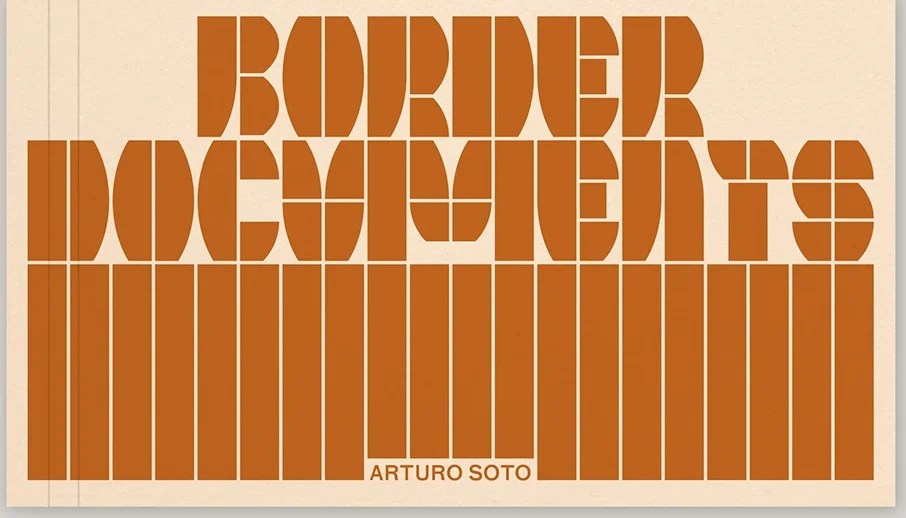
A case in point, border crossing. Apart from being a source of employment opportunities for Juárez residents, legal or not, El Paso was also a destination for amusements, such as a trip to the zoo, or, more commonly, a place to acquire goods and access services otherwise unavailable at home. An early memory from 1958 captures a child’s early impressions of the experience:

We took the transnational trolley to shop at JC Penney, everyone’s favorite store. The journey felt tediously long despite the short distance because of the long immigration line. They even forced some passengers to get vaccinated before letting them in. Overheard conversations had led me to believe things were much nicer on the other side, but everything looked more or less the same once we reached El Chuco. Over time, I found reference points that sparked my imagination along the route. Some of my favorites were the old customs building, the Spirit of St. Louis replica above a cantina and the clay figures of sleeping Mexicans flanking Don Marcos Flores’ house. A former municipal president, he had a gift shop close to the Santa Fe bridge. My grandma Esther cashed the money my aunt wired her from Los Angeles there. Don Marcos, always at the entrance, greeted her by name, which made me feel distinguished.

However, the photograph that faces the above memory depicts, from across the cracked pavement of West 4th Avenue, a plain, all-purpose structure with its available services painted right onto its front wall in English and Spanish—Copies, Fax, Foto, Income Tax, Public Notary, Medicare, Medicaid. Hard to picture such a destination sparking a child’s imagination today.

Some of the photographs captured appear to closely align with the accounts of the relative freedom afforded by a makeshift cement and brick playground in a barrio defined by specific streets and bridges. Perhaps these scenes are little changed with time. Of course, not every photo has a story, though each one has a location indicated. Likewise, not every story is matched to a photo. Soto’s father’s anecdotes carry enough humour, wisdom, and empathy to form vivid portraits on their own. He recalls, for example, a near spiritual crisis on the occasion of his First Communion with his sister Elsa in 1963. His mother was able to find him a second hand outfit and, with luck and a generous repayment plan, a most elegant new dress for Elsa. Simply clothing the outside, however, was not enough:

My peace of mind and the purity of my soul proved harder to secure. Some distant relatives were in town, and my cousin kissed me while playing a game. I felt very conflicted. This happened after my confession, and we had just been instructed on the consequences of receiving communion in a state of sin. I went back to the church and explained myself to the priest. He laughed and made me promise not to do it again but assigned me no penance. Liberated, I bought an orange from the market, feeling closer and closer to heaven with every slice I ate.

Life was not easy—along with the typical boyhood and adolescent adventures, and misadventures with friends and siblings, there was an alcoholic uncle, a father inclined to infidelity and other challenges—but the reflections Soto’s father shares show a distinct compassion or understanding, even if it is filtered through an adult’s appreciation of his younger self. One can see why his son who grew up listening to his stories would be inspired to encourage him to engage in this project even if some memories would be destined to transcend the physical spaces in which they were formed:

I keep a sad memory of the Cine Reforma. I watched there El Señor Doctor when Cantinflas was at the height of fame. Since overselling tickets was standard, I had to watch it on my feet. At some point, I thought I recognized someone a few rows ahead, but it wasn’t until the credits rolled that I made out my uncle Carmelo, a subject of constant gossip in our family. My dad used to say that his sister, the fearful Aunt Berta, would seize Carmelo’s salary. On Sundays, she would give him just enough for a newspaper, a shoeshine, and a movie ticket. I always thought my dad exaggerated the situation, but I confirmed my uncle’s capitulation was true that day.

As in Arturo Soto’s earlier work, a strong thread of social commentary is woven into the relationship between images and commentary. He is drawn to challenging the existing assumptions about a place by focusing on the ordinary to expose the everyday reality overshadowed by the outsized image an urban centre may otherwise project. His last work, A Certain Logic of Expectations (see my review) was the outcome of his time spent studying for his PhD in Fine Art at Oxford University during the BREXIT years. But rather than focusing on the famed campus environment, he turned his camera on the other Oxford, the working class community that belongs to a geographically larger but psychologically and socially distinct space from the hallowed University environs. Of course, he views this world from the perspective of a Mexican outsider who can’t help but marvel at how relatively safe and clean even the “rough” parts of town feel. However, with this new collaborative project, he is exploring an urban environment he frequently visited while growing up in Mexico City, but that always felt at odds with the images his father’s anecdotes had conjured. In revisiting these streets, avenues and corners, Soto allows his camera to offer a visual counterpoint to the record of his father’s memories and the result is a very powerful—and personal—documentary that crosses borders, both temporal and political.

Border Documents by Arturo Soto is published by and available from Eriskay Connection.
And so they will travel by night: Recital of the Dark Verses by Luis Felipe Fabre

Out into that wondrous night
I stepped unseen and stealthy,
with not a thing in my sight
nor any light to guide me
but one burning in me bright.

(from “On a Dark Night” by Saint John of the Cross)

If Fray Juan, the determined and devout evangelist of the barefoot or Discalced Carmelites, the reformed order founded by Saint Teresa of Ávila, was deemed troublesome during his lifetime, the humble Spanish friar, poet and mystic who would later become known as San Juan de la Cruz or, in English, Saint John of the Cross, was no less disruptive in the months and years that followed his death. In life, his dedication to the austere principles of the reformed order and his success in fostering it’s expansion across sixteenth century Spain upset other Carmelites. In 1577, this led to his torture and confinement in a monastery in Toledo where he composed and committed to memory one of his best loved poems prior to making his daring escape, naked into the “pitch-dark night.” After recovering from his ordeal, he returned to assisting with the spread of chapters of the Discalced Carmelite before eventually joining the monastery in Segovia as prior. Yet, when he disagreed with some changes being made in his order, he was moved to an isolated location where he fell ill with erysipelas. As his condition worsened, he was transferred to the monastery in Úbeda where he died on December 14, 1591 at the age of forty-nine. However, he would not stay there, well, at least not in one piece. The widow doña Ana de Peñalosa, sister of the influential don Luis de Mercado who was Fray Juan’s friend and the funder of the monastery in Segovia, wanted his remains to rest there.

The effort to satisfy that desire is where Mexican writer Luis Felipe Fabre’s Recital of the Dark Verses begins. What follows is an unexpectedly energetic historical-fiction-meets-comic-road-novel that serves up spirituality, adventure, with a healthy amount of bawdy humour. When the bailiff, whose name biographical sources fail to agree on, and his two young assistants, Ferrán and Diego (thus named because no record exists to confirm or contradict the author’s fancy), arrived at the monastery in Úbeda in September or October of 1592 with orders to collected the late friar’s body, they are met with no small measure of resistance. First there’s the matter of the smell emanating from the corpse that has inspired ecstasy in the monks and near frenzy among the townsfolk who have clamoured for any available piece of Fray Juan’s tattered clothing, soiled dressings, or physical person. As the porter explains to Diego and Ferrán, it is a question of:

“The aromatic clamor of his body. The scent of saintliness. The gentlest of perfumes which stirs in the soul yearnings, burnings, and zeal, and which, emanating from beneath the slab whereunder lies Fray Juan and drifting through the air, at times reaches my own nose  like a distant jasmine while at this door I stand.”

It is a scent that cannot be silenced, an aroma that inspires a devotion so intense that it can lead to feverish displays of ardor or, if one fears being deprived of access to it, potential violence. Of course, for those who cannot smell it, or who only detect the normal odour of decay, it can engender doubt and fear about the solidity of one’s own faith.

But that is not all that delays the planned retrieval. When it is uncovered eight or nine months after the friar’s demise, the body Fray Juan, even with all the sores caused by the disease that killed him, is uncorrupted. A finger cut off still draws blood. So the bailiff takes the finger as a token for doña Ana, and instructs the monks to make an effort to encourage some further desiccation, vowing to return the next year. So it is not until April of 1593, that the bailiff and his assistants finally manage to depart Úbeda with the body of Fray Juan in a large leather case—albeit absent an arm left behind as relic. They travel by night, staying off the main roads, but they cannot escape the saintly scent, impossible to disguise, that arises from their secret cargo and which will be responsible for much of the undue attention and danger that will stalk them as they seek to carry out their mission.

Along the way they not only have to face their own fears as the dark nights threaten to close in around them, they must fend off amorous barmaids, a group of shepherds with ill intent, and an angry mob of townsfolk from Úbeda who are determined to retrieve the body of their blessed friar at all costs. Fabre draws on a wealth of often conflicting historical and biographical accounts of the saint’s posthumous journey, while liberally incorporating themes and figures from Greek mythology. But fundamental to this absurd tale of devotion, temptation, and misadventure are the words of San Juan de la Cruz himself. Three of his best known poems—“On a Dark Night,” “Love’s Living Flame” and “Spiritual Canticle”—are recited in full or in part throughout the novel, along with passages from the extensive commentaries the friar wrote to flesh out his own work.

For a man so committed to an especially extreme expression of faith, Fray Juan’s verse is  intensely passionate and sensual in nature, with a speaker that often takes on a female voice, that of a lover seeking to join with her Beloved. The spiritual ecstasy inspired by his words contrasted with the religious attachment his followers hold to his physical body (which will not make it to Segovia fully intact—only his head and torso rest there to this day), set the stage for a philosophical exploration of the blurred line between the heavenly and the worldly domains. On their journey, the three couriers tasked with the transportation of the friar’s body, will all face their own demons. The bailiff doubts his faith, while twenty-year-old Ferrán, who is trying to stay one step ahead of the Inquisition is cynical and unmoved by the mystic’s poetry. However, sixteen year-old Diego, a naive youth in the full turmoil of puberty, finds his tongue possessed by Fray Juan’s words and his soul struggling to balance spiritual inspiration with his own blossoming sexuality:

He was delirious. Delirious with fear, with fever, with hunger, exhaustion, and love. But through his deliria did Diego speak truth as if by the tongue of another. For his deliria were none other than Fray  Juan’s liras and, though Diego knew them not, from him did they spring forth as if from an old and distant void or night or heart.

The result is a tale that is light in tone, but one that easily carries deeper and darker themes on its playful narrative stream. Careful attention is paid to the exegetic tradition and the formal conventions of the saint’s own commentaries. Each chapter opens with an introduction incorporating the specific lines that will be expanded upon therein along with the particular challenges that await our protagonists. To further evoke the mood of the era, Fabre, in the original Spanish text, employs certain archaic verb forms and syntax. Translator Heather Cleary, unable to access exactly the same measures, choses to:

play with word order, an antiquated past tense, and a few lexical choices here and there in order to create similar rhythmic effects, shift the temporality of the narrative without sacrificing clarity, and evoke the ludic sensibility that evades the original.

It works beautifully. The result is a comic Golden Age-hued celebration of the many questions that can arise about the nature of the relationship between the body and the soul, the sacred and the profane. You can take any answers it may suggest as you will.

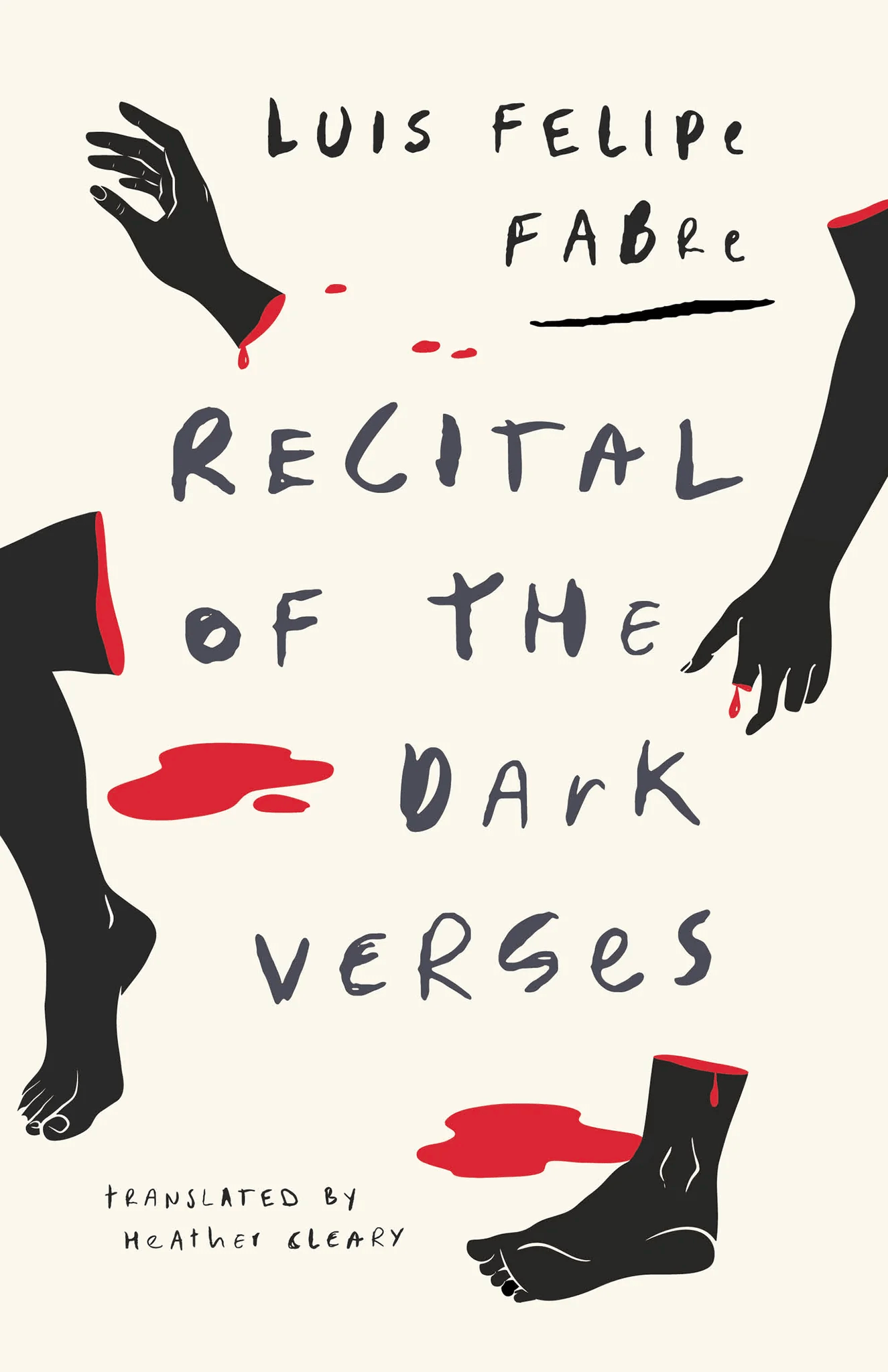
Recital of the Dark Verses by Luis Felipe Fabre is translated from the Spanish by Heather Cleary and published by Deep Vellum. This book was read as part of Spanish Lit Month 2024.

“Everything meant something else. The apple no longer an apple.” Divided Island by Daniela Tarzona

State the manner of panic, the voice of terror. Approach the scream and grab it with your mouth to make it heard. Right now you’re shouting. You shout with so much force your jugular vein pops out.

If one of the possibilities inherent in the form of the novel is the freedom to break with expectations when the expression of the pressing strangeness of being in the world demands it, Mexican writer Daniela Tarazona’s Divided Island is a work that opens itself up, stretches the boundaries of reality, and fractures into shards of glass to reflect pieces of an uncomfortable and incomplete whole. It is also a response to grief and neurological disorder that is as entrancing as it is disorienting. The brain scan illustrations that open each section of this slender novel seem to indicate that the protagonist (or protagonists) may not be on stable ground, but this fragmented narrative explodes with emotion and shifts gears so abruptly that it undermines the natural inclination to want to “figure it all out” which is, of course, the point. But it is not without meaning, as a meaning does gradually begin to become clearer although the mist never lifts entirely.

Essentially, it is the story of a writer who is grieving the death of her mother. The grief permeates her life and surroundings. This is intensified when, after a series of brains scans, she is given a diagnosis of cerebral dysrhythmia, and suddenly finds herself splitting in two.

Once upon a time there was the sun. Seething sphere. If the word were she, it meant you; you were replicated. Her over you. You over her. Two bodies spinning in circles.

One of the women she becomes leaves and travels to an island where she intends to kill herself. The other, addressed as “you,” stays behind to try to pick up the pieces of her fractured existence and make sense of her life. Her mother and grandmother, both passionate yoga practitioners, come back to her in memories (or are they dreams?), while visions and paranoias haunt her days. And meanwhile, “she” is on the island, contemplating death.

The narrative maintains a trancelike quality throughout as the woman navigates the painful loss of her mother and the altered reality in which she finds herself:

It turns out you’re surrounded, you’re an island with water on all sides: the reams of paper by the desk, the books, the suitcase of jewelry. Your mother’s things. Notes. Letters. Your grandmother’s manuscripts.

Strange things happen to you. The decorations in that tableau of wonders, seem to accurately describe the moment you’re living in: you’ve got an orange tabby; the porcelain plates your mother painted arrive at the house; you wrote a novel about a woman who lays an egg. The tableau existed before the novel. Does the order in which things happen in time really matter? Being surrounded means sinking in sand. Your body gets lost among objects, you can barely open your eyes. Seeing is a state of grace, here, right now.

Several historical and literary figures, most notably the Costa Rican born poet Eunice Odio who emigrated to Mexico, appear in the woman’s memories and dreams of her grandmother—the woman who stays, mind you, the woman who wants to die is on an island awaiting her own demise. Despite their separate trajectories, it is made clear on several occasions that these women are one and the same being. Two selves estranged from one another? Or an existential neural short circuit? Or are both emerging and diverging through the act of writing itself? The story runs toward and against itself as images resurface and the medical mystery lying behind the neurological scattering is given more substance—as much as substance is possible from measuring electrical patterns and data, that is.

The brain scan images that illustrate the book do belong to the author herself, so although this is far from a clinical text, Tarazona may be drawing, to some extent, on personal experience. Yet, one senses she is guided by a desire to explore emotional intensity and perceptual distortion from a purely poetic perspective. And that is the best way to read and appreciate Divided Island. A close comparison (and probable influence) is Clarice Lispector, but this unusual, alluring tale of an excitable mind and the two women who share it is a startling and singular work that rewards multiple readings.

Divided Island by Daniela Tarazona is translated from the Spanish by Lizzie Davis and Kevin Gregory Dunn and published by Deep Vellum.

It is difficult to imagine what can’t be described: The Taiga Syndrome by Cristina Rivera Garza

That, with time, I had become accustomed to the hollow moments of an investigation is true. There are hours, days even, sometimes months or years when nothing happens. Those are the gaps in an investigation. In other words, those moments are life. The detective who wins a case, who solves it, is usually the one weathers those lapses. Resources are needed, of course. But above all, you need patience, that rare gift; or you need something else to think about—a certain capacity for distraction. You need a place inside yourself, your own language where you can hide. You need a refuge, yes. Any refuge.

The work of Mexican writer Cristina Rivera Garza is, I would suggest, best entered with as scant a road map as possible. I cast no more than a passing glance at any reviews of The Taiga Syndrome, before venturing into the intoxicating and unsettling environment of this, her latest release in English translation. Not that her books can be given away in any straightforward terms, but to lose oneself in the oddly off-centre worlds she creates is the true pleasure of reading her fiction. So much so that, you might find yourself dragging your readerly feet to prolong your sojourn through the pages of this slender volume.

What, then, can one say by way of review? This is the same dilemma I faced when I sat down to write about her novel, The Iliac Crest, which came out last year.

The Taiga Syndrome, a subtle twist on the Latin American detective novel is, in a sense, less of a mystery and more of an dreamlike exercise in mysteriousness. The unnamed narrator is a detective who, with a string of unsuccessfully resolved cases behind her, has taken to writing noir novellas under a pseudonym. When she is approached by a man who wants her to find his second wife and bring her back to him, she almost dismisses the case as dull and hopeless. The man’s wife has disappeared, in the company of another man, into an area known as the Taiga, but the fact that she has been sending missives—telegrams from far off locations—like a trail of bread crumbs to mark a path, have led her husband to believe that she wants to be found. For our enigmatic protagonist there is something almost sensible emanating from the creased paper of the telegrams themselves that inspires her to accept the assignment. The same empathetic curiosity will guide her on her journey into the anomalous environment of the Taiga.

Exactly where this region is located is never made explicit, but clearly it is distant, vast and remote. The presence of tundra and boreal forest suggest it lies to the north. The “syndrome,” distinct to the area, is a condition that sometimes strikes certain inhabitants who “begin to suffer terrible anxiety attacks and make suicidal attempts to escape.” Has that been the fate of the missing woman and her companion? Of course, in a place subject to its own strange rules and customs, norms are difficult to assess. Thus, this is a book about translation—of ideas and culture—the narrator and the translator she has secured to guide her into the Taiga are forced to communicate in a common language, one which is native to neither one of them, a “third space.” Translation creates distance. The reports of local residents have to be interpreted. Bizarre events defy explanation. And the faraway coastal city where a client awaits news of his second wife becomes increasingly vague and unimaginable.

The real magic of The Taiga Syndrome is carried through the wonderful, uncommon narrative voice. As she attempts to understand the circumstances surrounding the couple who had, for a time stayed near a village on the border of the Taiga, the narrator’s engagement with the space and the people in it—the translator, their informants, a feral adolescent, the trees of the forest—is sensual, reflective but not judgemental. Open to experience. Noting her “morbid” fascination with the wild boy who has emerged from the woods, she asks:

Who can resist observing the original body? A body without a social context? And as the minutes passed, I was also excited, no doubt, by my own incomprehension. I could never understand something like this, I told myself several times. I said it exactly like that: “I could never understand something like this.” But I couldn’t stop looking at him, fascinated, perhaps even bewitched or hypnotized by his thin figure, his exhaustion. Did he see me then, not by looking but by chance, not by directing his gaze my way intentionally but by letting his eyes clumsily meet mine? Something like that, yes. An arrow plunged into the left shoulder. A hole. And suddenly that moment produced the window. And the window produced the spectator. And those three elements together made the romance real. The passion. Someone longed for a freedom that was really an infernal abyss. Someone placed hands, now motionless, on the window. Someone who wanted to escape but couldn’t escape and could only watch.

Acutely sensitive to others, to the small details of their appearances and gestures, she finds in their words and actions, or her impressions of their words and actions, an ambiguity. Her experiences, her observations, the increasingly abstracted report she is keeping for the man who hired her are seemingly indirect—distorted in transmission and reception—but she trusts in her truths, as she typically responds when those around her ask a question: “I told him the truth. I told him yes.”

But what is she really telling us?

The Taiga Syndrome by Cristina Rivera Garza is translated from the Spanish by Suzanne Jill Levine and Aviva Kana, and published by the Dorothy Project.