Thoughts about redemption

Copyright JM Schreiber 2012

“Emancipate yourselves from mental slavery;
None but ourselves can free our minds.
Have no fear for atomic energy,
‘Cause none of them can stop the time.
How long shall they kill our prophets,
While we stand aside and look? Ooh!
Some say it’s just a part of it:
We’ve got to fulfill the book.

Won’t you help to sing
These songs of freedom? –
‘Cause all I ever have:
Redemption songs.”

This song by the late Bob Marley has echoed in my mind frequently over the past month or so. Written after the diagnosis of cancer that would ultimately claim his life, it is thought to speak to his personal reflections on mortality. My own longing for redemption relates directly back to my inability to resolve the circumstances which led up to the extraordinarily manic behaviour that marked my final days in the office. And my inability to let it go.

What is redemption?

Disregarding the financial and transaction contexts by which the term is used, redemption is typically understood as:
n.
1. an act of redeeming or the state of being redeemed.
2. deliverance; rescue.
3. deliverance from sin.
4. atonement for guilt.

Looking at the news over the past few weeks, there are some very public examples of behaviour that can not be easily excused. The videotape of NFL star Ray Rice punching and dragging his unconscious fiancee from an elevator, the resignation of a Vancouver CEO caught on video kicking and abusing a puppy, and most recently another NFL player accused of excessively brutal corporal punishment against his own children are just the latest in a litany of public figures behaving badly. Unfortunately, they might have been met  with relatively minor reprimands had there not been videotapes or pictures and an element of public shaming.

How many sports heroes, businessmen, politicians and celebrities have been brought down by grossly inappropriate, violent and even illegal actions only to eventually find redemption in the public eye? Many, have found such redemption more than once.

But what if your only “sin” is to have become ill due to a mental health disorder, where does redemption come from? I don’t even know what I want anymore. I have tried to apologize for my behaviour which I know was highly agitated and unpleasant, but there is no way to explain how trapped I was within that state,how miserable and unable to even know what was happening to me until a lot of interpersonal damage was done. Because no one from work will communicate with me I cannot have that conversation, no one can appreciate the degree to which I am still struggling and I can’t stop beating myself up inside for not recognizing the warning signs months before mania was in full swing.

If this was as straight forward as having lost a job, as much as there is grief and loss, I could at least busy myself with looking for a new job. But I am still technically connected to my employer and the question of return is unspoken but not denied. Meanwhile I am not able to function well enough to look for another option or contemplate a return. I am also increasingly aware that everything I loved about the job I had is exactly what, over time, made me ill.

The fact is, I am in limbo. I still have a lot of healing ahead. So why is the desire for redemption so important? Or is this really more the need to be heard and understood?

Isn’t that what we all seek in the end?

Lessons from Mother Nature are not always the ones you expect

Maybe it’s the unusually early snow. Tree branches still rich with green foliage weighted to the breaking point under heavy wet snow are decidedly out of place so early in September. If it warms up we may squeeze a little fall out of the year after all. If we get a killing frost the leaves will turn leathery and cling to the trees until spring.

Copyright JM Schreiber 2014  (yes these shots were taken today)
Copyright JM Schreiber 2014
(yes these shots were taken today)

An omen perhaps?

Is it late summer or early winter?

Like trying to define the weather, it can be difficult for me to clearly pin a label on my emotional state. A stable, well medicated state is actually one of relative distance from what I really feel. Blunted at either end of the normal ups and downs. I am not certain if that is a natural or artificial state. It is probably more realistic to call it functional.

Manic? Well, manic is really only recognizable as it recedes. Think of the way that you can become accustomed to a certain level of physical pain and not realize just how severe it is until the painkiller kicks in. But there is no instant relief for a significant manic episode. Manic gradually disappears in the rear view mirror as I creep along and then, just as the road ahead seems to become clear, I hit depression. Or this anxious emptiness that I feel lately.

Copyright JM Schreiber 2014

Like today.

The streets are littered with branches that could not handle the weight of the snow. The power has been off across the western side of the city for hours. As crews manage to restore power to one section, melting snow frees branches that bounce back and knock the wires out all over again. The silence and reduced light has left me alone with my thoughts for much of the day.

There is, however, an important lesson in unexpected situations like this. You have no choice but to ride it out, stay safe and wait until the storm has passed. Only then can you assess the damage, clean up and move forward. After all, we are supposed to be back up to summer temperatures by the weekend.

My own spirits might not lift quite so quickly, but I know from past experience that they will.

With time.

Draw me a map to my self

Yesterday I took a small road trip with my son out to visit my parents. It’s about a two hour drive each way and this is the first time I felt that I had sufficient stamina and concentration to manage it since my breakdown in June. The countryside is beautiful but the journey did not really offer me more than time to sit and fret behind the steering wheel.  I thought about how I used to need a road map to navigate the back highways when my 86 year-old father’s ongoing retreat from civilization first drew them out there a few years back. I no longer need a map and know the route well.

Copyright JM Schreiber 2013

I could, however, use a personal map or trail of bread crumbs to follow back to make sense of the past year or two of my life.  A mood disorder can wreak havoc on one’s internal compass. In the hazy debris of an extended period of hypomanic energy sliding into manic, I am finding it impossible to make sense of where I was or where I go from here.

At a deeper, more fundamental sense I have lost faith in myself. Or rather my ability to make sense of my self.

It is likely that this is the affect of depression. It’s hard for me to know because I have rarely ever experienced the sort of black dog depression that many others describe. I tend toward anxiety and a bone weariness that weighs me down, but I do not crawl into bed and pull the covers up. I don’t sleep well, in fact I tend to insomnia. But I don’t recall experiencing the all pervasive lack of physical energy that haunts me now. I find it hard to remember how I ever managed to accomplish all of the projects, personal and professional, that I tackled during the many years of relative stability I experienced over the past ten to fifteen years.

At the moment, the fact that’s really eating away at me is that the last impression I left at work was of a manager who was increasingly high strung and finally quite stressed and obnoxiously concerned that he alone had the skills and perspective to resolve the challenges facing the agency. The manic Mr Hyde side. But how long was he showing his face? And now that I am living with a shy, anxious shadow of my Dr Jekyll self (assuming I even have one) I wish I had GPS system of some kind to help me retrace my steps.

A good therapist would help, and I do have one, but at $180/hour I won’t be seeing her much and if I am going to spend that much I would rather wait until I have figured out where I have been so she can help me figure out where I go from here.

Or maybe it’s better to accept what cannot be changed and look forward instead…

Shame, guilt and absolution

Shame: A painful emotion caused by a strong sense of guilt, embarrassment, unworthiness, or disgrace.
Copyright JM Schreiber 2014
Copyright  JM Schreiber 2014

A severe manic episode leaves a residue of shame that no magic formula can resolve or wash away. Your behaviour, actions, words and deeds – no matter how out of character – are remembered by others while you, yourself, have only the foggiest sense of a hellish few days or weeks.

As the weeks pass I find myself unable to shake thoughts of my workplace, the environment in which my manic drama played out. I don’t think about returning to work and I know that at this point I could not even mentally or emotionally entertain that notion even if they would accept me. I realized today that it is the unbearable shame I feel for actions and words I could not control and can never properly apologize for that is eating me up inside.

A post on a blog I follow inadvertently put me in mind of a poem I discovered in the wreckage of my first manic psychosis many years ago. The poem, “Deceptions”, by Philip Larkin was inspired by an account from Henry Mayhew’s London Labour and the London Poor of a young girl who was drugged and raped by her master.

The poem is exacting in its depiction of her grief and the poet admits, unapologetically, that there is no consolation he can give her; recognizing that both victim and perpetrator were deceived in the violent act. I think it is this very measured recognition that there is nothing that he can offer to absolve grief and shame in the sufferer whether the event is recent or buried by the sands of time that gives the poem its power. The following lines struck me when I first encountered them and this time around, perhaps because my manic episode was a much more public event, they clearly articulate the feelings with which I am currently trying to come to terms.

… light, unanswerable and tall and wide,
Forbids the scar to heal, and drives
Shame out of hiding.  All the unhurried day,
Your mind lay open like a drawer of knives.

This too shall pass, I know, and I will ease the drawer closed and the emotional scars will fade with time.

Absolution is not the issue. Mental illness is not a sin.

Buying time to recover

Every morning I wake up in the middle of a dream about work. The dreams are surreal and disturbing.

I was at the height of a full manic psychosis at the point of last contact about two months ago. That is not an impression one wants to leave. It has taken a long time to slow down enough to appreciate just how agitated I have been. One can no more pull oneself out of depression than one can throw the breaks on a train running at full manic speed. And my memories of those last few weeks are hazy at best.

Technically I still have the potential of returning to work. I was a senior manager and I worked at this small not for profit agency for nine years without incident until a series of circumstances contrived to create an increasingly dysfunctional, toxic environment. And, well, long story short, the pressures took a devastating toll on my mental health. After a decade and a half of relative stability, I became ill. And as a bipolar person with a strong swing to the manic, I left in a spectacular flourish. So I have no real idea what remains for me there.

In all fairness I was paid out generous sick time and vacation pay and I do have access to a short term disability benefit that should see me through the next few months. The approval process has proceeded with typical government efficiency. But today I finally received confirmation of my application and that is a tremendous relief.

Copyright JM Schreiber 2014

I just hope the dreams about work fade for while.

And I can spend some time reading and reflecting about where I go from here.

Making peace with our ghosts

There is a question tends to haunt those of us who live with mood disorders, especially in the early months of adjusting to a diagnosis or in the aftermath of breakdown:

Who Am I?

There is this persistent fear that, if the highs and lows of this “disorder” should ever hit equilibrium, what will be left?

And will that stable “me” be the real me or a medicated artifact?

Copyright JM Schreiber 2013

The theory is that mood disorders are typically associated with “normal” periods but as most of us know, mania and depression can simmer under the surface, felt rather than observed for a long time. When symptoms burst through resulting in “abnormal” thoughts, actions and behaviours, those around us rarely understand that these are beyond our control. And because insight is impaired, when we are at our most unstable we are often the last to know just how far off the rails we have run. All this is further complicated when a mood disorder exists in conjunction with addictions or trauma or other chronic conditions.

Having a mood disorder is like living with ghosts.

But we own those ghosts. They are us. Everyone has them.

Ours just like to try to steal the stage, set the agenda, write the script and direct the show.

Maybe that is why I am drawn to so much fantastic literature lately… allowing the ghosts of others to distract me from my own.

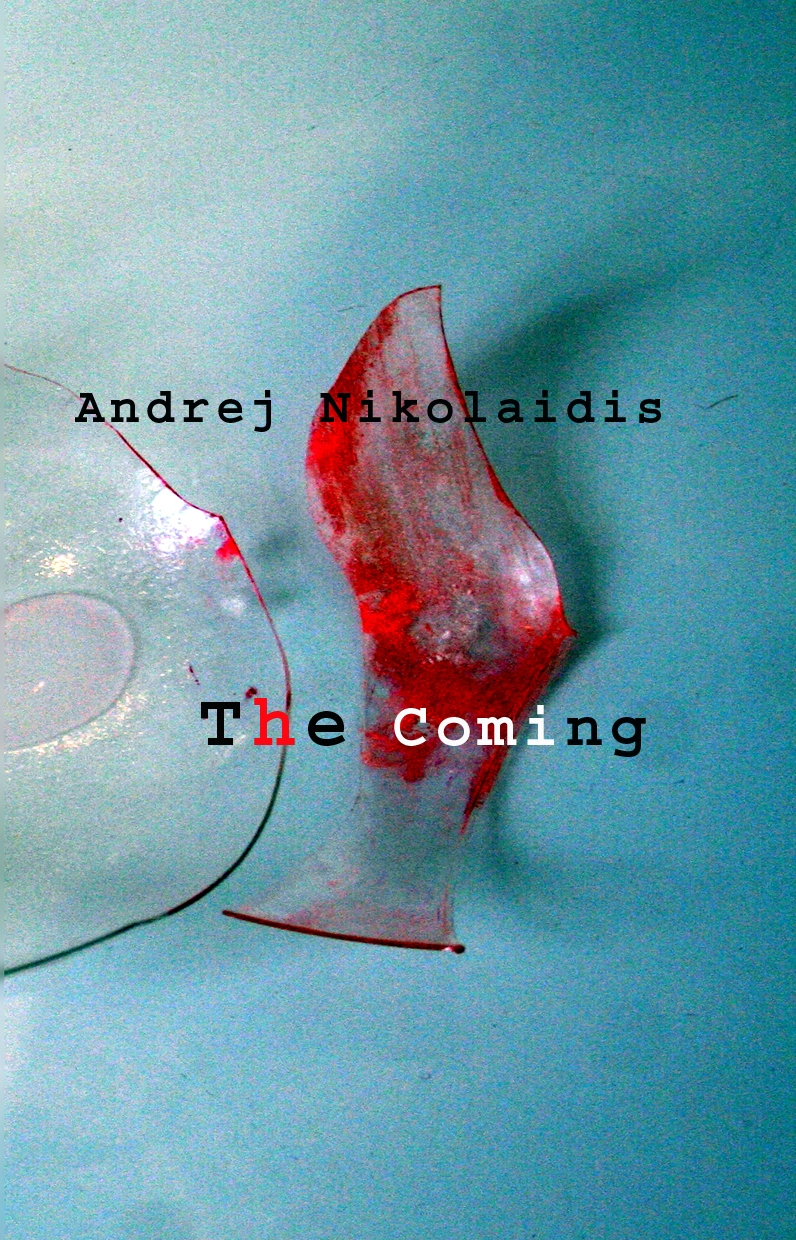
The detective and the end of the world: The Coming by Andrej Nikolaidis

If you are a bit of a news junkie like I am, there is a lot of bad news on our TV screens and computers each day. Violent political upheaval, deadly viruses, floods and fires. But it is scattered and for so many of us our complaints are relatively minor, isolated. What if the signs suddenly started to rapidly multiply and spread across continents and communities. Would it herald the end of the world? Would we know or even agree on the meaning of the signs? Assign them to God, reduce them to science?

Translated by Will Firth Istros Books, available through Dzanc Books in North America
Translated by Will Firth
Istros Books, available through Dzanc Books in North America

The Coming, a wonderful novella by Montenegrin novelist Andrej Nikolaidis explores such questions from a rather unconventional perspective. Our hero is a private detective, a small town Philip Marlowe based in the ancient city of Ulcinj. He finds himself most comfortable providing his clients with the answers they want, regardless of whether or not he even manages to find the truth behind a crime or infidelity. This approach makes him popular with the locals who prefer to approach him  rather than the authorities. Consequently the quiet life he seems to desire tends to allude him. As the book opens he has become obsessed with the particularly brutal murder of an entire family which appears to have coincided with the burning of the local library.

Yet even stranger phenomena begin to threaten his routine. Snow starts to fall in June and does not let up. Around the world catastrophes – earthquakes, floods, raining amphibians – are reported with alarming intensity. Is this the Apocalypse, is the Second Coming finally at hand?

For our poor detective who faces this most peculiar string of circumstances with cynical humour and frustration, there is an added factor. Emmanuel, a child he fathered during a brief affair with an irresistible client, is now grown and has tracked him down from an asylum in the Alps where he has been confined after some serious mental breakdown. Through a series of emails Emmanuel shares details of his childhood with the father he has never met and offers his curious knowledge of messianic mystics, millennial cults and numerous attempts to calculate the date of the end of the world throughout western history. Perhaps because he himself has a mental illness, Emmanuel interprets the reported behaviours of many cult members or their charismatic, wildly erratic leaders in reference to what would be probable modern psychiatric diagnoses.

For myself, personally, in the months that followed my diagnosis with bipolar, I struggled to make sense of the role of my illness in the intensely spiritual experiences that I had periodically encountered growing up. During full blown psychosis, I could imagine that the frantic notions that I had the answer to the meaning of life were indeed in keeping with mania. I had the cramped and panicked nonsensical documents to prove it. But what about the earlier visions and spiritual experiences? Far less dramatic, frequently beautiful, these moments had filled me with such an assurance of the existence of God that I completed an honours degree in philosophy without once being troubled by any ontological questions. I could argue for or against the existence or nature of God while my own personal spirituality remained intact.

However, as I started to read about psychotic symptoms, I began to recognize similar features in the visions of Biblical prophets, the martyrdom of saints, the trance states of mystics and other ostensibly spiritual experiences. I could not divorce my own experiences from an underlying framework of biochemistry. My sense of personal faith crumbled.

Over the years as I have watched good people of faith rejected by their churches following mental breakdowns, I have been increasingly concerned by the double standard. After all who draws the line between mystical vision and clinical madness?

The Coming sees no need to draw those distinctions. I loved the way the pragmatic emails from the detective’s estranged son reach out to a world that may well be facing its final hours with the observation that the human desire for an Apocalypse can be compared to our urge to fast forward through a detective movie because we can’t wait to see how it ends.

We want answers – but we those answers to come from God or from science, not from the visions of those who are determined to be not in their right minds.

The courage to write

For some 30 years I have packed and unpacked, shelved and reshelved a library full of books that I have not yet read but would not dream of carting off to a charity sale. Naturally I assume that the day will come when that book will come to my attention and, conveniently I will have it at hand. Of course, in the meantime a wealth of new books have joined my libraries, actual and electronic, so that all those long held treasures run the risk of absolute obscurity. I suspect more than a few book addicts can relate.

And sometimes the tendency to hoard a book pays off, though sadly that time is too often heralded by the death of the author.

20140809_222130I must have purchased Nadine Gordimer’s Burger’s Daughter, in the very early 1980s. I was studying anthropology and working part-time in a bookstore. South Africa and the struggles against Apartheid would have held a particular resonance for me through the presence of a number white South African ex-patriots who had found their way to the Anthropology department of a Canadian university for their own safety. However, had I read this novel when I first bought it, I am not sure if I would have been able to fully appreciate this powerful testament to those men and women, white and black, who risked their freedom and too often their lives to fight for justice. But with 30 year’s perspective, the hard won experience of middle age and the political changes that have marked South Africa in deeply complicated ways both positive and negative – as history tends to unfold in real life – this is one of the most rewarding reads of the year for me to date.

Ms Gordimer’s writing is rich, complex and worthy of a careful read. The shifting perspectives take the reader in and out of internal monologues that Rosa Burger, the daughter of a doctor and Communist activist who has died in prison, holds with the many individuals she encounters or remembers as she struggles to find an identity for herself in the huge shadow cast by her famous father (a fictionalized tribute to the lawyer who defended Nelson Mandela). In the infinite wisdom of Wikipedia, Burger’s Daughter is described as historical fiction. Of course, it is no such thing. Rather it is a time capsule, a deliberately political novel, but written without the advantage of knowing that Mandela would walk to freedom, become President, and pass away leaving a society where so many still live on a razor’s edge even if the tapestry has changed.

The final pages of Burger’s Daughter paints an uncertain future. Yet like life itself, the novel is brimming with vibrant, colourful characters brought to life with keen and loving detail.  The complexity of the politics presented at the time of writing combined with the critical distance of three decades impressed me deeply. It takes courage to speak to injustice. Nadine Gordimer herself knew that her work not only took risks but would also be forever defined by her colour. Moving beyond colour, religion, ethnicity, culture, gender, ability, orientation or the myriad of other divisions we seem to be able to construct as to divide us as humans is a seemingly impossible task. But by taking that one piece to which a writer, by virtue of fate or circumstance, is able to address and telling the stories that matter, small changes may be possible.

“Writing is making sense of life. You work your whole life and perhaps you’ve made sense of one small area.” (Nadine Gordimer)

Nadine Gordimer was a writer of courage and I am ashamed that it took her death to bring her into my focus.

Time – too much or never enough

During the past year, I was haunted by an overwhelming pressure that I needed to be able to slow down, take stock of my feelings. I was becoming aware of a wall coming down between myself and my emotional grounding.

At work a toxic environment was brewing as our director became increasingly paranoid and unstable. My daughter was trying to impress an unreasonable employer at her own workplace while, at home, my son who has long struggled with his own mental health and addiction issues was going through an especially difficult, potentially violent series of conflicts with friends. Just to keep my head above water I was going through the paces. A familiar process. Single parents tend to develop this coping skill.

It is strange how life gives you time to reflect when you need it the most.

Summer grassAlthough I have lived with the ups and downs of a mood disorder for most of my life, a full manic break and diagnosis did not come until I was in my mid 30s. Until that time I felt like I was lost at sea, battling waves I could not put a name to, but hanging on and, as much as possible, faking my way through the years. After all, unless you know better, you figure that everyone else is essentially doing the same thing.

With the diagnosis and other critical underlying issues that subsequently came to light, my life started to make sense. I felt I had some answers, some sense of a guideline. It was not an easy prescription and there were costs, including the end of a long marriage, but I prided myself that I had persevered, that I had survived. Although I was late to the game I was able to build a career that allowed me to support my children, buy home and start to put away some money for the future.

Now the reality of the diagnosis has cruelly returned to confront me leaving me unable to know if returning to the job I had is either possible or even desirable. I find myself re-evaluating what I want for myself.

Something that haunts me this go round is the notion that people with mental illnesses, bipolar in particular, have a shorter life expectancy. Although the reasons, methods of study and populations under consideration is not clear this is not a factor I ever considered before. Funny thing, we are bombarded with the message that we have to be prepared to support ourselves financially for longer than previously expected and yet we see people die prematurely – of natural or unnatural causes – all the time.

Fact is, life offers no guarantees.

Read. Travel. Write.

Either everything has meaning or nothing has meaning.

Literary prescription: The Sound of Things Falling

I am now a few weeks beyond the significant manic episode that has ground my life and work to a halt and precipitated a sudden crash into depression, anger and frustration. The crisis did not happen overnight and the healing will take time but I feel some measure of relief that my ability to lose myself in a book has been returning. Some additional anti-anxiety meds are helping too but I am trying to remain open to literary whims – reviews, suggestions from readers I respect, stray quotes that catch my attention. It seems to be critical medicine for me.

Fortunately there is also that wellspring of rewarding fictional riches, The International Impac Dublin Literary Award. Each year nominations are commissioned from public libraries around the world to create an extensive longlist from which a shortlist of 10 titles is ultimately drawn. It is inevitable that works in translation tend to feature prominently both  in the shortlist and among the archive of winners. Purists can argue over the Booker all they want, this is the award I watch.

winner_slide_2014This year’s winner, just announced in June, is The Sounds of Things Falling by Colombian author Juan Gabriel Vasquez, translated by Canadian Anne McLean. This book had been waiting on my ereader for some time, but in light of its recent honour, I thought it might be time for a closer look. A few pages in and I was hooked. Billed as a literary thriller I was expecting a perhaps an entertaining diversion from my own troubles but in truth I soon found myself  deep in a remarkably intimate account of the impact that traumatic experiences have on those directly effected and those around them in ways we often are powerless to predict or prevent. Whether the trauma results from actions chosen or events over which an individual has little or no control the fallout over days, month and years can lead to fateful decisions, ruptured relationships and deep wounds. At the core of this novel are two strangers, brought together through an act of violence who find temporary refuge in a sharing their own experiences of coming of age in Bogota at the height of the drug fueled wars of the 1970 and 80s.

Personally, as I struggle to make sense of the pressures, stresses and events that collaborated to make such a mess of my recent months, it is difficult not to vacillate between anger and regret. Although I know that mood disorders play havoc from the inside out and that the person who is suffering knows something is wrong, they may be slow or even unable to define the nature of the condition, and most certainly incapable of stopping it on a dime. Playing the “if only” card serves no significant benefit. As Vasquez’s narrator Antonio muses as he sets to record the experiences he wishes to share:

“There is no more disastrous mania, no more dangerous whim than the speculation over roads not taken.”

I was able to lose myself in this novel but it did not serve as quite the distraction I expected from a “literary thriller”. There was a disturbing real world resonance that I could not have anticipated. The Sounds of Things Falling is more than simply a title, it is an experience repeated and echoed throughout the novel. From a airshow stunt gone terribly wrong, to a fatal drive by shooting, to the devastating crash of a jetliner. Because a key character was a pilot, de Saint-Exupéry‘s The Little Prince also features as a beloved childhood tale. It was disturbing to imagine the little prince asking the pilot if he also fell out of the sky when bodies were literally falling out of the sky as Malaysia Airlines MH17 exploded over a disputed region of the Ukraine.

Trauma, small and personal or wide-reaching and global and all shades in between have always marked human existence. It divides and unites us in large and small ways. the complexity of that experience is, for me, one of the primary themes explored in this worthy literary award winner.