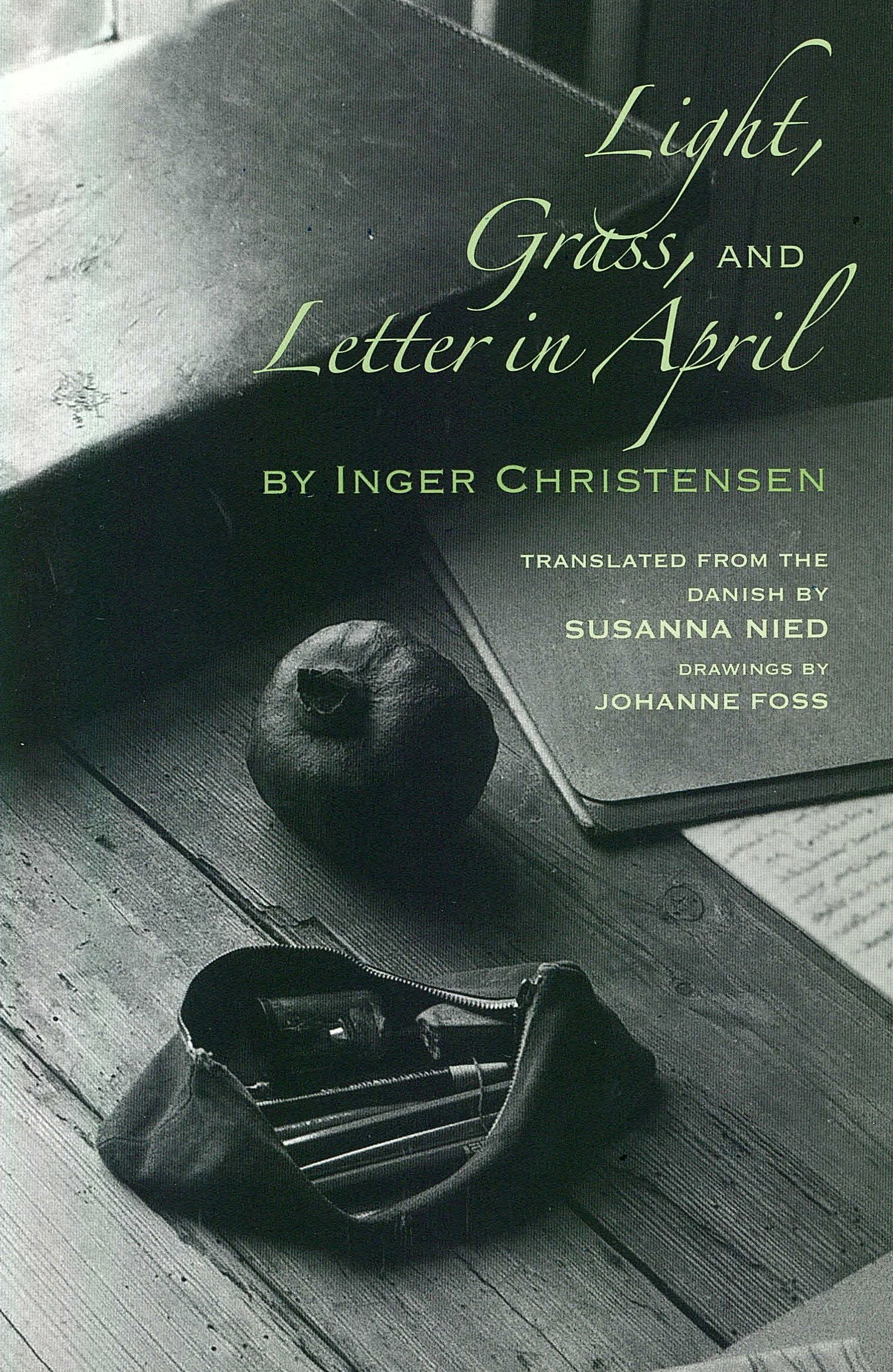
In this violent solitude: Light, Grass, and Letter in April by Inger Christensen

But do not grieve for me
do not grieve for your lonely
to and fro
My hour has rusted
My poem has left
your beaten track
Do not grieve My young poem
is more deeply kissed by life
Deathly it creeps
over under through me
Poetry is murdered hope.

(from “In the wild loneliness of the mountains” / Light)

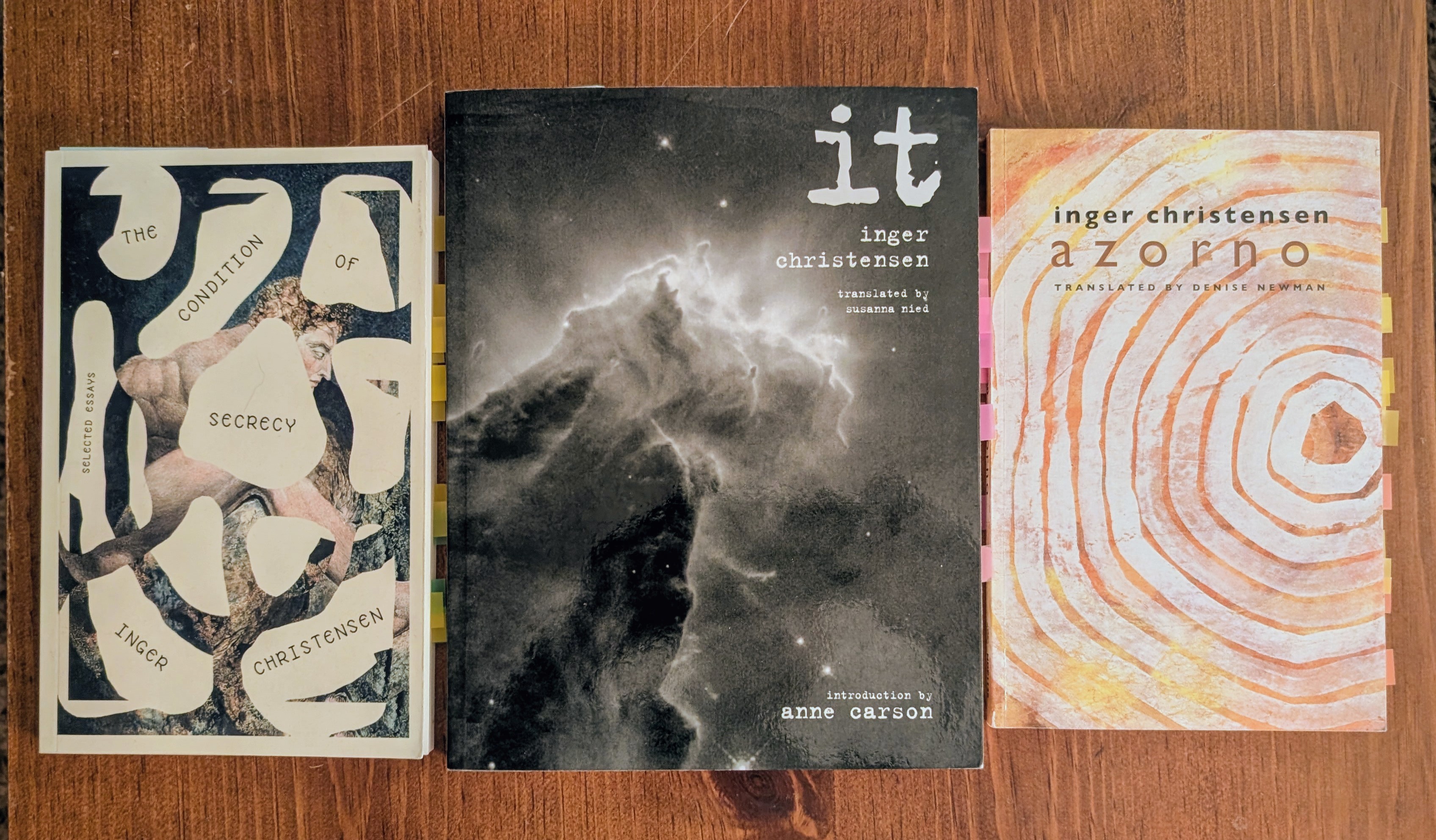
Having read most of the poetry of Inger Christensen (1935-2009) that is available in English translation, to return now to her earliest published collections, Light (1962) and Grass (1963) is somewhat like experiencing the formative spirit of a writer who will soon make her mark as an original and experimental literary force. And yet, it is clear in these poems composed in her mid-twenties, that she is already exploring the themes and perspectives that will define her most ambitious—and most popular—poetic works. This is perhaps to be expected because only six years separate the publication of Grass from the release of her monumental 200-plus page book-length cosmic poem Det in 1969 (“It” in English translation, 2006).

The present volume contains her first two collections, along with her fourth, A Letter in April (1979), a collaborative project that followed ten years after Det. Light and Grass being only one year apart, share much in common and reflect the time in which they were written. Yet as translator Susanna Nied (who has translated all of Christensen’s poetry and is thus well acquainted with her oeuvre) says regarding these two books:

Her lifelong themes are already evident: boundaries between self and other, between human beings and the world; our longing and struggle for direct connection beyond boundaries; the roles of language and writing as mediators of that connection; the distances between words and the phenomena that they stand for.

Images drawn from nature, domestic settings, and corporeal existence feature throughout these poems, with a strong sense of the landscape, the seasons, and the musicality of her homeland. Many of the pieces in both volumes tend to be shorter and lighter in form, though the not necessarily in content, but notably, the final poem in Grass, the sequence “Meeting,” is longer , closer to prose poetry, and seems to presage  sections that will later emerge in Det/It.

The unknown is the unknown and gold is gold I’ve heard, one
.      winter the birds froze fast to the ice without the strength
     to scream, that’s how little we can do for words with words
the books press close to one another and hold themselves up,
.      backs to the living room, our buttoned-up words huddle
.      on the shelf, the queue-culture of centuries, inexorably
.      built up word by word, for who doesn’t know that the
.      word creates order

(from “Meeting: V” / Grass)

The third work collected in this volume, Letter in April, seems quite different in tone, quieter and more intimately focused. It arose as the result of a collaboration with graphic artist Johanne Foss who began with a series charcoal-on-parchment drawings based on Etruscan artworks. Christensen and Foss had known each other for a number of years and both had spent time at an artists’ residence in Italy and explored Etruscan ruins. Taken by Foss’s drawings, Christensen chose some and began writing responses to her images. These responses began as prose pieces, but she ended up discarding them and beginning again in poetry. Their project developed over two years as they worked together during the summer months while their children played. Several themes emerge in this work including parenthood, wonder, nature, and the account of a woman who travels to a foreign country with a child inspired by a trip Christensen took to France with her young son as part of her writing process.

Unpacking our belongings,
some jewelry
a few playthings
paper,
the necessities
arranged within
the world
for a while.
And while you draw,
mapping out
whole continents
between the bed
and the table,
the labyrinth turns,
hanging suspended,
and the thread
that never leads out
is, for a moment,
outside.

(Section I,  º )

However, more than a series of poems and drawings, Letter in April follows a complex yet unassuming structure. Each of the seven sections contains five segments marked by a sequence of small circles in varying order. For example, Section I follows the pattern: º º º º º, º º º º, º, º º, º º º .  Section II begins with º º º , and likewise each section begins with the same marking as the final segment of the one preceding. These markings link poetic segments with shared motifs, allowing  the entire work to either be read straight through, or by following the each pattern individually (i.e. I º, II  º, III  º, IV  º, and so on).  This flexibility reflects Christensen’s musical and mathematical instincts,  which are also apparent in the arrangement of elements of Det/It, but will be given full reign in her wonderful numerically and alphabetically framed poem Alphabet (1981).

Light, Grass, and Letter in April is a rich compilation of poetry that offers insight into Christensen’s development as a poet from the mid-twentieth century inspired modernism of her earliest work, through to a collaboration (unique in her oeuvre) that incorporates visual and dynamic elements. It is essential for those who already know and love her poetry, but can also serve as an introduction for those who have yet to encounter her masterworks.

So here we sit
in this violent solitude,
where bulbs work
underground,
and we wait.
Around noon
when the mountain rain stops,
a bird stands
on a stone.
Around evening
when the heart stands empty,
a woman stands
in the road.

(from IV  º º º º º)

Light, Grass, and Letter in April by Inger Christensen, is translated from the Danish by Susanna Nied, with Drawings by Johanne Foss. It is published by New Directions.

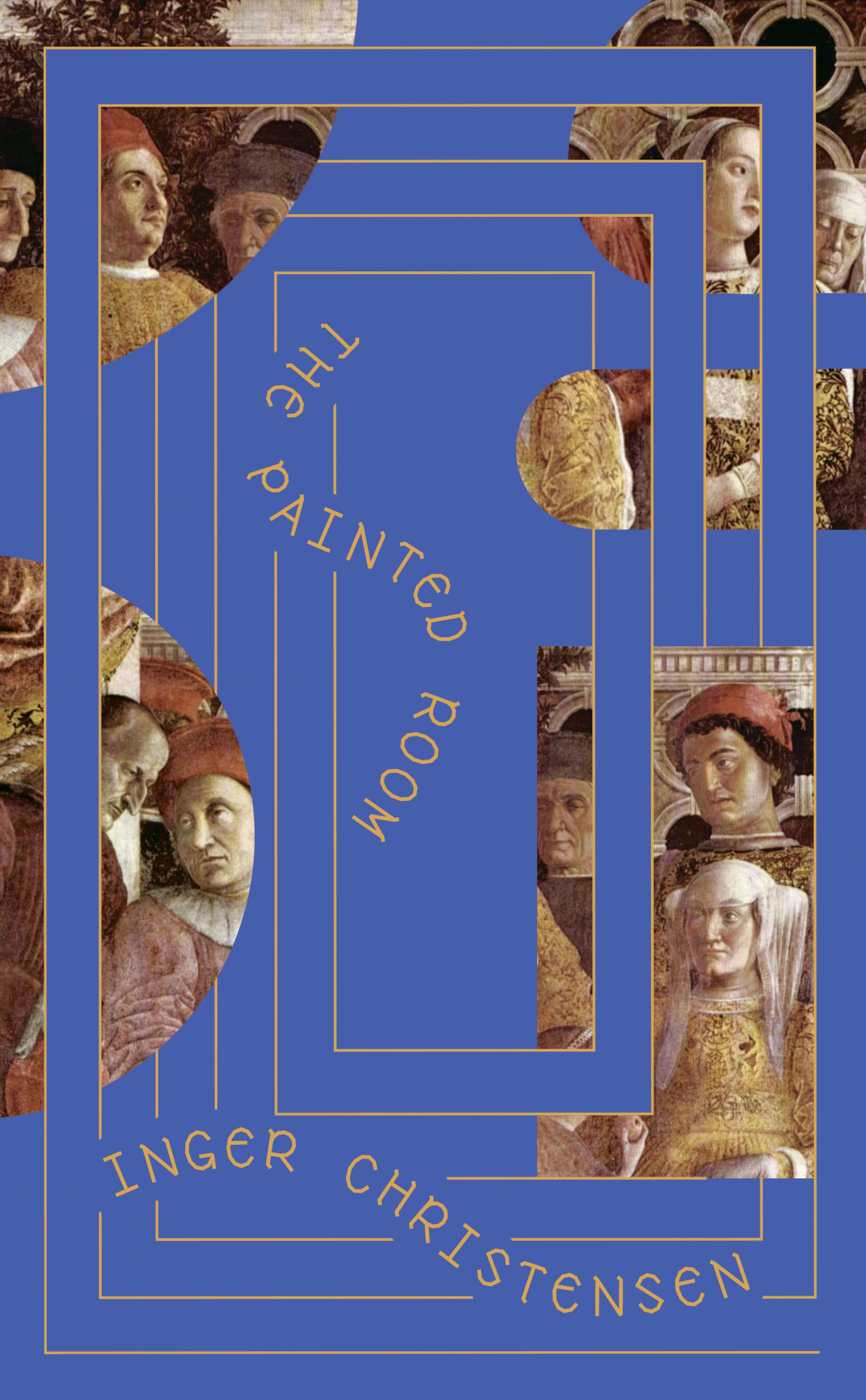
Of ghosts and angels: The Painted Room by Inger Christensen

Recently re-issued by New Directions, Denise Newman’s translation of Inger Christensen’s 1976 novella The Painted Room might at first appear to be somewhat more conventional than the Danish poet’s experimental prose works like Azorno or Natalja’s Stories. That would, of course, be a premature assessment. Subtitled A Tale of Mantua, this slender three-part volume is set in, and revolves around, the court of Ludovico Gonzaga III and the painting of the famous Bridal Chamber by Andrea Mantegna in the mid-1400s, but it is more than a simple piece of historical fiction. By turns witty, magical, and wise, The Painted Room offers a pointed commentary on art and immortality, power and passion.

As Italy gradually splintered following the fall of the Roman Empire, it evolved into a patchwork of independent territories over which powerful families battled for control until, by the fifteenth century it was common for each of these regions to be held under the autocratic control of single princes. Mantua in northern Italy, ruled by the Gonzaga’s from 1328 to 1707, was not only a tyrannical, war-focused principality, but, as its ruling family sought to elevate its social status through patronage of the arts, architecture, and music, it would become an important cultural centre in the early years of the Renaissance.  In 1459, acclaimed artist Andrea Mantegna (1431-1506), noted for his striking compositions and innovative studies of perspective,  agreed to enter into the service of Ludovico, the Marquis of Mantua, and the following year he was appointed court painter—a position he would hold for over forty years. His masterpiece would be completed there, the Camera degli Sposi or The Bridal Chamber in the ducal palace, a room decorated with realistic architectural details, frescoes featuring interrelated narratives  and a spectacular illusionary ceiling that appears to be a concave structure with an oculus open to the sky. The painting of this room and its images, offer the inspiration for Christensen’s novel, but the story she weaves extends far beyond these four walls.

The first part, “The Diaries of Marsilio Andraesi: a selection” proports to be outtakes from the personal journal of Ludovico’s devoted secretary, pictured to the far left of the Bridal Chamber’s “court scene” fresco which features members of the Gonzaga family and their attendants. Here Andraesi is leaning in to listen to the prince who has turned to speak to him. From the secretary’s personal account, which begins in March of 1454, we get an unvarnished, if rather biased and often catty, record of events leading up to Mantegna’s arrival at Mantua through to his death in 1506. Andraesi is not impressed with his master’s persistent efforts to woo the celebrated artist and the reason for his resistance is unlikely. It seems that the painter’s wife, Nicolosia Bellini (of the Venetian artistic dynasty), was once his secret love, now forever lost. So he focuses his attention on rumours he’s heard of Mantegna’s reputation as a troublemaker trained in “arrogance, brutality, and the hunt for novelty.” He feels the prince’s idolatry will only lead to shame. But, of course, the offer is accepted and the secretary’s would-be romantic rival arrives, at first on his own, but soon followed by his family:

Today I finally caught a glimpse of Nicolosia. I became deathly pale and could barely move. My brain turned completely white and my heart so drained of blood that it could hardly beat; I froze. An angel in the fire of earthly feelings.
(17th of August, 1460)

Bitterness and jealously continue to colour Andraesi’s reports, especially as progress on decorating the palace room is slow, and his secret confrontations with Nicolosia intensify. Then, when Mantegna’s wife suddenly dies (at least in this version of reality), the relationship between the two men gradually begins to shift toward what will eventually become one of friendship and respect. In the meantime, Mantegna’s young children are devastated by the loss of their mother but comforted by their father’s inclusion of her likeness in his art. After all, in art, the dead live on. When the frescoes are finally completed in 1474, guests are welcomed for a dedication event in what Ludovico calls “The Painted Room,” but which the children have christened the “Ghost Room.” In his reflections on the occasion, Andraesi calls attention to the uncomfortable dynamic that exists between art and immortality:

There is more life in the paintings than in all of these lively and rapturous spectators who simply put on airs because they are afraid of the pictures’ soul which is their own. The pictures are like all great ghosts in Art who calmly and tirelessly wait for their living models to die. All those who have had the chance on this occasion to look at themselves in the light of Art’s exegesis have consequently entered  into a relationship with Death; and they must each conduct  their negotiations with him day by day over the time and place and manner of their dying, and about their measure of anxiety.

In the second part, Christensen’s narrative adopts an even more fantastic examination of life at court and its connections to the broader world. However, immortality continues to be a central theme, not explicitly through art but through children, legitimate or otherwise. Attention turns to the dwarf depicted in the “court scene,” a member of the prince’s entourage, re-imagined as Ludovico’s daughter and given the name Nana (Italian for dwarf). When we meet her she is distraught about her unfortunate fate, imagining that her diminutive height will deny her an opportunity to love and marry. The gardener steps in and arranges for her to marry his beautiful son Piero once they are both old enough.

Nana’s story adds an added dimension to the events recounted in the first part. On the day of her wedding three unknown women appear; no one is certain who they are but coincidentally Mantenga has captured their likenesses among the figures who are seen leaning over the balustrade that surrounds the oculus painted on the ceiling of the so-called Ghost Room. To Nana, they are clearly angels. They tell her that Piero is actually the son of Pope Pius II, and leave her what she calls “The Angel’s Book,” a volume that is in fact the popular erotic novel written by the Pope before his call to the priesthood, when he was known y his birth name, Aeneas Silvius Piccolomini. The Tale of Two Lovers tells of the tragic affair of Euryalus, one of the men waiting on a nobleman and Lucretia, the wife of a wealthy man. Their love is expressed through a series of letters until they are finally able to meet in bed. Variations on the theme of this tale are echoed and played upon as The Painted Room unfolds, along with the revelation of other surprising entanglements.

The final, dreamlike part of The Painted Room takes the form of a “how I spent my summer holidays” school assignment written by Bernadino, the then ten year-old son of Mantega. He details his role in assisting his father in his work on his masterpiece, describing much of the process involved in laying the foundation, and mixing and applying the paints. But then he realizes that he is expected to record some kind of trip or adventure when in truth he has gone nowhere. So taking inspiration from his younger sister, he imagines himself entering the background of one of his father’s paintings and meeting an aged Greco-Roman hero who has forgotten who he is. Yet another glance at the question of immortality through the daydreams of a child facilitated by the magic of art.

Inger Christensen’s fiction—and her poetry for that matter—tends to work with layers, variations, and cross-referenced themes. Her foray into the world of fifteenth century Italian court life is filled with art, intrigue, infidelity, and murder, blending fact and fantasy to create an informative, entertaining, and intelligent tale. And, like any one of Mantegna’s famous paintings, repeated visits and closer inspection promises to offer ever more detail and connections.

The Painted Room by Inger Christensen is translated from the Danish by Denise Newman and published by New Directions.

The words / created their own states of being: “it” by Inger Christensen

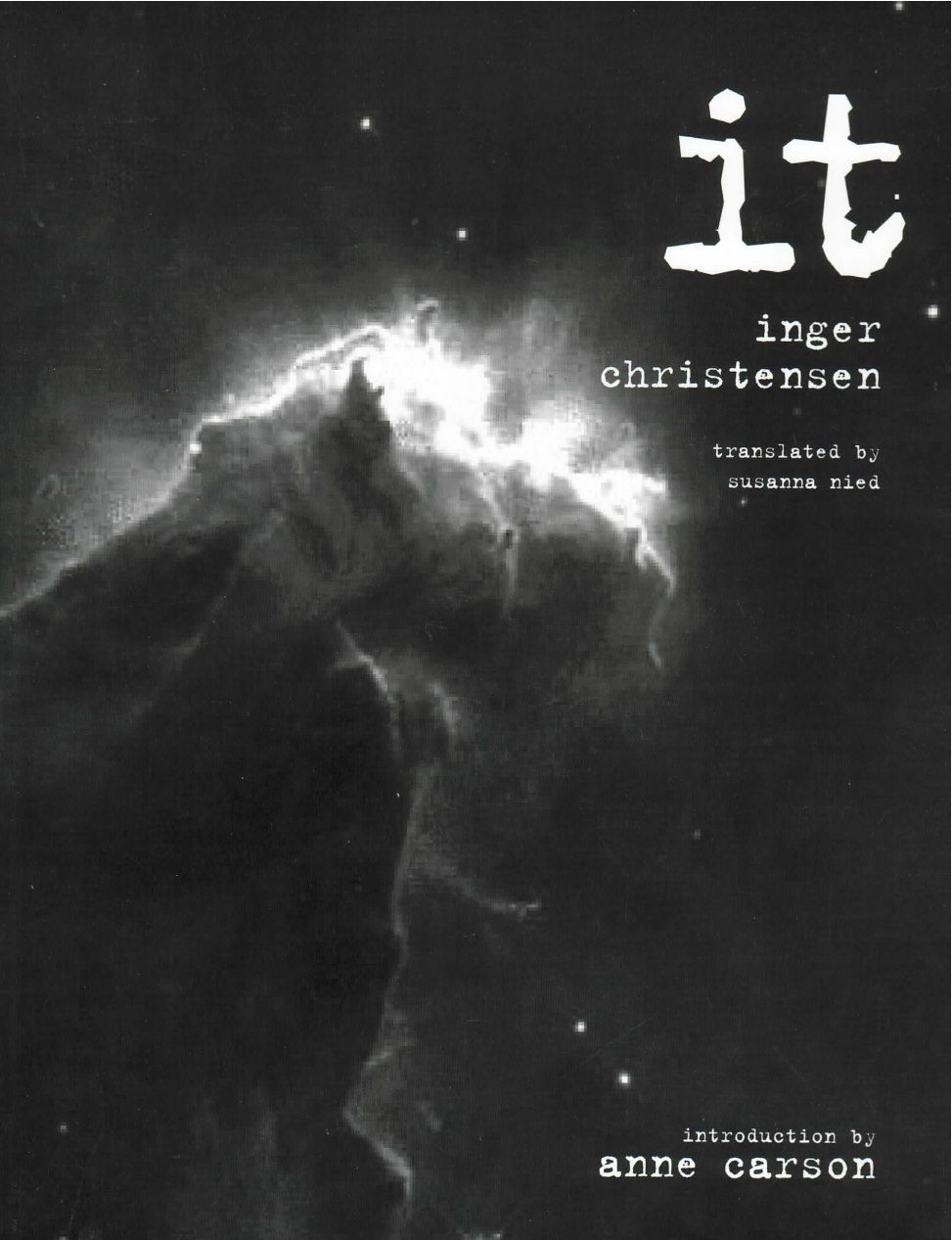
It may seem hard to imagine that a single poem (or sequence of poems) extending over 200 pages could become an instant hit upon publication, embraced by critics and the public alike, but that is exactly what happened when Danish poet Inger Christensen released what would become known as her masterwork, it, in 1969. What, you might wonder, does this simple pronoun, “it,” refer to. It might be simpler to ask what “it” does not refer to, for here it is simply the personal pronoun for the impersonal verb “to be”—as in “it is.” Danish, like English, necessitates such a construction, so this epic, moving as it does from the most basic elements, expanding in relation to one another, on into a world formed and named in its process of coming into being, and finally differentiated into individual, experiential existence, is a grand orchestral exploration of the nature of life. But it is also a piece that pulls you into to its rhythms, echoes and images. In Denmark it has become so iconic that sections have been set to music and certain lines from it have entered the daily lexicon.

In her introduction to the 2006 English translation by Susanna Nied, poet Anne Carson views Christensen as a contemporary counterpart of Greek epic poet Hesiod combining elements of his hymn of creation, Theogyny, and his moral guide, Works and Days: “Her det [it] is at once a hymn of praise to reality and a scathing comment on how we make reality what it is. The dazzled and the didactic interfuse in det.” However, the requirement for a personal pronoun for “to be” which does not exist the same way in Greek, means that her cosmogony is also a cosmology—a condition made explicit in the structure and realization of it. In a 1970 article, “In the Beginning was the Flesh” (quoted by Carson but since made available in its entirety in the essay collection The Condition of Secrecy), Christensen talks about some of the thinkers and artists, including linguist Noam Chomsky, whose ideas contributed to the genesis of what she a began to realize would be a creation poem:

Then I started thinking a little about this sentence: “In the beginning was the Word . . . and the Word was made flesh,” I thought, what if we could think the unthinkable: that flesh could speak, that one cell could signal to another, so that the whole inarticulate world suddenly partook in the following impossible (to human awareness) experience: In the beginning was the flesh, and the flesh was made words . . .

To maintain a hold on the duality of these two paradoxical conditions, she started to write as if she wasn’t there, “as if it (“I”) were just a bit of flesh talking, a bit of protoplasm, acted as if I were just following along, while a language, a world, took shape.” She called this part, the opening of her work, the time before consciousness, PROLOGOS. However, although it first emerges as a pre-sentence entity, the poems that comprise this section follow a strict mathematical formula. Each line consists of 66 characters (in the original Danish) and there is one 66 line poem, two 33-line poems, three 22-line poems, six 11-line poems, eleven 6-line poems and so on until the final set of sixty-six single-line poems. (The translation is unable to preserve the character count of each line, but does keep the number of lines.) Thus, PROLOGOS sets the cosmological grounding for the poem to follow, moving from the most fundamental elements—beginning, of course, with “It. That’s it. That started it. It is. Goes on. Moves. Beyond. Becomes.”—and moving through abstract form and function, slowly evolving over time. Cosmic. Geological. Natural. Communal. And, finally, individual.

It’s come around. Come to stand on its own, confront itself. To disengage from the mass and stand out. It’s engaged in an evolution, shifted its stance, attained eminently engaging expression. Has pursued itself and accidentally found itself. As a natural result. Has come to stand for itself. And can begin by itself. To experiment with sets of freestanding, free-floating expressions. Occasionally with straight-swimming ones. Dreaming. In another world. To imply itself.

(from PROLOGOS)

The main body of the poem, LOGOS, explores the word as creative principle, or, as Christensen puts it: “The place where things are consciously staged, put into action, into relationship.” It contains three sections, STAGE, ACTION, and TEXT which are each further divided into eight subsections of eight poems each (Christensen, as ever, loves mathematical and musical structure). The inspiration for the subsections came from a work titled Præpositioners teori (A Theory of Prepositions) by Viggo Brøndal, an attempt to classify the words languages use to show relationship. She selected:

eight terms that could stay in a state of flux and at the same time give order to the indistinctiveness that a state of flux necessarily must produce: symmetry, transitivity, continuity, connectivity, variability, extension, integrity, and universality.

And thus, the stage was set, so to speak.

It is perhaps not surprising that the poems that comprise the first section, STAGE, are more varied in structure and form than those we will see later, order comes with time. Words are at work: “The words / created their own states of being / made a world out of ‘world.’” (STAGE, symmetries, 7), but it not a smooth operation. Here the imagery moves between descriptions of natural processes, and the intentional creation of sets, painted and varnished to “represent” mountains and scenery. A tension exists between what is and the way it can be expressed:

And when it’s said that words fly
(like birds that fill an end-
lessly vanishing space)
it’s probably to conceal the fact
that words are not one
with the world they describe.
Words do not have wings.
And neither do they flower nor will
but they take potential flowers
and set them in a garden
which they then set
in an image of a garden
in an image, etc.
The words stay where they are
while the world vanishes
This is a criticism of the way language is used
Because it’s a criticism of the way things are.

(from STAGE, connectiveness, 1)

When “I” becomes part of the dynamic, the relationship between humans and language becomes more complex, and existential questions begin to arise. This first part also introduces a wide variety of images, motifs, and refrains that will recur throughout the work as a whole, providing a coherency to it when read and experienced (as it is meant to be) as a single long poem.

With ACTION and continuing on through TEXT, Christensen introduces more structure—employing both formal and experimental forms— to the poems within each subsection, adopting a consistent line count, verse pattern and rhyme, if relevant, for at least the majority of the eight poems (Susanna Nied’s award-winning translation preserves form and rhyme whenever possible), thus adding an ever-shifting musicality to the poetry. Thematically, the net she casts is wide, taking in the natural world (deserts, forests, gardens), human awareness (self-identity, hope, despair, sex, death), and community engagement (cities, hospitals, factories). Her vision encompasses the personal and the political, always returning to the power of language, the fundamental quality of the word, creating and mediating the world as we know it, alone and in relation to others:

A society can be so stone-hard
That it fuses into a block
A people can be so stone-hard
That life goes into shock

And the heart is all in shadow
And the heart has almost stopped
Till some begin to build
A city as soft as a body

(ACTION, symmetries, 8)

Throughout the ACTION section, one can see the influence of the 1960s on Christensen’s  worldview and some of the imagery she employs. Of course, the more political and economic currents change, the more they stay the same. Poetry is timeless and this vibrant, life-affirming epic aims to reach beyond the limits of time—as does language—and as such, the third part, TEXT, offers poems that begin to speak to passion and meaning in living and loving. The tone, if not strictly prescriptive, carries positive energies. There are no promises that things will be easy or pain-free, but it is worth trying, even in a world that contains darkness and corruption.

After the fourth morning I seek
the lips’ speechless expression

Again and again I stand completely
still so the wheel goes around and
there’s no cause for panic

What you gave my thought is no-
where, with a body that’s a
gift to the earth

What you gave me is pure rest / restlessness

My passion:  to go further

(TEXT, variabilities, 4)

By the close of this section, the “I”, the speaker, has come to an understanding of her interconnectedness with the world, and all that it contains.

Then, finally, comes the EPILOGOS. Beginning and ending with “That’s it” this piece works its way through the many shades and facets of fear we encounter as embodied beings, to slowly embrace words as the very cells of the body, and ultimately find freedom in letting go:

Erotic attempts
when the body
in its blind
sexual
activity
strives to be invisible
the cells are words
when the body
is lost
in it all
and lost
as it is
persists
survives
surpasses
itself
and its limits
the cells are words

(from EPILOGOS)

This is a work that, the deeper you get into it, benefits from longer, sustained reading sessions (especially if inclined, as I tend to be, to move slowly through a collection of poems). Although any one of the poems in this extended, structured sequence could stand on its own, they speak to one another, repeating and re-imagining phrases and imagery—a quality that tends to mark Christensen’s poetry and prose—so that the reading builds its own exhilarating momentum. it is an experience.

it by Inger Christensen is translated from the Danish by Susanna Nied with an Introduction by Anne Carson and published by New Directions.

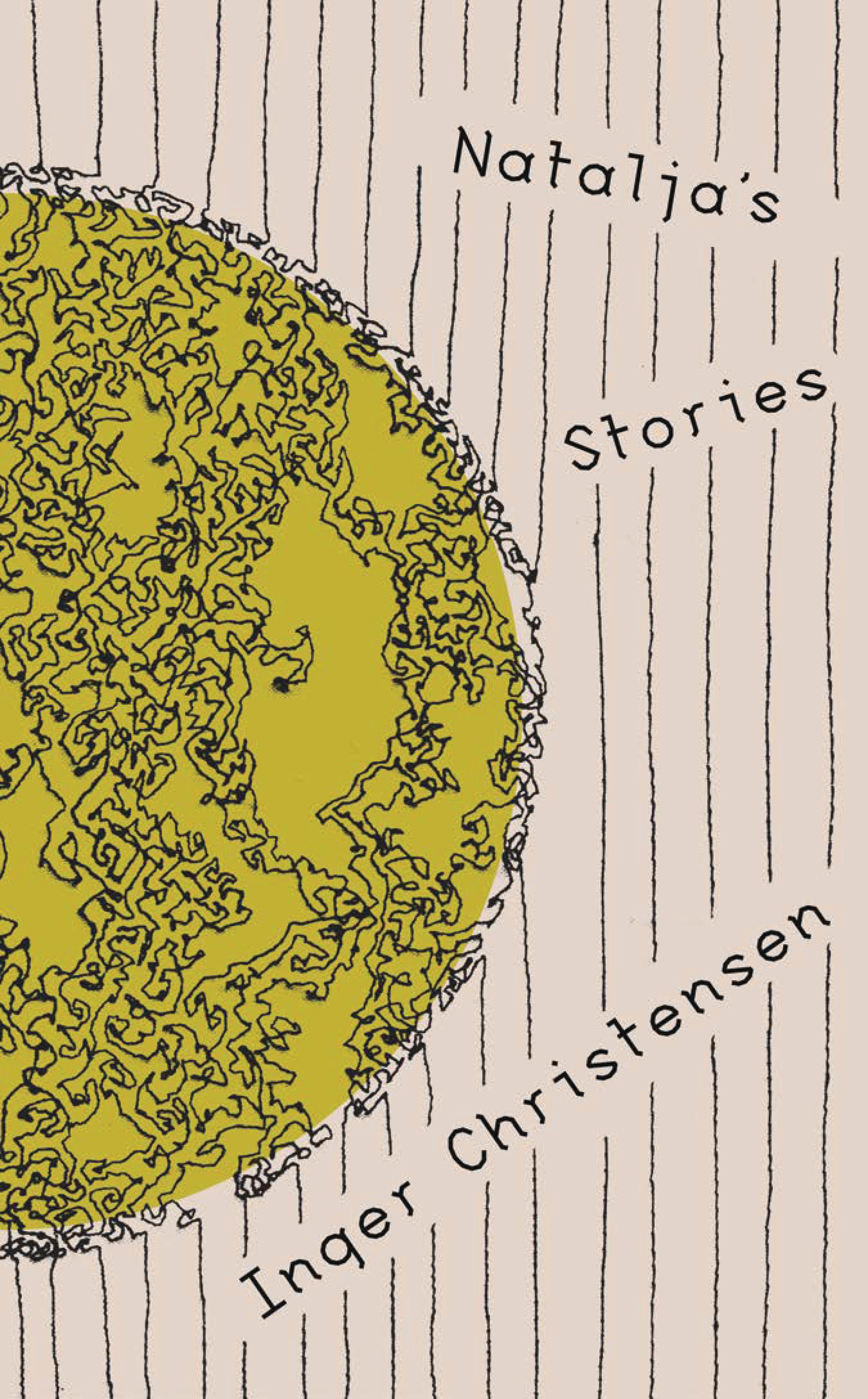
“There is something about only being able to get lost when you’re not thinking about it”: Natalja’s Stories by Inger Christensen

—There was once a woman who travelled all the way from Crimea to Denmark so that she could bury her mother.

This woman, Natalja, was born in Russia to a Danish woman who had been abducted by a Russian silk trader, and when the Revolution broke out she and her mother were forced to flee the country. Along the way, her mother became sick and died of dysentery, so Natalja gathered some ashes from the mass funeral pyre, placing them into the Chinese crock they’d been carrying, and made her way to Copenhagen. This story, told and retold, each time with a new angle or embellishment, is passed onto the woman’s granddaughter, also named Natalja, who then tells and retells variations on the themes in her grandmother’s stories letting them veer off in wild, often outlandish ways. Gathered together these stories comprise Inger Christensen’s strange, little shape-shifting novella, Natalja’s Stories, originally published in Danish in 1988, and now available from New Directions in Denise Newman’s English translation.

Reading like interlinked or echoing stories, each of the seven chapters of this book is narrated by a woman named Natalja—presumably the granddaughter of the Russian-born Natalja described above—but who is she really? A Danish woman living in Paris, a French woman who assumes Natalja’s identity, or a writer writing her own or someone else’s stories? Or all of the above. As with Christensen’s intricately layered novella Azorno, meanings are fluid, shifting even as the same images, events, and characters (or to put it simply, the same phrases, sentences, passages) reappear in ever changing forms and contexts.

The book opens with “Natalja’s story about destiny” which details her grandmother’s account of how she came to be born in Russia and the circumstances that brought her to Copenhagen. Each one of the stories that follow can be understood as variations on this theme of destiny—being caught in it, escaping it, or reshaping it.  Even the very act of telling a story seems to have its own force of will as our narrator muses in the opening of “Natalja’s story about liquor”:

There was once a cat named Mirage. That’s more or less how I thought I would begin my story. Now of course you can say it’s already begun as I thought it would—there once was a cat named Mirage and so on—whatever I come up with now doesn’t matter because it would be just one of countless but similar false beginnings. And if it had been a true beginning I would not have noticed it, would not have mistrusted it. I would not have ceased its development and so on.

But why hide the fact that only Mirage the cat holds the picture of this story and thereby knows its correct imperceptible beginning, while I am obliged to pick and choose between random sentences that say nothing to me because I’m unable to see where in the story they belong?

As reality and identities shift, revolving around repeating characters, scenes, and motifs, the stories that emerge are by turns amusing, absurd, intriguing. There are murders, mysteries, and even a man so dangerously irresistible that he may have been not only the younger Natalja’s love, but also the lover of her mother and her grandmother.  Our narrator, in her varying incarnations, seems to be inclined to allow herself to fall into unlikely situations, only realizing later that the power to reinvent herself, to become someone else, belongs to her. But it doesn’t exactly resolve how she fits into the overall narrative—if there even is one.

Composed as part of a seven-writer project modeled after Boccaccio’s Decameron, Natalja’s Stories explores a theme common throughout Christensen’s poetry and prose: the way language creates and shapes meaning. As such, the experience of reading her fiction can be akin to wandering through a maze or a hall or mirrors (or both). The inclination may be to try to dissect it logically, but in this case there may be multiple logical intersections at play.  It’s perhaps best to let go and enjoy getting lost in a world where realities continually change and simply marvel at the  connections that arise when you least expect them.

Natalja’s Stories: A Novel by Inger Christensen is translated from the Danish by Denise Newman and published by New Directions.

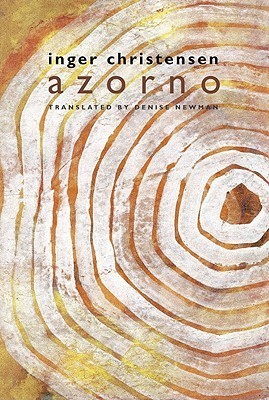
The woman on page eight: Azorno by Inger Christensen

Believe me, I know how dangerous it is to dream of Azorno. Believe me, I know how dangerous it is. I have known Azorno long enough to realize that it’s not dreams that come true.

Danish poet Inger Christensen, in her essay “It’s All Words,” insists that: “ . . . poems aren’t made out of experiences, or out of thoughts, ideas, or musings about anything. Poems are made out of words.” To some extent, the same may also apply to her fiction. Words are formed into sentences, and the accumulation of these sentences appears to describe a certain reality—the environment of the story—within which a character or characters exist. But the world into which the reader enters is not always what it seems. Consider the phenomenon of the unreliable narrator. Christensen’s Azorno might then be considered a novella with multiple unreliable narrators, one of whom, Sampel, is a famous author and one, Azorno, the main character in his latest novel, and five women—Katarina, Randi, Louise, Xenia, and Bet Sampel—each of whom insists, at some time or another, that they are the woman the main character meets on page eight. Oh, and did I mention that each of these women is pregnant, by the same man?

What makes this clever experimental novella so engaging—and disorienting—is Christensen’s exploration of the interaction between language, perception, and reality, the primary theme driving all her writing. It is unclear who is actually narrating (and presumably writing) the novel we are reading. Phrases, descriptions, settings and circumstances continually repeat, evolving as the story unfolds, echoing through the apparent voices of multiple characters, the accounts they give, the letters they write to one another, and the experiences they have. Just when you think you know where you are, reality shifts again and you are forced to reorient yourself. Even the mysterious narrator does not seem to have control of the narrative:

How in the world to take control over the progression of a story that from the beginning has simply contained a concealed desire to communicate something that would catch their attention, but then turned out to be to their liking, to such an extent that they swallowed it raw and later had to throw up the indigestible remains and, in the company  of friends and acquaintances, regard them as the consequences of an incomprehensible but harmless disease. In this way I quickly lost touch with my story, and what began on my part as a downright lie could easily slide toward something seriously close to the truth.

We have, then, a puzzle, a narrative nested within narratives, not exactly like a Russian doll but bound with a logic of its own. Although there is a conclusion reached at the end of this structured maze of mirrored, reflected, and misleading sentences, one would almost have to leave a trails of breadcrumbs and work back from end to beginning to sort out just how all the pieces, so scattered at the outset, eventually fall into place. The temptation at first reading is to attempt to keep  track of the letters, conversations and accounts that build, one upon another, making note of the dates, places, objects and motifs that are layered one on top of another to try to determine exactly who the narrator is and which one of the characters is actually the author, especially if, as is sometimes suggested, another character’s voice is openly adopted by the writer to carry the narrative. It’s a slippery terrain. It may be best, perhaps, to simply let go and follow the story as it leads you through its own strange world, one that is simultaneously real and unreal.

Azorno by Inger Christensen is translated from the Danish by Denise Newman and published by New Directions.

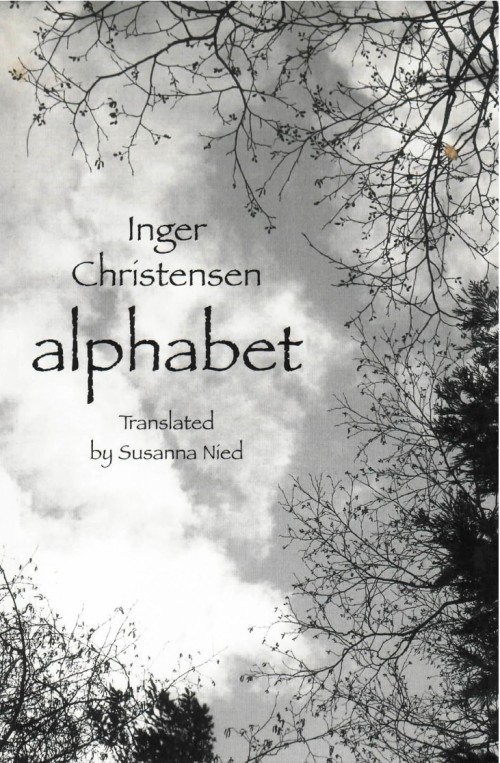
“somewhere I am suddenly born”: alphabet by Inger Christensen

I write like the wind
that writes with clouds’
tranquil script

or quickly across the sky
in vanishing strokes
as if with swallows

I write like wind
that writes in water
with stylized monotony

or roll with heavy
alphabet of waves
their threads of foam

(from “alphabets exist”)

In her essay “It’s All Words” (included in the collection The Condition of Secrecy), Danish poet Inger Christensen offers a very simple, yet possibly unexpected, statement about the nature of poetry:

But poems aren’t made out of experiences, or out of thoughts, ideas, or musings about anything. Poems are made out of words.

It’s through our listening to the words, to their rhythms and timbres, the entirety of their music, that the meanings in them can be set free.

This particular essay happens to be about her stunning work, alphabet, a book-length sequence of poems in which each piece builds on, remixes, revisits, and expands upon what has come before. It is project that began as process of collecting words and, as she was foraging through the dictionary, she happened upon what would become her form: the Fibonacci sequence.

The concept was introduced to the western world by the medieval Italian mathematician Leonardo of Pisa (later referred to as Fibonacci by 19th century scientists) in his Book of the Abacus in 1202, although the calculation originated with Indian poetics and mathematics as far back as 200 BC. This sequence in which each successive number is the sum of the two preceding it (0,1,1, 2, 3, 5, 8,13, 21, 44, 65, etc) describes an exponentially increasing mathematical pattern that often occurs in nature as in the spiral growth seen in certain plants.

By combining this formula, or “wordless universal poem of numbers,” with the human-made alphabet, Christensen conceived of a structure (or implied form) for an unfinished sequence of poems. A framework upon which she could weave “a kind of spell”:

A prayer that apricots, doves, melons, and so on could continue to exist in the world. And at the same time, a prayer that atom bombs, hydrogen bombs, dioxin, and so on could disappear.

And herein lies the special charm of alphabet. Fourteen chapters, running from [a] to [n], each containing a single poem or series of poems that total a corresponding number of lines from 1 to 740.

The first poem simply reads: “apricot trees exist, apricot trees exist,” the second: “bracken exists; and blackberries, blackberries; / bromine exists; and hydrogen, hydrogen” and so the essential pattern is set, introducing the existential aspect of the everyday matter around us—that which is good and beautiful, that which is toxic, and an element that can either be vital to life or destructive. As the poems become longer and more complex, these early images reappear and the alphabetic aspects are more or less evident. As each chapter expands there is, as in life, an increasing and startling diversity and variety to be found.

life, the air we inhale exists
a lightness in it all, a likeness in it all,
an equation, an open and transferable expression
in it all, and as tree after tree foams up in
early summer, a passion, a passion in it all,
as if in the air’s play with elm keys falling
like mama there existed a simply sketched design,
simple as happiness having plenty of food
and unhappiness none, simple as longing
having plenty of options and suffering none,
simple as the holy lotus is simple
because it is edible, a design as simple as laughter
sketching your face in the air

(“life”)

Christensen is a poet who delights in form, but prefers to set her own rules. Each poem has its own structure, but the use of repetition and recurring motifs contributes to the overall hymn-like quality of this work. She celebrates the beauty of everyday moments, delights in magic of the natural world and, as in her essays, shows an acute concern for the legacy of the atomic bomb and the nuclear fears of the Cold War (this book was first published in Danish in 1981). Her vision moves back and forth between these poles of existence threading words into verse.

Translator Susanna Nied had translated several of Christensen’s volumes of poetry before alphabet was even written (including her masterpiece It), so when this book was published in Danish, the poet sent her a copy. In an interview in Circumference, she describes how she sat down to read it as soon as it arrived. She read straight through and began to translate almost immediately without telling Christensen.

I did eventually show that preliminary alphabet translation to Inger, who pronounced it flot (high praise) and went over it with me, asking excellent questions, musing and reminiscing about how she had written the poems. We had a long tussle over whether the key verb should be “exist/exists” or “is there/are there.” Inger ultimately won, thank goodness, though it took me several months to capitulate. As we worked together during the six weeks I spent in Copenhagen, I recognized the content of alphabet in Inger’s daily life and in her memories. I recognized its cadences and phrases in her speech. Again, invaluable.

She goes on to describe working on the translation for years and, even once it was published she was still thinking of ways it could be improved. Nonetheless, the long working relationship between poet and translator is reflected in the care with which Nied realized the many intertwined and contrasting elements in this unique and engaging work.

I would like to imagine that this is an experimental poem (or sequence of poems) that is not only original, but accessible to those who might fear poetry. Meaning can be found, or revealed to a reader, in a very natural and yet personal manner. Sometimes the defining letter has a major role, other times less so. Her poems take off and move in unexpected directions before returning to call up familiar images in new ways. It’s a truly wonderful work and a fantastic, award-winning translation.

alphabet by Inger Christensen is translated from the Danish by Susanna Nied and published by New Directions.

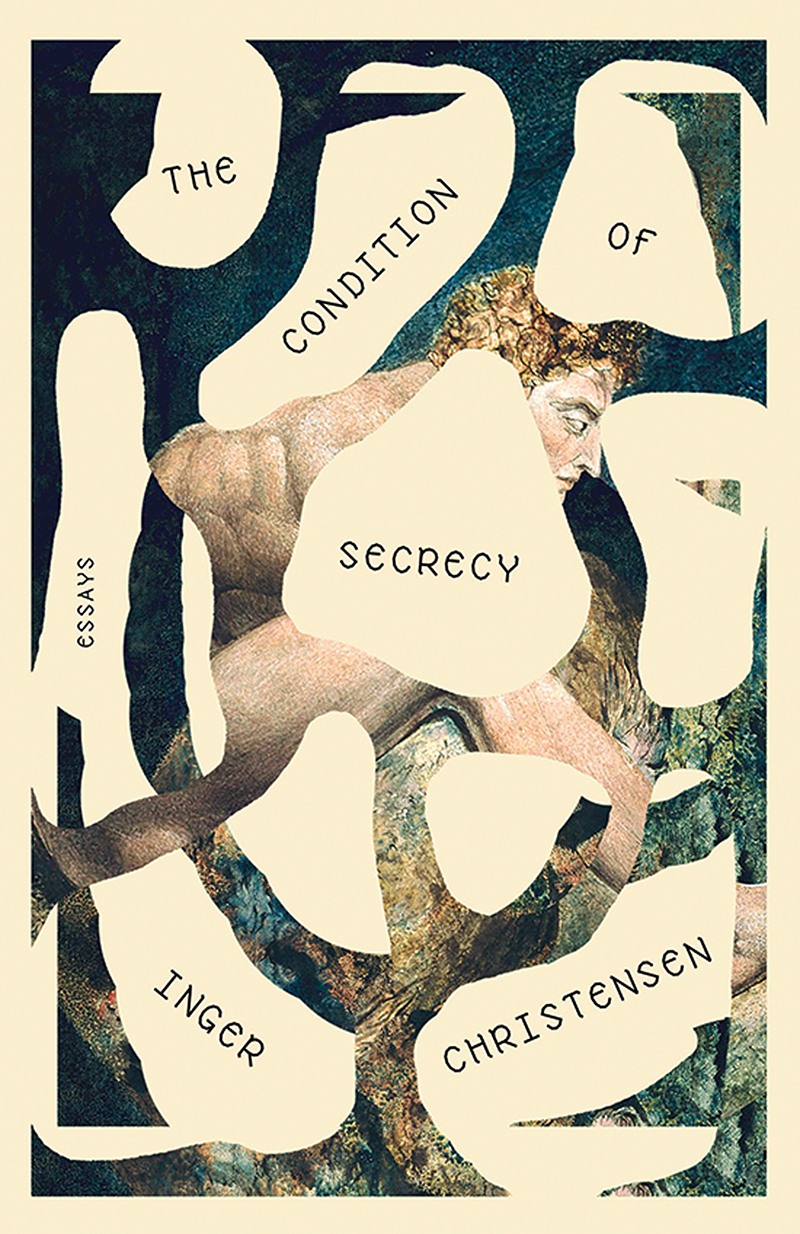
An inexhaustible landscape of words: The Condition of Secrecy by Inger Christensen

Writing poems is just as much a mysterious miracle. Not that there’s anything mystical or ceremonial about it. Or anything religious. It’s a neutral miracle, so to speak, granted in advance, because in the process of writing we need to use language in its whole, indissoluble connection with reality. It’s that connection with reality that’s a mysterious miracle. And that’s what poetry has to enter into.

It is clear from the essays collected in The Condition of Secrecy, that Danish poet, novelist, and essayist Inger Christensen (1935–2009) was not only in love with words, but that she understood language—and the way we seek to give meaning to the world—as part of the dynamic process of nature. For those who are already familiar with the experimental writer’s poetry and fiction, this collection offers insight into her view of the world, which was heavily influenced by a lifelong interest in science, mathematics, and linguistic theory, and the questions she was inclined to ask about her own engagement with language. For those who are new to her work, myself included, her philosophical musings and poetic investigations are no less interesting, and may well serve as an invitation to explore her work further—and fortunately there is a good selection currently available in English translation with more forthcoming this year.

What is most immediate in this compilation of essays, originally published across four decades, from the 1960s through the 1990s, and arranged intentionally rather than chronologically, is the sheer force of Christensen’s intellectual curiosity. At its most basic, it is a book about writing and meaning, but a book by an original inventive poet trained in German, mathematics, and medicine, who read six modern and two ancient languages. And, as a child of the Second World War, social and political concerns are never far from her mind. The Cold War and the fear of nuclear annihilation casts a clear shadow on a number of pieces. So, although this volume only numbers 138 pages, Christensen encourages her reader’s close engagement with ideas as she herself works her way through her own questions about the world and the way we find meaning in it through language.

Words are, of course, essential and she has a wonderful way of employing them. Her opening sentences are often quite special. “Interplay,” an essay about coming to understand time and one’s place in history as a child in Denmark at the end of World War II, begins:

When I was nine years old, the world, too, was nine years old. At least, there was no difference between us, no opposition, no distance. We just tumbled around from sunrise to sunset, body and earth as alike as two pennies.

Another piece, one of several more explicitly about words, meaning, and form, especially in the art of poetry, “Silk, the Universe, Language, the Heart,” opens:

Silk is a noun. All nouns are very lonely. They’re like crystals, each enclosing its own little piece of our knowledge about the world.

This playful essay, in conversation with the Ars Poetica or Wen Fu of Chinese poet Lu Chi (261–303 AD), examines the personalities of nouns, adjectives, adverbs, and verbs, along with the ever important prepositions that hold them in relation to one another.

Another essay that explores the interconnectedness of words, meaning, and writing poems, “It’s All Words,” moves from an analysis of what it means to say: “The word creates what it names” with all its Biblical overtones, through an existential (and anthropological) notion of naming the world into existence, to try to answer the question of why poetry is not a common practice when it requires no special tools beyond a paper and pen.

As it is right now, when the world has existed for so long, words come from everywhere, and they’re never there for the first time. Not only that. Although there may not be an infinite number of them, nor an infinite number of combinations, nevertheless there is an inexhaustible landscape of words, there are more than any one individual could manage to travel through. This is where it ends and where it begins, if a person is going to write poems: in the imagined concept of this mysterious landscape. For poems are created exclusively from words.

What makes this piece especially intriguing is that it leads into a discussion of the creation of one Christensen’s most inventive book-length poems, Alphabet. She began collecting words and then, in her gathering, she happened to come across Fibonacci numbers, a formula of increasing numbers that describe a pattern present in the growth principles of many plants. By employing this structure, she had a framework upon which her poem could eventually grow and bloom.

Most of the essays in this volume are short, some are only a few pages long, but midway through, the longest piece, coming in just shy of 30 pages, marks a turn of focus to more philosophical and political themes—not without abandoning talk of writing poetry and fiction, mind you. “The Regulating Effect of Chance” is an extended discussion of the role that chance plays in the world—fundamental, as she sees it, in accord with Jacques Monod’s Chance & Necessity—and in our experience of the world, our tendency to assign a notion of fate or destiny, and our understanding of art, creativity, imagination and much more. The later essays turn their attention to subjects such as the nature of truth, the depiction of night and, in a futuristic and somewhat fatalistic effort, “Snow,” the idea of the inevitability of nuclear winter.

This collection is one that I have owned for a number of years, without any previous experience of Christensen’s poetry or prose. Several times I pulled it from the shelf, but it did not seem that the time was right. Now I am especially keen to read her poetry. There are four volumes available in English, all translated, like The Condition of Secrecy, by Susanna Nied who enjoyed a close collaborative relationship with Christensen when working on her poetry. So, all things in good time; the words will be waiting.

The Condition of Secrecy: Selected Essays by Inger Christensen is translated from the Danish by Susanna Nied and published by New Directions.

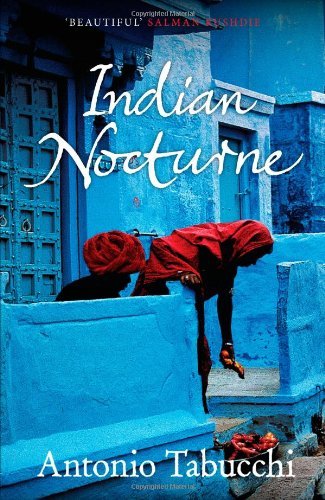
In search of a shadow: Indian Nocturne by Antonio Tabucchi

When the murky waters that obscure any tangible connection between an author and his or her “unnamed protagonist” are intentionally stirred in the opening lines of a text, it is a not-so-subtle cue that that things may not be what they seem. Add an ostensibly exotic foreign location into the mix and there is plenty of space for the edges to become blurrier. Indian Nocturne, by Italian writer Antonio Tabucchi, is a case in point. He describes this book as an insomnia, but also a journey—the insomnia his own, the journey that of his protagonist. Yet, should one wonder, he has himself passed through the places that will be described so, in lieu of titles, he provides a brief index of the settings of each of the novella’s nine chapters for the sake, perhaps, of some wayward traveller who might wish to follow a similar trail of shadows.

The story opens in 1980s Bombay as the narrator is making his way into the city from the airport with a map spread across his knees and a copy of India, a Travel Survival Kit in hand. The taxi driver seems determined to disregard his requested destination, certain that this European gentleman has made a common tourist’s error and is mistakenly bound for a most undesirable area. Angered, our hero insists on getting out and making his own way. The neighbourhood is he reaches is certainly rough, worse than he’d imagined, but he is hoping to find a woman, a prostitute, who might have some information that will help him on his mission. He’s looking for a friend, someone who seems to have disappeared. What little he gleans at this first stop takes him, on the following day, to the office of a tired doctor at a busy public hospital:

‘What was his name?’

‘His name was Xavier,’ I answered.

‘Like the missionary?’ he asked. And then he said: ‘It’s not an English name, that’s for sure, is it?’

‘No,’ I said, ‘it’s Portuguese. But he didn’t come as a missionary; he’s a Portuguese who lost his way in India.’

The doctor nodded his head in agreement. He had a gleaming hairpiece that shifted like a rubber skullcap every time he moved his head. ‘A lot of people lose their way in India,” he said, “it’s a country specially made for that.’

Spare and elusive, the tale unfolds as a series of encounters with places and people, as the narrator travels from Bombay to Madras by train (published in 1984, the British names for Mumbai and Chennai are still in use), then back across the country by bus to Goa. He shares a railway retiring room with a Jain bound for Varanasi, meets with the strange leader of a spiritualist movement, shares a bus shelter with a crippled fortune teller, and finds an American lost by choice, shall we say, on a Goan beach. Add to that a couple of women who happen to cross his path and you have the makings of a dreamy, subtle mystery with more empty spaces than solid clues, enigmatic conversations that drift off unresolved, and a healthy metafictional twist.

Always economical, Tabucchi excels at creating atmospheric settings, enigmatic characters, and cryptic dialogue. He captures the strangeness of being in an unfamiliar country surrounded by unintelligible languages, and the passing, often odd, communion with other foreigners who each have their own reasons for being far from home. And no one, not even the first-person narrator, is  ever really showing themselves fully. Indian Nocturne is my first experience with Tabucchi, a writer I have long been meaning to read. This novella, which almost seems slight at first blush, lingers vividly in the imagination so I will be definitely be reading more of his work soon.

Indian Nocturne by Antonio Tabucchi is translated from the Italian by Tim Parks and published by Canongate in the UK and New Directions in North America.

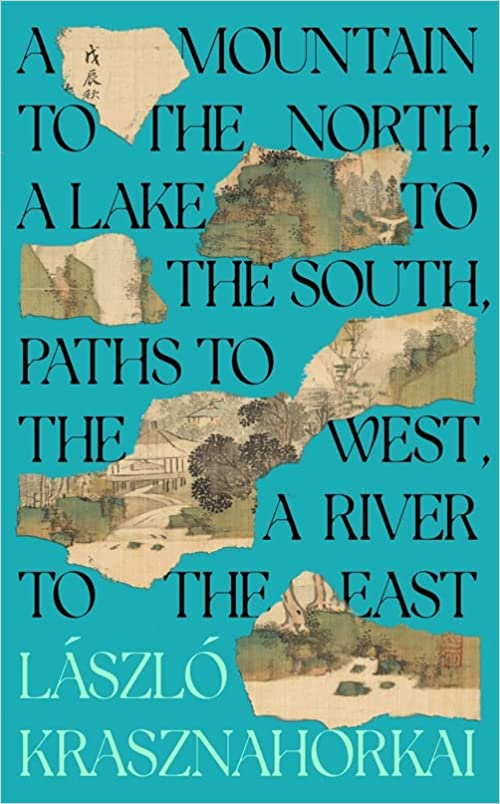
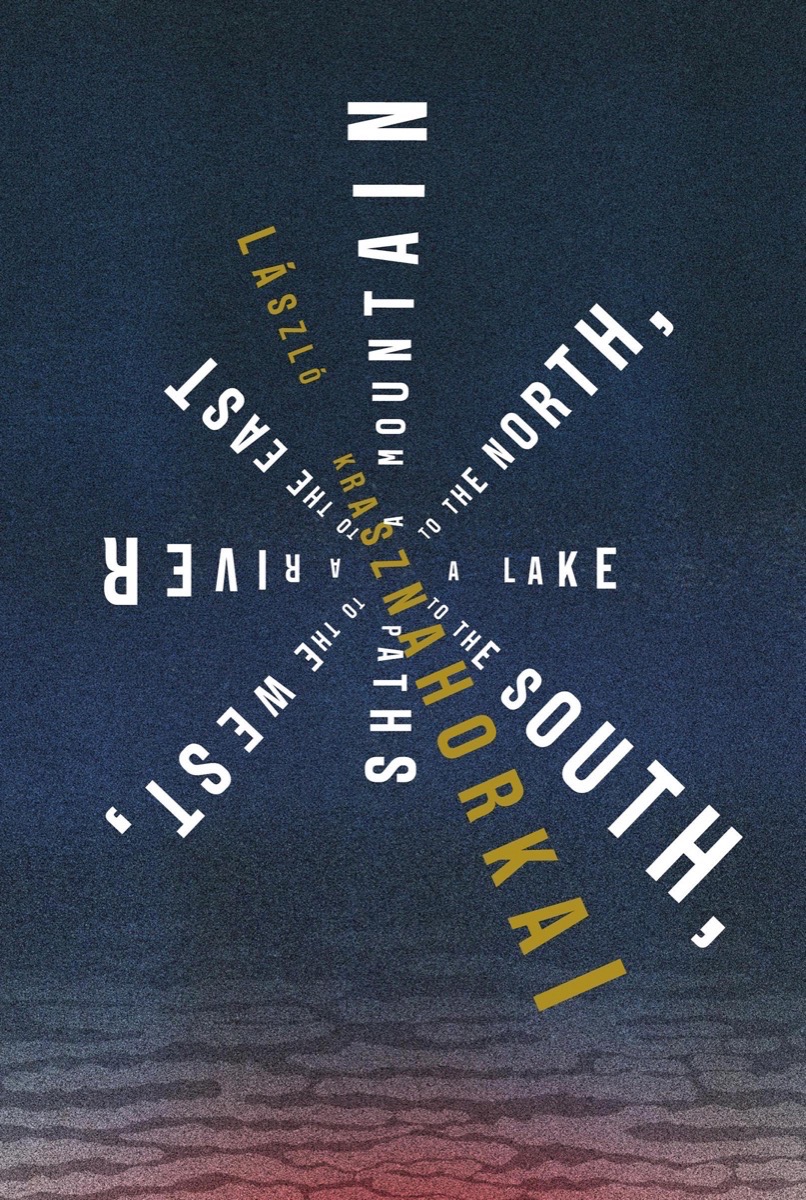
The seeker’s search: A Mountain to the North, A Lake to The South, Paths to the West, A River to the East by László Krasznahorkai

He did not find the gate where he thought he would, by the time he noticed that he was about to step inside he was already inside, he couldn’t perceive how he’d stepped across, suddenly he was just there, and facing him—he was on the other side of the wall—was the enormous gate construction known as Nandaimon: in the middle of the courtyard there suddenly rose four pairs of wide, colossal smooth-burnished hinoki columns upon raised stone plinths, and atop them a gently arching double roof construction; two roofs placed one above the other as if there had been a moment in which, at its beginning and its end, two enormous autumn leaves, slightly singed at the edges, were descending, one after the other, and only one of them had arrived, and now it rested on the timberwork of the columns, while the other was as if still descending through the perfect symmetry of the air…

At first glance, it is the endless title that catches one’s attention. But, by the time you have made your way through this enigmatic volume by Hungarian writer László Krasznahorkai, it is difficult to imagine a more appropriate way of signalling that this is a novel that will gently challenge expectations. Originally published in 2003, now available in a discerning translation by Ottilie Mulzet, A Mountain to the North, A Lake to The South, Paths to the West, A River to the East is a enveloping work that is part existential meditation and mystery, part exposition of the design and construction of Buddhist monasteries, part fantastical geological and botanical visualization and much more. It exists and unfolds in a magical realm of its own, suspended on meticulous details of Japanese Buddhist tradition, practice and design, but raising a much more pragmatic question: what is more important, the quest or its successful completion?

Central to this unusual novel is the grandson of Prince Genji, a character out of time and place, born of and bound to a fictional legacy reaching back a thousand years, who is seeking a garden whose existence has obsessed and eluded him for at least one hundred and fifty years. A suggestion that the hidden garden he seeks may in fact be located in an ancient  monastery above a community outside of Kyoto, he sets off to find it without letting his retinue of attendants know. When he arrives on the train, he is already feeling ill, so his passage through a warren of confusing and seemingly deserted streets is difficult but he perseveres.

However, the monastery, which seems to find him as much as he finds it, appears to be abandoned and, in some places, falling into disrepair. Fatigued and desperate for a drink of water, the grandson of Prince Genji clings to faith that someone will emerge from the silence to attend to him. We learn that his perpetually reinvented existence has left him subject to an “extraordinary sensitivity” manifested in weakness and fainting spells. Now, having escaped his caregivers, he is on his own. His passage through the monastery grounds is accompanied by digressions that describe his surroundings, natural and constructed, and detail the precise and laborious processes of designing the monastery, searching for a location, gathering material and overseeing craftsmen. The layout of walkways, the purpose of structures, the history of paper and book making and the art of gardens are explored in poetic, sometimes mystical terms. Kraznahorkai, at once meditative and restless, paints the confined canvases of his short chapters with uncommon energy. This passage, for example, describes the final effect of the monastery courtyards, where carefully selected stone, transported over long distances, and painstakingly crushed and spread out by select young monks, were finished using the teeth of heavy rakes, drawing:

into the white-gravel surface, those parallel undulations, so that there would come about not merely the idea but the reality of the perfection of paradise which seemed to wish to evoke the ocean’s restless surface, its eddying waves here and there between the wild cliffs, although in reality, it dreamt—into the incomparable simplicity of that beauty—that there was everything, and yet there was nothing, it dreamt that in the things and the processes, existing in their inconceivable, ghastly velocity, enclosed with a seemingly interminable constraint of flashes of light and cessation, there was yet a dazzling constancy as deep as the impotency of words before an unintelligible land of inaccessible beauty, something like the bleak succession of the myriad of waves in the ocean’s gigantic distance, something like a monastery courtyard where, in the peacefulness of a surface evenly covered with white gravel, carefully smoothed over with a rake, a very frightened pair of eyes, a gaze fallen into mania, a shattered brain could rest, could experience the sudden enlivening of an ancient thought of obscure content, and at once begin to see that there was only the whole, and no parts.

Extending over forty-nine brief chapters (numbered to Roman numeral L but commencing with II), most only 2-3 pages long, through flowing, often unbroken sentences that might extend for a page or more, this is a book that is engaging, informative and beautiful. At moments it is even farcical. However, the narrative winds back on itself at points, almost reimagining itself from another angle, blurring an illusion of chronology. Of course, for all the descriptive information woven into it, this is a story that exists outside space and time in a place where ancient and modern collide and fall away again. Thus, the circularity that arises subtly as the story unfolds, doubly rewards a reader on the second passage through this evocative work.

A Mountain to the North, A Lake to The South, Paths to the West, A River to the East by László Krasznahorkai is translated from the Hungarian by Ottilie Mulzet and published Serpent’s Tail imprint Tuskar Rock Press in the UK and New Directions in North America.

The stars used to be on our side: Lucky Breaks by Yevgenia Belorusets

There is a very eerie atmosphere that envelopes the stories in Yevgenia Belorusets’ collection, Lucky Breaks. This is a collection that examines the impact years of covert military action on civilians, in this case the conflict in the impoverished Donbas region of eastern Ukraine that has been ongoing since 2014. But, by terrible coincidence, the release of this work in English came on the heels of Russia’s full scale invasion of Ukraine and these tales of loss, displacement and trauma have suddenly been cast into sharper relief. This slender volume has become more vital than it already was. As I write this I am following the author’s daily diary updates from Kyiv and her words have become an essential aspect of my emotional connection to a situation that seems to so difficult to understand. That is in no small part because she is deeply interested in ordinary people whose stories are so often unheard, caught up in events they did not choose and cannot control, detailing her character’s situations with a measure of ironic humour and serious respect for the remarkable resilience that keeps them going against the odds.

Fate delivered her to Kyiv. She didn’t know what to do about it. She came from Donetsk, where she had lived her whole life in her parents’ small one-family house. She had enough money in her purse. That’s what they say, “in her purse,” although her actual purse was empty, full of wind. The wind part, really, is a hyperbole. She simply possessed something in her name, that’s it. That’s how they say it around here, “to her name,” although her name had nothing to do with it; she was not a name brand. In short, she had some inviolable reserves that she had to unseal and start systematically spending.  (from “The Lonely Woman”)

Belorusets is a photojournalist and writer whose work is informed by political activism. Her intention is to call attention to communities that have been traditionally underrepresented in the media. Her writing is an extension of this practice. In her collection Modern Animal (reviewed here) she worked with people she had interviewed during her years in the Donbas to reimagine their painful experiences in stories and allegories involving animals. In her “Note Before the Preface”, she indicates that in this volume, her activity with the tales she tells is still a form of documentation, not of the conflict itself, but “the surmounting of the conflict through a dialectical process—by means of phantasmagoria, narrative, conversation, and the disclosure of certain situations to the viewer.” Alongside the stories there are two photographic sequences: But I Insist: It’s Not Even Yesterday Yet and War in the Park. The grainy black and white images are not labeled and are not related to any of the stories, rather the three threads are presented as a means of showing how different contexts collide and unsettle narrative certainty. I will also mention, and I don’t know if it is intentional, but the font used is unusually small, effectively slowing the reading process and forcing the reader to remain longer in each of these relatively short stories.

The protagonists of Belorusets’ stories are almost exclusively women, told either directly through the character’s voice, presented as conversations or interrogations, or recounted as the experiences of someone the narrator knows or knows of. As such, the author’s own voice may be reflected in some of the accounts. Refugees and others displaced by war are common. Many find themselves lost and disoriented in Kyiv, longing for a past life or trying to build some kind of existence in the city. They look for work where they can find it. Others belong to an uncertain fate. Like the story of a florist so attuned to her art that she hardly exists outside her shop in Donetsk, but what happens to her when her home and shop are destroyed? Some characters arrive in Kyiv bearing the scars of the traumas they’ve endured, like the woman who keeps trying to rid herself of a broken black umbrella she carries only to rush to retrieve it, scolding it, pouring her pain into this tattered object. There are dreamers and horoscope readers and a woman who visits a cosmetologist as one might a therapist, in the belief that her hands can somehow massage, however temporarily, the griefs she carries right off her skin. Through their troubled, often eccentric circumstances, the characters who inhabit these thirty-two stories contribute to a narrative of life under hostilities in a state of persistent, slow burn. The heat has since been turned on full and these tales become at once more affectionately folkish and more disturbingly real. The stakes are even higher. One recurring character advises the narrator that she wants her identity hidden, and challenges her motives for recording her story at all:

“At least this is why it’s better for you and me if no one knows about me. I could be called to account, couldn’t I? But is there anything I can change? Not only can I not change anything, I don’t dare to. You’re taking my words down, you must be counting on something. Maybe a tearjerker about how we’re all full of hope for a new future, or how the country that we loved became our prison. We’re left to eke out a life in small towns, to die in plundered hospitals, in dirty public wards, or in empty little apartments where there’s no hot water for months and the lights go out at night. Someone will want to hear about us, and then you will be the one invited to a grand festive table, you will be the one they’ll raise a toast to.” (from “Lilacs”)

In allowing such passionate, disaffected voices to come through, Belorusets has, in Lucky Breaks documented a mood existing in Ukraine before  the barrage of headlines that have come to dominate our understanding of her country. That is what a documentarian does. And she is still doing it as bombs fall.

In his informative Afterword, translator Eugene Ostashevsky describes Belorusets’ writing as being most indebted to the early stories of Nikolai Gogol and early Soviet era avant-gardist Daniil Kharms. Elements of the supernatural and the absurd normalized within the realm of the everyday and a concern with narrative fiction appear in her work. Ostashevsky also discusses her controversial choice to write in Russian which raises political and logistical challenges for a Ukrainian writer in a country where most people can speak both languages, but Ukrainian is increasingly favoured and protected. He does admit, however, that her Russian is subtly different from that spoken in the Russian Federation: “it is based on the rhythms and intonations of the Russian of Kyiv and Kharkiv, and continues the Russian-language line of Ukrainian literature.”

Despite the grim subject matter that underlies (and sometimes surfaces) in this collection, Lucky Breaks is filled with warmth and humour. Belorusets’ characters exhibit much the same mix of anxiety and resolve that can be seen in the people she meets today as she wanders the streets of Kyiv and compiles her journal that is, at this time, being translated and shared with followers around the world on a daily basis. However, I can only hope that a wartime diary is not required too much longer.

Lucky Breaks by Yevgenia Belorusets is translated by Eugene Ostashevsky and published by New Directions in North America. It will be released in the UK by Pushkin Press in May.