Central to Australian writer David Brooks’ meditation on the ethics and implications of existing in a truly honest and respectful relationship with the nonhuman creatures who share this planet with us, is the question of how one can properly write about animal experience at all without filtering it through a decidedly anthropocentric lens. Are words, as we know and employ them, even up to the task? These are neither easy nor straightforward questions, but the search for possible answers is a journey that Brooks stumbles into willingly, and frets about, fumbles through, marvels over, and shares with surprising humility in this engaging—and endearing—collection of interrelated essays.
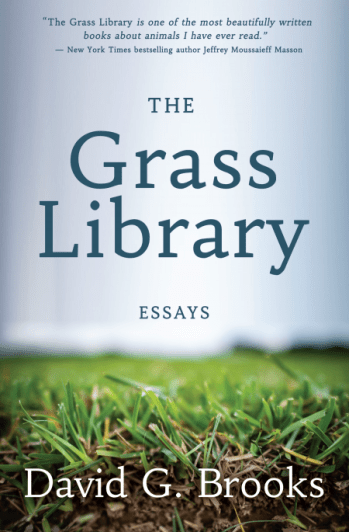 It all begins with a sudden life shift when Brook’s partner, T., announces over dinner one night that she can no longer continue to consume meat. He takes it well, but when this declaration is soon further refined to exclude all food that comes from animals, he finds himself accepting, if at first a little mournfully, a vegan diet. Where this path will ultimately lead them he can hardly imagine at that moment, but within a few years they will have left their rented house in Sydney and moved—cautiously at first and with an intermediary purchase—to a small farm in the Blue Mountains where he, T. and their dog Charlie will find themselves living with a growing “herd” of rescue sheep, not to mention the snake, ducks, rats, and all the other creatures that come and go. The resulting account is not a book about veganism or guilt but it is a book detailing one man’s ongoing effort to realign his values in accord with respect for animals. More importantly it is a lyrical philosophical tale of “discovery and wonder: wonder and wondering.”
But first, to set the stage, there is the move. Reluctant to cut ties with the city cold turkey, so to speak, they buy a house in a mountain town, but continue to rent in Sydney. When they finally try to make a permanent move to their new home, a variety of factors prevent them from settling in and feeling at peace. So, when they hear about a farm on the edge of town, they check it out. Two sloping acres, an old farmhouse and a small cabin just begging to be converted into a library. It seems to be perfect given a number of circumstances and dreams that are beginning to colour their thoughts of the future, so they buy it, move in, and within a few months are joined by a couple of rescue sheep—Jonathan and Henry-Lee.
The genesis of the text that will become The Grass Library lies in a vegan friend’s challenge to Brooks that he should write about animals. However, if that was, at least for the friend, envisioned to be part of a grander exposé about animal cruelty, this book is smaller, more intimate and close to home, but it raises fundamental philosophical questions all the same. He draws, for example, on the writings of Kierkegaard and on Derrida’s The Animal That Therefore I Am. But the true beauty lies in the self-reflective exploration of what it means to write on behalf of another creature with an openness to possibility of experience—ours and theirs. Uncertain how to start, Brooks decides to begin with their rescue dog, Charlie, and his curious dusk anxiety. A window on the life of another, a life that overlaps with but is not contained within those of his human companions. See the problem? “Owners” is a fraught term. Even writing this review echoes the challenges of writing about animals—what can we ever fully know about anyone who shares our lives with us, even if they are of the same species, let alone if they belong to another species or even order of being? Brooks struggles to tell Charlie’s story as Charlie might, an exercise, at best never more than approximate and subject to an endless double guessing that he will continue to practice as the group of nonhuman animals who become part of his life and narrative expands.
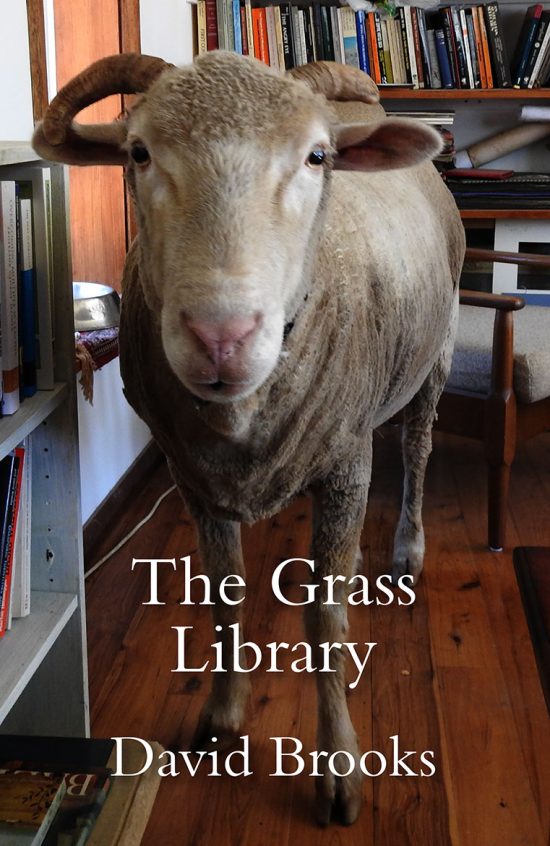
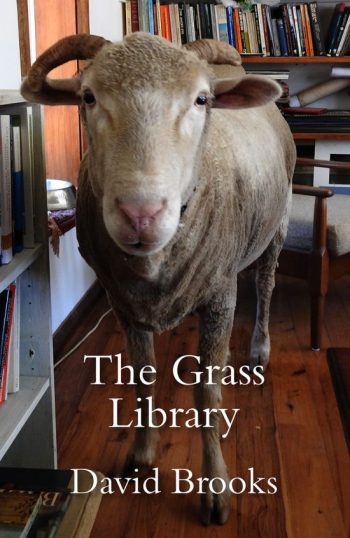 The true nature of the nervousness Charlie displays as the day comes to a close is never fully understood despite efforts to analyze or assuage it, but it seems that once his family relocates to the farm, where he quickly takes to his fleecy new friends, he finds a comfort zone of sorts. Once “the boys” arrive, followed in time by an orphaned lamb, little Orpheus Pumpkin, Brooks’ creature considerations extend and, for much of the book revolve around sheep. Living with these characters (and they are definitely distinct individuals) offers countless opportunities for observation, contemplation and, on occasion, serious concern. As for example, when David and T. decide that it would be an act of complicated kindness to have Henry castrated. A ram who exhibits a desperate longing for the ladies whenever ewes are nearby, they worry that he will either injure himself trying to reach them or harass his poor companion Jonathan, a wether, to the point of distraction. But whose comfort is really on the line?
The surgery does not go well, prompting worry, guilt and doubt, though Henry eventually does recover and seem calmer and, dare one say, happier. But, of course, Brooks cannot be entirely certain they did the right thing:
We began this process of—I don’t even know what to call it: stewardship? protection? attempted redress?—so naïvely, despite all the thinking that had gone before. But of course that had been thinking about the animal, in the absence of the animal. No one told us—who was there to do so?—that we’d encounter, almost inevitably, these pitfalls, dark holes, perilous places. As we open up to these creatures, as we apprehend more and more of their Being, or think we do, we’re dealing more and more with lives no less complicated, painful, traumatised, or liable to trauma than our own—indeed we’re dealing in most cases with lives that have been much more traumatised than ours are ever likely to be.
There are, as one can see, more questions than answers, and throughout this book, among the accounts, humorous and tragic alike, of daily life on the farm, Brooks invites the reader into his internal queries and quandaries. The closer he aligns himself with the ethics and obligations of animal advocacy, the more he is forced to re-evaluate his own childhood interactions—the shovel to the head of a snake, for instance—and, perhaps even more painfully, his enthusiasm for some of the literature and authors he once loved as he comes to recognize aspects of their attitudes toward animals as debatable, even distasteful.
Of course, in his evolving effort to articulate this growing self-awareness, Brooks’ engagement is not limited to animals, birds or reptiles. One of my favourite chapters is “Cicada Summer.” Referring to the insects as his “almost-totem,” this piece which could easily be read as an elegant and thoughtful stand-alone essay, describes the emergence of one particular season’s generation of cicadas from their waiting larval refuges buried deep on the roots of trees. He marvels at the fragile beauty of discarded carapaces, and even finds, with sadness, a nymph that has died in a failed effort to free itself from its shell. The song of the insects is the soundtrack of the season, implying in its consistency, an ongoing eruption of these otherwise short lived creatures—short lived, that is, in this stage of their lives. But of course, the cicada offer more than an opportunity for a little speculative natural history. In their epic drama, lies a lesson for us: “If we think we are anything other than creature,” he warns, “—have crawled very far beyond it—we are kidding ourselves.”
He then goes on to draw a striking parallel between the discarded carapace of the larval cicada and the creative acts we human creatures engage in:
A book, a poem is like that: the shell of something that has emerged, gone. Writers work hard at those shells, but as soon as we finish them—a poem, a novel, an essay—there’s a sense in which we’re not there any longer. A cicada, I note, sheds multiple shells before the one we see clinging to the bark of a tree; and humans too—human animals—have to shed carapaces, create shells, whether they’re authors or not, if they are to mature. That can be agony, pulling oneself out of oneself.
The further Brooks’ effort to write about animals—and to write about writing about animals—takes him, the more it brings him write back to the human animal in the room: himself. And, for that matter, the rest of us too. As he recounts his and T.’s adventures with ducklings in the swimming pool, a persistent rat in the kitchen, or little Orpheus Pumpkin who spends his early weeks living in the house (and, like his fellow sheep, falling in love with T.), practical and philosophical musings and digressions are frequent. As such, the book has a sense of active construction—tentative, meditative, worked and reworked. Brooks is unafraid to confess to missteps, let the seams show, leave possibilities raised, but unresolved.
And then, through it all, there is the beautiful, poetic prose. It is as if all of Brooks’ years as a poet, essayist, novelist, and short story writer have been channelled into what has become a deeply personal life project. At the end, as he stands out in the paddock with Charlie, surrounded by all of “the boys”—Henry, Jonathan, Orpheus Pumpkin, and the latest arrival, Jason—there is a sense of a man at peace with the world. At least, perhaps, until the next, creature in need arrives on the scene.
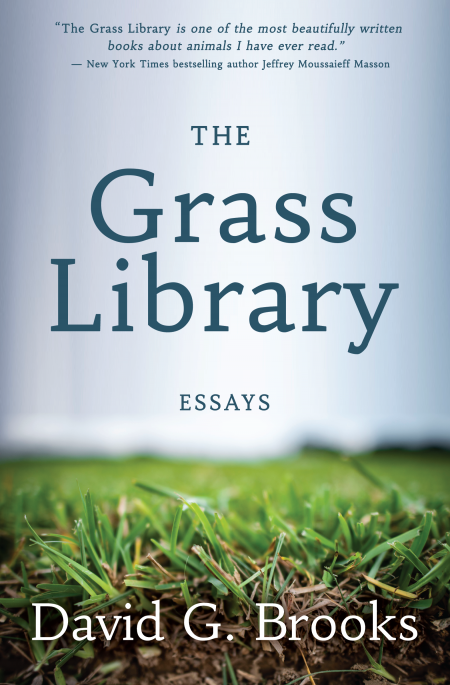
The Grass Library is published in Australia by Brandl & Schlesinger and will be released in North America by Ashland Creek Press in June.

 Looking back through my archives I notice that I skipped this annual stock-taking activity last year, but my offering from the year before, May 31, 2018, still stands as if it could have been written yesterday. More or less. Do I really evolve so little? I’ve riffed on the same themes more than once over the years, but today I feel a heaviness that is not entirely accountable to the worldwide spread of a virus that is testing our resilience and laying bare the inequities that divide us within and between national borders or the civil unrest currently sweeping across the US…
 And so, roughghosts goes on. Traffic is respectable even though I rarely post more than five or six times a month and make little effort to promote my work. I’m always pleased and a little surprised that people actually read my offerings; invite me to review their books. I grateful for the attention, it means a lot, but to be honest, I maintain this humble corner of the internet for myself, more than anything. It’s a place for reading, reviewing, writing and wondering, and every now and then, shouting into the darkness.



 roughghosts