One day you will meet yourself returning: Embark by Sean O’Brien

In these days of howling sunshine
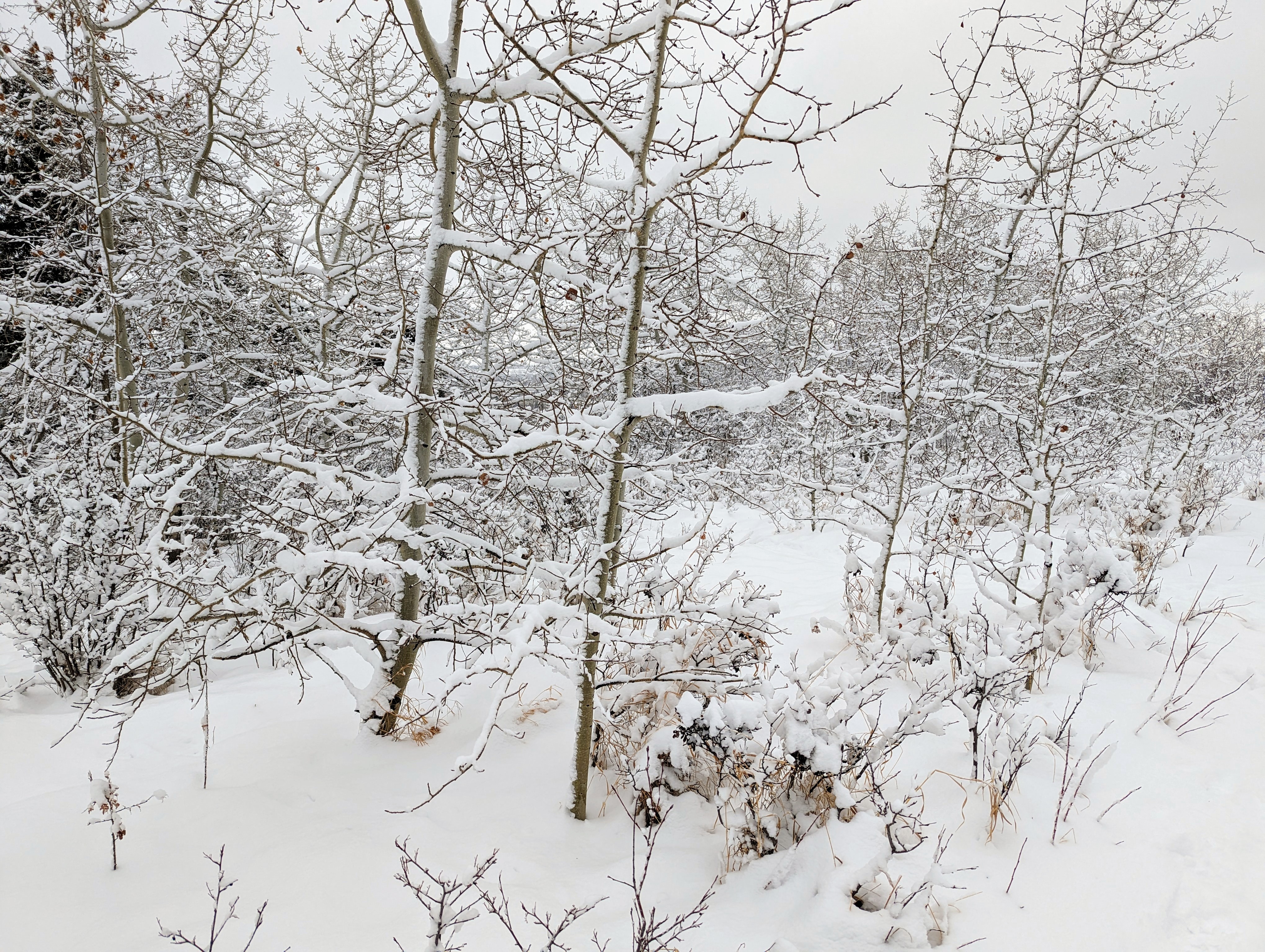
when in the grove the aspens fret and pull
like maddened horses now silver now grey
in the curdling light, when the leaves of the cherry
are first all hands and then all birds
that point the way they cannot travel with you,
what then is to be done?

– from “Poem in German”

Every time I sit down to write about a book of poems, I am confronted with a wave of insecurity. Is it possible to write about poetry without the requisite vocabulary and knowledge to adequately assess the collection at hand? I have long argued that “ordinary” readers should be encouraged to read and engage with poetry, free from concerns about doing it “right.” After all, what does it mean to be “right” in one’s reading of any piece of literature? Even in the course of a single lifetime we never come to the same work in the same way, or as the same person. And yet, I am increasingly inclined to read poetry without any thought to whether I will or will not write about it because sometimes, no matter how much I enjoy a collection, I can find myself hopelessly at a loss when it comes to imagining how I might express my feelings.

Embark is the eleventh collection from well-known—albeit previously unknown to me—British poet Sean O’Brien. I ordered this book inspired by a couple of selections shared by someone on Twitter which is, I confess, one of my primary resources for finding poetry. Something about the pensive, gloomy tone of O’Brien’s poems caught my attention. Now, having read and reread this slender volume, I wanted to reflect on what strikes me in his work.

O’Brien’s publisher describes him as “‘Auden’s true inheritor,’ and one of our wisest poetic chronographers” and this, for a start, signals a return, for me, to a manner of poetry that has commanded less of my attention in recent years as I’ve read more inventive contemporary poetry and more in translation. I almost feel embarrassed to confess that his attention to metrical form, occasionally rhyming, and his use of popular or colloquial language, with a strong sense of place, feel familiar and welcome. His use of historical, literary and cultural references fall within a comfortable realm, at least in my reading. I was not left wondering what obscure references I might be missing.

Though poems should not mean but be,
all information tends to entropy:
What was the Word is emptied of itself

and speechless water rises through the stacks,
engulfing like a continental shelf,
implacable as death or income tax.

– from “Waterworks”

Of course, one of my key points of reference is simply one of age. O’Brien just turned seventy and, even if I’m eight years younger, the perspective that comes with living, looking back over the decades, colours the concerns, moods and tones that I recognize in his poetry. The ghosts of old towns, the crumbling decay and industrial detritus traced in the soil, water and stones, and the shadows of memory surface that again and again. His landscapes are charged with life, but his verses reflect an awareness of mortality and the absences that increasingly haunt us over time. This is the work of a mature poet, in age and in his confidence with language. But it is also very much of the present—climate change, disturbing political trends and the reality of the pandemic are all apparent here.

Rain is falling on the metal tables
piled with chairs, and gleaming
as it floods the blue brick gutters,

perfect and anonymous and beautiful.
Be careful what you wish for now
the very air has somewhere else to be.

The city has a headache
but it dare not speak its name –
the bitter patience that till yesterday

we learned from middle age –
and now the plague is blown
as lightly as a kiss across the street.

– from “A Last Turn”

There is a pensive, even bleak quality to many of these poems, but his imagery, his turn of phrase catches me in the moment, causes me to pause. But then there is this hint of guilt I feel when reading poems in English. As much as I love and believe in the importance of reading poetry in translation, aware of the challenges and decisions involved in translating verse (and O’Brien himself is a translator, having translated the poems of Kazakh national poet Abai Kunanbayuli), there is a special joy that comes from reading poetry in my native language that, oddly, I might never have considered before I became so passionate about reading in translation. Of course, O’Brien’s poems have also been widely translated into other languages, but all I can say for now is that I am glad I took a chance on this fine collection.

Embark by Sean O’Brien is published by Picador Poetry.

Only existing to get away: Eastbound by Maylis de Kerangal

He’s posted at the far end of the train, at the back of the last wagon in a compartment slathered in thick paint, a cell, pierced by three openings, that the smokers have seized immediately. This is where he’s found himself a spot, a volume of space still unoccupied, notched between other bodies. He has pressed his forehead to the back window of the train, the one that looks out over the tracks, and stays there watching the land speed by at 60km/h—in this moment it’s a wooly mauve wilderness, his shitty country.

Aliocha, twenty years old, a boy in a man’s still uncertain body, is onboard the Trans-Siberian railway bound for an undisclosed location in the far eastern reaches of his nation, one of the many Spring recruits too poor, too unfortunate to have otherwise devised a plan to avoid compulsory military service. As Moscow slips farther into the distance and the vast Siberian landscape opens up around him—“this enclave bordered only by the immensity”—he desperately wants to find a way out. The only practical solution he can imagine is to simply get off at one of the many stations on route and disappear, risk everything to lose himself somewhere, anywhere other than on this train packed with anxious recruits and assorted restless travellers.

This is the conflict French author Maylis de Kerangal sets in the early pages of Eastbound, her latest novella to be released in Jessica Moore’s English translation. Of course, Aliocha’s first attempt at escape is foiled and he finds himself back on the train, back in his favourite spot watching the rails roll away behind him into the dark night. But soon he is not alone, the foreign woman he had just seen on the platform joins him, a lonely vigil of her own to keep. Hélène has just left her Russian lover, a man she had followed from Paris to Siberia when he was offered a job he couldn’t refuse, but the isolation and loneliness proved too much for her. Once she decided she had to leave, she had to act fast, catching the first train coming through town—eastbound to Vladivostok—away from Anton, but away from France too.

There is a distance—age, language, culture—between Aliocha and Hélène, but the boy impresses upon the French woman, with a mix of pantomime and force, that he wants to take refuge in her first class compartment until he can escape the fate that awaits him. What develops is an uneasy, unsettled alliance that becomes increasingly tense as the young would-be deserter’s absence is finally noticed. From the opening pages, de Kerangal’s prose carries the emotional intensity swelling in the cramped quarters of the train, the Siberian landscape rushing past the windows, and the increasingly fraught atmosphere of the station breaks without dropping a beat. Long, breathless sentences open across pages, punctuated here and there with short staccato statements. In vivid contrast to the vast expanse unfolding beyond the train, she zeroes in on her protagonists’ minute physical sensations, doubts and fears, effectively playing on the balance between infinite and finite.

Externally, Lake Baikal is an obvious highlight, a treasured vision momentarily uniting everyone  onboard (except Aliocha who, much to Hélène’s dismay, is still in hiding in her compartment when she thought he had disembarked). The excitement rises off the page as passengers hurry out to witness its passage, record it with cameras and cell phones, and celebrate with cake, vodka and song. Baikal is a shimmering source of national pride:

The lake is alternately the inland sea and the sky inversed, the chasm and the sanctuary, the abyss and purity, tabernacle and diamond, it is the blue eye of the Earth, the beauty of the world, and soon, swaying in unison with the other passengers, Hélène, too, is taking a photo with her phone, an image she sends to Anton straightaway, the train is passing Lake Baikal and I am at the window on the corridor side, I’m thinking of you.

But it is the smaller human drama—will Hélène continue to protect Aliocha and can he manage to avoid detection?—that gives this novella its true momentum. The growing tension and affection between the French woman and the frightened but muscular young man, mediated with gestures and limited shared vocabulary, is unfolding in the confined spaces of the moving train. At less than 130 pages, Maylis de Kerangal’s Eastbound is a short, perfect embodiment of the principle that less is more. Not a single word is wasted here, but her characters emerge as full-bodied, conflicted individuals and the suspense, which starts out as a simmer, builds to an intense boil that is likely to have you holding your breath at its peak.

Developed from a short story composed in 2010 when the author was travelling on the Trans-Siberian as part of the French Ministry of Culture’s programme of French-Russian events, Eastbound was originally published in French in 2012. Sadly, her portrait of the rebel Russian soldier is eerily timely now, a decade later. Eastbound by Maylis de Kerangal is translated by Jessica Moore and published by Archipelago Books in North America and Les Fugitives in the UK.

An explosion of strong female voices. Balkan Bombshells: Contemporary Women’s Writing from Serbia and Montenegro compiled and translated by Will Firth

First we meet Marijana, the daughter of a farmer who imagines a fantasy encounter with “A Man Worth Waiting For,” someone to sweep her off her feet, knowing well that the first facsimile of a “hard-working young fellow with house, land and cattle”—be that a forester with a cabin in the woods—who asks for her father’s permission to marry her will be sufficient to send her packing. Dreams will be put aside. Then we find ourselves in the midst of a feminist folkloric horror tale, followed by excerpts from an emotionally charged diary. And these three pieces, by Bojana Babić, Marijana Čanak and Marjana Dolić respectively, simply mark the beginning of a journey through some of the rich fictional landscapes envisioned by contemporary Serbian and Montenegrin women writers.

Anthologies can have many points of origin. This collection, Balkan Bombshells is, as compiler and translator Will Firth admits, the “fruit of happenstance.” The idea of an anthology was first suggested during a month-long stay in Belgrade afforded by a travel scholarship. An initial selection of short prose pieces by women from Serbia was made with the support of the KROKODIL Centre for Contemporary Literature and the organizers of the Biber contest for socially engaged short fiction. However, to ensure he’d have sufficient material for a book-length project, the scope was expanded to include the neighbouring, historically linked, country of Montenegro where Firth had many connections. The resulting multi-generational anthology of Serbian-Montenegrin prose is a collection of seventeen powerful pieces from both established and newer authors, many of whom are appearing in English for the first time. All of the writers are working in the language formerly referred to as Serbo-Croat(ian) that is now often described with the acronym BCMS (Bosnian/Croatian/Montenegrin/Serbian).

The stories gathered here, several of which are excerpts from longer works, feature a variety of voices and styles, a diversity that is highlighted by the organization by alphabetical order rather than region or theme. Many of the pieces afford snapshots into the lives of women caught in difficult situations, facing the dismal options available to them in working class communities or chafing against the traditional values of their parents. There is humour, Jelena Lengold’s “Do You Remember Me?” being a notable example that also calls attention to the loneliness of middle-aged city dwellers, and tales that are disturbing, strange and sad. As one moves through the collection there is a welcome, often unexpected freshness to each piece, perhaps because most of the authors are, as yet, not widely known outside their home countries. Three, including Lengold have been published by this collection’s publisher, Istros Books, but there are many I would love to see more from.

There are so many strong entries, but I was especially impressed by the metafictional “Zhenya” and the two more explicitly political pieces. Lena Ruth Stefanović’s smart and funny “Zhenya” begins in a backward village in Russia (the author studied Russian literature in Belgrade, Sofia and Moscow) but becomes, in the end, as the narrator/author openly imagines a possible future for her protagonists, as the most decidedly Montenegrin:

First, I’ll send them to my motherland, Montenegro, to warm up after the Russian winter. I’ll ask my parents to welcome Zhenya and Vova and to treat them as guests in our hearty, homey way.

Then I’ll send them on an excursion to Bari to pay homage to the relics of St. Nicholas, and maybe I’ll go along myself.

Along the way, a Russian flavoured fable is transformed into a vibant commentary about the evolving identity and literature of the people of Montenegro.

The most political offering comes, unsurprisingly perhaps, from the most established of the authors, Svetlana Slapšak, a writer, editor, anthropologist and activist with over seventy books to her name. Her story, “I’m Writing to You from Belgrade” is set in Toronto, where an immigrant family learn of the death of Slobodan Milošević. The protagonist and her husband respond to the news:

‘There will be no relief,’ Milica said. ‘But I’m afraid there will be fear because he died without being brought to justice…’

‘What difference does that make to us?’ Goran said after a brief silence. ‘The country we once lived in no longer exists. We have to tend to our memories so they don’t disappear in a puff of smoke, and that’s very hard here. Do you sometimes feel we’ve sailed to a distant shore, from which there’s no return?’

Later, while her daughter and husband debate the news, Milica reads a long email from a friend and former lover who is passing through the altered remains of their former homeland, observing the immediate response to Milošević’s death on the ground. It’s an incredibly effective, well-written approach to the complex emotions of exile raised the distant tremors of history and politics.

Finally, my favourite piece in Balkan Bombshells is political in a smaller, infinitely human manner. “Smell” by Milica Rošić is a short poetic tale about memory, the pain of war and the spiritual bond between three generations of women, Alma, Almina and Ina, or as the narrator runs her name together with that of her mother and daughter—Almaalminina. Grandmother and granddaughter never knew each other, the former died enroute to the border during the war long before Ina was born. A sudden and natural death, but one that leaves Almina with no option but to ask the soldiers to abandon her mother’s body in the forest. It is an action perfectly aligned with the character of her pragmatic mother, but one with its own lingering pain. “I cried like the rain” is her sorrowful refrain. But there is an unspoken, innate thread binding Ina to Alma without her mother’s direct intervention. Such a beautiful, poignant little tale.

So often anthologies, with all the best intentions, run the risk of collapsing under their own weight. This collection, even with seventeen contributors, only runs to 143 pages, offering just enough to give a reader an entertaining and intriguing introduction to a wide range of Serbian and Montenegrin women writers who will, with luck, reach a broader audience in translation over the years to come.

Balkan Bombshells: Contemporary Women’s Writing from Serbia and Montenegro is compiled and translated by Will Firth and published by Istros Books. More information about the authors included, see the publisher’s website.

After three years, where am I? A personal reflection

walk on the perimeter
of your dreams. it’s not
that the roads are blocked
but that the hearts have
given into the violence of the wind

“Friday, March 25 at 4PM”
Etel Adnan, translated by Sarah Riggs

Into the second week of February and here we are, still living in interesting times, as the apocryphal expression goes. The past three years have brought disease, war and natural disaster, and have, sadly, served to demonstrate just how little we can care for one another. For many of us, it has also been a time of deepening isolation, especially for those with fragile connections to the community and outside world.

For days now I have debated putting my feelings into words, uncomfortable, as always, in talking about myself, even if most of my non-review related writing falls into the sphere of the personal essay. Of late, I have mostly written about how even that avenue feels fraught with barriers and challenges that my own sense of self worth cannot overcome. Then, when I turned to look at some of my occasional journal notes, I found that what I am feeling now I had already clearly articulated two years ago. Little has changed, except that the despair runs deeper and the mental health resources that were so important to me are now gone. I had overstayed my welcome in a system that is buckling under the pressures currently crushing healthcare services here and elsewhere.

Since the pandemic started, I have crossed into my sixties, encountered new medical challenges—none especially serious, as far as I know, and as of yet, no Covid—but I have not been outside the city limits and, apart from my immediate neighbours and my children, I have engaged in little social interaction. Finances have been a major factor, as have problems at home, yet I fear I have become increasingly withdrawn over this period. Trapped even. I go out every day, marking kilometres on the trails but the satisfaction that used to come with a good outing is increasingly elusive. I want to travel again and yet I cycle between anticipation and anxiety and keep pushing possible departure dates back.

I feel old, I feel tired and overwhelmed by loneliness. I fear I am drifting. It’s hardly a new sensation but it somehow seems that the past few years have made me feel at once anchored and anchorless.

I am also troubled by a continuing anxiety about my identity. Or lack thereof. At a time when identity has become such a loaded term, for better or worse, I can’t understand how people take some measure of pride, even comfort, in being queer or trans or something. I feel that the layers of my fundamental identity—sex, gender, sexuality, nationality, politics, religion—have all been stripped away. I am worse than naked. I am emotionally and socially flayed. Who am I now? Better yet, what am I? I have no job, no title, no vocation, no partner, no value.

I read. I write about the books I read and publish my thoughts in this space, typically trying to remain to the sidelines of my reviews. Any other words I try to write spiral into the void. I distract myself with little satisfaction, little connection, and a meagre measure of confidence. What do I have to show for sixty-two years? A differently gendered past rendered invisible on the outside that has left me in a body I will forever be at odds with? And a chronic psychiatric condition that has robbed me of the freedom of  trusting my own worth, my own sense of self, my own existence.

There are far more books dealing with gender identity and mental illness on the shelves these days than there were twenty-five years ago when I was navigating crisis after crisis on both counts, but at this point in my life most of them seem to be speaking to someone alien to me. Rarely do I hear a discussion on either subject and think: Ah, yes, that’s so familiar. I wonder who I might be today if an understanding of the two separate and yet interwoven conditions that set me apart from such an early age had been available when I needed it. I might have had a different life, but I’m not convinced it would have been better. By the time one reaches sixty, the tangled complications of a life lived are impossible to unwind and reimagine. One can only look ahead.

In recent weeks I’ve been reading Etel Adnan’s collection Time. Published when she was well into her nineties, the poems in this handsome volume would have been composed when she was in her late seventies and early eighties. Clear and precise, her poetry crosses borders and time, touching again and again on myth, memories of war, desire, the body and the inevitability of death. With wisdom and grace, the poet untangles, reimagines and reminds me that life is marked with beauty and longing even as the end looms closer.

So where should one write? Back to the past or into the future?

Nothing threatens the meaning of life like freedom: The Last Pomegranate Tree by Bachtyar Ali

On a plateau atop a mountain in Kurdistan, at the border of heaven and the realm of earthly reality stands a lone pomegranate tree. Known as “the last pomegranate tree in the world,” it is an enchanted and symbolic point of intersection for a handful of boys and the man whose life is bound to all of them although he will only meet one in person. His story—and, through him, their stories—recounted night after night to an audience of fellow refugees on a ferry riding dangerous dark waves, is one of hope, despair and the immeasurable price war exacts.

No, tonight I’m not going to tell you about Muhammad the Glass-Hearted, Saryas-i Subhdam, Nadim-i Shazada, and their connection to a pomegranate tree that heals the blind. It’s too early to reach the heart of our story. It seems as if we’ll be out at sea for many more nights. And if God comes to our help and our story is cut short because we’ve reached some country’s shores, if the coast guards detain and separate us, don’t worry that you haven’t heard the end of the story. You are right there at its end. This ferry marks the very end of the story.

The road to autonomy for the Kurdish people has been long and bloody, marked by insurgency, uprising, genocide and civil war. This is the reality of Bachtyar Ali’s The Last Pomegranate Tree (originally published in Kurdish in 2002), but the tale he gives us is one filled with magic, mystery and philosophy. Unfolding over the last decades of the twentieth century and just into the twenty-first, amid the dark, violent years of Iraqi-Kurdish conflict, it is as much a story about orphans, oaths and glass pomegranates, as a testimony to the brutality of warfare and the hollowness of victory. Yet above all, it is a story about the power of storytelling.

With his captive audience, our narrator, Muzafar-i Subhdam, is an unlikely Scheherazade, weaving his tale, not to save his own life, but to preserve the memory of a story beyond anything he ever expected to encounter—one he has now has committed himself to carrying. He begins with the account of his sudden release from prison after twenty-one years confined, alone with only the vastness of the desert for company. However, rather than finding himself a free man, he is taken to a luxurious mansion surrounded by a dense forest, where he soon learns that his old childhood friend, Yaqub-i Snawbar intends to keep him hostage so that they may grow old together apart from a world ravaged by destruction and disease. Years earlier when they were fellow Peshmerga freedom fighters, young men dreaming of a new future for the Kurdish people, Muzafar had forfeited his freedom to allow his friend to escape. He emerges from the desert, long thought dead and nearly forgotten, while Yaqub has amassed great wealth and power. But the wounds of conflict and corruption run deep, and Yaqub sees Muzafar as pure soul whose presence will ultimately cleanse his sins. But our hero has no desire to trade one prison for another. He has only one goal—to learn the fate of the infant son he left behind when he was captured so many long years ago.

Like a seasoned raconteur, Muzafar-i Subhdam entwines the story of his own search with the stories he acquires along the way, offering his audience hints at what lies ahead, but making them wait as a rich mythological tapestry slowly takes shape. Whenever he asks about his son, he is told that he is dead though no one can or will tell him how or when he died. Again and again he is advised not to seek answers, to accept the truth and move on. But for the decades he spent surrendering himself to the world of sand, letting all other memories be swept away, the one thing he held fast to was the thought that somewhere on earth there was someone named Saryas-i Subhdam. His son.

In these unusual times, fathers have become estranged from their sons.

Slipping into what at first seem to be magical detours, we learn about Mohamed the Glass-Hearted killed by love and two mysterious sisters who have sworn to never marry and always wear white. As Muzafar will discover when he conspires to return to the outside world, the life of Saryas-i Subhdam is bound to their lives and to the lives of many others. His efforts to piece together the clues he uncovers blends fantasy with the very real horrors of a series of conflicts that are, at the time, still ongoing and unforgiving. The chronicle he shares with his ferry companions is filled with memorable characters and strange coincidences, interspersed with philosophical musings as in the following testimony from Ikram-i Kew, the giant-sized,  soft-hearted fixer who agrees to help free Muzafar from the mansion and assists him as needed on his journey:

“I served the revolution for many years,” he said. “I’ve done everything except kill for it. I often regret it, and often I don’t. Muzafar-i Subhdam, innocence creates two feelings in us: on the one hand, you feel you’re nothing, you’re weak, and your innocence is like a rabbit’s in the middle of a pack of wolves. At other times, you have the opposite feeling – that you have encountered every kind of war and filth but retained your innocence. You tell yourself: that’s good, that’s beautiful, it’s a great achievement. Muzafar-i Subhdam, the revolution is a great big lie. You’re fortunate – you’re a revolutionary without having been in the revolution. And that’s divine grace. I had thought that the success of the revolution would automatically bring about paradise on earth. And yet, from the next day, the very next morning, when you opened your eyes and washed your face, you could see that everything was starting all over again. I saw that devil being reborn day after day, a devil that was only small to begin with. At first you say, So what? That devil is part of all of us, it’s only small, a natural part of any human being. But you can see it gradually grow bigger, sweeping everything away. Everything.”

The Last Pomegranate Tree, a modern Kurdish fable, is an immersive, entertaining tale that fuses the charm of ancient legend with the harsh reality of contemporary history. It honours a generation lost or, worse, hardened to death and disaster by years of hostility—both coming from outside the troubled region and arising from within. Resilience, as fragile as the glass pomegranates at the heart of his tale, is what Muzafar-i Subhdam cherishes and holds close as he trusts the convoluted story of Saryas-i Subhdam to a group of refugees lost at sea.

The Last Pomegranate Tree by Bachtyar Ali is translated from the Kurdish by Kareem Abdulrahman and published by Archipelago Books.