Limping into December

Nothing like a car accident with the attendant whiplash and concussion—not to mention worrying about whether the impaired driver who hit me can been tracked down, if she is insured, and questions about buying another car—to really put the brakes on one’s reading an writing. I finished two books last month, abandoned one, am still crawling through another, and the two short volumes I expected to easily breeze through last week for the end of German Lit Month are far from finished.

To add insult to injury (so to speak), my blog has been subject to an unending stream of bot traffic from China over the past few months. It kind of takes the fun out of everything when you cannot even tell where the legitimate, organic (i.e. human) engagement is going. WordPress keeps congratulating me on my incredible booming stats, but the possibility of installing a plug-in to help stem the unwelcome traffic requires upgrading to a nearly $400/year Professional Plan which is surely overkill for a pastime that earns me little more than a number of (greatly appreciated) review copies while inspiring continual purchases of even more books that I would like to read and write about.

All this to say: Where has 2025 gone? And how has the world become uglier, meaner, and ever more subject to conflict, political corruption, and natural destruction? I wish I knew.

Passing another milestone

So, I turned sixty-five the other day. I am now one of those characters that the blurb on the back of a novel sometimes refer to as “elderly.” In fact, over sixty is usually enough to warrant that description in a synopsis. Of course, once you get here you realize that “old” is one thing—you can feel that in your knees—but elderly, surely that must be closer to eighty.

American Presidential age.

With senior citizenhood come certain benefits, especially if you are of modest means, but the application processes can be fraught and demeaning. However, I did manage to take advantage of one of the services that come with age—I claimed my annual free eye exam. I’ve been struggling for some time, assuming that all I needed was new glasses and determined to wait unitl my birthday because the meagre benefits applicable toward glasses on the benefit plan I’ve been paying for also roll over this month and I would at least be able to save something on what is inevitably an expensive purchase. Ah, but I don’t need glasses after all. At least not yet.

I need cataract surgery.

If I was struggling with eye strain and dizziness before, now it seems ever more profound and constant. Especially because surgery (fortunately covered by government insurance) is probably six months away. Or more.

I’m not sure if this is where I thought I would be at this age. Are we ever where we thought we’d be? So many of my contacts are much younger, fretting about turning thirty (imagine), agonizing over turning forty (as if). But if there is one thing about getting older, the more milestones you pass, the less ominous they seem. I thought fifty would be profound but it passed without comment and ushered in a decade that would be upended by illness, grief, and unexpected opportunities to travel distant lands. Then sixty arrived in the pandemic and my plans to mark it with flair faded.

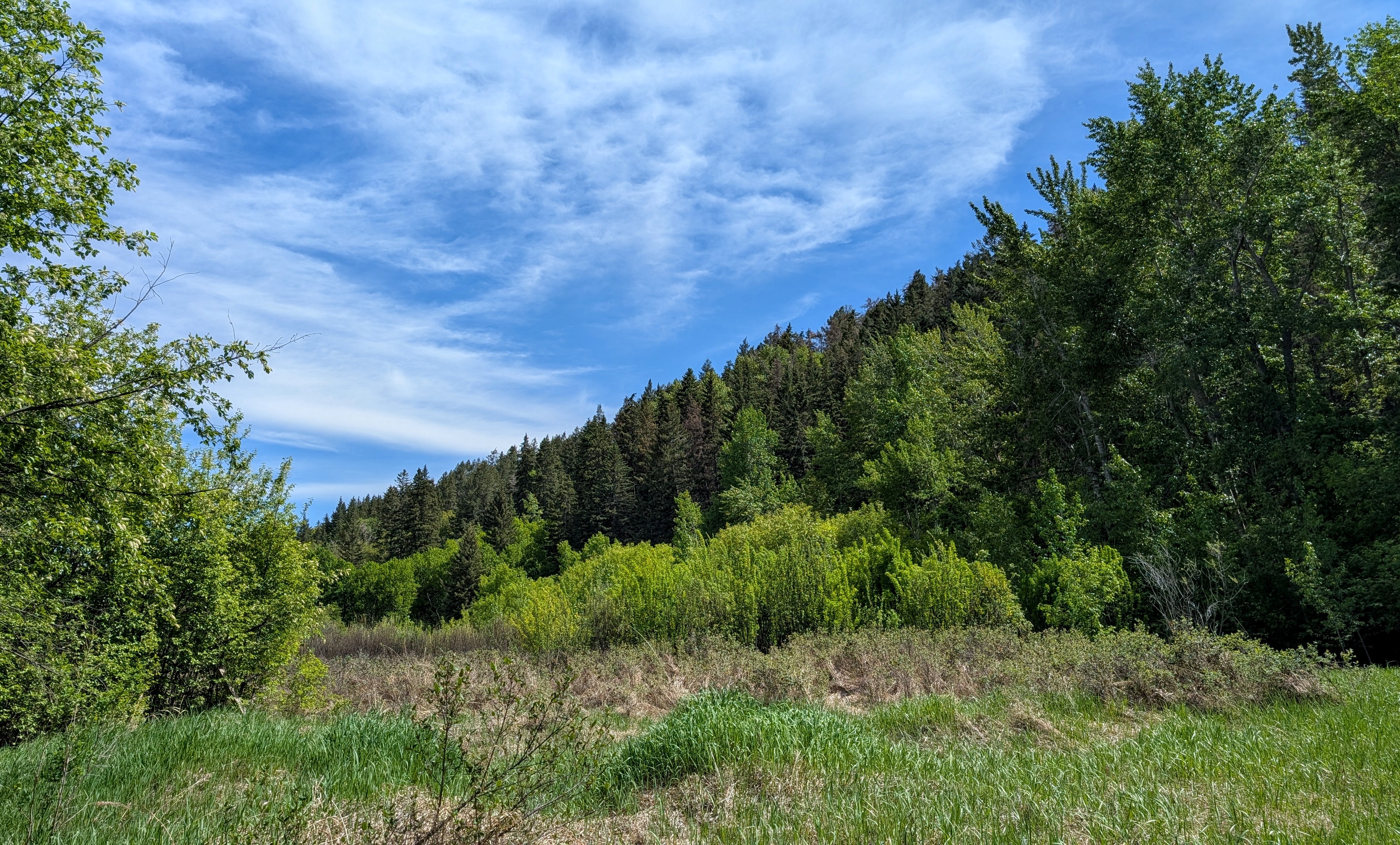
So here I am. Living in the city, but walking every day through forests and along the river. Reading interesting books. Content to be writing about them on my own site—an exercise I take very seriously. Happy to have a rewarding (volunteer) editing gig with a great team. And grateful for a local group of friends who are my age or older to remind me that getting older does not mean you have to act your age!

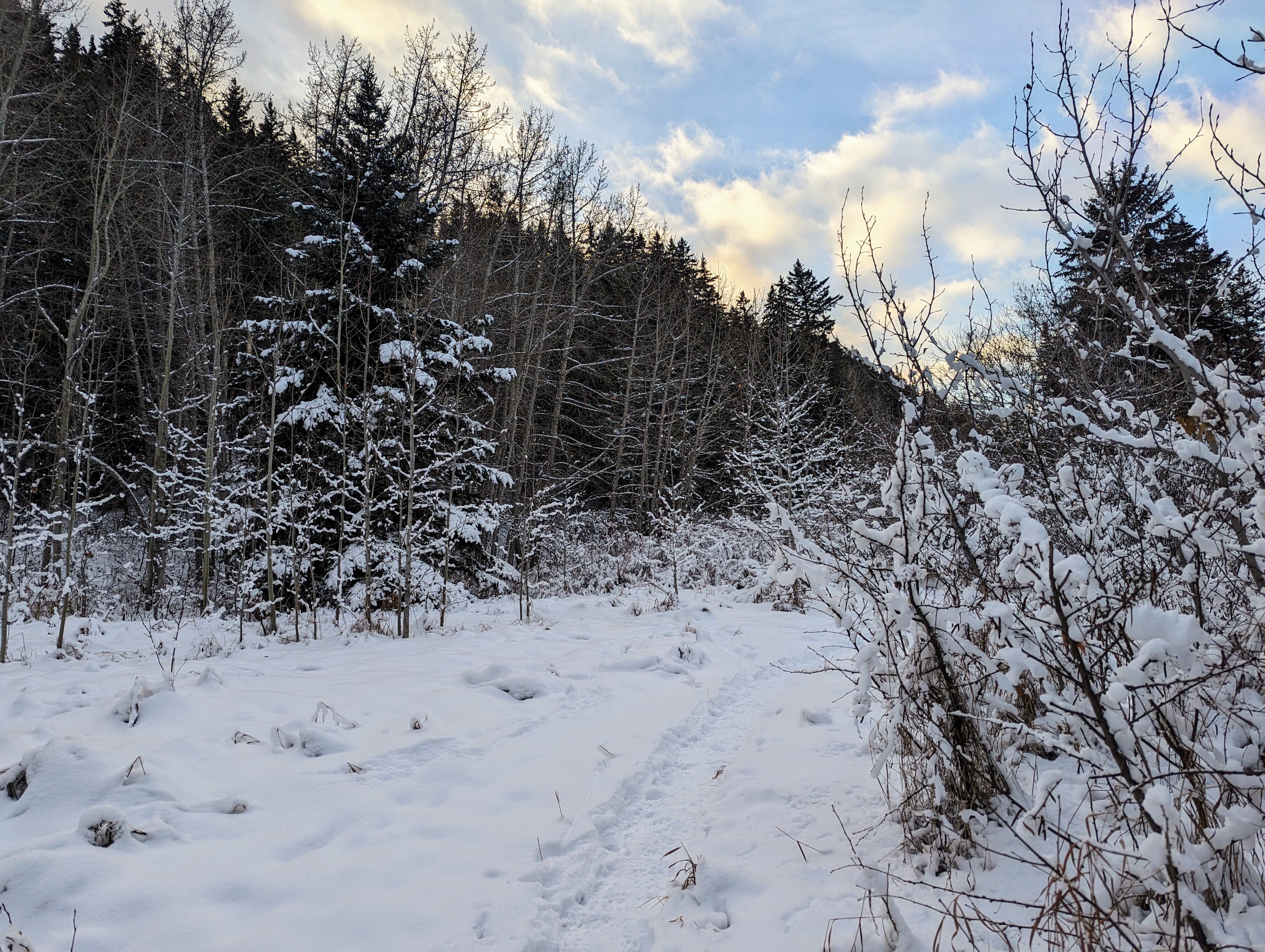
Photographs copyright Joseph Schreiber

Marking eleven years of roughghosts with a few thoughts about writing book reviews

It always catches me by surprise, that annual notification from WordPress informing that yet another year has passed. As of yesterday, May 31, 2025, roughghosts is eleven years old.

Each anniversary leaves me a little bemused. After all, this modest corner of the internet was birthed at the height of a major manic episode—one that would end my career and fundamentally change my life. And although I created this blog with the vague notion that it might offer a space for my own writing, I could not have imagined where it would be eleven years on. It has not only become a place in which I write, primarily about books, but an avenue to writing and editing for online journals.

I have found that I find writing about books very rewarding, but am bemused by the ongoing complaints about a lack of book reviews, especially of titles published by smaller independent publishers. For some reason, book blogs don’t count. (Personally I prefer to describe roughghosts as a “literary site” because of this stigma even though I do not have a problem with the other designation.). My intention with the majority of the reviews I publish is to maintain the same practice I was first exposed to when I was invited to contribute to Douglas Glover’s late great journal Numéro Cinq. They are the same principles that I have preached when invited to speak about reviewing to others, and relied upon as Criticism Editor for 3:AM Magazine.

Basically, my goal is to fashion a piece that is well-written and entertaining,  that attempts to open up a way into a text for a potential reader (especially with books that may be more complex or unconventional) and that aims to call attention to what is interesting about it. In a longer (2500+ word) piece for publication elsewhere, I will take this aspect to a greater depth, but for my blog I am generally aiming for a simpler, shorter (less than 1500 word) review. Most critically, I try to stay out of  my reviews as much as possible unless I have a very good reason to share a little of my own experience or a particularly personal perspective. As Doug Glover would say—I try to limit the “I” statements. You are still reading my reaction, of course, and at times my enthusiasm is palpable, but I always want to leave a text, especially one that raises more questions than answers, open for a reader to explore on their own. I may have very strong feelings about what is really happening, or what something really means, but my specific opinions to that end have no place in a review. That kind of response is for a book club or a conversation with a bookish friend over coffee. However, I do occasionally allow myself to be more present when I am writing what I describe as a “response” to a book—typically one where I know the author fairly well, in person or virtually—or where my own lived experience strongly colours my reading of particular work.

I also tend to spend a ridiculous amount of time writing most of the reviews on my site, regardless of how long they might be. It can take me days to complete a piece, much of that time spent spinning my wheels trying to find the best way to frame my approach. Then, when I finally find my footing it rarely takes less than six to eight hours of focused writing, often a lot more to complete a post. So, I’m a slow reader and an even slower writer. My productivity is not high (I like to imagine it’s quality over quantity) and when life gets complicated, as it does from time to time, it’s even lower. But between reading, writing about books, and editing essays for Minor Literature[s], I am quite content with this blogging life. It has introduced me to so many interesting, intelligent people, opened unexpected opportunities to travel, and, of course, led me to so many wonderful writers, translators, and publishers—not to mention more books that I will ever have time to read.

And now, on to year twelve!

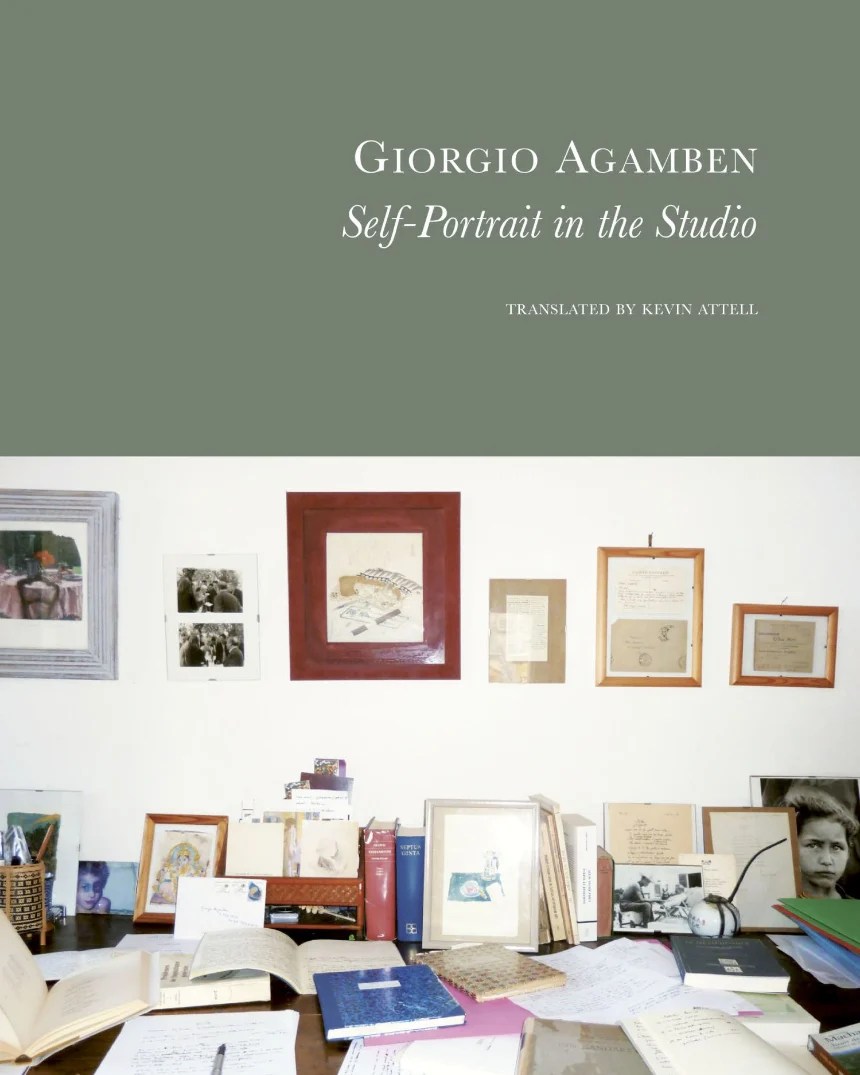
A mirror to a life: Self-Portrait in the Studio by Giorgio Agamben

A form of life that keeps itself in relation to a poetic practice, however that may be, is always in the studio, always in the studio.

Granted that what Giorgio Agamben calls a “studio” might be better understood by English language readers as a “study,” the ideal space is the same: some kind of a desk , plenty of shelving for books, and some room on the walls for  a few well-chosen prints or framed memorabilia. Over the years the Italian philosopher has occupied a number of studios, most rented or borrowed from friends, and each one, revisited through photographs often grainy or discoloured, contains the memories of friends and colleagues and others who have, through their writing, influenced and inspired him. With this slender, generously illustrated volume, Self-Portrait in the Studio, Agamben reflects on his own intellectual journey, which is, in his case, nothing less than a life journey, from the sixties through to the present day, via photographs, paintings, poems, beloved books, and precious friendships.

In this day of the ubiquitous selfie—that practice of intentionally placing oneself front and centre at any site of interest—one might expect a book with “self-portrait” (autoritratto) in the title to be a self-focused venture. Yet, although Agamben does appear with friends, mentors and fellow students in a number of  the included photographs, his motivation is to centre those whose words and ideas have touched him and the lessons they have passed on. In a parenthetical aside he addresses this objective:

(What am I doing in this book? Am I not running the risk, as Ginevra [his spouse] says, of turning my studio into a museum through which I lead readers by the hand? Do I not remain too present, while I would have liked to disappear in the faces of friends and our meetings? To be sure, for me inhabiting meant to experience these friendships and meetings with the greatest possible intensity. But instead of inhabiting, is it not having that has got the upper hand? I believe I must run this risk. There is one thing, though, that I would like to make perfectly clear: that I am an epigone in the literal sense of the word, a being that is generated only out of others, and that never renounces this dependency, living in a continuous, happy epigenesis.)

This desire to stay out of his own way goes a long way to explaining the surprisingly engaging nature of this book. It is not a  detailed or rigorous intellectual autobiography, but rather a chance to spend a little time with a philosopher who truly seems to delight in the exchange of ideas, someone who wishes to honour some of the friendships, writers and artists who have helped shape his own development over the years.  Of course, given that he is writing from the vantage point of his early eighties, there is also a clear appreciation of the fact that the themes and dreams of a life are ever necessarily unfinished. In his preamble he muses: “While all our faculties seem to dimmish and fail us, the imagination grows to excess and takes up all possible space.” There are regrets—for example, sorrow that he did not come to appreciate Ingeborg Bachmann’s poetry while she was still alive—but the text ends with a positive, and still forward looking, affirmation of life and love.

Progress through this book of memories is essentially chronological, Agamben employs objects in or associations with his various  studio settings as touchstones that trigger memories of a particular person or persons who came into his life, and, frequently, the poets or writers that any one connection might have him led to explore. The tapestry of a life of ideas ever expanding, moving from friendships with important contemporary literary and intellectual figures, to meditations on the ideas of those he came to know only through their work, and back again. He never devotes more than a few pages to any one individual, social group, or writer as he honours those who have influenced and inspired his own thought over time.

For myself, many of the individuals he talks about, including those he counts among his important friendships, were previously unknown to me (but easy to look up, of course), but others, especially the writers he feels a strong connection to—like Simone Weil, Walter Benjamin, Hölderlin, and Robert Walser—were not. Of particular interest is the way he considers our relationships to those we read carefully or enjoy close intellectual companionship—what is it to engage intensely with the ideas of others?

As he makes his way along this retrospective pathway, Agamben draws some striking connections that he measures himself against in assessing his own life. Notably, he comments on a piece written just three years before Walser’s commitment to the hospital where he would spend the rest of his life, in which he questions the idea that Hölderlin’s last decades were ones of misery, suggesting instead that his loss of his senses wisely  afforded him the time and space to dream :

The tower in the carpenter’s house in Tübingen and the little hospital room in Herisau: these are two places on which we should never tire of meditating. What was accomplished within those walls—the refusal of reason on the part of two peerless poets—is the strongest objection that has ever been raised against our civilization. And once again, in the words of Simone Weil: only those who have accepted the most extreme state of social degradation can speak the truth.

I also believe that in the world that befell me, everything that seems desirable to me and seems worth living for can find a place only in a museum or a prison or a mental hospital. I know this with absolute certainty, but unlike Walser I have not had the courage to follow out all its consequences. In this sense, my relation to the facts of my existence that could not happen is just as—if not more—important than my relation to those that did. In our society, everything that is allowed to happen is of little interest, and an authentic autobiography should rather occupy itself with facts that did not.

So where does that put his little exercise in self-reflection? In a class of its own. With Self-Portrait in the Studio,  Agamben, traces a rich network of interconnection, through personal contacts, study and research, and even, in some locations, a coincidental proximity to history, to produce a work that is entertaining, intelligent and humane.

Self-Portrait in the Studio by Giorgio Agamben is translated from the Italian by Kevin Attell and published by Seagull Books.

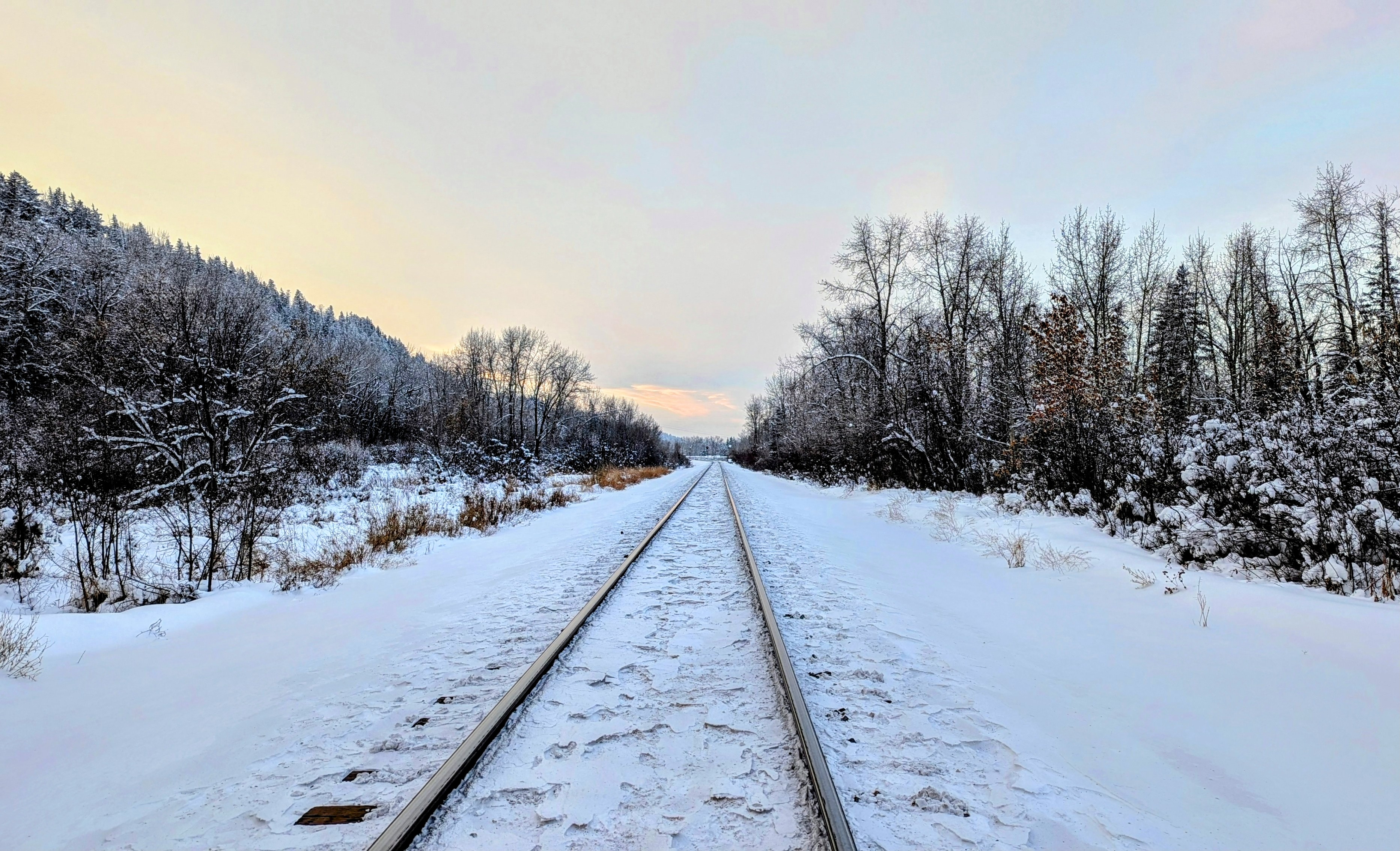
And we turn toward the sun once again: Winter Solstice 2024

whoever has kept the night in suspense
for light or for a star

while we were stealing words
from joy and its opposite

in this way day is torn from night
and shadow from our eyes

they open yet again
renewing the pillaged
miracle

(– Amina Saïd, tr. Peter Thompson)

These are dark times. I know that almost sounds cliché at this point after years of widespread illness, growing polarization, rising right wing sympathies, increased intolerance of differences of any nature, profit motivated denial of climate change, and the clear demonstration of a shocking capacity to either justify or look away from horrific violence and injustice, but I don’t know of too many people who can continue to pretend that maybe next year will be better. It won’t, at least not on any global scale. It is far more likely to be worse in ways we can’t even imagine.

I’m not depressed, not at the moment anyhow, but I am fundamentally pragmatic going forward.

When I first started this blog in 2014, I used to mark the solstice—winter in particular—as a sort of touch point. It originated in relation to the date when a mental health crisis reached its zenith, on the job, effectively (although I did not know it at the time) ending my career. On June 20th I was at the height of a devastating manic episode; six months later in the darkness of December, I was in a state of despair. I channeled that into a post marking the shortest day of the year, a short piece of writing that looked back at the unresolved loss and shame of becoming seriously ill at work, something that would I carry to this day without any closure. Mental illness still faces an often unsurmountable stigma. And I even worked in the disability field.

Anyhow, that first winter I was looking forward to rebuilding. The following June I turned the solstice on its head and wrote a post from South Africa where, of course, it was winter. I believed I had come full circle, one trip around the sun, and I was ready to put pen to paper and tell a story I had kept supressed for much of my life. My story. But then, about two weeks after I got home I had a cardiac arrest secondary to a pulmonary embolism and suddenly I realized that my story was being rewritten for me. As it would continue to be revised and edited over the years and through the solstices that have since come and gone. My solstice reflections, regular for the first five years or so and occasional since then, have remained a winter inspired project (considering that two June posts being related to trips to South Africa and Australia respectively were technically winter solstice as well). Here in the Northern Hemisphere there is something about the long nights, the holiday season—which for my small family is quiet—and the approaching new year that encourages a little inward-looking self-assessment.

That spark that comes with the almost immediate shift in the quality of the light as the sun begins its migration northward once more.

Looking back over my past Solstice missives I was often wistful, looking ahead with quiet optimism that the next twelve months would finally see progress toward the goals I set for myself, more travel, more writing. But as the years have passed, the pandemic, a series of disasters, natural and manmade, war in Ukraine, ongoing genocide in Gaza, rising transphobia, and the steady erosion of democratic values and principles combined, perhaps, with getting older has tempered my expectations, if not extinguished them altogether. Close to home this past year has had its difficulties, with several serious medical issues arising with loved ones, and the stresses that come along with challenging diagnoses—or worse, the lack of a clear diagnosis. And there are stresses that continue without resolution. But I have good health and a roof over my head. I’m far from the uncertainty, violence and devastation that so many people face across the globe, and I have the sanctuary of a forested trail to retreat to.

I have yet to seriously recommit myself to writing, but I did pitch and publish a piece outside this site for the first time in years with a review of Frail Riffs, the fourth and final volume of Michel Leiris’ Rules of the Game which was finally released in English this spring. It was actually a wonderful excuse for me to go back and reread volumes 2 and 3 in preparation. I also returned to editing this past summer, taking on the role of Essays Editor for Minor Literature[s], a journal that has published some of my own writing over the years, including the recent Leiris review. It feels good to be editing again, something that I like to think of as having a measure of the satisfaction of writing without having to come up with all the words! And I made my editorial debut at Minor Lit[s] with what turned out to be one of our most popular essays of the year. And for good reason. It is Haytham el-Wardany’s devastating and powerful “Labour of Listening”. It was critical and timely when we published it, and sadly it is still critical and timely now.

Closer to New Year’s Eve I will gather a list of some of the best books I read this year. Until then, stay safe and Happy Solstice.

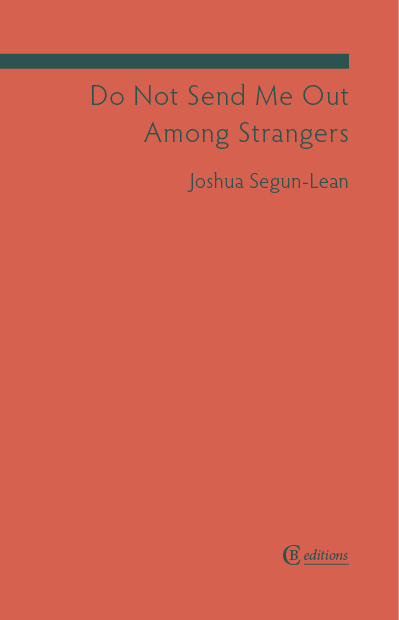
“I don’t know what I’m doing”: Do Not Send Me Out Among Strangers by Joshua Segun-Lean

Having never tried journaling until now, I can’t say if I’m doing a good job. Of all the activities people recommend for ‘staying positive’ through the pandemic, journaling seemed the most obvious choice for me. Though I have set no grand expectations for myself, I’m afraid I will be unable to keep from filling each page, eventually, with minutiae. With the flatness of time as it passes here. An instinct, I think, from an earlier, truncated life in the sciences. Or perhaps like the voice in Sans Solei, ‘I have been around the world several times, and now only banality interests me.’

I am not that far gone, I don’t think.

Some books are best measured not by the number of pages they hold between their covers, or the number of words they carry. Do Not Send Me Out Among Strangers by Nigerian writer, essayist and photographer Joshua Segun-Lean tells a deeply personal, vulnerable story in this slender volume that, at first blush, appears deceptively sparse and quiet, not unlike the pandemic-sheltering world in which it was conceived. But at its heart lies a raw testament to loss, distilled into a spare collection of images and words that is no less powerful than the too-much-information memoir that has become so ubiquitous.

Less is more.

Do Not Send Me Out Among Strangers is a collection of brief journal entries—observations, accounts, and recollections—nested among a series of harsh black and white photographs of soil, rock, and debris, marked with occasional tufts of vegetation. Numbered and time stamped, these images are titled “Field Notes.” This is the visual record of the search that occupies Segun-Lean’s lockdown days: he has been tasked with the dispersal of his father’s ashes. He thinks back on their strained relationship and his insecurity about the responsibility he has been given. Meanwhile, friends are falling sick with Covid; some are even dying. A journey of grief lies in the stillness of this book.

A couple of colour “Interior” photographs, also numbered and time stamped, appear along the way, echoed by a few Edward Hopper paintings. The explicit theme connecting these illustrations is the colour red. The inherent loneliness of the artwork perhaps, the author admits, “too obvious,” given the circumstances. There are also a handful of sketches, abstracted, and, finally, a number of short excerpts dealing with ancient burial practices from various archaeological and historical texts.

Taken together, this collection of thoughts and images, speak of the complicated relationship we have to life, death, and disability—to the body in sickness and health, whole or incomplete. At a time of isolation and uncertainty, as Segun-Lean is searching for the right place to scatter his father’s ashes, he is quietly exploring, as the book description says, “the strange terrain where private and public grief meet.” He is carrying both, as he will reveal.

Do Not Send Me Out Among Strangers by Joshua Segun-Lean is a haunting little book, the kind of small, unclassifiable work that UK publisher CB Editions specializes in.

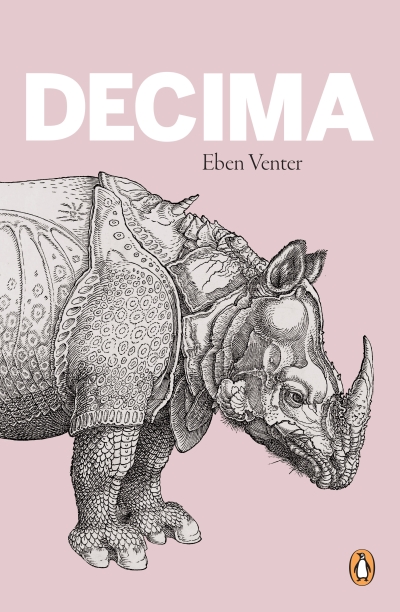
As boundaries blur: A few words and a link to my response to Decima by Eben Venter

A few months ago, I was invited to write a response to a new novel by South African author Eben Venter for knaap.brief, a weekly queer newsletter that publishes work in Afrikaans and English. I have been sticking to my own private corner of the literary universe for the past few years, so this invitation was both unexpected and welcome. There was a time when I read a lot of South African literature—and I still have shelves full of books waiting—so I was familiar with the author and had heard some very good things about his latest work. This seemed a good opportunity to read the novel and write for an editor again. However, since the request was for a response rather than a formal review (though the approach was left to me), I allowed myself to bring the personal into my essay as this book, which is set primarily in the  Eastern Cape Province, inevitably brought back both good and painful memories of time spent in the same region with a very dear friend who has been gone now for more than seven years (remembered here).

The novel, Decima, revolves around the disturbing historical and contemporary conditions threatening rhinoceros in general, and one aging female black rhino in particular. It is also the story of the love between a son and his mother, and about loss and grief. Skillfully balancing memoir, fiction, history, and natural science, Venter creates a story that lingers long in the imagination—and one that refuses to prioritize the human experience of the world. The perspective of Decima, the rhino cow at the centre of this tale, is essential and effectively evoked.

The animal is, as Venter imagines her, intelligent, sensitive, and alert. Solitary but not isolated from either her own kin or the other creatures with whom she shares her environment, she moves her massive bulk through the veld, seeking food, water, and shade. Decima’s reality is gently anthropomorphized, or rather, translated for a human audience.

My full response to this singular novel can be found here. (Also reproduced below if you’re unable to read it on the site.)

Decima by Eben Venter is published by Penguin Random House South Africa. An Afrikaans edition, translated by the author, is also available and both can be obtained outside South Africa as e-books.

As Boundaries Blur  (published at Knaap.brief, 02/18/24)

Dear Wemar

Facing the empty page, I have been wondering for words for more than a week now.

I have been invited to respond to Decima, the latest novel by Eben Venter. Respond. I was told that it does not have to be in the form of a conventional review which, in a way, would be much easier. Reviews have an internal logic and form; reviews, at least in my practice, require a certain neutrality in language and tone. Ideally, a review is about the book, not the reviewer. I respond when I cannot help but stand in my own way and make “I” statements, and when it comes to this inventive and deeply affecting novel, I have a lot I want to try to say.

First off, I am not South African, but a number of years ago I did spend a few weeks in the country, primarily in the Eastern Cape, with one of the best friends I have ever been blessed to know—an incredibly gifted super-butch dyke who has been gone now for over seven years. It was Ulla who first introduced me to Eben Venter’s Trencherman. She would have just loved this book; she would have related to Decima. So this review is for Ulla. After all, it is a book about love, and a book about loss. I loved her like a sister, but I couldn’t save her life.

Decima is a slippery text. Memoir, fiction, metafiction, natural science, history and social commentary all fall into place in a fragmented yet fluid narrative. Fragmentary works are somewhat fashionable, but too often they are forced, as an author tries to shoehorn so many clever facts and ideas into some kind of cohesive whole. However, when they flow effortlessly, the writer in me gets excited—at once caught up in the story and marvelling at how the pieces fit together so naturally. Decima works because the author allows himself, or a faintly fictionalized version of himself, to hold the continuity of the narrative. He lives in Australia but is back in his native South Africa, staying with his aging mother at her home in a Port Elizabeth seniors complex, while he conducts research for the novel he intends to write about the fate of the rhinoceros. As he gathers information he travels to townships and nature reserves and national parks. His memories regularly take him back to his rural childhood, and briefly, in more recent years, to New York and Belgium. His historical inquiries take him to Nepal and to a shipwreck off the coast of Europe, and cast a harsh light on the colonial exploits of King Leopold II of Belgium and the big game expeditions of Theodore Roosevelt. Along the way, he steps aside as needed to invite fictional characters—researchers, natural medicine practitioners, kingpins and middlemen—to expose the network and the demand that fuels the trafficking of rhino horn.

That is just a very rough sketch of the kind of web Venter weaves, moving continuously from place to place, across time, from fiction to fact and back again. But central to it all is a rhinoceros cow, the eponymous Decima, orphaned as a young calf when her mother was killed, and now the aging matriarch of her own crash—her decedents—who live amid the rolling hills of the Eastern Cape’s Great Fish Nature Reserve. One of a dwindling number of critically endangered black rhinos, Diceros bicornis, she passes her time eating, sleeping, watching and waiting.

But we do not simply observe her, we inhabit her world. From the inside. And this is the true magic that sets this novel apart from any other eco-fiction I’ve read.

I will admit I was cautious when I learned that this was a narrative that slipped into the mind of a rhino. It’s always a dangerous game to attempt to adopt an animal-eye view (and Venter does focus on the rhino’s eye early on in his detailed imagining of the drowning of a frightened captive rhino torn from its Himalayan home, meant to be delivered as gift for Pope Leo X) but without Decima’s perspective we would really only have half of what is a very complex story. The animal is, as Venter imagines her, intelligent, sensitive, and alert. Solitary but not isolated from either her own kin or the other creatures with whom she shares her environment, she moves her massive bulk through the veld, seeking food, water, and shade. Decima’s reality is gently anthropomorphized, or rather, translated for a human audience. Her awareness of her surroundings, her ability to gather information from the scents she picks up in the breeze or left in the dung deposited by other members of her crash, and her attention to the shifting angle of the sun and the cycles of the moon reveal a rich inner existence. As the full moon nears, her anxiety grows. She knows that the greatest threat she and her kind face is from a kind of creature that is not native to her space and that the moon’s full force will leave no place to hide.

The complexity, the shades of grey, that emerge in this multifaceted tale lie, of course, entirely on the human side of the equation and the reach is wide, across continents and centuries. Venter wisely lets these factors arise without resorting to obvious moralizing. Some villains are clear, some well-meaning folk might risk being overzealous, and those tasked with the direct protection of threatened species know the obstacles they are up against. However, if it is somewhat daring to attempt to take a reader inside a wild animal’s mind, Venter also opens up the thoughts and motivations of two poachers, both from economically deprived backgrounds, who have their own reservations and fears about the dangerous task they agree to perform.

As the novel progresses, the boundaries between the author’s research, his memories, his relationship with his mother, the facts he has gathered and the fictional characters he has met or imagined into being, including Decima herself, blur. Tension builds as the events leading up to the inevitable encounter between poachers and rhino take centre stage. In the aftermath, the narrative falls back into the realm of what feels more solidly memoirish. That is, we return to the story of the narrator as author and son with a mother who is aging and alone.

On its own, Decima is an exceptionally impressive novel, one that is very difficult to let go of even weeks after one is finished. I hope it gets more attention outside South Africa—here in Canada it is only available as an e-book—but, at the same time, as a work that Venter composed in English (and self-translated into Afrikaans), it reads with a rich South African tone and flavour. Usually, a South African book written in or translated into English, then edited for publication in an international market can be linguistically neutered to the point where there’s not even a bakkie in sight. This is not the case here. And, on a more personal level, my reading experience, and my response the this book, has unleashed a flood of memories: the long bus trip from Cape Town to East London and back, an afternoon at Addo Elephant National Park where we were the object of fascination for a juvenile rooikat, and watching the sun burst into flame over the sour veld, night after night, with a friend who, in the end, could not outrun the black clouds that chased her. So, even if there is a qualitative difference between what I might call a response and a review, sometimes the boundaries between the two are not that clear after all.

Oh, and having had a glimpse of the world through Decima’s eyes, I’ll never think of the full moon the same way again.


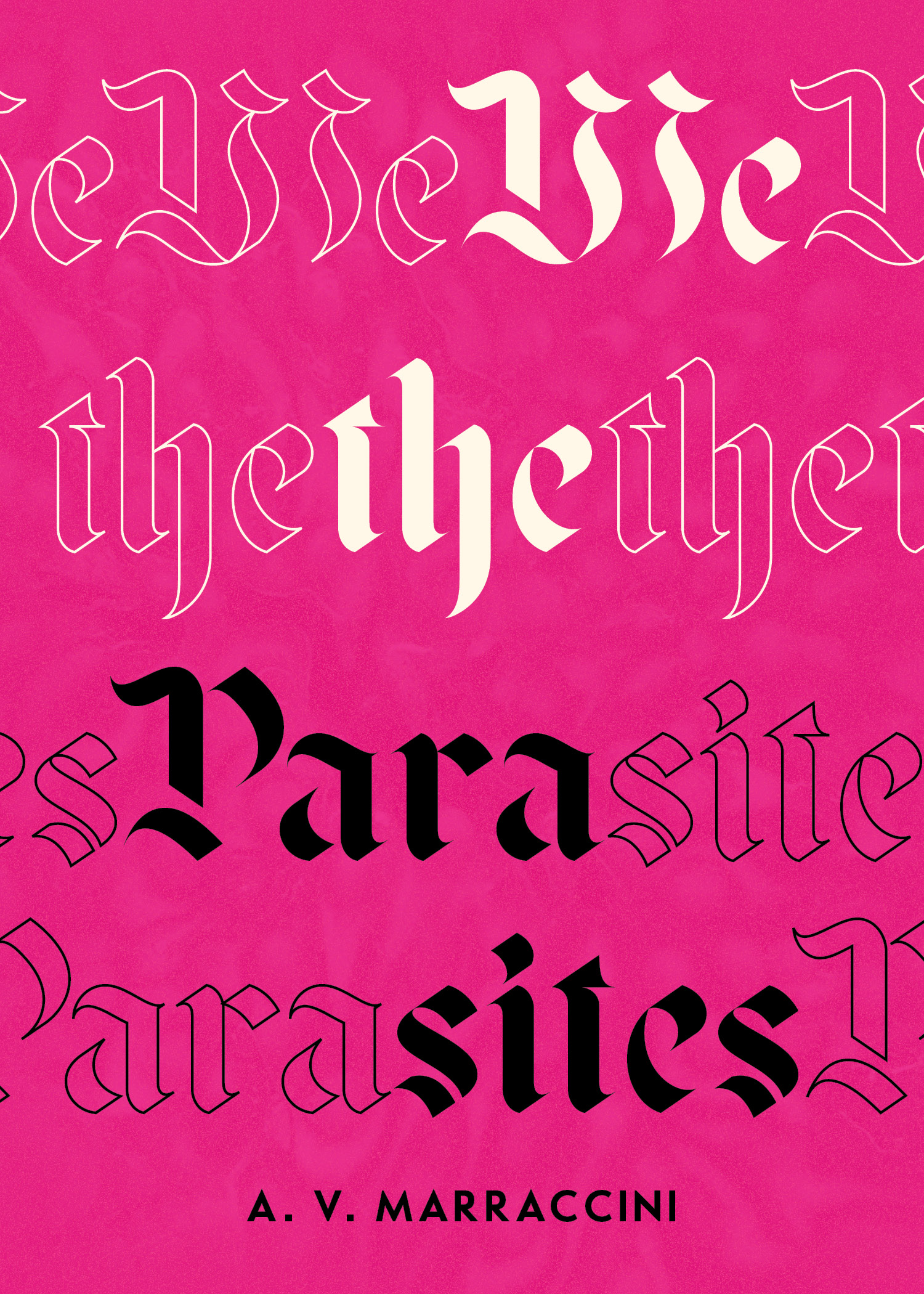
Beautiful scavenger: We the Parasites by A. V. Marraccini

“I’m boringly good,” A. V. Marraccini confesses. “Except when I write critique, I guess.” I am also boringly good, even when I write critique—or so I thought before I read We the Parasites. Now, I’m not so sure.

What I will admit, off the top, is that I have been staring at this hot pink volume waiting patiently on one of my overcrowded bookshelves for the better part of this year. As someone who has written and edited critical essays without any of the prerequisite training many of my literary friends seem to have, I was afraid that a book about criticism would be thick with the names of all those critical theorists I have not read and likely never will, and page after page I would be smiling and nodding politely, off in the corner, with no idea what was going on. I needn’t have worried though; for the most part, none of those folk were invited to this party. However, I was still concerned that, given what I’d heard about this book, I might yet be stranded outside my comfort zone.

You see, Marraccini puts her cards on the table right at the beginning. After describing the mechanics of the relationship between the fig and the fig wasp that burrows deep into the fruit flesh in a somewhat haphazard partnership that enables the reproduction of both fruit and insect, she finds a distinct affinity, as a critic, with the latter:

The critical gaze is tearing apart, clawing into the soft, central flesh of the tree bud.

The critical gaze is also erotic; we want things, we are by a degree of separation pollinating figs with other figs by means of our wasp bodies, rubbing two novels together like children who make two dolls “have sex”, except that we’ll die inside the fruit and someone else will read it and eat it, rich with the juice of my corpse.

And although the wasp/fig process involves, to unequal ends, male and female wasps and figs, there is an element that is, for our parasitic critic, inherently queer and, thus:

Criticism, too, is queer in this way, generative outside the two-gendered model, outside the matrimonial light of day way of reproducing people, wasps, figs, or knowledge.

Okay, I think. I will need to be convinced. The idea of digging into a work appeals quite naturally. That is what I do when I write about a book, whether in a literary journal or, at least most of the time, here on this site. I inhabit the words of others in order to write, but try to stay out of my own way in my writing so that my reading experience seasons but does not obviously alter the flavour of someone else’s. And erotic? Well, that is not something that comes naturally to me, nor does queer even though I’m hard-pressed to know what I am if not queer. I have a fraught relationship with matters of sexuality and identity. It’s complicated. Yet, I am intrigued. And, as We the Parasites demonstrates, reading—or viewing, since Marraccini is an art historian—with the body can be a messy endeavour. But I’m getting ahead of myself.

Deciding to give this much-praised work the benefit of the doubt, I held my anxieties to the side, burrowed into the flesh of this curious text (I know, I know) and, my god, what an excellent read! (Please excuse the abandonment of all the niceties of proper critical reviewing and even accept an errant exclamation mark, because this book is one that invites you into the critic’s heart, mind and bed in a way that is completely, even joyously unexpected.) It is wise and funny and, best of all, it draws its references from the most unlikely places. My limited acquaintance with the stalwarts of the Western canon was no barrier to my enjoyment and, much to surprise, the two years of Classics that preceded my eventual academic journey through Biological Anthropology and Philosophy, was finally of some use. I not only have The Illiad (who doesn’t?), but I also could pull long untouched copies of Xenophon’s The Persian Expedition and Arrian’s Anabasis off my shelf and feel so clever. Not to worry, though, there’s always Google which you will need to see Twombly’s The Age of Alexander for this particular discussion, unless you have a photographic memory. But my point is, really, that you don’t need any special background to enjoy the musings that arise in this book; Marraccini writes with such enthusiasm, even about work that she views with some skepticism, that anything that is not offered within the text itself will have you happily popping online for a quick refresher.

The parasite analogy, if at first odd, sparks the author’s playful love of the dark and yet speaks with striking accuracy to the nature of the critic’s task—burrowing into and feeding off of the work of (mostly dead) writers and artists, to produce a reading or a response that brings light to the spaces darkened by time. However, if the wasp burrows into the fig, the tape worm finds it way into its animal or human host, consider the fish-louse that swims into the gills of its victim, severs the roots at the base of the tongue and eats away at the flesh until it becomes the tongue itself. This offers Marraccini an image, graphically detailed, that corresponds to the way that she has, when appropriate, stolen the tongue of Homer, or John Updike, or whomever. Strange? Maybe, but it aligns with the experience I’m often referring to when I say that I write about books to “open up” a potential reading (or readings). It’s even more relevant when one has the runway (that is, the venue and necessary word count) for an in-depth critical essay. If not stealing, we are perhaps echoing a voice, while our “I” self remains in the shadows.

In this extended essay in which the subject is criticism itself, Marracinni draws on a wide range of sources and images from classical history and mythology, to poetry, prose and, of course, art. Cy Twombly is her main man on that last front. One can move from Updike, to Centaurs, to Genet and Rilke, but it seems there’s a Twombly painting or series for almost every season and, in her explorations, she manages to carry us right down into the layers of crayon and paint. This affinity between artist and critic is so vividly rendered I wish I could have read this before my only direct encounter with his work at MOMA in San Francisco, but that would require bending time.

Our parasite, in inhabiting the works of the artists she consumes, also develops a strange relationship with the notions that arise out of that connection—a who-did-that-idea-come-fromness—that emerges in unlikely settings. Like dreams. Like when a nocturnal lecturer pontificating about the attributes of a strange painting-carpet he insists is a Twombly says No one wants queer art to be queer any more, Marraccini acknowledges, “to be clear, (that) is my brain saying that, and yet me in the dream is somehow intimidated by his prognostic authority” and she wakes up in a puddle of sweat. This is, for me, the kind of uncanny thing that only occurs when one is so deeply engaged with an idea or a book or an artwork or an artist, that the boundary between the ruminations of the sleeping self and the waking self is breeched. Blurred.

The question then is one of embodiment. Is the reader/viewer/critic inhabiting the work, or is it the other way round? Is this a risk of reading/viewing with the body? Marraccini writes about longing and desire, how they can be awoken or perhaps interfere with the engagement. Yet desire is not necessarily realized (at least not without breaking a law). And she does write about the body, her body, but typically in the most clinically frank way about the myriad way the body and its discontents can betray one. To be a parasite it one thing, to host one is something one would rather not entertain, thank you. Yet there are illnesses, physical and mental, that many of us live with and to pretend that they never mediate the way we read a poem of look at a piece of art would be an act of denial.

Finally, Marraccini is writing all of this against the backdrop of the early months of the pandemic, when London was eerily quiet and she could wander at will under the cover of darkness. (We are both naturally nocturnal creatures, it seems.) She captures the eerie otherness or suspended unknown of that period of time so well:

The whole world is so new now, there will surely be a spate of essays like this one, about The Before and After, or there will be no After and there will still be essays anyway.

I love this sentence. There surely was a spate of essays—as nonfiction editor for 3:AM Magazine, my inbox saw four or five new pandemic inspired essays arrive nearly every day. Meanwhile, a temporary medication change made it increasingly difficult for me to make my way through them as 2020 wore on, and by the end of the year I was no longer editing or entertaining the idea of pitching or writing any more essays myself. Whether there actually has been an After, as year four of Covid dawns, there are still essays, but I’m not writing them. However, reluctant queer, recalcitrant parasite that I am, perhaps I should be, duly inspired by this idiosyncratic, astute and undeniably queer essay. This is an original and very entertaining book.

We the Parasites by A. V. Marraccini is published by Sublunary Editions.

A reflection for Winter Solstice 2023

As soon as we pass the longest night of the year, there is a noticeable change in the quality of light. The afternoons immediately seem brighter as the days begin to lengthen, minute by minute, week by week. I can remember more than a few winter solstices that found me mired in a darkness that was soul-black and heavy. But this year, as the world, at home and afar, is facing so many serious threats, it feels essential to remain focused on what needs to be addressed—war, climate change, increasing polarization, a pandemic that is still causing illness and disability, and so much more. Heaven knows there is much to worry about, many reasons to be angry, ample cause for despair, but, at the moment, as someone who has known deep depression borne of chemistry rather than circumstance, what I tend to feel is a positive anger, that is, an emotion that fuels a desire to be more active in my speech and action as the new solar season dawns. There is an opening up to the other that, after years of relative isolation, has been reignited in me in recent months and I hope I can keep that energy in motion.

This past year was one of connection and reconnection. In mid-September I returned to India for the first time in four years—my first trip anywhere since 2019. As I made my way from Bangalore to Calcutta, Delhi, Pune, Mumbai, Jaipur and back to Bangalore, I enjoyed so many long and meaningful conversations over coffee and meals, and in cars, autos and trains, with friends old and new. I was looking for the inspiration and confidence to write again after a prolonged period of silence, and by the time I was getting ready to fly home I was beginning to feel a renewed creative drive. And then, the outbreak of conflict in the Middle East diverted my attention, shifted my reading, left me distressed and found me treading words with caution, shocked by the ability of apparently reasonable people to rationalize the massive destruction of infrastructure and indiscriminate killing of innocent children, women and men that we have witnessed these past two and a half months. Even now I know that whatever I say or don’t say, someone will take offense. This is the deeply fractured world we now inhabit.

Here in the northern hemisphere, the days grow longer as a new calendar year approaches; in the south, summer solstice marks the longest day of the year. What will we do with this light, that we either presently have or are eagerly anticipating? There is no condition—conflict, climate or clinical—that we cannot resolve, but, as human beings, we have to be able to do the one thing that seems to drive us apart over and over again: we have to recognize that every person is of equal value and deserving of dignity and life and commit to working together toward that end.

I will let you decide for yourself if that is a dream worth holding on to or justification for accepting that our problems are impossible to solve.

Photo by Joseph Schreiber

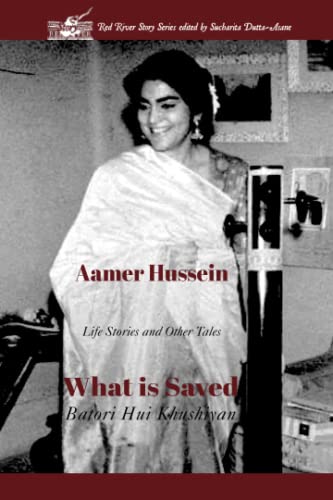
Fragments of Happiness: What is Saved by Aamer Hussein

I came rather late to the work of Pakistani British author Aamer Hussein, surreptitiously as I’ve said before, through an unsolicited essay I received when I was an editor for an online journal, from a writer who had also encountered him by chance when she found a copy of his collection Insomnia in a “decaying” bookstore. The essay impressed me so much that before I sent a letter of acceptance I had already ordered a copy of Insomnia for myself. This was, I knew, an author I needed to read:

Hussein’s stories display an audacious ability to synthesize complexities of social subjectivity; yet behind this complex surface lies a rich silence. His stories remain porous, marked by gaps and holes—a kind of silence which, rather than a lack, represents a positive capacity, Hussein’s most potent mode. What Aamer Hussein offers us is an invaluable model of resistance in literature: resistance that works through silence, through that which remains unsaid.[1]

Yet, if silence can be such an effective mechanism in a fictional context, would the same author approach autobiographical writing with greater detail or, dare we say, denseness? Not if you’re Aamer Hussein.

What is Saved, released earlier this year as part of the Red River Story Series, is a selection of “Life Stories and Other Tales” gathered, editor Sucharita Dutta-Asane tells us, from two earlier collections, Hermitage and Restless: Instead of an Autobiography. Among these short works are accounts drawn from Hussein’s childhood in Karachi, tales inspired by friends and family members, a variety of true and re-imagined truths set in London where he has lived since the age of fifteen and at various points in his long process of rebuilding his connection to the country of his birth. If the pieces gathered in What is Saved might in some sense speak, as the Urdu subtitle—Batori Hui Khushiyan—implies, to all happiness, anyone familiar with Hussein’s fiction knows that in his work happiness tends to be tinged with melancholy. In this collection, which deals so openly with longing, displacement, illness and mortality, a similar wistfulness again permeates the quiet hopefulness that buoys his prose.

Loosely, the early autobiographical and autofictional pieces highlight Hussein’s early years in Karachi, offering a portrait of the culture of the city in the 1960s. His life is enriched by his mother’s love of music, and a proximity to Urdu literary figures and even a film star who moves into his neighbourhood. These are followed by a selection of stories and fable-like pieces, some no more than a page in length, inspired by friends or family members or traditional tales. But the themes that become prominent through the balance of the collection include literary friendships, the Covid-19 lockdowns, the loss of loved ones, injury and, finally, life with a terminal cancer diagnosis. Whether he is reflecting on life’s rewards and realities directly or through the lens of fiction, birds, gardens, and flowers tend to create a greater sense of continuity than any particular place or time. He is ever a writer who captures the ambiguity of belonging—in a city, in a culture, or in relationship to others.

Two of my favourite pieces in What is Saved fall onto the memoir side of the fiction/nonfiction equation and address elements of the connection between language and identity. In the first, “Teacher,” the only essay in this volume originally composed in Urdu (translated by  Shahbano Alvi), Hussein recalls a man he called Shah sahab, the London based friend of his parents whose private tutelage helped him gain confidence in his mother tongue. With his tutor’s support, the teenaged Hussein was finally able to read, in the original Urdu, a book he’d first encountered in English translation, a text that had already had a profound impact on his understanding of the world he came from:

My eyes opened to the imagery of an intriguing past; the imposition of the British Raj  in the 19th century and the downfall of the Oudh culture of which I’d been only vaguely aware. Brought up in the Westernised circles of Karachi, I had been exposed for the most part to history books written by the Western historians.

Thus, halfway across the world from his homeland, he would become sufficiently proficient to study Urdu prose and poetry at university even if he would go on to dedicate himself to English literature, as a teacher and writer. In a later piece, he talks about returning to Urdu, as he begins to spend more time in Pakistan and learns to trust his ability to creatively express himself in the language.

The second essay, “Suyin: A Friendship,” remembers a teacher of a different kind—a literary mentor. Although her books are now out of print, I remember when Han Suyin’s novels were a popular item in the bookstores I worked at during my university years but I had no idea what had happened to her. In this piece, Hussein reflects on his friendship with the Chinese born author and doctor, nearly forty years his senior, who encouraged him to listen to the music of Urdu, a language she loved without understanding it. Her advice was wise. “Trapped between tongues like her, I did what she couldn’t,” he says, “I reclaimed another self in my forgotten tongue.” In thinking back on their profound and yet ultimately strained relationship—she influenced his career even if she could not remain the writer he wanted her to be—his own journey away from and back to both Pakistan and Urdu is mapped out. It was not a path without its own inherent contradictions, especially at the beginning:

Reclaiming Pakistan had made my fragile anchor slip away and my feet were sliding on slippery sand. My terms of belonging had changed: I was not whole. I wasn’t a Westerner of foreign origin. I was not someone who, to quote Suyin, happened to live abroad and went back for my roots: I was someone who had left behind a homeland and never found anything to replace the empty patch.

There is a restless running through many of the pieces in this collection that echoes Hussein’s movement back and forth between language and place. It finds him, or his fictional alter egos, feeling isolated and confined by the restrictions that a broken leg, pandemic lockdowns or the medical implications of disease impose, but remaining resistant and unwilling to fall into complacency. Between the lines, a vulnerability exists, as it does for any one of us, but Hussein has a way of writing, especially in the memoir/personal essay form, that carries his reader just to edge, revealing only what is needed, more concerned with what is felt and leaving silence to hold what cannot be answered.

What is Saved: Batori Hui Khushiyan (Life Stories and Other Tales) by Aamer Hussein is published by Red River Story.

[1] Ali Raz, “Silence as Resistence in Aamer Hussein’s Stories,” 3:AM Magazine, Published May 15, 2018. https://www.3ammagazine.com/3am/silence-as-resistance-in-aamer-husseins-stories/