What it means to be grown up: Thirteen Cents by K. Sello Duiker

“Grow up. Fast. Very fast. Lightening speed. Everything is always like that. Quick. You must act quickly. Understand quickly. Otherwise someone will fuck you up nicely. They’ll beat you up so that you must always remember.”

Meet Azure. Standing shoeless on of the cusp of manhood, thirteen or about to turn thirteen, he is not really sure when he was born. Both his parents are dead. Murdered. He has made his way from Johannesburg to Cape Town – a mean and ugly Cape Town – where he sleeps near the swimming pool in Sea Point or, later, when that option is denied him, under a bridge in Green Point, home to a wretched collection of thugs and gangsters.
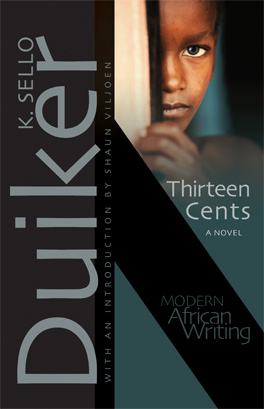
13centsHe makes money primarily picking up tricks, engaging in degrading, often rough sex with closeted married men. He is hardened, tough, able to endure these encounters with a detached resignation. Yet when he looks inside, when he faces the more invisible persistent fears that haunt him as he wanders though the city, past the train station, up Long Street, into the Company’s Gardens; we see what he truly is – a child on the street. His is a coming-of-age story that is relentless, ruthless and, in the end, remarkably redeeming.

As Thirteen Cents, the debut novel by K. Sello Duiker opens, he has taken to looking after nine year-old Bafana, a boy who has run away from home, his life on the streets a drug fueled choice. Azure lectures him on his addictions. The only drug he himself has any interest in marijuana when he can afford it.

“I’m not his father, I say to myself. That laatie is getting under my armpit, under my soft spot. I mustn’t let that happen, I tell myself. I’ve seen too many kids disappear. There’s no point in getting too close.”

Azure knows where to find discarded food, has a few trusted “grown-up” contacts, many of whom will turn out not to be the allies he had thought. In a slice of Cape Town in which each man or woman has to look after themselves first, judging character is a slippery exercise. One that can be brutal, if not fatal, if the shifting rules are not understood or respected. His one friend from home, Vincent, a man who is beholden to the same rules but somewhat older and wiser, manages to impart to young Azure an unusual vision that will ultimately prove more valuable than money or any other form of protection.

In the meantime, his greatest liability is one he cannot control. He has black skin and blue eyes. Hence the name, pronounced he informs us, Ah-zoo-ray. It is a gift he holds from his beloved mother which is stolen when Gerald, the powerful thug currently holding sway over the homeless population, renames him Blue.

“… I can never look at myself too long in the mirror as my blue eyes remind me of the confusing messages they send out to people. I wear my blue eyes with fear because fear is deeper than shame.”

Race is a currency of power in the community in which he has found himself. Gerald who is a coloured man, trading on his lighter skin, straight hair and reputation of exceptional violence, is especially drawn to and maddened by those blue eyes. The punishment he extracts on our young hero is by far the most persistent, horrific, and devastating aspect of this gritty tale. He is beaten, locked up, starved, and abused for days on end for no apparent rational pretext. But the emotional abuse, the attempt to undermine his self worth cuts deeper:

“Why do you feel sad? I ask myself. Because my mother didn’t love me. Gerald is cruel. That is the ugliest thing anyone has ever said to me. It is worse than having a bus crush you. I think of my mother and I feel confused. No. She loved me, I tell myself. And I loved her, no matter what Gerald says.”

As much as Azure/Blue holds to the conviction that he is almost a man, must not cry, must hold within himself the emotions a man can not afford to admit; he continually talks with frustration about “grown-ups”. Their ways allude him, anger him and ultimately drive him on a mission of self healing driven by an almost supernatural desire to destroy all that is trying to destroy him.

As Thirteen Cents moves into its final chapters, the story takes on a folkloric, mythical tone. The stark hyper realism of the earlier account crosses the threshold of magical realism. To escape the horrors existing for him in the city below, Azure makes the first of two ascents up the slopes of Table Mountain where he will spend several nights, have dreams and visions and find, we are led to believe, the beginning of a path out of the life in which he had found himself trapped. The voice that lingers, long after the book is closed, is one of resilience, one of hope.

Sadly his creator could not hold to that same strength. K. Sello Duiker was born in Soweto, South Africa in 1974, raised in middle class black family. His university educated parents wanted to secure a good education for their son. After achieving a degree from Rhodes University he studied briefly in Cape Town where drugs and mental illness disrupted his academic career. He would draw on his experiences in the city to write Thirteen Cents and his other major work, The Quiet Violence of Dreams (TQVOD). Recognized as one of the first important young black voices emerging in post Apartheid South Africa, he ended his own life in 2005 at the age of 30.

The edition of Thirteen Cents that I read, published as part of the Modern African Writing Series of the Ohio University Press, includes an introduction by Stellenbosch University professor of English, Shaun Viljoen which provides an exceptionally helpful context for the placement of Duiker’s work in the evolution of contemporary South African literature along with a glossary of the expressions and slang, mostly Afrikaans, employed throughout the text.

I have not, to date, read many black South African writers, but I brought a selection of titles back from my recent visit to the country. Duiker has long been on my radar and all 600 pages of TQVOD has been stting on my bookshelf for more than a year. I am glad I went back to this novel first, standing as it does in a pivotal context for black South African literature and look forward to reading more of the young voices that have emerged in recent years.

For another positive review of this powerful book, see my friend Penny’s blog.

Reflection: Fishing for memories denied

It is rare that I indulge in sharing a significant quotation simply because it speaks to the space in which I find myself but I keep returning to these words from Intimate Stranger by Breyten Breytenbach (Archipelago Books, 2009).

“Writing is fishing for memory in time. Viscous. Time black. Sometimes you see it flitting just below the surface – memory – miming time. Memory takes on the blackness of time. Memory will be time surfacing. Use word as bait. Beat the water. Beat the weird beat of baited words. Bloated. Wounds. The bleeding words like wounded boats on a black sea. Let the fleet wash up. The coast is the beginning of the sea’s wisdom. It comes with the territory.

Words have their own territory, they return home as in a song. The fish only discovers the water once it is removed from it. This land is a memotory.

But not peaceful. Memory as trigger for territory and tongue. The mind is full of bloody pieces staked out by tongue. Is there room enough? Memory killing memory.”

initmateThis book, a selection of meditations on reading and writing, was waiting for me when I returned home from the hospital just 10 days ago. I have been keeping it close and dipping in and out of it. Breytenbach is a South African poet, writer and painter but his life, his work, his vision is borderless. In this collection he offers practical advice, shares poems and reflections on the power of the word, drawing on his own experiences as well as the wisdom of a legacy of gifted writers.

Memory is the foundation of writing. One draws on experience when putting pen to paper – poetry, fiction, memoir alike. And it is memory that is weighing me down, threatening to drag me beneath the surface; a memory that haunts and obsesses me because although it involves me, I will never access it.

I have lost a space in time. Like a bruise it bleeds beyond the boundary of the injury, reaching backward and forward from the instant a clot in my lung threatened to stop my heart. Days are absolutely gone, the day or two before the incident, the day or so in ICU and the first days after waking. But I can’t let the blackness go. I cannot let it wash out to sea. I want to hold the moments, hours, days in my hands but I cannot. They do not belong to me. They are about me. They will never be mine.

I have read my discharge summary until I know it inside out. I have pestered my anxious son with questions. What was it like to find me in distress? How did you get to the hospital? How did you feel? Stupid questions. I am struck with shocked disquiet to realize that my family did not know if I would survive.

If I had not survived the blackness would be complete. Viscous. Time black. Inanimate from my perspective. My own memories lost. The sole distorted possession of those who knew me, no longer mine.

Sands are shifting. I have some fishing to attend to before the next high tide.

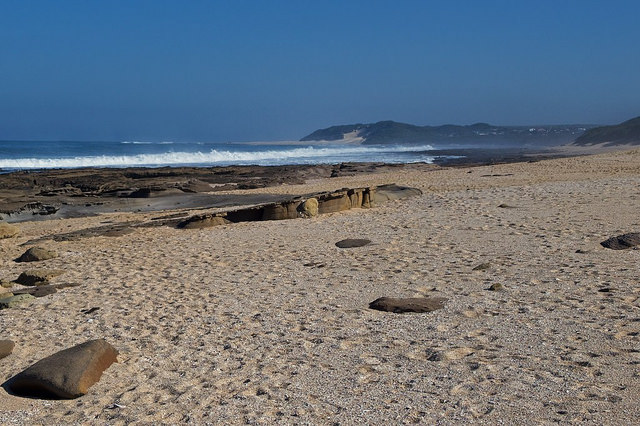
Indian Ocean, Eastern Cape, South Africa Copyright JM Schreiber 2015
Indian Ocean, Eastern Cape, South Africa
Copyright JM Schreiber 2015

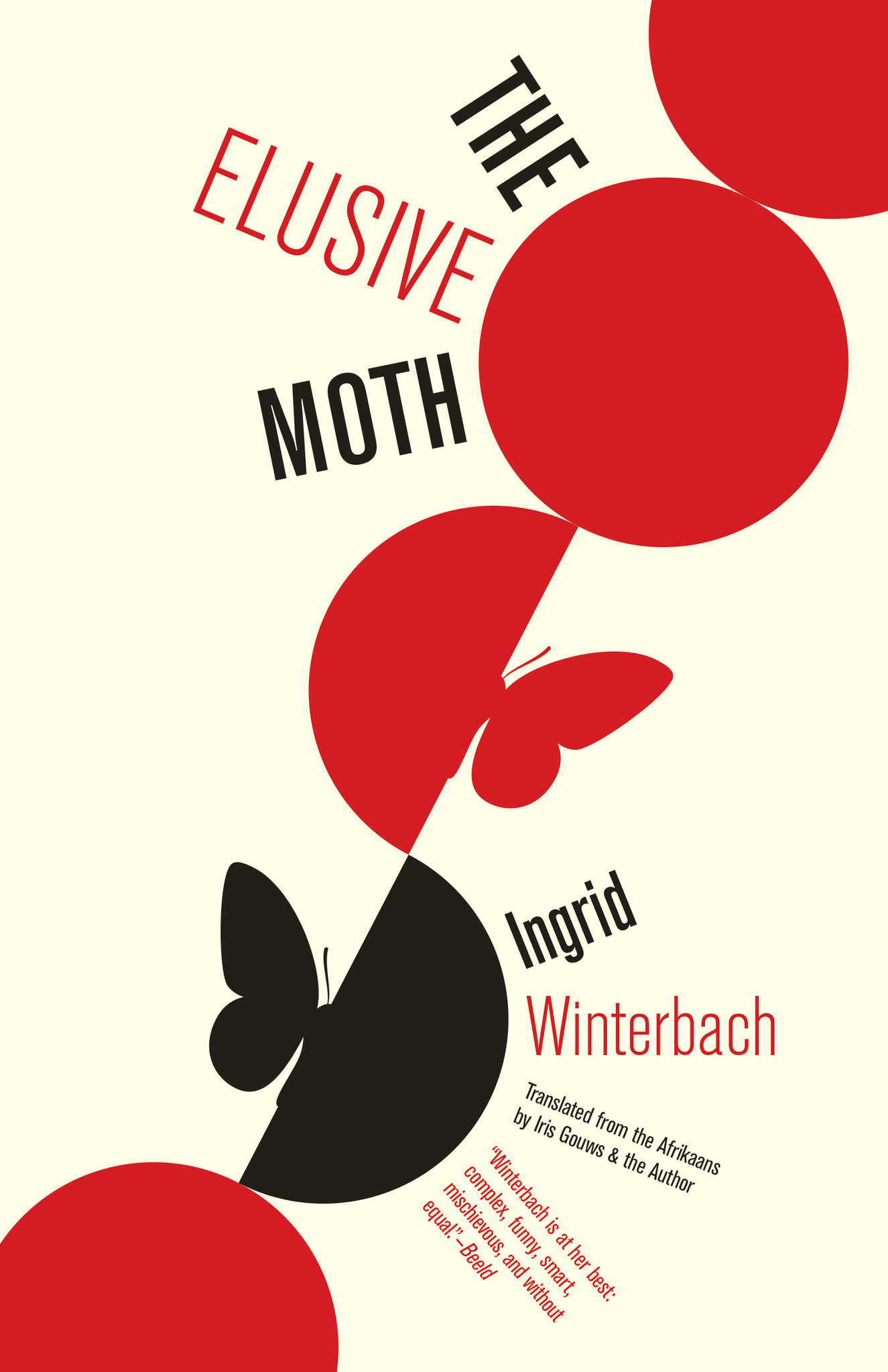
Loss and longing: The Elusive Moth by Ingrid Winterbach

“I have been content up to now,” she said at last. I was perfectly content until recently. I could keep everything at a distance. But now, all of a sudden, I can no longer do so. I feel caught up in everything. And detached from everything too. So detached, and so caught up. A strange feeling.” She spoke more urgently. “I don’t know what I’ve done with my life! I don’t know if I can still love someone!” (She started, why speak of love all of a sudden?) “I can’t open my hand,” she said, opening her hand, her palm facing upward, “I can’t let go.”

This is the curious dilemma of Karolina Ferreira, the heroine of The Elusive Moth by South African novelist Ingrid Winterbach. A similar searching ambiguity, complicated tension and hidden motivation runs through the cast of this slowly simmering, cinematic novel. Moving across a finely painted canvass in fits and starts, The Elusive Moth is an evocative exploration of memory, loss and anxiety that almost feels more like an art film, unfolding scenes that repeat motifs, imagery, fragmented conversations, all playing out against racial tensions that are building to a critical point in and around a small Free State town.

Elusive_Moth_cvrKarolina is an entomologist who returns to the town where her family spent time when she was growing up. Ostensibly she is in pursuit of a rare species of moth that is capable of withstanding extreme conditions and this is a brutally harsh, drought ridden area. However, on her way to her destination she makes two unusual decisions. She stops and picks up a fellow traveller, Basil September, an unusual and enigmatic individual who is on his way to spend time working with his Argentinian mentor, an expert in herbal remedies and medicinal practices. He will become her daily companion out on the dry veld where he collects a vast array of living and non-living samples while she observes insect life. Karolina also, despite her scientific tendencies, stops into a roadside caravan to have her palm read. The fortune teller promises that she will find a man who will love her forever and a woman who will be a close and faithful friend, suggestions she both laughs at and hopes for.

As she settles in to her research, Karolina seems to be increasingly restless. She spies lovers in the cemetery who fascinate her. She begins to frequent the snooker room of her hotel where the regulars, all male, are coarse, frequently lecherous – farmers, policemen, reservists. On Saturday nights she takes to the dance floor to lose herself in the arms of a man referred to throughout as “that Kolyn fellow”, theirs a connection based solely only on comparable tango skills. She tends to drink heavily, retreating when necessary to the Ladies Bar where she regularly encounters Pol, a singing lawyer, delightfully described throughout as amphibious, watery, and humid. He is a source of background information upon whom he she tends to rely as local political undertones begin to rise to the surface. Basil is also a helpful bellwether in this regard, as he possesses an uncanny ability to analyze the natures of others on sight and, as it turns out, foretell death. And then there is Jess, a red headed man who is singled out for her by Basil when they first see him. He is an economic analyst on a sabbatical to study, for himself, Buddhist philosophy, longing to learn to live in the moment and to overcome a persistent fear of death.

It is clear that Karolina is at a tremendous loss as she tries to find a rhythm to life in this small town. Loss intermingled with longing. She has destroyed or divested herself of most of her possessions. She is plagued by a sense that she disappointed and was disappointed by her father, also an entomologist from who she inherited her early and long standing fascination with insects. He had died just hours before she reached his bedside. She had imagined herself capable of dedicating herself to her studies without the bother of emotional entanglements. Now, in her dreams she is haunted by strange visitations and lewd sexual fantasies involving not only past friends and lovers, but characters from her immediate environs. By day her observations and interactions with others are a mix of curiousity, compassion and clinical dissection. By night she struggles with a desire for physical comfort and a need for space. As personal tragedies and political tensions in the town move toward a dramatic eruption, Karolina will ultimately find the ability to surrender and move forward with her own life.

For some readers, The Elusive Moth, may almost be too fragmented and repetitive. I read it slowly, over the last few days, luxuriating in the beauty of the imagery – the stark landscape, sensual descriptions of architecture and artwork, the enigmatic characters. Winterbach is also a painter, she writes in images and scenes. I simply did not want this book to end. I am currently recovering from a trauma that has left me with a mix of loss and anxiety that I recognized in Karolina, Jess, and Basil. I found it to be an exquisite and haunting experience.

witmonth15

* Originally published in Afrikaans as Karolina Ferreira under the pseudonym Lettie Viljoen in 1993, the first English translation by Iris Gouws and the author was published in South Africa in 2005. The edition I read was published by Open Letter Books in 2014.

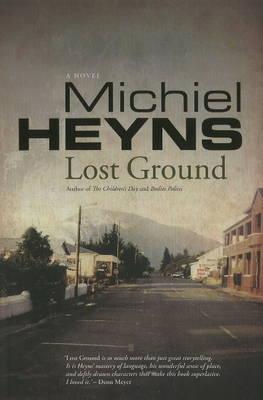
You can’t go home again : Lost Ground by Michiel Heyns

On one level, Lost Ground sets itself up as a crime novel where the elements of the conventional police procedural are bound with deep echoes of the tensions and realities of the new South Africa. But in the skillful hands of Michiel Heyns it evolves into much more – a heart stopping rush headlong into a series of events that will leave its erstwhile hero irrevocably changed.

lost groundIt is a murder that draws Peter Jacobs, an ex-pat South African, back to his hometown of Alfredville, a sleepy little village in the Little Karoo. A freelance writer living in London, he has been away from his native soil for over 20 years. His father’s British citizenship afforded him the option to pursue studies abroad and thus avoid conscription. What finally draws him back is his writer’s sense of a good story. His own beautiful cousin Desirée has been murdered and her husband, the black police Station Commander, is under arrest. This is, Peter believes, the entry point for an examination of the complicated dynamics of post-Apartheid South Africa and, in his neatly planned agenda, a story that he imagines re-envisioning as a New Yorker friendly exposé drawing allusions to Othello. What it opens, in the end, is far more personal and devastating than he can even begin to imagine when he first returns to his hometown.

It is clear from the beginning that Peter is carrying more baggage than the basic wardrobe he itemizes. James, his partner of five years, a Jamaican actor, has just broken up with him and he is not entirely certain how he feels about it. As he settles into his hotel, old locations and familiar faces naturally trigger memories – of school days, childhood adventures and the awkward fumbling of youth. Then, he discovers that his best friend Bennie is also back in Alfredville. He is now a police officer, temporarily the acting Station Commander,  and married with two children. Their reunion is awkward and tentative at first but it slowly warms, reawakening a flood of memories of a past that Peter believed he had, with time and distance, left behind.

Heyns’ gift for language and dry wit bring a rich and detailed world to life. He deftly captures the village and surrounding farmland wilting under the extremes of summer heat and the distant sensations they evoke:

“I open the door of my room and go out onto the balcony. Victoria Street is empty at this hour, but the sullen air is teeming with the smells of a summer night – exhausted vegetation, wilting flowers, wet soil from the gardens being watered, heated asphalt. The blend hasn’t changed in twenty years. To smell it again is to remember not so much individual incident as the tonal value of those summer nights, the vague ache of an imperfectly articulated desire.”

A wide range of colourful characters and personalities pass through the pages, described with the precise care and attention befitting his detail oriented writer narrator. Some are ghosts from Peter’s past, others, like the elegant black female psychologist who becomes his challenger and confidant and the handsome vet who seems to have cast a spell over the bored housewives of Alfredville are either new or passing through. But it is the nostalgic revisiting of his youth, inseparable from the memories of his friendship with Bennie, that anchors the novel, creating the emotional texture and complexities that will ultimately leave the reader gasping for breath as the end nears.

This was, for me, my first read following a significant health scare. It was everything that I could have hoped for at this moment – a smart, well written and tightly paced story woven with literary allusions, significant observations about the current state of South Africa, telling observations about the risks inherent in returning to the past and an unobtrusive but entertaining gay subtext. By turns humorous, heart breaking and dark it was the perfect prescription.

* Published by Jonathan Ball, Lost Ground is one of Michiel Heyns’ books that is fairly easy to access outside of South Africa, at least through special order distributors.

A Pastoral Dystopia: Trencherman by Eben Venter

“Tears, nearly; heartache that I’m almost able to touch in my chest. Bossieveld stretches around this dorp, as wide as the vulture flies. In rain years the red grass pushes up. The veld surges and flows, with koppies of ironstone and mountains with cliffs where animals find shelter during the cold winters, where ewes search out the warmth of besembos during the lambing season. Elsewhere it breaks open into rivers and streams and vleis full of platannas and bullfrogs and wild geese. But only when the water runs, when the eyes of the springs open. I want to remember it like that one last time.”

I am not typically a fan of post-apocalyptic or dystopian fiction. No matter how intriguing the scenario, I find myself too frequently disappointed with the writing or the realization of the plot, or both. However, when a trusted friend enthusiastically recommended  Trencherman, a harrowing vision of a devastated South Africa by Eben Venter, my interest was piqued in spite of any reservations I might have otherwise held and, quite frankly, I would never have stumbled across this book without her guidance. Even then I was unable to source a copy outside of South Africa so it was high on my wish list for my recent visit to the country. Little could I have appreciated how my experience of this novel would be heightened by the fact that I would read it while my time in the rolling landscape of the Eastern Cape province was still very fresh in my imagination. That is, it happens, where this story is set and, for all the horror it envisions, Trencherman is also very much an evocation to the beauty of the land.

VenterTaking his lead from Joseph Conrad’s The Heart of Darkness, Venter imagines his native country at an undefined point in the near future. Years of civil unrest and socio-political upheaval have rocked the nation which never really found its footing. Now a massive explosion in the southern part of the country has destroyed the infrastructure, left a lawless void in which bribes and syndicates are the order (or lack of order) of the day. Drought has wasted the land, AIDS has has devastated the population. Our protagonist, Marlouw (a contraction of his first and last names Martin and Louw) is bachelor living in Melbourne, Australia. Both he and his sister Heleen had rejected the family farm and homeland two decades earlier. Yet for all the financial success afforded by an uninspiring career selling high end cookware, Marlouw is a rather bitter, self-centred man, crippled with a clubfoot. He has never forgiven his parents for failing to secure the surgery that would have corrected the deformity and, despite his denial, the pain and embarrassment of his disability weigh heavily on him. When his sister calls him one night desperately entreating him to return to South Africa in search of her only son, his nephew Koert, who seems to have gone missing in that dark land, Marlouw feels no immediate obligation to assist. When he does finally agree, he tells himself that he is doing so for his own personal reasons. Without fully understanding his motivations he senses that something unfinished lies in the deep recesses of his memory. His journey to unravel his own baggage will nearly cost his sanity.

As soon as he sets foot on South African soil, Marlouw realizes that he has arrived in a country that operates on cryptic and shifting terms. He adopts a heightened almost mystical approach to the task ahead, attempting to open himself to the “guides” that cross his path, but he rocks between selfish irritation and a deepening alienation as his quest proceeds. As a hero he is deeply flawed and deeply human. When he reaches the family farm, the place where he knows that his nephew has taken refuge and built up some manner of hideous power base, he is routinely thwarted in any attempts to make direct contact. The degree to which drought, disease and apparent apathy have wasted the land and the people he once knew is a shock but he is soon swept into their confined and miserable world. Upon his father’s death, he and his sister had passed the once proud farm on to the black families who had worked it for so many years. After twelve generations of Afrikaner ownership, the thirteenth generation had set their sights on foreign shores. But, as Marlouw will soon realize, he still carries a deep ancestral horror in his bones. He will not only have to confront whatever it is that his nephew Koert has come to represent, he will also have to come to terms with his own ghosts.

This is not the first time an author has turned to the Heart of Darkness to explore the dark corners of humanity. The late Canadian author Timothy Findley placed his own Marlow and Kurtz in the halls of a modern psychiatric institution in the startling and disturbing Headhunters. Trencherman skillfully evokes the darkness of the journey Conrad imagined in the depth of another part of Africa and updates it, raising important issues along the way. Venter takes the opportunity to offer harsh indictments on the divisions within his native country, envisioning an outcome that has its roots in a recklessness and disregard for ultimate risks among the privileged classes. This is, of course, a common context of the dystopian novel, but one which is, for me, often too carefully removed or generalized in some abstract future. South Africa offers a more immediate tableau that Venter does not shirk from, perhaps afforded by the fact that he, like his hero, has been living in Australia for several decades. He aims his sights close to home, directly at his own heritage and at the decision he and many other South Africans have made to leave.

Originally published in Afrikaans, the translation by Luke Stubbs is seamless. IsiXhosa passages are incorporated, and unlike some translations specifically aimed at a broader (i.e. US) English speaking market, common South African and Afrikaans expressions and terms are left in tact. A detailed glossary is included. There is a point where the dialogue degenerates into a bastardized English mixed with German that had me curious as to how these passages exist in the original, but that is only because the translation process itself, especially when it is striking and effective, is of particular interest to me. This topic is, I discovered, covered in an interview with the author here.

The memory of a land once rich, the protagonist’s struggle to balance compassion with self preservation, and the truly horrific, yet oddly contemporary spectacle that awaits Marlouw when he finally confronts his nephew combine to create an engrossing read. The closer a reader’s connection to South Africa, the more intensely this book will resonate or push buttons, but even with distance it paints an unsettling portrait.

And so it should.

Note:                                                                                                                                                                         It is my understanding that Trencherman is scheduled to be released in the UK and Australia in 2016. However, my attempts to obtain Venter’s more recent novel Wolf, Wolf which was similarly released earlier this year leads me to believe that rights do not extend to North America. Even so, once there is wider for release for Trencherman outside of South Africa, it will be easier to obtain through UK distributors.

Looking back over my shoulder at three weeks in South Africa

It is coming up on two weeks now since I left South Africa. I was missing the country before I left; I am missing it now. When I passed though customs at the airport the official who stamped my Canadian passport sighed and shook his head. “Everyone is going to Canada these days,” he said. What could I say? Only that morning I had only read a newspaper article about young South African families eager to find a new home abroad – the US, Australia, Canada.

I suppose if I was raising young children in a city where so many single family dwellings have the appearance of bunkers with high walls, spiked gates and coiled razor wire, I too would be looking to distant shores. Over the course of my limited stay in Cape Town I regularly walked between my B&B in Sea Point and the downtown core. The occasional house perched on the slopes of Signal Hill without such enclosures was a source of fascination. What manner of brave or reckless soul lives here?

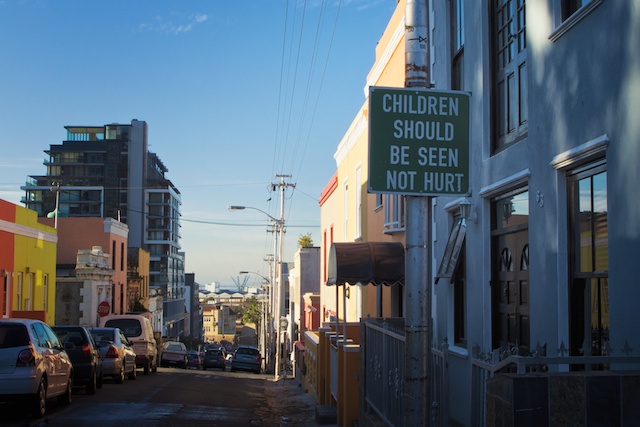
A sign on a narrow cobblestone street In the Bo Kaap district of Cape Town - Copyright JM Schreiber
A sign on a narrow cobblestone street In the Bo Kaap district of Cape Town
– Copyright JM Schreiber

I can’t say that I felt uncomfortable as I wondered the streets or rode the buses. I did quickly learn to make prudent choices, especially after a couple of unnerving encounters set me off my guard. My bad. I don’t make the same mistake twice. Aside from a night out with a friend in Green Point, my stay in the city was quiet, skirting most of the major tourist sites, sticking to bookstores, museums, galleries. Despite the cool weather tourists flocked to the Waterfront and Table Mountain but no one chanced more than a passing glance while I sat mesmerized by the full 30 minutes of William Kentridge’s installation The Refusal of Time at the South African National Gallery. I seemed to find hollow pockets in the city, safe but open empty spaces. And it felt right. I had come to South Africa, after all, to find myself.

What I found surprised me and is only beginning to take form in my thinking now that I am back home. My interest in South Africa is a curious blend of sociological, historical and literary factors but it has always been mutable and undefined. It just is. It stretches back to the early 1980s when I first encountered South African ex-pats while I was at university, continued forward, from the outside, as the world watched the steady and difficult move to independence. Being able to visit the country and, for the most part, simply talk to people and observe has marked the beginning of a process of reconciliation for myself – on a deeply personal level on the one hand, on a socio-political level on the other.

Eastern Cape morning - Copyright JM Schreiber
Eastern Cape morning
– Copyright JM Schreiber

With respect to the former I will simply say that my decision to actually visit South Africa this year was sudden and born of the intense loneliness that sweeps over me regularly. One day when that wave crashed upon me I stopped and realized that the one person in the world that I really needed and wanted to talk to, the sole person who could understand the strange mixture of illness and queerness that I have been struggling to sort out lately, lives across the globe – in South Africa, Eastern Cape province. And, with some money I had needed to access that was not worth reinvesting at today’s interest rates I had enough to get there. So I went.

Arriving at my friend’s home in a small village perched on the edge of the Indian Ocean, I was stunned by the beauty of the unfolding landscape, green flecked with the orange of aloe in bloom, the wide open blue skies, and the crystal brilliance of the waves crashing upon rocky shores. I was at peace. I felt grounded. I felt I had come home to somewhere I had never been. My friend and I settled into a comfortable routine as if we had known each other forever. Although at ease in silence, we never ran short of things to talk about. When it came time for me to prepare to head back to Cape Town, her dog worried after me as I packed my bags in the same way that my own cats had fretted over my suitcases back in Calgary. In a little over a week I had been accepted as family.

Indian Ocean, Eastern Cape - Copyright JM Schreiber
Indian Ocean, Eastern Cape
– Copyright JM Schreiber

Oddly I never felt lonely in South Africa, even though I spent much of my time alone. Strange that that feeling oppresses me in the city that I have lived in or near for most of my life, or this country where I have lived for over five decades. At one time I was immensely proud to be a Canadian but I feel increasingly discouraged and estranged from this land. Oh, of course, it has its beauty and, compared to so much of the world, its benefits are innumerable. But there are concerns, inequities, a steady erosion of freedoms, unresolved historical debts to our First Nations and now a rapidly declining economy against a growing racism and xenophobia to think about.

While I was in South Africa, whenever anyone would ask me where I was from, eyes would light up and I would be met with statements like: “Ah Canada, that’s like the perfect country, isn’t it?” Perhaps I am less than patriotic (which is in itself a rather Canadian thing to be), but I felt it was worth engaging people in honest discussions. After all in early June the final report of our very own Truth and Reconciliation Commission was released. For over 100 years First Nations, Métis and Inuit children were routinely removed from their homes and placed in Residential Schools. The cumulative impact of the abuses, trauma and cultural disintegration has been significant and devastating for Aboriginal communities. If I wanted to engage in conversations about colonial legacies it is not to compare or absolve anyone. But no country is perfect. The question for a citizen is, what am I willing to speak to? I can only speak to my experience in Canada and listen to South Africans. Which is a good start.

Sunset over the Atlantic, Cape Town - Copyright JM Schreiber
Sunset over the Atlantic, Cape Town
– Copyright JM Schreiber

But not even two weeks home and I feel shiftlessness starting to seep in again. On the positive, I returned to the promise that some healthy changes may be emerging in the life of my troubled son, opportunities that might not have arisen had I not put a continent and hemisphere between us. And on my last full day in Cape Town I sat in the Company’s Gardens and finally began to write in earnest in the notebook I had been scribbling in throughout my visit. That has continued. Yet I am aching for that indefinable other that drew me to South Africa in the first place… the landscape, the people, my friend, the oceans.

Yes, the oceans. Landlocked here in a vast country that spans 5½ time zones, it really is little wonder I feel so alone.

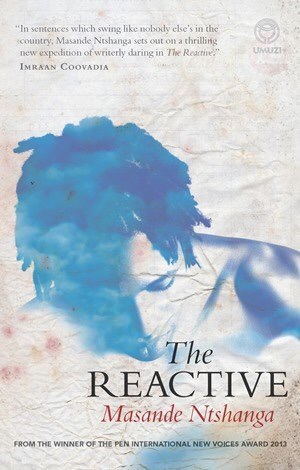
Desperate for a reaction: The Reactive by Masande Ntshanga

The opening lines of The Reactive, the debut novel by the young South African writer Masande Ntshanga, are startling:

“Ten years ago, I helped a handful of men take my little brother’s life. I wasn’t there when it happened, but I told Luthando where to find them.”

This fresh, matter of fact confessional tone marks the story that follows. Nathi (short for Lindanathi) was supposed to follow his half-brother to the Eastern Cape where they would both partake in rites of initiation, but he decides to stay behind. When Luthando dies due to complications, Nathi feels responsible. The memory of his brother, guilt and family obligation are themes that weigh heavily on the young protagonist as his tale unfolds.

23370655After his brother’s death, Nathi decides that he had best make something of himself. He enrols in university to study journalism but drops out and goes to technical college instead. He tells us that it “didn’t take much to go to school for free, in those days, or rather to trade on the pigment we were given to carry.” His tech degree lands him a job in a lab testing blood samples for HIV. In the process of testing for samples that are positive – reactive – he himself contracts the disease. He envisions himself as half-dead already. Set in 2003, with South Africa on the cusp of making anti-retroviral drugs freely available to all HIV+ individuals, Nathi sells his ARVs to others. Otherwise he drifts from job to job while spending much of his time sniffing industrial glue with Ruan and Cecilia, friends he meets at a counseling group.

In the background to all of this is a promise he made to his brother’s stepfather, his uncle Bhut’ Vuyo, a former mechanic fallen victim to alcohol and now living in Du Noon, a bleak settlement on the edge of Cape Town. Nathi had received refuge in Du Noon after disgracing his mother by dropping out of university. A text message reminding him of his commitment to his brother’s family some eight years after the fact, sets the story in motion. Nathi is drifting, he is taking risks. An encounter a with a curious masked stranger who engages the three young drug dealers in an illicit business deal may just be the motivation he needs.

In The Reactive Ntshanga paints an image of the new South Africa that is fresh and alarming. Nathi and his friends are all educated. They have or have had good jobs, apartments in Sea Point, but they are slowly losing motivation, sliding from one day to the next, grabbing taxis to parties with eccentric artists, going nowhere fast. In the end Nathi will have to decide for himself where his own loyalties lie.

This is a disturbing story, but one that is told with language that shimmers and an intensity that simmers just below the surface. Nathi’s voice is captivating, he and his world come alive. Cape Town provides an essential backdrop, as does the settlement where Bhut’ Vuyo lives in a shipping container. There are also important references to the Eastern Cape and King William’s Town, which it turns out, is the author’s home town.

Now none of this would be critical for the enjoyment of this book but, as a Canadian on his first visit to South Africa it is oddly serendipitous that I read this book on the bus, the same line that features briefly in the text in fact, on my way back to Cape Town from East London. I would likely have passed through King William’s Town with little notice in fact had I not traveled out to the Eastern Cape with a retired Xhosa man returning home to the town for a family funeral. We talked a lot through that 16 hour journey, about our countries, about life, about politics. For me, my experience of reading The Reactive will be bound to my trip and I look forward to watching Ntshanga’s career develop. He is already receiving a lot of well-deserved attention at home and abroad.

The Reactive is published by Umuzi and is available as an e-book, at least in Canada, likely elsewhere. A paper edition will be published in the US by Two Dollar Radio in 2016.

Further notes from South Africa: Wildlife and quiet times in the Eastern Cape

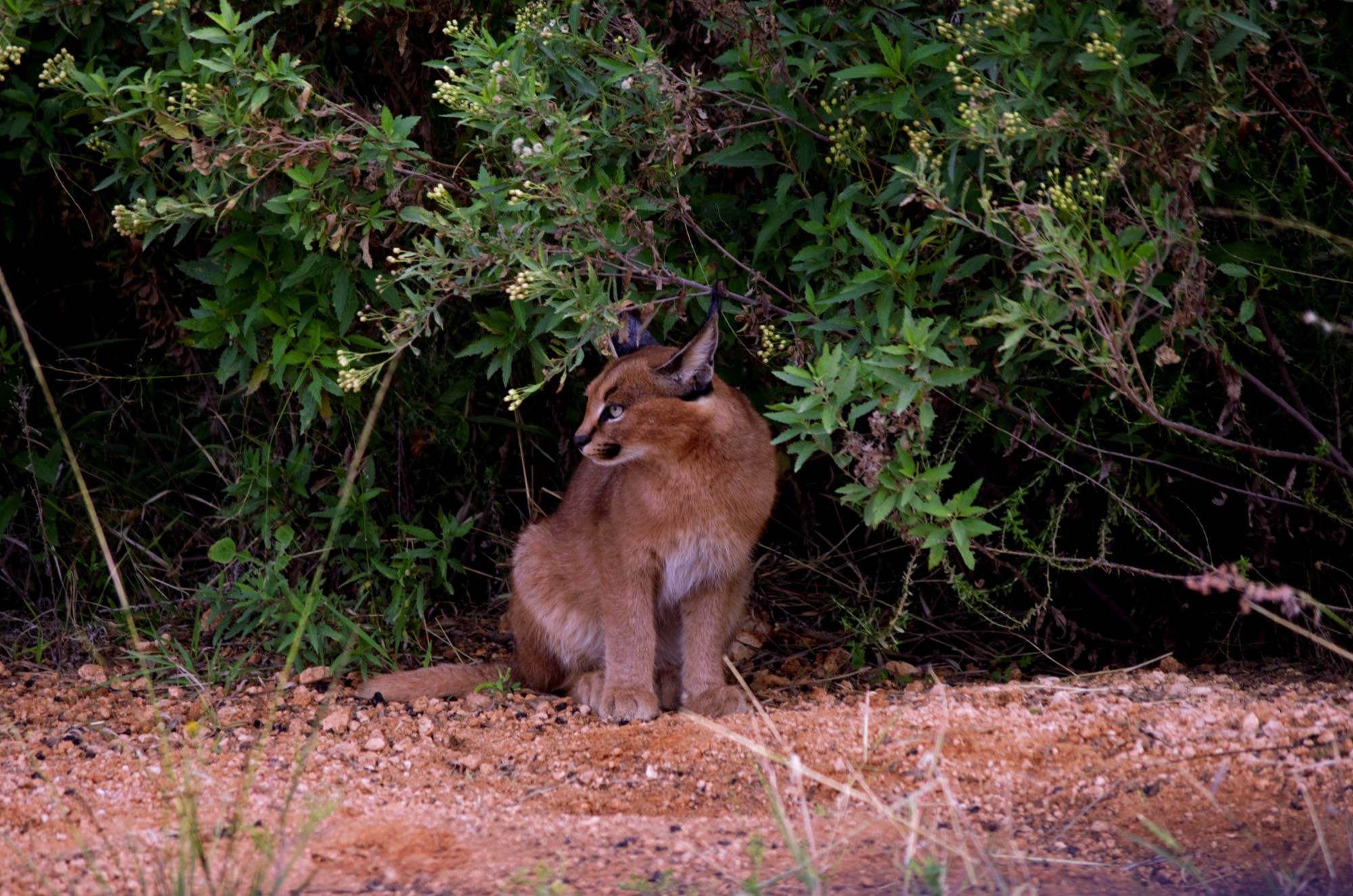
I have been in South Africa for just over a week now. It’s been an amazing opportunity to meet people and observe the country on its own terms. The closest I have had to a typical tourist experience has been our day trip to Addo Elephant Park. Nothing quite prepares you, on your first visit, for the sight of these huge majestic beasts looming ahead on the road, appearing out of the bushes. And there is so much more to see than elephants. We were stoked to encounter two young rooikatte along the roadside. These lynx are a rare sight at the best of times and we were able to sit and watch them for 15 minutes.

Rooikat
Rooikat
Addo Elephant Park
Elephant  – Addo Elephant Park, South Africa

The value of taking time to relax, soak in the countryside, meet fascinating individuals and spend quality time with my friend has been exactly the medicine I needed. In a few days I will make my way back to Cape Town for the much more urban, cosmopolitan side of my stay which will, in its way, be quiet and introspective. Cities can be good for being alone too.

Old sheep
Old sheep
Eastern Cape farm garden

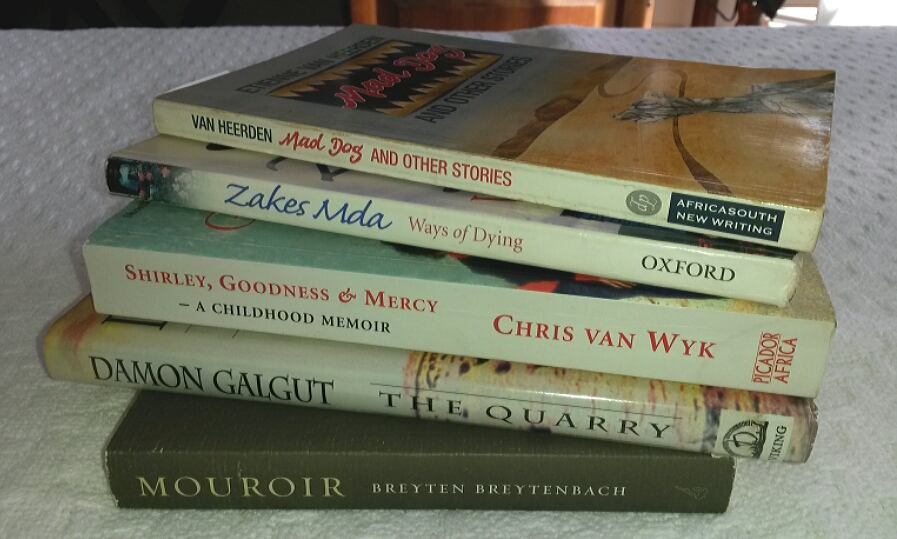
My endeavour to gather more South African literature to bring home is going well. So far I have collected a stack of second hand books from a little shop in East London here in the Eastern Cape and have another stack waiting for me back in Cape Town. I have been digging through my friend’s bookcase for titles to look for here or back home and last night I was thrilled when my favourite author, Damon Galgut, won the Sunday Times Literary Award for South African fiction for his novel Arctic Summer. So, a fine literary excursion to date.

South African sunset - All photos copyright JM Schreiber
South African sunset – All photos copyright JM Schreiber

Otherwise it has been a relief to step back from my normally heavy engagement with news and social media. I did read with dismay about the terrorist attacks in France and Tunisia. I was relieved that my American LGBT brothers and sisters have achieved a long overdue milestone. But I came to South Africa in large part to put as much distance between myself and my life at home as possible for a few weeks and, for now, watching waves crash on the shore or sitting on the stoep and watching the sky burst with colour in the evening or listening to Breyten Breytenbach reciting poetry in Afrikaans is therapy of the best kind.

Solstice to solstice to solstice: A note from South Africa

Over the past year I have embarked on a journey that began, unexpectedly, with the recognition that I had allowed pressures at my job to consume me, to drive me to the very brink of a complete breakdown. It was summer solstice when I removed myself from the office, imagining at the time that I would soon be back and on track. I had no idea how sick I was and no real appreciation of how much I had sacrificed to work and children. Now, with work in tatters and children grown I wondered if I had really lived the full and rewarding life I imagined that I had. Finding myself (again) in mid-life has been difficult, dark and lonely – a task I felt ill prepared to take on.

But it has been the very best thing that could have happened.

From a very low point last December, winter solstice, my life has started to change in very real and important ways. A wonderful therapist and proper medical support have been crucial, while finding a supportive community has helped me start to move out into the world in an honest and authentic way. But, much to my surprise, blogging has opened up the world in a way I had not anticipated. I began with no clear objective, fueled with manic energy, spiraled into a little anxiety driven meandering as my world fell apart and solidified this year into a basically book focused blog.

Along the way I made a friend who has become a ballast for me – a touchstone, someone who understands the experience of navigating the storms of bipolar disorder because she rides them herself. Someone who is also queer. And an avid reader.

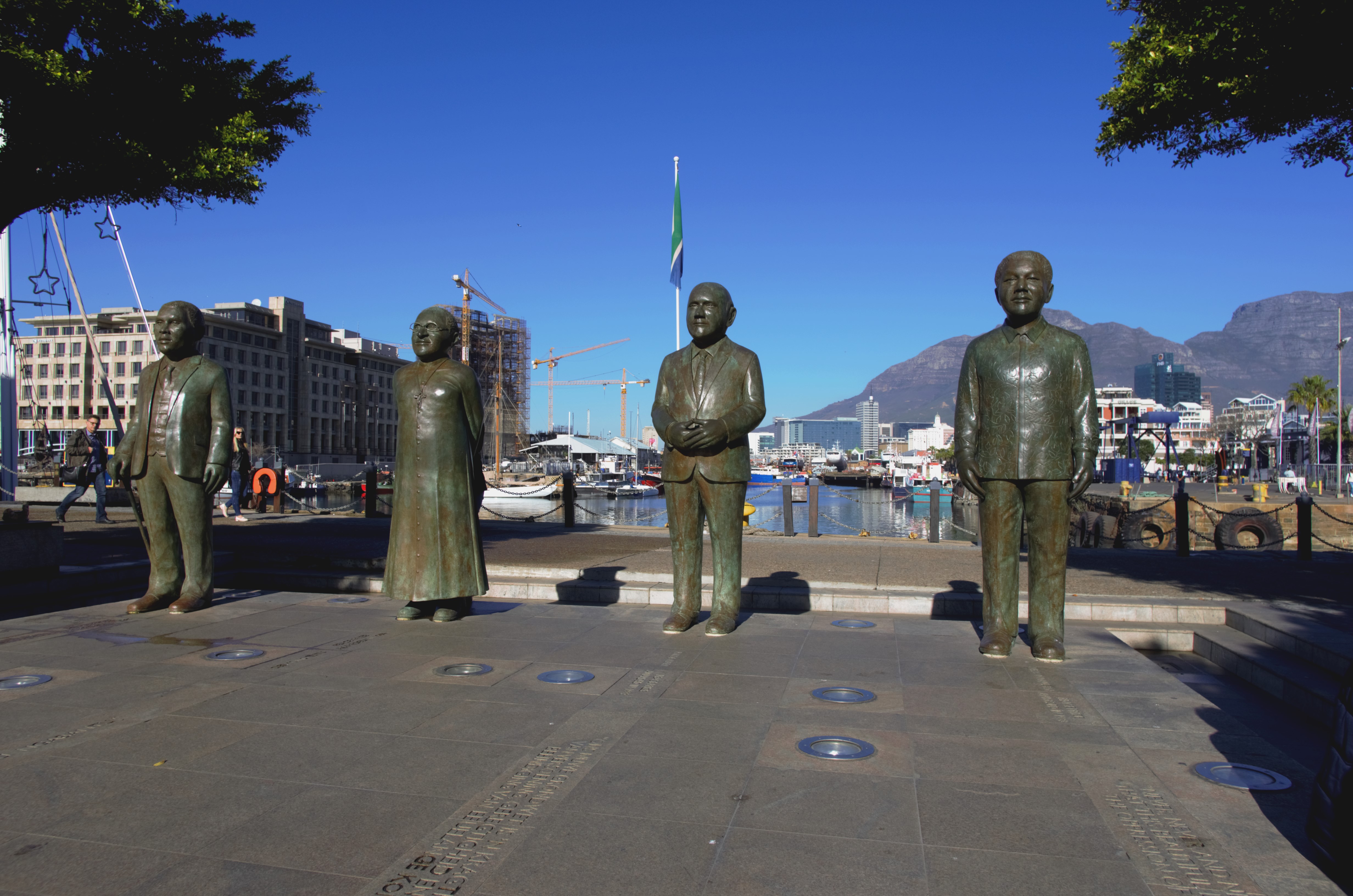
Nobel winners waterfront CT Indian ocean

However, getting together for coffee required a little planning. I live in western Canada, she lives in South Africa. And so I marked this past solstice, trading summer for winter, in Cape Town. Then I boarded a bus for the Eastern Cape province where I am now. I have long had an interest in South Africa, with the literature and history of this complicated and important place. The dust has not settled here.

My friend has given me a gift I will not soon forget. Our friendship has opened a space for us to explore our own personal journeys and to talk about our respective countries – to compare the differences and the similarities.

And I am also  guaranteed to arrive home with books.

And her name was Good: Agaat by Marlene van Niekerk

“Poor Agaat. What has my life been? What has her life been? How can I ever reward her for coming this far with me here on Grootmoedersdrift? How does one compensate somebody for that fact that she allowed herself to be taken away and taken in and then cast out again? And to be made and unmade and remade. Not that she had a choice. I even gave her another name.”

This is a variation on the refrain that haunts Milla de Wet’s thoughts as she lies, paralyzed in the advanced stages of Lou Gehrig’s disease, completely dependent on her black servant turned caregiver Agaat to attend to her every need. As Marlene van Niekerk’s magnificent novel begins, the two women are reduced to communicating through eye movements. Eventually even that will be impossible. But Milla’s mind is sharp and brittle in her confined waking hours and Agaat, stalwart and efficient to the end, knows her mistress well. Too well.

AgaatFrom this claustrophobic perspective a remarkably expansive and complex novel of Apartheid South Africa unfolds. Van Niekerk, a nominee for the 2015 International Booker Prize, achieves this by deconstructing the traditional farm novel and weaving together a complex, poetic and devastatingly powerful epic. It is almost impossible to find the words to adequately capture the experience of reading Agaat (or The Way of the Women as it was published in the UK) without resorting to hyperbole. It is, quite simply, an inspiring, unforgettable novel. One that invites and rewards careful reading.

Despite the rolling fields and pastures, river and mountains, this is an intensely focused novel. It is not easy to exist with Milla trapped inside her immobile body, or to listen as she bitterly dissects and dismantles her life – alternately self righteous and regretful – addressing herself in the second person. It is not comfortable to be swept into the stream of consciousness of her internal ramblings that mix obsession over her current state of being with the flotsam and jetsam of her farm woman’s domestic life. Or to discover, through her notebook journals, the details of Jakkie’s childhood and, eventually, Agaat’s early years in her home. By masterfully weaving together these four distinct narrative streams in each chapter, van Niekerk creates an enduring portrait of the complexities of power as they play out within families, between races, and in a country that is in an increasingly volatile political state.

My well marked copy!

As the story is fleshed out, we meet Milla in 1948, as a young woman engaged to the dashing Jak de Wet, a trophy husband of sorts, handsome but ill suited to the farming life. Their marriage is increasingly volatile and strained, with both playing their own counterproductive roles out to the bitter end. For many years the couple is unsuccessful in their efforts to conceive. That is where Agaat comes in. The daughter of one of the labourers on her mother’s farm, she is born with a withered arm and, as a result, is subjected to horrific abuse in her early years. Milla imagines a heroic role for herself in rescuing the rejected child and bringing her into her home against the protests of her husband and the sidelong glances of her neighbours. For years Milla treats Agaat as a surrogate daughter – in so far as a segregated society will allow – teaching her to read and write, to explore and appreciate nature, and to master the fundamentals of animal husbandry. And then, suddenly, she discovers she is pregnant. Before the baby arrives, Agaat’s role is abruptly shifted. She is moved into an outside room and a maid’s uniform with strict expectations. But when little Jakkie arrives Agaat, barely more than a child herself, becomes the loving and compassionate caregiver that neither of his parents can ever manage to be.

As the end is approaching Milla is forced to weigh and reevaluate her own life and the fate to which her actions have tethered Agaat. As often as she questions her actions, it is not clear that she can ever stand back from herself and see the big picture. She is, in the end, complicit in maintaining the Afrikaner social order that Jak so proudly believes in even if, in her own mind, she is a martyr. Agaat is at once the angel in the wings, servant and nanny; and the witch still bound to her “primitive” ancestry. She has been molded and created by Milla, but her thoughts remain hidden. Not until the closing pages of the novel is her side finally revealed in the dark and heartbreaking bedtime story she that she and Jakkie shared when he was small.

Originally published in Afrikaans, the translation by Michiel Heyns is simply brilliant. Van Niekerk is first and foremost a poet and her language is filled with allusions to music, children’s rhymes, and literature. The scent of fennel, colours of flowers and foliage, the calls of birds and nosies of farm animals, the guttural g’s of Afrikaans all add to the multidimensional experience of reading Agaat. As Heyns points out in his Translator’s Note: “Agaat is a highly allusive text, permeated, at times almost subliminally, with traces of Afrikaans cultural goods: songs, children’s rhymes, children’s games, hymns, idiomatic expressions, farming lore.” The ultimate result appears effortless, mediating the boundaries where necessary but maintaining a distinct cultural experience. An interview with Heyns in Words Without Borders is an informative and entertaining exploration of the text and the translation experience that is highly recommended for interested readers.

Agaat is bookended with a Prologue and Epilogue in Jakkie’s voice. It is 1996 and he is flying home from Canada because his mother is near death at the beginning and returning after the funeral at the end. He left South Africa in 1985 to escape the political conditions in his native country, and, one suspects, his parents. As I write this, I am about to fly from Canada to South Africa myself for my first ever visit. I am aware of the fraught tensions that continue to run through the country, most recently arising in the literary community. I will be carrying the many complex currents that run through this important novel with me as I leave.