This Is Paradise, or where does fiction meet real life?

I cannot remember ever really wanting to be anything other than a writer. How then did I get to mid-life believing that my aspirations would never extend beyond the inevitable writing and editing of newsletters and promotional material with every job or volunteer position I have ever held? Why have I been hit with a curious mix of pride and anxiety every time someone has commented on my facility with words?

In truth, there was a point in my late teens or early 20s in which I made the conscious decision to wait until I had lived a little before writing. I assumed a little experience would provide material and perspective. I had not bargained for the complicated experiences that awaited me or how long it would take for me to wade through and unravel it all. And when I did find my way through I found myself unwilling to bare my soul on the page. But every writer has a story they were born to tell, or as James Baldwin said about Go Tell It On the Mountain, the story they have to tell if they tell no other. Frequently it is a coming of age story, a coming out story, a tale of childhood loss or trauma. But that not need be the case. Nor is it necessarily the first story a writer sits down to tell. It can be recounted in fiction or presented as memoir, but the telling is essential, cathartic and close to the bone; even if no one beyond a few friends or relatives ever see the manuscript or hold a copy of a self-published book.

As I look back, I finally understand why I decided to put my writerly aspirations on hold so many years ago. I also understand the barriers I have placed between my impulse to protect myself and my identity and any story I thought I might tell. In this context those reasons are not important. I have also come to recognize the story that I really need to tell is one which I have only recently come to understand myself. So with the unexpected time that my present inability to return to work has afforded me, the gift of introspection and a desperate need to get this story out onto the page and hopefully gain some distance; I want to see what I can do.

But the challenge with stories that find their source close to life lived, is that this same life not only belongs to me. It cannot be divorced from real people. Or real experience. I am not certain how to balance the need to breathe truth into an experience and the desire to protect those I love.
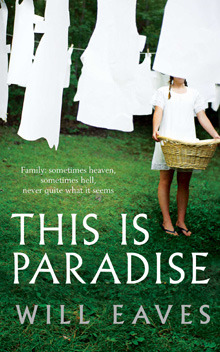
paradiseMy latest read has inspired these questions. After my enthusiastic encounter with Will Eaves’ The Absent Therapist, I turned to his 2012 novel This Is Paradise, which I have had on hand for nearly two years. The right book, at the right moment it seems. A relatively spare novel that is at once intimate and ambitious in scope, this book opens with Emily Allden’s difficult pregnancy with her fourth child, and closes decades later following her death. Benjamin, the youngest, unborn at the beginning is an enthusiastic traveller on his first chance to join his older siblings and parents on their regular holiday trip to France in the first half of the novel. In the second half Benjamin, now grown becomes the lens through whom we see the family – his well meaning but emotionally distant father; his intelligent but volatile older brother Clive (who is clearly dealing with perhaps aspergers or a mental health disorder) and his two sisters, the capable Liz and the delicate Lotte – as they cope with their mother’s increasing dementia, the decision to place her in a care facility, and the lingering final days of her life.

Eaves’ deft ear for the nuances of conversation, sensitivity for the complex social dynamics that bind and divide family, and keen eye for visual detail allow him to create a coherent interplay between the members of this large family and a handful of supporting characters across the decades. He does this by employing a style that is at times fragmentary, sometimes reflectively slipping back into passing remembrances, but always evocative of the way that we tend to think about and experience our lives over time. The result is rich with wonderful moments that add depth and resonance.

Yet as I was reading This Is Paradise, I was especially struck by the pivotal account of Emily’s illness, the details of her physical and mental disintegration, and the mixed emotions that rise and fall between the various members of the Allden clan throughout this process. It rang true in a way that made me wonder if it was grounded in lived experience. It was then no surprise to find that Will Eaves had in fact published an essay in The Guardian about his mother’s struggle with Alzheimer’s. When he recounts an event repeated in the novel I naturally wanted to know where reality and fiction intersect in his story. And how does an author decide what to paint clearly and what to disguise?

To be honest I am not generally drawn to family dramas, especially ones with such a sprawling cast and ambitious reach across the years. Mind you in another writer’s hands this would likely be a book at least 600 pages long. In half that length, we trace a loving portrait of a complex and deeply human family from childhood spats through adult stresses and concerns to the bonding moment of shared loss.

And since it is from my own immediate family that the story I want to tell arises, I suppose I will be paying closer attention than ever to the way such dynamics are played out in literature.
As the year draws to a close…

At the beginning of 2014 my world was rapidly spinning out of control. There were clear indications that the extreme stress and toxic work environment I was living under was taking its toll. I was clearly struggling to hold myself together but like any good manic depressive I could not step aside and recognize the crisis that was unfolding. No one else in my life had the understanding to step in either and, in all fairness, I am not sure how I would have responded.

Now, at the end of the year, I have been out of the office for six months. My future is unclear. I had loved my work with brain injured adults and their families. It was challenging, rewarding and I was well respected. At least until I went crazy.

As soon as I walked away from my job I realized the price I had paid to build a career from community field worker to manager in less than a dozen years. I had intentionally alienated myself from people. I have always been a person inclined to isolation, shy in a curiously outgoing way. Public speaking does not phase me at all. I could speak to a crowd of 300, riffing on a theme if necessary, but face to face small talk is uncomfortable. The thought of baring my soul to another person in real time, over a coffee perhaps, is almost unbearable. In my life I have made few friends and had only two significant love affairs. And somehow I had managed to convince myself over the past decade or so that in addition to the challenges of raising children on my own, the social interaction provided by my work with hundreds of clients and professional colleagues would suffice. Close friendships and romantic relationships were not required.

I was wrong. But what now? I am in my 50s. I have repressed the very uniqueness of my history, that which had always set me apart. The very queerness of my being in the world. The ostensible and hard won success of fighting to be true to myself in the world was turned to dust in an instant. The road ahead suddenly looked lonely and long…

Slowly I am recovering. Much slower than I expected perhaps, but this unplanned respite has forced me to explore, re-evaluate and reach out. My therapist (thanks Jane) has been an important sounding board. Blogging and making contact with both bipolar and bookish fellow travelers has been vital. It has allowed a space for cathartic dumping. A medium for strengthening my ability to clearly articulate my thoughts and reflections. It has given me confidence to move out into the world closer to home.

Thanks to the fact that I have not been working I was able to volunteer at our writer’s festival and meet writers I admired from around the world, all of whom are in my age range. Financial constraints encouraged me to cancel my TV since I was generally using it as a mindless distraction. Consequently, reading and music have regained the attention they deserve. And when it is not -20C, like it is at the moment, I make a point to get out every day, frequently just to read and write at a local coffee shop.

So here is a song and a haunting video to carry you into the new year. It goes out especially to my brilliant friend of Blahpolar Diaries fame (infamy?) whose typically colourful ode to the therapeutic value music inspired this post.

An eclectic collection of my favourite reads of 2014

I am not a conventional book blogger and, as such, I only touched on a limited selection of the 45 or so books that I read this year. Sometimes I can’t help devoting a post to a book that has grabbed me or fits into the particular flow of my life which, since June, has been waylaid by mental health concerns. I do hope that in the new year I will have more of a bookish focus but I am still likely to concentrate on musing about books that resonate with life for me at that moment. I am a firm believer that we have a kind of karmic relationship with books, that when we encounter a book that encounter is coloured by where we are at that moment in time. It might be the perfect moment. But that perfect moment might be passed or not yet come.

At this time I am particularly concerned with innovative approaches to story telling, especially stories that seek to give life to real or difficult experiences. To that end I have veered into some contemporary experimental novels, not always with entirely satisfying results. However, three novels are clear standouts, one new, one translated for the first time this year and one from a few years back. I have touched on all three to a greater or lesser extent in past posts.

My Top Three:
seventerrorsfrontcover_50acc7efa1d7c_250x800r Seven Terrors, is the first novel by Bosnian writer Selvedin Avdic (Istros Books). Briefly, this is the story of a man who takes to his bed for nine months after his wife leaves him, emerging only when the daughter of a former colleague approaches him to help her find out what happened to her father who disappeared during the war. What ensues is on one level a detective story into which come elements of Bosnian folklore, politics, criminal interests and an increasing sense of madness. The Balkan war is only approached obliquely, primarily in the accompanying end notes. The overriding theme is one of the damage, collective and individual, that the horror has left in its wake. The book concludes with musings about, terror, philosophy and Bosnian mythology, followed by seven blank pages for the reader to use to record his or her own fears. I read this book back in February and it has continued to haunt me all year.

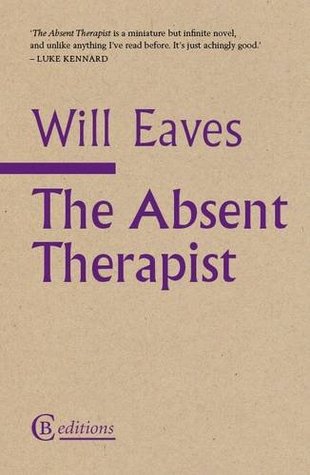
20797992The Absent Therapist by Will Eaves (CB Editions), a recently encountered treasure, is an inventive juxtaposition of the mundane everyday snippets of conversation, remembrances and idle thoughts, against the extraordinary musings and reflections about the nature of human existence. There is no singular voice, no story arc, no solid ground. But in this collection of fragments there lies the essence of a rich and deeply human experience, at once stripped down and laid bare as they are collected and made whole.


7199962


In a Strange Room by Damon Galgut (McClelland & Stewart), has been out for four years but I came to it this year, most specifically because I wanted to see how a personal experience could be pared down to its essentials and explored through the lens of time and memory. The result is some of the most evocative and precise writing about what it means to be grounded in ones self and in relation to others (or not); the allure of the road and the ambiguity of home; and, most vividly, the way that all truth lived is a fiction – one that is necessarily subjective. Galgut is quickly becoming one of my favourite authors and the opportunity to meet him and engage in an encouraging conversation about writing was the highlight of our local writer’s festival for me this fall.

Other books that had a particular impact on me this year included:

23626238I Refuse by Per Petterson. Recently translated, this latest book by another of my favourite writers is darker, richer and more complex than his masterful Out Stealing Horses. This book explores the memories of youth, the mystery and pain of mental illness, and the re-evaluations that mark mid-life. Like life, there are no neat, easy resolutions. I discussed this book in a recent post.


Pakistan


Train to Pakistan by Khushwant Singh. This was a recommendation from a regular poster on the brilliant Tips, Links and Suggestions (TLS) blog of the Guardian Books website, a must stop for any avid reader who likes to talk about books, reading and that endless TBR list. I had never heard about this classic tale of the brutal fallout following partition in India in 1947 as communities were dismantled and muslims relocated north to Pakistan, hindus south to Gujarat. Countless men women and children failed to make it across the border alive. I am ashamed that it took the death of the author just shy of his 100th birthday to bring this brilliant book to my attention and all I can say is, if you have not done so, read it. It is important, deeply moving and the last few pages are the most agonizingly intense you will ever read. Enough said.

BarracudaBarracuda by Christos Tsiolkas. Honestly this is a book totally outside my comfort zone, I just am not inclined to huge sprawling dramas that take on all of the big issues of class, race, family, love, sex, death, success, failure etc, etc and clock in over 500 pages. Give me spare novels with lots of space for unresolved tension and moral ambiguity, thank you. So I was blindsided by how much I loved this book. It was, in part, a book I needed to read at the time, as I was coping with shame, desire for redemption and loss of identity following my breakdown earlier this year and uncertainty around my ability to return to a career I loved. It is also a skillfully crafted, fast moving and intensely powerful novel on every count. And it contains the best descriptions of brain injury in adults that I have ever seen in literature – the main character has a brain injured cousin and goes on to find in himself (though he fails to fully appreciate it) a gift for working with the disabled. Tsiolkas was another author I was fortunate to see interviewed live and speak to at length. I found him to be absolutely passionate about reading and writing and extremely kind and generous with his time and enthusiasm.

There were many other novels I enjoyed and more than a few that were mediocre at best.

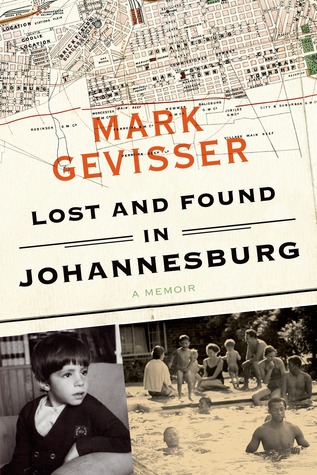
GevisserIn non-fiction, I only read a handful of titles, but my favourite was Lost and Found in Johannesburg by Mark Gevisser. The author came to my attention as the result of his recent article in Granta previewing his current involvement in a global survey of sexuality and gender diversity and, although these interests are also reflected in this memoir, the book is a fascinating family history tracing his Jewish ancestors back to Lithuania, recounting his upbringing in a segregated South Africa and his discovery through a childhood obsession with maps that there were places in his own city seemingly inaccessible. Communities, he would discover, that black people emerged from and returned to each day, often very close but in another reality altogether. He takes the reader on a journey back in time to the activists who challenged the colour barrier early on (a nice dovetail with my reading of Nadine Gordimer’s Burger’s Daughter this year), on a tour of the black communities as they exist today, and through the vivid horror of being held at gunpoint for three hours as he and two female friends were the victims of a home invasion in early 2012. It paints a stark and yet loving portrait of a difficult city.

SpaceFinally, my guilty pleasure is science fiction, generally veering to the weird. I regularly read J G Ballard and I did read Jeff VanderMeer’s acclaimed Southern Reach Trilogy this year and although I loved the first two books, the third seemed to try to resolve things in a most awkward and unsatisfying way for me. So my pick of the year was also my first read of 2014, the last installment of M John Harrison’s Kefahuchi Tract trilogy, Empty Space. It was just as haunting and grotesque as one could want, assuming one wants such an experience. But for me Harrison is in a league of his own and I am even enough of a geek fan to have purchased single story chapbook signed by the man himself this year. So there.

I may finish a few more books before the year is out but this is the longest post I have written to date, so I will stop here.

Happy reading in 2015.

And so this is Christmas…

Copyright JM Schreiber, 2013

Anticipating a quiet Christmas, with circumstances necessitating a modest celebration,  the lack of snow and relatively warm temperatures suit me fine. I am content with a brown Christmas. Oh I am sure there will be some anxious naval gazing over the next day or so. Add to that a Boxing Day trip to visit my parents, always a festive occasion fraught with the tensions and dynamics that only family can create, but for the moment I simply want to wish peace, whatever that means, to everyone.

Throughout the world that is one universal gift humankind is in sore need of, no matter who or where we are.

Solstice to solstice: Reflections on madness, identity and writing

It is winter solstice, exactly six months since I left my job. At the time, a year and a half of toxic work-related stress had taken its toll. Had been taking its toll for months. But by the time I managed to pull enough awareness together to face the harsh reality that the mental illness I imagined to be long stabilized had resurfaced in full manic glory, irretrievable damage had been done.

I left in shame. A shame that can not be absolved. I have been shut out, I have no idea what my relationship with my employer is, or if I have any income going forward. When I can eventually return to work I wonder where I will go. And so I enter the shortest day of the year reflecting on what I have learned and looking ahead.

Copyright JM Schreiber, 2012

I loved my job. I managed a small agency supporting survivors of acquired brain injury. I worked with a wide range of remarkable people and their families, walking beside them as they struggled to recover and rebuild their lives, to regain independence, to battle their own challenges and demons. It gave me refuge from the demands of single parenthood, provided human and social contact against my tendency to isolate, and confirmed my value as a man. But the price I paid was huge. I believed it was enough in itself and had not imagined it would end.

Suddenly I was tragically alone in the world. My closest friends were far away. In a city of over a million, there was no one I could call. No one to have coffee with, no place to go, no arms to lie in.

How had I managed that? Well temperament in part. But much more critically I began a transition from an externally female existence, to a more true, coherent identity as male at 40. I built my career in social services after that process began.

In transition I did not move from my neighbourhood, I remained actively engaged in ensuring that the schools my children attended were open and diverse, and experienced no rejection from my family. However to create a whole and consistent space in which I could live where no one knew my past, I guarded my history closely at the workplace. Over time I constructed walls, mastered the ambiguous answer whenever asked about my life, and even managed to successfully neuter and closet myself years after originally coming out.

Somehow this practice bled into my engagement with the community. Fourteen years on it came to colour my identity in the world.

This extended time of reflection from solstice to solstice, aided by a wonderful therapist, has been a time of learning to open and reclaim my identity. To understand how trans, gay and queer relate to me. To put it out in the world. To own it and to write it into being.

As the days grow longer I face an uncertain future financially. Yet slowly I feel the fire of anxiety and agitation that have marked this recovery from my breakdown losing some of its intensity. I have been filling notebooks with writing hoping that maybe some gems might emerge, for the sake of catharsis if nothing else.

Copyright JM Schreiber, 2012

So more than New Year’s Day, solstice holds the resonance of new beginnings for me this year. Happy solstice – winter to those of us in the the north, summer to my friends in South Africa and Australia.

The Absent Therapist or listen now, can you hear the voices…

“ When I was a child I didn’t have an identity and I didn’t want one. I was neither boy nor girl, male nor female. I was just a pair of eyes, a nose, some ears. Receiving the world, the brilliant blue sky, people talking above me.”
                                         Will Eaves, The Absent Therapist

Oh yes I thought, but then they gave me a designation and it made no sense.

A-ha moments like this surfaced throughout my engagement with the slim volume that is Will Eaves’ brilliant The Absent Therapist. Deceptively simple, the fragmented pieces that form this most unusual, experimental, but achingly human novella are carefully crafted and finely polished moments in time.

20797992Described on the cover as a “miniature but infinite novel”, I found myself returning over and over to my favourite strands and marking them in the margins. Although some fragments appear to be linked or feature the same characters or themes, the overall experience is akin to floating through the ether, engaging momentarily with the thoughts, frustrations, memories, and conversations – internal or external – that swirl through the mind. Your mind. The minds of others.

At times reflective and philosophical, at times obscure, at times laugh out loud funny (“I went to the Spanking Club once…”) these little pieces reminded me of the snippets of the stories we tell ourselves and others as we knit together and make sense of our lives. As we engage our own absent therapist.

I had heard of this book, and am familiar with the author’s more conventional work, but when I saw it appear on a couple of the “best of 2014” lists of reviewers I particularly respect, I became desperate to get my hands on it. Not an easy feat since it is not available here in Canada (even though as readers we spend time on the west coast and Vancouver on this little journey of fragments). I ordered it from the UK and coincidentally it arrived earlier this week as I was out on my way to my very present and vital therapist.

Rarely has such slight book offered so much, this is a company of voices to which the sensitive reader can return again and again. Relate to the lonely, commiserate with the angry, recognize the nostalgia expressed. Marvel at the philosophical musings, those poetic moments we strive to find meaning and guidance in, but that too frequently pass and get lost under the crush of everyday life. I would even dare the same reader to not mark favourites in the margin.

“ The balm of consolation is too strong for some. Its most powerful ingredient is not the emollient lie that time heals, but the more astringent perception that whether we heal or not, the wound was deep and real and ours.”

Indeed.

The haunting memory of friendship lost – I Refuse by Per Petterson

April 7, 2016: The post below was composed when I was debating the extent to which I wanted to turn toward reviewing books. As a result it is primarily personal and reflective in nature. Since writing it my reviews rapidly moved to more serious and critical efforts, many of which now appear on other sites.

I recently wrote a piece for the Three Percent blog on why this book should win the Best Translated Book Award for 2016. It offers a more critical view of this work.

23626238The novel opens with the chance meeting of Jim and Tommy, two childhood friends, now in their mid-50’s on a bridge at the break of dawn. More than 30 years have passed since they last saw each other. Jim, the sensitive and more intellectually inclined of the two, has struggled with mental illness and, as we meet him, he has exhausted a year of sick leave after a brief and unsuccessful attempt to return to work. Tommy, who dropped out of school at 16 to work at a mill, has benefited from some shrewd investments and a head for numbers, to find himself in a high level financial position in the city. But his life, with his fancy clothing and new Mercedes, is hollow. Both men have failed marriages behind them and over the course of the day that follows this early morning encounter each one finds himself facing a deep sense of grief and loss over the close friendship they shared growing up in semi-rural Norway.

As spare and luminous as the northern landscape that grounds this exploration of time, friendship, family and dysfunctional parents – themes Petterson has returned to continuously – I Refuse follows a winding chronology and employs a variety of perspectives and characters to frame the peculiar circumstances that helped forge the original bond between Jim and Tommy, and the fractured pathways that each has followed after Jim’s attempted suicide at 18 initiates events that drive them apart. Brought to life through the blistering translation from the Norwegian by Don Bartlett (of Knuasgaard, Loe and Nesbo fame) this is simply Petterson’s broadest, darkest and most complex work to date. If his brilliant Out Stealing Horses has long occupied a space in my top ten all time favourite books, this new work is even more striking and mature.

Or maybe I am simply more mature myself.

At this moment in time, at roughly the same age as the men at the core of this novel, and currently engaged in my own pursuit of disability supports following an unexpected return of a mental health disorder after more than a decade of stability, I could relate to the essential theme of the slowly eroding and distorting impact of the passage of time on our selves and our relationships with friends and family. Apart from a failed marriage and a childhood in a similarly semi-rural setting; my life and circumstances are different than those portrayed here. But the true power of this work lies in the author’s skill and confidence in the reader to leave the space for ambiguity and hint at the possible dynamics that drive the characters without feeling the need to answer all the questions or resolve all the mysteries.

Kind of like the way we have to navigate life itself.

At peace in place, but alone in the world

 Copyright JM Schreiber 2014
Copyright JM Schreiber 2014

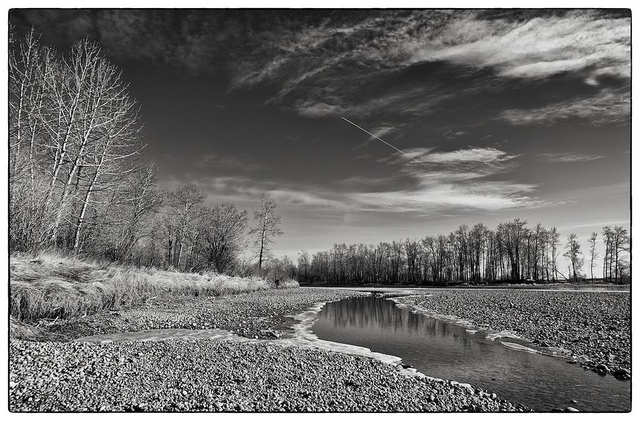
An empty bench overlooking the reservoir. Ice and snow have stilled the water. In the far distance the Rocky Mountains fade in the distance. I spend many hours along the shore of below this bench and further to the west where the flatlands spread as the Elbow River enters. In the springtime the water level is kept low to allow birds and waterfowl to nest. Although in warmer weather the parkland that runs along the northern shore of the reservoir is frequently bursting with couples, families, children, reunions and other large group activities, I prefer to pick my way along the water’s edge. I meet few others, mostly birdwatchers and photographers with ungainly long telephoto lenses hanging off their camera bodies.

I prefer a wide angle perspective, capturing the vista but keeping the details and any people in it reduced to a comfortable manageable size.

And I wonder why I feel so alienated and alone? I realize that the roots of that feeling run deep and cannot be divorced from an intense sense of being different at an early age, fractured through the prism of living with a mood disorder. But I have also become an expert at engaging with a wide range of people at a superficial level. In recent years I framed it in terms of maintaining a professional distance from clients and co-workers.

Some have speculated that this sense of alienation is essential to the artistic vision. Colin Wilson’s The Outsider was a popular formulation of this notion, of much interest and mystique to me and my friends back when we thought we knew everything. Much more recently I sensed this essential detachment from others contrasted with a deep affection for place in Orhan Pamuk’s Istanbul.

Copyright JM Schreiber 2011   Same location in the spring
Copyright JM Schreiber 2011              Same location in the spring

So what can I draw from a landscape like this? A space I can return to throughout the year and always see anew?

Reading and anxiety: Proceed with caution

“Then the anxiety set in. If someone told me I had to be depressed for the next month, I would say that as long as I knew it was temporary, I could do it. But if someone told me I had to have acute anxiety for the next month, I would kill myself, because every second of it is intolerably awful. It is the constant feeling of being terrified and not knowing what you’re afraid of. [Anxiety] resembles the sensation you have if you slip or trip, that experience you have when the ground is rushing up at you before you land. That feeling lasts about a second and-a-half. The anxiety phase of my first depression lasted six months. It was incredibly paralyzing.”            – Andrew Solomon

The above passage from a PBS interview with Andrew Solomon, the author of The Noonday Demon: An Atlas of Depression and Far From the Tree, describes the reality of living with anxiety better than any I have heard. I had a bad stretch earlier this year but once it passed I let the memory of this crippling sensation fade. Until now. Anxiety has returned.

Sometimes it helps to get out but that is not an option today. The temperature outside has climbed from the -34C wind chills that settled in late last week to a comparably balmy -7C. But my car sits on the street with a flat tire that cannot be replaced until Friday and a chest cold has left me feeling too ill to walk to the nearby shopping centre to pick up a few necessary items. With my daughter’s 22nd birthday on Wednesday and Christmas on the horizon with no indication that I will even have enough income to pay my bills at the end of the month I can expect to feel a little down. But the anxiety that has coiled its way around my heart is much more devastating.

The worst aspect of anxiety is that it seems to ignite the fears, the loneliness and the paranoia that are already entertaining me during this prolonged mixed hypomanic state. It seems to be impossible to distract myself in any truly functional way – even reading is only a temporary respite.

HungryI have recently emerged from a book, both glorious and heartbreaking, that I would strongly recommend but should come with a warning for the mood sensitive. This book is sad. The book in question is The Hungry Ghosts by Sri Lankan-Canadian author Shyam Selvadurai. This richly sensuous novel begins in Sri Lanka and explores a young man’s complicated and difficult relationship with his grandmother, follows him as he immigrates to Canada with his mother and sister where he struggles to find himself in the gay community of 1980s Toronto. A return to visit his grandmother is marked by a tragedy that will seal his fate, binding him in his own bitterness and pain, to ultimately threaten everything he builds and holds dear in Canada. Buddhist mythology is woven throughout this tale of family, wealth, warfare, race and love. The resulting huge tapestry of life pulls at the very threads of the human heart. But, be warned, this book is sad. Bravely so, something I find missing in much of the Canadian literature I ready today.

The other night I braved the brutal cold, probably the last thing my emerging seasonal illness needed, to attend a reading by the author, the final event of his week-long residency with the University of Calgary’s Distinguished Visiting Writers Program. As positive and rewarding as this opportunity was it served to remind me that my own accomplishments seem to have been stalled by the cards fate (or karma?) has dealt.  I awoke the next morning feeling saddened, empty and anxious.

Adrift in mid-life.

The lonely journey of life

- Copyright JM Schreiber, 2013
– Copyright JM Schreiber, 2013

I had become, with the approach of night, once more aware of loneliness and time  — those two companions without whom no journey can yield us anything.
Lawrence Durrell, Bitter Lemons of Cyprus

Five months have passed since I left my place of employment, deep in the manic vortex of a mental health disorder that had been stable for so long that I failed to recognize the indicators that work stress was taking a critical toll. The first thing I did was hire a psychologist, someone I believed would be able to help me address some of the serious realities that the return of bipolar symptoms threatened to expose. I trusted that her experience would provide a safe space for self exploration and I have not been proved wrong. Mind you I was pretty manic when I arrived at her office, but over the months we have worked together to unspool many of the challenges and concerns that I brought to our very first session.

At the core of our explorations over these past months has been the loneliness I feel and my persistent ability to reinforce the very barriers that maintain this loneliness. When there are people in my life on the superficial, safe level; I cherish being alone. Now that I am making some positive and healthy attempts to connect with others, loneliness seems to follow in the wake of each moment like a hangover.

I don’t know the extent to which my mood disorder has impacted this recurring sense of social isolation. Certainly the up and down waves of manic depression have been marked by episodes of outgoing behaviour, often in conjunction with poor judgement, followed by retreat to safety and protection. There are also temperamental and identity factors that have skewed my experiences. Now my son has shared with me personal concerns that mirror my own in a manner far closer than I ever expected but may help explain the much more severe social anxiety from which he has suffered all his life (and treated with alcohol in recent years). I am not even sure what to make of his situation but I also know that as an adult he has to find his answers on his own because I am weary enough carrying my own baggage.

I accept Durrell’s edict about loneliness and time as necessary for growth, but they can weigh heavily because no matter how much we achieve on our journeys, there always seems to be more open road ahead that, in the end, we can only travel alone.