Sympathy for the misanthrope: Everything Like Before by Kjell Askildsen

The world isn’t what it used to be. For example, it takes more time to live now. I’m well into my eighties but it isn’t enough. I’m far too healthy, though I have nothing to be healthy for. But life won’t let go of me. He who has nothing to live for has nothing to die for. Maybe that’s why. (from “Chess”)

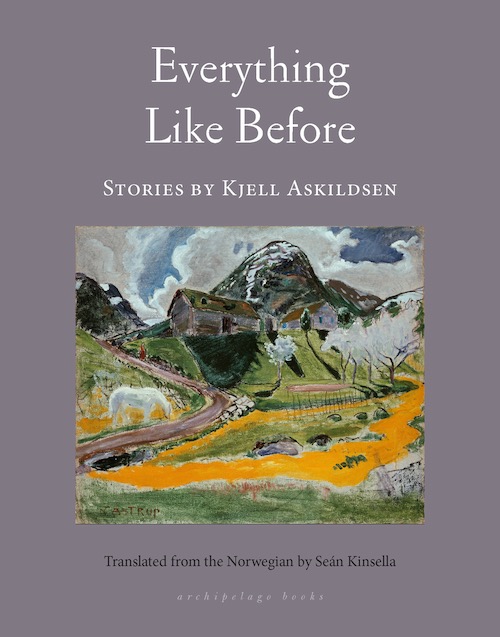
Norwegian writer Kjell Askildsen (1929–2021) is considered one of the greatest shorty-story writers of all time, a master of a spare, ascetic style in which quiet tension builds around what is unspoken. His themes tend to be sombre, with a dark, dry wit most reminiscent of Beckett, while his protagonists—all male—tend to be irritated, misanthropic and lacking empathy. Typically they find themselves isolated, often through their own behaviors or choices. There is little resolution in Askildsen’s world. Everything Like Before, gathers a selection of thirty-six of his stories spanning 1953–2015—including the entirety of his award-winning collection Thomas F’s Final Notes to the Public—that offers a generous taste of his idiosyncratic, if  bleak, worldview.

In such an extensive collection, within which many of the stories are very short, only two or three pages, the strongest pieces are often the longer ones—those which give the author more room to develop a scene or scenario. Some that really stand out for me include “The Encounter,” “A Sudden Liberating Thought,” “Mardon’s Night,” “Midsummer,” “The Wake,” “An Uplifting Funeral” and “Carl Lange.” Askildsen has a wonderful way with cranky, eccentric octagenarians in particular, but I did find that his fondness for stories involving husbands caught in marriages plagued by either tedium or restlessness—at least from their own dispassionate perspectives—frustrating for the persistent lack of communication, despite the fact that some of these pieces actually rely extensively on dialogue. Couples talking a lot, saying nothing.

However, his treatment of strained or difficult dynamics between fathers and sons is more effective. In “Mardon’s Night,” an older man named Mardon makes his way through an unfamiliar town to visit a his son, also named Mardon, whom he has not seen in many years. The exact nature of their estrangement is not clear, but the son is certainly odd and difficult. Their encounter is awkward, mediated by Vera, the son’s neighbour and at least occasional lover, one of the most fully realized female characters in the entire collection. But the visit fails to ease the distance of accumulated years, as neither man can or will make an effort.

Mardon lit a cigarette and said: We can’t actually do anything about who we are, can we? We’re completely at the mercy of our pasts, aren’t we, and we didn’t have a hand in creating our pasts. We’re arrows flying from the womb and landing in a graveyard. And what does it matter how high we flew at the moment we land? Or how far we flew, or how many we hurt along the way? That, Vera said, can’t be the whole truth.

As self-centred and insensitive as the younger Mardon may be, he echoes the view so many of Askildsen’s protagonists seem to have. A motivation for improvement, of one’s self or relationships, is lacking. The women, although we rarely see their emotional perspectives, often appear to demonstrate more will, much to the dismay of the men in their lives. Genderwise Askildsen tends to view the world through an odd one-way mirror—though that may in fact be the point he is making about his male characters. We as readers do not come to know the women because the men do not care to know what they really think.

Another highlight, “Carl Lange,” a story from the Thomas F collection, is a comedy of errors driven by paranoia. When two policemen arrive on Carl Lange’s doorstep and suggest that a man matching his description has been accused of the rape of an underage girl he is shocked. But, even though there is no reason to believe he is guilty, the suggestion triggers a series of increasingly neurotic and thus incriminating behaviours. Askildsen captures the gears turning inside our hapless protagonist so vividly that, as his reckless actions and antagonism directed at the investigating officer escalates, the tale is not only funny, but increasingly distressing as we watch a man careening into his own self-created disaster.

At best, these stories—whether long or short—open up haunting, unsettled spaces inhabited by characters who fail to connect, or do so only by awkward chance. There is a variation of form, not surprising given the wide span of Askildsen’s career covered here, but, taken too many at a time, the stories can, at times, flatten out and run into one another, as a certain sameness blunts the sharpness of his wit. In that respect, this collection, like other longer volumes, may be best enjoyed a handful of stories at a time.

Everything Like Before by Kjell Askildsen is translated by Sean Kinsella and published by Archipelago Books.

“I am, overall, quite glad to be human” Modern Animal by Yevgenia Belorusets

The small volume fits in the palm of your hand. It opens with a series of lectures. The speakers are human or animal, the audiences composed of individuals who may be one or the other, neither or both. The line between what it means to be a human or nonhuman animal is necessarily blurred. What strange hybrid world is this? Fantasy? Allegory? Yes, no. It is, in reality, fiction extracted from raw facts and experiences too terrible to be accessed directly. This collection of stories, musings, questioning and philosophizing is drawn from real life as understood through animal metaphors. The speakers in each piece are victims of the Russian-Ukrainian war in the Donbas who find voice in a form that illustrates the confusion, despair, resistance and resilience of the Ukrainian people in a way that conventional reportage can only hint at. Yevgenia Belorusets wrote this book, Modern Animal, just last year in 2021 after six years interviewing those living in the contested region. Now, with a full-scale invasion underway, the strangeness and horror of life during wartime is being played out across the entire country.

Belorusets is a Ukrainian journalist, photographer and writer, writing between Russian and Ukrainian, who has dedicated herself to documenting the lives of the disenfranchised—even the non-human—who exist on the shifting borders of social, economic and political realities. As I write this she is in Kyiv, reporting daily from the street level, photographing when possible, recording her encounters, and describing her contacts with friends caught elsewhere in worse situations. Each day at 4:00 pm ET, the publisher of this volume, isolarii, posts her latest update to their site and I wait for it, just to know she is okay. This missive with its growing mix of melancholy and resolve gains new followers every day. Having read Modern Animal it feels like life imitating art imitating life, but now filtered through a lens of stark realism.

When I first received a copy of this book months ago, I confess that I was not quite sure what to make of it. Each chapter was so different that I wondered if it was building to a larger fictional construct that I needed to track, to make sense of. Mentions of war and allusions to notions of ethnic cleansing emerge early on, but foolishly I was not putting two and two together. Perhaps I was not well informed about events in Ukraine and, of course, at that point Russia had not yet started amassing forces on its wider borders. And even then, few expected full scale invasion. But as soon as the wind changed I reached for Modern Animal and started from the beginning again.

It may seem a small act, but literature can bring foreign truths home in a way straight nonfiction, news media and internet interaction cannot. That is the brilliance of Belorusets’ approach, though I’m sure she would not have wished for it to be doubly necessary in this way. The entries in this book are presented as lectures, documents, accounts and fables. There is a dreamlike quality that often reminded me of the writing of experimental Chinese author Can Xue. Off-side, if you like. In one chapter, for example, called “Migetti (fourth lecture-document: interview with a viewer)” the speaker talks about being very sensitive to the emotions of animals and describes a German language animal video that she found especially moving. The film chronicled the adventures of a she-wolf named Migetti, whose entire pack was killed during an outbreak of canine distemper. As the lone survivor, she sets out in search of another pack to accept her. Her journey is difficult, the viewer is terribly worried about her fate and overjoyed when she is finally successful in finding a new community. But the final paragraph is telling:

Oftentimes, we don’t feel anything, even when major tragedies strike. We see earthquakes, explosions, wars, but we can avoid thinking about these narratives as though we’re walking down a separate road. But here, it all happened differently. She still haunts me.

Questions of fate and the nature of humanity recur. Narrators describe their connections to cats, dogs, birds, and horses. Some stories are melancholic, others cruel, but many carry a stubborn magic—like the wonderful tale of a hen who carries the soul of a woman who died in a city hospital far from her mountain village back home, but then continues to share her body with the dead woman’s soul for the rest of  her life. With the recent exodus of refugees from Ukraine, this fable bears its message of hope in a new context.

Sadly Modern Animal has become a sharply prescient text of late. One of the most striking entries, simply titled “A Small Aside” begins with mention of American interference and even reference to Afghanistan, followed by a tirade about war (and dogs) but ends with the speaker’s expression of his refusal to take up arms in the present conflict in Donbas:

I won’t go fight this time, not for this side, not for that one.

What kind of war is it when no one even calls it a war.

Only if tanks roll into Kiev, then I’ll pick up my gun and go defend my house and family! I’ll stand on the roads to Kiev! I’ll stand like a boulder, I won’t let anyone get past me.

I am aware that the attention Russia’s invasion has garnered has drawn questions about the many ongoing conflicts around the world that seem to be forever under the radar. And that is a very important issue. But as this small book demonstrates, war was simmering in this corner of Ukraine for years. We human animals are, if anything, very good at looking away.

Modern Animal is a haunting read, an often entertaining and disturbing treatise on life during war—a collaborative, animal-sensitive effort between Belorusets as author, documentarian and photographer, and the people who have already been living with conflict for half a dozen years. Important when published, it is now essential reading.

Modern Animal by Yevgenia Belorusets is translated from the Russian by Bela Shayevich and published as part of isolarii’s series of “island books.” It has been reissued and can be purchased here. One hundred percent of the proceeds will be donated to support Ukrainian charities.

Night / falls / slowly: Dream Pattering Soles by Miguelángel Meza

I was long asleep within me.
Emerge to keep vigil,
move.
Yes I was asleep within me.
I am truly alone.

(from “Appear”)

It may be small, but this trilingual chapbook contains an entire world in the span of ten poems. Here Guaraní poet Miguelángel Meza calls on the traditional mythology and cosmology of his Indigenous Paraguayan culture to speak to contemporary issues. This project, named in full Ita ha’eñoso / Ya no está sola la piedra Formerly and Again Known as Pyambu / Dream Pattering Soles has its origin in a dual language Spanish translation by Meza along with Carlos Villagra and Jacobo Rauskin first published in 1985. The original Guaraní was revisited and edited by the poet for this double bilingual edition which includes both the Spanish version and an English translation by Elisa Taber (each running alongside the original from the opposite end of the book). As a writer, translator and anthropologist born in Paraguay, Taber is especially well suited to take on this project. She was able to access the original poems directly and via the Spanish, check with the poet as needed, and edit the final version, allowing a uniquely interwoven translation to emerge.

The English title Dream Pattering Soles is a literal translation of the original title Pyambu, that, as the translator indicates in her Note, evokes an auditory image of “menacing presences, deities turned human.” The Spanish title that translates as The Stone is No Longer Alone calls to mind comforting presences, the “humanity of the nonhuman.” Together, the titles selected for the two translations embrace two essential elements of the grounding mythic narratives and the poet’s approach to rendering them. As Taber says:

Meza’s central figures of speech are metaphors and metonymies used in conjunction. Something substitutes another which is part of a whole. The attribute of a particular god is identifiable in a human and that of any human is identifiable in an animal or a thing.

As such, the journey of the poet, and by extension his community and the reader, is one of moving from being with to becoming in the other.

In the opening poem, Meza, takes on, as “I”, the voice of the fundamental essence—the first  ñe’ë, or world-soul, that arises with the beginning of the world. Nature is, as one would expect, an abiding presence in this sequence, and even without a detailed knowledge of Guaraní mythology, the mournful beauty speaks across a wide geographical and cultural expanse.

I suffer, moon.
Wrung firefly falls.
Earth will turn to dust, they say.
End. Then,
who will you, daughter, orbit?
I suffer:
The sky wrecks the rivers.
Sadness’ dust falls.
Ashes cover the fields and
the vast forest.
And you seem to spin back
into the sky’s depths.

(from “Moon”)

In this conception of the world, we see ancient wisdom meet modern concerns. The delicate, haunting images seem speak to our changing planet in the uncanny way traditional mythology so often does. In these uncertain times—the slogan of the 2020s it seems—this unique volume is a timely invitation to listen.

Dream Pattering Soles by Miguelángel Meza is translated by Elis Taber and published by Ugly Duckling Presse.

The Kindness of Strangers: Winter Stories by Ingvild H. Rishøi

Those of us who live in northern countries know that winter is not just a season, it is a state of mind. Ice and snow, cold and short days can test resources and strengthen resolve. Everything, good and bad, can be heightened at this time of year. This is the mood that permeates Norwegian writer Ingvild H. Rishøi’s third collection Winter Stories, her first to appear in English. This volume contains three stories, two almost novella length, set in winter and featuring working class characters and their children or siblings. As such it is a book about families, what to means to be a family. Each story is anchored in a strong, distinct narrative voice—a protagonist caught up in a situation he or she had not anticipated, circumstances they cannot escape. They know they have some agency, but it is not that simple—their own families of origin are damaged, wounded, marked by poverty, mental illness, violence. Yet in each case the central figure holds to the hope that they can break the cycle, that things can be better, for the sake of the young children in their lives, the children who give their lives meaning.

The first and shortest story “We Can’t Help Everybody” features a very young single mother and her sensitive observant kindergarten-aged daughter as they make their way home from school on a rainy, cold afternoon. The mother, down to her last 60 kroner, is worried about how they will make it through the weekend. She is overwhelmed by the responsibility of parenthood, the weight of poverty, and, one gathers, little support from the child’s father. As her daughter argues that they must help a young man begging on the street, the narrator thinks back to her own childhood, growing up in a caravan. The picture she sketches of a troubled mother, and emotional instability, is scant but telling. The insecurities linger, but:

Now everything is so different.  One thing after another has changed, and now I have a job and a daughter and days like this, and here I sit on the pavement and she is five years old and shakes her head, and squeezes her eyes shut, but the sound of the rain creates something light in me.

That everything can be different again.

Everything can be fine.

On the surface, the challenges that emerge in this short piece may seem small—the decision to help a beggar, the desire to buy a new pair of underpants—but if you have ever faced the inability to meet basic expenses for your children, as I have, you know the feeling of despair can be crushing. And the smallest of miracles pure magic. This story captures a reality many know too well.

The second and third stories, each running to about 70 pages apiece, also take place over a short span of time, but offer the space for a greater development of the protagonist’s character, background and the circumstances behind the immediate events. In “The Right Thomas,” a man recently released from prison is preparing for his young son’s first overnight visit in over a year. He has studied the recipe he plans to cook, and with only a few hours to spare, sets out to buy a pillow for his son’s bed. Only thirty-three himself, Thomas’ route to fatherhood is a little unconventional. A one-night stand led Leon’s conception, and when the panicked mother-to-be manages to track him down, she makes it clear that she expects him to take on the role of co-parent, but she neither wants a relationship nor does she need his financial support. Thomas has a difficult past, with an abusive, violent father and a troubled recent history, but he longs to be a better man, a new man.

Now, back in the outside world, ready to make good on his resolution, Thomas still reads threats and accusations into even the most mild interactions. What he fears most is his own anger, that it will be triggered, erupt, be uncontrollable. It is a legacy he wishes to leave behind, but it stalks him everywhere, mitigated only by the words of his prison psychologist that echo in his thoughts:

‘You want to buy a child’s pillow,’ she says.

But this isn’t an attack. This is just something I don’t master, if you’ve felt under attack for your entire life, this is how you react, that is Stone Age biology, the psychologist said, the fear is embedded in the brain, but I’m not going to behave like a caveman, because I live in a time period with pillow shops and psychologists and traffic lights and if I continue to feel suffocated and lose it, then the same things will happen to Leon, my father scared the bejesus out of me, and I scare the bejesus out of him, but I don’t want to.

I want Leon to sleep peacefully in his bed.

His sincere wish is that his son can enjoy the confidence and success he feels his upbringing and failures have denied him. But will he even manage to make it through to this important opportunity to start over again?

The final story, “Siblings,” opens with seventeen year-old Rebekka ready to run away, essentially from social services, with her two young half-siblings. The children have no idea what is going on, but they trust her, even if she is not sure she trusts herself. She picks up the children after school, dumps their books in the garbage, fills their rucksacks with clothes she has stashed, and hurries them off to catch a bus out of town. As the story unfolds and the challenges that threaten her careful plans mount, the complexity of the underlying factors behind this sudden flight are revealed.

This is excellent classic story telling; as a reader it is impossible not to become invested in each scenario as it plays out. With empathy and a keen poetic sensibility, Rishøi creates deeply human, interesting characters and gives each one a compelling voice. She excels at building narrative tension, fueled as much by the outside circumstances that arise as by her protagonists’ own insecurities and growing doubts that they will fail those who depend on them most. They take risks, stumble and pull themselves together again. Success is not certain, there are no happy endings, but there is promise. And, sometimes, promise is enough.

Winter Stories by Ingvild H. Rostøi is translated by Diane Oatley and published by Seagull Books.

Dreams distancing: Triptych by Alexander Booth

When you open a book like Alexander Booth’s Triptych and you know you have encountered something special—not just the poems within but the entire production—it almost seems like its route from poet to your hands is one that was destined to be. It is one that, by fate or circumstance, has bypassed conventional publishers. Yet, this collection is not your average DIY project; it is a beautiful object, crafted with an elegant simplicity, featuring fine textured paper, and an original artwork gracing the cover. For Booth, an American poet and translator living in Berlin, the decision to put together his own publication rather than furthering the endless cycle of submission and rejection, offered a way to guide the creative process and reach out directly to interested readers.

I first became acquainted with Alexander Booth through his translations, but I’ve also encountered excerpts of his poetry here and there over the years. His work is spare, filled with a pale light, silent shadows, distant landscapes, winding streets and dusty rooms. His translucent imagery allows a sense of intimacy and distance at once, a blurring of the internal and external environment. The first person pronoun is rarely used, much is left unsaid, or open.

Triptych, as the title implies, is comprised of three sequences, each composed at a different time in the poet’s life. The first, “Roman Hours,” Booth describes as “miniatures or mourning songs” mostly located in Italy. They are minimalist portraits:

Slim sun-edged thumb
Of Roman brick

Umbered, undone

This late valley dozing
Under a late spring sun

You still want what will not last

– from “Eveningsong”

The second section, “The Little Light that Escaped,” is a blend of fragmentary verse and prose-like passages that “explores metaphorical and literal dislocation against the backdrop of the Mediterranean, twinned with Berlin.” It evokes a feeling of exile, of migrants moving into Europe desperately seeking a better, safer life, and of the author’s own sense of foreignness, living away from his home country. The experience of detail is heightened but often disconnected in a new or strange land. That sense is captured in this extended intertextual work:

Days passing, just out of reach of the sun. Days passing, in a basement room, watching the arc of the sun through a small square of sky. Tides of no turning. Blocks of light mosaic and slow days taste like mineral, copper, rust.

How much of the other side is one allowed to see? Shadow. Half shadow. Night barely impastoed before the distant blue of the country’s spine once again appeared. Mallow, poppy, thistle. Streets like veins tracing a story through the heart, the city a map of a narrative. What hands, what fingers worked the threads, and who gave voice to whom.

The final part, “Insulae” is a series of fifteen short pieces featuring rooms recollected from Booth’s past—in Rome, Berlin, and in the US—“a memory of architecture an architecture of memory.” These sketches are unique and yet familiar, and set off images in my mind the uncommon spaces I’ve inhabited over the years. How sharply they come back after so long.

Most of the time you were in the kitchen. It was narrow, and looked onto a couple of trees, a few pre-fab high-rises tinged in blue. Bluish evenings. Haunt, hope, hue. Still the light was warm despite winter’s grey monotony: ice-rain, snow, frostblooms before your morning mouth, all the way up through May.  (from VII)

In an interview with Tobias Ryan on Minor Literature(s), Booth discusses Triptych, his influences, and his reasons for putting this collection together on his own. With a small, targeted project he was able to focus on quality, understanding, as he says, “I can do this and control everything, and the people who will, will and those won’t, won’t and what difference does it really make?” It is not an approach all poets would want to, or could afford to follow, but as someone who was excited to be able to purchase a copy, I feel that this lovingly produced volume is worthy of attention for its own value and as an example of what “self-published” can be.

Triptych by Alexander Booth was published with a limited run of 150. I’m not sure if copies are still available, but for more information check his website: http://www.wordkunst.com/

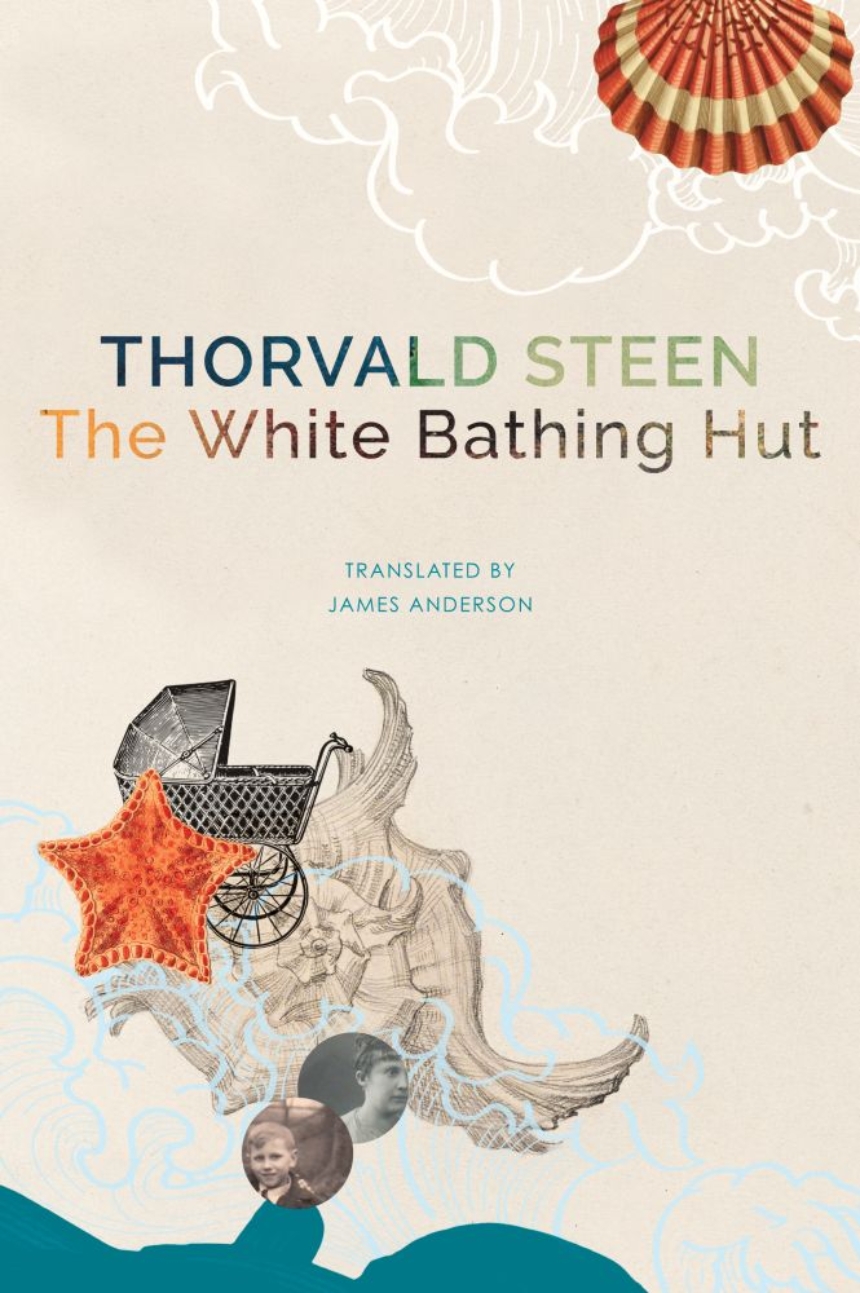
“We know something of ourselves, but not much.” The White Bathing Hut by Thorvald Steen

Beneath my clothes there is 1.8 square metres of skin stretched over five litres of blood, thirteen billion nerve cells and twenty-five billion red blood corpuscles.

I’ve got twenty-three chromosomes in each cell.

The chromosomes in each pair are the same length, apart from the fourth. There, one of the chromosomes is fractionally shorter than the other.

That’s why I can’t get up and walk out of this text.

One might hope that, at this point in time, especially more than two years into a global pandemic, that illness and disability might be understood as something that could strike anyone, at any time, even you or someone you love. But, as we have seen, human beings have a stubborn capacity to blame those who fall ill, experience extended symptoms or die for their outcomes, citing age, lifestyle, or co-morbidities. The stigma and shame well known by those of us who live, love someone and/or work with people who have a disability, has been replayed and reinforced  during this extended period of co-existence with a persistent, evolving virus with unknown long term consequences.

The events chronicled in Norwegian writer Thorvald Steen’s The White Bathing Hut illustrate the extent to which societal attitudes toward disability can lead to deception and family dissolution. The unnamed narrator is a man nearing sixty whose deteriorating physical condition has left him dependent on a wheelchair. One day, with the Christmas season approaching, he receives a call from a woman who identifies herself as his cousin, the daughter of his mother’s brother. The existence of an uncle and a cousin come as a complete surprise to him, but, as this woman, Eline, explains, his family had refused to have anything to do with hers and she had only come to know of him by chance. She also reveals that her father and their mutual grandfather both died of the same disease he has. This unexpected information leaves him wondering if his entire life was constructed on a web of lies and sets off a chain of urgent inquiries. His account unfolds through a spare, tight narrative reported from an unusual perspective, so to speak.

Several weeks after Eline’s call, while seated at the table trying to find a location on a map of Norway, our narrator leans forward, realizing too late that he’s forgotten to apply the brakes of his wheelchair, and he and the chair topple over as if in slow motion, each movement described and dissected in poetic and anatomical detail. “I land in a heap. / Soft and hard. / Textiles, hair, flesh and bones. / That’s all there is.” His wife has just left for a week-long business trip, his daughter is away for the weekend and his caregiver is off for the holidays. His phone and alarm are on top of a shelf out of reach and he is now consigned to a new vantage point… the floor.

Unable to get up, his thoughts turn to his own past, to the development of his disease, and the more recent investigations and interrogations triggered by his cousin’s phone call. He had been diagnosed in his teens with a progressive form of muscular dystrophy that causes gradual muscle degeneration and eventual paralysis—news that was a terrible blow to him as an athletic young man with a promising future as a ski jumper. But the reaction of his parents was even worse. They warned him to tell no one. They refused to speak about it. Tried to wish it away. So he was burdened with a secret that slowly unveiled itself as his muscles weakened. Now, armed with new information there is a further significance to his desire to better understand his place within the broader context of his family history: his daughter Karoline appears to have inherited the same crippling condition.

The spare, tight narrative proceeds in short, nonchronological chapters that move between the protagonist’s childhood, youth and adult years, and the few weeks that have just passed. He has recently made two visits to his recalcitrant mother who informs him she is dying of cancer but refuses to answer his questions. What little he can glean guides his search through archival sources for biographical details about his uncle and grandfather. As he looks back over his personal life experiences, his efforts to conceal his pain and growing weakness—often by putting himself at risk—is contrasted against the demonstrations of physical strength that marked his earliest years. The increased awareness of body difference and stigma lead him to believe he will be forever unloveable. As a young man, his future, as he sees it, looks bleak:

How could I make a plan of any kind? I didn’t know what I’d look like or be able to do in a few years’ time. I hated my body. If anyone had told me that I ought to think positive, I’d have hit them. The weekends were the worst. Sometimes I lay in bed the whole of Saturday and Sunday without the energy to sit, eat or drink. In the mirror I could see that a few of the little muscles around my eyes and mouth had completely disappeared.

This is a very physical text. A story that is bound to the body. Driving this physical aspect home are the poetic interludes, often containing minute skeletal and cellular descriptions, that regularly relocate the narrative in the immediate space, on the floor, where the narrator observes his surroundings and struggles to shift his reluctant limbs into a position that might enable him to push himself up. It is an exhausting, futile effort. With a steady resolve he returns to his account.

Although the disability central to this novel is explicitly visible, The White Bathing Hut manages, without ever exercising a heavy hand, to call attention to the extent to which any disability—physical, cognitive or mental—is met with a social stigma that extends beyond the afflicted individual to the family and their contacts. It also alludes to an even darker subtext, that of Norway’s difficult historical relationship with eugenics. Of course, neither of these factors are unique to Norway, nor are they entirely behind us. Shame associated with disability still exists, and the ability to selectively control for desired sex, against congenital conditions, or even for other qualities raises serious ethical questions. Through this book’s very honest, resilient and endearing narrator, many of these critical issues are brought to light.

The White Bathing Hut by Thorvald Steen is translated by James Anderson and published by Seagull Books.

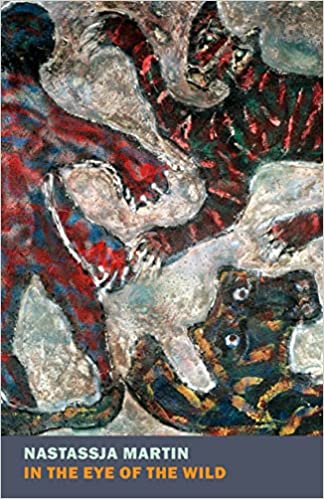
Suspended between human and animal: In the Eye of the Wild by Nastassja Martin

The sounds I hear are enhanced. I hear like a wild animal, I am that wild animal. I wonder for a moment whether the bear will come back to finish me off, or to be killed by me, or indeed for us both to die in a final embrace. But I already know, I sense, that this will not happen: he is far away now, he is stumbling through the high steppe, blood dripping down his pelt. As he is farther away and I look deeper into myself, we each regain our self-possession.

The opening passages of French anthropologist, Nastassja Martin’s In the Eye of the Wild are strangely surreal. She has just had a violent encounter with a bear on the Kamchatka Peninsula region of the Russian Far East, awaiting rescue. She is in a lucid state, numb, acutely aware. but her preternatural sense of connection with the animal who has wounded and disfigured her sets the tone for the account of physical and psycho/spiritual recovery that follows. Devoid of pathos, it is a tale of self-observation, ethnographic insight and the drive to understand what has happened—not from the angle of Western medical science, but from that of the Evens, the Indigenous people she had lived among and worked with in Siberia for four years.

Martin’s voice is most striking. Throughout her often quite horrific hospital ordeal, first in Russia and later in Paris, she does not hide her anger, frustration and physical agony. Her injuries are extensive, to her face and leg. Her jaw needs to be reconstructed—twice because the French doctors don’t trust the Russian work—and there are serious complications. Following a visit from the surgeon after a successful operation, she reflects on her body, her being, as an occupied territory under siege:

Recovering from this clash is not only an act of self-focused metamorphosis, it is a political act. My body has become a territory where Western surgeons parley with Siberian bears. Or rather, where they try to establish communication. The relationships being spun within the little country my body has become fragile, delicate. It’s a volcanic country, landslides can happen at any moment. Our work, hers and mine, and that of the indefinable thing the bear has left deep in my core, consists from now on of “maintaining the lines of communication.”

Existential questions drive the narrative—not why did I survive?—but a deeper examination into the intrinsic meaning of the experience. In this, dreams become essential to piecing together an understanding and acceptance of the relationship she has forged with the bear.

As soon as she is allowed, Martin retreats to the solitude of her mother’s home in Grenoble. Here she reads, speaks with her therapist on the phone, and tries to articulate the symbolism of what has occurred. She seeks precision in her choice of words—an attention that shines through in Sophie R. Lewis’ translation—but something deep has been destabilized that is not conforming to her intellectual instincts. She is not, as her therapist has advised, at peace. In truth she knows that she has not been inclined to seek to facilitate peace in her life or social interactions. “I have never known what to do with peacefulness or stability; serenity is not my strong suit,” she says. This self-evident prickliness, casts the narrative in a light not typically found in survival memoirs while her years spent among Indigenous communities, first Alaska and then Kamchatka, and her academic study of animism, have informed her encounter with the bear in a way another unfortunate hiker on a short excursion into the mountains would likely not. There is a notion of destiny and an element of suspension at the threshold of human and animal that cannot be explained by the park warden or naturalist. The anthropologist can only begin to heal by returning to the wild.

Her mother is decidedly unenthusiastic when she announces that she must go back to Russia. Barely recovered physically from her multiple surgeries, she is determined to leave. So, only a few months after the original incident, Nastassja Martin is again deep in the forests of Kamchatka, staying in a small cabin with Daria and her son Ivan who have become like family over the years, and other relatives that come by. It is the middle of winter; she joins in the necessary tasks and activities of the day, fetching water, setting traps, and gathering the wisdom and answers she needs to finally begin to process the journeys—internal and external—she and the bear have taken since their paths first crossed.

In the Eye of the Wild is an account that captures the way that the intellectual and the emotional can be at odds in the attempt to put meaning to a major trauma or loss. Martin is, by turns, angry, philosophical, and numb. The ethnographic has suddenly become profoundly personal and no amount of book knowledge can resolve it. The boundary has been blurred. This fuels her relentless determination to face down, if not the bear itself, the dreams he has bequeathed her. The result is an inspiring account that demonstrates an abiding respect for both the animal and the only people she knows can truly help her understand not what happened, but why.

In the Eye of the Wild by Nastassja Martin is translated by Sophie R. Lewis and published by New York Review of Books.

Two poetry collections read in January: Losing Touch by Magda Kapa and Small Talk by Stephan Delbos

Blogging, reviewing, and online book banter has brought writers, translators, and small publishers into my life that I may never have encountered otherwise. This is the beauty of a community of readers and book lovers that knows no borders. Last month I read two new collections by poets I came to know through this virtual literary network, both of whom I have read before: Magda Kapa and Stephan Delbos.

Greek-born Germany-based poet, photographer and teacher Magda Kapa captures small, finely observed moments in her poetry, sharing it on her blog I Was Not Born in English along with her photographs. Her new collection Losing Touch features spare poems that follow a form she credits to poet George Szirtes—3 stanzas of a haiku-like form followed by a single stand-alone 5-syllable line. As Covid came into our lives in early 2020, following Szirtes’ lead, she began capturing her response to the pandemic through these small structured poems. I have long followed her posts and have her earlier collection, All the Words, so as I read this new volume which chronicles the days, perhaps 8-10 times per month, from March 2020 to February 2021, I felt like I was sometimes encountering old friends in poems and lines that I myself had quoted and shared with others. Her images are sharp, her verses visually and emotionally astute:

8th June

Late afternoon light
falling sideways through gate doors,
marking lines on walls.

Inside us, self-drawn
lines too, implacable bars
that one gets used to.

As light shapes darkness,
lines like tears, marked days,
years, marked centuries.

Our secret sketchbooks.

Although deceptively simple, these poems carry the poet’s immediate response, in the moment, to the way the pandemic has strained and altered our connections, our expectations and our dreams. As they evolve across the first year of Covid, they capture changes we can all relate to. There is the inability to understand, and the fear and uncertainty of the early days marked by anxious nights, an increasing focus on the interiority of our individual existences and necessary distance from loved ones. Alongside the changing pandemic reality, other realities also intrude, marked as appropriate, by hashtags denoting BLM, climate change, the Lebanon explosion.

When Covid hit I was editing for an online journal and it seemed we were inundated with pandemic submissions. We even ran our own series. It felt like a quickly saturated market, but now, as we move into the third year, I am grateful for records like this that speak to the early ebb and flow of emotion, but I know well that the final story is yet to be written. Losing Touch, beautifully illustrated with drawings by Elizabeth Adams, is a moving testament to the distanced, sometimes surreal and melancholic, unwelcome new normal we are still navigating two years later.

Losing Touch by Magda Kapa is published by Phoenicia Publishing.

* * *

I first became aware American poet and translator Stephan Delbos as co-translator of Vitězslav Nezval’s The Absolute Gravedigger. I then read and reviewed Light Reading, his collection of sparse, fragmentary poems. Long based in Prague, he was named the first Poet Laureate of his hometown of Plymouth, Massachusetts in 2020 and his new collection, Small Talk, spans both of his homes in Europe and the US. In doing so, it also covers a broad range of themes and settings. Vivid images from the streets of European cities meet childhood Cape Cod memories meet poetic tributes to Michael Jackson and Aleksandr Solzhenitsyn and a chilling nursey rhyme style memorial to four boys killed on Gaza Beach.

However the highlight and centrepiece of this volume is the extended sequence “A Child’s Guide to Candor,” dedicated to his first child. By turns domestic, nostalgic and hallucinatory, a new father marvels at the wonder of a new life, a new role, and all of the dreams and fears that entails.

I dream of weeping on ice skates,
Olympiad Chorus swarming,
knife-bearing ceremony;
dream of burglars tearing books
and wake to the slumber of my son;
silence
of midnight hockey rinks
hovers in the house.

He implodes the luscious
fruit of dreams
fists tight as figs.

As he adjusts to his new role as a parent, the poet is flooded with an array of images drawn from his own boyhood, the adventures and the anxious moments, with knowledge that his child will have to face his own formative experiences—in time. He watches as his own parents settle into their new roles as grandparents and reflects on the generational shifts.

What is family?
Blood architecture.
Seasons of mind.
Rooms and furniture.
Bottles of words.
Charted worries.
Bookshelves of names.
Living photographs.
Lost property.
A story written.
of flesh and forgiveness.

The surreal strangeness of the early months and years of parenthood are so beautifully captured in this series of segmented poems— a personal celebration of new life in the world that reminds us that the future belongs to our children, in an individual and collective context, something we cannot afford to forget in these volatile times.

Small Talk by Stephan Delbos is published by Dos Madres Press.

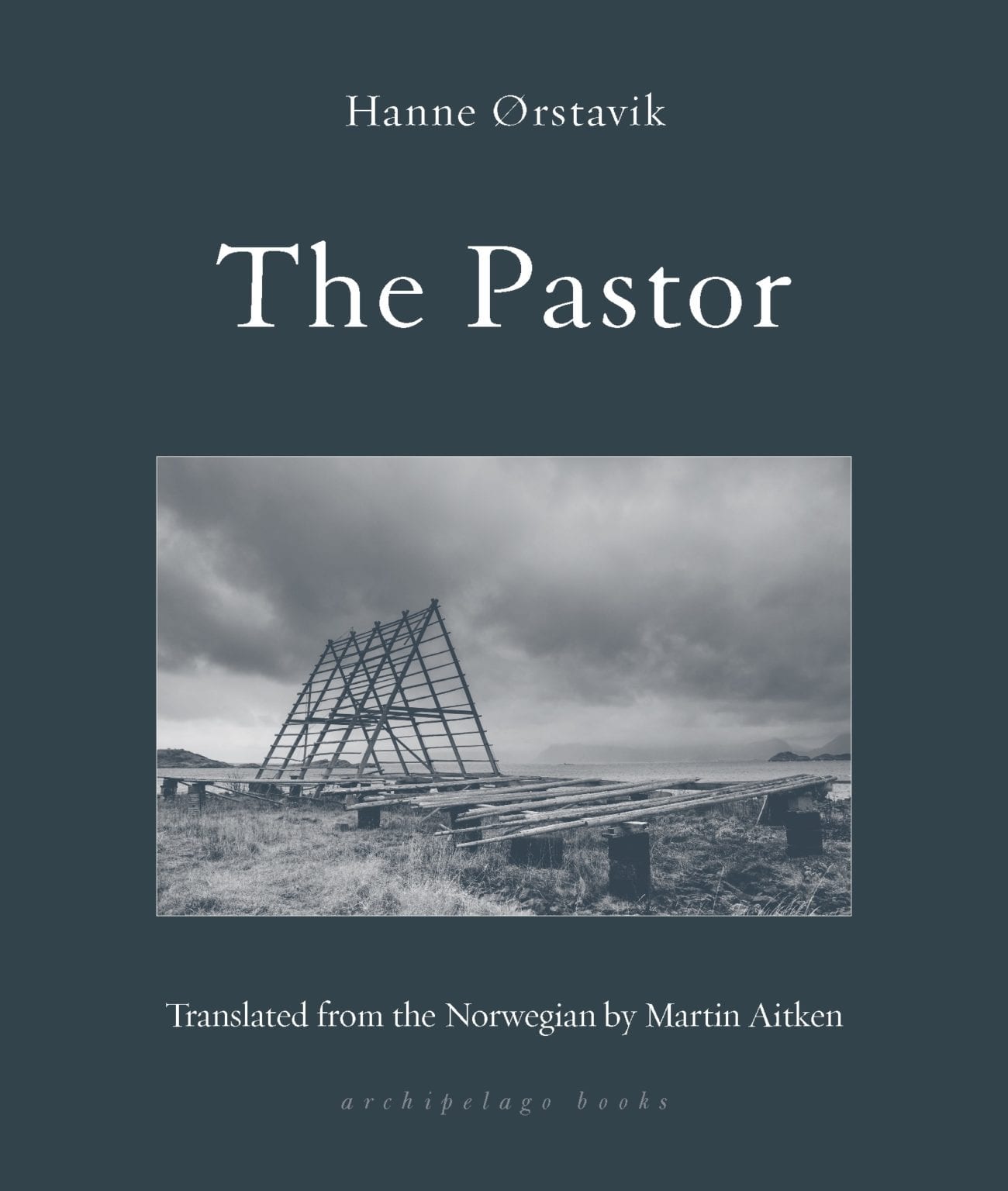
“I wanted to bind up a wound”: The Pastor by Hanne Ørstavik

Who was I? Everywhere I went, something broke or became distorted. What had I thought? That by travelling to somewhere else on the map I would arrive at some new place in myself? A place in me that was good and warm and worthy of love?

Set deep in the endless night of an Arctic winter, The Pastor by Norwegian writer, Hanne Ørstavik, is a novel that pushes into that darkness—on an emotional, spiritual, and historical level—in search of some glimmer of clarity, some sense of meaning in an uncertain, insensible world. Yet, rather than reaching any absolute truths, the internally focused narrative rides on a current of relentless speculation and questioning, becoming a melancholic testament to the inadequacy of language to isolate and contain our thoughts and feelings, and the barriers we often erect that keep us from being able to communicate what cannot be articulated in words. Yet out of this sombre landscape emerges a tale of quiet beauty.

The troubled narrator, Liv, is a theologian who has abruptly abandoned her PhD studies in Germany, following the tragic death of her friend, Kristiane, and accepted the position of adjunct pastor in a small town in the far north region of her native Norway. When we meet her, she has been in this new role for one year. She seems to have achieved a certain state of equilibrium with her skeptical parishioners, and a companionable relationship with the recently widowed woman she has invited to live on the main floor of the parsonage with her two daughters. As well, the relative proximity to the site of the 1852 Kautokeino Rebellion, the Sami uprising against Norwegian settlers, allows her to continue her longstanding academic investigations into the events and the role the understanding of Biblical language might have played in inspiring the Sami’s attack. But it has not been easy. Her brief friendship with Kristiane and the circumstances surrounding her suicide continue to haunt her while she worries that she will always be an outsider, emotionally distant from others and from God.

Unfolding over the course of one week, the novel opens with our unlikely pastor officiating communion. Her thoughts go back to Kristiane, to her decision to move, her hopes for her new home, and the very unfortunate first impression she made in the church. This continual cycling of memories, sometimes shifting from present to past and back in the same paragraph, drive the narrative forward, slowly filling in more of the details, discomforts, and unresolved doubts she carries. An imagining of the Sami rebellion, augmented with historical records, is also woven into the broader tapestry. In the present moment though, it is a call to attend to the parents of a suicide victim, a nineteen year-old girl who has hung herself from a fish drying structure out on a barren piece of land, that triggers Liv’s immediate crisis of identity and faith. By the end of the week, she will have been tested, or rather, will have tested herself against a variety of circumstances that she  struggles to meet.

The challenges Liv faces all revolve around her inability to physically bridge the gap between herself and others—to reach out a hand to a grieving parent, respond to a man to whom she is attracted, recognize signs of depression in someone close to her—a skill she perhaps imagined the priesthood would magically confer upon her. She recognizes what she wants to do or say, imagines it, but fails to follow through. Again and again. Key to understanding her crippling inhibition, she believes, is her brief friendship with Kristiane. At forty-one, seven years her senior, the German woman was a puppeteer with her own workshop and theatre. A definite counterpoint to the serious theologian. Liv saw in Kristiane a lightness of spirit, and an apparent self-confidence that she craved. She seemed at ease in her body and her being, quick to laughter, her crooked teeth flashing—an image Liv cannot forget. They only knew each other for forty days, but Liv is obsessed by the fear that she failed her friend:

Weightless. I was so heavy myself, and all I saw in her was what I needed. Was that it? I didn’t realize that the light in her was turned up too bright, like a film going completely white until the image disappears. Was that the way it was?

If she was aware of an intrinsic “heaviness” before encountering Kristiane, her death untethers her completely. She carries this disconnect with her all the way back to Norway. Recollecting the long drive north she says:

I drove slowly. The flat, open vista seemed to make everything so plain, but still felt like I couldn’t get a hold on anything, as if I was so very far away. The road, stretching out in front of the car, the landscape, the steering wheel I gripped between my hands. My mind was a haze, as if there were no thoughts left to think. It was like I was driving over the back of some great beast that could get to its feet at any moment and shake me off. I wasn’t attached to anything, wasn’t a part of anything.

Liv is wounded. She is ever aware of her failure to connect, feeling outside, separate. She reminds herself that she is a pastor, that people depend on her for comfort, and then wonders again whatever possessed her to choose the ministry as a career when she herself is so uncertain, so ungrounded, so afraid that she will fall and that there will be nothing or none there to catch her. Isn’t that what everyone needs to have? Some kind of faith?

As it moves through the vast, eerily lit northern Norwegian landscape, The Pastor relies on the reader’s ability to connect with a protagonist so estranged from herself. Some might find Liv frustrating, but in its winding, lyrical passage, her narrative contains great depth and mounting tension. As someone who has experienced difficulties with mood regulation, I found Ørstavik’s portrait oddly familiar. I was not surprised to hear in an interview that the author was coming out of a serious depression when she wrote the book almost twenty years ago—she captures the disjointedness of thought so well. And it’s a sensation most people have probably known at some point or another. For example, when Liv is rushing back to town having learned of another tragic incident, this one much closer to home, her thoughts are suspended, frozen: “I tried to think about what I was thinking about. My thoughts wouldn’t think.”

Martin Aitken’s sensitive translation maintains an atmosphere of profound longing for connection and contact, for the touch to fill the unspeakable space, a gesture that can be so hard to give or accept. That is at the core of Liv (and her name means “life”)’s existential discontent. There are many unanswered questions in The Pastor, but small cracks appear and spread slowly, and there is the hope that what one tragedy broke open, a second tragic occurrence a year later might finally begin to heal.

The Pastor by Hanne Ørstavik is translated by Martin Aitken and published by Archipelago Books.

Each to his own “green truth”: Ponge, Pastures, Prairies by Philippe Jaccottet

Ponge, Pastures, Prairies is more than a simple tribute to French poet and essayist Francis Ponge by fellow poet Philippe Jaccottet, it is a deeper examination of the way creative influences sift through a writer’s own process of literary development. The two men first met in 1946, when the latter was barely twenty years-old and, as Jaccottet recounts, he imagines that, though he said nothing, the older man likely had his reservations about his youthful lyric enthusiasms. Nonetheless, a friendship between them would form and continue for over forty years. When Ponge died in 1988 at the age of 89, Jaccottet was among the mourners at his funeral in a rustic graveyard in Nîmes. It is with his reflections that day—a piece intended to stand alone—that this small, special book has its origin.

The funeral was a modest affair on a bright summer day, but it was not one without qualities that seem to Jaccottet oddly fitting for his friend. The pastor arrived quietly by bicycle and chose to recite the 23rd Psalm beside the family vault, “because the deceased was a poet.” King David’s ode to his heavenly shepherd and “green pastures” was followed by a simple reading of Ponge’s “The Meadow” by actor Christian Rist:

“Carried away suddenly by a sort of peaceful enthusiasm / In favor of a truth, today, which is green. . .” This kind of albeit distorted echo, over some thirty centuries, was thus perhaps even stranger and more striking than the rest (the vast, noble, abandoned cemetery and this burial, as if for an unknown person, of a writer so legitimately famous).

This juxtaposition sets the scene for Jaccottet’s homage to Ponge—a poet whose domain was the minute examination of the everyday—calling attention to his commitment to a “green truth” and the remarkable vigour with which he defended it. A sketch of a strong character, given to both “excessive intolerance” and “most generous enthusiasms” emerges, composed in the emotion of the moment of loss. It is not surprising, then, that despite the many formal arguments he had offered in praise of his friend over the years, Jaccottet felt a personal need to articulate what essentially separated him from Ponge’s work. So he started to write a follow up.

However, the expansion of this text into its final form was not an immediate or obvious project. In his Postface, written in 2013 when he was preparing for the original French publication, Jaccottet admits that he was not inclined to work his sentiments through to a natural end. Others encouraged him to think otherwise, but still he delayed, out of laziness or, perhaps, out of fear that entertaining his reservations might be disrespectful to a man he had continued to admire and think of with great affection. But this recognition of the complex interplay of influence and divergence, explored with a perspective stretching over more than two decades lends depth to this slender volume.

Jaccottet begins with a consideration of two of Ponges’ heroes: François de Malherbe (1555-1628), the French poet and critic who insisted on strict form, restraint and purity of expression, and composer Jean-Philippe Rameau (1683-1764) whom Ponge proclaimed as the artist who interested him more than any other with a style “of the kind that awakens: male, energetic, and  ardent.” If these men spoke to the inspiration that charged his friend, Jaccottet takes care to look at how his own response and tendencies diverge. As he moves on to discuss the way their approaches to writing start from contrasting points of view or ways of looking—one precise and object-oriented, the other lyrical trial-and error experimentation open to the “fleeting impression.” However, even if the origin and ends differ, he can acknowledge that his thinking on questions, such as the “enigma of purity” has been influenced by Ponge’s concern with that which is “pure” or “true.” One’s questing can be furthered, after all, in discourse with those whose creative inclinations deviate from one’s own. And throughout this text, Jaccottet is careful to reiterate his respect and fondness for Ponge, a feeling that he is assured in reviewing the volume of correspondence they exchanged over the years, was returned.

Ponge, Pastures, Prairies offers a tribute and a uniquely honest, yet sensitive critique. Jaccottet writes very thoughtfully, entertaining ideas about poetry, death, and the particular dynamics of the relationship between himself and Ponge in a manner that does not require a deep familiarity with the work of either man. In this regard, the extensive footnotes, based on Jaccottet’s own but expanded by translator John Taylor, are helpful and informative. I will confess that I have acquired more than a few volumes of Jaccottet’s work over the years, but until this time I’ve not seriously engaged with any, feeling, perhaps, a little intimidated or uncertain where to start. This book has ignited my interest and opened the door or, as Jacottet might say, a crack in that wall.

Ponge, Pastures, Prairies by Philippe Jaccottet is translated by John Taylor and published by Black Square Editions.