Caught in a vicious circle: Yugoslavia, My Fatherland by Goran Vojnović

As Yugoslavia, My Fatherland, the intensely powerful new release from Istros Books opens, it is the summer of 1991 and 11 year-old Vladan Borojević has, to date, enjoyed an almost idyllic existence in the seaside town of Pula. He and his young friends view the realm of adults as something separate, of interest only if someone is missing an arm or leg, or sports a long beard, excessive tattoos or some other particular curiosity. None of them are aware of the deep seated tensions within their native Yugoslavia that are about to start to fracture and begin a long, bloody period of unrest that will ultimately tear the uneasy Socialist state apart. On the day that he and his friends find the local men gathered around the TV set shouting at the politicians on the screen with an intensity normally reserved only for critical sports matches, Vladan senses something is amiss. His anxiety increases when his father arrives home looking empty and distracted:

“My father never drank at work, and I heard him say, countless times, that only in Yugoslavia would people drink more while at work than after work, and that this would send the country to an early grave. But that day he held me so powerfully in his muscled arms that I thought, in all seriousness, that he must be drunk.”

Vladan’s father Nedelko, of Serbian background, is a proud member of the Yugoslav People’s Army. His mother is a strong willed Slovenian woman, who, against her parents’ wishes, left her homeland and married her young soldier. The stirrings of political insurgency put an immediate end to their happy domestic life in Pula as Nedelko is seconded and the family is moved to a hotel in Belgrade. When it becomes clear that this little trouble is not about to just blow over, Vladan’s father disappears from his life. He and his mother will eventually end up in Slovenia, and within a few years news will come that his father, now a General, has died. Or so he is led to believe.

yugoslavia-my-fatherland_5595627fccf62_250x800rSeventeen years on, Vladan is still living in Ljubljana, Slovenia, but restless and unable to find his footing. He tosses his father’s name into Google. What he discovers turns his fragile world upside down. General Borojević is not dead, but rather he is a fugitive, wanted for war crimes. Rattled by this news Vladan sets out to find his father tracing a trail that links figures from his father’s past, a relative, an assumed identity, and clues to where he lived or may yet be. When his search leads him back close to home, the bits and pieces he gathers raise even more questions, and force him to look deeply inside himself to determine if he even wants the answers he had craved.

This is one of the most impassioned novels I have read in a long time. The author, Goran Vojnović, is a Slovenian poet, screen writer, and film director. He draws on this background to roll out a complex story that deftly weaves back and forth in time, negotiating the highly charged ethnic and geographic divisions that have long defined and divided the Balkan region. With Vladan he has created a recognizable, contemporary narrator who welcomes the reader into his journey with a mixture of vulnerability and wry humour. Traveling on the cheap in a car that just barely manages to cough from point A to point B, his descriptions are often priceless, like this stop at a roadside café:

“I sat at a table covered in a white cloth, as well as aged coffee stains, which lay over an even dirtier red tablecloth. A plastic ashtray sat in the middle, alongside a vase containing plastic flowers from the Yugoslav Mesozoic period. I had to wait, of course, to earn the right to pay for a sour coffee, hand-mixed with a disposable thin plastic spoon, amidst this particular ambience. It was my first time in such a setting.”

Whether he is looking back to his troubled childhood and adolescent years and his increased alienation from his mother, or looking forward to what truths may or may not lie ahead; his emotions are painfully open and honest. Even if he sometimes leans toward the melodramatic, it is hard to resist being pulled into his account of a life torn apart twice over and the pain of the very difficult dilemma he will ultimately face.

Yugoslavia, My Fatherland tells a multi-layered tale. The tragic dissolution of the Borojević family is traced out against the trauma and conflict that would rend the states of the Balkan region apart and still threatens further division in certain areas. He encounters many who bear wounds too deep to heal. But it is much more than that. Questions of personal and national identity are central. Vladan is not only seeking an understanding of himself and his relationship to his ethnic heritage, but he is striving to reconcile his memory of a loving father with a fugitive war criminal. A very human longing for closure and healing drives him to seek out and confront the man who used to be his father, whoever he is. However, somewhere along the way he will have to stop to measure the costs and decide what he is willing to risk.

Translated from the Slovene by Noah Charney, Yugoslavia, My Fatherland is original, ambitious in scope, and another welcome addition to the catalogue of independent UK publisher Istros Books.

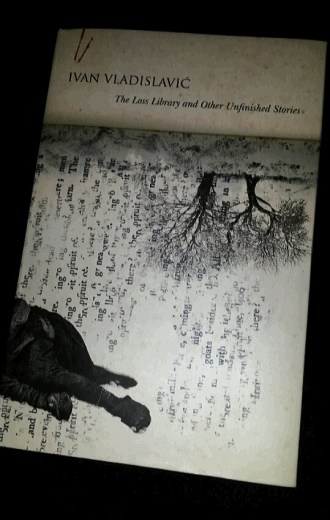
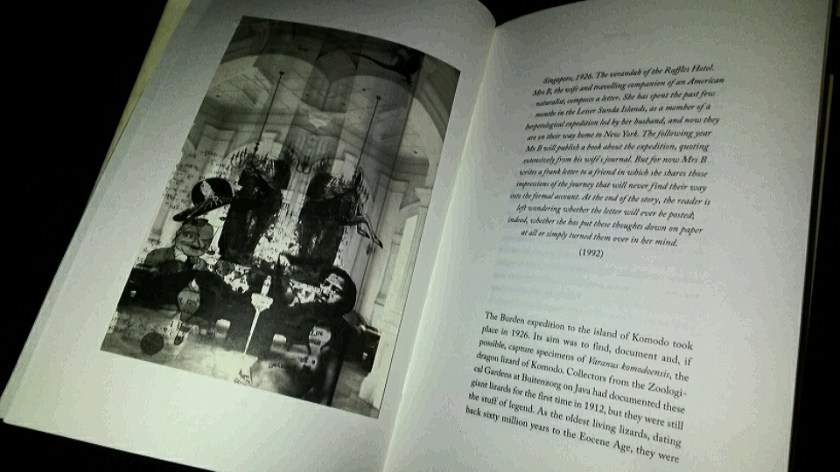
Castles in the air? The Folly by Ivan Vladislavić

Imagine an empty lot. A curious stranger arrives one evening. He steps into the lot and makes his way across the dry winter grass, stopping when he hits a large anthill.

“It seemed a pity to waste this discovery, so he stood on top of the hill and turned his face ceremoniously to the four corners of his inheritance. It was a big face, with a crack of a mouth and a stump of a nose, with unfathomable sockets, craggy brows and a bulging forehead dented in the middle, altogether suited to the play of moonlight and shade. His survey revealed a single tree in the elbow of the hedge, and he chose that spot for his camp.”

As this newcomer sets up camp, the residents of the house next door are settled in front of the TV consuming prepared dinners on tray tables while they watch the usual turmoil and violence exploding on the evening news. Yet for Mr and Mrs Malgas, the quiet, unassuming domestic existence they have enjoyed is about to be changed – disturbed, unwound and distorted – by the very presence of this most unconventional new neighbour.

follySuch is the premise of The Folly. Newly released in North America, this haunting modern day fable, originally published in 1993, was the first novel by South African author Ivan Vladislavić. Mr Malgas, the owner of a local hardware store, reaches out to this oddly eccentric character who has suddenly taken up makeshift residency on the dusty patch of veld next door. He imagines the newcomer with the best intentions, excited when he learns that, true to his name, Nieuwenhuizen does in fact plan to construct a “new house” on the vacant lot. The Mrs will not be appeased. She is suspicious at every turn.

When convenient, Malgas’ enthusiastic assistance is welcomed by his fickle neighbour but the building project is unlike anything he has ever known. Nieuwenhuizen is methodical and will not be rushed. He deliberates, meditates and paces around his piece of land, frequently flinging his ungainly long frame about in the most unusual manner. Prancing, jumping, spinning and throwing himself to the ground. All the while Mrs keeps an anxious eye from behind the lace curtains of her lounge. When the “construction phase” finally gets into full swing things get even stranger.

Nieuwenhuizen is an enigmatic character, he can be pleasant and sociable one moment, suddenly turning to shower insults on his eager helpmate the next. Malgas takes it hard. Back at home his wife feels increasingly powerless against this mercurial influence. One evening when her husband, exhausted from a long day working beside his neighbour, collapses in the La-Z-Boy in front of the TV, she confronts the state she has come to:

“Mrs went into the bedroom, seated herself before the winged mirror of her dressing table, and said, ‘Although I appear to be thin and small, and fading away before your eyes, I am a substantial person. At least, it feels that way to me.’

Her pale reflection repeated the lines in triplicate.

Yet she saw through the pretence. It was clear: she was made of glass. And under the bell-jar of her skin, in a rarefied atmosphere, lashed by electrical storms and soused by chemical precipitations, her vital organs were squirming.”

Parable or fable, comparisons to Borges, Calvino and Beckett have been suggested by reviewers, but this timeless allegory owes its intensity to the brilliant descriptive power and sly humour of Vladislavić’s prose. As this tale rises (and falls?) to a stunningly surreal and dramatic climax, we are, as readers, as completely enmeshed in Nieuwenhuizen’s architectural chimera as the hapless Malgas.

Originally published at a pivotal moment in South African political history, it is tempting to read politics into the allegorical dimensions of this tale. I read it more broadly as a parable of our complex anxieties and attractions to others. Malgas is drawn to Nieuwenhuizen immediately. Mystery, curiosity perhaps, but there is a romance in his simple camp life and his creative fashioning of implements out of found objects and trash that evoke the magic of boyhood adventure. As a man ensconced in a secure, if unexciting, domestic life this appeal sets the groundwork that will allow him to be drawn into Nieuwenhuizen’s scheme. The ephemeral success of the envisioning and realization, however fantastic and temporary, of their dream mansion depends on Malgas’ desperate desire to believe and his longing for companionship. For the Mrs however, the new neighbour is a source of fear at first, of danger, and then of loss. He threatens their privacy, their way of life, and ultimately their marriage. The “other” forever holds that mixed appeal and repulsion.

The past two years have seen a growing awareness of and appreciation for Vladislavić’s work outside South Africa. It is well deserved and long overdue. The Folly was released in North America by Archipelago Books in September of 2015, the UK release from And Other Stories is due in November.

Dark brightness and bright darkness: Berlin Stories by Robert Walser

“Up above is a narrow strip of sky, and the smooth, dark ground below looks as if it’s been polished by human destinies. The buildings to either side rise boldly, daintily, and fantastically into architectural heights. The air quivers and startles with worldly life… And always people are walking here. Never in all the time this street has existed has life stopped circulating here. This is the very heart, the ceaselessly respiring breast of metropolitan life. It is a place of deep inhalations and mighty exhalations, as if life itself felt disagreeably constricted by its own pace and course.”

Great cities have their own personalities and in the company of Swiss writer Robert Walser, Berlin of the early twentieth century becomes a living, breathing entity, a dynamic metropolis drawing in the ambitious, the hopeful and the desperate in equal measure. As a guide to the city, its haunts, and its colourful inhabitants, he is endlessly engaging. His name has been surfacing in my consciousness for a while now, but I had not gotten more than a few stories into this collection before I wondered why it had taken me so long to “discover” him for myself.

BerlinBerlin Stories from New York Review of Books is a collection of short stories composed during Walser’s years in Berlin and the first few years after he left, originally edited and organized by German Walser scholar, Jochen Greven. In her introduction to this edition, translator Susan Bernofsky tells us that, with the beginnings of a literary career underway, Robert Walser moved to Berlin in 1907 at the age of 27. His brother had already enjoyed success as a set designer in the thriving theatre scene. The city was bursting with life. Over the next six years he would record that life in short stories or “prose pieces” and three novels. But financial security eluded him and his own eccentricities did not help him secure the patronage that would have benefited him. He returned to Switzerland in 1913.

The pieces in Berlin Stories are divided into four sections or “movements”: The City Streets, The Theatre, Berlin Life and Looking Back. Most of the pieces are quite short, often no more than a page or two. Narrators who may or may not be Walser himself, wander the streets, ride the trams, or take in theatrical performances while offering attentive discourses on the sights and experiences of city life. He can be thoughtful, melancholy, humourous or sarcastic, sometimes striking playful barbs at contemporaries.

As with any collection of short works, especially one with 38 stories, it is hard to capture a sense of the volume in a brief review. There is so much magic in these pages, it is difficult not to marvel at the acuity of Walser’s observations. He is especially gifted at peering behind the glitz and creating moving accounts of what Bernofsky calls the “humbler aspects of city life”. He has an uncanny eye for the small details that play across the faces and animate the actions of the characters he sketches. Sometimes his observations are direct, at other times his intentions are delivered with a deft backhand as in “The Little Berliner” a story in which he takes the voice of a precocious 12 year-old girl, who enjoys a life of wealth and privilege. But all is not as wonderful as one might suspect. She reports that: “For reasons whose depths I cannot understand and consequently cannot evaluate, my parents live apart. Most of the time I live with Father.” She admonishes herself for confessing to her diary, but Father, for all his wealth and charm, is sometimes a very angry and unpleasant man. The observations and attitudes swirling around in her child’s head present a rather caustic view of the rich delievered in a wonderfully clever way.

Another piece I really enjoyed for its pure descriptive power is “Fire”, in which the narrator and his companion get caught up in the excitement of what must have been a fairly regular occurrence at this time – a house on fire. A spectacle drawing the curious, it is an event at once ordinary and extraordinary:

“an entire street is brightly, garishly lit up by it, it resembles a sunset in the distant south, ten evenings ablaze, a host of suns setting in unison. You see the façades of buildings looking like pale-yellow paper, and the bright red glow of the fire approaches, a thick glowing, wounded red, and beside it the street lanterns look like feebly burning damp matches.”

No one is injured in this instance but a distinguished old piece of architecture is lost, a fact greeted by one of the observers as a healthy form of natural selection, clearing out the dead wood and making room for new construction.

I could go and quote from this work at length, there are little gems nestled in almost every piece. More than 100 years on, his work is vital, entertaining and immensely readable. At the height of his career he was a favourite of Kafka, Musil, Hesse and Walter Benjamin. The resonance of his voice has carried on through the influence of those who admired his work giving it the immediacy that feels so surprising when one first encounters him now. In his lifetime which was increasingly spent in mental asylums, Walser seemed to disappear off the radar. Greven’s German scholarship in the 1950s and the first English translation of his work not long before Walser’s death in 1956, brought him to the attention of a new generation of highly influential writers including WG Sebald, Peter Handke and JM Coetzee.

Now, if you have yet to make the acquaintance of Robert Walser, hurry along and check him out. Personally I’m sold and can’t wait to read more.

Unanswerable questions: On Wing by Róbert Gál

“That which we let come in and that which we never allow to enter. The flood of words. The word, like smoke. Always too late. Always already different. The word as a question, not to be posed, the word as an answer, not even given. The word as the only possible testimony, always unquestioned. The fracture, unable to be prepared, always ready to speak out. The fracture of the heart that, cut out of itself, still feels.”

Billed as fiction, On Wing by the Slovak poet-philosopher Róbert Gál eschews all the common precepts of narrative story telling. You might say that this slim volume delights in turning language and ideas inside out, offering a parade of aphorisms, queries, dreams and anecdotes. It might sound disorienting, and if you are looking to impose your preconceptions or to demand an objective truth, you may well be frustrated. Or worse. But I would argue that you don’t want to enter this work as a blank slate. You want to enter it with an openness, and a willingness to be engaged.

gal_on-wingConsider this. The avant-garde musician and composer John Zorn makes a cameo in a dream segment within the first few pages of the book. Gál revisits Zorn at the end. On Wing reads like an improvisation, an exploration of recurring motifs and themes: memory, pain, death, love, identity, faith and all the idiosyncrasies of living. Grounded through stories and recollections he rolls over ideas with an immediacy and recognizable humanity. The aphorisms, the rhetorical questions, and creative reconstructions of language weave in and out of the text; holding their own at times like extended jazz solos.

The attentive reader has to pay close attention. Marvel at the inventive word play:

“Nirvanization.
Sorting out the sporadic.
Undeception.
The transparency of sorrow.
Unexbirthed.”

Wonderful. I want those words.

But you might wonder, does this work? I will confess that I am intrigued by experimental writing, I am interested in exploring the ways that ideas can be entertained outside the traditional narrative. But for a fragmentary exercise such as this one to work, there needs to be an intrinsic continuity, even if, on the surface, there seems to be certain randomness. Humanity and restraint are important, the work must say something about life; raising questions, but not pretending to have the answers. I don’t want a writer, even in more conventional literature, to give me answers. Life doesn’t work that way.

“He: A living question mark, a question mark so full of life as a question can be. The question of who could draw no breath, the question with each suppressed tendency to breathe out. The question to an answer which yields no answer to a question. The question to a question that doesn’t answer, even when it does.

Being asked what he was doing, he answered that he had no time.

Spontaneous obligation.

For everything he is grasping for (as a drowning man) constitutes a breakthrough in his life.

Prior to that which was and after that which shall be.

Empathology.”

Reading On Wing is a singular experience. And unique, I would imagine, to every reader. One reviewer I read seemed to make much of an apparent preoccupation with suffering, anguish, pain. I did not read that book. I was especially drawn to the questions about questions, the musings about memory. Gál presents a humble, somewhat neurotic contemplation of those unanswerable questions of life creating an intimacy with the reader. I thought he was being a little lyrical about death and my marginalia bear me out. But then, less than two months ago I very nearly died. With distance I may feel different.

Somehow words seem to fall short when I try to capture the experience of reading this book. The blurb on the back describes a “restless, searching, ‘improvisational‘ prose whose techniques reflect those of Bernhard, Nietzsche, and Kierkegaard”. But if that sounds heavy, fear not. This is a pocket sized book of 109 pages. 109 pages of of ideas, humour and wisdom.

Translated by Mark Kanak, I must make a comment about the translation. I don’t know anything about Slovak, but this is a work that frequently relies heavily on word play and tautological statements, not to mention the re-envisioned words that occur in the text. I could not help but wonder how much the process of translation may have altered the intent or effect of the original. One does not have the sense that this is a translated work, it flows so smoothly. Much of the subject matter is intended to strike a note of universality, presumably in the narrative pieces as well as in the more philosophical elements, and that may contribute to this effect. I don’t know. Maybe that is another one of those questions that is not meant to be answered.

Róbert Gál was born in Bratislava, Slovakia in 1968. He spent time in New York and Jerusalem before settling in Prague. On Wing is published by Dalkey Archive Press.

Other kinds of exile: The Beautiful Screaming of Pigs by Damon Galgut

“Lives are meant to be separate and apart; when the borders break and we overflow into one another, it only leads to trouble and sadness.”

Last month I had worried about easing back into reading following my recent unexpected cardiac arrest, but, in fact, August went well. September has proved much more difficult. I have picked up so many books I thought I wanted to read only to be unable to get beyond a few pages. So it is probably no surprise that I retreated to the comfort zone of re-reading a book by one of my favourite authors. I chose this book on the expectation that a new paper edition was due to be released today in Canada but from reports of the distributor being low or out of stock, the reality of actually seeing it on the shelves may be a long way out. Too bad because when you know a writer has many excellent books to his or her credit it is a shame to see only one, the latest or best known, in stock. Fortunately this title is readily available electronically.

pigsThe Beautiful Screaming of Pigs is the second full length novel by South African writer Damon Galgut. Originally released in 1991 it eventually dropped out of print and, when a new edition was issued in 2005 following the Booker shortlisting of The Good Doctor, Galgut took the opportunity to revise the book, wanting to address his longstanding feeling that the rhythms of the language sounded “discordant”. The result, for whatever it is worth, is a novel that embedded itself into my consciousness with the first reading, and proved to be even richer and more deeply affecting with the second.

Set against the backdrop of the first free elections in Namibia in 1989, 20 year-old Patrick Winter and his mother are heading to the land that he had, only a year before, been fighting for on behalf of the South African Army. That experience has clearly left him emotionally traumatized. He is dependent on Valium to sleep and cope with recurring panic attacks. For his mother the trip is an opportunity to visit her young black lover, the latest of a long string personal explorations she has flirted with since her divorce from Patrick’s father. As the story unfolds he will reflect on his childhood, the horror of his time in the army, his ambiguous feelings about his own politics, and the emerging recognition of the nature his sexuality.

The novel opens as Patrick and his mother arrive at the Afrikaner farm where she grew up and he spent many a summer vacation. His brittle grandmother fusses over his physical and mental health, cannot understand why they are heading north, and stubbornly insists on referring to Namibia as South West Africa, the name by which it was known going back to its years as a German colony. Here Patrick will begin to reveal his family background, his closeness to his mother and his alienation from his rugged, athletic, big game-hunting father and older brother.

When his brother Malcolm joins the army and is killed in a motor vehicle accident, the loss tears the fragile family apart. Patrick and his mother move out, unraveling the tightly wound expectations of marriage by which she had been bound. As she tries to reframe herself with a series of dramatic passions and obsessions, her son is placed in the awkward role of picking up the pieces behind her. So when his own obligation to the army arises, despite the sure knowledge that he is entirely unsuited for the task at hand, he enlists promptly hoping to get his two year commitment out of the way. He won’t last two years, nor will he be able to put the experience behind him.

As he awakes that first morning to a familiar noise on the farm he makes a striking observation about his state of well-being in an unforgettable passage. Outside a pig is being slaughtered:

“There is no sound on earth like the sound of a pig dying. It is a shriek that tears at the primal, unconscious mind. It is the noise of babies being abandoned, of women being taken by force, of the hinges of the world tearing loose. The screaming starts from the moment the pig is seized, as if it knows what is about to happen. The pig squeals and cries, it defecates in terror, but nothing will stop its life converging to a zero on the point of that thin metal stick.”

As a child, the spectacle of a pig being killed never failed to draw him with a fascinated horror. On this day his reaction takes on a different note:

“It was a sign of my state of mind or soul that on this particular morning the screaming of the pig sounded almost beautiful to me. It didn’t evoke violence or fear, but a train of gentle childhood memories.”

After the reverie of a walk around the farm and a hearty breakfast, Patrick and his mother head for Namibia. When they finally reach Windhoek and meet Godfrey in the township where he lives, Patrick is surprised to find that his mother’s lover is not quite what he had imagined and is, in reality, only a few years older than he is. They learn that a white activist who had been working with SWAPO (the South West African Peoples’ Organization) has just been assassinated and Godfrey must attend to details for his funeral and an election rally. This necessitates a further trip on to Swakopmund, a detour that places Patrick in a position to question his own political resolution and bravery, especially poignant in light of the fact that on the border he was engaged in fighting the very forces he is now helping Godfrey support. His mother’s enthusiasm soon wanes into boredom as, for her, the shine starts to come off her latest passion.

Woven into the account of their few days in Namibia, is Patrick’s chronicle of his experiences in the army, beginning with the early days of tedium as the young soldiers pass empty days in their tents “playing cards, writing letters, telling jokes. An old scene, as old as the first village.” Patrick is keenly aware that he does not quite fit into this world of testosterone charged energy. He is hopelessly reminded of the way he felt sidelined as his father and brother tossed a rugby ball on the lawn or boasted about their hunting conquests. He senses a brotherhood of men to which he will never belong. It is not until a young Afrikaner named Lappies arrives that he finds a kindred spirit, makes a friend, and maybe – although he doesn’t realize it at the time – falls in love. Once fighting descends on the camp and strikes with a vengeance; horror, fear and death take their toll. When Patrick’s friend is killed, his grasp on sanity begins to slip. Galgut pulls the reader right into his young narrator’s shattered mind in one of the most intense descriptions of a mental breakdown I have ever read. It happens in fits and starts. Patrick tries to hang on, stubbornly, foolishly until his condition deteriorates to the point that he finds himself hospitalized, first in Pretoria and then in Cape Town. He is discharged from the army.

In the hospital his parents visit. Their responses to their shocked and emotionally injured son are true to form. His father travels to see him Pretoria where he sits awkwardly, shifting from ”buttock to buttock” unable to find anything meaningful to say. His mother has been busy acting in a play and does not make her appearance at his bedside until he is back in Cape Town. She visits him daily and talks about herself. It is here that she will first tell him about Godfrey, hoping to impress or shock him. He has no answer but he remembers the small drama.

“At that moment a shaft of light, blued by the rain, fell on her face: like the actress she was, she turned towards it, finding her spot. Then she smiled, and the smile became a laugh: a round, silvery sound, like a coin, which fell from her throat and tinkled down onto the ground.”

Patrick’s few days in Namibia will not answer all the questions he carries into the shifting sands of the desert one year after his breakdown. But he will emerge from the visit with a sense that it is time for him to define his own sense of personal space and figure out who he is. Borders – those lines between countries defended by force, defined by politics, and blurred between people – feature throughout this novel. True to form, Galgut allows these spaces to exist for the reader to explore. He is a writer of remarkable restraint, a storyteller who matches spare tight prose with simple moments of vivid intensity. In The Beautiful Screaming of Pigs he has created a haunting, intelligent, unforgettable portrait of the relationships between people at a time of great upheaval and impending change in Southern Africa. As Namibians queue with excitement to mark their ballot toward the end of the novel, Godfrey tell Patrick that maybe someday his own country will see the same. That day will still be more than four years away.

What it means to be grown up: Thirteen Cents by K. Sello Duiker

“Grow up. Fast. Very fast. Lightening speed. Everything is always like that. Quick. You must act quickly. Understand quickly. Otherwise someone will fuck you up nicely. They’ll beat you up so that you must always remember.”

Meet Azure. Standing shoeless on of the cusp of manhood, thirteen or about to turn thirteen, he is not really sure when he was born. Both his parents are dead. Murdered. He has made his way from Johannesburg to Cape Town – a mean and ugly Cape Town – where he sleeps near the swimming pool in Sea Point or, later, when that option is denied him, under a bridge in Green Point, home to a wretched collection of thugs and gangsters.

13centsHe makes money primarily picking up tricks, engaging in degrading, often rough sex with closeted married men. He is hardened, tough, able to endure these encounters with a detached resignation. Yet when he looks inside, when he faces the more invisible persistent fears that haunt him as he wanders though the city, past the train station, up Long Street, into the Company’s Gardens; we see what he truly is – a child on the street. His is a coming-of-age story that is relentless, ruthless and, in the end, remarkably redeeming.

As Thirteen Cents, the debut novel by K. Sello Duiker opens, he has taken to looking after nine year-old Bafana, a boy who has run away from home, his life on the streets a drug fueled choice. Azure lectures him on his addictions. The only drug he himself has any interest in marijuana when he can afford it.

“I’m not his father, I say to myself. That laatie is getting under my armpit, under my soft spot. I mustn’t let that happen, I tell myself. I’ve seen too many kids disappear. There’s no point in getting too close.”

Azure knows where to find discarded food, has a few trusted “grown-up” contacts, many of whom will turn out not to be the allies he had thought. In a slice of Cape Town in which each man or woman has to look after themselves first, judging character is a slippery exercise. One that can be brutal, if not fatal, if the shifting rules are not understood or respected. His one friend from home, Vincent, a man who is beholden to the same rules but somewhat older and wiser, manages to impart to young Azure an unusual vision that will ultimately prove more valuable than money or any other form of protection.

In the meantime, his greatest liability is one he cannot control. He has black skin and blue eyes. Hence the name, pronounced he informs us, Ah-zoo-ray. It is a gift he holds from his beloved mother which is stolen when Gerald, the powerful thug currently holding sway over the homeless population, renames him Blue.

“… I can never look at myself too long in the mirror as my blue eyes remind me of the confusing messages they send out to people. I wear my blue eyes with fear because fear is deeper than shame.”

Race is a currency of power in the community in which he has found himself. Gerald who is a coloured man, trading on his lighter skin, straight hair and reputation of exceptional violence, is especially drawn to and maddened by those blue eyes. The punishment he extracts on our young hero is by far the most persistent, horrific, and devastating aspect of this gritty tale. He is beaten, locked up, starved, and abused for days on end for no apparent rational pretext. But the emotional abuse, the attempt to undermine his self worth cuts deeper:

“Why do you feel sad? I ask myself. Because my mother didn’t love me. Gerald is cruel. That is the ugliest thing anyone has ever said to me. It is worse than having a bus crush you. I think of my mother and I feel confused. No. She loved me, I tell myself. And I loved her, no matter what Gerald says.”

As much as Azure/Blue holds to the conviction that he is almost a man, must not cry, must hold within himself the emotions a man can not afford to admit; he continually talks with frustration about “grown-ups”. Their ways allude him, anger him and ultimately drive him on a mission of self healing driven by an almost supernatural desire to destroy all that is trying to destroy him.

As Thirteen Cents moves into its final chapters, the story takes on a folkloric, mythical tone. The stark hyper realism of the earlier account crosses the threshold of magical realism. To escape the horrors existing for him in the city below, Azure makes the first of two ascents up the slopes of Table Mountain where he will spend several nights, have dreams and visions and find, we are led to believe, the beginning of a path out of the life in which he had found himself trapped. The voice that lingers, long after the book is closed, is one of resilience, one of hope.

Sadly his creator could not hold to that same strength. K. Sello Duiker was born in Soweto, South Africa in 1974, raised in middle class black family. His university educated parents wanted to secure a good education for their son. After achieving a degree from Rhodes University he studied briefly in Cape Town where drugs and mental illness disrupted his academic career. He would draw on his experiences in the city to write Thirteen Cents and his other major work, The Quiet Violence of Dreams (TQVOD). Recognized as one of the first important young black voices emerging in post Apartheid South Africa, he ended his own life in 2005 at the age of 30.

The edition of Thirteen Cents that I read, published as part of the Modern African Writing Series of the Ohio University Press, includes an introduction by Stellenbosch University professor of English, Shaun Viljoen which provides an exceptionally helpful context for the placement of Duiker’s work in the evolution of contemporary South African literature along with a glossary of the expressions and slang, mostly Afrikaans, employed throughout the text.

I have not, to date, read many black South African writers, but I brought a selection of titles back from my recent visit to the country. Duiker has long been on my radar and all 600 pages of TQVOD has been stting on my bookshelf for more than a year. I am glad I went back to this novel first, standing as it does in a pivotal context for black South African literature and look forward to reading more of the young voices that have emerged in recent years.

For another positive review of this powerful book, see my friend Penny’s blog.

Nothing but grey skies? One Hundred Days of Rain by Carellin Brooks

It begins abruptly with a domestic dispute, loud enough to alert the neighbour. The police are called. Our unnamed heroine is led away and will soon face a restraining order. This is Vancouver. Rain starts as her marriage ends.

“She is not fallacious enough to connect this with her circumstances. She confines herself strictly to the facts. She leaves. It rains.”

rain100What we find in One Hundred Days of Rain, the spare, reflective novel by Canadian author Carellin Brooks, is a poetic meditation on the unraveling of a relationship and the displacement of a woman and her small child in a city famous for its wet face, soaked streets, and days – no, months – of rain. The moments are ordinary: work, finding a place to live, stretching meagre resources. The dissolution of the marriage is bitter, acrimonious and manipulative. But much of the time the protagonist is numb, detached, preoccupied. The rain, in its infinite guises, stubborn ubiquity, tireless assault on the bodies and minds of the city’s inhabitants, is the central character. It has the starring role.

Rain is both vital and villainous:

“Outside the big front windows the rain has begun in earnest. This is the rain the denizens of the city know best, the rain they have cause to know. In the days before the weather began to change there would be weeks of it at a stretch. It is said of this rain that it drives people to suicide, that the sodden winter tried the hardest.”

It defines clothing and footwear:

“The skies drip, that’s all, and the relentless drip soaks silently into the land. She walks to the café to pick up her son. It’s a long walk but she won’t take the bus. Once again she is thankful for her thick soled shoes. The misery of bad shoes, ones that let the weather in, so that your feet when you peel off your squishy socks have a pale, pinched look of reproach. She hopes her son will be wearing boots.”

It becomes a distant memory when the summer brings sunshine. And then with autumn it is back:

“Collective amnesiacs who stare each autumn in unfeigned dismay, faces blank. What, this again? It’s raining? Forgetting as an act of self preservation. Nonsense, they say. It doesn’t rain like that. It can’t. There’s no way. A hundred days of rain one after the other? Certainly not. And the thing is, nobody lies, not consciously.”

As the sloppy, damp, year slides by, our heroine will move several times, balance visitation for her poor confused son between her ex-wife and the child’s father. Her relationship with M, the ex, is roughly fleshed out in a series of bitter vignettes. Other regular female lovers come and go. She seems at times to direct more emotion to the grey, unforgiving skies than to the people around her. She is on autopilot. It is almost as if the incessant rain risks drowning out her ability to make sense of what she really feels, thinks and wants in life. Perhaps it is simply granting time to start to heal.

Played out in a chorus of 99 short chapters, this novel, as a rumination on rain and a sketch of the endless end of a relationship, draws to a close, as it begins, with the first drops of rain. However there is a sense of a new beginning, however faint. The restrained third person narration has an arms length quality that is surprisingly engaging. The observations are sharp, precise, and often very funny. We don’t ever learn too much about the characters, we learn what we need to know. The fact that it is a same sex marriage that is coming apart is of little significance. Divorce is divorce. But we are invited to endure the Vancouver rain, appreciate it’s kaleidoscopic nature and, for some of us, remember why we live on the other side of the Rocky Mountains.

One Hundred Days of Rain is published by Canadian indie publisher BookThug.

Time, space, and truth: Till Kingdom Come by Andrej Nikolaidis

“Windows, even those with heavy shutters, were no help against the rain. It came with a wild westerly one moment and with a sirocco the next, constantly changed the angle at which it fell, attacking now frontally, now from the side, until it had crept through every invisible opening in the walls and woodwork. In their rooms, people made barriers of towels and babies’ nappies beneath the windows. When they were sodden they would be wrung out in the bathroom and quickly returned to the improvised dykes.

Roofs let through water like a poorly controlled national border. Like in a bizarre game of chess, families pulled out pots and pans across the floor: Casserole to f3, frying pan to d2.”

till-kingdom-come_5595626c38d7b_250x800rAs befits its title, Till Kingdom Come – the latest novel by Montenegrin author Andrej Nikolaidis’, his third to be released in English by London based indie publisher Istros Books – opens with a deluge of Biblical proportions. The heavens above the historically rich tourist town of Ulcinj have unleashed an extended season of torrential and relentless rain. As water rushes down the streets and seeps through walls and floorboards, the reader is quickly introduced to the narrator, a freelance journalist, a man who faces the world with reserved and stoic humour. Or so it seems. But then nothing is what it seems, and for our poor narrator most of all.

It soon becomes apparent that our hero has long suffered from periodic lapses in temporal/spatial reality. He has been known to just drift off, seeming to have lost consciousness to those around him, while he finds himself in some distant country or city previously strange to him that he suddenly knows intimately, until he wakes up back where he started. This dissociative tendency which has haunted him for years has left him with a rather slippery sense of self that, more than anything, seems to engender an abiding sense of ambivalence. That is, until the arrival of a man claiming to be his uncle causes him to have reason to doubt the veracity of his entire existence. He had believed that his mother was dead and he was raised by his grandmother, a belief supported with stories, photographs, a history and an unusual Jewish name. Discovering that his past was faked, sets him off on a passionate journey of speculation and self discovery, assistsed by a police inspector, directed by an anonymous email source and fueled by an obsessive fascination with serial killers and conspiracy theories.

Biting in intensity, taking broad political and historical swipes at medieval and modern history – poking the bones of Oliver Cromwell and stirring up the horrors of the Balkan War – Nikolaidis is in fine form, building upon and expanding the canvases he painted in his previously translated works, The Coming and The Son. Ah yes, Thomas Bernhard would be proud. Yet, for its sarcastic humour, metafictional wanderings through Red Lion Square in London and up the stairs of Conway Hall to the tiny second story office of Istros Books, and the endless speculations about the role of the black arts in the exceptional acts of cruelty and violence perpetrated by mankind that have littered history; Till Kingdom Come is a starkly serious book. The narrator exists on a plane of his own, while his friends succumb to pressure of feeling too much, of being unable to cope with a world that is fundamentally uncaring. As he muses at one point:

“Alas, there is only one happy ending – the Apocalypse – even if it is only a promise. Everything else is just an open ending, a continuous series of open endings, whose resolution not only resolves nothing but further complicates already unbearably complicated things.”

For my money, Till Kingdom Come is a more mature and demanding work than The Coming and The Son, both of which I thoroughly enjoyed. Nikolaidis is a highly political journalist and here he is clearly intent to skewer politics and economics with more direct, at times shocking, barbs. The Bernhard inspired intensity of The Son is dialed back a little while the historical diversions that provided an intriguing counter commentary to The Coming have been worked back into the narrative. As in these first two Istros releases, translator Will Firth captures the mood and intensity seamlessly. And, on an entirely personal note, it was a delight to see Red Lion Square and the Istros Books office worked into the text. However when I visited this summer I did not magically find myself strolling down Oxford Street. I got hopelessly lost and had to be rescued from the Tube Station by the editor herself, but then London on a map and London on the ground for someone who has never been there is, well, a metaphysical rather than metafictional experience to say the least!

Red Lion Square, London UK Copyright JM Schreiber 2015
Red Lion Square, London UK
Copyright JM Schreiber 2015

Listening to the voices of Afghan women: I am the Beggar of the World

“In my dream, I am the president,
When I awake, I am the beggar of the world.”

With a long history, passed down through generations, landays are traditional two line poems recited or sung by the mostly illiterate Pashtun people who live along the border region between Pakistan and Afghanistan. They are composed of twenty-two syllables – nine in the first line and thirteen in the second. For the women in this area who face social and cultural restraints that define and restrict their lives, these anonymous couplets have become an important medium for self expression. Sometimes they gather to share or perform the landays they have learned, updated or re-invented; but radio and the ubiquitous social media and cell phones have also been worked into a new modern network for sharing.

beggarI Am the Beggar of the World: Landays from Contemporary Afghanistan, a collaboration between translator and poet Eliza Griswold and photographer Seamus Murphy, is a sensitive and moving collection of landays, brief essays, and photographs. Upon hearing of the death of a teenaged poet who had been forbidden by her family to write poems and burned herself in protest, Griswold was inspired to journey to Afghanistan to explore the role of landays in the lives of Pashtun women. She returned to collect some of these poems, assisted by native speakers and a Pashta translator, Asma Safi, who sadly died of a heart condition before the project was complete. Arranging meetings as an American was not always easy – being under occupation is a difficult, deadly environment – but along the way she collected the words and stories of some very strong, fascinating women.

Divided into three sections, the first is dedicated to Love. Many of the couplets are brazenly racy, teasing and modern. Yet because landays are by their nature anonymous, no woman can be held responsible for sharing them or for the contemporary imagery has been worked into the more traditional versions:

“Embrace me in your suicide vest
but don’t say I won’t give you a kiss.”

“Your eyes aren’t eyes. They’re bees.
I can find no cure for their sting.”

“”How much simpler can love be?
Let’s get engaged. Text me.”

The second section is dedictated to the themes of Grief and Separation. Suffering and servitude are enduring features of the lives of Pashtun women. Marriage implies both. Curiously love also features throughout the poems in this section because romantic love is forbidden. If a young woman is discovered to be in love with a man she can be killed or driven to take her own life to preserve her family’s honour.

“Our secret love has been discovered.
You run one way and I’ll flee the other.”

Once married, having one’s husband take another wife is emotionally painful, but being passed over altogether or married off to an old man can be worse.

“Listen, friends, and share my despair
My cruel father is selling me to an old goat.”

The final section explores War and Homeland. Complex, mixed emotions, anger and sorrow rise up here in poems that are moving and, again, shockingly modern. A long legacy of occupation under British, Russian, and American forces has placed the women of Afghanistan in a difficult position, torn between the brutality of American protection and the combined threat and promise of the Taliban. The landays and the images in this section are especially powerful and represent sentiments that women would not be able to express so readily in any other forum:

“Be black with gunpowder or bloodred
but don’t come home whole and disgrace my bed.”

“Beneath her scarf, her honor was pure.
Now she flees Kabul bareheaded and poor.”

“May God destroy your tank and your drone,
you who’ve destroyed my village, my home.”

This slim volume is a testament to the resilience of the Pashtun women in the face of the violence, threats and restraints they live with every day. These traditional two-line poems provide a framework for illiterate women to express themselves and share their sorrows, joys and wisdom with their sisters. In Afghanistan they still face risks in committing their own poetry to paper when they are able, so this oral tradition remains important, even if modern devices like cell phones have expanded their network. This beautiful book which pairs the simple landays with muted black and white photographs documenting the people of Afghanistan, the sparse landscape and the violence of war, provides a rare opportunity to hear the intimate voices of women that might otherwise be silenced.

Reflection: Fishing for memories denied

It is rare that I indulge in sharing a significant quotation simply because it speaks to the space in which I find myself but I keep returning to these words from Intimate Stranger by Breyten Breytenbach (Archipelago Books, 2009).

“Writing is fishing for memory in time. Viscous. Time black. Sometimes you see it flitting just below the surface – memory – miming time. Memory takes on the blackness of time. Memory will be time surfacing. Use word as bait. Beat the water. Beat the weird beat of baited words. Bloated. Wounds. The bleeding words like wounded boats on a black sea. Let the fleet wash up. The coast is the beginning of the sea’s wisdom. It comes with the territory.

Words have their own territory, they return home as in a song. The fish only discovers the water once it is removed from it. This land is a memotory.

But not peaceful. Memory as trigger for territory and tongue. The mind is full of bloody pieces staked out by tongue. Is there room enough? Memory killing memory.”

initmateThis book, a selection of meditations on reading and writing, was waiting for me when I returned home from the hospital just 10 days ago. I have been keeping it close and dipping in and out of it. Breytenbach is a South African poet, writer and painter but his life, his work, his vision is borderless. In this collection he offers practical advice, shares poems and reflections on the power of the word, drawing on his own experiences as well as the wisdom of a legacy of gifted writers.

Memory is the foundation of writing. One draws on experience when putting pen to paper – poetry, fiction, memoir alike. And it is memory that is weighing me down, threatening to drag me beneath the surface; a memory that haunts and obsesses me because although it involves me, I will never access it.

I have lost a space in time. Like a bruise it bleeds beyond the boundary of the injury, reaching backward and forward from the instant a clot in my lung threatened to stop my heart. Days are absolutely gone, the day or two before the incident, the day or so in ICU and the first days after waking. But I can’t let the blackness go. I cannot let it wash out to sea. I want to hold the moments, hours, days in my hands but I cannot. They do not belong to me. They are about me. They will never be mine.

I have read my discharge summary until I know it inside out. I have pestered my anxious son with questions. What was it like to find me in distress? How did you get to the hospital? How did you feel? Stupid questions. I am struck with shocked disquiet to realize that my family did not know if I would survive.

If I had not survived the blackness would be complete. Viscous. Time black. Inanimate from my perspective. My own memories lost. The sole distorted possession of those who knew me, no longer mine.

Sands are shifting. I have some fishing to attend to before the next high tide.

Indian Ocean, Eastern Cape, South Africa Copyright JM Schreiber 2015
Indian Ocean, Eastern Cape, South Africa
Copyright JM Schreiber 2015