Casting light on a fading world: For Now, It Is Night by Hari Krishna Kaul

It was so cold! I felt as if I were sleeping on ice. It was a large room and there were three of us in it. The windows were shut but they were without panes. Outside, it was raining heavily and the strong winds from the Pir Panjal came in gusts. The wind, this biting cold of Banihal, blew strongly through the room of the tourist hostel. Despite being indoors, it was as if we were sleeping outside.

Thus opens the title story of For Now, It Is Night, a collection of short stories drawn from across the career of Kashmiri writer Hari Krishna Kaul. In less than six pages, this tale of three travellers, strangers before they find themselves sharing a room on a stormy night after their bus driver decided it was too late and, perhaps, too dangerous to attempt to cross the Banipal Pass of the Pir Panjal range of the lower Himalya. One man is decidedly unhappy with the delay, the other almost mystically inured to the biting cold, while the restless protagonist finds himself questioning reality as the night drags on. It is a simple story that deftly conveys the cold, the discomfort, and the loneliness of three stranded souls unable to find even the slightest comfort in one another’s company. It is the perfect distillation of Kaul’s ability to capture the complicated dynamics that bind and divide individuals, on both an intimate and a wider community level.
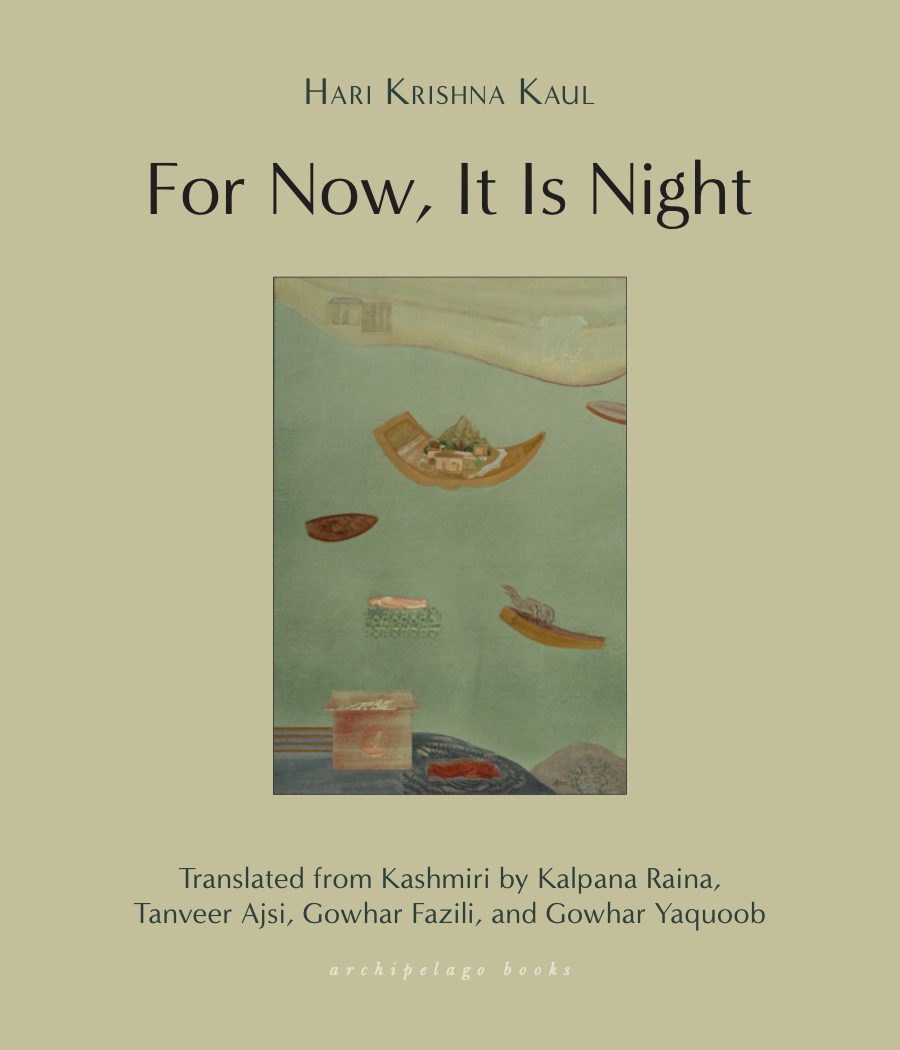
Born in Kashmir in 1934, Kaul spent most of his life in his homeland where he taught Hindi literature until 1990, when he was forced to join the exodus of Hindu Kashmiris from the region. He settled in Delhi where he lived, in exile, until his death in 2009. His work captures the details of Hindu Kashmiri life in old-town Srinagar during the last decades of the twentieth century, as well as the shifting socio-political tensions of the time. Over his lifetime, he published short stories, a novel and many plays for radio and television. For Now, It Is Night draws from all of his story collections, the first two published in 1972 and 1985, respectively and the latter published in 1996 and 2001, following his relocation to Delhi. However, what makes this selection of his work especially valuable and unique, lies in the combined effort of a team of translators.

As his niece, Kalpana Raina, describes in her Introduction, she had long heard of her uncle’s importance in modern Kashmiri literature, but until she had her father read some his stories to her—she could speak the language but not read it—she did not appreciate his eye for detail or empathy for his characters, their settings and their predicaments:

This was the world he had grown up in and his ambivalent relationship with it is quite clear in the forewords he wrote to his four collections of short stories. The are no grand themes in Kaul’s work, but an exploration and ultimately an acceptance of human limitations. He used his personal experiences to explore universal themes of isolation, individual and collective alienation, and the shifting circumstances of a community that went on to experience a significant loss of homeland, culture, and ultimately language.

Raina hoped that fresh new translations of her uncle’s stories might bring renewed attention to his work, and to that end, she recruited three young scholars and writers who could read Kashmiri and the Nastaliq script to collaborate with her on this project. They encountered unexpected challenges, first tracking down original manuscripts which were often not in the best condition, and then later with the more recent political upheavals in Kashmir and the pandemic. Despite the roadblocks, the final product is the result of a close engagement between four translators, “all native Kashmiri speakers, but representing a diversity of gender, age, experiences, and religious identity,” each bringing an important perspective and background.

The stories gathered in For Now, It Is Night, vary from domestic dramas, to surreal fables, to explorations of the uneasy relationships between Hindus and Muslims and between those of differing social standing. The narrators and protagonists often reveal much through their bluster and denial than what they openly admit to. In the opening story, “Sunshine,” for instance, the only one with a strong female character at its centre, Poshkuj arrives in Delhi to stay with younger son and his wife, certain that she has finally entered warmth and civilization. She has nothing good to say about her other son and “that fishwife,” but her bitter asides also reveal that she is put out and disturbed by her young daughter-in-law’s open-mindedness and rejection of Kashmiri social niceties. She is unable to comprehend the size of the city, its strangely quiet neighbourhoods, or the shocking mention of “Pakistan.” In fact the only thing she fully embraces is the sunshine, the glorious sunshine:

One could die for this sunshine. This is truly the only worthwhile thing in Delhi. She raised her sari slightly and scratched her right leg. She looked at her chapped skin and cursed the cold of Kashmir that was so hard on one’s hands and feet. Reflecting on the weather, she remembered her grandson, Bittĕ. Poor boy! How miserable he is, with his chilblains. How many times I told that monster mother of his that her son’s feet needed attention. Make sure he wears socks and fur-lined shoes, I said. But would that woman listen to me? Of course, fur-lined shoes are expensive and Gasha barely manages to get by. He doesn’t even have an overcoat for himself and shivers in the cold. She sighed. It’s all a matter of one’s fate.

The eighteen stories that comprise this collection demonstrate Kaul’s ability to craft a moving tale with vivid characters, caught up in events or circumstances that continually surprise and engage his reader. Some fall on the side of the fantastic like “Tomorrow—A Never-Ending Story” about two school boys who shirk their commitment to learning their times tables with such determination that they end up trapped in time, endlessly repeating Class IV while the rest of their classmates and peers grow up and move on with their lives, or “The Tongue and the Egg,” a bizarre fable in which two officers are charged with facilitating the collection of six million eggs, searching and even torturing or killing those thought to be hiding eggs, all for a bizarre purpose. Others begin on an eccentric note before taking a sharp emotional turn, such as “The Mourners” wherein two whimsically named young men, Tarzan and Doctor are called to assist with the funeral rites of their friend Pedro whose mother has just died. The subtle dynamics that bind fathers and sons, husbands and wives, and grandmothers and grandsons are teased out in stories that, more often than not, speak to the loneliness and isolation within families, heightened when distance pulls generations apart.

Kalpana Raina tells us that the selection of the stories in this collection was made with input from a small group of Kaul’s contemporaries and some younger students. The stories were then recorded in an effort to engage members of her family and the extended diaspora who could not read the script. That, together with the involvement of four translators, two of whom have contributed additional Notes, gives this volume a range and depth that truly honours Kaul’s contribution to Kashmiri literature and makes it accessible to a new generation of English language readers.

For Now, It Is Night by Hari Krishna Kaul is translated from the Kashmiri by Kalpana Raina, Tanveer Ajsi, Gowhar Fazili, and Gowhar Yaqoob, and published by Archipelago Books.
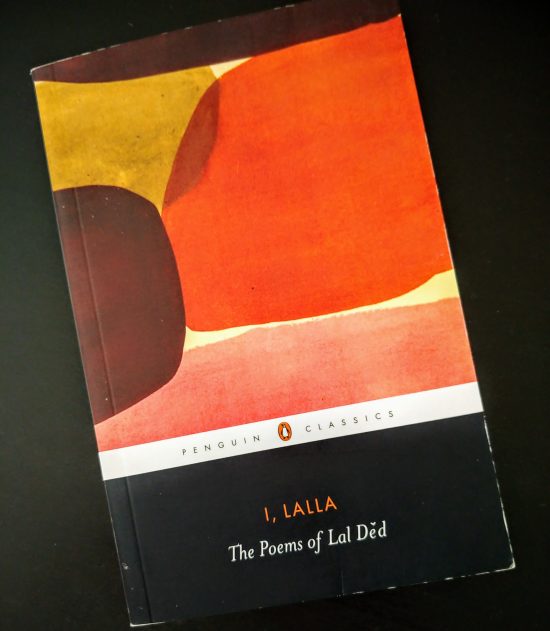
She walked alone: I, Lalla: The Poems of Lal Děd

Wear the robe of wisdom,
brand Lalla’ s words on your heart
lose yourself in the soul’s light,
you too shall be free. (146)

For Women In Translation Month 2019, as we watch signs of escalating global turmoil—rising racist and xenophobic tensions, political insecurity, increasing inequalities, and serious environmental threats—the voice of a fourteenth-century Kashmiri mystic may seem an unlikely source to turn to. Or it may make perfect sense. After all, her homeland, with its fractious and turbulent history, is in an ever more precarious state now. And eerily, some of her poems even seem to foreshadow this ongoing state of unease, one with deep and troubled roots.

There’s bad news, and there’s worse.
Autumn’s pears and apples will ripen
with apricots and summer rain.
Mothers and daughters will step out,
hand in hand, in broad daylight, with strange men. (36)

Lal Děd is Kashmir’s best known spiritual and literary figure. She has been revered by both Hindus and Muslims for almost seven centuries and, although scholars on both sides have wanted to claim her for their own and her earliest English translators wished to reinvent her through a Victorian lens, she has, and continues, to inspire those fortunate enough to come to know the body of work attributed to her. With this translation, first published in 2011, poet and translator Ranjit Hoskote offers a fresh approach to Lal Děd for the twenty-first century reader, one that is vital and alive, and supported with a thoroughly researched, detailed introduction and notes. What comes through is the spirit of a singular visionary seeker:

Across the expanse of her poetry, the author whose signature these poems carry evolves from a wanderer, uncertain of herself and looking for anchorage in a potentially hostile landscape, into a questor who has found belonging beneath a sky that is continuous with her mind.

Little is known with certainty about the historical Lal Děd, or Lalla, as she is widely and affectionately known. It is thought she was born in 1301 or between 1317 and 1320, and died in 1373. Her life has generally been understood in terms of an archetypal narrative—born into a Brahmin family she was married at the age of twelve, but was restless within these confines. As a woman, the rigid medieval society within which she existed offered little freedom. Her family eyed her meditative and spiritual leanings with suspicion, so at twenty-six she renounced her marriage, left home and sought a guru. Once her discipleship was completed she set forth into the world, becoming an itinerant wanderer and seeker. She founded no school, had no formal following, and appointed no successor, but she would have a profound influence on Kashmiri religious life and inspire generations of devotees to pick up her poems and carry them on, adding to them in a spirit of honour and devotion to her. As such, Hoskote sees the body of work attributed to Lal Děd as rooted in the life and teachings of a real person, but the product of a contributory lineage “comprising people of varied religious affiliations and of both genders”, a socially and culturally diverse living archive amplifying her voice down through the centuries. He expresses his understanding of the mystic and her poems—which he describes as “utterances” or vākhs—quite beautifully: “Lalla, to me, is not the person who composed these vākhs; rather she is the person who emerges from these vākhs.”

I didn’t believe in it for a moment
but I gulped down the wine of my own voice.
And then I wrestled with the darkness inside me,
knocked it down, clawed at it, ripped it to shreds. (48)

To complete this new translation, Hoskote spent twenty years immersed in Lal Děd’s teachings—working with the original material, earlier translations, and academic and religious commentaries. It was a journey of his own, one that took him from youthful  academic to early mid-life—from student to respected poet, translator, and cultural critic and curator. The intimacy of his association with the material is reflected in the extensive introduction which offers a thorough, yet fascinating, preparation for reading the vākhs themselves. He provides a background for understanding Lalla and her times, her importance, her placement within the spiritual histories and currents of Kashmir up to the present, and finally, his own approach to translating this material. The notes at the end of the book take a closer look, as needed, at each poem.

For this book, Hoskote selected 146 of the short verses that comprise the LD corpus and presents them in “a sequence that suggests the journey of an evolving religious imagination, from the phase of self-doubt to those, successively, of visionary experience, the discovery of wisdom, and the sharing of that wisdom through teaching.” This decision to order her vākhs along a trajectory that imagines the mystic’s growth and spiritual progress, while clustering companion pieces and utterances that share a common theme (often reflected in a similar image or final line), allows for an organic and rewarding initial reading—an encounter that opens up a wealth of avenues for return engagement, deeper contemplation.

My willow bow was bent to shoot, but my arrow was only grass.
A klutz of a carpenter botched the palace job I got him.
In the crowded marketplace, my shops stands unlocked.
Holy water hasn’t touched my skin. I’ve lost the plot. (12)

The imagery is sharp, often unexpected, sometimes relying on scenes and tasks from everyday life to address a wide audience in familiar terms, while at other times, the sensual and ecstatic comes through vividly:

I, Lalla, came through the gate of my soul’s jasmine garden
and found Shiva and Shakti there, locked in love!
Drunk with joy, I threw myself into the lake of nectar.
Who cares if I’m a dead woman walking! (68)

Toward the end of this sequence, as the focus turns to Lalla, the mature teacher, we find her tone more inclined to be firm, her wisdom offered with images from nature and daily life, her intention unambiguous:

I can scatter the battalions of southern clouds,
dry the ocean, play physician
to the most lingering fever and cure it.
But I can’t knock sense into a fool. (127)

I’ve finished what I can only describe as a first read-through of I, Lalla with careful attention to the introduction, and then the 146 utterances, each one a four or five-line verse. I thought I would read them all and attend to the detailed individual notes later, but that’s not possible. For each vākh that would strike me, pull me up short, or echo back to something discussed in the introduction, I would find myself looking up the relevant note.

Of course, this book’s not finished with me yet. I need to spend some more time with Lal Děd. At the moment, one of the most striking features is that, in light of the current state of affairs in Kashmir, her voice (and those of the others who, in devotion, contributed to and transmitted her teachings down through the years) is especially vital and important. Hoskote’s care, attention to detail, and obvious deep personal and political interest in the material, make this a valuable addition to the understanding of this revered mystic, and an inspiring volume for contemporary readers from all backgrounds.

Women in Translation Month 2019: Some off-the-radar reading suggestions and my own modest proposal

Each August is Women in Translation Month, a time set aside to promote women writers from around the world who write in languages other than English and, of course, encourage increased translation of these authors into other languages so that they may be more widely read.  This initiative, started by blogger Meytal Radzinski, is now in its sixth year.

My best ever effort to participate was during 2015, my first year as a blogger. Not only was this before writing critical reviews and editing commitments started to creep into my reading time, but I was also recovering from a cardiac arrest and could stretch out on the sofa and read without guilt. Doing much else was painful! Since then, each year I have made public or private commitments to toss a few extra appropriate titles on the TBR pile and, if lucky, read one or two.  I console myself by remembering that reading women in translation is something that naturally seems to occur throughout the year in the course of my normal reading. As so it should.

This year I have a few books earmarked for the month (fingers crossed), but I thought I would take a little time to suggest some titles that might not be so well known. They’re all taken from my own bookcases and most are (as of yet) unread.

I’ll start with those that I have in fact read and reviewed. First up, poetry:

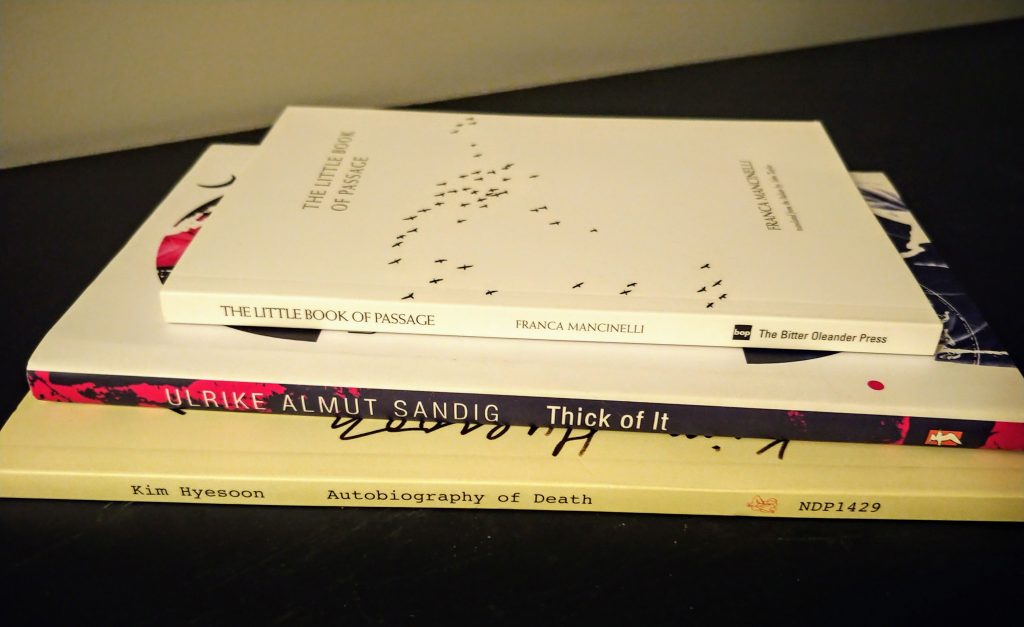
From the bottom up:
Korean poet Kim Hyesoon won the 2019 International Griffin  Poetry Prize for this book Autobiography of Death, a cycle of 49 poems and one longer piece inspired by national tragedies and personal experience. Her daughter’s distinctive illustrations accompany this powerful collection translated by Don Mee Choi.

Thick of It by German poet Ulrike Almut Sandig, translated by Karen Leeder, is a wonderful blend of the magical and the everyday. Fresh and alive.

Finally, Italian poet Franca Mancinelli’s The Little Book of Passage, translated by John Taylor, is a spare and delicate collection that invites rereading. Earlier this year she and I were able to meet and spend a few days together in Calcutta when my visit happened to overlap with a residency she was doing in the city—evidence that reading the world makes the world smaller in unimaginable ways!

*

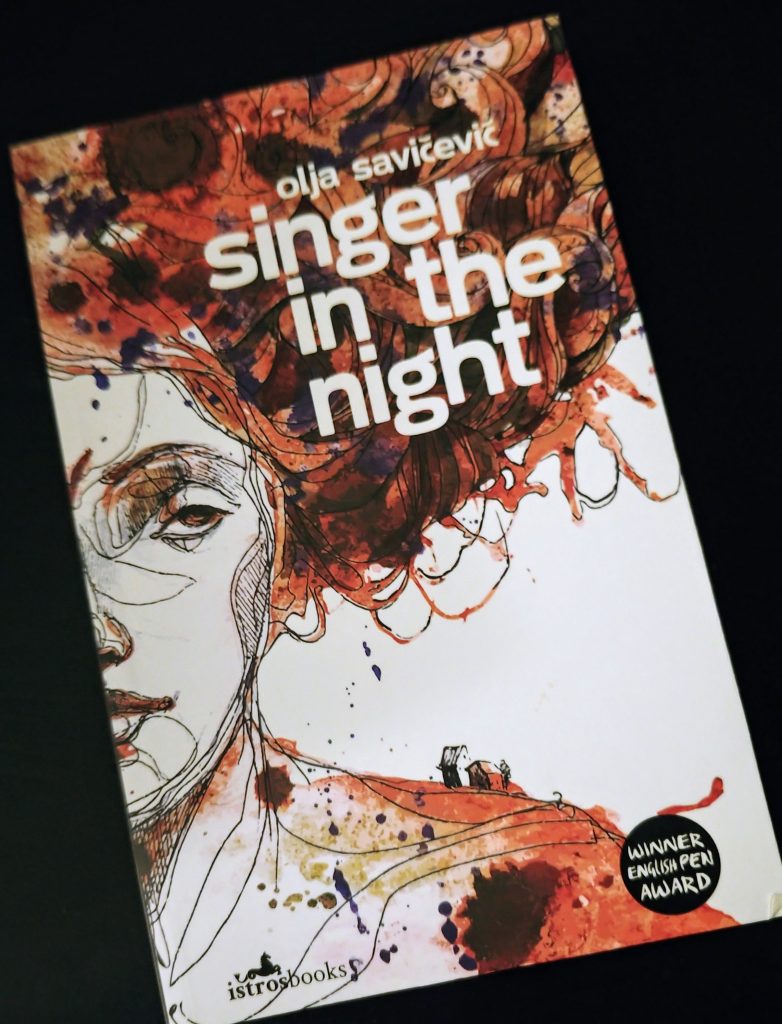
Second, I wanted to highlight a book I recently reviewed that I am afraid has not had the attention it deserves:

Croatian writer Olja Savičevič’s Singer in the Night features a wildly eccentric narrator and a highly inventive style to tell a story that paints a serious portrait of the world that her generation inherited after the break up of the former Yugoslavia. Translated by Celia Hawkesworth, this book is already available in the UK and well worth watching for when it comes out on October 1 in North America.

*

Third, I have an impressive stack of Seagull Books by female authors that I am ashamed to say I have not read yet (save for the poetry title tucked in here). The interesting thing for me about this selection is that although I did purchase many of these books, other titles arrived as unexpected—but very welcome—review copies by writers previously unknown to me.

Most of the above are German language writers; two, Michele Lesbre and Suzanne Dracius are French, the latter from Martinique. The review copy at the bottom of the stack is East German writer Brigitte Reimann’s diary I Have No Regrets.

*

Finally, I wanted to include a couple of translated titles by Indian women writers. Two vastly different offerings.

Translated by Kalpana Bardhan and published by feminist press Zubaan, Mahuldiha Days is a novel by Anita Agnihotri, one of West Bengal’s best known writers. She draws on the decades she spent in the Indian Administrative Service in this story of a young civil servant caught between her obligations to the tribal community she is working with and the state.  By sharp contrast, I Lalla, gives a fresh voice the poems of fourteenth century Kashmiri mystic poet, Lal Děd. A detailed introduction by translator Ranjit Hoskote provides a fascinating background to her life and the tradition to which she belonged, opening a world little known to most Western readers.

*

So, what are my best laid plans for this month? I would like to read one or two titles from my Seagull stack—not sure which—and I have a new Istros title Wild Woman by Marina Sur Puhlovski on my iPad in PDF format, but the following three books have been patiently waiting for August:

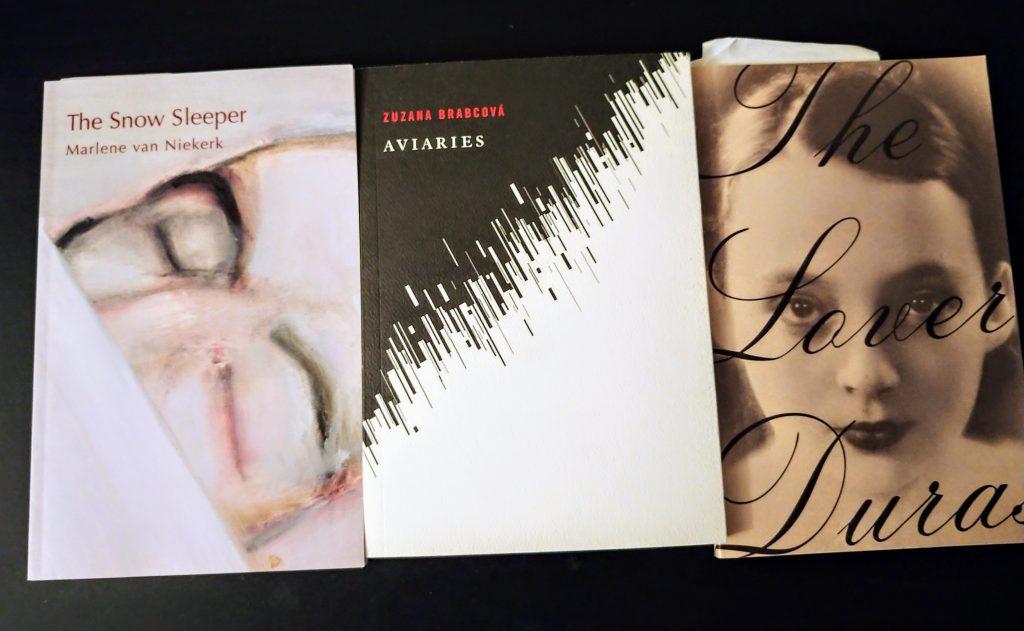
The Snow Sleeper by Marlene van Niekerk, translated from the Afrikaans by Marius Swart, is a recently released collection of short pieces, including “The Swan Whisperer” which was published as part of the Cahier Series.  I ordered it as soon as I heard of it—new van Niekerk is a rare and special treat.  Aviaries by Czech writer Zuzana Brabcova caught my attention when fellow readers and reviewers started talking about it so it’s another title I sought out when it was released here this spring. And last but not least, Marguerite Duras’ The Lover is a book I’ve been meaning to read for years now. Will I fit it in this August? Time will tell. And, of course, I reserve the right to change my plans altogether…

The nice thing about books is that, at least with the old fashioned solid form variety, they don’t vanish at month’s end if you don’t get to them. They will still be there on the shelf waiting no matter how much time I do or do not have to read amid all my other projects on my plate this August!