A mirror to a life: Self-Portrait in the Studio by Giorgio Agamben

A form of life that keeps itself in relation to a poetic practice, however that may be, is always in the studio, always in the studio.

Granted that what Giorgio Agamben calls a “studio” might be better understood by English language readers as a “study,” the ideal space is the same: some kind of a desk , plenty of shelving for books, and some room on the walls for  a few well-chosen prints or framed memorabilia. Over the years the Italian philosopher has occupied a number of studios, most rented or borrowed from friends, and each one, revisited through photographs often grainy or discoloured, contains the memories of friends and colleagues and others who have, through their writing, influenced and inspired him. With this slender, generously illustrated volume, Self-Portrait in the Studio, Agamben reflects on his own intellectual journey, which is, in his case, nothing less than a life journey, from the sixties through to the present day, via photographs, paintings, poems, beloved books, and precious friendships.
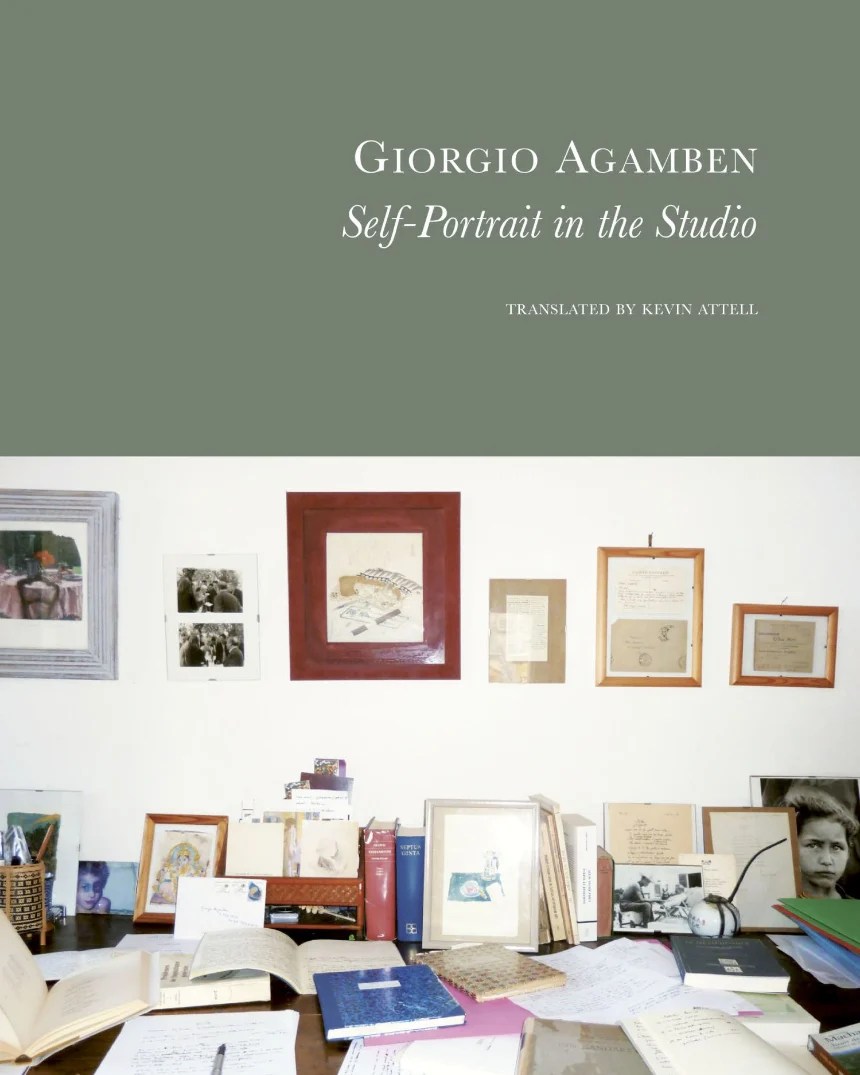
In this day of the ubiquitous selfie—that practice of intentionally placing oneself front and centre at any site of interest—one might expect a book with “self-portrait” (autoritratto) in the title to be a self-focused venture. Yet, although Agamben does appear with friends, mentors and fellow students in a number of  the included photographs, his motivation is to centre those whose words and ideas have touched him and the lessons they have passed on. In a parenthetical aside he addresses this objective:

(What am I doing in this book? Am I not running the risk, as Ginevra [his spouse] says, of turning my studio into a museum through which I lead readers by the hand? Do I not remain too present, while I would have liked to disappear in the faces of friends and our meetings? To be sure, for me inhabiting meant to experience these friendships and meetings with the greatest possible intensity. But instead of inhabiting, is it not having that has got the upper hand? I believe I must run this risk. There is one thing, though, that I would like to make perfectly clear: that I am an epigone in the literal sense of the word, a being that is generated only out of others, and that never renounces this dependency, living in a continuous, happy epigenesis.)

This desire to stay out of his own way goes a long way to explaining the surprisingly engaging nature of this book. It is not a  detailed or rigorous intellectual autobiography, but rather a chance to spend a little time with a philosopher who truly seems to delight in the exchange of ideas, someone who wishes to honour some of the friendships, writers and artists who have helped shape his own development over the years.  Of course, given that he is writing from the vantage point of his early eighties, there is also a clear appreciation of the fact that the themes and dreams of a life are ever necessarily unfinished. In his preamble he muses: “While all our faculties seem to dimmish and fail us, the imagination grows to excess and takes up all possible space.” There are regrets—for example, sorrow that he did not come to appreciate Ingeborg Bachmann’s poetry while she was still alive—but the text ends with a positive, and still forward looking, affirmation of life and love.

Progress through this book of memories is essentially chronological, Agamben employs objects in or associations with his various  studio settings as touchstones that trigger memories of a particular person or persons who came into his life, and, frequently, the poets or writers that any one connection might have him led to explore. The tapestry of a life of ideas ever expanding, moving from friendships with important contemporary literary and intellectual figures, to meditations on the ideas of those he came to know only through their work, and back again. He never devotes more than a few pages to any one individual, social group, or writer as he honours those who have influenced and inspired his own thought over time.

For myself, many of the individuals he talks about, including those he counts among his important friendships, were previously unknown to me (but easy to look up, of course), but others, especially the writers he feels a strong connection to—like Simone Weil, Walter Benjamin, Hölderlin, and Robert Walser—were not. Of particular interest is the way he considers our relationships to those we read carefully or enjoy close intellectual companionship—what is it to engage intensely with the ideas of others?

As he makes his way along this retrospective pathway, Agamben draws some striking connections that he measures himself against in assessing his own life. Notably, he comments on a piece written just three years before Walser’s commitment to the hospital where he would spend the rest of his life, in which he questions the idea that Hölderlin’s last decades were ones of misery, suggesting instead that his loss of his senses wisely  afforded him the time and space to dream :

The tower in the carpenter’s house in Tübingen and the little hospital room in Herisau: these are two places on which we should never tire of meditating. What was accomplished within those walls—the refusal of reason on the part of two peerless poets—is the strongest objection that has ever been raised against our civilization. And once again, in the words of Simone Weil: only those who have accepted the most extreme state of social degradation can speak the truth.

I also believe that in the world that befell me, everything that seems desirable to me and seems worth living for can find a place only in a museum or a prison or a mental hospital. I know this with absolute certainty, but unlike Walser I have not had the courage to follow out all its consequences. In this sense, my relation to the facts of my existence that could not happen is just as—if not more—important than my relation to those that did. In our society, everything that is allowed to happen is of little interest, and an authentic autobiography should rather occupy itself with facts that did not.

So where does that put his little exercise in self-reflection? In a class of its own. With Self-Portrait in the Studio,  Agamben, traces a rich network of interconnection, through personal contacts, study and research, and even, in some locations, a coincidental proximity to history, to produce a work that is entertaining, intelligent and humane.

Self-Portrait in the Studio by Giorgio Agamben is translated from the Italian by Kevin Attell and published by Seagull Books.
“I don’t know what I’m doing”: Do Not Send Me Out Among Strangers by Joshua Segun-Lean

Having never tried journaling until now, I can’t say if I’m doing a good job. Of all the activities people recommend for ‘staying positive’ through the pandemic, journaling seemed the most obvious choice for me. Though I have set no grand expectations for myself, I’m afraid I will be unable to keep from filling each page, eventually, with minutiae. With the flatness of time as it passes here. An instinct, I think, from an earlier, truncated life in the sciences. Or perhaps like the voice in Sans Solei, ‘I have been around the world several times, and now only banality interests me.’

I am not that far gone, I don’t think.

Some books are best measured not by the number of pages they hold between their covers, or the number of words they carry. Do Not Send Me Out Among Strangers by Nigerian writer, essayist and photographer Joshua Segun-Lean tells a deeply personal, vulnerable story in this slender volume that, at first blush, appears deceptively sparse and quiet, not unlike the pandemic-sheltering world in which it was conceived. But at its heart lies a raw testament to loss, distilled into a spare collection of images and words that is no less powerful than the too-much-information memoir that has become so ubiquitous.

Less is more.

Do Not Send Me Out Among Strangers is a collection of brief journal entries—observations, accounts, and recollections—nested among a series of harsh black and white photographs of soil, rock, and debris, marked with occasional tufts of vegetation. Numbered and time stamped, these images are titled “Field Notes.” This is the visual record of the search that occupies Segun-Lean’s lockdown days: he has been tasked with the dispersal of his father’s ashes. He thinks back on their strained relationship and his insecurity about the responsibility he has been given. Meanwhile, friends are falling sick with Covid; some are even dying. A journey of grief lies in the stillness of this book.

A couple of colour “Interior” photographs, also numbered and time stamped, appear along the way, echoed by a few Edward Hopper paintings. The explicit theme connecting these illustrations is the colour red. The inherent loneliness of the artwork perhaps, the author admits, “too obvious,” given the circumstances. There are also a handful of sketches, abstracted, and, finally, a number of short excerpts dealing with ancient burial practices from various archaeological and historical texts.

Taken together, this collection of thoughts and images, speak of the complicated relationship we have to life, death, and disability—to the body in sickness and health, whole or incomplete. At a time of isolation and uncertainty, as Segun-Lean is searching for the right place to scatter his father’s ashes, he is quietly exploring, as the book description says, “the strange terrain where private and public grief meet.” He is carrying both, as he will reveal.

Do Not Send Me Out Among Strangers by Joshua Segun-Lean is a haunting little book, the kind of small, unclassifiable work that UK publisher CB Editions specializes in.

God is in the details: Among the Almond Trees – A Palestinian Memoir by Hussein Barghouthi

Nothing comes to the surface in solitude except that which is already deep within us. I suddenly became aware of many fears. In front of me was a meadow, ploughed and moonlit, reaching all the way to the wall of the Monastery. And a human being, any human being, is afraid of emptiness. I was afraid to enter the meadow that was exposed from every direction. There were some olive saplings that looked like faint shadows, like ancient monks in their dark habits…

In his mid-forties, with the bittersweet weight of a cancer diagnosis on his heart and mind, Palestinian poet, writer, and philosopher Hussein Barghouthi made the decision to return to the village near Ramallah where he was born after what he describes as thirty years of self-imposed exile. If “bittersweet” seems an unlikely adjective for such a serious circumstance, it is appropriate only because Barghouthi was initially led to believe his symptoms might be indicative of AIDS—a condition he feared he would have most certainly passed on to his wife and young son. So when news that he was, in fact, dealing with cancer came, he greeted it with joy. At least at first. But as someone who had, by his own admission, “perfected ‘beginnings,’” his journey home would be an “imperfect ending.” Among the Almond Trees, his meditation on life, death and rebirth, captures his thoughts and experiences as this ending nears.

Barghouthi’s only other work currently available in English translation is The Blue Light, a weird and wild account of his years as a graduate student in Seattle in the late 80s and early 90s, interspersed with recollections from his childhood and earlier adult years. But with the off-beat urban terrain he frequents, the eccentric, marginalized characters he befriends, and the exploration of mysticism and madness that he pursues, it can best be described, as I noted in my review, as a memoir with hallucinations.  By contrast, Among the Almond Trees, composed around the same time, has a much more contemplative, grounded tone. This is still a work with strong spiritual, mystical and philosophical elements, but here he is focused on memory, family mythology, and the longing to understand himself within the cycles of life and death. All of this is deeply rooted in the land.

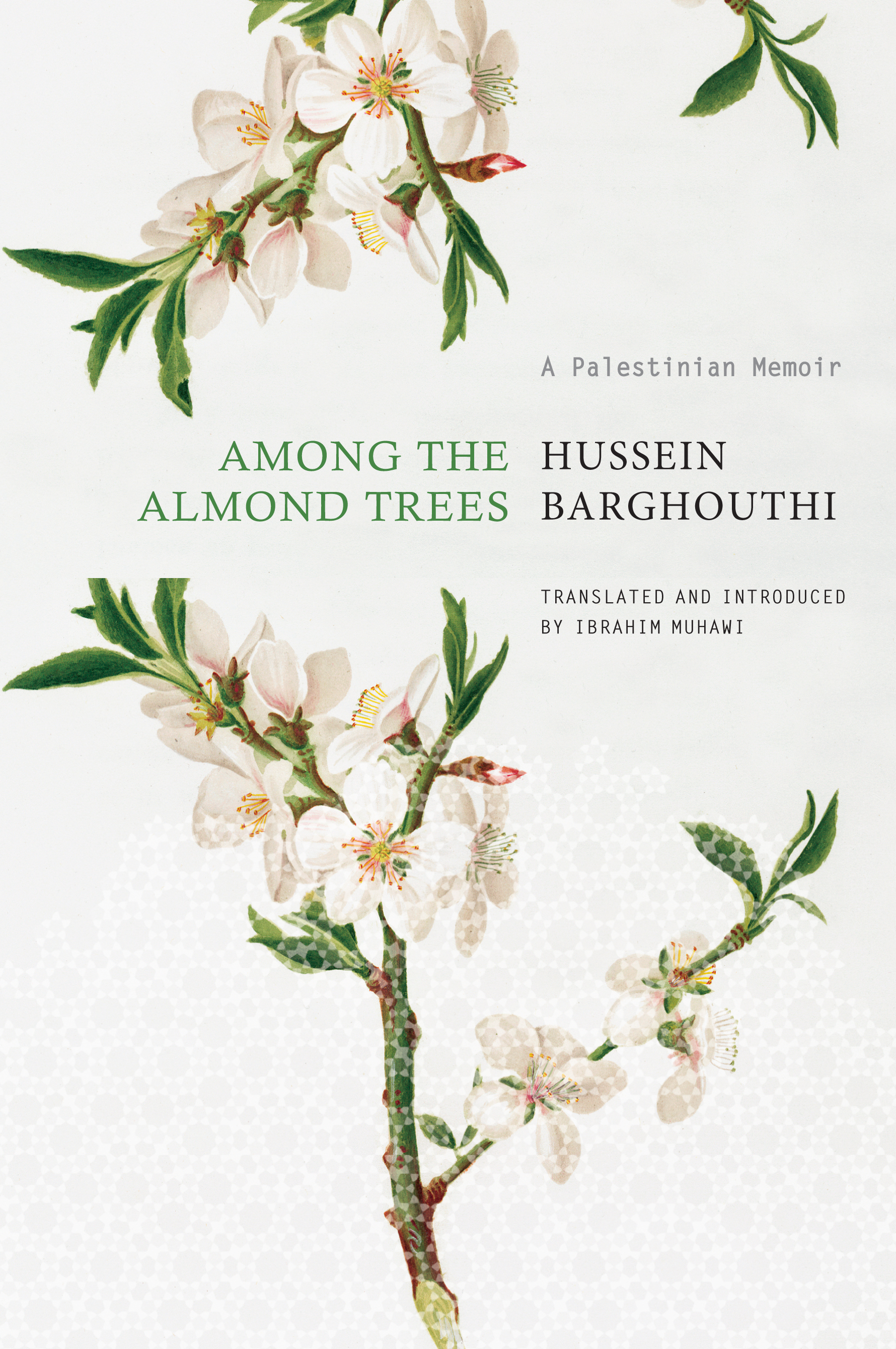
Having intentionally kept himself apart from the village of his birth for so many years, Braghouthi’s return inspires him to embrace his ancestral connection this location, with its mountains, valleys and trees. He is seeking to reinforce a spiritual connection to his family history, a line which reaches into the past and will extend into the future. Central to this exploration is Qaddura, an uncle of his family’s, who had adopted his mother when she was orphaned. Qaddura is a near mythical character, an imposing figure, known to have been a robber, who lived, it was said, with his brother in an abandoned Byzantine monastery on the mountain above the village. The stories of Qaddura and Snuffie, the woman who was married to both brothers in succession, run through this meditation, and the Monastery itself, as an actual ruin and as an inner mystical space, is an important image. The other key figure is the almond tree, notably the orchard outside his mother’s house.

This is, then, a lyrical monologue steeped in memory and emotion (including the occasional exclamation mark), woven with the history and folktales of his family and his people, insights drawn from Sufism, Buddhism, Egyptian mysticism and Western literature, and threaded with lines of poetry and song—especially that of Mahmoud Darwish and the Lebanese singer Feiruz. Much of the “action,” such as it is, takes place on moonlit nights, like the account of a nighttime pilgrimage Barghouthi makes to the Monastery during which he reflects not only on the importance of this site in his family lore, but on his childhood memories of the mountain, its promises and legends. Yet there are also the realities of the present day—the settlements ever expanding in the valley, the ongoing second intifada, and the disease spreading through his body that often keeps his moonlit wanderings closer to home:

As for why I am now recalling these tales of the Mountain while walking, as always, among the moonlit almond orchards around our house, barely breathing and facing the spectre of death because of a new swelling in my lungs—that is another matter. Perhaps with these tales I can breathe the air of other places and other times in order to sense another moonlit space inside my being and return to whatever inner monastery there was in my spirit that would grant me the strength of beginnings so as to face the cruelty of endings. For imagination is power.

Subtitled A Palestinian Memoir, Among the Almond Trees is, of course, more than one man’s search to come to terms with his “beginnings” to prepare for what is coming, it is the story of a husband and father thinking beyond his death, no matter how painful the idea may be. As someone with a longstanding interest in Buddhism and Sufism and ideas of reincarnation, Barghouthi looks to his young son Áthar, as a guide, so that he may “return to the dormant child” within, “so as to walk the earth as a child-prophet, if not in this life then in the next one.” He marvels at the enchanted eyes through which a child sees the world, and the ability to ask, as Áthar does, magical questions even when an Israeli warplane is passing overhead. Peace is, he knows, elusive, but when he decides he wants to build a house for his wife and son to live in, below the Mountain, he has come full circle and will be leaving them in the best place he knows of. Rather, he won’t be leaving them at all, he will be resting nearby, among the almond trees

As a poetic text rich with literary and traditional allusions, Among the Almond Trees benefits from (but does not strictly require) a detailed translator’s introduction and extensive footnotes. Ibrahim Muhawi, as a Mahmoud Darwish scholar and a folklorist, is perfectly suited to bring to the reader’s attention some of the finer details of the material Barghouthi is referencing. This is a short work—the text is only about 80 pages long—but filled with so much wisdom and beauty, even with the shadow of cancer looming over it, that it welcomes and rewards rereading on its own and alongside The Blue Light.

Among the Almond Trees: A Palestinian Memoir by Hussein Barghouthi is translated from the Arabic by Ibrahim Muhawi and published by Seagull Books.

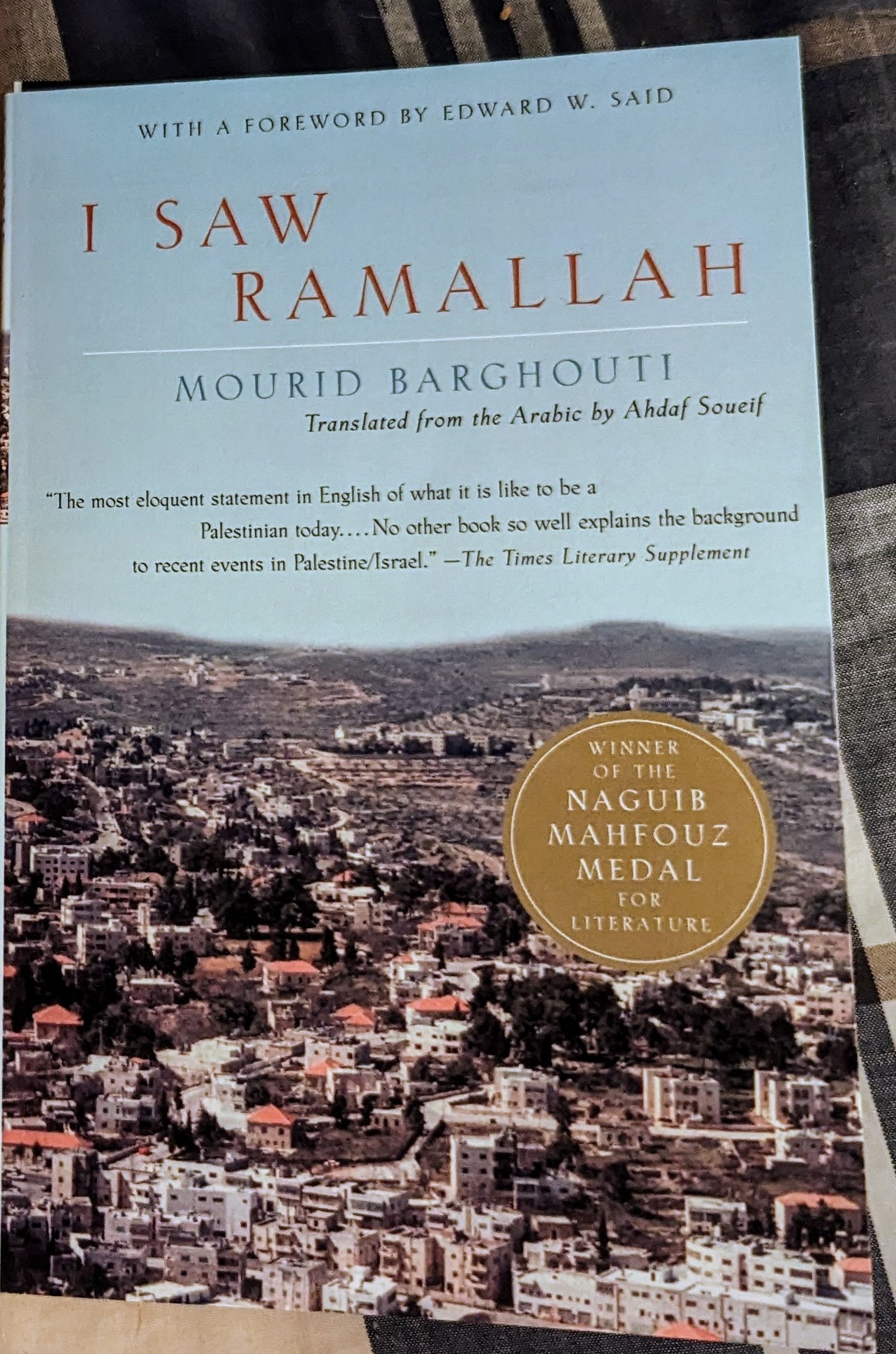
“I do not live in a place. I live in a time.” I Saw Ramallah by Mourid Barghouti

When his name is finally called after waiting for hours, he grabs his small bag and steps on to the Allenby Bridge to cross, for “the first time in thirty summers,” from Jordan to the West Bank:

Is this a political moment? Or an emotional one? Or social? A practical moment? A surreal one? A moment of the body? Or of the mind? The wood creaks. What has passed of life is shrouded in a mist that both hides and reveals. Why do I wish I could get rid of this bag? There is very little water under the bridge. Water without water. As though the water apologized for its presence on this boundary between two histories, two faiths, two tragedies. The scene is of rock. Chalk. Military. Desert. Painful as a toothache.

Palestinian poet Mourid Barghouti’s thoughts are flooded with questions as crosses into the land he has been barred from entering for three decades. The year is 1996. His account of his visit, one that necessarily looks back on his many years of exile and the changes to his homeland that confront him on his return, is vividly captured in his memoir I Saw Ramallah. First published in Arabic in 1997 (and three years later in Ahdaf Soueif’s English translation), this is a work that speaks passionately and unapologetically to the reality of existence of the Palestinian people today, of their displacement and their lives under the Occupation.

Barghouti does not enter the West Bank alone. He carries the weight of the memory of the long years of exile, of family and friends scattered near and far. And he’s haunted by the ghosts of all of those who are buried in distant lands, those who never managed to return, either as a visitor or as a resident, especially his older brother Mounif:

After how many more thirty years will the ones who never came back return? What does my return, or the return of any other individual mean? It is their return, the return of the millions, that is the true return. Our dead are still in the cemeteries of others. Our living are still clinging to foreign borders. On the bridge, that strange border unmatched on any of the world’s five continents, you are overwhelmed by your memories of standing at the borders of others.

As he takes in the altered landscape, the ever expanding Israeli settlements, and the once familiar hills, now alien, the connection and disconnection is profound. He stays with a family member, explores the city, and visits his birthplace, Deir Ghassanah, where he reads poetry to an assemblage of villagers unfamiliar with poetry readings but responding to his words and images nonetheless.

But, of course, thirty years does not vanish just in the act of returning. As much as Palestine and her people have changed and are continuing to be changed under the forces of Occupation, Barghouti’s life has been impacted by his identity no matter where he has lived. Nor is it his first return from exile, so to speak.  In the 1970s, his involvement in earlier student protests against Sadat in Cairo led to his forced separation from his wife and infant son when all non-Egyptian participants were deemed to be infiltrators and removed from the country. The prohibition lasted seventeen years, his family-time suddenly telescoped into winter and summer holiday breaks wherever he was living at the time. By the time he was able to return to live in Egypt, his child was long out of diapers and ready to start shaving! And when that exile within exile came to an end he realized:

You do not arrive unchanged at the moment of joy dreamt of for so long across the years. The years are on your shoulders. They do their slow work on you without ringing any bells for you.

Now, one of his primary goals during his time in Ramallah is to obtain the necessary permit to allow his son Tamim to finally see the land of his ancestors.

Moving, poetic, and beautifully written, this is, nonetheless, a narrative dotted with question marks. Barghouti regularly questions the descriptions, the emotions, and the meanings that he grasps at as he tries to articulate the strange in between state in which has found himself over and over throughout his life—in Occupied Palestine, Cairo, Budapest, Amman and elsewhere. So many places, so many pillows beneath his head:

My relationship with place is in truth a relationship with time. I move in patches of time, some I have lost and some I possess for a while and then I lose because I am without a place.  I try to regain a personal time that has passed. Nothing that is absent ever comes back complete. Nothing is recaptured as it was.

A memoir recounting the return to one’s homeland after thirty years, is necessarily a story of exile, of the Diaspora, and of the way the Occupation has closed in on the land and claimed the freedom of the Palestinian people. Focused as he is on the present moment, that of his precious time in Ramallah, Barghouti is also continually looking back—to the Nakba, to the 1967 War, to the Intifada. Yet to read this book in 2024, one cannot but look ahead through further wars to the escalating incursions into the Occupied West Bank, to the conflict in Gaza. To genocide. For a book first published twenty-seven years ago, it reads like it could have been written yesterday. Netanyahu was prime minister then, he is still prime minister now.

After the popular Intifada on the land of Palestine we went to Oslo. We are always adapting to the condition of the enemy. Since ’67 we have been adapting. And here is Benyamin Netanyahu, prime minister of Israel, calming America’s fears for the current agreement by saying that the Arabs will in the end adapt to his harshness because they always adapt to whatever they have to.

And what if they refuse to adapt? When speaking to the spirit and resilience of his people, Barghouti often calls attention to the Palestinian inclination to seek the comic in the tragic, but he is keenly aware that for the generation after his—those who grew up in the aftermath of the 1967 war—the tone has shifted, something he witnesses in the appeal of resistance movements: Fatah, Communism, the Front, and Hamas. This is the legacy of the Occupation itself.

I Saw Ramallah is not exactly a work infused with nostalgia. It is searching and existential in nature, a memoir tinged with sadness and a measure of grief. And as he nears the end of his account, he refuses to hold his anger at bay. He is blunt in his assessment of his people’s circumstances and the history that has been thrust upon them, as a man born four years before the Nakba who, now in his fifties, is determined to ensure his son’s right to a space in a land that now carries two conflicting and interconnected stories:

But I cannot accept any talk of two equal rights to the land, for I do not accept a divinity in the heights running political life on this earth. Despite all this, I was never particularly interested in the theoretical discussions around who has the right to Palestine, because we did not lose Palestine in a debate, we lost it to force. When we were Palestine, we were not afraid of the Jews. We did not hate them, we did not make an enemy of them. Europe of the Middle Ages hated them, but not us. Ferdinand and Isabella hated them, but not us. Hitler hated them, but not us. But when they took our entire space and exiled us from it they put both us and themselves outside the law of equality. They became an enemy, they became strong; we became displaced and weak. They took the space with the power of the sacred and with the sacredness of power, with the imagination, and with geography.

This is an important, affecting, and highly readable memoir for anyone who wishes to have a clearer understanding of the situation in the Middle East. But, if you have read other Palestinian literature, it may sound eerily familiar. These stories are not new; they have been expressed in literary works—poetry, fiction, nonfiction—for many decades now and, as we have seen, Palestinian voices continue to refuse to be silenced.

I Saw Ramallah by Mourid Barghouti  with a Foreword by Edward Said, is translated from the Arabic by Ahdaf Soueif  and published by Anchor Books. In the UK, a new edition is forthcoming from Daunt Books in August 2024.

I rarely look in the mirror: Spent Light by Lara Pawson

There are days when I want to embody the qualities of a thing. To be effective, but not affected. To be present but not involved.

So, in case you haven’t heard, it begins with a toaster. The first thing that the narrator of Lara Pawson’s Spent Light wants to tell us is about the second-hand toaster her neighbour gives her one day, the first toaster she says she has ever owned. She takes it home and examines it. Fondles it. Compares the shape of its buttons to pellets of rat shit, as one does. In fact, if nothing else, the first few pages of this book let us know that this is a woman with an oddly fleshy approach to inanimate objects, but she’s not really talking to us. Rather, the reader is listening in on a one-sided monologue addressed to her partner who is presumably already well acquainted with her idiosyncrasies, and possibly even has his own.

The classification on the back cover reads: Fiction/Memoir/History and it’s hard to say whether that’s a help or a hinderance. Pawson’s last book, This Is the Place to Be, fell more neatly, if unconventionally, into the category of memoir. It is the brilliant, fractured and often disturbing telling of a life—a blend of self-observation, memory, and an account of her experiences as a war correspondent in Angola. Spent Light may seem similar, but it is not only stranger, it blurs the history and memories with fiction. One might be inclined to call it “autofiction,” a term as over-applied to current literature as “tastes like chicken” is to any unfamiliar meat dish, but what we learn about the woman at the centre of this book is at once intimate and ambiguous. She speaks about bodily functions and culinary adventures with squirrels and her obsessions with the walls and floors and objects in her house, but what she chooses to reveal about herself is actually limited. She has spent time in Africa and elsewhere, but we don’t know why. She sometimes experiences a certain gender anxiety, but it is fleeting. And, since she is speaking to someone who knows her well, any shared experience that she is recalling does not require unnecessary context. The stories in themselves, personal and powerful, are sufficient.

Through her observations and meditations on objects, chores, possessions, nature, her dog, and the banality of everyday violence, our narrator is not only becoming her own strange, living, breathing curiosity cabinet, she is also weaving a web that stretches out into the wider existence of calculated and gruesome cruelty—a world of slavery, colonial exploitation, and war. Sometimes her thoughts drift to horrors of the past, of the last century and centuries before, but at other times the horror is with us in an even more present way than it was, at least for those who were not paying attention, when Pawson wrote this book and had her protagonist contemplate the chipped fridge magnet with the word GAZA emblazoned on it:

The first time I held it, I felt quite overwhelmed. I thought about the hands that had made it, and the hands those hands have held, and the lives lived by the owners of all those hands. I thought about the bread that has been torn in those hands, the taps that have been turned and the water that has washed. I thought about the hair that has been untangled between the fingers on those hands, and the wire fences to which they have clung.

That is the risk. Things come, things go. The history of man’s brutality against man is always with us, and Spent Light’s narrator cannot help but incorporate these images into her quotidian reflection on the world around her and her place in it. Every action, every object has an association with a memory, or an intimation of violence, or both. A fridge magnet is never just a fridge magnet.

This book, I suppose in keeping with its tripartite classification, is very difficult to summarize succinctly. Pawson’s prose is sharp and unsparing. It moves swiftly, shifting from unlikely observation to shocking image to expression of affection and on again. It possesses a certain terrible beauty, to reference Yeats, but it is also very human and often very funny. It does not fail to remind us of the potential darkness that lurks inside each one of us, yet it also celebrates the capacity to look to the light—in nature, in love, in the ordinary things we cherish, and in the memories we hold dear. A compelling read, it is one that sits uneasily, strangely, and wonderfully in a light of its own making.

Spent Light by Lara Pawson is published by CB editions.

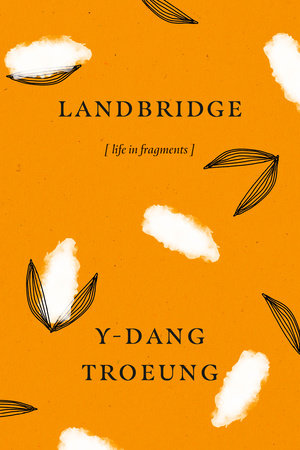
Our very lives are miracles: Landbridge [life in fragments] by Y-Dang Troeung

In attempting to review this book, I can think of no better place to begin than with the first passages of the author’s preface:

The intensity of these accounts, the imprint they leave on me, does not lessen with each telling.

A quarter of Cambodia’s population died during the genocide; the remaining three-quarters were physically and mentally debilitated.

US bombings, the Khmer Rouge genocide, toxic and carcinogenic exposure, incarceration, urban and rural divestment, deportation.

In this book, theory, fiction, and autobiography blur through allusive fragments. These fragments—a perforated language of cracks and breaks—seek to knit together, however imperfectly, the lifeworlds that inspire me to write here, on this page.

I was made aware of Landbridge by Y-Dang Troeung via an article by the author’s close friend, novelist Madeleine Thien. My knowledge of the details of the Cambodian genocide is limited; I was young at the time and I’m afraid that my historical understanding of the wars in Southeast Asia is more informed by Hollywood than the stories of survivors. However, the onset of war in Gaza inspired me to learn more about other genocides because, as Troeung says, Cambodia was not the first, nor will it be the last. And then there was the extra heartbreak of knowing that the author died of cancer (a legacy of the toxic and carcinogenic exposure she mentions above, in utero and during her first year of life) just months before this book was published.

But I was not prepared for the singular power of this work.

Through a series of fragments, interspersed with letters to her young son, Troeung writes about the experiences of her family—her parents and two older brothers—during Pol Pot time: years spent hiding, working in forced labour camps, starving and, finally, escaping to Thailand. She talks about coming to Canada at the age of one, growing up in a small town in Ontario, the complicated strangeness of life as a refugee, and her efforts to reconnect with her ancestral land and make some sense of the horror that unfolded there and, finally, the process of coming to terms with a terminal diagnosis. The story, or stories, she wishes to tell unfold in pieces, moving back and forth in time, generously illustrated with photgraphs, documents and art. She is raw and open about her own experiences, but sensitive to the respect that must be afforded to those that belong to others. Her voice is measured and thoughtful, but not without emotion. Her anger and pain is real. So is her innate optimism. This is more than a memoir—it is a personal journey shared.

Troeung’s unusual name, Y-Dang, honours international workers at the Khao-I-Dang refugee camp in Thailand who cared for her family after their dangerous trek through land mined jungles to reach the Cambodian border. After arriving in Canada as refugees, they were given new winter clothing and photographed meeting Prime Minister Pierre Trudeau. The final stage in their journey would take them to Goderich, Ontario—home of Alice Munro where volunteers helped them adjust to a their new home, learn English, and find jobs and schools. Having already survived so much, the newcomers were resourceful. Troeung describes waiting in the car on rainy nights while her family salvaged for earthworms in the local cemetery with cans tied to their ankles. They were part of an underground network of refugees who collected and sold worms to fishermen to use as bait. This additional income would help them save for their future. She reports that the family experienced both welcome and antagonism in their new hometown, but notes that distrust of foreigners has become worse over time. Refugees seem to be particular targets of late.

For the refugees themselves, however, there were challenges and contradictions others might not appreciate. Certain expectations colour the way one learns to integrate a tragic past with what, given luck and years of hard work, had ideally become a comfortable present. Refugees were expected to show happiness and gratitude for the privilege of a new lease on life, while their past experiences were subject to interpretations approved by others. There were things, Troeung found, that she was only allowed to speak about in a certain way such as “War in the abstract as if what happened to us was an abstract thing.” But this was not something that only occurred in her life and studies in Canada, it followed her back to her homeland as she discovered during the years she lived in Hong Kong and visited Cambodia regularly.

She writes about watching, in a courtroom near Phnom Penh, lawyers debate the ECCC’s 2014 verdict convicting Nuon Chea, second-in-command to Pol Pot and Khieu Samphan, Cambodia’s head of state during the Khmer Rouge, of crimes against humanity and genocide. The question is, of course, is genocide not defined as an act by one racial or religious group against another? If so, can Communism be considered under either category?

I’m beginning to lose hope in definitions, and perhaps in language itself. As the lawyers declare the importance of reserving certain words for some peoples and not others, I do not laugh or cry or shout. Instead, I marvel at what is happening before us in this country, at the machinations of an entire legal-humanitarian-academic industry, speaking for the millions of Cambodian people still left grieving with open wounds.

Throughout this book, the ongoing events in Syria form a point of reference and empathy for Troeung. She thinks about what the Syrians are going through often, with empathy and concern. Reading Landbridge  today, in late 2023, while the war in Gaza fills the news and genocide is a word that is being simultaneously denied and weaponized, one can only imagine how deeply she would be pained.

Landbridge does not pretend to be a formal historical exercise, complete with exhaustive details and dates, rather it is an intensely personal account that gathers together memories, pieces of lost information, and accounts of visits to museums and memorials, with records of significant stages in the slow reckoning that the horrors that unfolded Cambodia, like so many others in recent times, have received in public forums. It is a sad indictment. So many times the experiences of her family and her people during the war are devalued, or deemed to be of insignificant interest to Western audiences, while at other times her ability and her right to tell those stories is questioned against the expertise of dedicated Western scholars.

Subtitled, in brackets, life in fragments, Lifebridge is an extraordinary book, one that carries so much in its short, pensive passages. It is a search for understanding, of the self and of the history, traumas and challenges that shaped her parents’ and siblings’ lives and, in turn, her own life, for war does not end for those who survive, even when the bombs stop dropping and the killing fields are designated a historical site. Troeung recognizes so much of that fallout in her parents, aunts and uncles. And she carries it in her body as cancer spreads. But she is also fully aware of the strength and resilience her family has always shown. As she writes to her son, Kai:

Stories of the dead and suffering need not drop you in stillness. They can instead show us that our very lives are miracles, that every day since Pol Pot time has been a gift. Our family has always lived that way.

As the book nears a close, one can only marvel at the peace and resolve that seems to settle into her words, for this is also a love story—for her family, her husband and her child—one that achieves its fullest expression in the letters she writes to Kai, first to mark his earliest birthdays, then reaching into the future, as missives for the birthdays she is afraid she will not live to see. The wisdom, the composure and the unconditional love she offers the child he is and the man he may become are a precious gift that we, as readers, are privileged to share.

Lifebridge [life in fragments] by Y-Dang Troeung is published by Alchemy, an imprint of Knopf Canada, and in the UK by Penguin.

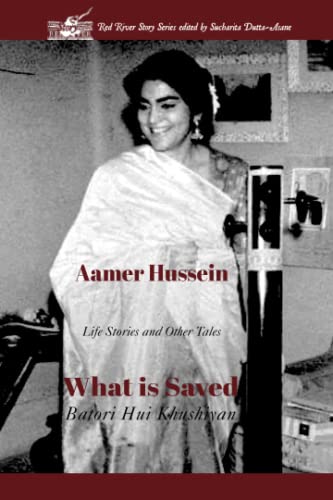
Fragments of Happiness: What is Saved by Aamer Hussein

I came rather late to the work of Pakistani British author Aamer Hussein, surreptitiously as I’ve said before, through an unsolicited essay I received when I was an editor for an online journal, from a writer who had also encountered him by chance when she found a copy of his collection Insomnia in a “decaying” bookstore. The essay impressed me so much that before I sent a letter of acceptance I had already ordered a copy of Insomnia for myself. This was, I knew, an author I needed to read:

Hussein’s stories display an audacious ability to synthesize complexities of social subjectivity; yet behind this complex surface lies a rich silence. His stories remain porous, marked by gaps and holes—a kind of silence which, rather than a lack, represents a positive capacity, Hussein’s most potent mode. What Aamer Hussein offers us is an invaluable model of resistance in literature: resistance that works through silence, through that which remains unsaid.[1]

Yet, if silence can be such an effective mechanism in a fictional context, would the same author approach autobiographical writing with greater detail or, dare we say, denseness? Not if you’re Aamer Hussein.

What is Saved, released earlier this year as part of the Red River Story Series, is a selection of “Life Stories and Other Tales” gathered, editor Sucharita Dutta-Asane tells us, from two earlier collections, Hermitage and Restless: Instead of an Autobiography. Among these short works are accounts drawn from Hussein’s childhood in Karachi, tales inspired by friends and family members, a variety of true and re-imagined truths set in London where he has lived since the age of fifteen and at various points in his long process of rebuilding his connection to the country of his birth. If the pieces gathered in What is Saved might in some sense speak, as the Urdu subtitle—Batori Hui Khushiyan—implies, to all happiness, anyone familiar with Hussein’s fiction knows that in his work happiness tends to be tinged with melancholy. In this collection, which deals so openly with longing, displacement, illness and mortality, a similar wistfulness again permeates the quiet hopefulness that buoys his prose.

Loosely, the early autobiographical and autofictional pieces highlight Hussein’s early years in Karachi, offering a portrait of the culture of the city in the 1960s. His life is enriched by his mother’s love of music, and a proximity to Urdu literary figures and even a film star who moves into his neighbourhood. These are followed by a selection of stories and fable-like pieces, some no more than a page in length, inspired by friends or family members or traditional tales. But the themes that become prominent through the balance of the collection include literary friendships, the Covid-19 lockdowns, the loss of loved ones, injury and, finally, life with a terminal cancer diagnosis. Whether he is reflecting on life’s rewards and realities directly or through the lens of fiction, birds, gardens, and flowers tend to create a greater sense of continuity than any particular place or time. He is ever a writer who captures the ambiguity of belonging—in a city, in a culture, or in relationship to others.

Two of my favourite pieces in What is Saved fall onto the memoir side of the fiction/nonfiction equation and address elements of the connection between language and identity. In the first, “Teacher,” the only essay in this volume originally composed in Urdu (translated by  Shahbano Alvi), Hussein recalls a man he called Shah sahab, the London based friend of his parents whose private tutelage helped him gain confidence in his mother tongue. With his tutor’s support, the teenaged Hussein was finally able to read, in the original Urdu, a book he’d first encountered in English translation, a text that had already had a profound impact on his understanding of the world he came from:

My eyes opened to the imagery of an intriguing past; the imposition of the British Raj  in the 19th century and the downfall of the Oudh culture of which I’d been only vaguely aware. Brought up in the Westernised circles of Karachi, I had been exposed for the most part to history books written by the Western historians.

Thus, halfway across the world from his homeland, he would become sufficiently proficient to study Urdu prose and poetry at university even if he would go on to dedicate himself to English literature, as a teacher and writer. In a later piece, he talks about returning to Urdu, as he begins to spend more time in Pakistan and learns to trust his ability to creatively express himself in the language.

The second essay, “Suyin: A Friendship,” remembers a teacher of a different kind—a literary mentor. Although her books are now out of print, I remember when Han Suyin’s novels were a popular item in the bookstores I worked at during my university years but I had no idea what had happened to her. In this piece, Hussein reflects on his friendship with the Chinese born author and doctor, nearly forty years his senior, who encouraged him to listen to the music of Urdu, a language she loved without understanding it. Her advice was wise. “Trapped between tongues like her, I did what she couldn’t,” he says, “I reclaimed another self in my forgotten tongue.” In thinking back on their profound and yet ultimately strained relationship—she influenced his career even if she could not remain the writer he wanted her to be—his own journey away from and back to both Pakistan and Urdu is mapped out. It was not a path without its own inherent contradictions, especially at the beginning:

Reclaiming Pakistan had made my fragile anchor slip away and my feet were sliding on slippery sand. My terms of belonging had changed: I was not whole. I wasn’t a Westerner of foreign origin. I was not someone who, to quote Suyin, happened to live abroad and went back for my roots: I was someone who had left behind a homeland and never found anything to replace the empty patch.

There is a restless running through many of the pieces in this collection that echoes Hussein’s movement back and forth between language and place. It finds him, or his fictional alter egos, feeling isolated and confined by the restrictions that a broken leg, pandemic lockdowns or the medical implications of disease impose, but remaining resistant and unwilling to fall into complacency. Between the lines, a vulnerability exists, as it does for any one of us, but Hussein has a way of writing, especially in the memoir/personal essay form, that carries his reader just to edge, revealing only what is needed, more concerned with what is felt and leaving silence to hold what cannot be answered.

What is Saved: Batori Hui Khushiyan (Life Stories and Other Tales) by Aamer Hussein is published by Red River Story.

[1] Ali Raz, “Silence as Resistence in Aamer Hussein’s Stories,” 3:AM Magazine, Published May 15, 2018. https://www.3ammagazine.com/3am/silence-as-resistance-in-aamer-husseins-stories/

Pride Month reading 2023—None of the Above: Reflections on Life Beyond the Binary by Travis Alabanza

I have long been ambivalent about Pride, but the rising waves of anti-LGBTQ, and especially anti-trans, sentiment seen over the past few years has made me very concerned. As a transgender individual who is white and fits visibly into the accepted gender binary, I have been able to stand in the shadows for a long time. For more than two decades. In fact, when I was a single parent supporting two children in a world without any legal protections on the grounds of gender identity, keeping my gendered history hidden was essential. On the occasions that I dared to out myself to a co-worker, job loss invariably followed. But, for the most part, especially outside of the LGBTQ world, I have encountered very few problems because I am older and exceptionally ordinary in my presentation. I pass so well that often I am not heard or believed when I try to tell someone that I am transgender.

For British writer and performer Travis Alabanza, on the other hand, none of the above applies. So when I heard about their Jhalak Prize-winning book None of the Above: Reflections on a Life Beyond the Binary, I knew I’d found my perfect read for this year’s Pride Month. And, even though our ages, lives and experiences differ greatly, I related more closely to many of the ideas they explore in this thoughtful and articulate examination of what it means to exist as an openly gender non-conforming person of colour in a world that is bound to the binary, than in most of the more “conventional” trans-themed books I’ve read. This is a bold and honest work that rides on a shifting current of hurt, uncertainty and self-affirmation against an unspoken pressure for trans identified people to be determined, self-assured, and often stubbornly binary in a world that increasingly strives to deny our validity. There is little room for doubt, less for admitting how exhausting it can be.

In our journey to ‘own our gender’, is it ever really our own? Or does it rely on us conditioning those around us to act and be a certain way too?

None of the Above is neither a typical memoir, nor an explicit defense/explanation of non-binary identity. It is, rather, something in between—a personal account structured around seven statements that have had a particular impact on Alabanza, as a youth and as a public figure, exploring their identity, sexuality and gendered expression. As they dissect these statements, there is a persistent question of how long an obviously gender-defiant presentation can be maintained before it simply becomes easier to move toward a more “acceptable” or “proper” presentation of transness. Of course, given the ongoing escalation of hostility directed at trans women, it’s not clear that such a progression toward hormones and surgery would be easier.

With chapter titles such as “So, When Did You Know?”, “But I Mean, Proper Trans”  and “This Ain’t A Thing We Do Around Here, Son,” Alabanza talks about growing up poor in a council project, their first joyful expressions of femininity, and their development of a successful career as a performer and theatre maker. The questions and comments they encounter come from curious, well-meaning friends, neighbours, fellow performers and critical journalists. Yet, in exploring their reactions and possible responses to these statements that weigh so heavily, there is a willingness to open up their experiences to concerns that intersect with those of others who may be white and/or cisgender. After all, the rigid strictures associated with the gender binary impact people who are not trans in many ways even if they also drive transphobic attitudes. The same gender binary can force trans people to consider medicalization as the measure of “true” transness and look at the openly queer and non-binary as troublesome distractions. For trans people of colour all of these contradictory forces are heightened.

Often what is projected onto those who are visibly gender non-conforming and non-binary, is that our existing, and claiming transness, will ruin it for those wanting (and deserving) a quieter life. Gender non-conformity and being outside of the gender binary cannot be seen as quiet: it is seen as purposefully choosing to cause trouble. To those so wanting a life of peace, others’ disruption can feel like a threat to that fought-for sanctuary.

This is a book that strives to come to terms with the feeling of being at odds with the gender one is assigned at birth, but not feeling comfortable identifying as a man or woman. It’s not a new phenomenon—I have friends who have identified as “gender neutral” for decades. What has changed, for better and for worse, is a wider public forum for people to see and be seen defying or transcending gender. I am grateful I transitioned before the advent of social media, but without the internet I would have had no community. Likewise, without the fabulous gender-bending musicians of the 1970s, I would not have survived my teens. As it was, I was thirty-eight before I finally had an understanding of the differentness I’d always known. But, even though my ultimate path was quieter and more conventional (to a point), my strongest connections have always been with those who stand at the intersection of masculine and feminine. So, for me, there was much food for thought in None of the Above that is beyond the scope of this brief reflection/review. Perhaps it will emerge elsewhere. Meanwhile, I will say that, for readers inside and outside the trans community, this is a very valuable and entertaining read (though one that might anger some on both sides).

None of the Above: Reflections on Life Beyond the Binary by Travis Alabanza is published by Canongate in the UK and will be published by The Feminist Press in the US in October.

Pride Reading—Two: This Body I Wore by Diana Goetsch

The second trans-themed nonfiction book I chose to read this month is, in contrast to my first (My Life in Trans Activism by A. Revathi), a literary memoir, but the transgender journey it details differs from the one that is commonly told because the details of the author’s actual transition are minimal and confined to the closing chapters. It is, rather, the story of one woman’s fifty-year-long odyssey to finally come to acknowledge what she had sensed from a very early age—that despite being born male, she was, and always had been female. So why did it take so long to acknowledge the truth? This Body I Wore is Diana Goetsch’s answer to that question, an eloquent chronicle of life that conspired to cloud the reality haunting her relationships and filling her closets for so long.

Goetsch’s account opens with her early unsuccessful attempts to form romantic or sexual relationships and her first forays out into the culture inhabited by cross-dressers. She is in 1980s New York City. The push-pull of her attraction to women and women’s clothing is exciting and confusing. She graduates college, lands a teaching position at the prestigious Stuyvesant High School and soon finds herself juggling secrets, while trying to build friendships and find a girlfriend.  By her early thirties she seems to be dropping all or most of the balls. That leads her back into her past to begin to trace the roots of her predicament.

The childhood described in This Body I Wore is one marked by little affection and an unhealthy measure of abuse. The youngest of two boys, Diana—or rather Doug (and briefly I am using male pronouns, this book spans decades of evolving and context specific usage)—is told by his mother that he was an “accident,” that is, unintended and unwanted. He grows up on Long Island, an athletic, sports-minded young man who seems to become increasingly and inexplicably unpopular. Although he is determined to keep his secret fascination with girl’s shoes and dresses and feminine undergarments to himself, it’s almost as if others sense a difference. Friends fall away. Doug cannot understand why; by the end of high school, unable to secure a college placement he feels left behind. I wonder how many trans people have experienced similar sensations of being out of step? I know I did.

The bulk of this memoir follows Diana’s efforts to build relationships with a series of women, most of whom she comes out to as a cross-dresser and with whom she explores social outings as female, but again and again her own male body becomes a barrier to full sexual expression. A trail of broken hearts and extended periods of loneliness carry her into middle age. Professionally, she spends a number of years teaching in a youth correctional facility, begins writing and publishing poetry, and tries to build a career as a writing teacher. Meanwhile, she increasingly dedicates her weary spirit to Buddhism, attending retreats and developing her practice to a point where she finally finds a way into her deepest self. Throughout the course of more than two decades she moves in and out a female identity that can be outfitted and carefully applied, then washed away and returned to the drawer. The decision to move forward is liberating, and increasingly magic as it gradually becomes her normal, everyday existence.

I enjoyed this book very much, it is a poetic and finely crafted tale. I will confess that I was reluctant to take it on. I have an uncomfortable reaction to memoirs, especially those with recreated dialogue and the inclusion of the stories that belong in equal part to those who come in and out of the story. Goetsch handles this well, with respect, but I did at times wonder about the women whose lives were exposed along the way. However, my greater concern was, as I mentioned in my previous Pride post, a general anxiety about trans stories, fiction or nonfiction, which I can never entertain as an impartial reader. As a transitioned man it’s impossible not to read myself into and against the stories of others and very often I find it an alienating and depressing adventure. Yet, This Body I Wore was a pleasant surprise.

Trans women and trans men typically have rather different trajectories, in both the coming to a decision to transition and in the treatment available. At least twenty or more years ago, the accepted norm for a “transsexual” man was a childhood as a tomboy, attraction to women, and commonly, for lack of any other place to seek an understanding of oneself, questioning sexuality or living as a lesbian. By contrast, my early reaction to the feeling that there was “a boy inside me” was not a desire to be male but the fear that my body carried signs of my wrongness, something I hoped I could learn to overcome. Although I could not believe it, I was pretty and reasonably feminine, not athletic or a tomboy or attracted to girls, but the gender insecurity was deep and increased as I grew older. I married and eventually had children, pushing to the back any careers or opportunities that I feared might reveal the truth about me. In the absence of any notion that trans men existed or what testosterone could accomplish, it would take thirty-eight years and an incredible emotional and mental toll before I knew I was not alone. Within two years of realizing the male feeling I’d fought against was me I was starting to transition. But my extended confusion, the searching for clues, the fear of revealing or even exploring what was happening, mirrors in a way the cross-dresser to trans woman scenario much more closely than the tomboy to butch to trans man route. In truth of course, transgender people are as diverse as any other people with unique social, cultural and emotional journeys to finally come home, but it is not uncommon for us to wonder, and debate, what it means to be “trans enough”.

It also struck me after finishing this book how flat Goetsch’s depiction of Doug seemed through the mid-section—the long adult years of exile. When Diana finally comes out to herself an entirely fresh energy enters the narrative, her excitement and growing confidence is palpable. Not surprising when I reflected on my own early years post transition. Once I was passing consistently and had established a new career and identity, I was forced to live stealth in my professional life so as to be able to keep a job and support my children—that is, I came out only to disappear into a closet. Still, the daily validation as a man and the thrill of no longer having to try to feel female, cast an unreal light on the past. It’s as if that life belonged to someone else as it drifted into the distance. No matter how lyrical the language, how vulnerable the account, I sensed a similar estrangement permeating the text. It makes sense and at the same time it’s refreshing because transgender memoirs can sometimes be combative and defensive. Goetsch avoids a tendency to overwrite her former existence; I imagine her maturity and her Buddhist grounding are at play. Transitioning later in life brings up such a sense of lost time, a mourning for what might have been, and that comes up here too, but briefly and with empathy and grace. In my own experience, transition is an ongoing adjustment and reframing for oneself in relation to a life lived across time and gender lines that leads to an understanding that those years “before” are not lost but a fundamental part of the person we become that a compatible sex/gender history could never afford.

This Body I Wore by Diana Goetsch is published by Farrar, Straus & Giroux.

Pride Reading 2022 – One: A Life in Trans Activism by A. Revathi

I have touched on the question of Pride before here on roughghosts. Each year as June comes around I face the increasing onslaught of rainbow enthusiasm with trepidation. It brings up a lot of complicated emotions for me as someone who technically falls within the LGBTQ spectrum but has never managed to find a home within that space. I am not ashamed of who I am, but I feel no thrill of connection with the notion of Pride and have some very painful memories of the rejection and intolerance I’ve encountered from within that “community.” However, every June I promise myself that I will face my anxieties head on with some sort of nod to the season, and, since my city does not celebrate Pride until late August, it’s more of an abstract goal. I don’t have to be out there, so to speak. I can read my way through.

This year I decided to read three books, two from India, one from the US. Two of these books are trans-specific, one of the Indian titles and the American work, both nonfiction. I don’t think I’ve read any trans-related nonfiction for at least twenty years, since the time when I myself was exploring transition and beginning my own journey. The works I have on my shelves and the common language and perspectives typically held within the transgender male support networks that saw me through the early years tend to be, to a new, vocal generation, offensively outdated. Distance and experience shape each trans person but, unfortunately, true diversity is not always applauded within groups of marginalized people who tend to be just as capable as any other group of fracturing along lines of race, class, sex, sexuality and gender, and insisting that those who are not like them do not belong. Trans people seem to be centre stage right now, inspiring plenty of negative and positive reactions in the process, but my own feelings about all of this, more than twenty years post-transition, are conflicted. I will just say that I am glad I came out and transitioned before the advent of social media.

The first book on my list is one I’ve been curious about for years, A Life in Trans Activism by A. Revathi, a trans woman and activist from India. Published in 2016, this book is a follow up to her popular memoir, The Truth About Me (2010). She does include an overview of her own basic life experiences: growing up longing to be a girl, running away from home to join a hijra community, her family’s often violent reaction, her eagerness to have surgery—castration for which she was awake—the dynamics within hijra society and the necessity to engage in begging and sex work for lack of other options. The world she describes is one which provides support but is also strictly hierarchical and sometimes cruel. It is an honest account, nothing is idealized, but she expresses pride in herself as woman and has tirelessly advocated for hijra and other transgender communities.

Revathi’s account of her work within not-for-profit agencies dedicated to supporting sexual and gender minorities, is quite telling. Initially she was welcomed to help expand their mandate, but it was often a fraught relationship in which, as a non-English speaking trans woman, she still battled the stigmas faced by hijras and other gender different persons. As her advocacy opened up to include the concerns of lower caste, dalit and adivasi (tribal) populations, the persistence of class biases even within organizations devoted to marginal groups ran deep. She spent a decade working with an agency in Bengaluru, an experience which offered a dignified, if less lucrative alternative to sex work, and taught her how to effectively advocate for trans people,  fight for their (and her own) basic rights—ID cards, passports—provide crisis support and legal resources, speak to international audiences, and much more. However, in the end it became clear she would never gain real respect from her co-workers. As she says:

We say that we work for the non-English speaking working class, for sexual and gender minorities. But I realized that as a director you are respected only if you are upper class and English speaking.

After leaving the agency, Revathi was again faced with the question of making a living without returning to the only avenues typically available to hijra. She decided to write a book. Sharing her story brought her attention and increased opportunities to speak for transgender people. Her memoir, originally published in her native Tamil, has subsequently been translated into English and a number of other Indian languages. Although a current of financial insecurity, family conflict and the tragic loss of friends and “chosen family” members runs through her life, I found her enthusiasm and heartaches to be endlessly moving. She seems to be forward looking, ever seeking to improve her own life and that of her community even when it has meant resisting the norms of traditional hijra culture. At the same time she alludes to moments of devastating despair along the way. Although my own experiences were not complicated by the extremes of class inequality and poverty faced by so many trans people in India, it was not and has not been easy. Discrimination, loss and isolation are very real for many of us. But what really excited me about this book is the extensive coverage of trans men who not only tend to be less visible, but lack the type of support network available to hijra who in turn frequently look at them with distrust, refusing to accept them as men. Revathi admits that she also had to overcome her own initial skepticism about the validity of the female to male experience—no surprise, I’m aware that many people, even trans women, still do not know we exist.

Included in My Life in Trans Activism are five profiles of trans men, transcribed from interviews the author collected, and two autobiographical pieces. I recognized these stories, but within the Indian context poverty, social class and the severe expectations and limitations placed on girls and women, especially in villages and small towns, vastly increase the challenges faced. The two personal essays were of particular interest to me, especially “Emperor Penguins” by Gee Imaan Semmalar who was involved in the theatre at the time of publication of this book but is now (I just had to search) a PhD candidate at the University of Kent. His account is striking because his mother, like mine, was supportive and his top surgery botched. Similarly, a long, lonely search for other trans men, a difficult decision to transition, then saving and searching for surgeons within a nascent resource network were challenges familiar to me, but this passage spoke clearly to concerns that never go away:

Health care (or the lack of it) is one glaring example of how trans people across caste along with the millions of poor dalits, Muslims, and adivasis of this subcontinent are denied basic rights. And so, every time a speeding ambulance goes past me on the streets, I relive my worst nightmare—of being in an accident and taken to a hospital on time, unconscious, with nobody to ‘explain’ why my body looks the way it does.

Health care where I live, even in an emergency, has been remarkably safe and respectful, but over the past few years I began to travel. I’ve made several trips to India where I am keenly aware of the relative security looking like a man affords me on streets where I sometimes see few women alone. But the thought of an accident or illness that would send me to hospital with a body that would instantly betray me is unsettling. I do have friends in the country who are aware of my status but I don’t think any realize what a predicament I could find myself in.

My Life in Trans Activism has an accessible, colloquial quality. Revathi was unable to physically write the book due to back problems, so she told her story in Tamil to Nandini Murali who translated it into English. Both women describe their working relationship as a special friendship and as such the narrative retains a natural conversational feel. What comes through repeatedly is Revathi’s passion and vision. She has observed divisions arise among members of the trans community within organizational settings, a not uncommon phenomenon within the wider LGBTQ community as well, but she continually speaks to unity that respects diversity, among trans people:

I believe that we are who we are. Being a transgender is all about who you are deep inside, not how you appear on the outside. Whether we call ourselves male to female trans persons, female to male trans persons, gender queer, we have to negotiate our transitions and our place in the world and struggle against oppression.

This is then, in many senses, a manifesto, one that ends with hope for a better world in which differences no longer tear people apart. Unfortunately, I’m afraid that may yet be a long way off.

A Life in Trans Activism by A. Revathi, as told to Nandini Murali, is published by Zubaan. Tilted Axis in the UK will be releasing this book in the fall of 2022. I imagine it may be updated as some of the legal circumstances impacting sexual and gender minorities in India have changed in the past few years. If so I will be curious to know her response to the current state of affairs.