Further notes from South Africa: Wildlife and quiet times in the Eastern Cape

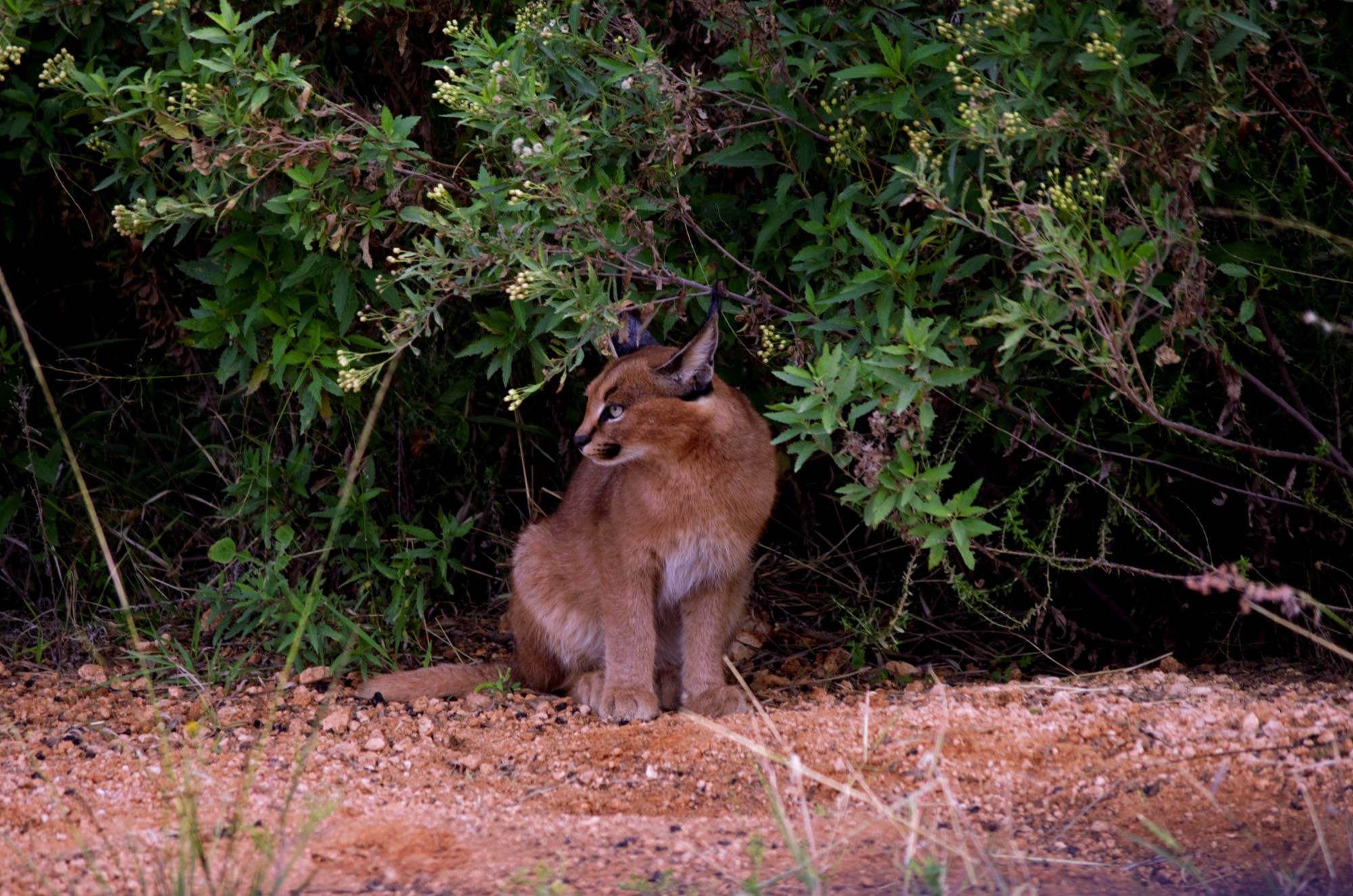
I have been in South Africa for just over a week now. It’s been an amazing opportunity to meet people and observe the country on its own terms. The closest I have had to a typical tourist experience has been our day trip to Addo Elephant Park. Nothing quite prepares you, on your first visit, for the sight of these huge majestic beasts looming ahead on the road, appearing out of the bushes. And there is so much more to see than elephants. We were stoked to encounter two young rooikatte along the roadside. These lynx are a rare sight at the best of times and we were able to sit and watch them for 15 minutes.

Rooikat
Rooikat
Addo Elephant Park
Elephant  – Addo Elephant Park, South Africa

The value of taking time to relax, soak in the countryside, meet fascinating individuals and spend quality time with my friend has been exactly the medicine I needed. In a few days I will make my way back to Cape Town for the much more urban, cosmopolitan side of my stay which will, in its way, be quiet and introspective. Cities can be good for being alone too.

Old sheep
Old sheep
Eastern Cape farm garden

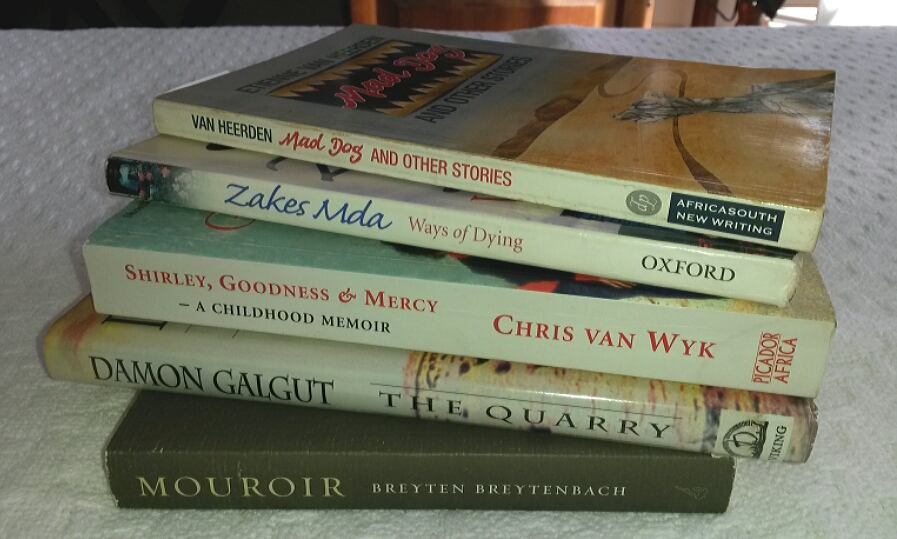
My endeavour to gather more South African literature to bring home is going well. So far I have collected a stack of second hand books from a little shop in East London here in the Eastern Cape and have another stack waiting for me back in Cape Town. I have been digging through my friend’s bookcase for titles to look for here or back home and last night I was thrilled when my favourite author, Damon Galgut, won the Sunday Times Literary Award for South African fiction for his novel Arctic Summer. So, a fine literary excursion to date.

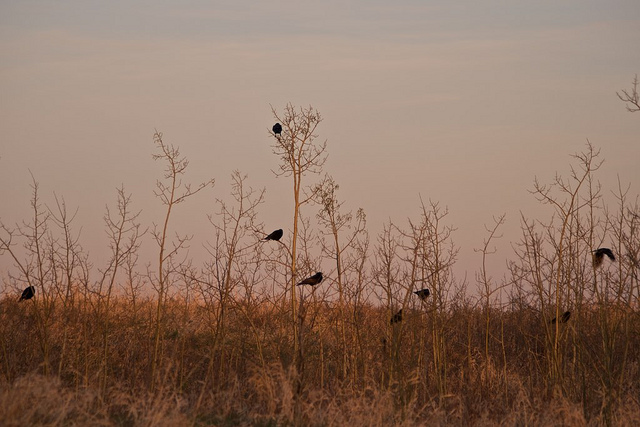
South African sunset - All photos copyright JM Schreiber
South African sunset – All photos copyright JM Schreiber

Otherwise it has been a relief to step back from my normally heavy engagement with news and social media. I did read with dismay about the terrorist attacks in France and Tunisia. I was relieved that my American LGBT brothers and sisters have achieved a long overdue milestone. But I came to South Africa in large part to put as much distance between myself and my life at home as possible for a few weeks and, for now, watching waves crash on the shore or sitting on the stoep and watching the sky burst with colour in the evening or listening to Breyten Breytenbach reciting poetry in Afrikaans is therapy of the best kind.

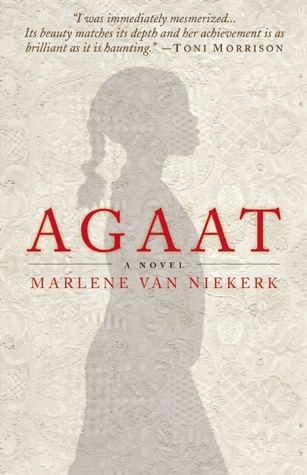
And her name was Good: Agaat by Marlene van Niekerk

“Poor Agaat. What has my life been? What has her life been? How can I ever reward her for coming this far with me here on Grootmoedersdrift? How does one compensate somebody for that fact that she allowed herself to be taken away and taken in and then cast out again? And to be made and unmade and remade. Not that she had a choice. I even gave her another name.”

This is a variation on the refrain that haunts Milla de Wet’s thoughts as she lies, paralyzed in the advanced stages of Lou Gehrig’s disease, completely dependent on her black servant turned caregiver Agaat to attend to her every need. As Marlene van Niekerk’s magnificent novel begins, the two women are reduced to communicating through eye movements. Eventually even that will be impossible. But Milla’s mind is sharp and brittle in her confined waking hours and Agaat, stalwart and efficient to the end, knows her mistress well. Too well.

AgaatFrom this claustrophobic perspective a remarkably expansive and complex novel of Apartheid South Africa unfolds. Van Niekerk, a nominee for the 2015 International Booker Prize, achieves this by deconstructing the traditional farm novel and weaving together a complex, poetic and devastatingly powerful epic. It is almost impossible to find the words to adequately capture the experience of reading Agaat (or The Way of the Women as it was published in the UK) without resorting to hyperbole. It is, quite simply, an inspiring, unforgettable novel. One that invites and rewards careful reading.

Despite the rolling fields and pastures, river and mountains, this is an intensely focused novel. It is not easy to exist with Milla trapped inside her immobile body, or to listen as she bitterly dissects and dismantles her life – alternately self righteous and regretful – addressing herself in the second person. It is not comfortable to be swept into the stream of consciousness of her internal ramblings that mix obsession over her current state of being with the flotsam and jetsam of her farm woman’s domestic life. Or to discover, through her notebook journals, the details of Jakkie’s childhood and, eventually, Agaat’s early years in her home. By masterfully weaving together these four distinct narrative streams in each chapter, van Niekerk creates an enduring portrait of the complexities of power as they play out within families, between races, and in a country that is in an increasingly volatile political state.

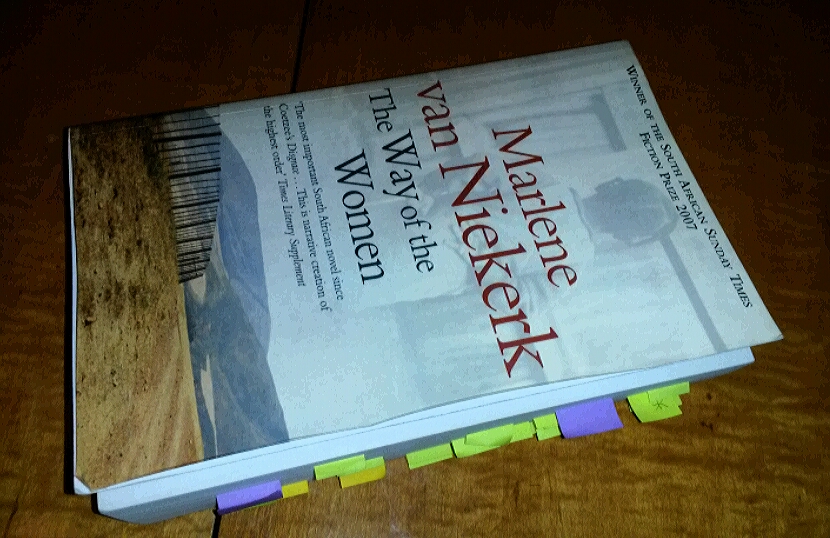
My well marked copy!

As the story is fleshed out, we meet Milla in 1948, as a young woman engaged to the dashing Jak de Wet, a trophy husband of sorts, handsome but ill suited to the farming life. Their marriage is increasingly volatile and strained, with both playing their own counterproductive roles out to the bitter end. For many years the couple is unsuccessful in their efforts to conceive. That is where Agaat comes in. The daughter of one of the labourers on her mother’s farm, she is born with a withered arm and, as a result, is subjected to horrific abuse in her early years. Milla imagines a heroic role for herself in rescuing the rejected child and bringing her into her home against the protests of her husband and the sidelong glances of her neighbours. For years Milla treats Agaat as a surrogate daughter – in so far as a segregated society will allow – teaching her to read and write, to explore and appreciate nature, and to master the fundamentals of animal husbandry. And then, suddenly, she discovers she is pregnant. Before the baby arrives, Agaat’s role is abruptly shifted. She is moved into an outside room and a maid’s uniform with strict expectations. But when little Jakkie arrives Agaat, barely more than a child herself, becomes the loving and compassionate caregiver that neither of his parents can ever manage to be.

As the end is approaching Milla is forced to weigh and reevaluate her own life and the fate to which her actions have tethered Agaat. As often as she questions her actions, it is not clear that she can ever stand back from herself and see the big picture. She is, in the end, complicit in maintaining the Afrikaner social order that Jak so proudly believes in even if, in her own mind, she is a martyr. Agaat is at once the angel in the wings, servant and nanny; and the witch still bound to her “primitive” ancestry. She has been molded and created by Milla, but her thoughts remain hidden. Not until the closing pages of the novel is her side finally revealed in the dark and heartbreaking bedtime story she that she and Jakkie shared when he was small.

Originally published in Afrikaans, the translation by Michiel Heyns is simply brilliant. Van Niekerk is first and foremost a poet and her language is filled with allusions to music, children’s rhymes, and literature. The scent of fennel, colours of flowers and foliage, the calls of birds and nosies of farm animals, the guttural g’s of Afrikaans all add to the multidimensional experience of reading Agaat. As Heyns points out in his Translator’s Note: “Agaat is a highly allusive text, permeated, at times almost subliminally, with traces of Afrikaans cultural goods: songs, children’s rhymes, children’s games, hymns, idiomatic expressions, farming lore.” The ultimate result appears effortless, mediating the boundaries where necessary but maintaining a distinct cultural experience. An interview with Heyns in Words Without Borders is an informative and entertaining exploration of the text and the translation experience that is highly recommended for interested readers.

Agaat is bookended with a Prologue and Epilogue in Jakkie’s voice. It is 1996 and he is flying home from Canada because his mother is near death at the beginning and returning after the funeral at the end. He left South Africa in 1985 to escape the political conditions in his native country, and, one suspects, his parents. As I write this, I am about to fly from Canada to South Africa myself for my first ever visit. I am aware of the fraught tensions that continue to run through the country, most recently arising in the literary community. I will be carrying the many complex currents that run through this important novel with me as I leave.

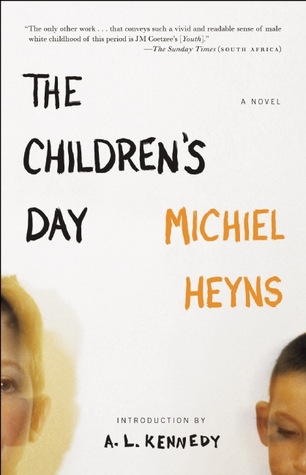
Coming of age in the 60’s: The Children’s Day by Michiel Heyns

Small town South Africa. The 1960’s. Rules govern social engagement. Black and white, Afrikaner and English, richer and poorer. Even in the smallest of towns a hierarchy of social stratification evolves and is reinforced with a blend of gossip and charity. And then there are those most ineffable mysteries of life: love, sex and death.

childrensSuch is the context of The Children’s Day by Michiel Heyns. At the heart of this Bildungsroman is Simon, a sensitive, intelligent boy charting his way through the machinations of childhood in the dusty environs of Verkeerdespruit. He is keenly aware that he is living in the heart of nowhere. But the books that are such a vital companion to this only child cannot even begin to answer the questions that his interactions with classmates and the curious behaviour of the adults around him continually raise. Simon is left with the impression that he is trying to put together a jigsaw puzzle without all the pieces.

The novel opens in the modest, relatively speaking, metropolis of Bloemfontein, where Simon, now 15, is attending Wesley College, a “second-rate” Methodist private school. The occasion of a tennis match between the boys of Wesley College and a nearby technical high school on a stifling hot December day in 1968 unspools a series of flashbacks that reach six years into the past and gradually move forward. Simon’s reflections are triggered by the unexpected, unwelcome appearance of a former classmate on the visiting school’s team – the awkward, epilectic Afrikaner Fanie van den Bergh.

From the time he first arrives in Verkeerdespruit, Fanie is a curiousity. His fits alarm his classmates and teachers, while his inarticulate, easy-going nature sets Simon off balance. He regards Fanie with a measure of contempt to which the latter appears oblivious. Yet  Fanie is a constant source of surprise. When Steve, in his tight jeans and white t-shirt, roars into town astride the magnificent Matchless G8 bringing a touch of heroic glamour to streets of the sleepy village, attracting the adoration of the boys,and the fluttering of female hearts, it is Fanie who disappears on the back of his bike. The fallout resulting from Steve’s arrival marks the advent of Simon’s awareness that the world is full of joys and dangers that the adults around him allude to with the most cryptic references. Frustratingly alert to the innuendos around him, Simon is delightfully naive as only a child of the pre-internet era can be. I remember it well myself. As Simon admits:

“Though I was probably quicker than my contemporaries at fitting together apparently unrelated observations, I was hampered in my deductions by an almost complete ignorance of sexual matters. I had arrived, for instance, at the conclusion that kissing was both a much sought-after pleasure for oneself and a much-ridiculed weakness in others, and that adults were too old for it and children too young.”

By observing the parade of adults that passes through his home town, Simon’s glimpses of the outside world become broader, if not necessarily clearer. A teacher who takes harsh discipline in the classroom a step too far is sent away, a pretty young girl he assumes is a special friend abandons him for the school jock, a woman with a shocking past appears and breaks the heart of one of his favourite teachers. And then there is Trevor with his dyed hair and pink shirts who shocks everyone by shaking up the life of the stuttering shy bachelor postmaster and his mother, briefly redesigning the beehived heads of the local women before being run out of town once speculations about the true nature of his friendship with the postmaster spread. Again Simon is perplexed, though it is Trevor who first implies that he sees in the boy a likely kindred spirit. The only outlet he has for the really “big” questions that trouble him are his Saturday afternoons at the local soda fountain with Betty “The Exchange”. The cynical, unfortunately chinless, telephone operator entertains Simon’s queries but confuses him as much as she informs him – children, after all, are only allowed so much enlightenment in this era.

It is Fanie who, in the end, stands to call attention to the missing puzzle piece that Simon has been holding in his hand all along.

I have an affection for strong coming of age/coming out stories. This is one. Sexually Simon is a slow learner, a boy who is less in touch with his body than the more viscerally grounded if intellectually dimmer Fanie. He over thinks the world even though he encounters more than one adult male who recognizes in him an inclination that he has, at an early age, no context for. Today with the ubiquity of queer conversation, imagery, access to internet, resources and young adult novels that explore queer themes, it may be hard to imagine how isolated a child could be growing up in earlier decades. Some claim this is an argument for censorship or against realistic sex education in the school system. But that is a spurious argument. One could still grow up LGBT in a vacuum. Or worse in denial. Many of us did.

I grew up in the 1960’s and 70’s in conservative rural Alberta. My parents, like Simon’s were liberal, but, like my peers, there were so many facts of life we did not understand and would not have dared to ask. Especially if there was any inclination that our own sense of self was off the norm. Long before one could retreat to the wisdom of Wikipedia, our resources were limited. I will never forget when the word “faggot” started to appear on our radar, probably as 10 or 11 year-olds. We would scurry to our dictionaries to find only “A bundle of sticks or an unpleasant woman”. Somehow we knew that couldn’t be right!

With The Children’s Day Heyns captures all of the curious confusion of growing up smart, bookish and not quite fitting in. And he does so with a warm, understated humour. Through his perceptive, yet naive, narrator the wonder and mystification, shame and humiliation of adolescence are evoked with remarkable resonance. Like many coming of age tales this was also a debut novel. But first published in 2002 when the author was in his late 50s, this novel also marked the debut of second career as a writer and translator – one that is still going strong – an inspiration to the rest of us in mid-life with writerly aspirations.

Looking to distant horizons: A few reflections on reading from afar

It is not entirely clear in my memory, but by this time last year, the stress of trying to hold myself together in the face of mounting pressures in what had become a deeply dysfunctional workplace, was taking a serious toll on my emotional and mental health. I have not been able to return to regular work since last June. I have struggled to gather the energy to attend to many of the regular household tasks that seem to pile up week after week. My cameras, once my faithful companions, have hardly been touched. The unbearable sameness of my city fails to inspire and seems to be closing in on me despite a remarkably mild winter. But one activity has remained undiminished and if anything has flourished with the extra time I have these days. I am talking about reading.

A fraction of my shelves, some read, most not (yet).

Most of the books I read take me elsewhere. As I turn my blog focus more and more toward literary themes, it is clear that I have a few idiosyncrasies. I have a definite interest in South African literature. This owes its genesis in part to my own experiences knowing a number of South Africans over the years, from watching the momentous changes that have taken place in the country during my adult years, and in the understanding that the new South Africa faces challenges that create a context for important discussions that we need to continue to keep open. Discussions we can all learn from in our increasingly global reality. The same holds true for another area with which I have an increasing literary interest – central and Eastern Europe. The political turmoil of the past century has provided ample inspiration for a wide range of exciting  literature, which, thanks to an increasing number of industrious small publishers, is catching the attention of English speaking audiences. Slowly but surely.

Of course, at the core of all great literature, classic and contemporary, is the essential quality of the human experience. We are born, we grow old, we fall in love, we lose those we love, we battle darkness, we face fear, we hope, we reach for those moments of joy. And the more I open myself to the stories of others from around the world, the less alone I feel.

But then there is this nagging guilt. As a Canadian, why don’t I read more Canadian writers? Well I do, but so many leave me unsatisfied and rarely reach my blog. And those I am especially fond of have tended to come from elsewhere; that is, they are Canadian with a hyphen and frequently write from that transitional perspective. I don’t think it was always that way. Maybe I have just been land bound too long. Maybe I crave the exotic just a little after all.

Well until I can travel, I will keep my bags packed, my options open and and a healthy pile of books standing by from near and far.

Behind the photographic impulse: Double Negative by Ivan Vladislavić

Copyright JM Schreiber, 2013

“How can I say what these fragments mean to me? The awkward truths of my life take shape in their negative spaces. In the lengthening shadows of the official histories, looming like triumphal arches over every small messy life, these scraps saved from the onrush of the ordinary are the last signs I can bring myself to consult.”

When we first meet him, Neville Lister, the narrator of Double Negative, is a disaffected young man, uncertain and aimless in a fractured and troubled environment – apartheid South Africa. It is the early 1980s and he cannot quite find his footing, either in academic study, the political protestations of his friends, or the mixed allegiances of his parents’ generation. The stakes are high, but his ambivalence is a luxury well known to middle class youth. Being close in age to Neville and his creator, South African author Ivan Vladislavić, I could not help but chuckle at his repeated references to “Beerhunter”, (a party game we Canadians lay claim to, by the way) or recognize the insidiousness with which The Eagles’ Hotel California album seems to define our lives even if we never owned a copy of that recording. However, unlike our most reluctant hero, I did not have political unrest or the real threat of conscription bearing down on me.

Double NDouble Negative traces Neville’s evolution from long-haired, pipe smoking dropout to middle-aged late blooming artist, framed against the shifting political, cultural and socioeconomic backdrop of Johannesburg. In the first section, “Available Light”, his father arranges a meeting with a famed local photographer, Saul Auerbach, in the hopes that the encounter might inspire his son to reach beyond his current employment assisting a man who spray paints lines on roadways. As Neville tags along, Auerbach and a journalist friend devise a game that will direct their photographic pursuit for the day. Standing on a hillside with a panoramic view of the city below, each man choses a roof top. They manage to visit two of the three selected homes where Auerbach charms his way in, and coaxes photographs out of the inhabitants – a poor black woman with her two surviving triplets living in a backyard shack and a white woman in a lounge suffocated with furniture and curios. But before they visit Neville’s choice, the photographer’s energy and his necessary light have faded and they head home.

When our narrator picks up the thread of his story in the second section, “Dead Letters”, he has been in London for ten years and the first free elections have just been held in South Africa. Swept up in a wave of nostalgic homesickness he flies home. By this time he is also making a living behind the lens, but as a commercial photographer. He returns to a city already morphing under new dynamics, post apartheid – street names changing, houses and entire city blocks replaced. Cities are, at the best of times, constantly re-inventing themselves, shedding their skins. The effects are more profound under the pressures that have been released and confronted in places like Johannesburg, where, by the time we catch up with Neville again for the final installment “Small Talk”, he has taken to photographing the ubiquitous walls that have arisen to close off and protect the city’s inhabitants from each other.

Upon his return to South Africa, he had experimented with trying to enter a home to photograph the resident, drawn, of course, to the house he had first chosen so many years earlier. The experience almost swallows him whole but does, in turn, offer the direction that will inform his own artistic photographic ventures. He no longer wants to see what lies behind the walls that have been erected. He draws the resident out but refuses to enter. It is now 2009 and our hero is being subjected to an interview by an eager, self-promoting young reporter and blogger who intersperses her blog posts with a litany of handy household tips that would make Oprah proud. She is of a entirely new breed, neither weighed down by nor fully appreciative of the reality of her nation’s history. By contrast, Neville Lister occupies the transitional space. As photography has moved from film to digital, a medium with remarkable capacity for storage and the editing and altering of images, so is his country altering and editing its own collective memories.

More than anything, this is a story that unfolds as a series of images, captured with Vladislavić’s poetic eye for detail. He translates scenes, the photographic and the interpersonal, with a language so effortlessly descriptive that I often stopped to re-read a paragraph for the sheer pleasure. Neville describes “gumption” as a “word that stuck to the roof of your mouth like peanut butter”. A character “moulted” his jacket. In navigating the city he talks of following “the simple arguments of avenues and squares”.
This ability to transform language into imagery is nowhere more apparent than in his descriptions of the scenes, immortalized by the lens of the camera under the direction of the photographer. One of the photographs resulting from the initial outing with Saul Auerbach is described in vivid detail:

“Mrs Ditton sat in the armchair beside the fireplace. The coffee table had been dragged away – there is no trace of it in the photograph – to expose the floorboards and a corner of the rug. Looming on the left is the largest of the cabinets, so imposing you would say it belongs in a department store. The chair has wooden arms with ledges for tea cups and on each side of these lies a pie-crust of crochet work and a coaster. The chair sprawls with its arms open wide and its fists clenched, and she wallows in its lap.”

I imagine that anyone with an SLR camera and a tripod has experimented with long exposures and the creation of ghost images. It seems to be a rite of passage. Double Negative is, in many respects, a book of ghosts. Visiting with the woman living in the house he had selected so many years earlier, Neville feels weighed down by the voices swirling around her lounge. In referring to the annotated cookbook passed down from his mother, he reflects that the food “tastes better when the ghosts adjust the seasonings.” And ghosts haunt a collection of dead letters that come into his possession and, it seems, may be destined to lead him into his next “artistic” endeavour. If growing older is a process of acknowledging and coming to terms with the ghosts we carry, our narrator is older and wiser but still working away to make sense of it all by the end of this book.

And so is his country.

Note: Originally published in South Africa in 2011, Double Negative was released to an international audience in 2013 (with an introduction by Teju Cole) through the amazing publisher And Other Stories. Supported by their unique subscription model, this release was followed by the publication of an earlier title, The Restless Supermarket in 2014, and his upcoming collection of stories, 101 Detectives, will be released this year. Ivan Vladslavić was recently named one of three recipients of the 2015 Windham Campbell Prize for fiction along with Teju Cole and Helon Habila.

Addressing injustice with the pen: Reflections on Rumours of Rain by André Brink

Earlier this month I attended an inaugural PEN Canada event in my city. The purpose of bringing such discussions to locales throughout the country is to turn the discussion about censorship and freedom of expression inward where, against the outrages we see in other parts of the world, we risk falling into a false sense of complacency. The empty chair at this debate was reserved for Raif Badawi, the Saudi man sentenced to 10 years in prison and 1,000 lashes for the “outrageous” crime of blogging. His wife and children have been granted refugee status in Canada but the Canadian government is curiously reluctant to speak out. Why? I can’t help but wonder if their foot dragging around any international injustices that involve refugees or foreign born Canadians (the non-white ones, that is) reflects the persistent attitudes of the Conservative government’s core grass root supporters. Funny how soon we forget that all non-Aboriginal Canadians are immigrants in this colonial landscape if you go back far enough. The subjugation and treatment of our First Nations peoples is often seen as justifiable, built into our collective history. That is no excuse, but somehow racial concerns carry an entirely new intensity when the matter is much more black and white, so to speak.

Or when we see it elsewhere.

RainThe recent passing of South African novelist André Brink led me to a long overdue reading of one of his classic novels, Rumours of Rain, which dovetailed nicely with the issues that have been in my mind since attending the PEN event. Published in 1978 and addressed directly to the injustices of apartheid, the echoes of this, and his other controversial novels of this period, have long reverberations that continue to ring  close to the bone in this increasingly global new world.

The power of Rumours of Rain lies in the narrative voice. Martin Mynhardt, a successful Afrikaner businessman, has stolen a rare week of solitude in London to exercise his literary ambitions while attempting to exorcise any measure of guilt in the unfolding of a recent series of events that have torn apart the lives of some of the people who were once closest to him. Driven solely by his own over inflated sense of self worth and an endless internal cost-benefit analysis, Martin is a ruthlessly blind apologist for apartheid. He imagines himself sufficiently enlightened to know what is best for his country and his family. He focuses his attention on the events surrounding a weekend visit to the family farm with his son where his goal is to convince his mother to approve the sale of the land, an urgent deal to which he is already deeply committed. But nothing is simple. Violence not only intrudes on his visit to the farm, but back home in Johannesburg, a violent series of riots is about to erupt in Soweto.

In a long winded, self indulgent, but oddly engaging account, he chronicles his complicated relationships with his best friend, his wife, his son, and his mistress. He honestly feels personally affronted by the revolutionary political passions he is witness to, especially in his friend Bernard – after all, he does not want them to reflect badly on him.  But he is unable to acknowledge any responsibility for the role any of his own action or inaction may have played in the end results; he can justify every selfish choice he makes in marriage, love, sex, business and friendship. No matter the cost.

Yet, in committing his story to paper, Mynhardt inadvertently succeeds in giving an eloquent voice to the very views he claims to disdain. He manages this by including transcripts from Bernard’s trial for treason, his son’s bitter reflections on his recent experiences with the army in Angola and through passionate exchanges with Charlie Mofokong, an educated black South African and childhood friend of Bernard’s whom he reluctantly employs to assist him in managing his mine interests.

Throughout the novel two interwoven refrains recur: Martin’s grandfather’s favourite Biblical passage “And have not love”(1 Cor:13) and the anthemic Nkosi Sikelel’ iAfrika.

What we end up is with is the voice of a deeply flawed, myopic (literally and figuratively) anti-hero; not surprisingly one who must have made more than a few attentive readers shift uncomfortably in their armchairs. Literature is often at its most effective when it gives voice to the under dog, but in skillful hands, like Brink’s, turning the narrative over to the less sympathetic side of the equation can have a resounding impact. Especially when we feel a moment of empathy with a man we want to despise, catch a glimpse of him in ourselves.

Fittingly, a month that started with a local PEN event, has ended with Freedom to Read Week in Canada. The opportunity to honour an author who used his voice, together with many of his fellow writers, to raise a chorus to question and challenge apartheid, seems appropriate. Today the intrinsic messages against racism, classism and greed still need to be heard by a wide audience.

Home is wherever you find yourself: The Alphabet of Birds by S.J. Naudé

birdsFor all my best intentions to read the stack of books I had planned to tackle with the new year, I keep getting side lined by new releases. And I am, it would seem, still caught in a South African vortex. This time I have been swept into the hypnotic landscape of words and images that is The Alphabet of Birds by S. J. Naudé. Originally published in Afrikaans, this debut collection of short stories has just been released in the UK and America in the author’s own English translation. A fascinating communication between Naudé and fellow countryman Ivan Vladislavic posted on the Granta website drew my attention to his work and I was not disappointed by a single story in this amazing collection.

Trained as a lawyer, Naudé spent many years working in New York and London before returning to South Africa to pursue a career in writing. As a result, most of the stories in The Alphabet of Birds explore the complicated existences of ex-pat South Africans who find themselves losing their footing abroad but are uncertain how to negotiate the emotional dynamics of family and the socio-economic realities of a new South Africa. Home is increasingly elusive, fleeting attempts to find meaning fall into emptiness. In one of my favourite stories, “A Master from Germany,” the desire to escape a soulless corporate existence leads to a fantastical hedonistic adventure that turns into an achingly sad domestic vigil at a parent’s bedside. There is a profound sense of alienation that runs through all of these tales: a husband unable to rescue his wife from herself, scattered siblings across the globe, men seeking solace with male lovers who are either too elusive or too intrusive.

These are not stories for those who prefer a traditional narrative arc. Naudé writes with a cinematic eye. The violent storms that stretch across the open South African skies in “The Van” are breathtaking, the slow and painful disintegration of a parent dying of cancer portrayed “A Master from Germany” and “War, Blossoms” are heartrending. Images and motifs recur. Illness and death. Sex and drugs. Love and loss. Music and birds. With a language that is poetic and precise, he focuses his attention on sounds and silences, brutality and fragility; opening wounds and blurring boundaries between identities. His characters tend to become increasingly opaque, mysterious even to themselves: “simultaneously armour-plated and flayed.”

I have been slow in coming to appreciate what can be done within the medium of the short story. In the Granta discussion Naudé explores his fascination with the processes at play in the work of W. G. Sebald and Thomas Bernhard, among others. As those two writers are a key focus for me as a critical reader this year, I was keen to see how such influences would play out in his work. In terms of possibilities for storytelling I find myself very excited by this collection. I simply did not want it to end.

The themes of borderlessness and alienation that drive these tales are very human and have far reaching relevance beyond the South African experience. Now that it is available to an English speaking audience, thanks to the subscription funded publisher And Other Stories (I just had to subscribe too), The Alphabet of Birds will hopefully reach a wider audience. I suspect it will likely be one of my favourite reads of the year too, and it’s only January.

Copyright JM Schreiber, 2010

Dreams and determination: A Man of Good Hope by Jonny Steinberg

It is, of course, a harsh coincidence, perhaps no more than that, but the first two murders of the year in my city took the lives of two young members of our 5,000 strong Somali community. The first of the two unrelated incidents occurred just ten blocks from my home in the early hours of New Year’s Day, the second the following day. To many here in Canada, Somalis, if they are thought of at all, are conflated with pirates.

I have watched with dismay, the rise of racism and xenophobia that has accompanied the increased visible ethnic diversity that has spread across the country, changing the face of a city that was, when I was young, predominately white. My city that is only 130 years old, most of us have come from elsewhere recently or within a few short generations. And those who were here before, our First Nations, still have to struggle to call attention to their circumstances. But we are lucky, this is a land of peace, a land of promise.

GoodhopeAgainst this context, a review in The Observer drew my attention to A Man of Good Hope, a new book by South African writer Jonny Steinberg. In my work I encountered and supported many young men from the troubled Horn of Africa, but the depth and complexity of the political and human realities that have been endured by many of the refugees who ultimately make their way to our shores are far beyond my imagining from my safe space. However, I was not quite prepared for just how difficult that journey can be.

The life of Asad Abdullahi, the young Somali man at the heart of this biography, is changed forever when his mother is shot by militiamen in Mogadishu when he is 8 years old. As he flees with relatives he begins a long, at times circular, journey of hopes and repeatedly dashed dreams. Lacking formal education he is gifted with determination, a proud sense of identity, an unflagging work ethic and an ability to assess any situation to determine where a living can be made. But at every turn there are losses, challenges and continued threats to life and limb that mount and threaten to drag him down. He is forced to grow up fast. Eventually he makes his way to South Africa seeking the wealth and security he hears fellow Somalis talk of only to find that even for the successful migrant, the end can be sudden and brutal.

Economic opportunities for newcomers like Asad, who are forced to live with temporary documents, are limited and often place them into the hostile and difficult environment of the townships where loyalties can turn on a dime. His beloved wife, unwilling to face the rising danger, heads home to family with his children. He stays, holding on to the dreams of America that have long called to him and endures the rising xenophobic violence perpetrated by black South Africans against the tide of incoming African migrants. His diligence will be rewarded, but not without great sacrifice.

Steinberg recounts, with care and compassion, a tale that has more breath taking twists than a thriller but exists on a plane on which dreams, hopes, memories and regrets blend to create a story that is at once deeply human and ultimately elusive. On a more immediate level, the view into the the ancestral dynamics of Somali history and culture that provides a background to Asad’s story has added, for me, extra poignancy to the recent New Year’s Day killing near my home. The victim shared the family name Abdullahi.

In praise of moral ambiguity : The Impostor by Damon Galgut

With no particular allegiance to astrology, I have often mused that my tendency to take on the role of the devil’s advocate fits well with a Libran temperament. My natural response to a harshly judgmental statement is an immediate inclination to flip the coin and present an argument for the other side.

I like to think that I carried this tendency into a career working in social services where the complexities that define and refine, strengthen and restrict the way that people respond to, survive or succumb to, the pressures they encounter in life cannot be understood in black and white terms. Motivation, decisions, and actions have contexts that run deeper than the actors or observers understand. When talking to clients or their families I would try to open up questioning to allow those I was supporting to look for their own answers. I was aware that I could offer suggestions but no guaranteed solutions.

Why then does literature so often try to provide answers, lead us to scenes of redemption, close out with a moment of denouement? Life, in case you haven’t noticed, is not always so neat and tidy. Sometimes we are not really sure what happened or why we might have acted in a certain manner. Our natural instinct is to explain our feelings and behaviours, to others and, most critically, to ourselves. But that is not always possible. We act irrationally, selfishly, even, as those of us with mental illnesses know, when we are not in our right minds. So why do we want our literature served up with moral certitude?

When I read a book with a dark context, whether on a large or small scale, I feel let down if an author fails to push the envelope, to take the risk of leaving the reader with a feeling of unease, a question of moral ambiguity. Oh sure, it is nice to be comforted, but more often than not, I read to be challenged, to be shaken, to be exposed to experiences, places and circumstances I have not known. That is one reason why I tend to be drawn to literature from countries other than the one in which I live.

ImpostorSouth African author Damon Galgut is decidedly unafraid to tackle the shifting landscape of political and economic power in his own country post Apartheid and show how easily the ordinary, average individual can get swept up in situations they have neither the awareness or the initiative to appreciate. Someone like Adam Napier in The Impostor, a man who discovers, too late, that his very unimportance makes him expendable in a game he didn’t realize he was playing. Or did he just not care enough to take notice?

After losing his job and house to the new racial and social realities arising in Johannesburg, Adam finds himself cut adrift in mid-life. He seeks refuge with his younger brother Gavin who is taking calculated, ethically questionable advantage of a burgeoning property market in Cape Town. Sickened at the prospect of accepting the job his brother offers he accepts instead the refuge of a neglected house Gavin owns in an isolated town in the Karoo. Here, he reasons, he will dedicate himself to writing poetry and find himself anew. What he finds, instead is a curious figure from his past, a school friend he cannot remember even though this man Canning insists that they once shared a very special bond, one to which this bland effusive stranger is clearly indebted.

Without admitting his complete lack of recall for this supposed friend, Adam is soon drawn into spending his weekends with Canning and his alluring black wife Baby up in the lush mountain retreat Canning inherited from his father. From here on things become complicated, tragic and eventually frightening. More than one moral compass is unloosed and all of Adam’s apparent values are tested and found, well, the reader is left to decide…

Tense and brilliantly spare in the telling, Galgut draws from the hostile environment of the Karoo, to create a fable with no clear moral reckoning, no redemption, and a heaviness that sits in the stomach of the reader long after the last page is turned.

I wonder if my fondness for literature from South Africa and Europe comes from the fact that conflict is never far from the surface in lands that have known so much recent turmoil and disruption. The result is a literature that, at its best is vibrant, alive and emotionally challenging. In Canada it is perhaps too easy to affect a measure of complacency even though, if you turn a few stones and look closely enough, our history holds plenty of darkness that seeps into the present day. And as the world effectively becomes smaller, racial and xenophobic tensions rise, examination of the legacy of our treatment of our Aboriginal populations takes greater precedent, and our commitment to true acceptance of diversity is properly addressed; literature that risks posing the questions that lack obvious answers will become more critical.

And more authentic.

The courage to write

For some 30 years I have packed and unpacked, shelved and reshelved a library full of books that I have not yet read but would not dream of carting off to a charity sale. Naturally I assume that the day will come when that book will come to my attention and, conveniently I will have it at hand. Of course, in the meantime a wealth of new books have joined my libraries, actual and electronic, so that all those long held treasures run the risk of absolute obscurity. I suspect more than a few book addicts can relate.

And sometimes the tendency to hoard a book pays off, though sadly that time is too often heralded by the death of the author.

20140809_222130I must have purchased Nadine Gordimer’s Burger’s Daughter, in the very early 1980s. I was studying anthropology and working part-time in a bookstore. South Africa and the struggles against Apartheid would have held a particular resonance for me through the presence of a number white South African ex-patriots who had found their way to the Anthropology department of a Canadian university for their own safety. However, had I read this novel when I first bought it, I am not sure if I would have been able to fully appreciate this powerful testament to those men and women, white and black, who risked their freedom and too often their lives to fight for justice. But with 30 year’s perspective, the hard won experience of middle age and the political changes that have marked South Africa in deeply complicated ways both positive and negative – as history tends to unfold in real life – this is one of the most rewarding reads of the year for me to date.

Ms Gordimer’s writing is rich, complex and worthy of a careful read. The shifting perspectives take the reader in and out of internal monologues that Rosa Burger, the daughter of a doctor and Communist activist who has died in prison, holds with the many individuals she encounters or remembers as she struggles to find an identity for herself in the huge shadow cast by her famous father (a fictionalized tribute to the lawyer who defended Nelson Mandela). In the infinite wisdom of Wikipedia, Burger’s Daughter is described as historical fiction. Of course, it is no such thing. Rather it is a time capsule, a deliberately political novel, but written without the advantage of knowing that Mandela would walk to freedom, become President, and pass away leaving a society where so many still live on a razor’s edge even if the tapestry has changed.

The final pages of Burger’s Daughter paints an uncertain future. Yet like life itself, the novel is brimming with vibrant, colourful characters brought to life with keen and loving detail.  The complexity of the politics presented at the time of writing combined with the critical distance of three decades impressed me deeply. It takes courage to speak to injustice. Nadine Gordimer herself knew that her work not only took risks but would also be forever defined by her colour. Moving beyond colour, religion, ethnicity, culture, gender, ability, orientation or the myriad of other divisions we seem to be able to construct as to divide us as humans is a seemingly impossible task. But by taking that one piece to which a writer, by virtue of fate or circumstance, is able to address and telling the stories that matter, small changes may be possible.

“Writing is making sense of life. You work your whole life and perhaps you’ve made sense of one small area.” (Nadine Gordimer)

Nadine Gordimer was a writer of courage and I am ashamed that it took her death to bring her into my focus.