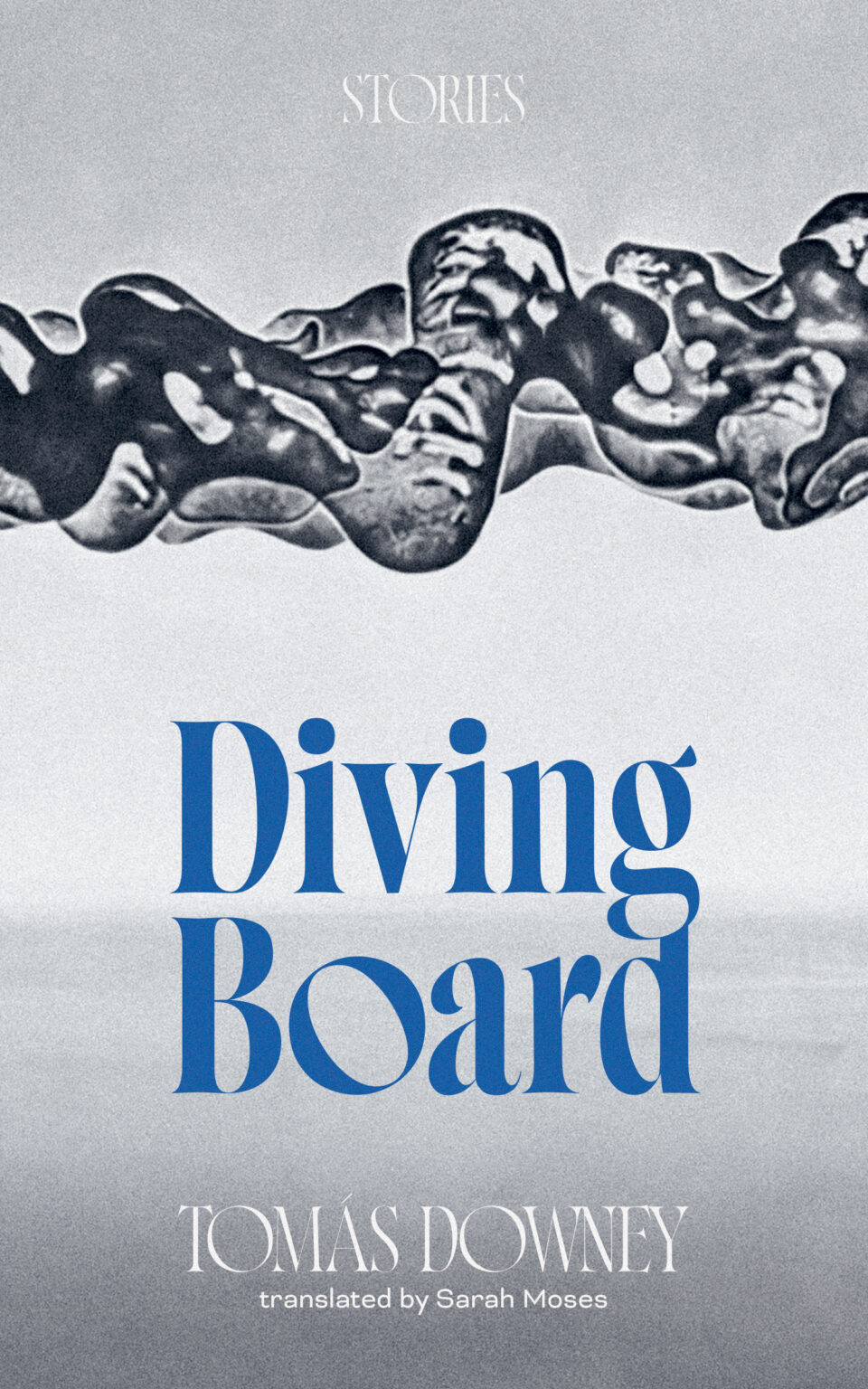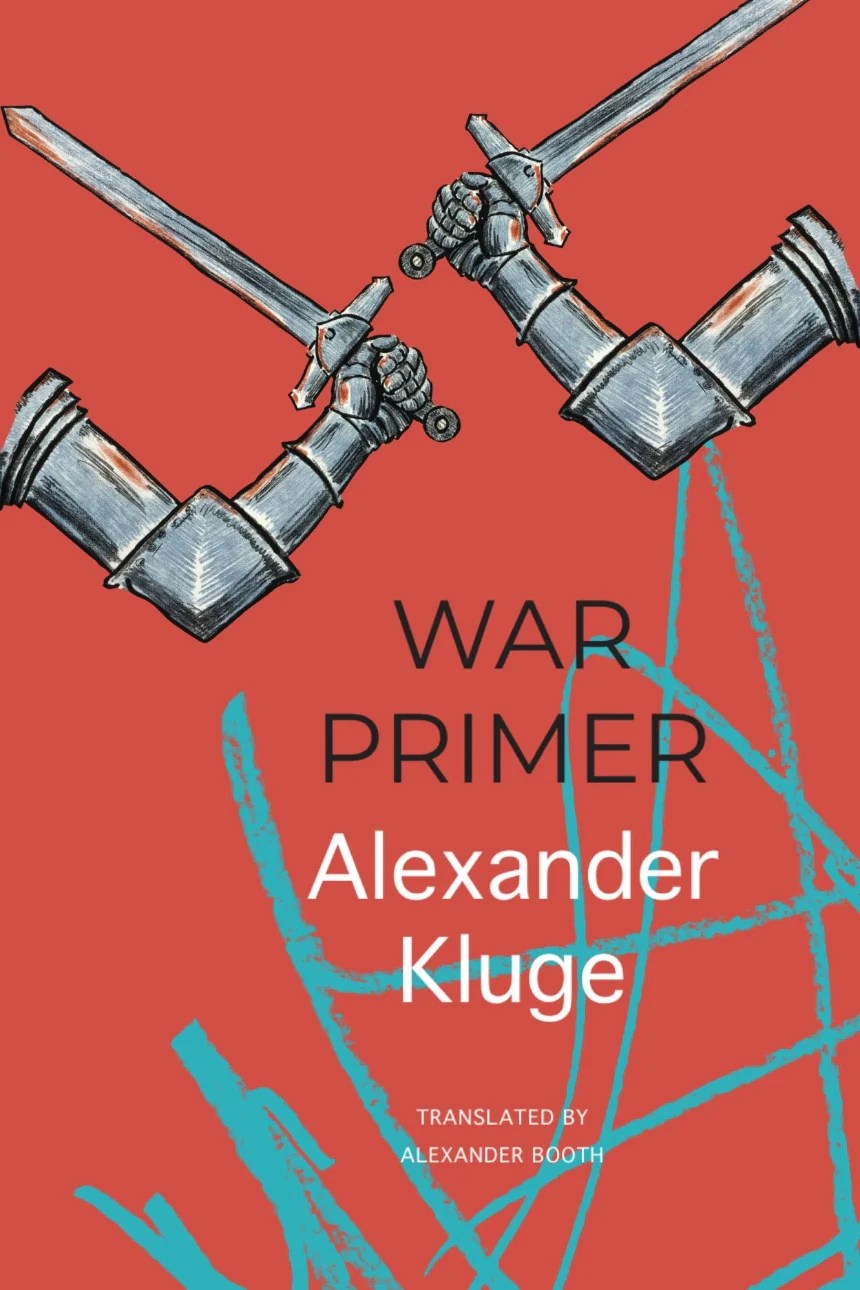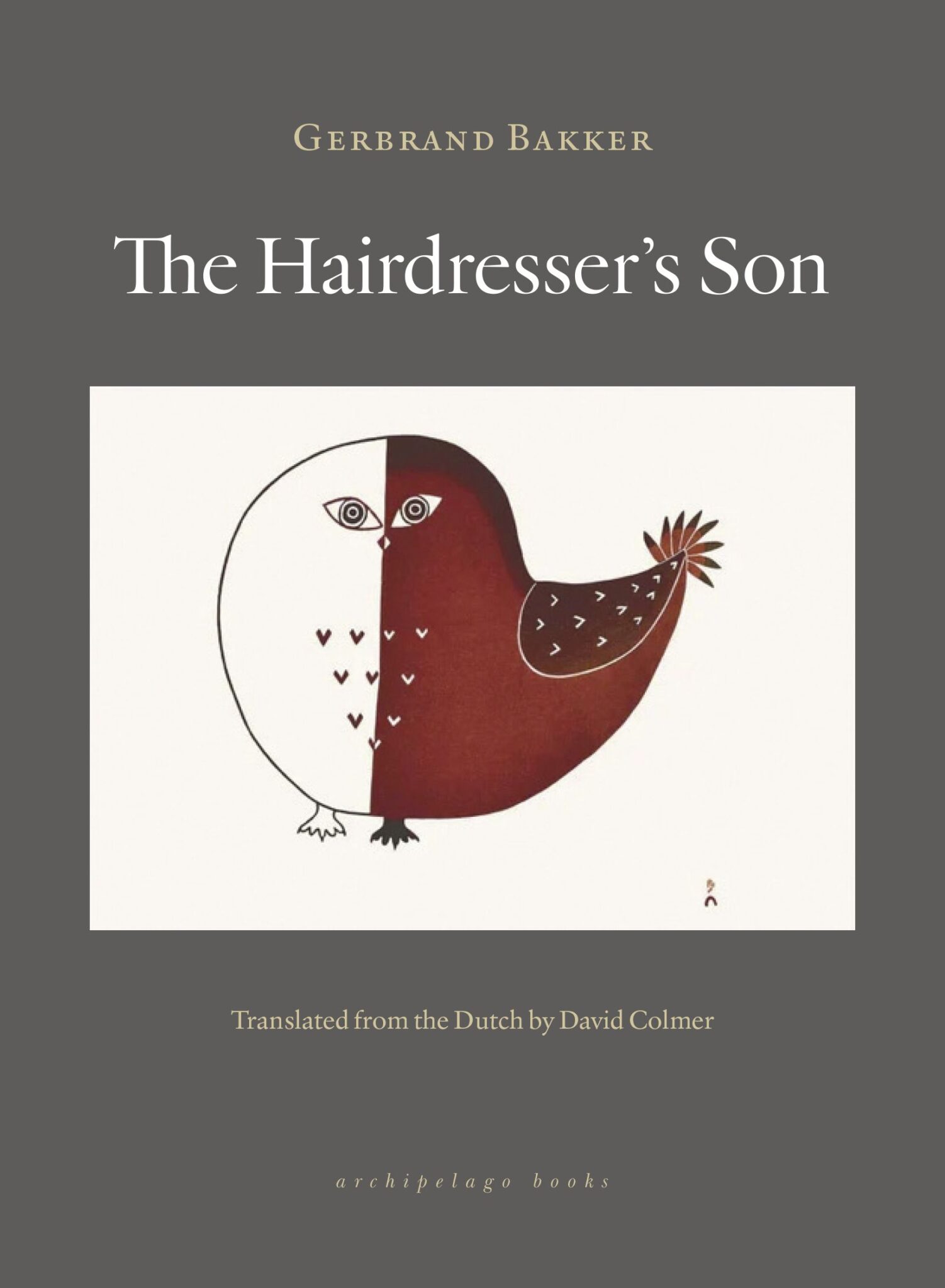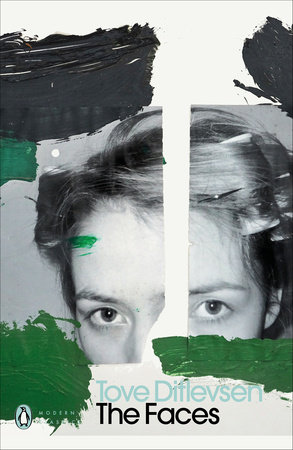
The truths we know and those we don’t: No One Knows Their Blood Type by Maya Abu Al-Hayyat

I don’t know which night I was conceived, but I do know that when nine months had passed, my life started to get complicated. All that I will relate here is not confirmed truth—these are stories I pass on from motley sources. None of them are entirely correct or straightforward, they follow the meandering intentions and motives of the storytellers.

Jumana, the central figure of Palestinian poet Maya Abu Al-Hayyat’s debut novel No One Knows Their Blood Type is,  as she tells us in an account of her early years living with an unloving aunt in 1980s Amman, a collector of secrets. The more she discovers, be it the rumour that her mother did not in fact die in the war in Lebanon, or the unwanted advances of a male cousin, the less certainty there is in her life.  As the story unfolds, shifting speakers and perspective backward and forward across more than three decades, it becomes clear that she is not the only member of her family haunted by secrets, doubts, and insecurity.

This slender, fragmented, nonchronological novel opens in a hospital in Jerusalem in 2007 where Jumana is assisting with the cleansing of the body of Malika, the gregarious midwife who has just passed away. She only knew this elderly Greek woman for less than two weeks—the time that she has been coming to visit her own dying father—but already she has fallen in love with her nephew Suheil, so she is almost family, so to speak.  However, when her father dies shortly after, the shock of attending to his body causes her to collapse and end up in emergency—a detour that will suddenly call into question her own relationship to the family she grew up in. Her father’s death certificate and her lab results reveal his blood type is O positive whereas hers is AB positive. While Suheil calmly shrugs it off as an error, Jumana is not so sure.

From here the novel moves back to Jumana’s account of her childhood in Amman. She and her older sister Yara were born in Beruit, but, at the ages of nine months and three years respectively, they are shipped off to live with their father’s sister in Amman. Their aunt treats them very poorly and the fate of their mother remains a mystery, while their father who in Spain with the PLO, is little more than a voice on the phone and a very occasional visitor. Then, in the early nineties when he has been exiled to Tunisia, the girls are packaged up and sent to join the father they barely know.

From here the narrative shifts to Tunisia in 1993. First, from the perspective of Abu al-Saeed, we see a man struggling with sudden single parenthood, anxious to protect—and if necessary, control—the honour of his two teenaged daughters. He goes to head with the eldest who is as stubborn as he is and, as a result, often incurs his wrath, while Jumana remains an enigma. He can’t figure her out, so he resents her. Meanwhile at work and among his fellow exiles he is frustrated, resentful, at odds with the world, and in turn he carries this frustration back home. When Yara picks up the thread, still in Tunisia, she details the close bond she and her sister have as security against their father, but even she notes, often with jealousy, how different Jumana seems. And then, when the signing of the Oslo Accords cements her father’s intent to return to Palestine, she not only feels despair at the thought of leaving her first love, but she wonders what it means to go “home” to a place she has never been.

Yet another angle to the story of this splintered and displaced family is offered from Amhal, the girls’ mother, as she gives her account of her life in Beruit from 1979 to 1982. She speaks of her unwanted and unhappy marriage to Abu al-Saeed, his disappointment with her failure to produce sons, and her longing to be with Omar, the young Lebanese man she truly loves. When her daughters are sent off to Amman she makes some effort to follow, but borders are difficult to cross and her direct account comes to an end. Jumana will later be in contact with her mother, but answers to the question that haunts her as she marries and has her own child, can only be addressed through DNA testing, but even then the whole question of her identity, not to mention her nationality, will be at risk if her father, or the man she knew as her father, was not related at all.

In his Afterword, translator Hazem JamJoum explians that his immediate attraction to this novel lay not in what was, but what it was not. Rather than writing to make grand statements against colonialism and oppression, or illustrate victimhood, he says: “It just assumes the grotesque facets of the workings of power, and conducts its conversation with whoever recognizes themselves as already in the fight.” He goes on to consider the questions might be more appropriate to ask, including:

Why do we lionize the figure of the revolutionary militant when that militant is, however understandably, transformed into a monster when it comes to those they supposedly love and cherish? Why aren’t questions about motherhood and fatherhood, sisterhood and kinship, love and friendship at the core of conversations about liberty and freedom? If they were, how would that change our notion of emancipation . . . should it change our notion of resistance?

If we ask such questions, and we should, this is a novel that raises more concerns than it settles. Which is okay. It is a story that is inextricable from Palestinian history, occupation, war, and exile, but its focus is on one girl and woman in particular, and the complex and delicate balance of relationships within the extended family network that surrounds her. The fragmented nature of the narrative gives us often conflicting interpretations and perspectives, and as such does not inspire an immediate empathy with any one character, even the primary protagonist. Siblings clash as much as they conspire, mothers struggle to connect with their infants, fathers respond in ways that often reflect their own upbringing, and decisions are made that may or may not be justified. But, in the end, what No One Knows Their Blood Type demonstrates so clearly, is that so often truth is not only relative, but ultimately elusive and perhaps there are times when it is better to leave it that way.

No One Knows Their Blood Type by Maya  Abu Al-Hayyat is translated from the Arabic by Hazem Jamjoum and published Cleveland State  University Poetry Center.

That day was a little bit odd: The Minotaur’s Daughter: Selected Poems by Eva Luka

That day was a little bit odd. After walking down the street
      I stopped in a movement,
at one particular moment of growing older.
And I sensed it (the moment of growing older) like a scientist
     over a microscope:
the precise split-second border between the former and the
      future me.
In that borderline, tangible second, I was nothing; only an echo
of a former self and the germ of the future, the old me.

It lasted for only that one moment. Then the air rustled like
     golden hay
and into the street a horse came.

(from “A Horse Came Into Our Street”)

Odd is one way to describe the poetry of Slovakian poet Eva Luka—deliciously, devilishly, delightfully odd. Her poems open up strange, shimmering vistas filled with fantastic imagery. Born Eva Lukáčová  in Trnava, Slovakia, in 1965, she studied English and Japanese, first in Slovakia and later in Japan. She began publishing poetry under her given name, first in anthologies and then, in 1999, with her first collection Divosestra (Wildsister).  For her second book, Diabloň (Deviltree), published in 2005, she adopted her nom de plume, along with what would become her practice of selecting a poem from each collection to provide the title for the work to follow. In this way, her poems speak to one another within and across collections which also include Havranjel (Ravenangel, 2011) and Jazver (I-Beast, 2019).

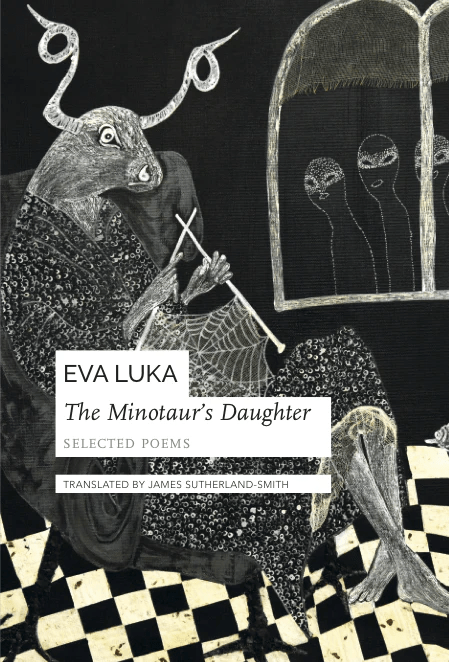
With The Minotaur’s Daughter, translated by James Sutherland-Smith, a selection of poetry drawn from her work to date, is now available in English for the first time. In his Afterword, Sutherland-Smith suggests that Lukáčová  may be one of the last great poets of resistance in Europe, citing her:

resistance to conform artistically and [a] resilience against the potential psychological pressures resulting from the circumstances of her life and times. Eva’s resistance to conform to being categorized within a specific poetic movement—particularly those associated with a single gender—reflects the individual nature of her work, and this artistic independence even challenges gender identity in the personae that inhabit her poems.

A transgressive spirit illuminates her poetry, extending beyond matters of gender, to explore questions of personal freedom, sexuality, and desire within a phantasmagorical landscape featuring eccentric figures, mythical creatures, and fabulous flora and fauna. She creates, with her poems, haunting, often dark, scenes or vignettes that can be as intriguing as they are disarming.

Unlike many similar selections that draw from across a poet’s oeuvre, the fifty-nine poems that comprise The Minotaur’s Daughter are not presented chronologically, or divided according to the individual volumes they come from. Rather, the assortment seems to be loosely thematic, with many of the earlier poems coming from more recent collections, and some of the Japanese inspired work from her first book coming later. And, because she sometimes writes companion pieces that appear one or two volumes apart—for example, “Wildsister,” the title poem from her first book, is later answered with “Wildbrother” in her third—here they are presented together. The impact is more powerful this way. It is also evident that Luka appreciates the poetic storytelling potential of triptychs and series, something that may have developed over time, as Sutherland-Smith seems to think that her upcoming fifth collection may include even more.

One of the most developed sequences in this selection begins with an ekphrastic poem inspired by Leonora Carrington’s painting  Portrait of the Late Mrs Partridge. In this piece, the speaker is the artist commissioned to capture the likeness of the wild-haired woman in her odd partridge skirt. He then becomes famous, but is ever haunted by the painting. Four more “Late Mrs Partridge” poems follow, addressing her body, her death, her husband, and finally her wake. Mrs Partridge herself voices all but her husband’s lament from beyond this life, even returning to her own wake, still nursing an internal flame, to drink a toast with the bereaved:

A man sits at the top table, his face,
wrinkled from the tertiary era, with an incalculable expression.
The atmosphere is gloomy, but still audible
is a ubiquitous slurping, gurgling and belching,
as if the whispered stories haven’t had as much power
as unstoppable bodily hunger and thirst.

Leonora Carrington’s eerie, fantastic paintings appear again as the stimulus for five other poems in this translation (not to mention the poet’s own artwork which graces the cover). At times, Luka stands as an observer, as in “And Then They Saw the Minotaur’s Daughter”  where she watches  the “two well-behaved boys—somewhere between childhood and doubt” watching the noble horned woman-creature while spirit-like forms fill the room, Elsewhere she animates and engages directly with the scene, even imagining the central figure outside their fixed setting as in the Mrs Partridge quintet and  “Necromancer,”  a poem after the abstracted, surreal painting of the same name.

The images that dominate Luka’s poetry are drawn from nature—water, flowers, birds, reptiles, and animals—but, as with her human beings, the line between the real and the spiritual is fluid. They inhabit a shifting borderland and there is a pagan, pantheistic sensibility at play. Her animals inspire awe and fear, mythological figures speak, and a woman invites an angelic black bird (Ravenangel) into her bed in a dark sequence of desire, longing, and loss. Hers is a magical world, albeit one that accepts that mystery can be tinged with heaviness and pain. But it is not a relentlessly dark place; rather it exists in a kind of intermediate, and yet, ultimately familiar, space:

It’s incomprehensible, that border of yours
between the feverish night and the healing morning; as if you
      didn’t recognize
the differences between frenzied hyacinths and tamed hyenas.
      What you tell me
in the evening, no longer applies in the morning, and vice versa

(from “You and Me When the Cock Crows”)

One might describe the poetry of Eva Luka as akin to richly woven tapestries; the vignettes she crafts are vivid, often disturbing, but they tend to close with a note of promise, that is, with a measure of the resilience that characterizes her work. This quality is evident in The Minotaur’s Daughter. Her striking imagery is well captured in Sutherland-Smith’s translations, while his decision to break with the typical chronological ordering of a “selected poems” collection offers her first English language readers a deeply rewarding introduction to her singular poetic universe.

The Minotaur’s Daughter: Selected Poems by Eva Luka is translated from the Slovak by James Sutherland-Smith and published by Seagull Books.

“I never forgot. Everything is there. All I have to do is close my eyes.”: The Emperor by Mackenzy Orcel

I asked for none of this. I was waiting for the bus. I was waiting forever. I think I’ve been waiting since I was born. I sat on the floor for hours, fighting the urge to sleep. Looking beyond the clouds of dust that covered the horizon. The days went by, one looking just like the other. The bus wouldn’t come.

In an apartment in Port-au-Prince, Haiti, a man is waiting. He knows that eventually the police will find him. He has made no effort to hide. In fact, the crime he has just committed leaves him with an eerie sense of satisfaction. He has no regrets and is ready to serve whatever sentence he receives. He has known far worse confinement in his life, he is certain. Even freedom, such it was, offered a different form of slavery and only one brief respite of joy. As he awaits the inevitable, he revisits the events that have led him to this point, beginning as far back as he can clearly remember. The Emperor by Haitian writer Mackenzy Orcel is his story—fractured, pain-filled, and proud.

Our unnamed narrator does not know exactly how he came to be abandoned as a child, left alone by the roadside, but he does know that at some point he was swept up and taken into a rural community, or lakou, where a false vodou prophet—the Emperor—holds sway over a flock of worshippers, his sheep, who like slaves, work his fields and tend to his every need and desire. He demands absolute devotion, and punishes anyone who fails to fall into line. The narrator grows up in this unforgiving environment, identified by a number rather than a name, but he is not alone. He is  guided by the wisdom of a blind old man known as the Very Old Sheep, dedicated to the true traditions of voodoo, and aware of the risk of pretenders, and by his own internal compass,  a motivating force he refers to  as the Voice Within. Together they keep him from losing himself amid the brain-washed, weakened souls who surround the supposed holy man or seek his intervention with the divine:

Only the Emperor is granted the power of the word. To mould them to the shape of heart, his anger or his madness. What words capable of cauterizing wounds are not also accused of being lost or eternal? Yours were difficult to grasp. They reminded us of fond memories of the gods. Their goal was to intercede in our favour. To save us. To destroy us. To bring truth, morality and the past to an end. To transform others into obedient machines. A widespread and lucrative venture. You made a fortune off the penniless and their spoilt crumbs, their ill-gotten gains. You recreated an ancient formula.

Despite the very specific cruelties he dispensed upon his young sheep, it is the Emperor who inadvertently paves the way to his release from the lakou by forcing him to play a drum for the ritual dances. In drumming he finds expression, communication, that reaches others without words. He is punished for his disobedience, but is unable to conform. This ultimately leads to his expulsion from the community and, this time, the bus does come and carries him away to the city. He arrives in Port-au-Prince with no name, no education, and only a little cash he’d spirited away. Here he faces a new kind of brutality, but his past has prepared him for “its tyranny, its inhumanity.” He survives. He finds a job delivering newspapers, one of a crew of downcast men, working for a dishonest boss, but at least he is no longer captive. He is free. Until he falls in love.

With clean, clipped prose, finely translated by Nathan H. Dize, The Emperor is a  contemporary fable with gritty, violent undertones. The narrator’s fragmented monologue, largely addressed directly to the Emperor, moves back and forth in time, from the room where is waiting for that knock, knock, knock on his door, into his past, from his early experiences in the countryside to his hardscrabble life in the city, and, finally, to his criminal act. But it is not a strictly chronological account, nor is it always clear or consistent. It is uncertain how old he is; he seems to be both prematurely aged and preternaturally wise. Details from his time under the Emperor’s control continue to emerge throughout, a function in part of him being his primary audience. Yet, some of what he claims seems strange—there is a sense that he himself does not have as firm a grip on things as he thinks when he claims: “I never forgot. Everything is there. All I have to do is close my eyes.” One senses that he has never truly been free, the anger always simmering at or just below the surface of his narrative betrays him. And now he is waiting to surrender his liberty to the police, calm and unrepentant—he even has the evidence to prove his guilt sitting neatly beside him—but, perhaps, in a strange way, he is finally exercising his freedom by giving it up.

The Emperor by Mackenzy Orcel is translated from the French by Nathan H. Dize and published by Seagull Books.

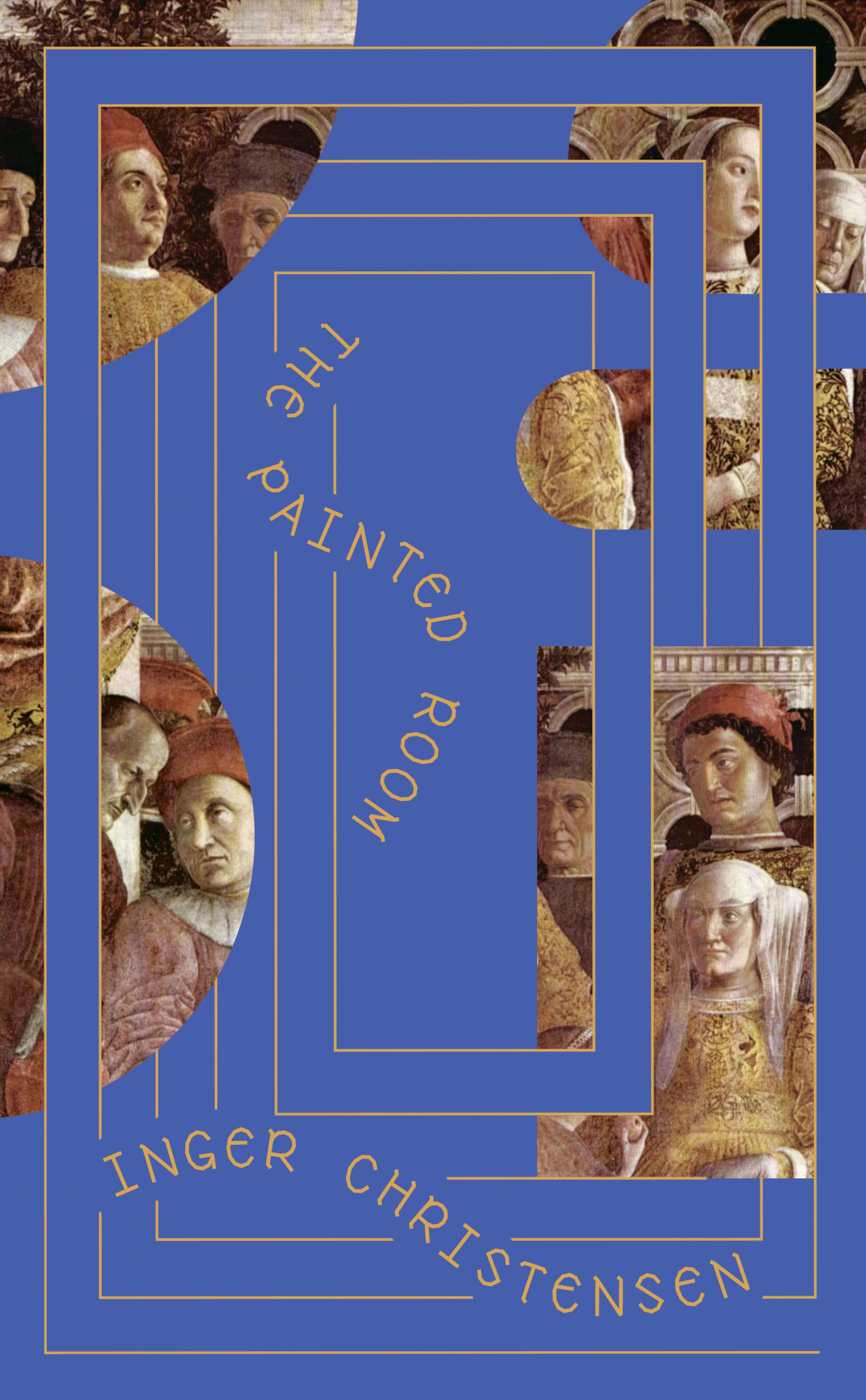
The words / created their own states of being: “it” by Inger Christensen

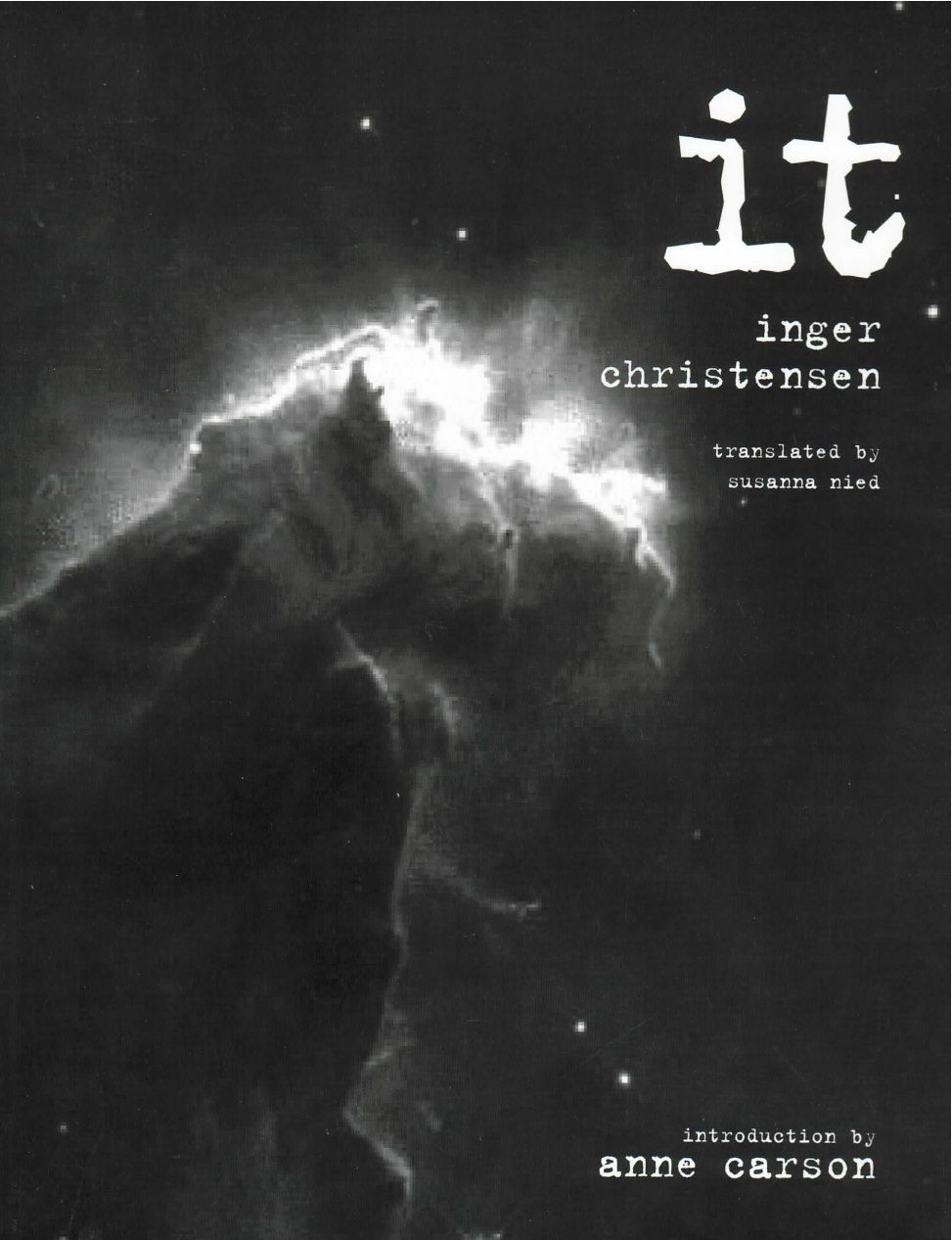
It may seem hard to imagine that a single poem (or sequence of poems) extending over 200 pages could become an instant hit upon publication, embraced by critics and the public alike, but that is exactly what happened when Danish poet Inger Christensen released what would become known as her masterwork, it, in 1969. What, you might wonder, does this simple pronoun, “it,” refer to. It might be simpler to ask what “it” does not refer to, for here it is simply the personal pronoun for the impersonal verb “to be”—as in “it is.” Danish, like English, necessitates such a construction, so this epic, moving as it does from the most basic elements, expanding in relation to one another, on into a world formed and named in its process of coming into being, and finally differentiated into individual, experiential existence, is a grand orchestral exploration of the nature of life. But it is also a piece that pulls you into to its rhythms, echoes and images. In Denmark it has become so iconic that sections have been set to music and certain lines from it have entered the daily lexicon.

In her introduction to the 2006 English translation by Susanna Nied, poet Anne Carson views Christensen as a contemporary counterpart of Greek epic poet Hesiod combining elements of his hymn of creation, Theogyny, and his moral guide, Works and Days: “Her det [it] is at once a hymn of praise to reality and a scathing comment on how we make reality what it is. The dazzled and the didactic interfuse in det.” However, the requirement for a personal pronoun for “to be” which does not exist the same way in Greek, means that her cosmogony is also a cosmology—a condition made explicit in the structure and realization of it. In a 1970 article, “In the Beginning was the Flesh” (quoted by Carson but since made available in its entirety in the essay collection The Condition of Secrecy), Christensen talks about some of the thinkers and artists, including linguist Noam Chomsky, whose ideas contributed to the genesis of what she a began to realize would be a creation poem:

Then I started thinking a little about this sentence: “In the beginning was the Word . . . and the Word was made flesh,” I thought, what if we could think the unthinkable: that flesh could speak, that one cell could signal to another, so that the whole inarticulate world suddenly partook in the following impossible (to human awareness) experience: In the beginning was the flesh, and the flesh was made words . . .

To maintain a hold on the duality of these two paradoxical conditions, she started to write as if she wasn’t there, “as if it (“I”) were just a bit of flesh talking, a bit of protoplasm, acted as if I were just following along, while a language, a world, took shape.” She called this part, the opening of her work, the time before consciousness, PROLOGOS. However, although it first emerges as a pre-sentence entity, the poems that comprise this section follow a strict mathematical formula. Each line consists of 66 characters (in the original Danish) and there is one 66 line poem, two 33-line poems, three 22-line poems, six 11-line poems, eleven 6-line poems and so on until the final set of sixty-six single-line poems. (The translation is unable to preserve the character count of each line, but does keep the number of lines.) Thus, PROLOGOS sets the cosmological grounding for the poem to follow, moving from the most fundamental elements—beginning, of course, with “It. That’s it. That started it. It is. Goes on. Moves. Beyond. Becomes.”—and moving through abstract form and function, slowly evolving over time. Cosmic. Geological. Natural. Communal. And, finally, individual.

It’s come around. Come to stand on its own, confront itself. To disengage from the mass and stand out. It’s engaged in an evolution, shifted its stance, attained eminently engaging expression. Has pursued itself and accidentally found itself. As a natural result. Has come to stand for itself. And can begin by itself. To experiment with sets of freestanding, free-floating expressions. Occasionally with straight-swimming ones. Dreaming. In another world. To imply itself.

(from PROLOGOS)

The main body of the poem, LOGOS, explores the word as creative principle, or, as Christensen puts it: “The place where things are consciously staged, put into action, into relationship.” It contains three sections, STAGE, ACTION, and TEXT which are each further divided into eight subsections of eight poems each (Christensen, as ever, loves mathematical and musical structure). The inspiration for the subsections came from a work titled Præpositioners teori (A Theory of Prepositions) by Viggo Brøndal, an attempt to classify the words languages use to show relationship. She selected:

eight terms that could stay in a state of flux and at the same time give order to the indistinctiveness that a state of flux necessarily must produce: symmetry, transitivity, continuity, connectivity, variability, extension, integrity, and universality.

And thus, the stage was set, so to speak.

It is perhaps not surprising that the poems that comprise the first section, STAGE, are more varied in structure and form than those we will see later, order comes with time. Words are at work: “The words / created their own states of being / made a world out of ‘world.’” (STAGE, symmetries, 7), but it not a smooth operation. Here the imagery moves between descriptions of natural processes, and the intentional creation of sets, painted and varnished to “represent” mountains and scenery. A tension exists between what is and the way it can be expressed:

And when it’s said that words fly
(like birds that fill an end-
lessly vanishing space)
it’s probably to conceal the fact
that words are not one
with the world they describe.
Words do not have wings.
And neither do they flower nor will
but they take potential flowers
and set them in a garden
which they then set
in an image of a garden
in an image, etc.
The words stay where they are
while the world vanishes
This is a criticism of the way language is used
Because it’s a criticism of the way things are.

(from STAGE, connectiveness, 1)

When “I” becomes part of the dynamic, the relationship between humans and language becomes more complex, and existential questions begin to arise. This first part also introduces a wide variety of images, motifs, and refrains that will recur throughout the work as a whole, providing a coherency to it when read and experienced (as it is meant to be) as a single long poem.

With ACTION and continuing on through TEXT, Christensen introduces more structure—employing both formal and experimental forms— to the poems within each subsection, adopting a consistent line count, verse pattern and rhyme, if relevant, for at least the majority of the eight poems (Susanna Nied’s award-winning translation preserves form and rhyme whenever possible), thus adding an ever-shifting musicality to the poetry. Thematically, the net she casts is wide, taking in the natural world (deserts, forests, gardens), human awareness (self-identity, hope, despair, sex, death), and community engagement (cities, hospitals, factories). Her vision encompasses the personal and the political, always returning to the power of language, the fundamental quality of the word, creating and mediating the world as we know it, alone and in relation to others:

A society can be so stone-hard
That it fuses into a block
A people can be so stone-hard
That life goes into shock

And the heart is all in shadow
And the heart has almost stopped
Till some begin to build
A city as soft as a body

(ACTION, symmetries, 8)

Throughout the ACTION section, one can see the influence of the 1960s on Christensen’s  worldview and some of the imagery she employs. Of course, the more political and economic currents change, the more they stay the same. Poetry is timeless and this vibrant, life-affirming epic aims to reach beyond the limits of time—as does language—and as such, the third part, TEXT, offers poems that begin to speak to passion and meaning in living and loving. The tone, if not strictly prescriptive, carries positive energies. There are no promises that things will be easy or pain-free, but it is worth trying, even in a world that contains darkness and corruption.

After the fourth morning I seek
the lips’ speechless expression

Again and again I stand completely
still so the wheel goes around and
there’s no cause for panic

What you gave my thought is no-
where, with a body that’s a
gift to the earth

What you gave me is pure rest / restlessness

My passion:  to go further

(TEXT, variabilities, 4)

By the close of this section, the “I”, the speaker, has come to an understanding of her interconnectedness with the world, and all that it contains.

Then, finally, comes the EPILOGOS. Beginning and ending with “That’s it” this piece works its way through the many shades and facets of fear we encounter as embodied beings, to slowly embrace words as the very cells of the body, and ultimately find freedom in letting go:

Erotic attempts
when the body
in its blind
sexual
activity
strives to be invisible
the cells are words
when the body
is lost
in it all
and lost
as it is
persists
survives
surpasses
itself
and its limits
the cells are words

(from EPILOGOS)

This is a work that, the deeper you get into it, benefits from longer, sustained reading sessions (especially if inclined, as I tend to be, to move slowly through a collection of poems). Although any one of the poems in this extended, structured sequence could stand on its own, they speak to one another, repeating and re-imagining phrases and imagery—a quality that tends to mark Christensen’s poetry and prose—so that the reading builds its own exhilarating momentum. it is an experience.

it by Inger Christensen is translated from the Danish by Susanna Nied with an Introduction by Anne Carson and published by New Directions.

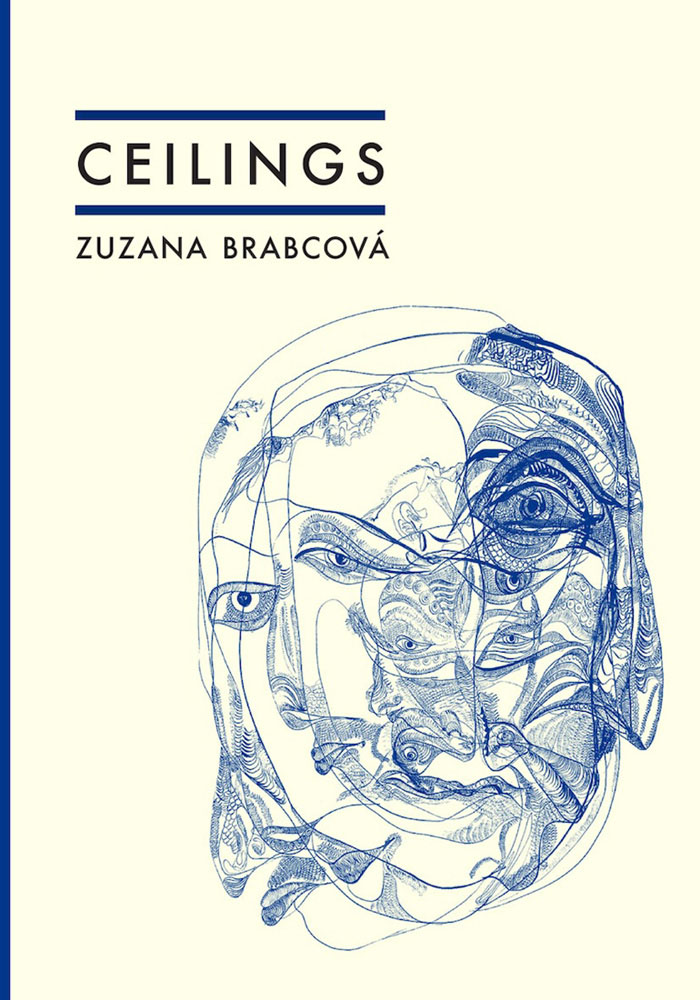
Dream follows dream: Ceilings by Zuzana Brabcová

Drink them up, swallow those clouds, gulp them down with all your might, because all you’ve got to look forward to now are ceilings.

As Ema, the fifty year-old protagonist of Zuzana Brabcová’s Ceilings, takes in her last view of the overcast skies over Prague before the ambulance attendant leads her into the Addiction Treatment Centre of the hospital, she knows that it will be months before she  sees them again—except, of course, in the strange, troubled, and fantastic dreams and psychotic episodes that will accompany her through the trials of detox. She’s been here before and is well aware of what lies ahead.

The daughter of two literary historians, Brabcová (1959–2015) was born in Prague. Under the Communist regime, she was denied the right to attend university so she worked as a librarian, a hospital attendant and a cleaner. Following the Velvet Revolution, she worked as an editor. Her first novel Far from the Tree, initially published abroad in 1987, won the inaugural Jiří Orten Prize. Ceilings (2012), recently released in Tereza Veverka Novická’s powerful English translation, was her fourth novel, a vivid, hypnotic account of one woman’s transit through drug rehab that clearly illustrates why she has been rightfully compared to Leonora Carrington and Unica Zurn (whose artwork graces the cover).

As soon as Ema enters the hospital, The Garden as it is known, she finds herself in a world that operates on its own set of rules and regulations. The clock is now set to institutional time, where order attempts to define but can never fully contain either the camaraderie or conflicts between an eccentric collection of women—druggie or alkie?—caught in an ever-swirling cascade of medications and madness. For Ema, navigating the neuroses and idiosyncrasies of her fellow inmates is as challenging as navigating her own, as delusions, paranoias, and troubled memories blur the fragile boundaries between reality and dream, external and internal existence.

This fluidity is reflected in a polyphonic narrative which moves smoothly between third and first person, often pulling in and out of Ema’s head in a single paragraph. Add to this, asides in second person, where Ema either addresses herself or directs her thoughts to her daughter Rybka, her lesbian partner Dita, or other family members. Finally, there is a second first person narrator, Ema’s brother—a “twin” although they were born one year apart—not an alter ego, but a distinct male gendered self. Ash. He emerges at an early age, perhaps to serve as a shield against the uncertain and frightening world both inside and outside the home, and inside and outside Ema’s own unstable emotional space. Ash comes into his own when they are very young, realizing he is different:

I said to myself this secret of mine must be something like chickenpox; okay, in that case an autovaccine was needed to reduce the most visible traces to a minimum. So I decided to become a normal little boy, if that’s what they wanted: I’d fight over toys in the sandbox and might even pee my pants in a temper tantrum, and I’d clap and giggle over my birthday cake; all this could be learned by observing other children. I methodically began to appropriate the behaviour of others, their expressions, emotions, and gestures, and chose from this panoply the ones I considered useful, purposefully aping them. It was glorious: one by one, every sensation sunk into the hollowed-out nutshell of nothingness.

My rebirth every morning soon became routine, and I put on my face like a prothesis.

Ema and Ash are not exactly like two manifestations of  a dissociative condition, nor do they represent a typical binary gender identity. Ema takes comfort in Ash’s existence, while he is both protective of and frustrated with his “sister,” yet cognizant of his own unreality, of the fact that he was not born and cannot die.

Confined to the hospital, Ema is forced to contend with various difficult personalities, while finding her place and forging alliances among the other patients and the nursing staff. Reality can be an anxious state. Meanwhile, dreams and episodes of delirium carry her back into her (or Ash’s) past, but the scenes are strange, distorted, and disturbing.  And she is haunted not only in her restless sleep; the ceilings that hang that above her are a constant reminder that she is trapped:

It’s come back after my body expelled, at least to some extent, the poisons that were competing with it. I’m in a room, I need to get out, I rise to the ceiling. I tear though it, really easily, because the walls and ceiling are made of cardboard, and I find myself in another room.  I escape through a chink into another room and so on and so forth, again and again, one room replaces another, always the ceiling, never the sky. But what if it’s not the dream that’s come back to me, but it’s me who’s come back to it? Maybe the waking life of Ema Černá is merely a sequence of pauses, brief interruptions of flight with no beginning and no end.

Ema’s dilemma, her inability to successfully integrate her internal and external reality, reflecting a lifetime of emotional and mental health challenges mediated by substance abuse, is the driving force of this intense, vulnerable, and moving novel, one that draws on Brabacová’s own experiences, including time in psychiatric rehab (and, one might imagine, the perspective afforded through her work as a hospital orderly). Its raw, unapologetic narrative slips seamlessly between voice and perspective, continually cross-referencing itself, to create a world—one woman’s world, past and present—that for all its surreal elements is cohesive, sympathetic and real.

Ceilings by Zuzana Brabcová is translated from the Czech by Tereza Veverka Novická and published by Twisted Spoon Press.

“There is something about only being able to get lost when you’re not thinking about it”: Natalja’s Stories by Inger Christensen

—There was once a woman who travelled all the way from Crimea to Denmark so that she could bury her mother.

This woman, Natalja, was born in Russia to a Danish woman who had been abducted by a Russian silk trader, and when the Revolution broke out she and her mother were forced to flee the country. Along the way, her mother became sick and died of dysentery, so Natalja gathered some ashes from the mass funeral pyre, placing them into the Chinese crock they’d been carrying, and made her way to Copenhagen. This story, told and retold, each time with a new angle or embellishment, is passed onto the woman’s granddaughter, also named Natalja, who then tells and retells variations on the themes in her grandmother’s stories letting them veer off in wild, often outlandish ways. Gathered together these stories comprise Inger Christensen’s strange, little shape-shifting novella, Natalja’s Stories, originally published in Danish in 1988, and now available from New Directions in Denise Newman’s English translation.

Reading like interlinked or echoing stories, each of the seven chapters of this book is narrated by a woman named Natalja—presumably the granddaughter of the Russian-born Natalja described above—but who is she really? A Danish woman living in Paris, a French woman who assumes Natalja’s identity, or a writer writing her own or someone else’s stories? Or all of the above. As with Christensen’s intricately layered novella Azorno, meanings are fluid, shifting even as the same images, events, and characters (or to put it simply, the same phrases, sentences, passages) reappear in ever changing forms and contexts.

The book opens with “Natalja’s story about destiny” which details her grandmother’s account of how she came to be born in Russia and the circumstances that brought her to Copenhagen. Each one of the stories that follow can be understood as variations on this theme of destiny—being caught in it, escaping it, or reshaping it.  Even the very act of telling a story seems to have its own force of will as our narrator muses in the opening of “Natalja’s story about liquor”:

There was once a cat named Mirage. That’s more or less how I thought I would begin my story. Now of course you can say it’s already begun as I thought it would—there once was a cat named Mirage and so on—whatever I come up with now doesn’t matter because it would be just one of countless but similar false beginnings. And if it had been a true beginning I would not have noticed it, would not have mistrusted it. I would not have ceased its development and so on.

But why hide the fact that only Mirage the cat holds the picture of this story and thereby knows its correct imperceptible beginning, while I am obliged to pick and choose between random sentences that say nothing to me because I’m unable to see where in the story they belong?

As reality and identities shift, revolving around repeating characters, scenes, and motifs, the stories that emerge are by turns amusing, absurd, intriguing. There are murders, mysteries, and even a man so dangerously irresistible that he may have been not only the younger Natalja’s love, but also the lover of her mother and her grandmother.  Our narrator, in her varying incarnations, seems to be inclined to allow herself to fall into unlikely situations, only realizing later that the power to reinvent herself, to become someone else, belongs to her. But it doesn’t exactly resolve how she fits into the overall narrative—if there even is one.

Composed as part of a seven-writer project modeled after Boccaccio’s Decameron, Natalja’s Stories explores a theme common throughout Christensen’s poetry and prose: the way language creates and shapes meaning. As such, the experience of reading her fiction can be akin to wandering through a maze or a hall or mirrors (or both). The inclination may be to try to dissect it logically, but in this case there may be multiple logical intersections at play.  It’s perhaps best to let go and enjoy getting lost in a world where realities continually change and simply marvel at the  connections that arise when you least expect them.

Natalja’s Stories: A Novel by Inger Christensen is translated from the Danish by Denise Newman and published by New Directions.

A life lost in stories: My Kingdom is Dying by Evald Flisar

Evald Flisar (b. 1945) is one of Slovenia’s best known and most prolific writers. He has travelled extensively, his work has been translated into at least forty languages,  and his plays have been performed around the world. But, as is not uncommon for writers from his corner of Europe, it is one thing to be widely read, quite another to be a household name—at least beyond one’s native borders. This is, in fact, something that is a fate long understood by  the aging narrator of My Kingdom is Dying, subtitled Storytelling at the End of the World, a characteristically unusual tribute to the life of a writer, originally published in Slovene in 2020, and now available in David Limon’s English translation, just in time to honour the author’s eightieth birthday earlier this year.

This charming and slyly subversive novel is a celebration of the power of storytelling, formally and informally. The unnamed protagonist is a highly respected novelist and short story writer who, like Flisar himself, has travelled widely and lived and worked in both Slovenia and London. He is quite a quirky, at times even arrogant, character whose life story, as he tells it, has all the qualities of a sophisticated tall tale, one that is gleefully anachronistic, blending profound insights with absurd happenings, and blurring the line between possible fact and pure fantasy. The basic narrative unfolds as the narrator is recovering from a freak accident with the daily assistance of a live-in Carer with whom he shares accounts of his past, including his early development as a writer with the encouragement of his grandfather, the pleasures and pitfalls of his career, his life-long obsession to write a completely original story, and the mysterious figure of Scheherazade who, as if emerging from his youthful reimagining of the Arabian Nights, has followed him around the world, appearing when he least expects it.

His adventures are extraordinary and feature an diverse range of real life authors and literary figures—at times holding close to actual details, like the arc of a Borges story or the make-up of a real Booker Prize jury—but because it also leans toward the bizarre, Flisar is able to get away some pretty pointed observations about the literary world with all its pretensions. His narrator takes swipes at critics, fellow writers, editors, publishers, and prize juries. But one must assume that much of this is levelled with tongue firmly planted in cheek. After all, one of our hero’s regular targets is genre writers—in contrast to serious writers of literature such as himself—all in what is a clear genre hybrid blending memoir (fictitious and factual) with fairytale, horror, mystery, and fragments of travelogue. (Of note, several accounts take place in India, and, for the absurdity of events that unfold there, Flisar’s familiarity with the country and its cities, especially Kolkata, is evident.)

By the narrator’s own account, everything was proceeding smoothly, book deal followed book deal, until the sudden onset of writer’s block upended his world. One day, stories presented themselves to him as usual, rising out of a daily act so pedestrian as opening the newspaper over his morning coffee and the next day, the well had inexplicably run dry. No stories came. If storytelling gave him his meaning, not to mention a career,  what might be the fate of  a storyteller who could no longer tell stories?

It had never seemed possible that it would be storytelling that would bring me to the edge of a nervous breakdown and change me into the kind of person who I liked to write about. This time it happened, not within the framework of an imagined story, but in the reality in which I was forced to live, even if only because of loyalty to the activity that I saw as my “mission”, for I knew that withdrawal from the world, when we lack a way forward and begin to psychologically drown, is always possible and, with the abundance of chemical means available, can also be painless, even instant. But each such thought, that I might withdraw from the world before my natural end (thus showing that I was not a victim, but rather the master of my fate), automatically became transformed into a story that I simply had to write and share with others. With that, the wish for a leap into the next life lost its power and validity.

Now without this critical lifeline, would he be able to hold off his darkest thoughts? When he confessed his predicament to his editor, it was suggested that he seek treatment, all expenses paid, at an exclusive clinic in Switzerland where his writer’s block might be cured. The clinic, ominously named Berghof, turns out to be a dark, dank castle in the middle of a lake where, so far as he can tell, all of his fellow patients seem to be seriously mentally ill. The treatment is absurdly brutal, the doctors appear to be madmen, and it is not until he emerges from his solitary routine that he finds himself among the likes of Saul Bellow, Martin Amis,  J.M. Coetzee, Graham Greene, and others. And it just gets stranger from there.

Flisar has a fondness for exploring serious themes within environments that are by turns whimsical and grotesque (see my review of My Father’s Dreams). He is especially interested in the behaviour his characters exhibit under psychological pressures—and his protagonist here is subject to more than a few impulsive reactions when he feels threatened. But, at the same time, in narrating his story to his Carer, a woman he grows increasingly close to, he is able to maintain the storyteller’s objective distance, at least until boundaries between myth and reality finally dissolve. In the end, despite—or perhaps because of—its many spirited and unlikely detours, My Kingdom is Dying is a tribute to storytelling  so rich with literary illusions and intertextual elements  that it holds a depth its seemingly light, eccentric tone belies.

My Kingdom is Dying by Evald Flisar is translated from the Slovene by David Limon and published by Istros Books.

A mirror to a life: Self-Portrait in the Studio by Giorgio Agamben

A form of life that keeps itself in relation to a poetic practice, however that may be, is always in the studio, always in the studio.

Granted that what Giorgio Agamben calls a “studio” might be better understood by English language readers as a “study,” the ideal space is the same: some kind of a desk , plenty of shelving for books, and some room on the walls for  a few well-chosen prints or framed memorabilia. Over the years the Italian philosopher has occupied a number of studios, most rented or borrowed from friends, and each one, revisited through photographs often grainy or discoloured, contains the memories of friends and colleagues and others who have, through their writing, influenced and inspired him. With this slender, generously illustrated volume, Self-Portrait in the Studio, Agamben reflects on his own intellectual journey, which is, in his case, nothing less than a life journey, from the sixties through to the present day, via photographs, paintings, poems, beloved books, and precious friendships.

In this day of the ubiquitous selfie—that practice of intentionally placing oneself front and centre at any site of interest—one might expect a book with “self-portrait” (autoritratto) in the title to be a self-focused venture. Yet, although Agamben does appear with friends, mentors and fellow students in a number of  the included photographs, his motivation is to centre those whose words and ideas have touched him and the lessons they have passed on. In a parenthetical aside he addresses this objective:

(What am I doing in this book? Am I not running the risk, as Ginevra [his spouse] says, of turning my studio into a museum through which I lead readers by the hand? Do I not remain too present, while I would have liked to disappear in the faces of friends and our meetings? To be sure, for me inhabiting meant to experience these friendships and meetings with the greatest possible intensity. But instead of inhabiting, is it not having that has got the upper hand? I believe I must run this risk. There is one thing, though, that I would like to make perfectly clear: that I am an epigone in the literal sense of the word, a being that is generated only out of others, and that never renounces this dependency, living in a continuous, happy epigenesis.)

This desire to stay out of his own way goes a long way to explaining the surprisingly engaging nature of this book. It is not a  detailed or rigorous intellectual autobiography, but rather a chance to spend a little time with a philosopher who truly seems to delight in the exchange of ideas, someone who wishes to honour some of the friendships, writers and artists who have helped shape his own development over the years.  Of course, given that he is writing from the vantage point of his early eighties, there is also a clear appreciation of the fact that the themes and dreams of a life are ever necessarily unfinished. In his preamble he muses: “While all our faculties seem to dimmish and fail us, the imagination grows to excess and takes up all possible space.” There are regrets—for example, sorrow that he did not come to appreciate Ingeborg Bachmann’s poetry while she was still alive—but the text ends with a positive, and still forward looking, affirmation of life and love.

Progress through this book of memories is essentially chronological, Agamben employs objects in or associations with his various  studio settings as touchstones that trigger memories of a particular person or persons who came into his life, and, frequently, the poets or writers that any one connection might have him led to explore. The tapestry of a life of ideas ever expanding, moving from friendships with important contemporary literary and intellectual figures, to meditations on the ideas of those he came to know only through their work, and back again. He never devotes more than a few pages to any one individual, social group, or writer as he honours those who have influenced and inspired his own thought over time.

For myself, many of the individuals he talks about, including those he counts among his important friendships, were previously unknown to me (but easy to look up, of course), but others, especially the writers he feels a strong connection to—like Simone Weil, Walter Benjamin, Hölderlin, and Robert Walser—were not. Of particular interest is the way he considers our relationships to those we read carefully or enjoy close intellectual companionship—what is it to engage intensely with the ideas of others?

As he makes his way along this retrospective pathway, Agamben draws some striking connections that he measures himself against in assessing his own life. Notably, he comments on a piece written just three years before Walser’s commitment to the hospital where he would spend the rest of his life, in which he questions the idea that Hölderlin’s last decades were ones of misery, suggesting instead that his loss of his senses wisely  afforded him the time and space to dream :

The tower in the carpenter’s house in Tübingen and the little hospital room in Herisau: these are two places on which we should never tire of meditating. What was accomplished within those walls—the refusal of reason on the part of two peerless poets—is the strongest objection that has ever been raised against our civilization. And once again, in the words of Simone Weil: only those who have accepted the most extreme state of social degradation can speak the truth.

I also believe that in the world that befell me, everything that seems desirable to me and seems worth living for can find a place only in a museum or a prison or a mental hospital. I know this with absolute certainty, but unlike Walser I have not had the courage to follow out all its consequences. In this sense, my relation to the facts of my existence that could not happen is just as—if not more—important than my relation to those that did. In our society, everything that is allowed to happen is of little interest, and an authentic autobiography should rather occupy itself with facts that did not.

So where does that put his little exercise in self-reflection? In a class of its own. With Self-Portrait in the Studio,  Agamben, traces a rich network of interconnection, through personal contacts, study and research, and even, in some locations, a coincidental proximity to history, to produce a work that is entertaining, intelligent and humane.

Self-Portrait in the Studio by Giorgio Agamben is translated from the Italian by Kevin Attell and published by Seagull Books.

Elegy on the wing: Butterfly Valley by Inger Christensen

Since reading The Condition of Secrecy, a collection of essays by Danish poet and writer Inger Christensen (1935–2009) In January, I have set out to read one of her works each month until I run out of available volumes. This past month was largely absorbed by working for and worrying about the Canadian Federal election which has just passed, so my reading was scattered at best, and most suited to poetry and short fiction. I am squeezing this brief reflection on this single-poem volume, Butterfly Valley, as National Poetry Month draws to a close. Note that this is a dual-language edition, whereas the US edition from New Directions entitled Butterfly Valley: A Requiem contains this same translation by Susanna Nied, Christensen’s longtime poetry translator, along with three other medium-length poems, but does not include the original Danish. I intend to get that book eventually, however I would suggest that having the original and the translation face-to-face allows a reader to appreciate the complexity of Christensen’s achievement as it is possible to gain a sense of the musicality and rhyme structure present in the Danish, even though it would be unsatisfactory to attempt to reproduce that fully in the English.

“Butterfly Valley” is a fifteen part sequence of sonnets, the first fourteen linked by first and last lines which are then gathered form the final powerful poem. Christensen was a lover of form, structure, and imagery drawn from science and nature. Musicality was also very important. These qualities all come into play with this sequence which features the fourteen lines of the sonnet presented as two quatrains and two tercets with the rhyming pattern: ABAB CDCD EFE GFG (several follow ABBA CDDC in the first two stanzas). The poems are linked by repetition—through the first fourteen sonnets, the last line of each sonnet becomes the first line of the following one. VI, for example, closes with:

Here gooseberry and blackthorn bushes grow;
whichever words you eat, they make
your life butterfly-easy to recall.

Perhaps I will cocoon myself and stare
at the white Harlequin’s sleights of hand,
delusion for the universe’s fool.

And VII begins:

Delusion for the universe’s fool
is the belief that other worlds exist
that there are gods who bellow and roar
and call us random tosses of the dice

The fifteenth sonnet is composed of all of these repeated first/last lines, in order, with the typical rhyming pattern maintained. Each individual sonnet is thus crafted with an eye (and ear) to the finale.

Within this sequence, a host of colourful butterflies rise and fall through the Brajcino Valley’s noon-hot air. Christensen, who believes that poems are composed of words, first and foremost, employs butterfly-related imagery and the names and colours of different species, directly and metaphorically, along with a mythologically-tinged sensibility. But her themes are the very human, even existential, reflections on life and death, love and loss, art and nature.

When with their image-language, butterflies
can use dishonesty and so survive,
then why should I be any less wise,

if it will soothe my terror of the void
to characterise butterflies as souls
and summer visions of vanished dead. (X)

As ever, Inger Christensen’s poetry is an intricate and articulate celebration of language, meaning and life itself. This slender volume highlights these qualities well.

Butterfly Valley by Inger Christensen is translated by Susanna Nied and published in a bilingual edition by Dedalus Press.

In that strange, that golden light: Psyche Running – Selected Poems, 2005–2022 by Durs Grünbein

And suddenly you saw it, far below
the coast road, after the twelfth curve,
stomach surging from the hair-pin drive.
En route for the south; so we sped on
perched above the drop, windows down.
Sorrento with its villas, its fan palms,
had been swallowed by the plug-hole
of the mirror in a great green swirl.
It hung in the haze, a hulk of bare rock.

The sea dead still. Not a trace of myth,
but for the yachts decked out in chrome
glinting in the sunlight. On a white hull
we made out ‘Nausicaa’ in faded letters.

Infectious energy, shifting, rising and falling. Durs Grünbein is a poet who writes as if regularly navigating the kind of winding roadway described here in “Island without Sirens” from his 2013 collection Colossus in the Mist. This poem, dedicated to Alexander Kluge, which begins with the promise of finding a site with rumoured Homeric association and ends with the view of an island not unlike a mass of barren lunar rock rising out of the water, is a clear reflection of what has made him one of the most important and successful contemporary German poets. Now his most recent release in English translation, Psyche Running: Selected Poems, 2005–2022, has just been shortlisted for the 2025 Griffin Poetry Prize (his second such honour for this prestigious award).

Born in Dresden in 1962, Grünbein moved to Berlin in his twenties to study theatre. Since the fall of the Wall, he has travelled widely and presently he lives in both Berlin and Rome. He has published more than 30 books of poetry, along with translations of classical and contemporary authors, essays, libretti, lectures, and collaborations with artists, composers and filmmakers. His prolific writings cover such a wide scope of literary form and history that he has, as translator Karen Leeder notes in her valuable Introduction, called himself an “unpoet.” Nonetheless, poetry remains central to his work, having won him widespread recognition and a number of major awards. The present collection offers an ample illustration of the breadth and appeal of his poetic vision.

The selections in Psyche Running represent nearly two decades of Grünbein’s output, drawn from ten volumes published beginning in his early forties through to the age sixty. As such, they trace the poet’s growth in mid-life and mid-career, his changes in tone, themes and exploration of form. This collection opens with work drawn from two books published in 2005. Both feature poetry inspired by history, though in very different contexts. Portraits of personalities and scenes from the ancient world figure in The Misanthrope on Capri while his focus turns closer to home with Porcelain: Poem on the Downfall of my City. The latter is a cycle of forty-nine numbered poems, a lament for Dresden, destroyed by Allied bombers in 1945. Yet, even in an elegy, Grünbein’s playful tendencies surface—something that was not necessarily received well by some readers:

Not a rowdy wedding-do. It was The Night of Broken Glass
or, what sharp-tongued folk called: the glazier’s lucky day.
And Ash Wednesday just a hop, skip and jump away.
Fools and Nazis—huzzah!—sure, they had a blast.
What’s that? Innocent? Disgrace came long ago.
Dresden shepherdesses, German bands, where are you now?

–  from “4”/ Porcelain

Twenty-four of the short poems from this sequence are included in this collection, but the complete work, with photographs and one additional poem, has been published as a separate volume, also translated by Karen Leeder and published by Seagull Books. My own review can be found here.

2007’s Verses for the Day After Tomorrow marks a turn to a more personal focus, exploring  themes of memory and human experience, then, after Grünbein began to spend more and more time in Italy, another shift occurs. With Aroma: A Roman Sketchbook (2010) and Colossus in the Mist (2013) classical elements appear, as do poems that draw direct inspiration from Rome and its environs. In a number of the pieces selected from these two works he demonstrates a wonderful sensitivity to the natural world, as in “Island without Sirens,” quoted above, and this magical evocation of a murmuration of starlings moving through the evening skies above Rome in “Aroma XLIX (Starling Swarms)”

How one envied them their nose dives, swooping down on
     gravel lanes,
or taking in Rome from a bird’s-eye view, conqueror style.
In fact, they only wanted a little urban updraft to be transformed
into currents and reflections, as their aureoles appeared
.     before
the rosé of the cloud-shading, in a sky painted by Turner.
It was a dance of veils, a stunt performed by thousands of
     points in synch:
something like the sound of bells, visible in silhouette above
    the domes.

The influence of  thinkers, ideas, and science on Grünbein’s poetic instincts takes centre stage in the next section, the first published translations from 2014’s Cyrano; or, Returning from the Moon. Each piece in this cycle of eighty-four poems, inspired by Cyrano de Bergerac, “takes its cue from a moon crater” Leeder tells us, “and pays homage to a thinker or philosopher known for their study of the moon.” The poems presented here were selected by the author and I, for one, would love to be able to read this inventive work in full. The mood changes once again with the next selection, the long poem “The Doctrine of Photography” from The Zoo Years: A Kaleidoscope (2015). Presented alongside postcards of prewar Dresden from Grünbein’s personal collection, this piece imagines into being scenes from daily life in the community as darker times close in:

Another spring. Imperial gardens on display:
for six months the magic of flowers
serves to ease the effects of the new
constraints, the new laws.
A hymn to existence, a scared hymn
to the beauty of nature around us,
the newspapers swoon in the
grandiose style of the times.
More powerful than any Olympiad,
closer to a feminine aesthetic sense,
like Hitler’s hands, eunuch-white.

A strong selection of poems have been chosen to represent the final two volumes collected in Psyche Running. Sparkplugs (2017) and Equidistance (published in 2022, marking the poet’s sixtieth birthday) build on imagery, sometimes dreamlike, drawn from science, nature, and everyday life to explore more introspective or existential themes that reflect an increasing awareness of aging and remembrance:

Do I know how many summers we have?
Whether we will recognize them as they were,
these  outdoor scenes, where we
slipped quietly past each other like angelfish
in that strange, that golden light?

I only know the day that keeps what
will happen next hidden behind glass.
Things grow more distant, swim up close,
in the film light. And the projector is me.

–  from “The Projector” / Sparkplugs

Altogether, this generous sampling of Grünbein’s poetic work over the better part of the last twenty years, fills in a long overlooked gap—Porcelain notwithstanding—in the availability of his poetry for an English language audience going back to Michael Hofman’s  2005 translation of a selection of poems from his first four collections, Ashes for Breakfast. Karen Leeder, who in addition to Porcelain also translated Grunbein’s Oxford lectures, For the Dying Calves (Seagull, 2022), has come to know the poet well over the years and has a deep affinity for his wry, vibrant spirit. Her informative Introduction and detailed notes provide an overview of the collection, her approach to this translation, and added detail, as required. Although he frequently draws on historical, philosophical, literary, and scientific sources, there is, in Grünbein’s perceptive, witty, and engaging verse, an irresistible quality that naturally invites a closer read. This volume, then, is not only an important addition to his available writing in English translation, but a wide ranging and vital introduction for anyone new to his work.

Psyche Running: Selected Poems, 2005–2022 by Durs Grünbein is translated from the German by Karen Leeder and published by Seagull Books.