Three days in Mumbai: What a small taste of a small corner of a huge city can tell you (about yourself)

As I write this I am five days into my second visit to India in as many years. This time my stay is longer, my scope wider, my engagement deeper. It is as much about meeting, building and nurturing friendships and connections—long standing and new—as it is about “seeing a place.” One does not travel half the globe to inhabit, however briefly, a world that is so very different in texture, tone and sensations from one’s own without being open to experience. But it is a complicated negotiation at times.

As an outsider, and more specifically as a westerner from a city of a little over a million, I respond so viscerally to the intensity of the Indian metropolis. And yet I am ever conscious of my vantage point, skewed and out of context, informed by the romantic images of my youth and early adulthood—elegant colonial set-pieces, followed by the wave of popular biographies of Ghandi and Mother Theresa in the 80s. I do not wish to appear the starry-eyed searcher or the foreign curiosity seeker, for in truth I am neither. The attraction is real and formless. I feel it in my bones, but am hesitant to grant it words.

I am aware that I experience India from a point of both ignorance and privilege and to formulate a response to what I see and feel leaves me as anxious as a non-poet wanting to write about poetry but refusing to for fear of reading it “wrong”. As if there is only one way to read anything. There is no such thing as pure, unmitigated and unbiased experience.

And so to my present location: Bombay or Mumbai. With a population of over eighteen million souls, Mumbai is the largest city I have ever been in. It is arguably one of the very biggest on the planet. I have to confess I found it immediately oppressive and claustrophobic. From the moment you leave the airport, humanity crushes in on you. Densely packed slums crowd the space alongside the roadway, for kilometre after kilometre, giving way at times for marble and granite dealers, before returning again. Gradually the apparent quality of the hovels improves, but it is an urbanized poverty on a scale that is difficult to process. I knew it was there. Maybe I didn’t expect to see it so explicitly.

The ride into the city was endless. A thick yellow haze hung in the air and I began to regret my decision to hire a non-A/C cab. In the rear view mirror I could see the eyes of the driver watering. With the smog and exhaust fumes blowing in through the open windows, I wondered what it would be like to spend each day moving back and forth through the impatient traffic and gridlock hour after hour.

For the traveller who arrives by air, a city makes her first impressions in the journey in from the airport. Mumbai’s welcome is pungent and emotionally disarming. From the vibrant interior of an ancient yellow and black cab, I watch the corrugated metal landscape pass as we slowly descended into the city. I take no pictures. It would not feel right.
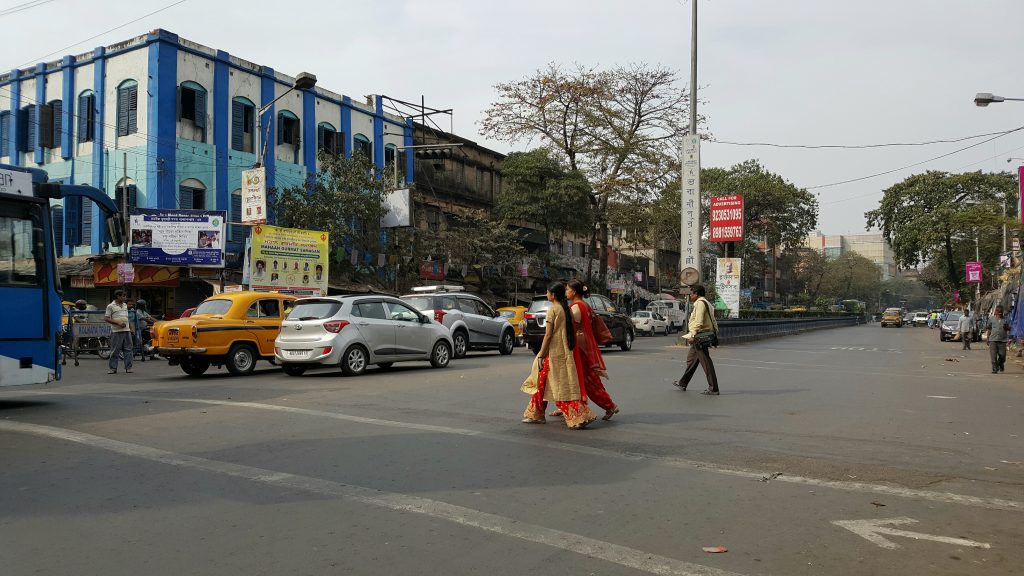
Once I am finally settled in my hotel in the Fort area of south Mumbai, I grab my backpack and head out. The streets of the city are noisy, fast and congested. (Don’t be fooled by the fact that they often appear empty in photographs—it’s an illusion!) They seem to change flavour and character from block to block. Crossing the street, even daring to walk along the edges where the uneven pathways are blocked, or nonexistent, is an exercise in blind faith. A motorcycle is likely to roar up behind you, racing against the flow of traffic, blaring its horn to make you disappear. A legless older woman working a rusted handcart down the side of the road is my new hero. I’m at odds to know what I think of this place. I feel a little pressed under the weight of the space.

As ever, I take note of the street dogs. Here they’re a rather sorry assortment of creatures, weary and worn. Perhaps they don’t stand a chance against the cats that appear to quite handily own this part of town.

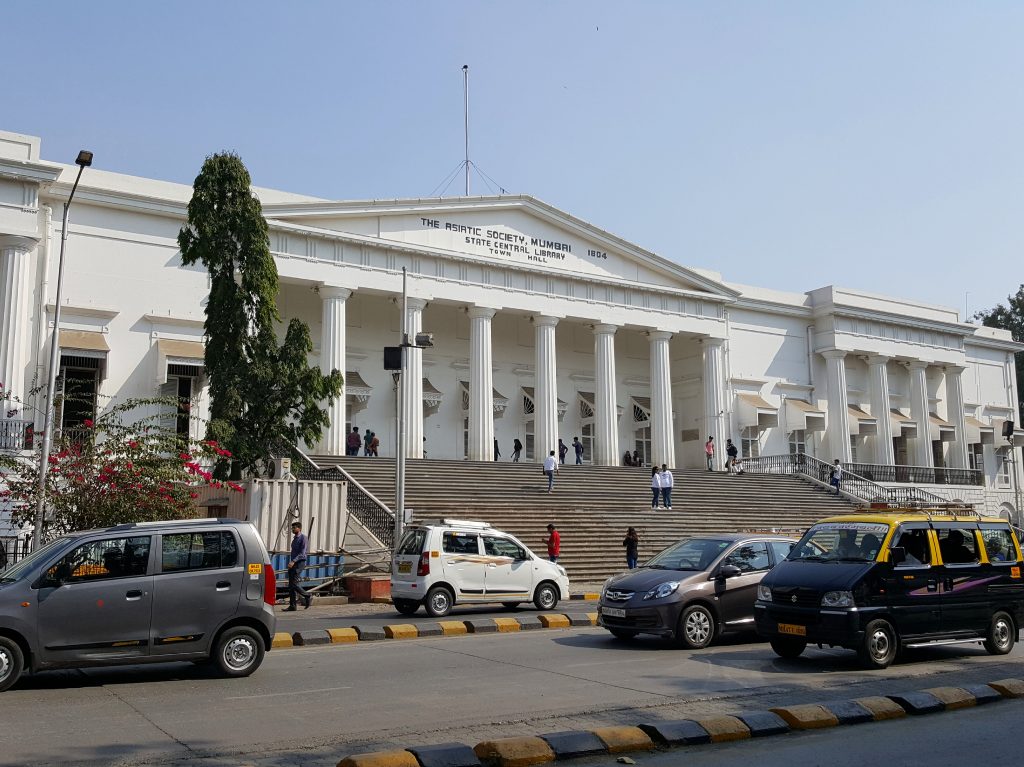
My immediate destination lies in the heart of the Kala Ghoda arts district. The area is crowded. Following my friend google  in search of the library where the literary portion of the annual arts festival is to be held, leads me through a bag search, metal detector and frisking, and into a large square crowded with young people  A variety of  sometimes quite tacky horse-themed artworks are displayed and the selfie generation is quite enamoured of them all. I am a little perplexed. I later learn that this is a new addition to the festivities, one that has drawn large numbers of people, mostly young, in from the suburbs, not for the arts so much as the party atmosphere. This type of attraction and congestion alters the tenor of the area. Of course, I’m here for the festival too—a little unexpected serendipity—but fortunately the literary programming is taking place beyond this makeshift corral, across the road in a garden oasis behind the David Sassoon Library. There one is magically removed from the noisy traffic and crowds on the street outside.

Now on my final day in the city, at least one tiny corner of Mumbai is less strange. The streets seem shorter, less confusing. The architecture is beautiful. This part of the city wears its age with grace. I have been to the Gateway of India, the obligatory tourist gesture, and today I saw the sea from the other side, looking out from Marine Drive. A completely different world unfolds there. Large, expensive vehicles line the shady streets, students pour out of colleges and universities, and in the distance, across the waters, the towers of the city’s centre appear ghostly in the midday heat. But it’s hot. I don’t stay long.

So, after my first, brief encounter with Mumbai, three things remain: the gift of being a stranger in a place where, despite disorientation and an inability to comfortably communicate, a little semblance of familiarity begins to emerge; the necessary joy that literary community affords including the precious opportunity to meet, in person, supportive and inspiring writers previously known only online; and finally, the chance to experience a hectic, sometimes seemingly harsh, city at rest. Late last night, after a wonderful, long visit with a friend, I made my way back to my hotel through the quiet virtually empty streets. Ranjit accompanied me part of the way, down byways I likely would not have attempted on my own, until he was certain I knew where I was, and I finished the walk alone. Here and there men spoke quietly, or bid one another good night. On sidewalks, those without homes were already fast asleep, and lonely yellow and black cabs crawled by, hopeful for a late night fare.

Funny that such a huge city could test me by day, and win me over at night.
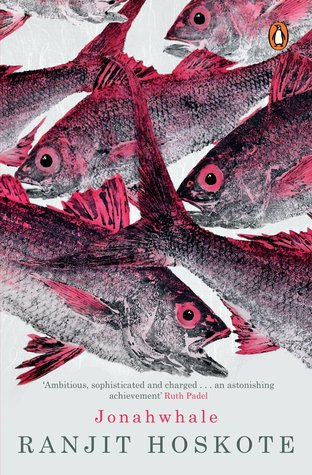
The expansive possibilities of Jonahwhale by Ranjit Hoskote

As someone who has lived a landlocked existence with an endless sea of prairie grass stretching to the east and the high cresting waves of the Rocky Mountains rising to the west, oceans have long held an inexorable pull on my imagination. Every family holiday that brought me close to either the Atlantic or the Pacific was magic. When I was younger I was drawn to stormy seascapes, images of rugged wave-ravaged shorelines, and stories filled with high sea adventure and intrigue. Now it is something else, something quieter, more metaphysical, that possesses me. From the far shores of Vancouver Island to a lonely beach on the eastern coast of South Africa, I’ve welcomed, however briefly, the untethering afforded by the impossible emptiness expanding beyond me, and revived that longing that no river, lake or landbound body of water has ever been able to fully resolve.

And so, I come to Indian poet Ranjit Hoskote’s  astonishingly rich, endlessly engaging Jonahwhale, a collection of poetry that returns, again and again, to gather inspiration, stories and imagery from the watery depths. For Hoskote, who grew up in Goa and Bombay, proximity to the sea has been a constant, one which he admits informs his life, his awareness and his writing. But as an accomplished translator and cultural curator with a seemingly inexhaustible curiosity that extends beyond boundaries, disciplines and art forms, his work cannot be confined to any specific thematic template. His poetry welcomes a wide array of influences, follows maps and legends that navigate an extensive territory, and resounds with an eclectic musicality. The poems in this collection run from multi-voiced epics taking their cues from historical, literary, or artistic starting points, to one line aphoristic pieces and everything in between. This book has accompanied me these past six months, and yet every time I open it I discover a line, a passage, or a verse that pulls me in anew, to reread, refresh, and reconsider.

I cannot assess or review such an impressive collection, I can only respond, which is perhaps the best I can manage with any of the poetry I have read this year.

Divided into three parts, or movements, the first section, “Memoirs of the Jonahwhale” summons voices from a wealth of historical, literary, and linguistic resources, some self-evident, others detailed in the poet’s endnotes, which, I understand, reflect Hoskote’s desire to honour his scholarly self rather than an obligation to explain his allusions. Some of these notes, crafted with a curator’s attention to detail, are fascinating in themselves and may well inspire a reader’s further exploration, but, as one would hope, context, background, and intertextual sources simply enrich the reading experience. They are not essential to the appreciation of the rhythms, images and intensity of his poetry.

A strong musical sensibility underscores the entire collection, and here Hoskote draws on an abiding interest in modern avant-garde music—composers like Brian Eno, Terry Reilly, and Steve Reich—a passion rekindled for me in recent years. It is, then, not surprising that my favourite piece is “Baldachin”. In memoriam Bruce Conner, the American filmmaker whose masterwork Crossroads combines classified footage of nuclear weapon tests with an eerily sublime soundtrack by Terry Riley and Patrick Gleason, the poem also incorporates the looped trigger line of Steve Reich’s Cuban Missile Crisis inspired composition “It’s Gonna Rain”. The result is an extended prose/verse piece that pulses with the energy of an impending storm:

You are the company the name is you poisoner you cannot pretend you cannot hide you cannot swim in these neon currents I am become Death the destroyer of worlds this ocean one open mouth swallowing islands this art of making things disappear in a glow that throbs in the eye that cannot sleep this frame that’s come apart leached the colour from every drifting current this voice that shakes the continents no earthly thing trembles on its breath this baldachin of milk-white smoke has nothing to hide no crystal globe no night of mean knives no shallows no depths all ploughed bare all punctured all furrowed It’s gonna rain It’s gonna rain It’s gonna rain

Beyond the sheer scope and wealth of Hoskote’s poetic vision, it is his keen sensitivity to rhythm, pacing, and visual space—the music and the architecture of a poem—that makes this collection so impressive, so endlessly engaging. If the first section contains some of the most ambitious epic offerings, complete with choral arrangements and refrains, the ten-part poem “Poona Traffic Shots”, which forms the second part, stands as sort of land-bound counterpoint tracing a cycle of rain-soaked ground voyages through countryside and memory, that calls back to the sea in its imagery:

The kick-starter has whooping cough, won’t purr.
.       A dead crow’s beak
points from the trash heap like the tip of a schooner
.       sunk in a shallow bay, a bruise
at first only grazed, then scooped by nautical furies
.       from the coast’s offered skin.

Moving into the final section, “Archipelago”,  the tone turns more intimate, not personal as these are not explicitly autobiographical or confessional poems, but smaller, sometimes quieter more focused, often inspired by art or classical themes. Like finely imagined poetic miniatures echoing history, the unforgiving beauty of nature and, as ever, rarely far from the water.

If literature can evoke a sensation so undefinable and expansive as that which I feel at the ocean’s edge, this wise and elegant collection comes close.

Jonahwhale by Ranjit Hoskote is published by Penguin India.


Of secrets and sacrifices: Don’t Let Him Know by Sandip Roy

The end of June is upon us and I have managed to get through Pride month with a minimal amount of stress and anxiety. In my city the official celebrations are not held until late August, but there is plenty of Pride around all the same. I have written before about my general sense of disconnect from the LGBTQ community, and the rejection and isolation I’ve experienced over the years. But to be honest, I look at Pride with some measure of envy. I wonder what it would feel like to be able to celebrate myself for who I am and not wish, after all these years, that my life had been different.

There is, in many a queer life, an inability to negotiate the public and the private, the secret and the shared, in a fluid wholistic way. Sacrifice becomes an element of existence in the world.

Time, place, and cultural considerations have long had an impact on queer lives lived. Set in Calcutta and California, Don’t Let Him Know by Sandip Roy is the kind of LGBTQ story that resonates with me, even if my own experience is very different. A queer life dominated by a need to hide and a failure to find release and connection the way one longs for is not simply a story of the past. This novel speaks to the choices we make in our attempts to salvage some normalcy when what we need or long for is denied or feared to be impossible—a reality that reaches beyond the constraints of culture or questions of sexuality or gender identity.

This warm and richly woven tale examines the shifting dynamics within a traditional Bengali family as values slowly change in response to influences from inside and outside India. Roy, a writer and journalist from Calcutta, who lived in the US for twenty years before returning to his native city, draws on his own experiences growing up in a protected, comfortable family as well as the challenges and freedoms afforded by moving to America, in this multi-faceted exploration of the conflicts between identity, honesty, and obligation.

Central to the story is Romola who, having agreed to a marriage negotiated by eager family members, finds herself in small town Illinois with Avinash Mitra, a quiet young man she hardly knows. When a letter from India arrives one day, the homesick bride tears it open without checking carefully and finds herself holding a letter from her husband’s lover who had hoped that they would be able to build a life for themselves in the US, away from the prohibitions of Indian society. This man, Sumit, wonders why Avinash did not wait. Romola, unable to begin to process the information, tucks the letter away. She does not confront her husband. His secret remains with him, her awareness of his secret remains with her. Years later, after his father’s death, their son, Amit, finds the second page of the letter and assumes he has uncovered a piece of his mother’s hidden past. Secrets multiply.

Moving back and forth in time, this novel traces the childhood and youth of both Avinash and Romola, their years together as a family back in Calcutta where they raise their child in a multi-generational household, and Amit’s eventual settlement in San Francisco where he marries an American woman and becomes a father himself. A fine example of classic, emotionally balanced storytelling, each chapter adds to a network of secrets, large and small, creating a rich and bittersweet tapestry. Roy resists the temptation to break open the fragile restraints that bind his main characters, and although not entirely without hope, there is a deep sadness at the heart of Don’t Let Him Know. For Romola this is often expressed in a degree of repressed bitterness, making her, at times, less than likeable. Avinash, by contrast, withdraws. He often appears to fade into the sidelines, something that anyone who has lived for a significant amount of time closeted or otherwise invisible will recognize. His first attempt, later in life, to connect with other gay men finds him awkwardly out of synch and results in an episode that is by turns humiliating, exciting, and potentially dangerous. As a reader, I longed to know him more, yet I admire Roy’s decision to tell this story, this way.

Many LGBTQ people exist in spaces defined by loss and longing.

There is more at play here, of course. Questions of class, race, tradition, and family honour also arise, but, as with the central conflict, these issues are woven into the texture of the story. Finally, this is a novel rich in sensual detail—light, scents, and sounds. Places, from the streets of Calcutta to suburban America neighbourhoods, are skillfully evoked. My recent stay in Calcutta enhanced my appreciation of that setting in particular, with the many small features I recognized adding an extra dimension to my enjoyment of this book. A more “conventional” read for me, perhaps, it turned out to be a perfect choice for Pride month,

Don’t Let Him Know by Sandip Roy is published by Bloomsbury.

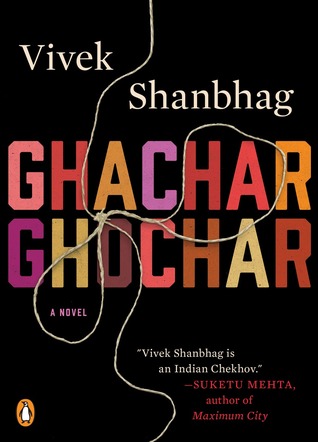
As it is in our house: Ghachar Ghochar by Vivek Shanbhag

The well-being of any household rests on selective acts of blindness and deafness.

India is a linguistically diverse country, with twenty-two scheduled languages, thirteen different scripts, and over 720 dialects. Yet when Western readers think of contemporary Indian literature, the work that most readily comes to mind  is typically written in English, whether by India-based or diasporic writers. Ghachar Ghochar by Vivek Shanbhag, which has garnered much attention over the past year, has been, for many English readers, their first introduction to a book originally written in the South Indian language, Kannada. As one of the long listed titles for the 2018 Best Translated Book Award (BTBA), even more readers will now have a good excuse to meet this established Indian author through this novel, his first work to be translated into English.

At first blush, Ghachar Ghochar seems an unassuming short novel—the story of a family whose financial circumstances take a turn for what should be the better, and the impact of their newfound fortune on their household dynamics. And so it is, but it is much more. Complicated undercurrents run through this tale, building to an ending with uncertain and disturbing implications. What makes it especially unsettling, and affecting, is the strangely passive, rationalization of the narrator. He practices a willful ignorance.

The novel, set in Bangalore, opens at our protagonists’ favourite haunt, Coffee House, with a description of Vincent, the attentive waiter and quiet confessor who tends to his customers’ need and listens to their woes with sensitive discretion. He is not an audience so much as a pretext for the unnamed narrator to unfold his account. Something is troubling the young man. But his concern is distracted. He seems to harbor a conflicted attitude toward women—lack of understanding even—that hints at but does not betray the depth of what we will eventually learn is the true nature of his anxiety.

What follows is a portrait of a joint family bound at all costs to the well-being of the bread-winner, a holdover from their earlier days when resources were limited and they learned to stick together, “walking like a single body across the tightrope of our circumstances.” However, that which once insured their survival in the face of financial distress, stands to destroy them once money is no longer a pressing concern. The story unfolds in terms of status, beginning in the present. The narrator who lives with his wife, his parents and his sister, and all are expected to defer to Chikappa, his father’s younger brother, the founder of the successful spice distribution company that has afforded the ascension of the family from a cramped, dirty house in a lower middle class area of the city to a smart, two-story dwelling across town. Although it is officially a family business, in practice there is little need for the other men to have more than perfunctory roles. The uncle manages it all and the family lets it be. Everyone except Anita, the narrator’s wife, who comes from a very different background and ethic.

Moving down through the family hierarchy, the narrative steps back in time to the years when the narrator’s father, his Appa, struggled to look after his family and put his brother through school on a modest salesman’s salary. Yet, even if money was ever in short supply, he placed great value on good honest, hard labour:

He was inordinately proud of being a salesman. “What do you think a salesman is . . .?” he’d boast, especially when launching into stories about his prowess—how, for instance, he’d managed to sell to a shop whose shelves were always brimming with tea. He polished his shoes every morning and put on an ironed shirt. He’d leave looking like an officer and return at night, wilted from the day’s sun, his clothes rumpled. One glance at his scuffed, dusty shoes was enough to betray the nature of his day’s work.

Everything changes when Appa is unexpectedly forced into early retirement. This is the impetuous his brother needs to act on a business scheme he has been contemplating and, although both brothers are co-owners, they soon find themselves ideologically at odds and as the spice firm takes off, Appa drops into the role of a silent partner, slipping into an increasingly defeated mood. His family worries about his sanity, but not for his sake so much as their concern about their right to his share of Sona Masala’s assets.

The narrator, who with his mother and sister all fall in place, more or less on level, below the two older men, makes much of the interdependence of his family, financially bound in poverty, emotionally bound in wealth. They are all at odds, in their own ways, with the world into which they have ascended almost overnight:

It’s true what they say—it’s not we who control the money, it’s the money that controls us. When there’s only a little, it behaves meekly; when it grows it becomes brash and has its way with us. Money had swept us up and flung us in the midst of a whirlwind.

The sister, Malati, has a particularly disastrous, short-lived marriage. Amma, the matriarch, tries to mediate between family members and maintain their honour against an outside community she no longer knows how to negotiate. Meanwhile, the narrator seems to lose any drive or motivation he may have once aspired to. He too is given a title in the family business, complete with an office and income, but soon realizes there is little for him to do. His uncle has everything under control and no one dares to question what that really means. He takes to lazing around in bed and frequenting Coffee House, showing little ambition, afraid or unwilling or perhaps unable to break away and create a future for himself. With the addition of Anita, his bride by arranged marriage, the precarious household harmony is set completely off balance. The daughter of a professor, she comes from a different background with different expectations and little inclination to suffer fools gladly. She also brings the book’s title, a nonsense expression unique to her family meaning “tangled beyond repair” that she shares with her husband on their wedding night. Yet, it is unclear whether he understands the full relevance of this image before it is too late.

Told with a carefully weighted tone and an economy of words, Ghachar Ghochar is a deceptively easy and enjoyable read. It is not until one nears the latter pages of the book that a creeping unease enters the narrative. The protagonist notices many troubling signs, but repeatedly neglects to act. It is unclear if he shares his father’s tendency to despondency or is simply too self-focused. The troubling factor is that this type of opting out, is not an uncommon response for young men when they cannot find their footing under shifting socio-economic conditions that they feel, rightly or wrongly, are beyond their control. In the Indian setting, the complications of family dynamics and expectations exacerbate the situation. And this, for me, is the real strength and tragedy of this slender volume. There are no easy answers, no heroes, no clear resolutions.

Too much like real life.

Ghachar Ghocharby Vivek Shanbhag is translated by Srinath Perur, and published by Penguin Books.

In praise of independent publishing and a link to my interview with Naveen Kishore of Seagull Books

It is no secret to regular readers of my blog that I am a great admirer of Seagull Books and that earlier this year I travelled to India, a visit in part motivated by a desire to visit the offices of one of my favourite independent publishers. Admittedly some of my non-bookish friends wondered at my choice of destination, the city as much as the country. Because there is a publisher you want to meet? But if Seagull’s presence in Calcutta offered me an excuse to spend a couple of weeks in a place I had only idly imagined I’d ever be able to visit, it was a trip I undertook on my own, at my own expense. And along the way, another independent publisher that I strongly believe was also part of my journey.

Passing through London on route to Delhi, I selected a flight schedule that would allow me to make a detour into the city for a short visit. (As much as I’d love to spend more time in London it is beyond my means.) There I had lunch with Susan Curtis-Kojakovic, the tireless publisher (editor, chief cook and bottle-washer) of Istros Books. Specializing in literature from the Balkans and South-East Europe, Istros is dedicated to discovering and promoting exciting, challenging new works from the region. Their philosophy is that “quality knows no borders.” Over the past few years, Susan has become a friend and inspiration. This year, because I wisely decided not to try to navigate London on my own as I did a few years back, we had time for more than a rushed coffee.  We managed to fit in lunch at the British Museum, a stroll through the Assyrian exhibit, tea with poet and translator Stephen Watts (whose partner has translated work for Seagull because, of course, it is a small world), and even a quick stop at the LRB Bookshop! Both of these  publishing ventures have several important things in common. They are willing to engage with their readers, booksellers and reviewers. They submit their books for awards. They are supportive of other independent publishers and understand the importance of facilitating connections, not building walls. They are not unique in this, but surprisingly there are some independent publishers who do not seem inclined to make the effort. And it shows. Translated and non-mainstream literary circles are very small and many of us who read and write about these literatures are relatively isolated from like-minded souls. The conversation is critical and it does help promote and sell books. And it helps make life just a little bit richer too.

This connection between reader and publisher (or rather the vision or philosophy that a publisher inspires) is one of the subjects I wanted to pursue in  the conversation I had with Naveen Kishore of Seagull Books, published earlier this week at 3:AM Magazine. He is, naturally, looking at the big picture against my individual perspective, and yet responds with the grace and wisdom he is widely respected for and that has served him well, against all odds, for over thirty-five years. You can find my piece here.

*

As an added note, Seagull has recently learned they have to relocate and are looking to find a new home in South Calcutta. I hope they are able to secure a suitable space soon. When they do, perhaps I’ll have to go back to check it out…

On another way of seeing and remembering Calcutta: A link to my photo essay at Sultan’s Seal

Before I went to Kolkata last month, my strongest visual image of the city was not informed by guide books, travel websites, or National Geographic features. Rather, it was Naveen Kishore’s haunting black and white photographs of his hometown that captured my imagination. I remember, in particular, a darkened residential street—Calcutta, at night—quiet and empty. What would it be like to be there?

Naveen Kishore’s photographs on display at the Seagull Books store.

And, of course, I arrived to what seemed a circus of noise, colour and crowds. It wasn’t until I began to pull out my phone as I navigated the streets of Bhowanipore, that I began to see the neighbourhood in which I was staying. Even when I had my proper camera with me, I continued to use my phone, for the built in GPS as much as for the ease of uploading and sharing photos along the way.

But I knew that I would want to do more. Photographs have increasingly become part of my creative process. And when I use them in concert with words, I feel liberated to edit and manipulate them as much as I edit and manipulate language to express myself. The images that accompany my recent essay for RIC Journal were processed to heighten the colour and dreamlike quality I wanted to achieve with the text. The photographs that comprise the piece that has just been published at Youssef Rakha’s Sultan’s Seal website are entirely different in style and intent.

Youssef Rakha is an Egyptian novelist, journalist, and very fine photographer. Over the years he has provided a home for photo essays by a number of excellent photographers and photojournalists. My humble contribution is entirely personal, again a reflection of my time in Calcutta, this time in black and white. The ordinary and the extraordinary. Twenty-four images—sometimes detailed, sometimes stark—and a simple text. And that special magic that only be conveyed with black and white (and all the shades of grey).

You can find my piece, Calcutta in Grey here. With much gratitude to Youssef for putting it together so beautifully.

Brief notes on returning home from travel and a link to my photo essay at RIC: Journal

Kolkata is not a place that inspires indifference. It has been almost exactly one month since I left it behind, and yet my thoughts and imagination are still occupied by the city, the people I met, and the experiences I had.

Now that I’m home, with the endless winter so very slowly melting away, I am once again confronting that familiar heaviness that weighs me down and reminds me how hollow and lonely life here can be. Perhaps it is this perennial inability to fit in that drives the restless traveller on. I don’t know.

In the meantime, I’d like to share a photo essay, just published at the wonderful RIC:Journal. This is, in words an images, an attempt to hold my first encounter with India close just a little longer.

You can find my piece here. With gratitude to Saudamini Deo.

Ferries, trains and yellow cabs: Navigating Kolkata in good company

I headed to India without any clear expectations about what I might find in Kolkata. The trip seemed to arrive much faster than I could prepare myself. But just as well. I like to approach a place with an open mind, content to inhabit a small corner, tracing and retracing pathways until they become, for the moment, familiar. I anticipated a fair degree of wandering, alone and unguided. However, as fortune would have it, nearly every day I was out with a friend or acquaintance, for a walk, coffee, or a meal. The opportunity to see fragments of the city through the eyes of others—life-time residents and more recent arrivals, regular visitors and newcomers—opened up varied angles and perspectives I would never have glimpsed as a lone, foreign observer.

A kaleidoscopic view of a kaleidoscopic city.

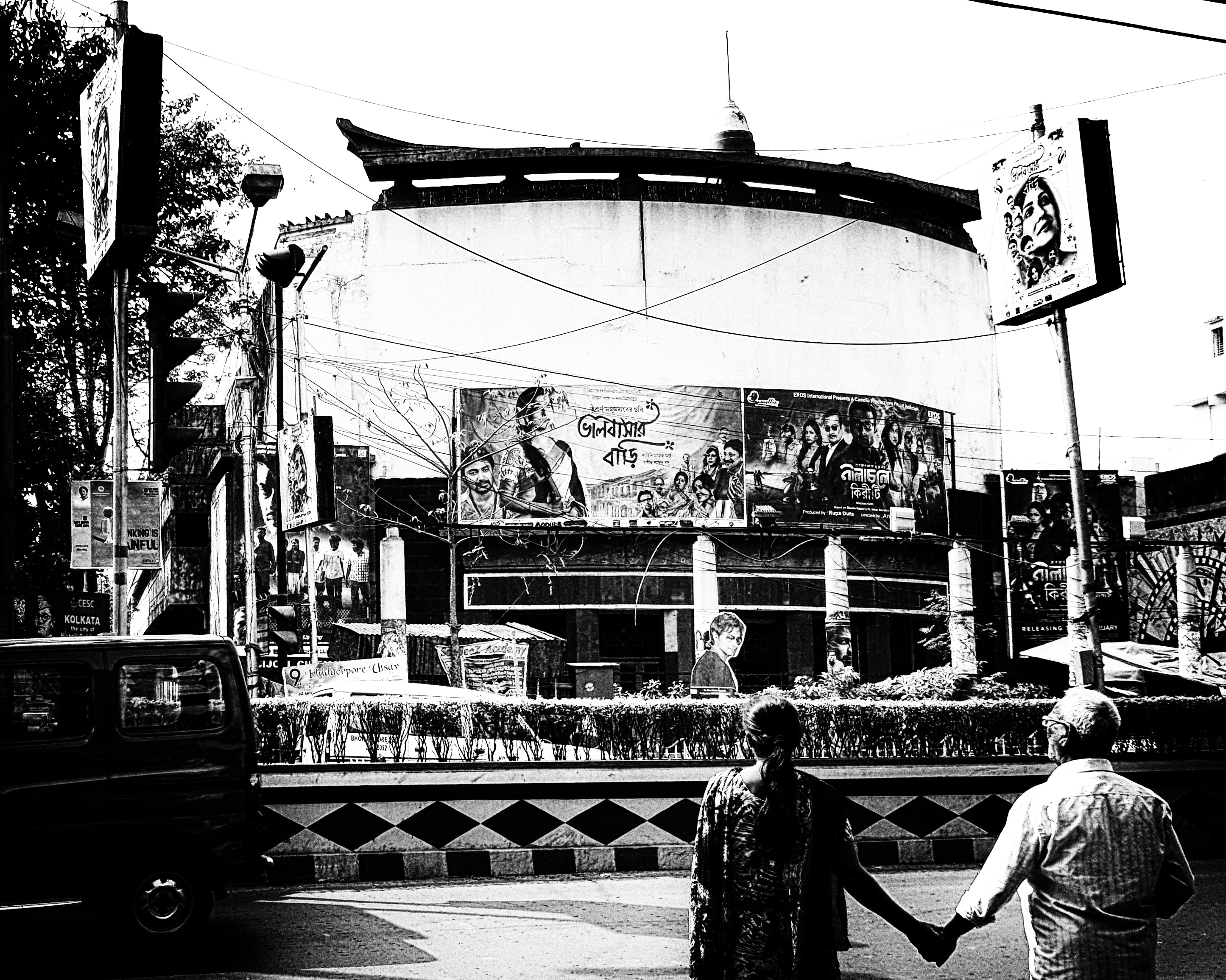
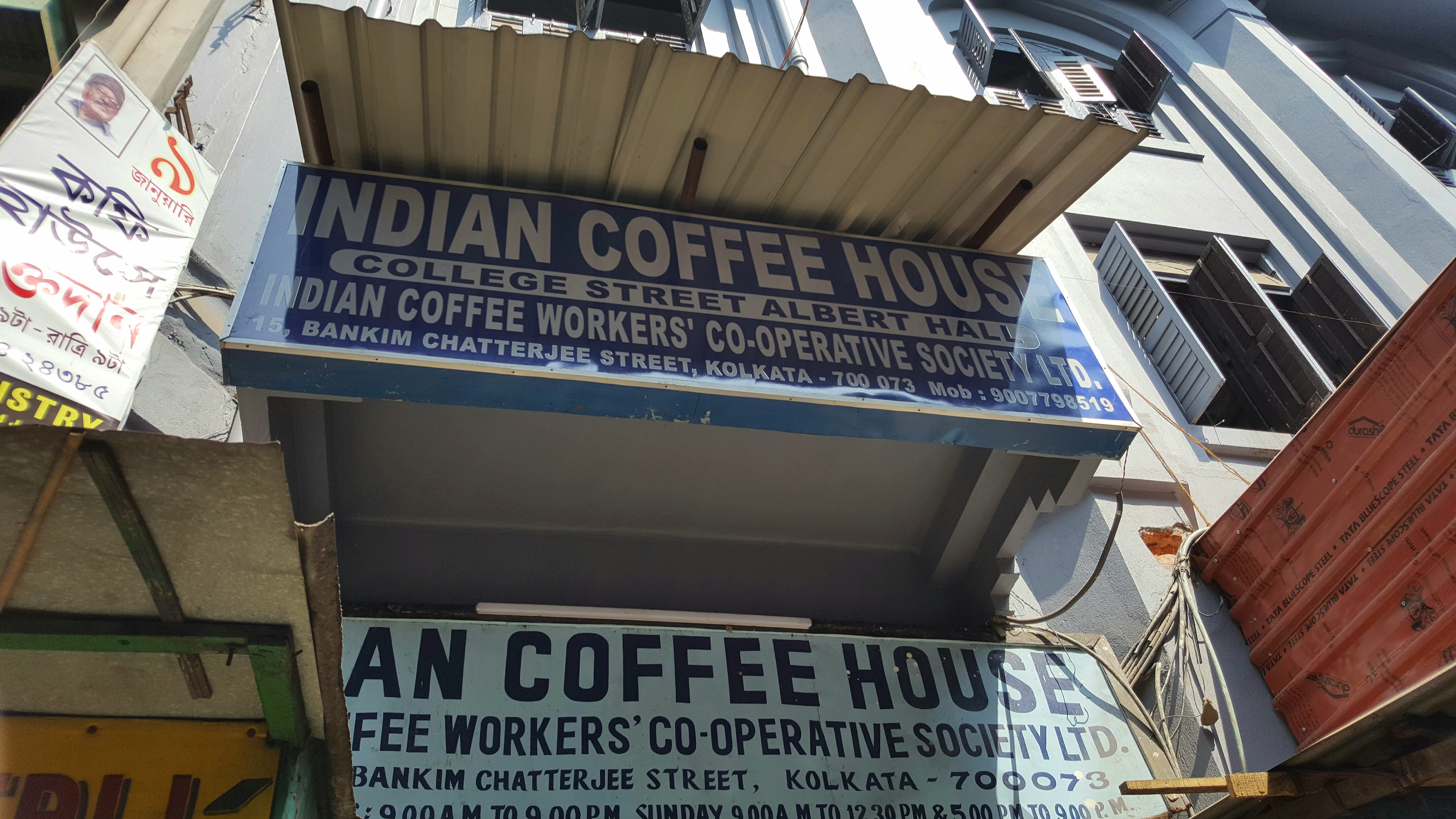
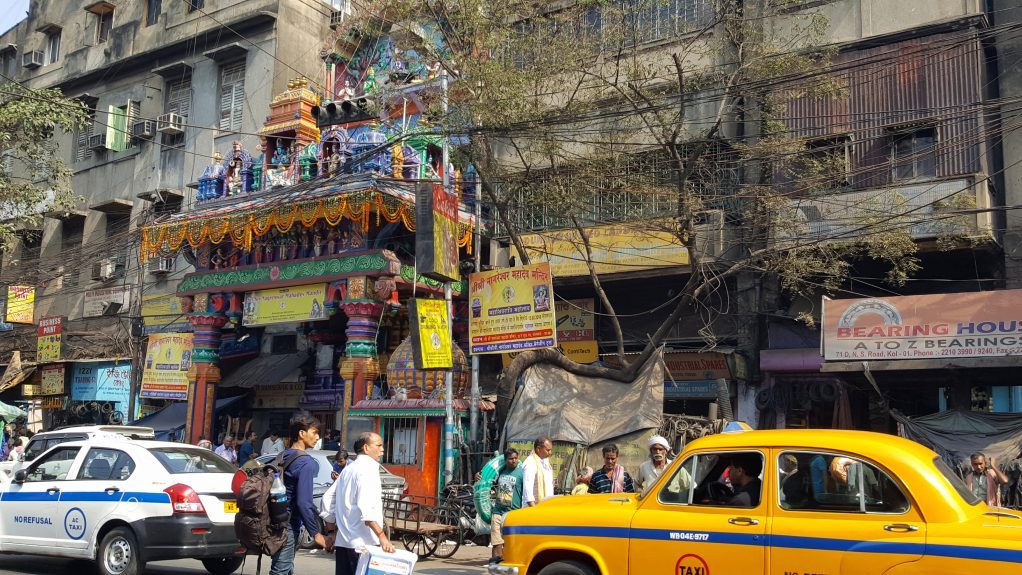
Love it, hate it, or a complicated mix somewhere in between, it is difficult to imagine Kolkata leaving anyone indifferent. I suppose one could sit still or tread carefully from one established tourist venue to another, but quite honestly it is a city that, despite initial appearances, is more welcoming and safer to move through than one might imagine. It invites personal engagement.On my own, walking remained my default mode of locomotion and, over the course of two weeks I came to know a couple of routes well, especially the stretch of Sarat Bose Road, from my home-stay to Minto Park, a diverse, commercial street. The only public transport I would entertain was the Metro, the aged but determined subway line running across the city from north to south. There was a station close by and one morning I squashed myself into a crowded car to travel north to meet a friend outside the Central station. Together we wandered through the book-lined roads and alleys of the College Street area before joining her husband to enjoy cold coffee at the legendary Indian Coffee House which has, over the past seventy-five years, served as an important gathering place for leading intellectual, cultural and political figures.

Kolkata, at least in the older central part of the city, is conspicuous in its absence of a cluster of gleaming high-rises and commercial office towers. It appears to the outsider like an accidental city. Yet it was once the centre of an empire. Scratch the surface and a cosmopolitan quality still lingers. It has a rich artistic and cultural heritage, but the weight of history and ghosts of the past are tangible. The scars of years of decline and neglect mar the surface.

Layers of existence and subsistence share the same spaces in a manner unimaginable in other major cities. Sidewalk vendors and luxury hotels. Modern buildings beside crumbling ruins. It is a place where anyone with a burner and a pot, a few shoemaking tools, or a pair of scissors can set up business. No one is swept off the street, tucked away out of sight. A dynamic urban ecosystem exists here. At once vibrant and decaying, often side by side. As a friend of mine said, there is a place for everyone in Kolkata: “there is food for every budget. There’s space for every fatigued body and there is transport for every pocket.”

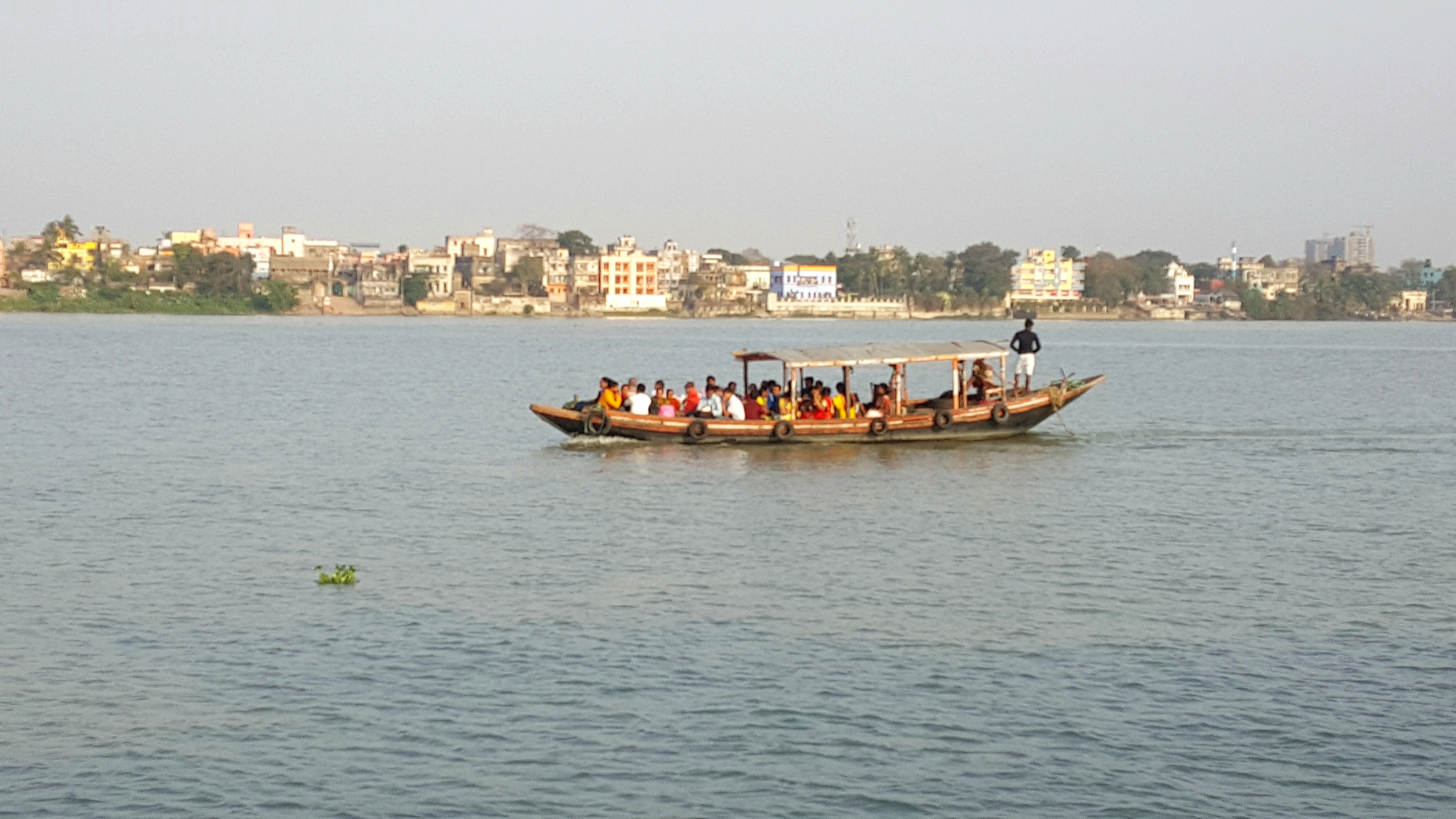
My final weekend in the city was spent in the company of this same friend who had come up from Bangalore for a few days. Together we rode ferries, hired tricycle rickshaws, and experienced the prickly hospitality (or hostility) of an assortment of Yellow Cab drivers. We started out on Saturday morning with a ride across the Hooghly River to Howrah where a rickshaw driver carried us up to the railway station. There we bought platform tickets and my friend shared his enthusiasm for train travel. He led me through a third tier A/C car, insisting that I must, at some point, experience India by rail. (I’m not quite yet confident to attempt that on my own, but challenge registered, and accepted.)

We made several more transits across the river on Saturday, with a longer ride between the Dakshineswar Kali temple and Belur Math on Sunday. These passages introduced an entirely different space and pace. The Hooghly is a wide, languid, opaque green waterway. After the sensory crush of the city, time seems suspended, but even here echoes of the past persist. A mix of magic and sadness.

My friend and I covered a lot of ground over two days, in kilometres and in conversation. At his insistence my experience of Kolkata included small pleasures I would not have otherwise entertained—water from unripened coconuts, delicious fresh squeezed sugar cane juice, and peanuts and puffed rice served in bags crafted from folded newspaper. And his personal perspective on the intersection of municipal grandeur and deterioration helped me begin to frame what I’d observed during my sojourn. A walk after dark through B. B. D. Bagh (Dalhousie Square), the seat of the provincial government and central business district, was a powerful experience, inspiring and haunting in equal measure.

And what would a trip to Kolkata be, in the end, without cab rides? Yellow cabs, even.

And so I left the city carrying the intensity of the place—its mass of contradictions—as a kind of thickened stew that will take time to sift through and clarify. Calcutta. Kolkata.

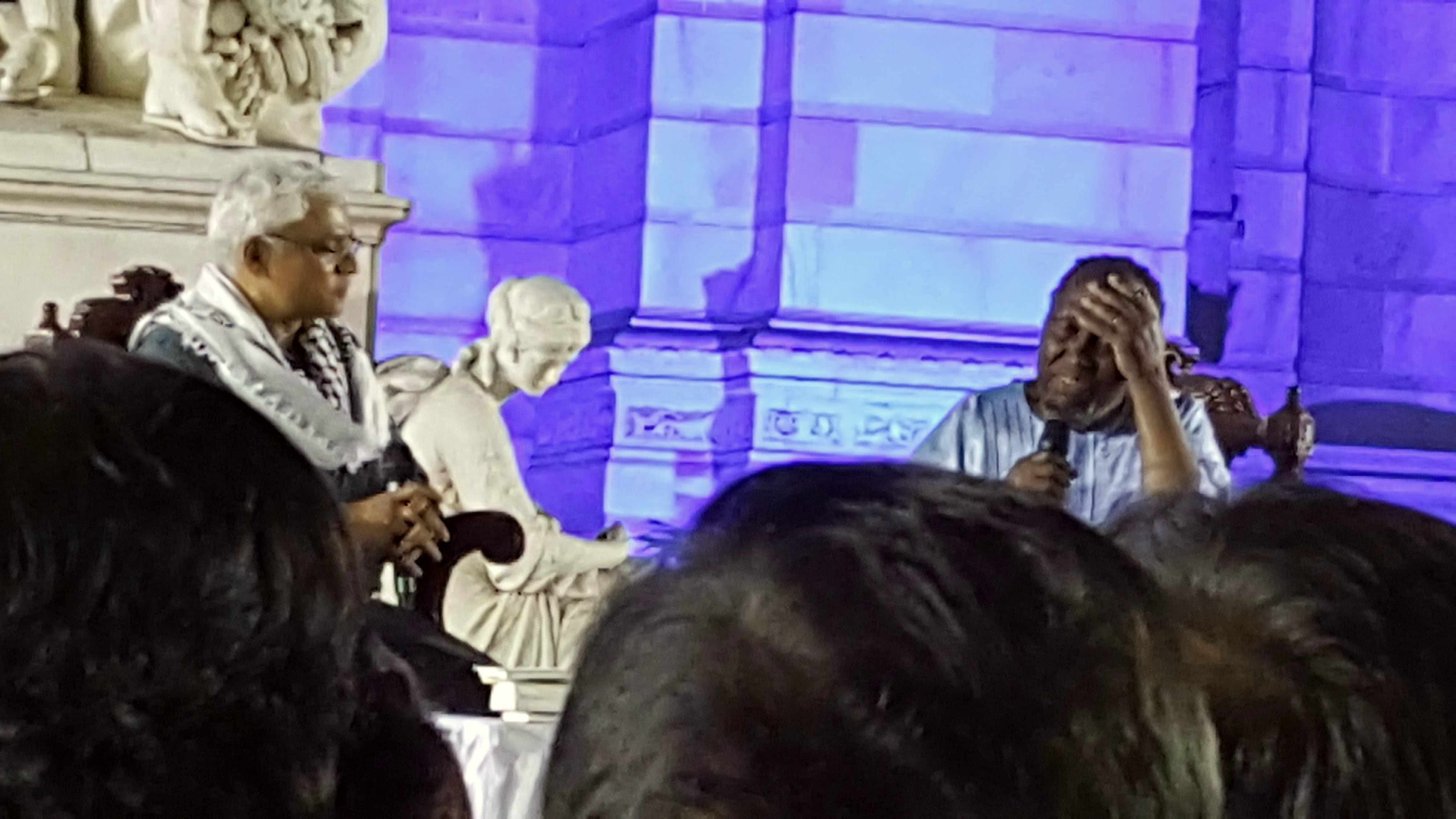
I remember jammed roadways. Taxis—yellow, white and, Uber. An endless chorus of bleating car horns. Brightly coloured buses jammed with passengers. Three wheeled auto-rickshaws scooting by. Bicycles and motorcycles, sometimes with a single passenger, but more often couples, even families—father driving, mother behind sitting side saddle in a sari, and a youngster on the handlebars—typically all without helmets. The whimsical magic of the Seagull Books office, the enthusiasm of the students at the school, the ambitious and inspiring Peaceworks project. Ngūgī wa Thiong’o in conversation at the Victoria Memorial, under the open sky, surrounded by that monument to colonial glory. Towering tombs, and stalls overflowing with books. The century-old residence where I stayed and my eager, affable host, Nandu.

Coffee. Conversation. Friends.

Until we meet again.

Sifting through my experiences in Kolkata: Leading a class at the Seagull School of Publishing

I’m home from India and slowly recovering from jet lag and food poisoning. It’s the latter, acquired, most likely, on my last evening, that is really dragging the transition out—blurring the kilometres between there and here. In a strange way, the exhaustion and muscle fatigue feels like a metaphorical and physical rinsing of Kolkata out of my system.

It won’t work. I’ve been infected. By the city—and a country—that I want to return to and explore further.

For the moment though, a little distance is required so I can review, focus, and calibrate the experiences of the past two weeks. Then I can begin to weave it into words. I anticipate essays, interviews, and other projects to emerge in the coming months.  But for now, back to this space, roughghosts, to share a little more of my visit over the next few posts.

I did not travel overseas until I was in my mid-fifties. Not having had the opportunity when I was younger, I think I’d become resigned to the notion that it was something I’d never be able to afford. It is, strangely, loss that has made it possible. I live very modestly, I travel alone, and the internet has opened up a network of people to connect with across the globe. So I never feel lonely when I arrive in a strange place. Perhaps I travel to escape the loneliness of home.

My decision to go to Kolkata was spontaneous. It arose out of a chat with Naveen Kishore, the publisher of Seagull Books, sometime last fall. His enthusiastic response to my idle comment that “someday” I would visit, set my plans in motion. And, while an opportunity to see the store and office and meet the staff was the draw, and Ngūgī wa Thiong’o’s planned appearance in the city determined my timing, I ended up with so much more, not only from the Seagull experience but through my exploration of the city on my own and with friends.Rather than attempting to craft a whirlwind tour through a number of Indian centres, I opted to stay in place for two weeks. Cost and available time were the primary limiting factors, but I tend to prefer to be able to exist in a city for a while if I can, rather than dash through. It was a fortuitous decision. Calcutta is not only extremely affordable, but it takes at least a week to begin to learn how to “see” the city, and that has nothing at all to do with getting around or visiting tourist sites. It was only toward the end of my visit that I was beginning to appreciate how deeply my time in Kolkata stands to inform my understanding of Seagull, not just the publishing venture, but the entire Foundation for the Arts. I still need time to reflect and follow up with further conversations before I’ll be ready to write any major essays.

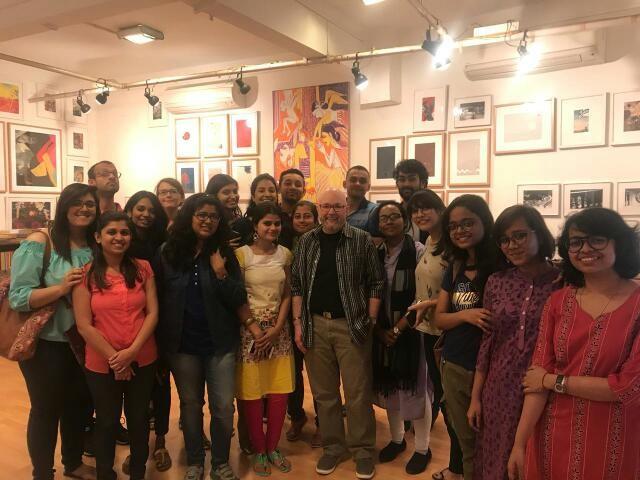
However, there is more. I headed to India with the idea that I would spend time engaging with my endless memoir project—reading, writing, reflecting. Yet I worried that left alone with my own literary ambitions I might be exposed to myself as a fraud. Despite my successes and accomplishments over the past few years, I still struggle with self-esteem. I feel old. Late. Writers that emerge in mid-life or later are a relative rarity in this world that celebrates the promise of the young—the 30 under 30, 40 under 40—and undervalues the possibility of those of us for whom life and circumstance have delayed entry into the creative literary environment.My anxiety was increased with the prospect of giving a presentation at the Seagull School of Publishing. When, Naveen suggested I could do “a session” with the students, I assumed he meant drop in, talk for twenty minutes or something. No stranger to public speaking, facilitation, or educational settings, I have always talked about subjects with which I had some degree of knowledge—developmental projects, brain injury, even bird feeding—but when Assistant Editor, Sayoni Ghosh, advised me that they wanted me to talk about my career (“career”??) in writing, editing, blogging, and online publishing I was taken aback. And the details? I would be leading a masterclass running from 10:30 to 1:30 with a fifteen-minute break for tea at noon.

Excuse me? What of my so-called career could I stretch into three hours?

Yet, as I started to create an outline for this effort, a strange thing happened. I knew that I had always been a naturally strong writer, something that had served me well in academic, professional, and volunteer settings since college, but I hadn’t fully appreciated the extent to which I’d been writing, editing and designing newsletters, publications, and even detailed annual reports for years—typically without the technical resources that should have been employed in the circumstances. My early efforts at one job were produced on a Smith-Corona typewriter with a simple word processing function that allowed me to print out blocks of text (and several different heads that could be exchanged for varying the font style). These blocks were then cut and carefully taped onto 11×17 inch sheets of coloured paper, photocopied and folded to produce eight-page monthly newsletters that, for the era, looked as good as professionally printed products. I fussed to avoid any telltale shadows, took care not to repeat themes or designs. In a later position, I would eventually move on to Microsoft Publisher, working under-resourced on top of my regular job responsibilities to create promotional, educational, and fundraising documents that my not-for-profit employer refused to invest in adequately. Why? Because I could not abide by the amateurish materials they had relied on before I arrived.

The difference today is that I am finally engaged in projects that are personally and creatively rewarding. I have learned to call myself a writer. Perhaps I will someday believe it.In the meantime, on the morning of February 14th, my date with masterclass destiny arrived. The previous day the students had spent the morning with German translator and musician Wieland Hoban, who has translated a number of works for Seagull, most proudly Correspondence: Ingeborg Bachmann and Paul Celan. That afternoon they’d enjoyed the warm wit and wisdom of Kenyan literary giant, Ngūgī wa Thiong’o—a session I’d also been invited to attend.

And then me. No pressure, eh?

Although my carefully created Powerpoint presentation—primarily photographic images and links to websites—baffled me and was abandoned, three hours passed easily with lively discussions of online publishing, blogging, and writing critical reviews. My intention was to promote the idea that in today’s environment, creative engagement is possible, easier and more rewarding than ever, and that it is never too late, even if one’s life or career goes sideways as life and work realities can. To that end I did briefly share my story, my gender-distracted diversions and delays that interfered with my earlier creative writing ambitions for so long. I hoped to help the students to appreciate the truly international nature of a literary community (or circles of communities) that exist and how actively engaging in that world opens opportunities on personal and professional levels no matter “when” or “where” one might be.

In keeping with the spirit at the core of a project like Seagull which started very simply, expanding slowly and organically over time, I also wanted to talk about very small indie publishing efforts. So I told them about my friend John Trefry and Inside the Castle, and how a desire to get his own first book into print has grown into a spirited little publisher, still a singular enterprise out of his own Lawrence, Kansas home, but boasting an impressive roster of authors and published titles. And to illustrate that limited resources should not restrict quality or design, I brought along a copy of Douglas Luman’s The F Text. Much to my surprise and pleasure, one of the students fell in love with it and worried that she wasn’t sure she could obtain a copy. So I gave her mine. And signed it. Which was weird, but cool.

Yesterday the same budding editor contacted me to let me know that she had written about my class for the Students’ blog on the Seagull School webpage! I feel an odd mixture of embarrassment and pride. And relief that my session was of value to the students. I’m also insanely excited that Mihika created a little erasure poem out of an excerpt from my piece, Your Body Will Betray You. What a gift!

Leading a masterclass like this is the last situation I ever expected to find myself in, and I would wager I am the real beneficiary of the opportunity. Gradually I’m learning to believe that others believe that I have something to offer.

One of the many, many precious gifts I am bringing home from Kolkata.

Out on the streets of Kolkata: A little exploration

While my first twenty-four hours or so in the City of Joy were intense—a mixture of everything and nothing I’d imagined—I now, just over halfway through my stay, greet each day with a blend of ease and exhilaration. How quickly one slips into the rhythms, growing accustomed to the roar of traffic and bleating horns. With each venture out, I have found myself fitting into the flow, making my way through the congestion to explore the city. Every time I emerge from my residence out onto Sarat Bose Road, I am filled with a sense of enthusiasm about where my wandering will take me. I have kicked around by myself in strange towns and cities, from Alice Springs to Cape Town, but none as intensely engaging as Kolkata.

Of course, this is a city that refuses to stand by idly. It commands a degree of attention whenever you step out on to the streets, and I do mean on to the streets; one navigates the roadways on and off the sidewalks as need be, and crosses any significant intersection with caution. In some places, smartly dressed traffic controllers aid the safe passage across busy thoroughfares, but only to some effect. I’ve learned to line myself up with other pedestrians and rely on their instincts. But even those only go so far. I’ve seen one man so busy on his cellphone that a van backed up into him. Only slightly startled, he quickly regained his balance and continued both his journey up the side of the road and his conversation without skipping a beat.

Some seem to engage with the roadways with uncanny confidence. Naveen Kishore, the esteemed publisher of Seagull Books, for example, appears to command the unceasing stream of traffic on S.P Mukerghee like Moses parting the Red Sea. Making the same crossing on route between the Seagull School of Publishing and the offices with their newest editor, a recent arrival from Goa, is a more tenuous exercise. We get half way across and crouch in the middle until an opening appears. On my own, I’ve been known to go out of my way to effect an easier passage, perhaps with lights, which is, even then, not a guaranteed free pass.

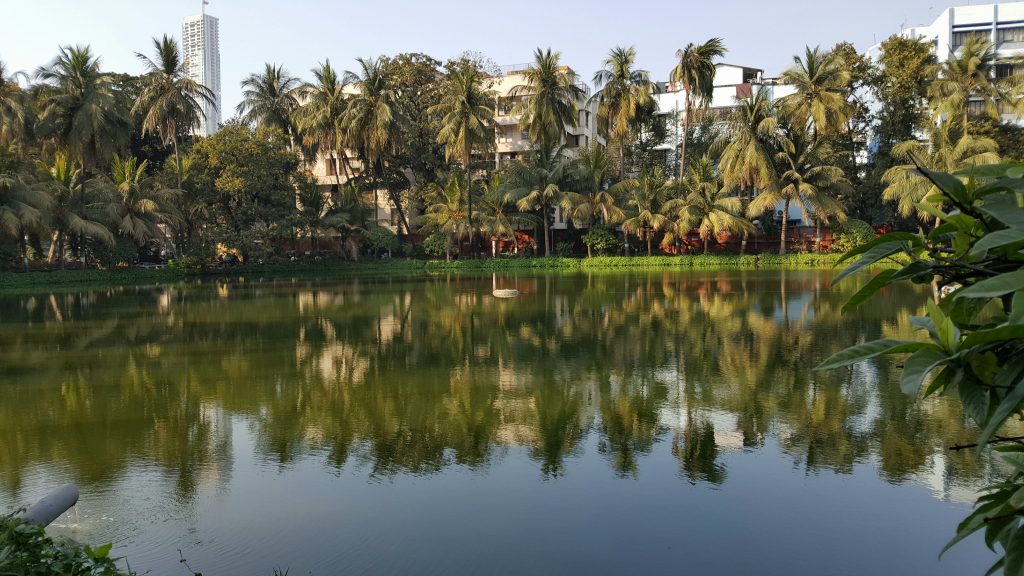
On my first weekend in Kolkata I began to explore. On Saturday, after a day spent mostly indoors working, I took the advice of one of the three men who tend to affairs at the residence where I’m staying that I should go to Minto Park. A little oasis in the middle of a noisy city, with a hectic corridor and a high level overpass running along one end, this space, maintained by the adjacent Belle Vue Hospital, is dominated by a large rectangular pond, lined with palm trees, a pathway and shallow green space. Once inside, all thoughts and memory of the boisterous mayhem of the roadways is, I want to say, not simply forgotten, but almost erased. One remembers the solitude and serenity, not the noise. Returning again almost a week later I noticed that, although the city sounds are acute when you first enter the park, they are all quickly reduced to a distant background murmur once you begin to walk around the pond. Or so it seems. In memory, only stillness remains.

The following day’s random explorations led me to the Victoria Memorial Hall, the grand marble edifice and surrounding gardens constructed in the early 1900s to honour the memory of the Queen. On a Sunday, the building and grounds were overflowing with visitors—local families out for the day, others bussed in from afar—squeezing through the passageways of the hall and spilling out onto the grounds. The colourful splash of bright saris added to the spectacle played out amid such formal colonial sensibilities. Hardly a day for actually absorbing any of the contents of the museum itself, I found it the perfect space for people watching. The relaxed mood of the milling crowds caused me to reflect on how much more fractious such a mass of human beings might be at home. (Mind you, this observation preceded my rush our ride on the Metro.) I have since returned to the Victoria Memorial for a very different evening event on the premises, one with entirely different intention and tone.

But that’s for another post.

Monday was the day for a couple of classic Calcutta experiences. I met up with a fellow book blogger, Chelsea McGill who has lived in the city for five years now and is a passionate defender of its charms, at the famous Flury’s—the tea shop and bakery dating from the 1920s that endeavours to maintain all the elements of Imperial elegance. The location, Park Street, is for the reluctant tourist, the most comforting of spaces I’ve encountered so far, where colonial meets modern architecture and business establishments are opened by courteous doormen. But it does blunt a measure of the in-your-face experience that, for me, makes this city so unique. Until, that is, one slips into the South Park Street Cemetery.

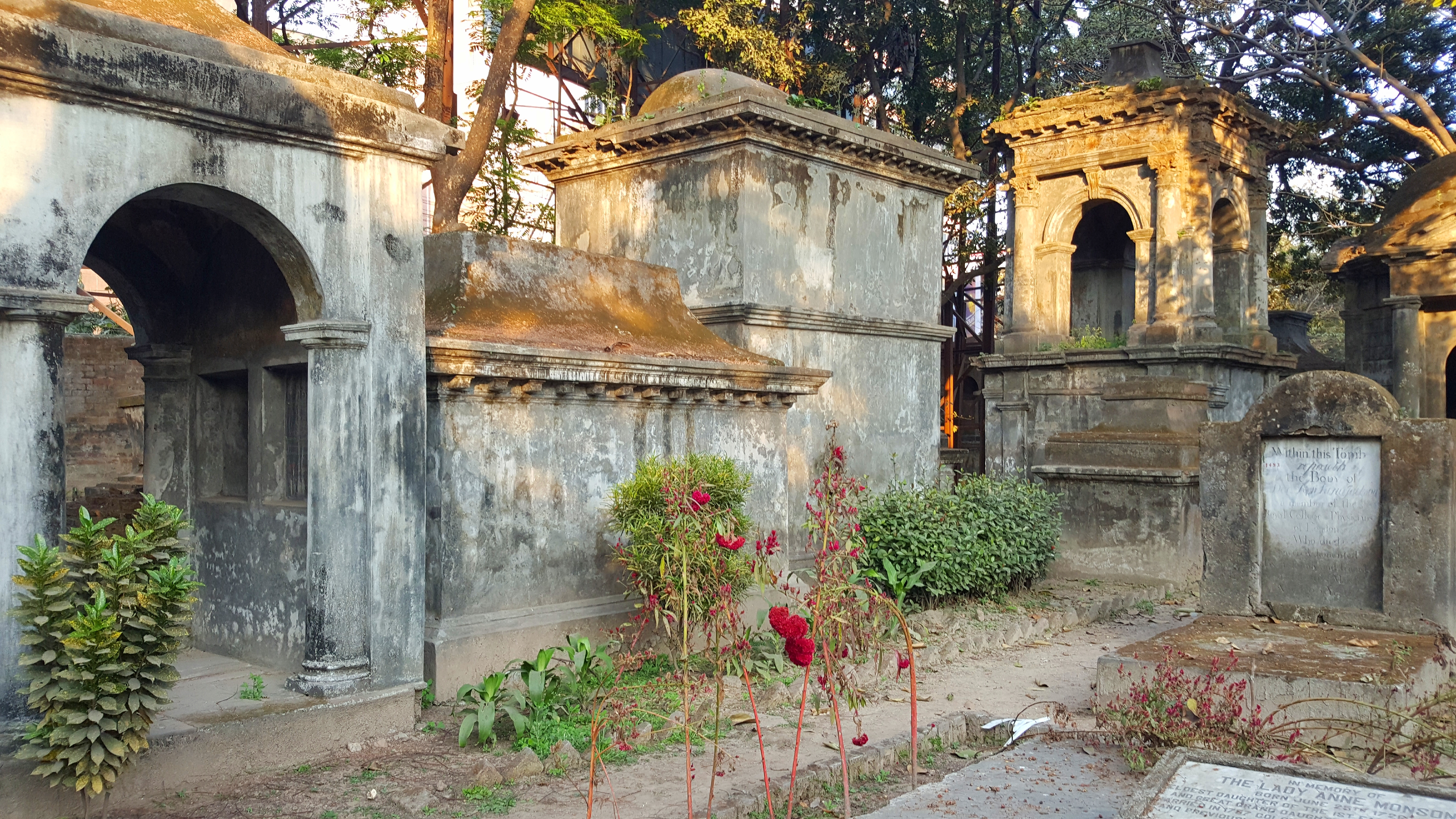
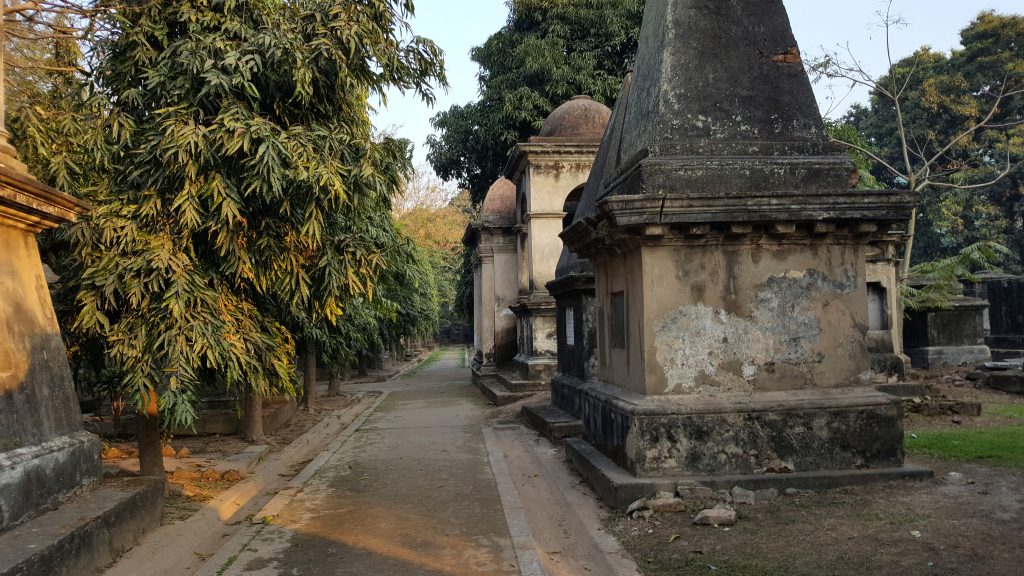
No more than a mark on a map for me before I entered the lush, high-walled enclosure, the place caught me completely off guard. Beneath a tall canopy of greenery, rows of aged-darkened, weather-beaten graves, crypts, mausoleums and obelisks mark the final destination of the British officials, traders, and civil servants drawn to the city in the early years of the East India Company. The inscriptions speak to the men, women and children whose sojourns were cut short by illness and other inclemencies of the tropical environment, as well as those who survived to make the mark in the expanding empire. The grandiosity of the structures is almost overpowering. The weight of the souls resting so far from their home shores is tangible in the hot spring air. The history contained in these stones is palpable. And lingering behind it all, the ghosts of more recent years: the criminals who once used the cemetery as a hideout and the homeless who sought refuge from the elements in the columned structures before the area became a protected heritage site. On the day we were there, I’d say that romance was in the air, evidenced by the many couples making out behind the sepulchres.

Finally, after enjoying my first experience of tea served by a street vendor in a tiny clay cup, I made my way back to my residence. Feeling the heat and the grime settling into my pores, and facing an endless steam of rush hour traffic—cars, buses, taxis, motorcycles, bicycles, the occasional rickshaw driver, and even a horse—I discovered that the streets are elastic. They shrink and stretch with one’s energy and fatigue accordingly.The street I’ve walked the most and know the best, serviceable more than spectacular for the experience, can seem absolutely endless at the end of a good, but tiring day.

So, that was Monday. The flavour of my time in Kolkata  again shifted greatly over the next few days. I had the most remarkable and inspiring opportunity to meet and listen to one of the preeminent literary greats of our time, an experience made even more powerful by its placement here, and now, in the City of Joy.

But more about that later. My notebooks are filling up faster than my ability to transform my observations into posts (and fight with the vagaries of composing on an iPad). More soon.