Solstice to solstice to solstice: A note from South Africa

Over the past year I have embarked on a journey that began, unexpectedly, with the recognition that I had allowed pressures at my job to consume me, to drive me to the very brink of a complete breakdown. It was summer solstice when I removed myself from the office, imagining at the time that I would soon be back and on track. I had no idea how sick I was and no real appreciation of how much I had sacrificed to work and children. Now, with work in tatters and children grown I wondered if I had really lived the full and rewarding life I imagined that I had. Finding myself (again) in mid-life has been difficult, dark and lonely – a task I felt ill prepared to take on.

But it has been the very best thing that could have happened.

From a very low point last December, winter solstice, my life has started to change in very real and important ways. A wonderful therapist and proper medical support have been crucial, while finding a supportive community has helped me start to move out into the world in an honest and authentic way. But, much to my surprise, blogging has opened up the world in a way I had not anticipated. I began with no clear objective, fueled with manic energy, spiraled into a little anxiety driven meandering as my world fell apart and solidified this year into a basically book focused blog.

Along the way I made a friend who has become a ballast for me – a touchstone, someone who understands the experience of navigating the storms of bipolar disorder because she rides them herself. Someone who is also queer. And an avid reader.

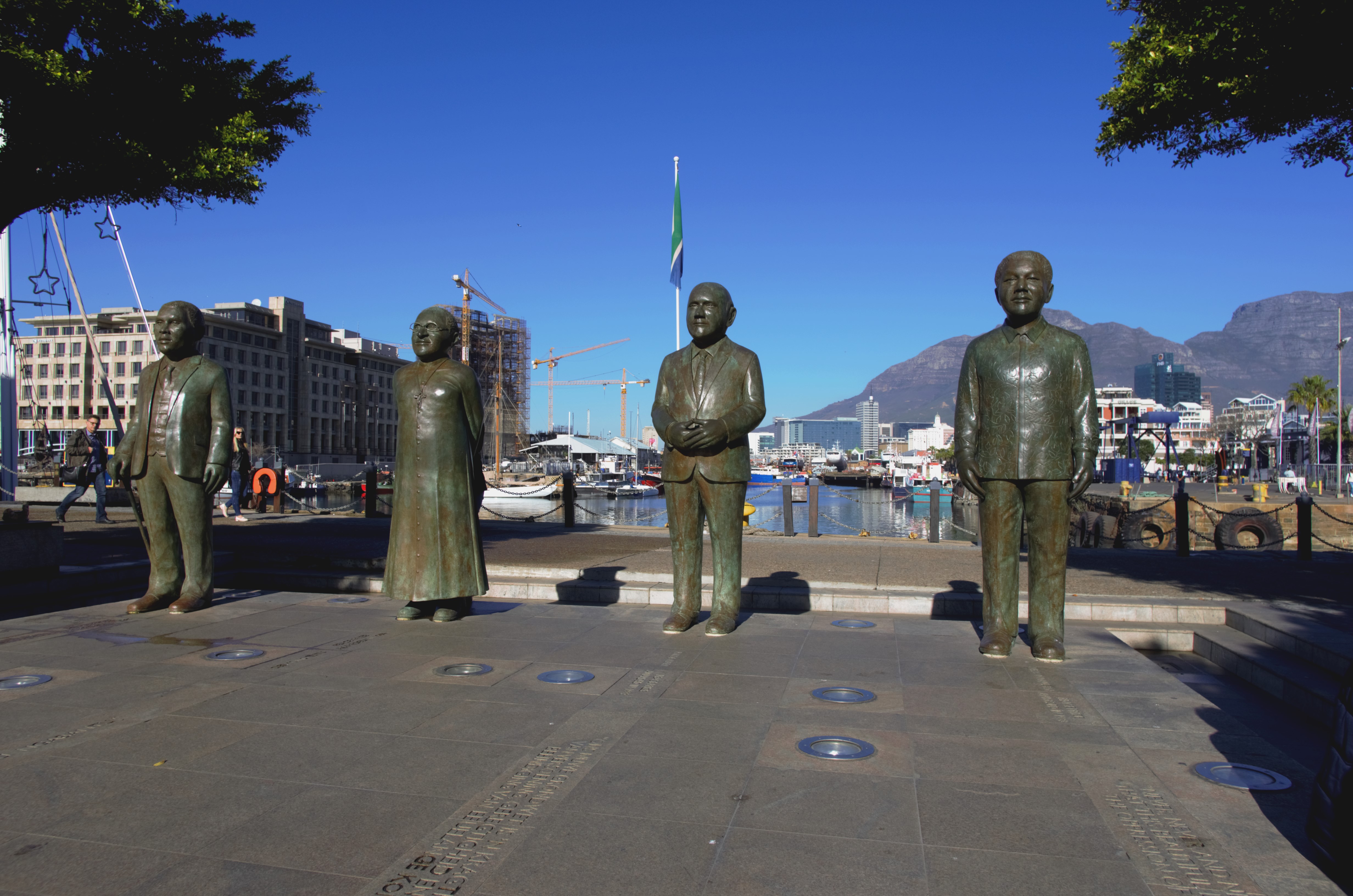
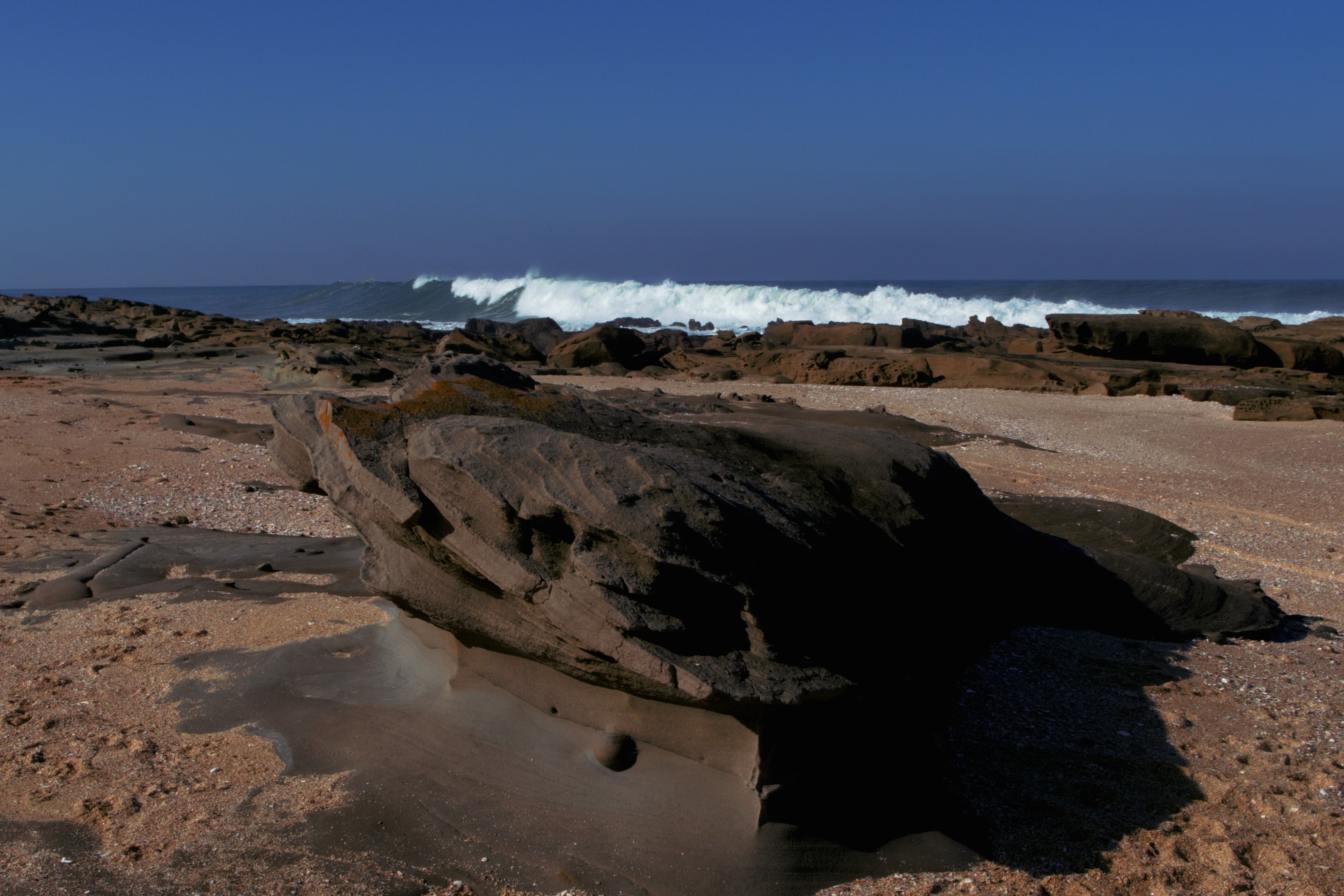
Nobel winners waterfront CT Indian ocean

However, getting together for coffee required a little planning. I live in western Canada, she lives in South Africa. And so I marked this past solstice, trading summer for winter, in Cape Town. Then I boarded a bus for the Eastern Cape province where I am now. I have long had an interest in South Africa, with the literature and history of this complicated and important place. The dust has not settled here.

My friend has given me a gift I will not soon forget. Our friendship has opened a space for us to explore our own personal journeys and to talk about our respective countries – to compare the differences and the similarities.

And I am also  guaranteed to arrive home with books.

Hard to remember when the world had colour

- Copyright JM Schreiber, 2012
– Copyright JM Schreiber, 2012

Granted midwinter in my part of the world is not the best place to find colour in nature. Branches are bare, grass is bunched and brown, snow is patchy and grey. But when I look back over the past year I can see how difficult it has been for me to register any enthusiasm to take my camera out. I walk a lot but I seem to want to stay in my head, maintain a fast pace, measure the rhythm of my boots against the ground. I circle the neighbourhood, walk with purpose on errands, but avoid the pathways and parks I have documented season after season these past few years.

Photography was a diversion, a relaxation and an isolated activity against a busy life at work and home. I would wander forest trails, across grassland parks or along the edges of rivers and lakes, framing and reframing the view and listening to recorded podcasts – discussions about books, philosophy, current events. It was a meandering, escapist pursuit. If I look back I have to wonder what I was escaping and where I had lost the capacity to dream.

Madness, mental illness if you prefer that term, brings back the capacity to dream because all the parameters are changed. For me it has brought words to the foreground but pushed the pictures to the background. Walking has become a means to expel restless energy, drive out the demons of anxiety and despair that keep reaching in. If I want to drown out the city noises I listen to music, the words in my head are my own.

Without being able to return to work at this time, I do feel a certain loneliness. But when I reflect on the years I devoted to a job that I believed validated and defined me, I realize that I was never more isolated than when I was working. Invisibility and an unwillingness to call attention to myself was not a measure of my successful transition. It was denial. To hide the fact that my past contained realities inconsistent with the man everyone knew, I believed I could not afford to allow anyone to get close. I captured colour in the outside world but painted myself with the blandest palatte possible.

A manic episode and all of the reckless behaviour and poor judgment it entails has left me with a professional legacy that I may never be able to salvage. I don’t even know if I want it back. Reclaiming my identity, being comfortable with my own history of sex and gender is a work in progress but I have to trust that it might lead me to a better more authentic place. It might even bring some colour back into my life.

As the year draws to a close…

At the beginning of 2014 my world was rapidly spinning out of control. There were clear indications that the extreme stress and toxic work environment I was living under was taking its toll. I was clearly struggling to hold myself together but like any good manic depressive I could not step aside and recognize the crisis that was unfolding. No one else in my life had the understanding to step in either and, in all fairness, I am not sure how I would have responded.

Now, at the end of the year, I have been out of the office for six months. My future is unclear. I had loved my work with brain injured adults and their families. It was challenging, rewarding and I was well respected. At least until I went crazy.

As soon as I walked away from my job I realized the price I had paid to build a career from community field worker to manager in less than a dozen years. I had intentionally alienated myself from people. I have always been a person inclined to isolation, shy in a curiously outgoing way. Public speaking does not phase me at all. I could speak to a crowd of 300, riffing on a theme if necessary, but face to face small talk is uncomfortable. The thought of baring my soul to another person in real time, over a coffee perhaps, is almost unbearable. In my life I have made few friends and had only two significant love affairs. And somehow I had managed to convince myself over the past decade or so that in addition to the challenges of raising children on my own, the social interaction provided by my work with hundreds of clients and professional colleagues would suffice. Close friendships and romantic relationships were not required.

I was wrong. But what now? I am in my 50s. I have repressed the very uniqueness of my history, that which had always set me apart. The very queerness of my being in the world. The ostensible and hard won success of fighting to be true to myself in the world was turned to dust in an instant. The road ahead suddenly looked lonely and long…

Slowly I am recovering. Much slower than I expected perhaps, but this unplanned respite has forced me to explore, re-evaluate and reach out. My therapist (thanks Jane) has been an important sounding board. Blogging and making contact with both bipolar and bookish fellow travelers has been vital. It has allowed a space for cathartic dumping. A medium for strengthening my ability to clearly articulate my thoughts and reflections. It has given me confidence to move out into the world closer to home.

Thanks to the fact that I have not been working I was able to volunteer at our writer’s festival and meet writers I admired from around the world, all of whom are in my age range. Financial constraints encouraged me to cancel my TV since I was generally using it as a mindless distraction. Consequently, reading and music have regained the attention they deserve. And when it is not -20C, like it is at the moment, I make a point to get out every day, frequently just to read and write at a local coffee shop.

So here is a song and a haunting video to carry you into the new year. It goes out especially to my brilliant friend of Blahpolar Diaries fame (infamy?) whose typically colourful ode to the therapeutic value music inspired this post.

Reading and anxiety: Proceed with caution

“Then the anxiety set in. If someone told me I had to be depressed for the next month, I would say that as long as I knew it was temporary, I could do it. But if someone told me I had to have acute anxiety for the next month, I would kill myself, because every second of it is intolerably awful. It is the constant feeling of being terrified and not knowing what you’re afraid of. [Anxiety] resembles the sensation you have if you slip or trip, that experience you have when the ground is rushing up at you before you land. That feeling lasts about a second and-a-half. The anxiety phase of my first depression lasted six months. It was incredibly paralyzing.”            – Andrew Solomon

The above passage from a PBS interview with Andrew Solomon, the author of The Noonday Demon: An Atlas of Depression and Far From the Tree, describes the reality of living with anxiety better than any I have heard. I had a bad stretch earlier this year but once it passed I let the memory of this crippling sensation fade. Until now. Anxiety has returned.

Sometimes it helps to get out but that is not an option today. The temperature outside has climbed from the -34C wind chills that settled in late last week to a comparably balmy -7C. But my car sits on the street with a flat tire that cannot be replaced until Friday and a chest cold has left me feeling too ill to walk to the nearby shopping centre to pick up a few necessary items. With my daughter’s 22nd birthday on Wednesday and Christmas on the horizon with no indication that I will even have enough income to pay my bills at the end of the month I can expect to feel a little down. But the anxiety that has coiled its way around my heart is much more devastating.

The worst aspect of anxiety is that it seems to ignite the fears, the loneliness and the paranoia that are already entertaining me during this prolonged mixed hypomanic state. It seems to be impossible to distract myself in any truly functional way – even reading is only a temporary respite.

HungryI have recently emerged from a book, both glorious and heartbreaking, that I would strongly recommend but should come with a warning for the mood sensitive. This book is sad. The book in question is The Hungry Ghosts by Sri Lankan-Canadian author Shyam Selvadurai. This richly sensuous novel begins in Sri Lanka and explores a young man’s complicated and difficult relationship with his grandmother, follows him as he immigrates to Canada with his mother and sister where he struggles to find himself in the gay community of 1980s Toronto. A return to visit his grandmother is marked by a tragedy that will seal his fate, binding him in his own bitterness and pain, to ultimately threaten everything he builds and holds dear in Canada. Buddhist mythology is woven throughout this tale of family, wealth, warfare, race and love. The resulting huge tapestry of life pulls at the very threads of the human heart. But, be warned, this book is sad. Bravely so, something I find missing in much of the Canadian literature I ready today.

The other night I braved the brutal cold, probably the last thing my emerging seasonal illness needed, to attend a reading by the author, the final event of his week-long residency with the University of Calgary’s Distinguished Visiting Writers Program. As positive and rewarding as this opportunity was it served to remind me that my own accomplishments seem to have been stalled by the cards fate (or karma?) has dealt.  I awoke the next morning feeling saddened, empty and anxious.

Adrift in mid-life.

Manic Implosion: Venturing into the third section of Damon Galgut’s In a Strange Room without warning

About a month ago I had an opportunity to talk briefly with Damon Galgut following his appearance at Wordfest here in Calgary. He published his first novel at 18 and I shared that I had wanted to write when I was younger but wanted to live first, completely unprepared for the messy and complicated path my life would take. So we spoke about the challenge of winnowing out a story that runs close to bone from the detritus of life lived. He pointed to my newly signed copy of In a Strange Room, his 2010 Booker short-listed novel, and admitted that in this, of all his works, he felt that he had most closely captured the essence of his self. And he achieved it, I later learned, by telling three tales which recount actual events from his life and feature a character named Damon from perspectives that often shift from first to third person to a detached observer, sometimes within the same sentence or paragraph.

So far so good.

7199962The first two sections involve travel and more or less unresolved interactions and attractions between the remembered Damon character and people he meets while he frets and wanders through parts of Europe and Africa with a restless inablity to settle himself. The prose is tight and evocative with the open ended reflections and ambiguity that feature in my favourite of his writings. But I was sucker punched by Part Three: The Guardian. Not only is it harrowing in its intensity, but the devastating action centres around a woman in the throws of a full-blown suicidal manic pychosis. I could not help but relate as a caregiver but more critically as someone who has experienced the full impact of manic psychosis from the inside. My blessing, if there is one, is that I have never been especially suicidal or inclined to self-harm, nor do I drink or use drugs. All of those factors are added to the mix in this account.

And it takes place in India.

It is not a secret that his close friend Anna is not in a good way, when Damon agrees to allow her to accompany him on the first part of a trip to India. He has been before and intends to stay and write for several months, but it is thought that the change of scenery might be a positive and healing experience for Anna. Her life is beginning to unravel around her and the creative, vivacious woman he has known for many years is tipping dangerously close to the edge. With a stock of mood stabilizers, tranquilizers and sleeping pills she promises not to drink or indulge in recreational drugs on this excursion – a vow sullenly defied as soon as they take flight. Her mood escalates, and behaviour becomes increasingly frenzied and unpredictable from there, culminating in an intentional overdose while her already weary guardian is close at hand but not paying close attention.

Throughout this process and the weeks that follow, Damon’s concern is stretched beyond affection to annoyance to guilt and back again. While Anna fights for her life in ICU, a British nurse and another couple from the village where they are staying are co-opted into a tag team to provide support and relief for Damon at the hospital where cockroaches and rats scurry about and, although care is free, all supplies from bandages to drugs to all other medical items much be purchased by friends or relatives who trek back and forth to the pharmacy with lists. As Anna begins to recover and relocate to more crowded and unattended wards, she not only becomes increasingly volatile and unpredictable, but her erstwhile crew of attendants have to attend to all her care including propping her over the bedpan and cleaning up the splashing mess afterwards.

Care for her actual mental health concerns is not part of the treatment plan.

To make matters worse, attempted suicide is a criminal offense in India and the police are awaiting Anna’s release so they can detain her. An escape must be planned and executed. Finally she is safely returned to South Africa, but she and her support network are shattered and strained at both ends. Sadly her successful suicide is only delayed, not avoided. And her traumatic spiral leaves those who love her and even those who get caught up in her whirlwind of self destruction, with wounds that will take their own time to heal long after she finally achieves the rest, or self martyrdom, that her illness drives her to desire.

No one wins.

My own manic psychosis was maintained to my home where the refrigerator filled with inedible meals and my children destroyed the yard while I struggled to make it through the days. As my grasp on reality slipped and the long standing issues I had been fighting off for years bubbled and distorted in my mind, a month of growing horror ended in a morning of escalating fear and violence before the ambulance finally arrived. Diagnosis and treatment of my bipolar disorder helped explain much, but in the end the very real issues of identity that had haunted me for most my life still existed. The difficult years that followed would see the end of a long marriage and, the beginning of a new authentic existence for me.

Anna was committed to death in her madness. In mine I found life.

I finished reading this book late this afternoon at a cafe where I frequently go to clear my mind and write. I could not put it down until I reached the final pages. As I stumbled out of the cafe into the biting cold and snow of this premature winter evening, I felt devastated and emotionally wrung out. As painful as it was to read, for those of us who live with manic depression or care for someone who does (and I do both), the third part of In a Strange Room is essential reading.

But consider yourself warned.

Moving fast to slow down

With respect to many fellow bipolar bloggers who are weighed down with depression I am fighting a mixed hypomanic state. This is a more common concern for me and although I have only been fully manic twice in my life, I can run at a heightened level for years. Looking back now I probably was running high over the past few years while I took on increasing responsibilities at work in an increasingly unsupported and dysfunctional environment before landing in full manic mode this past June. I have had access to little psychiatric support since then so between my family doctor and a private psychologist I splurge to see once a month I am trying to stabilize my level of agitation. Hopefully before my disability benefits run out.

At the same time this time has allowed me to unpack a lot of baggage and make some critical reassessments at this point in mid-life. On that level I am making progress. But my brilliant experience volunteering at Wordfest last month, meeting and engaging with so many readers and authors was a high risk experiment with respect to my mood regulation efforts. I barely ate or slept for four days after the event ended.

For all the energy these past weeks have added to my creative efforts, I have trouble concentrating and tend to fall into periods of high energy thought processing without being able to channel the ideas productively. I have been making a point of getting out and spending a few hours writing or reading in coffee shops. Being in public spaces forces me to focus.

However, the word is that winter is truly rolling in tonight with snow and temperatures dropping to the minus double digits celsius. Since I haven’t gotten around to getting my winter tires mounted I am not likely to venture far for a few days. So I decided to spend the last temperate afternoon out, not hunched over a coffee cup but walking off some of my pent up energy.

Typically I walk with my camera and my ipod. It is a slow pace as I find myself regularly stopping to capture scenes or flora. However I hadn’t realized how that actually narrows my experience of some of the locations I regularly visit. When I was working such an activity was a great way to relax and unwind. Since I have been off ill, I have had little enthusiasm for photography and little motivation to visit my favourite natural haunts as if one required the other.

Today when I reached the riverside where I planned to walk I felt momentary regret that I had neither my camera nor my ipod with me. But as I set off on a brisk walk in the late afternoon light of this November day I was surprised to find how freeing and meditative the experience was. The movement helped me slow and focus my thoughts while, freed from the viewfinder of a camera, I was able to take in the fullness of the vista. I watched the changing colours of the slowly fading light reflected in the water and on the glass towers of downtown in the distance. I noted the shifting clouds and birds flying in to roost as the depth of darkness and shadow crept across the fir trees that cover the length of the high embankment across the river.

I returned refreshed, relaxed and calmed.

The path I walked today as it is likely to look in a month or so. Copyright JM Schreiber 2012
The path I walked today as it is likely to look in a month or so.
Copyright JM Schreiber 2012

Reflections on the Day of the Dead

For years a small sugar skull sat on one of the bookcases in our house. Eventually it had yellowed and aged to a point that its value as a keepsake was minimal. One day with a last glance I tossed it out. There were two originally so somewhere in the accumulated detritus of twenty years in this house, another little skull is probably decaying.

Inician la temporada de alfenŽiques2_0The skulls were mementos of a special Members-only preview of an exhibition which passed through our city in November of 2002. ¡Viva Mexico! featured a selection of the glorious huge colourful murals of Diego Rivera, striking photography of Day of the Dead celebrations by Graciela Iturbide and a display of shaft-tomb figures. As a family event, there was also a wide range of hands on creative activities for the kids.

I had been, at the time, a single parent for a year or so, my children would have been coming up on 10 and 13 years of age. It was an era of fundamental change and transition in my own life, but it was also a time when my kids were young enough to really enjoy this type of outing. I had a family pass and the museum was a common weekend destination.

However, until that day I had, somehow been unaware of the importance and spectacle of the Day of the Dead. Hallowe’en was fun of course, and a highly anticipated event for the children in their younger years. But the magic and energy of the the Day of the Dead celebrations captured in the photo gallery left a deep and lasting impression on me.

Many years later it all came back when tackled Malcolm Lowry’s classic Under the Volcano. I read it with The Guardian Reading Group, a three or four week monthly on-line opportunity to tackle a book with fellow readers. It is a challenging work to fully appreciate and before the month was out I found myself reading the text on an e-reader with the paper copy open beside me on the sofa so I could readily flip back and forth to cross reference and the link open on my computer to a brilliant website, The Malcolm Lowry Project, which provides chapter by chapter guidance and assistance to the humble reader along the way. Simultaneously long conversations were unfolding on-line within the Reading Group.

Now I can no longer divorce the Day of the Dead from the tale of Gregory Firmin, the alcoholic British consul in a small Mexican town, and his slow, tragic unraveling and demise throughout the course of one November day. Impending celebrations lurk in the air, but his desperate mental waltz with the push and pull of liquor, the reasoning and rationalizations he plays with himself held my greatest fascination. I have been lucky that alcohol has never held a serious allure for me, and my tastes tend to be above my discretionary budget anyway. Dedicated alcoholics don’t care and my family history has known its share. Especially on the side through which the mood disorder runs.

By the time I sat down with Under the Volcano, my son had been a heavy drinker for several years, although there is a long time before he finds himself in a state of crawling across the lawn toward the vision of a half empty bottle like the poor consul. I should hope. The struggle is a delicate matter for us to balance. He is almost 25, gifted and anxious to an extreme and over the years he has been on his own, on the street and now for the past few years increasingly isolated at home. Over a month ago he had a break of honest self recognition and quit drinking. But for many and complex reasons, especially some particularly horrific experiences in what passes for an adolescent mental health system, he has a complete aversion to any counselling or support.

Today, on the Day of the Dead, he is working a couple of beers back into his routine and I am trying to maintain the boundaries. Our relationship as father and son is complicated, we are close, share many character traits and insecurities. With a history working in social services I am also acutely aware of the limitation of practical services out there. And the cost of living in this city currently precludes even his younger sister who has a profession from moving out. But I know I cannot own his issues.

So with this November 1, I will honour the Dead with hope and ambition for all of us trying to pull together and move forward with Life.

Myself included.

Further reflections on the void left by suicide: deeper appreciation for Miriam Toews

Miriam Toews is one of Canada’s most celebrated novelists. She has drawn heavily on her Mennonite heritage filtered through the ability to explore the messiness of ordinary life with a wonderful sense of humour. Recently I reviewed her Giller nominated All My Puny Sorrows, a novel which is deeply inspired her sister’s suicide. The novel itself, while wicked funny in places, left me wanting more of a connection to Elf, the deeply depressed character. Her “healthy” sister, the narrator, never really seemed to understand but rather struggled with her own reactions – the practical and the reckless.

Tonight I had the good fortune to attend a panel called “Darkness Visible” in which Miriam participated. The theme explored by the three somewhat diverse novelists was focused on looking at whether dark themes, personal or political, can be fully examined in literature. The consensus I suppose was that despite the challenges and limitations, the ambition is valid and important.

swing lowBecause I already own a digital copy of All My Puny Sorrows I purchased a copy of Swing Low: A Life for this event. Written in memory of her father, a well loved teacher and pillar of the community who took his own life about a decade before his daughter followed suit, this slim volume deals more explicitly with manic depression and suicide. I only recently became aware of it. Given my own recovery process I am thinking this is more the story I was looking for with All My Puny Sorrows. Coincidentally, an audience member at the event had grown up in the same Manitoba community as Toews. Her father had been his teacher and he began to cry as he shared his shock when he had learned how much pain and sadness the family was going through. Miriam had to dry her eyes as well.

That is the true impact of suicide and it spreads beyond families.

When I had the pleasure to speak to Miriam after the event I confessed my experience with All My Puny Sorrows, explaining that I was reading it in the aftermath of my own breakdown and, sadly, in the light of Robin William’s suicide. I told her I suspect that the book I was hoping for probably lies in part in this earlier, more serious volume. But then we both admitted that unless we are ourselves are burdened with the desperate desire to let go of this life, we can only ever observe from the outside. We also shared our mutual fears for our children inheriting the same genetic disorder.

I am deeply impressed with Miriam Toews’ desire to speak about mental illness and with her wide appeal in this country, hopefully her message will reach an audience that needs to hear it. I am looking forward to finding out how she explores the bipolar disorder in her family through her father’s story, unaware at the time of course, that the same event would strike her family again.

She told the audience that if writing her most recent book taught her one thing it is to hold tight to the joy in life.

A worthy goal for us all.

Good words and a smile (oh and a good book too)

Wordfest, our annual literary festival is underway. After several months struggling with the fall out from a serious mental health episode this week is my first serious self test, my chance to explore my level of stamina and commitment. It is also an opportunity to spend time with people who love books and listen to great writers talk about their work.

I started with two volunteer shifts and some selected presentations I wanted to see and, as you might suspect, the volunteer commitment portion quickly expanded.

Am I exhausted yet? A little. I will likely sleep for a day when it’s all over but I have so desperately needed to get out in the world. Admittedly I am buffered with medication but the creeping anxiety stays in the car when I get into the venues.

Now if I can find a way for the medical system to prescribe a literary solution I might just be able to live with this bipolar beast. I just have to be able to afford to eat too!

Today has lifted my spirits more than I can remember in months. I had one single volunteer shift as a bookseller at one of the smaller venues, but I was nervous simply because I was expecting a panel discussion featuring one of my favourite authors. When I arrived to discover that the other writer had been forced to cancel at the last minute, the presentation had been redesigned as an hour long one-to-one interview with South African novelist Damon Galgut.

The host was scrambling but I could not have been happier.

American edition of Arctic Summer in case anyone is wondering -a nicer cover than the Canadian/UK I think.

I have always been apprehensive about meeting my heroes, for fear of disillusion. Nonetheless I had come prepared to have my books signed and hopeful for even a few words with a writer whose works I admire so much. Although we did have books to sell I noticed that I was not the only person who had arrived with their own copies of his latest work, Arctic Summer, already in tow. This novel is an imagined biographical account of the complex personal and emotional factors that led E M Forester through the extended  writer’s block that ultimately produced his greatest work, A Passage to India. As an historical novel it is a departure for Galgut (and one he admitted he would be in no rush to repeat) but rich with a deep affection for India and the driving forces of unrequited desire.

I confess I abandoned my post presentation bookselling duties early to make sure I didn’t miss out on the opportunity to have my copies of In a Strange Room and Arctic Summer signed. To be honest I have yet to see an unpleasant author at any of the events I’ve helped with, but it meant more than I can measure for Damon to take the time to, ask me about myself and encourage me that it is never too late to start writing. I am grateful for his kind words.

This experience, simple and important for me, has lifted my spirits in a way that feels healthier than the meds alone. It feels good to be human again. I have commitments with Wordfest right through until Sunday evening, but for now I am enjoying this warm feeling.

What fresh yellow is this? (With apologies to Dorothy Parker)

Typically I love autumn – the crisper weather, the bright blue skies, the excuse to pull out sweaters. Normally this is the busiest time of the year as new programs and courses start and activities halted for the summer resume. More than New Year’s, this can be the season for resolutions, goal setting and looking forward.

Copyright JM Schreiber 2014

Unless you are depressed.

Without the structure of work I feel lost. And unlike regular unemployment I am in a holding pattern, uncertain what type of work I may be able to return to when I do recover, if I recover, should I even recognize recovered if I meet it in myself.

I feel tired and agitated. Irritable and unfocused. I try to push myself out every day and have an exciting literary festival to look forward to in just over a week. Yet I am terrified that I have taken on more than I will be able to manage and I find myself fighting off regular amorphous panic attacks.

I feel like a wrung out dish towel. I miss having energy and enthusiasm but I have to guard against a reckless flood of these sensations lest they indicate trouble at the opposite end of the bipolar pendulum arc…

Copyright JM Schreiber 2014

For now I am looking toward the brilliant yellows of the moment. Apparently yellow is the colour of the mind and the intellect, it lifts the spirit, stimulates creativity but can also heighten anxiety and emotional instability.

Sounds like a bipolar hue to me.