Over the past year I have embarked on a journey that began, unexpectedly, with the recognition that I had allowed pressures at my job to consume me, to drive me to the very brink of a complete breakdown. It was summer solstice when I removed myself from the office, imagining at the time that I would soon be back and on track. I had no idea how sick I was and no real appreciation of how much I had sacrificed to work and children. Now, with work in tatters and children grown I wondered if I had really lived the full and rewarding life I imagined that I had. Finding myself (again) in mid-life has been difficult, dark and lonely – a task I felt ill prepared to take on.
But it has been the very best thing that could have happened.
From a very low point last December, winter solstice, my life has started to change in very real and important ways. A wonderful therapist and proper medical support have been crucial, while finding a supportive community has helped me start to move out into the world in an honest and authentic way. But, much to my surprise, blogging has opened up the world in a way I had not anticipated. I began with no clear objective, fueled with manic energy, spiraled into a little anxiety driven meandering as my world fell apart and solidified this year into a basically book focused blog.
Along the way I made a friend who has become a ballast for me – a touchstone, someone who understands the experience of navigating the storms of bipolar disorder because she rides them herself. Someone who is also queer. And an avid reader.
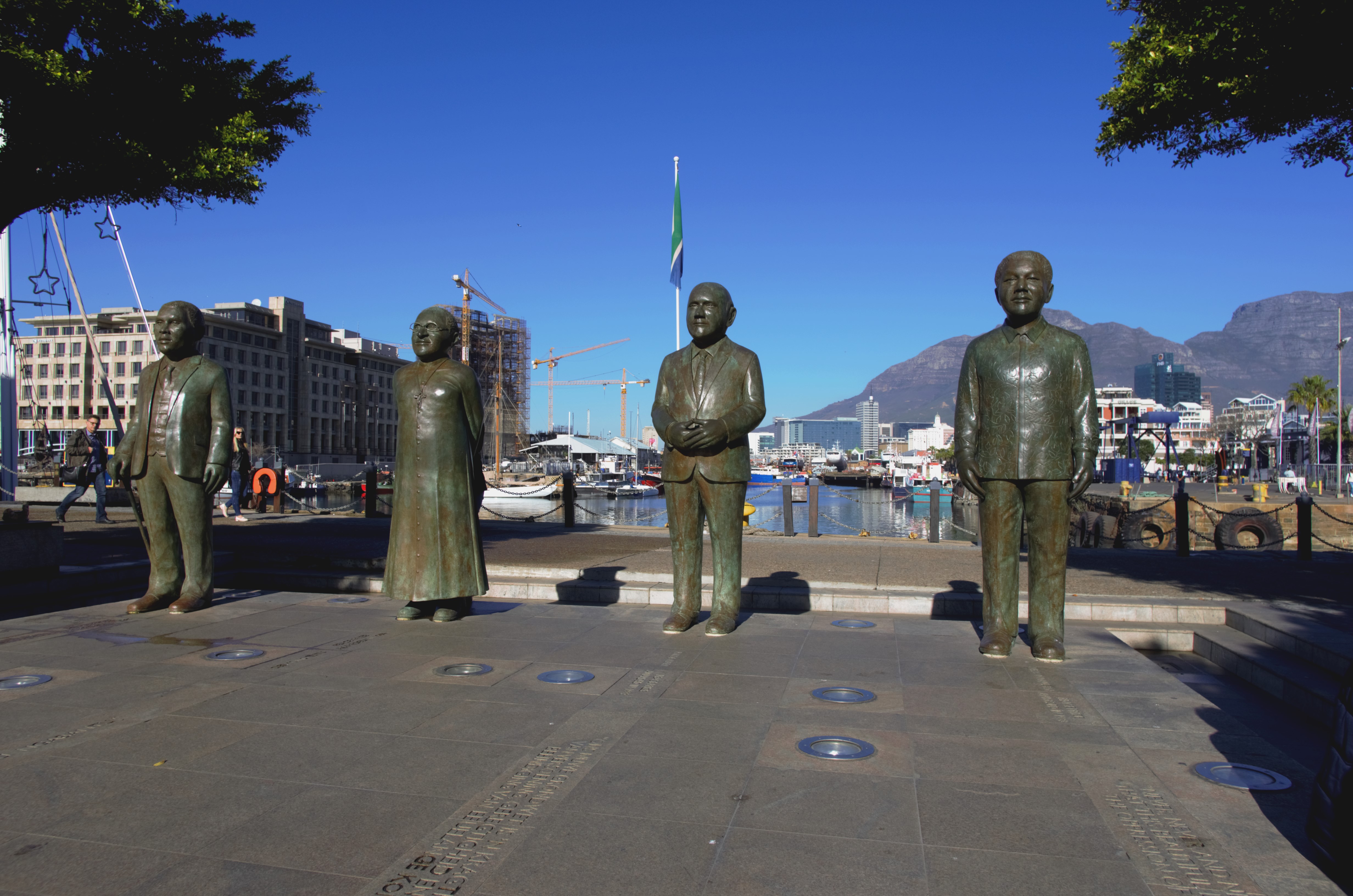
However, getting together for coffee required a little planning. I live in western Canada, she lives in South Africa. And so I marked this past solstice, trading summer for winter, in Cape Town. Then I boarded a bus for the Eastern Cape province where I am now. I have long had an interest in South Africa, with the literature and history of this complicated and important place. The dust has not settled here.
My friend has given me a gift I will not soon forget. Our friendship has opened a space for us to explore our own personal journeys and to talk about our respective countries – to compare the differences and the similarities.
And I am also guaranteed to arrive home with books.
“How can I say what these fragments mean to me? The awkward truths of my life take shape in their negative spaces. In the lengthening shadows of the official histories, looming like triumphal arches over every small messy life, these scraps saved from the onrush of the ordinary are the last signs I can bring myself to consult.”
When we first meet him, Neville Lister, the narrator of Double Negative, is a disaffected young man, uncertain and aimless in a fractured and troubled environment – apartheid South Africa. It is the early 1980s and he cannot quite find his footing, either in academic study, the political protestations of his friends, or the mixed allegiances of his parents’ generation. The stakes are high, but his ambivalence is a luxury well known to middle class youth. Being close in age to Neville and his creator, South African author Ivan Vladislavić, I could not help but chuckle at his repeated references to “Beerhunter”, (a party game we Canadians lay claim to, by the way) or recognize the insidiousness with which The Eagles’ Hotel California album seems to define our lives even if we never owned a copy of that recording. However, unlike our most reluctant hero, I did not have political unrest or the real threat of conscription bearing down on me.
Double Negative traces Neville’s evolution from long-haired, pipe smoking dropout to middle-aged late blooming artist, framed against the shifting political, cultural and socioeconomic backdrop of Johannesburg. In the first section, “Available Light”, his father arranges a meeting with a famed local photographer, Saul Auerbach, in the hopes that the encounter might inspire his son to reach beyond his current employment assisting a man who spray paints lines on roadways. As Neville tags along, Auerbach and a journalist friend devise a game that will direct their photographic pursuit for the day. Standing on a hillside with a panoramic view of the city below, each man choses a roof top. They manage to visit two of the three selected homes where Auerbach charms his way in, and coaxes photographs out of the inhabitants – a poor black woman with her two surviving triplets living in a backyard shack and a white woman in a lounge suffocated with furniture and curios. But before they visit Neville’s choice, the photographer’s energy and his necessary light have faded and they head home.
When our narrator picks up the thread of his story in the second section, “Dead Letters”, he has been in London for ten years and the first free elections have just been held in South Africa. Swept up in a wave of nostalgic homesickness he flies home. By this time he is also making a living behind the lens, but as a commercial photographer. He returns to a city already morphing under new dynamics, post apartheid – street names changing, houses and entire city blocks replaced. Cities are, at the best of times, constantly re-inventing themselves, shedding their skins. The effects are more profound under the pressures that have been released and confronted in places like Johannesburg, where, by the time we catch up with Neville again for the final installment “Small Talk”, he has taken to photographing the ubiquitous walls that have arisen to close off and protect the city’s inhabitants from each other.
Upon his return to South Africa, he had experimented with trying to enter a home to photograph the resident, drawn, of course, to the house he had first chosen so many years earlier. The experience almost swallows him whole but does, in turn, offer the direction that will inform his own artistic photographic ventures. He no longer wants to see what lies behind the walls that have been erected. He draws the resident out but refuses to enter. It is now 2009 and our hero is being subjected to an interview by an eager, self-promoting young reporter and blogger who intersperses her blog posts with a litany of handy household tips that would make Oprah proud. She is of a entirely new breed, neither weighed down by nor fully appreciative of the reality of her nation’s history. By contrast, Neville Lister occupies the transitional space. As photography has moved from film to digital, a medium with remarkable capacity for storage and the editing and altering of images, so is his country altering and editing its own collective memories.
More than anything, this is a story that unfolds as a series of images, captured with Vladislavić’s poetic eye for detail. He translates scenes, the photographic and the interpersonal, with a language so effortlessly descriptive that I often stopped to re-read a paragraph for the sheer pleasure. Neville describes “gumption” as a “word that stuck to the roof of your mouth like peanut butter”. A character “moulted” his jacket. In navigating the city he talks of following “the simple arguments of avenues and squares”.
This ability to transform language into imagery is nowhere more apparent than in his descriptions of the scenes, immortalized by the lens of the camera under the direction of the photographer. One of the photographs resulting from the initial outing with Saul Auerbach is described in vivid detail:
“Mrs Ditton sat in the armchair beside the fireplace. The coffee table had been dragged away – there is no trace of it in the photograph – to expose the floorboards and a corner of the rug. Looming on the left is the largest of the cabinets, so imposing you would say it belongs in a department store. The chair has wooden arms with ledges for tea cups and on each side of these lies a pie-crust of crochet work and a coaster. The chair sprawls with its arms open wide and its fists clenched, and she wallows in its lap.”
I imagine that anyone with an SLR camera and a tripod has experimented with long exposures and the creation of ghost images. It seems to be a rite of passage. Double Negative is, in many respects, a book of ghosts. Visiting with the woman living in the house he had selected so many years earlier, Neville feels weighed down by the voices swirling around her lounge. In referring to the annotated cookbook passed down from his mother, he reflects that the food “tastes better when the ghosts adjust the seasonings.” And ghosts haunt a collection of dead letters that come into his possession and, it seems, may be destined to lead him into his next “artistic” endeavour. If growing older is a process of acknowledging and coming to terms with the ghosts we carry, our narrator is older and wiser but still working away to make sense of it all by the end of this book.
And so is his country.
Note: Originally published in South Africa in 2011, Double Negative was released to an international audience in 2013 (with an introduction by Teju Cole) through the amazing publisher And Other Stories. Supported by their unique subscription model, this release was followed by the publication of an earlier title, The Restless Supermarket in 2014, and his upcoming collection of stories, 101 Detectives, will be released this year. Ivan Vladslavić was recently named one of three recipients of the 2015 Windham Campbell Prize for fiction along with Teju Cole and Helon Habila.
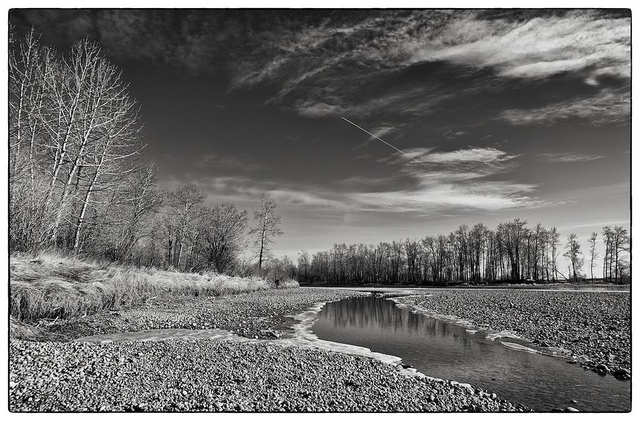
Granted midwinter in my part of the world is not the best place to find colour in nature. Branches are bare, grass is bunched and brown, snow is patchy and grey. But when I look back over the past year I can see how difficult it has been for me to register any enthusiasm to take my camera out. I walk a lot but I seem to want to stay in my head, maintain a fast pace, measure the rhythm of my boots against the ground. I circle the neighbourhood, walk with purpose on errands, but avoid the pathways and parks I have documented season after season these past few years.
Photography was a diversion, a relaxation and an isolated activity against a busy life at work and home. I would wander forest trails, across grassland parks or along the edges of rivers and lakes, framing and reframing the view and listening to recorded podcasts – discussions about books, philosophy, current events. It was a meandering, escapist pursuit. If I look back I have to wonder what I was escaping and where I had lost the capacity to dream.
Madness, mental illness if you prefer that term, brings back the capacity to dream because all the parameters are changed. For me it has brought words to the foreground but pushed the pictures to the background. Walking has become a means to expel restless energy, drive out the demons of anxiety and despair that keep reaching in. If I want to drown out the city noises I listen to music, the words in my head are my own.
Without being able to return to work at this time, I do feel a certain loneliness. But when I reflect on the years I devoted to a job that I believed validated and defined me, I realize that I was never more isolated than when I was working. Invisibility and an unwillingness to call attention to myself was not a measure of my successful transition. It was denial. To hide the fact that my past contained realities inconsistent with the man everyone knew, I believed I could not afford to allow anyone to get close. I captured colour in the outside world but painted myself with the blandest palatte possible.
A manic episode and all of the reckless behaviour and poor judgment it entails has left me with a professional legacy that I may never be able to salvage. I don’t even know if I want it back. Reclaiming my identity, being comfortable with my own history of sex and gender is a work in progress but I have to trust that it might lead me to a better more authentic place. It might even bring some colour back into my life.
Just before Christmas he returned to church, entertaining the hope that the community of faith, especially one welcoming to all, might help fill the emptiness he carried inside. It almost worked, for a few weeks.
Copyright JM Schreiber, 2014
After this Sunday’s service he retreated down the stone steps into the shadow of a void that no sermon could fill. It is not the church. It is him. He had hoped that faith might come back, comfort him as once it had when… well I can’t really remember when it last provided respite… but there was a time. He worried now that believing was beyond him. To be denied like other comforts. Perhaps one can only fall away from faith so many times before it is impossible to return.
You can only be lifted if you will yourself to let go, you can only be held if you allow yourself to be touched, you can only be loved if you dare to love first. But once you believe you have rendered yourself unlovable, the stalemate is long and sad and lonely.
I suppose I could say he is depressed and that this will pass. I could also admit that he is me and that there is something more fundamental at work.
You said: “I’ll go to another country, go to another shore, find another city better than this one. Whatever I try to do is fated to turn out wrong and my heart lies buried as though it were something dead. How long can I let my mind moulder in this place? Wherever I turn, wherever I happen to look, I see the black ruins of my life, here, where I’ve spent so many years, wasted them, destroyed them totally.” You won’t find a new country, won’t find another shore. This city will always pursue you. You will walk the same streets, grow old in the same neighborhoods, will turn gray in these same houses. You will always end up in this city. Don’t hope for things elsewhere: there is no ship for you, there is no road. As you’ve wasted your life here, in this small corner, you’ve destroyed it everywhere else in the world. (Translated by Edmund Keeley/Philip Sherrard)
My city was new when Alexandria which inspired these words was old but the sentiment rings across the century, speaking to me.
Copyright JM Schreiber, 2013
I live in a glass and rock cast stucco bungalow, the kind of finish that will slice your palm if you lose your balance and put a hand out to stop your fall. It sits on a 6500 square foot lot overgrown with 60 foot spruce and spiky hawthorns. The garage stands, roof sagging, without a foundation and no more than a scratch coat for stucco that was never applied, at best a large shed. It is only a matter of time before the sewer line to the street which is already oval shaped, collapses in on itself. After a few years of eager redecorating, projects remain incomplete, even though all the paint and supplies were purchased long ago.
This year my house will be 62 years old, I have lived here for 20 of those years. Due to the location, the lot size and the high property values in this city, it is assessed at a value that shocks me. I have ample equity in this house I own, but no secure income. And you can’t eat equity.
More and more the house is closing in on me. It is filled with the artifacts of 20 years of raising children. And a 25 year-old alcoholic son who seems to have taken root in the basement. After being a single parent for so long, I am done. My career prospects hanging on a thread frayed by mental illness; I feel haunted by the house, the responsibilities that weigh on me, and the fatigue of facing it alone.
And this city is no more a home than it has ever been. Without my job it holds nothing and never has. I love the pathways and wild areas, I love the wide open skies and the mountains on the horizon, the rolling foothills stretching to the west. But the city has no soul, or at least not for me. My relationship with this city, one to which I chose to return at one time, is fraught with complicated anxieties.
It may be my fault. Perhaps I am the one who failed to open up and build connections. But that has never been easy and the more I go out to meet people or attend events, the deeper the loneliness settles in on me the next day. Like it or not, there is a fundamental disconnect between me and this city of glass towers and oil executives.
As I walk these streets I am haunted by the sense that I have wasted so many years here, not certain what I have to show for it, feeling all is lost, fearing that I am, as the intended recipient of Cavafy’s advice, destined grow old in the same neighbourhood, turn grey(er) in the same house.
Anticipating a quiet Christmas, with circumstances necessitating a modest celebration, the lack of snow and relatively warm temperatures suit me fine. I am content with a brown Christmas. Oh I am sure there will be some anxious naval gazing over the next day or so. Add to that a Boxing Day trip to visit my parents, always a festive occasion fraught with the tensions and dynamics that only family can create, but for the moment I simply want to wish peace, whatever that means, to everyone.
Throughout the world that is one universal gift humankind is in sore need of, no matter who or where we are.
It is winter solstice, exactly six months since I left my job. At the time, a year and a half of toxic work-related stress had taken its toll. Had been taking its toll for months. But by the time I managed to pull enough awareness together to face the harsh reality that the mental illness I imagined to be long stabilized had resurfaced in full manic glory, irretrievable damage had been done.
I left in shame. A shame that can not be absolved. I have been shut out, I have no idea what my relationship with my employer is, or if I have any income going forward. When I can eventually return to work I wonder where I will go. And so I enter the shortest day of the year reflecting on what I have learned and looking ahead.
Copyright JM Schreiber, 2012
I loved my job. I managed a small agency supporting survivors of acquired brain injury. I worked with a wide range of remarkable people and their families, walking beside them as they struggled to recover and rebuild their lives, to regain independence, to battle their own challenges and demons. It gave me refuge from the demands of single parenthood, provided human and social contact against my tendency to isolate, and confirmed my value as a man. But the price I paid was huge. I believed it was enough in itself and had not imagined it would end.
Suddenly I was tragically alone in the world. My closest friends were far away. In a city of over a million, there was no one I could call. No one to have coffee with, no place to go, no arms to lie in.
How had I managed that? Well temperament in part. But much more critically I began a transition from an externally female existence, to a more true, coherent identity as male at 40. I built my career in social services after that process began.
In transition I did not move from my neighbourhood, I remained actively engaged in ensuring that the schools my children attended were open and diverse, and experienced no rejection from my family. However to create a whole and consistent space in which I could live where no one knew my past, I guarded my history closely at the workplace. Over time I constructed walls, mastered the ambiguous answer whenever asked about my life, and even managed to successfully neuter and closet myself years after originally coming out.
Somehow this practice bled into my engagement with the community. Fourteen years on it came to colour my identity in the world.
This extended time of reflection from solstice to solstice, aided by a wonderful therapist, has been a time of learning to open and reclaim my identity. To understand how trans, gay and queer relate to me. To put it out in the world. To own it and to write it into being.
As the days grow longer I face an uncertain future financially. Yet slowly I feel the fire of anxiety and agitation that have marked this recovery from my breakdown losing some of its intensity. I have been filling notebooks with writing hoping that maybe some gems might emerge, for the sake of catharsis if nothing else.
Copyright JM Schreiber, 2012
So more than New Year’s Day, solstice holds the resonance of new beginnings for me this year. Happy solstice – winter to those of us in the the north, summer to my friends in South Africa and Australia.
An empty bench overlooking the reservoir. Ice and snow have stilled the water. In the far distance the Rocky Mountains fade in the distance. I spend many hours along the shore of below this bench and further to the west where the flatlands spread as the Elbow River enters. In the springtime the water level is kept low to allow birds and waterfowl to nest. Although in warmer weather the parkland that runs along the northern shore of the reservoir is frequently bursting with couples, families, children, reunions and other large group activities, I prefer to pick my way along the water’s edge. I meet few others, mostly birdwatchers and photographers with ungainly long telephoto lenses hanging off their camera bodies.
I prefer a wide angle perspective, capturing the vista but keeping the details and any people in it reduced to a comfortable manageable size.
And I wonder why I feel so alienated and alone? I realize that the roots of that feeling run deep and cannot be divorced from an intense sense of being different at an early age, fractured through the prism of living with a mood disorder. But I have also become an expert at engaging with a wide range of people at a superficial level. In recent years I framed it in terms of maintaining a professional distance from clients and co-workers.
Some have speculated that this sense of alienation is essential to the artistic vision. Colin Wilson’s The Outsider was a popular formulation of this notion, of much interest and mystique to me and my friends back when we thought we knew everything. Much more recently I sensed this essential detachment from others contrasted with a deep affection for place in Orhan Pamuk’s Istanbul.
Copyright JM Schreiber 2011 Same location in the spring
So what can I draw from a landscape like this? A space I can return to throughout the year and always see anew?
I had become, with the approach of night, once more aware of loneliness and time — those two companions without whom no journey can yield us anything. Lawrence Durrell, Bitter Lemons of Cyprus
Five months have passed since I left my place of employment, deep in the manic vortex of a mental health disorder that had been stable for so long that I failed to recognize the indicators that work stress was taking a critical toll. The first thing I did was hire a psychologist, someone I believed would be able to help me address some of the serious realities that the return of bipolar symptoms threatened to expose. I trusted that her experience would provide a safe space for self exploration and I have not been proved wrong. Mind you I was pretty manic when I arrived at her office, but over the months we have worked together to unspool many of the challenges and concerns that I brought to our very first session.
At the core of our explorations over these past months has been the loneliness I feel and my persistent ability to reinforce the very barriers that maintain this loneliness. When there are people in my life on the superficial, safe level; I cherish being alone. Now that I am making some positive and healthy attempts to connect with others, loneliness seems to follow in the wake of each moment like a hangover.
I don’t know the extent to which my mood disorder has impacted this recurring sense of social isolation. Certainly the up and down waves of manic depression have been marked by episodes of outgoing behaviour, often in conjunction with poor judgement, followed by retreat to safety and protection. There are also temperamental and identity factors that have skewed my experiences. Now my son has shared with me personal concerns that mirror my own in a manner far closer than I ever expected but may help explain the much more severe social anxiety from which he has suffered all his life (and treated with alcohol in recent years). I am not even sure what to make of his situation but I also know that as an adult he has to find his answers on his own because I am weary enough carrying my own baggage.
I accept Durrell’s edict about loneliness and time as necessary for growth, but they can weigh heavily because no matter how much we achieve on our journeys, there always seems to be more open road ahead that, in the end, we can only travel alone.
Typically I love autumn – the crisper weather, the bright blue skies, the excuse to pull out sweaters. Normally this is the busiest time of the year as new programs and courses start and activities halted for the summer resume. More than New Year’s, this can be the season for resolutions, goal setting and looking forward.
Copyright JM Schreiber 2014
Unless you are depressed.
Without the structure of work I feel lost. And unlike regular unemployment I am in a holding pattern, uncertain what type of work I may be able to return to when I do recover, if I recover, should I even recognize recovered if I meet it in myself.
I feel tired and agitated. Irritable and unfocused. I try to push myself out every day and have an exciting literary festival to look forward to in just over a week. Yet I am terrified that I have taken on more than I will be able to manage and I find myself fighting off regular amorphous panic attacks.
I feel like a wrung out dish towel. I miss having energy and enthusiasm but I have to guard against a reckless flood of these sensations lest they indicate trouble at the opposite end of the bipolar pendulum arc…
Copyright JM Schreiber 2014
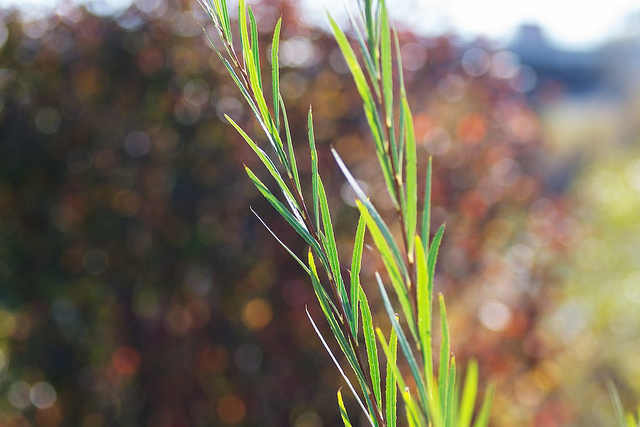
For now I am looking toward the brilliant yellows of the moment. Apparently yellow is the colour of the mind and the intellect, it lifts the spirit, stimulates creativity but can also heighten anxiety and emotional instability.





 roughghosts