1914 – Goodbye to All That: Writers on the Conflict Between Life and Art, Lavinia Greenlaw, ed.

War and conflict are among the most fundamentally human motivations behind our desire to tell and share stories. Religions, mythologies and histories draw on these timeless themes. And, as human history continues to prove that we have not yet managed to learn from the past; conflicts, ongoing or marked with progressive anniversaries, will continue to to inspire artists and storytellers alike.

greenlaw_2985334aThe centenary of the advent of the “War to End All Wars” in 2014 saw a renewed focus on the contemporary writers and poets of WWI as well as a broader assessment from today’s artists of the lasting influence of that critical event on the conflicts that have followed. An interesting contribution to the discussion arrived in the form of 1914 – Goodbye to all That: Writers on the Conflict Between Life and Art, a selection of essays edited by Lavinia Greenlaw which was published in the UK last year by Pushkin Press. This collection will see its release in North America on September 1, 2015.

For Greenlaw, the First World War has a resonance that is not tied to a particular time and place but rather stands as touchstone to “reinvigorate questions we should never stop exploring.” With that in mind a variety of writers were invited to offer reflections broadly inspired by the question: “What does it mean to have your life and your identity as an artist shaped by conflict?” To that end, writers from a number of different countries were recruited.

The final compilation is, perhaps inevitably, uneven. However, the strongest entries are startling and have stayed with me long after the reading. The first essay to catch my imagination was, much to my surprise, Daniel Kehlmann’s “A Visit to the Magician”. Having read his F: A Novel with a measure of disappointment, I was drawn into his account of his own attempt to pursue the experience of being hypnotized after this same novel was released. Because a visit to the performance of a hypnotist sets the stage for the events that unfold in F he decided that he ought to have a go at the real thing himself. The exploration of hypnotism leads to an interesting reflection on the mechanisms that may help motivate individuals to rise, against their better angels, to support dictatorships and even march to war.

“(I)t’s nothing more than the most normal effort to be like everyone else, to experience what everyone else experiences, to behave the way authorities want you to behave. And then of course there’s the desire not to do anything wrong in full sight of so many other people.”

For Belgian author Ewrin Mortier and Slovanian poet and writer Aleš Šteger connections are drawn between the First World War and subsequent conflicts, WWII in the first case, the Balkan War in the latter. In “The Community of Sealed Lips: Silence and Writing”, Mortier concerns himself with the silences that remain unspoken, and the way language and lies are employed to negotiate the complicated way that both World Wars divided Belgian communities and families. His essay encompasses the story of his own grandmother and her beloved younger brother containing the painful truth that he would weave into the fabric to his debut novel Marcel. By contrast, Šteger’s tale, “Tea at the Museum” is unsettling and unusual. When Z, a woman he has not seen or heard from in years, calls and suggests that they meet to for tea he cannot imagine why she wants to see him. She is, it seems, keen to apologize for a wrong she swears she has done to him – in a previous life lived during the First World War. The encounter leads him to confront the memories of individuals and of countries, and reflect upon the way poetic imagination is employed to talk about horrors to painful to face directly:

“Only through literature can we realize how impossible it is to have any true insight into the past, any true experience of it, and what’s more we will become part of some equally incomprehensible past.”

Elsewhere, novelist NoViolet Bulawayo writes about the work of writers from her native Zimbabwe who, through their voices raised in protest in the threat of censorship and imprisonment, served to reconnect her to her community from afar, ultimately leading to a focus and theme in her own writing. Her exploration of her own identity in this context serves as a direct and deeply personal tribute to her fellow Zimbabwean artists. Another striking and powerful contribution comes from UK based Chinese writer Xiaolu Guo. Her account of the experiences and often unfortunate end of thousands of Chinese coolies imported like cargo to dig trenches and lay railway tracks along the front toward the end of WWI is at once astonishing and disturbing.

The collection is rounded out by contributions from Ali Smith, Kamila Shamsie, Elif Shafak, Colm Toibin and Jeanette Winterson. What is most interesting is the varied and diverse ways that all of these accomplished writers respond to the theme presented for their consideration. There is plenty of food for thought here.

* Review copy provided by Steerforth Press through NetGalley.
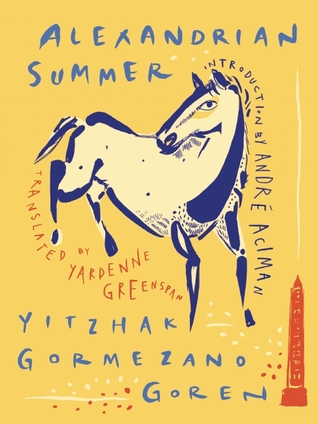
Last season in paradise: Alexandrian Summer by Yitzhak Gormezano Goren

1951. In an apartment on the Rue Delta in Alexandria, a young boy plays a game to wile the hours away, recording and cataloging the makes and license plate numbers of the cars that pass on the street below. Inside, his mother, grandmother and an assortment of matrons gather and gossip over a game of rummy. Tourists flock to the city, to the beaches and warm waters. A rich mixture of languages play across the tongues of residents and visitors alike. But on the ground tensions are building, political frustrations run deep, threatening to fracture the tentative ties that have bound Muslims, Jews and Christians in this cosmopolitan playground. For thousands of families clinging to a fragile petit bourgeois existence, this may be one of the last glorious seasons of romance, horse racing and cool drinks served by discreet and obliging servants.

“True, Alexandria was rotten to the core, but its rot had roots, was saturated in history. Dig deep through the muck and you’ll find the remnants of a crumbling papyrus, or a lock of hair from the shrunken head of a mummy. Something is rotten, truly rotten in the kingdom of Alexandria. That’s why I love her so much, Alexandria. A city that lets you live like a carefree lord without even being rich. Of course you had to be European, or at least Jewish, and of minimal intelligence, and even that wasn’t always a staunch demand.”

GorenFrom the opening pages of Alexandrian Summer, the newly translated novel by Israeli author Yitzhak Gormezano Goren, the author’s deep affection for the city in which he spent the early years of his life is unmistakable. His narrator makes it clear that the story he is about to share is, in fact, his own. He is that 10 year old boy watching the cars pass. But he debates how best to tell the tale, admitting that he is looking back with the perspective and wisdom of an adult. First person, third person, real names, fictitious identites with the standard disclaimer? He opts to shift his focal length, like a photographer adjusting the depth of field of his lens, moving in and out of a series of scenes that collectively recount the visit of the Hamid-Alis, family friends from Cairo, who have come to spend the summer. Young Robby does not know it at the time but by the winter his family will leave for Israel. It is his mature self who is able to look back and sift through the events of his final summer in this magical city. Through Robby and a colourful canvas of characters – immediate family, extended family, friends and neighbours – he unfolds a story that is at once intimate and personal, and part of a broader political sea change.

From the moment that the Hamid-Alis pull up in their Topolino, an aura of glamour descends on the apartment on the Rue Delta. The father Joseph, a small man with his characteristic fez, is a former jockey who tasted fame and glory until the sudden and tragic death of his beloved mare. But rumours persist that, in his Turkish blood is a Muslim past that he abandoned to convert to Judaism when he fell in love with Emilie, his full bodied and patient wife. David Hamid-Ali, their 17 year-old son, is a perfectly pressed and groomed specimen of athleticism, a rising star on the horse racing circuit who has been groomed to take on his father’s sport. But the dedication is dependent on a strict diet to combat the tendency to weight gain inherited from his mother. And the one true desire of his heart, Robby’s older sister, is playing with his emotions. Finally the youngest son, 11 year-old Victor, is overlooked by his parents, subject to frequent pummeling at the hands of his older brother and, thus neglected, he occupies himself by engaging in sexual play with Robby and his friends. By the time they climb back into the Topolino to return to Cairo, the Hamid-Ali family will be reduced, weakened and irrevocably changed. Before long Egypt and Alexandria will also undergo a revolution.

By evoking small snapshots of the emotions, interactions, observations and events of this steamy summer, Gormezano Goren paints a heartbreaking and tender portrait of family dynamics complete with his own “Greek chorus” of rummy playing matrons. At the core of this story is the racetrack rivalry between David and the lightening fast Muslim jockey Al-Tal’ooni. Although he triumphs in the first race of the season, David’s loss in the second begins a series of conflicts between father and son, and spiraling self doubts and depression in the aging Joseph. Against the backdrop of a legendary city at a moment when the life that the Jewish and other European residents is about to unravel and dissolve, this one last summer blends the nostalgia of childhood with the disillusion of age to create a timeless tale, beautiful and sad.

Originally published in Hebrew in 1978, Gormezano Goren worked closely with translator Yardenne Greenspan to prepare this first English edition. In an interesting essay on Lit Hub, he recounts the challenges of preserving the polyglot quality of discourse in Alexandria and the value of being able to revisit the original text after so much time. Alexandrian Summer is published by New Vessel Press.

A Pastoral Dystopia: Trencherman by Eben Venter

“Tears, nearly; heartache that I’m almost able to touch in my chest. Bossieveld stretches around this dorp, as wide as the vulture flies. In rain years the red grass pushes up. The veld surges and flows, with koppies of ironstone and mountains with cliffs where animals find shelter during the cold winters, where ewes search out the warmth of besembos during the lambing season. Elsewhere it breaks open into rivers and streams and vleis full of platannas and bullfrogs and wild geese. But only when the water runs, when the eyes of the springs open. I want to remember it like that one last time.”

I am not typically a fan of post-apocalyptic or dystopian fiction. No matter how intriguing the scenario, I find myself too frequently disappointed with the writing or the realization of the plot, or both. However, when a trusted friend enthusiastically recommended  Trencherman, a harrowing vision of a devastated South Africa by Eben Venter, my interest was piqued in spite of any reservations I might have otherwise held and, quite frankly, I would never have stumbled across this book without her guidance. Even then I was unable to source a copy outside of South Africa so it was high on my wish list for my recent visit to the country. Little could I have appreciated how my experience of this novel would be heightened by the fact that I would read it while my time in the rolling landscape of the Eastern Cape province was still very fresh in my imagination. That is, it happens, where this story is set and, for all the horror it envisions, Trencherman is also very much an evocation to the beauty of the land.

VenterTaking his lead from Joseph Conrad’s The Heart of Darkness, Venter imagines his native country at an undefined point in the near future. Years of civil unrest and socio-political upheaval have rocked the nation which never really found its footing. Now a massive explosion in the southern part of the country has destroyed the infrastructure, left a lawless void in which bribes and syndicates are the order (or lack of order) of the day. Drought has wasted the land, AIDS has has devastated the population. Our protagonist, Marlouw (a contraction of his first and last names Martin and Louw) is bachelor living in Melbourne, Australia. Both he and his sister Heleen had rejected the family farm and homeland two decades earlier. Yet for all the financial success afforded by an uninspiring career selling high end cookware, Marlouw is a rather bitter, self-centred man, crippled with a clubfoot. He has never forgiven his parents for failing to secure the surgery that would have corrected the deformity and, despite his denial, the pain and embarrassment of his disability weigh heavily on him. When his sister calls him one night desperately entreating him to return to South Africa in search of her only son, his nephew Koert, who seems to have gone missing in that dark land, Marlouw feels no immediate obligation to assist. When he does finally agree, he tells himself that he is doing so for his own personal reasons. Without fully understanding his motivations he senses that something unfinished lies in the deep recesses of his memory. His journey to unravel his own baggage will nearly cost his sanity.

As soon as he sets foot on South African soil, Marlouw realizes that he has arrived in a country that operates on cryptic and shifting terms. He adopts a heightened almost mystical approach to the task ahead, attempting to open himself to the “guides” that cross his path, but he rocks between selfish irritation and a deepening alienation as his quest proceeds. As a hero he is deeply flawed and deeply human. When he reaches the family farm, the place where he knows that his nephew has taken refuge and built up some manner of hideous power base, he is routinely thwarted in any attempts to make direct contact. The degree to which drought, disease and apparent apathy have wasted the land and the people he once knew is a shock but he is soon swept into their confined and miserable world. Upon his father’s death, he and his sister had passed the once proud farm on to the black families who had worked it for so many years. After twelve generations of Afrikaner ownership, the thirteenth generation had set their sights on foreign shores. But, as Marlouw will soon realize, he still carries a deep ancestral horror in his bones. He will not only have to confront whatever it is that his nephew Koert has come to represent, he will also have to come to terms with his own ghosts.

This is not the first time an author has turned to the Heart of Darkness to explore the dark corners of humanity. The late Canadian author Timothy Findley placed his own Marlow and Kurtz in the halls of a modern psychiatric institution in the startling and disturbing Headhunters. Trencherman skillfully evokes the darkness of the journey Conrad imagined in the depth of another part of Africa and updates it, raising important issues along the way. Venter takes the opportunity to offer harsh indictments on the divisions within his native country, envisioning an outcome that has its roots in a recklessness and disregard for ultimate risks among the privileged classes. This is, of course, a common context of the dystopian novel, but one which is, for me, often too carefully removed or generalized in some abstract future. South Africa offers a more immediate tableau that Venter does not shirk from, perhaps afforded by the fact that he, like his hero, has been living in Australia for several decades. He aims his sights close to home, directly at his own heritage and at the decision he and many other South Africans have made to leave.

Originally published in Afrikaans, the translation by Luke Stubbs is seamless. IsiXhosa passages are incorporated, and unlike some translations specifically aimed at a broader (i.e. US) English speaking market, common South African and Afrikaans expressions and terms are left in tact. A detailed glossary is included. There is a point where the dialogue degenerates into a bastardized English mixed with German that had me curious as to how these passages exist in the original, but that is only because the translation process itself, especially when it is striking and effective, is of particular interest to me. This topic is, I discovered, covered in an interview with the author here.

The memory of a land once rich, the protagonist’s struggle to balance compassion with self preservation, and the truly horrific, yet oddly contemporary spectacle that awaits Marlouw when he finally confronts his nephew combine to create an engrossing read. The closer a reader’s connection to South Africa, the more intensely this book will resonate or push buttons, but even with distance it paints an unsettling portrait.

And so it should.

Note:                                                                                                                                                                         It is my understanding that Trencherman is scheduled to be released in the UK and Australia in 2016. However, my attempts to obtain Venter’s more recent novel Wolf, Wolf which was similarly released earlier this year leads me to believe that rights do not extend to North America. Even so, once there is wider for release for Trencherman outside of South Africa, it will be easier to obtain through UK distributors.

Looking back over my shoulder at three weeks in South Africa

It is coming up on two weeks now since I left South Africa. I was missing the country before I left; I am missing it now. When I passed though customs at the airport the official who stamped my Canadian passport sighed and shook his head. “Everyone is going to Canada these days,” he said. What could I say? Only that morning I had only read a newspaper article about young South African families eager to find a new home abroad – the US, Australia, Canada.

I suppose if I was raising young children in a city where so many single family dwellings have the appearance of bunkers with high walls, spiked gates and coiled razor wire, I too would be looking to distant shores. Over the course of my limited stay in Cape Town I regularly walked between my B&B in Sea Point and the downtown core. The occasional house perched on the slopes of Signal Hill without such enclosures was a source of fascination. What manner of brave or reckless soul lives here?

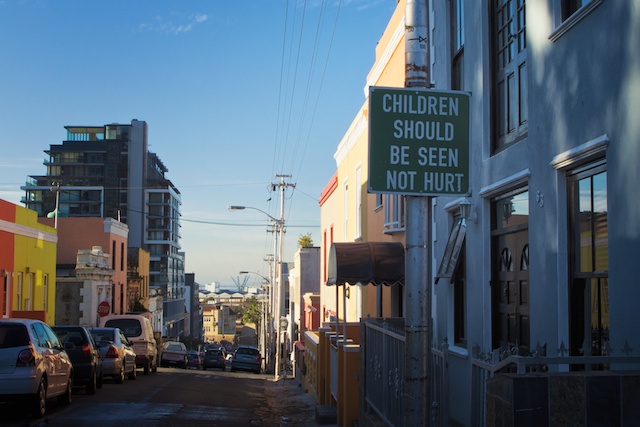
A sign on a narrow cobblestone street In the Bo Kaap district of Cape Town - Copyright JM Schreiber
A sign on a narrow cobblestone street In the Bo Kaap district of Cape Town
– Copyright JM Schreiber

I can’t say that I felt uncomfortable as I wondered the streets or rode the buses. I did quickly learn to make prudent choices, especially after a couple of unnerving encounters set me off my guard. My bad. I don’t make the same mistake twice. Aside from a night out with a friend in Green Point, my stay in the city was quiet, skirting most of the major tourist sites, sticking to bookstores, museums, galleries. Despite the cool weather tourists flocked to the Waterfront and Table Mountain but no one chanced more than a passing glance while I sat mesmerized by the full 30 minutes of William Kentridge’s installation The Refusal of Time at the South African National Gallery. I seemed to find hollow pockets in the city, safe but open empty spaces. And it felt right. I had come to South Africa, after all, to find myself.

What I found surprised me and is only beginning to take form in my thinking now that I am back home. My interest in South Africa is a curious blend of sociological, historical and literary factors but it has always been mutable and undefined. It just is. It stretches back to the early 1980s when I first encountered South African ex-pats while I was at university, continued forward, from the outside, as the world watched the steady and difficult move to independence. Being able to visit the country and, for the most part, simply talk to people and observe has marked the beginning of a process of reconciliation for myself – on a deeply personal level on the one hand, on a socio-political level on the other.

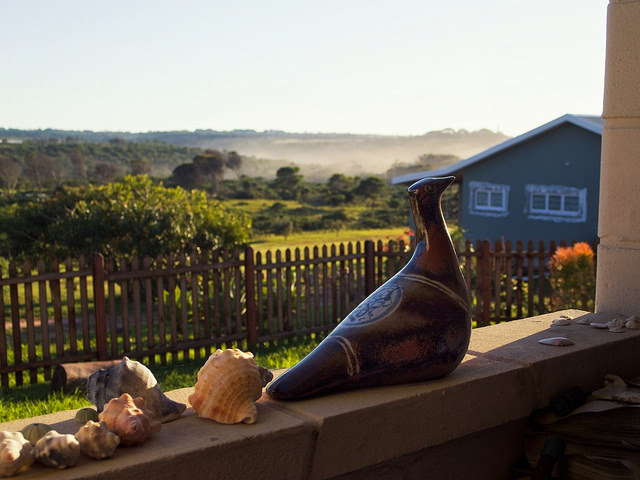
Eastern Cape morning - Copyright JM Schreiber
Eastern Cape morning
– Copyright JM Schreiber

With respect to the former I will simply say that my decision to actually visit South Africa this year was sudden and born of the intense loneliness that sweeps over me regularly. One day when that wave crashed upon me I stopped and realized that the one person in the world that I really needed and wanted to talk to, the sole person who could understand the strange mixture of illness and queerness that I have been struggling to sort out lately, lives across the globe – in South Africa, Eastern Cape province. And, with some money I had needed to access that was not worth reinvesting at today’s interest rates I had enough to get there. So I went.

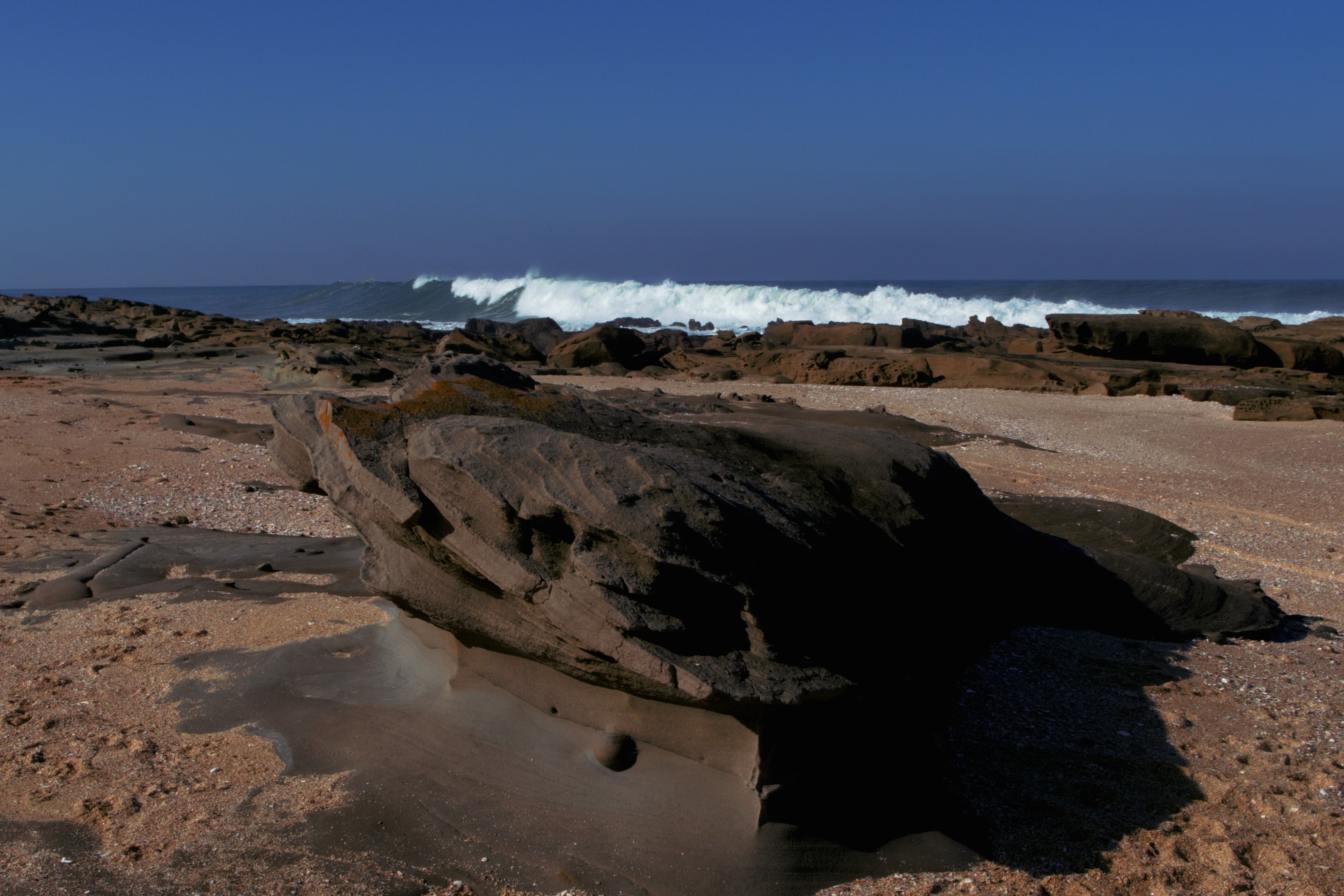
Arriving at my friend’s home in a small village perched on the edge of the Indian Ocean, I was stunned by the beauty of the unfolding landscape, green flecked with the orange of aloe in bloom, the wide open blue skies, and the crystal brilliance of the waves crashing upon rocky shores. I was at peace. I felt grounded. I felt I had come home to somewhere I had never been. My friend and I settled into a comfortable routine as if we had known each other forever. Although at ease in silence, we never ran short of things to talk about. When it came time for me to prepare to head back to Cape Town, her dog worried after me as I packed my bags in the same way that my own cats had fretted over my suitcases back in Calgary. In a little over a week I had been accepted as family.

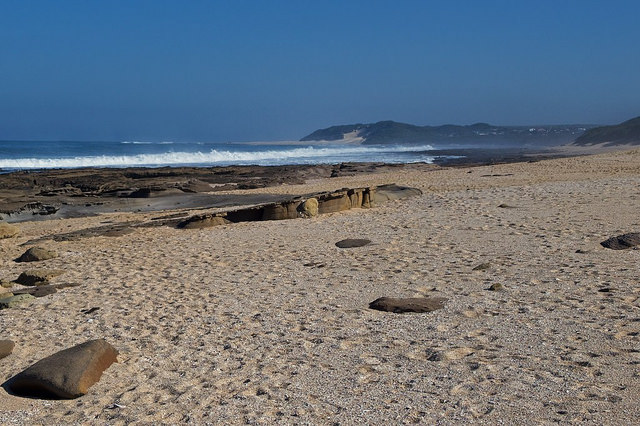
Indian Ocean, Eastern Cape - Copyright JM Schreiber
Indian Ocean, Eastern Cape
– Copyright JM Schreiber

Oddly I never felt lonely in South Africa, even though I spent much of my time alone. Strange that that feeling oppresses me in the city that I have lived in or near for most of my life, or this country where I have lived for over five decades. At one time I was immensely proud to be a Canadian but I feel increasingly discouraged and estranged from this land. Oh, of course, it has its beauty and, compared to so much of the world, its benefits are innumerable. But there are concerns, inequities, a steady erosion of freedoms, unresolved historical debts to our First Nations and now a rapidly declining economy against a growing racism and xenophobia to think about.

While I was in South Africa, whenever anyone would ask me where I was from, eyes would light up and I would be met with statements like: “Ah Canada, that’s like the perfect country, isn’t it?” Perhaps I am less than patriotic (which is in itself a rather Canadian thing to be), but I felt it was worth engaging people in honest discussions. After all in early June the final report of our very own Truth and Reconciliation Commission was released. For over 100 years First Nations, Métis and Inuit children were routinely removed from their homes and placed in Residential Schools. The cumulative impact of the abuses, trauma and cultural disintegration has been significant and devastating for Aboriginal communities. If I wanted to engage in conversations about colonial legacies it is not to compare or absolve anyone. But no country is perfect. The question for a citizen is, what am I willing to speak to? I can only speak to my experience in Canada and listen to South Africans. Which is a good start.

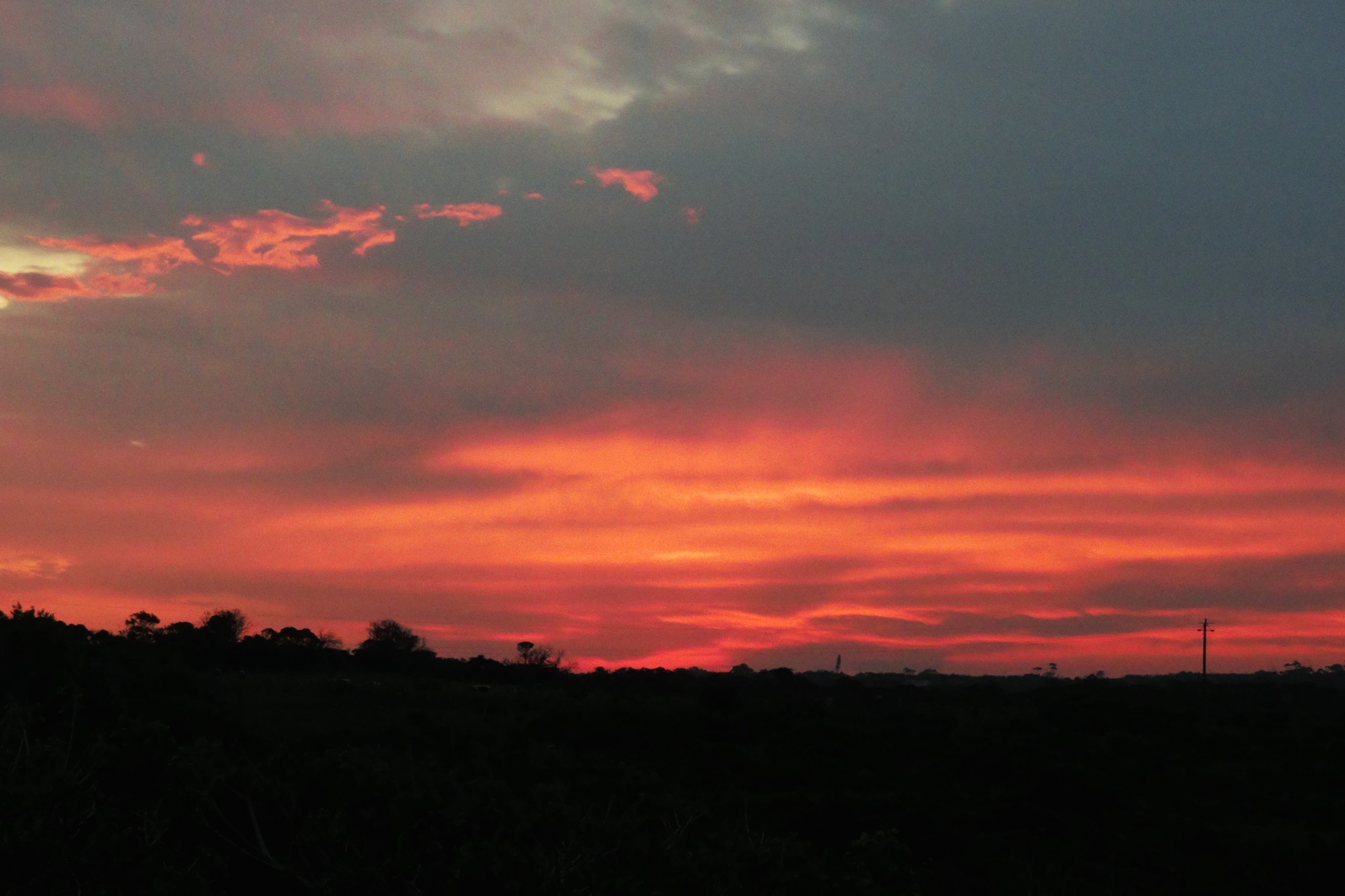
Sunset over the Atlantic, Cape Town - Copyright JM Schreiber
Sunset over the Atlantic, Cape Town
– Copyright JM Schreiber

But not even two weeks home and I feel shiftlessness starting to seep in again. On the positive, I returned to the promise that some healthy changes may be emerging in the life of my troubled son, opportunities that might not have arisen had I not put a continent and hemisphere between us. And on my last full day in Cape Town I sat in the Company’s Gardens and finally began to write in earnest in the notebook I had been scribbling in throughout my visit. That has continued. Yet I am aching for that indefinable other that drew me to South Africa in the first place… the landscape, the people, my friend, the oceans.

Yes, the oceans. Landlocked here in a vast country that spans 5½ time zones, it really is little wonder I feel so alone.

Ireland in the imperfect tense – Past Habitual: Stories by Alf MacLochlainn

A short story collection can be a curious beast, for the reader who may have a defined expectation about structure and form and for the reviewer who endeavours to capture the encounter with a writer who embraces and defies form as it pleases him. Having emerged from Past Habitual, the newly released collection of stories by Irish writer Alf MacLochlainn, the most helpful advice I can offer is: prepare to encounter narratives that will, at times, ramble and diverge into detailed accounts of practical matters: the treatment of scarlet fever, the options for constructing toilet facilities, the systemic way to approach the assessment of a corpse, the history and development of the stereoscope and more, but if one surrenders to the voices of the narrators, imagining a story recounted over a pint, such excursions prove remarkably compelling and, more often than not, fall imaginatively within the broader arc of the story unfolding around it.

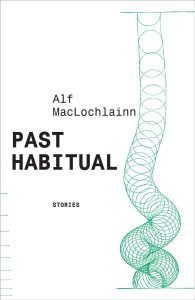
pastThat is not to say that each of the twelve stories in Past Habitual follows the same formula – far from it. There are more traditional stories – “A stitch in time”, Demolition of a gnome-house”, “Why dd I volunteer to kill the kittens?” – that explore with a striking sensitivity, a budding love affair, a boy’s creation of a cardboard house in the garden as a symbolic retreat from the tensions inside his real house, a young man’s clumsy effort to impress his girlfriend and it’s disastrous outcome. His narratives are, however, frequently more complicated and sometimes very experimental in form and varied in style. Yet his keen ear and eye for the tenderness and brutality of human interaction surfaces throughout.

My preference often favoured the more unconventional narratives such as “Dot-and-carry-on” in which the segments of the story are offered as a series of linked dots connecting scenes like a child’s drawing activity as the narrator ties together key events in his personal and family history reaching back to the Easter Week rising and forward to a curious encounter with a Nazi spy living in the officially neutral Ireland during the Second World War. “Imagined monologues at a college function yield some explanation of the survival of the fittest” is, as the title suggests, a flow of conversational fragments that captures latent biases and prejudices that were not uncommon among mid-century intellectuals.

Born in Dublin in 1926, MacLochlainn was a career librarian. He has published a previous story collection and a novella. His stories extend a broad sweep across 20th century Ireland, from the Easter Rising, through the Second World War, to the political upheavals that have marked more recent times. Some stories are set against the backdrop of WWII, while others explore the role of memory in shaping and distorting the communal folklore within which pivotal events are recorded, remembered and passed on. As the sergeant instructing officers on the careful and appropriate use of a newly arrived shredder in one the most wonderfully inventive stories warns:

“without that evidential support, Guard, are we not entirely dependent on memory? And memory can be so fallible, can it not? – Or perhaps in some cases I should call it imagination…”

In Past Habitual, MacLochlainn skillfully blends remembrances, facts and imagination to offer a collection that surprises, challenges and delights. This recent release from Dalkey Archive Press is part of their Irish Literature Series.

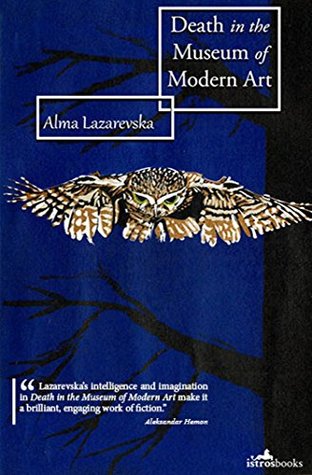
Variations on a tragedy: Death in the Museum of Modern Art by Alma Lazarevska

The longest siege of a capital city in the history of modern warfare began on April 5, 1992 when Bosnian Serb nationalists surrounded Sarajevo. The assault would last for 1,425 days, almost four years. Inside the blockaded city, citizens tried to pull together as their city was bombarded with mortars and artillery fire, cut off from access to food, power and communication. Families were driven from their homes, faced the real possibility of detention, rape, torture and slaughter. And yet, in small corners of daily life, small embers of humanity were kindled and nurtured. Death in the Museum of Modern Art is a testament to the fragility and the resilience of the ordinary people trapped in the city, an evocation of beauty in the face of unspeakable horror.

museumThis slim collection of six short stories by Bosnian writer Alma Lazarevska reads like a quiet musical meditation, a set of variations on a theme. Most of the stories are narrated by an unnamed woman, married, usually with a single child, a boy. The stories are imbued with a quiet humanness that is as comforting as the death and destruction that surrounds the characters is terrifying. To those of us who can only faintly imagine what it must be like to endure such conditions the effect is startling.

There is not a weak entry in this collection and despite the themes that do recur (in fact at times I wondered if the same family was at the core of some of the stories) each tale shines a light on a different angle of the experience of the residents of Sarajevo during the Bosnian war.

As a parent myself I was especially moved by the story “Greetings from the Besieged City”. Framed through a series of imagined picture postcard scenes this is a meditation on the desperate desire for a happy ending despite the awareness that in literature as in life, happy endings are elusive. While the knowledge of this truth drives a former classmate of the narrator mad, she herself tries to protect her own son from fictional unhappiness by changing the ending of the book she reads to him, The Seville Fan, a love story in which the hero dies:

“And so Pablo succeeded in not dying, which he was, after all, not accustomed to. Because, when I exhaled and put the closed book down, in its printed pages he was still dead. As I was pronouncing the sentences that were not in the book, it seemed to me that, for the first time in our reading sessions, our boy turned his eyes away from their fixed point. He glanced suspiciously at the book then at my face. A pedagogue would say that he was beginning to get used to the fact that parents tell lies. Or that they become accustomed to sentiment!”

The mother is conflicted by her need to prepare her child for the reality of death – of unhappy endings – and the desire to protect. But when “red-hot balls” start to fall on the besieged city, instantly transforming “human bodies into bloody heaps of flesh” the effort to create some variation of a picture postcard greeting against a landscape of horror is increasingly distorted. The impact is deeply unsettling, yet poignantly human.

The siege is a persistent presence in these tales. It drives the tenants of an apartment block from the odd niceties of shared accommodation to huddle in the basement in fear, or to flee the city if possible, in “Thirst in Number Nine”. The superstitious belief that each used match is a saved soul, leads a couple to use and collect precious matches to light cigarettes, rather than the candle that is equally vital in “How We Killed the Sailor”. This represents a perverse and symbolic luxury as civilian casualties mount around them. The wife wonders about these souls they pretend to protect as each day new faces grace the obituary pages of the paper: “Do they know that there is a besieged city somewhere in the world with the saviours of their souls in it?”

The title story “Death in the Museum of Modern Art”, features a narrator who muses on her involvement in a curious project. Bound for publication in a glossy magazine and an exhibit at the Museum of Modern Art in New York, photographs of 100 inhabitants of Sarajevo are to be paired with their answers to a survey which includes the haunting question: How would you like to die? In a besieged city how does one begin to answer a question like that?

Upon its publication, this collection received the “Best Book” award from the Society of Writers of Bosnia and Herzogovnia. In this lovely edition from Istros Books, the translator, Celia Hawkesworth, brings the gentle and shocking power of Lazarevska’s unique voice to life. I am extraordinarily grateful to Susan Curtis-Kojakovic, the editor of the wonderful Istros Books for selecting and passing this moving, haunting collection on to me. I can recommend it without reservation, these are stories that need to be read. After all, the Bosnian War only came to an end twenty years ago later this year and today, in so many parts of the world, ordinary families are still struggling to survive under the conditions of unimaginable conflicts.

Sadly the happy ending continues to be elusive.

Might as well face it, I’m addicted to books…

Three weeks in South Africa and I have not blogged much, in large part due to the painfully useless little laptop I bought for the journey (sorry Windows I am in serious Mac withdrawal right now) combined with frequently slow or inconsistent wifi connections. Quite frankly I have not even read much save for a slim collection of Bosnian short stories I have been dragging around. But I have been observing, writing, journaling and taking photographs. There will be plenty of time for reading after I get back and a strict embargo on book buying for some time.

After all I have spent more than R3000 on books. Shame. Well it’s not as bad as it sounds, I spend a fair amount on books at home but not all in one shot and not with the need to transport them across the globe. I fell asleep last night mentally rearranging my bookshelves to welcome my new acquisitions home.

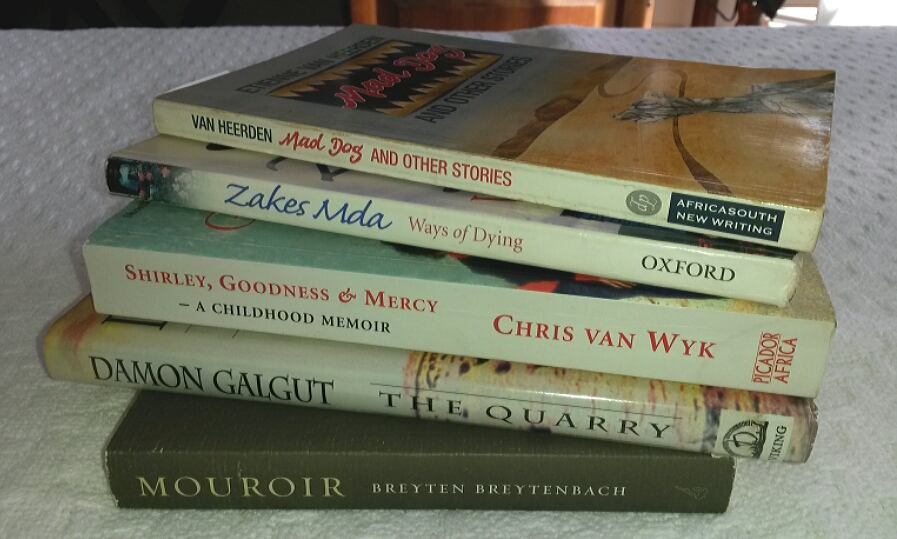
A selection of new titles (there are more,  confess). Trencherman, the Michiel Heyns, Tales of Metric System, Rusty Bell and The Violent Gestures of Life were all on top of my list when I arrived.
A selection of new titles (there are more, confess). Trencherman, the Michiel Heyns, Tales of Metric System, Rusty Bell and The Violent Gestures of Life were all on top of my list when I arrived.

As long as I can remember, bookshops have been a highlight of any vacation for me. Sometimes it was the chance to visit a larger centre or to access books not available at home. I mean honestly who goes to San Francisco without stopping in to City Lights? I suppose those people exist but I don’t want to know them.

This is the first vacation I have had in years, the farthest I have traveled and what I hope will be the first of many visits to South Africa. I have stubbornly had a predominately anti-tourist experience and it has suited me just fine.

But books, they were always high on my agenda. From a second hand shop in East London to The Book Lounge and Clarke’s here in Cape Town I have built piles, triaged, sorted and made my selections – sometimes price, sometime size and weight were factors. Books readily obtainable in paper format outside of South Africa were eliminated, aside from some impulse purchases. Suggestions from the friend I was staying with in the Eastern Cape, books featured on the site of a South African book blogger I follow, and advice arising from conversations with booksellers were all tossed into the mix.

A few of my second hand finds: I am looking forward to the memoir by the late Chris van Wyk and the Ettiene van Heerden on top is signed (but sadly the only one of his books I was able to locate in translation).

There are still, inevitably, titles I wanted but could not find. And some I had to leave behind.

Not one given to ostentatious displays of book porn, I am showing off some of my new friends. Wish me luck packing and dragging them all to the airport on city transit!

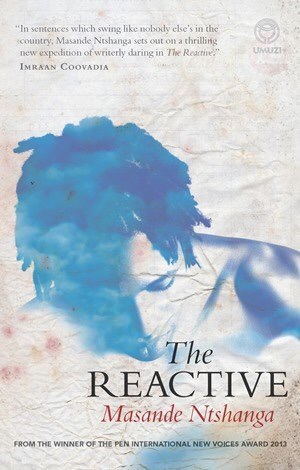
Desperate for a reaction: The Reactive by Masande Ntshanga

The opening lines of The Reactive, the debut novel by the young South African writer Masande Ntshanga, are startling:

“Ten years ago, I helped a handful of men take my little brother’s life. I wasn’t there when it happened, but I told Luthando where to find them.”

This fresh, matter of fact confessional tone marks the story that follows. Nathi (short for Lindanathi) was supposed to follow his half-brother to the Eastern Cape where they would both partake in rites of initiation, but he decides to stay behind. When Luthando dies due to complications, Nathi feels responsible. The memory of his brother, guilt and family obligation are themes that weigh heavily on the young protagonist as his tale unfolds.

23370655After his brother’s death, Nathi decides that he had best make something of himself. He enrols in university to study journalism but drops out and goes to technical college instead. He tells us that it “didn’t take much to go to school for free, in those days, or rather to trade on the pigment we were given to carry.” His tech degree lands him a job in a lab testing blood samples for HIV. In the process of testing for samples that are positive – reactive – he himself contracts the disease. He envisions himself as half-dead already. Set in 2003, with South Africa on the cusp of making anti-retroviral drugs freely available to all HIV+ individuals, Nathi sells his ARVs to others. Otherwise he drifts from job to job while spending much of his time sniffing industrial glue with Ruan and Cecilia, friends he meets at a counseling group.

In the background to all of this is a promise he made to his brother’s stepfather, his uncle Bhut’ Vuyo, a former mechanic fallen victim to alcohol and now living in Du Noon, a bleak settlement on the edge of Cape Town. Nathi had received refuge in Du Noon after disgracing his mother by dropping out of university. A text message reminding him of his commitment to his brother’s family some eight years after the fact, sets the story in motion. Nathi is drifting, he is taking risks. An encounter a with a curious masked stranger who engages the three young drug dealers in an illicit business deal may just be the motivation he needs.

In The Reactive Ntshanga paints an image of the new South Africa that is fresh and alarming. Nathi and his friends are all educated. They have or have had good jobs, apartments in Sea Point, but they are slowly losing motivation, sliding from one day to the next, grabbing taxis to parties with eccentric artists, going nowhere fast. In the end Nathi will have to decide for himself where his own loyalties lie.

This is a disturbing story, but one that is told with language that shimmers and an intensity that simmers just below the surface. Nathi’s voice is captivating, he and his world come alive. Cape Town provides an essential backdrop, as does the settlement where Bhut’ Vuyo lives in a shipping container. There are also important references to the Eastern Cape and King William’s Town, which it turns out, is the author’s home town.

Now none of this would be critical for the enjoyment of this book but, as a Canadian on his first visit to South Africa it is oddly serendipitous that I read this book on the bus, the same line that features briefly in the text in fact, on my way back to Cape Town from East London. I would likely have passed through King William’s Town with little notice in fact had I not traveled out to the Eastern Cape with a retired Xhosa man returning home to the town for a family funeral. We talked a lot through that 16 hour journey, about our countries, about life, about politics. For me, my experience of reading The Reactive will be bound to my trip and I look forward to watching Ntshanga’s career develop. He is already receiving a lot of well-deserved attention at home and abroad.

The Reactive is published by Umuzi and is available as an e-book, at least in Canada, likely elsewhere. A paper edition will be published in the US by Two Dollar Radio in 2016.

Further notes from South Africa: Wildlife and quiet times in the Eastern Cape

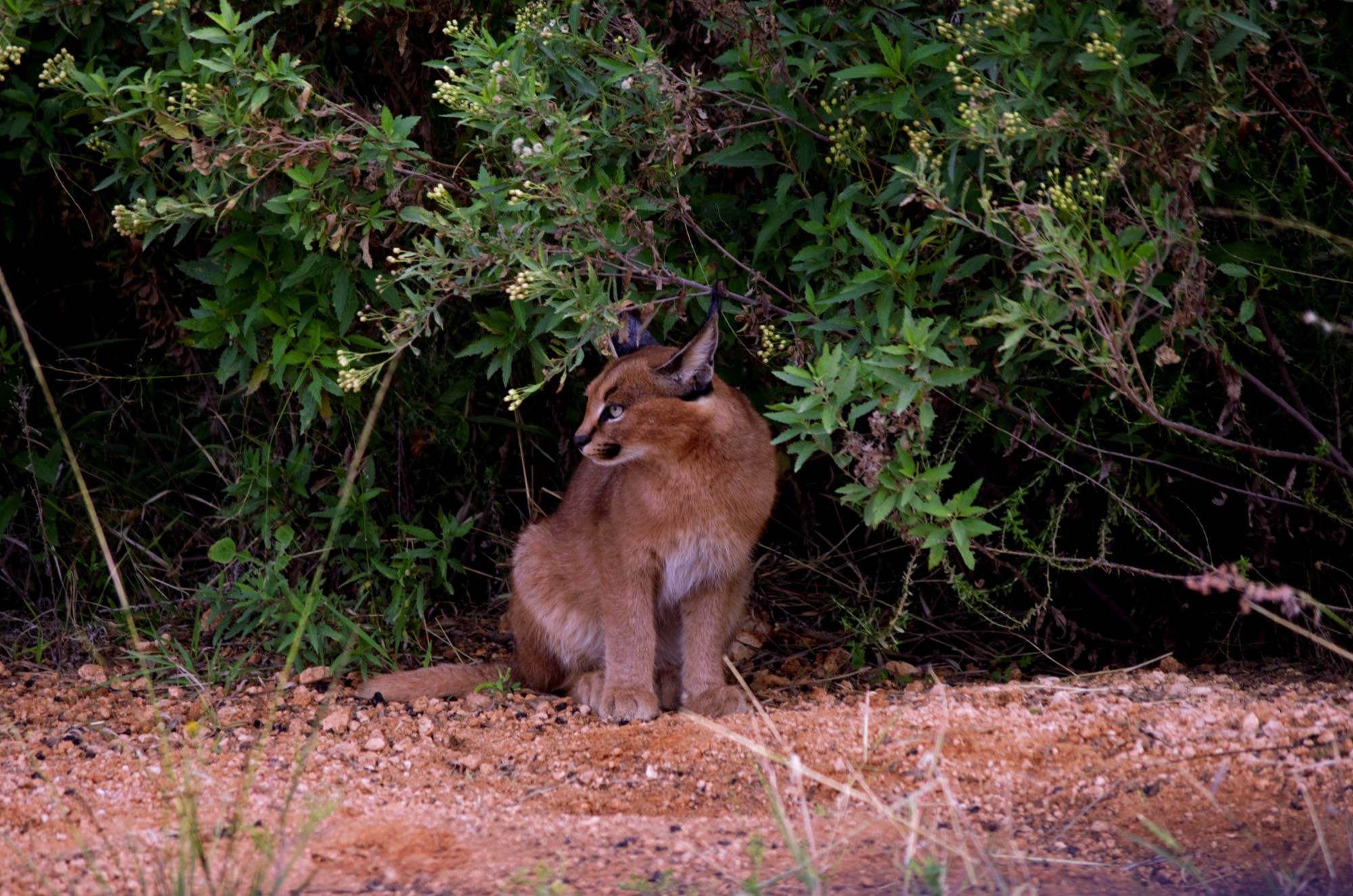
I have been in South Africa for just over a week now. It’s been an amazing opportunity to meet people and observe the country on its own terms. The closest I have had to a typical tourist experience has been our day trip to Addo Elephant Park. Nothing quite prepares you, on your first visit, for the sight of these huge majestic beasts looming ahead on the road, appearing out of the bushes. And there is so much more to see than elephants. We were stoked to encounter two young rooikatte along the roadside. These lynx are a rare sight at the best of times and we were able to sit and watch them for 15 minutes.

Rooikat
Rooikat
Addo Elephant Park
Elephant  – Addo Elephant Park, South Africa

The value of taking time to relax, soak in the countryside, meet fascinating individuals and spend quality time with my friend has been exactly the medicine I needed. In a few days I will make my way back to Cape Town for the much more urban, cosmopolitan side of my stay which will, in its way, be quiet and introspective. Cities can be good for being alone too.

Old sheep
Old sheep
Eastern Cape farm garden

My endeavour to gather more South African literature to bring home is going well. So far I have collected a stack of second hand books from a little shop in East London here in the Eastern Cape and have another stack waiting for me back in Cape Town. I have been digging through my friend’s bookcase for titles to look for here or back home and last night I was thrilled when my favourite author, Damon Galgut, won the Sunday Times Literary Award for South African fiction for his novel Arctic Summer. So, a fine literary excursion to date.

South African sunset - All photos copyright JM Schreiber
South African sunset – All photos copyright JM Schreiber

Otherwise it has been a relief to step back from my normally heavy engagement with news and social media. I did read with dismay about the terrorist attacks in France and Tunisia. I was relieved that my American LGBT brothers and sisters have achieved a long overdue milestone. But I came to South Africa in large part to put as much distance between myself and my life at home as possible for a few weeks and, for now, watching waves crash on the shore or sitting on the stoep and watching the sky burst with colour in the evening or listening to Breyten Breytenbach reciting poetry in Afrikaans is therapy of the best kind.

Solstice to solstice to solstice: A note from South Africa

Over the past year I have embarked on a journey that began, unexpectedly, with the recognition that I had allowed pressures at my job to consume me, to drive me to the very brink of a complete breakdown. It was summer solstice when I removed myself from the office, imagining at the time that I would soon be back and on track. I had no idea how sick I was and no real appreciation of how much I had sacrificed to work and children. Now, with work in tatters and children grown I wondered if I had really lived the full and rewarding life I imagined that I had. Finding myself (again) in mid-life has been difficult, dark and lonely – a task I felt ill prepared to take on.

But it has been the very best thing that could have happened.

From a very low point last December, winter solstice, my life has started to change in very real and important ways. A wonderful therapist and proper medical support have been crucial, while finding a supportive community has helped me start to move out into the world in an honest and authentic way. But, much to my surprise, blogging has opened up the world in a way I had not anticipated. I began with no clear objective, fueled with manic energy, spiraled into a little anxiety driven meandering as my world fell apart and solidified this year into a basically book focused blog.

Along the way I made a friend who has become a ballast for me – a touchstone, someone who understands the experience of navigating the storms of bipolar disorder because she rides them herself. Someone who is also queer. And an avid reader.

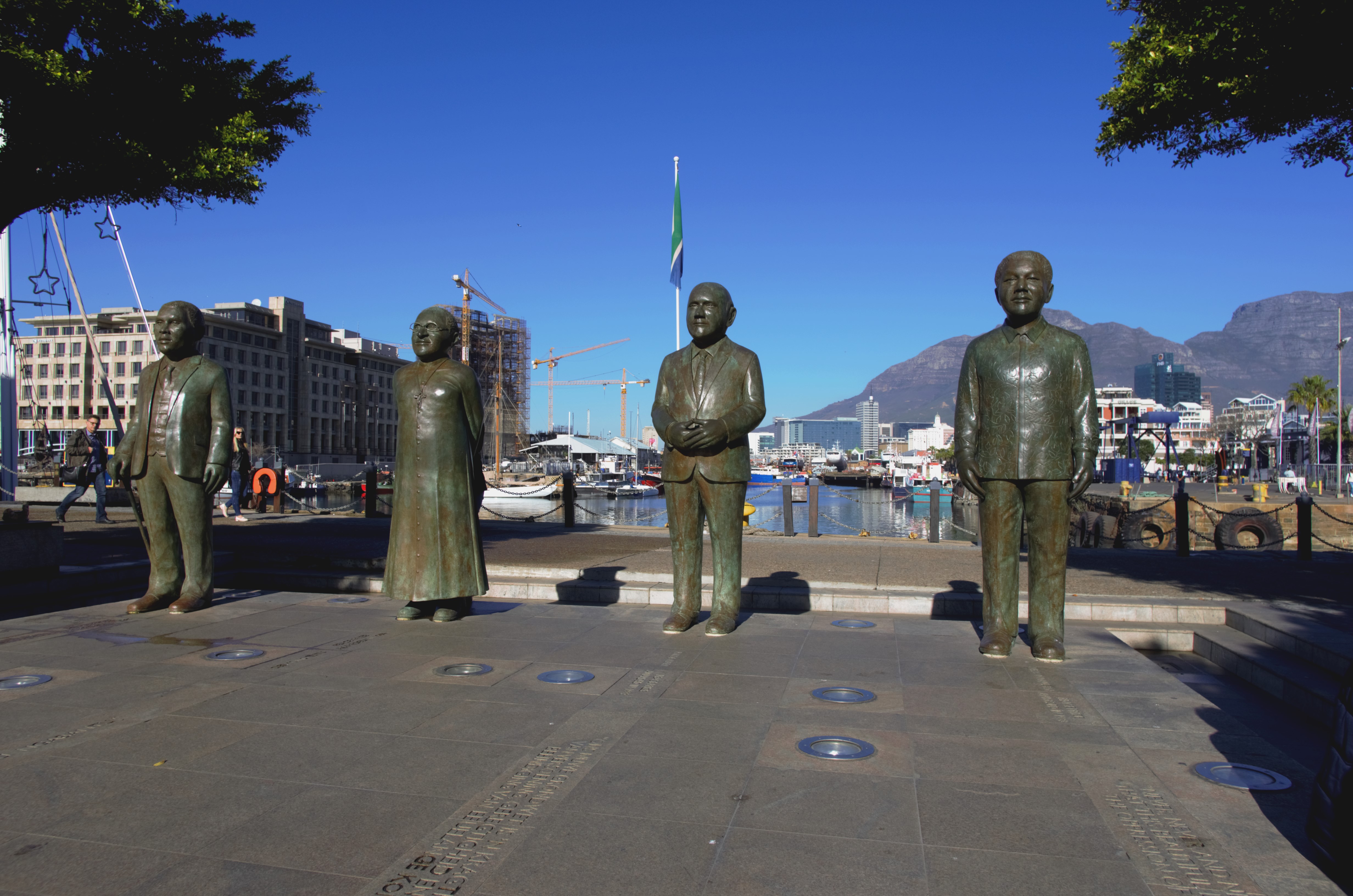
Nobel winners waterfront CT Indian ocean

However, getting together for coffee required a little planning. I live in western Canada, she lives in South Africa. And so I marked this past solstice, trading summer for winter, in Cape Town. Then I boarded a bus for the Eastern Cape province where I am now. I have long had an interest in South Africa, with the literature and history of this complicated and important place. The dust has not settled here.

My friend has given me a gift I will not soon forget. Our friendship has opened a space for us to explore our own personal journeys and to talk about our respective countries – to compare the differences and the similarities.

And I am also  guaranteed to arrive home with books.