What no love can heal: Dry Season by Gabriela Babnik

Harmattan: A cold-dry trade wind that blows across the West African subcontinent from the Sahara to the Gulf of Guinea during the winter months bringing dust storms, low humidity and an increased risk of fire outbreaks. This is the trademark wind of the dry season.
dry-season-cover_54aff6fb99d92_250x800rAs Gabriela Babnik’s novel Dry Season opens, we find a 62 year-old Slovenian woman, Ana, lying in bed with a 27 year-old Bukinabé man, and it is immediately clear that her path to reclaim herself will defy conventions. But then, as we come to know her, we realize that she has long been resistant to the constraints of convention. Ana and the young man, Ismael, are not yet lovers, despite the fact that they awake in the same bed. Their first encounter is uncertain, tentative. Across the boundaries of age, race, class, and culture, they have been drawn to each other with their own dark histories lying twisted inside. As these two disparate individuals take turns addressing the reader – that is the most accurate way of describing the manner in which their stories are uncoiled – we gradually begin to learn more about their pasts and their feelings toward one another.

Ismael and his friend are targeting tourists to rob when he first spots Ana. He is drawn to her but does not see her as a potential mark; he does not sense that she is carrying much of monetary value. It is something else, though he is not entirely certain what that is. For Ana, her attraction to black men is rooted in an earlier time in her life: a chance encounter and subsequent affair with a Sudanese man that has left an unfilled and aching space in her memory. It is not clear that she knows, or is ready to confront, what she truly hopes this young man can heal in her:

“But this sleeping man in front of me was from another time. He had a god drawn on his face. I wanted to say that earlier but it slipped my mind. As I was walking toward him from the other side of the avenue, I felt a strong desire for him to touch the secret territory inside me. Ever since I gave birth thirty years ago, I knew I had to put it aside for a while. I mean touching the silky surface of blades of grass with my palm or licking honey slowly from a metal spoon and then looking at my face in it.”

Ana admits that she has literally walked out on her life in Ljubljana, a life she sees as reduced to the design of illustrated throw pillows, trapped an inherited house with a view of the garden. She is haunted by the suicide of her distant mother, the decline and end of her marriage, the return of her long absent father, and the descent into madness of her only child. Behind all of this is a persistent pain, a bitter groundlessness borne of the fact that she was adopted from an orphanage. It colours, perhaps even distorts, a sense of abandonment that no person, place or career can fill. Her escape to Africa is a deliberate attempt to fill this void.

As Ismael takes up his side of the narrative in turn, it becomes evident that these two unlikely lovers share some common demons. His father is unknown to him and this status defines him and his mother in the village in which they live. They are subject to open shaming and abuse until the day when they are finally rescued and removed to a longed for but equally uncertain life in the big city. They take up residence for a while with a man he calls Baba, and who becomes, over time, a sort of surrogate father whose albino son, Malik, will grow to be both a friend and a recklessly dangerous influence. But in the meantime, Ismael’s increasingly unstable mother will flee to the streets. Together they beg on the roadside and sleep under a bridge until his mother is suddenly killed when he is seven years old.

“Not long before they told me that a lorry had run her over – that it was really her, and not one of the night women or morning women – we had grown apart. Or maybe she had grown apart from me, I am not sure. It is possible that I was a burden to her. In our village seven-year-old boys are already responsible for themselves. They bite into green fruit, never meet their mama except in dreams, and eventually get used to her not being around and start paying attention to the things that are around.”

Suspended between an aborted childhood and a tenuous adulthood, Ismael seeks to fill the mother-shaped hole in his life through several women who look after him for a time. He is eager, hungry to learn to read and write, but his opportunities are limited by his circumstances. He drifts back to the street scene, takes on odd jobs, works for a while fixing up old cars, and eventually falls into the pattern of robbing tourists with his friend Malik. Ana is, for him, a respite, possibly even a path out of a life marked by poverty, loneliness, neglect, and extreme brutality.

Dry Season is, in no small way, a sharp break from what one might expect from the literature of a small central European country. Eschewing a linear narrative and conventional storytelling, we are confronted with an unusual blend of metafictional devices – the fact that the action is occurring within the context of a novel is evoked repeatedly, as is a magical realism common in so much African literature, as a way of seeing and accepting ghosts and magic in the world. It is not the Balkan Wars but the tumultuous recent history of Burkina Faso that forms the critical political backdrop. Sex and sexuality are presented with an overt frankness, from the innocent masturbatory explorations of a young boy to the full fleshed desires and needs of a mature woman. Loneliness drives both Ana and Ismael to seek refuge in one another’s bodies, where they find, for a time at least, an intensely passionate release.

The open relationship between a white woman and a black man less than half her age does not go unnoticed on the streets of Ouagadougou. Ana, as the outsider, is forced to confront the reality of the African society against the mythology that has drawn her to the continent and into Ismael’s arms. Once the veil begins to drop in the aftermath of an attack on a cab in which they were riding, she says:

“I was wrong about you, Ismael. I thought you were a quiet, withdrawn fellow, who still walks in a world of timelessness, of gods, of moral certainties and natural laws, and even such constraints as religion and gender, but now I see you are one of them, one of the bandits.”

He counters:

“I am not what you think. I am a man who walks on a reddish road, the man you saw from the cab. I saw you seeing him. You thought, how backward they are, poor things, they learn on the ground, make love on the ground, eat off the ground, but that ground, that earth, which you take in your hand and let crumble through your fingers, it is all we have.”

She finds herself relying on the assistance of street children, who in turn taunt and mock her. She depends so closely on Ismael to be her guide and protector that she easily loses her way in his absence. The risks that they both ultimately face are significant and potentially devastating. There is no escape to a magical wonderland. Especially when the true trauma, the denied reality, lies inside rather than outside of the person longing to escape.

This novel is a demanding and startlingly rewarding read. Both Ana and Ismael have stories that they urgently need to share, that are weighing them down. Both stories contain hidden corners that must be turned, secrets that are difficult to bear. The narrative threads move back and forth in time, building on past experiences repeatedly to flesh out more detail. The novel that is being created in the present moment, if you will, becomes a space of self-examination and revelation for the two narrators. The separate strands become entwined, creating the effect of a tightly braided cord that then begins to fray as the relationship falls apart. The magic fades but the telling grows increasingly surreal, leading up to an exhilarating and shocking revelation in the final pages.

Another stunning release from UK-based Istros Books, Dry Season will be released on November 16, 2015.

This review has been posted on the blog of the Free Word Centre in London.

In partnership with Istros Books, the Free Word Centre is hosting an evening with Gabriela Babnik and translator Rawley Grau on Monday, November 9, 2015. See details here.
Other kinds of exile: The Beautiful Screaming of Pigs by Damon Galgut

“Lives are meant to be separate and apart; when the borders break and we overflow into one another, it only leads to trouble and sadness.”

Last month I had worried about easing back into reading following my recent unexpected cardiac arrest, but, in fact, August went well. September has proved much more difficult. I have picked up so many books I thought I wanted to read only to be unable to get beyond a few pages. So it is probably no surprise that I retreated to the comfort zone of re-reading a book by one of my favourite authors. I chose this book on the expectation that a new paper edition was due to be released today in Canada but from reports of the distributor being low or out of stock, the reality of actually seeing it on the shelves may be a long way out. Too bad because when you know a writer has many excellent books to his or her credit it is a shame to see only one, the latest or best known, in stock. Fortunately this title is readily available electronically.

pigsThe Beautiful Screaming of Pigs is the second full length novel by South African writer Damon Galgut. Originally released in 1991 it eventually dropped out of print and, when a new edition was issued in 2005 following the Booker shortlisting of The Good Doctor, Galgut took the opportunity to revise the book, wanting to address his longstanding feeling that the rhythms of the language sounded “discordant”. The result, for whatever it is worth, is a novel that embedded itself into my consciousness with the first reading, and proved to be even richer and more deeply affecting with the second.

Set against the backdrop of the first free elections in Namibia in 1989, 20 year-old Patrick Winter and his mother are heading to the land that he had, only a year before, been fighting for on behalf of the South African Army. That experience has clearly left him emotionally traumatized. He is dependent on Valium to sleep and cope with recurring panic attacks. For his mother the trip is an opportunity to visit her young black lover, the latest of a long string personal explorations she has flirted with since her divorce from Patrick’s father. As the story unfolds he will reflect on his childhood, the horror of his time in the army, his ambiguous feelings about his own politics, and the emerging recognition of the nature his sexuality.

The novel opens as Patrick and his mother arrive at the Afrikaner farm where she grew up and he spent many a summer vacation. His brittle grandmother fusses over his physical and mental health, cannot understand why they are heading north, and stubbornly insists on referring to Namibia as South West Africa, the name by which it was known going back to its years as a German colony. Here Patrick will begin to reveal his family background, his closeness to his mother and his alienation from his rugged, athletic, big game-hunting father and older brother.

When his brother Malcolm joins the army and is killed in a motor vehicle accident, the loss tears the fragile family apart. Patrick and his mother move out, unraveling the tightly wound expectations of marriage by which she had been bound. As she tries to reframe herself with a series of dramatic passions and obsessions, her son is placed in the awkward role of picking up the pieces behind her. So when his own obligation to the army arises, despite the sure knowledge that he is entirely unsuited for the task at hand, he enlists promptly hoping to get his two year commitment out of the way. He won’t last two years, nor will he be able to put the experience behind him.

As he awakes that first morning to a familiar noise on the farm he makes a striking observation about his state of well-being in an unforgettable passage. Outside a pig is being slaughtered:

“There is no sound on earth like the sound of a pig dying. It is a shriek that tears at the primal, unconscious mind. It is the noise of babies being abandoned, of women being taken by force, of the hinges of the world tearing loose. The screaming starts from the moment the pig is seized, as if it knows what is about to happen. The pig squeals and cries, it defecates in terror, but nothing will stop its life converging to a zero on the point of that thin metal stick.”

As a child, the spectacle of a pig being killed never failed to draw him with a fascinated horror. On this day his reaction takes on a different note:

“It was a sign of my state of mind or soul that on this particular morning the screaming of the pig sounded almost beautiful to me. It didn’t evoke violence or fear, but a train of gentle childhood memories.”

After the reverie of a walk around the farm and a hearty breakfast, Patrick and his mother head for Namibia. When they finally reach Windhoek and meet Godfrey in the township where he lives, Patrick is surprised to find that his mother’s lover is not quite what he had imagined and is, in reality, only a few years older than he is. They learn that a white activist who had been working with SWAPO (the South West African Peoples’ Organization) has just been assassinated and Godfrey must attend to details for his funeral and an election rally. This necessitates a further trip on to Swakopmund, a detour that places Patrick in a position to question his own political resolution and bravery, especially poignant in light of the fact that on the border he was engaged in fighting the very forces he is now helping Godfrey support. His mother’s enthusiasm soon wanes into boredom as, for her, the shine starts to come off her latest passion.

Woven into the account of their few days in Namibia, is Patrick’s chronicle of his experiences in the army, beginning with the early days of tedium as the young soldiers pass empty days in their tents “playing cards, writing letters, telling jokes. An old scene, as old as the first village.” Patrick is keenly aware that he does not quite fit into this world of testosterone charged energy. He is hopelessly reminded of the way he felt sidelined as his father and brother tossed a rugby ball on the lawn or boasted about their hunting conquests. He senses a brotherhood of men to which he will never belong. It is not until a young Afrikaner named Lappies arrives that he finds a kindred spirit, makes a friend, and maybe – although he doesn’t realize it at the time – falls in love. Once fighting descends on the camp and strikes with a vengeance; horror, fear and death take their toll. When Patrick’s friend is killed, his grasp on sanity begins to slip. Galgut pulls the reader right into his young narrator’s shattered mind in one of the most intense descriptions of a mental breakdown I have ever read. It happens in fits and starts. Patrick tries to hang on, stubbornly, foolishly until his condition deteriorates to the point that he finds himself hospitalized, first in Pretoria and then in Cape Town. He is discharged from the army.

In the hospital his parents visit. Their responses to their shocked and emotionally injured son are true to form. His father travels to see him Pretoria where he sits awkwardly, shifting from ”buttock to buttock” unable to find anything meaningful to say. His mother has been busy acting in a play and does not make her appearance at his bedside until he is back in Cape Town. She visits him daily and talks about herself. It is here that she will first tell him about Godfrey, hoping to impress or shock him. He has no answer but he remembers the small drama.

“At that moment a shaft of light, blued by the rain, fell on her face: like the actress she was, she turned towards it, finding her spot. Then she smiled, and the smile became a laugh: a round, silvery sound, like a coin, which fell from her throat and tinkled down onto the ground.”

Patrick’s few days in Namibia will not answer all the questions he carries into the shifting sands of the desert one year after his breakdown. But he will emerge from the visit with a sense that it is time for him to define his own sense of personal space and figure out who he is. Borders – those lines between countries defended by force, defined by politics, and blurred between people – feature throughout this novel. True to form, Galgut allows these spaces to exist for the reader to explore. He is a writer of remarkable restraint, a storyteller who matches spare tight prose with simple moments of vivid intensity. In The Beautiful Screaming of Pigs he has created a haunting, intelligent, unforgettable portrait of the relationships between people at a time of great upheaval and impending change in Southern Africa. As Namibians queue with excitement to mark their ballot toward the end of the novel, Godfrey tell Patrick that maybe someday his own country will see the same. That day will still be more than four years away.

What it means to be grown up: Thirteen Cents by K. Sello Duiker

“Grow up. Fast. Very fast. Lightening speed. Everything is always like that. Quick. You must act quickly. Understand quickly. Otherwise someone will fuck you up nicely. They’ll beat you up so that you must always remember.”

Meet Azure. Standing shoeless on of the cusp of manhood, thirteen or about to turn thirteen, he is not really sure when he was born. Both his parents are dead. Murdered. He has made his way from Johannesburg to Cape Town – a mean and ugly Cape Town – where he sleeps near the swimming pool in Sea Point or, later, when that option is denied him, under a bridge in Green Point, home to a wretched collection of thugs and gangsters.

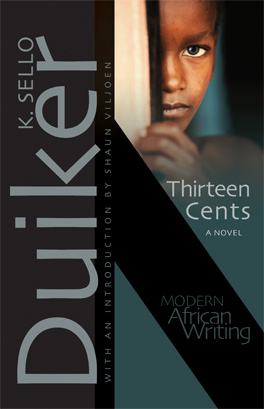
13centsHe makes money primarily picking up tricks, engaging in degrading, often rough sex with closeted married men. He is hardened, tough, able to endure these encounters with a detached resignation. Yet when he looks inside, when he faces the more invisible persistent fears that haunt him as he wanders though the city, past the train station, up Long Street, into the Company’s Gardens; we see what he truly is – a child on the street. His is a coming-of-age story that is relentless, ruthless and, in the end, remarkably redeeming.

As Thirteen Cents, the debut novel by K. Sello Duiker opens, he has taken to looking after nine year-old Bafana, a boy who has run away from home, his life on the streets a drug fueled choice. Azure lectures him on his addictions. The only drug he himself has any interest in marijuana when he can afford it.

“I’m not his father, I say to myself. That laatie is getting under my armpit, under my soft spot. I mustn’t let that happen, I tell myself. I’ve seen too many kids disappear. There’s no point in getting too close.”

Azure knows where to find discarded food, has a few trusted “grown-up” contacts, many of whom will turn out not to be the allies he had thought. In a slice of Cape Town in which each man or woman has to look after themselves first, judging character is a slippery exercise. One that can be brutal, if not fatal, if the shifting rules are not understood or respected. His one friend from home, Vincent, a man who is beholden to the same rules but somewhat older and wiser, manages to impart to young Azure an unusual vision that will ultimately prove more valuable than money or any other form of protection.

In the meantime, his greatest liability is one he cannot control. He has black skin and blue eyes. Hence the name, pronounced he informs us, Ah-zoo-ray. It is a gift he holds from his beloved mother which is stolen when Gerald, the powerful thug currently holding sway over the homeless population, renames him Blue.

“… I can never look at myself too long in the mirror as my blue eyes remind me of the confusing messages they send out to people. I wear my blue eyes with fear because fear is deeper than shame.”

Race is a currency of power in the community in which he has found himself. Gerald who is a coloured man, trading on his lighter skin, straight hair and reputation of exceptional violence, is especially drawn to and maddened by those blue eyes. The punishment he extracts on our young hero is by far the most persistent, horrific, and devastating aspect of this gritty tale. He is beaten, locked up, starved, and abused for days on end for no apparent rational pretext. But the emotional abuse, the attempt to undermine his self worth cuts deeper:

“Why do you feel sad? I ask myself. Because my mother didn’t love me. Gerald is cruel. That is the ugliest thing anyone has ever said to me. It is worse than having a bus crush you. I think of my mother and I feel confused. No. She loved me, I tell myself. And I loved her, no matter what Gerald says.”

As much as Azure/Blue holds to the conviction that he is almost a man, must not cry, must hold within himself the emotions a man can not afford to admit; he continually talks with frustration about “grown-ups”. Their ways allude him, anger him and ultimately drive him on a mission of self healing driven by an almost supernatural desire to destroy all that is trying to destroy him.

As Thirteen Cents moves into its final chapters, the story takes on a folkloric, mythical tone. The stark hyper realism of the earlier account crosses the threshold of magical realism. To escape the horrors existing for him in the city below, Azure makes the first of two ascents up the slopes of Table Mountain where he will spend several nights, have dreams and visions and find, we are led to believe, the beginning of a path out of the life in which he had found himself trapped. The voice that lingers, long after the book is closed, is one of resilience, one of hope.

Sadly his creator could not hold to that same strength. K. Sello Duiker was born in Soweto, South Africa in 1974, raised in middle class black family. His university educated parents wanted to secure a good education for their son. After achieving a degree from Rhodes University he studied briefly in Cape Town where drugs and mental illness disrupted his academic career. He would draw on his experiences in the city to write Thirteen Cents and his other major work, The Quiet Violence of Dreams (TQVOD). Recognized as one of the first important young black voices emerging in post Apartheid South Africa, he ended his own life in 2005 at the age of 30.

The edition of Thirteen Cents that I read, published as part of the Modern African Writing Series of the Ohio University Press, includes an introduction by Stellenbosch University professor of English, Shaun Viljoen which provides an exceptionally helpful context for the placement of Duiker’s work in the evolution of contemporary South African literature along with a glossary of the expressions and slang, mostly Afrikaans, employed throughout the text.

I have not, to date, read many black South African writers, but I brought a selection of titles back from my recent visit to the country. Duiker has long been on my radar and all 600 pages of TQVOD has been stting on my bookshelf for more than a year. I am glad I went back to this novel first, standing as it does in a pivotal context for black South African literature and look forward to reading more of the young voices that have emerged in recent years.

For another positive review of this powerful book, see my friend Penny’s blog.

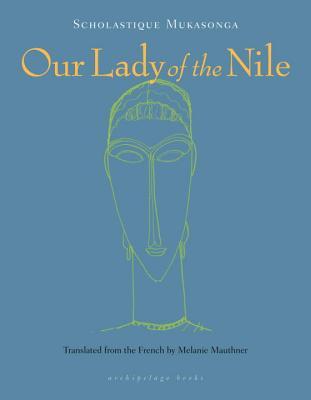
School Days: Our Lady of the Nile by Scholastique Mukasonga

“Our Lady of the Nile: how proudly the school stands. The track leading to the lycée from the capital, winds its way through a labyrinth of hills and valleys and ends, quite unexpectedly, in a twisting climb up the Ikibira Mountains – which geography textbooks call the Congo-Nile range, for want of any other name.”

NileThis first novel by Rwandan born French writer Scholastique Mukasonga imagines life in an exclusive girls’ school high in the mountains of Rwanda close to the source of the Nile. Created by the Belgian Catholic church to nurture and prepare the daughters of wealthier Rwandan families for a future that befits their pedigree in the now independent nation, the lycée offers a well rounded education for a young lady and protection from the undue attentions of the opposite sex. Being a virgin, or at the very least not pregnant, is still key to securing a good marriage. And keeping watch over this small community is a blackened statue of the Virgin Mary enshrined nearby, practically assisted by a rigid Mother Superior, several sisters and a chaplain with a lecherous eye for his female charges. Lessons cover academic subjects, languages, religious studies and finishing school skills such as cooking and sewing.

Our Lady of the Nile opens at the beginning of a new school year. Land Rovers, limousines and buses arrive to deposit students. As one might expect, the girls form alliances, engage in gossip, develop crushes on the French male teachers. Assuming a dominant role among her third year classmates is Gloriosa, the big boned, intimidating daughter of a high ranking Party official. In the Hutu dominated nation, her greatest scorn is reserved for the two Tutsi girls admitted under the quota requirements, Virginia and Veronica.

As the year progresses it becomes clear that for all the Catholic school’s efforts to civilize the young ladies, traditional superstitions, beliefs, and customs have a strong hold over the students at the lycée, blending in with Christian faith and fear. For Veronica in particular, another element comes in to play. An eccentric white man who lives nearby on a crumbling estate, lures her into his obsessive fantasy about the Ancient Egyptians and his belief that the Tutsi are their direct descendants. In her vanity she is willing to entertain his delusions. Virginia is skeptical and uncomfortable by her friend’s willingness to assume a queen’s role and seeks instead to assuage disturbed spirits.

Of course underlying racial tensions are never far from the surface. One student, Modesta, with a Tutsi mother and Hutu father, is caught between the two. She likes to confide in Virginia but cultivates a place of security by playing Gloriosa’s lapdog. Although the Rwandan genocide is still years off at the time this story is set, violence is a real and present threat and each side is aware of where their fate lies and it all comes down to a question of race:

“Because there were two races in Rwanda. Or three. The whites had said so; they were the ones who discovered it. They’d written about it in their books. Experts came from miles around and measured all the skulls. Their conclusions were irrefutable. Two races: Hutu and Tutsi, also known as Bantu and Hamite. The third race wasn’t even worth mentioning.”

As Our Lady of the Nile unfolds, life at the lycée and the adventures of some of the girls in this tiny African nation are sketched out at a slow, simmering pace. However, because each chapter tends to deal with a distinct event, the novel has the feel of interlinked short stories. I did enjoy this book, it reads well with moving, often funny, passages, but the overall effect is somewhat disjointed. I found it too easy to put it down and not pick it up for a day or so. A little more consistency and tension would have helped propel the story toward what is a shocking and violent end.

witmonth15Translated by Melanie Mauthner, the tone is graceful and clear. But I have to say that there was one moment that set the reading experience off and had me wondering where the editor was. Told from an omniscient third person perspective throughout, there is one paragraph that falls into the first person plural, in the first half of the novel. The effect is jarring. One of those times that, as a reader, one wants to have a peek at the original text.

* Our Lady of the Nile was longlisted for the Best Translated Book Award (BTBA) 2015

And her name was Good: Agaat by Marlene van Niekerk

“Poor Agaat. What has my life been? What has her life been? How can I ever reward her for coming this far with me here on Grootmoedersdrift? How does one compensate somebody for that fact that she allowed herself to be taken away and taken in and then cast out again? And to be made and unmade and remade. Not that she had a choice. I even gave her another name.”

This is a variation on the refrain that haunts Milla de Wet’s thoughts as she lies, paralyzed in the advanced stages of Lou Gehrig’s disease, completely dependent on her black servant turned caregiver Agaat to attend to her every need. As Marlene van Niekerk’s magnificent novel begins, the two women are reduced to communicating through eye movements. Eventually even that will be impossible. But Milla’s mind is sharp and brittle in her confined waking hours and Agaat, stalwart and efficient to the end, knows her mistress well. Too well.

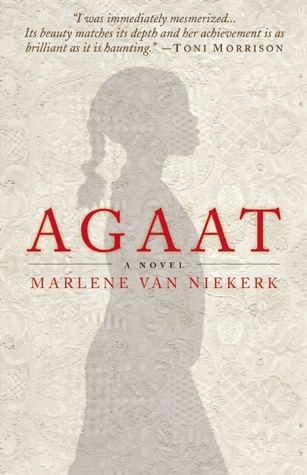
AgaatFrom this claustrophobic perspective a remarkably expansive and complex novel of Apartheid South Africa unfolds. Van Niekerk, a nominee for the 2015 International Booker Prize, achieves this by deconstructing the traditional farm novel and weaving together a complex, poetic and devastatingly powerful epic. It is almost impossible to find the words to adequately capture the experience of reading Agaat (or The Way of the Women as it was published in the UK) without resorting to hyperbole. It is, quite simply, an inspiring, unforgettable novel. One that invites and rewards careful reading.

Despite the rolling fields and pastures, river and mountains, this is an intensely focused novel. It is not easy to exist with Milla trapped inside her immobile body, or to listen as she bitterly dissects and dismantles her life – alternately self righteous and regretful – addressing herself in the second person. It is not comfortable to be swept into the stream of consciousness of her internal ramblings that mix obsession over her current state of being with the flotsam and jetsam of her farm woman’s domestic life. Or to discover, through her notebook journals, the details of Jakkie’s childhood and, eventually, Agaat’s early years in her home. By masterfully weaving together these four distinct narrative streams in each chapter, van Niekerk creates an enduring portrait of the complexities of power as they play out within families, between races, and in a country that is in an increasingly volatile political state.

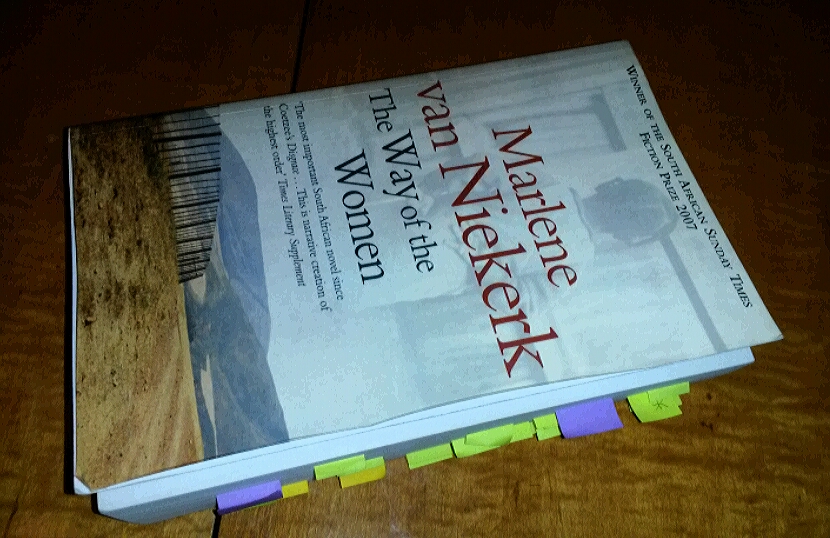
My well marked copy!

As the story is fleshed out, we meet Milla in 1948, as a young woman engaged to the dashing Jak de Wet, a trophy husband of sorts, handsome but ill suited to the farming life. Their marriage is increasingly volatile and strained, with both playing their own counterproductive roles out to the bitter end. For many years the couple is unsuccessful in their efforts to conceive. That is where Agaat comes in. The daughter of one of the labourers on her mother’s farm, she is born with a withered arm and, as a result, is subjected to horrific abuse in her early years. Milla imagines a heroic role for herself in rescuing the rejected child and bringing her into her home against the protests of her husband and the sidelong glances of her neighbours. For years Milla treats Agaat as a surrogate daughter – in so far as a segregated society will allow – teaching her to read and write, to explore and appreciate nature, and to master the fundamentals of animal husbandry. And then, suddenly, she discovers she is pregnant. Before the baby arrives, Agaat’s role is abruptly shifted. She is moved into an outside room and a maid’s uniform with strict expectations. But when little Jakkie arrives Agaat, barely more than a child herself, becomes the loving and compassionate caregiver that neither of his parents can ever manage to be.

As the end is approaching Milla is forced to weigh and reevaluate her own life and the fate to which her actions have tethered Agaat. As often as she questions her actions, it is not clear that she can ever stand back from herself and see the big picture. She is, in the end, complicit in maintaining the Afrikaner social order that Jak so proudly believes in even if, in her own mind, she is a martyr. Agaat is at once the angel in the wings, servant and nanny; and the witch still bound to her “primitive” ancestry. She has been molded and created by Milla, but her thoughts remain hidden. Not until the closing pages of the novel is her side finally revealed in the dark and heartbreaking bedtime story she that she and Jakkie shared when he was small.

Originally published in Afrikaans, the translation by Michiel Heyns is simply brilliant. Van Niekerk is first and foremost a poet and her language is filled with allusions to music, children’s rhymes, and literature. The scent of fennel, colours of flowers and foliage, the calls of birds and nosies of farm animals, the guttural g’s of Afrikaans all add to the multidimensional experience of reading Agaat. As Heyns points out in his Translator’s Note: “Agaat is a highly allusive text, permeated, at times almost subliminally, with traces of Afrikaans cultural goods: songs, children’s rhymes, children’s games, hymns, idiomatic expressions, farming lore.” The ultimate result appears effortless, mediating the boundaries where necessary but maintaining a distinct cultural experience. An interview with Heyns in Words Without Borders is an informative and entertaining exploration of the text and the translation experience that is highly recommended for interested readers.

Agaat is bookended with a Prologue and Epilogue in Jakkie’s voice. It is 1996 and he is flying home from Canada because his mother is near death at the beginning and returning after the funeral at the end. He left South Africa in 1985 to escape the political conditions in his native country, and, one suspects, his parents. As I write this, I am about to fly from Canada to South Africa myself for my first ever visit. I am aware of the fraught tensions that continue to run through the country, most recently arising in the literary community. I will be carrying the many complex currents that run through this important novel with me as I leave.

Naming the unnamed: The Meursault Investigation by Kamel Daoud

“A man who’s drinking is always dreaming about a man who’ll listen,” advises Harun, the aged man sitting in a bar in Oran, Algeria, in the opening chapter of The Meursault Investigation. His companion, night after night, is a young student intent on sorting out the mystery behind the iconic text he carries in his briefcase. What unfolds over a series of encounters is the tale of the unnamed Arab murdered in the pivotal scene of  L’Etranger by Albert Camus. In presenting Harun as the fictional counterpoint to Camus’ Meursault, Algerian author Kamel Daoud sets up to name and flesh out a life not only for the victim of violence on that hot beach, but for his brother and mother as well. What follows is more than an homage; it is an active dialogue from the other side of the equation – ethnically, politically and historically.

kamelAn acquaintance with L’Etranger is not only assumed but a recommended prerequisite to The Meursault Investigation. Both are novellas so reading or reviewing the former in advance is not an arduous task. I last read Camus’ classic in late 2013 with The Guardian Reading Group so I had the advantage of being able to search the online archives for my own reflections and the discussions that ensued. I still found myself dipping back into my own copy as I started out with this book but as I fell into the story it no longer seemed necessary.

Our narrator this time around is immediately a more likable character than our old friend Meursault. He is not happy, but we have a context for our sympathies. He is seven years old when his beloved older brother Musa meets his senseless fate. Their father had disappeared before he had a chance to even form a memory of him so his brother was his hero and a surrogate father figure. His senseless death, unreported save for two obscure newspaper accounts his mother clings to, cannot be proved. No body is ever found. After all, in the novel in which he is killed he is neither named nor is the fate of his body mentioned.

His mother becomes obsessed with seeking answers. In the process Harun is reduced to a shadow of himself, he feels like an effigy of his brother. He follows his mother as she searches for clues. He is blamed for surviving and denied his own identity. He becomes a ghost in his own life. While Meursault’s relationship with his mother is, from that famous opening line – “Mother died today” – cold and flat, Harun and his mother share a complicated, emotional dynamic. “Mama’s still alive today” he reminds us repeatedly, but both are wounded and reduced, survivors of the unnamed Arab in an uncertain and shifting post-colonial Algeria.

Eventually he is led to avenge his brother’s death by taking the life of a Frenchman. It is, in itself, an act rooted in the story of Cain and Abel:

“I blame my mother, I lay the blame on her. The truth is, she committed that crime. She held my arm steady while Musa held hers and so on back to Abel or his brother. I’m philosophizing? Yes, yes I am. Your hero had a good understanding of that sort of thing; whether or not to commit murder is the only proper question for a philosopher, the only one he ought to ask.”

In an echo of L’Etranger, where Meursault is condemned to death not for killing an Arab, but for failing to cry at his mother’s funeral; Harun faces imprisonment not for an act of murder, but for killing his Frenchman one day after the Declaration of Independence rather than alongside his countrymen during the battle for freedom. Close on the heels of this new found Independence, some two decades after his brother’s death, our hero finally encounters the famous text which he instantly recognizes as explaining, complementing and mirroring his own. He is at once intrigued and dismayed.

The echoes with L’Etranger resound throughout this novel. Daoud answers the absurdity of Camus with his protagonist’s own absurd predicaments. He matches Meursault’s rejection of God with Harun’s dissolution with his faith. But his hero’s hopes and disappointments are his own, solidly grounded and charged with a power that, from the Algerian perspective 70 years out from the publication of the original inspiration, demands to be heard.

This is, of course, not the first time that fiction has been answered by fiction, untold stories have been re-imagined, or silenced characters have been granted voice. The Meursault Investigation has been met with international praise, a measure of skepticism and, in the author’s home country, calls that he be tried for blasphemy. Translated from the French by John Cullen and published by Other Press, this is a deceptively simple yet deeply important work. Time will tell how it holds up in the light of such a famous counterpoint, but, for my money, it has to be seen as a continuation of a conversation that will, because it is so deeply informed by L’Etranger, serve to draw Camus’ work forward into twenty-first century discourse while setting its own very important and timely literary agenda as we move forward.

Besides, Harun with his diversions and penchant for storytelling is much better company than poor miserable old Meursault.

A childhood of magic and darkness: By Night The Mountain Burns by Juan Tomás Ávila Laurel

“Every man on our Atlantic Ocean island has his own canoe, and if he doesn’t have one, a new canoe is brought into the world so that he does, so that nobody on the island has to borrow one from anyone else.”

A detailed account of the traditional construction of a canoe on the tiny island of Annobón, an activity that gathers the resources of the entire community, opens By Night the Mountain Burns by Equatorial Guinean writer and political activist Juan Tomás Ávila Laurel. Immediately we are drawn into an engaging, personal, conversational tale. The narrator is a deeply sensitive, if not well educated, man. His voice is fresh, at times naive, frequently looping back to revisit details, questioning the reader or foreshadowing events but deciding to hold off so that he can best share his childhood experiences, as he remembers them, on this remote island where natural resources are limited, life is difficult.

2015-03-14 02.11.35As a young boy, our narrator, lives in a large home with his grandparents and a number of mothers and siblings. Any fathers have long since disappeared to a land across the ocean, so no necessary distinction is made between birth connections, he sees all of the mothers as belonging to all of the children. His grandmother rules the roost while his grandfather is a curiosity to his many grandchildren. For some reason he has built his house facing the away from the sea and he sits watching the mountain that rises above the town day after day. He does not fish or go down to the beach to visit with the other men. In fact he does not come downstairs at all and the children never see him eat.

For our storyteller, the secrets of his his grandfather and a sense of the danger and misery adults must learn to live with begins to become clearer as a series of devastating events sweep his island community, beginning with a fire that starts on the mountainside destroying plot after plot of precious crops and threatening the town itself. Officially a Catholic community, the roots of superstition, folklore and mythology run deep and are intertwined with Christian saints and celebrations. In the wake of the fire, an especially violent act of retribution is carried out against a local woman assumed to be a she-devil, and then, before the community can heal, a plague of cholera sweeps through exacting a devastating toll on the population. Curiously, in this tale in which most characters remain nameless, every adult who dies is named in in full, and a cluster of crosses are inserted into the text to represent the numbers of dead who now crowd the sole cemetery on the island.

Even without the tragedies that run through the core of this account, daily life on the island is filled with challenges. Shortages of kerosene, among many other provisions – salt, soap, matches, tobacco, spirits, fish hooks, nylon rope, clothing – necessitate a careful rationing of light and flame. As a result, this novel is infused with a haunting darkness that is literal, metaphorical and even lyrical. Night brings both security and vulnerability. But moonlit nights are seen as even more threatening:

“… on moonlight nights we felt exposed, for the moon lit up the whole village and advertised our helplessness. I always felt that moonlight nights revealed our skeletons, our defects.”

Magical and evocative in the telling, mixing childhood wonder with reflective adult wisdom, Ávila Laurel introduces a place few will likely have heard of – the island where he grew up. He has been compared to Achebe and Marquez among others, but his account has a much more contemporary edge. When his character speaks of evil on the island, it is difficult not to think of the very brutal reality of the extreme poverty and social inequity that exist in his country as a whole, despite great resource wealth. Rooted in traditional story telling, this is a story for our modern times. It is exactly the type of important story that literature in translation should be bringing to a wider audience and a clear example of the vital role that independent publishers like And Other Stories play in this regard.

Finally, Jethro Soutar’s translation from the original Spanish is fluid, maintaining difficulties that the narrator, who is sharing his tale in Spanish, has finding words to express what Spanish cannot capture of his native island language. The quirks and qualities of his oral account are intact, the humour and insight shine through. Quite an accomplishment given that Ávila Laurel’s involvement in a hunger strike against the government of Equatorial Guinea that led to his ultimate exile to Spain added challenges to the communication between translator and author during the translation process.

International Foreign Fiction Prize 2015: By Night The Mountain Burns is the first long listed title for And Other Stories, and I confess my bias in that I have developed a great affection for this publisher so I am thrilled. I had in fact just purchased this title along with several others and it was sitting at the very top of my TBR list so it was a happy coincidence that it was selected.

Behind the photographic impulse: Double Negative by Ivan Vladislavić

Copyright JM Schreiber, 2013

“How can I say what these fragments mean to me? The awkward truths of my life take shape in their negative spaces. In the lengthening shadows of the official histories, looming like triumphal arches over every small messy life, these scraps saved from the onrush of the ordinary are the last signs I can bring myself to consult.”

When we first meet him, Neville Lister, the narrator of Double Negative, is a disaffected young man, uncertain and aimless in a fractured and troubled environment – apartheid South Africa. It is the early 1980s and he cannot quite find his footing, either in academic study, the political protestations of his friends, or the mixed allegiances of his parents’ generation. The stakes are high, but his ambivalence is a luxury well known to middle class youth. Being close in age to Neville and his creator, South African author Ivan Vladislavić, I could not help but chuckle at his repeated references to “Beerhunter”, (a party game we Canadians lay claim to, by the way) or recognize the insidiousness with which The Eagles’ Hotel California album seems to define our lives even if we never owned a copy of that recording. However, unlike our most reluctant hero, I did not have political unrest or the real threat of conscription bearing down on me.

Double NDouble Negative traces Neville’s evolution from long-haired, pipe smoking dropout to middle-aged late blooming artist, framed against the shifting political, cultural and socioeconomic backdrop of Johannesburg. In the first section, “Available Light”, his father arranges a meeting with a famed local photographer, Saul Auerbach, in the hopes that the encounter might inspire his son to reach beyond his current employment assisting a man who spray paints lines on roadways. As Neville tags along, Auerbach and a journalist friend devise a game that will direct their photographic pursuit for the day. Standing on a hillside with a panoramic view of the city below, each man choses a roof top. They manage to visit two of the three selected homes where Auerbach charms his way in, and coaxes photographs out of the inhabitants – a poor black woman with her two surviving triplets living in a backyard shack and a white woman in a lounge suffocated with furniture and curios. But before they visit Neville’s choice, the photographer’s energy and his necessary light have faded and they head home.

When our narrator picks up the thread of his story in the second section, “Dead Letters”, he has been in London for ten years and the first free elections have just been held in South Africa. Swept up in a wave of nostalgic homesickness he flies home. By this time he is also making a living behind the lens, but as a commercial photographer. He returns to a city already morphing under new dynamics, post apartheid – street names changing, houses and entire city blocks replaced. Cities are, at the best of times, constantly re-inventing themselves, shedding their skins. The effects are more profound under the pressures that have been released and confronted in places like Johannesburg, where, by the time we catch up with Neville again for the final installment “Small Talk”, he has taken to photographing the ubiquitous walls that have arisen to close off and protect the city’s inhabitants from each other.

Upon his return to South Africa, he had experimented with trying to enter a home to photograph the resident, drawn, of course, to the house he had first chosen so many years earlier. The experience almost swallows him whole but does, in turn, offer the direction that will inform his own artistic photographic ventures. He no longer wants to see what lies behind the walls that have been erected. He draws the resident out but refuses to enter. It is now 2009 and our hero is being subjected to an interview by an eager, self-promoting young reporter and blogger who intersperses her blog posts with a litany of handy household tips that would make Oprah proud. She is of a entirely new breed, neither weighed down by nor fully appreciative of the reality of her nation’s history. By contrast, Neville Lister occupies the transitional space. As photography has moved from film to digital, a medium with remarkable capacity for storage and the editing and altering of images, so is his country altering and editing its own collective memories.

More than anything, this is a story that unfolds as a series of images, captured with Vladislavić’s poetic eye for detail. He translates scenes, the photographic and the interpersonal, with a language so effortlessly descriptive that I often stopped to re-read a paragraph for the sheer pleasure. Neville describes “gumption” as a “word that stuck to the roof of your mouth like peanut butter”. A character “moulted” his jacket. In navigating the city he talks of following “the simple arguments of avenues and squares”.
This ability to transform language into imagery is nowhere more apparent than in his descriptions of the scenes, immortalized by the lens of the camera under the direction of the photographer. One of the photographs resulting from the initial outing with Saul Auerbach is described in vivid detail:

“Mrs Ditton sat in the armchair beside the fireplace. The coffee table had been dragged away – there is no trace of it in the photograph – to expose the floorboards and a corner of the rug. Looming on the left is the largest of the cabinets, so imposing you would say it belongs in a department store. The chair has wooden arms with ledges for tea cups and on each side of these lies a pie-crust of crochet work and a coaster. The chair sprawls with its arms open wide and its fists clenched, and she wallows in its lap.”

I imagine that anyone with an SLR camera and a tripod has experimented with long exposures and the creation of ghost images. It seems to be a rite of passage. Double Negative is, in many respects, a book of ghosts. Visiting with the woman living in the house he had selected so many years earlier, Neville feels weighed down by the voices swirling around her lounge. In referring to the annotated cookbook passed down from his mother, he reflects that the food “tastes better when the ghosts adjust the seasonings.” And ghosts haunt a collection of dead letters that come into his possession and, it seems, may be destined to lead him into his next “artistic” endeavour. If growing older is a process of acknowledging and coming to terms with the ghosts we carry, our narrator is older and wiser but still working away to make sense of it all by the end of this book.

And so is his country.

Note: Originally published in South Africa in 2011, Double Negative was released to an international audience in 2013 (with an introduction by Teju Cole) through the amazing publisher And Other Stories. Supported by their unique subscription model, this release was followed by the publication of an earlier title, The Restless Supermarket in 2014, and his upcoming collection of stories, 101 Detectives, will be released this year. Ivan Vladslavić was recently named one of three recipients of the 2015 Windham Campbell Prize for fiction along with Teju Cole and Helon Habila.

Addressing injustice with the pen: Reflections on Rumours of Rain by André Brink

Earlier this month I attended an inaugural PEN Canada event in my city. The purpose of bringing such discussions to locales throughout the country is to turn the discussion about censorship and freedom of expression inward where, against the outrages we see in other parts of the world, we risk falling into a false sense of complacency. The empty chair at this debate was reserved for Raif Badawi, the Saudi man sentenced to 10 years in prison and 1,000 lashes for the “outrageous” crime of blogging. His wife and children have been granted refugee status in Canada but the Canadian government is curiously reluctant to speak out. Why? I can’t help but wonder if their foot dragging around any international injustices that involve refugees or foreign born Canadians (the non-white ones, that is) reflects the persistent attitudes of the Conservative government’s core grass root supporters. Funny how soon we forget that all non-Aboriginal Canadians are immigrants in this colonial landscape if you go back far enough. The subjugation and treatment of our First Nations peoples is often seen as justifiable, built into our collective history. That is no excuse, but somehow racial concerns carry an entirely new intensity when the matter is much more black and white, so to speak.

Or when we see it elsewhere.

RainThe recent passing of South African novelist André Brink led me to a long overdue reading of one of his classic novels, Rumours of Rain, which dovetailed nicely with the issues that have been in my mind since attending the PEN event. Published in 1978 and addressed directly to the injustices of apartheid, the echoes of this, and his other controversial novels of this period, have long reverberations that continue to ring  close to the bone in this increasingly global new world.

The power of Rumours of Rain lies in the narrative voice. Martin Mynhardt, a successful Afrikaner businessman, has stolen a rare week of solitude in London to exercise his literary ambitions while attempting to exorcise any measure of guilt in the unfolding of a recent series of events that have torn apart the lives of some of the people who were once closest to him. Driven solely by his own over inflated sense of self worth and an endless internal cost-benefit analysis, Martin is a ruthlessly blind apologist for apartheid. He imagines himself sufficiently enlightened to know what is best for his country and his family. He focuses his attention on the events surrounding a weekend visit to the family farm with his son where his goal is to convince his mother to approve the sale of the land, an urgent deal to which he is already deeply committed. But nothing is simple. Violence not only intrudes on his visit to the farm, but back home in Johannesburg, a violent series of riots is about to erupt in Soweto.

In a long winded, self indulgent, but oddly engaging account, he chronicles his complicated relationships with his best friend, his wife, his son, and his mistress. He honestly feels personally affronted by the revolutionary political passions he is witness to, especially in his friend Bernard – after all, he does not want them to reflect badly on him.  But he is unable to acknowledge any responsibility for the role any of his own action or inaction may have played in the end results; he can justify every selfish choice he makes in marriage, love, sex, business and friendship. No matter the cost.

Yet, in committing his story to paper, Mynhardt inadvertently succeeds in giving an eloquent voice to the very views he claims to disdain. He manages this by including transcripts from Bernard’s trial for treason, his son’s bitter reflections on his recent experiences with the army in Angola and through passionate exchanges with Charlie Mofokong, an educated black South African and childhood friend of Bernard’s whom he reluctantly employs to assist him in managing his mine interests.

Throughout the novel two interwoven refrains recur: Martin’s grandfather’s favourite Biblical passage “And have not love”(1 Cor:13) and the anthemic Nkosi Sikelel’ iAfrika.

What we end up is with is the voice of a deeply flawed, myopic (literally and figuratively) anti-hero; not surprisingly one who must have made more than a few attentive readers shift uncomfortably in their armchairs. Literature is often at its most effective when it gives voice to the under dog, but in skillful hands, like Brink’s, turning the narrative over to the less sympathetic side of the equation can have a resounding impact. Especially when we feel a moment of empathy with a man we want to despise, catch a glimpse of him in ourselves.

Fittingly, a month that started with a local PEN event, has ended with Freedom to Read Week in Canada. The opportunity to honour an author who used his voice, together with many of his fellow writers, to raise a chorus to question and challenge apartheid, seems appropriate. Today the intrinsic messages against racism, classism and greed still need to be heard by a wide audience.

Dreams and determination: A Man of Good Hope by Jonny Steinberg

It is, of course, a harsh coincidence, perhaps no more than that, but the first two murders of the year in my city took the lives of two young members of our 5,000 strong Somali community. The first of the two unrelated incidents occurred just ten blocks from my home in the early hours of New Year’s Day, the second the following day. To many here in Canada, Somalis, if they are thought of at all, are conflated with pirates.

I have watched with dismay, the rise of racism and xenophobia that has accompanied the increased visible ethnic diversity that has spread across the country, changing the face of a city that was, when I was young, predominately white. My city that is only 130 years old, most of us have come from elsewhere recently or within a few short generations. And those who were here before, our First Nations, still have to struggle to call attention to their circumstances. But we are lucky, this is a land of peace, a land of promise.

GoodhopeAgainst this context, a review in The Observer drew my attention to A Man of Good Hope, a new book by South African writer Jonny Steinberg. In my work I encountered and supported many young men from the troubled Horn of Africa, but the depth and complexity of the political and human realities that have been endured by many of the refugees who ultimately make their way to our shores are far beyond my imagining from my safe space. However, I was not quite prepared for just how difficult that journey can be.

The life of Asad Abdullahi, the young Somali man at the heart of this biography, is changed forever when his mother is shot by militiamen in Mogadishu when he is 8 years old. As he flees with relatives he begins a long, at times circular, journey of hopes and repeatedly dashed dreams. Lacking formal education he is gifted with determination, a proud sense of identity, an unflagging work ethic and an ability to assess any situation to determine where a living can be made. But at every turn there are losses, challenges and continued threats to life and limb that mount and threaten to drag him down. He is forced to grow up fast. Eventually he makes his way to South Africa seeking the wealth and security he hears fellow Somalis talk of only to find that even for the successful migrant, the end can be sudden and brutal.

Economic opportunities for newcomers like Asad, who are forced to live with temporary documents, are limited and often place them into the hostile and difficult environment of the townships where loyalties can turn on a dime. His beloved wife, unwilling to face the rising danger, heads home to family with his children. He stays, holding on to the dreams of America that have long called to him and endures the rising xenophobic violence perpetrated by black South Africans against the tide of incoming African migrants. His diligence will be rewarded, but not without great sacrifice.

Steinberg recounts, with care and compassion, a tale that has more breath taking twists than a thriller but exists on a plane on which dreams, hopes, memories and regrets blend to create a story that is at once deeply human and ultimately elusive. On a more immediate level, the view into the the ancestral dynamics of Somali history and culture that provides a background to Asad’s story has added, for me, extra poignancy to the recent New Year’s Day killing near my home. The victim shared the family name Abdullahi.