Limping into December

Nothing like a car accident with the attendant whiplash and concussion—not to mention worrying about whether the impaired driver who hit me can been tracked down, if she is insured, and questions about buying another car—to really put the brakes on one’s reading an writing. I finished two books last month, abandoned one, am still crawling through another, and the two short volumes I expected to easily breeze through last week for the end of German Lit Month are far from finished.

To add insult to injury (so to speak), my blog has been subject to an unending stream of bot traffic from China over the past few months. It kind of takes the fun out of everything when you cannot even tell where the legitimate, organic (i.e. human) engagement is going. WordPress keeps congratulating me on my incredible booming stats, but the possibility of installing a plug-in to help stem the unwelcome traffic requires upgrading to a nearly $400/year Professional Plan which is surely overkill for a pastime that earns me little more than a number of (greatly appreciated) review copies while inspiring continual purchases of even more books that I would like to read and write about.

All this to say: Where has 2025 gone? And how has the world become uglier, meaner, and ever more subject to conflict, political corruption, and natural destruction? I wish I knew.

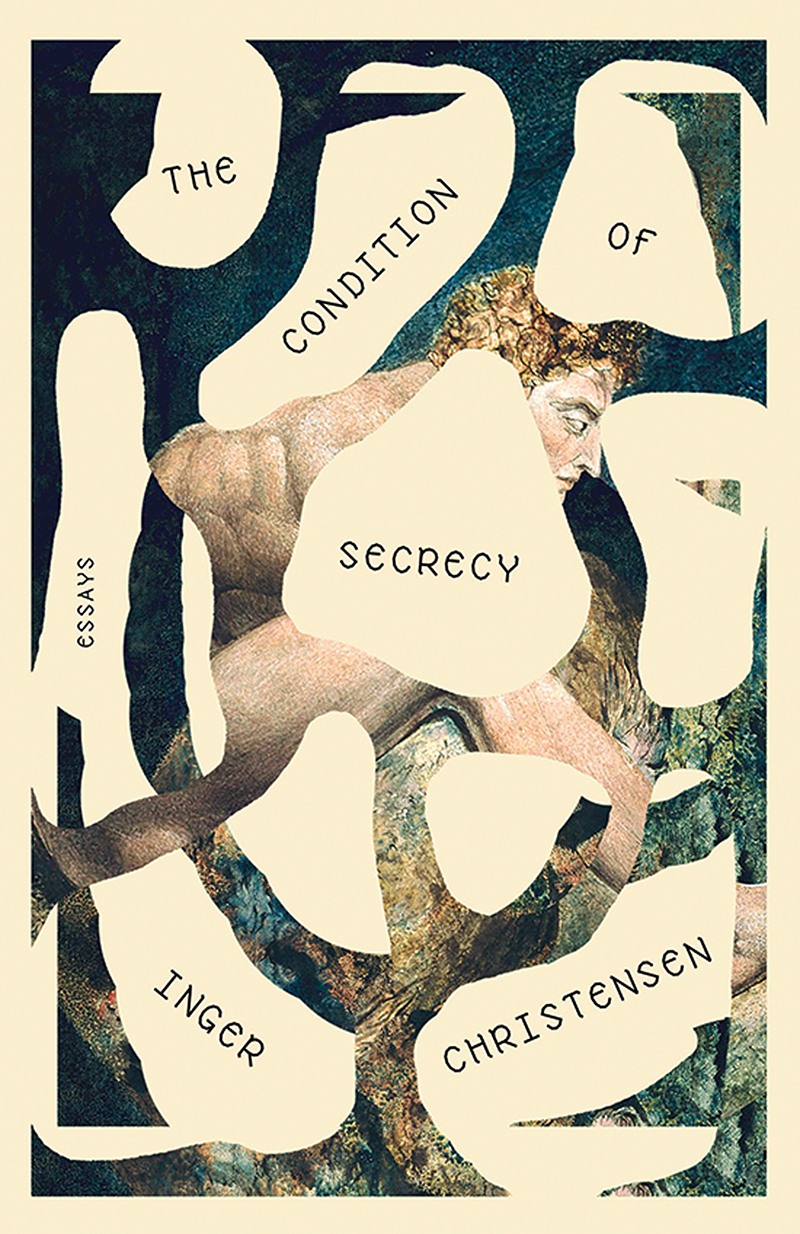
An inexhaustible landscape of words: The Condition of Secrecy by Inger Christensen

Writing poems is just as much a mysterious miracle. Not that there’s anything mystical or ceremonial about it. Or anything religious. It’s a neutral miracle, so to speak, granted in advance, because in the process of writing we need to use language in its whole, indissoluble connection with reality. It’s that connection with reality that’s a mysterious miracle. And that’s what poetry has to enter into.

It is clear from the essays collected in The Condition of Secrecy, that Danish poet, novelist, and essayist Inger Christensen (1935–2009) was not only in love with words, but that she understood language—and the way we seek to give meaning to the world—as part of the dynamic process of nature. For those who are already familiar with the experimental writer’s poetry and fiction, this collection offers insight into her view of the world, which was heavily influenced by a lifelong interest in science, mathematics, and linguistic theory, and the questions she was inclined to ask about her own engagement with language. For those who are new to her work, myself included, her philosophical musings and poetic investigations are no less interesting, and may well serve as an invitation to explore her work further—and fortunately there is a good selection currently available in English translation with more forthcoming this year.

What is most immediate in this compilation of essays, originally published across four decades, from the 1960s through the 1990s, and arranged intentionally rather than chronologically, is the sheer force of Christensen’s intellectual curiosity. At its most basic, it is a book about writing and meaning, but a book by an original inventive poet trained in German, mathematics, and medicine, who read six modern and two ancient languages. And, as a child of the Second World War, social and political concerns are never far from her mind. The Cold War and the fear of nuclear annihilation casts a clear shadow on a number of pieces. So, although this volume only numbers 138 pages, Christensen encourages her reader’s close engagement with ideas as she herself works her way through her own questions about the world and the way we find meaning in it through language.

Words are, of course, essential and she has a wonderful way of employing them. Her opening sentences are often quite special. “Interplay,” an essay about coming to understand time and one’s place in history as a child in Denmark at the end of World War II, begins:

When I was nine years old, the world, too, was nine years old. At least, there was no difference between us, no opposition, no distance. We just tumbled around from sunrise to sunset, body and earth as alike as two pennies.

Another piece, one of several more explicitly about words, meaning, and form, especially in the art of poetry, “Silk, the Universe, Language, the Heart,” opens:

Silk is a noun. All nouns are very lonely. They’re like crystals, each enclosing its own little piece of our knowledge about the world.

This playful essay, in conversation with the Ars Poetica or Wen Fu of Chinese poet Lu Chi (261–303 AD), examines the personalities of nouns, adjectives, adverbs, and verbs, along with the ever important prepositions that hold them in relation to one another.

Another essay that explores the interconnectedness of words, meaning, and writing poems, “It’s All Words,” moves from an analysis of what it means to say: “The word creates what it names” with all its Biblical overtones, through an existential (and anthropological) notion of naming the world into existence, to try to answer the question of why poetry is not a common practice when it requires no special tools beyond a paper and pen.

As it is right now, when the world has existed for so long, words come from everywhere, and they’re never there for the first time. Not only that. Although there may not be an infinite number of them, nor an infinite number of combinations, nevertheless there is an inexhaustible landscape of words, there are more than any one individual could manage to travel through. This is where it ends and where it begins, if a person is going to write poems: in the imagined concept of this mysterious landscape. For poems are created exclusively from words.

What makes this piece especially intriguing is that it leads into a discussion of the creation of one Christensen’s most inventive book-length poems, Alphabet. She began collecting words and then, in her gathering, she happened to come across Fibonacci numbers, a formula of increasing numbers that describe a pattern present in the growth principles of many plants. By employing this structure, she had a framework upon which her poem could eventually grow and bloom.

Most of the essays in this volume are short, some are only a few pages long, but midway through, the longest piece, coming in just shy of 30 pages, marks a turn of focus to more philosophical and political themes—not without abandoning talk of writing poetry and fiction, mind you. “The Regulating Effect of Chance” is an extended discussion of the role that chance plays in the world—fundamental, as she sees it, in accord with Jacques Monod’s Chance & Necessity—and in our experience of the world, our tendency to assign a notion of fate or destiny, and our understanding of art, creativity, imagination and much more. The later essays turn their attention to subjects such as the nature of truth, the depiction of night and, in a futuristic and somewhat fatalistic effort, “Snow,” the idea of the inevitability of nuclear winter.

This collection is one that I have owned for a number of years, without any previous experience of Christensen’s poetry or prose. Several times I pulled it from the shelf, but it did not seem that the time was right. Now I am especially keen to read her poetry. There are four volumes available in English, all translated, like The Condition of Secrecy, by Susanna Nied who enjoyed a close collaborative relationship with Christensen when working on her poetry. So, all things in good time; the words will be waiting.

The Condition of Secrecy: Selected Essays by Inger Christensen is translated from the Danish by Susanna Nied and published by New Directions.

And we turn toward the sun once again: Winter Solstice 2024

whoever has kept the night in suspense
for light or for a star

while we were stealing words
from joy and its opposite

in this way day is torn from night
and shadow from our eyes

they open yet again
renewing the pillaged
miracle

(– Amina Saïd, tr. Peter Thompson)

These are dark times. I know that almost sounds cliché at this point after years of widespread illness, growing polarization, rising right wing sympathies, increased intolerance of differences of any nature, profit motivated denial of climate change, and the clear demonstration of a shocking capacity to either justify or look away from horrific violence and injustice, but I don’t know of too many people who can continue to pretend that maybe next year will be better. It won’t, at least not on any global scale. It is far more likely to be worse in ways we can’t even imagine.

I’m not depressed, not at the moment anyhow, but I am fundamentally pragmatic going forward.

When I first started this blog in 2014, I used to mark the solstice—winter in particular—as a sort of touch point. It originated in relation to the date when a mental health crisis reached its zenith, on the job, effectively (although I did not know it at the time) ending my career. On June 20th I was at the height of a devastating manic episode; six months later in the darkness of December, I was in a state of despair. I channeled that into a post marking the shortest day of the year, a short piece of writing that looked back at the unresolved loss and shame of becoming seriously ill at work, something that would I carry to this day without any closure. Mental illness still faces an often unsurmountable stigma. And I even worked in the disability field.

Anyhow, that first winter I was looking forward to rebuilding. The following June I turned the solstice on its head and wrote a post from South Africa where, of course, it was winter. I believed I had come full circle, one trip around the sun, and I was ready to put pen to paper and tell a story I had kept supressed for much of my life. My story. But then, about two weeks after I got home I had a cardiac arrest secondary to a pulmonary embolism and suddenly I realized that my story was being rewritten for me. As it would continue to be revised and edited over the years and through the solstices that have since come and gone. My solstice reflections, regular for the first five years or so and occasional since then, have remained a winter inspired project (considering that two June posts being related to trips to South Africa and Australia respectively were technically winter solstice as well). Here in the Northern Hemisphere there is something about the long nights, the holiday season—which for my small family is quiet—and the approaching new year that encourages a little inward-looking self-assessment.

That spark that comes with the almost immediate shift in the quality of the light as the sun begins its migration northward once more.

Looking back over my past Solstice missives I was often wistful, looking ahead with quiet optimism that the next twelve months would finally see progress toward the goals I set for myself, more travel, more writing. But as the years have passed, the pandemic, a series of disasters, natural and manmade, war in Ukraine, ongoing genocide in Gaza, rising transphobia, and the steady erosion of democratic values and principles combined, perhaps, with getting older has tempered my expectations, if not extinguished them altogether. Close to home this past year has had its difficulties, with several serious medical issues arising with loved ones, and the stresses that come along with challenging diagnoses—or worse, the lack of a clear diagnosis. And there are stresses that continue without resolution. But I have good health and a roof over my head. I’m far from the uncertainty, violence and devastation that so many people face across the globe, and I have the sanctuary of a forested trail to retreat to.

I have yet to seriously recommit myself to writing, but I did pitch and publish a piece outside this site for the first time in years with a review of Frail Riffs, the fourth and final volume of Michel Leiris’ Rules of the Game which was finally released in English this spring. It was actually a wonderful excuse for me to go back and reread volumes 2 and 3 in preparation. I also returned to editing this past summer, taking on the role of Essays Editor for Minor Literature[s], a journal that has published some of my own writing over the years, including the recent Leiris review. It feels good to be editing again, something that I like to think of as having a measure of the satisfaction of writing without having to come up with all the words! And I made my editorial debut at Minor Lit[s] with what turned out to be one of our most popular essays of the year. And for good reason. It is Haytham el-Wardany’s devastating and powerful “Labour of Listening”. It was critical and timely when we published it, and sadly it is still critical and timely now.

Closer to New Year’s Eve I will gather a list of some of the best books I read this year. Until then, stay safe and Happy Solstice.

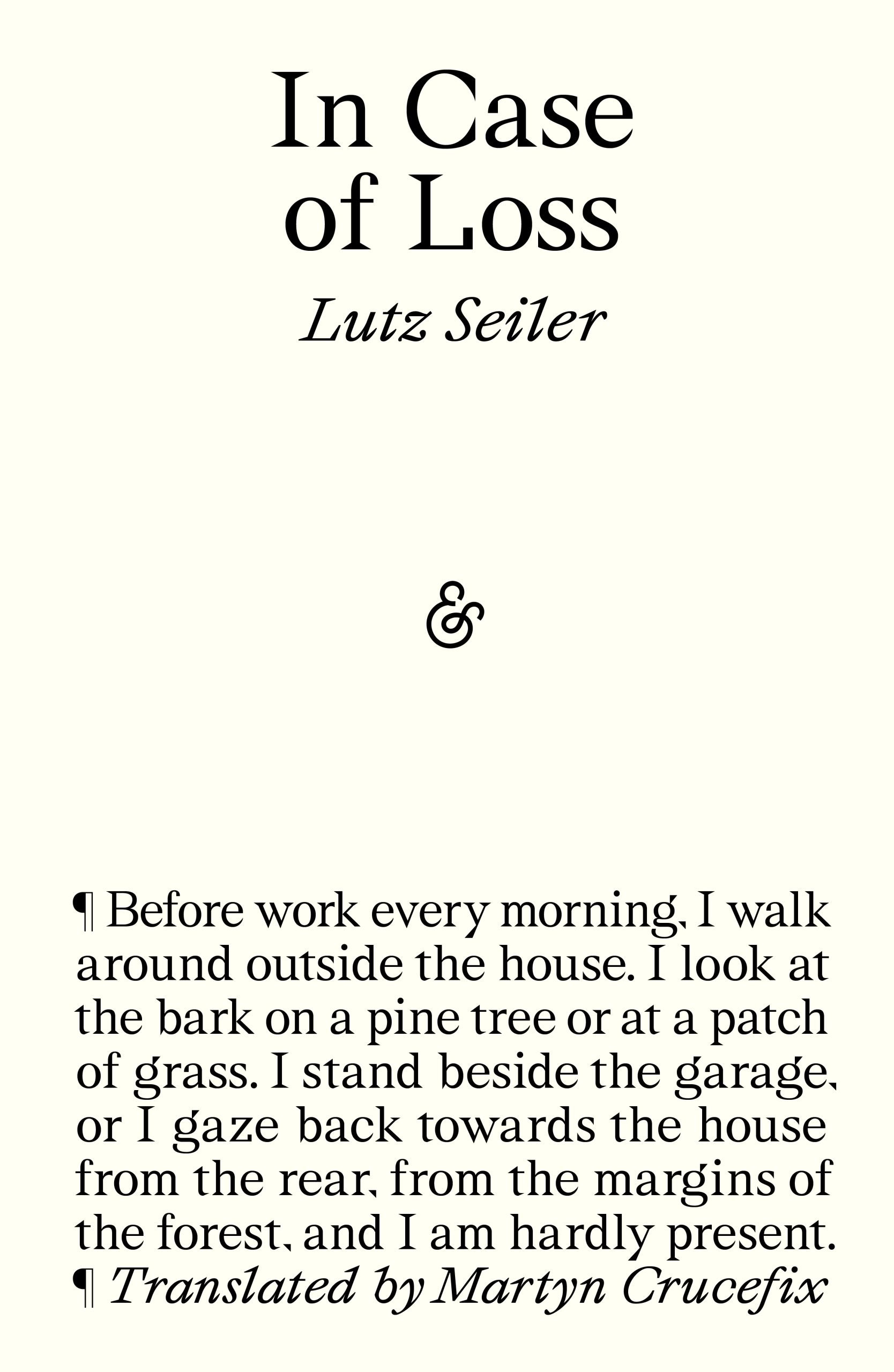
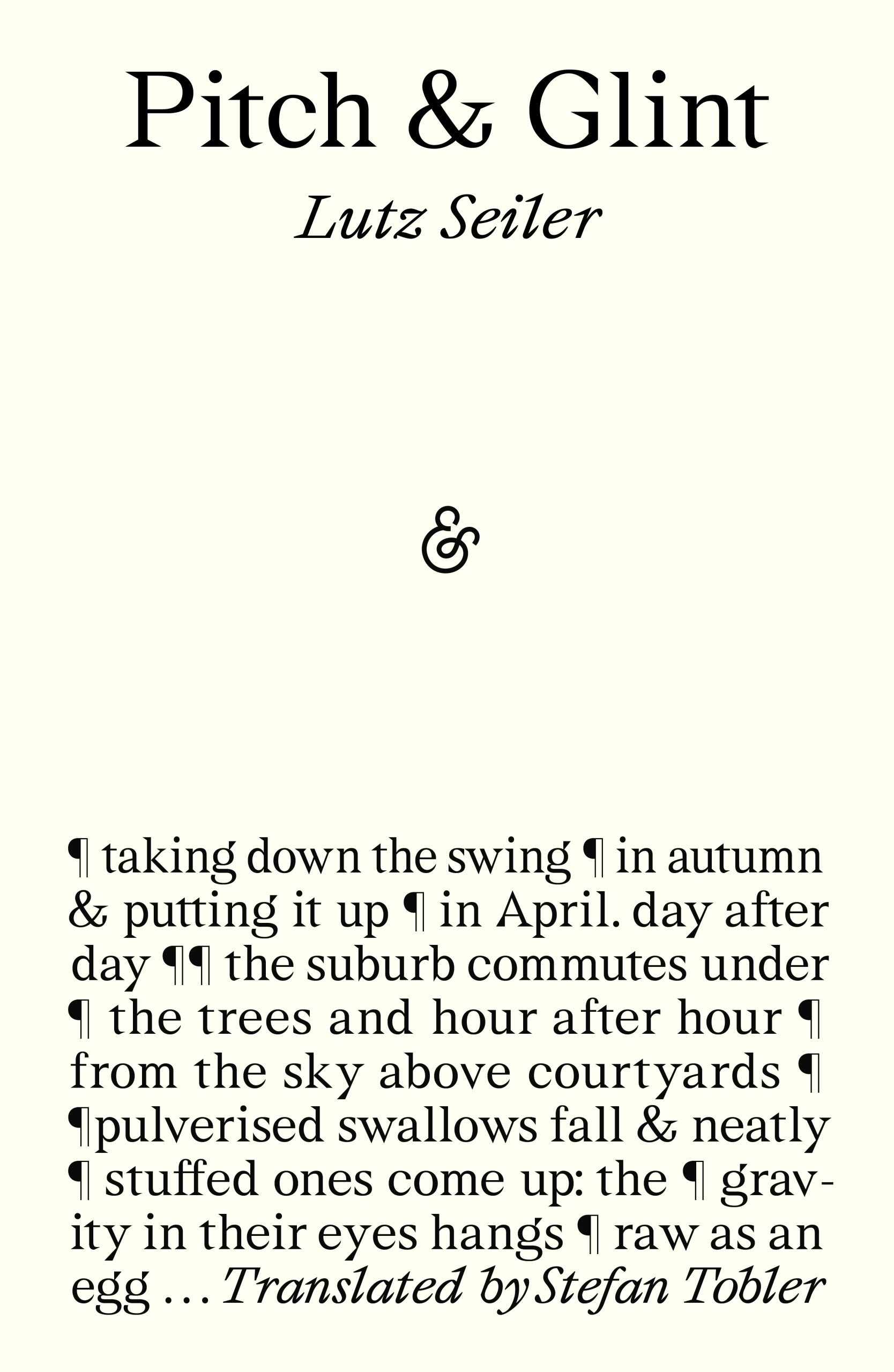
The only possible way: from In Case of Loss to Pitch & Glint by Lutz Seiler (and much more)

Some writers pass through your reading life and move on, perhaps appearing by chance now and then over the years, others ignite a clear desire to read more, if not all, that you can get hold of. That might be a small library of volumes to collect, but for those of us drawn to writers in translation—writers we often discover as a direct result of following a known or trusted translator—it can mean watching and waiting for more work to slowly emerge in English.

For me, one such writer is German poet, essayist and novelist Lutz Seiler. I first encountered his poetry about two and half years ago through Alexander Booth’s translation of his 2010 collection in field latin. At the time, the only other title available was his first novel Kruso which was, when I first checked, out of stock. Yet, when UK publisher And Other Stories announced they would be publishing Seiler’s debut poetry collection, Pitch & Glint, his second novel, Star 111, and a collection of essays, In Case of Loss, in late 2023, I took note. Then, when I had the opportunity to read Star 111 this year in advance of its North American release from NYRB in October, I quickly set about acquiring his other work. And, as these things go, while reading the poetry and the essays, I was inspired to add work by two of the poets Seiler writes about or honours—but more about that later.

Born in the Thuringia region of the GDR in 1963, Seiler’s poetry is rooted in the rural landscape of his childhood, scarred by years of uranium mining, sensitive to place and relationship to family, as child and as a parent. However, unlike many writers, he had no interest in books or literature when he himself was young. He did not start reading poetry until he was completing his mandatory military service in his early twenties, having already trained as a bricklayer and carpenter. He was certainly not writing, not even jotting the odd observation down, but something was brewing. As he says in his essay “Aurora: An Attempt to Answer the Question ‘Where is the Poem Going Today?’”:

Yet a good ten years later, I wrote poems that had been, in that earlier period, when poetry did not feature in my life, gathering and storing their subject matter, their materials. Doubly hidden from me at the time, clearly the poems had been, even then, making their way towards me. What is different these days is that I have become more conscious of the signs of a poem being on its way. I am aware of what situations, materials and substances it might respond to, what it is likely to ingest—for later use.

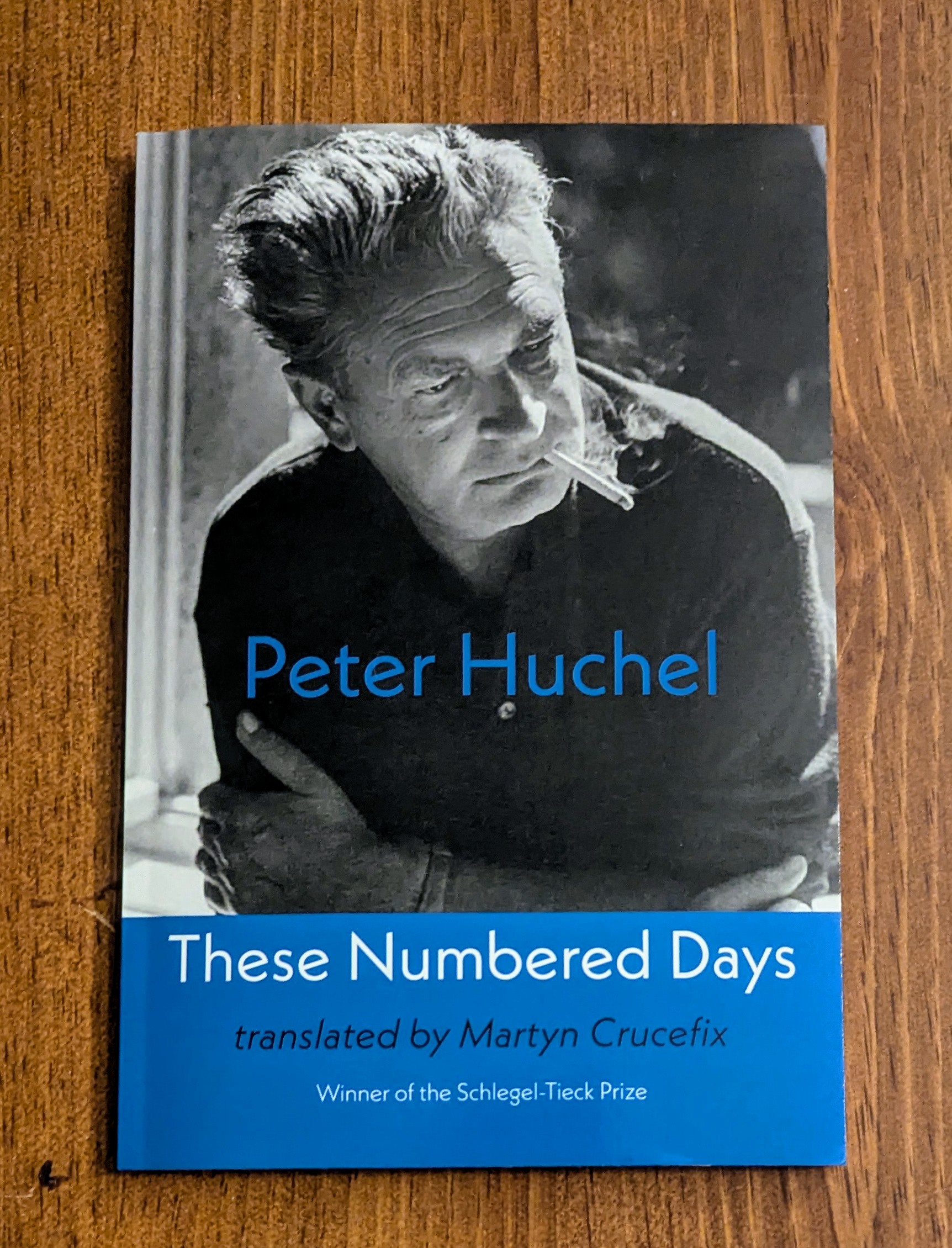
For a poet who came to literature somewhat unexpectedly, Seiler’s writing about writing, and about the poetic art and process is excellent, presumably of interest to other poets, but also, and perhaps more critically, for those of us who enjoy poetry but sometimes feel inadequate to examine a poem without a strong literary vocabulary and the requisite coursework (assumed to be) required to read and write it. In Case of Loss contains several essays about the work of other poets. One, Peter Huchel (1903–1981), was new to me. I was aware that Seiler is the custodian of the Huchel House in Wilhelmhorst near Berlin, but knew nothing of Huchel himself, one of the most an important German poets of the post-war era who ended up running afoul of the government of the GDR and was eventually allowed to migrate to the West. The title essay is an account of Seiler’s first impressions of the house itself after breaking in with Huchel’s widow’s blessing and his coming into possession of a notebook the poet kept all his life in which he recorded images, metaphors, lines, and tentative sketches, all categorized by theme. The manner in which Seiler traces some of the formative elements that will, often years later, appear as shadows or echoes in a finished piece is fascinating and a testament to the gestation period a poem can have. Of course, I wanted to read more, so I sought out These Numbered Days, Huchel’s 1972 collection, released in 2019 in an award winning English translation by Martin Crucefix (who is also the translator of In Case of Loss). His poetry often draws on the landscape of his youth for atmosphere frequently in concert with mythological, historical, and Biblical images to create crisp, even chilling poems. Although they are generally spare, one can sense that they have been carefully shaped and honed over time, each word or phrase carrying much weight, very often political—something confirmed by both Seiler’s insights, Crucefix’s notes, and Karen Leeder’s Introduction.

At the edge of the village the wind
flung its ton of frost
against the wall.
The moon lowered a fibrous gauze
on the wounds of the rooftops.

Slowly the emptiness of night descended,
filled with the howling of dogs.
Defeat sank
into the frozen veins of the country,
into the leather-upholstered seats
of old Kresmers in the coach sheds,
between the horse tack and grey straw
where children slept.

(Peter Huchel — from “Defeat”)

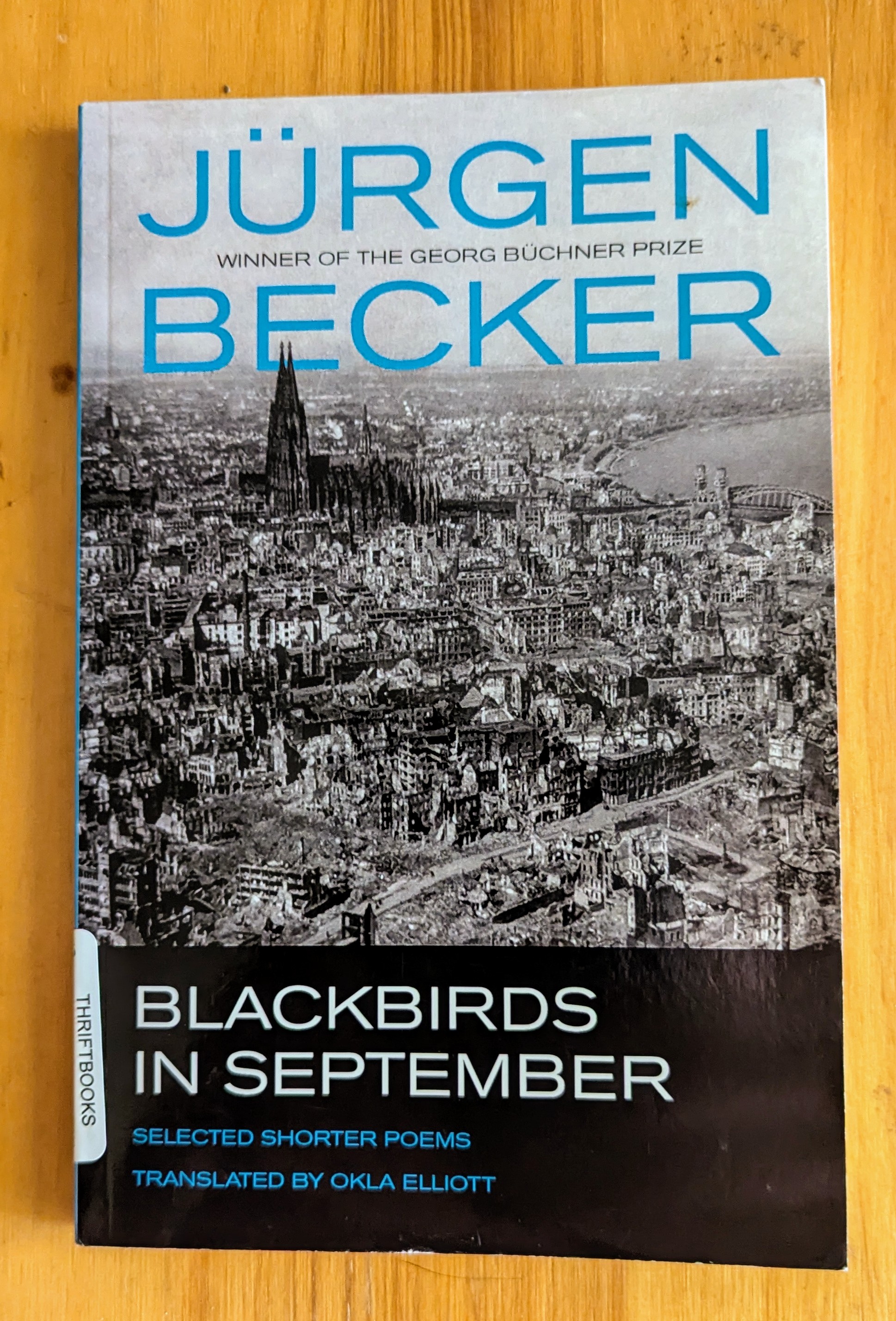
In addition to an unusual back to front reading of a book by Ernst Meister, the other poet Seiler devotes an essay to is Jürgen Becker. I had already read Becker’s fragmentary poetic novel, The Sea in the Radio, but a dedication to the poet (who very recently passed away) in Seiler’s collection Pitch & Glint, called to mind a collection of selected shorter poems, Blackbirds in September, which I was able to track down and read alongside the essay “’The Post-War Era Never Ends’: On Jürgen Becker.” Here Seiler takes a more personal approach acknowledging Becker’s influence and his own friendship with the older established poet. He traces his own process of learning to read and appreciate Becker’s poetry. Born in Cologne in 1932, Becker was a member of Group 47, the organization formed to promote young German writers after the war. He employed an experimental, open form of writing with an emphasis on landscape and the persistence of memories of the war in German land and history. His language tends to be spare and his poems have a calm, light feel, but that is only the surface.

But the landscape is rather quiet.
Invisible the destruction, if in fact
there is destruction.

And the time is passed
which the subsequent, the subsequent time produced.

But you never speak of Now.

Probably in the summer. At that time of year
we remember. Fence posts follow the paths,
or turned around, all of it belonging
to the landscape . . . who owns it? The landscape
leads into landscapes, from the visible ones
to the invisible ones which await us.

(Jürgen Becker — from “A Provisional Topography”/translated by Okla Elliott)

Other essays of particular interest in this collection (which gathers a selection of Seiler’s nonfiction from across twenty-five years) include “Illegal Exit, Gera (East),” a return in memory and in more recent years to a landscape that is being transformed and remediated, and “The Tired Territory” which begins as an exploration of the history of uranium mining in his home state, but turns into a meditation on the distinct poetic sensibilities that he had to define for himself after what he describes as the difficulties encountered in his “brief  career as a doctoral student in literary studies.” The categories that hold his fascination are intangible: heaviness, absence, tiredness. Understanding this for himself is essential:

Writing poetry: a difficult way to live and, at the same time, the only possible way.

One aspect of all this is that the poem engages specifically with what cannot be verbalised. The mute and non-paraphrasable and its unique, existential origin: the particular qualities of any poem arise from these two subtly interwoven elements. The poem travels towards the unsayable, yet this is a movement without an end.

It is not only the reading and writing of poetry that slips into Seiler’s essays—to a greater or lesser extent—but the final piece tackles his slow transition to prose. “The Soggy Hems of His Soviet Trousers: Image as a Way into the Narration of the Past” chronicles the year he moved with his wife and children to Rome for a period of dedicated novel writing. He dragged along boxes and boxes of books, research and paraphernalia he had gathered in preparation for the writing of his first novel. He’d planned to draw heavily on his own experiences moving to Berlin in the aftermath of the fall of the Wall and the more he describes his intentions, the more it sounds like what would eventually become his second novel, Star 111. But it’s only 2011 and our would-be novelist is staring at an empty page day after day. It is not until he finally gets out of his room, into the city, that everything changes. A suggestion that he write a short story set in a location he had not previously considered soon conjures forth an image so strong that ten pages become 500 and he has what will ultimately become his first novel Kruso.

Finally, if I return now to own Seiler’s poetry, in field latin and his debut collection from 2000, Pitch & Glint, more recently released in Stefan Tobler’s translation, many of the allusions in individual poems become clearer in light of having read his essays and the autobiographically influenced novel Star 111. But neither is necessary. Seiler’s poetry has a natural appeal. I wrote about in field latin here, and this earlier work (ten years separate the two volumes) is likewise rooted in the East Germany of the poet’s youth—the wildness, the strict schools, the land with its slag heaps and detritus of mining. Yet, for Seiler, the sound and rhythm are critical, as is the construction of images that move beyond the mere biographical. Darkness, frost, echoing footsteps recur. You can feel the chill:

wind came up the border
.   dogs were rising on
their delicate branching skeletons

whistled a bewitching witless
wanderlied. the snow came in
& tore the iron

curtain of their eyes, a
blunted gaze towards the hinterland
and made plain that we do.

(— from “in the east of the land”)

Seiler’s characteristic use of lower case letters and ampersands (especially striking in German where nouns are capitalized) adds to the mood and intensity of his poetry. One of the blurbs on the back of Pitch & Glint describes it as “a real-world Stalker with line breaks.” That captures the feel well.

The beauty of reading a number of works—nonfiction, fiction and poetry— that intersect like this is that each individual experience is heightened. Seiler’s poetry and fiction easily stand on their own, but the essays add an extra dimension. To be fair, one’s enjoyment of this collection may depend on whether one is a poet, or interested in poetry and the process of poetic inspiration/creation, or familiar with his other work. Nonetheless, his essays are thoughtful with a very strong personal flow and reflect the mind and experiences of a man for whom poetry is central to his very existence—in his memories, in his specific creative pursuits, and even in the everyday act of taking his daughter to dance lessons or son to football practice.

In Case of Loss and Pitch & Glint by Lutz Seiler are translated from the German by Martin Crucefix and Stefan Tobler respectively and published by And Other Stories. These Numbered Days by Peter Huchel is translated from the German by Martin Crucefix with and Introduction by Karen Leeder and published by Shearsman Books, and Blackbirds in September by Jürgen Becker is translated from the German by Okla Elliott and published by Black Lawrence Press.

Other titles mentioned and reviewed earlier on this site are Star 111 (And Other Stories/NYRB Imprints) and in field latin (Seagull Books), both by Lutz Seiler, translated from the German by Tess Lewis and Alexander Booth respectively.

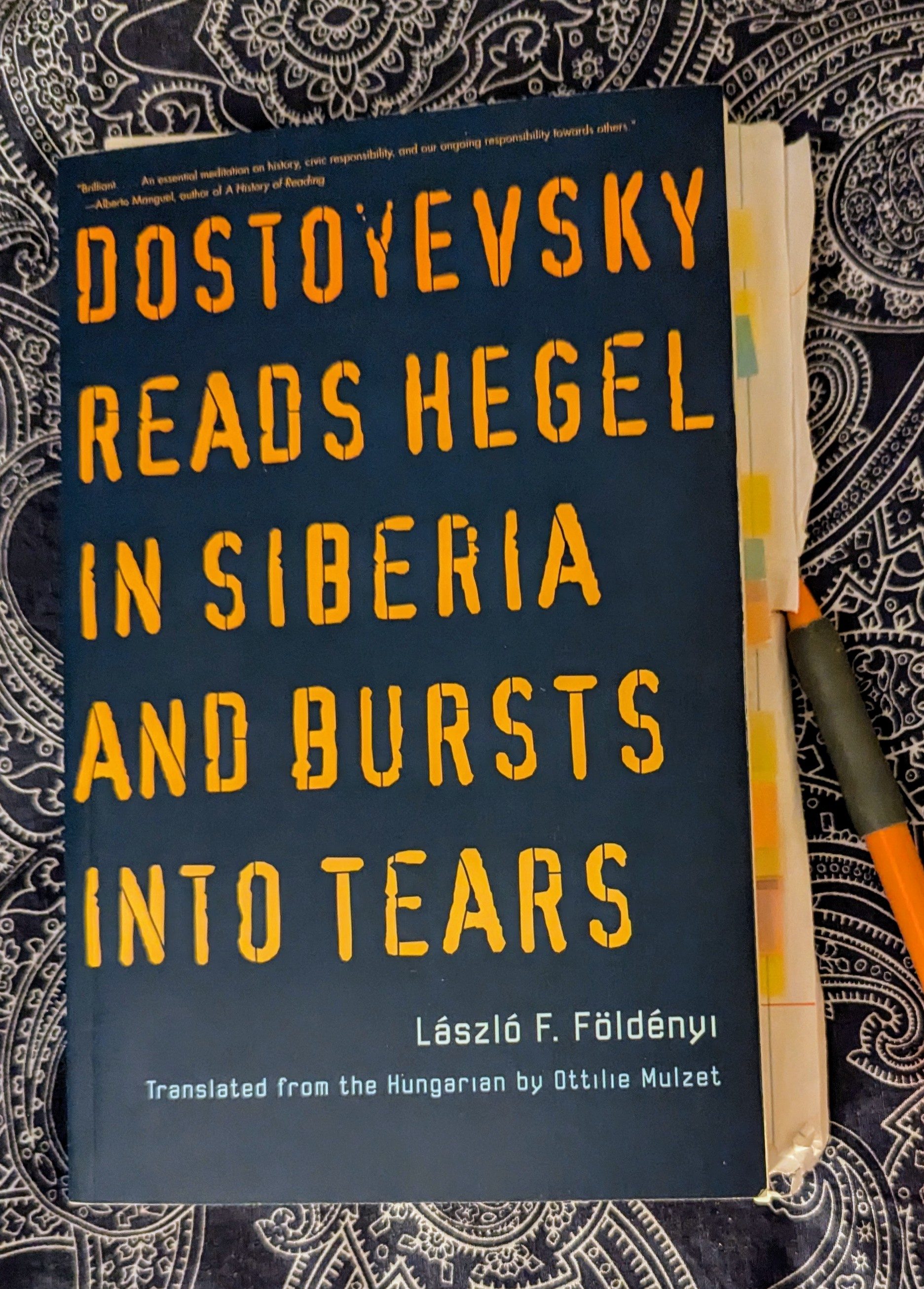
There be monsters: Dostoyevsky Reads Hegel in Siberia and Bursts into Tears by László Földényi

Humans have become alienated from their own history, as they are from their own cosmic nature.
– “Mass and Spirit”

The title is irresistible. It is impossible to read it and not wonder: what is this book about? In truth, it is about many things, or rather, many ideas, but in essence they can all be understood as variations on a dichotomous theme: darkness and light. Pivotal to these inquiries is the lasting impact of post-Enlightenment thinking on a traditional understanding of metaphysics, that is, questions of being and the nature of reality. Where once religion, or belief in God, gods, or some transcendent quality of existence could be turned to in times of darkness, the Enlightenment heralded a belief in “the omnipotence of reason that illuminates all phenomena.” Yet, as László Földenyi posits in this wide-ranging collection of essays, adroitly translated by Ottilie Muzlet, darkness and light (or other similar opposites or variants) are inextricably linked—one cannot be imagined or understood without the other—but in our secularized modern age, we, in our restricted, nondivine omnipotence can find ourselves confronting our own fragility in situations where reason alone may not seem like enough to fall back on. What then?

In his explorations of this conundrum, Földenyi, a Hungarian critic, essayist and professor of art based in Budapest, entertains the ideas, experiences and tribulations of a broad cast of thinkers, writers, poets, artists, and literary figures including Elias Canetti, Heinrich von Kleist, Caspar David Friedrich, Nietzsche, Novalis, Marquis de Sade, Antonin Artaud, and many more. And, of course, the protagonists of the evocatively titled eponymous essay: Dostoyevsky and Hegel. As he examines the manner in which rationalism, and within it a constrained idea of freedom and existence, has been met by those who chafed against its confines to a greater or lesser extent, Hegel is often assigned to the role of advocate for the primacy of logic and reason—not necessarily always fairly—so he makes a regular appearance in a number of pieces. But his main starring role is as philosophical foil to a certain Russian writer exiled to Siberia.

“Dostoyevsky Reads Hegel in Siberia and Bursts in Tears” is a vivid exercise in imagination which takes us to Semipalatinsk in southern Siberia where Dostoyevsky was sent in 1854, to serve a period of military service following four years of forced labour. In this barren, desert environment, he lived in a sparely furnished room and made friends with the young local prosecutor, Aleksander Yegorovich Vrangel, with whom he recited poetry, discussed religion, most critically, studied the books that Vrangel was able to secure for him. There is some reason to believe that one of the authors they read together was Hegel, possibly his lectures on the philosophy of world history, either ordered from Germany or in the form of the book in which they had been gathered and published. Földényi enthusiastically admits that he is taking liberties with his assumptions, but the notion is too tempting to resist.

Dostoyevsky emerged from his years of imprisonment and exile, as a man and writer whose experience with hardship and isolation had ignited a metaphysical drive that he would go on to channel against nineteenth century Europe’s adherence to utilitarianism and rationality through his protagonists. For Hegel, history, despite its messiness and violence,  could only be properly understood as the logical, progressive march of reason. That which fails to conform—at least in terms a European mind might understand, as such Africa and Siberia—is relegated to stand outside of the historical process and to be worth no further consideration.

If the infinite and the transcendent become lost behind the finite things, then it is no longer possible to speak of freedom. God, subjugated to rationality, is not the God of freedom, but of politics, conquest, and colonization. This is the secular religion of the God of the modern age. And history—looking at it from a Hegelian point of view—is the history of secularization. Dostoyevsky might have justifiably felt that Hegel was not just ushering Siberia (and himself with it) out the door; he was trying to convince, in missionary-like fashion, all humanity to accept as historical only that which the censorship of rationality admitted as such.

In envisioning an intellectual clash between the ideals represented by Hegel, and Dostoyevsky’s own experience of life in a place deemed separate from history, under conditions he would never have known had he not been forced to leave Europe, Földényi sees the ground for the openly acknowledged spiritual transformation that the Russian underwent in Siberia, and the writer he would become.

This may be the most passionate essay in the collection, but many of the smaller, quieter pieces turn on equally intriguing ideas in an open, speculative manner. He writes, for example, about happiness and melancholy, fear and freedom, sleep and dreams. Often his intention is to push beyond a simple dichotomy, at other times he wishes to dig down into an idea through the examination of the lives and ideas of one or more individual who found themselves confronting the limitations imposed by a society dedicated to the furthering of rational ideals. Case in point, in the also cleverly titled “Kleist Dies and Dies and Dies,” Földényi unwinds Kleist’s trajectory from an enthusiastic supporter of Enlightenment ideas through an early “Kantian crisis” which shattered his faith that Truth was knowable, to an act—possibly inspired in part by Goethe’s Werther—that eclipsed any of his writing: his carefully orchestrated double suicide with Henriette Vogel on November 21, 1811.

It bears repeating: the death of Kleist is the most thoroughly documented event of his entire life. The French-Romanian philosopher Emil Cioran justifiably states that it is impossible to read even one line of Kleist without thinking of how he put an end to his own life. His suicide preceded, as it were, his life’s work.

It is tempting to consider, and Földényi obliges, how Kleist’s embrace of death, or the act of dying, might be an answer to the loss he felt in an uncertain world.

The pieces in this collection were published in their original form (some have been substantially revised) between 1990 and 2015. They are not presented chronologically, nor can they be read as one cohesive argument, not least due to the fact that times, and presumably their author’s views, change. But it is telling that the volume opens and closes with essays addressed to Elias Canetti: the first, “Mass and Spirit” written in honour of his ninetieth birth anniversary, the latter, “A Capacity for Amazement,” an examination of his seminal Crowds and Power, fifty years after its original publication in 1960. His examination of Canetti’s exploration of the universal crowd and its ambiguous role in human history is measured, at least for Földényi, against Hegel’s understanding of universal freedom as a rational ideal. For Canetti, the crowd is more than a gathering of humans, it transcends that simple notion to incorporate all natural phenomena, it is cosmic and inherently irrational. Although he may or may not be onside with all the implications of Canetti’s singular arguments, Földényi clearly admires his metaphysical energy and, as the title suggests, his capacity for amazement.

The best essays wrestle with ideas, challenge assumptions, and invite the reader to entertain possibilities, debate with them or, even better, be inspired to read further. Dostoyevsky Reads Hegel is filled with references to so many writers and works that it is impossible not to stop to look someone or something up, or pull a volume off one’s shelves. It encourages side trips down rabbit holes. And that is what is so rewarding about spending time with László Földényi and the fascinating company he keeps.

Dostoyevsky Reads Hegel in Siberia and Bursts into Tears by László Földényi is translated from the Hungarian by Ottilie Mulzet and published by Yale University Press.

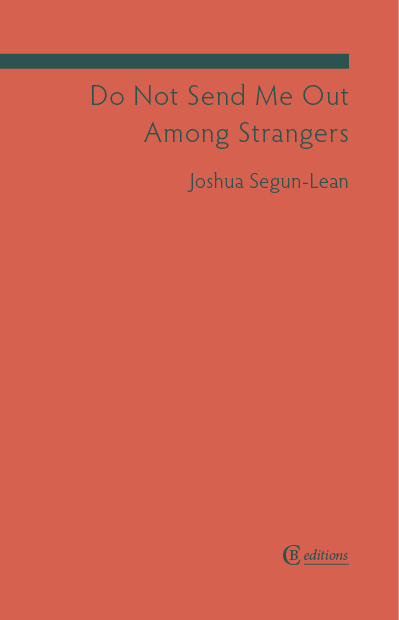
“I don’t know what I’m doing”: Do Not Send Me Out Among Strangers by Joshua Segun-Lean

Having never tried journaling until now, I can’t say if I’m doing a good job. Of all the activities people recommend for ‘staying positive’ through the pandemic, journaling seemed the most obvious choice for me. Though I have set no grand expectations for myself, I’m afraid I will be unable to keep from filling each page, eventually, with minutiae. With the flatness of time as it passes here. An instinct, I think, from an earlier, truncated life in the sciences. Or perhaps like the voice in Sans Solei, ‘I have been around the world several times, and now only banality interests me.’

I am not that far gone, I don’t think.

Some books are best measured not by the number of pages they hold between their covers, or the number of words they carry. Do Not Send Me Out Among Strangers by Nigerian writer, essayist and photographer Joshua Segun-Lean tells a deeply personal, vulnerable story in this slender volume that, at first blush, appears deceptively sparse and quiet, not unlike the pandemic-sheltering world in which it was conceived. But at its heart lies a raw testament to loss, distilled into a spare collection of images and words that is no less powerful than the too-much-information memoir that has become so ubiquitous.

Less is more.

Do Not Send Me Out Among Strangers is a collection of brief journal entries—observations, accounts, and recollections—nested among a series of harsh black and white photographs of soil, rock, and debris, marked with occasional tufts of vegetation. Numbered and time stamped, these images are titled “Field Notes.” This is the visual record of the search that occupies Segun-Lean’s lockdown days: he has been tasked with the dispersal of his father’s ashes. He thinks back on their strained relationship and his insecurity about the responsibility he has been given. Meanwhile, friends are falling sick with Covid; some are even dying. A journey of grief lies in the stillness of this book.

A couple of colour “Interior” photographs, also numbered and time stamped, appear along the way, echoed by a few Edward Hopper paintings. The explicit theme connecting these illustrations is the colour red. The inherent loneliness of the artwork perhaps, the author admits, “too obvious,” given the circumstances. There are also a handful of sketches, abstracted, and, finally, a number of short excerpts dealing with ancient burial practices from various archaeological and historical texts.

Taken together, this collection of thoughts and images, speak of the complicated relationship we have to life, death, and disability—to the body in sickness and health, whole or incomplete. At a time of isolation and uncertainty, as Segun-Lean is searching for the right place to scatter his father’s ashes, he is quietly exploring, as the book description says, “the strange terrain where private and public grief meet.” He is carrying both, as he will reveal.

Do Not Send Me Out Among Strangers by Joshua Segun-Lean is a haunting little book, the kind of small, unclassifiable work that UK publisher CB Editions specializes in.

At last, the final volume of Michel Leiris’ The Rules of the Game is available in English—a few (well, more than a few) words about it and a link to my review at Minor Literature[s]

As a reader, I do not tend to be a completest, collecting and diligently making my way through the complete works and associated letters and journals of a particular writer, but if I have made one exception, it is for French poet, novelist, essayist, ethnographer, and critic Michel Leiris. However, as English language Leiris enthusiasts will know, his most important work—the four-volume autobiographical essay to which he devoted thirty-five years of his writing life, The Rules of the Game—was not yet translated in full. That is, until now. This spring, Yale University Press released the final volume, Frail Riffs in Richard Sieburth’s translation.

Sieburth, who translated the book that served as my introduction to Leiris, his 1961 dream diary, Nights as Days, Days as Nights, takes over the Rules of the Game translation enterprise from Lydia Davis, who translated the first three parts of the project, plus Leiris’ novel Manhood. But, if there is any stylistic shift, it is not an issue because Frail Riffs itself marks a sharp shift in approach and style from the dense, labyrinthine prose that characterizes the first volume, Scratches, Scraps and Fibrils toward the fragmented, eclectic form of Leiris’ late work which will be familiar to readers of The Ribbon at Olympia’s Throat (which I wrote about at length for The Critical Flame).

Leiris was, throughout his long life which spanned most of the twentieth century, deeply engaged with the political, intellectual and artistic culture of Paris. Yet, his influential autobiographical endeavour was self-focused, scrupulous and often obsessive and critical. It’s not an accounting of his life, per se, but rather of episodes that strike him as important or interesting, against which he can analyze or dissect himself. A love of language and a concern about truthfulness and discretion in the autobiographical exercise are critical. He draws on, among many things, his childhood experiences, travel (as an ethnographer or as part of political or artistic delegations) and, in a particularly vulnerable section of the third volume of Rules, on his suicide attempt, the affair that triggered it and his difficult recovery.

Frail Riffs continues in this vein, but in a more open manner, with short essays and observations, typically grouped thematically, and interspersed with poems, lists, and passages of word play. One of the aspects of Leiris’ character that becomes more apparent in this book and again in Olympia, is his deep despair with the ongoing state of war and violence in the world. He is, as he ages, increasingly confirmed in his anti-colonial and anti-racist convictions. He knows he is too afraid of pain and death to be a true “revolutionary” but as students take to the streets of Paris in 1968, he watches from his well-placed apartment with admiration and offers what refuge he can (the irony of his own bourgeois contradictions never lost on him). I’ve thought about his observations a lot in recent weeks. He would, were he here now, still be in despair.

Anyhow, this long introduction stands as an invitation to follow up with my review of The Rules of the Game Volume 4: Frail Riffs, which has been published at Minor Literature[s]. Thank you to everyone for welcoming my work back to this great literary journal .

The Rules of the Game Volume 4: Frail Riffs is translated from the French by Richard Sieburth and published by Yale University Press.

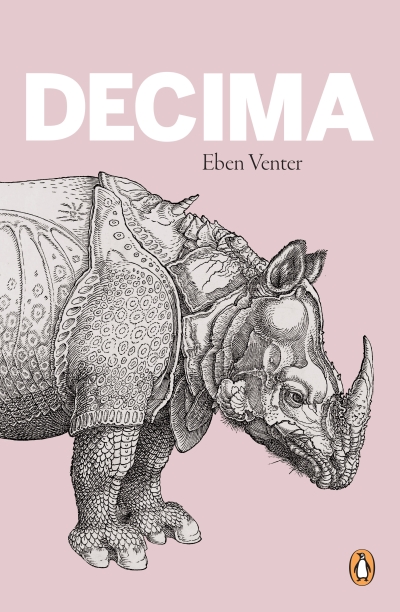
As boundaries blur: A few words and a link to my response to Decima by Eben Venter

A few months ago, I was invited to write a response to a new novel by South African author Eben Venter for knaap.brief, a weekly queer newsletter that publishes work in Afrikaans and English. I have been sticking to my own private corner of the literary universe for the past few years, so this invitation was both unexpected and welcome. There was a time when I read a lot of South African literature—and I still have shelves full of books waiting—so I was familiar with the author and had heard some very good things about his latest work. This seemed a good opportunity to read the novel and write for an editor again. However, since the request was for a response rather than a formal review (though the approach was left to me), I allowed myself to bring the personal into my essay as this book, which is set primarily in the  Eastern Cape Province, inevitably brought back both good and painful memories of time spent in the same region with a very dear friend who has been gone now for more than seven years (remembered here).

The novel, Decima, revolves around the disturbing historical and contemporary conditions threatening rhinoceros in general, and one aging female black rhino in particular. It is also the story of the love between a son and his mother, and about loss and grief. Skillfully balancing memoir, fiction, history, and natural science, Venter creates a story that lingers long in the imagination—and one that refuses to prioritize the human experience of the world. The perspective of Decima, the rhino cow at the centre of this tale, is essential and effectively evoked.

The animal is, as Venter imagines her, intelligent, sensitive, and alert. Solitary but not isolated from either her own kin or the other creatures with whom she shares her environment, she moves her massive bulk through the veld, seeking food, water, and shade. Decima’s reality is gently anthropomorphized, or rather, translated for a human audience.

My full response to this singular novel can be found here. (Also reproduced below if you’re unable to read it on the site.)

Decima by Eben Venter is published by Penguin Random House South Africa. An Afrikaans edition, translated by the author, is also available and both can be obtained outside South Africa as e-books.

As Boundaries Blur  (published at Knaap.brief, 02/18/24)

Dear Wemar

Facing the empty page, I have been wondering for words for more than a week now.

I have been invited to respond to Decima, the latest novel by Eben Venter. Respond. I was told that it does not have to be in the form of a conventional review which, in a way, would be much easier. Reviews have an internal logic and form; reviews, at least in my practice, require a certain neutrality in language and tone. Ideally, a review is about the book, not the reviewer. I respond when I cannot help but stand in my own way and make “I” statements, and when it comes to this inventive and deeply affecting novel, I have a lot I want to try to say.

First off, I am not South African, but a number of years ago I did spend a few weeks in the country, primarily in the Eastern Cape, with one of the best friends I have ever been blessed to know—an incredibly gifted super-butch dyke who has been gone now for over seven years. It was Ulla who first introduced me to Eben Venter’s Trencherman. She would have just loved this book; she would have related to Decima. So this review is for Ulla. After all, it is a book about love, and a book about loss. I loved her like a sister, but I couldn’t save her life.

Decima is a slippery text. Memoir, fiction, metafiction, natural science, history and social commentary all fall into place in a fragmented yet fluid narrative. Fragmentary works are somewhat fashionable, but too often they are forced, as an author tries to shoehorn so many clever facts and ideas into some kind of cohesive whole. However, when they flow effortlessly, the writer in me gets excited—at once caught up in the story and marvelling at how the pieces fit together so naturally. Decima works because the author allows himself, or a faintly fictionalized version of himself, to hold the continuity of the narrative. He lives in Australia but is back in his native South Africa, staying with his aging mother at her home in a Port Elizabeth seniors complex, while he conducts research for the novel he intends to write about the fate of the rhinoceros. As he gathers information he travels to townships and nature reserves and national parks. His memories regularly take him back to his rural childhood, and briefly, in more recent years, to New York and Belgium. His historical inquiries take him to Nepal and to a shipwreck off the coast of Europe, and cast a harsh light on the colonial exploits of King Leopold II of Belgium and the big game expeditions of Theodore Roosevelt. Along the way, he steps aside as needed to invite fictional characters—researchers, natural medicine practitioners, kingpins and middlemen—to expose the network and the demand that fuels the trafficking of rhino horn.

That is just a very rough sketch of the kind of web Venter weaves, moving continuously from place to place, across time, from fiction to fact and back again. But central to it all is a rhinoceros cow, the eponymous Decima, orphaned as a young calf when her mother was killed, and now the aging matriarch of her own crash—her decedents—who live amid the rolling hills of the Eastern Cape’s Great Fish Nature Reserve. One of a dwindling number of critically endangered black rhinos, Diceros bicornis, she passes her time eating, sleeping, watching and waiting.

But we do not simply observe her, we inhabit her world. From the inside. And this is the true magic that sets this novel apart from any other eco-fiction I’ve read.

I will admit I was cautious when I learned that this was a narrative that slipped into the mind of a rhino. It’s always a dangerous game to attempt to adopt an animal-eye view (and Venter does focus on the rhino’s eye early on in his detailed imagining of the drowning of a frightened captive rhino torn from its Himalayan home, meant to be delivered as gift for Pope Leo X) but without Decima’s perspective we would really only have half of what is a very complex story. The animal is, as Venter imagines her, intelligent, sensitive, and alert. Solitary but not isolated from either her own kin or the other creatures with whom she shares her environment, she moves her massive bulk through the veld, seeking food, water, and shade. Decima’s reality is gently anthropomorphized, or rather, translated for a human audience. Her awareness of her surroundings, her ability to gather information from the scents she picks up in the breeze or left in the dung deposited by other members of her crash, and her attention to the shifting angle of the sun and the cycles of the moon reveal a rich inner existence. As the full moon nears, her anxiety grows. She knows that the greatest threat she and her kind face is from a kind of creature that is not native to her space and that the moon’s full force will leave no place to hide.

The complexity, the shades of grey, that emerge in this multifaceted tale lie, of course, entirely on the human side of the equation and the reach is wide, across continents and centuries. Venter wisely lets these factors arise without resorting to obvious moralizing. Some villains are clear, some well-meaning folk might risk being overzealous, and those tasked with the direct protection of threatened species know the obstacles they are up against. However, if it is somewhat daring to attempt to take a reader inside a wild animal’s mind, Venter also opens up the thoughts and motivations of two poachers, both from economically deprived backgrounds, who have their own reservations and fears about the dangerous task they agree to perform.

As the novel progresses, the boundaries between the author’s research, his memories, his relationship with his mother, the facts he has gathered and the fictional characters he has met or imagined into being, including Decima herself, blur. Tension builds as the events leading up to the inevitable encounter between poachers and rhino take centre stage. In the aftermath, the narrative falls back into the realm of what feels more solidly memoirish. That is, we return to the story of the narrator as author and son with a mother who is aging and alone.

On its own, Decima is an exceptionally impressive novel, one that is very difficult to let go of even weeks after one is finished. I hope it gets more attention outside South Africa—here in Canada it is only available as an e-book—but, at the same time, as a work that Venter composed in English (and self-translated into Afrikaans), it reads with a rich South African tone and flavour. Usually, a South African book written in or translated into English, then edited for publication in an international market can be linguistically neutered to the point where there’s not even a bakkie in sight. This is not the case here. And, on a more personal level, my reading experience, and my response the this book, has unleashed a flood of memories: the long bus trip from Cape Town to East London and back, an afternoon at Addo Elephant National Park where we were the object of fascination for a juvenile rooikat, and watching the sun burst into flame over the sour veld, night after night, with a friend who, in the end, could not outrun the black clouds that chased her. So, even if there is a qualitative difference between what I might call a response and a review, sometimes the boundaries between the two are not that clear after all.

Oh, and having had a glimpse of the world through Decima’s eyes, I’ll never think of the full moon the same way again.


A reflection for Winter Solstice 2023

As soon as we pass the longest night of the year, there is a noticeable change in the quality of light. The afternoons immediately seem brighter as the days begin to lengthen, minute by minute, week by week. I can remember more than a few winter solstices that found me mired in a darkness that was soul-black and heavy. But this year, as the world, at home and afar, is facing so many serious threats, it feels essential to remain focused on what needs to be addressed—war, climate change, increasing polarization, a pandemic that is still causing illness and disability, and so much more. Heaven knows there is much to worry about, many reasons to be angry, ample cause for despair, but, at the moment, as someone who has known deep depression borne of chemistry rather than circumstance, what I tend to feel is a positive anger, that is, an emotion that fuels a desire to be more active in my speech and action as the new solar season dawns. There is an opening up to the other that, after years of relative isolation, has been reignited in me in recent months and I hope I can keep that energy in motion.

This past year was one of connection and reconnection. In mid-September I returned to India for the first time in four years—my first trip anywhere since 2019. As I made my way from Bangalore to Calcutta, Delhi, Pune, Mumbai, Jaipur and back to Bangalore, I enjoyed so many long and meaningful conversations over coffee and meals, and in cars, autos and trains, with friends old and new. I was looking for the inspiration and confidence to write again after a prolonged period of silence, and by the time I was getting ready to fly home I was beginning to feel a renewed creative drive. And then, the outbreak of conflict in the Middle East diverted my attention, shifted my reading, left me distressed and found me treading words with caution, shocked by the ability of apparently reasonable people to rationalize the massive destruction of infrastructure and indiscriminate killing of innocent children, women and men that we have witnessed these past two and a half months. Even now I know that whatever I say or don’t say, someone will take offense. This is the deeply fractured world we now inhabit.

Here in the northern hemisphere, the days grow longer as a new calendar year approaches; in the south, summer solstice marks the longest day of the year. What will we do with this light, that we either presently have or are eagerly anticipating? There is no condition—conflict, climate or clinical—that we cannot resolve, but, as human beings, we have to be able to do the one thing that seems to drive us apart over and over again: we have to recognize that every person is of equal value and deserving of dignity and life and commit to working together toward that end.

I will let you decide for yourself if that is a dream worth holding on to or justification for accepting that our problems are impossible to solve.

Photo by Joseph Schreiber

Reimagining the question “Why translate?”— River in an Ocean: Essays on Translation, edited by Nuzhat Abbas

I started reading River in an Ocean: Essays on Translation, a generous and provocative collection of reflections on what it means to live, and work, between languages, places and social and cultural identities and realities, as I was preparing to visit India for the first time in four years. I finished it as violence escalated in the Middle East, with the latest and most violent episode of a conflict that has been part of my consciousness for all of the more than six decades I have been on this planet. It marks the evolution of a troubled history that has taken on added depth and meaning for me through the words of Palestinian poets and writers, that I have been able to access through the work of translators. As a result, my recent travel, not only the open conversations with friends about the schisms we are witnessing in our own nations and communities, but the experience of navigating a vast, multilingual country without the ability to easily communicate in so many everyday situations, combined with the explosive events that have absorbed so much of my emotional attention these past weeks, has enhanced my response to the essays contained in this anthology.

Nuzhat Abbas, founder and director of trace press, has described this project, the Canadian publisher’s first anthology, as one that arose out of a desire to “NOT center whiteness” and to examine translation outside the Western conventions that tend to influence what literature deserves to be translated, and by whom. It is a project of decolonial feminism, one that might not always be a typical context for a reader like myself who, like so many other readers, translators and publishers I know, is passionate about translated literature which, in the broader publishing world, is still undervalued and even suspect. Yet, to listen to the voices of translators from the Global South for whom translation is inextricable from essential questions of identity, history, land, dislocation, gender and sexuality offers an invaluable opportunity to expand one’s understanding of what translation can be. Here, crossing linguistic borders is not simply a possible professional endeavour, it is a way of being in the world, of understanding where one comes from and how one belongs.

In her Editor’s Translation to River in an Ocean, Abbas poses the following guiding questions:

What, and where, is the time and place of translation, and of literary translation, in particular? Of the translator as writer, as attentive listener, as co-creator, responsible to what [Gayatri Chakravorty] Spivak calls “the trace of the other within the self”? Or of the editor-publisher as convenor and gatherer in the project? This anthology emerges from such a questioning, and from curious and communal conversation, to offer a space for the soundings of different trajectories—connecting spaces, times, languages and bodies with origins in East Africa, the Middle East, South and Southeast Asia.

With each one of the essays that follow, these and other questions rise, open up, revolve and return, leading the writers toward a fuller sense of self. No two essays are alike, each is unique in form and expression, yet they all speak to a longing to find, not only Spivak’s “traces of the other within the self,” but reflections of the self within the words of the other.

The collection opens with Khairani Barokka’s buoyant and provocative dual language essay “Ava Kabar, Penerjemah?” Paragraphs in Indonesian are followed by the English translation, moving back and forth between tongues, as Barroka directly addresses her fellow translators, asking if they are alright. Her concern is with the emotional and physical well-being of the translator who is marginalized by race, country of origin, illness or disability. In the second essay, Palestinian-born translator Yasmine Haj begins with the notion that translation is an activity we all engage in from our earliest moments as we learn to communicate with those around us, those who can answer our basic needs. But she moves on to reflect on how her first language, Arabic, remains distinct from the other languages that she has come to know—Hebrew, French and especially English:

To survive, we must translate, almost everything into English—sometimes even the rhythm of our thoughts. And so, it becomes the way we think, the way we write, the way we talk to ourselves. The way we dream. And so, Arabic remains a dreamless jumble of love, melancholy, nostalgia, and an inability to properly express ourselves or anything for that matter—an obsession with accents, stumped travels and halted communal growth, mother tongues and beautiful people that we could never meet.

If, in some sense, Arabic is everything that is lost, translation is a way of remapping a history— personal, political, cultural—and of finding and feeling one’s way along a path filled with uncertain obstacles and unexpected discoveries.

The contributors to this anthology include both emerging and seasoned translators, and their approaches to the central theme—why translate?—include epistolatory essays, memoir and, at times, embedded photographs and documents. Their stories are deeply personal, poetic reflections. A passion and commitment to the power of language shines through, as do the many complex dynamics that arise when one’s identity and experience crosses the boundaries between the Global South and the West.

I can attest that there is not a single essay in River in an Ocean that does not turn in a fresh, fascinating and meaningful direction, but to attempt to summarize each offering in a few sentences would be counterproductive. Rather, I will highlight a few pieces that hint at their range, beginning with Suneela Mubayi’s evocatively titled “The Temple Whore of Language.” Born in New York to an American mother of Jewish origin and a Hindu-Kashmiri father, Mubayi was raised between the US and New Delhi by a host of relatives. She (the pronoun in her bio) claims: “I put the trans back into translation.” In addition to providing an excuse to avoid her own writing, she says that she “inhabits” translation because, as someone who is mixed race and nonbinary, her identity is unsettled:

I translate because I am not stably anchored—neither in my origins, nor in my cultural affiliations, sense of belonging, or in my gender. To translate, for me, is to experience being an outsider, a trespasser, a poser— and to be able to revel in that condition.

As a trans person myself, unsettled on somewhat different grounds, I understand this internal sense of balanced imbalance well. For Mubayi, this unsettledness, along with political factors—9/11, the Iraq war and the Palestinian condition—leads her to learn Arabic, a language to which she has no ethnic or geographic connection. As a translator, her linguistic engagement with the language is informed by her unique perspective as a person who exists on the margins of more than one axis of being, and, as such, leads to some very interesting observations.

By contrast, in her essay, “A Tally of Unfulfilled Longing: Translating Dalit Poetry,” Gopika Jadeja returns, as a translator, to her native language, Gujarati, but crosses another distinct boundary. Her own mother, denied an education, was determined that her daughter have an English education. It was not simply a concern for her future, but the more immediate need to have someone at hand to translate what she could not read. This planted the seeds of her daughter’s future occupation, however:

What I choose to translate is perhaps a world that is not hers, and yet hers. I choose to translate Dalit and Adivasi poetry from western India. As a Hindu upper caste woman in postcolonial India, choosing to translate Dalit and Adivasi poetry raises more questions than it answers—both from those whose works I translate and from myself?

What she realizes, once she begins to read and translate this literature, is the full existential impact of the accepted social hierarchy on those at the very lowest rung. This leads to many open ended questions about the relationship between translation and what can be considered decolonial—especially when translating literature from marginalized communities.

In varying ways, translation as a means to engage with one’s cultural and ethnic identity seems to underlie most of the responses to the why translate question, especially for those who were born in or have immigrated to the West. In “Elegiac Moods—Letters to Agha Shahid Ali,” Rahat Kurd, the Canadian-born daughter and granddaughter of Kashmiri women, engages in a moving correspondence with the late Kashmiri-American poet and translator. She opens her first letter:

Dear Shahid,

I’m bound to begin with translation. Whether I’m working within only one language or between two, if I want to convey an experience or an impression, to inscribe the meaning of a text or an event, I will always have to draw on abstractions, memories, dreams, and fears, and hope to make myself intelligible.

Calling on his poetry, especially those he wrote for his mother, she speaks of the enormity of the loss she senses in his words, the loss of a homeland that has, in more recent years, fallen further into a state of crisis. Although Agha Ali was writing in English, Kurd recognizes translation as a “strong, changeable current” running throughout his poetry, especially the sequence of poems that recount the journey to bring his mother’s body home to India, “From Amherst to Kashmir.” Her intuitive tracing of translation as a vital force in this work had me pulling my own collection from the shelf and returning to these poems anew. She goes on to share her own journey to understand how translating can be a means of responding to and resisting the loss that estrangement from one’s past can bring.

The other contributors to this anthology include Kenyan-born, Ugandan-raised poet and scholar Otoniya J. Okot Bitek, Nedra Rodrigo who was born in Sri Lanka, Ugandan Canadian writer Iryn Tushabe, Tamil poet and translator Geetha Sukumaran, Norah Alkharashi, originally from Jeddah, Saudi Arabia, and Lisa Ndejuru who was born in Rwanda, raised in Germany and came to Canada in her teens. The current of their translations flow between languages, with varying motivations and objectives. As well, the majority of the women involved in River in an Ocean currently live and work or study in Canada and recognize themselves as settlers on traditional Indigenous lands, a reality that adds an extra dimension to the decolonial vision at the heart of this vital project.

River in an Ocean: Essays on Translation is edited by Nuzhat Abbas and published by trace press.