Having never tried journaling until now, I can’t say if I’m doing a good job. Of all the activities people recommend for ‘staying positive’ through the pandemic, journaling seemed the most obvious choice for me. Though I have set no grand expectations for myself, I’m afraid I will be unable to keep from filling each page, eventually, with minutiae. With the flatness of time as it passes here. An instinct, I think, from an earlier, truncated life in the sciences. Or perhaps like the voice in Sans Solei, ‘I have been around the world several times, and now only banality interests me.’
I am not that far gone, I don’t think.
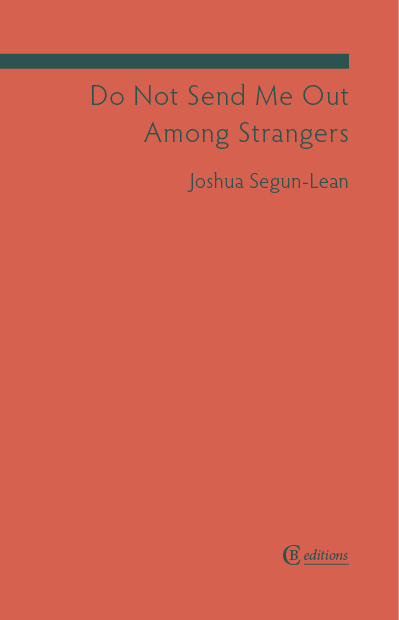
Some books are best measured not by the number of pages they hold between their covers, or the number of words they carry. Do Not Send Me Out Among Strangers by Nigerian writer, essayist and photographer Joshua Segun-Lean tells a deeply personal, vulnerable story in this slender volume that, at first blush, appears deceptively sparse and quiet, not unlike the pandemic-sheltering world in which it was conceived. But at its heart lies a raw testament to loss, distilled into a spare collection of images and words that is no less powerful than the too-much-information memoir that has become so ubiquitous.
Less is more.
Do Not Send Me Out Among Strangers is a collection of brief journal entries—observations, accounts, and recollections—nested among a series of harsh black and white photographs of soil, rock, and debris, marked with occasional tufts of vegetation. Numbered and time stamped, these images are titled “Field Notes.” This is the visual record of the search that occupies Segun-Lean’s lockdown days: he has been tasked with the dispersal of his father’s ashes. He thinks back on their strained relationship and his insecurity about the responsibility he has been given. Meanwhile, friends are falling sick with Covid; some are even dying. A journey of grief lies in the stillness of this book.
A couple of colour “Interior” photographs, also numbered and time stamped, appear along the way, echoed by a few Edward Hopper paintings. The explicit theme connecting these illustrations is the colour red. The inherent loneliness of the artwork perhaps, the author admits, “too obvious,” given the circumstances. There are also a handful of sketches, abstracted, and, finally, a number of short excerpts dealing with ancient burial practices from various archaeological and historical texts.
Taken together, this collection of thoughts and images, speak of the complicated relationship we have to life, death, and disability—to the body in sickness and health, whole or incomplete. At a time of isolation and uncertainty, as Segun-Lean is searching for the right place to scatter his father’s ashes, he is quietly exploring, as the book description says, “the strange terrain where private and public grief meet.” He is carrying both, as he will reveal.
Do Not Send Me Out Among Strangers by Joshua Segun-Lean is a haunting little book, the kind of small, unclassifiable work that UK publisher CB Editions specializes in.
The loss of a beloved parent inspires a tumult of emotion and weaves complex webs of images that fragment and coalesce over time. It is, I have learned, a living grief, something that ties us to our own past in ways that shift and change in a manner that cannot be mapped or predicted.
Today, as I gather my thoughts about the latest poetry collection by my friend Naveen Kishore, my own mother has been gone for exactly seven years. On July 9th, 2016, my daughter and I sat at her bedside waiting for my brothers to make it to the city. When they arrived, we knew her respirator would be removed and we would say good-bye. She had been plagued by an increasing frailty for many years, but had remained mentally sharp until her final month which was marked by a rapid decline. Meanwhile, in another local hospital, my father lay unconscious following a stroke and head-on collision and, within a few days, a similar, if more prolonged vigil would commence at his bedside. But on this day, what I remember most vividly is my daughter gently tickling her grandmother’s arms as she had once done for her when she was a little girl. Her presence was a comfort to myself and my mother that day.
Over the five sections of Mother Muse Quintet, Naveen Kishore, the highly respected publisher of Seagull Books, honours his own mother, moving through the varying shapes and forms that memories take, and the way they continue to embrace and comfort us as we ourselves age. It is both a tender, personal tribute and a gentle lesson about opening ourselves up to capture our own memories on the page.
The first part evokes a son’s tribute to a mother who offered security and continuity to a young child, filling him with the stories and songs of her own childhood and family history and now, as the fog closes in around her, looks to him for guidance and assurance.
Build me a self. She pleaded. A whole one? I asked. One
I can call my own. Self. Again. She said. I looked at her.
Swiftly. Almost surreptitiously. My gaze. First taking in the
dignity. The earnestness. Hers. And of the request. The
controlled undertone. Not quite panic. Yet. And trust. The
faith. That I could. And would. Help rebuild. Not just her
self. But also her sense of being. Hers. No room for doubt.
In verse and in measured prose, this sequence introduces us to Prem (her son always called her by her first name) as a young girl in Lahore, as a confident woman, and as someone drifting away from the familiarity of her own reflection. And to giving up her ashes “to the care of the river.” But that is only the beginning. As the progression through the following parts of this quintet demonstrate, grief, which may begin long before death, unfolds as an ebb and flow of memories that are sometimes fragmentary or fleeting, other times taking shape in the imagining of one’s earliest years. Time loses its chronological dominion over our hearts as the beloved parent’s presence takes on a new form. They are deeply missed, but somehow always close by.
This is what I draw from Mother Muse Quintet. There are poems that often call to mind very detailed circumstances, as in the piece that records the poet’s grandmother’s prolonged illness and death and the strain it placed on his mother as she cared for her mother-in-law. Those are the moments we experience, even assist with as children, that take on a new poignancy after we have become the caregiver in turn. There are other open poems, words scattered across the page that reflect the way that the memories that stay with us down the years often become moods, qualities of light, seasons and colours. What arises can be an emotion without specific image or form, but you know who it is.
endings
endings unending night how you grow pale
breathe into this parting
punctuated
by urgency
I would if I could night sing you awake
among the birdcall
the barking of dogs
Not all of this volume is completely new to me. I have been privileged to receive a passage or two, shared, in earlier form, when it seemed appropriate. I treasure these in my “grief folder,” created after my parents’ deaths. There is so much of the mother connection/memory in this collection that I recognize, that triggers my own equally personal response. The final poems imply that Naveen also wishes to inspire others to write—to record their own memories, so we too may hold our loved ones as ever present as daylight and pale moons, as that essence we are forever aware of, lingering.
Mother Muse Quintet by Naveen Kishore is published by Speaking Tiger.
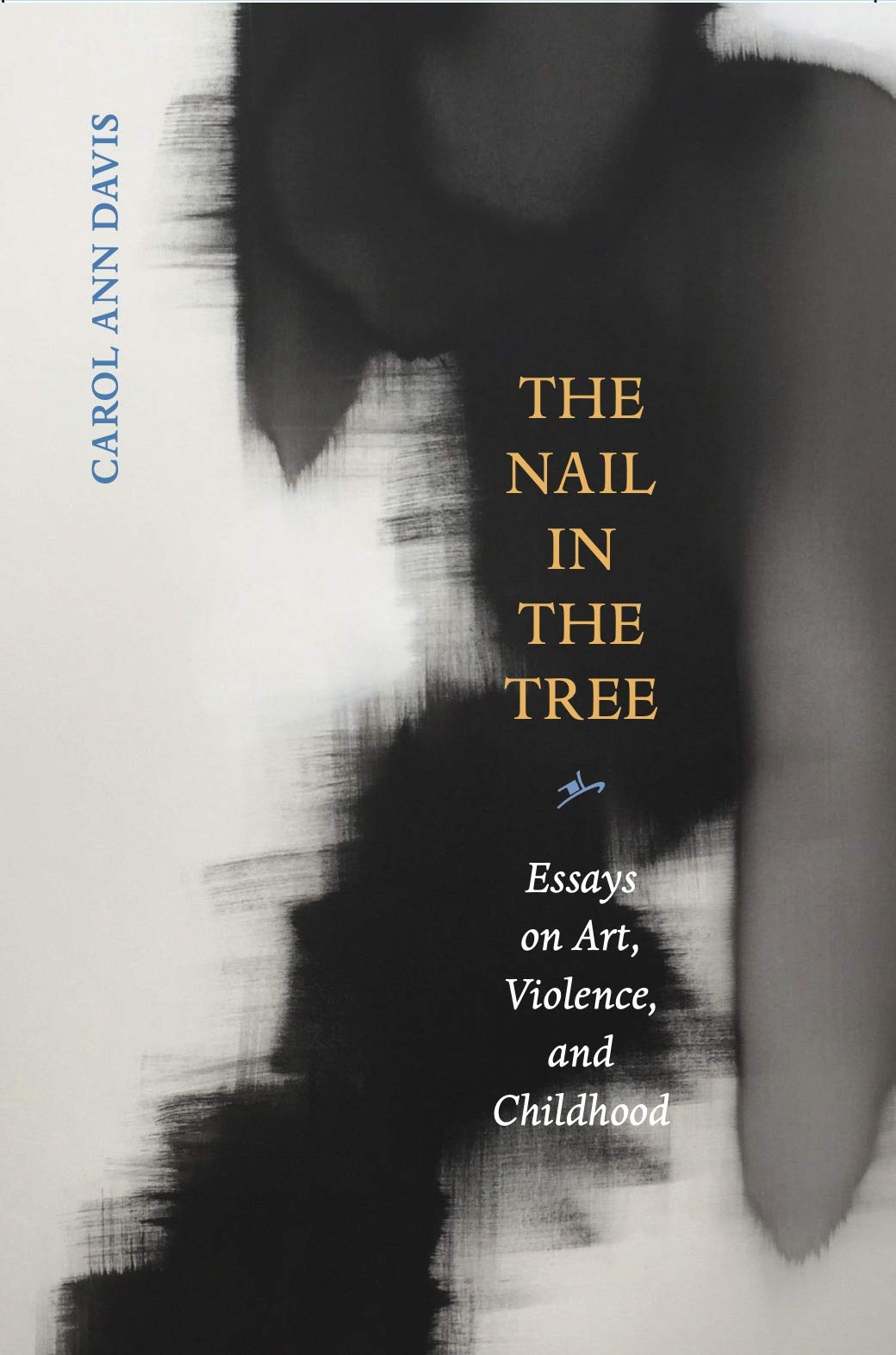
I accepted this book as a review copy when it first came out, just over three years ago now. I put on the shelf with all the best intentions, and then forgot it. When I rediscovered it there, lost among assorted volumes of nonfiction, I felt ashamed by my negligence. Surely I could have read it earlier, if not when I first received it, at the very least during the trial of Alex Jones for the outrageous conspiracy theories that hurt so many people and ushered in a whole new form of denial, or a few months later when the tenth anniversary of the Sandy Hook school shooting was marked last December. But The US seems an endless supplier of senseless and tragic school shootings so it’s no surprise that, when I finally did take the time to read The Nail in the Tree: Essays on Art, Violence, and Childhood, I happened to finish it on the one year anniversary of Uvalde.
Poet and essayist Carol Ann Davis was newly relocated to Newtown, Connecticut, with her husband and two young sons when the Sandy Hook shooting occurred. They lived close to the site but, due to zoning, the boys attended another school. Willem was in fourth grade at the time, Luke in kindergarten. They were safe, but not untouched. “And this is what it is not to suffer that day,” she tells herself when recalling the shooting, “This is the not-suffering, happy ending story.” But, of course, it’s not that simple. The trauma sends lasting ripples throughout the community in way that leaves no one unaffected:
Sacerdos, from the French and earlier from Latin, literally meaning “offerer of sacrifices.” The children who live here, perhaps it’s strange to say, now glow. They do, they glow. No one can approach unmoved, and the children, understanding their role, shoulder, take on, burden themselves with us. Their skin nearly translucent, they walk around like that, glowing. They offer themselves like bits of mirror, and we accept.
The adults, by virtue of wider perspective, suddenly become acutely aware of the fragility of childhood. For those who still have to send their children back to school, trust them to the school bus each morning, there is the conflicted desire to both protect and prepare. Older siblings want to look out for their younger brothers and sisters. No one wants to trigger memories that may or may not even exist.
It is within the altered dynamic of the six years that follow the tragedy, that Davis endeavours to articulate and make sense of what it means to raise children in the aftermath of violence. In a series of essays that make their way slowly but not strictly chronologically away from the pivotal event, she turns to poetry and art to understand how artistic practice might be a productive way of integrating trauma into life moving forward—for herself and for her sons.
This is not a typical grief memoir, nor does it delve into the specifics of the shooting or the political fallout. The event itself rests as a horror too large to think about directly—it sits, unspoken, in all aspects of community life, especially at the bus stop, in the schools and on the playing field. Yet Davis seeks answers at her desk, beneath the hummingbird feeder, at art galleries and museums and, ultimately swimming in the open ocean, the one desperately longed-for release her newly adopted, landlocked hometown denies her. Along the way, among others, she turns to the work of Hélène Cixous and poet Miklós Radnóti and, for an extended period, she follows the lead of (and argues with) Rumi. She engages with the art of Eva Hesse to better understand the poetic process, and when, four years after the fact she has to fully explain to Luke, now that he is old enough to know, the extent of what happened at Sandy Hook, she draws on Paul Celan and Armenian born artist Arshile Gorky to help her untangle the enormity of her own grief.
Davis’s writing is poetic, pulling images, quotes and refrains through her essays, like threads to link or unravel her thoughts as needed. And she is an astute observer of art who is able to find in a number of artists, their techniques and philosophies about their practice, clues to appreciating how she is growing and, more importantly, how the boys are not only coping, but finding their own ways to thrive. More than once the boys are dragged through exhibitions, like one of Picasso’s sculptures in New York, or shown a show catalogue, like that of American abstract painter Agnes Martin. Davis hopes that Luke, who is a budding draftsman will find some connection in Martin’s geometrically precise but somewhat dissonant canvases (he does not). The message in the artist’s work and her method, however, is less for the child than his mother:
I’m suddenly afraid: I am not ready to admit to myself, as Martin has, that the purpose of art may be to unlock an inner happiness in the viewer. I am doubtful such a happiness is inherent, and unsure whether it is larger than forces with which I’ve engaged in my own work (such as grief and difficulty). I am uncertain I can place the function of art, art-making, its practice, in the category of making-happy, given all I’ve seen and felt in the last five years, all my children have endured in the service of gaining a working understanding of the world into which they’ve been thrown. Of course, any difficulty can be a subset of happiness, Martin’s work virtually shouts at me. Don’t be so narrow-minded.
Throughout these original, thoughtful essays, it becomes clear that the search for meaningful expression—even happiness—after trauma is Davis’s personal journey, one within which her children are her motivation and measure of progress, but not her exactly creative companions. One cannot grieve for anyone else as much a parent might wish shield their child from their own inevitable process. With luck and their parents’ support, Willem and Luke will hopefully have the resources to come, in time, to their own mature understandings of the event that they escaped only by chance. Sadly, with school shootings such a regular occurrence in the US, shadows of the horror that erupted at Sandy Hook on December 14, 2012 may be hard for any of the Newtown residents to fully move beyond.
The Nail in the Tree: Essays on Art, Violence, and Childhood by Carol Ann Davis is published by Tupelo Press.
Today, April 26th, is my father’s birthday. It would have been his ninety-fifth. Each year, between this date and May 2nd, my mother’s birthday, their loss weighs heavily on me. I have written about my mother several times but, for the past few months, it is my father I’ve missed most acutely—the one I have longed to talk to because, even when someone we love is gone, the conversations do not end. But my father was so difficult to talk to in life, so reticent to share anything of his early years, his youthful dreams, his regrets. I caught a glimpse, distorted in time and detail, as he made his “final accounting” as the palliative nurse called it, the day my brothers and I made the agonizing decision to withdraw food and water. It was five days after his stroke and car accident and two days after our mother had died in another hospital from an unrelated cause. I believe he understood mom was gone, even if he wasn’t sure how, because he seemed ready to let go. His body, however, would hang on for another nine days. Each day as I sat beside him I told him, again and again: I love you. We had a good life. You are a good man.
So simple, the things we say at death that we find almost impossible to say in life.
The following piece, published here on my blog back on December 26, 2015 and re-blogged at least once, was written the day after the children and I had been to see my father after he had suffered what we thought was a stroke but was most likely a traumatic brain injury. At the time his prognosis did not look good, but to everyone’s surprise, he pulled himself back from the edge, making an impressive recovery. Not quite impressive enough to return home however, but he checked himself out of the hospital anyhow. The following six months were stressful. I went up to spend the night at my parents’ place regularly, but he was unstable and erratic while my mother’s health quickly declined. In July, 2016, they died within eleven days of one another.
When I have written about my father in the intervening years, it is always about his books many of which I now have with me. However, this first reflection, composed when he was still alive but with an uncertain future, still captures my connection to him best. So today, once more, I want to remember him in present tense:
* * *
I was standing in my father’s library last night, looking for a book I could not find, but as I scanned the titles I began to read the shelves as life lines, like the lines that always creased his forehead and fanned out from the corners of his eyes as he squinted through the windshield or glanced up into the rearview mirror of the car. For as long as I can remember, my father never drove without a grimace. The shelf lines are deep and distinct. His love of classic literature represented in tattered hardcover volumes with faded lettering on the spines. His life long obsession with Russia marked with rows of history books, discourses on Stalin and Marxism taking up more space than I’d remembered. And the Soviet literature, of course. Then his more recent forays into western American literature, Ivan Doig, Wallace Stegner. I wonder when he ever took the time to read. When other men might have eased into a life of retirement, my father resisted. Retirement is, like false teeth or hearing aids, for old men. He is 87.
My father is one of those men who, living by Dylan Thomas’ dictum not to go gentle into that good night, has spent his life fighting death with massive doses of mega-vitamins, a deep-seated distrust of doctors, and the belief that if one keeps on working, dedicating oneself to physical labour day after day after day, the Grim Reaper will never get a foothold. Ever. That means continuing to struggle with wheelbarrows full of wet cement, devising new projects, and never turning his back on a beloved old Mercedes that has broken his heart and nearly cost his life a few times. No matter how bent and weary, despite occasionally falling into the wood stove (“it’s nothing”), my father shuffled on defiantly until last Sunday morning when he fell and suffered a massive stroke in the simple human act of putting his pants on, as we all do, one leg at a time.
Yesterday, Christmas Day, was my first opportunity to get up to see him. Fate was not conspiring to make it easy—unless I am reading it wrong—but my car collapsed before I even made it out of town. For better or worse, we were across the street from an established mechanic shop and outside the house of a family who kindly took us in out of the -21c weather until we could make arrangements to get up to my parent’s house, a little cottage in the woods outside a village about two hours north of the city I live in. Long story short, one of my brothers was able to drive us when attempting to rent a car proved impossible. From there I drove my mother, in her car, to Red Deer where my father is hospitalized—a further hour each way.
My first reaction to seeing my father helpless and restrained to his bed was, naturally, heartbreaking. But as my daughter and I took turns holding his hand, stroking his now smooth forehead, witnessing the genuine joy in his eyes—so pleased to see us even if he won’t remember—I realized that I have never, in my life, felt closer to this complicated and difficult man. Meanwhile, my son, hung over and fighting a panic attack, held back, not ready yet to come close. And that’s okay. They have had their own challenges over the years (the long hair and beard chief among them), but he and my father are, in their way, remarkably close. They have gone to the opera together and Thomas has already been given some of his grandfather’s most precious books.
A childhood favourite of my father’s. My son keeps it safely in a plastic bag.
My father has never been an easy man, but as I grew older I was able to appreciate how harsh his own upbringing was, and to recognize in him the mood disorder we both share, even if he denies its existence. I learned to leave him space, to meet his outbursts without taking them too deeply. After all, how could I, the intellectually inclined, queer black sheep of the family, not love a man who worked in construction camps in remote Ontario, learning the electrical trade organically, until he could save enough to money to do what his family always discouraged—move to New York City and enroll at Columbia in his late twenties. He studied engineering, but he should have been an academic if he could have justified the path. His greatest thrill was reviewing opera and classical music performances for the student newspaper. His love of all things Russian also stems from this era—I am not entirely certain of the exact genesis, but seem to think it may have involved a woman. Hard to imagine, as my father never struck me as the romantic type but he did, in his younger years, bear a striking resemblance to Humphrey Bogart. Maybe there was smoky Russian woman in his past.
As it turned out, he never finished his degree, in those days it wasn’t necessary for an engineering designation. When he met and married my mother in 1957, school was abandoned for full-time employment and, over time, they would move to rural western Canada where he would pine for the New York of the 1950’s while simultaneously looking for more and more remote locations in which to settle. These last few years, working away in defiance of death in a cottage outside of Caroline, Alberta, have probably been some of his happiest. And now we don’t know what the future holds. In the months ahead as my brothers and I seek to find accommodations for our parents, I want to make sure I can look after the library, because unlike the countless carefully labelled jars of salvaged nut and bolts that insulate his workshop, for me, this is where his heart lies.
I want to curate it for him. Whether or not he is ever able to read again, I know he would want the company of some of his books if possible in the future. And I want to trace and record those shelf lines in his honour.
I don’t quite know where to begin to attempt to write about this book. The historical roots and global and economic crosscurrents that course through the so-called War on Drugs that has openly threatened the fabric of Mexican society since 2006 go back much further. Yet, as I understand it, when President Felipe Calderón sent troops to his home state in a bid to end the longstanding drug violence there, the action initiated the ongoing conflict between the government and the drug cartels, that has effectively brought an unspeakable brutality out of the margins and into the daily lives of the country’s citizens. It has become a war against the Mexican people, and a war against women.
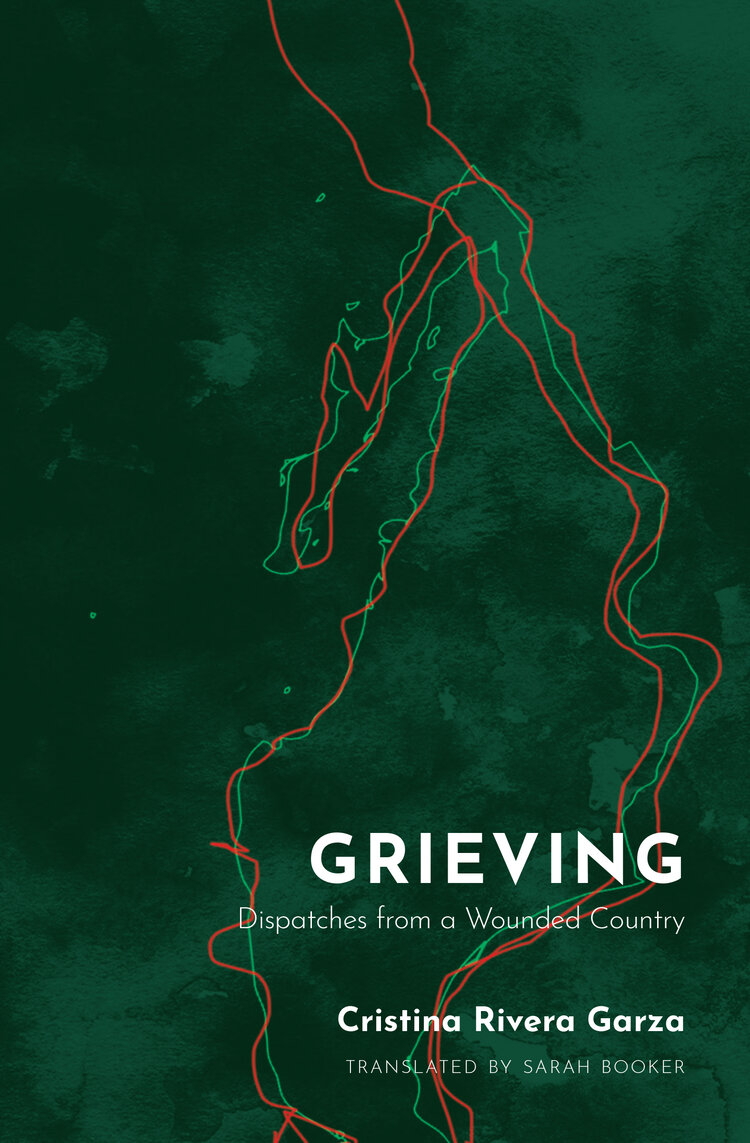
Cristina Rivera Garza’s hybrid essay collection Grieving: Dispatches from a Wounded Country gathers twenty-eight pieces—some personal, some journalistic, some literary—as a tribute to the power of language in the face of unrelenting fear and violence, and at times her words leave you gasping for breath. It is not a comfortable read. She writes about the barrage of visceral attacks that reduce human beings to unrecognizable bodies, tortured and mutilated, and of the killings, targeted and incidental, that rob mothers of their children, communities of their respected members, families of loved ones. And she writes about femicide, the murder of women, that too often goes unpunished. Like that of her own sister.
But what to do? How to address this accumulating pain, the pain of an entire people? Grieving in this context is not a mere process of coming to terms, to peace with a loss. There is no peace, the losing is relentless, the grief exponential. In Rivera Garza’s passionate, gut wrenching Introduction she speaks of the importance of recognizing the shared experience, the shared voice:
When everything falls silent, when the gravity of the facts far surpasses our understanding and even our imagination, then there it is—ready, open, stammering, injured, babbling—the language of pain, the pain we share with others.
And this is the importance of suffering, for where suffering lies, so, too, does grieving: the deep sorrow that binds us within emotional communities willing and able to face life anew, even if it means, or especially when it means, radically revising and altering the world we share. There, where suffering lies, so, too, does the political imperative to say, You pain me, I suffer with you, I grieve myself with you. We mourn us.
The texts that follow include published and unpublished essays, poems and crónicas, Spanish pieces translated Sarah Booker along with some originally written in English. For admirers of her enigmatic, dark novels like The Iliac Crest and the Taiga Syndrome, Grieving offers an opportunity to hear the acclaimed Mexican author speak directly to the tragic state of her country with painful honesty, strength and hope.
The works that comprise this collection are varied and relatively short, but the intensity of the material may be best processed and appreciated by taking a few pieces at a time. As someone with little understanding of the political reality of present day Mexico—awareness of the gruesome violence and the dangers to citizens and, at times, visitors, yes, but limited comprehension of the dynamics at play—I was continually faced with my own instinctive reaction to the idea of living under the conditions in which so many Mexicans find themselves on a daily basis. Rivera Garza’s language is powerful, poetic, but so much of what she touches on is grim, raw and heartbreaking. A central unifying construct is her notion of The Visceraless State—one that lacks political acknowledgement of the human body and its individual subjectivity—arguing that by engaging in this mis-named Drug War, the Mexican government has placed maximum profits above its obligations and responsibilities to its own citizens.
Essay collections are sometimes weighed down by a degree of sameness, a feeling that the same or similar themes are being rehashed, rather than viewed anew as the work progresses. Although Grieving is an attempt to articulate the present situation in Mexico, it is not an explicitly historical or journalistic effort. It is, rather, a human response, from a woman who is not just a reader and a writer, but “a mother and a daughter and a sister. A grieving sister.” Rivera Garza is writing from within her personal experiences, offering astute intellectual observances only as needed. The result is an eclectic, thematically focused exploration, yet one that picks up refrains, images and stories, calling on them again and again through the course of the book.
This is, then, a work that cannot be easily summarized. I was fascinated by several of the pieces that spoke about books not yet translated into English and their authors’ perspectives and contributions to an understanding of forces at play—not just in Mexico but in other analogous situations in social and political history. Cruelty and inhumanity is not the sole domain of any particular time or place. But there are a few key pieces that I found especially powerful. “I Won’t Let Anyone Say Those Are the Best Years of Your Life” examines the impact of drug based violence on youth through testimonies contained in a volume called Estos últimos años en Ciudad Juárez (2020) which looks at the recent period in Ciudad Juarez, a city on the Rio Grande, south of El Paso, Texas, and the price paid by the people there. Rivera Garza frames the lived reality:
No survives a war unscathed. Just as rivers feed nearby land by virtue of their mere existence, wounds run deep and pain seeps through every inch of the body. No action, no word, no gesture is unconnected to war. Similarly, actions and words and gestures remain linked to a growing alertness, a critical consciousness, about the sources of tragedy and loss. There are laments in the book, but they are never disassociated from the rage and indignation against a Visceraless State and the profit-making cartels. Wounded and on their toes at the same time, the people who remember their youth in a war-ravaged Ciudad Juárez, while still, in many cases, confronting the damage brought upon them by forces larger than their own, speak directly and to the point: We were robbed, many testify. They robbed us of our youth, indeed, but more importantly, they robbed us of our future.
Another especially powerful entry that again takes us back to Ciudad Juárez is “The Longest Sunday.” This essay recounts, in 13 brief numbered segments or chapters, a day Rivera Garza spent in the city. She is heading there to meet a woman whose testimony was included in the volume discussed in the piece mentioned above (which appears in any earlier part of Grieving). Luz Mariá Dávila had lost her only two sons in a violent massacre in 2010. Their meeting is sensitively portrayed. But this visit also brings to the surface the author’s own anxiety before arriving in a city that occupies “a sadly privileged place in our geographies of contemporary horror” to which increasing reports of femicides had also been added:
I remember the wide streets, empty of people, the string of abandoned houses that lined the road all the way from the airport to the hotel. A black hole in the very heart of the city. An immovable immobility. That way of repeatedly looking over your shoulder like you were expecting the worst, sure it would come at any second.
Her account unfolds under the quiet burden of grief, of pain, carried not simply in the story of one grieving mother’s sorrow and stubborn resolve, but in the complex emotions that Rivera Garza wrestles with under the “overwhelmingly blue sky” on that Sunday in Ciudad Juárez.
This is just a very brief sampling of this vital collection. For a taste of the intensity and insight, Rivera Garza brings to her essay writing, I can point you to a slightly different edit of the second last piece in this work which I had the great honour to publish in the spring of 2020 when I was an editor with 3:AM Magazine. Written in the early days of the pandemic when Trump was still President, “Touching is a Verb: The Hands of the Pandemic and Its Inescapable Questions” is not only an ever relevant meditation on the impact of COVID-19 on our relationships but a cautiously optimistic look ahead to the possibility of a Visceral State. It can be found here. Only time will tell what more questions and answers the pandemic will bring, but hope must be maintained, against all odds.
Grieving: Dispatches from a Wounded Country by Cristina Rivera Garza is translated by Sarah Booker and published by Feminist Press.
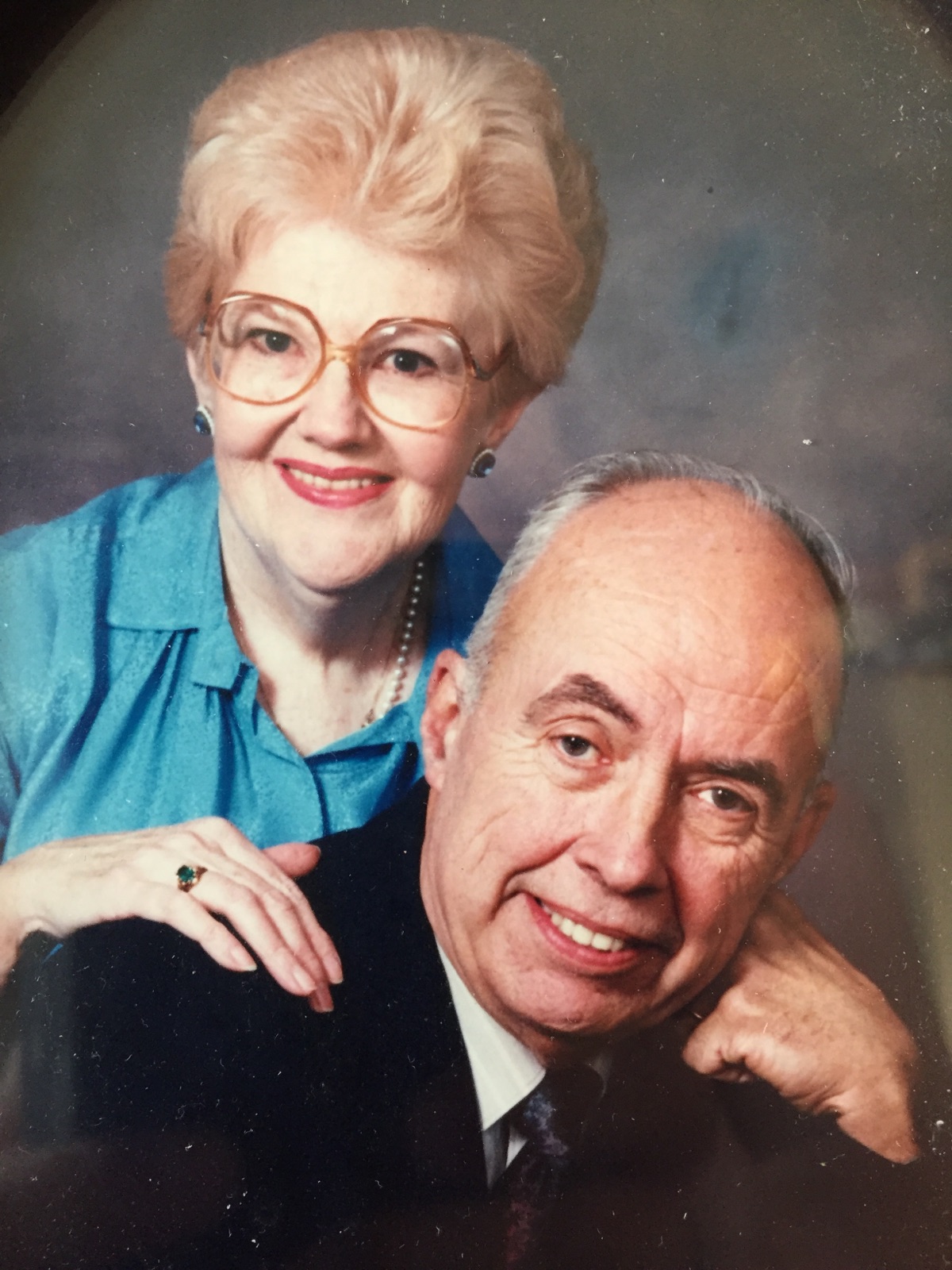
My father was born on this day, April 26th, in 1928, the year before the crash. He has been gone four years this July. My mother’s birthday is at the far end of this week, on May 2nd. She was born in 1934 and, like my father, she too has been gone four years this July—my parents died eleven days apart. My mother’s final days were spent on a respirator in ICU while, across town, my father was slowly slipping toward death following a stroke and head-on collision— we’ll never know which one came first. Their deaths intersected in time but in separate hospitals, here in the city, two hours from the village where they’d been living. Neither was able to see the other as the end neared. Sometimes during his final week of life my father would shake himself into the present and say Where’s Mother? I’d like to see Mother. And I would have to tell him once more that she had died. I’m so sorry, Dad, she’s gone. To explain the cause was too complicated at that point. I think he thought she died in the accident even though she hadn’t been with him. I don’t know. But I do know it was enough to let him surrender his fear of death and prepare to follow her.
I’ve been thinking of my parents a lot these days. The sadness lingers, as it will, but I feel their presences with a new sense of connection, more immediacy and less of a painful sense of loss. Some of this is relief. Neither would have fared well with this virus at hand, nor would either have wanted to witness the decay of leadership and mounting death toll in the US. My mother was born in New York City. My parents met and married there in 1957 and for many years after they had moved to Canada, it remained attached to certain youthful ideal in my father’s mind. The devastation in that city alone would have been heart breaking for both. Best, I tell myself, that they passed as they did, together after good, long lives. And it’s a blessing that my brothers and I were able to be at their bedsides, a gift denied so many right now. I have, in this understanding, embraced a new stage of grief, one which recognizes that they are not ever really gone. I carry them with me. And with them I’m finally ready to move on.
I fear I’ve been in limbo since my parents died. Not certain who I am any more. Strange because I’ve been fortunate to travel far—to Australia, India and Nepal—but that has been as much escape and random exploration, haphazard, trusting to chance rather than direction. I put a critical part of myself on hold. It was easier to engage, easier to make friends, easier to feel a creative sense of worth away from home. No sooner would I get back than I would be thinking about my next trip out. Now, at least until this pandemic is under control, I’m here, in a city where I have never really found my footing despite 26 years in the same neighbourhood, tracing the same paths, growing old in the same streets.
Sometimes when I walk through these old familiar streets, I think of the many painful passages of the past two and half decades. The long evening excursions just to get out of the house as my marriage was falling apart and I was wrestling with a troubled identity I could not understand or name. Then, the times when an expanding grid of sidewalks became the course of a pained and slow rehabilitation, as, feeling aged before my time, I slowly hobbled through recovery from two botched surgeries, a third major surgery, a serious manic episode, treated, inappropriately, with a med that made me lose my balance as I walked, and finally with broken ribs healing after the CPR that saved my life. Little wonder now that I prefer to stick to the wilder pathways and trails along the embankment above the river.
While many of my friends across the globe have been enduring varying levels of restriction these past weeks, I’m lucky to be able to get out and walk—two metres distancing observed of course—and I try not to miss a day. Now that the snow is gone I can shift the walk into a serious workout. I marked out a good loop and measured a base level pace yesterday. The weather is good. Over the years, this day has often seen unexpected sudden heavy spring snowfalls. My father’s birthday as a reference point has fixed them in my memory along with cancelled school outings or missed children’s parties along the way.
This year I want to honour my parents for the entire week bookended by their birthdays. Spend time with my memories of them.
Think about what they left me. Left within me.
Taken in my parents’ garden, about a month before their deaths.
The sky has closed in around us today. It is warm, but the world feels wrung out and weary as the decade draws to a close. I am aware of an abiding sense of quiet sorrow, Weltschmerz. This time of year is always difficult. Christmas has become a melancholic, meditative season for me. It has been this way since my parents passed away more than three years ago. I have learned to embrace a degree of aloneness as a time to recalibrate. But this year the “Joy to the World” spirit my religious upbringing taught me to embrace seems especially anachronistic. It seems there is so much hatred coursing through veins of this tired planet.
On a personal level, the passage from last December to this one has been marked by a little more mental instability than I’ve experienced in recent years. Twice I needed medication adjustments while in therapy I began to make some progress opening up channels into exploring grief and trauma. But progress is slow and subject to diversions and setbacks.
In an effort to cope with a variety of stresses at home I sought to escape. Run away, perhaps. To India. Twice. And now I’m back at home anxiously watching political unrest threaten to explode there; worried about my friends and a country I have grown to care about, and worried about the way hatred has been allowed to grow and spread so freely through democratic nations across the globe. Even my own country, still modest compared to its loud neighbour to the south, is not immune. Ignorance of history, distrust of science, and intolerance of difference are fueling fires that won’t be easily extinguished.
Tonight as I decorated my Christmas tree with the many angels my mother collected for as long as I can remember, I tried to call on her presence and only ended up missing her more. Were she here she would be as worried as I am. No, I’m afraid she would despair even more despite the fact she was a believer in a way I have never been able to be.
So, as winter settles in here in the northern hemisphere, all I can do—what I must do—is to try to hold to some faith (even if I am uncertain where it is rooted) that the lengthening days will hold a little promise that things will get better going forward. For all of us. Everywhere.
An odd thing happened when I was reading Kate Zambreno’s remarkable Book of Mutter, her fragmented meditation on grief and loss—a mix of memoir and literary and artistic criticism—that took her more than a decade to write. I sensed a strain in her relationship with her mother, reading it against my own circumstances. Of course there were huge differences between our lives and the ages at which we lost our mothers, but it seemed that even after such a long gestation period, her effort to work through her complicated emotions was still uncertain and unresolved. And, why not? Is grief ever really resolved?
Appendix Project, the unintentional follow up or companion piece to Book of Mutter, is a collection of lectures and essays composed during the year following the original book’s publication. It offers Zambreno a unique opportunity to continue a process that, to her surprise, was not put to rest with the final edits and release of a text she had already dedicated so much of her writing energy to. What more could be said? A lot it turns out. And the result is a more intimate, thoroughly engaging meditation on the impossibility of ever fully writing through grief, the limits of language, and the intensified emotional connection to her mother that she discovers through her own experience of motherhood. The entries gathered into Appendix Project trace the first year of Zambreno’s daughter’s life, and as such, her mother’s absence is filtered, re-imagined and given greater dimension through the presence of her child. In becoming a parent herself, her understanding of her mother as a mother has been altered.
What I never anticipated is how much being pregnant, and having a baby, would change the nature of time for me, and how that would interfere with the mourning of my mother, which I thought was finished, since the book I wrote about her was finished… My baby is almost four months old, but I feel she was just born, and that she’s been alive forever. I am 39 years old, but I have never felt more the past year like I was a child, have never felt more strongly the absence of being a daughter, of having a mother.
More haphazard, natural and organic than the book that proceeds it, this series of talks and reflections is not simply an addendum to Book of Mutter, or an alternative to reading from the book at public events, rather it grows over the course of its evolution into an intimate investigation into the act of remembering and attempting to put into words that which cannot be readily defined, confined, contained and released. There are many spaces where language is inadequate, where writing to process experience is not only irresistible but often impossible. Drawing on—that is, thinking and writing through—the work of artists and writers like Barthes, W.G. Sebald, On Kawara, Anne Carson, Bhanu Kapil, Marguerite Duras, Louise Bourgeois, Peter Handke and many more, Zambreno is not just continuing to think and re-think her own work, she is opening up avenues of inquiry and contemplation for any intuitive reader or writer to follow to their own ends. To read Appendix Project is akin to listening to its author thinking aloud as she reads the works others, reflects on motherhood, and returns to reconsider the elements of Book of Mutter that, over its long journey to a finished form, were either abandoned or edited out.
During the course of preparing the pieces that come to comprise Appendix Project, Zambreno resists the idea that they will be published as a book, knowing at the same time that she is engaged in a project. Others suggest that she should just repeat her these lectures, considering the time it takes to put them together, but there is an important temporal element at play, an ongoingness that is essential:
It feels like a necessary act, at this point where I am as a writer, and also as a published author, to re-engage in a passionate way in the ephemeral and daily practice of the writer, a way of returning back to the semi-privacy of writing—the different forms this might take—the letter, the notebook, and the talk. A talk however, Barthes notes, is not quite a performance. A talk is an outline for writing and speaking, a means to prepare and vocalize one’s thoughts.
Herein lies the key, at least for me, to the success of this project. As Zambreno sorts her thoughts out in the course of these lectures and essays, an attentive reader/writer can find their own launching points to questions that they may be dealing with. Reading Book of Mutter set me off on long stretches of writing in my notebook as passages I encountered facilitated unlikely connections I might not have made otherwise. It was often less what was said than the way something was said that caused me to think: how is that different for me? The fruits of my very idiosyncratic reading led to an understanding of my own queered relationship with my mother that I had never appreciated. I have since written about that in an essay posted here on my blog on Mother’s Day. My reading of Appendix Project, which I had little desire to rush, has likewise opened up further channels of exploration for my own writing—this time broader because the scope is broader—and some of this meandering has become key to another piece I have recently written for publication next year.
My point in bringing in my own reactions here, without fleshing out any of the details of the connections I made because they are relevant only to me, is by way of saying that this is not a book I can stand back from and review with the critical displacement required. Well I could, but that is not what excites me about this work. What makes this form of intelligent, personalized critical essay writing so powerful when it works (and it does not always work, especially when it slides into the overly self-indulgent and solipsistic) is that it can send readers (or listeners when presented as a lecture) to consider their own intersection with the topics discussed. Certainly grief and addressing the loss of a mother are central themes, but other losses—childhood, language, land, even sanity—can be subject to the same challenges of understanding and expression. My copy of Appendix Project is decorated in marginalia spinning off in a multitude of directions. And I have a stack of books Zambreno dips into—some old favourites, others yet unread—now sitting close at hand, not to mention a few more titles added to my wish list.
Finally, it’s worth asking whether familiarity with Book of Mutter will provide context for this collection of lectures and essays, and of course it won’t hurt, but this really more a book about everything that book (or perhaps any book) does not contain—what was removed, what was never there, what may never adequately be captured in any written text. They are really very different works, in form and intention. Book of Mutter, if unconventional, is still a highly structured work of mourning that, in the end, left me feeling a little disconnected. Appendix Project fills in those gaps and much more. And as such it is an exceptionally original, intelligent, and generous work in its own right.
Appendix Project by Kate Zambreno is published by Semiotext(e).
This Mother’s Day marks the third that I have faced alone since my mother’s passing in 2016. Last year was painful; this year, the passage between her birthday on May 2nd and today has been even more difficult. I have been angry, frustrated, agitated, depressed. Beset with a loneliness that is bone-deep, existential, wordless. I debated whether I should even attempt to express it because my specific pain is coloured not only by my loss of a beloved parent, my own mother, but because, although I face the world as a male person, understood as a man even to those who know otherwise, I am also a mother. Mother’s Day opens itself to women who have longed for motherhood (including those born male) or taken on motherlike roles in a wide variety of contexts, but holds no space for a mother like me. Even my own children tend to overlook my desire for just a moment’s recognition.
The only person who fully understood, honoured and respected this incongruous aspect of my being in the world was my own mother. And she is gone.
Up until the week she died, my mother called me, like clockwork, every Saturday night at 7:00 pm. I’m not sure when this pattern was established, but it extended back for decades. We were so very close. I listened to her joys and trials; she listened to mine. But there was never a exchange more difficult than my call, almost twenty years ago, to tell her that, after nearly forty years of trying to make myself into the woman she naturally assumed I was, I could no longer fight a persistent agonizing sense that I was not really female. My thirties had been, she was well aware, a decade of peculiar turmoil; that behind the birth of two children and a dutiful effort to craft a home that resembled the one I’d grown up in, something darker was brewing. I was increasingly, obviously miserable. I had experienced a serious manic psychosis and spent the better part of a month on the psychiatric ward. But nothing could have prepared her for my revelation. I had never shown the slightest masculine tendencies or interests and “transgender” was only just beginning to become a topic of conversation. However if gender roles and experiences—including pregnancy and childbirth— could a woman make, I could have managed to quell the dysphoria. I could not.
My mother, bless her, responded to the news that I was planning to divorce and transition to a life as male, with the promise that she would always love me unconditionally. She asked for no more than a few weeks to adjust to the idea. She became my advocate, quietly, faithfully, unstintingly. If she had her own doubts and grief over the loss of her daughter, she never let me know. And I never got the chance to ask. It was a subject left unaddressed in death.
My mother died from complications of osteoporosis and, as we learned in the final days of her life, post-polio syndrome. In eighty-two years the markers of exposure to that disease had never been detected, but together these conditions had gradually reduced her body to a hunched, frail, crippled cage. Until the very last month, when the lack of adequate oxygen exchange began to impair her thinking processes, she remained alert, intelligent and fresh. When I spoke to her, her age was ambiguous, eternal. Every time I saw her in person, I would be shocked anew. She spent her final years trapped in a delicate, fragile frame that constrained the spirit of a woman who had been so active and physically vital most of her life.
Her body betrayed her.
My mother’s death, followed eleven days later by my father’s death from the complications of a head-on collision, unravelled my reality in ways I am only beginning to fully appreciate. My parents spent their final years in a cottage in the woods outside a small village about two hours northwest of the city I live in. It was the final destination of lives that had started in large urban centres—New York and Toronto—and ended in a place in which they had few, if any connections. To everyone who knew them in this ultimate location, I was the oldest son. To most of the distant and scattered friends and relations I was tasked with notifying of their passing, I was their only daughter. For my brothers, never entirely at ease navigating the decade and a half between my two opposed public identities, I will always be a sister.
My parents’ final home.
For my own two children, I am the parent who transcends and defies gender, who struggled to raise them alone from the ages of eight and eleven, with little financial and emotional support, with one identity at home, but hidden, vague and uncertainly defined to the outside world. I referred to myself as their parent, only explicitly defining the biological reality when medical or educational situations commanded more specific terms. To do so was to invite the question of how much my issues were or were not impacting my son or daughter who each had their own challenges. No one ever asked how the practical emotional distance of their father played a role. I looked like a father and it is difficult for others, even if they are fully aware of my past to hold mother as a reality in the existence and life of someone who looks like a man. I was, more often than not, reduced to that oddity that, even today, is poorly appreciated—a single male parent.
I would be asked: Where is their real parent? Who? Their mother? What could I say? She’s dead? And yet, I resisted revealing my identity unnecessarily. I have long known single fathers, not widowed but left with the care and responsibility while mothers moved on, and I felt it was important to call attention to the fact that not all single parents are women. I also feared negative fallout. As a closeted transgender person I stood in isolation.
Yet raising children through their difficult adolescent years gave my life meaning, value. My own parents stood by me, pitched in, built strong and vital relationships with their grandchildren while the other side of their family, maintained a distance. Only their stepmother, their father’s new wife, made an effort. As I built a new identity and a new history as a man in the world, my children and my parents provided essential continuity. They allowed me to feel whole, to carry motherhood and manhood as part of who I was.
Who I was.
The last few years have not been so easy. The artificiality of this assumed completeness was shattered when I became ill and lost my job. The scaffolding provided by my short-lived career, the years I spent working in social services fully and completely accepted as male, was stripped away leaving me defenseless. By this time, my children were in their twenties, both dealing with their own serious issues, and I had no friends, community or support to fall back on.
In retrospect, the sharp jolt into recognition of the limitations of transition to address the longstanding dislocation of gender dysphoria, has been a blessing. I could have continued to imagine that my artificial existence was sufficient for some time, but in truth, cracks in my carefully tended armour were showing long before the tentacles of mania pried them open. Career success was only a passing indication of achievement. My failure to make friends or forge a sexual identity spoke much more acutely to the truth that I could live as a man, but would never really be a man. Yet, as transgender, my own experience—past and present—is never echoed in the endless stream of gender different narratives that have become so ubiquitous in queer and public discourse. My personal efforts to find comfort, community or safety in LGBTQ space have been a dismal tribute to the heartache of finding oneself doubly alienated among the alienated. I sometimes feel like I have never fit in anywhere.
So I sought to find myself where I had no reason or expectation of fitting in. Where I once sought to ensure protection by building walls between myself and the world, I now seek escape. Through reading, writing , and travel. South Africa. Australia. India.
And again, India.
My mother only lived to know of the first of these journeys, one that in my complete ignorance about the risks of long haul sedentary travel, very nearly cost me my life—blood clot to pulmonary embolism to cardiac arrest—saved against incredible odds, by my son who found me and started CPR. But I know she would never have discouraged my continued travel. In her lifetime she managed to visit Cairo with a friend and Russia and New Zealand with my father, but had she not been constrained by an increasingly brittle body and an increasingly eccentric and intransigent husband, she would have travelled longer and farther. Perhaps I have inherited some of my restlessness from her.
That restlessness is growing. I have never felt “at home” in the city where I have lived for most of my life. I was not born here. I have no roots or connections here. Both of my brothers are married to women with deep histories in this part of the country. But my ex was of the first generation born to migrants, refugees. My own mother was a migrant and, back only two generations of a family of refugees herself. I feel this eternal disconnect enhanced by the embodied dislocation I feel as someone who has navigated womanhood and manhood, but belonged to neither. In this present #MeToo era I am even more adrift. I am torn between a genuine empathy for men—informed by living as a male person in society keenly aware of the ways testosterone has altered my mental and emotional engagement with the world—and the feeling that my own experiences as a girl and woman have lost their currency. I look like a middle-aged white man and that is all that I am allowed to speak to. There isn’t even a language which can adequately address my dual life and my role as a parent. Transgender men who opt to have a child at the beginning of the transitional process engage a queer parenthood that is unlikely to ever be labelled “motherhood” as language now tends to be gender neutralized, distorted. Which is fine for them, but it silences and disowns the reality of my, admittedly less common, hybridized experience.
I want to speak for no one but myself. I do not regret the decision to transition, I am entirely comfortable with the face I see in the mirror. I am male and enjoy a hormonal rightness that grants me a certain completeness. The body, well that is another possibly unsolvable matter. However, of late I find myself wanting to claw back some sense of dignity for my early, pre-transition life. It isn’t easy. It is unsettling, even with my most generous and supportive friends— those who fully accept me but have only known me with this present name, this current appearance. And very often it angers transgender activists because it defies the accepted discourse. I can’t help but fear that the only person who might have ever come close to truly understanding, who might have been able to walk with me through this unending, evolving, shifting, and ever ill-defined journey is no longer here. My mother contained all that I am—all that I have ever been, and all that I ever will be. My absolute alpha and omega. Her love was whole, at times skeptical perhaps, but expansive and complete.
And for that reason, on this Mother’s Day, I miss her with all my heart and soul.
To read Kate Zambreno’s Book of Mutter, is akin to making your way through a strangely familiar space that resembles a gallery, a diary, and a hall of mirrors all at once. It is, in its shifting fragmented form, unlike any conventional grief memoir. But then, as anyone who has lost a close family member—parent, child, partner—knows, there is nothing conventional about grief. The dynamics of shared histories, hopes and fears are complex. This colours, troubles and blurs the edges of the mourning process. Grieving is as much about our own lives, past and present, as it about honouring or making peace with our relationship with the person who is gone. We are the ones who need to be able integrate a complex of emotions and continue living.
Spanning thirteen years, from 2003 to 2016, Book of Mutter is Zambreno’s thoughtful, pained, uncertain attempt to come to terms with her mother’s death. Roland Barthes’ Mourning Diary and Camera Lucida, works that attempt to articulate—initially in the immediate moment and later in the context of the photograph—the deep sense of grief he felt after the loss of his beloved mother, form a sort of natural undercurrent that arises regularly throughout the text. They are the only two books on grief that I read in the months following my own parents’ closely timed deaths in July 2016. I had already read, and thought often of Peter Handke’s A Sorrow Beyond Dreams which also appears here, but as for this book which came out in early 2017, I was not ready, at the time, to approach it. My own losses were too fresh.
As it happens, waiting was wise. Not only have I been open to reading grief in recent months, I am actively working to write about the loss of my own mother and how that is bound to the grief, anger and guilt that haunts my own sense of self. Although the circumstances, stories, and intentions guiding my own project could not be more different, Kate Zambreno’s book is filled with kindling—thoughts, ideas and reflections that sparked some sharp insights into my own achingly conflicted emotions and I have pages of scribbled notes to show for it. But that’s for another writing project yet to come. The point is, that reading and writing about grief, is not about finding exact images of yourself and resolving loss on anyone else’s terms, it is about being open to inspiration to guide your own mourning process, whatever that may ultimately look like.
Zambreno’s relationship with her mother is rife with contradictions, frequent tensions and conflicts. Her mother’s independent existence apart from her, prior to her own existence and as she grows up, is an enigma that death calls her to try to give sense to. The only access is through memory—a “house of memories”—and it is the fear of facing what this may unearth that holds her back:
My mother is the text. I cannot enter her.
Your mother was not herself in those last few months…
But who was she?
This resonates with me as someone whose own memory project was interrupted by my mother’s death, closing the door to a house of memories I was suddenly afraid to open. And yet writing is, for many people, the only access to understanding and release. Barthes and Handke both embarked on early missions to write grief, private or public, and both, I would suggest, found release elusive in these immediate efforts.
But thirteen years?
The process takes the time it demands, and then some. But the desire for closure, as impossible as that may be, is a natural instinct—one that holds a curious allure for writers who work toward that line, sentence, thought where a poem, story or essay naturally ends. But, of course, the strongest endings are those that hang in the air unaltered. Allowing for that in the act of literary creation is one thing—living it is quite another. The desire to be able to gather up all the loose ends of a life so as to let them go looms large. Zambreno describes her own intention clearly as an attempt:
To put these memories in a book, so as to be released from it. These thirteen years of it. Like a sacrificial offering. To bury it in the ground. Writing as a way not to remember but to forget. Or if not to forget, to attempt to leave it behind.
All the offerings for the dead
so they remain buried.
Book of Mutter can be read as a daughter’s incantation, an attempt to grant meaning to her mother’s life, illness, and the curious spaces she leaves behind. It resembles a literary scrapbook or a passage in and out of the rooms in a large house where mnemonic images drawn from life, literature, art, and history provoke reflections. It is a fitful journey. Zambreno’s guides are idiosyncratic, their very strangeness allowing for the unique tone of this remarkable work. Key among them are Henry Darger and Louise Bourgeois. Darger is the famous “outsider artist” who was orphaned at an early age and spent his childhood institutionalized. As an adult he maintained a solitary existence, attending Mass daily and supporting himself as a hospital custodian. It was not until he was forced to leave his Chicago apartment at the end of his life that a trove of illustrations and extensive typed manuscripts was uncovered. His stories and drawings depict detailed, elaborate fantasies—alternately whimsical and horrific—featuring children. Bourgeois was a French-American sculptor and installation artist. Works from her Cells projects, each a series of large scale installations featuring scenes and vignettes created with found objects and enclosed in wire mesh cages, provide recurring counterpoints for Zambreno as she assembles her own memory project. Disturbing insights into the creation of Carl Theodor Dreyer’s 1928 film, The Passion of Saint Joan, reflections on post-mortem photography, and the fate of Mary Todd Lincoln are also woven into the text along with input from a variety of literary voices.
The resulting oddly eclectic assemblage reflects, perhaps, the extended passage of time that marks the realization of this book. Zambreno is writing in fits and starts, as she seeks to articulate so many unresolved emotions and observations. By placing her not uncommon experiences against a backdrop that is unusual (as in, not the standard grief and loss tapestry), the surreal strangeness and absolute uniqueness of the grieving experience is captured. This is a book that is at once measured and raw. In her account she moves back and forth between memories of her own often difficult relationship with her mother and the profound absence and guilt she feels, her widowed father’s attempts to fill the vacated space in his life, and an often brutal portrayal of her mother’s illness, decline and madness.
The fractured quality of the text echoes the way loss refuses to conform, refuses to work itself out neatly. How can it? Although my own relationship with my mother was quite different than the one Zambreno describes, it was not and is not free of tangled sentiments that I have often wished we could have talked about. We were close. We spoke on the phone every week and she died in her eighties, weary yet peacefully ready to leave, however there are many moments in Book of Mutter, especially in the first half, that have illuminated, by contrast, questions I’ve been struggling with. Turned them around. And that is why we read grief. And why many of us feel a need to attempt to write it. Not to find answers. But to be moved to ask questions and follow where they lead. In recent months I have read some very good books about grief and loss, accounts that blend personal experience with time-honoured, accepted understanding of the grieving process. Which is fine, but this book with its uneven, awkward genesis across more than a decade is one that I skirted so widely when it appeared (and to be honest every time I saw it staring at me from the bookstore shelf with its peculiar cover that I now know to be one of Louise Bourgeois’ Cells), has unintentionally offered a clue I needed to move forward in my own writing at exactly the right time.
And yet it remains an unfinished text. I am now reading the newly released Appendix Project, a collection of essays and talks that Zambreno wrote in the year following the release of Book of Mutter—coincidentally the first year of her own daughter’s life. It is a rich and valuable continuation of her meditation on writing grief and living with the ghosts and reverberations of an evolving and ongoing process that does not end with a final edit and the publication of a book. What she once hoped to box up and bury is anything but.
Book of Mutter and Appendix Project by Kate Zambreno are published by Semiotext(e).

 Do Not Send Me Out Among Strangers is a collection of brief journal entries—observations, accounts, and recollections—nested among a series of harsh black and white photographs of soil, rock, and debris, marked with occasional tufts of vegetation. Numbered and time stamped, these images are titled “Field Notes.” This is the visual record of the search that occupies Segun-Lean’s lockdown days: he has been tasked with the dispersal of his father’s ashes. He thinks back on their strained relationship and his insecurity about the responsibility he has been given. Meanwhile, friends are falling sick with Covid; some are even dying. A journey of grief lies in the stillness of this book.



 roughghosts