Staying too literal is a dead end: Nevermore by Cécile Wajsbrot

It is the beginning of time. There was a before, of course, there was day, but everything begins, begins again at night. Genesis. The beginning of time. “Time Passes,” the second part of To the Lighthouse, can be read as a separate work, a text we can approach as we would an island from which, to be sure, the contours of the shoreline, of the mainland can be seen—but the only thing that counts is the exploration of the island. A creation story. Dividing light from darkness.

Only twenty pages long, the “Time Passes” section of Virginia Woolf’s novel is a bridge or passageway between the first and third, marking the passing of ten years during which a summer house on the coast of the Isle of Skye stands bereft of the human life that once filled it. It is empty, and yet it is not. The forces of nature observe, occupy, and lay claim to the house, its contents, and the grounds. Elsewhere war rages and several characters from the first section, including the central figure, Mrs. Ramsay, meet unfortunate fates, noted in brief, bracketed asides along the way. It is not until the end of this interlude that human life begins to reappear on the scene.
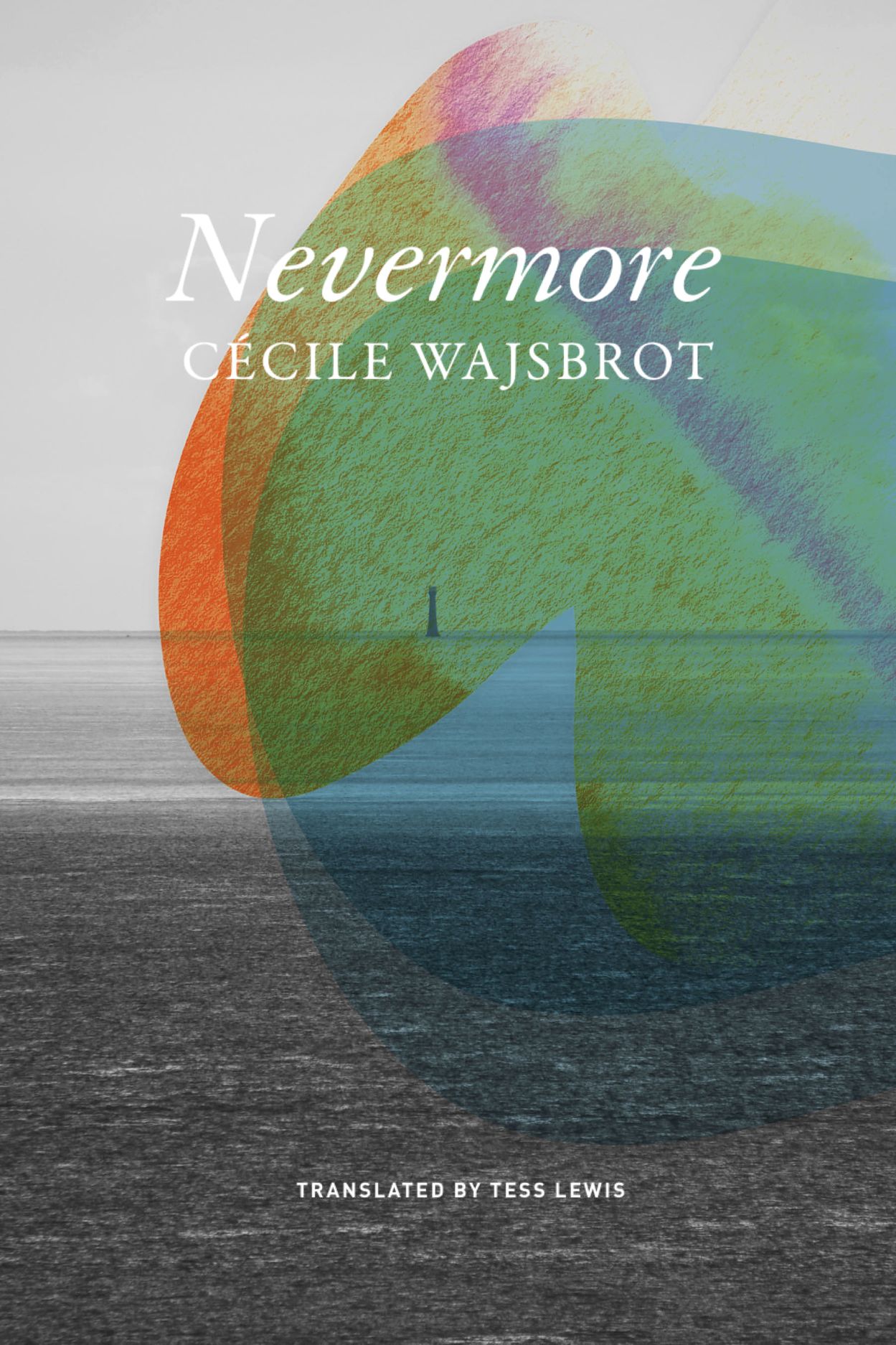
This poetic evocation of time and abandonment flows through Cécile Wajsbrot’s contemplative Nevermore, not unlike the Elbe to which her narrator returns regularly during her sojourn in Dresden. This intriguing, intelligent novel, follows an unnamed translator who has come to the German city to work on a translation of “Time Passes” from English into French. She is grieving the recent loss of a close friend and hopes that both the project and the unfamiliar location far from her home in Paris will help her heal:

I’m elsewhere, in another city, another country. The language of my internal thoughts is not the one spoken here. Are we ultimately impenetrable? Will I never know the internal life playing out here? Will I pass like a silhouette, a shade, without knowing anyone?

As someone who has valued her independence, her “untethered life” of freedom, she is seeking a temporary refuge within which she can disappear while she immerses herself in her work. Thus, “Time Passes” not only offers her purpose and direction, but exists as an incantatory exploration of the imperfect art of ferrying a piece of literature from one language to another. As she makes her way through phrases and passages that seem to echo the sense of absence that haunts her, she trials variations and fumbles with sound and meaning, attempting to sketch out a first draft.

However, the ongoing translation is but one thread in this wide ranging narrative. It is interwoven with historical, political, and artistic streams. Regular “Interludes” trace the history of the High Line in Manhattan, from its earliest days as an elevated freight rail line built to transport goods arriving at the Hudson River port and service the warehouses, factories, and slaughterhouses in the surrounding area. In use from 1934 through to 1980, the tracks lay abandoned and open to the ravages  of time and the elements until they were turned into an elevated park and promenade above the noise of the city nearly three decades later. As she repeatedly returns to this evolving space, she is interested in exploring the shifting economic, artistic and human forces that shape the environments we live in. Nothing is static.

Indeed, change is often catastrophic. Another theme that regularly resurfaces is the 1986 disaster at the Chernobyl nuclear reactor near Pripyat, Ukraine. The town was evacuated and a new community was built just outside the so-called Exclusion Zone. But as scientists, and eventually film crews and tourists returned to the abandoned town, they found that nature—flora and fauna—had continued to thrive and even take over some of the empty buildings and structures. The persistence of life in the absence of human care or interference, mirrors the scenes evoked by Woolf decades earlier in her depiction of the elements, insects and animal and plant life working its way into the empty house in “Time Passes.”

Then, of course, there is the very city in which the narrator has taken up temporary residence—Dresden. The history of its destruction and subsequent reconstruction is evidenced and memorialized everywhere. As a backdrop to the translation of a work that spans the Frist World War, a presence even if it is off-scene, so to speak, a city with such an indelible war-time history makes sense. The narrator takes long walks at night, following the river, thinking of death. At times, she seems to encounter some kind of presence and wonders if it is a ghost or a briefly animated memory of her friend. As the messages her family and friends back in Paris leave on her phone go unanswered, she even contemplates the possibility of extending her stay a little longer. She is seeking something even if she doesn’t know what.

There are also other important themes and elements that occupy our narrator’s thoughts in between her translation sessions at her laptop. Michael Powell’s 1937 film, The Edge of the World, for example, based on the evacuation of the Scottish archipelago of Saint Kilda, echoes the common image of abandonment while music, including compositions by Arvo Pärt, Debussy, Felix Mendelsohn and more, forms a sort of narrative soundtrack (all the sources and resources are included at the end). As someone who is, by virtue of her profession, attuned to the rhythms and musicality of language—a particular challenge with the text she is working on—it is not surprising that music should play such a fundamental, even transformative role in her immediate journey. This is, then a rich novel of ideas, one that incorporates its many varied digressions seamlessly into the progressive translation of Virginia Woolf’s “Time Passes” at its core.

But what about this activity so central to this work? How is the potential translation of an English text into French within a French novel realized in an English translation? As the narrator tests out possible variations for each passage she encounters, she often starts with a literal version, then troubles the grammatical and lexical limitations of a language that cannot always do what the source language can to reach some kind of structure that will later be fine-tuned. This often necessitates shifts and small sacrifices to capture not only the meaning, but the lightness, flow, and qualities of repetition in Woolf’s unconventional original. Again and again, we are offered insight into the processes a translator employs to bring a text to life. English translator Tess Lewis’s ingenious approach to this translation-within-a-translation makes these passages accessible to all readers regardless of prior knowledge of French. Each time Wajbrot’s narrator returns another sentence or two from “Time Passes,” Woolf’s text is presented in italics, while a third font (Helvetica Neue Light) is used for the possible French variations under consideration, translated into English (in the primary font) if necessary to highlight nuances between them. Meanwhile, Lewis cuts some of the more literal or less complicated translations to, as she says, sharpen focus on those alternatives that shed light on the process of translation. Of course, the translator-narrator is not only dealing with words, their sounds, lengths and order, but also questions of meaning and intention. Fortunately, with Woolf, there are manuscripts, different edits, letters, and diary sources that she can consult. As the narrator admits, the art of translation is not an exact science,.

This is, then, an ideal book for anyone interested in the process of translation—readers of translated literature, presumably—who enjoy wise, lyrical meditations on a wide range of unexpectedly interlinked subjects. But it is also the story of one woman’s coming to terms with loss and grief through deep engagement with a remarkable piece of literature. Perhaps the only way to truly heal.

Nevermore by Cécile Wajsbrot is translated from the French by Tess Lewis and pulished by Seagull Books.
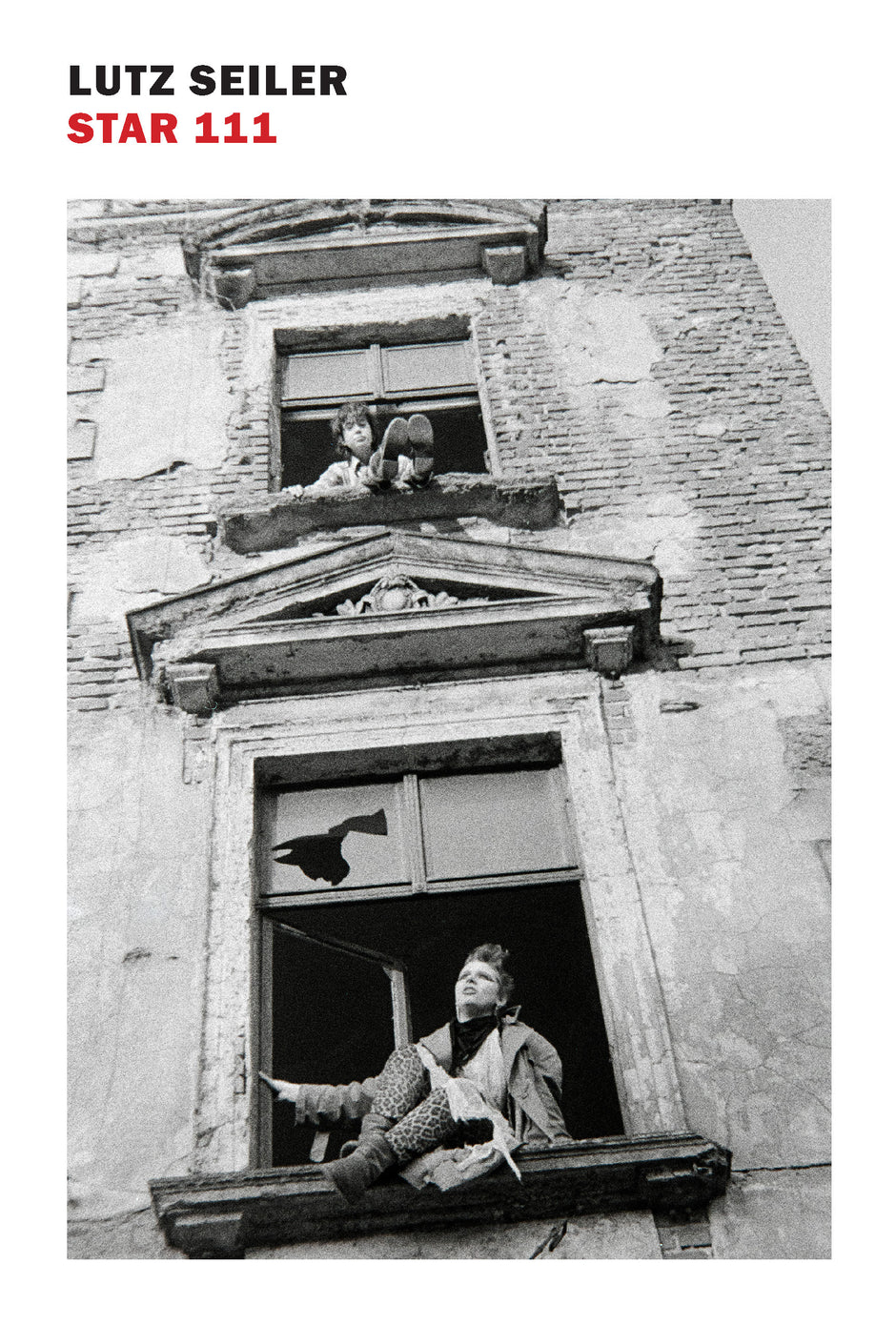
If such a thing is possible: Star 111 by Lutz Seiler

Maybe at twenty-six he was already too old to seriously go about becoming a poet.

The fall of the German Democratic Republic was rapid and unexpected. As other communist regimes in Eastern Europe began to disintegrate, the East German government tried to maintain control, but in early November 1989 a mistaken announcement led to the sudden opening of border crossings through which hundreds of thousands of East German residents would soon pass. This is where Star 111 by German poet and writer Lutz Seiler begins.

Twenty-six year old Carl Bischoff has just been summoned from Leipzig to his home town Gera in the state of Thuringia. The telegram, dated November 10, reads “we need help please do come immediately,” but as he waits for the train, he has no inclination that all the childhood securities he once imagined were unassailable are about to be upended. His parents, Inge and Walter (Carl has long addressed them by their first names), waste no time announcing their intentions. They are going to take advantage of the crumbling state of the GDR and cross the border. Now. This is, they tell him, a dream they have long held and, should the precious opportunity be short lived, they plan to leave promptly. They will head for the refugee camp at Giessen, and then split up to better their chances of finding suitable lodgings and employment on the other side. Carl’s assignment is to stay behind and look after the apartment. He will be the rearguard. But left behind, Carl finds he is at a loss, confused by this sudden inversion of what he imagines the parent-child dynamic should be and worried about his middle-aged parents who by rights should be the ones at home worrying about him.

His age is critical. Carl will repeatedly question what it means to be in his mid-twenties as if there’s some kind of high-watermark that he’s worried he has already missed. He has completed military service, learned a trade, and spent a few years at college, but he is without direction. His dream is to become a poet. Yet, when he is called home, he is apparently recovering from a breakup and a breakdown—something he alludes to but does not discuss because there’s no time. His parents’ departure is so immediate and unnerving that it entirely usurps whatever crash course he might have been on. But, even if it leaves him temporarily unmoored in a world that is rapidly changing, it does offer him a chance to chart a new direction for himself. After a few weeks in Gera, trying to keep a low profile while working his way through the preserves in the cellar, Carl is beginning to bottom out. So he loads up his father’s beloved Zhiguli with tools, a sleeping bag, and some provisions, and heads to Berlin. He has no particular destination in mind. He is simply following a fantasy founded on little more than a few poems set in that mythical city, seeking, as he will later describe it, “the passage to a poetic existence.

Arriving in East Berlin, Carl tries to get his bearings, picks up the odd unofficial taxi fare, and sleeps in his car. But, with winter settling in it’s a bleak—and cold—existence. Before long he falls ill. When, freezing and feverish, he happens to find his way through the rear door of a cinema, he suddenly steps into another world. So to speak. He finds himself in the company of an odd collection of individuals, led, it would appear, by a charismatic man they call the Shepherd—the owner or companion of a goat named Dodo—who nurse him through his illness and welcome him to their breakfast table, impressed in no small part by his car with its trunk full of tools. His tools?

“No, no Zhiguliman, you don’t have to explain anything here. More than a few people are on the move in this freshly liberated city. The whole world is being parcelled up anew these days—but if you’re looking for something permanent. . .”

Carl is not certain what he is looking for, or what something permanent might even mean. If stability cannot be assured in unstable times, he wants whatever it is the handful of men and women around him seem to have—community. And it seems to be on offer:

It was as if he were already part of a pack, as if he were of the same breed. Everything seemed already embedded according to a long-standing plan and leading toward the only logical conclusion. It was a strange feeling. It was the presentiment of a legend (if there is such a thing, thought Carl), on the point of taking him to its profound, all-embracing “once upon a time.”

It is, in fact, just the beginning. He settles into a spartan empty apartment and soon finds a place among a group of misfits, artists, and anarchists who are systematically occupying abandoned buildings, hoping to take advantage of the shifting political and social terrain to craft a kind of anti-capitalist utopia amid the ruins of a damaged urban landscape before others come to reclaim it. His bricklaying skills secure his place.

Over the months that follow, Carl will oversee renovations, begin to work in the Assel, the  café the Shepherd sets up, and embark on a romantic relationship with, much to his surprise and naïve delight, a woman from his hometown. Meanwhile, the progress of his parents is revealed regularly, but only insofar as his mother’s letters allow him to it piece together through what is shared, or more critically, what is left unsaid. For months after he had dropped them off at the border, there had been an unsettling silence. Then, once he has relocated to Berlin, the missives begin to arrive, secretly rerouted through the post office in Gera. For a long time Inge and Walter are apart (“separately after Giessen”, as planned), and the latter’s whereabouts are unknown. On her own, Inge proves to be remarkably self-sufficient, working and making social connections until Walter is finally found and the couple are reunited. From that point on, Carl’s father will rely on his computer programming skills to build toward the shared future they envision. Inge’s cryptic comments and idiosyncratic expressions imply that there is a greater game afoot, but Carl is being kept in the dark. But then, many months will pass before he finally confesses that he has abandoned his post as rearguard.

As Carl constructs a life for himself in Berlin, building relationships with others, testing his emotional boundaries, and tracing a regular path through the streets of his dilapidated neighbourhood, one central focus drives his days—the need to write, to dedicate at least some time to poetry. With a little promising feedback, he fantasizes about the day he will publish a book of his own poems. Yet, with all the uncertainty (and opportunity) that a rapidly evolving Germany promises, for Carl writing is a discipline that exists on its own ground away from it all. He is a purist, not a documentarian:

So-called reality and its abundance (“the most exciting times of our lives,” as everyone was claiming)—it would never have occurred to him to write about it, not even in a journal, never mind that he clearly wasn’t in any state to keep a proper journal (with regular entries). The main question was whether or not the next line would work. The next line and its sound preoccupied Carl, not the demise of the country outside his window. If the poem didn’t succeed, then life wouldn’t either.

It’s not an easy path to follow, but it’s one that sustains him when everything falls into place  and one that devastates him when life runs off the rail and words fail to come.

Decidedly autobiographical in nature, Star 111 is a tale of self-discovery, a portrait of a young man seeking to define his identity as an adult and as a poet against a backdrop of rapid change when, for a moment, all the old rules have been suspended before inevitably being rewritten and reshaped by capitalist interests. Seiler’s limited third person narrative with its frequent parenthetical refrains and clarifications, captures Carl’s insecurity and self-doubt as he navigates this strange terrain. It also facilitates the integration of a wide range of eccentric characters: members of the Shepherd’s “pack,” his neighbours, co-workers and customers at the Assel, his lover and her young son, and the many people he encounters vicariously through his mother’s regular updates. Essentially, then, this is a novel about family—natal, accidental, and imagined—and the forces that gather to form and inform one’s independent being. The “Star 111” of the title refers to the popular transistor radio that was the centrepiece of Carl’s family life when he was a child. The memories of it that haunt him reflect the strange longing that tends to set upon us when life conspires to force us to accept that not only are we truly grown up (whether or not we feel like it), but that our parents are independent adults too. As Carl spends a lot of time re-evaluating his relationship with Inge and Walter, he will wonder whether he ever really knew them at all. Or they him.

Lutz Seiler is, of course, like his protagonist, a poet first and foremost. This can be seen in the way his chapter titles are picked up in the text, often in the closing line, but more explicitly in his attention to the sounds and the rhythms of language. Translator Tess Lewis—who also translated his first novel Kruso which she describes as forming a sort of diptych with Star 111—writes in her Afterword of the challenge presented by his “ability to capture the minutiae and texture of a vanished world in rhythmic, lyrical prose.” She pays particular attention to the various registers in the original reflecting the different tenors of West and East German bureaucracy, varying speech patterns associated with social class, and the lines of poetry by a host of other poets that echo through Carl’s imagination. When words with multiple meanings afford the author an onomatopoeic flexibility that cannot be fully replicated, Lewis found she sometimes had to make alternate word choices, knowing the full affect could not always be maintained. This is not a loss noticed in the English reading though. The sense that this is a moment in time that will not last long and will never come again is captured so vividly through Carl’s adventures (and misadventures), not to mention those of his parents, that it feels, above all, like a privilege to be along for the ride.

Star 111 by Lutz Seiler is translated from the German by Tess Lewis and published by New York Review Books in North America and by And Other Stories in the UK.

Making every word count: The Questionable Ones by Judith Keller

A police car drives slowly along the streetcar tracks in front of the central station. The officers scrutinize the waiting pedestrians through the window. Most of those waiting here are out of the question. But some do come into question. These are the questionable ones.

This simple story, “Casting,” not only provides the title for Judith Keller’s collection of micro fictions, now available in English translation by Tess Lewis, but is a perfect representation of what this young Swiss writer is able to achieve with an economy words and a sensitivity to the multiple meanings that potentially blossom from familiar expressions. A quick glance at this book of short (sometimes very short) stories can be misleading. Some pieces are barely two sentences, a number extend for a page or two, while a few stretch to seven or more pages. One might then wonder how much a of story such an abbreviated form can contain, but as Keller knows well, the careful choice of words and the confidence to leave open space for the reader is key.

Arranged into sections named after stops on the Zurich tram line, the stories in The Questionable Ones offer snapshots into the lives, passions and idiosyncrasies of a variety of characters. Absurd, often humorous, sometimes reaching toward the political, Keller’s micro fictions reflect recognizable human emotions and actions, frequently relying on common expressions taken to their literal extreme, or language that is inherently ambiguous. Of course, this reliance on meaning, especially in such a confined literary space, presents a particular challenge for a translator.

The publisher’s webpage for this book features links to a published interview and a video conversation between the author and her translator, both recorded in April 2020 when the pandemic had intervened in Keller’s plans to attend a festival and a residency in New York City. Although both cover her literary influences—including Robert Walser and Ilse Aichinger—and the reasoning behind her unusual decision to study German as a foreign language in Bogota, Colombia, the video is particularly enlightening. It not only offers anyone interested a taste of Keller’s mini fictions, read by the author herself, but zeroes in on some of the difficult decisions her translator faced when the choice of an appropriate word to convey the nuances implicit in the original was not obvious. At this point, the translations were not necessarily fixed in their final form, so several times, Lewis and Keller discuss possible options for critical words in particular pieces. After all, if every word counts in the initial composition, the same is true for the translation. Further, the opportunity to witness the writer and translator openly examining the subtleties of meaning together is inspiring.

Keller’s playfulness with words and capacity to see things from a slightly odd angle allows her to pack more into a few sentences or a few pages in ways that longer, more conventional fiction might not. Less is more. Each piece is left open for interpretation, encouraging the reader to imagine a larger tale. They are at once sketches and revealing portraits of ordinary people trying to make sense of life, one way or another. As well, the spare prose, focused on the most essential, if unusual, qualities of  character and setting leads to some wonderful images. Take for example, the opening of the two-page story “In a House”:

A band of light lay on a hillside as if a glance from half-closed eyes had fallen from above. On the hill stood a house and in it lived a man whose movements were slow. He slowly raked the leaves. He had a wife and two sons. His wife looked like an owl with her brown and golden eyes. She had taken to standing behind herself and sending her body on ahead and calmly watching what happened to it. Their marriage was a muted one.

The only obvious connection between the stories that comprise The Questionable Ones and the tram stations that denote each section—Bucheggplatz, Schwert, Micafil and so on—is the recurring piece, always called “High Time” that closes out each sequence. The circumstances change, but each instance, begins with a “far-fetched woman” making her way through the city, by day or by night, often reaching the relevant tram station and, ends with the acknowledgement that she, or someone else, has been “waiting for it to be high time for a good while now.” This variation on a theme within which what “high time” is meant to refer to is never revealed, adds an intriguing continuity to this irresistible collection of microfictions.

The Questionable Ones by Judith Keller is translated from the German by Tess Lewis and published by Seagull Books.

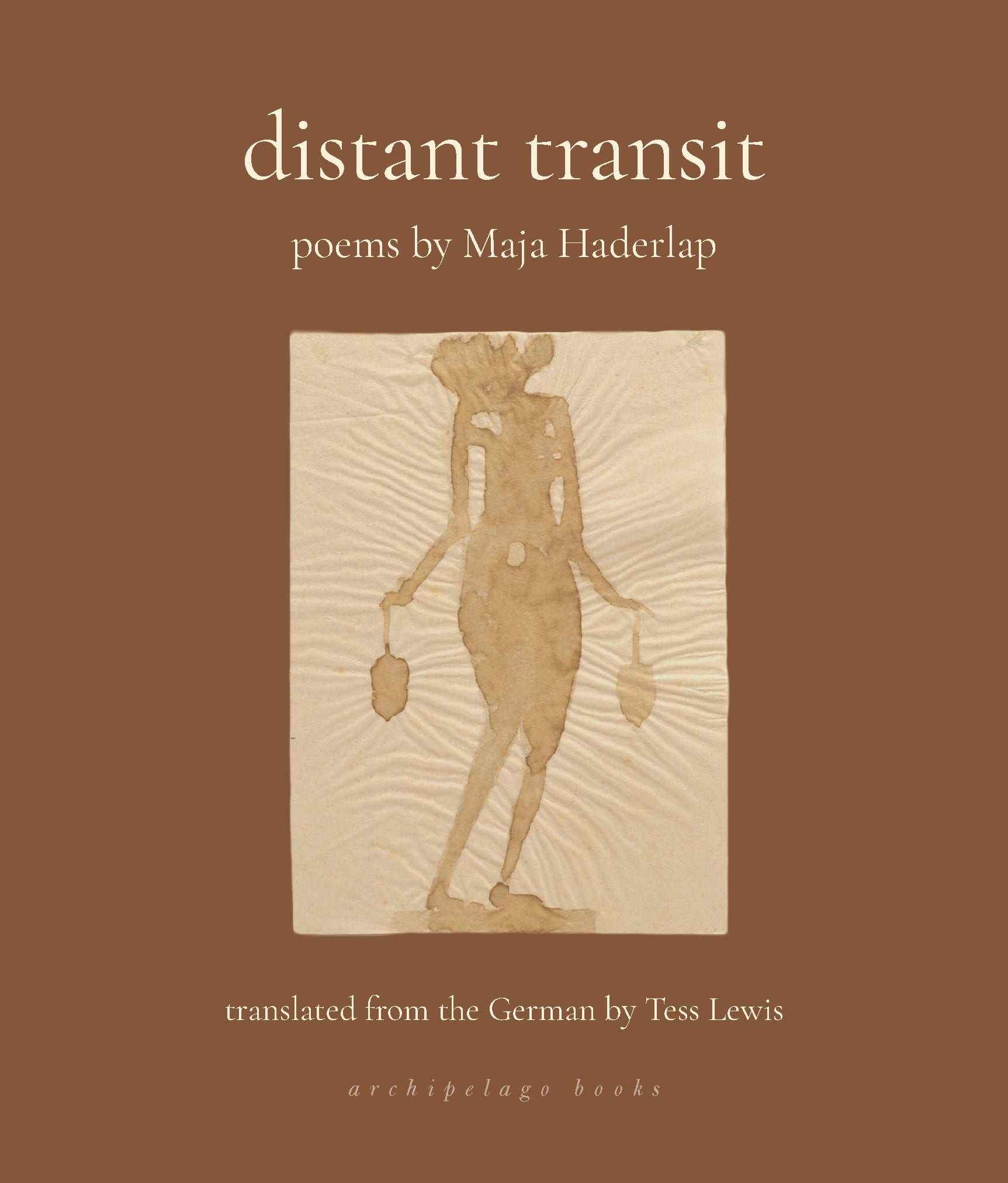
“a translation of myself”: distant transit by Maja Haderlap

is there a zone of darkness between all languages,
a black river that swallows words
and stories and transforms them?
here sentences must disrobe,
begin to roam, learn to swim,
not lose the memory that nests in
their bodies, a secret nucleus.

(from “translation”)

Maja Haderlap was born Carinthia, the southern-most province of Austria, into the Slovenian-speaking minority community that served in the resistance against the Nazis during the Second World War. As a result, they suffered repression during the war and ongoing persecution in the decades that followed. Haderlap was raised in this hostile borderland environment and educated in both Slovenian and German, two languages burdened with conflicting histories and dynamics in the region. She first established herself as a poet with several Slovenian-language collections before releasing, at the age of fifty, her acclaimed German-language novel, Angel of Oblivion. According to her translator, Tess Lewis, her decision to write about her family and community history in German, was controversial, but guided by a desire to reach as wide an audience as possible with a story that was largely ignored or unknown. Now, with distant transit, she has returned to poetry, but, for the first time, through the medium of her second language.

The fact that these poems were composed and published in German adds an extra layer to the themes Haderlap explores. Language and the translation of identity and self-understanding inform the poet’s reflections on home, relationships, and belonging—experiences grounded in her Slovenian culture and heritage, but examined through German and all that that language has afforded her beyond her rural roots. The tension between the two forms of expression comes through in Lewis’ perceptive translation, heightening the emotional impact of this work.

Haderlap’s poetic diction and simple, lowercase form, reward careful engagement. I found that the style encourages a close reading to follow the rhythm and the division of thoughts or sentences. Her imagery is rich, inspired by the natural beauty of her native countryside, yet filled with longing and questioning. Language is an ever present element—what does it contain, preserve and lose as one grows and moves between vocabularies and grammars? And what does it mean to be at home in any one place or community?

                                 language opens
rotted doors, thrusts the dusty boards
from their brackets, reveals the buried stone.
it flies at my face like a flock of startled
swallows, confronts me as the smell of mold,
drops from the jagged armor and
hulls of kids’ stuff like silt shed from all that was.
as soon as its bird heart beats calmly,
it shows its skin, appears unscathed and
hardly used. keep me safe, language,
wall me off against time.

(from “home”)

This collection is steeped in the landscape and mythologies of Haderlap’s Slovenian youth, carrying that foundation into adulthood in an evolving relationship with language—hoping and trusting words to carry memories forth into another time and tongue. It is an uncertain faith. Yet her poetry so vividly captures the possibilities and limitations of translation, that I would suggest that one does not need to likewise live between two languages to recognize the nature of the dilemma. Any one of us who trusts our own memories, emotions and experiences to the vagaries of words—even if in our sole language—worries those same words onto the page. The writer is always recognizing the permeability of the borders and boundaries within their own experiences, translating and transcribing themselves into being, seeking to find preservation and refuge in words. Haderlap speaks to this so acutely.

the shore path is now built up, shifted,
torn out of the meadow and discarded.
i, too, have emerged repeatedly
as a translation of myself,
transferred and rewritten
i appear in a new transcription
although in similar form.

(from “on the shore path in the evening light”)

The poems that comprise distant transit speak to a personal political reality in intimate, yet recognizable terms, echoing the transitions we all experience as we grow into adulthood, away from home and search to find ourselves in the world. More specifically and powerfully though, Haderlap animates the mystery, power and baggage that a language can carry with it, how words and sentences are laden with implications for understanding the past and the present, to articulate one’s identity as an individual torn between two tongues.

distant transit by Maja Haderlap is translated from the German by Tess Lewis and published by Archipelago Books.

Tell stories and let stories be told: Stigmata of Bliss by Klaus Merz

Venturing into the fictional territory defined by Swiss writer Klaus Merz, one immediately notices the lightness of his imagery and the marked economy of his language. His narratives are slowly and carefully crafted, allowed to form one brushstroke at a time. Anchored in a lush landscape mirroring his native canton of Aargau in northern Switzerland, his characters and the lives they live are at once simple and exceptional. Sensitively translated from the German by Tess Lewis, the present volume, Stigmata of Bliss, gathers together three of Merz’s best known novellas, and, as such, offers a fine introduction to his distinctive restrained poetic prose.

The collection begins with Jacob Asleep (Jakob schläft). Originally published in 1997 with the curious subtitle Eigentlich ein Roman—Actually a Novel—this tale of an ill-starred but strangely resilient family won several prominent awards including the Hermann Hesse Prize for Literature. The story opens at the graveside of the eponymous Jacob, the narrator’s older brother, who died at birth and as such was officially named “Child Renz”. Although he is gone, in the heart and imagination of the protagonist, Jacob is ever present as a sleeping angel of sorts to be called upon in times of need. And there will be plenty of those.

The narrator is, from an early age, surrounded by eccentricity and illness. A younger brother, Sunny, is born with hydrocephalus; his father, a baker, develops epilepsy; and his mother grows increasingly despondent as the years pass. His grandfather takes a turn at raising birds and then fish before turning with passionate intensity to beekeeping, while his grandmother becomes a faith healer who is undeterred by any apparent lack of response to her charms. Finally, an uncle, Franz, is a reckless daredevil with an unfettered lust for adventure that takes him, fatefully, to Alaska. But, ever the pragmatist, our hero recounts his family’s tragedies and joys with calm resolve and no small measure of peculiar pride:

In our family, illness had priority over all else. After Grandmother walked barefoot through the snow in her religious frenzy and, weightless as old, brittle leaves, was carried out of the house with the first spring storms, my brother was once again the most seriously ill member of the family, so ill that people gladly came often to visit him. Out on the street, everyone, young and old, turned to stare. They tripped over kerbstones, caught their trousers and skirts on garden fences and knocked their gaping heads on telegraph poles when I pushed him along the road in his high-wheeled cart.

There were only a few television shows at the time and the tabloids were still restrained, so, live and in real time, we satisfied some of the local craving for entertainment.

Given the premise of this novella, there could easily be a tendency to slip into pathos, but such is not the case. The spare prose, vivid images filtered through memory, and the charismatic narrative voice facilitate smooth transitions between scenes of boyish bliss and accounts of loss and pain, between times of happiness and hardship. No moment is oversold. Only the most essential details are offered, often indirectly, set up in such a manner that ultimately a simple sentence is left to carry the weight of all that has been left unspoken. One of the most powerful episodes in the text occurs after the narrator and his father pick up his mother after a stay at a sanatorium. Nothing is explicitly said of her experience. It is not necessary:

The first thing Mother did at home was to get rid of the electric blanket that had always warmed her bed. And she adamantly refused to let us replace it with a better one.

For fear of electric shocks.

What remains, at the end of this finely honed tale, is a sense of the light that lingers in the memory assuring that in a life filled with many hardships, the darkness is not denied but it need not dominate.

*

The second novella, A Man’s Fate (LOS. Eine Erzählung,2005), feels, perhaps, denser and heavier in tone. The style is still spare, but here the third person narrative takes the reader deep into the consciousness of a man, Thaler, who is at a crossroad in his life. A teacher, married with children, he is feeling cramped and constrained. He heads to the mountains hoping a hike will help clear his mind, allow him to figure out what he wants. Armed with his favourite snack—honey and lemons—he travels by train, on his way to a cabin where he plans to spend the night. At the same time his thoughts travel back, digging through his earlier adventures and affairs.

Thaler is a troubled man, weighed down by a certain nostalgia for his youth and a frustration with his present circumstances. Yet it is not clear what it is that he feels he has lost or what potentials he yearns for. The memories he keeps rifling through do not seem that exciting—but, then, mid-life tinges the past with regrets and what-if’s. His restlessness is echoed by the train:

His train gathers speed. Nowhere does he feel as secure as in a train. Surrounded only by chance companions. He finds them to be the most reliable and he feels closest to them.

Travelling divests one. Like a lover. Like a lover who leaves unnoticed after making  love to return to her own life, having washed up only cursorily yet unhurt. And safe elsewhere.

Thaler’s thoughts regularly swing back to women, leaving little wonder that his marriage is in trouble. He seems indifferent to his wife and children. However, there is, of course, more going on, and a chance mishap will upend everything.

*

The final novella in this volume, The Argentine (Der Argentinier. Novelle, 2009) is an account of the life of the colourful “Argentine”, a man who, in his youth, left Switzerland for a life of adventure in the New World. In Argentina he became, so he claimed, a gaucho and a celebrated dancer. Yet, once the desire to escape cooled, he returned to Europe, married his sweetheart, Amelie, and devoted himself to teaching. But he maintained a larger-than-life aura, his tales fueling his own mythology and his assorted wisdoms enlightening both his family and generations of students.

The Argentine’s story, however, is not told directly. It is recounted by his granddaughter Lena to a primary-school friend, the narrator, during a gathering of former classmates. His own memories and observations, as well as brief conversations about his and Lena’s present lives, filter into the narrative which continually circles back story of the Argentine, or simply “Grandfather” as he is called. The result is a portrait conveyed in segments, coloured with multilayered memories. A story within a story within a story and at the centre one remarkable man.

After his return, Grandfather created a different climate in each of his classrooms: an African climate in one, icebergs as in Patagonia in another or the blooming spring of the Wachau Valley in another. He wanted his students to be prepared for any circumstances when they had to face reality—actual or perceived—whether at home, out shopping, before a screen, in Shanghai or in bed. They should have emergency resources that come from worlds described or worlds still waiting to be described. With such inner resources, they will never die alone or of hunger, he always said.

Although published separately, there is a wholeness that can be found in reading these three novellas together. The same spareness marks each one, though the narratives have a different texture and energy. No piece extends beyond 60 pages (including the drawings by Heinz Egger that grace the text), but each offers a rewarding and intimate experience that lingers long after the reading has ended.

Stigmata of Bliss by Klaus Merz is translated by Tess Lewis and published by Seagull Books.