I have published very little work outside my blog over the past year. For a long time I struggling with a serious writer’s block, something I have addressed here before. That had started to ease considerably while I was in India earlier this year, but when I came back, a period of editorial upheaval at 3:AMMagazine left me with increased editing responsibilities that have consumed much of my time and creative energies and, well, here we are.
Lately I have made an effort to claw some of that time back. I have contributed an essay for a book, pitched a critical piece I’m very excited about and even published a poem—my third piece to appear at Burning House Press.
This poem, “No (New) Man’s Land,” actually had its genesis in an earlier imperfect form, perhaps two years ago. I recently pulled it out again and worried over it until I was happy with the results and sent it in for consideration for this month’s theme: “Secrets&Lies.” It always thrills me to publish a poem or poem-like piece because I am an accidental poet. Occasionally I will go through a fit of scribbling down bits of random verse which then take years to ferment and maybe grow into a poem.
Here I am, once again, writing the body—a subject that is never far from my personal essay writing. “Your Body Will Betray You,” my first published piece, continues to attract a lot of attention three years after it was first published, and even if I would now use somewhat different language, I am proud of that odd little essay. But writing the body, especially when one is as dysmorphic as I am, is a vulnerable process. Catharsis is transitory. I’m finding that poetry offers a way to step back, pare the language, distort the imagery and grant a little distance to a story that is still entirely and inevitably mine. Employing third person (something that was a disastrous misstep in early stages of writing “Your Body Will Betray You”) can also make all the difference for me. That is what I chose to do with this new piece.
“No (New) Man’s Land” can be found here. With thanks to Robert Frede Kenter.
In the last years, like a bird. Delicate, frail, angel wings slowly folding in embrace. Each time I saw her, after time away, the gentle shaking, the pale whitened hair startled me anew.
So tired. But still sharp.
Wise, but weary. Fragile, breakable, skin like frosted glass. Always able to ease, with a word, every worry I laid on her.
Three years ago today, my mother left us. Slipped away, ready to move on. Calm. Welcoming peaceful release from the simple struggle to breathe.
Gathered round her bed, we asked: Are you afraid?
No.
A thousand times, whispered: I love you.
With a kiss to the forehead
I don’t know, for myself, the faith she held. Can’t quite imagine what it must have been like to feel assured she was leaving to join her parents, her sister, my sister, her God.
As she passed into to the night in one ICU, across town my father slept unknowing on another hospital ward. Eleven days later he would join her. Once he learned that she was gone, he no longer had the need to fight.
Perhaps he was afraid to be left behind.
Mourning aside, these past few days have been difficult.
My son confessed what I’d already suspected. After three months sober, he was drinking. Again.
Truth is the periods of sobriety have been but islands in a decade-long battle. Six or seven months total over the past nineteen.
His grandmother lived to see none of these passages of hope. She would have been heartened with every dry spell, distressed with every setback.
June lengthens, rising toward the longest day of the year. This is my most painful, impossible month and this year my awareness of the layering of repeated circles around the sun is taking on a new intensity.
Like a film flickering at the edge of my field of view, Junes of the past keep rolling in and out of focus. This week. Convergence.
Twenty-two years ago today, I was released from a period of involuntary hospitalization. The psychiatric ward was a strange place, with strange characters from the requisite Jesus dispensing wisdom in the dining room, to the young orthopaedic surgeon on suicide watch. I recall my time on the unit as the first opportunity I’d had in years to worry about no one but myself—and plenty of medication to ensure that I didn’t do too much of that either.
I was a manic patient in the process of coming back down to earth.
*
Eighteen years ago this week I had my first shot of testosterone. My partner of twenty-one years moved out the next morning. I cried for fifteen minutes, dusted myself off and moved on into a new reality. A single parent. A shape-shifter, slowly masculinizing.
Out of madness and into manhood. Or something.
Five years ago this week—summer solstice, 2014—I summited the heights of mania, once more, after a long steady climb over the crumbling rocks of my own sanity. I can only imagine the spectacle I’d become over the final months at the office. I remember trying to hold together an agency that seemed to be coming apart at the seams, everyone looking to me to fix things and ultimately taking the fall when I lost my grip. Nobody intervenes with a madman if that madman is doing a job no one else wants.
Nobody catches him when he falls or helps pick up the pieces. No one sends flowers.
The undignified end of my career forever unresolved. June 20, 2014, a day I can barely remember. A day I will never forget.
Exactly one year later I sought my own closure. Booked a trip to South Africa—the first and sadly only chance I would ever have to spend time with a close friend, queer and bipolar like me, but down a much deeper darker road, one with no escape, as it would turn out.
I timed my arrival so I would be in Cape Town on June 20, 2015. Imagining that I would invert my fortunes by marking winter solstice in the southern hemisphere. That I would stand and face the sun going down and bring to a close a difficult twelve months. Put it all behind me and move forward into a renewed life.
Reinvent myself again.
But of course, closure is a myth and life writes its own lessons. I would have to come to terms with death first. Very nearly my own within a month of returning home. Then my mother’s, my father’s, my friend’s.
I was torn open. Again. I’m still pulling myself together.
*
This June, for all the added hours of daylight, it’s darkness I am fighting. The malaise, the murky waters of the bipolar cycle were never my habitat until these past few years. To feel my spirit and energy ebb as the seasonal shift ushers colour into this dead brown world is difficult to bear. With the added rainbow intensity of Pride Month, ever reminding me of everything I cannot find within my own queered reality, I keep falling further into the dark corners of my own imagination.
All month I’ve been pushing against this current of discontent.
I can’t stop thinking ahead. This October brings my 59th birthday. Next year I turn 60. I don’t even know how I got here. No other milestone has pressed down on me like this one. I have a number of friends who are over 60, but not one of them is facing their seventh decade alone.
Alone. That is what I didn’t expect at this age. Or if I suspected it, I didn’t think it would hurt like hell. Alone is not a lack of people in your life. It is a lack of something you know is missing, that you cannot even fully define so it’s hard to know how to fill it. A close friend? A lover? Something to give your life meaning?
For me feeling alone is something pervasive. Embodied. Written into the physical and gendered trajectory of my existence. Here. In June. Once again.
*
June lengthens, rising toward the longest day of the year.
Passing rain. An image that stirs, the shifting light, sun, darkening skies and sun again, on a wet and glittering world. This is summer. Not quite but almost.
This Mother’s Day marks the third that I have faced alone since my mother’s passing in 2016. Last year was painful; this year, the passage between her birthday on May 2nd and today has been even more difficult. I have been angry, frustrated, agitated, depressed. Beset with a loneliness that is bone-deep, existential, wordless. I debated whether I should even attempt to express it because my specific pain is coloured not only by my loss of a beloved parent, my own mother, but because, although I face the world as a male person, understood as a man even to those who know otherwise, I am also a mother. Mother’s Day opens itself to women who have longed for motherhood (including those born male) or taken on motherlike roles in a wide variety of contexts, but holds no space for a mother like me. Even my own children tend to overlook my desire for just a moment’s recognition.
The only person who fully understood, honoured and respected this incongruous aspect of my being in the world was my own mother. And she is gone.
Up until the week she died, my mother called me, like clockwork, every Saturday night at 7:00 pm. I’m not sure when this pattern was established, but it extended back for decades. We were so very close. I listened to her joys and trials; she listened to mine. But there was never a exchange more difficult than my call, almost twenty years ago, to tell her that, after nearly forty years of trying to make myself into the woman she naturally assumed I was, I could no longer fight a persistent agonizing sense that I was not really female. My thirties had been, she was well aware, a decade of peculiar turmoil; that behind the birth of two children and a dutiful effort to craft a home that resembled the one I’d grown up in, something darker was brewing. I was increasingly, obviously miserable. I had experienced a serious manic psychosis and spent the better part of a month on the psychiatric ward. But nothing could have prepared her for my revelation. I had never shown the slightest masculine tendencies or interests and “transgender” was only just beginning to become a topic of conversation. However if gender roles and experiences—including pregnancy and childbirth— could a woman make, I could have managed to quell the dysphoria. I could not.
My mother, bless her, responded to the news that I was planning to divorce and transition to a life as male, with the promise that she would always love me unconditionally. She asked for no more than a few weeks to adjust to the idea. She became my advocate, quietly, faithfully, unstintingly. If she had her own doubts and grief over the loss of her daughter, she never let me know. And I never got the chance to ask. It was a subject left unaddressed in death.
My mother died from complications of osteoporosis and, as we learned in the final days of her life, post-polio syndrome. In eighty-two years the markers of exposure to that disease had never been detected, but together these conditions had gradually reduced her body to a hunched, frail, crippled cage. Until the very last month, when the lack of adequate oxygen exchange began to impair her thinking processes, she remained alert, intelligent and fresh. When I spoke to her, her age was ambiguous, eternal. Every time I saw her in person, I would be shocked anew. She spent her final years trapped in a delicate, fragile frame that constrained the spirit of a woman who had been so active and physically vital most of her life.
Her body betrayed her.
My mother’s death, followed eleven days later by my father’s death from the complications of a head-on collision, unravelled my reality in ways I am only beginning to fully appreciate. My parents spent their final years in a cottage in the woods outside a small village about two hours northwest of the city I live in. It was the final destination of lives that had started in large urban centres—New York and Toronto—and ended in a place in which they had few, if any connections. To everyone who knew them in this ultimate location, I was the oldest son. To most of the distant and scattered friends and relations I was tasked with notifying of their passing, I was their only daughter. For my brothers, never entirely at ease navigating the decade and a half between my two opposed public identities, I will always be a sister.
My parents’ final home.
For my own two children, I am the parent who transcends and defies gender, who struggled to raise them alone from the ages of eight and eleven, with little financial and emotional support, with one identity at home, but hidden, vague and uncertainly defined to the outside world. I referred to myself as their parent, only explicitly defining the biological reality when medical or educational situations commanded more specific terms. To do so was to invite the question of how much my issues were or were not impacting my son or daughter who each had their own challenges. No one ever asked how the practical emotional distance of their father played a role. I looked like a father and it is difficult for others, even if they are fully aware of my past to hold mother as a reality in the existence and life of someone who looks like a man. I was, more often than not, reduced to that oddity that, even today, is poorly appreciated—a single male parent.
I would be asked: Where is their real parent? Who? Their mother? What could I say? She’s dead? And yet, I resisted revealing my identity unnecessarily. I have long known single fathers, not widowed but left with the care and responsibility while mothers moved on, and I felt it was important to call attention to the fact that not all single parents are women. I also feared negative fallout. As a closeted transgender person I stood in isolation.
Yet raising children through their difficult adolescent years gave my life meaning, value. My own parents stood by me, pitched in, built strong and vital relationships with their grandchildren while the other side of their family, maintained a distance. Only their stepmother, their father’s new wife, made an effort. As I built a new identity and a new history as a man in the world, my children and my parents provided essential continuity. They allowed me to feel whole, to carry motherhood and manhood as part of who I was.
Who I was.
The last few years have not been so easy. The artificiality of this assumed completeness was shattered when I became ill and lost my job. The scaffolding provided by my short-lived career, the years I spent working in social services fully and completely accepted as male, was stripped away leaving me defenseless. By this time, my children were in their twenties, both dealing with their own serious issues, and I had no friends, community or support to fall back on.
In retrospect, the sharp jolt into recognition of the limitations of transition to address the longstanding dislocation of gender dysphoria, has been a blessing. I could have continued to imagine that my artificial existence was sufficient for some time, but in truth, cracks in my carefully tended armour were showing long before the tentacles of mania pried them open. Career success was only a passing indication of achievement. My failure to make friends or forge a sexual identity spoke much more acutely to the truth that I could live as a man, but would never really be a man. Yet, as transgender, my own experience—past and present—is never echoed in the endless stream of gender different narratives that have become so ubiquitous in queer and public discourse. My personal efforts to find comfort, community or safety in LGBTQ space have been a dismal tribute to the heartache of finding oneself doubly alienated among the alienated. I sometimes feel like I have never fit in anywhere.
So I sought to find myself where I had no reason or expectation of fitting in. Where I once sought to ensure protection by building walls between myself and the world, I now seek escape. Through reading, writing , and travel. South Africa. Australia. India.
And again, India.
My mother only lived to know of the first of these journeys, one that in my complete ignorance about the risks of long haul sedentary travel, very nearly cost me my life—blood clot to pulmonary embolism to cardiac arrest—saved against incredible odds, by my son who found me and started CPR. But I know she would never have discouraged my continued travel. In her lifetime she managed to visit Cairo with a friend and Russia and New Zealand with my father, but had she not been constrained by an increasingly brittle body and an increasingly eccentric and intransigent husband, she would have travelled longer and farther. Perhaps I have inherited some of my restlessness from her.
That restlessness is growing. I have never felt “at home” in the city where I have lived for most of my life. I was not born here. I have no roots or connections here. Both of my brothers are married to women with deep histories in this part of the country. But my ex was of the first generation born to migrants, refugees. My own mother was a migrant and, back only two generations of a family of refugees herself. I feel this eternal disconnect enhanced by the embodied dislocation I feel as someone who has navigated womanhood and manhood, but belonged to neither. In this present #MeToo era I am even more adrift. I am torn between a genuine empathy for men—informed by living as a male person in society keenly aware of the ways testosterone has altered my mental and emotional engagement with the world—and the feeling that my own experiences as a girl and woman have lost their currency. I look like a middle-aged white man and that is all that I am allowed to speak to. There isn’t even a language which can adequately address my dual life and my role as a parent. Transgender men who opt to have a child at the beginning of the transitional process engage a queer parenthood that is unlikely to ever be labelled “motherhood” as language now tends to be gender neutralized, distorted. Which is fine for them, but it silences and disowns the reality of my, admittedly less common, hybridized experience.
I want to speak for no one but myself. I do not regret the decision to transition, I am entirely comfortable with the face I see in the mirror. I am male and enjoy a hormonal rightness that grants me a certain completeness. The body, well that is another possibly unsolvable matter. However, of late I find myself wanting to claw back some sense of dignity for my early, pre-transition life. It isn’t easy. It is unsettling, even with my most generous and supportive friends— those who fully accept me but have only known me with this present name, this current appearance. And very often it angers transgender activists because it defies the accepted discourse. I can’t help but fear that the only person who might have ever come close to truly understanding, who might have been able to walk with me through this unending, evolving, shifting, and ever ill-defined journey is no longer here. My mother contained all that I am—all that I have ever been, and all that I ever will be. My absolute alpha and omega. Her love was whole, at times skeptical perhaps, but expansive and complete.
And for that reason, on this Mother’s Day, I miss her with all my heart and soul.
Back from a month in India, I am struggling to reorient myself. The jet lag and the cold I thought I had shaken that has now morphed into a different version of moderate misery do not help. My brain is foggy. My body is trying to adjust to the twelve and a half hours I just gained back. My heart is sick with a longing to grasp again, just for a minute, whatever it is that I left behind. That I leave behind every time I return.
India has a strange charm. One I can’t quite place. I never imagined I would go there; I cannot pinpoint when the seed was sown. I do know that for years it was a secret wish, not bound to any particular calling but simply a desire to go there. Last year’s chance decision to visit Seagull Books in Calcutta was an opening, this year I expanded my time and orbit, and met so many more people along the way. Had so many great conversations.
How is it, I ask myself again and again, that I can travel halfway around the world, and make more solid connections—new or renewed—in four weeks, than I can manage in an entire year in a city I have lived in for most of my life? Is it, perhaps, that I am able to be myself in a strange land, relax into a comfort with who I am in a place where I do not naturally belong? Why can I not bring that person back with me? Or at least feel at ease with him when I come home.
What is home, then? And why does this place fail to complete me? Why do I feel a home-away-from-homesickness weighing on me? I envy those who belong someplace.
As long as I can remember, I have felt that I was out of step, out of sorts, a misfit. Marriage, moving, midlife metamorphosis—nothing has ever completely eased the discomfort. Only in travelling do I find relief. Only in upsetting the equilibrium do I feel whole.
At least for a while.
Toward the end of my visit, an unexpected event challenged this temporary relief. I went out to visit a friend at a school in Andhra Pradesh. Here, in a rugged and breathtaking location with only the faintest internet signal, the world was out of reach for the night. In the morning, as I climbed into the car, my driver greeted me with news he had just received. “India attacked Pakistan,” he reported with enthusiasm, “people are celebrating in Bangalore!” I politely responded that I wasn’t sure that was a good thing, but all the way back into the city I contemplated what it would mean to be in a country at war. I was not unaware of the tensions that had been building, but I had no clear grasp of the historical context. As an outsider, I am cautious to hold to a respectful neutrality, but somewhere along the way a line is crossed. I have become attached to people and places. I am not simply a visitor.
Once again I am aware of a sensation similar to what I feel as a person without a coherent gender history. A neither-here-nor-thereness defines my life. Always has, always will. Only now it is slipping across other boundaries, opening new possibilities.
After this recent trip to India, and the many rewarding and validating encounters that I was fortunate to have, I am beginning to believe that if I can learn to embrace an inherent disequilibrium as a fundamental and vital part of who I am, I can finally move ahead to tell the story that has been eluding me. My own story.
A week in Calcutta, my second visit to the city, now lies behind me. I am back in Bangalore again, looking out over the rooftops as the sounds of a busy Saturday remind me that life is ever alive and vital in a large Indian metropolis. But, as I sit here, the sights, sounds and scents of Calcutta are still coursing through my imagination. It’s a hard city to shake once it gets into your system.
Last year, as my first introduction to India, Calcutta was not what I expected. A full assault on the senses in ways I was not prepared for. It is still is, but this year I returned with a little bit more perspective, however limited. Unlike some people I’ve spoken to who cannot imagine why anyone would want to, or dare to, go to Calcutta, picturing the city at its most difficult times (enhanced perhaps by a little Hollywood melodrama as well), I had arrived expecting it to be more modern than what I found, especially in the grand, old, if somewhat decaying central parts of town. This time, however, I noticed more office complexes and taller buildings although somehow Calcutta manages to do “modern” and yet maintain a distinct element of shabby chic. Either that or, as in the new curator’s offices at the stately Victoria Memorial demonstrate, create a generic and unremarkable annex completely at odds with the echoes of the past. It’s a wonderfully eccentric we’ll do it our way way of being as stubbornly defiant as the hand pulled rickshaw drivers that continue to make their way along the back streets.
And speaking of streets, after a taste of the traffic in Bangalore, Mumbai or Kochi, Calcutta is comparatively ordered and slow. Very slow. Typically vehicles stay in their lanes, and the traffic police ensure a general order, lights at intersections are obeyed, and major roadways can be safely crossed. Which is saying a lot to be honest. It is a walkable city. The pathways can be rough at times, or filled with street sellers and food vendors, but if necessary one can generally manage to travel along the edge of the roadway. Some of the backstreets are fairly quiet and empty much of the day. But if a single vehicle comes along, you will hear of it. More than one vehicle and you won’t be able to hear yourself think. The noise of the car horns can be ear splitting. I’m inclined to think that anyone out to acquire a new or used vehicle must head to the showroom, car lot, back alley or wherever such transactions might occur and simply lean on the horn. If a few windows shatter, it does not matter if the wheels are falling off, it’s good to go!
Another traffic related observation I noted this time is the increased use of helmets on motorcycles. Friends told me that it has been a point of enforcement over the past year. And a good thing too. I was heading up a major thoroughfare on my way to meet a friend at the Marble Palace, when I came across a motorcycle accident. There were two children and one or two adults on the cycle, all fortunately with helmets. The one boy must have fallen off. As I passed, they were carrying this dazed child to a bus stop bench and a large crowd was gathering all shouting and offering their opinions. Without helmets it could have been far worse. All I could think of was the woman I saw speeding down the expressway in Bangalore with her young daughter on her lap, neither with helmets. But of course, where I live, motorcycles are a seasonal mode of transport, not a practical necessity as they are in this part of the world.
Traffic and faded architectural glory aside, to be back in Calcutta felt like coming home. A place I returned to seeking to refine a creative focus. On my first visit I came fully intending to write; this time I came with no such illusions. I came to experience, to meet other creative spirits, and to reconnect with all the good people at Seagull Books who have become dear to me. This time my stay was shorter, but coincided with so many wonderful visitors and events. It began, the night I arrived, with the opening of Removing the Gaze, an exclusive showing of collages by German artist Max Neumann. Monday morning began with NYRB Classics editor Edwin Frank’s masterclass at the Seagull School of Publishing, followed in the evening by my conversation with him at the Victoria Memorial (still fretting a little at what I had hoped to talk about but didn’t, I’m afraid). Tuesday it was my turn to lead a school session. As with my first experience last year, I was caught off guard by how quickly the three hours passed and by the engagement of the students. Wednesday was a full day of sightseeing with a new friend, Italian poet Franca Mancinelli who, by coincidence, has been in the city on a residency, and Thursday morning featured a masterclass with conversationalist extraordinaire, Paul Holdengraber. Throughout the week I also had a number of meaningful conversations with Colin Robinson, the co-publisher of OR Books who was staying at the same residence where I was and doing some work with Seagull. Along with many visits to Seagull Books’ new office in their former school space, now newly opened up—a bright, cheery and inspiring creative environment—this was week packed with literary energy.
Now to see if I can carry some of the inspiration and focus I was seeking forward.
In Bangalore tonight, the friend I am staying with remarked on a new sense of perspective, of direction, and perhaps peace. As if India does give me something I need. The one thing it won’t give me is planned time for the two of us to travel, as unexpected circumstances now call him to be with his family. But such is life. This leaves me with a little over a week, and apart from one more overnight journey out of the city, much needed time and solitude to put some perspective to my own writing goals and direction before I return to the distractions and demands of life at home.
Of course, I will be back. India is not finished with me yet. Nor I with her.
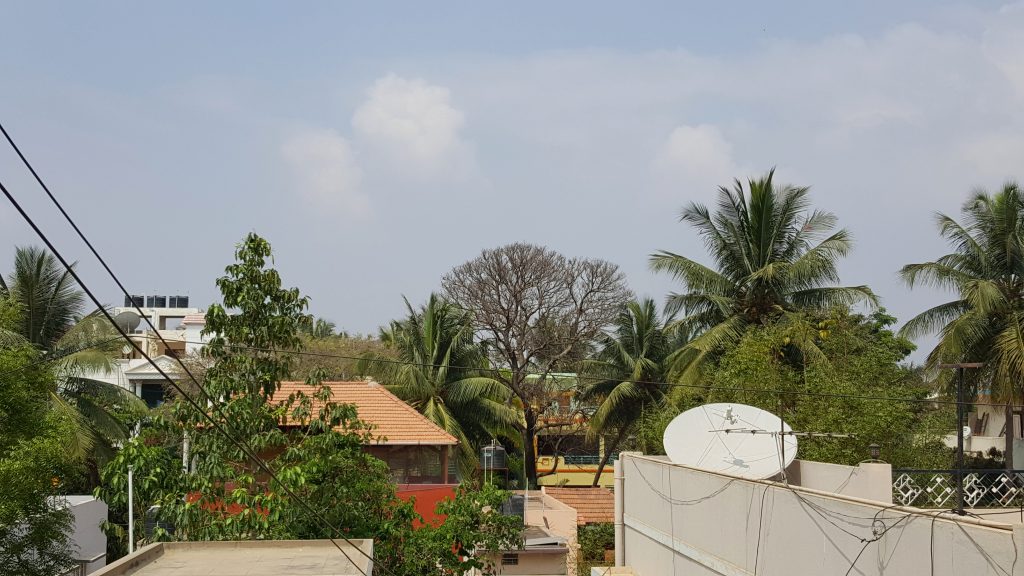
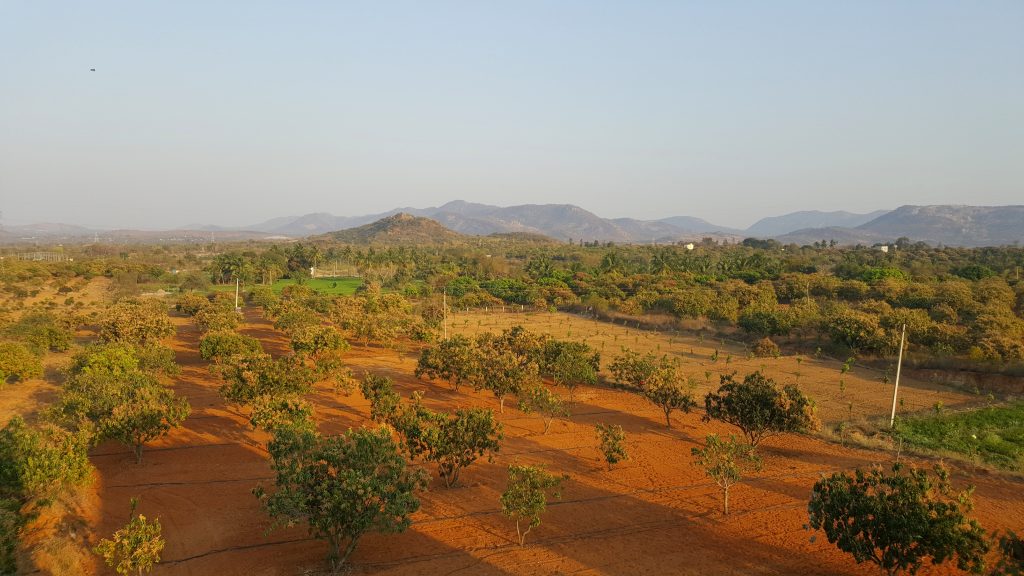
As I write this I am back in Bangalore, my pivot point, my home base for this month-long stay in India. A fresh breeze drifts in through the open balcony door of my friend’s flat. The comforting noises of a city and neighbourhood gearing up for another day—traffic, dogs barking, children singing—rise from the streets below. The sounds carry a certain comfort, a connectedness to life, a rhythm timed to the swaying coconut palms and soaring black kites that pass from rooftop to treetop roost.
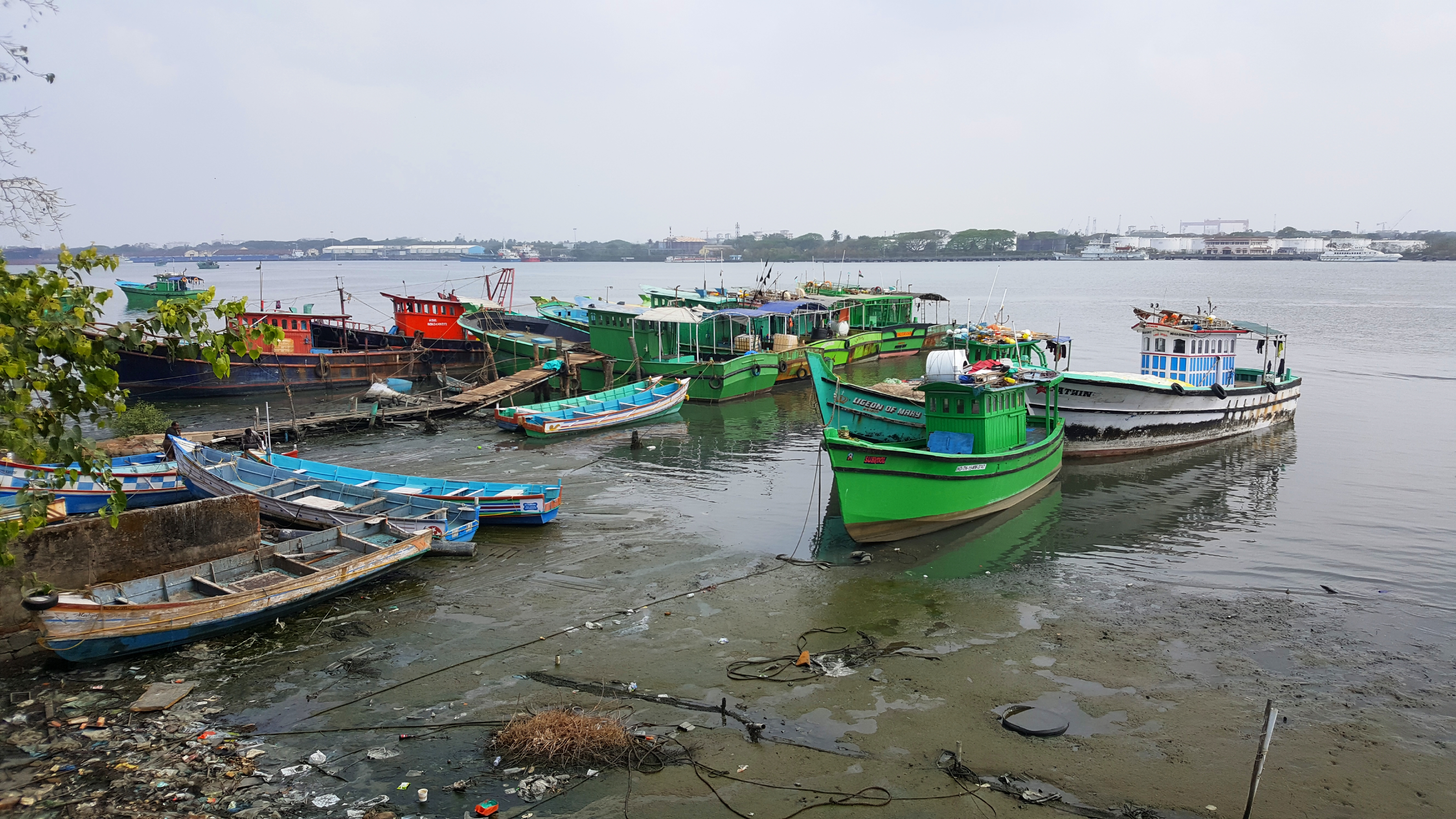
The past week took me to Mumbai, then south to Kochi. While my hometown back in Canada is in the midst of the longest unbroken deep freeze in decades, I struggled to adjust to the intense tropical heat and humidity, aware that it is not even the hot season in Kerala. Kochi is a port city, ribbons of land and ribbons of water, on the edge of the Indian Ocean. Huge tankers, barges and colourful fishing boats move in and out. It is lush and green, infinitely greener, they say, in the rainy season. With a population of about two and a half million, it is small in terms of Indian metropolises, with a greater sense of space and openness than I’ve noted elsewhere, perhaps due to the way the water is such a necessary and defining feature of the urban landscape.
I stayed with a friend at the beautifully tranquil compound where she owns a flat. Her recent return home from “exile” in Dubai makes perfect sense. Here, seemingly cut off from the inevitable rush and commotion of the city streets, it is easy to imagine the stresses of the world away for a moment. And yet it is in the midst of an almost fully developed residential neighbourhood, easily accessed by auto rickshaw over a a pedestrian bridge down the lane, but by car, only through a maze of the most circuitous and narrow roadways I’ve ever travelled. Passage across the city is a disorienting journey to say the least, but within a few days, I began to register landmarks and gain a basic sense of direction.
In Kochi I was aware of two elements in particular: the striking presence of Christian churches—a testament to the historical role the Portuguese and the Dutch played for better or worse—and the overwhelming number of tourists, both on my flights and on the ground. With so much of my travel in India, I am drawn by connections to people I know, even if I have yet to meet them personally, and this often allows me to explore a space either on my own or guided by locals. So I arrived in Kerala unprepared to encounter the typical tourist experience. The only specific destination on my agenda was the Kochi Biennale, but this extensive and diverse series of art exhibits was set up, understandably, throughout the tourist-heavy areas of Fort Cochin and Jew Town. Of course, now that I have been to Kochi, and had my first introduction to the fascinating textures and tones of the region, another visit with a wider focus will be in order.
As ever, the most precious moments of travel are, for me, time for face-to-face conversations with friends I’ve come to know through the internet. India then becomes the backdrop, its sounds the accompanying chorus. In Kochi, I had several days to visit with a friend I feel like I have, in some fashion, known forever, and an afternoon with another friend I met through her, an artist who came into the city to take in some of the Biennale with me. Although it can’t be long, I am often hard pressed to remember just how, or when, some of my Indian friends, Mini in Kochi, Sachin here in Bangalore, or the Seagull Books folk in Calcutta came into my life. Each city I visit expands my circle. I feel so very fortunate to have been given this opportunity to travel, something I never imagined, but for a serious of fortuitous, albeit essentially “unfortunate” circumstances, I would ever be able to experience. It is not a gift to be undervalued. And yet I carry, somewhere inside, a fear that I’m unworthy.
Now the halfway mark of my visit is nearing. I wait on the edge of a return trip to Calcutta, eager to be back in that most singular of cities, keen to reconnect with old friends and meet with new ones. I must confess, however, to being just a little anxious about an event that awaits me there.In a few days time, on February 18th, I will be in conversation with Edwin Frank, the founding editor of NYRB Classics at the impressive Victoria Memorial. No pressure! In truth I’m very honoured to have been invited to be part of the visit of such an esteemed guest and will be sure to report back on the experience once I recover! In the meantime, I will sign off with a few more images from Kochi…
As I write this I am five days into my second visit to India in as many years. This time my stay is longer, my scope wider, my engagement deeper. It is as much about meeting, building and nurturing friendships and connections—long standing and new—as it is about “seeing a place.” One does not travel half the globe to inhabit, however briefly, a world that is so very different in texture, tone and sensations from one’s own without being open to experience. But it is a complicated negotiation at times.
As an outsider, and more specifically as a westerner from a city of a little over a million, I respond so viscerally to the intensity of the Indian metropolis. And yet I am ever conscious of my vantage point, skewed and out of context, informed by the romantic images of my youth and early adulthood—elegant colonial set-pieces, followed by the wave of popular biographies of Ghandi and Mother Theresa in the 80s. I do not wish to appear the starry-eyed searcher or the foreign curiosity seeker, for in truth I am neither. The attraction is real and formless. I feel it in my bones, but am hesitant to grant it words.
I am aware that I experience India from a point of both ignorance and privilege and to formulate a response to what I see and feel leaves me as anxious as a non-poet wanting to write about poetry but refusing to for fear of reading it “wrong”. As if there is only one way to read anything. There is no such thing as pure, unmitigated and unbiased experience.
And so to my present location: Bombay or Mumbai. With a population of over eighteen million souls, Mumbai is the largest city I have ever been in. It is arguably one of the very biggest on the planet. I have to confess I found it immediately oppressive and claustrophobic. From the moment you leave the airport, humanity crushes in on you. Densely packed slums crowd the space alongside the roadway, for kilometre after kilometre, giving way at times for marble and granite dealers, before returning again. Gradually the apparent quality of the hovels improves, but it is an urbanized poverty on a scale that is difficult to process. I knew it was there. Maybe I didn’t expect to see it so explicitly.
The ride into the city was endless. A thick yellow haze hung in the air and I began to regret my decision to hire a non-A/C cab. In the rear view mirror I could see the eyes of the driver watering. With the smog and exhaust fumes blowing in through the open windows, I wondered what it would be like to spend each day moving back and forth through the impatient traffic and gridlock hour after hour.
For the traveller who arrives by air, a city makes her first impressions in the journey in from the airport. Mumbai’s welcome is pungent and emotionally disarming. From the vibrant interior of an ancient yellow and black cab, I watch the corrugated metal landscape pass as we slowly descended into the city. I take no pictures. It would not feel right.
Once I am finally settled in my hotel in the Fort area of south Mumbai, I grab my backpack and head out. The streets of the city are noisy, fast and congested. (Don’t be fooled by the fact that they often appear empty in photographs—it’s an illusion!) They seem to change flavour and character from block to block. Crossing the street, even daring to walk along the edges where the uneven pathways are blocked, or nonexistent, is an exercise in blind faith. A motorcycle is likely to roar up behind you, racing against the flow of traffic, blaring its horn to make you disappear. A legless older woman working a rusted handcart down the side of the road is my new hero. I’m at odds to know what I think of this place. I feel a little pressed under the weight of the space.
As ever, I take note of the street dogs. Here they’re a rather sorry assortment of creatures, weary and worn. Perhaps they don’t stand a chance against the cats that appear to quite handily own this part of town.
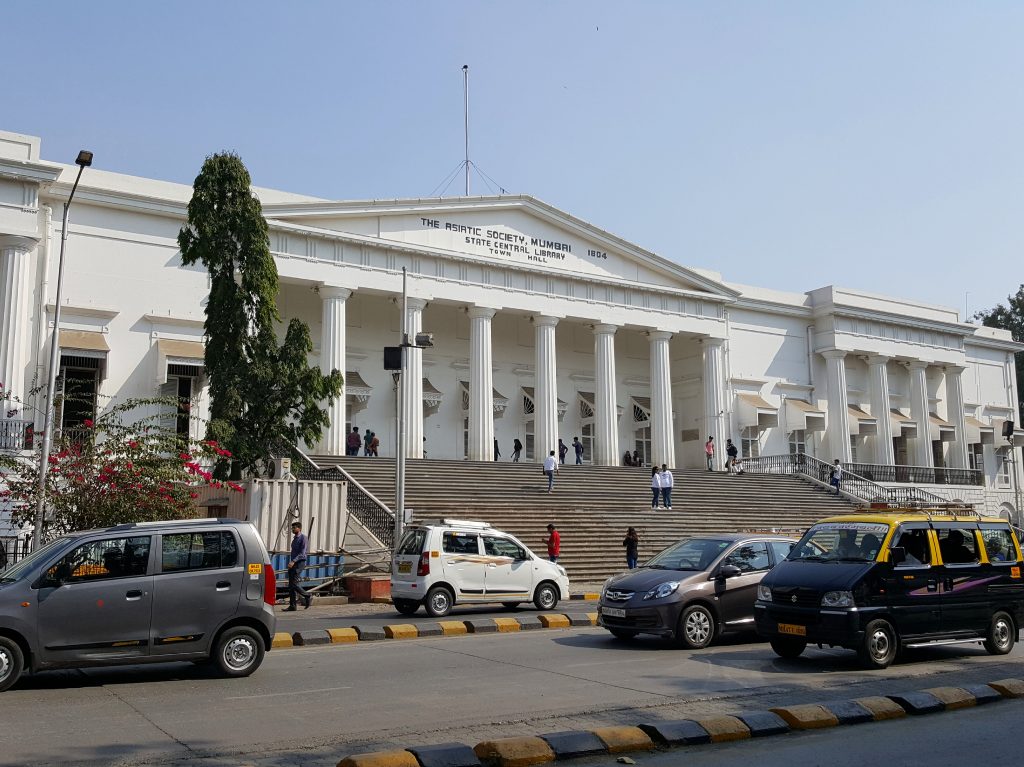
My immediate destination lies in the heart of the Kala Ghoda arts district. The area is crowded. Following my friend google in search of the library where the literary portion of the annual arts festival is to be held, leads me through a bag search, metal detector and frisking, and into a large square crowded with young people A variety of sometimes quite tacky horse-themed artworks are displayed and the selfie generation is quite enamoured of them all. I am a little perplexed. I later learn that this is a new addition to the festivities, one that has drawn large numbers of people, mostly young, in from the suburbs, not for the arts so much as the party atmosphere. This type of attraction and congestion alters the tenor of the area. Of course, I’m here for the festival too—a little unexpected serendipity—but fortunately the literary programming is taking place beyond this makeshift corral, across the road in a garden oasis behind the David Sassoon Library. There one is magically removed from the noisy traffic and crowds on the street outside.
Now on my final day in the city, at least one tiny corner of Mumbai is less strange. The streets seem shorter, less confusing. The architecture is beautiful. This part of the city wears its age with grace. I have been to the Gateway of India, the obligatory tourist gesture, and today I saw the sea from the other side, looking out from Marine Drive. A completely different world unfolds there. Large, expensive vehicles line the shady streets, students pour out of colleges and universities, and in the distance, across the waters, the towers of the city’s centre appear ghostly in the midday heat. But it’s hot. I don’t stay long.
So, after my first, brief encounter with Mumbai, three things remain: the gift of being a stranger in a place where, despite disorientation and an inability to comfortably communicate, a little semblance of familiarity begins to emerge; the necessary joy that literary community affords including the precious opportunity to meet, in person, supportive and inspiring writers previously known only online; and finally, the chance to experience a hectic, sometimes seemingly harsh, city at rest. Late last night, after a wonderful, long visit with a friend, I made my way back to my hotel through the quiet virtually empty streets. Ranjit accompanied me part of the way, down byways I likely would not have attempted on my own, until he was certain I knew where I was, and I finished the walk alone. Here and there men spoke quietly, or bid one another good night. On sidewalks, those without homes were already fast asleep, and lonely yellow and black cabs crawled by, hopeful for a late night fare.
Funny that such a huge city could test me by day, and win me over at night.
Those days on the road, I wrote with a pencil. The faint inscriptions of provisional memories made my notebooks seem like fallow territory. I would spend hours before bed recording variations of my experience, keeping no version of myself from the page. Yet, even if that were possible, it saddened me to write each day without a clear vision of whom I addressed. How long would it take for letters of my alphabet to form an impression, moving from reading eye to sensuous heart?
Of late I am drawn to curious projects that bring together memory, image, and environment— projects that blur the parameters of literary classification, where memoir, photo essay, travelogue and storytelling blend. To books like Nigerian writer and art critic Emmanuel Iduma’s enigmatic The Stranger’s Pose. Described in his Acknowledgements as an “imaginative gesture” extended to “the many lives that entered mine,” this collection of seventy-seven segments (or chapters?) has its basis in actual trips through several African countries that the author made, either on his own, or with a varying group of photographers, writers and visual artists as part of the Invisible Borders Trans-African Photographers’ Organization. However, by allowing his reflections to form in the “twilight worlds between experience and memory, fiction and criticism” and presenting them with a curated selection of black and white images, in many of which he is the staged and central figure, Iduma invites the reader to join him on a lyrical journey, one that is at once elusive and absorbing.
There is, about halfway through the book, a map tracing out a pathway from Addis Ababa, westward through Nigeria, onward to pass up through Senegal, Mauritania and into Morocco. A simple scattering of place names, white text on a black background, connected by curving dotted lines. A geography of dreams. The recollections and remembrances that link these far flung cities tumble forth without chronological or spatial connection, but they do not exist in an emotional or political vacuum. Border crossings can be fraught, stories of the fates of migrants fleeing north toward Europe are shared, religious and ethnic tensions simmer, and language barriers hinder communication and require dependence on translators.
Our restless wanderer is a contemporary African flaneur. An openness to experience infuses his reflections. He is acutely sensitive to the human tableaux he observes, to the eccentricities of the photographers and artists he seeks out, and to the resonances of the stories he is told. He is attentive to the body language and facial expressions he encounters, both in images and in person. At the state library in Enugu, which resembles a dusty study hall more than anything, he finds an extensive archive of newspapers dating back to the 1960s. Inspired to seek out accounts of the events immediately preceding the death of Ken Saro-Wiwa in November 1995, he traces the daily photographic record in The Guardian, examining the subtle indications of shifting emotion in the grainy images. Watching a stranger on a bus in Addis Ababa practice smiling at his reflection in the window, he turns to notice that, in the glass, his own countenance could be taken for unhappy. Turning back his eyes meet the other man’s and now, in his face, feels he recognizes himself:
But faces aren’t mirrors. Suppose we look long enough at others to discover their secret impulses, could we understand our own in the process?
His intention throughout is to capture his thoughts and experiences. We are never simply travelling in the present tense. Every journey we take stirs memories from the past, and extends into an unknown future. Travel reframes the idea of home in many different ways. And Iduma, of course, is a writer. As such, this is not a voyage without literary guideposts. Amos Tutuola, Ben Okri, Breyten Breytenbach, Italo Calvino, Isabelle Eberhardt, John Berger and more are called on to contribute tales to this extended meditation.
The segments that comprise this book range from a few sentences to several pages. Some describe encounters and experiences, some revisit childhood memories, some imagine stories. He describes dreams and writes notes to some of his travelling companions, looking back at their shared moments. And sometimes he simply describes a photograph which, incidentally, may or may not be included in the book. The camera is a mediator, in individual interactions and as a transformational exercise. Relatively few of the photographs are actually taken by the author himself (thus none are reproduced in this review) and the ones in which he appears form an especially interesting counternarrative.
One hand holds my shoes; the other is raised, a few inches from my face. I approach a fenced mosque, with my shadow falling across its entrance. One part of the gate is shut, leaving space for a single entrant. The walls and the fence are brownish, just like the sandy ground, but with a darker hue. On the highest deck, three-horn speakers point in different directions: frontwards, leftwards and rightwards. A man glances towards the exit. I doubt he sees me. But he is looking in the direction of the photographer.
The image we are shown, exactly as described, is black and white, the surfaces of mosque stark in the harsh light. How, one must ask, does Iduma fit into these photographs, tall and striking, often dressed in white, walking or standing against storefronts, alleys, and walls? He is the stranger posed —itinerant, restive, trailed by a sense of displacement, heartbreak, and loss. When asked in an interview what he hoped a reader might take away from this book, he replied:
Below each encounter something trembles under the surface, inarticulate. I wrote the book thinking of anonymity as a method, in order to speak to an audience besides those whose stories I was retelling, and whose lives I was conjuring. I hope the reader might be able to meet me at the intersection of my life and those I write about.
It is this ineffable quality that comes through and makes A Stranger’s Pose such an affecting experience. In a line with the work of Teju Cole who writes the Foreword, and yet with its own distinct style and voice, this is a book for anyone who welcomes the idea of navigating the invisible borders that lie between travel, memoir, fiction and photo essay.
A Stranger’s Pose by Emmanuel Iduma is published by Cassava Republic Press.
As 2019 opens, my world is so much brighter than it has been for a long time—a strange sentiment given all the obvious and ominous shadows hanging over this sorry planet—but when you have been carrying darkness deep within and even the smallest moments of hope seem impossible, the lifting of that weight is near miraculous. The difficulties and challenges do not evaporate, but a renewed sense that they can be faced moving forward is the most wonderful feeling. On the Solstice I wrote about my recent medication adjustment and the subsequent easing of a depression that I had failed to recognize, being so tightly wound in its grasp that I was struggling to even find the will to continue living. Consumed by bitterness, anger, and grief I’d become a morbid, unpleasant soul by the end of November, unloading my misanthropic self-hatred on a few trusted close friends, near and far. Now, with the unrepentant zeal of the born-again, I cannot stop marvelling at the sheer joy of not feeling miserable—it is not a delirious happiness, but damn, it does feel good. Or as a friend who nearly lost himself to a bout of depression described the transition: I went from cowering in a corner wanting to die to crying at a stoplight overcome by the sheer beauty, intensity, and brilliance of the green light.
This past holiday season—the third since the loss of both of my parents and the suicide of a dear friend, and the fourth since my own very close encounter with death—feels like a turning of sorts. Or a recognition that we are ever turning and looking back over our lives, applying narrative arcs, seeking meaning and closure. However, this time, I refuse to be swayed by the temptation to believe this is even possible, let alone helpful. I’ve long doubted the narrative imperative, in fiction and memoir alike, and yet in our own lives we long for tidy, complete stories with meaning and message, and are continually upended every time life pulls the carpet from beneath our feet and we are forced to rewrite the script.
The major difference this year is that I have started to see my mother, in my dreams and my imagination. Always colourful and carefully coordinated, ageless and aged, believer and doubter, guardian angel and true friend. For long time, apart from a brief interlude when I was the desert of central Australia, my mother has remained a dull thickness in the core of my being. A mass of anger and guilt and self-pity. It’s easing. I feel sadness. I find myself crying. I know that I am finally beginning to grieve. It hurts so good. And I have a sense that this loosening, this opening up, is essential to releasing the blockages I’ve encountered in my own writing projects.
So with the new year ahead, I’ll begin with the resolution that marked every journal kept during decades of looking for a voice, an identity, and then, having found it, having to slip into a closet—This year I will write. Of course, I have advantages. I am no longer unpublished. I am part of an environment as a reader, writer and editor where I am fortunate to engage with inspiring and encouraging people. And I have formed some true, valuable, real friendships with people who accept the whole, weird me. These people, some of whom I have never met face to face, have sustained me through this darkness. A few with saintly patience and grace, I’m afraid. I hope that going forward I will become a calmer, more open listener, a better friend myself. And alert to the pain of others, like so many seemingly random twitter connections who heard me call out into cyberspace in my darker moments and responded with a good word or expression of concern.
My intended reading, moving into 2019, includes a few essay collections, a couple of photo essays, some long-deferred grief reading like Kate Zambreno’s Book of Mutter, and lots more poetry. With a month in India now just over four weeks away, I’ve also got some work by Indian writers in my TBR pile, and some books I’m reading in advance of a really exciting event I’ll be taking part in in Kolkata (more about that to come).
As I mentioned before, I became seriously concerned about my well-being last November, when I found myself so physically drained and emotionally exhausted that I was wondering if I could manage to get through my trip to India at all. I had been planning a return all year and, at last, with the tickets booked, I was overwhelmed by the prospect of going. The day after I finally allowed myself to accept my psychiatrist’s suggestion that I was under something more than the seasonal blues, I dragged myself down to Mountain Equipment Co-op and bought a new lightweight travel bag. And I haven’t looked back since! My agenda for my stay is still taking shape, with room for impulse and adventure. I look forward to spending time with friends, some I have met, and some I feel like I’ve known forever even though we’ve yet to meet. I will be flying in and out of Bangalore with plans to go to Kochi and a desire to visit Mumbai, and beyond that, who knows? I am less of a tourist attraction hunter and more of a flaneur on the road. My attraction to India has grown more out of friendship and literary connections than anything else. Its neither romantic nor idealized, but as I said in my RIC photo essay:
I’m drawn to travel in uneven places. In scarred and wounded spaces I recognize myself. Complex, interrupted histories mirror my own.
Returning to Calcutta for the third week of February will feel like coming home to a creative space I cherish, this time with the added lucky coincidence that my stay will overlap with the poetry residency of Franca Mancinelli, the Italian poet whose wonderful The Little Book of Passage made my end of year list, and she will be staying about a five minute walk from where I’m likely to be! I expect a busy week in the City of Joy because all year I’ve been mapping out places I want to revisit and those I have yet to explore. With a camera and notebook in hand.
The greatest thing I hope to bring into 2019 is an openness to experience without prescribed expectations. Some very exciting threads are coming into view—writers, reading, artistic opportunities that need to be followed to see where they lead. There is also a lot of personal work to be done on my grief, loss, and identity issues, be it fodder or foundation for future writing… well, only time will tell.
Best wishes for all in the year ahead. Personal, national and global storms are inevitable. A good word, a good book, and, as I’m learning, a little light can go a long way. With luck we can all sustain at least a glimmer of that light through the months ahead.

 Lately I have made an effort to claw some of that time back. I have contributed an essay for a book, pitched a critical piece I’m very excited about and even published a poem—my third piece to appear at Burning House Press.









 roughghosts